Arid Land Geography ›› 2026, Vol. 49 ›› Issue (4): 868-879.doi: 10.12118/j.issn.1000-6060.2025.386
• Land Use and Sustainable Development • Previous Articles
ZHANG Zhixiu( ), MA Caihong()
Received:2025-07-14
Revised:2025-08-29
Online:2026-04-25
Published:2026-04-28
Contact:
MA Caihong
E-mail:zzx1233212012@163.com;mchyanni@163.com
ZHANG Zhixiu, MA Caihong. Land use change characteristics and driving factors in arid gulf countries from the chain-spectrum perspective: A case of Qatar[J].Arid Land Geography, 2026, 49(4): 868-879.
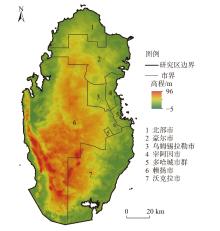
Fig. 1
Schematic diagram of the study area"
Tab. 1
Coding rules of land use change chain"
| 图斑代码 | N1 | N2 | N3 | N4 | N5 | N6 | 完整全连码 | 简码 |
|---|---|---|---|---|---|---|---|---|
| 图斑代码(例) | 5 | 8 | 5 | 5 | 5 | 5 | 5855555 | 5a8b5 |
| 年份代码 | a | b | c | d | e | f | ||
| 年份(例) | 1995 | 2000 | 2005 | 2010 | 2015 | 2020 |
Tab. 2
Driving factors and data sources"
| 数据名称 | 分辨率/m | 数据来源 |
|---|---|---|
| 夜间灯光指数 | 500 | http://www.geodata.cn |
| 高程 | 90 | 地理空间数据云(gscloud.cn) |
| 地下水开采量 | 1000 | 卡塔尔水利部(MME) |
| 降水 | 1000 | CHIRPS(Climate Hazards Group) |
| 气温 | 1000 | ERA5-Land(ECMWF) |
| 人口密度 | 1000 | World Pop |
| GDP | 1000 | GHSL Data |
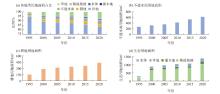
Fig. 2
Changes in the quantity structure of land use in Qatar from 1995 to 2020"
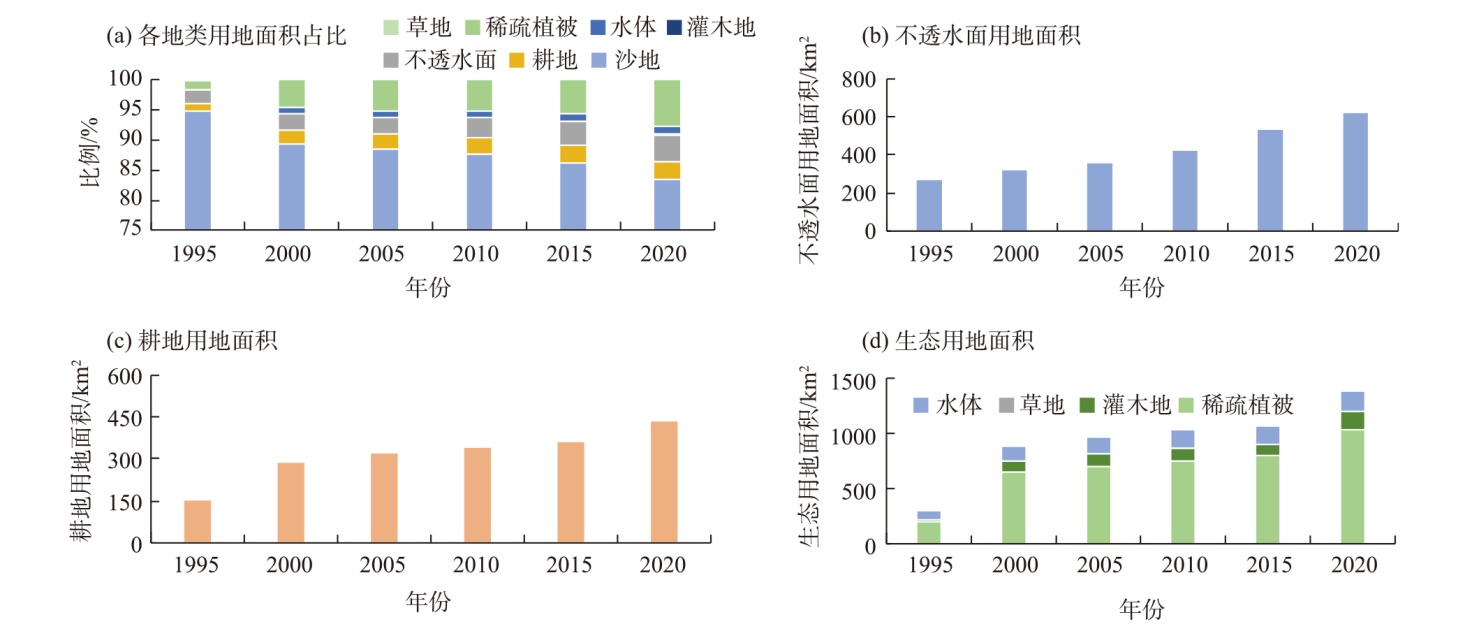
Fig. 3
Land use transfer flow dynamics in Qatar from 1995 to 2020"
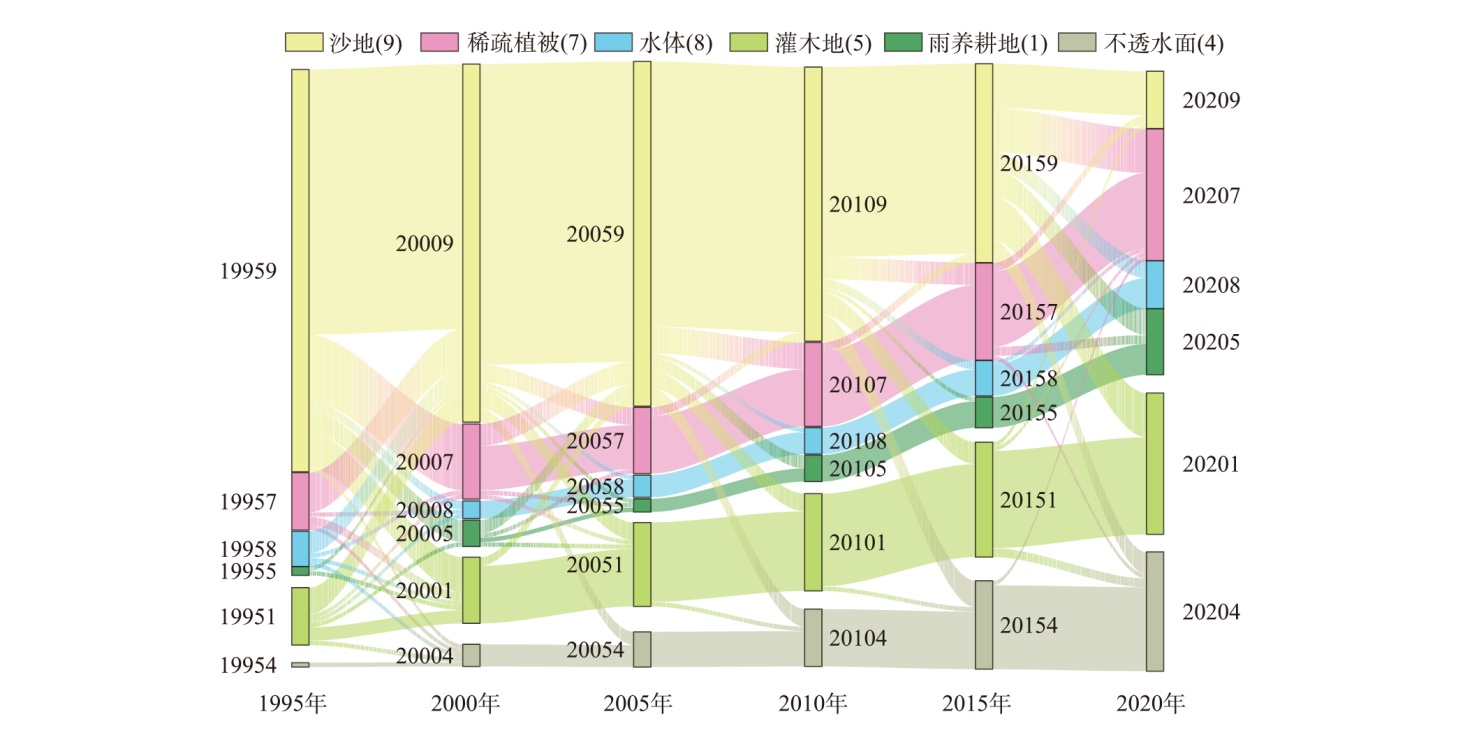
Fig. 4
Spatial pattern of cultivated land expansionin Qatar from 1995 to 2020"
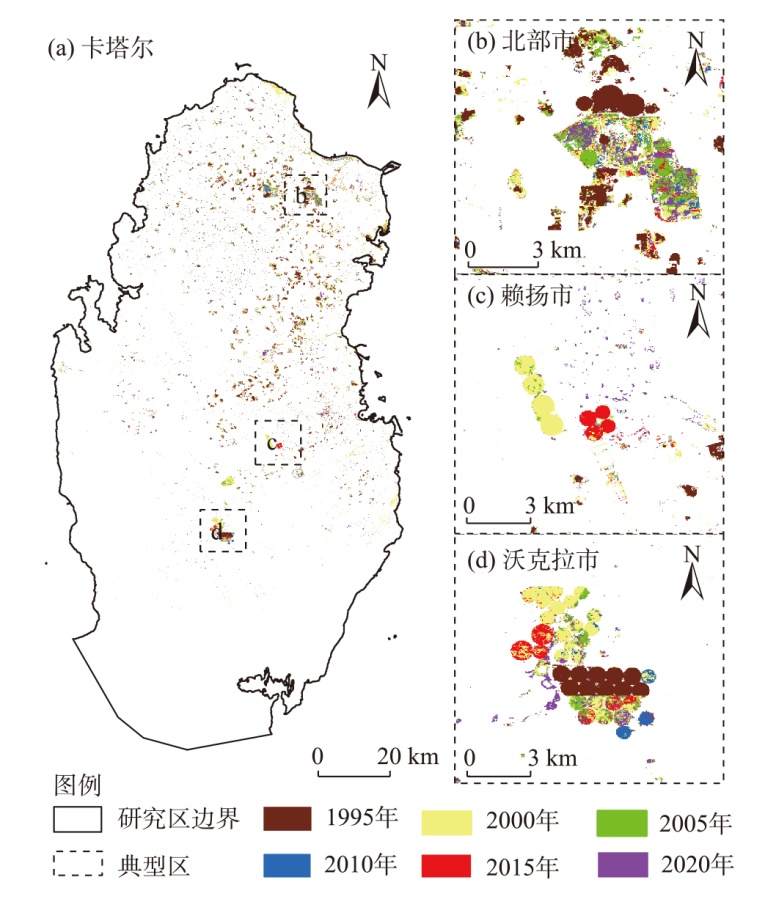
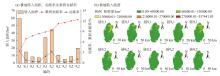
Fig. 5
Changes in the pattern of cultivated land area in Qatar from 1995 to 2020"
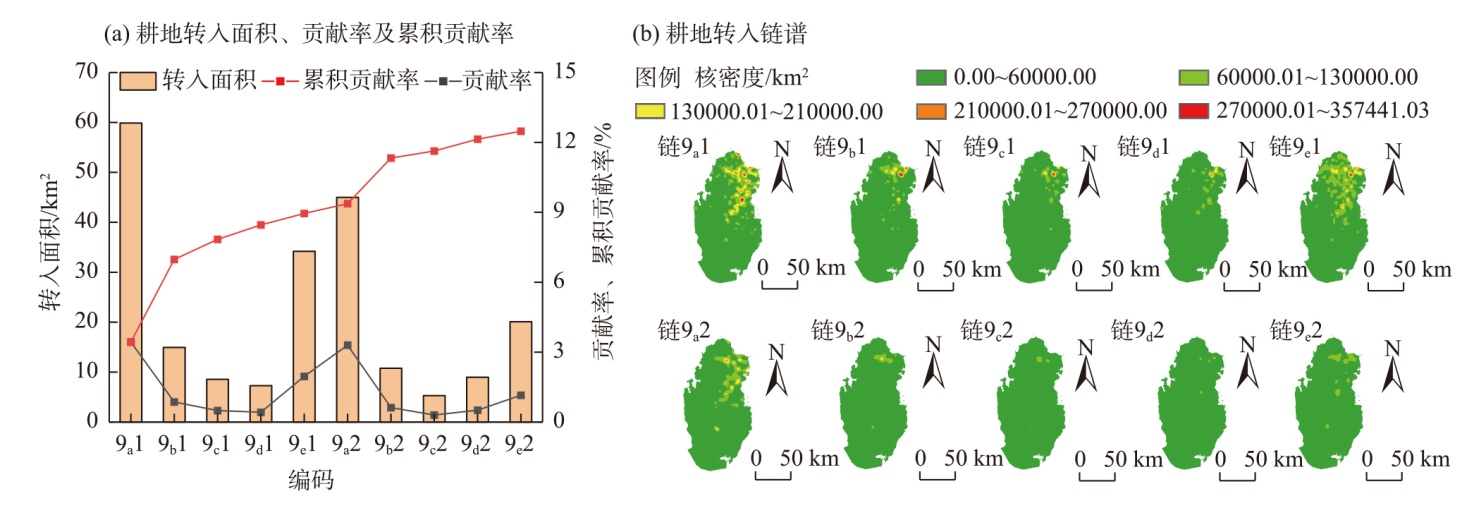
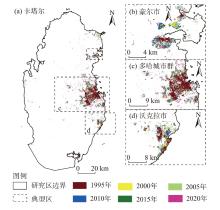
Fig. 6
Spatial pattern of impervious surface expansionin Qatar from 1995 to 2020"
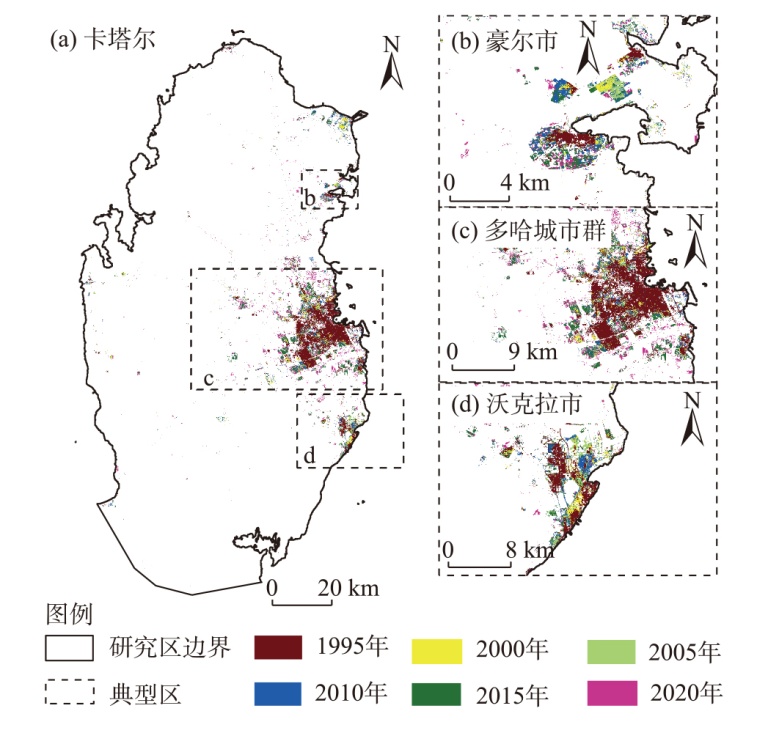
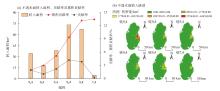
Fig. 7
Changes in the pattern of impervious surface area in Qatar from 1995 to 2020"
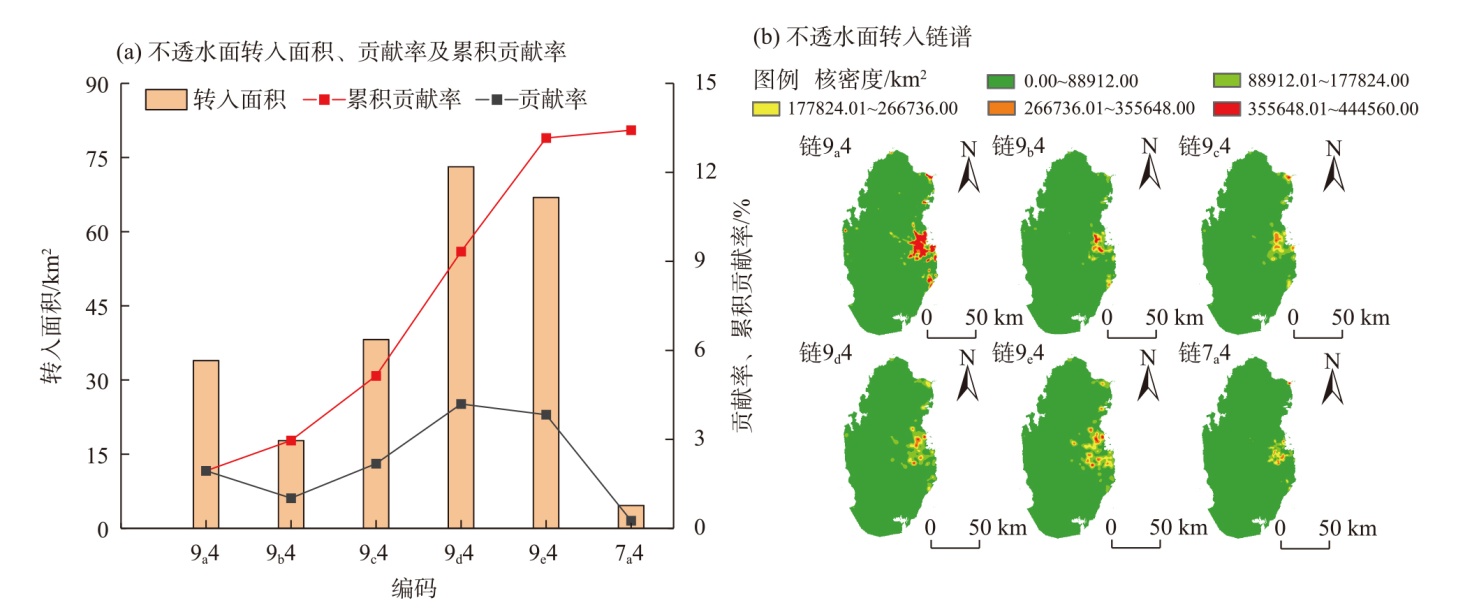
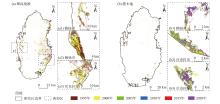
Fig. 8
Spatial pattern of major ecological land expansion in Qatar from 1995 to 2020"
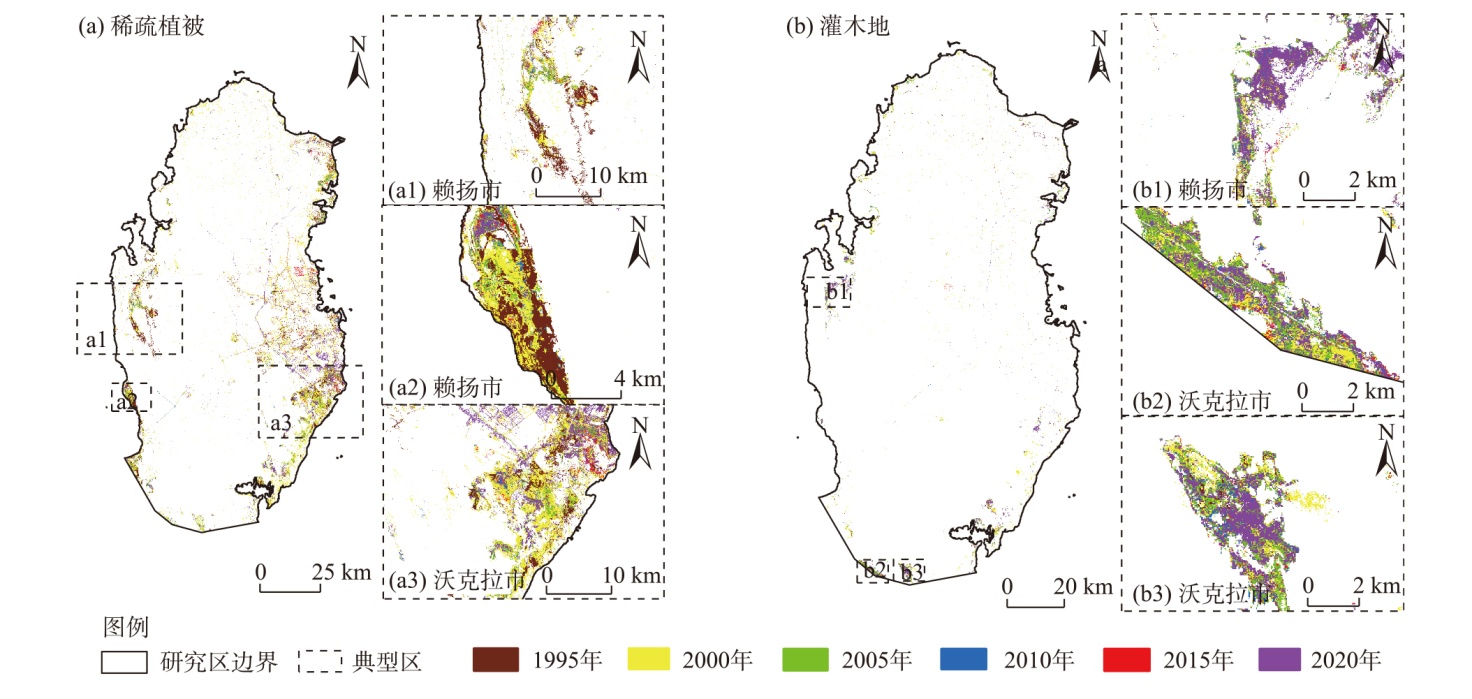
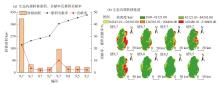
Fig. 9
Changes in the pattern of desertification control area in Qatar from 1995 to 2020"
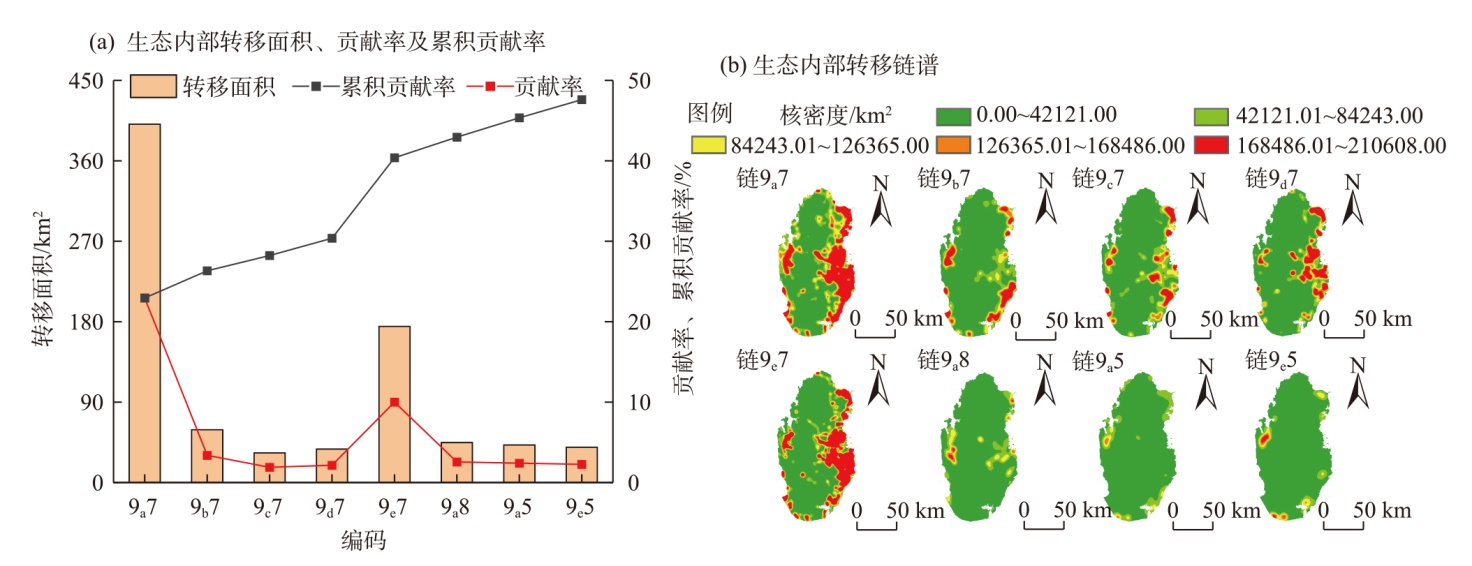
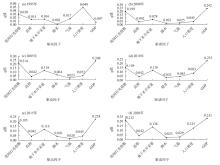
Fig. 10
Changes in the explanatory power (q-value) from 1995 to 2020"
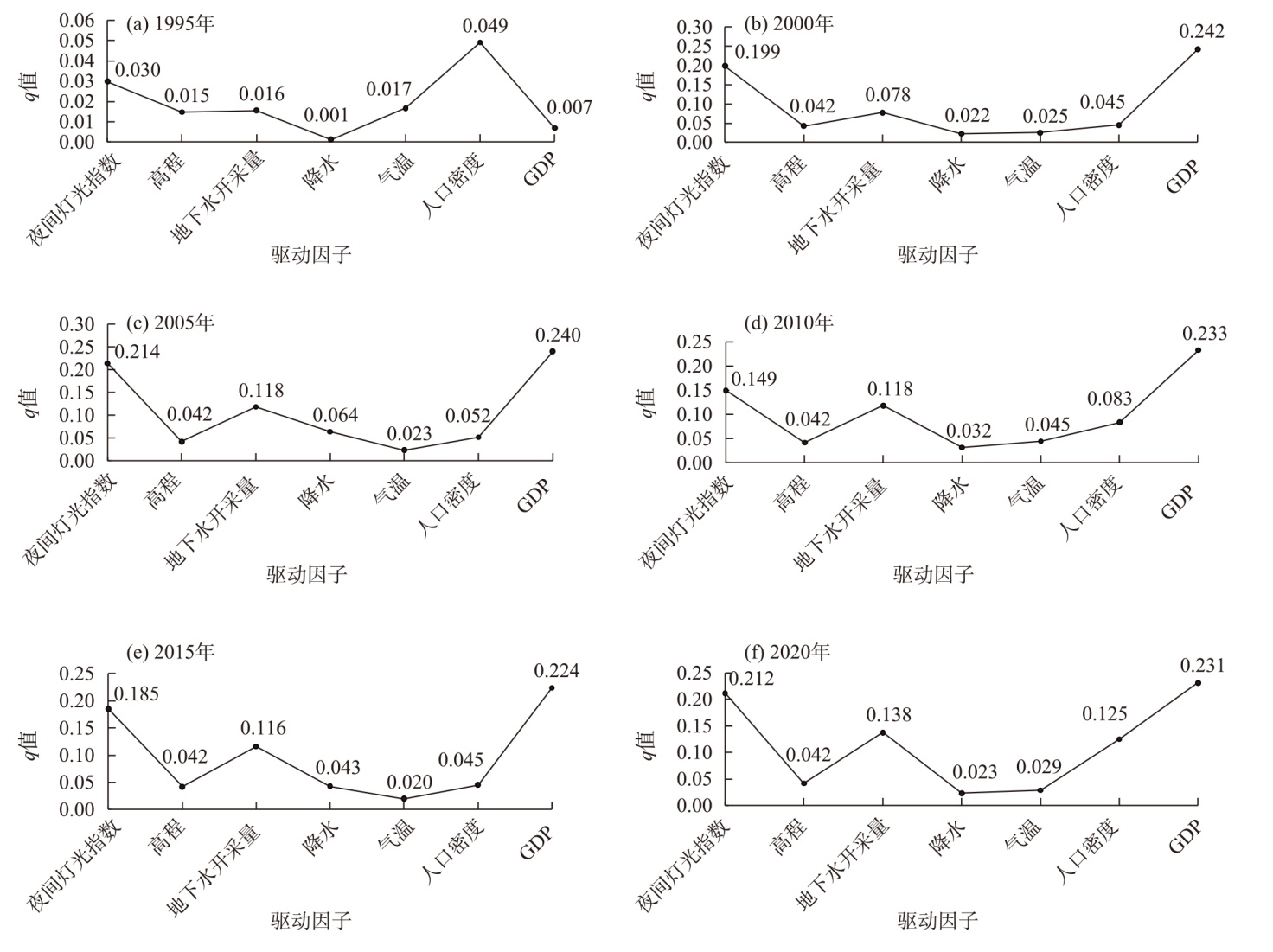
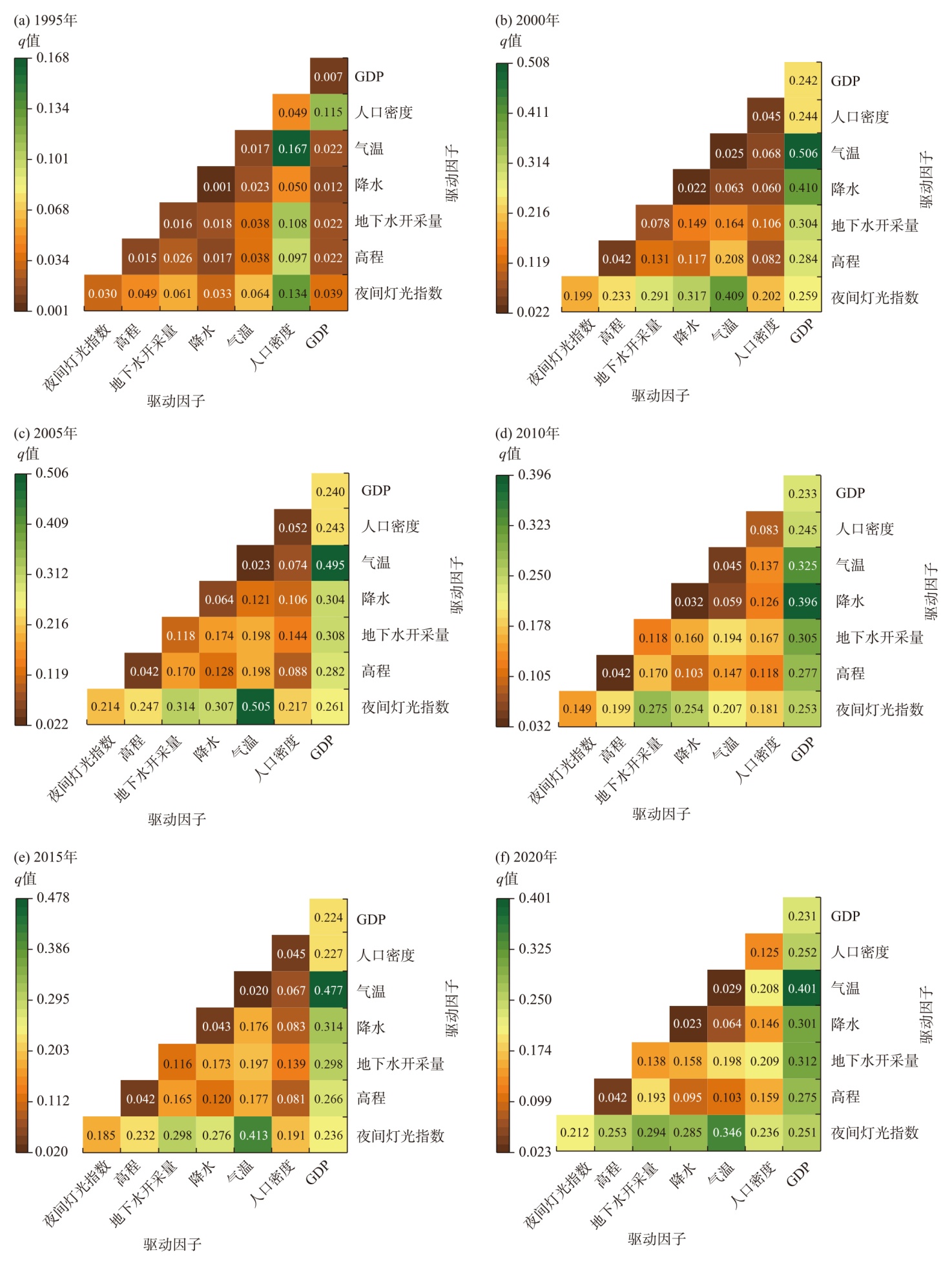
Fig. 11
Influence of interaction among various factors"
| [1] |
李常斌, 杨林山, 杨文瑾, 等. 洮河流域土地利用/土地覆被变化及其驱动机制研究[J]. 地理科学, 2014, 34(7): 848-855.
doi: 10.13249/j.cnki.sgs.2014.07.848 |
|
[Li Changbin, Yang Linshan, Yang Wenjin, et al. Land use and land cover change in Taohe River Basin and its driving forces[J]. Scientia Geographica Sinica, 2014, 34(7): 848-855.]
doi: 10.13249/j.cnki.sgs.2014.07.848 |
|
| [2] |
李广东. 全球土地覆被时空变化与中国贡献[J]. 地理学报, 2022, 77(2): 353-368.
doi: 10.11821/dlxb202202006 |
|
[Li Guangdong. Spatio-temporal change of global land cover and China’s contribution[J]. Acta Geographica Sinica, 2022, 77(2): 353-368.]
doi: 10.11821/dlxb202202006 |
|
| [3] |
费兵强, 吴波, 殷婕, 等. 1964—2020年毛乌素沙地新垦耕地和弃耕地空间格局变化及其对荒漠化的影响[J]. 干旱区地理, 2025, 48(4): 661-672.
doi: 10.12118/j.issn.1000-6060.2024.390 |
|
[Fei Bingqiang, Wu Bo, Yin Jie, et al. Spatial pattern changes of newly cultivated and abandoned farmland and their impacts on desertification in the Mu Us Sandy Land from 1964 to 2020[J]. Arid Land Geography, 2025, 48(4): 661-672.]
doi: 10.12118/j.issn.1000-6060.2024.390 |
|
| [4] |
刘园园, 马彩虹, 马丽娅. 黄河流域典型绿洲城市扩张模拟及其生态韧性响应研究[J]. 干旱区地理, 2025, 48(3): 506-516.
doi: 10.12118/j.issn.1000-6060.2024.219 |
|
[Liu Yuanyuan, Ma Caihong, Ma Liya. Simulation of urban expansion and its response to ecological resilience of typical oases in the Yellow River Basin[J]. Arid Land Geography, 2025, 48(3): 506-516.]
doi: 10.12118/j.issn.1000-6060.2024.219 |
|
| [5] | Cao X M, Cui M C, Lei X, et al. Spatial-temporal process of land use/land cover and desertification in the Circum-Tarim Basin during 1990—2020[J]. Land, 2024, 13(6): 735, doi: 10.3390/land13060735. |
| [6] | 朱会义, 李秀彬. 关于区域土地利用变化指数模型方法的讨论[J]. 地理学报, 2003, 58(5): 643-650. |
| [Zhu Huiyi, Li Xiubin. Discussion on the index model of regional land use change[J]. Acta Geographica Sinica, 2003, 58(5): 643-650.] | |
| [7] | 刘纪远. 国家资源环境遥感宏观调查与动态监测研究[J]. 遥感学报, 1997, 1(3): 225-230. |
| [Liu Jiyuan. Research on macro investigation and dynamic monitoring of national resources and environment remote sensing[J]. Journal of Remote Sensing, 1997, 1(3): 225-230.] | |
| [8] | 尹慧慧, 毋兆鹏. 干旱区绿洲城市建设用地扩张时空格局变化特征研究[J]. 生态科学, 2023, 42(5): 231-240. |
| [Yin Huihui, Wu Zhaopeng. Spatiotemporal changes of urban construction land expansion in oasis in arid region[J]. Ecological Science, 2023, 42(5): 231-240.] | |
| [9] | 袁烨城, 李宝林, 高锡章, 等. 内蒙古自治区土地覆被相互转换现象研究[J]. 干旱区资源与环境, 2015, 29(5): 58-63. |
| [Yuan Yecheng, Li Baolin, Gao Xizhang, et al. Study on the land cover swap change in Inner Mongolia[J]. Journal of Arid Land Resources and Environment, 2015, 29(5): 58-63.] | |
| [10] |
Pontius Jr R G, Shusas E, Mceachern M. Detecting important categorical land changes while accounting for persistence[J]. Agriculture, Ecosystems & Environment, 2004, 101(2-3): 251-268.
doi: 10.1016/j.agee.2003.09.008 |
| [11] | Yhdego S M, Hubert H, Chen G, et al. Analyzing land use/land cover changes and aridity dynamics in the Nile River Basin, northeastern Africa[J]. Journal of Arid Environments, 2025, 230: 105412, doi: 10.1016/j.jaridenv.2025.105412. |
| [12] |
Chen C, Park T, Wang X H, et al. China and India lead in greening of the world through land-use management[J]. Nature Sustainability, 2019, 2: 122-129.
doi: 10.1038/s41893-019-0220-7 pmid: 30778399 |
| [13] | 马彩虹, 任志远, 李小燕. 黄土台塬区土地利用转移流及空间集聚特征分析[J]. 地理学报, 2013, 68(2): 257-267. |
|
[Ma Caihong, Ren Zhiyuan, Li Xiaoyan. Land use change flow and its spatial agglomeration in the loess platform region[J]. Acta Geographica Sinica, 2013, 68(2): 257-267.]
doi: 10.11821/xb201302010 |
|
| [14] |
马彩虹, 安斯文, 文琦, 等. 基于土地利用转移流的国土空间格局演变及其驱动机制研究——以宁夏原州区为例[J]. 干旱区地理, 2022, 45(3): 925-934.
doi: 10.12118/j.issn.1000-6060.2021.356 |
|
[Ma Caihong, An Siwen, Wen Qi, et al. Evolution of territorial spatial pattern and its driving mechanism based on land use transfer flow: A case of Yuanzhou District in Ningxia[J]. Arid Land Geography, 2022, 45(3): 925-934.]
doi: 10.12118/j.issn.1000-6060.2021.356 |
|
| [15] | 汪建珍, 卢李朋, 赵锐锋, 等. 基于土地转移流的干旱区河谷城市土地系统稳定性评价——以兰州市近郊四区为例[J]. 经济地理, 2014, 34(4): 153-158. |
| [Wang Jianzhen, Lu Lipeng, Zhao Ruifeng, et al. Estimation of urban land system stability of river valley: A case study of the four districts in suburbs of Lanzhou City[J]. Economic Geography, 2014, 34(4): 153-158.] | |
| [16] | 刘杨. 基于土地利用转移分析的辽宁省某矿区土地利用变化研究[J]. 测绘与空间地理信息, 2018, 41(11): 64-66. |
| [Liu Yang. Study on land use change in a mining area of Liaoning Province based on land use transfer analysis[J]. Geomatics & Spatial Information Technology, 2018, 41(11): 64-66.] | |
| [17] | 徐羽, 钟业喜, 冯兴华, 等. 江西省土地利用变化及其对人类活动的响应[J]. 水土保持研究, 2017, 24(1): 181-186, 193. |
| [Xu Yu, Zhong Yexi, Feng Xinghua, et al. Response of land use change to the human activities in Jiangxi Province[J]. Research of Soil and Water Conservation, 2017, 24(1): 181-186, 193.] | |
| [18] | 谢玲, 邓晓军, 卢月燕, 等. 广西石漠化地区土地利用空间变化的生态风险研究[J]. 中国农业资源与区划, 2019, 40(8): 113-121. |
| [Xie Ling, Deng Xiaojun, Lu Yueyan, et al. Ecological risks caused by land use variations in the rocky desertification mountainous area in Guangxi Province[J]. Chinese Journal of Agricultural Resources and Regional Planning, 2019, 40(8): 113-121.] | |
| [19] |
焦岩, 闫峰, 卢琦, 等. 西北干旱区绿洲时空变化及驱动力[J]. 应用生态学报, 2024, 35(8): 2206-2216.
doi: 10.13287/j.1001-9332.202408.025 |
| [Jiao Yan, Yan Feng, Lu Qi, et al. Spatio-temporal changes and driving forces of the oasis in the arid northwest region[J]. Chinese Journal of Applied Ecology, 2024, 35(8): 2206-2216.] | |
| [20] |
邹易, 蒙吉军. 干旱区绿洲-城镇-荒漠景观演变及生态环境效应[J]. 干旱区研究, 2023, 40(6): 988-1001.
doi: 10.13866/j.azr.2023.06.14 |
|
[Zou Yi, Meng Jijun. Evaluation of an oasis-urban-desert landscape and the related eco-environmental effects in an arid area[J]. Arid Zone Research, 2023, 40(6): 988-1001.]
doi: 10.13866/j.azr.2023.06.14 |
|
| [21] | 赵晨光, 程业森, 李慧瑛, 等. 腾格里沙漠东北缘人工植被恢复区土地利用/覆被变化及其驱动因素分析[J]. 干旱区资源与环境, 2021, 35(6): 131-138. |
| [Zhao Chenguang, Cheng Yesen, Li Huiying, et al. Land use/cover change of an artificial vegetation system in the northeastern edge of Tengger Desert[J]. Journal of Arid Land Resources and Environment, 2021, 35(6): 131-138.] | |
| [22] |
杨利, 石彩霞, 谢炳庚. 长江流域国家湿地公园时空演变特征及其驱动因素[J]. 经济地理, 2019, 39(11): 194-202.
doi: 10.15957/j.cnki.jjdl.2019.11.023 |
|
[Yang Li, Shi Caixia, Xie Binggeng. Temporal and spatial pattern evolution characteristics and driving factors of National Wetland Parks in the Yangtze River Basin[J]. Economic Geography, 2019, 39(11): 194-202.]
doi: 10.15957/j.cnki.jjdl.2019.11.023 |
|
| [23] | Liu Y Y, Ma C H, Ma L Y. Dynamics of the oasis-desert-impervious surface system and its mechanisms in the northern region of Egypt[J]. Land, 2024, 13(9): 1480, doi: 10.3390/land13091480. |
| [24] | Masood M, He C G, Shah S A, et al. Land use change impacts over the Indus delta: A case study of Sindh Province, Pakistan[J]. Land, 2024, 13(7): 1080, doi: 10.3390/land13071080. |
| [25] | 纪秋磊, 梁伟, 傅伯杰, 等. 基于Google Earth Engine平台与复杂网络的黄河流域土地利用/覆被变化分析[J]. 生态学报, 2022, 42(6): 2122-2135. |
| [Ji Qiulei, Liang Wei, Fu Bojie, et al. Land use/cover change in the Yellow River Basin based on Google Earth Engine and complex network[J]. Acta Ecologica Sinica, 2022, 42(6): 2122-2135.] | |
| [26] | 马彩虹, 贾科利, 邹淑燕, 等. 土地转移流视角下土地利用变化过程追踪方法探讨——以宁夏中部干旱带盐池县为例[J]. 西北师范大学学报(自然科学版), 2017, 53(4): 101-106. |
| [Ma Caihong, Jia Keli, Zou Shuyan, et al. Study on tracing method of land use change process based on the perspective of land use transfer flow: A case study in Yanchi County in arid area of central Ningxia Hui Autonomous Region[J]. Journal of Northwest Normal University (Natural Science), 2017, 53(4): 101-106.] | |
| [27] |
王劲峰, 徐成东. 地理探测器: 原理与展望[J]. 地理学报, 2017, 72(1): 116-134.
doi: 10.11821/dlxb201701010 |
|
[Wang Jinfeng, Xu Chengdong. Geodetector: Principle and prospective[J]. Acta Geographica Sinica, 2017, 72(1): 116-134.]
doi: 10.11821/dlxb201701010 |
|
| [28] | 马彩虹, 贾科利, 邹淑燕, 等. 基于矢量属性的宁夏中部干旱带土地利用变化信息挖掘[J]. 水土保持通报, 2017, 37(4): 260-265. |
| [Ma Caihong, Jia Keli, Zou Shuyan, et al. Information mining in arid area of central Ningxia Hui Autonomous Region based on vector properties of land use change[J]. Bulletin of Soil and Water Conservation, 2017, 37(4): 260-265.] | |
| [29] | 叶庆华, 刘高焕, 田国良, 等. 黄河三角洲土地利用时空复合变化图谱分析[J]. 中国科学(D辑: 地球科学), 2004(5): 461-474. |
| [Ye Qinghua, Liu Gaohuan, Tian Guoliang, et al. Analysis of spatial-temporal composite pattern of land use change in the Yellow River Delta[J]. Science in China (Series D: Earth Sciences), 2004(5): 461-474.] | |
| [30] |
Karanisa T, Achour Y, Ouammi A, et al. Smart greenhouses as the path towards precision agriculture in the food-energy and water nexus: Case study of Qatar[J]. Environment Systems and Decisions, 2022, 42(4): 521-546.
doi: 10.1007/s10669-022-09862-2 |
| [31] | Shaban A. Impact of climate change on water resources of Lebanon: Indications of hydrological droughts[M]. Berlin, Heidelberg: Springer, 2008: 125-143. |
|
||