Arid Land Geography ›› 2025, Vol. 48 ›› Issue (11): 2031-2041.doi: 10.12118/j.issn.1000-6060.2025.181
• Tourism Geography • Previous Articles Next Articles
LI Ke( ), HE Jing(), MENG Yangyang, LI Changrui
Received:2025-04-07
Revised:2025-06-13
Online:2025-11-25
Published:2025-11-26
Contact:
HE Jing
E-mail:likelikejune@163.com;hejing@henau.edu.cn
LI Ke, HE Jing, MENG Yangyang, LI Changrui. Spatial distribution and influencing factors of key rural tourism villages in the Yellow River Basin[J].Arid Land Geography, 2025, 48(11): 2031-2041.

Fig. 1
Schematic diagram of the study area"
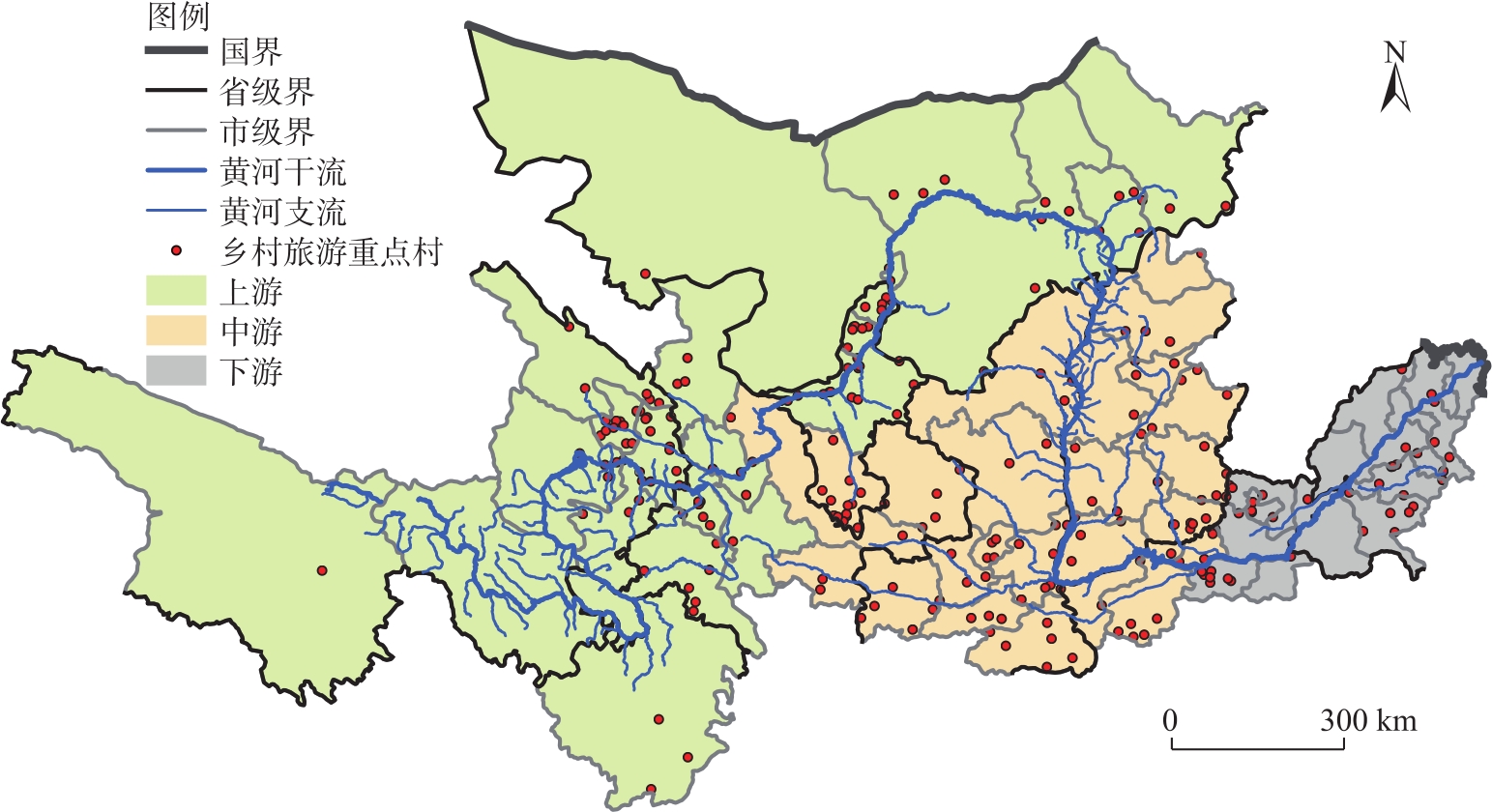

Fig. 2
Spatial distribution characteristics of key rural tourism villages in the Yellow River Basin"

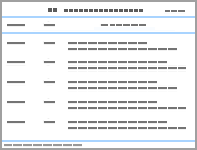
Tab. 1
Index system of factors influencing the spatial distribution of key rural tourism villages in the Yellow River Basin"
| 一级指标 | 二级指标 | 三级指标 | 指标释义 | 单位 |
|---|---|---|---|---|
| 自然环境条件 | 自然地理特征 | 高程(x1) | 重点村海拔高度 | m |
| 河网密度(x2) | 各市区内河流总长度/市区面积 | km·km-2 | ||
| 气候与水文 | 年平均降水量(x3) | 各市区年平均降雨量 | mm | |
| 年平均气温(x4) | 各市区年平均气温 | ℃ | ||
| 生态环境质量 | 植被覆盖度(x5) | 各市区地表植被覆盖/市区面积 | - | |
| 空气质量优良率(x6) | 区域空气质量的整体状况 | - | ||
| 社会经济条件 | 人口与城镇化 | 人口密度(x7) | 各市区人口总量/市区面积 | 人·km-2 |
| 城镇化率(x8) | 城镇人口占总人口的比例 | - | ||
| 经济发展水平 | 城镇居民人均可支配收入(x9) | 各市区城镇人口收入水平 | 元 | |
| 人均GDP(x10) | 经济基础支撑 | 元 | ||
| 交通与区位 | 路网密度(x11) | 各市区内道路总长度/市区面积 | km·km-2 | |
| 距省会城市距离(x12) | 区位优势、经济辐射影响和交通可达性 | km | ||
| 旅游产业条件 | 资源禀赋 | A级景区数量(x13) | 重点村所在市区A级景区数量 | 个 |
| 非物质文化遗产数量(x14) | 重点村所在市区非物质文化遗产数量 | 个 | ||
| 旅游经济规模 | 全年接待国内外游客数(x15) | 旅游市场活力及吸引力水平 | 人 | |
| 旅游总收入(x16) | 旅游业市场地位 | 元 |
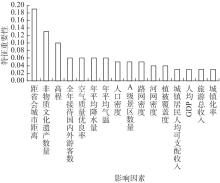
Fig. 3
Measurement of the importance of influencing factors on the spatial distribution of key rural tourism villages in the Yellow River Basin"

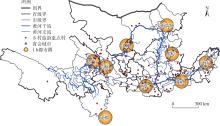
Fig. 4
1-hour metropolitan areas of provincial capital cities in the Yellow River Basin"


Fig. 5
Overlay analysis of key rural tourism villages with elevation in the Yellow River Basin"

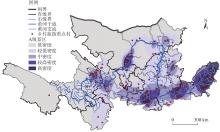
Fig. 6
Overlay analysis of key rural tourism villages with A-grade scenic areas in the Yellow River Basin"

Tab. 2
Interactive detection results of factors influencing the spatial distribution of key rural tourism villages in the Yellow River Basin"
| 影响因素 | x1 | x2 | x3 | x4 | x5 | x6 | x7 | x8 | x9 | x10 | x11 | x12 | x13 | x14 | x15 | x16 |
|---|---|---|---|---|---|---|---|---|---|---|---|---|---|---|---|---|
| x1 | 0.20 | |||||||||||||||
| x2 | 0.28 | 0.06 | ||||||||||||||
| x3 | 0.33 | 0.28 | 0.18 | |||||||||||||
| x4 | 0.26 | 0.31 | 0.39 | 0.15 | ||||||||||||
| x5 | 0.32 | 0.17 | 0.29 | 0.37 | 0.04 | |||||||||||
| x6 | 0.27 | 0.19 | 0.42 | 0.31 | 0.28 | 0.13 | ||||||||||
| x7 | 0.36 | 0.25 | 0.34 | 0.33 | 0.19 | 0.35 | 0.09 | |||||||||
| x8 | 0.40 | 0.31 | 0.42 | 0.30 | 0.43 | 0.40 | 0.31 | 0.15 | ||||||||
| x9 | 0.40 | 0.24 | 0.37 | 0.25 | 0.37 | 0.38 | 0.27 | 0.25 | 0.04 | |||||||
| x10 | 0.25 | 0.11 | 0.29 | 0.25 | 0.15 | 0.19 | 0.17 | 0.26 | 0.09 | 0.02 | ||||||
| x11 | 0.47 | 0.31 | 0.42 | 0.47 | 0.40 | 0.41 | 0.25 | 0.47 | 0.42 | 0.23 | 0.15 | |||||
| x12 | 0.43 | 0.33 | 0.54 | 0.43 | 0.20 | 0.45 | 0.30 | 0.44 | 0.26 | 0.18 | 0.33 | 0.15 | ||||
| x13 | 0.31 | 0.26 | 0.33 | 0.29 | 0.22 | 0.35 | 0.33 | 0.27 | 0.22 | 0.07 | 0.35 | 0.30 | 0.01 | |||
| x14 | 0.45 | 0.41 | 0.40 | 0.42 | 0.26 | 0.49 | 0.22 | 0.43 | 0.28 | 0.15 | 0.33 | 0.34 | 0.21 | 0.10 | ||
| x15 | 0.26 | 0.16 | 0.32 | 0.22 | 0.19 | 0.31 | 0.18 | 0.27 | 0.16 | 0.20 | 0.28 | 0.30 | 0.13 | 0.26 | 0.05 | |
| x16 | 0.32 | 0.17 | 0.29 | 0.26 | 0.19 | 0.25 | 0.15 | 0.26 | 0.16 | 0.14 | 0.24 | 0.28 | 0.16 | 0.19 | 0.18 | 0.09 |
| [1] | 崔茂森, 刘荣庆. 黄河流域生态旅游与乡村振兴耦合协调及障碍因子研究[J]. 河南师范大学学报(自然科学版), 2024, 52(2): 1-7. |
| [Cui Maosen, Liu Rongqing. A study on the coupling coordination and obstacle factors of ecotourism and rural revitalization in the Yellow River Basin[J]. Journal of Henan Normal University (Natural Science Edition), 2024, 52(2): 1-7. ] | |
| [2] |
杨燕燕, 王永瑜, 徐绮阳. 黄河流域水资源利用驱动因素及脱钩效应研究[J]. 干旱区地理, 2025, 48(1): 20-30.
doi: 10.12118/j.issn.1000-6060.2024.073 |
|
[Yang Yanyan, Wang Yongyu, Xu Qiyang. Driving factors and decoupling effect of water resources utilization in the Yellow River Basin[J]. Arid Land Geography, 2025, 48(1): 20-30. ]
doi: 10.12118/j.issn.1000-6060.2024.073 |
|
| [3] | 方永恒, 张开欣. 黄河流域乡村旅游高质量发展水平测度研究[J]. 四川旅游学院学报, 2024(1): 70-76. |
| [Fang Yongheng, Zhang Kaixin. On the measurement of high-quality development level of rural tourism in the Yellow River Basin[J]. Journal of Sichuan Tourism University, 2024(1): 70-76. ] | |
| [4] | 刘凯霞, 王伟, 程金龙, 等. 黄河流域文旅协调发展水平空间差异与影响机制研究[J]. 河南师范大学学报(自然科学版), 2024, 52(2): 8-15. |
| [Liu Kaixia, Wang Wei, Cheng Jinlong, et al. Spatial differentiation and influencing mechanism of integration between culture and tourism on coupling coordination in the Yellow River Basin[J]. Journal of Henan Normal University (Natural Science Edition), 2024, 52(2): 8-15. ] | |
| [5] | 戚禹林, 王丽丽, 李丁, 等. 中国乡村旅游重点村空间分布及影响因素[J]. 资源开发与市场, 2021(6): 734-740, 746. |
| [Qi Yulin, Wang Lili, Li Ding, et al. Spatial distribution and influencing factors of kev rural tourism villages in China[J]. Resource Development & Market, 2021(6): 734-740, 746. ] | |
| [6] | 刘宇杰, 周勇, 刘小东, 等. 中国“乡村旅游重点村”空间分布格局及影响因素[J]. 华中师范大学学报(自然科学版), 2022, 56(1): 211-220. |
| [Liu Yujie, Zhou Yong, Liu Xiaodong, et al. Spatial distribution and influencing factors of “key rural tourism villages” in China[J]. Journal of Central China Normal University (Natural Sciences Edition), 2022, 56(1): 211-220. ] | |
| [7] | 王慧娴, 杨蓓, 陈思静, 等. 基于网络关注度的黄河流域乡村旅游发展模式研究[J]. 中国农业资源与区划, 2024, 45(7): 221-235. |
| [Wang Huixian, Yang Bei, Chen Sijing, et al. Research on the development mode of rural tourism in the Yellow River Basin based on network attention[J]. Chinese Journal of Agricultural Resources and Regional Planning, 2024, 45(7): 221-235. ] | |
| [8] | 马斌斌, 陈兴鹏, 马凯凯, 等. 中国乡村旅游重点村空间分布、类型结构及影响因素[J]. 经济地理, 2020, 40(7): 191-199. |
| [Ma Binbin, Chen Xingpeng, Ma Kaikai, et al. Spatial distribution, type structure and influencing factors of key rural tourism villages in China[J]. Economic Geography, 2020, 40(7): 191-199. ] | |
| [9] | 孙卿, 高楠, 田祥宇. 山西省乡村旅游重点村空间分布特征及其影响因素研究[J]. 经济问题, 2024(3): 106-112. |
| [Sun Qing, Gao Nan, Tian Xiangyu. A study on the spatial distribution characteristics and influencing factors of key rural tourism villages in Shanxi Province[J]. On Economic Problems, 2024(3): 106-112. ] | |
| [10] | 郑光辉, 蒋涤非, 陈国磊, 等. 中国乡村旅游重点村空间分布格局及影响机理研究[J]. 干旱区资源与环境, 2020, 34(9): 194-201. |
| [Zheng Guanghui, Jiang Difei, Chen Guolei, et al. Spatial distribution pattern and influence mechanism of key rural tourism villages in China[J]. Journal of Arid Land Resources and Environment, 2020, 34(9): 194-201. ] | |
| [11] | 张慧, 李嘉琛, 刘江龙. 湖南省乡村旅游重点村空间分异特征及影响因子[J]. 中南林业科技大学学报, 2023, 43(9): 171-180. |
| [Zhang Hui, Li Jiachen, Liu Jianglong. Spatial differentiation characteristics and influencing factors of key rural tourism villages in Hunan Province[J]. Journal of Central South University of Forestry & Technology, 2023, 43(9): 171-180. ] | |
| [12] | 吴昕昱, 张文政. 河南省乡村旅游地空间分布与影响因素研究[J]. 中国农业资源与区划, 2020, 41(8): 238-246. |
| [Wu Xinyu, Zhang Wenzheng. Study on the spatial distribution and influencing factors of rural tourism destinations in Henan Province[J]. Chinese Journal of Agricultural Resources and Regional Planning, 2020, 41(8): 238-246. ] | |
| [13] |
沈士琨, 史春云, 张大园, 等. 江苏省乡村旅游地空间分布及其影响因素研究[J]. 中国生态旅游, 2021, 11(3): 455-467.
doi: 10.12342/zgstly.20210047 |
|
[Shen Shikun, Shi Chunyun, Zhang Dayuan, et al. Research on the spatial distribution of rural tourist attractions in Jiangsu Province and its influencing factors[J]. Journal of Chinese Ecotourism, 2021, 11(3): 455-467. ]
doi: 10.12342/zgstly.20210047 |
|
| [14] | 田彩云, 管祥泰, 田惠文. 黄河流域乡村旅游重点村空间分布特征及其影响因素研究[J]. 旅游学刊, 2023, 38(8): 32-44. |
| [Tian Caiyun, Guan Xiangtai, Tian Huiwen. Spatial distribution characteristic and its influencing factors of key rural tourism villages in the Yellow River Basin[J]. Tourism Tribune, 2023, 38(8): 32-44. ] | |
| [15] |
宋小龙, 马明德, 李陇堂, 等. 宁夏乡村旅游重点村空间格局与影响因素分析[J]. 干旱区地理, 2024, 47(11): 1957-1969.
doi: 10.12118/j.issn.1000-6060.2023.731 |
|
[Song Xiaolong, Ma Mingde, Li Longtang, et al. Spatial pattern and influencing factors of key rural tourism villages in Ningxia[J]. Arid Land Geography, 2024, 47(11): 1957-1969. ]
doi: 10.12118/j.issn.1000-6060.2023.731 |
|
| [16] | 崔红茶, 陈新, 王涛, 等. 长江流域乡村旅游重点村空间分异特征及影响因素[J]. 生态经济, 2024, 40(6): 126-134. |
| [Cui Hongcha, Chen Xin, Wang Tao, et al. Spatial differentiation and influencing factors of rural tourism key villages in the Yangtze River Basin[J]. Ecological Economy, 2024, 40(6): 126-134. ] | |
| [17] | 温秀, 黄枭, 崔林. 黄河流域乡村旅游重点村及其网络关注度空间分异规律[J]. 西北大学学报(自然科学版), 2024, 54(3): 472-488. |
| [Wen Xiu, Huang Xiao, Cui Lin. Key villages of rural tourism in the Yellow River Basin and their network attention levels research on the law of spatial differentiation[J]. Journal of Northwest University (Natural Science Edition), 2024, 54(3): 472-488. ] | |
| [18] | 孙锦甲. 黄河流域乡村旅游重点村空间分布特征与影响因素分析[D]. 开封: 河南大学, 2022. |
| [Sun Jinjia. Spatial distribution characteristic and its influencing factors of key rural tourism villages in the Yellow River Basin[D]. Kaifeng: Henan University, 2022. ] | |
| [19] | 刘丽梅, 习瑞, 李帅威. 全国乡村旅游重点村空间分布及区位优势度分析[J]. 城市发展研究, 2024, 31(12): 26-33. |
| [Liu Limei, Xi Rui, Li Shuaiwei. Analysis of spatial distribution and location advantage of national rural tourism key villages: Take Gansu as an example[J]. Urban Development Research, 2024, 31(12): 26-33. ] | |
| [20] | 张定祥, 彭晋福. 2022年中国1 km格网河网密度数据集[DB/OL]. [2025-04-17]. https://doi.org/10.57760/sciencedb.16001. |
| [Zhang Dingxiang, Peng Jinfu. China 1-km grid rivernetwork density dataset (2022)[DB/OL]. [2025-04-17]. https://doi.org/10.57760/scien-cedb.16001.] | |
| [21] | 李亚南, 张定祥. 2019年中国1 km格网路网密度数据集[DB/OL]. [2024-09-02]. https://cstr.cn/31253.11.sciencedb.02938.CSTR:31253.11.sciencedb.02938. |
| [Li Yanan, Zhang Dingxiang. China 1-km grid road network density dataset (2022)[DB/OL]. [2025-04-17]. https://cstr.cn/31253.11.sciencedb.02938.CSTR:31253.11.sciencedb.02938.] | |
| [22] |
周成, 赵亚玲, 任敏敏, 等. 黄河流域国家湿地公园时空分异、重心演化与驱动因素分析[J]. 干旱区地理, 2024, 47(3): 506-514.
doi: 10.12118/j.issn.1000-6060.2023.365 |
|
[Zhou Cheng, Zhao Yaling, Ren Minmin, et al. Spatiotemporal differentiation, center of gravity evolution and driving factors of national wetland parks in the Yellow River Basin[J]. Arid Land Geography, 2024, 47(3): 506-514. ]
doi: 10.12118/j.issn.1000-6060.2023.365 |
|
| [23] |
曹开军, 商宁, 王秘秘. 中国西北五省乡村旅游重点村时空分布格局与可达性分析[J]. 干旱区地理, 2023, 46(7): 1196-1205.
doi: 10.12118/j.issn.1000-6060.2022.531 |
|
[Cao Kaijun, Shang Ning, Wang Mimi. Spatial distribution pattern and accessibility analysis of the key rural tourism villages in the five northwestern provinces of China[J]. Arid Land Geography, 2023, 46(7): 1196-1205. ]
doi: 10.12118/j.issn.1000-6060.2022.531 |
|
| [24] |
谭翠, 黄钦, 杨波, 等. 随机森林算法在区域生态旅游适宜性评价中的应用研究[J]. 地球信息科学学报, 2024, 26(2): 318-331.
doi: 10.12082/dqxxkx.2024.230198 |
| [Tan Cui, Huang Qin, Yang Bo, et al. Application of random forest algorithm in regional ecotourism suitability assessment[J]. Journal of Geo-information Science, 2024, 26(2): 318-331. ] | |
| [25] | 李云涛, 王海英, 陶犁, 等. 京郊乡村旅游地空间分布演化及其影响因素的地理探测[J]. 中国农业资源与区划, 2023, 44(1): 214-228. |
| [Li Yuntao, Wang Haiying, Tao Li, et al. Geogeraphic detector of spatial differentiation evolution and its influencing factors of rural tourism destination in suburbs of Beijing[J]. Chinese Journal of Agricultural Resources and Regional Planning, 2023, 44(1): 214-228. ] | |
| [26] | 唐黎, 黄舒琪. 福建省全国乡村旅游重点村空间分布及影响因素[J]. 中南林业科技大学学报, 2023, 43(9): 181-190. |
| [Tang Li, Huang Shuqi. Spatial distribution and influencing factors of the key villages of national rural tourism in Fujian Province[J]. Journal of Central South University of Forestry & Technology, 2023, 43(9): 181-190. ] | |
| [27] | 张诗语, 何峰, 胡晓慧, 等. 河北省乡村旅游地空间分布特征及其影响因素[J]. 湖南师范大学自然科学学报, 2023, 46(2): 103-112. |
| [Zhang Shiyu, He Feng, Hu Xiaohui, et al. Spatial distribution characteristics and influencing factors of rural tourism destinations in Hebei Province[J]. Journal of Natural Science of Hunan Normal University, 2023, 46(2): 103-112. ] | |
| [28] |
耿满国, 张伟, 唐相龙, 等. 中国乡村旅游地的空间分布特征及影响因素[J]. 世界地理研究, 2024, 33(2): 151-163.
doi: 10.3969/j.issn.1004-9479.2024.02.20220431 |
|
[Geng Manguo, Zhang Wei, Tang Xianglong, et al. Spatial distribution characteristics and influencing factors of rural tourism destinations in China[J]. World Regional Studies, 2024, 33(2): 151-163. ]
doi: 10.3969/j.issn.1004-9479.2024.02.20220431 |
|
| [29] | 卫威, 姚瑶. 文旅融合背景下非物质文化遗产旅游开发[J]. 西部旅游, 2023(24): 49-51. |
| [Wei Wei, Yao Yao. Tourism development of intangible cultural heritage under the background of cultural-tourism integration[J]. Western Tourism, 2023(24): 49-51. ] | |
| [30] | 朱尖, 姜维公. 黄河故道线性文化遗产旅游价值评价与开发研究[J]. 资源开发与市场, 2013, 29(5): 553-556. |
| [Zhu Jian, Jiang Weigong. Study on evaluating tourism value of ancient course of Yellow River lineal cultural heritage and tourism development[J]. Resource Development & Market, 2013, 29(5): 553-556. ] |
|
||

