Arid Land Geography ›› 2026, Vol. 49 ›› Issue (4): 697-712.doi: 10.12118/j.issn.1000-6060.2025.590
• New Quality Productive Forces Driving High-Quality Development of Tourism • Previous Articles Next Articles
GUAN Jingyun( ), SUN Zhiyang, XU Xiaoliang(), CHENG Yifeng, SONG Beibei, FANG Ruiying
Received:2025-09-24
Revised:2025-10-09
Online:2026-04-25
Published:2026-04-28
Contact:
XU Xiaoliang
E-mail:guanjingyun@xjufe.edu.cn;xuxiaoliang@xjufe.edu.cn
GUAN Jingyun, SUN Zhiyang, XU Xiaoliang, CHENG Yifeng, SONG Beibei, FANG Ruiying. Spatiotemporal evolution of tourism climate comfort in Xinjiang, China and five Central Asian countries under climate change[J].Arid Land Geography, 2026, 49(4): 697-712.
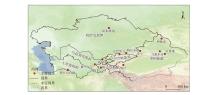
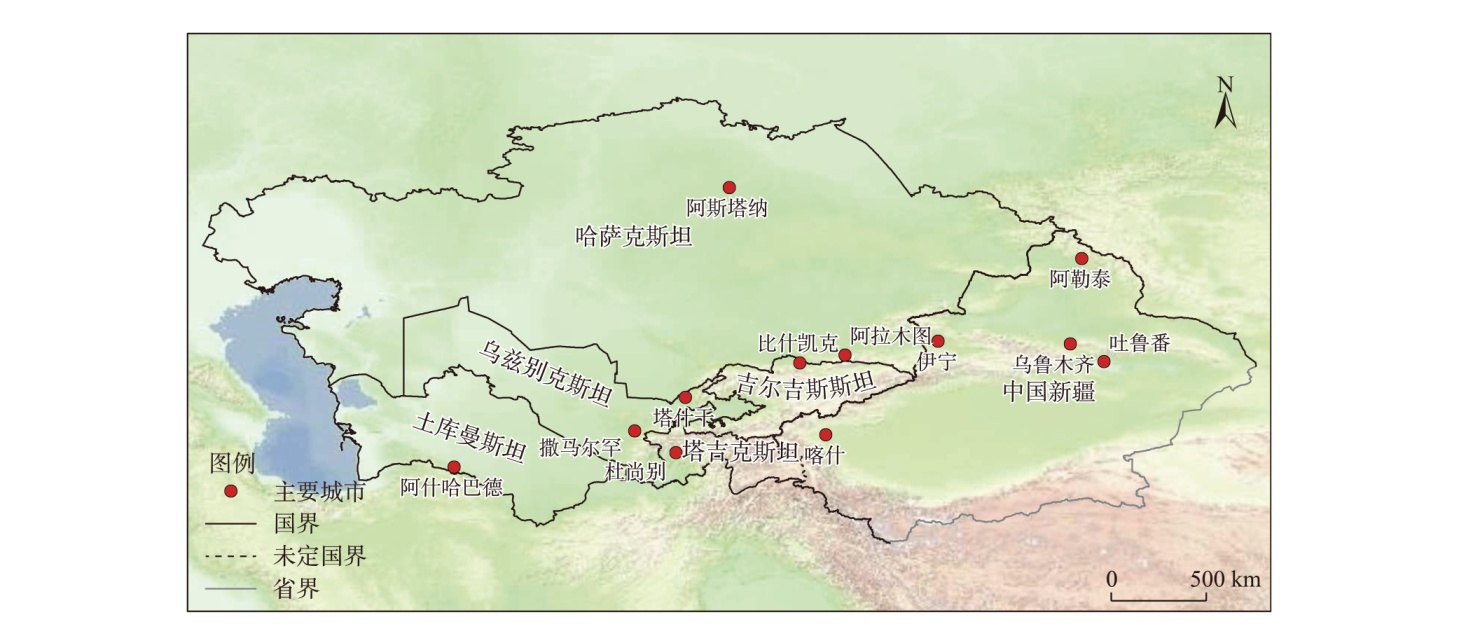
Fig. 1
Schematic diagram of the study area"

Tab. 1
Information of global climate models used"
| 模式名称 | 所属国家(地区) | 模式所属机构 | 分辨率(纬度×经度) |
|---|---|---|---|
| ACCESS-CM2 | 澳大利亚 | CSIRO | 1.25°×1.875° |
| ACCESS-ESM1-5 | 澳大利亚 | CSIRO | 1.25°×1.875° |
| BCC-CSM2 | 中国 | BCC | 1.125°×1.125° |
| CanESM5 | 加拿大 | CCCma | 2.8°×2.8° |
| INM-CM5-0 | 俄罗斯 | INM RAS | 2.0°×1.5° |
| IPSL-CM6A-LR | 法国 | IPSL | 1.25°×2.5° |
| NorESM2-LM | 挪威 | NCC | 2.5°×1.9° |
| NorESM2-MM | 挪威 | NCC | 1.25°×0.9° |
Tab. 2
Threshold grading standards for various meteorological elements"
| 等级分类 | 有效温度/℃ | 云量覆盖率/% | 风速/km·h-1 | 日降水量/mm |
|---|---|---|---|---|
| 10 | 23~25 | 11~20 | 1~9 | 0.00 |
| 9 | 20~22、26 | 1~10、21~30 | 10~19 | 0.01~2.99 |
| 8 | 27~28 | 0、31~40 | 0、20~29 | 3.00~5.99 |
| 7 | 18~19、29~30 | 41~50 | - | - |
| 6 | 15~17、31~32 | 51~60 | 30~39 | - |
| 5 | 11~14、33~34 | 61~70 | - | 6.00~8.99 |
| 4 | 7~10、35~36 | 71~80 | - | - |
| 3 | 0~6 | 81~90 | 40~49 | - |
| 2 | -5~-1、37~39 | 90~99 | - | 9.00~12.00 |
| 1 | ≤-6 | 100 | - | - |
| 0 | ≥39 | - | 50~70 | 12.01~25.00 |
| -1 | - | - | - | >25.00 |
| -10 | >70 |
Tab. 3
Sensory grading standard for HCI"
| HCI分值区间 | 评分描述 |
|---|---|
| 90~100 | 理想 |
| 80~89 | 优异 |
| 70~79 | 优良 |
| 60~69 | 良好 |
| 50~59 | 可接受 |
| 30~49 | 临界 |
| 10~29 | 难以接受 |
| 0~9 | 危险 |
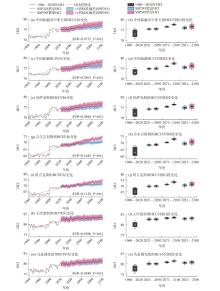
Fig. 2
Interannual variability of HCI across different regions"
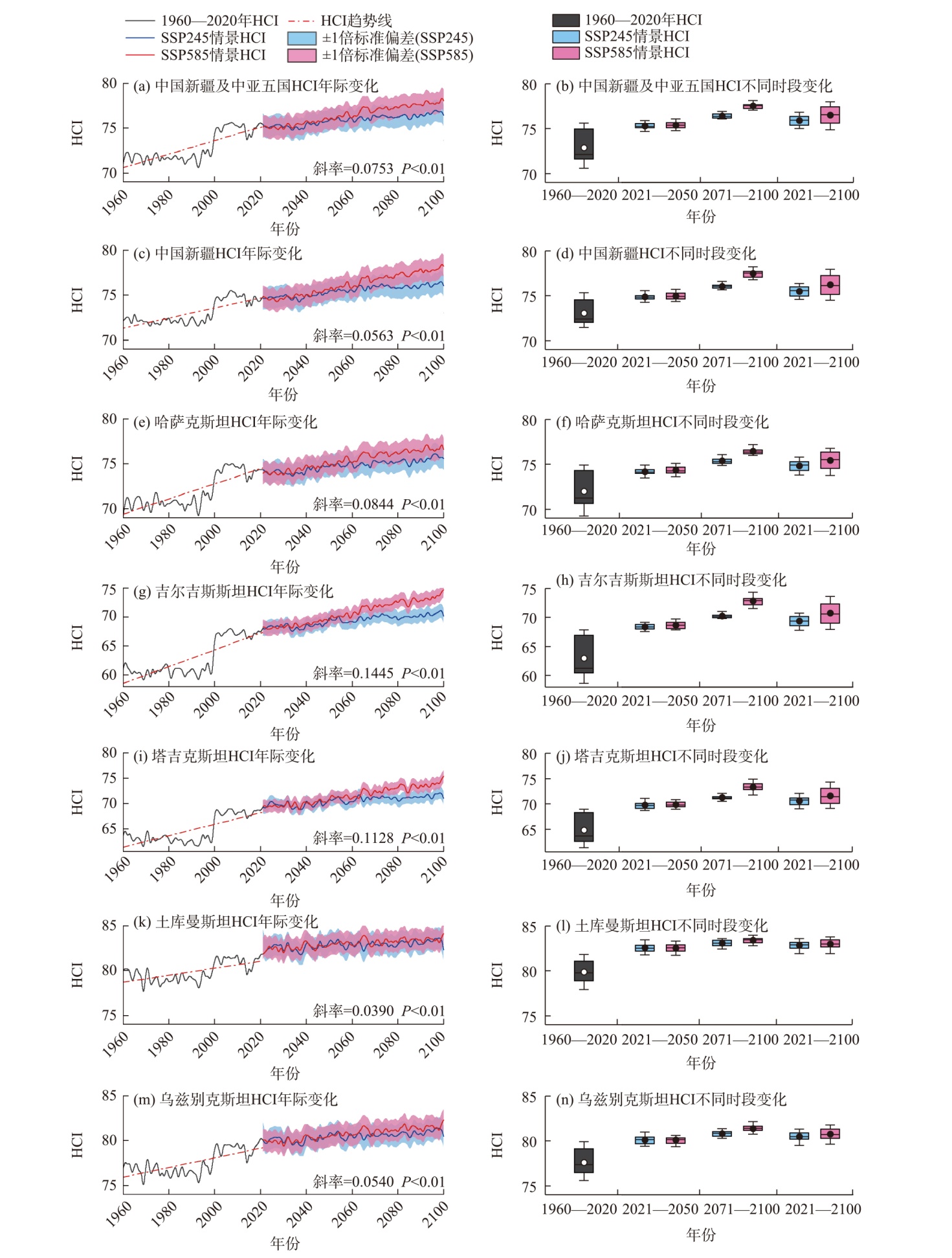
Fig. 3
Intra-annual variation of HCI across different regions"
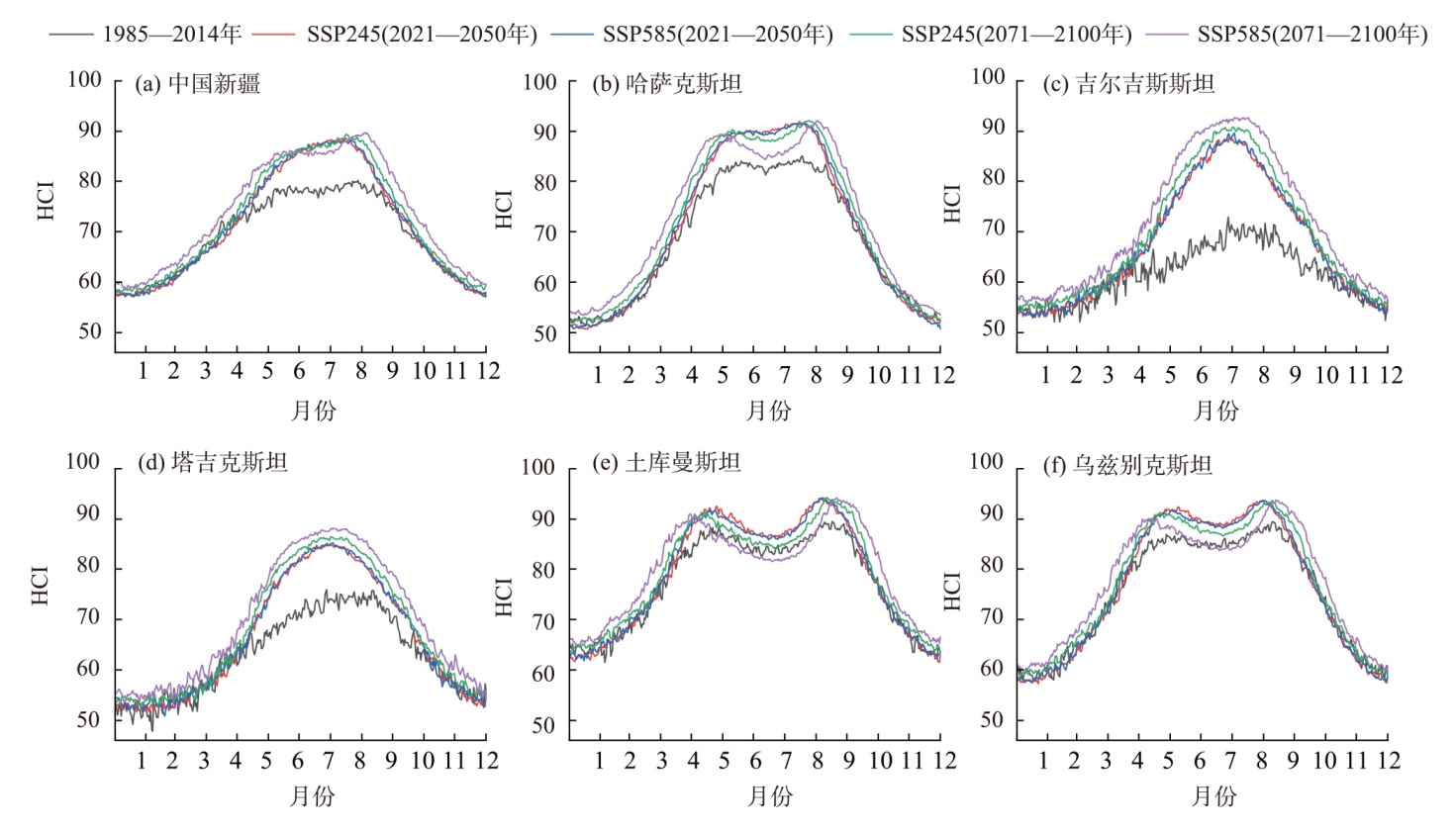
Fig. 4
Spatial patterns and change trends of HCI from 1960 to 2020"
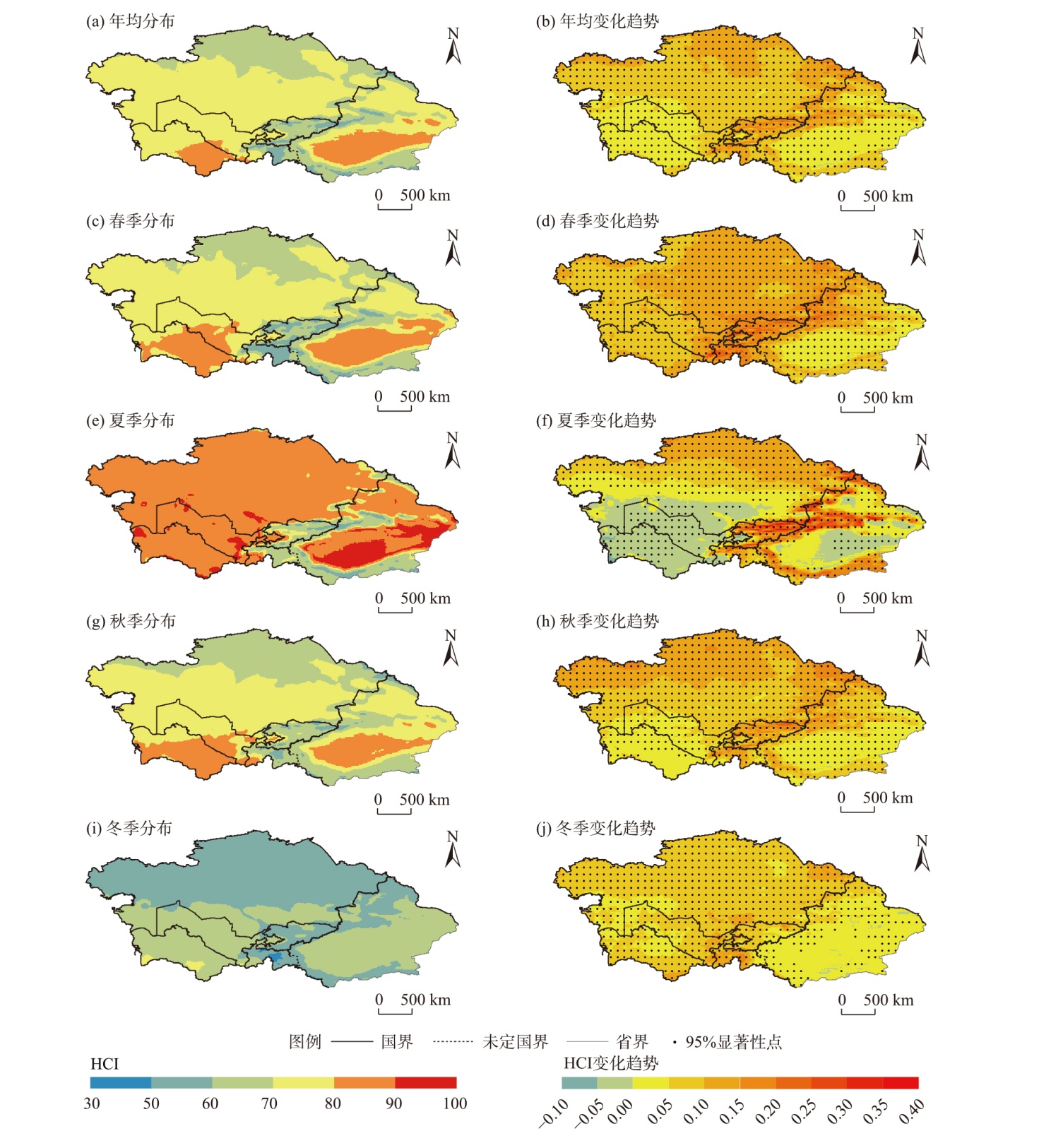
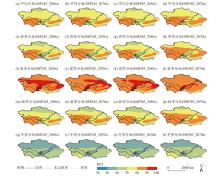
Fig. 5
Spatial distributions of HCI under different climate change scenarios"
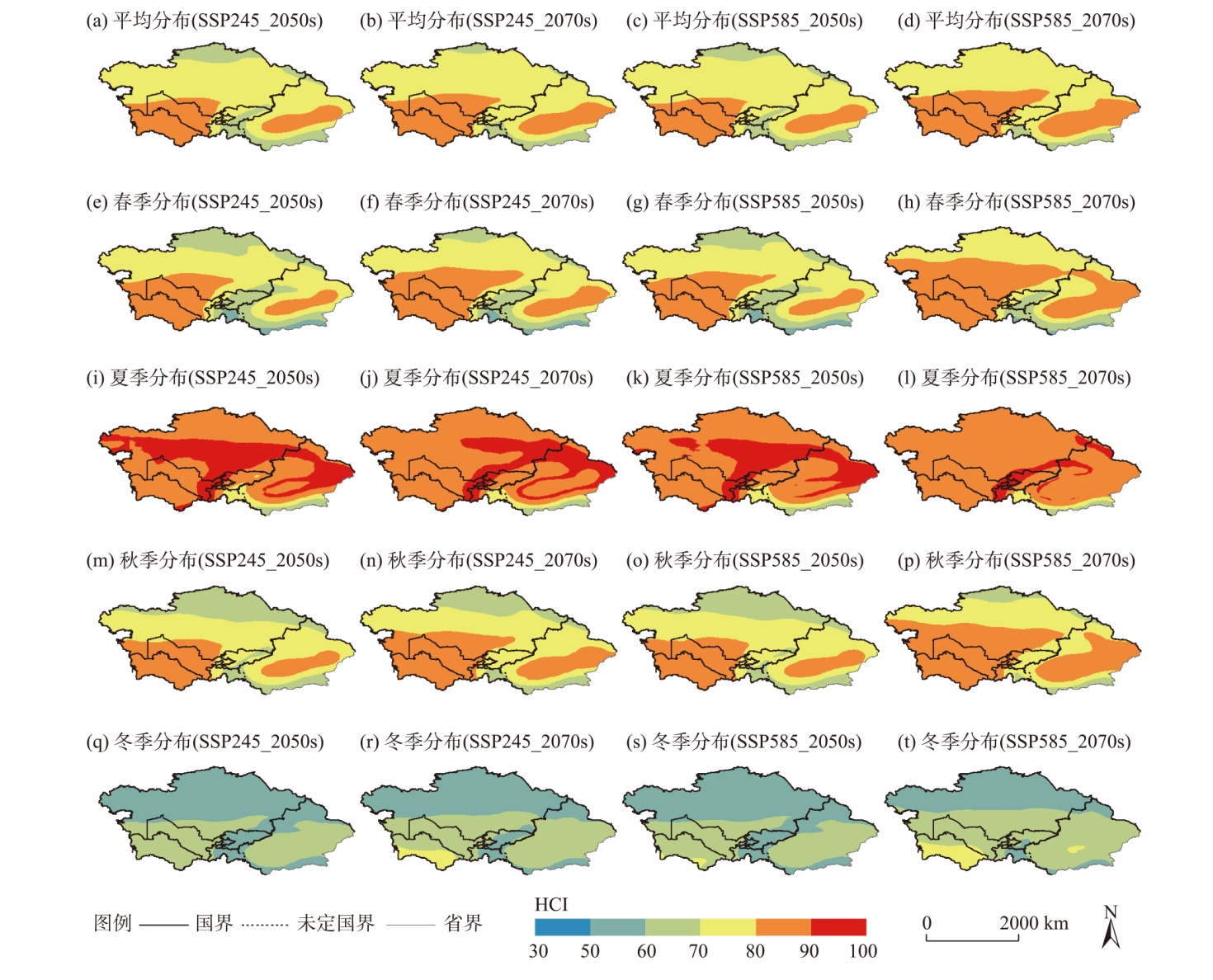
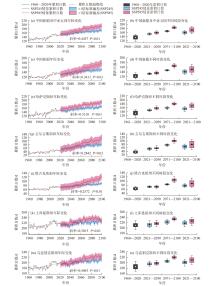
Fig. 6
Interannual variation in cumulative days of tourism climate comfort period (HCI>80)"
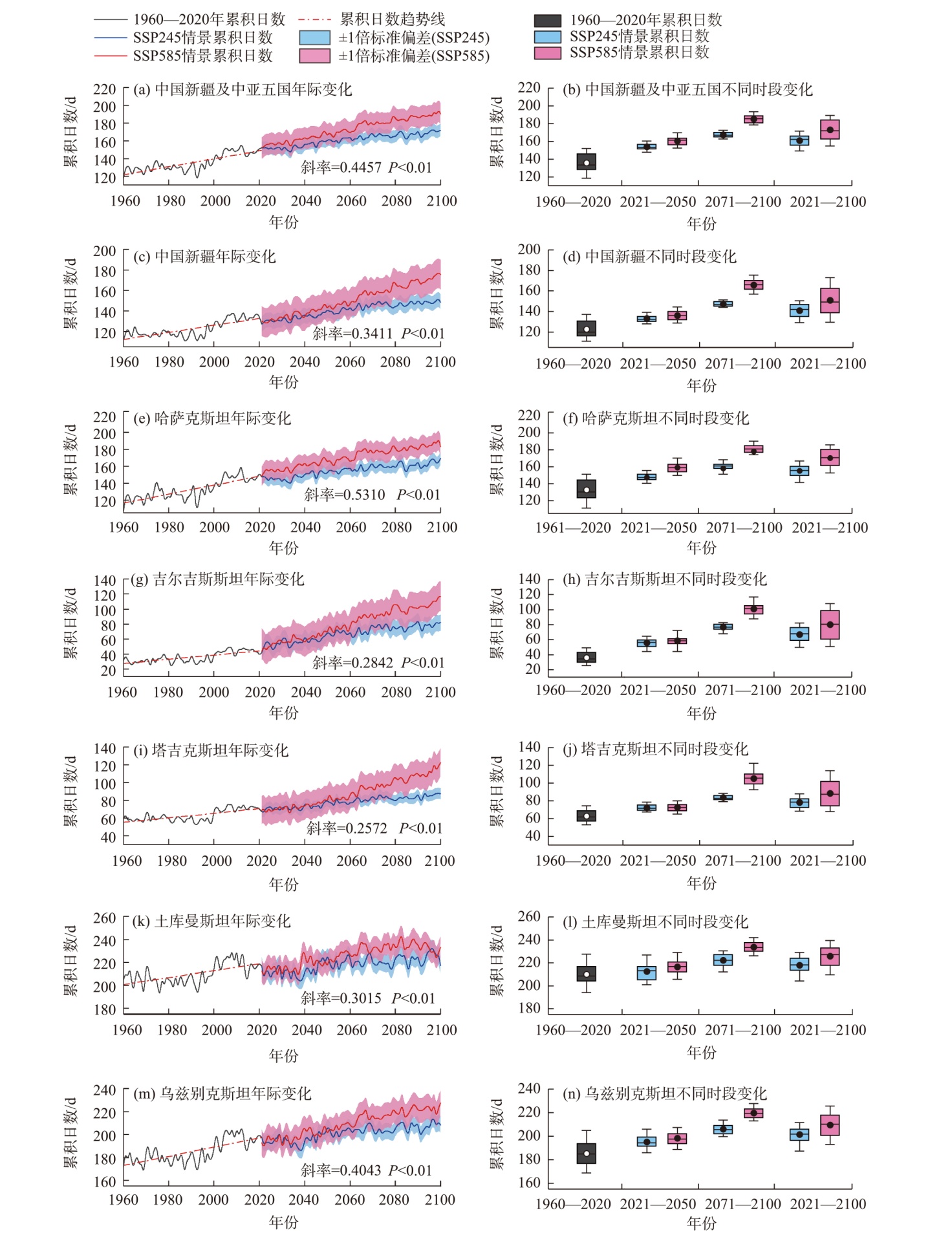
Fig. 7
Spatial change in cumulative days of tourism climate comfort period (HCI>80) from 1960 to 2020"
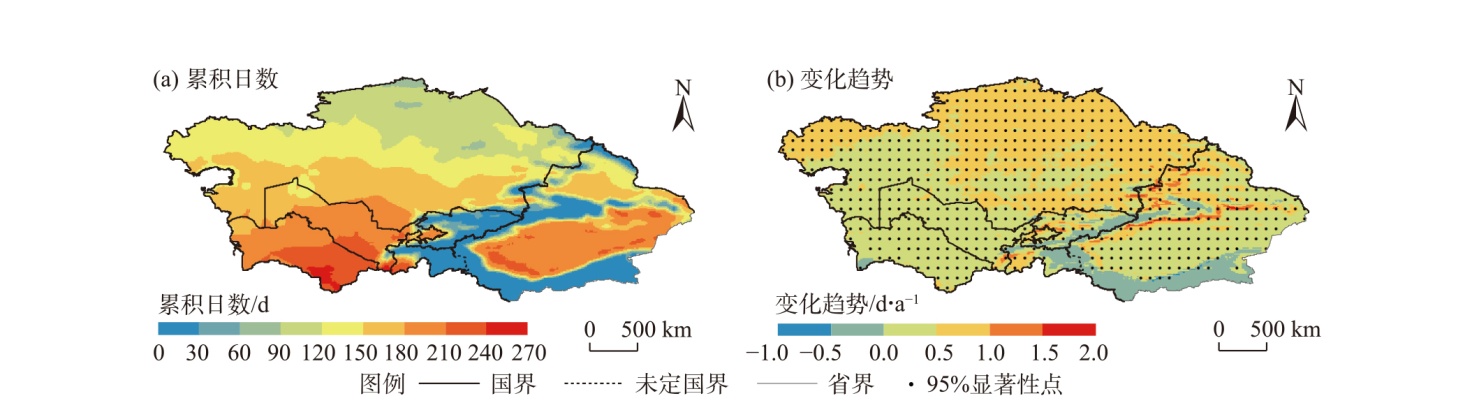
Fig. 8
Spatial change in cumulative days of tourism climate comfort period (HCI>80) under different climate change scenarios"
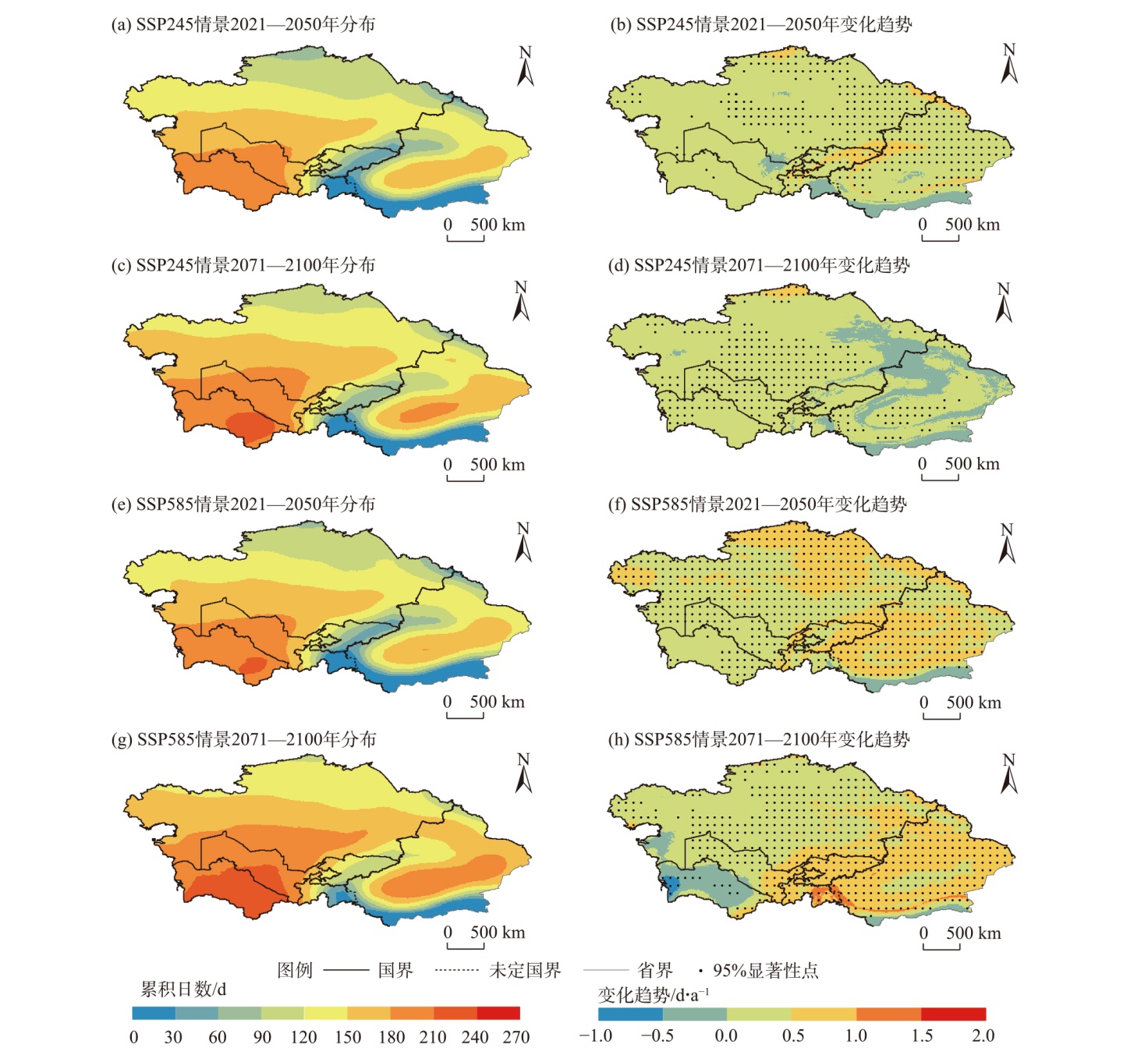
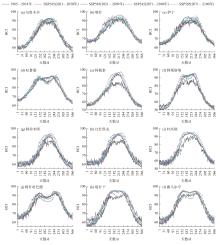
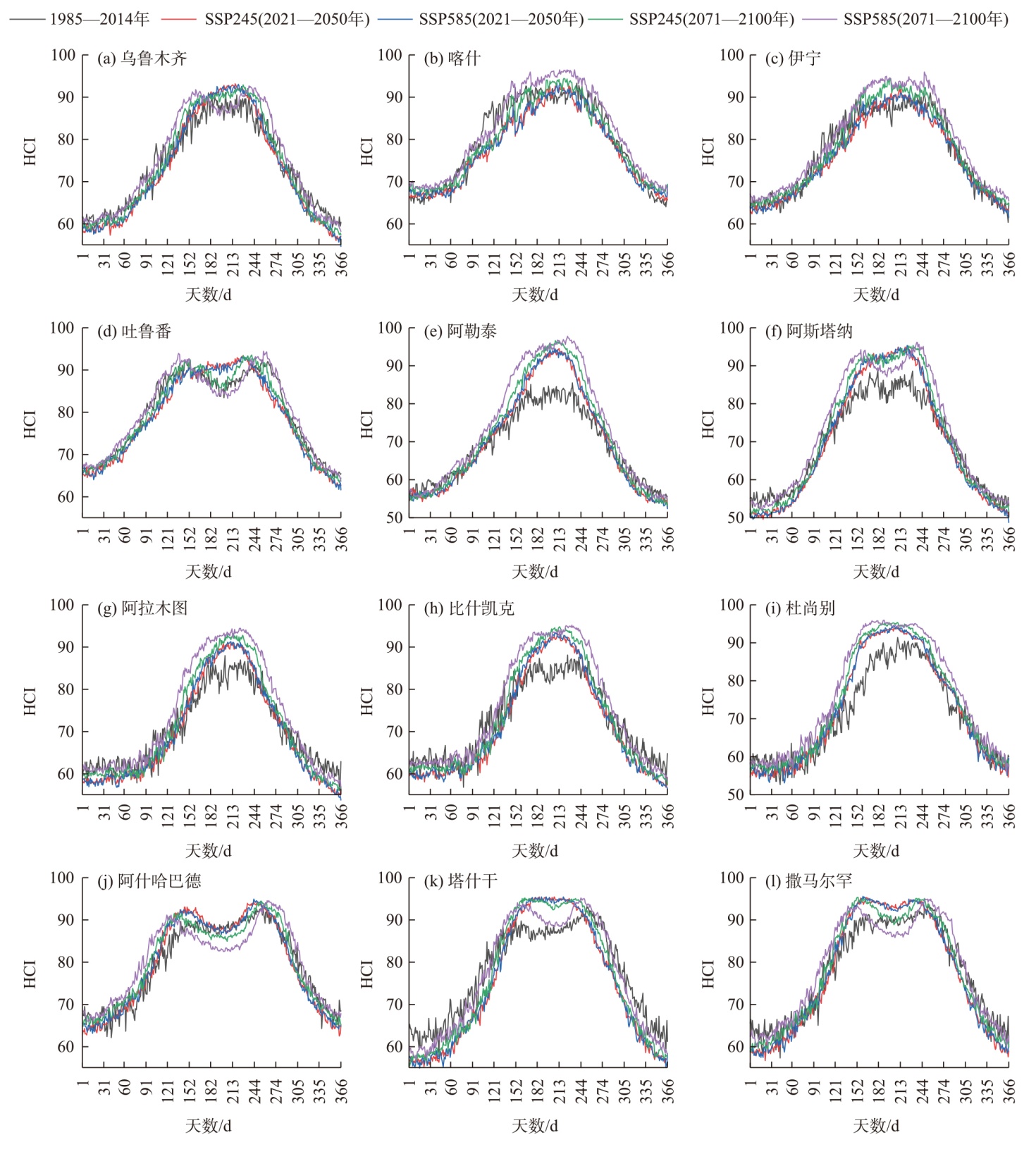
Fig. 9
Intra-annual variation of HCI in major tourist cities"
| [1] | 宋瑞, 保继刚, 魏小安, 等. 旅游强国建设与旅游业高质量发展[J]. 旅游学刊, 2024, 39(7): 16-27. |
| [Song Rui, Bao Jigang, Wei Xiaoan, et al. Construction of the strong tourism country and high-quality development of tourism[J]. Tourism Tribune, 2024, 39(7): 16-27.] | |
| [2] | World Travel & Tourism Council. Economic impact research 2025[R]. London: World Travel & Tourism Council, 2025. |
| [3] |
Dogru T, Marchio E A, Bulut U, et al. Climate change: Vulnerability and resilience of tourism and the entire economy[J]. Tourism Management, 2019, 72: 292-305.
doi: 10.1016/j.tourman.2018.12.010 |
| [4] |
Martín M B G. Weather, climate and tourism a geographical perspective[J]. Annals of Tourism Research, 2005, 32(3): 571-591.
doi: 10.1016/j.annals.2004.08.004 |
| [5] |
贾妮娅·叶力肯, 侯建楠, 刘思博. 近30 a新疆地州市旅游气候舒适度时空特征分析[J]. 干旱区地理, 2025, 48(2): 212-222.
doi: 10.12118/j.issn.1000-6060.2024.086 |
|
[Yeliken Jianiya, Hou Jiannan, Liu Sibo. Spatio-temporal characterization of tourism climate comfort in Xinjiang prefectures and cities in the last 30 years[J]. Arid Land Geography, 2025, 48(2): 212-222.]
doi: 10.12118/j.issn.1000-6060.2024.086 |
|
| [6] |
Gössling S, Scott D, Hall C M, et al. Consumer behaviour and demand response of tourists to climate change[J]. Annals of Tourism Research, 2012, 39(1): 36-58.
doi: 10.1016/j.annals.2011.11.002 |
| [7] |
Rutty M, Hewer M, Knowles N, et al. Tourism & climate change in North America: Regional state of knowledge[J]. Journal of Sustainable Tourism, 2024, 32(9): 1924-1947.
doi: 10.1080/09669582.2022.2127742 |
| [8] | IPCC. Climate change 2021: The physical science basis[M]. Cambridge: Cambridge University Press, 2023. |
| [9] |
Scott D. Tourism and the climate crisis[J]. Journal of Sustainable Tourism, 2024, 32(9): 1709-1724.
doi: 10.1080/09669582.2024.2391911 |
| [10] | 关靖云, 李东, 徐晓亮, 等. 近40年新疆旅游气候舒适期的时空格局及其演变研究[J]. 西南大学学报(自然科学版), 2022, 44(6): 185-197. |
| [Guan Jingyun, Li Dong, Xu Xiaoliang, et al. Spatialtemporal pattern and evolution of tourism climate comfort period in Xinjiang in recent 40 years[J]. Journal of Southwest University (Natural Science Edition), 2022, 44(6): 185-197.] | |
| [11] |
Fallah B, Didovets I, Rostami M, et al. Climate change impacts on Central Asia: Trends, extremes and future projections[J]. International Journal of Climatology, 2024, 44(10): 3191-3213.
doi: 10.1002/joc.v44.10 |
| [12] |
Qiu Y, Feng J M, Yan Z W, et al. High-resolution dynamical downscaling for regional climate projection in Central Asia based on bias-corrected multiple GCMs[J]. Climate Dynamics, 2022, 58(3): 777-791.
doi: 10.1007/s00382-021-05934-2 |
| [13] | 陈熠瑶, 杨丽敏, 王玮. 合作之路越走越宽中国中亚旅游“双向奔赴”[N]. 中国旅游报, 2025-06-20(001). |
| [Chen Yiyao, Yang Limin, Wang Wei. The road of cooperation is wider and wider: China-central tourism’s “Two-way Journey”[N]. China Tourism News, 2025-06-20(001).] | |
| [14] | 邓浩. 中国对中亚外交: 进展、经验与未来方向[J]. 国际问题研究, 2022(4): 100-116, 141-142. |
| [Deng Hao. China’s diplomacy in Central Asia: Progress, experience and future directions[J]. International Studies, 2022(4): 100-116, 141-142.] | |
| [15] | 曾向红, 王子寒. “三大倡议”与新时期中国的中亚外交[J]. 国际展望, 2024, 16(1): 75-96, 160. |
| [Zeng Xianghong, Wang Zihan. The “Three Major Initiatives” and China’s Central Asia diplomacy in the New Era[J]. Global Review, 2024, 16(1): 75-96, 160.] | |
| [16] | 孙根年, 马丽君. 西安旅游气候舒适度与客流量年内变化相关性分析[J]. 旅游学刊, 2007, 22(7): 34-39. |
| [Sun Gennian, Ma Lijun. An analysis of tourist climate comfortable degree and yearly variation of tourist traffic in Xi’an[J]. Tourism Tribune, 2007, 22(7): 34-39.] | |
| [17] | 朱妮娜, 曾刚, 史正燕, 等. 旅游气候舒适度的模型改进及时空演化[J]. 旅游科学, 2023, 37(4): 144-160. |
| [Zhu Nina, Zeng Gang, Shi Zhengyan, et al. Model modification and spatiotemporal evolution of the comfortability degree of tourism climate[J]. Tourism Science, 2023, 37(4): 144-160.] | |
| [18] | Zhao J Y, Wang S J. Spatio-temporal evolution and prediction of tourism comprehensive climate comfort in Henan Province, China[J]. Atmosphere, 2021, 12(7): 823, doi: 10.3390/atmos12070823. |
| [19] |
Mieczkowski Z. The tourism climatic index: A method of evaluating world climates for Tourism[J]. Canadian Geographer/Le Géographe Canadien, 1985, 29(3): 220-233.
doi: 10.1111/cag.1985.29.issue-3 |
| [20] |
Höppe P. The physiological equivalent temperature: A universal index for the biometeorological assessment of the thermal environment[J]. International Journal of Biometeorology, 1999, 43(2): 71-75.
pmid: 10552310 |
| [21] |
Blazejczyk K, Epstein Y, Jendritzky G, et al. Comparison of UTCI to selected thermal indices[J]. International Journal of Biometeorology, 2012, 56(3): 515-535.
doi: 10.1007/s00484-011-0453-2 pmid: 21614619 |
| [22] | 马丽君, 孙根年, 王洁洁. 中国东部沿海沿边城市旅游气候舒适度评价[J]. 地理科学进展, 2009, 28(5): 713-722. |
|
[Ma Lijun, Sun Gennian, Wang Jiejie. Evaluation of tourism climate comfortableness of coastal cities in the eastern China[J]. Progress in Geography, 2009, 28(5): 713-722.]
doi: 10.11820/dlkxjz.2009.05.009 |
|
| [23] |
Rutty M, Scott D. Thermal range of coastal tourism resort microclimates[J]. Tourism Geographies, 2014, 16(3): 346-363.
doi: 10.1080/14616688.2014.932833 |
| [24] |
De Freitas C R, Scott D, McBoyle G. A second generation climate index for tourism (CIT): Specification and verification[J]. International Journal of Biometeorology, 2008, 52(5): 399-407.
doi: 10.1007/s00484-007-0134-3 pmid: 18097690 |
| [25] | Tartarini F, Schiavon S. Pythermal comfort: A Python package for thermal comfort research[J]. SoftwareX, 2020, 12: 100578, doi: 10.1016/j.softx.2020.100578. |
| [26] | 孙美淑, 李山. 气候舒适度评价的经验模型: 回顾与展望[J]. 旅游学刊, 2015, 30(12): 19-34. |
| [Sun Meishu, Li Shan. Empirical indices evaluating climate comfortableness: Review and prospect[J]. Tourism Tribune, 2015, 30(12): 19-34.] | |
| [27] | 蔚丹丹, 李山, 张粮锋, 等. 旅游气候舒适性评价: 模型优化与中国案例[J]. 旅游学刊, 2021, 36(5): 14-28. |
| [Wei Dandan, Li Shan, Zhang Liangfeng, et al. Evaluate tourism climate using modified holiday climate index in China[J]. Tourism Tribune, 2021, 36(5): 14-28.] | |
| [28] | Scott D, Rutty M, Amelung B, et al. An inter-comparison of the holiday climate index (HCI) and the tourism climate index (TCI) in Europe[J]. Atmosphere, 2016, 7(6): 80, doi: 10.3390/atmos7060080. |
| [29] |
Kholmatjanov B M, Abdulakhatov E I, Begmatov S U, et al. Bioclimatic conditions of the classic tourist route Tashkent-Samarkand-Bukhara-Khiva in Uzbekistan[J]. WSEAS Transactions on Environment and Development, 2023, 19: 1255-1275.
doi: 10.37394/232015 |
| [30] |
Guan J Y, Yao J Q, Li M Y, et al. Historical changes and projected trends of extreme climate events in Xinjiang, China[J]. Climate Dynamics, 2022, 59(5): 1753-1774.
doi: 10.1007/s00382-021-06067-2 |
| [31] | 周悦, 鲁瑞洁, 黄梦真. 伊犁河流域多时间尺度气象干旱时空特征[J/OL]. 干旱区地理. [2025-10-10]. https://link.cnki.net/urlid/65.1103.X.202509-30.1434.002. |
| [Zhou Yue, Lu Ruijie, Huang Mengzhen. Spatiotemporal characteristics of multi-scale meteorological drought in the Ili River Basin[J/OL]. Arid Land Geography. [2025-10-10]. https://link.cnki.net/urlid/65.1103.X.202509-30.1434.002. ] | |
| [32] |
Yan Y C, Xu Y Y, Yue S P. A high-spatial-resolution dataset of human thermal stress indices over South and East Asia[J]. Scientific Data, 2021, 8(1): 229, doi: 10.1038/s41597-021-01010-w.
pmid: 34471140 |
| [33] | 蒋文好, 陈活泼. CMIP6模式对亚洲中高纬区极端温度变化的模拟及预估[J]. 大气科学学报, 2021, 44(4): 592-603. |
| [Jiang Wenhao, Chen Huopo. Assessment and projection of changes in temperature extremes over the mid-high latitudes of Asia based on CMIP6 models[J]. Transactions Atmospheric Sciences, 2021, 44(4): 592-603.] | |
| [34] | 古再丽努尔·亚森, 张京朋, 赵天保. CMIP6多模式对21世纪中亚极端降水未来变化预估[J]. 气候与环境研究, 2023, 28(3): 286-302. |
| [Yasen Guzailinuer, Zhang Jingpeng, Zhao Tianbao. CMIP6 model-projected future changes in extreme precipitation over Central Asia in the 21st century[J]. Climate and Environment Research, 2023, 28(3): 286-302.] | |
| [35] | Yao J Q, Chen Y N, Chen J, et al. Intensification of extreme precipitation in arid Central Asia[J]. Journal of Hydrology, 2021, 598: 125760, doi: 10.1016/j.jhydrol.2020.125760. |
| [36] |
Peng D D, Zhou T J, Zhang L X, et al. Observationally constrained projection of the reduced intensification of extreme climate events in Central Asia from 0.5 ℃ less global warming[J]. Climate Dynamics, 2020, 54(1-2): 543-560.
doi: 10.1007/s00382-019-05014-6 |
| [37] |
Yu D D, Matthews L, Scott D, et al. Climate suitability for tourism in China in an era of climate change: A multiscale analysis using holiday climate index[J]. Current Issues in Tourism, 2022, 25(14): 2269-2284.
doi: 10.1080/13683500.2021.1956442 |
| [38] |
Matthews L, Scott D, Andrey J. Development of a data-driven weather index for beach parks tourism[J]. International Journal of Biometeorology, 2021, 65(5): 749-762.
doi: 10.1007/s00484-019-01799-7 |
| [39] |
Sen P K. Estimates of the regression coefficient based on Kendall’s Tau[J]. Journal of the American Statistical Association, 1968, 63(324): 1379-1389.
doi: 10.1080/01621459.1968.10480934 |
| [40] |
Mann H B. Non-parametric test against trend[J]. Econometrica, 1945, 13(3): 245-259.
doi: 10.2307/1907187 |
| [41] |
闫昕旸, 张强, 张文波, 等. 泛中亚干旱区气候变化特征分析[J]. 干旱区研究, 2021, 38(1): 1-11.
doi: 10.13866/j.azr.2021.01.01 |
|
[Yan Xinyang, Zhang Qiang, Zhang Wenbo, et al. Analysis of climate characteristics in the Pan-Central-Asia arid region[J]. Arid Zone Research, 2021, 38(1): 1-11.]
doi: 10.13866/j.azr.2021.01.01 |
|
| [42] | 阿帕尔·肉孜, 叶尔克江·霍依哈孜, 高培, 等. 新疆近50 a气候的变化特征[J]. 南京信息工程大学学报(自然科学版), 2014, 6(4): 356-362. |
| [Rouzi Apaer, Huoyihazi Yeerkejiang, Gao Pei, et al. Climatic change characteristics of Xinjiang during recent 50 years[J]. Journal of Nanjing University of Information Science and Technology: Natural Science Edition, 2014, 6(4): 356-362.] | |
| [43] |
Mountain Research Initiative Edw Working Group. Elevation-dependent warming in mountain regions of the world[J]. Nature Climate Change, 2015, 5(5): 424-430.
doi: 10.1038/nclimate2563 |
| [44] | 周波涛, 钱进. IPCC AR6报告解读: 极端天气气候事件变化[J]. 气候变化研究进展, 2021, 17(6): 713-718. |
| [Zhou Botao, Qian Jin. Changes of weather and climate extremes in the IPCC AR6[J]. Climate Change Research, 2021, 17(6): 713-718.] | |
| [45] |
Becken S, Wilson J. The impacts of weather on tourist travel[J]. Tourism Geographies, 2013, 15(4): 620-639.
doi: 10.1080/14616688.2012.762541 |
| [46] |
Li R, Chi X L. Thermal comfort and tourism climate changes in the Qinghai-Tibet Plateau in the last 50 years[J]. Theoretical and Applied Climatology, 2014, 117(3): 613-624.
doi: 10.1007/s00704-013-1027-5 |
| [47] | IPCC. Climate Change 2022: Impacts, adaptation and vulnerability[M]. Cambridge: Cambridge University Press, 2023. |
| [48] | Gossling S, Balas M, Mayer M, et al. A review of tourism and climate change mitigation: The scales, scopes, stakeholders and strategies of carbon management[J]. Tourism Management, 2023, 95: 104681, doi: 10.1016/j.tourman.2022.104681. |
| [49] |
陈亚宁, 李稚, 方功焕, 等. 气候变化对中亚天山山区水资源影响研究[J]. 地理学报, 2017, 72(1): 18-26.
doi: 10.11821/dlxb201701002 |
|
[Chen Yaning, Li Zhi, Fang Gonghuan, et al. Impact of climate change on water resources in the Tianshan Mountains, Central Asia[J]. Acta Geographica Sinica, 2017, 72(1): 18-26.]
doi: 10.11821/dlxb201701002 |
|
||