Arid Land Geography ›› 2026, Vol. 49 ›› Issue (4): 643-655.doi: 10.12118/j.issn.1000-6060.2025.710
• New Quality Productive Forces Driving High-Quality Development of Tourism • Previous Articles Next Articles
LU Yayan1,2( ), FENG Tian1, YANG Zhaoping2,3, HAN Fang3(), JIA Yingying1
Received:2025-11-03
Revised:2025-12-05
Online:2026-04-25
Published:2026-04-28
Contact:
HAN Fang
E-mail:luyayan16@mails.ucas.ac.cn;hanfang@ms.xjb.ac.cn
LU Yayan, FENG Tian, YANG Zhaoping, HAN Fang, JIA Yingying. Spatiotemporal evolution and obstacle factors of the adaptability between new quality productive forces and high-quality tourism development in Chinese provinces[J].Arid Land Geography, 2026, 49(4): 643-655.
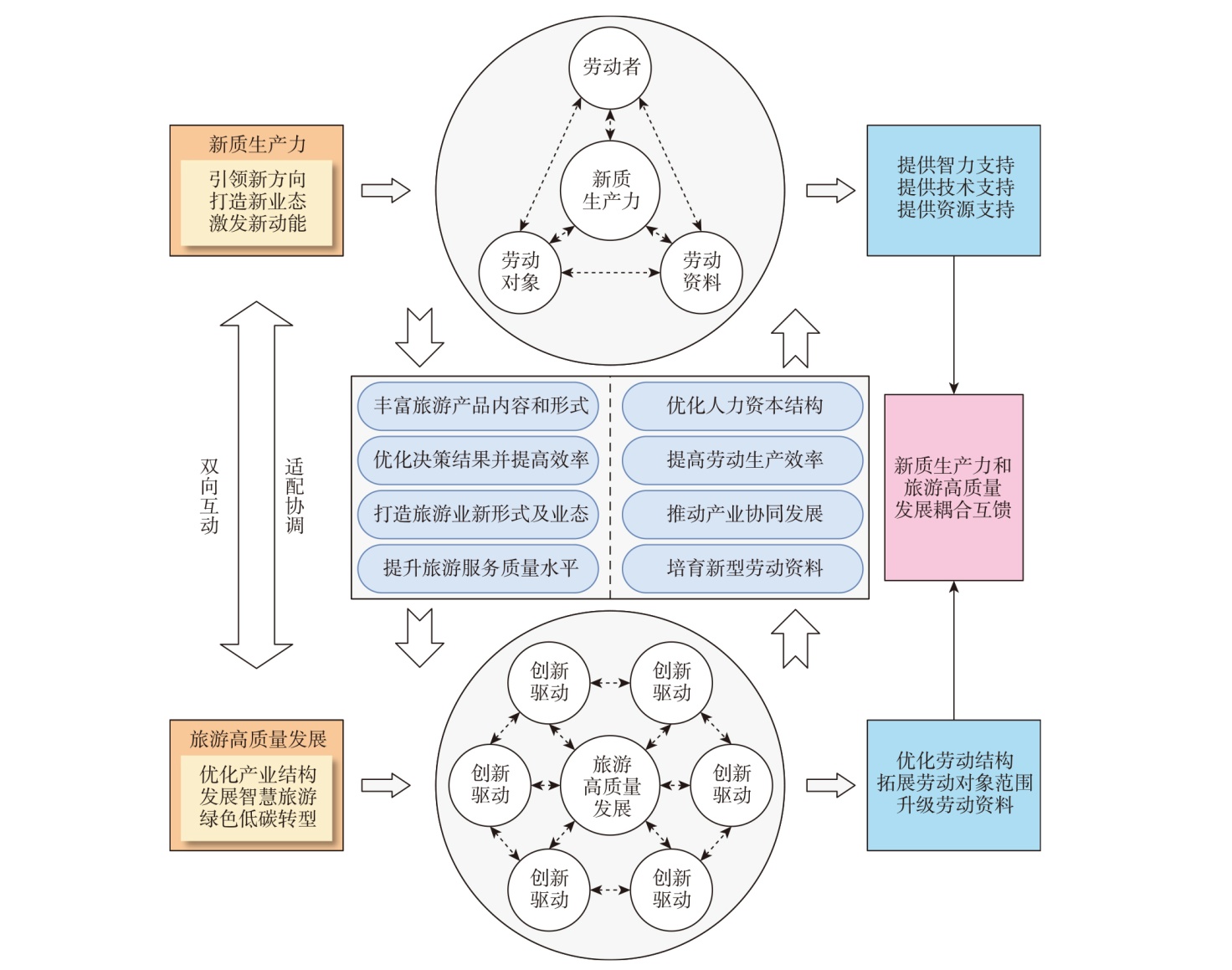
Fig. 1
Adaptation mechanism between new quality productive forces and high-quality tourism development"

Tab. 1
Evaluation index system of new quality productive forces"
| 准则层 | 指标层 | 单位 | 属性 | 指标权重 |
|---|---|---|---|---|
| 劳动者 | 人均受教育程度(A1) | 年 | + | 0.0028 |
| 在校大学生学生人数(A2) | 人 | + | 0.0198 | |
| 研发人员数量(A3) | 人 | + | 0.0454 | |
| 高校R&D人员全时当量(A4) | h | + | 0.0274 | |
| 高技术产业R&D人员折合全时当量(A5) | h | + | 0.0823 | |
| 规上工业企业R&D人员折合全时当量(A6) | h | + | 0.0593 | |
| 教育经费投入(A7) | 108元 | + | 0.0249 | |
| 科学技术经费投入(A8) | 108元 | + | 0.0552 | |
| 劳动对象 | 高技术产业收入(A9) | 108元 | + | 0.0757 |
| 高技术产业投资增长情况(A10) | % | + | 0.0149 | |
| 人工智能企业数(A11) | 个 | + | 0.0955 | |
| 新产品开发项目数(A12) | 个 | + | 0.0735 | |
| 城市绿地面积(A13) | hm2 | + | 0.0320 | |
| 工业污染治理力度(A14) | % | + | 0.0334 | |
| 一般工业固体废物综合利用率(A15) | % | + | 0.0060 | |
| 劳动资料 | 网络普及率(A16) | 104个 | + | 0.0386 |
| 光缆线路长度(A17) | km | + | 0.0149 | |
| 移动电话交换机容量(A18) | 104户 | + | 0.0218 | |
| 能源消耗(A19) | % | - | 0.0005 | |
| 可再生能源(A20) | 108 kWh | + | 0.0549 | |
| R&D经费投入强度(A21) | % | + | 0.0215 | |
| 专利授权数(A22) | 件 | + | 0.0744 | |
| 数字化(A23) | % | + | 0.0761 | |
| 电信业务总量(A24) | 108元 | + | 0.0490 |
Tab. 2
Evaluation index system for high-quality tourism development"
| 准则层 | 指标层 | 单位 | 属性 | 指标权重 |
|---|---|---|---|---|
| 创新驱动 | 旅游R&D经费(B1) | 108元 | + | 0.0577 |
| 旅游高等院校数(B2) | 个 | + | 0.0248 | |
| 技术市场成交额(B3) | 104元 | + | 0.1074 | |
| 旅游院校在校生人数(B4) | 人 | + | 0.0477 | |
| 效益提升 | 国内旅游收入增长率(B5) | % | + | 0.0030 |
| 国内旅游人数增长率(B6) | % | + | 0.2875 | |
| 旅游从业人数(B7) | 人 | + | 0.0246 | |
| 旅游业增长弹性系数(B8) | % | + | 0.0003 | |
| 供给质量 | 星级酒店数(B9) | 个 | + | 0.0207 |
| 交通运输里程数(B10) | km | + | 0.0182 | |
| 旅行社个数(B11) | 个 | + | 0.0215 | |
| 3A级及以上景区数(B12) | 个 | + | 0.0343 | |
| 结构优化 | 住宿和餐饮业比重(B13) | % | + | 0.0111 |
| 第三产业比重(B14) | % | + | 0.0142 | |
| 旅游者人均消费水平(B15) | 元 | + | 0.0134 | |
| 旅游收入比重(B16) | % | + | 0.0183 | |
| 开放发展 | 艺术表演团体演出场次(B17) | 104场 | + | 0.0676 |
| 文化旅游体育与传媒支出(B18) | 108元 | + | 0.0264 | |
| 旅游外汇收入(B19) | 106USD | + | 0.0675 | |
| 主要文化机构数(B20) | 个 | + | 0.0176 | |
| 接待入境过夜游客人次(B21) | 104人 | + | 0.0743 | |
| 生态效益 | 旅游业废水排放(B22) | 104 t | - | 0.0035 |
| 旅游业废气排放(B23) | 104 t | - | 0.0018 | |
| 旅游业环境污染控制水平(B24) | 108元 | + | 0.0368 |
Fig. 2
Comprehensive development level of new quality productive forces and high-quality tourism from 2006 to 2022"
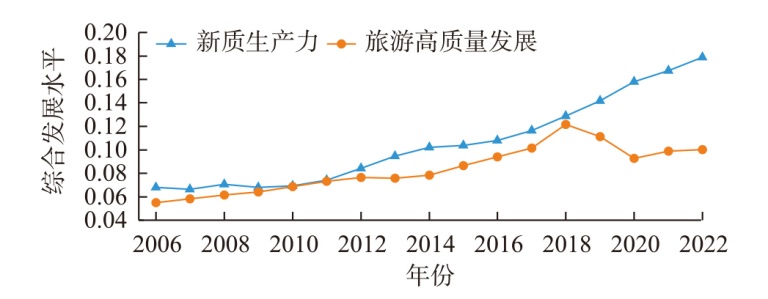
Fig. 3
Spatial distributions of new quality productive forces development level from 2006 to 2022"
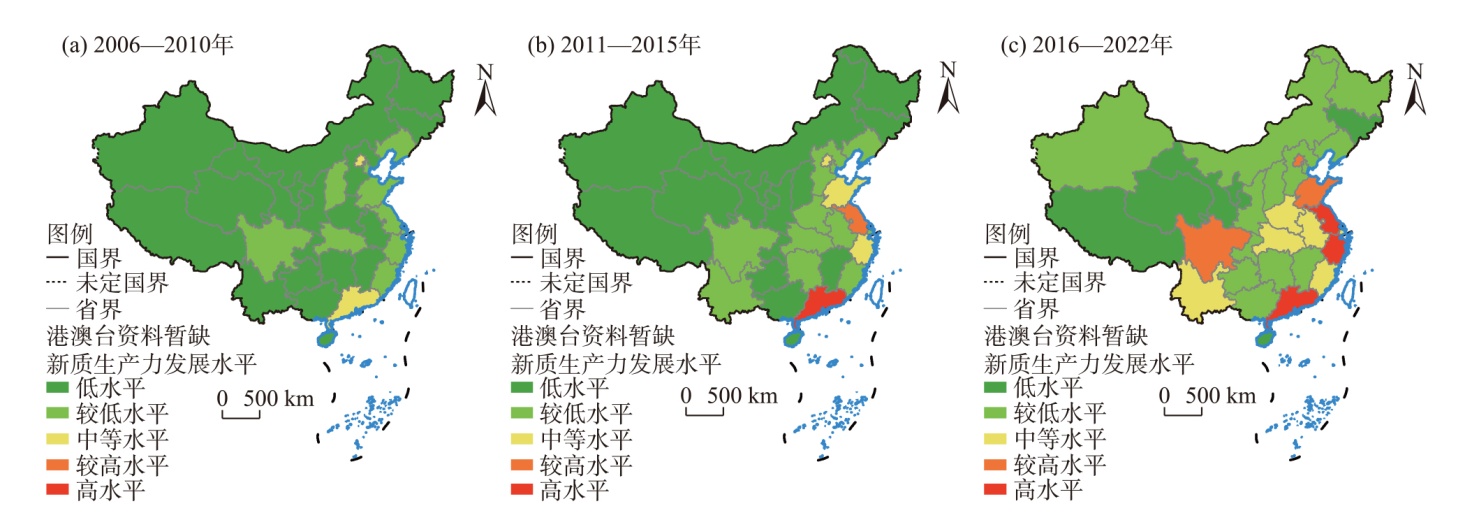
Fig. 4
Spatial distributions of high-quality tourism development level from 2006 to 2022"
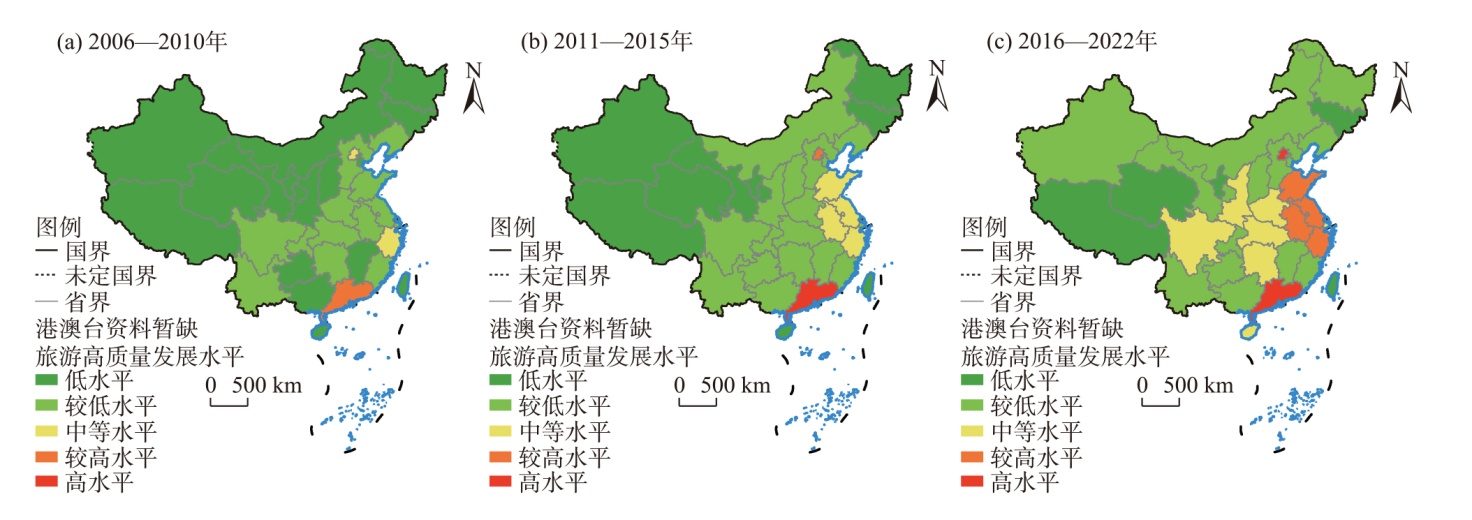
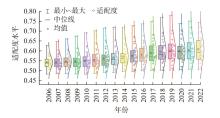
Fig. 5
Adaptability between new quality productive forces and high-quality tourism development from 2006 to 2022"
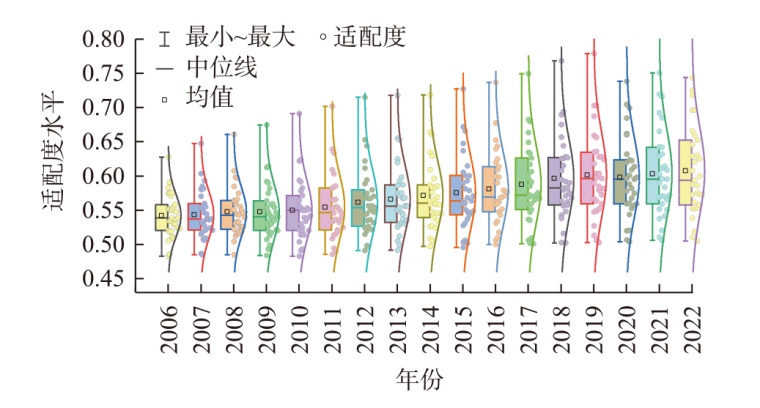
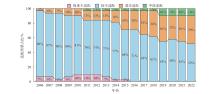
Fig. 6
Proportion of adaptability types between new quality productive forces and high-quality tourism development from 2006 to 2022"
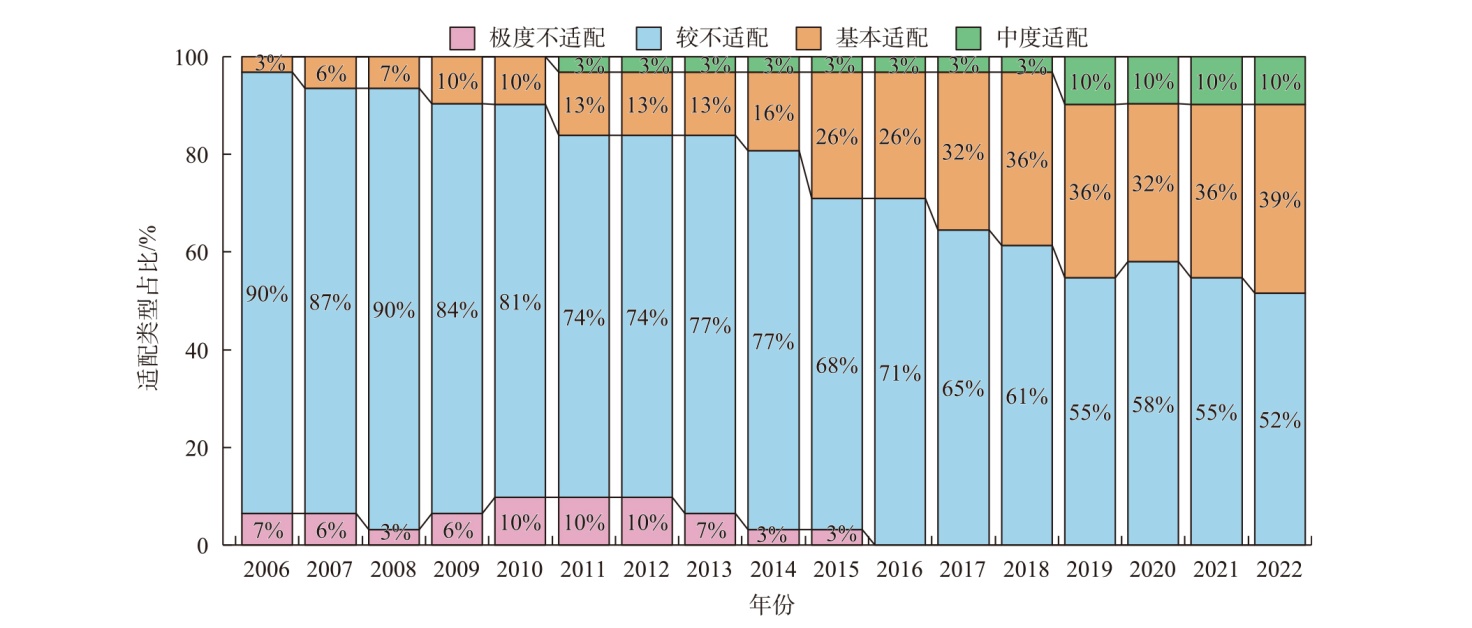
Fig. 7
Spatial distribution pattern of adaptability between new quality productive forces and high-quality tourism development from 2006 to 2022"
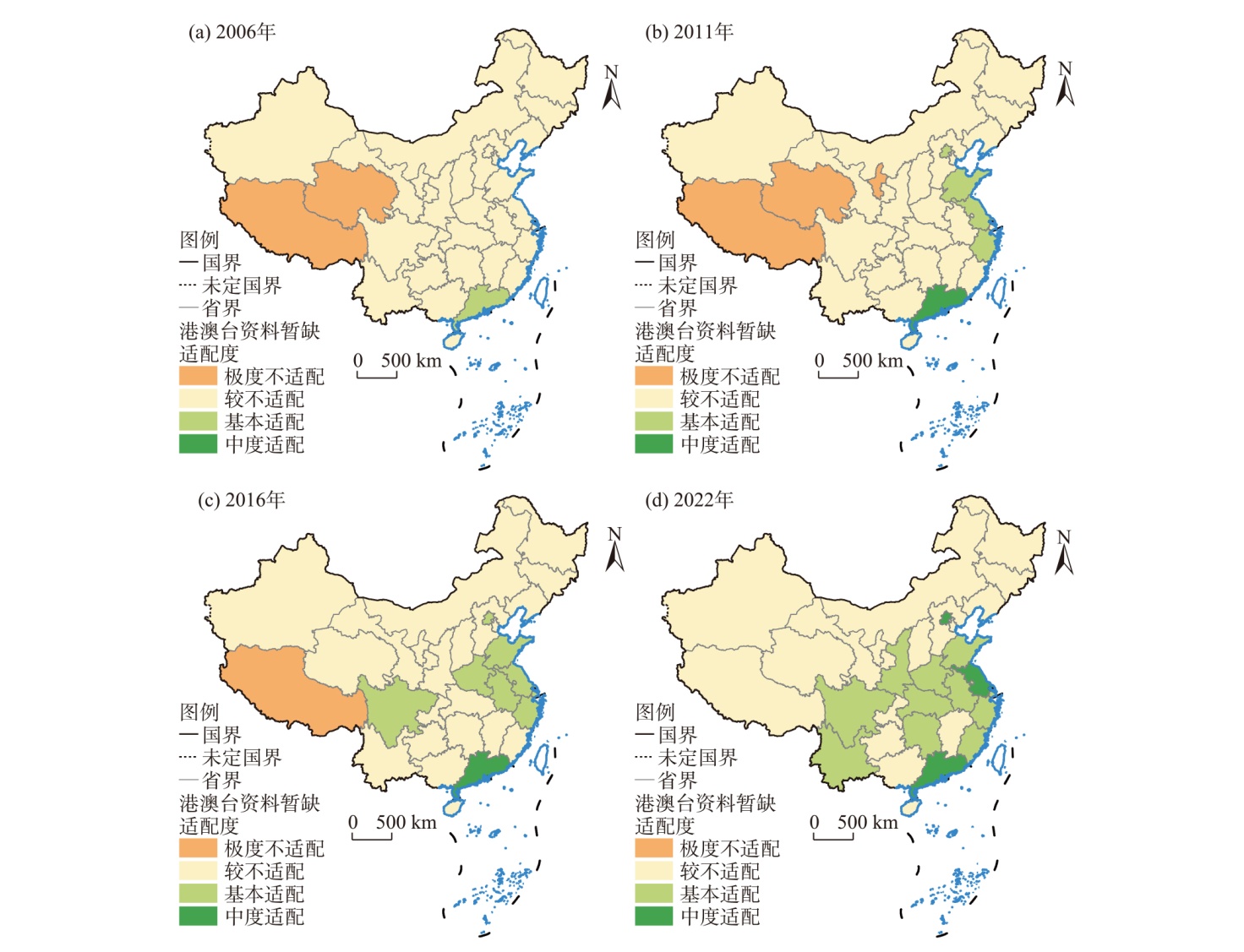
Fig. 8
Diagnosis results of obstacle factors at the criteria level for new quality productive forces"
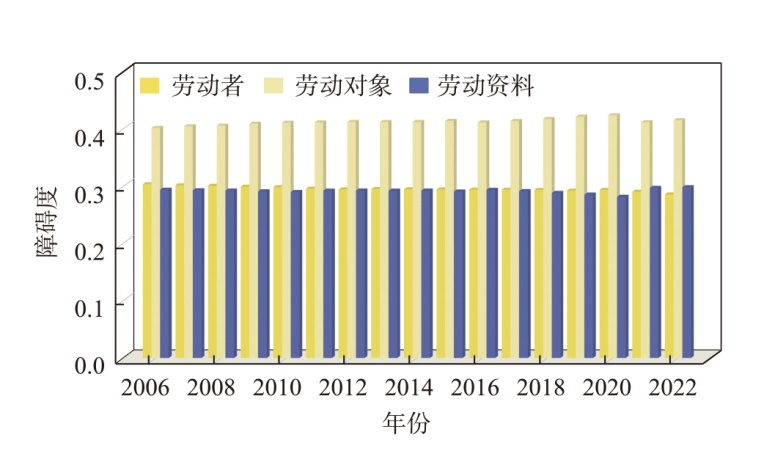
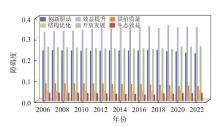
Fig. 9
Diagnosis results of obstacle factors at the criteria level for high-quality tourism development"
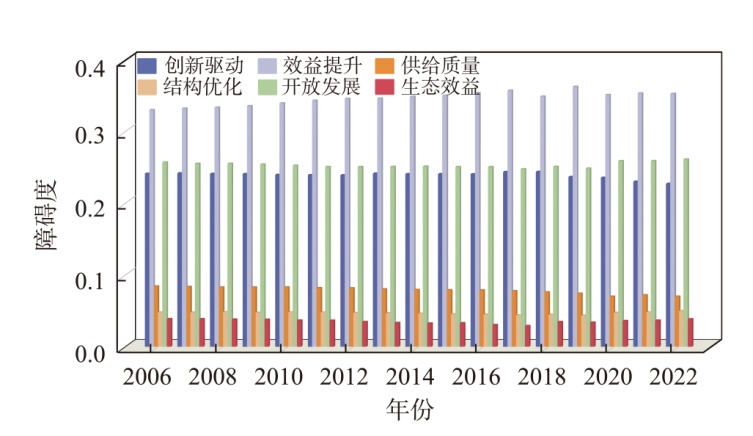
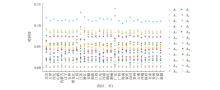
Fig. 10
Provincial-level barrier factors affecting the new quality productive forces"
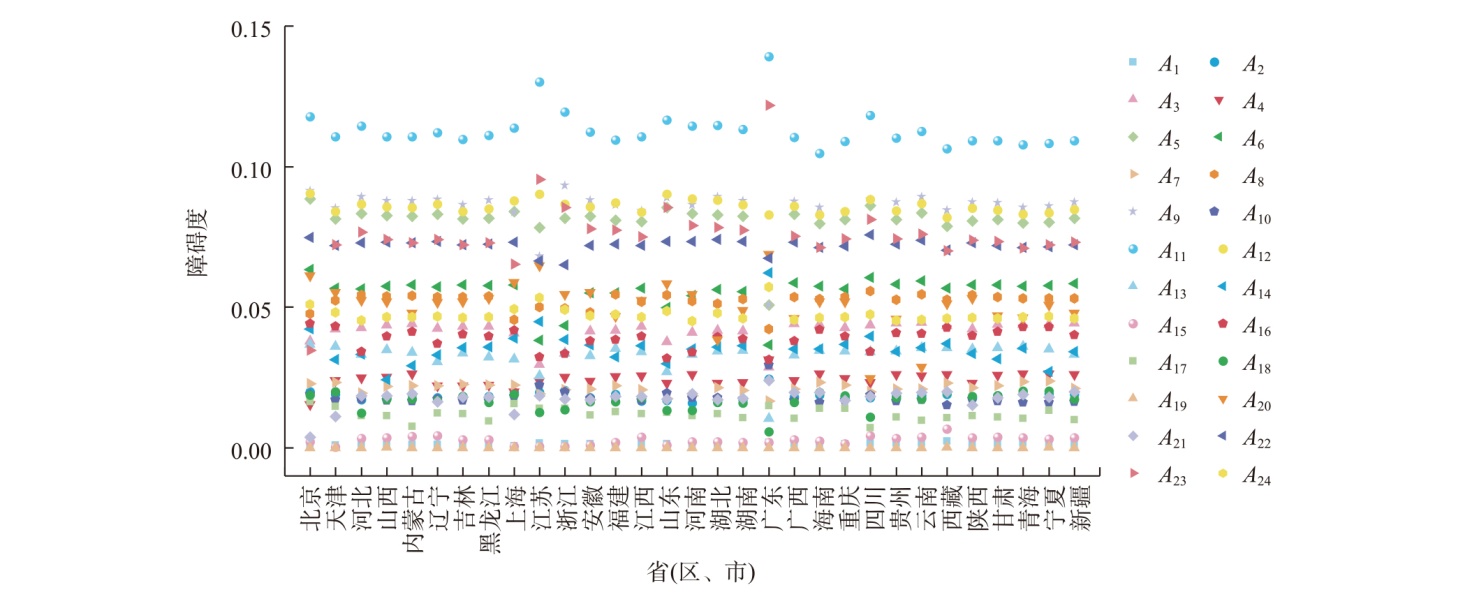
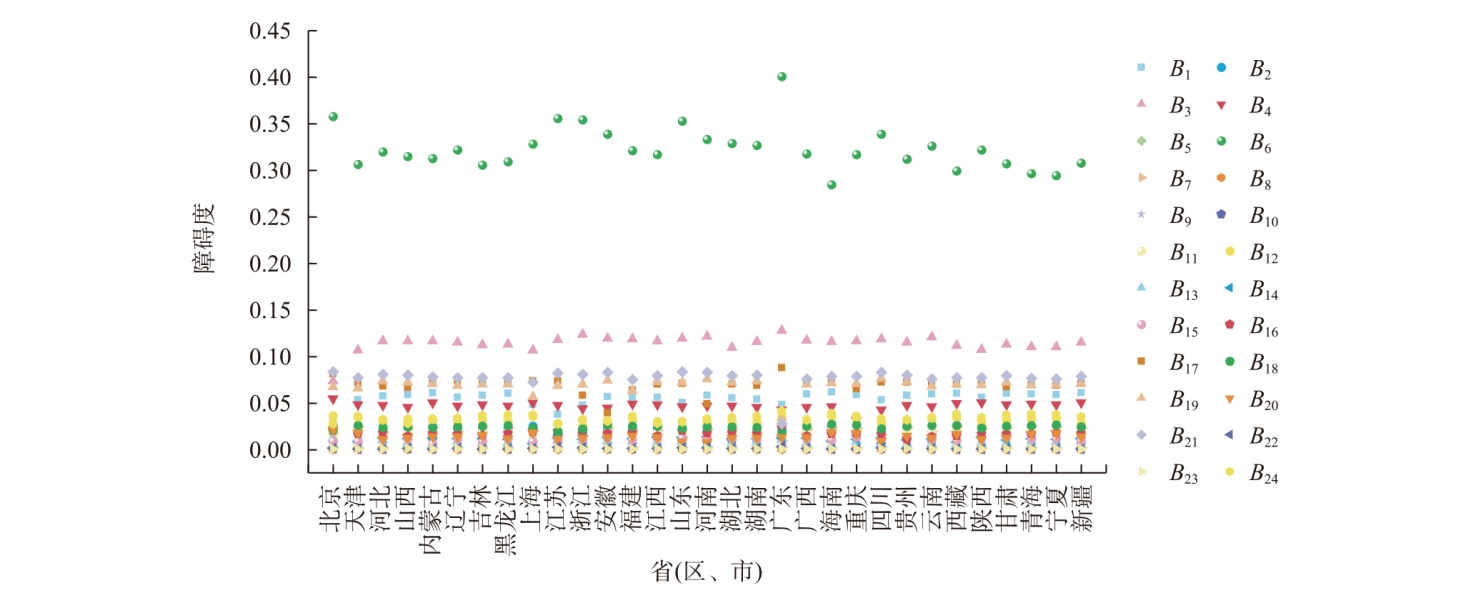
Fig. 11
Provincial-level barrier factors affecting the high-quality tourism development"
| [1] | 任保平, 豆渊博. 新质生产力: 文献综述与研究展望[J]. 经济与管理评论, 2024, 40(3): 5-16. |
| [Ren Baoping, Dou Yuanbo. New quality productivity: Literature review and research outlook[J]. Review of Economy and Management, 2024, 40(3): 5-16.] | |
| [2] | 周文, 许凌云. 论新质生产力: 内涵特征与重要着力点[J]. 改革, 2023(10): 1-13. |
| [Zhou Wen, Xu Lingyun. On new quality productivity: Connotative characteristics and important focus[J]. Reform, 2023(10): 1-13.] | |
| [3] | 刘军, 刘林琪, 常俐丽. 新质生产力推动旅游可持续发展: 理论逻辑与实现路径[J]. 生态经济, 2024, 40(9): 121-126. |
| [Liu Jun, Liu Linqi, Chang Lili. Promoting sustainable development of tourism through new quality productive forces: The theoretical logic and implementation path[J]. Ecological Economy, 2024, 40(9): 121-126.] | |
| [4] | 魏崇辉. 新质生产力的基本意涵、历史演进与实践路径[J]. 理论与改革, 2023(6): 25-38. |
| [Wei Chonghui. The basic meaning, historical evolution, and practical path of new quality productive forces[J]. Theory and Reform, 2023(6): 25-38.] | |
| [5] |
李光勤, 李梦娇. 中国省域新质生产力水平评价、空间格局及其演化特征[J]. 经济地理, 2024, 44(8): 116-125.
doi: 10.15957/j.cnki.jjdl.2024.08.014 |
|
[Li Guangqin, Li Mengjiao. Provincial-level new quality productive forces in China: Evaluation, spatial pattern and evolution characteristics[J]. Economic Geography, 2024, 44(8): 116-125.]
doi: 10.15957/j.cnki.jjdl.2024.08.014 |
|
| [6] | 贾强, 徐正. 新质生产力的辩证逻辑与实践路径[J]. 重庆理工大学学报(社会科学), 2024, 38(6): 26-36. |
| [Jia Qiang, Xu Zheng. The dialectical logic and practical path of new qualitative productivity[J]. Journal of Chongqing University of Technology (Social Sciences), 2024, 38(6): 26-36.] | |
| [7] | 戴学锋, 杨明月. 全域旅游带动旅游业高质量发展[J]. 旅游学刊, 2022, 37(2): 6-8. |
| [Dai Xuefeng, Yang Mingyue. All-region tourism drives high-quality development of the tourism industry[J]. Tourism Tribune, 2022, 37(2): 6-8.] | |
| [8] | 周程明. 基于熵权TOPSIS法的城市旅游高质量发展评价研究——以广东省21个城市为例[J]. 西南师范大学学报(自然科学版), 2021, 46(7): 58-66. |
| [Zhou Chengming. Evaluation of high quality development of urban tourism based on entropy weight and TOPSIS method: A case study of 21 cities in Guangdong Province[J]. Journal of Southwest China Normal University (Natural Science Edition), 2021, 46(7): 58-66.] | |
| [9] |
王新越, 芦雪静, 朱文亮. 我国主要旅游城市旅游业发展影响因素分析与评价[J]. 经济地理, 2020, 40(5): 198-209.
doi: 10.15957/j.cnki.jjdl.2020.05.022 |
|
[Wang Xinyue, Lu Xuejing, Zhu Wenliang. Analysis and evaluation of the influencing factors of tourism development in China’s major tourism cities[J]. Economic Geography, 2020, 40(5): 198-209.]
doi: 10.15957/j.cnki.jjdl.2020.05.022 |
|
| [10] | 郭强, 李秋哲. 中国省域旅游业高质量发展综合评价与时空演化[J]. 旅游科学, 2024, 39(5): 19-40. |
| [Guo Qiang, Li Qiuzhe. Comprehensive evaluation and spatio-temporal evolution of high-quality development of provincial tourism industry in China[J]. Tourism Science, 2024, 39(5): 19-40.] | |
| [11] | 刘沛林, 徐硕. 文旅新质生产力: 内涵审视、支撑向度与实践路径[J]. 旅游导刊, 2024, 8(3): 34-47. |
| [Lu Peilin, Xu Shuo. New quality productive forces of cultural tourism: Connotation review, support dimensions, and practical path[J]. Tourism and Hospitality Prospects, 2024, 8(3): 34-47.] | |
| [12] | 余正勇. 新质生产力赋能旅游高质量发展: 理论、实践与路径[J]. 创新, 2024, 18(5): 91-97. |
| [Yu Zhengyong. Empowering high quality tourism development with new productive forces: Theory, practice, and approaches[J]. The Innovation, 2024, 18(5): 91-97.] | |
| [13] | 王琼, 杨德才. 新质生产力赋能文化和旅游产业高质量发展的逻辑机理、现实挑战与实践路径[J]. 南京社会科学, 2024(7): 152-160. |
| [Wang Qiong, Yang Decai. The theoretical mechanism, practical challenge and practical path of new quality productive forces enabling high-quality development of culture and tourism[J]. Nanjing Journal of Social Sciences, 2024(7): 152-160.] | |
| [14] |
徐政, 江小鹏. 新质生产力赋能旅游高质量发展的应用场景、逻辑机理与推进路向[J]. 经济地理, 2024, 44(11): 232-240.
doi: 10.15957/j.cnki.jjdl.2024.11.024 |
|
[Xu Zheng, Jiang Xiaopeng. Application scenario, logical mechanism and propulsion direction of new quality productive forces enabling high-quality tourism development[J]. Economic Geography, 2024, 44(11): 232-240.]
doi: 10.15957/j.cnki.jjdl.2024.11.024 |
|
| [15] | 明庆忠, 刘浩然, 史鹏飞. 文旅产业与新型城镇化耦合协调态势及影响因素研究[J]. 地理与地理信息科学, 2024, 41(4): 142-151. |
| [Ming Qingzhong, Liu Haoran, Shi Pengfei. Coupling coordination between cultural tourism industry and new-type urbanization and its influencing factors[J]. Geography and Geo-Information Science, 2024, 41(4): 142-151.] | |
| [16] | 蒲清平. 加快形成新质生产力的着力点[J]. 人民论坛, 2023(21): 34-37. |
| [Pu Qingping. Accelerate the formation of key areas of new quality productivity[J]. People’s Tribune, 2023(21): 34-37.] | |
| [17] | 陈钰芬, 龚佳怡, 潘小艺. 省域新质生产力发展水平测度及比较[J]. 科学学与科学技术管理, 2025, 46(10): 166-183. |
| [Chen Yufen, Gong Jiayi, Pan Xiaoyi. Measurement and comparison of the development level of the new quality productive forces[J]. Science of Science and Management of S.&T., 2025, 46(10): 166-183.] | |
| [18] |
李星明, 张鸿浩, 周明闪, 等. 中国文旅新质生产力发展水平评估及其区域差异分析[J]. 地理科学进展, 2025, 44(5): 908-923.
doi: 10.18306/dlkxjz.2025.05.004 |
|
[Li Xingming, Zhang Honghao, Zhou Mingshan, et al. Development level of new quality productivity of cultural and tourism industry in China and its regional differences[J]. Progress in Geography, 2025, 44(5): 908-923.]
doi: 10.18306/dlkxjz.2025.05.004 |
|
| [19] | 刘亚男, 余瑶, 董宇, 等. 我国旅游业高质量发展研究综述[J]. 西南师范大学学报(自然科学版), 2023, 48(4): 109-116. |
| [Liu Yanan, Yu Yao, Dong Yu, et al. A summary of research on high-quality development of tourism in China[J]. Journal of Southwest China Normal University (Natural Science Edition), 2023, 48(4): 109-116.] | |
| [20] | Vogt C A, Anderereck K L, Pham K. Designing for quality of life and sustainability[J]. Annals of Tourism Research, 2020, 83: 102963, doi: 10.1016/j.annals.2020.102963. |
| [21] |
Jamal T, Higham J. Justice and ethics: Towards a new platform for tourism and sustainability[J]. Journal of Sustainable Tourism, 2021, 29(2-3): 143-157.
doi: 10.1080/09669582.2020.1835933 |
| [22] |
Dwyer L. Tourism development and sustainable well-being: A beyond GDP perspective[J]. Journal of Sustainable Tourism, 2023, 31(10): 2399-2416.
doi: 10.1080/09669582.2020.1825457 |
| [23] | 唐任伍, 徐道明. 新时代高质量旅游业发展的动力和路径[J]. 旅游学刊, 2018, 33(10): 11-13. |
| [Tang Renwu, Xu Daoming. The drivers and pathways for high-quality tourism development in the new era[J]. Tourism Tribune, 2018, 33(10): 11-13.] | |
| [24] | 卢江, 郭子昂, 王煜萍. 新质生产力发展水平、区域差异与提升路径[J]. 重庆大学学报(社会科学版), 2024, 33(3): 1-17. |
| [Lu Jiang, Guo Zi’ang, Wang Yuping. Levels of development of new quality productivity, regional differences and paths to enhancement[J]. Journal of Chongqing University (Social Science Edition), 2024, 33(3): 1-17.] | |
| [25] | 王珏. 新质生产力: 一个理论框架与指标体系[J]. 西北大学学报(哲学社会科学版), 2024, 54(1): 35-44. |
| [Wang Jue. New productive forces: A theoretical frame and index system[J]. Journal of Northwest University (Philosophy and Social Sciences Edition), 2024, 54(1): 35-44.] | |
| [26] | 王珏, 王荣基. 新质生产力: 指标构建与时空演进[J]. 西安财经大学学报, 2024, 37(1): 31-47. |
| [Wang Jue, Wang Rongji. New quality productivity: Index construction and spatiotemporal evolution[J]. Journal of Xi’an University of Finance and Economics, 2024, 37(1): 31-47.] | |
| [27] | 田红, 刘呈庆. 中国旅游业高质量发展水平的测度与评估[J]. 江西财经大学学报, 2024(1): 37-53. |
| [Tian Hong, Liu Chengqing. Measurement and evaluation of the high-quality development level of China’s tourist industry[J]. Journal of Jiangxi University of Finance and Economics, 2024(1): 37-53.] | |
| [28] |
Wang Z Y, Niu L Q, Cheng Z H. The coupling coordinated relationship between high-quality tourism development and common prosperity in the Yellow River Basin[J]. Journal of Resources and Ecology, 2025, 16(4): 1089-1102.
doi: 10.5814/j.issn.1674-764x.2025.04.014 |
| [29] |
徐晓亮, 刘旭义, 关靖云, 等. 中国西部边疆民族地区文旅融合高质量发展时空演化及驱动因素分析[J]. 干旱区地理, 2024, 47(9): 1596-1605.
doi: 10.12118/j.issn.1000-6060.2023.623 |
|
[Xu Xiaoliang, Liu Xuyi, Guan Jingyun, et al. Spatiotemporal evolution and driving factors of high-quality development of cultural and tourism integration in border rthnic areas in western China[J]. Arid Land Geography, 2024, 47(9): 1596-1605.]
doi: 10.12118/j.issn.1000-6060.2023.623 |
|
| [30] | 余永琦, 王长松, 彭柳林, 等. 基于熵权TOPSIS模型的农业绿色发展水平评价与障碍因素分析——以江西省为例[J]. 中国农业资源与区划, 2022, 43(2): 187-196. |
| [Yu Yongqi, Wang Changsong, Peng Liulin, et al. Evaluation of agricultural green development level and analysis of its obstacle factors based on the entropy weight TOPSIS model: A case dtudy of Jiangxi Province[J]. Chinese Journal of Agricultural Resources and Regional Planning, 2022, 43(2): 187-196.] | |
| [31] | 李燕凌, 温馨, 高维新. 数字乡村与乡村振兴耦合协调发展的时序适配性分析[J]. 农业经济与管理, 2022(4): 1-12. |
| [Li Yanling, Wen Xin, Gao Weixin. Exploration on timing adaptation of coordinated development of digital villages and rural revitalization[J]. Agricultural Economics and Management, 2022(4): 1-12.] | |
| [32] | 黄永春, 周炯岚, 李娜, 等. 长三角地区“产-才-城”适配的时空演化及影响因素研究[J]. 华东经济管理, 2025, 39(4): 9-20. |
| [Huang Yongchun, Zhou Jionglan, Li Na, et al. Research on the spatiotemporal evolution and influencing factors of the industry-talent-city adaptability in the Yangtze River Delta Region[J]. East China Economic Management, 2025, 39(4): 9-20.] | |
| [33] |
麻学锋, 胡双林. 旅游城市韧性与居民幸福水平时空适配特征及影响因素——以张家界为例[J]. 资源科学, 2022, 44(11): 2373-2385.
doi: 10.18402/resci.2022.11.16 |
|
[Ma Xuefeng, Hu Shuanglin. Spatiotemporal adaptation characteristics and influencing factors of tourism city resilience and residents happiness level: Taking Zhangjiajie City as an example[J]. Resources Science, 2022, 44(11): 2373-2385.]
doi: 10.18402/resci.2022.11.16 |
|
| [34] | 杨秀敏, 耿静, 徐游, 等. 基于TOPSIS模型的海南岛土地综合承载力时空变化及障碍度诊断[J]. 生态学报, 2022, 42(22): 9324-9334. |
| [Yang Xiumin, Geng Jing, Xu You, et al. Spatio-temporal change and obstacle degree diagnosis of comprehensive land carrying capacity in Hainan lsland based on TOPSIS model[J]. Acta Ecologica Sinica, 2022, 42(22): 9324-9334.] | |
| [35] | 吴清, 陈嘉琳, 焦义彬, 等. 基于DPSIR框架的中国省域乡村旅游生态安全时空演变及障碍因子研究[J]. 旅游科学, 2025, 39(6): 109-127. |
| [Wu Qing, Chen Jialin, Jiao Yibin, et al. Research on the spatiotemporal evolution and obstacle factors of ecological security in rural tourism in Chinese provinces: Based on the DPSIR framework[J]. Tourism Science, 2025, 39(6): 109-127.] | |
| [36] | 梁力军, 王晨, 来嘉宁. 绿色物流与区域经济协调发展的实证研究——基于耦合协调度模型优化与因子障碍度模型[J]. 生态经济, 2025, 41(7): 69-76, 84. |
|
[Liang Lijun, Wang Chen, Lai Jianing. An empirical study on the coordinated development of green logistics and regional economy based on coupling coordination degree model optimization and factor obstacle degree model[J]. Ecological Economy, 2025, 41(7): 69-76, 84.]
doi: 10.1016/S0921-8009(02)00026-5 |
|
| [37] | 李瑞, 夏娟, 钟林生, 等. 山地旅游区社会-生态系统恢复力评价及适应性循环过程分析模拟——以贵州典型山地旅游区为例[J/OL]. 生态学报. [2026-02-22]. https://doi.org/10.20103/j.stxb.202505071095. |
| [Li Rui, Xia Juan, Zhong Linsheng, et al. Resilience assessment and adaptive cycle process analysis of social-ecological systems in mountain tourism areas: A case study of typical mountain tourism areas in Guizhou[J/OL]. Acta Ecologica Sinica. [2026-02-22]. https://doi.org/10.20103/j.stxb.202505071095.] | |
| [38] | 王凯, 刘美伦. 新质生产力与旅游业高质量发展耦合协调关系及影响因素[J]. 湖北民族大学学报(哲学社会科学版), 2025, 43(1): 125-137. |
| [Wang Kai, Liu Meilun. Coupling coordination relationship and influencing factors of new quality productive forces and high quality development of tourism[J]. Journal of Hubei Minzu University (Philosophy and Social Sciences), 2025, 43(1): 125-137.] |
|
||