Arid Land Geography ›› 2026, Vol. 49 ›› Issue (9): 1965-1976.doi: 10.12118/j.issn.1000-6060.2025.763
• Regional Development • Previous Articles Next Articles
ZHANG Yuli1( ), LIU Qiaomei1, WANG Siyuan1, FAN Xinyu1, XU Tong2(), WANG Binbin1
Received:2025-11-23
Revised:2026-02-05
Online:2026-09-25
Published:2026-09-07
Contact:
XU Tong
E-mail:zhonghuafuxing@yeah.net;xutong814@126.com
ZHANG Yuli, LIU Qiaomei, WANG Siyuan, FAN Xinyu, XU Tong, WANG Binbin. Spatiotemporal characteristics and driving mechanism of the coupling coordination between Chinese-style modernization and high-quality tourism development[J].Arid Land Geography, 2026, 49(9): 1965-1976.
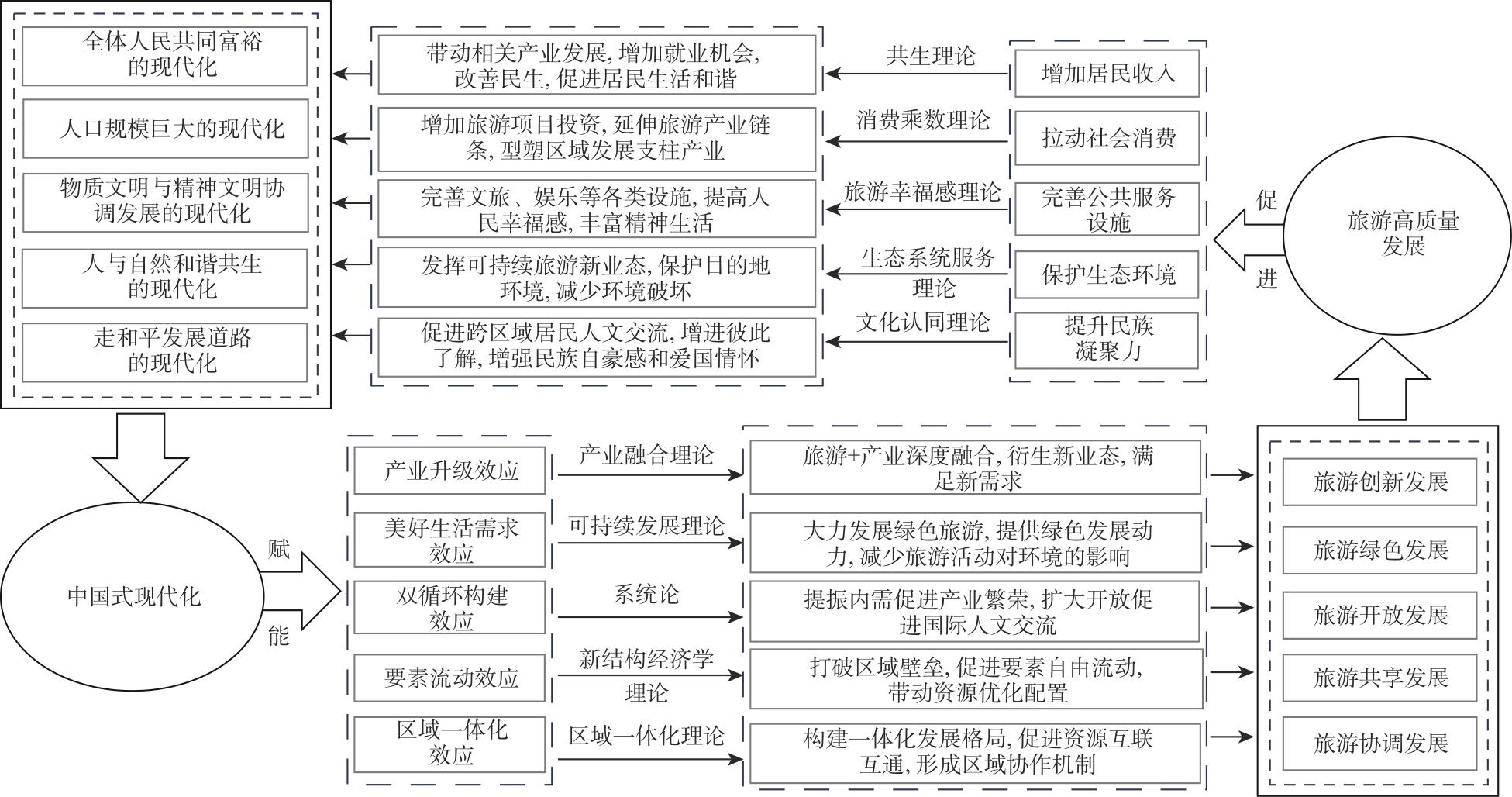
Fig. 1
Coupling coordination mechanism"

Tab. 1
Evaluation system of Chinese-style modernization and high-quality tourism development"
| 系统 | 一级指标 | 二级指标 | 计算方法 | 单位 | 指标性质 |
|---|---|---|---|---|---|
| 中国式现代化 | 人口规模 | 人口体量 | 常住人口 | 104人 | 正 |
| 人口质量 | 高等教育在校生数量 | 104人 | 正 | ||
| 城镇化率 | 城市人口/总人口 | % | 正 | ||
| 共同富裕 | 人均GDP | GDP总值/总人口 | 元·人-1 | 正 | |
| 城乡可支配收入比 | 城市居民可支配收入/农村居民可支配收入 | % | 负 | ||
| 文明协调 | 人均公共藏书 | 公共图书藏书量/总人口 | 册·人-1 | 正 | |
| 每百万人图书馆数 | 图书馆数量/总人口 | 个·(106人)-1 | 正 | ||
| 人与自然和谐共生 | SO2排放 | SO2排放总量 | 104 t | 负 | |
| 废水排放 | 废水排放量 | 104 t | 负 | ||
| 能源消耗 | 能源消耗总量/GDP | tce·(104元)-1 | 负 | ||
| 和平发展 | 国际友好城市 | 国际友好城市数量 | 个 | 正 | |
| 对外开放程度 | 进出口总额/GDP | % | 正 | ||
| 旅游高质量发展 | 创新发展 | 专利申请 | 旅游相关专利申请量 | 个 | 正 |
| 研发投入 | 研发经费投入 | 108元 | 正 | ||
| 协调发展 | 旅游产业地位 | 旅游收入/GDP总值 | % | 正 | |
| 旅游产业集聚度 | (本省份旅游总收入/本省份GDP)/(全国旅游总收入/全国GDP) | % | 正 | ||
| 绿色发展 | 森林公园 | 省级以上森林公园数量 | 个 | 正 | |
| 空气质量 | 空气质量优良率 | % | 正 | ||
| 开放发展 | 旅游外汇占比 | 旅游外汇收入/旅游总收入 | % | 正 | |
| 游客规模 | 国内外游客人数 | 104人次 | 正 | ||
| 共享发展 | 人均旅游收入 | 旅游收入/总人口 | 元·人-1 | 正 | |
| 旅游景区密度 | 单位面积旅游景区数量 | 个·km-2 | 正 |
Tab. 2
Classification of coupling coordination degree"
| 耦合协调度 | 等级 | 类型 | 耦合协调度 | 等级 | 类型 |
|---|---|---|---|---|---|
| [0.0, 0.1) | 1 | 极度失调 | [0.5, 0.6) | 6 | 勉强协调 |
| [0.1, 0.2) | 2 | 严重失调 | [0.6, 0.7) | 7 | 初级协调 |
| [0.2, 0.3) | 3 | 中度失调 | [0.7, 0.8) | 8 | 中级协调 |
| [0.3, 0.4) | 4 | 轻度失调 | [0.8, 0.9) | 9 | 良好协调 |
| [0.4, 0.5) | 5 | 濒临失调 | [0.9, 1.0] | 10 | 优质协调 |
Fig. 2
Time series changes and provincial differences of Chinese-style modernization index and high-quality tourism development index"
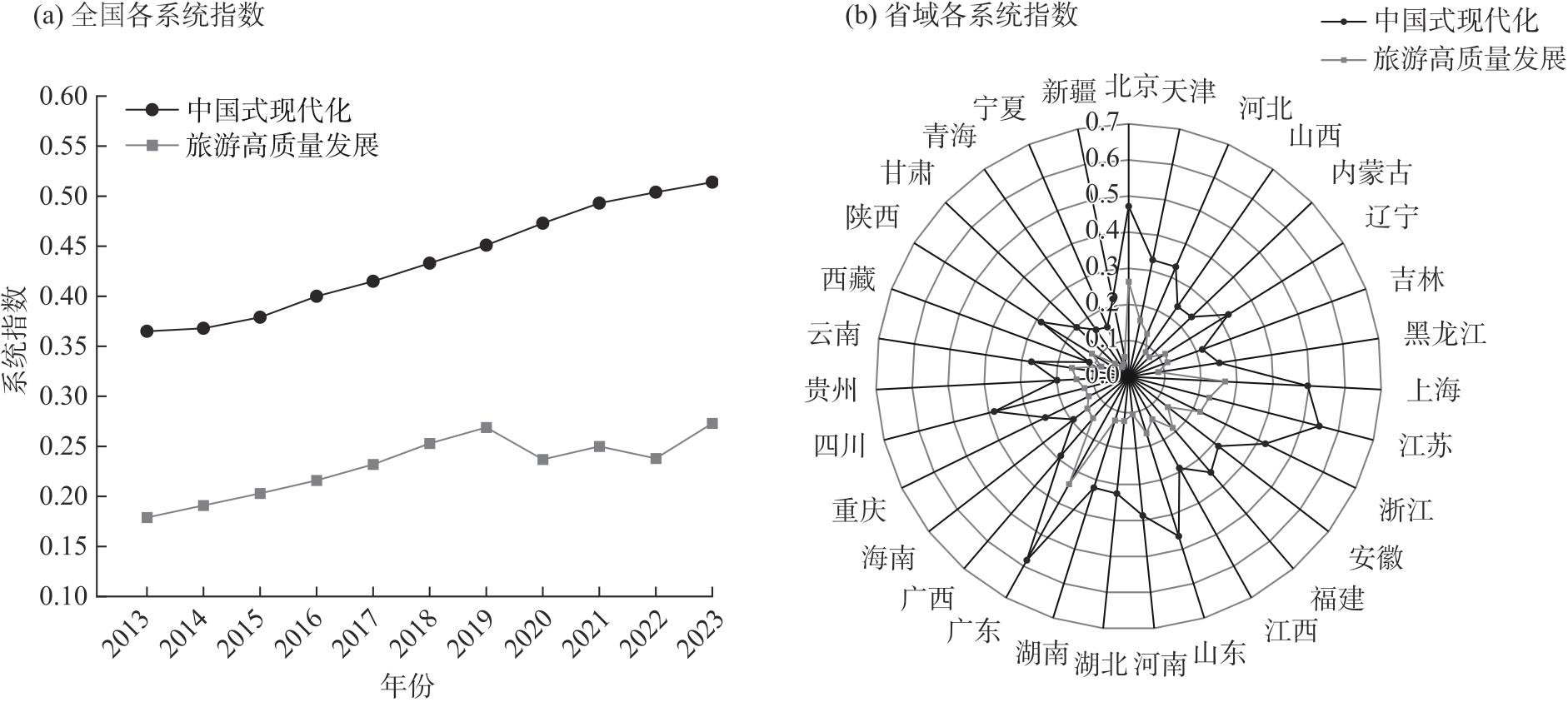
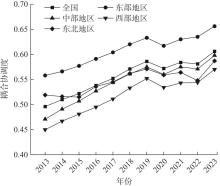
Fig. 3
Temporal evolution of coupling coordination degree"
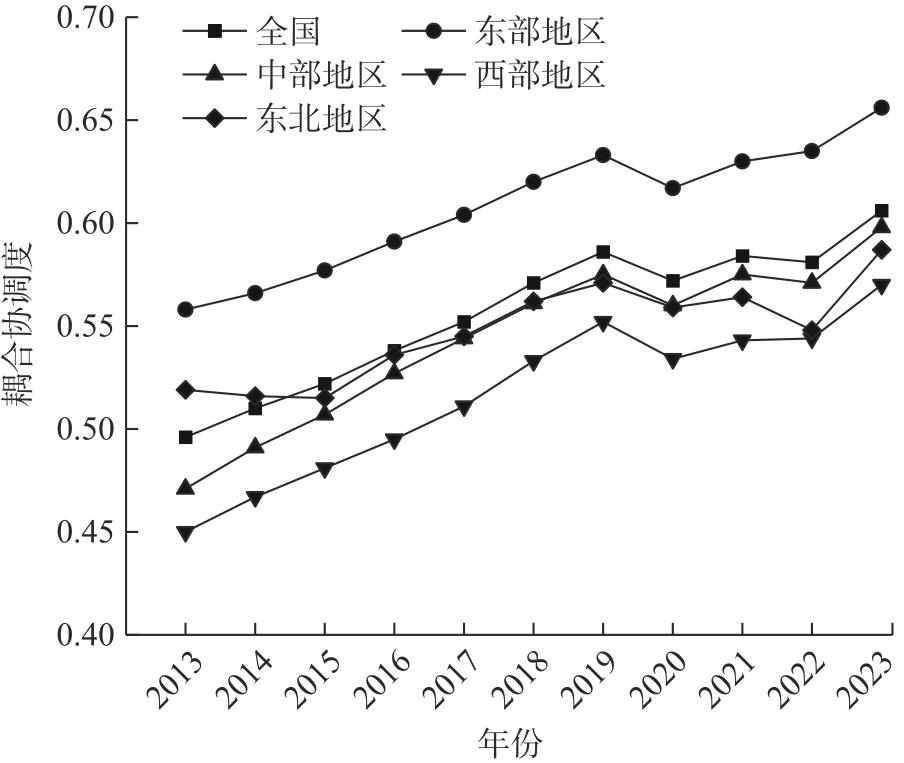
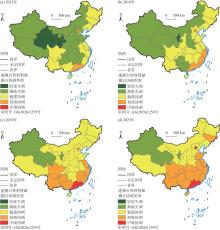
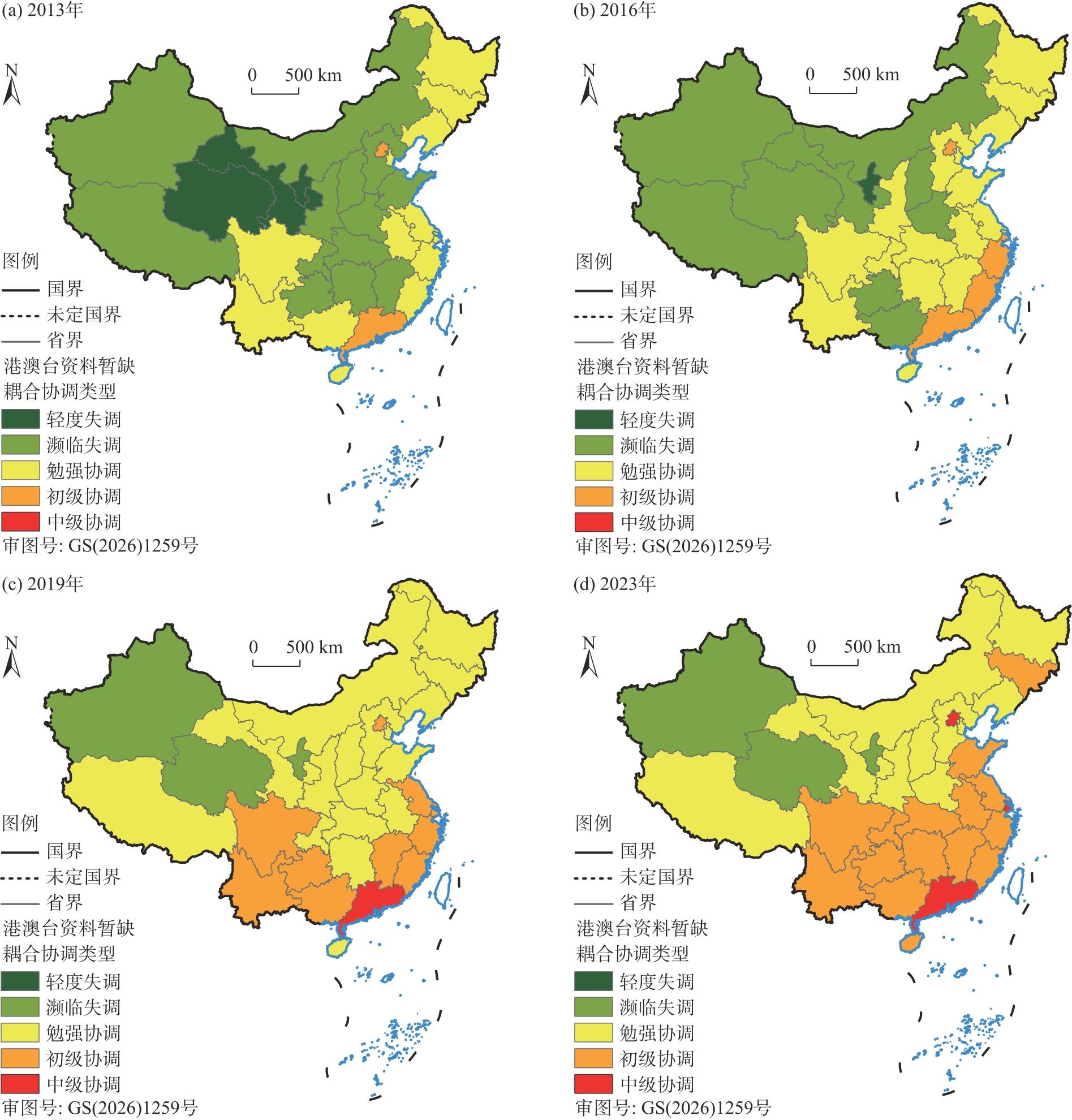
Fig. 4
Spatial distribution characteristics of coupling and coordination types"
Tab. 3
Global Moran’s I from 2013 to 2023"
| 推断性统计指标 | 2013年 | 2014年 | 2015年 | 2016年 | 2017年 | 2018年 | 2019年 | 2020年 | 2021年 | 2022年 | 2023年 |
|---|---|---|---|---|---|---|---|---|---|---|---|
| P值 | 0.000 | 0.000 | 0.000 | 0.000 | 0.000 | 0.000 | 0.000 | 0.000 | 0.000 | 0.000 | 0.000 |
| Z值 | 4.251 | 4.534 | 4.802 | 4.906 | 4.813 | 4.914 | 4.740 | 5.378 | 4.749 | 5.191 | 4.971 |
| 全局莫兰指数 | 0.463 | 0.498 | 0.527 | 0.538 | 0.526 | 0.541 | 0.521 | 0.601 | 0.527 | 0.580 | 0.554 |
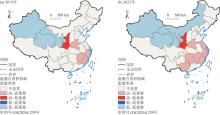
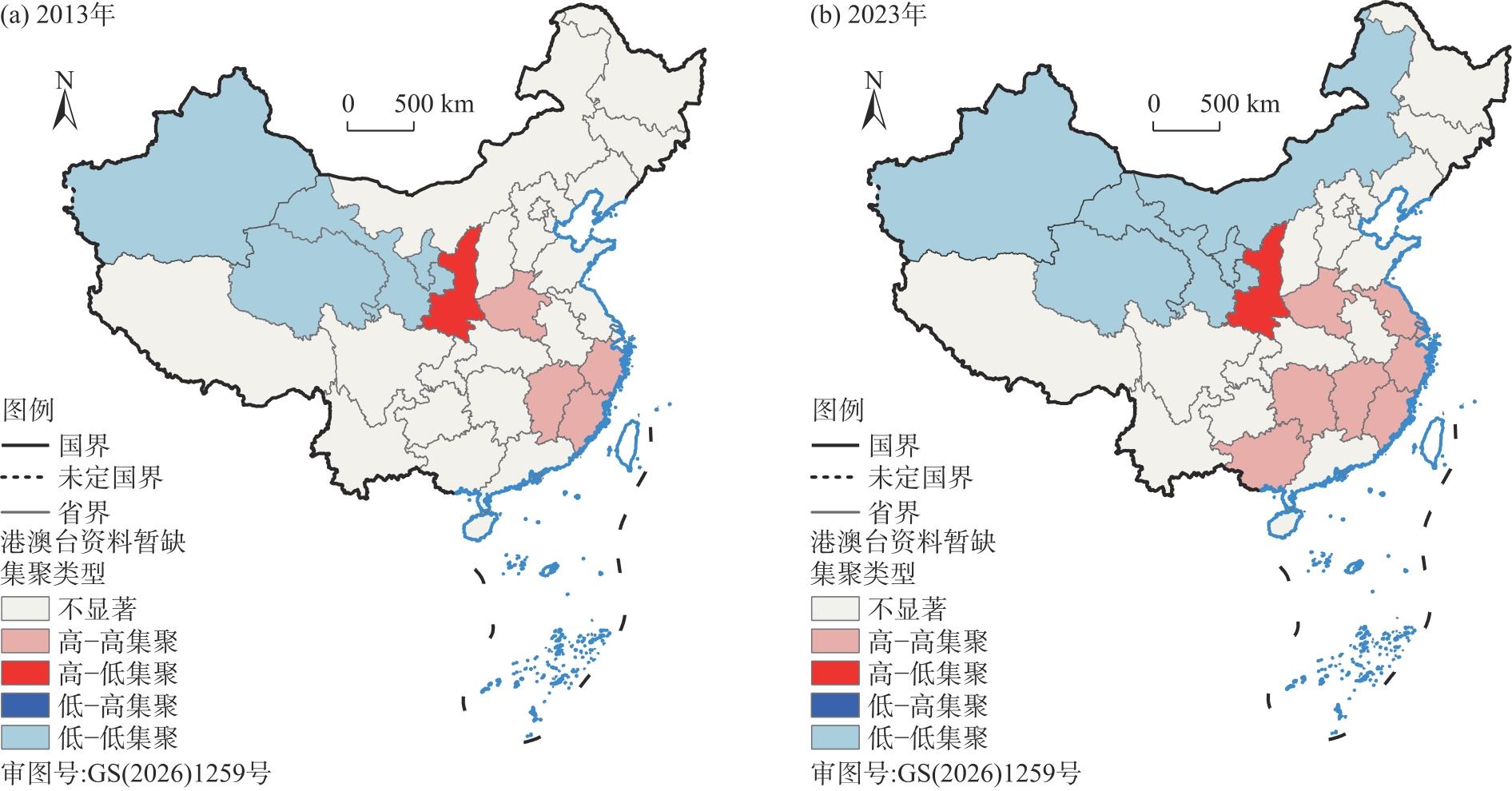
Fig. 5
Results of local autocorrelation analysis in 2013 and 2023"
Tab. 4
Regression results of dynamic mechanism"
| 动力 | 变量 | (1) 全国 | (2) 东部地区 | (3) 中部地区 | (4) 西部地区 | (5) 东北地区 |
|---|---|---|---|---|---|---|
| 经济发展驱动力 | 居民可自由支配收入 | 0.459*** (9.210) | 0.312*** (5.031) | 0.012 (0.087) | 0.500*** (4.719) | 0.578** (2.387) |
| 国内生产总值 | 0.055 (0.555) | 0.061 (0.709) | -1.172 (1.216) | -1.556 (1.343) | 1.011 (1.338) | |
| 综合产业带动力 | 旅游总收入 | 0.488*** (15.029) | 0.341*** (6.746) | 0.418*** (11.133) | 0.354*** (5.020) | 0.892*** (6.242) |
| 社会消费品零售总额 | 0.093* (1.883) | 0.065* (1.694) | 0.085 (0.854) | 1.227*** (3.091) | -2.605*** (-3.412) | |
| 第三产业增加值 | -0.346 (-0.803) | -0.191 (-1.144) | 1.151*** (2.689) | -1.511 (-1.582) | 0.123 (0.186) | |
| 资源吸引力 | 旅游景区数量 | 0.143*** (4.799) | 0.010 (0.316) | 0.419*** (5.250) | 0.220*** (2.924) | 0.073 (0.588) |
| 博物馆数量 | 0.379*** (5.921) | 0.345*** (5.755) | 0.485*** (2.757) | 0.654*** (3.511) | 1.248*** (3.083) | |
| 森林覆盖率 | 0.222** (2.378) | 0.526*** (2.874) | -0.255 (-1.270) | -0.015 (-0.117) | -0.778 (-1.133) | |
| 交通推动力 | 货运总量 | 0.064 (0.923) | 0.029 (0.321) | 0.145 (1.485) | 0.667*** (3.532) | -0.190 (-1.029) |
| 创新引领力 | 发明专利受理量 | 0.178*** (3.081) | 0.189*** (3.918) | -0.417 (-0.968) | -0.731 (-0.891) | 4.032 (1.352) |
| 政策支持力 | 公共预算支出 | 0.031 (0.601) | 0.330 (0.756) | -0.013 (-0.330) | 4.568*** (5.593) | 0.634 (0.690) |
| 常数 | 0.118*** (2.761) | 0.166*** (3.199) | -0.203** (-2.400) | 0.813** (2.244) | 0.166*** (3.199) | |
| 样本数量 | 341 | 110 | 66 | 132 | 33 | |
| 决定系数(R2) | 0.830 | 0.961 | 0.969 | 0.961 | 0.958 | |
| [1] | 宁吉喆. 中国式现代化的方向路径和重点任务[J]. 管理世界, 2023, 39(3): 1-19. |
| [Ning Jizhe. The direction, route and key tasks of a Chinese path to modernization[J]. Journal of Management World, 2023, 39(3): 1-19.] | |
| [2] | 宋瑞, 宋昌耀, 胥英伟. 中国式现代化背景下文化和旅游融合发展的五重逻辑与重要议题[J]. 旅游学刊, 2024, 39(1): 19-33. |
| [Song Rui, Song Changyao, Xu Yingwei. The integration of culture and tourism in the context of Chinese path to modernization: Fivefold logics and important issues[J]. Tourism Tribune, 2024, 39(1): 19-33.] | |
| [3] | 张亚光, 毕悦. 中国式现代化的百年探索与实践经验[J]. 管理世界, 2023, 39(1): 41-56. |
| [Zhang Yaguang, Bi Yue. The exploration and practical experience of Chinese modernization in the past 100 years[J]. Journal of Management World, 2023, 39(1): 41-56.] | |
| [4] |
孟晓, 田明华, 杜磊, 等. 中国农业农村现代化发展水平测度及其协调性研究[J]. 干旱区地理, 2024, 47(1): 137-146.
doi: 10.12118/j.issn.1000-6060.2023.339 |
|
[Meng Xiao, Tian Minghua, Du Lei, et al. Measurement and its coordination of the development level of agriculturaland rural modernization in China[J]. Arid Land Geography, 2024, 47(1): 137-146.]
doi: 10.12118/j.issn.1000-6060.2023.339 |
|
| [5] | 李鹏. 中国式现代化背景下金融业最优比重研究[J]. 上海大学学报(社会科学版), 2025, 42(3): 126-143. |
| [Li Peng. The optimal ratio of the financial industry value added to GDP in the context of Chinese modernization[J]. Journal of Shanghai University (Social Sciences Edition), 2025, 42(3): 126-143.] | |
| [6] | 李柏文, 郭凌. 中国式现代化情境下的旅游高质量发展理论研究[J]. 旅游学刊, 2024, 39(1): 13-15. |
| [Li Baiwen, Guo Ling. Theoretical research on high-quality development of tourism under the context of the Chinese path to modernization[J]. Tourism Tribune, 2024, 39(1): 13-15.] | |
| [7] |
王兆峰, 赵书虹, 黄细嘉, 等. 中国式现代化与文旅强国: 重大理论问题与实践[J]. 自然资源学报, 2026, 41(9): 2615-2636.
doi: 10.31497/zrzyxb.20260901 |
|
[Wang Zhaofeng, Zhao Shuhong, Huang Xijia, et al. Chinese path to modernization and building a strong cultural and tourism nation: Major theoretical issues and practical approaches[J]. Journal of Natural Resources, 2026, 41(9): 2615-2636.]
doi: 10.31497/zrzyxb.20260901 |
|
| [8] | 钟漪萍, 李颖. 旅游业高质量发展水平测度与地区差异及收敛特征分析[J]. 统计与决策, 2022, 38(21): 107-112. |
| [Zhong Yiping, Li Ying. Measurement of high-quality development level of tourism and analysis of regional differences and convergence characteristics[J]. Statistics & Decision, 2022, 38(21): 107-112.] | |
| [9] | 冯学钢, 何静. 中国式现代化进程中的文旅高质量融合: 理论逻辑、关键问题与实践进路[J]. 华东师范大学学报(哲学社会科学版), 2025, 57(4): 134-146, 179-180. |
| [Feng Xuegang, He Jing. The quality integration of culture and tourism in the process of Chinese modernization: Theoretical logic, key issues and practical approaches[J]. Journal of East China Normal University (Humanities and Social Sciences), 2025, 57(4): 134-146, 179-180.] | |
| [10] |
王兆峰, 王金伟, 王梓英. 中国式现代化视域下旅游业高质量发展: 理论内涵与科学议题[J]. 旅游导刊, 2023, 7(1): 1-18.
doi: 10.12054/lydk.bisu.226 |
| [Wang Zhaofeng, Wang Jinwei, Wang Ziying. High-quality tourism development from the perspective of Chinese modernization: Theoretical connotation and scientific issues[J]. Tourism and Hospitality Prospects, 2023, 7(1): 1-18.] | |
| [11] | 宋瑞, 刘倩倩. 中国式现代化进程中的旅游发展: 意义、挑战与路径[J]. 旅游论坛, 2023, 16(1): 1-11. |
| [Song Rui, Liu Qianqian. Tourism development in the process of Chinese path to modernization: Significance, challenges and promotion path[J]. Tourism Forum, 2023, 16(1): 1-11.] | |
| [12] | 吴开军. 旅游业高质量发展推进中国式现代化的作用机理和实现路径[J]. 广西社会科学, 2023, 39(3): 17-22. |
| [Wu Kaijun. The mechanism and path of promoting Chinese style modernization by high-quality tourism development[J]. Social Sciences in Guangxi, 2023, 39(3): 17-22.] | |
| [13] | 徐紫嫣, 宋昌耀. 旅游业发展赋能共同富裕: 作用机理与发展策略[J]. 财经问题研究, 2022, 44(9): 114-122. |
| [Xu Ziyan, Song Changyao. Tourism development enables common prosperity: Mechanism and development strategy[J]. Research on Financial and Economic Issues, 2022, 44(9): 114-122.] | |
| [14] | 韩彩霞. 双循环发展背景下旅游消费与扩大内需的乘数效应分析[J]. 商业经济研究, 2022, 41(10): 55-58. |
| [Han Caixia. Analysis of the multiplier effect of tourism consumption and expanding domestic demand under the background of dual-cycle development[J]. Journal of Commercial Economics, 2022, 41(10): 55-58.] | |
| [15] | 陈艳艳, 李琳娜, 王鹏飞. 旅游业高质量发展促进中国式现代化的理论逻辑和实现路径——基于多案例的考察[J]. 学习与探索, 2024, 46(5): 109-119. |
| [Chen Yanyan, Li Linna, Wang Pengfei. The theoretical logic and realization path of high-quality tourism development promoting Chinese style modernization: Based on the investigation of multiple cases[J]. Study & Exploration, 2024, 46(5): 109-119.] | |
| [16] | 马勇, 张瑞. 旅游业高质量发展与国民幸福水平提升[J]. 旅游学刊, 2023, 38(6): 12-13. |
| [Ma Yong, Zhang Rui. The high-quality development of tourism and the improvement of national happiness[J]. Tourism Tribune, 2023, 38(6): 12-13.] | |
| [17] | 金栋昌, 王宇富, 徐梦真. 中国式现代化进程中推动公共文化服务高质量发展的理论逻辑与实践进路[J]. 图书馆论坛, 2023, 43(5): 10-22. |
| [Jin Dongchang, Wang Yufu, Xu Mengzhen. Theoretical logic and practical progression of promoting the high-quality development of public cultural services in Chinese path to modernization[J]. Library Tribune, 2023, 43(5): 10-22.] | |
| [18] | 张毓利, 徐彤. 全域生态旅游建设能否助力区域“绿水青山”与“金山银山”兼得?--基于福建的经验分析[J]. 干旱区资源与环境, 2023, 37(1): 185-193. |
| [Zhang Yuli, Xu Tong. Can whole-region ecotourism construction help the region to obtain “clear waters and green mountains” and “gold and silver mountains” at the same time? Case study of Fujian[J]. Journal of Arid Land Resources and Environment, 2023, 37(1): 185-193.] | |
| [19] | 周春波. 文化产业与旅游产业融合动力: 理论与实证[J]. 企业经济, 2018, 37(8): 146-151. |
| [Zhou Chunbo. The integration dynamics of cultural industry and tourism industry: Theory and evidence[J]. Enterprise Economy, 2018, 37(8): 146-151.] | |
| [20] | 亢楠楠, 林姿余. 中国式现代化语境下的乡村旅游高质量发展: 价值意蕴与战略路径[J]. 云南农业大学学报(社会科学), 2024, 18(2): 58-64. |
| [Kang Nannan, Lin Ziyu. Research on high quality development of rural tourismon the journey to Chinese modernization: Value implications and strategic paths[J]. Journal of Yunnan Agricultural University (Social Science), 2024, 18(2): 58-64.] | |
| [21] | 孙盼盼, 齐飞, 夏杰长. 中国式现代化视域下旅游业绿色低碳发展的理论内涵与实践进路[J]. 重庆社会科学, 2024, 42(7): 37-53. |
| [Sun Panpan, Qi Fei, Xia Jiechang. The theoretical underpinnings and practical approaches of green and low-carbondevelopment in the tourism industry within the framework of Chinese-style modernization[J]. Chongqing Social Sciences, 2024, 42(7): 37-53.] | |
| [22] | 耿松涛, 刘玥. 系统论视角下的文旅融合动态演进逻辑与发展路径探索[J]. 学习与探索, 2023, 45(3): 105-112. |
| [Geng Songtao, Liu Yue. Exploring the dynamic evolution logic and development path of integration of culture and tourism from the perspective of system theory[J]. Study & Exploration, 2023, 45(3): 105-112.] | |
| [23] | 王兆峰. “双循环”背景下旅游业高质量发展的实现路径[J]. 企业经济, 2022, 41(2): 41-47. |
| [Wang Zhaofeng. The realization path of high-quality tourism development under the background of “double circulation”[J]. Enterprise Economy, 2022, 41(2): 41-47.] | |
| [24] | 陶恒. 新结构经济学视野下民族地区旅游精准扶贫的系统构建与实施路径[J]. 经济体制改革, 2018, 36(4): 50-55. |
| [Tao Heng. System construction and implementation path for tourism poverty alleviation in ethnic minority areas under the new structural economics view[J]. Reform of Economic System, 2018, 36(4): 50-55.] | |
| [25] | 刘诚. 长三角一体化体制机制改革的主要障碍和推进策略[J]. 区域经济评论, 2023, 39(3): 5-14. |
| [Liu Cheng. Main obstacles and promotion strategies of the integration system and mechanism reform in Yangtze River Delta[J]. Regional Economic Review, 2023, 39(3): 5-14.] | |
| [26] | 张磊, 时立荣. 区域一体化、数字科技创新与共同富裕[J]. 统计与决策, 2025, 41(9): 163-168. |
| [Zhang Lei, Shi Lirong. Regional integration, digital technology innovation and common prosperity[J]. Statistics & Decision, 2025, 41(9): 163-168.] | |
| [27] | 张毓利, 陈肇星, 徐彤, 等. 生态旅游一体化能否助推省域经济发展“弯道超车”?--来自“浙皖闽赣国家生态旅游协作区”的实证检验[J]. 旅游科学, 2025, 39(8): 19-37. |
| [Zhang Yuli, Chen Zhaoxing, Xu Tong, et al. Can ecotourism integration promote provincial economic development’s “curve overtaking”? An empirical test from Zhejiang-Anhui-Fujian-Jiangxi national ecotourism collaboration zone[J]. Tourism Science, 2025, 39(8): 19-37.] | |
| [28] | 刘兴远, 蒋薇. 中国式现代化评价指标体系构建与测度[J]. 南京邮电大学学报(社会科学版), 2024, 26(1): 1-10. |
| [Liu Xingyuan, Jiang Wei. Construction and measurement of evaluation index system for Chinese path to modernization[J]. Journal of Nanjing University of Posts and Telecommunications (Social Science Edition), 2024, 26(1): 1-10.] | |
| [29] |
叶阿忠, 朱灵群, 张源野, 等. 中国式现代化水平测度、区域差异及来源分解[J]. 工业技术经济, 2024, 43(3): 23-32.
doi: 10.3969/j.issn.1004-910X.2024.03.003 |
| [Ye Azhong, Zhu Lingqun, Zhang Yuanye, et al. Measuring the level of chinese-style modernization, regional differences, and source decomposition[J]. Journal of Industrial Technology and Economy, 2024, 43(3): 23-32.] | |
| [30] | 王一婕, 桂成玉. 中国旅游经济高质量发展的水平测度、区域差异及时空演化研究[J]. 兰州财经大学学报, 2024, 40(3): 1-23. |
| [Wang Yijie, Gui Chengyu. Research on the level measurement, regional differences and spatio-temporal evolution of high-quality development of China’s tourism economy[J]. Journal of Lanzhou University of Finance and Economics, 2024, 40(3): 1-23.] | |
| [31] |
王金伟, 王启翔, 崔佳鑫, 等. 旅游业高质量发展、非农就业与农民农村共同富裕[J]. 经济地理, 2025, 45(2): 213-224.
doi: 10.15957/j.cnki.jjdl.2025.02.021 |
|
[Wang Jinwei, Wang Qixiang, Cui Jiaxin, et al. High-quality development of tourism, non-agricultural employment and common prosperity of rural residents[J]. Economic Geography, 2025, 45(2): 213-224.]
doi: 10.15957/j.cnki.jjdl.2025.02.021 |
|
| [32] |
孙国军, 李家瑶, 王子轩. 黄河流域数文旅产业发展水平评价与耦合协调时空特征分析[J]. 干旱区地理, 2026, 49(1): 117-127.
doi: 10.12118/j.issn.1000-6060.2025.035 |
|
[Sun Guojun, Li Jiayao, Wang Zixuan. Evaluation of the development level of the “digital-cultural-tourism” industries in the Yellow River Basin and analysis of the spatiotemporal characteristics of its coupling coordination[J]. Arid Land Geography, 2026, 49(1): 117-127.]
doi: 10.12118/j.issn.1000-6060.2025.035 |
|
| [33] |
章杰宽, 张燕. 城市新质生产力与旅游业竞争力耦合协调发展动力机制[J]. 中国生态旅游, 2025, 15(3): 510-528.
doi: 10.12342/zgstly.20240338 |
|
[Zhang Jiekuan, Zhang Yan. The dynamic mechanisms of coupling coordination development of new quality productive forces and tourism industrial competitiveness[J]. Journal of Chinese Ecotourism, 2025, 15(3): 510-528.]
doi: 10.12342/zgstly.20240338 |
|
| [34] |
朱怡婷, 梁桂仙, 周春山, 等. 新疆文旅新质生产力发展时空演变特征与驱动因素[J]. 干旱区地理, 2026, 49(1): 128-139.
doi: 10.12118/j.issn.1000-6060.2024.785 |
|
[Zhu Yiting, Liang Guixian, Zhou Chunshan, et al. Spatiotemporal evolution characteristics and driving factors of new-quality productive forces development of cultural tourism in Xinjiang[J]. Arid Land Geography, 2026, 49(1): 128-139.]
doi: 10.12118/j.issn.1000-6060.2024.785 |
|
||

