Arid Land Geography ›› 2026, Vol. 49 ›› Issue (9): 1977-1994.doi: 10.12118/j.issn.1000-6060.2025.557
• Regional Development • Previous Articles
YANG Qing1( ), ZHANG Jinru1, HAO Jiayi1, ZOU Shaohui1(), ZHANG Lei2
Received:2025-09-12
Revised:2025-11-02
Online:2026-09-25
Published:2026-09-07
Contact:
ZOU Shaohui
E-mail:004907@xust.edu.cn;zoushaohui@163.com
YANG Qing, ZHANG Jinru, HAO Jiayi, ZOU Shaohui, ZHANG Lei. How does the digital economy enhance total factor carbon efficiency: A study from the perspective of market distortions[J].Arid Land Geography, 2026, 49(9): 1977-1994.
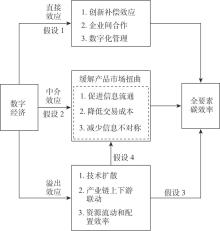
Fig. 1
Theoretical analysis and research hypotheses"
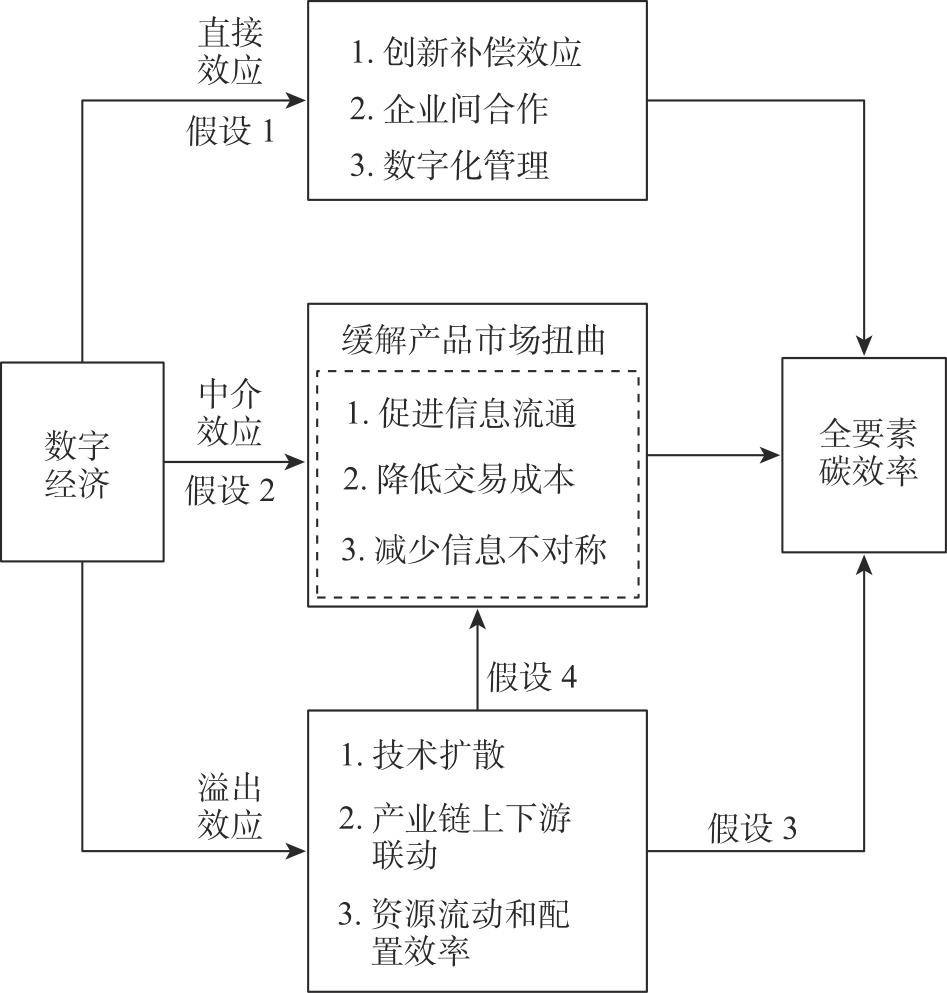
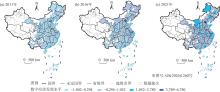
Fig. 2
Spatial and temporal distributions of the digital economy development level"

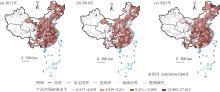
Fig. 3
Spatial and temporal distributions of the degree of product market distortions"
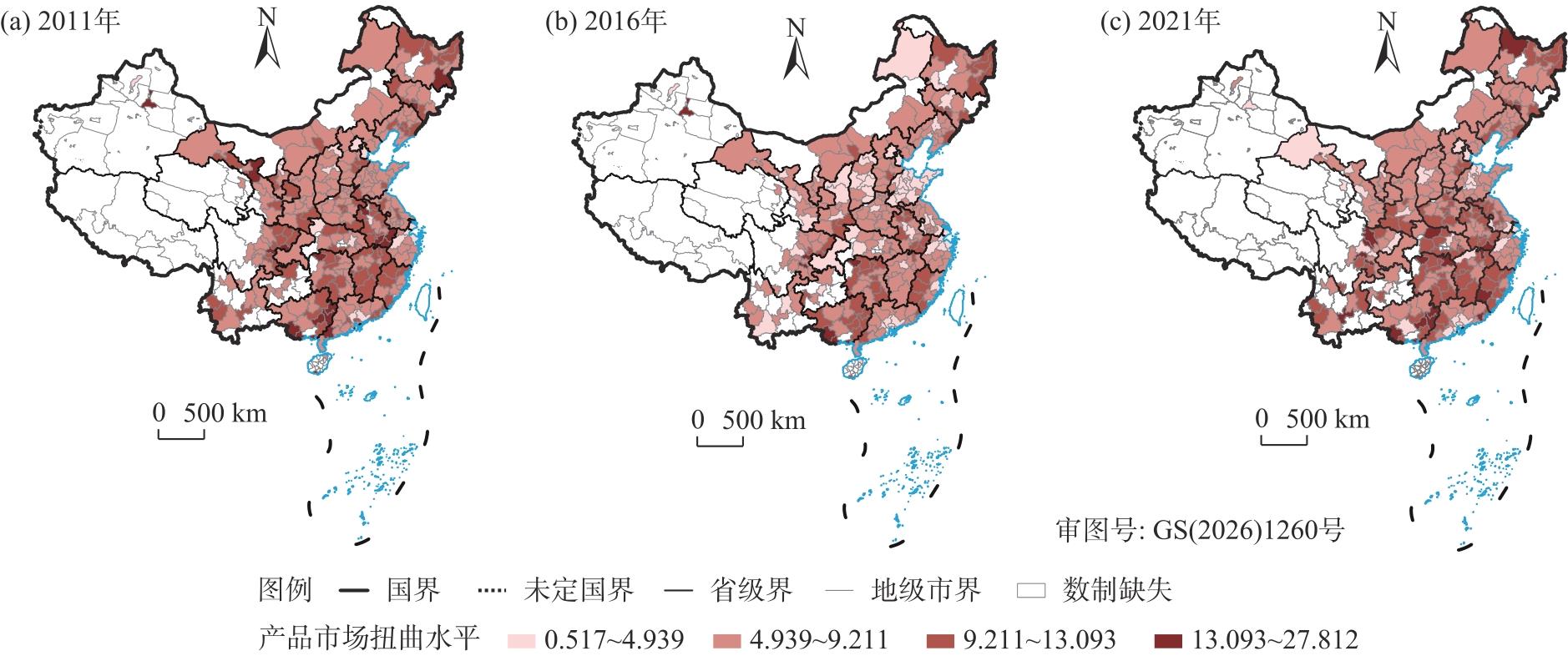
Fig. 4
Spatial and temporal distributions of total factor carbon efficiency level"
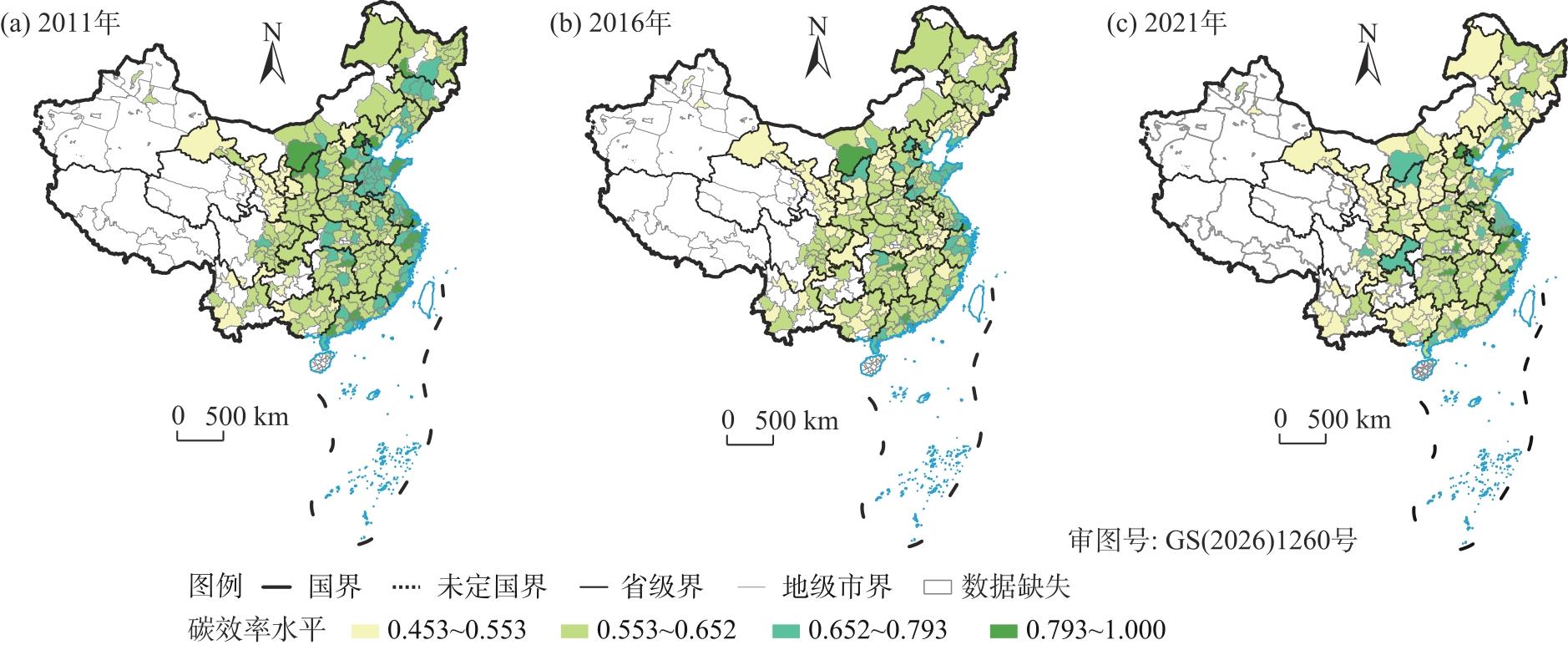
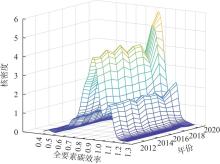
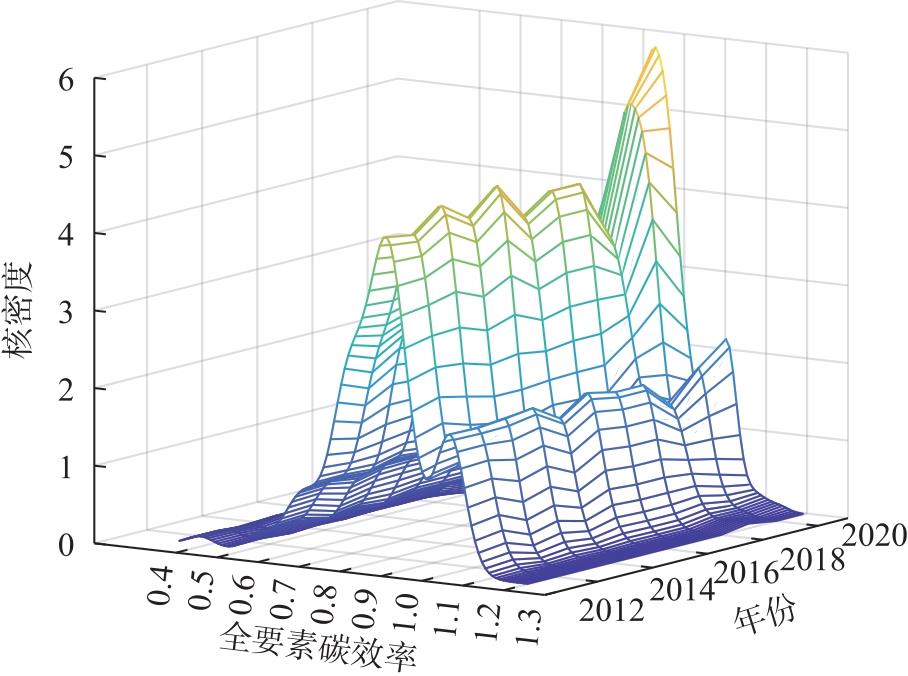
Fig. 5
Kernel density of total factor carbon efficiency"

Tab. 1
Estimation of total factor carbon efficiency parameters for the digital economy"
| 变量 | 全要素碳效率 | ||||
|---|---|---|---|---|---|
| (1) | (2) | (3) | (4) | (5) | |
| dige | 0.011***(0.002) | 0.047***(0.002) | 0.005***(0.002) | 0.025***(0.002) | 0.006***(0.002) |
| 常数项 | 0.583***(0.002) | 0.685***(0.004) | 0.782**(0.013) | 0.631***(0.008) | 0.813***(0.025) |
| R2 | 0.015 | 0.364 | 0.838 | 0.532 | 0.842 |
| 调整后R2 | 0.015 | 0.362 | 0.821 | 0.530 | 0.826 |
| 控制变量 | 否 | 否 | 否 | 是 | 是 |
| 地区效应 | 否 | 否 | 是 | 否 | 是 |
| 时间效应 | 否 | 是 | 是 | 是 | 是 |
Tab. 2
Results of mediation effect analysis"
| 平均效应 | 置信区间 | 中介变量:产品市场扭曲 |
|---|---|---|
| 平均因果中介效应 | [0.001, 0.003] | 0.002 |
| 平均直接效应 | [0.042, 0.049] | 0.045 |
| 平均处理效应 | [0.044, 0.050] | 0.047 |
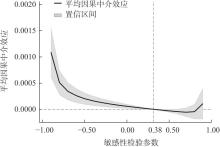
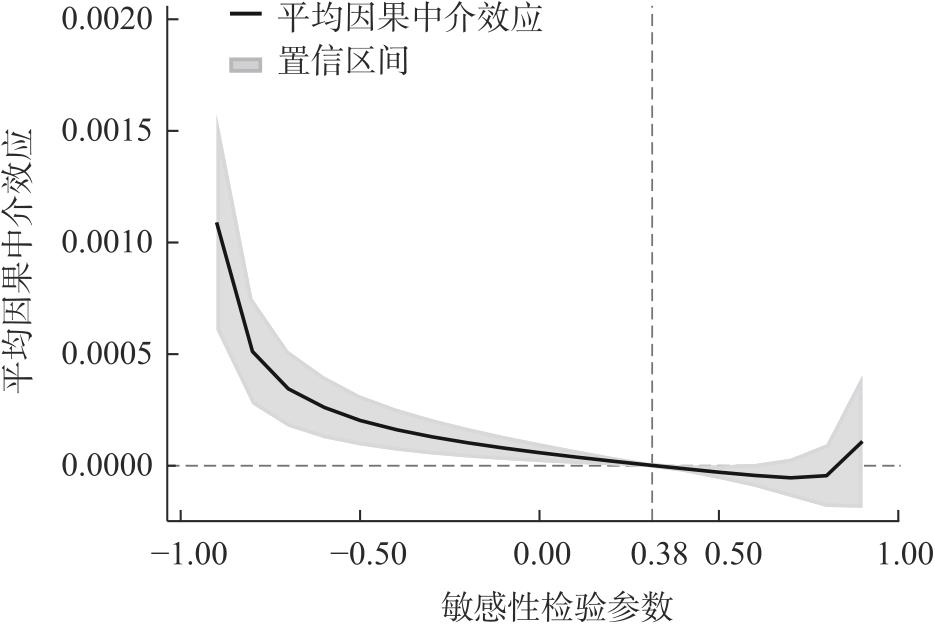
Fig. 6
Sensitivity analysis"
Tab. 3
Regression results of the spatial model on the impact of the digital economy on total factor carbon efficiency"
| 变量 | SDM | SAR | |||||
|---|---|---|---|---|---|---|---|
| W1 | W2 | W3 | W1 | W2 | W3 | ||
| dige | 0.024***(0.002) | 0.020***(0.002) | 0.024***(0.002) | 0.025***(0.002) | 0.023***(0.002) | 0.025***(0.002) | |
| W*dige | 0.015**(0.006) | 0.020***(0.006) | 0.016**(0.007) | - | - | - | |
| 直接效应 | 0.024***(0.002) | 0.022***(0.002) | 0.024***(0.002) | 0.025***(0.002) | 0.024***(0.002) | 0.025***(0.002) | |
| 间接效应 | 0.023***(0.008) | 0.036***(0.008) | 0.024***(0.008) | 0.005***(0.001) | 0.009***(0.001) | 0.005***(0.001) | |
| 总效应 | 0.047***(0.008) | 0.058***(0.008) | 0.048***(0.008) | 0.030***(0.003) | 0.033***(0.003) | 0.030***(0.003) | |
| rho | 0.182***(0.034) | 0.300***(0.030) | 0.183***(0.034) | 0.161***(0.030) | 0.286***(0.027) | 0.161***(0.030) | |
| R2 | 0.551 | 0.570 | 0.551 | 0.544 | 0.545 | 0.544 | |
| 控制变量 | 是 | 是 | 是 | 是 | 是 | 是 | |
| 地区效应 | 否 | 否 | 否 | 否 | 否 | 否 | |
| 时间效应 | 是 | 是 | 是 | 是 | 是 | 是 | |
Tab. 4
Regression results of the spatial model on the impact of the digital economy on product market distortions"
| 变量 | SDM | SAR | |||||
|---|---|---|---|---|---|---|---|
| W1 | W2 | W3 | W1 | W2 | W3 | ||
| dige | -0.719***(0.079) | -0.698***(0.086) | -0.719***(0.080) | -1.087***(0.068) | -1.020***(0.067) | -1.087***(0.068) | |
| W*dige | -1.669***(0.194) | -1.105***(0.183) | -1.673***(0.195) | - | - | - | |
| 直接效应 | -0.733***(0.081) | -0.735***(0.085) | -0.732***(0.081) | -1.088***(0.070) | -1.028***(0.069) | -1.088***(0.070) | |
| 间接效应 | -1.837***(0.191) | -1.517***(0.198) | -1.842***(0.192) | -0.198***(0.046) | -0.331***(0.050) | -0.120***(0.046) | |
| 总效应 | -2.570***(0.160) | -2.252***(0.163) | -2.574***(0.161) | -1.287***(0.085) | -1.359***(0.094) | -1.287***(0.085) | |
| rho | 0.065*(0.035) | 0.193***(0.032) | 0.065*(0.035) | 0.158***(0.033) | 0.252***(0.031) | 0.158***(0.033) | |
| R2 | 0.207 | 0.198 | 0.207 | 0.180 | 0.183 | 0.180 | |
| 控制变量 | 否 | 否 | 否 | 否 | 否 | 否 | |
| 地区效应 | 否 | 否 | 否 | 否 | 否 | 否 | |
| 时间效应 | 是 | 是 | 是 | 是 | 是 | 是 | |
Tab. 5
Heterogeneity analysis of the total factor carbon efficiency improvement effect of the digital economy"
| 变量 | 10%分位点 | 30%分位点 | 50%分位点 | 70%分位点 | 90%分位点 | 东部 | 中部 | 西部 |
|---|---|---|---|---|---|---|---|---|
| dige | 0.010*** (0.003) | 0.014*** (0.002) | 0.015*** (0.003) | 0.023*** (0.004) | 0.031*** (0.005) | 0.015*** (0.004) | 0.005* (0.003) | 0.001 (0.004) |
| 常数项 | 0.586*** (0.006) | 0.606*** (0.009) | 0.614*** (0.008) | 0.625*** (0.009) | 0.630*** (0.017) | 0.828*** (0.049) | 0.650*** (0.024) | 0.646*** (0.032) |
| R2 | 0.241 | 0.294 | 0.332 | 0.371 | 0.447 | 0.858 | 0.823 | 0.742 |
| 控制变量 | 是 | 是 | 是 | 是 | 是 | 是 | 是 | 是 |
| 地区效应 | 否 | 否 | 否 | 否 | 否 | 是 | 是 | 是 |
| 时间效应 | 是 | 是 | 是 | 是 | 是 | 是 | 是 | 是 |
Tab. 6
Heterogeneity analysis of the product market distortions suppression effect of the digital economy"
| 变量 | 10%分位点 | 30%分位点 | 50%分位点 | 70%分位点 | 90%分位点 |
|---|---|---|---|---|---|
| dige | -0.247**(0.116) | -0.345***(0.081) | -0.377***(0.080) | -0.323***(0.093) | -0.192(0.177) |
| 常数项 | 9.224***(0.403) | 9.825***(0.402) | 10.726***(0.387) | 12.959***(0.413) | 17.174***(1.005) |
| 控制变量 | 是 | 是 | 是 | 是 | 是 |
| R2 | 0.170 | 0.159 | 0.145 | 0.143 | 0.151 |
| 地区效应 | 否 | 否 | 否 | 否 | 否 |
| 时间效应 | 是 | 是 | 是 | 是 | 是 |
Tab. 7
Threshold model regression results"
| 项目 | dige≤-1.094 | -1.094<dige≤1.976 | dige>1.976 |
|---|---|---|---|
| dige | 0.010***(0.004) | -0.005**(0.003) | 0.009***(0.002) |
| 常数项 | 0.656***(0.013) | ||
| 控制变量 | 是 | ||
| R2 | 0.561 | ||
| 时间效应 | 是 | ||
| 个体效应 | 否 | ||
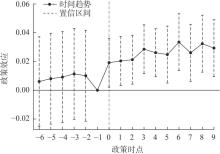
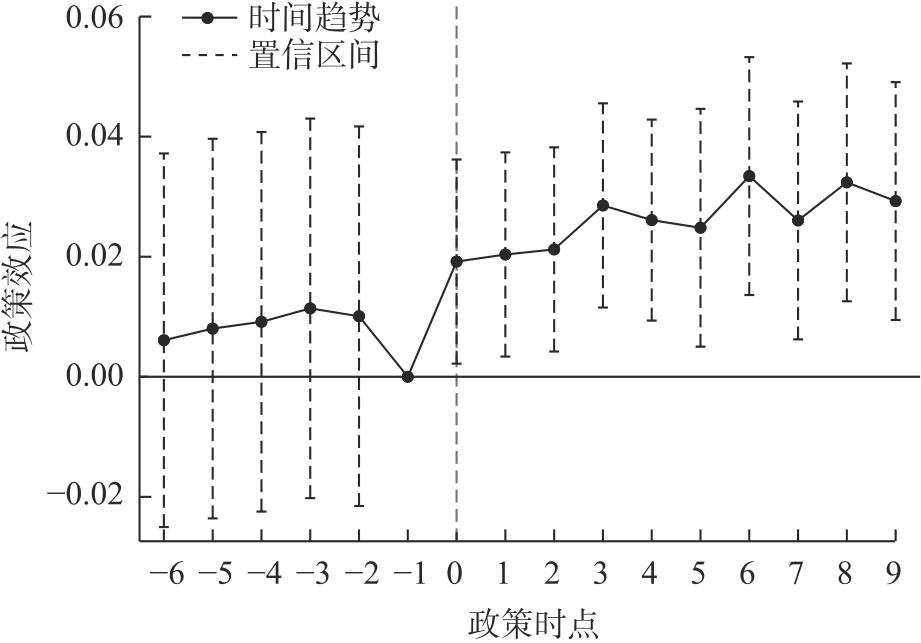
Fig. 7
Parallel trend test for the low-carbon pilot policy"
| [1] | 中华人民共和国中央人民政府. 加快构建排放双控制度体系工作方案[EB/OL]. [2024-07-30]. https://www.gov.cn/zhengce/content/202408/content_6966079.htm. |
| [The State Council of the People’s Republic of China. Work plan to accelerate the establishment of a dual-control system for carbon emissions[EB/OL]. [2024-07-30]. https://www.gov.cn/zhengce/content/202408/content_6966079.htm.] | |
| [2] | Yu Z, Wang Z, Ma L, et al. Energy-saving targets and carbon neutrality: A perspective on carbon emissions and carbon substitution in 288 Chinese cities[J]. Journal of Environmental Management, 2024, 356: 120523, doi: 10.1016/j.jenvman.2024.120523. |
| [3] | 王群伟, 杜倩, 李振冉, 等. 数字化和绿色化转型的碳排放双控效果: 基于制造业新质生产力的机制解析[J]. 中国管理科学, 2025, 33(11): 321-335. |
| [Wang Qunwei, Du Qian, Li Zhenran. The dual control effects of carbon emissions of digital and green transitions: A mechanistic analysis based on new quality productive forces in manufacturing industries[J]. Chinese Journal of Management Science, 2025, 33(11): 321-335.] | |
| [4] | 中华人民共和国中央人民政府. “十四五”数字经济发展规划[EB/OL]. [2022-01-12]. https://www.gov.cn/zhengce/content/2022-01/12/content_5667817.htm. |
| [The State Council of the People’s Republic of China. Plan focuses on digital economy development during 14th Five-Year Plan Period[EB/OL]. [2022-01-12]. https://www.gov.cn/zhengce/content/2022-01/12/content_5667817.htm.] | |
| [5] | 中国信息通信研究院. 中国数字经济发展研究报告(2024年)[EB/OL]. [2025-04-29]. http://www.caict.ac.cn/kxyj/qwfb/bps/202408/t20240827_491581.htm. |
| [China Academy of Information and Communications Technology. Research report on the development of China’s digital economy[EB/OL]. [2025-04-29]. http://www.caict.ac.cn/kxyj/qwfb/bps/202408/t20240827_491581.htm.] | |
| [6] | 张思思, 崔琪, 马晓钰. 数字要素赋能下有偏技术进步的节能减排效应[J]. 中国人口·资源与环境, 2022, 32(7): 22-36. |
| [Zhang Sisi, Cui Qi, Ma Xiaoyu. Energy saving and emission reduction effect of biased technological progress under digital factor empowerment[J]. China Population, Resources and Environment, 2022, 32(7): 22-36.] | |
| [7] | 沈小波, 陈语, 林伯强. 技术进步和产业结构扭曲对中国能源强度的影响[J]. 经济研究, 2021, 56(2): 157-173. |
| [Shen Xiaobo, Chen Yu, Lin Boqiang. The impacts of technological progress and industrial structure distortion on China’s energy intensity[J]. Economic Research Journal, 2021, 56(2): 157-173.] | |
| [8] | Zhang L, Mu R Y, Zhan Y F, et al. Digital economy, energy efficiency, and carbon emissions: Evidence from provincial panel data in China[J]. Science of the Total Environment, 2022, 852: 158403, doi: 10.1016/j.scitotenv.2022.158403. |
| [9] | 邵帅, 张可, 豆建民. 经济集聚的节能减排效应: 理论与中国经验[J]. 管理世界, 2019, 35(1): 36-60, 226. |
| [Shao Shuai, Zhang Ke, Dou Jianmin. Effects of economic agglomeration on energy saving and emission reduction: Theory and empirical evidence from China[J]. Management World, 2019, 35(1): 36-60, 226.] | |
| [10] | 蒋为, 龚思豪, 李锡涛. 机器人冲击、资本体现式技术进步与制造业碳减排——理论分析及中国的经验证据[J]. 中国工业经济, 2022(10): 24-42. |
| [Jiang Wei, Gong Sihao, Li Xitao. Robot shock, capital-embodied technological progress and carbon reduction of manufacturing sector: Theoretical analysis and empirical evidence from China[J]. China Industrial Economics, 2022(10): 24-42.] | |
| [11] | 吴传清, 邓明亮. 数字经济发展对中国工业碳生产率的影响研究[J]. 中国软科学, 2023(11): 189-200. |
| [Wu Chuanqing, Deng Mingliang. Impact of digital economy development on industrial carbon productivity in China[J]. China Soft Science, 2023(11): 189-200.] | |
| [12] | 李海燕, 王群勇, 陆凤芝. 数字经济如何影响工业碳生产率——基于技术进步偏向视角[J]. 财经科学, 2024(8): 116-134. |
| [Li Haiyan, Wang Qunyong, Lu Fengzhi. How the digital economy affects industrial carbon productivity: A perspective based on technological progress bias[J]. Finance & Economics, 2024(8): 116-134.] | |
| [13] | 王森, 李金叶. 产品市场扭曲对居民消费潜力的影响研究——基于制造业数字化转型视角[J]. 技术经济, 2023, 42(10): 127-141. |
| [Wang Sen, Li Jinye. A study on the impact of product market distortions on the consumption potential of the population: Based on the perspective of digital transformation in the manufacturing industry[J]. Technology Economics, 2023, 42(10): 127-141.] | |
| [14] | 祝树金, 罗彦, 段文静. 服务型制造、加成率分布与资源配置效率[J]. 中国工业经济, 2021(4): 62-80. |
| [Zhu Shujin, Luo Yan, Duan Wenjing. Service-oriented manufacturing, markup dispersion and resource allocation efficiency[J]. China Industrial Economics, 2021(4): 62-80.] | |
| [15] | 孙传旺, 林伯强. 中国工业能源要素配置效率与节能潜力研究[J]. 数量经济技术经济研究, 2014, 31(5): 86-99. |
| [Sun Chuanwang, Lin Boqiang. Energy resource allocation efficiency and energy conservation potential of China’s industrial sectors[J]. The Journal of Quantitative & Technical Economics, 2014, 31(5): 86-99.] | |
| [16] | 李治国, 王杰. 数字经济发展、数据要素配置与制造业生产率提升[J]. 经济学家, 2021(10): 41-50. |
| [Li Zhiguo, Wang Jie. Digital economy development, allocation of data elements and productivity growth in manufacturing industry[J]. Economist, 2021(10): 41-50.] | |
| [17] | Guang F T, Deng Y T, Wen L, et al. Impact of regional energy allocation distortion on carbon emission efficiency: Evidence from China[J]. Journal of Environmental Management, 2023, 342: 118241, doi: 10.1016/j.jenvman.2023.118241. |
| [18] | 贺子欣, 惠宁, 付文宇. 数字经济对要素市场扭曲影响的实证检验[J]. 统计与决策, 2023, 39(20): 5-10. |
| [He Zixin, Hui Ning, Fu Wenyu. Empirical test of the impact of digital economy on factor market distortion[J]. Statistics and Decision, 2023, 39(20): 5-10.] | |
| [19] | 王文, 牛泽东. 资源错配对中国工业全要素生产率的多维影响研究[J]. 数量经济技术经济研究, 2019, 36(3): 20-37. |
| [Wang Wen, Niu Zedong. Resources misallocation and multi-dimensional industrial TFP in China[J]. The Journal of Quantitative & Technical Economics, 2019, 36(3): 20-37.] | |
| [20] | 汪东芳, 曹建华. 互联网发展对中国全要素能源效率的影响及网络效应研究[J]. 中国人口·资源与环境, 2019, 29(1): 86-95. |
| [Wang Dongfang, Cao Jianhua. The impact of Internet development on China’s total factor energy efficiency and its network effects[J]. China Population, Resources and Environment, 2019, 29(1): 86-95.] | |
| [21] | 江艇. 因果推断经验研究中的中介效应与调节效应[J]. 中国工业经济, 2022(5): 100-120. |
| [Jiang Ting. Mediating effects and moderating effects in causal inference[J]. China Industrial Economics, 2022(5): 100-120.] | |
| [22] | 孙慧, 张若威, 陀才进, 等. 智慧城市建设能否弥合城际技术要素市场分割?--基于链式多重中介效应模型的实证检验[J]. 软科学, 2026, 40(1): 67-75. |
| [Sun Hui, Zhang Ruowei, Tuo Caijin, et al. Can smart city construction bridge the divide in intercity technology factor markets? An empirical test based on chained multiple intermediation effect model[J]. Soft Science, 2026, 40(1): 67-75.] | |
| [23] |
Wang H P, Cheng Y L. Impact of the digital economy on total factor energy efficiency: Evidence from 268 Chinese cities[J]. Environmental Science and Pollution Research, 2024, 31(2): 2960-2975.
doi: 10.1007/s11356-023-31356-0 |
| [24] | Gao K, Yuan Y J. Does market-oriented reform make the industrial sector “greener” in China? Fresh evidence from the perspective of capital-labor-energy market distortions[J]. Energy, 2022, 254: 124183, doi: 10.1016/j.energy.2022.124183. |
| [25] | 于洋, 简鑫, 张振华. 区块链能否有效缓解制造业企业碳依赖?[J/OL]. 系统工程理论与实践. [2025-10-27]. https://link.cnki.net/urlid/11.2267.n.20251010.1021.002. |
| [Yu Yang, Jian Xin, Zhang Zhenhua. Can blockchain effectively alleviate carbon dependency of manufacturing corporates?[J/OL]. Systems Engineering-Theory & Practice. [2025-10-27]. https://link.cnki.net/urlid/11.2267.n.20251010.1021.002.] | |
| [26] | 欧阳志刚, 陈奕景, 陈熹. 中国制造业金融资源配置效率与全要素生产率[J]. 管理世界, 2024, 40(4): 96-128. |
| [Ouyang Zhigang, Chen Yijing, Chen Xi. Financial resource allocation efficiency and total factor productivity in China’s manufacturing sector[J]. Management World, 2024, 40(4): 96-128.] | |
| [27] | 赵涛, 张智, 梁上坤. 数字经济、创业活跃度与高质量发展——来自中国城市的经验证据[J]. 管理世界, 2020, 36(10): 65-76. |
| [Zhao Tao, Zhang Zhi, Liang Shangkun. Digital economy, entrepreneurship, and high-quality economic development: Empirical evidence from urban China[J]. Management World, 2020, 36(10): 65-76.] | |
| [28] | 尹恒, 张子尧. 产品市场扭曲与资源配置效率: 异质性企业加成率视角[J]. 经济研究, 2021, 56(11): 119-137. |
| [Yin Heng, Zhang Ziyao. Product market distortions and resource allocation efficiency: A heterogeneous firm markup rate perspective[J]. Economic Research Journal, 2021, 56(11): 119-137.] | |
| [29] | 刘鑫, 吕记蕾. 国家级大数据综合试验区设立对企业碳绩效的影响研究[J]. 管理学报, 2026, 23(2): 312-321. |
| [Liu Xin, Lü Jilei. An analysis of the impact of national big data comprehensive pilot zones on corporate carbon performance[J]. Chinese Journal of Management, 2026, 23(2): 312-321.] | |
| [30] | 欧阳日辉. 数据要素促进数字经济和实体经济深度融合的理论逻辑与分析框架[J]. 经济纵横, 2024(2): 67-78. |
| [Ouyang Rihui. Data as a factor of production promotes the deep integration of the digital economy and the real economy: Theoretical logic and analysis framework[J]. Economic Review, 2024(2): 67-78.] | |
| [31] | 许恒, 张一林, 曹雨佳. 数字经济、技术溢出与动态竞合政策[J]. 管理世界, 2020, 36(11): 63-84. |
| [Xu Heng, Zhang Yilin, Cao Yujia. Digital economy, technology spillover and dynamic coopetition policy[J]. Management World, 2020, 36(11): 63-84.] | |
| [32] | 黄永春, 宫尚俊, 邹晨, 等. 数字经济、要素配置效率与城乡融合发展[J]. 中国人口·资源与环境, 2022, 32(10): 77-87. |
| [Huang Yongchun, Gong Shangjun, Zou Chen, et al. Digital economy, factor allocation efficiency, and integrated urban-rural development[J]. China Population, Resources and Environment, 2022, 32(10): 77-87.] | |
| [33] |
Alan S, Ertac S, Mumcu I. Gender stereotypes in the classroom and effects on achievement[J]. Review of Economics and Statistics, 2018, 100(5): 876-890.
doi: 10.1162/rest_a_00756 |
| [34] |
Alacevich C, Zejcirovic D. Does violence against civilians depress voter turnout? Evidence from Bosnia and Herzegovina[J]. Journal of Comparative Economics, 2020, 48(4): 841-865.
doi: 10.1016/j.jce.2020.04.006 |
| [35] | 项后军, 张清俊. 中国的显性存款保险制度与银行风险[J]. 经济研究, 2020, 55(12): 165-181. |
| [Xiang Houjun, Zhang Qingjun. China’s explicit deposit insurance system and its effect on bank risk[J]. Economic Research Journal, 2020, 55(12): 165-181.] | |
| [36] | 杨刚强, 王海森, 范恒山, 等. 数字经济的碳减排效应: 理论分析与经验证据[J]. 中国工业经济, 2023(5): 80-98. |
| [Yang Gangqiang, Wang Haisen, Fan Hengshan, et al. Carbon reduction effect of digital economy: Theoretical analysis and empirical evidence[J]. China Industrial Economics, 2023(5): 80-98.] | |
| [37] | 邓若冰, 吴福象. 数字经济抑制研发要素市场扭曲了吗[J]. 现代经济探讨, 2022(11): 24-35. |
| [Deng Ruobing, Wu Fuxiang. Does the digital economy restrain R&D factor market distortion?[J]. Modern Economic Research, 2022(11): 24-35.] | |
| [38] | Li Z, Chen X D, Ye Y Y, et al. The impact of digital economy on industrial carbon emission efficiency at the city level in China: Gravity movement trajectories and driving mechanisms[J]. Environmental Technology & Innovation, 2024, 33: 103511, doi: 10.1016/j.eti.2023.103511. |
| [39] |
刘海军, 张海虹, 闫俊杰, 等. 新疆农业碳排放效率时空异质性及其影响因素[J]. 干旱区地理, 2025, 48(5): 866-878.
doi: 10.12118/j.issn.1000-6060.2024.345 |
|
[Liu Haijun, Zhang Haihong, Yan Junjie, et al. Spatiotemporal heterogeneity and its influencing factors of agricultural carbon emission efficiency in Xinjiang[J]. Arid Land Geography, 2025, 48(5): 866-878.]
doi: 10.12118/j.issn.1000-6060.2024.345 |
|
| [40] | Song C Z, Liu Q F, Song J P, et al. Impact path of digital economy on carbon emission efficiency: Mediating effect based on technological innovation[J]. Journal of Environmental Management, 2024, 358: 120940, doi: 10.1016/j.jenvman.2024.120940. |
| [41] | 时朋飞, 耿飚, 李星明, 等. 长江经济带旅游业环境生产率测度、空间分异及驱动机制研究[J]. 中国软科学, 2022(3): 78-87, 111. |
| [Shi Pengfei, Geng Biao, Li Xingming, et al. Measurement, spatial heterogeneity and driving mechanism of environment total factor productivity in tourism: A case study of the Yangtze River Economic Belt in China[J]. China Soft Science, 2022(3): 78-87, 111.] | |
| [42] | 黄群慧, 余泳泽, 张松林. 互联网发展与制造业生产率提升: 内在机制与中国经验[J]. 中国工业经济, 2019(8): 5-23. |
| [Huang Qunhui, Yu Yongze, Zhang Songlin. Internet development and productivity growth in manufacturing industry: Internal mechanism and China experiences[J]. China Industrial Economics, 2019(8): 5-23.] | |
| [43] | 王芃, 武英涛. 能源产业市场扭曲与全要素生产率[J]. 经济研究, 2014, 49(6): 142-155. |
| [Wang Peng, Wu Yingtao. The market distortions and total factor productivity of Chinese energy industry[J]. Economic Research Journal, 2014, 49(6): 142-155.] | |
| [44] |
杜欣. 数字经济促进碳减排的机制与效应——基于绿色技术进步视角的经验考察[J]. 科技进步与对策, 2023, 40(19): 22-32.
doi: 10.6049/kjjbydc.2023020193 |
| [Du Xin. The mechanism and effect of digital economy to promote CO2 emission reduction: An empirical investigation based on the green technological progress[J]. Science & Technology Progress and Policy, 2023, 40(19): 22-32.] | |
| [45] |
杨巨星, 孙慧, 周晋楠, 等. 中国资源型城市转型脱碳时空演进及路径选择[J]. 干旱区地理, 2026, 49(1): 151-163.
doi: 10.12118/j.issn.1000-6060.2024.743 |
|
[Yang Juxing, Sun Hui, Zhou Jinnan, et al. Spatio-temporal evolution and pathway selection of transformation decarbonization in China’s resource-based cities[J]. Arid Land Geography, 2026, 49(1): 151-163.]
doi: 10.12118/j.issn.1000-6060.2024.743 |
|
| [46] |
张傲翔, 苗成林, 陈峥妍. 黄河流域城市生态韧性、社会网络及其影响因素分析[J]. 干旱区地理, 2025, 48(1): 130-142.
doi: 10.12118/j.issn.1000-6060.2024.101 |
|
[Zhang Aoxiang, Miao Chenglin, Chen Zhengyan. Urban ecological resilience, social networks and its influencing factors in the Yellow River Basin[J]. Arid Land Geography, 2025, 48(1): 130-142.]
doi: 10.12118/j.issn.1000-6060.2024.101 |
|
| [47] | 侯世英, 宋良荣. 数字经济、市场整合与企业创新绩效[J]. 当代财经, 2021(6): 78-88. |
| [Hou Shiying, Song Liangrong. Digital economy, market integration and corporate innovation performance[J]. Contemporary Finance & Economics, 2021(6): 78-88.] | |
| [48] |
Elhorst J P. Specification and estimation of spatial panel data models[J]. International Regional Science Review, 2003, 26(3): 244-268.
doi: 10.1177/0160017603253791 |
| [49] |
Powell D. Quantile regression with nonadditive fixed effects[J]. Empirical Economics, 2022, 63(5): 2675-2691.
doi: 10.1007/s00181-022-02216-6 |
| [50] | Yang G. Can the low-carbon city pilot policy promote firms’ low-carbon innovation: Evidence from China[J]. PLoS One, 2023, 18(1): e0277879, doi: 10.1371/journal.pone.0277879. |
| [51] | Zou C, Huang Y C, Wu S S, et al. Does “low-carbon city” accelerate urban innovation? Evidence from China[J]. Sustainable Cities and Society, 2022, 83: 103954, doi: 10.1016/j.scs.2022.103954. |
| [52] | 刘明慧, 张孟瑶, 魏恬冰. 数据要素供给对城市创业活跃度的影响研究——基于政府数据开放的准自然实验[J]. 科研管理, 2026, 47(3): 24-33. |
| [Liu Minghui, Zhang Mengyao, Wei Tianbing. Research on the impact of data factor supply on urban entrepreneurial activity: A quasi-natural experiment based on open government data[J]. Science Research Management, 2026, 47(3): 24-33.] | |
| [53] | 胡晟明, 王林辉, 赵贺. 人工智能应用、人机协作与劳动生产率[J]. 中国人口科学, 2021(5): 48-62, 127. |
| [Hu Shengming, Wang Linhui, Zhao He. Artificial intelligence application, human-machine collaboration and labor productivity[J]. Chinese Journal of Population Science, 2021(5): 48-62, 127.] | |
| [54] | 刘启雷, 韩青叶. 数字赋能对制造业低碳生产的影响研究[J]. 科研管理, 2025, 46(6): 34-43. |
| [Liu Qilei, Han Qingye. Research on the impact of digital empowerment on the low-carbon production of the manufacturing industry[J]. Science Research Management, 2025, 46(6): 34-43.] | |
| [55] | 孙华平, 杜秀梅. 全球价值链嵌入程度及地位对产业碳生产率的影响[J]. 中国人口·资源与环境, 2020, 30(7): 27-37. |
| [Sun Huaping, Du Xiumei. The impact of global value chains’ participation degree and position on industrial carbon productivity[J]. China Population, Resources and Environment, 2020, 30(7): 27-37.] | |
| [56] | 余长林, 沈兵. 数字经济发展对中国要素市场扭曲的影响研究[J]. 科研管理, 2024, 45(6): 62-71. |
| [Yu Changlin, Shen Bing. Research on the impact of digital economy development on China’s factor market distortion[J]. Science Research Management, 2024, 45(6): 62-71.] | |
| [57] | 冯兰刚, 阳文丽, 王忠, 等. 中国数字经济与城市碳排放强度: 时空演化与作用机制[J]. 中国人口·资源与环境, 2023, 33(1): 150-160. |
| [Feng Langang, Yang Wenli, Wang Zhong, et al. Digital economy and urban carbon emission intensity in China: Spatio-temporal evolution and mechanisms[J]. China Population, Resources and Environment, 2023, 33(1): 150-160.] | |
| [58] |
任贵秀, 刘凯. 黄河流域绿色创新的时空演化特征及影响因素分析[J]. 干旱区地理, 2024, 47(1): 158-169.
doi: 10.12118/j.issn.1000-6060.2023.313 |
|
[Ren Guixiu, Liu Kai. Spatiotemporal evolution characteristics and influencing factors of green innovation in the Yellow River Basin[J]. Arid Land Geography, 2024, 47(1): 158-169.]
doi: 10.12118/j.issn.1000-6060.2023.313 |
|
||

