Arid Land Geography ›› 2026, Vol. 49 ›› Issue (9): 1914-1923.doi: 10.12118/j.issn.1000-6060.2025.673
• Regional Development • Previous Articles Next Articles
FAN Ruibo1( ), LI Lan1, CHEN Qiangqiang1,2()
Received:2025-10-21
Revised:2026-01-14
Online:2026-09-25
Published:2026-09-07
Contact:
CHEN Qiangqiang
E-mail:1073325120018@st.gsau.edu.cn;jjglxy666@126.com
FAN Ruibo, LI Lan, CHEN Qiangqiang. Coupling coordination and obstacle factors of rural ecological protection and agricultural economic resilience in China[J].Arid Land Geography, 2026, 49(9): 1914-1923.
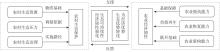
Fig. 1
Coupling mechanism of rural ecological protection and agricultural economic resilience"
Tab. 1
Index system of rural ecological protection and agricultural economic resilience"
| 一级指标 | 二级指标 | 三级指标 | 单位 | 指标解释 | 权重 | 属性 |
|---|---|---|---|---|---|---|
| 农村生 态保护 | 农村生态资源 | 人均耕地面积 | hm2·人-1 | 耕地面积/农村人口数 | 0.263 | + |
| 农村供水普及度 | % | 农村供水总人口/农村人口数 | 0.035 | + | ||
| 森林覆盖率 | % | 中国统计年鉴搜集获取 | 0.111 | + | ||
| 草地综合植被覆盖度 | % | 国家林业与草原数据中心搜集获取 | 0.064 | + | ||
| 农村生态压力 | 地均农用化肥施用量 | t·hm-2 | 农用化肥施用量/耕地面积 | 0.040 | - | |
| 地均农药施用量 | t·hm-2 | 农药施用量/耕地面积 | 0.029 | - | ||
| 农村能源碳排放量 | 104 t | 农村能源碳排放量×能源碳排放系数 | 0.023 | - | ||
| 农村生态治理 | 农村生活垃圾处理率 | % | 中国城乡建设统计年鉴搜集获取 | 0.096 | + | |
| 农村生活污水处理率 | % | 中国城乡建设统计年鉴搜集获取 | 0.188 | + | ||
| 环境治理投资水平 | % | 环境污染治理投资额占GDP比重 | 0.097 | + | ||
| 农村卫生厕所普及率 | % | 中国农村统计年鉴搜集获取 | 0.054 | + | ||
| 农业经 济韧性 | 农业抵抗能力 | 有效灌溉率 | % | 有效灌溉面积/耕地面积 | 0.084 | + |
| 农业劳动生产率 | 108元·(104人)-1 | 农林牧渔总产值/农村人口数 | 0.063 | + | ||
| 农作物受灾率 | % | 受灾面积/耕地面积 | 0.015 | - | ||
| 地均粮食产出率 | t·hm-2 | 粮食总产量/粮食播种面积 | 0.037 | + | ||
| 农业恢复能力 | 农业保险投入规模 | % | 农业保险赔付支出金额/总保险赔付支出金额 | 0.113 | + | |
| 农林牧渔业总产值增长指数 | - | 中国统计年鉴搜集获取 | 0.016 | + | ||
| 农业电气化程度 | % | 第一产业用电量/全社会用电量 | 0.087 | + | ||
| 农业机械化程度 | kW·hm-2 | 农用机械总动力/耕地面积 | 0.079 | + | ||
| 农业信息化程度 | 部·(102户)-1 | 农村居民人均移动电话拥有量 | 0.028 | + | ||
| 农业重构能力 | 农林牧渔业人均专利申请授权量 | 件·(104人)-1 | 农林牧渔业专利申请授权量/农村人口数 | 0.148 | + | |
| 农林牧渔业人均研究与试验发展经费 | 108元·(104人)-1 | 农林牧渔业研究与试验发展经费/农村人口数 | 0.180 | + | ||
| 农业经营组织化程度 | 个·(104人)-1 | 农民专业合作社数量/农村人口数 | 0.120 | + | ||
| 高标准农田建设程度 | % | 高标准农田建设面积/耕地面积 | 0.029 | + |
Tab. 2
Classification of coupled coordination grades"
| 耦合协调度区间 | 耦合协调程度 | 耦合协调度区间 | 耦合协调程度 |
|---|---|---|---|
| [0.0, 0.1) | 极度失调 | [0.5, 0.6) | 勉强协调 |
| [0.1, 0.2) | 严重失调 | [0.6, 0.7) | 初级协调 |
| [0.2, 0.3) | 中度失调 | [0.7, 0.8) | 中级协调 |
| [0.3, 0.4) | 轻度失调 | [0.8, 0.9) | 良好协调 |
| [0.4, 0.5) | 濒临失调 | [0.9, 1.0] | 优质协调 |
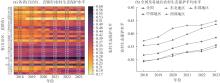
Fig. 2
Rural ecological protection level from 2018 to 2023"
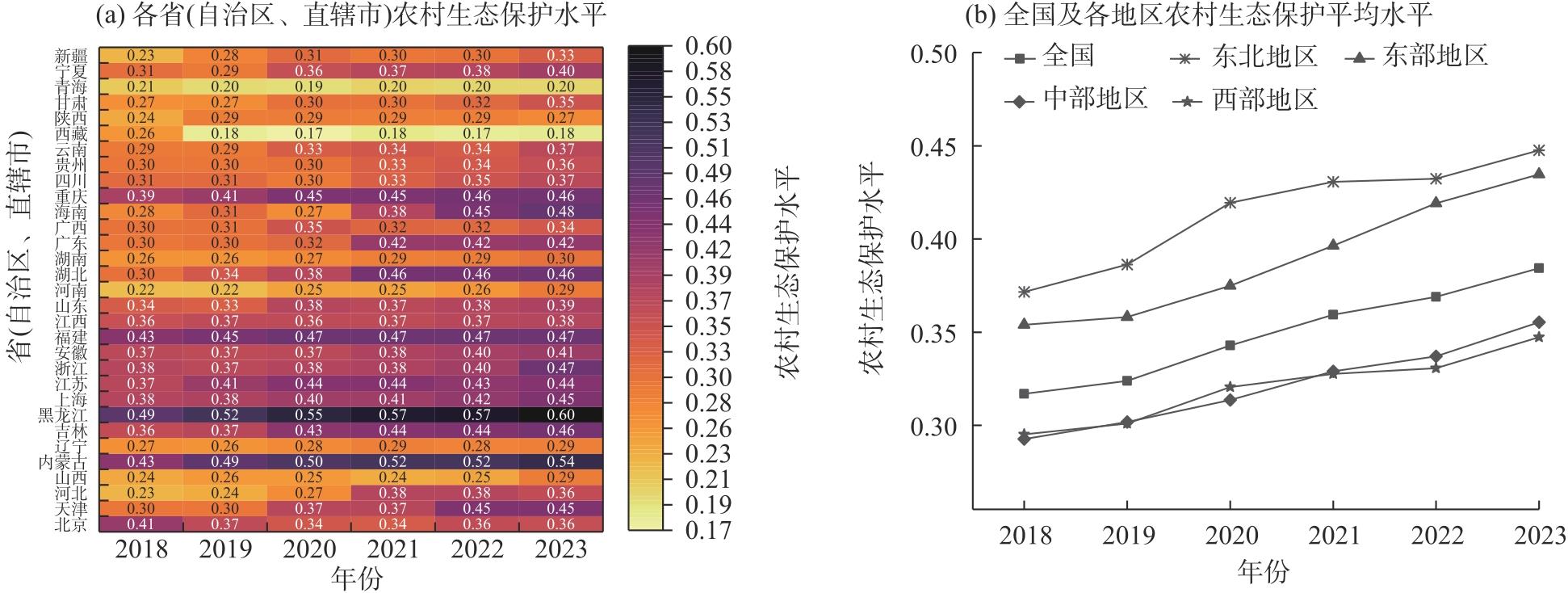
Fig. 3
Agricultural economic resilience level from 2018 to 2023"
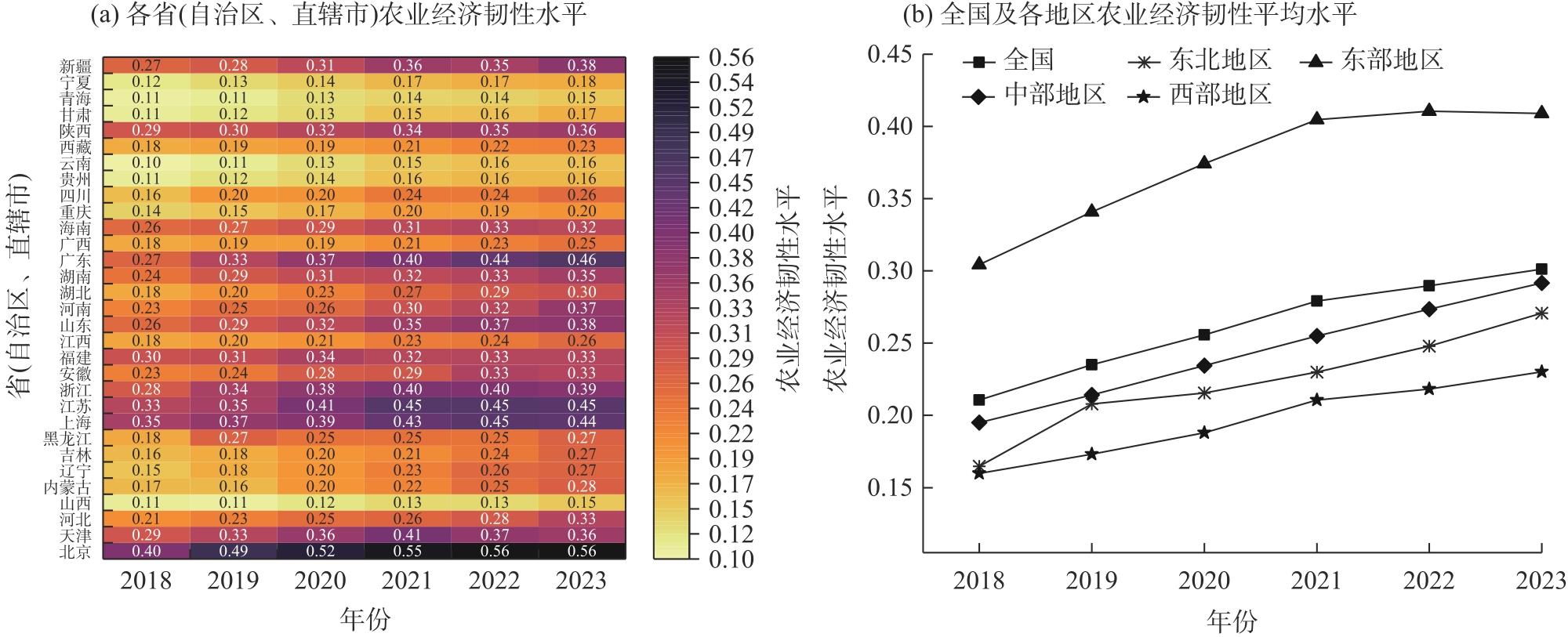
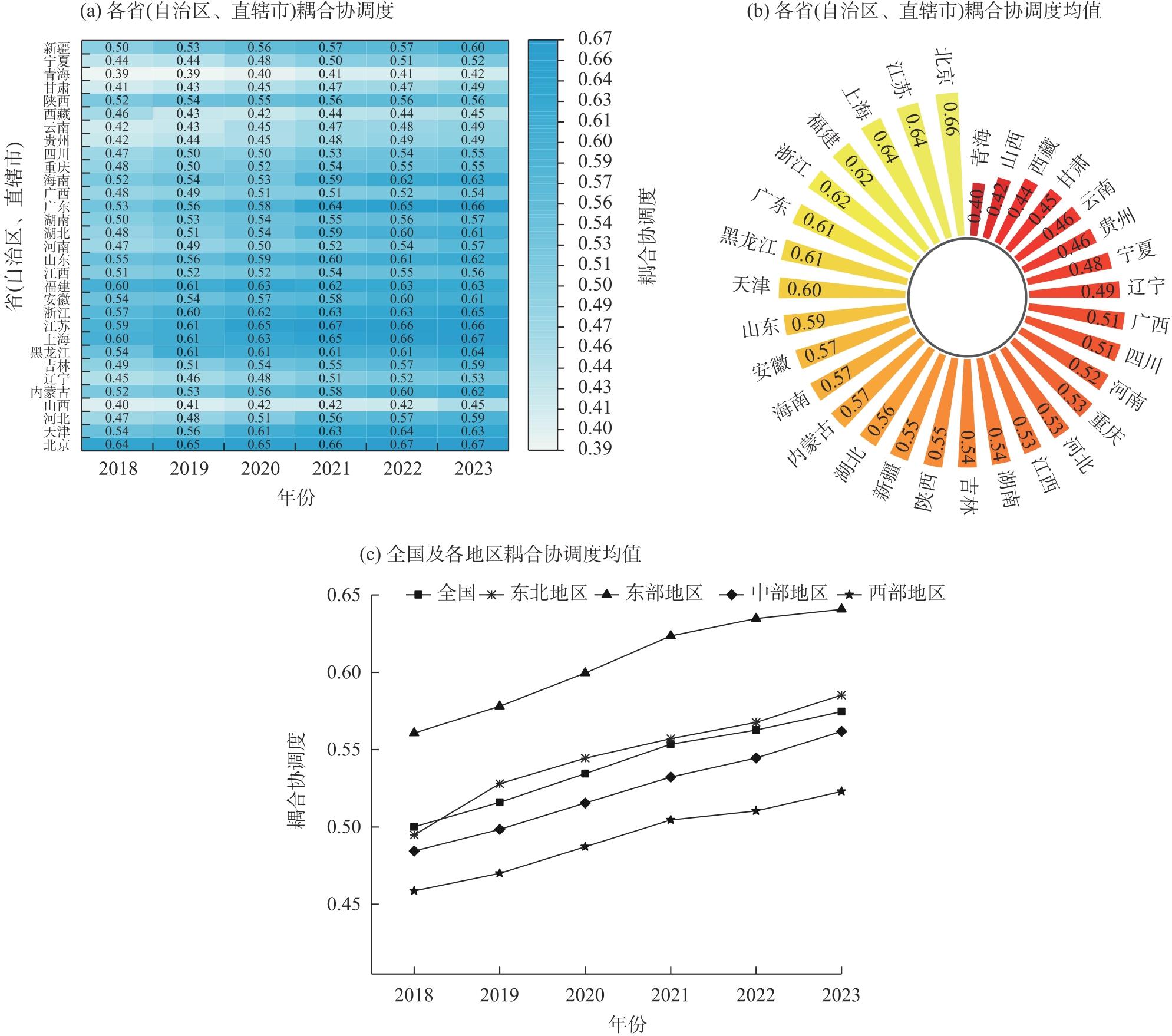
Fig. 4
Coupling and coordination of rural ecological protection and agricultural economic resilience from 2018 to 2023"
Tab. 3
Barriers of rural ecological protection and agricultural economic resilience"
| 地区 | 省(自治区、直辖市) | 农村生态资源 | 农村生态压力 | 农村生态治理 | 农业抵抗能力 | 农业恢复能力 | 农业重构能力 |
|---|---|---|---|---|---|---|---|
| 东北 | 黑龙江 | 0.074 | 0.007 | 0.279 | 0.088 | 0.212 | 0.340 |
| 吉林 | 0.158 | 0.011 | 0.232 | 0.100 | 0.186 | 0.313 | |
| 辽宁 | 0.202 | 0.015 | 0.249 | 0.082 | 0.170 | 0.282 | |
| 均值 | 0.145 | 0.011 | 0.253 | 0.090 | 0.189 | 0.312 | |
| 东部 | 上海 | 0.302 | 0.022 | 0.110 | 0.065 | 0.263 | 0.238 |
| 江苏 | 0.318 | 0.041 | 0.112 | 0.057 | 0.191 | 0.281 | |
| 浙江 | 0.248 | 0.035 | 0.155 | 0.078 | 0.207 | 0.277 | |
| 海南 | 0.227 | 0.037 | 0.179 | 0.075 | 0.139 | 0.342 | |
| 福建 | 0.243 | 0.060 | 0.099 | 0.055 | 0.205 | 0.338 | |
| 山东 | 0.289 | 0.039 | 0.141 | 0.075 | 0.144 | 0.313 | |
| 北京 | 0.293 | 0.027 | 0.166 | 0.097 | 0.244 | 0.173 | |
| 天津 | 0.306 | 0.016 | 0.138 | 0.075 | 0.210 | 0.255 | |
| 河北 | 0.247 | 0.025 | 0.186 | 0.083 | 0.143 | 0.316 | |
| 广东 | 0.247 | 0.062 | 0.183 | 0.083 | 0.152 | 0.272 | |
| 均值 | 0.272 | 0.036 | 0.147 | 0.074 | 0.190 | 0.281 | |
| 中部 | 河南 | 0.262 | 0.032 | 0.205 | 0.080 | 0.118 | 0.302 |
| 湖北 | 0.238 | 0.028 | 0.144 | 0.085 | 0.189 | 0.316 | |
| 湖南 | 0.229 | 0.029 | 0.241 | 0.072 | 0.123 | 0.306 | |
| 江西 | 0.211 | 0.021 | 0.172 | 0.088 | 0.192 | 0.317 | |
| 安徽 | 0.279 | 0.024 | 0.137 | 0.084 | 0.158 | 0.318 | |
| 山西 | 0.208 | 0.012 | 0.214 | 0.104 | 0.193 | 0.268 | |
| 均值 | 0.238 | 0.024 | 0.186 | 0.086 | 0.162 | 0.305 | |
| 西部 | 内蒙古 | 0.134 | 0.012 | 0.259 | 0.090 | 0.193 | 0.312 |
| 广西 | 0.202 | 0.029 | 0.205 | 0.095 | 0.148 | 0.320 | |
| 陕西 | 0.230 | 0.020 | 0.235 | 0.107 | 0.186 | 0.221 | |
| 甘肃 | 0.240 | 0.006 | 0.179 | 0.110 | 0.177 | 0.288 | |
| 宁夏 | 0.236 | 0.008 | 0.171 | 0.092 | 0.194 | 0.298 | |
| 青海 | 0.232 | 0.002 | 0.222 | 0.098 | 0.169 | 0.277 | |
| 新疆 | 0.254 | 0.015 | 0.243 | 0.048 | 0.140 | 0.301 | |
| 四川 | 0.248 | 0.018 | 0.170 | 0.092 | 0.166 | 0.305 | |
| 贵州 | 0.203 | 0.007 | 0.201 | 0.108 | 0.176 | 0.305 | |
| 重庆 | 0.233 | 0.017 | 0.128 | 0.106 | 0.210 | 0.306 | |
| 云南 | 0.187 | 0.013 | 0.208 | 0.105 | 0.182 | 0.305 | |
| 西藏 | 0.246 | 0.003 | 0.242 | 0.081 | 0.152 | 0.276 | |
| 均值 | 0.220 | 0.013 | 0.205 | 0.094 | 0.174 | 0.293 | |
| 全国均值 | 0.233 | 0.022 | 0.187 | 0.086 | 0.178 | 0.293 | |
| [1] | 杨海军, 邹银, 袁嘉慧. 技术创新对农业经济韧性的影响研究[J]. 财经论丛(浙江财经大学学报), 2025(4): 29-40. |
| [Yang Haijun, Zou Yin, Yuan Jiahui. A study of the impact of technological innovation on the resilience of the agricultural economy[J]. Collected Essays on Finance and Economics, 2025(4): 29-40.] | |
| [2] | 蔡清龙. 中国农业经济韧性水平测度与时空演化[J]. 技术经济与管理研究, 2024(4): 140-145. |
| [Cai Qinglong. Level measurement and spatiotemporal evolution of agricultural economic resilience in China[J]. Journal of Technical Economics & Management, 2024(4): 140-145.] | |
| [3] | 王瑞雪, 陈建成, 方宜亮, 等. 中国粮食主产区农业韧性的空间分异、演化特征与驱动力[J]. 农业经济与管理, 2023(4): 23-36. |
| [Wang Ruixue, Chen Jiancheng, Fang Yiliang, et al. Spatial differentiation, evolution characteristics and driving forces of agricultural resilience in China’s main grain production areas[J]. Agricultural Economics and Management, 2023(4): 23-36.] | |
| [4] | 赵天越, 郝娜. 习近平生态文明思想视域下农村生态治理路径探析[J]. 农业经济, 2024(9): 53-55. |
| [Zhao Tianyue, Hao Na. Analysis of the path of rural ecological governance from the perspective of Xi Jinping thought on ecological civilization[J]. Agricultural Economy, 2024(9): 53-55.] | |
| [5] | 吴珂, 孙许雪, 吴忌, 等. 乡村振兴战略下农村生态环境治理的实践路径构建与优化[J]. 江苏农业科学, 2024, 52(4): 245-250. |
| [Wu Ke, Sun Xuxue, Wu Ji, et al. Construction and optimization of the practical path of rural ecological environment governance under the rural revitalization strategy[J]. Jiangsu Agricultural Sciences, 2024, 52(4): 245-250.] | |
| [6] | 沈贵银, 孟祥海. 多元共治的农村生态环境治理体系探索[J]. 环境保护, 2021, 49(20): 34-37. |
| [Shen Guiyin, Meng Xianghai. Exploration on the rural eco-environmental governance system of multiple co-governance[J]. Environmental Protection, 2021, 49(20): 34-37.] | |
| [7] | 李桂君, 赵小然, 张子贤, 等. 农业社会化服务提升了农业经济韧性吗?--来自准自然实验的证据[J/OL]. 中国农业资源与区划. [2026-01-13]. https://link.cnki.net/urlid/11.3513.S.20251105.1103.014. |
| [Li Guijun, Zhao Xiaoran, Zhang Zixian, et al. Do agricultural socialized services enhance the agricultural economic resilience? Evidence from aquasi-natural experiment[J/OL]. Chinese Journal of Agricultural Resources and Regional Planning. [2026-01-13]. https://link.cnki.net/urlid/11.3513.S.20251105.1103.014.] | |
| [8] | 尹蕾, 熊健益. 农村产业融合对农业经济韧性的影响效应及作用机制研究[J]. 商业经济, 2025(1): 136-140. |
| [Yin Lei, Xiong Jianyi. Research on the impact and mechanism of rural industrial integration on agricultural economic resilience[J]. Business & Economy, 2025(1): 136-140.] | |
| [9] | 彭迪云, 苏雅, 冯怡. 数字普惠金融对农业韧性的非线性影响机制——兼论农业生产风险的门槛效应[J]. 中国人口·资源与环境, 2025, 35(1): 205-220. |
| [Peng Diyun, Su Ya, Feng Yi. Nonlinear mechanisms of the impact of digital financial inclusion on agricultural resilience: Threshold effect of agricultural production risk[J]. China Population, Resources and Environment, 2025, 35(1): 205-220.] | |
| [10] | 张进财. 我国农业经济与生态系统耦合协调发展评价[J]. 生态经济, 2022, 38(6): 115-121. |
| [Zhang Jinchai. Evaluation on the coupling and coordinated development of rural economy and ecosystem in China[J]. Ecological Economy, 2022, 38(6): 115-121.] | |
| [11] | 许烜, 曹学琳. 长江经济带农业经济发展与生态环境耦合效率研究[J]. 生态经济, 2023, 39(7): 125-131. |
| [Xu Xuan, Cao Xuelin. The study on coupling efficiency of agricultural economic development and ecological environment in Yangtze River Economic Belt[J]. Ecological Economy, 2023, 39(7): 125-131.] | |
| [12] | 梁亚文, 李绍亭, 雷坤洪, 等. 秦巴山区农业转型与生态环境耦合协调时空特征及驱动因素[J]. 长江流域资源与环境, 2024, 33(7): 1504-1514. |
| [Liang Yawen, Li Shaoting, Lei Kunhong, et al. Spatio-temporal characteristics and driving factors of the coupling coordination between agricultural transition and eco-environment in Qingling-Data Mountain area[J]. Resources and Environment in the Yangtze Basin, 2024, 33(7): 1504-1514.] | |
| [13] | 尚杰, 丛殿勤. 粮食主产区农业生态环境与农业经济的耦合协调及空间关联分析[J]. 河南农业大学学报, 2023, 57(1): 168-178. |
| [Shang Jie, Cong Dianqin. Coupling coordination and spatial correlation analysis of agricultural ecological environment and agricultural economy in major grain producing areas[J]. Journal of Henan Agricultural University, 2023, 57(1): 168-178.] | |
| [14] |
刘琳轲, 梁流涛, 高攀, 等. 黄河流域生态保护与高质量发展的耦合关系及交互响应[J]. 自然资源学报, 2021, 36(1): 176-195.
doi: 10.31497/zrzyxb.20210112 |
|
[Liu Linke, Liang Liutao, Gao Pan, et al. Coupling relationship and interactive response between ecological protection and high-quality development in the Yellow River Basin[J]. Journal of Natural Resources, 2021, 36(1): 176-195.]
doi: 10.31497/zrzyxb.20210112 |
|
| [15] | 李慧涛, 韩劲, 陆刚, 等. 太行山区产业生态化水平测度及空间差异——基于产业生态化实现过程的分析[J]. 干旱区资源与环境, 2023, 37(12): 68-77. |
| [Li Huitao, Han Jin, Lu Gang, et al. Measurement of industrial ecology level and spatial differences in the Taihang Mountainous areas: Analysis based on the implementation of industrial ecology[J]. Journal of Arid Land Resources and Environment, 2023, 37(12): 68-77.] | |
| [16] |
陈宇超, 张杨, 张衔春, 等. 中国“山水林田湖草沙一体化”国土空间治理制度构建[J]. 自然资源学报, 2025, 40(5): 1174-1193.
doi: 10.31497/zrzyxb.20250503 |
|
[Chen Yuchao, Zhang Yang, Zhang Xianchun, et al. The institutional construction of territorial spatial governance for ’integrated mountains, rivers, forests, fields, lakes, grasses and deserts’ in China[J]. Journal of Natural Resources, 2025, 40(5): 1174-1193.]
doi: 10.31497/zrzyxb.20250503 |
|
| [17] | 李媛, 李妍. 黄河流域数字经济、生态保护与区域创新的耦合协调分析[J]. 西北工业大学学报(社会科学版), 2024(1): 78-89. |
| [Li Yuan, Li Yan. Analysis of the coupling and coordination of digital economy-ecological protection-regional innovation in the Yellow River Basin[J]. Journal of Northwestern Polytechnical University (Social Sciences Edition), 2024(1): 78-89.] | |
| [18] | 陈璇, 李旭东, 赵宇鸾, 等. 长江经济带新型城镇化、农村经济与生态环境(U-R-E)耦合协调发展的时空演变[J]. 浙江大学学报(理学版), 2025, 52(6): 751-765. |
| [Chen Xuan, Li Xudong, Zhao Yuluan, et al. The spatiotemporal evolution of new urbanization, rural economy, and ecological environment coordinated development in the Yangtze River Economic Belt[J]. Journal of Zhejiang University (Science Edition), 2025, 52(6): 751-765.] | |
| [19] | 吴旭晓. 黄河流域发展质量综合评估及其主要障碍因子识别[J]. 人民黄河, 2024, 46(5): 25-32. |
| [Wu Xuxiao. Comprehensive evaluation of development quality in the Yellow River Basin and identification of main obstacle factors[J]. Yellow River, 2024, 46(5): 25-32.] | |
| [20] | 孙正林, 阚蕊, 陈俊龙. 数字经济对农业经济韧性的影响研究[J]. 东北大学学报(社会科学版), 2025, 27(4): 37-48. |
| [Sun Zhenglin, Kan Rui, Chen Junlong. Study on the impact of digital economy on agricultural economic resilience[J]. Journal of Northeastern University (Social Sciences Edition), 2025, 27(4): 37-48.] | |
| [21] | 张明斗, 惠利伟. 中国农业经济韧性的空间差异与影响因素识别[J]. 世界农业, 2022(1): 36-50. |
| [Zhang Mingdou, Hui Liwei. Spatial disparities and identification of influencing factors on agricultural economic resilience in China[J]. World Agriculture, 2022(1): 36-50.] | |
| [22] | 彭建仿, 刘文, 刘洋, 等. 成渝地区农业多功能评价及其障碍因子诊断研究[J]. 中国农业资源与区划, 2025, 46(2): 223-235. |
| [Peng Jianfang, Liu Wen, Liu Yang, et al. Multifunctional evaluation of agriculture and diagnosis of its obstacles in the Chengdu-Chongqing region[J]. Chinese Journal of Agricultural Resources and Regional Planning, 2025, 46(2): 223-235.] | |
| [23] |
徐晓亮, 刘旭义, 关靖云, 等. 中国西部边疆民族地区文旅融合高质量发展时空演化及驱动因素分析[J]. 干旱区地理, 2024, 47(9): 1596-1605.
doi: 10.12118/j.issn.1000-6060.2023.623 |
|
[Xu Xiaoliang, Liu Xuyi, Guan Jingyun, et al. Spatiotemporal evolution and driving factors of high-quality development of cultural and tourism integration in border ethnic areas in western China[J]. Arid Land Geography, 2024, 47(9): 1596-1605.]
doi: 10.12118/j.issn.1000-6060.2023.623 |
|
| [24] |
孟晓, 田明华, 杜磊, 等. 中国农业农村现代化发展水平测度及其协调性研究[J]. 干旱区地理, 2024, 47(1): 137-146.
doi: 10.12118/j.issn.1000-6060.2023.339 |
|
[Meng Xiao, Tian Minghua, Du Lei, et al. Measurement and its coordination of the development level of agricultural and rural modernization in China[J]. Arid Land Geography, 2024, 47(1): 137-146.]
doi: 10.12118/j.issn.1000-6060.2023.339 |
|
| [25] |
王冠孝, 王伟, 张娟娟. 乡村旅游与农村人居环境的耦合协调关系及障碍因子诊断——以山西省为例[J]. 干旱区地理, 2024, 47(1): 170-180.
doi: 10.12118/j.issn.1000-6060.2023.271 |
|
[Wang Guanxiao, Wang Wei, Zhang Juanjuan. Coupling coordinative relationship and its obstacle factors between rural tourism and rural human settlement environment: A case of Shanxi Province[J]. Arid Land Geography, 2024, 47(1): 170-180.]
doi: 10.12118/j.issn.1000-6060.2023.271 |
|
| [26] | 陈燕丽, 周徐欣, 邓梦华. 农业绿色发展与自然生态系统服务价值耦合协调发展的时空演化特征[J]. 生态经济, 2025, 41(9): 111-118. |
| [Chen Yanli, Zhou Xuxin, Deng Menghua. Spatiotemporal evolution characteristics of coupled and coordinated development of agricultural green development and natural ecosystem service value[J]. Ecological Economy, 2025, 41(9): 111-118.] | |
| [27] | 逯元堂, 吴舜泽, 赵云皓, 等. 基于环保投入的区域环保产业发展空间均衡性分析——以2004-2011年为例[J]. 中国环境科学, 2015, 35(5): 1586-1591. |
| [Lu Yuantang, Wu Shunze, Zhao Yunhao, et al. Analysis of spatial equilibrium of environmental industry development based on the environmental protection input: A case study of the period between 2004 and 2011[J]. China Environmental Science, 2015, 35(5): 1586-1591.] | |
| [28] |
周侃, 樊杰, 盛科荣. 国土空间管控的方法与途径[J]. 地理研究, 2019, 38(10): 2527-2540.
doi: 10.11821/dlyj020190308 |
| [Zhou Kan, Fan Jie, Sheng Kerong. Research on methods and approaches of spatial governances[J]. Geographical Research, 2019, 38(10): 2527-2540.] | |
| [29] | 罗浩轩. 粮食生产功能区建设政策成效评估: 基于“钱-地-人”视角[J]. 农村经济, 2025(6): 143-154. |
| [Luo Haoxuan. Evaluation of the effectiveness of policies for the construction of grain production functional zones: Based on the perspective of “capital-land-labor”[J]. Rural Economy, 2025(6): 143-154.] | |
| [30] | 毋青松. 城市化进程中都市农业发展路径创新[J]. 农业经济问题, 2013, 34(9): 34-37. |
| [Wu Qingsong. Innovation in the development path of urban agriculture in the process of urbanization[J]. Issues in Agricultural Economy, 2013, 34(9): 34-37.] | |
| [31] |
牛文涛, 董安洞, 张凯霞. 中国休闲农业发展水平的区域差异及收敛性[J]. 经济地理, 2025, 45(4): 168-177.
doi: 10.15957/j.cnki.jjdl.2025.04.016 |
|
[Niu Wentao, Dong Andong, Zhang Kaixia. Regional differences and spatial convergence of leisure agriculture development level in China[J]. Economic Geography, 2025, 45(4): 168-177.]
doi: 10.15957/j.cnki.jjdl.2025.04.016 |
|
| [32] | 易福金, 支晓旭. 农业现代化评价: 基于农业资本的关键指标构建与应用[J]. 农业技术经济, 2025(1): 4-22. |
| [Yi Fujin, Zhi Xiaoxu. Agricultural modernization evaluation: A key indicator based on agricultural capital and application[J]. Journal of Agrotechnical Economics, 2025(1): 4-22.] | |
| [33] | 高静, 于建平, 武彤, 等. 我国农业生态经济系统耦合协调发展研究[J]. 中国农业资源与区划, 2020, 41(1): 1-7. |
| [Gao Jing, Yu Jianping, Wu Tong, et al. Study on the coupling coordinated development of agricultural ecological-economic system in China[J]. Chinese Journal of Agricultural Resources and Regional Planning, 2020, 41(1): 1-7.] |
|
||