Arid Land Geography ›› 2026, Vol. 49 ›› Issue (11): 2346-2360.doi: 10.12118/j.issn.1000-6060.2026.255
• Urban Geography • Previous Articles Next Articles
DU Yuxin1( ), SUN Yixiang2, ZHU Xiaoqing3, LIU Yongmei1,4(), YAN Junjuan1, CHEN Guohun1
Received:2026-04-13
Revised:2026-07-31
Online:2026-11-25
Published:2026-11-13
Contact:
LIU Yongmei
E-mail:202421691@stumail.nwu.edu.cn;liuym@nwu.edu.cn
DU Yuxin, SUN Yixiang, ZHU Xiaoqing, LIU Yongmei, YAN Junjuan, CHEN Guohun. Spatiotemporal heterogeneity of the land intensive use degree and its driving factors for cities in the Yellow River Basin[J].Arid Land Geography, 2026, 49(11): 2346-2360.
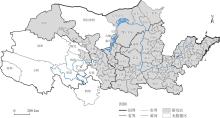
Fig. 1
Schematic diagram of the study area"
Tab. 1
Evaluation indicators and weights of the land intensive use degree for cities in the Yellow River Basin"
| 子系统 | 指标层 | 指标意义 | 单位 | 性质 | 权重 |
|---|---|---|---|---|---|
| 土地投入水平 | 建设用地地均固定资产投资 | 固定资产投资额/建设用地面积 | 104元·km-2 | + | 0.0624 |
| 地均财政投入 | 一般公共预算支出/土地总面积 | 104元·km-2 | + | 0.0786 | |
| 地均公用设施建设投入 | 市公用设施建设投入/土地总面积 | 104元·km-2 | + | 0.2780 | |
| 土地利用强度 | 城乡建设用地人口密度 | 城市人口/建设用地面积 | 人·km-2 | + | 0.0715 |
| 建成区比例 | 建成区面积/土地总面积 | % | + | 0.1401 | |
| 建设用地地均地区生产总值 | 生产总值/建设用地面积 | 104元·km-2 | + | 0.0375 | |
| 土地利用效益 | 建设用地地均二三产业增加值 | 二三产业增加值/建设用地面积 | 104元·km-2 | + | 0.0345 |
| 地均财政收入 | 一般公共预算收入/土地总面积 | 104元·km-2 | + | 0.1441 | |
| 建成区绿化覆盖率 | 建成区绿化覆盖面积/建成区面积 | % | + | 0.0041 | |
| 城镇居民人均可支配收入 | 城镇居民人均可支配收入 | 元·人-1 | + | 0.0083 | |
| 地均社会消费品零售总额 | 社会消费品零售总额/土地总面积 | 104元·km-2 | + | 0.1348 | |
| 土地反馈机制 | 单位人口增长消耗新增建设用地量 | 建设用地净增量/常住人口净增量 | m2·人-1 | - | 0.0048 |
| 经济用地弹性 | 建设用地面积增长率/地区生产总值增长率 | + | 0.0012 |
Tab. 2
Indicator system of the factors influencing the land intensive use degree for cities in the Yellow River Basin"
| 影响因素 | 指标 | 指标说明 | 单位 |
|---|---|---|---|
| 经济发展 | 经济水平 | 地均GDP | 104元·km-2 |
| 对外开放 | 进出口总额占GDP比重 | % | |
| 产业结构 | 二三产业增加值占GDP比重 | % | |
| 社会文明 | 科技创新 | 教育和科技支出占GDP比重 | % |
| 政府财政 | 政府支出占收入比重 | % | |
| 城市环境 | 人均公园绿地面积 | m2·人-1 | |
| 自然条件 | 人口因素 | 人口密度 | 人·km-2 |
| 地形起伏 | 地形坡度 | (°) | |
| 河网密度 | 河网密度 | km·km-2 |
Tab. 3
Interaction types"
| 判据 | 交互作用 |
|---|---|
| 非线性减弱 | |
| 单因子非线性减弱 | |
| 双因子增强 | |
| 独立 | |
| 非线性增强 |
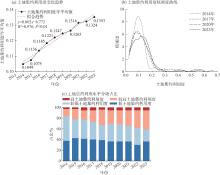
Fig. 2
Interannual variations of the land intensive use degree for cities in the Yellow River Basin from 2014 to 2023"
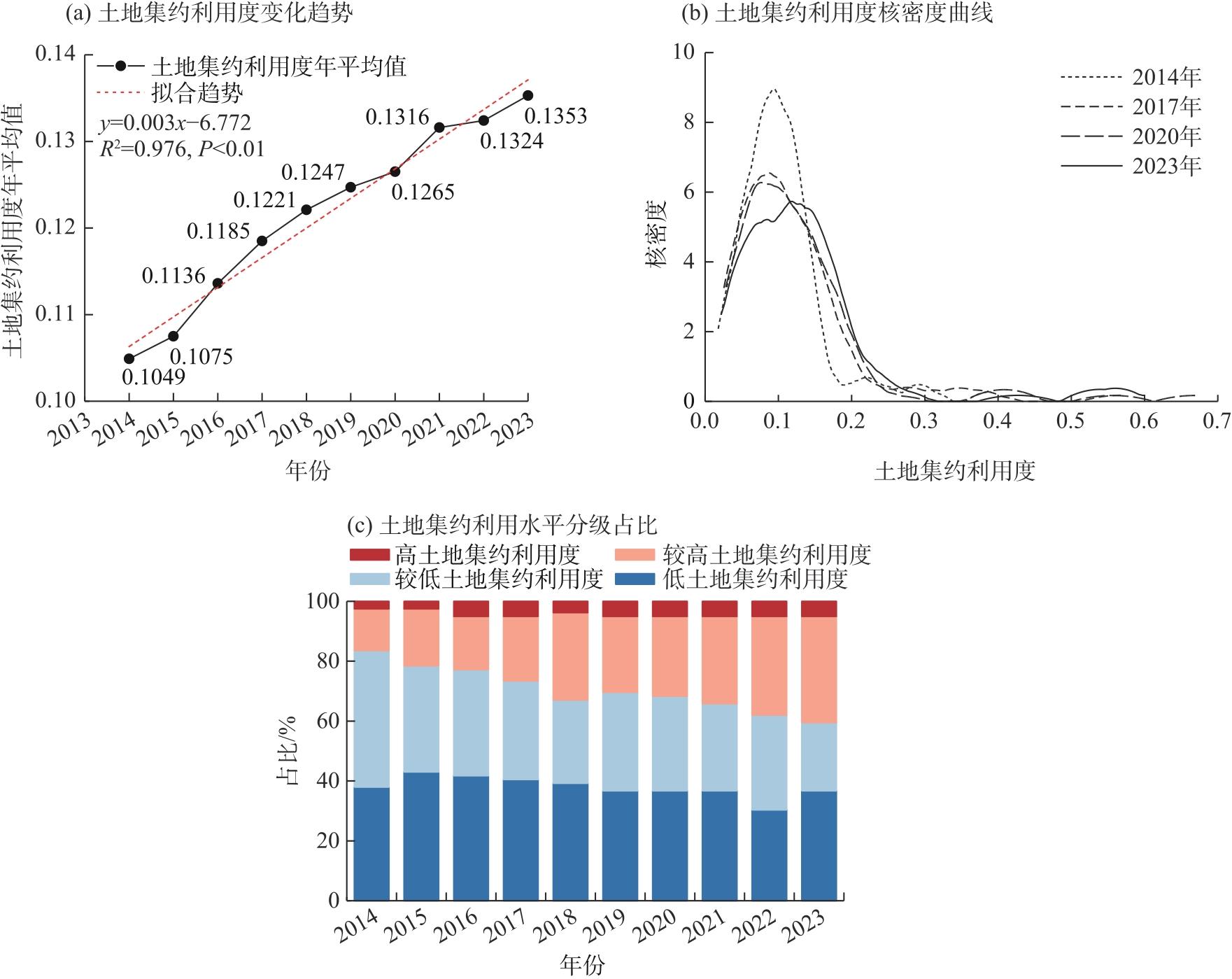
Fig. 3
Spatial distributions of the land intensive use degree for cities in the Yellow River Basin from 2014 to 2023"
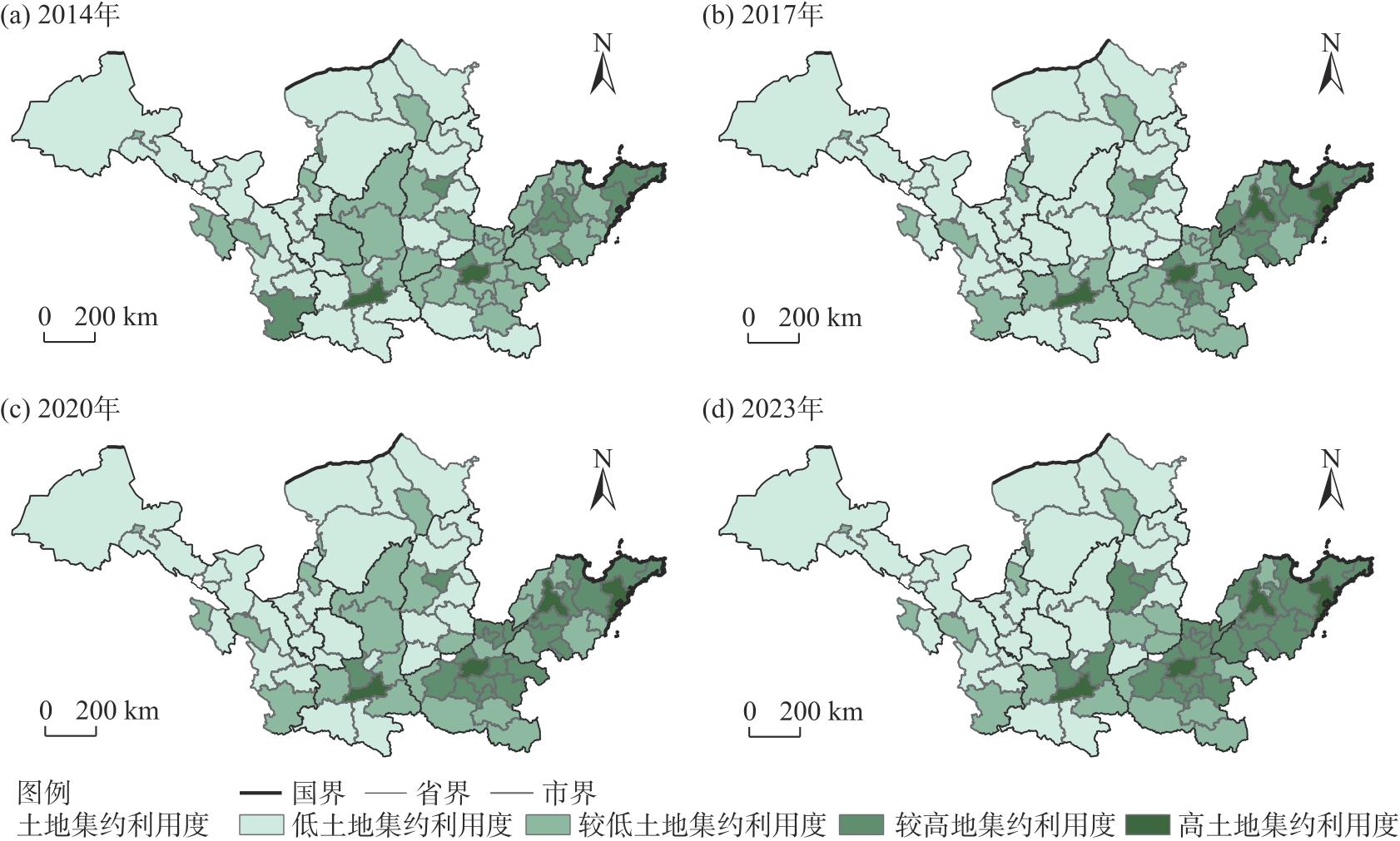
Fig. 4
Spatial distributions of the internal coordination degree of land intensive use for cities in the Yellow River Basin from 2014 to 2023"
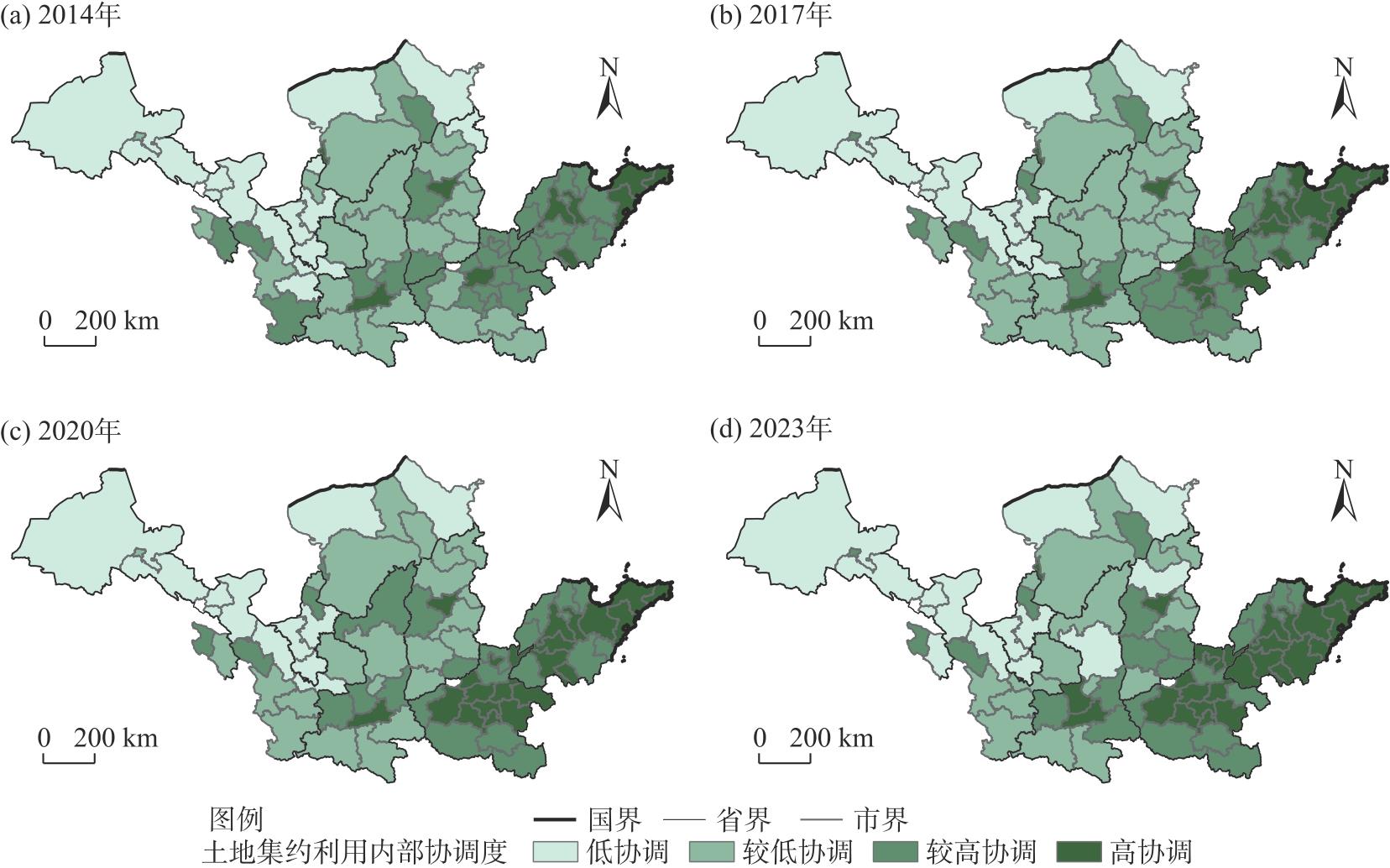
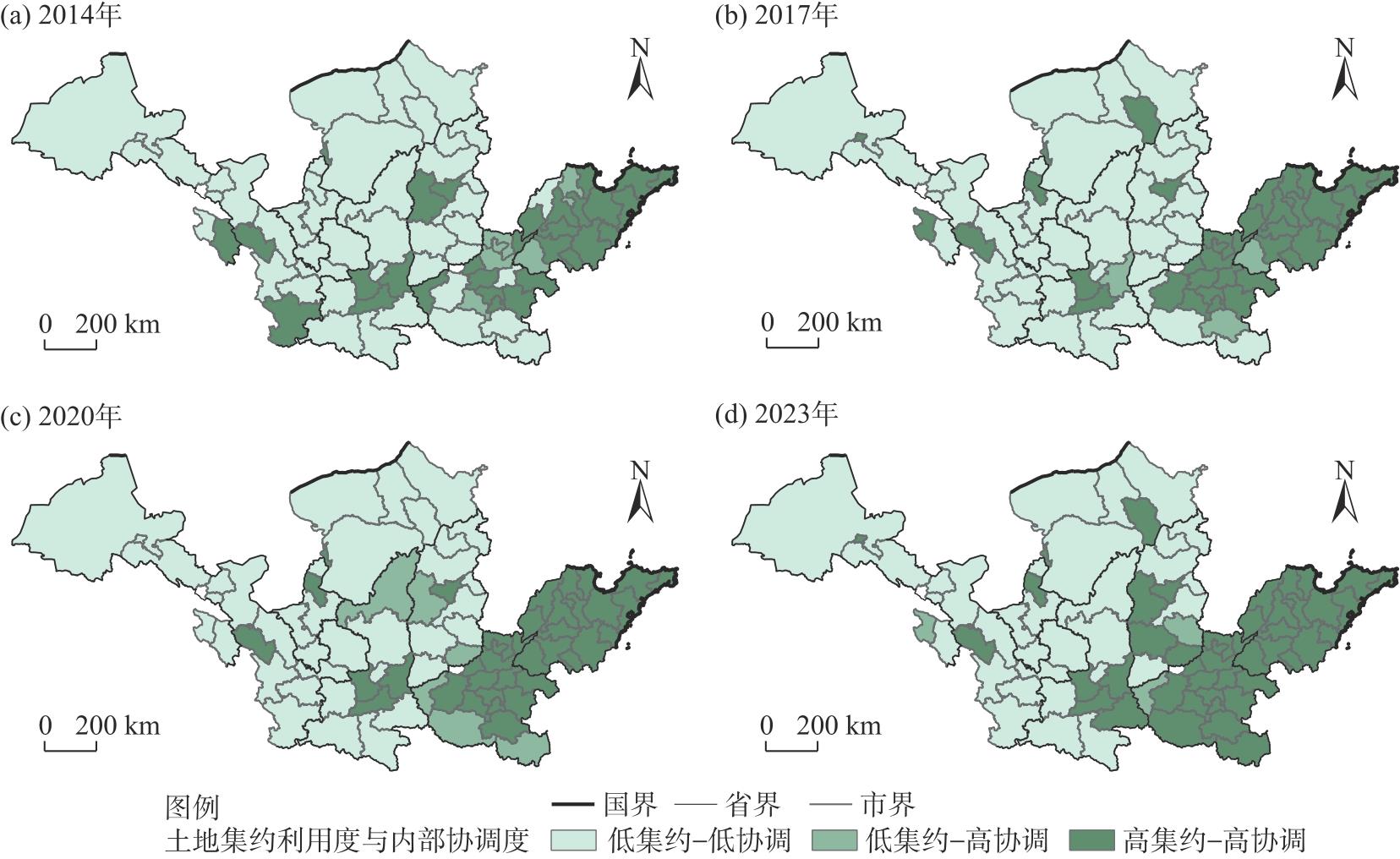
Fig. 5
Relationship between the land intensive use degree and the internal coordination degree for cities in the Yellow River Basin from 2014 to 2023"
Tab. 4
Results of the single-factor detections"
| 影响因子 | 指标 | 2014年 | 2017年 | 2020年 | 2023年 | |||||||
|---|---|---|---|---|---|---|---|---|---|---|---|---|
| q值 | P值 | q值 | P值 | q值 | P值 | q值 | P值 | |||||
| 经济发展 | 经济水平 | 0.6962* | 0.0000 | 0.8837* | 0.0000 | 0.9324* | 0.0000 | 0.9286* | 0.0000 | |||
| 对外开放 | 0.3952* | 0.0189 | 0.2445* | 0.0379 | 0.2838* | 0.0339 | 0.2533 | 0.0650 | ||||
| 产业结构 | 0.1955* | 0.0000 | 0.1608* | 0.0061 | 0.1565* | 0.0175 | 0.2154* | 0.0028 | ||||
| 社会文明 | 科技创新 | 0.2327* | 0.0021 | 0.2620* | 0.0000 | 0.1870* | 0.0050 | 0.1559* | 0.0156 | |||
| 政府财政 | 0.2522* | 0.0000 | 0.2207* | 0.0000 | 0.1670* | 0.0105 | 0.1711* | 0.0082 | ||||
| 城市环境 | 0.0443 | 0.5511 | 0.0449 | 0.5169 | 0.0525 | 0.4182 | 0.0635 | 0.3465 | ||||
| 自然条件 | 人口因素 | 0.3114 | 0.6592 | 0.0146 | 0.9209 | 0.0592 | 0.6001 | 0.0600 | 0.7043 | |||
| 地形起伏 | 0.2169* | 0.0036 | 0.2693* | 0.0000 | 0.2158* | 0.0000 | 0.2324* | 0.0000 | ||||
| 河网密度 | 0.0085 | 0.9900 | 0.0221 | 0.9356 | 0.0092 | 0.9788 | 0.0131 | 0.9647 | ||||
Fig. 6
Results of the interaction detection"
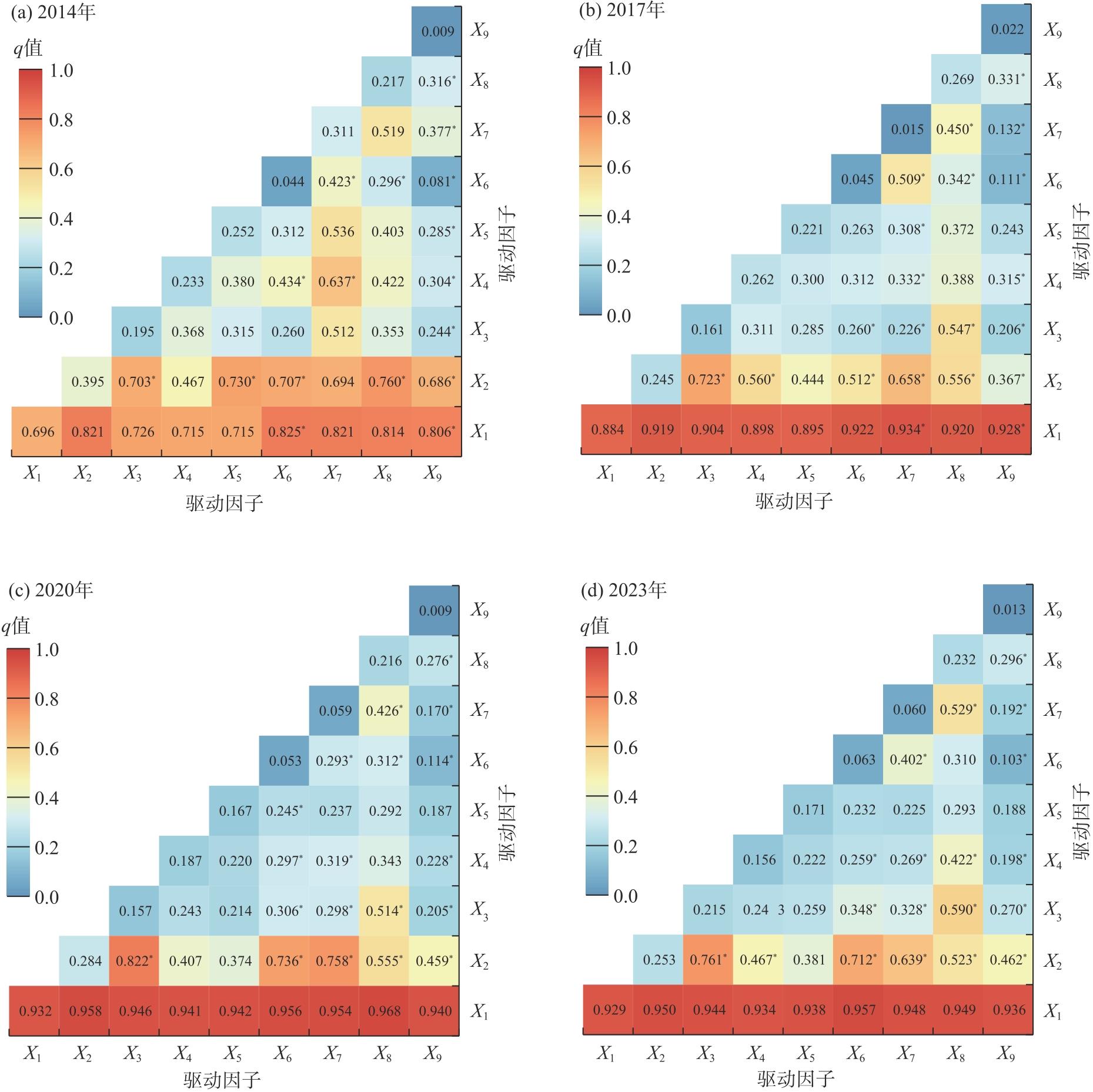
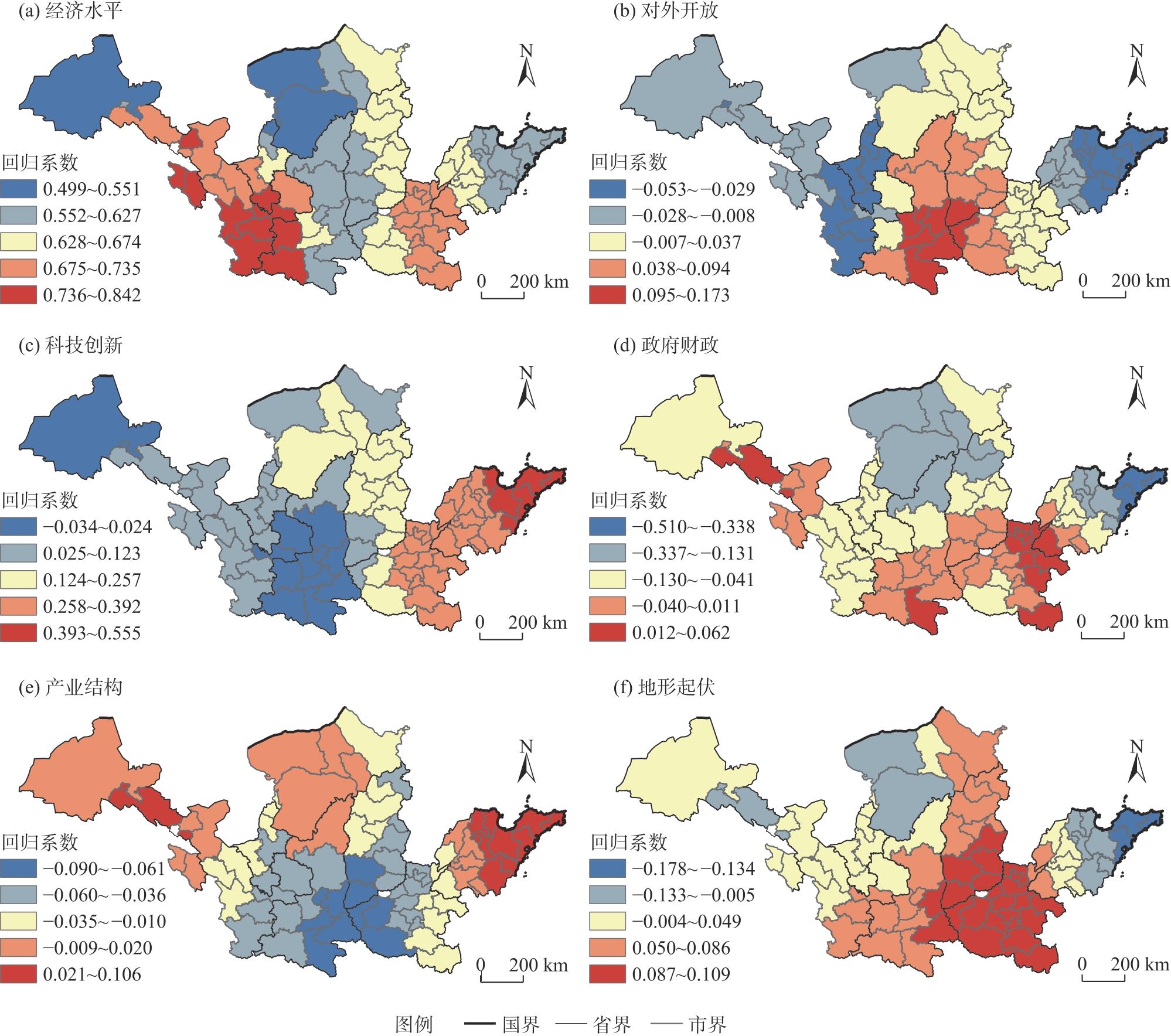
Fig. 7
Regression coefficient between the land intensive use degree and main driving factors for cities in the Yellow River Basin from 2014 to 2023"
| [1] | 蒋正云, 周杰文. 长江经济带土地集约利用与绿色经济效率时空耦合特征及驱动因素[J]. 长江流域资源与环境, 2024, 33(4): 742-757. |
| [Jiang Zhengyun, Zhou Jiewen. Spatial-temporal coupling characteristics and driving factors of intensive land use and green economic efficiency in the Yangtze River Economic Belt[J]. Resources and Environment in the Yangtze Basin, 2024, 33(4): 742-757.] | |
| [2] |
邓祥征, 杨开忠, 单菁菁, 等. 黄河流域城市群与产业转型发展[J]. 自然资源学报, 2021, 36(2): 273-289.
doi: 10.31497/zrzyxb.20210201 |
|
[Deng Xiangzheng, Yang Kaizhong, Shan Jingjing, et al. Urban agglomeration and industrial transformation and development in the Yellow River Basin[J]. Journal of Natural Resources, 2021, 36(2): 273-289.]
doi: 10.31497/zrzyxb.20210201 |
|
| [3] | 何平, 倪苹. 中国城镇化质量研究[J]. 统计研究, 2013, 30(6): 11-18. |
| [He Ping, Ni Ping. Study on the quality of China’s urbanization[J]. Statistical Research, 2013, 30(6): 11-18.] | |
| [4] |
郭付友, 佟连军, 仇方道, 等. 黄河流域生态经济走廊绿色发展时空分异特征与影响因素识别[J]. 地理学报, 2021, 76(3): 726-739.
doi: 10.11821/dlxb202103016 |
|
[Guo Fuyou, Tong Lianjun, Chou Fangdao, et al. Spatio-temporal differentiation characteristics and influencing factors of green development in the eco-economic corridor of the Yellow River Basin[J]. Acta Geographica Sinica, 2021, 76(3): 726-739.]
doi: 10.11821/dlxb202103016 |
|
| [5] | 王群, 王万茂, 金雯, 等. 中国城市土地集约利用研究中的新观点和新方法: 综述与展望[J]. 中国人口·资源与环境, 2017, 27(增刊1): 95-100. |
| [Wang Qun, Wang Wanmao, Jin Wen, et al. New perspectives and new methods on the research of intensive urban land use in China: Literature review and prospect[J]. China Population, Resources and Environment, 2017, 27(Suppl. 1): 95-100.] | |
| [6] |
尹旭, 李裕瑞, 袁涛, 等. 镇域经济发展与土地集约利用水平综合测度及其关联特征分析——以江苏省109个抽样乡镇为例[J]. 自然资源学报, 2020, 35(3): 614-625.
doi: 10.31497/zrzyxb.20200309 |
|
[Yin Xu, Li Yurui, Yuan Tao, et al. Quantitative measurement of economic development and land use intensity and their correlation characteristics in 109 sampled towns of Jiangsu Province[J]. Journal of Natural Resources, 2020, 35(3): 614-625.]
doi: 10.31497/zrzyxb.20200309 |
|
| [7] |
赵丹丹, 胡业翠. 土地集约利用与城市化相互作用的定量研究——以中国三大城市群为例[J]. 地理研究, 2016, 35(11): 2105-2115.
doi: 10.11821/dlyj201611008 |
| [Zhao Dandan, Hu Yecui. Quantitative study of the interaction between intensive land use and urbanization in three urban agglomerations of China[J]. Geographical Research, 2016, 35(11): 2105-2115.] | |
| [8] | 白玉娟, 洪增林, 薛旭平, 等. 关中平原城市群土地集约利用与生态文明建设耦合性研究[J]. 水土保持研究, 2021, 28(3): 272-280. |
| [Bai Yujuan, Hong Zenglin, Xue Xuping, et al. Research on coupling of intensive land use and ecological civilization construction of urban agglomeration in Guanzhong Plain[J]. Research of Soil and Water Conservation, 2021, 28(3): 272-280.] | |
| [9] | 董捷, 陈星, 张安录. 基于“三生”功能的长江中游城市群土地集约利用空间差异研究[J]. 华中农业大学学报(社会科学版), 2017(6): 110-117, 152. |
| [Dong Jie, Chen Xing, Zhang Anlu. Research on the spatial difference in land intensive use based on the function of production-ecology-living spaces in urban agglomeration in the middle reaches of the Yangtze River[J]. Journal of Huazhong Agricultural University (Social Sciences Edition), 2017(6): 110-117, 152.] | |
| [10] | 王向东, 刘小茜, 裴韬, 等. 基于技术效率测算的京津冀城市土地集约利用潜力评价[J]. 地理学报, 2019, 74(9): 1853-1865. |
|
[Wang Xiangdong, Liu Xiaoqian, Pei Tao, et al. Potential evaluation of urban land intensive use in Beijing-Tianjin-Hebei region based on measurement of technical efficiency[J]. Acta Geographica Sinica, 2019, 74(9): 1853-1865.]
doi: 10.11821/dlxb201909011 |
|
| [11] | 鲁学孟, 刘学录, 张晶, 等. 甘肃省庆阳市土地集约利用与土地利用结构的耦合协调关系[J]. 水土保持通报, 2019, 39(6): 240-245. |
| [Lu Xuemeng, Liu Xuelu, Zhang Jing, et al. Coupling coordination relationship between land intensive use and land use structure in Qingyang City of Gansu Province[J]. Bulletin of Soil and Water Conservation, 2019, 39(6): 240-245.] | |
| [12] |
范辉, 刘卫东, 吴泽斌. 城市土地集约利用内部协调性的时空演变——以武汉市中心城区为例[J]. 地理科学, 2014, 34(6): 696-704.
doi: 10.13249/j.cnki.sgs.2014.06.696 |
|
[Fan Hui, Liu Weidong, Wu Zebin. Spatio-temporal characteristics of internal coordination of intensive urban land use: A case study of the downtown of Wuhan[J]. Scientia Geographica Sinica, 2014, 34(6): 696-704.]
doi: 10.13249/j.cnki.sgs.2014.06.696 |
|
| [13] | Luo X, Qin J J, Cheng C, et al. Spatial effects and influencing factors of urban land intensive use in the Yangtze River Delta under high-quality development[J]. Frontiers in Environmental Science, 2022, 10: 971466, doi: 10.3389/fenvs.2022.971466. |
| [14] |
关哲, 邵战林, 潘佩佩, 等. 京津冀城市群土地利用效率与生态福利绩效耦合协调及影响因素研究[J]. 地域研究与开发, 2024, 43(1): 16-22, 30.
doi: 10.3969/j.issn.10032363.2024.01.003 |
|
[Guan Zhe, Shao Zhanlin, Pan Peipei, et al. Coupling analysis of land utilization efficiency and ecological well-being performance of cities in the Beijing-Tianjin-Hebei urban agglomeration[J]. Areal Research and Development, 2024, 43(1): 16-22, 30.]
doi: 10.3969/j.issn.10032363.2024.01.003 |
|
| [15] |
袁庆雯, 刘艳芳, 赵金梅, 等. 宁夏开发区土地集约利用时空分布特征与驱动因素分析[J]. 干旱区地理, 2024, 47(5): 861-871.
doi: 10.12118/j.issn.1000-6060.2023.538 |
|
[Yuan Qingwen, Liu Yanfang, Zhao Jinmei, et al. Spatial and temporal distribution characteristics and driving factors of land intensive utilization in development zones of Ningxia[J]. Arid Land Geography, 2024, 47(5): 861-871.]
doi: 10.12118/j.issn.1000-6060.2023.538 |
|
| [16] | 孙小祥, 秦艺娟. 基于PSR模型的城市土地集约利用评价研究——以苏州市为例[J]. 西南大学学报(自然科学版), 2021, 43(4): 100-108. |
| [Sun Xiaoxiang, Qin Yijuan. An evaluation study of urban land intensive utilization in Suzhou based on PSR model[J]. Journal of Southwest University (Natural Science Edition), 2021, 43(4): 100-108.] | |
| [17] | 丁莲, 白羽萍, 张莉金, 等. 黄河流域城市群土地利用及生态效率时空演变分析[J]. 生态学报, 2023, 43(18): 7610-7622. |
| [Ding Lian, Bai Yuping, Zhang Lijin, et al. Spatio-temporal evolution of land use and eco-efficiency in urban agglomerations in the Yellow River Basin[J]. Acta Ecologica Sinica, 2023, 43(18): 7610-7622.] | |
| [18] |
袁凯华, 梅昀, 陈银蓉, 等. 中国建设用地集约利用与碳排放效率的时空演变与影响机制[J]. 资源科学, 2017, 39(10): 1882-1895.
doi: 10.18402/resci.2017.10.08 |
|
[Yuan Kaihua, Mei Yun, Chen Yinrong, et al. Temporal and spatial evolution and influencing mechanism of construction land intensive utilization on carbon emissions efficiency in China[J]. Resources Science, 2017, 39(10): 1882-1895.]
doi: 10.18402/resci.2017.10.08 |
|
| [19] |
徐维祥, 徐志雄, 刘程军. 黄河流域地级城市土地集约利用效率与生态福利绩效的耦合性分析[J]. 自然资源学报, 2021, 36(1): 114-130.
doi: 10.31497/zrzyxb.20210108 |
|
[Xu Weixiang, Xu Zhixiong, Liu Chengjun. Coupling analysis of land intensive use efficiency and ecological well-being performance of cities in the Yellow River Basin[J]. Journal of Natural Resources, 2021, 36(1): 114-130.]
doi: 10.31497/zrzyxb.20210108 |
|
| [20] |
姜海宁, 郑舒婷, 杨琪, 等. 黄河流域资源型城市人居环境韧性水平演化及其障碍度[J]. 资源科学, 2024, 46(10): 2047-2063.
doi: 10.18402/resci.2024.10.11 |
|
[Jiang Haining, Zheng Shuting, Yang Qi, et al. Change of human settlement resilience and its obstacle degree in resource-based cities in the Yellow River Basin[J]. Resources Science, 2024, 46(10): 2047-2063.]
doi: 10.18402/resci.2024.10.11 |
|
| [21] | 丁一, 郭青霞, 秦明星. 黄河流域资源型城市土地绿色利用效率时空演变及影响因素[J]. 农业工程学报, 2021, 37(19): 250-259. |
| [Ding Yi, Guo Qingxia, Qin Mingxing. Temporal-spatial evolution and influencing factors of land green use efficiency of resource-based cities in the Yellow River Basin, China[J]. Transactions of the Chinese Society of Agricultural Engineering, 2021, 37(19): 250-259.] | |
| [22] |
郭付友, 李睿, 尹鹏, 等. 基于GTWR模型的黄河流域城乡融合发展时空分异与驱动机制[J]. 地理科学, 2024, 44(12): 2166-2175.
doi: 10.13249/j.cnki.sgs.20230882 |
|
[Guo Fuyou, Li Rui, Yin Peng, et al. Spatio-temporal differentiation and driving mechanism of urban-rural integrated development in the Yellow River Basin based on GTWR model[J]. Scientia Geographica Sinica, 2024, 44(12): 2166-2175.]
doi: 10.13249/j.cnki.sgs.20230882 |
|
| [23] |
宋成镇, 刘庆芳, 宋金平, 等. 数字经济对黄河流域城市转型效率的影响分析[J]. 地理学报, 2025, 80(8): 2128-2142.
doi: 10.11821/dlxb202508008 |
|
[Song Chengzhen, Liu Qingfang, Song Jinping, et al. The impact of digital economy on urban transformation efficiency in the Yellow River Basin[J]. Acta Geographica Sinica, 2025, 80(8): 2128-2142.]
doi: 10.11821/dlxb202508008 |
|
| [24] | 林颖, 张娴, 卢有朋, 等. 平原城市土地集约利用分类识别研究——基于江汉平原21个市县的熵权法评价研究[J]. 西部人居环境学刊, 2024, 39(4): 122-128. |
| [Lin Ying, Zhang Xian, Lu Youpeng, et al. Research on classification and identification of land intensive use in plain city: Evaluation of 21 cities and counties in Jianghan Plain based on entropy weight method[J]. Journal of Human Settlements in West China, 2024, 39(4): 122-128.] | |
| [25] | 彭冲, 肖皓, 韩峰. 2003—2012年中国城市土地集约利用的空间集聚演化及分异特征研究[J]. 中国土地科学, 2014, 28(12): 24-31, 97. |
| [Peng Chong, Xiao Hao, Han Feng. Analysis on the characters of spatial agglomeration evolvement and disparity of the intensive urban land use in China from 2003 to 2012[J]. China Land Science, 2014, 28(12): 24-31, 97.] | |
| [26] | 栾贻锦, 王艳慧, 孙玥, 等. 黄河流域城市土地集约利用与生态文明建设的耦合协调性[J]. 水土保持通报, 2025, 45(4): 347-359. |
| [Luan Yijin, Wang Yanhui, Sun Yue, et al. Coupling and coordination of intensive land use and ecological civilization construction at cities in Yellow River Basin[J]. Bulletin of Soil and Water Conservation, 2025, 45(4): 347-359.] | |
| [27] | 刘少坤, 王嘉佳, 林树高, 等. 北部湾经济区城市土地集约利用与经济高质量发展耦合协调关系及障碍诊断[J]. 水土保持研究, 2022, 29(3): 317-326. |
| [Liu Shaokun, Wang Jiajia, Lin Shugao, et al. The coupling coordinated relationship and obstacle diagnosis between urban intensive land-use and high-quality economic development in Beibu Gulf Economic Zone[J]. Research of Soil and Water Conservation, 2022, 29(3): 317-326.] | |
| [28] | 张姣, 张光宏. 生态文明建设目标下的广东省城市土地集约利用时空演变分析[J]. 水土保持通报, 2022, 42(3): 233-238. |
| [Zhang Jiao, Zhang Guanghong. Spatio-temporal evolution of urban land intensive utilization in Guangdong Province aiming at ecological civilization construction[J]. Bulletin of Soil and Water Conservation, 2022, 42(3): 233-238.] | |
| [29] | 朱东风. 江苏小城镇人口发展的时空分异[J]. 城市规划, 2009(12): 59-65, 81. |
| [Zhu Dongfeng. Spatio-temporal change of small town population in Jiangsu Province[J]. City Planning Review, 2009(12): 59-65, 81.] | |
| [30] |
Wang J F, Li X H, Christakos G, et al. Geographical detectors-based health risk assessment and its application in the neural tube defects study of the Heshun Region, China[J]. International Journal of Geographical Information Science, 2010, 24(1): 107-127.
doi: 10.1080/13658810802443457 |
| [31] | 董世杰, 安慧, 吴海林. 长三角地区生态脆弱性评估、驱动因素分析及预测[J]. 环境科学, 2026, 47(5): 3235-3248. |
| [Dong Shijie, An Hui, Wu Hailin. Ecological vulnerability assessment, driving factor analysis, and prediction in the Yangtze River Delta region[J]. Environmental Science, 2026, 47(5): 3235-3248.] | |
| [32] | Chen L G, Yang X Y, Li L, et al. The natural and socioeconomic influences on land-use intensity: Evidence from China[J]. Land, 2021, 10(11): 1254, doi: 10.3390/land10111254. |
| [33] | Zhu J L, Liu W X, Zheng S, et al. Unraveling drivers of land use efficiency in rapidly urbanizing areas: A hybrid SBM-DDF and explainable machine learning framework[J]. Habitat International, 2025, 164: 103518, doi: 10.1016/j.habitatint.2025.103518. |
| [34] |
张英浩, 陈江龙, 高金龙, 等. 经济转型视角下长三角城市土地利用效率影响机制[J]. 自然资源学报, 2019, 34(6): 1157-1170.
doi: 10.31497/zrzyxb.20190603 |
|
[Zhang Yinghao, Chen Jianglong, Gao Jinlong, et al. The impact mechanism of urban land use efficiency in the Yangtze River Delta from the perspective of economic transition[J]. Journal of Natural Resources, 2019, 34(6): 1157-1170.]
doi: 10.31497/zrzyxb.20190603 |
|
| [35] | 人民网. 山东: 推动传统产业优化升级培育发展新质生产力[EB/OL]. [2024-12-26]. https://sd.people.com.cn//n2/2024/1226/c166192-41088323.html. |
| [People’s Daily Online. Shandong: Promoting optimization and upgrading of traditional industries to foster new quality productive forces[EB/OL]. [2024-12-26]. https://sd.people.com.cn//n2/2024/1226/c166192-41088323.html.] | |
| [36] | Song C Z, Liu Q F, Song J P, et al. Land use efficiency in the Yellow River Basin in the background of China’s economic transformation: Spatial-temporal characteristics and influencing factors[J]. Land, 2022, 11(12): 2306, doi: 10.3390/land11122306. |
|
||