Arid Land Geography ›› 2026, Vol. 49 ›› Issue (7): 1323-1335.doi: 10.12118/j.issn.1000-6060.2025.499
• Climate Change • Previous Articles Next Articles
CHEN Xianlin1( ), YAN Zhiyuan1,2(), LIU Quanming1,2,3, ZHANG Shengwei1,2,3,4
Received:2025-08-19
Revised:2025-10-06
Online:2026-07-25
Published:2026-07-07
Contact:
YAN Zhiyuan
E-mail:chenxl@emails.imau.edu.cn;yanzy@imau.edu.cn
CHEN Xianlin, YAN Zhiyuan, LIU Quanming, ZHANG Shengwei. Spatiotemporal characteristics and driving factors of vegetation drought in Inner Mongolia from 1958 to 2023[J].Arid Land Geography, 2026, 49(7): 1323-1335.
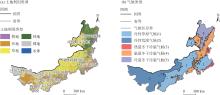
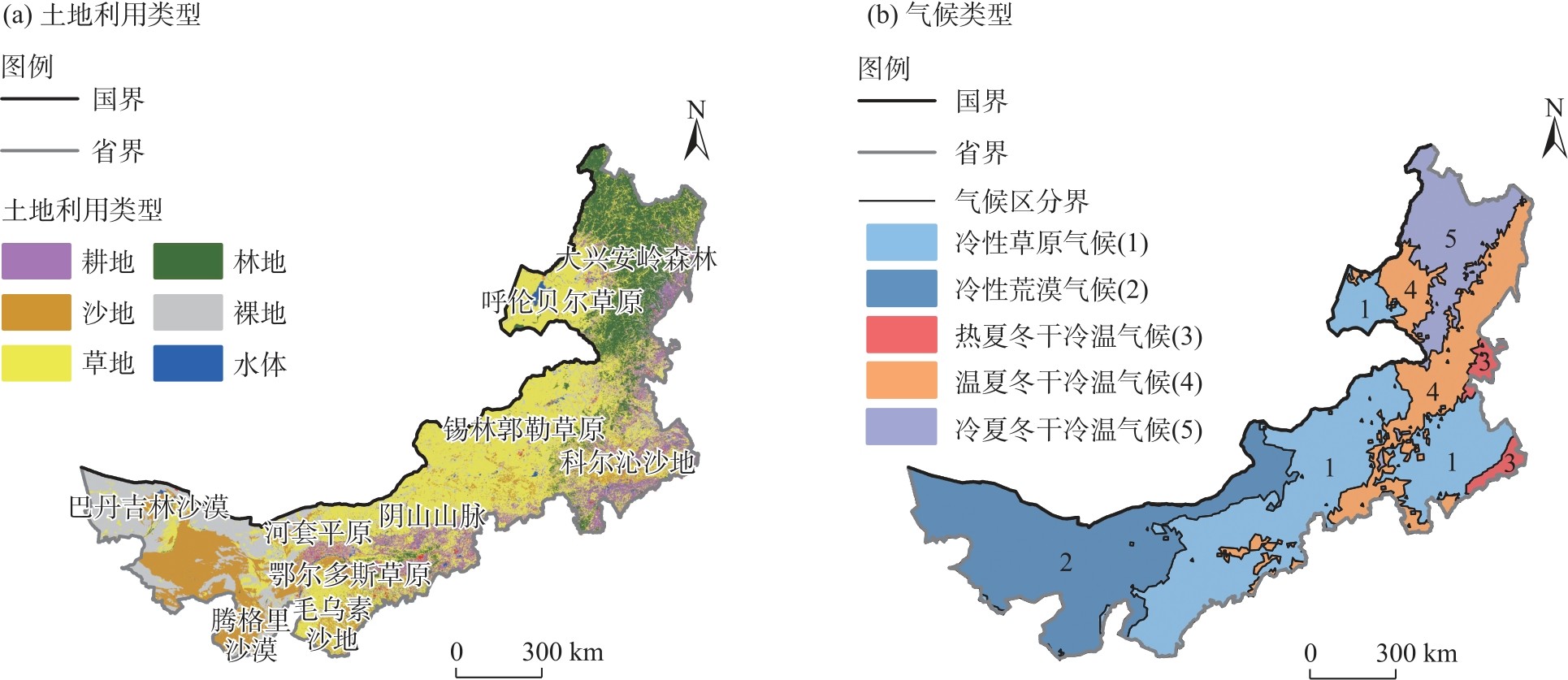
Fig. 1
Schematic diagram of the study area"
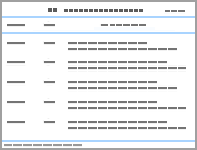
Tab. 1
Drought grade classification based on CWSI"
| 等级 | CWSI | 类型 |
|---|---|---|
| 1 | 0.0~0.6 | 无旱 |
| 2 | 0.6~0.7 | 轻旱 |
| 3 | 0.7~0.8 | 中旱 |
| 4 | 0.8~0.9 | 重旱 |
| 5 | 0.9~1.0 | 特旱 |
Tab. 2
Results of the type of CWSI change trend obtained by BFAST detection"
| 趋势类型 | 含义 |
|---|---|
| 单调型增加 | 持续上升,突变次数≤1 |
| 单调型减少 | 持续下降,突变次数≤1 |
| 中断型增加 | 整体上升,期间出现1次显著下降突变 |
| 中断型减少 | 整体下降,期间出现1次显著上升突变 |
| 由增到减 | 趋势由上升转为下降,出现1次显著突变 |
| 由减到增 | 趋势由下降转为上升,出现1次显著突变 |
| 复杂多段突变 | 检测到2次及以上突变,表现为增减交替或阶段性调整 |
Tab. 3
Types of interaction"
| 判断依据 | 类型 |
|---|---|
| 非线性减弱 | |
| 单因子非线性减弱 | |
| 双因子增强 | |
| 独立 | |
| 非线性增强 |
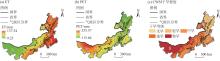
Fig. 2
Spatial distributions of average ET, PET and CWSI in Inner Mongolia from 1958 to 2023"
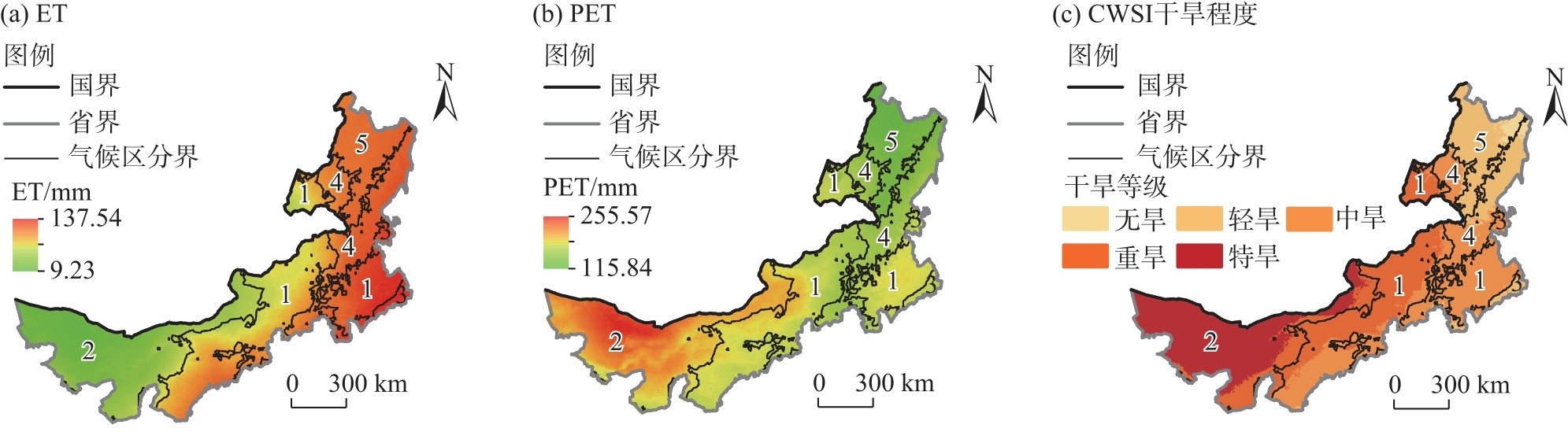
Fig. 3
Breakpoint detecting of CWSI in Inner Mongolia from 1958 to 2023 based on BFAST method"
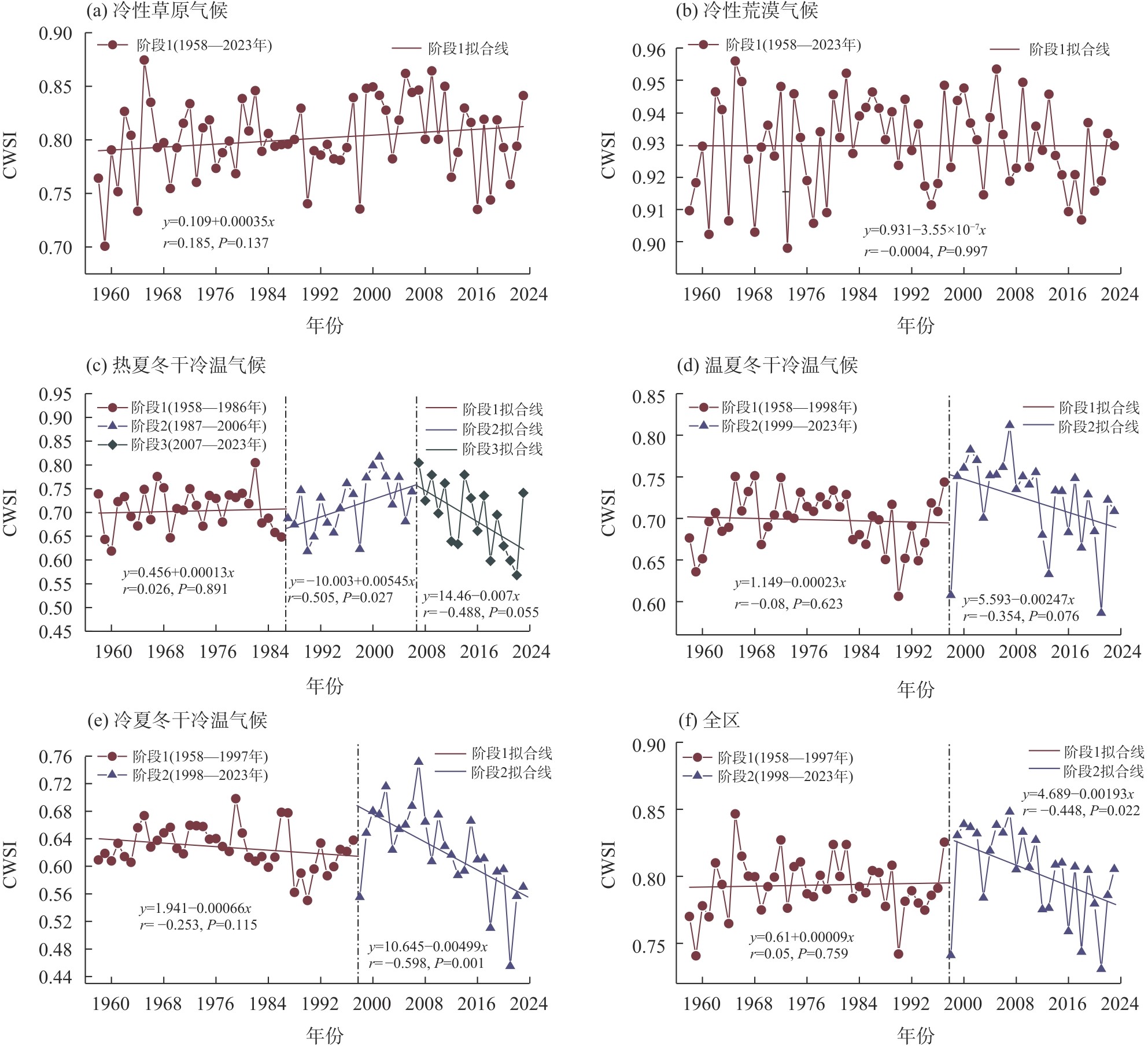
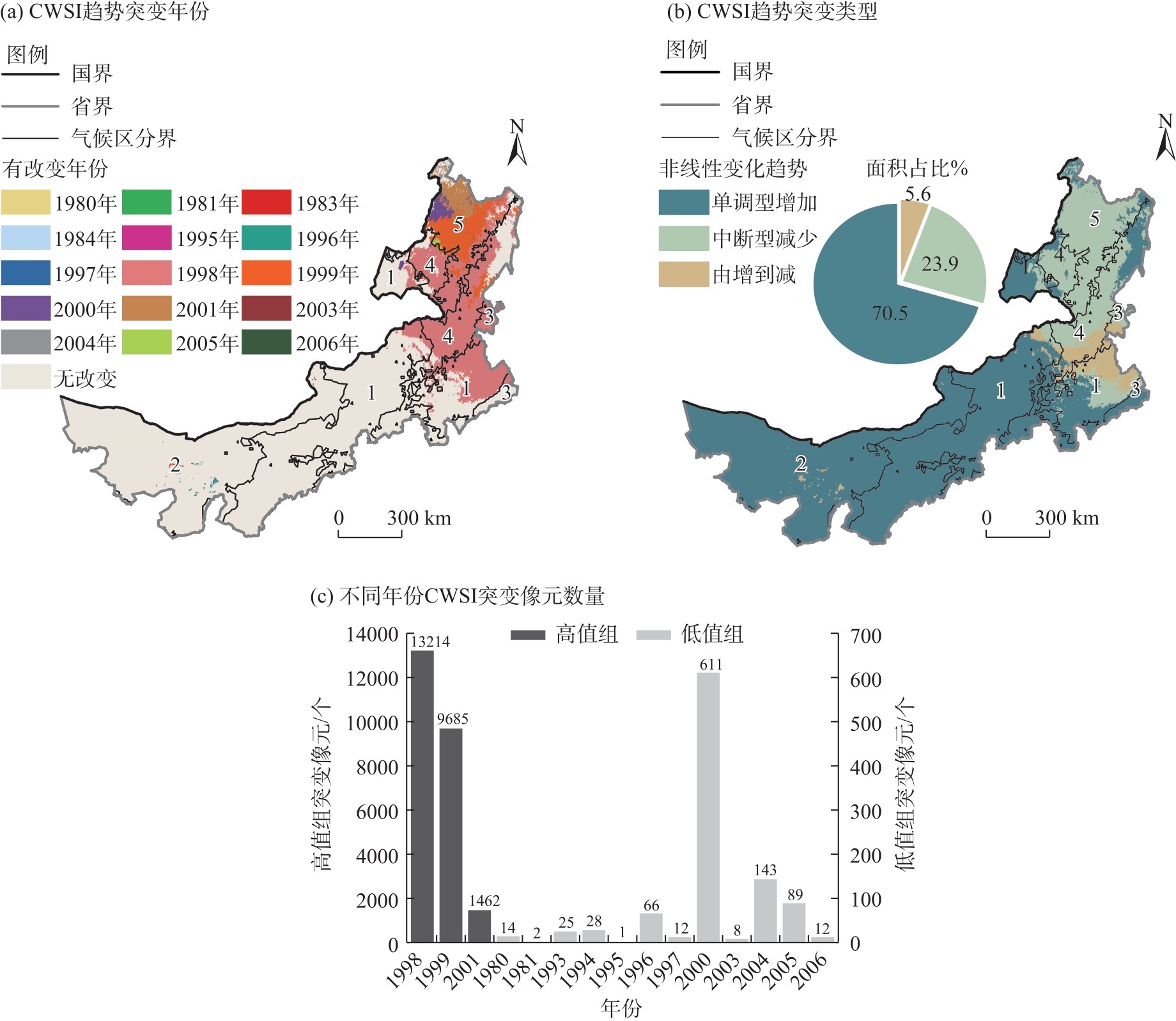
Fig. 4
Spatial distributions of CWSI breakpoint types and break time in Inner Mongolia"
Tab. 4
Factor classification method and number based on the optimal parameter geographic detector"
| 因子 | 分类方法 | 分类数量 | 因子 | 分类方法 | 分类数量 |
|---|---|---|---|---|---|
| GDP | 分位数 | 8 | 坡度(SL) | 标准差 | 8 |
| 人口密度(POP) | 分位数 | 8 | 降水(PRE) | 分位数 | 8 |
| 放牧强度(LHGI) | 分位数 | 8 | 气温(TEM) | 分位数 | 8 |
| 土地利用类型(LUCC) | 自然断点 | 8 | 粉土比例(Silt) | 分位数 | 8 |
| 归一化植被指数(NDVI) | 标准差 | 7 | 砂土比例(Sand) | 标准差 | 6 |
| 海拔(DEM) | 几何间断 | 6 | 黏土比例(Clay) | 标准差 | 8 |
| 坡向(AS) | 几何间断 | 5 |
Fig. 5
Results of single factor detection of optimal geographic detector in different climate zones in Inner Mongolia"
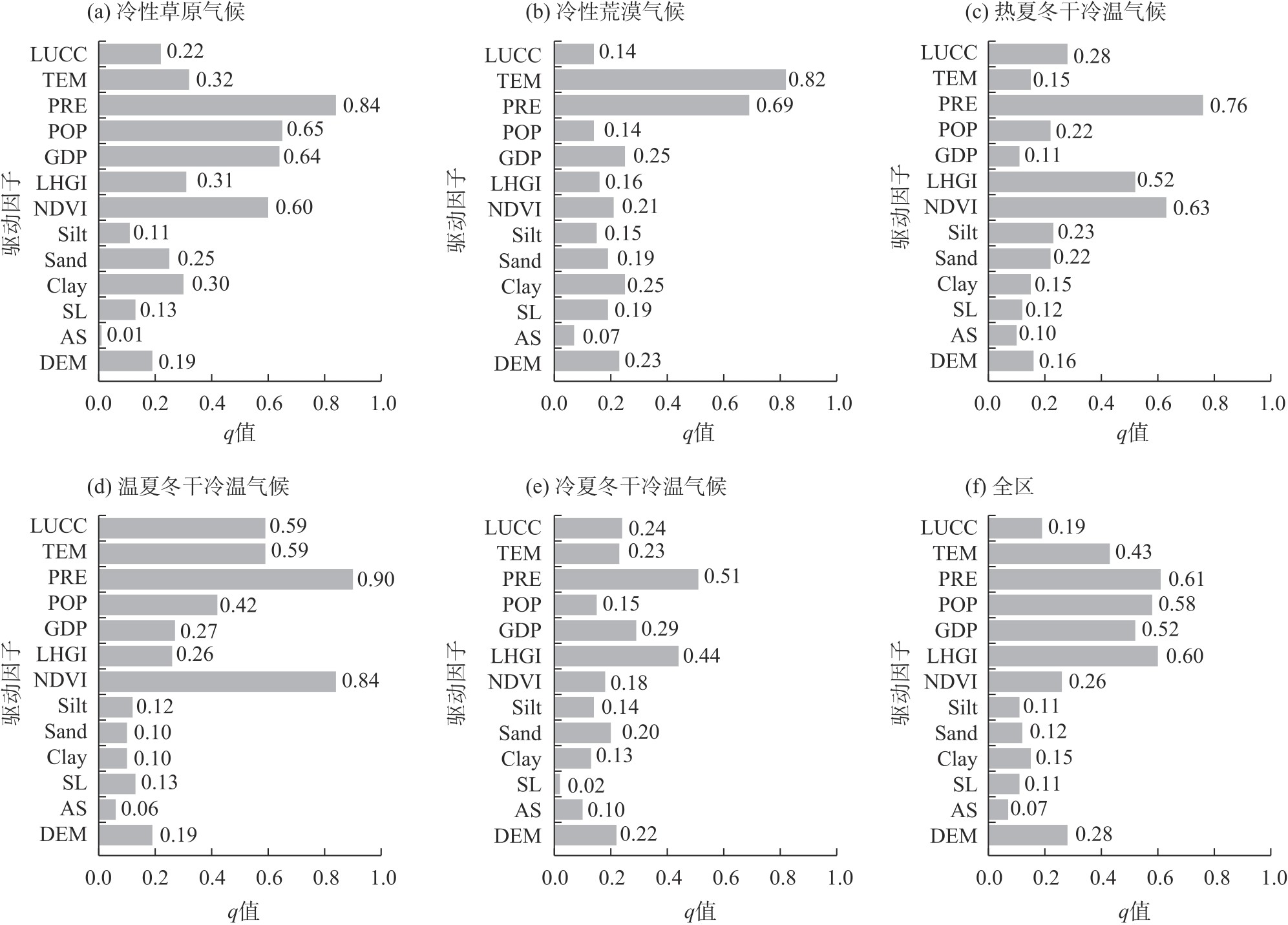
Fig. 6
Results of interactive detection of optimal geographic detector in different climate zones in Inner Mongolia"
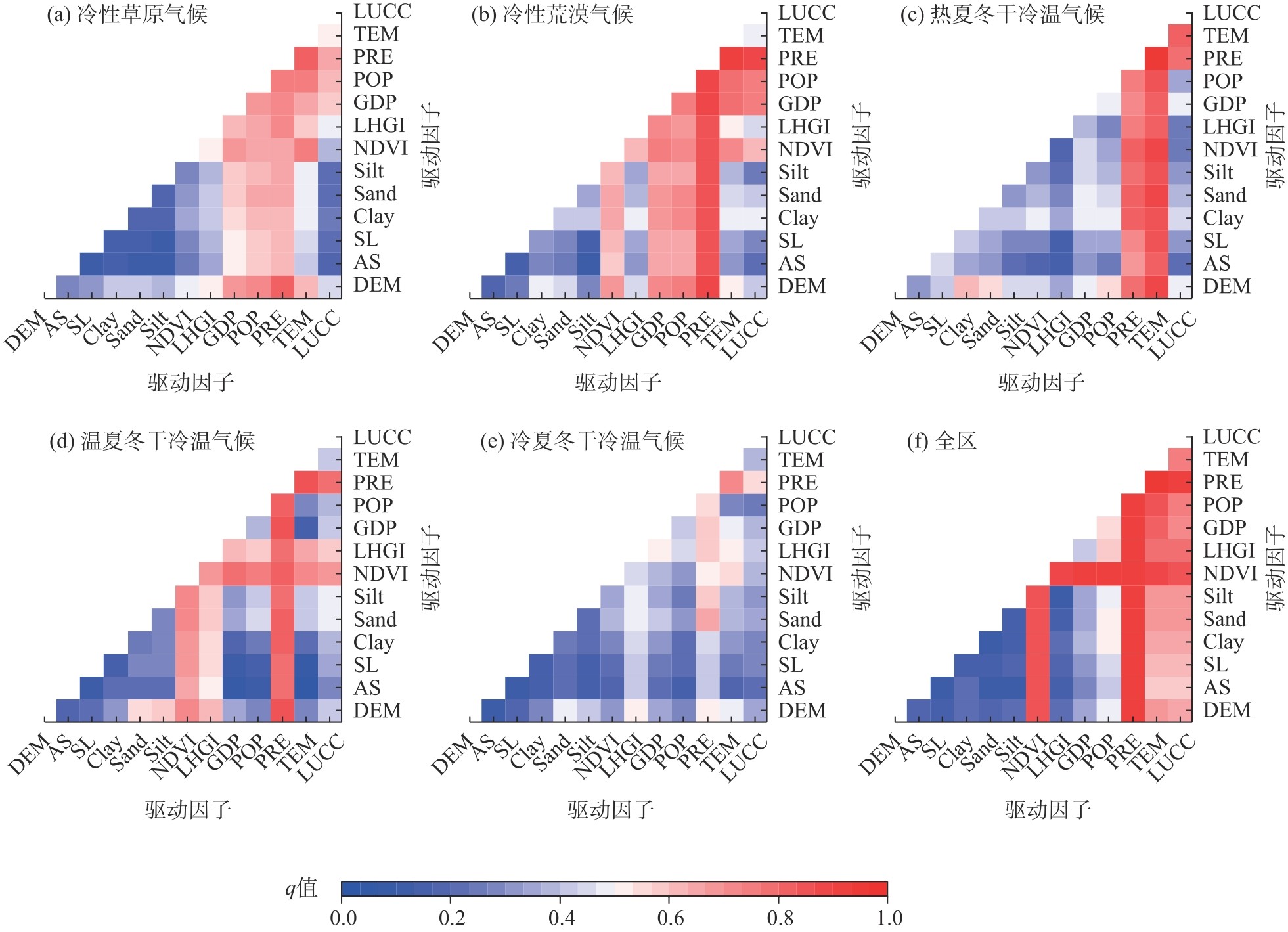
Fig. 7
Partial correlation coefficient, maximum partial correlation coefficient and lag time of CWSI and precipitation in Inner Mongolia"
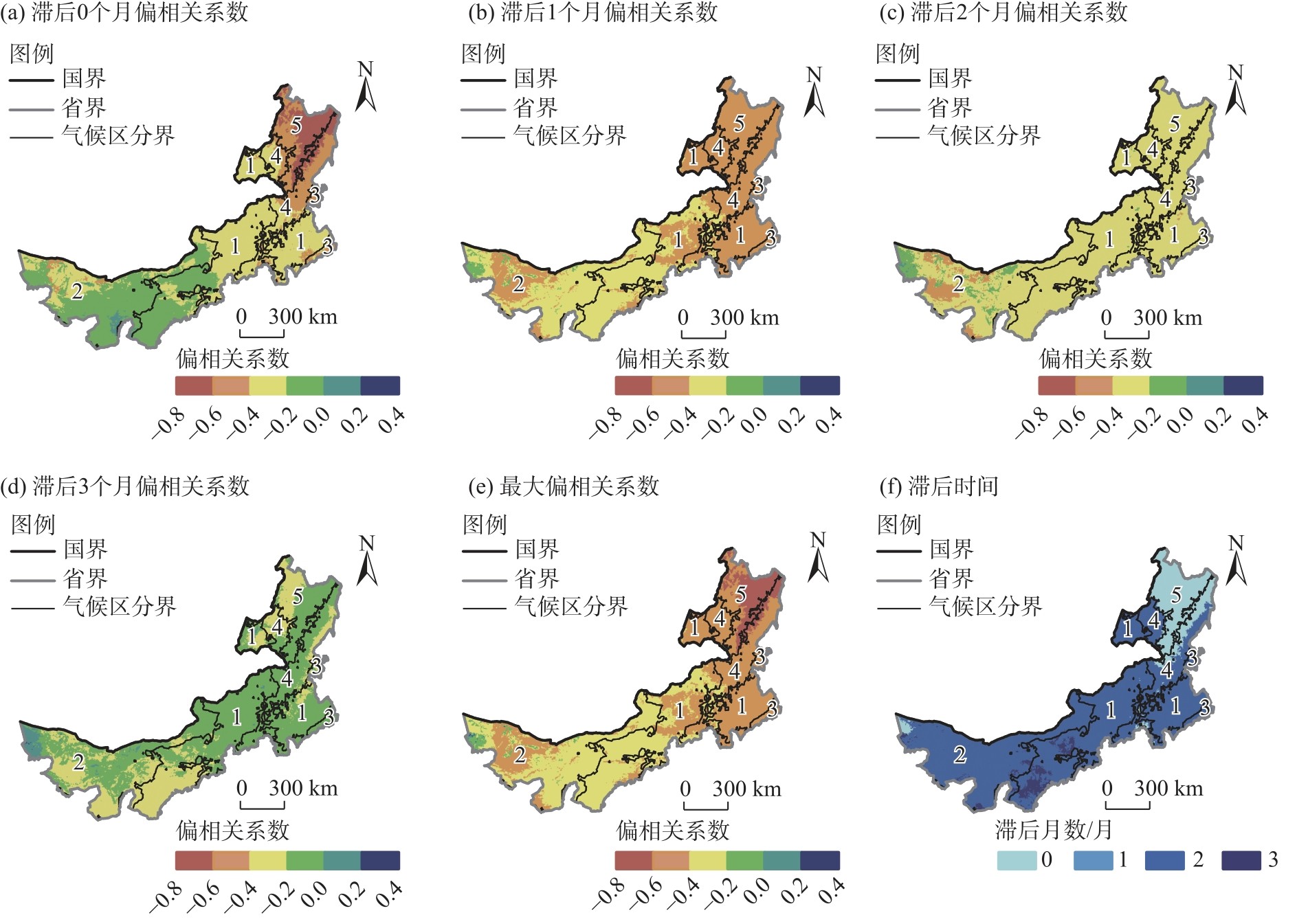
Fig. 8
Partial correlation coefficient, maximum partial correlation coefficient and lag time of CWSI and air temperature in Inner Mongolia"
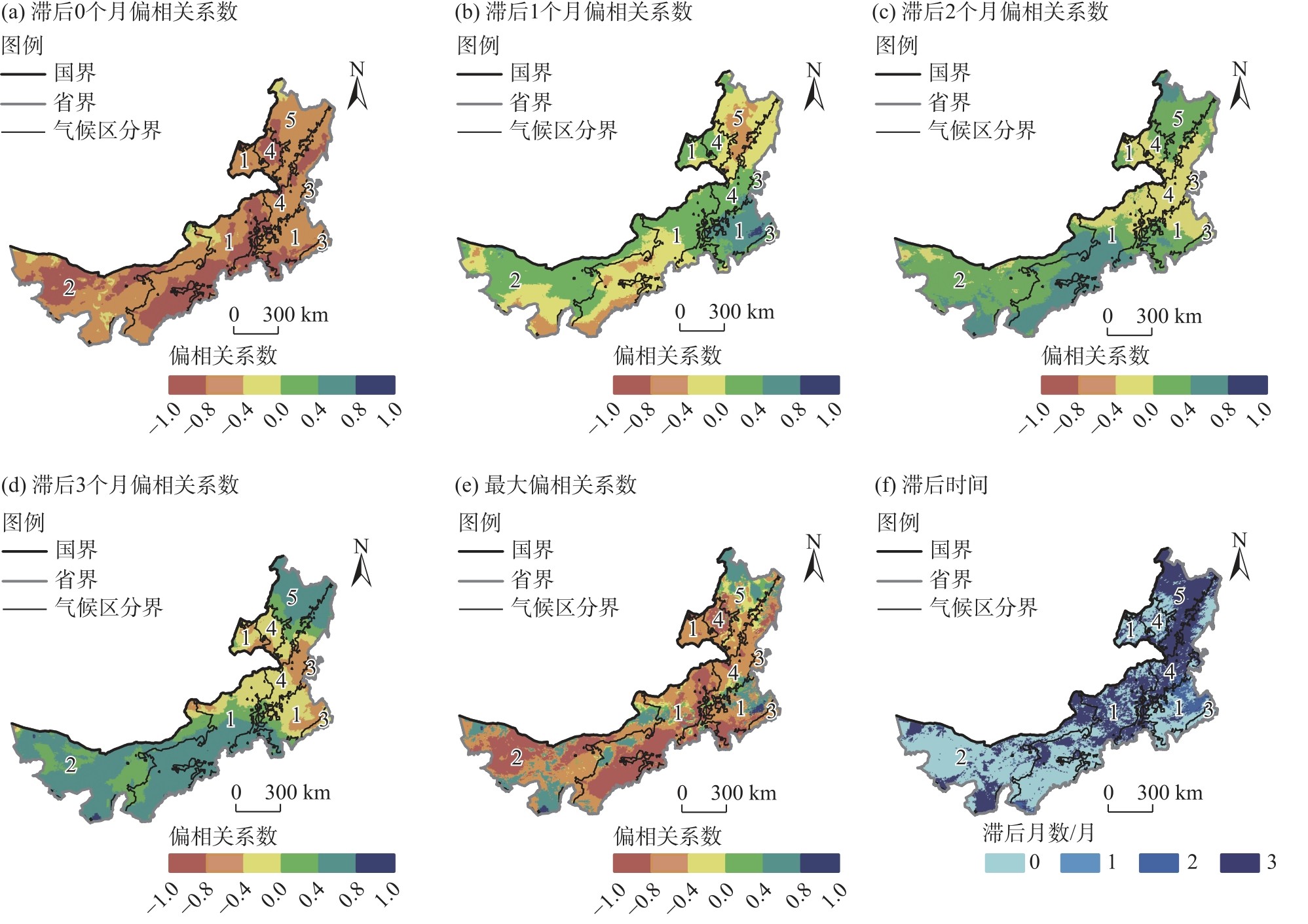
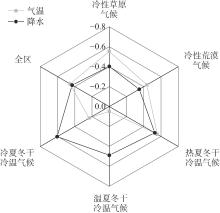
Fig. 9
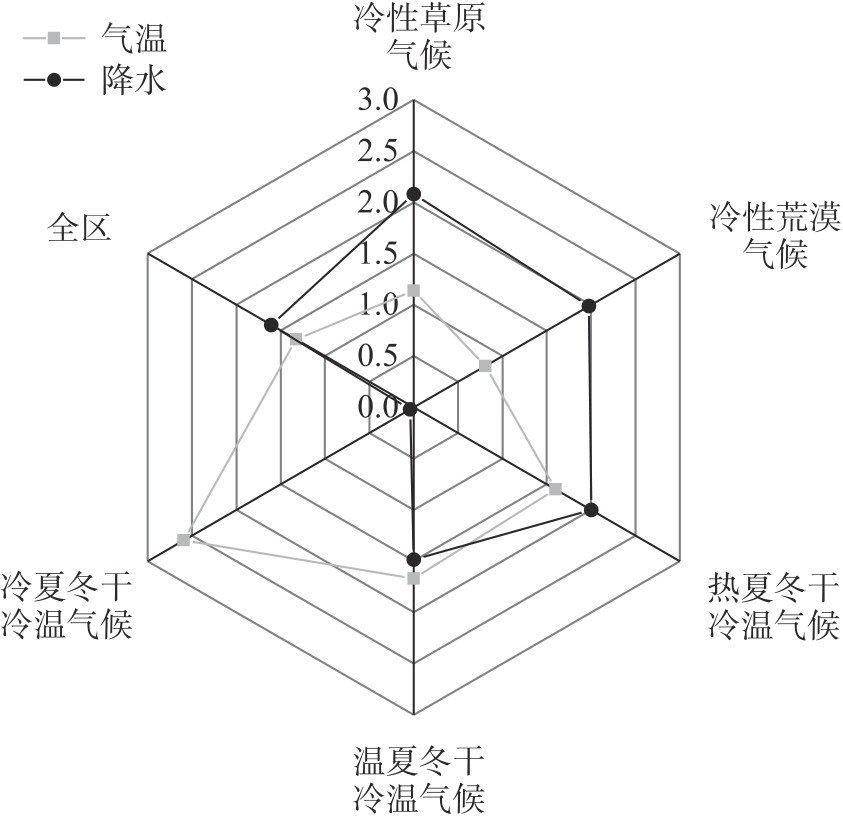
Maximum partial correlation coefficients of CWSI with precipitation and temperature in different climate zones"
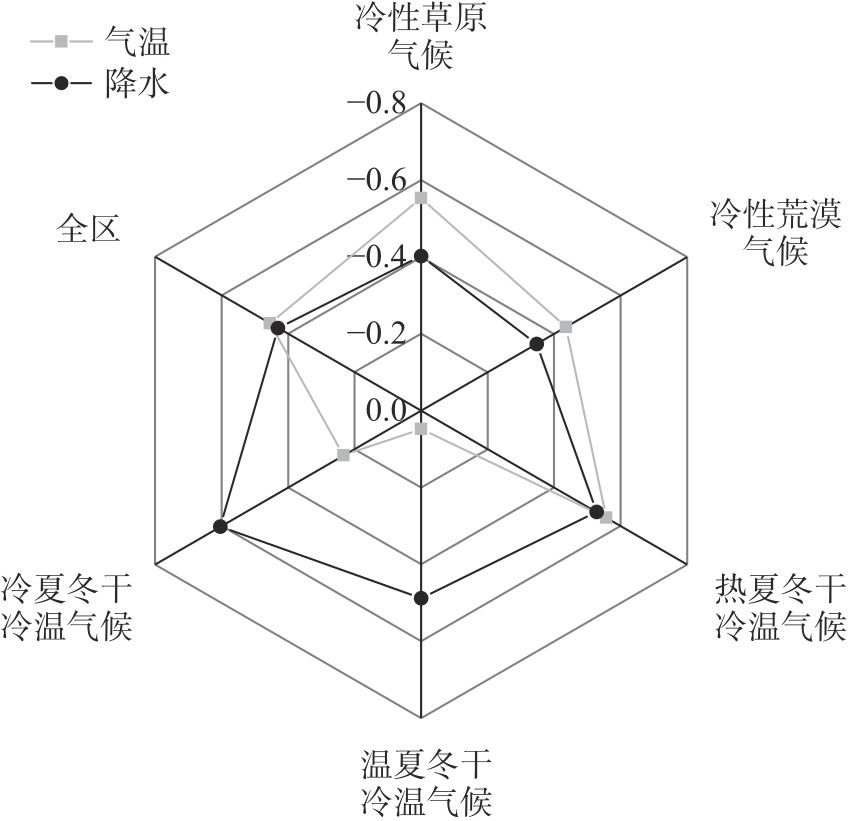
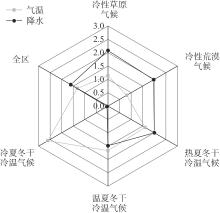
Fig. 10
Average lag months of CWSI responses to precipitation and temperature in different climate zones"
| [1] | 姚宁, 蒋昆昊, 谢文馨, 等. 气候变化背景下山西省气象干旱时空演变特征[J]. 农业机械学报, 2024, 55(1): 270-281. |
| [Yao Ning, Jiang Kunhao, Xie Wenxin, et al. Temporal and spatial evolution of drought disasters in Shanxi Province under background of climate change[J]. Transactions of the Chinese Society for Agricultural Machinery, 2024, 55(1): 270-281.] | |
| [2] | 袁沭, 邢秀丽, 居为民. 中国遥感干旱指数时空特征及其对气候和地表覆盖变化的响应[J]. 生态学报, 2023, 43(16): 6691-6705. |
| [Yuan Mu, Xing Xiuli, Ju Weimin. Temporal and spatial patterns of remote sensing drought indices and their responses to climate and land use changes in China[J]. Acta Ecologica Sinica, 2023, 43(16): 6691-6705.] | |
| [3] |
张世喆, 朱秀芳, 刘婷婷, 等. 基于多维Copula的中国干旱特征及危险性分析[J]. 干旱区地理, 2022, 45(2): 333-345.
doi: 10.12118/j.issn.1000–6060.2021.165 |
|
[Zhang Shizhe, Zhu Xiufang, Liu Tingting, et al. Drought characteristics and risk hazard in China based on multidimensional Copula model[J]. Arid Land Geography, 2022, 45(2): 333-345.]
doi: 10.12118/j.issn.1000–6060.2021.165 |
|
| [4] | 徐建文, 居辉, 刘勤, 等. 黄淮海地区干旱变化特征及其对气候变化的响应[J]. 生态学报, 2014, 34(2): 460-470. |
| [Xu Jianwen, Ju Hui, Liu Qin, et al. Variation of drought and regional response to climate change in Huang-Huai-Hai Plain[J]. Acta Ecologica Sinica, 2014, 34(2): 460-470.] | |
| [5] | Gao X R, Zhao Q, Zhao X N, et al. Temporal and spaital evolution of standardized precipitation evapotranspiration index (SPEI) in the Loess Plateau under climate change from 2001 to 2050[J]. Science of the Total Environment, 2017, 595: 191-200. |
| [6] |
钱政成, 乌日汗, 赵晓园, 等. 草牧业高质量发展背景下的内蒙古草业科技进步贡献率测算[J]. 草地学报, 2023, 31(3): 641-648.
doi: 10.11733/j.issn.1007-0435.2023.03.003 |
|
[Qian Zhengcheng, Wu Rihan, Zhao Xiaoyuan, et al. Contribution rate of scientific and technological progress to the grass industry under the background of high-quality development of grassland-based livestock husbandry in Inner Mongolia[J]. Acta Agrestia Sinica, 2023, 31(3): 641-648.]
doi: 10.11733/j.issn.1007-0435.2023.03.003 |
|
| [7] |
陈先林, 闫志远, 刘全明, 等. 基于GEE优选遥感干旱指数的内蒙古干旱时空特征[J]. 干旱区地理, 2025, 48(11): 1903-1912.
doi: 10.12118/j.issn.1000-6060.2024.729 |
|
[Chen Xianlin, Yan Zhiyuan, Liu Quanming, et al. Temporal and spatial characteristics of drought in Inner Mongolia based on GEE and optimal remote sensing drought index[J]. Arid Land Geography, 2025, 48(11): 1903-1912.]
doi: 10.12118/j.issn.1000-6060.2024.729 |
|
| [8] | 马梓策, 孙鹏, 姚蕊, 等. 内蒙古干旱时空变化特征及其对植被的影响[J]. 水土保持学报, 2022, 36(6): 231-240. |
|
[Ma Zice, Sun Peng, Yao Rui, et al. Temporal and spatial variation of drought and its impact on vegetation in Inner Mongolia[J]. Journal of Soil and Water Conservation, 2022, 36(6): 231-240.]
doi: 10.1080/00224561.1981.12436113 |
|
| [9] | Singh J, Ge Y, Heeren D M, et al. Inter-relationships between water depletion and temperature differential in row crop canopies in a sub-humid climate[J]. Agricultural Water Management, 2021, 256: 107061, doi: 10.1016/j.agwat.2024.108113. |
| [10] | Feng K, Wang Y Y, Li Y B, et al. Three-dimensional perspective on the characterization of the spatiotemporal propagation from meteorological to agricultural drought[J]. Agricultural and Forest Meteorology, 2024, 353: 110048, doi: 10.1016/j.agrformet.2024.110048. |
| [11] | Qin H, Schaefer D A, Shen T, et al. Drought driving factors as revealed by geographic detector model and random forest in Yunnan, China[J]. Forests, 2025, 16(3): 505, doi: 10.3390/f16030505. |
| [12] | 李雯晴, 赵勇, 刘招, 等. 2001—2020年渭北黄土台塬区农业干旱变化特征及影响因素分析[J]. 水资源与水工程学报, 2024, 35(5): 1-10, 19. |
| [Li Wenqing, Zhao Yong, Liu Zhao, et al. Characteristics of agricultural drought and its influencing factors in the Loess Tableland of the north of the Wei River from 2001 to 2020[J]. Journal of Water Resurces and Water Engineering, 2024, 35(5): 1-10, 19.] | |
| [13] | 袁星, 马凤, 李华, 等. 全球变化背景下多尺度干旱过程及预测研究进展[J]. 大气科学学报, 2020, 43(1): 225-237. |
| [Yuan Xing, Ma Feng, Li Hua, et al. A review on multi-scale drought processes and prediction under global change[J]. Transactions Atmospheric Sciences, 2020, 43(1): 225-237.] | |
| [14] | 王会静, 郭玉川, 白运保, 等. 新疆植被动态格局及其对气候的时滞效应[J]. 农业工程学报, 2023, 39(11): 137-145. |
| [Wang Huijing, Guo Yuchuan, Bai Yunbao, et al. Dynamic pattern of vegetation in Xinjiang and its time-lag effect on climate[J]. Transactions of the Chinese Society of Agricultural Engineering (Transactions of the CSAE), 2023, 39(11): 137-145.] | |
| [15] |
Chen D, Chen H W. Using the Köppen classification to quantify climate variation and change: An example for 1901—2010[J]. Environmental Development, 2013, 6: 69-79.
doi: 10.1016/j.envdev.2013.03.007 |
| [16] | Abatzoglou J T, Dobrowski S Z, Parks S A, et al. Terraclimate, a high-resolution global dataset of monthly climate and climatic water balance from 1958—2015[J]. Scientific Data, 2018, 5: 170191, doi: 10.1038/sdata.2017.191. |
| [17] |
Bell B, Hans H, Adrian S, et al. The ERA5 global reanalysis: Preliminary extension to 1950[J]. Quarterly Journal of the Royal Meteorological Society, 2021, 147(741): 4186-4227.
doi: 10.1002/qj.v147.741 |
| [18] |
Poggio L, de Sousa L M, Batjes N H, et al. SoilGrids 2.0: Producing soil information for the globe with quantified spatial uncertainty[J]. Soil, 2021, 7(1): 217-240.
doi: 10.5194/soil-7-217-2021 |
| [19] |
Jackson R D, Idso S B, Reginato R J, et al. Canopy temperature as a crop water stress indicator[J]. Water Resources Research, 1981, 17(4): 1133-1138.
doi: 10.1029/WR017i004p01133 |
| [20] | 王纯枝, 毛留喜, 吕厚荃, 等. 基于作物缺水指数的区域旱情遥感监测[C]//中国气象学会2007年年会生态气象业务建设与农业气象灾害预警分会场论文集. 广州: 中国气象学会, 2007: 1183-1192. |
| [Wang Chunzhi, Mao Liuxi, Lü Houquan, et al. Remote sensing monitoring of regional drought based on crop water shortage index[C]//Proceedings of the 2007 Annual Conference of the Chinese Meteorological Society Session on Ecological Meteorological Service Construction and Agricultural Meteorological Disaster Warning. Guangzhou: Chinese Meteorological Society, 2007: 1183-1192.] | |
| [21] |
Fang X Q, Zhu Q, Ren L L, et al. Large-scale detection of vegetation dynamics and their potential drivers using MODIS images and BFAST: A case study in Quebec, Canada[J]. Remote Sensing of Environment, 2018, 206: 391-402.
doi: 10.1016/j.rse.2017.11.017 |
| [22] |
Watts L M, Laffan S W. Effectiveness of the BFAST algorithm for detecting vegetation response patterns in a semi-arid region[J]. Remote Sensing of Environment, 2014, 154: 234-245.
doi: 10.1016/j.rse.2014.08.023 |
| [23] | Luo M, Meng F H, Wang Y Q, et al. Quantitative detection and attribution of soil moisture heterogeneity and variability in the Mongolian Plateau[J]. Journal of Hydrology, 2023, 621: 129673, doi: 10.1016/j.jhydrol.2023.129673. |
| [24] |
王劲峰, 徐成东. 地理探测器: 原理与展望[J]. 地理学报, 2017, 72(1): 116-134.
doi: 10.11821/dlxb201701010 |
|
[Wang Jinfeng, Xu Chengdong. Geodetector: Principle and prospective[J]. Acta Geographica Sinica, 2017, 72(1): 116-134.]
doi: 10.11821/dlxb201701010 |
|
| [25] | Chen Z C, Feng H H, Liu X Q, et al. Analysis of the influence of driving factors on vegetation changes based on the optimal-parameter-based geographical detector model in the Yima mining area[J]. Forests, 2024, 15(9): 1573, doi: 10.3390/f15091573. |
| [26] | 叶许春, 杨晓霞, 刘福红, 等. 长江流域陆地植被总初级生产力时空变化特征及其气候驱动因子[J]. 生态学报, 2021, 41(17): 6949-6959. |
| [Ye Xuchun, Yang Xiaoxia, Liu Fuhong, et al. Spatio-temporal variations of land vegetation gross primary production in the Yangtze River Basin and correlation with meteorological factors[J]. Acta Ecologica Sinica, 2021, 41(17): 6949-6959.] | |
| [27] | Ji B W, Qin Y B, Zhang T B, et al. Analyzing driving factors of drought in growing season in the Inner Mongolia based on geodetector and GWR models[J]. Remote Sensing, 2022, 14(23): 6007, doi: 10.3390/rs14236007. |
| [28] |
王思楠, 吴英杰, 王宏宙, 等. 基于地理探测器的鄂尔多斯干旱时空变化驱动因素分析[J]. 干旱区研究, 2024, 41(12): 1981-1991.
doi: 10.13866/j.azr.2024.12.01 |
|
[Wang Sinan, Wu Yingjie, Wang Hongzhou, et al. Spatial and temporal drivers of drought analysis using the geodetector in Ordos[J]. Arid Zone Research, 2024, 41(12): 1981-1991.]
doi: 10.13866/j.azr.2024.12.01 |
|
| [29] |
Ning G C, Luo M, Zhang W, et al. Rising risks of compound extreme heat-precipitation events in China[J]. International Journal of Climatology, 2022, 42(11): 5785-5795.
doi: 10.1002/joc.v42.11 |
| [30] | 沈健, 岳彩荣, 李初蕤, 等. 基于谷歌地球引擎和Landsat影像的广西壮族自治区土地覆盖变化及驱动因素研究[J]. 西北林学院学报, 2025, 40(1): 178-187, 208. |
| [Shen Jian, Yue Cairong, Li Churui, et al. Research on land cover change and driving factors in Guangxi Zhuang Autonomous Region based on Google Earth Engine and Landsat images[J]. Journal of Northwest Forestry University, 2025, 40(1): 178-187,208.] |
|
||

