Arid Land Geography ›› 2026, Vol. 49 ›› Issue (11): 2331-2345.doi: 10.12118/j.issn.1000-6060.2026.045
• Urban Geography • Previous Articles Next Articles
ZHOU Can( ), DING Qi(), TIAN Yuze, WANG Yuzhou
Received:2026-01-19
Revised:2026-02-27
Online:2026-11-25
Published:2026-11-13
Contact:
DING Qi
E-mail:17361607206@163.com;dingqi@bucea.edu.cn
ZHOU Can, DING Qi, TIAN Yuze, WANG Yuzhou. Characteristics and driving mechanisms of the spatial association network of high-quality development of new-type urbanization in China[J].Arid Land Geography, 2026, 49(11): 2331-2345.
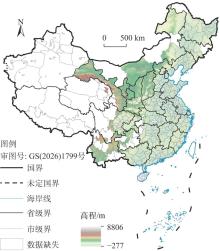
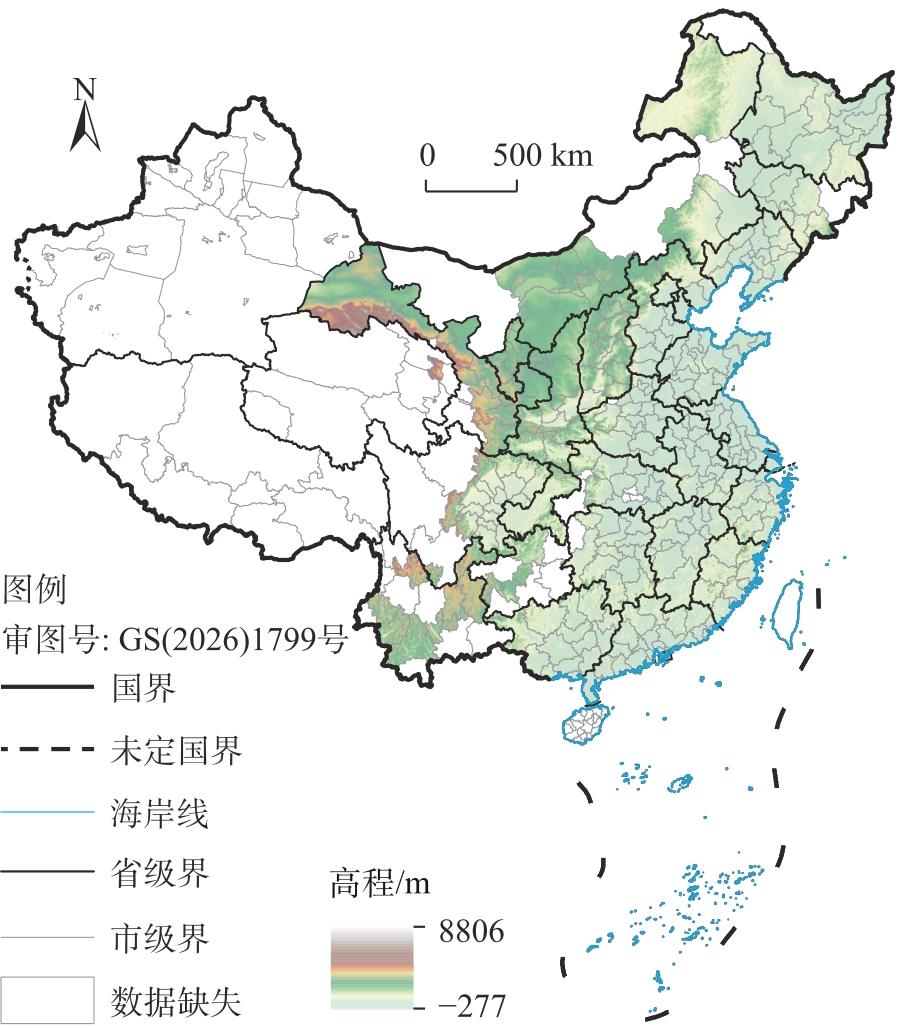
Fig. 1
Schematic diagram of the study area"

Tab. 1
Indicator system for high-quality development of new-type urbanization"
| 目标层 | 指标层 | 指标解释 | 属性 | 权重 |
|---|---|---|---|---|
| 人口城镇化 | 城镇化率 | 城镇常住人口/总常住人口 | + | 0.326 |
| 二、三产从业占比 | 二、三产业从业人员/总从业人员 | + | 0.468 | |
| 失业登记率 | 失业登记人数/总常住人口 | - | 0.206 | |
| 经济城镇化 | 人均GDP | 地区总GDP/总常住人口 | + | 0.416 |
| 产业升级 | 二、三产产业产值/一产产业产值 | + | 0.379 | |
| 科技财政支出 | 科技财政支出/地区财政总支出 | + | 0.205 | |
| 社会城镇化 | 教育财政支出 | 教育财政支出/地区财政总支出 | + | 0.166 |
| 每千人医护人员 | 执业医师数/总常住人口×1000 | + | 0.301 | |
| 养老保险参保率 | 养老保险参保人数/总常住人口 | + | 0.215 | |
| 图书馆藏书量 | 图书馆藏书/常住人口 | + | 0.318 | |
| 空间城镇化 | 路网密度 | 公路总里程/行政区总面积 | + | 0.260 |
| 建设用地占比 | 建成区面积/行政区总面积 | + | 0.437 | |
| 人均建设用地 | 建成区面积/总常住人口 | - | 0.302 | |
| 绿色城镇化 | 建成区绿化 | 建成区绿化面积/建成区面积 | + | 0.259 |
| 污水处理率 | 污水处理量/污水总产量 | + | 0.438 | |
| 固体利用率 | 工业固体垃圾再利用量/工业固体垃圾产生量 | + | 0.303 | |
| 城乡一体化 | 城乡可支配收入比 | 城市人均可支配收入/农村人均可支配收入 | - | 0.366 |
| 城乡消费比 | 城市人均消费/农村人均消费 | - | 0.391 | |
| 城乡恩格尔比 | 城市人均恩格尔系数/农村人均恩格尔系数 | + | 0.243 |
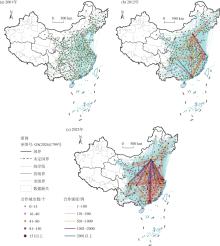
Fig. 2
Evolution of urban innovation collaboration"
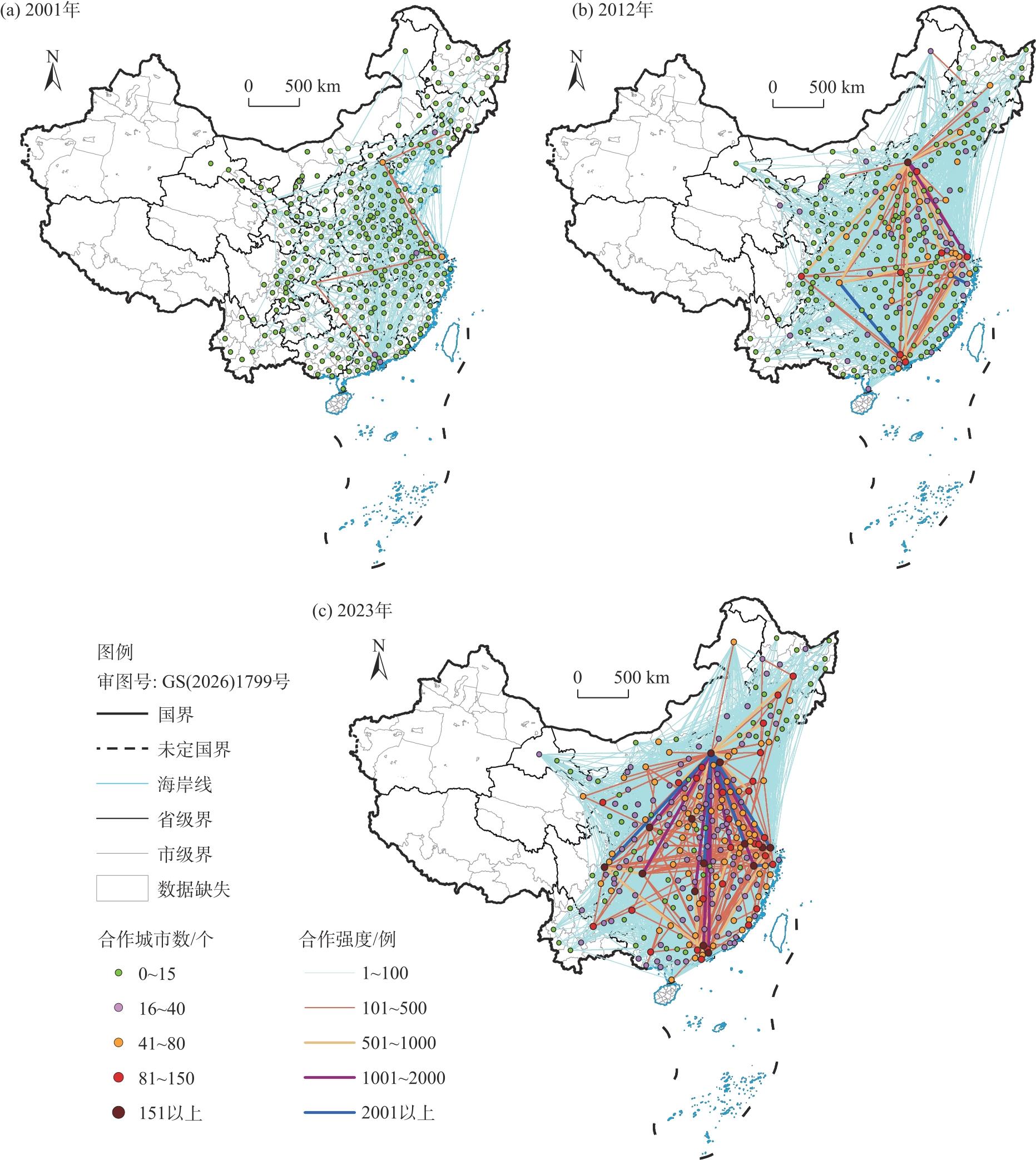
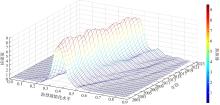
Fig. 3
Kernel density estimation of high-quality development of new-type urbanization"
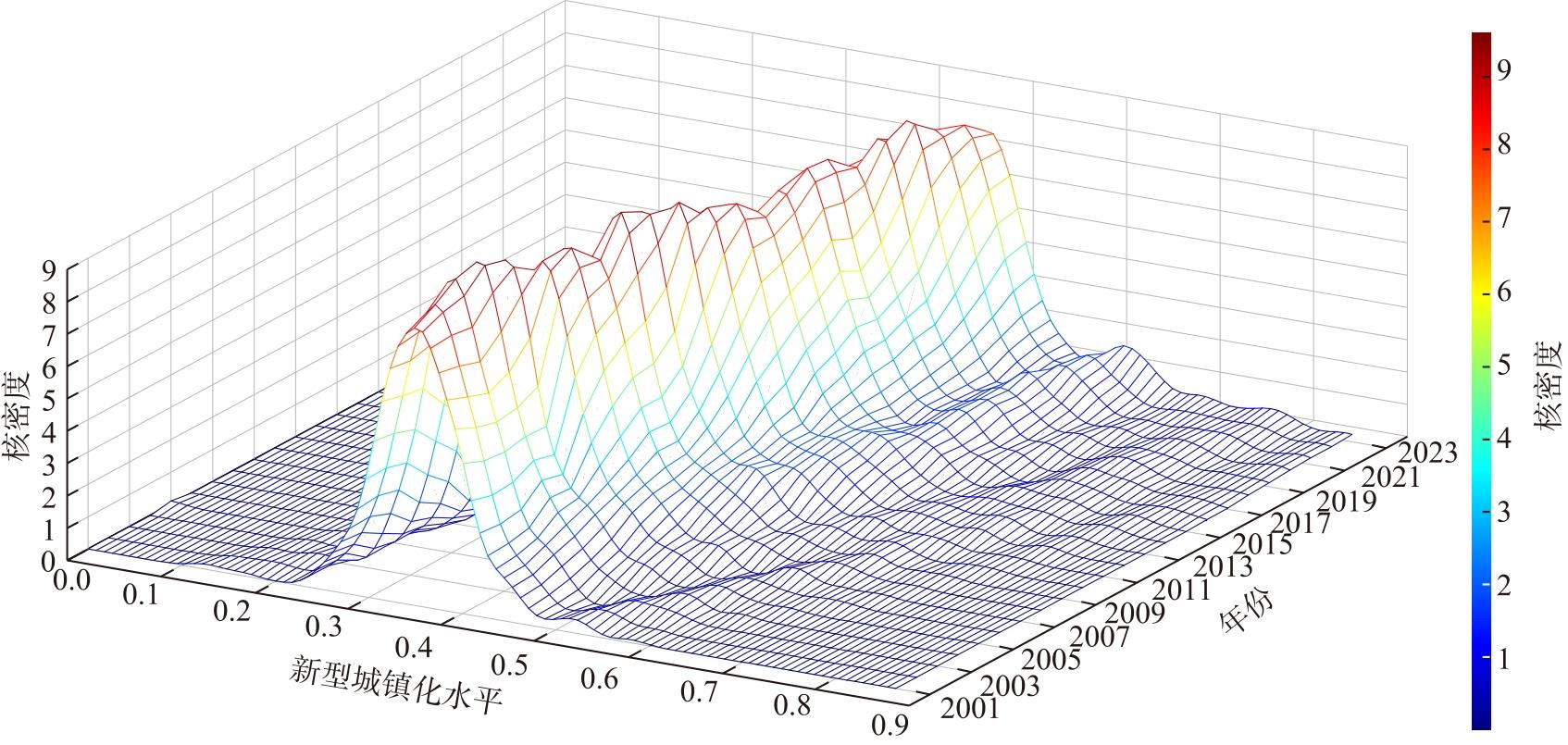
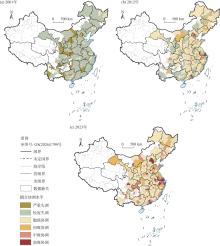
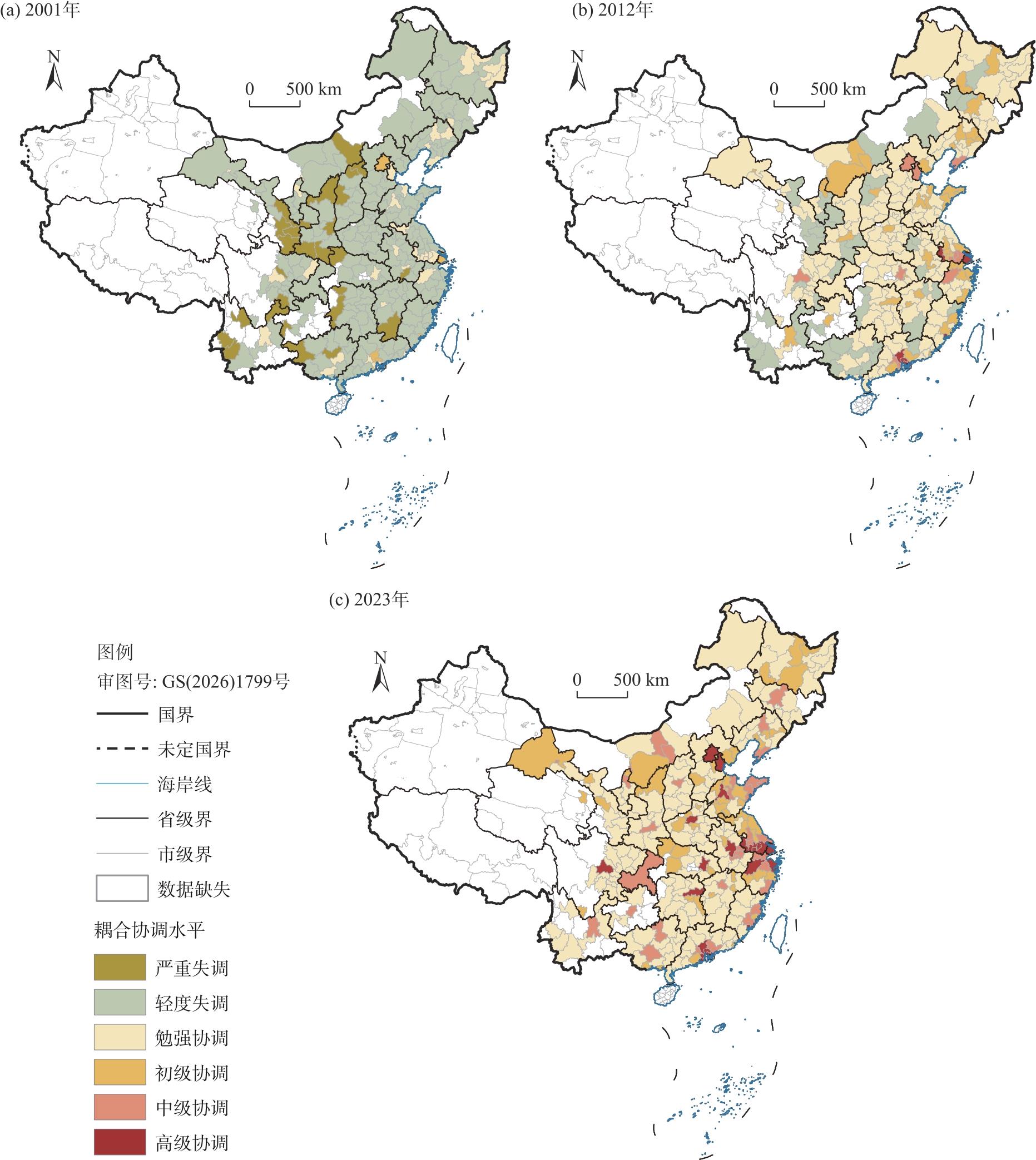
Fig. 4
Spatial distribution pattern of high-quality development of new-type urbanization"
Tab. 2
Global Moran’s I"
| 年份 | 全局莫兰指数 | 方差 | Z | P |
|---|---|---|---|---|
| 2001 | 0.329 | 0.001 | 10.995 | 0.000 |
| 2012 | 0.332 | 0.001 | 11.128 | 0.000 |
| 2023 | 0.302 | 0.001 | 10.264 | 0.000 |
Tab. 3
Traditional Markov state transition probability matrix"
| 类型 | Ⅰ | Ⅱ | Ⅲ | Ⅳ | Ⅴ |
|---|---|---|---|---|---|
| Ⅰ | 0.708 | 0.285 | 0.008 | 0.000 | 0.000 |
| Ⅱ | 0.005 | 0.868 | 0.127 | 0.000 | 0.000 |
| Ⅲ | 0.000 | 0.009 | 0.948 | 0.042 | 0.000 |
| Ⅳ | 0.000 | 0.000 | 0.021 | 0.900 | 0.080 |
| Ⅴ | 0.000 | 0.000 | 0.000 | 0.006 | 0.994 |
Tab. 4
Spatial Markov state transition probability matrix"
| 空间滞后类型 | Ti时期类型 | Ti+1时期类型 | ||||
|---|---|---|---|---|---|---|
| Ⅰ | Ⅱ | Ⅲ | Ⅳ | Ⅴ | ||
| Ⅰ | Ⅰ | 0.875 | 0.125 | 0.000 | 0.000 | 0.000 |
| Ⅱ | 0.023 | 0.977 | 0.000 | 0.000 | 0.000 | |
| Ⅲ | 0.000 | 0.000 | 1.000 | 0.000 | 0.000 | |
| Ⅳ | 0.000 | 0.000 | 0.000 | 0.000 | 0.000 | |
| Ⅴ | 0.000 | 0.000 | 0.000 | 0.000 | 0.000 | |
| Ⅱ | Ⅰ | 0.702 | 0.289 | 0.008 | 0.000 | 0.000 |
| Ⅱ | 0.008 | 0.933 | 0.060 | 0.000 | 0.000 | |
| Ⅲ | 0.000 | 0.044 | 0.902 | 0.054 | 0.000 | |
| Ⅳ | 0.000 | 0.000 | 0.121 | 0.872 | 0.007 | |
| Ⅴ | 0.000 | 0.000 | 0.000 | 0.008 | 0.992 | |
| Ⅲ | Ⅰ | 0.000 | 1.000 | 0.000 | 0.000 | 0.000 |
| Ⅱ | 0.000 | 0.752 | 0.248 | 0.000 | 0.000 | |
| Ⅲ | 0.000 | 0.007 | 0.960 | 0.033 | 0.000 | |
| Ⅳ | 0.000 | 0.000 | 0.024 | 0.910 | 0.067 | |
| Ⅴ | 0.000 | 0.000 | 0.000 | 0.015 | 0.985 | |
| Ⅳ | Ⅰ | 0.000 | 0.000 | 0.000 | 0.000 | 0.000 |
| Ⅱ | 0.000 | 0.667 | 0.333 | 0.000 | 0.000 | |
| Ⅲ | 0.000 | 0.000 | 0.912 | 0.085 | 0.003 | |
| Ⅳ | 0.000 | 0.000 | 0.019 | 0.893 | 0.088 | |
| Ⅴ | 0.000 | 0.000 | 0.000 | 0.000 | 1.000 | |
| Ⅴ | Ⅰ | 0.000 | 0.000 | 0.000 | 0.000 | 0.000 |
| Ⅱ | 0.000 | 0.000 | 0.000 | 0.000 | 0.000 | |
| Ⅲ | 0.000 | 0.000 | 0.000 | 0.000 | 0.000 | |
| Ⅳ | 0.000 | 0.000 | 0.000 | 0.727 | 0.273 | |
| Ⅴ | 0.000 | 0.000 | 0.000 | 0.000 | 1.000 | |
Fig. 5
Spatial structure evolution of association network"
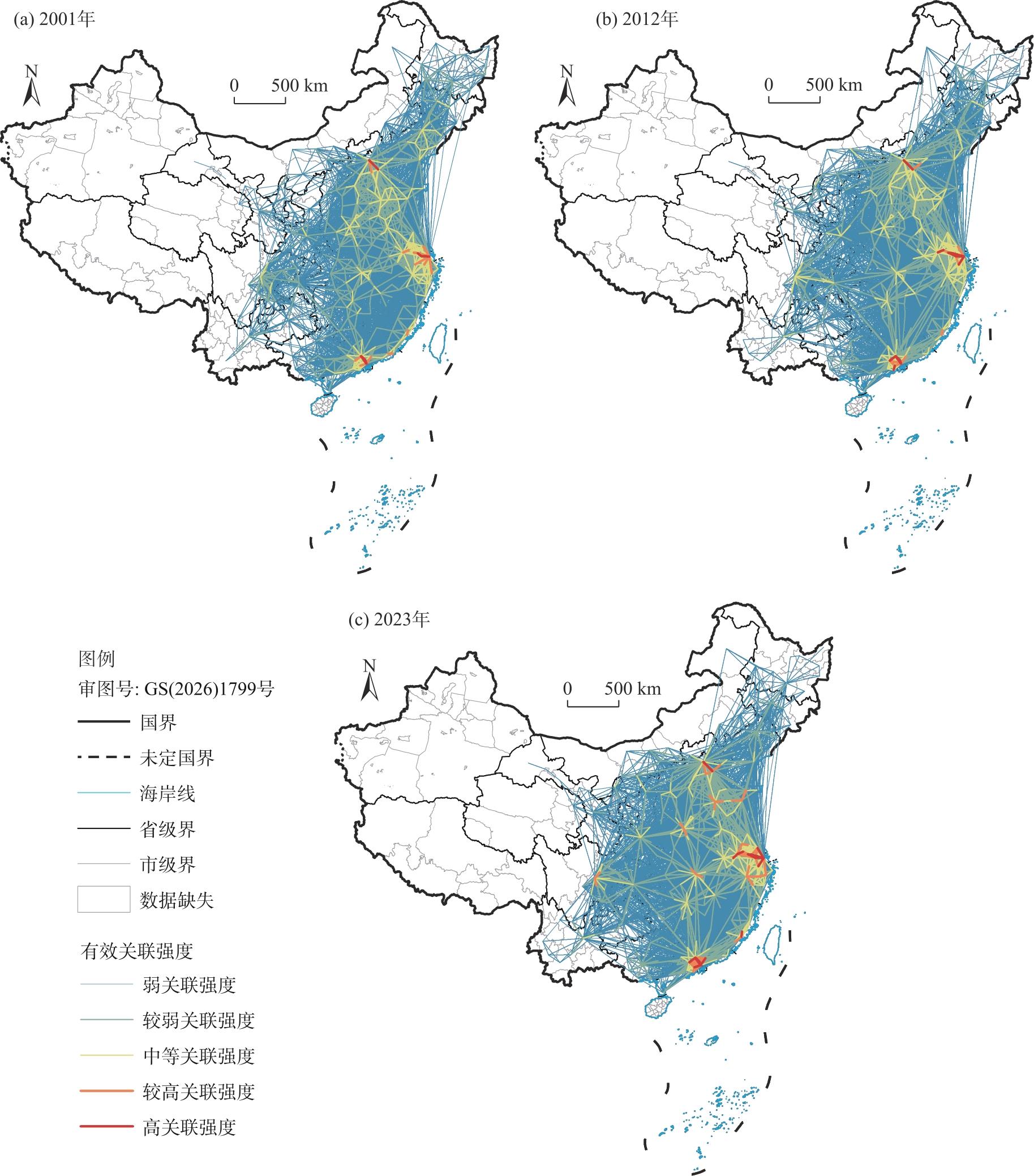
Fig. 6
Evolution trend of overall network structure characteristics"
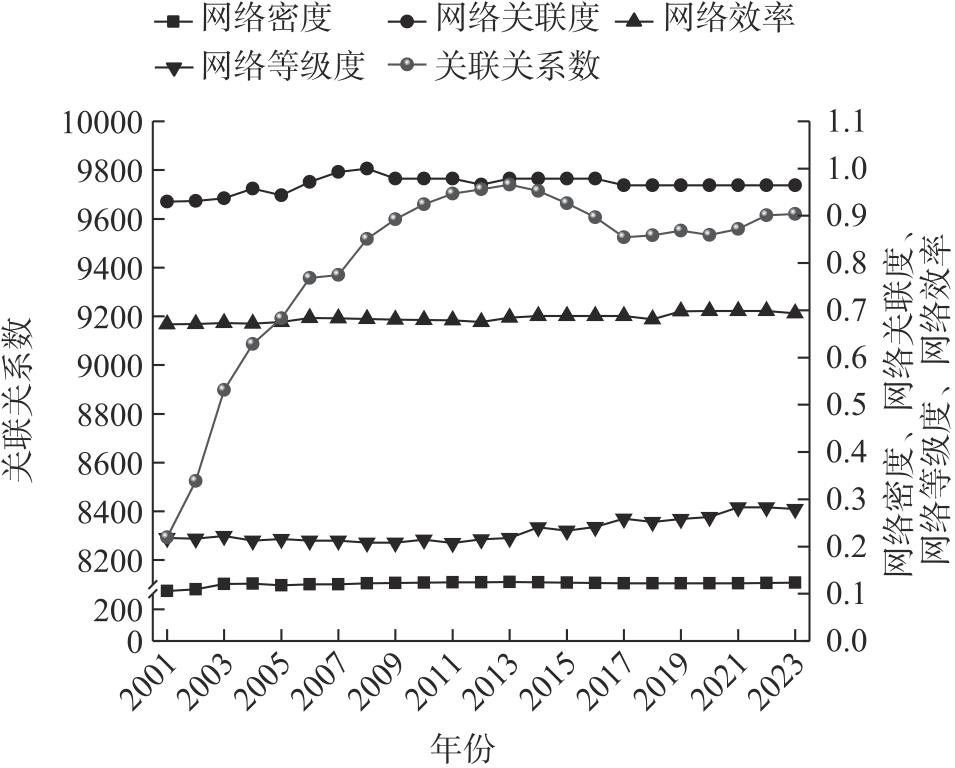
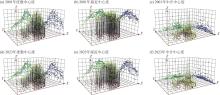
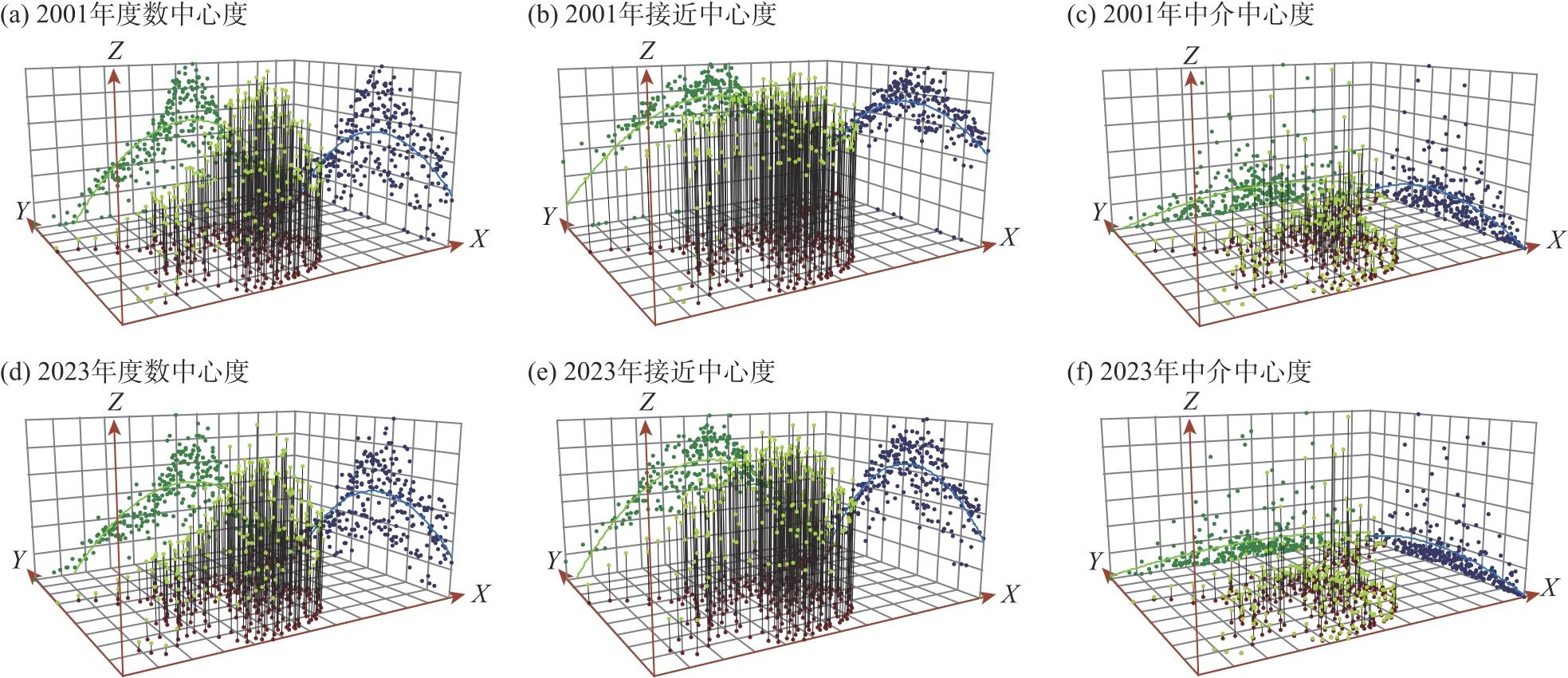
Fig. 7
Spatial trend of network centrality"
Tab. 5
Network motif structures and statistical characteristics"
| 类型 | 结构 | 代码 | 2001年 | 2012年 | 2023年 | ||||||||
|---|---|---|---|---|---|---|---|---|---|---|---|---|---|
| 排序 | 频率 | z | 排序 | 频率 | z | 排序 | 频率 | z | |||||
| 发散 |  | 021D | 4 | 10.63 | UR | 3 | 12.73 | UR | 2 | 14.41 | UR | ||
| 汇聚 |  | 021U | 5 | 9.23 | UR | 7 | 8.03 | UR | 7 | 7.41 | UR | ||
| 链式 |  | 021C | 10 | 4.40 | UR | 10 | 4.07 | UR | 10 | 4.18 | UR | ||
| 互惠发散 |  | 111D | 1 | 15.51 | OR | 2 | 14.44 | OR | 3 | 13.43 | OR | ||
| 互惠汇聚 |  | 111U | 2 | 14.42 | OR | 1 | 15.63 | OR | 1 | 16.20 | OR | ||
| 传递三元组 |  | 030T | 11 | 3.32 | UR | 11 | 3.52 | UR | 11 | 3.69 | UR | ||
| 双互惠 |  | 201 | 9 | 6.23 | NS | 8 | 6.39 | OR | 9 | 5.97 | NS | ||
| 传递OR互惠 |  | 120D | 7 | 8.14 | OR | 5 | 8.53 | OR | 5 | 8.57 | OR | ||
| 循环OR互惠 |  | 120U | 8 | 6.41 | OR | 9 | 6.03 | OR | 8 | 6.06 | OR | ||
| 链式OR互惠 |  | 120C | 12 | 1.19 | UR | 12 | 1.23 | UR | 12 | 1.28 | UR | ||
| 强传递 |  | 210 | 3 | 11.36 | OR | 4 | 10.94 | OR | 4 | 10.68 | OR | ||
| 全互惠 |  | 300 | 6 | 8.87 | OR | 6 | 8.44 | OR | 6 | 8.11 | OR | ||
Tab. 6
Explanation of the driving mechanism variables"
| 驱动要素 | 变量名称 | 机制 | 变量含义 |
|---|---|---|---|
| 内生结构 | 边数 | 基础效应 | 网络的基本密度,类似于截距项 |
| 互惠性 | 互惠性 | 检验城市间是否存在双向互动的合作机制 | |
| 节点属性 | 人口规模 | 马太效应 | 市辖区年末总人口,检验规模效应 |
| 经济水平 | 马太效应 | 人均GDP,检验经济实力的辐射带动作用 | |
| 城镇化率 | 马太效应 | 常住人口城镇化率,反映人口集聚水平 | |
| 城乡协调 | 马太效应 | 城乡居民可支配收入比,反映社会公平 | |
| 产业结构 | 马太效应 | 第三产业与第二产业产值之比,反映产业结构的同质性 | |
| 交通基础 | 马太效应 | 城市道路面积与市区面积之比,反映实体通达性 | |
| 信息联通 | 马太效应 | 互联网宽带接入用户数/移动电话数,反映信息通达性 | |
| 土地资源 | 马太效应 | 人均城市建设用地面积,反映土地要素支撑能力 | |
| 生态环境 | 马太效应 | 人均公园绿地面积,反映城市宜居品质 | |
| 外生网络 | 地理距离 | 外部网络依赖 | 两城市间球面距离标准化的对数加权矩阵,检验地理邻近效应 |
| 高铁网络 | 外部网络依赖 | 两城市间是否能通过高铁直达,检验交通技术发展对网络的影响 | |
| 行政归属 | 外部网络依赖 | 二值矩阵,两城市属于同一省份取1,否则取0 | |
| 经济差异 | 外部网络依赖 | 两城市人均GDP的绝对差值矩阵,检验势差效应 |
Tab. 7
Estimation results of ERGM"
| 变量 | 2001年 | 2012年 | 2023年 | |||||
|---|---|---|---|---|---|---|---|---|
| 模型1 | 模型2 | 模型1 | 模型2 | 模型1 | 模型2 | |||
| 边数 | -2.534*** | 4.562*** | -4.441*** | 3.009*** | -6.938*** | 3.351*** | ||
| 互惠性 | 3.107*** | 1.628*** | 4.915*** | 3.883*** | 5.941*** | 4.988*** | ||
| 人口规模 | 6.221*** | 6.903*** | 1.386*** | 3.218*** | 0.154 | 2.103*** | ||
| 经济水平 | 0.094*** | 0.492*** | 0.083*** | 0.601*** | 0.174*** | 0.632*** | ||
| 城镇化率 | -0.141** | 0.732*** | 0.091 | 0.311*** | 1.232*** | 1.950*** | ||
| 城乡协调 | -0.431*** | 0.314* | -0.402*** | 0.691*** | -0.373*** | 1.492*** | ||
| 产业结构 | 0.154 | 1.703*** | -0.452*** | 0.431 | -0.253*** | -0.424* | ||
| 交通基础 | 0.341*** | 0.061 | 0.532*** | 0.325*** | 0.568*** | 0.441*** | ||
| 信息联通 | -0.003*** | -0.012*** | 0.001 | -0.004*** | 0.002*** | -0.003*** | ||
| 土地资源 | -1.942*** | -3.266*** | -0.763*** | -0.591*** | -0.852*** | -0.714*** | ||
| 生态环境 | 0.041*** | 0.012 | 0.023*** | -0.014 | 0.022*** | -0.101*** | ||
| 地理距离 | - | -2.413*** | - | -1.919*** | - | -1.856*** | ||
| 高铁网络 | - | - | - | 0.021 | - | 0.253*** | ||
| 行政归属 | - | -0.182** | - | -0.230*** | - | -0.184*** | ||
| 经济差异 | - | -0.081*** | - | -0.086*** | - | -0.094*** | ||
| AIC | 51016.032 | 37829.454 | 46782.802 | 32766.681 | 41146.887 | 28192.762 | ||
| BIC | 51117.721 | 37977.701 | 46903.263 | 32924.202 | 41267.351 | 28350.279 | ||
| Log Likelihood | -25497.024 | -18898.704 | -23378.401 | -16366.332 | -20560.439 | -14079.415 | ||
Tab. 8
Convergence diagnostics of model 2"
| 变量 | 2001年 | 2012年 | 2023年 | |||||
|---|---|---|---|---|---|---|---|---|
| G | P | G | P | G | P | |||
| 边数 | 0.321 | 0.748 | -0.766 | 0.444 | -0.235 | 0.814 | ||
| 互惠性 | -0.298 | 0.766 | -0.835 | 0.404 | -0.197 | 0.844 | ||
| 人口规模 | -0.538 | 0.591 | -0.845 | 0.398 | -0.850 | 0.395 | ||
| 经济水平 | -0.411 | 0.681 | -0.310 | 0.757 | 0.149 | 0.881 | ||
| 城镇化率 | 0.106 | 0.916 | -0.583 | 0.560 | -0.244 | 0.807 | ||
| 城乡协调 | 0.685 | 0.493 | -0.901 | 0.367 | -0.268 | 0.789 | ||
| 产业结构 | -0.104 | 0.917 | -1.220 | 0.223 | -0.291 | 0.771 | ||
| 交通基础 | -0.094 | 0.925 | -0.917 | 0.359 | -0.226 | 0.821 | ||
| 信息联通 | -0.304 | 0.761 | 0.062 | 0.951 | 0.111 | 0.912 | ||
| 土地资源 | -0.926 | 0.355 | -0.277 | 0.782 | 0.387 | 0.698 | ||
| 生态环境 | -0.699 | 0.485 | 0.416 | 0.678 | 0.378 | 0.705 | ||
| 地理距离 | 0.249 | 0.803 | -0.681 | 0.496 | -0.334 | 0.739 | ||
| 高铁网络 | - | - | -1.859 | 0.063 | 0.321 | 0.748 | ||
| 行政归属 | 0.231 | 0.817 | -0.659 | 0.510 | -0.323 | 0.747 | ||
| 经济差异 | 0.066 | 0.947 | -0.151 | 0.880 | -1.631 | 0.103 | ||
| [1] | 方创琳. 中国新型城镇化高质量发展的规律性与重点方向[J]. 地理研究, 2019, 38(1): 13-22. |
| [Fang Chuanglin. Regularity and key directions of high-quality development of new-type urbanization in China[J]. Geographical Research, 2019, 38(1): 13-22.] | |
| [2] | 高志刚, 任严岩, 韩延玲. 新型城镇化推进经济高质量发展理论阐释与实证检验[J]. 区域经济评论, 2022(5): 58-69. |
| [Gao Zhigang, Ren Yanyan, Han Yanling. Theoretical interpretation and empirical test of new-type urbanization promoting high-quality economic development[J]. Regional Economic Review, 2022(5): 58-69.] | |
| [3] | 解安, 林进龙. 新型城镇化: 十年总结与远景展望[J]. 河北学刊, 2023, 43(1): 115-126. |
| [Xie An, Lin Jinlong. New-type urbanization: Ten-year review and prospect[J]. Hebei Academic Journal, 2023, 43(1): 115-126.] | |
| [4] | 于洋, 董刘洋, 周睿, 等. 成渝地区交通网络与新型城镇化协同发展分析与提升对策[J]. 现代城市研究, 2025(9): 81-89. |
| [Yu Yang, Dong Liuyang, Zhou Rui, et al. Synergistic development analysis and improvement strategies of transportation network and new-type urbanization in the Chengdu-Chongqing region[J]. Modern Urban Research, 2025(9): 81-89.] | |
| [5] | 张梦瑶. 中国特色新型城镇化高质量发展的实践路径探析——基于新发展理念视角[J]. 当代经济管理, 2021, 43(9): 75-80. |
| [Zhang Mengyao. Practical path of high-quality development of Chinese-style new-type urbanization: From the perspective of new development philosophy[J]. Contemporary Economic Management, 2021, 43(9): 75-80.] | |
| [6] | 徐雪. 新型城镇化高质量发展的多维测度、空间差异及动态演进[J]. 统计与决策, 2024, 40(10): 100-105. |
| [Xu Xue. Multidimensional measurement, spatial differences and dynamic evolution of high-quality development of new-type urbanization[J]. Statistics and Decision, 2024, 40(10): 100-105.] | |
| [7] | 于爱芝, 汪洋. 新型城镇化对扩大内需的影响机制研究——中国257个地级以上城市的数据实证[J]. 城市发展研究, 2024, 31(1): 112-120. |
| [Yu Aizhi, Wang Yang. Mechanism of the impact of new-type urbanization on expanding domestic demand: Evidence from 257 prefecture-level and above cities in China[J]. Urban Development Studies, 2024, 31(1): 112-120.] | |
| [8] | 龚雅洁. 新型城镇化高质量发展水平动态变化研究——以福建省为例[J]. 海峡科技与产业, 2023, 36(11): 60-64. |
| [Gong Yajie. Dynamic changes in the high-quality development level of new-type urbanization: A case study of Fujian Province[J]. Science and Technology and Industry Across the Straits, 2023, 36(11): 60-64.] | |
| [9] | 姜亚俊, 慈福义, 史佳璐, 等. 山东省新型城镇化与生态环境耦合协调发展研究[J]. 生态经济, 2021, 37(5): 106-112. |
| [Jiang Yajun, Ci Fuyi, Shi Jialu, et al. Coupling and coordinated development of new-type urbanization and ecological environment in Shandong Province[J]. Ecological Economy, 2021, 37(5): 106-112.] | |
| [10] |
李锦, 蒲娟, 李明亮, 等. 新型城镇化与和美乡村耦合协调发展水平测度、地区差异及动态演进[J]. 干旱区地理, 2025, 48(12): 2220-2231.
doi: 10.12118/j.issn.1000-6060.2024.788 |
|
[Li Jin, Pu Juan, Li Mingliang, et al. Measurement, regional differences and dynamic evolution of the coupling and coordinated development level of new-type urbanization and harmonious beautiful countryside[J]. Arid Land Geography, 2025, 48(12): 2220-2231.]
doi: 10.12118/j.issn.1000-6060.2024.788 |
|
| [11] |
Castells M. Toward a sociology of the network society[J]. Contemporary Sociology, 2000, 29(5): 693-699.
doi: 10.2307/2655234 |
| [12] | Cai Y C, Wu Y Z. Social-ecological network analysis of national park attractiveness: A case study of Baishanzu Mountain, China[J]. Humanities and Social Sciences Communications, 2026, 13(1): 205, doi: 10.1057/s41599-026-06505-8. |
| [13] | 饶传坤, 朱铖扬, 翟端强. 基于轨道交通客流的城市通勤特征与职住关系研究——以杭州市为例[J]. 现代城市研究, 2025(2): 16-23. |
| [Rao Chuankun, Zhu Chengyang, Zhai Duanqiang. Urban commuting characteristics and jobs-housing relationship based on rail transit passenger flow: A case study of Hangzhou[J]. Modern Urban Research, 2025(2): 16-23.] | |
| [14] |
向博文, 魏伟, 洪梦谣, 等. 长江经济带跨市就医网络结构及多维邻近性[J]. 地理科学进展, 2025, 44(4): 742-753.
doi: 10.18306/dlkxjz.2025.04.007 |
| [Xiang Bowen, Wei Wei, Hong Mengyao, et al. Intercity medical treatment network structure and multidimensional proximity in the Yangtze River Economic Belt[J]. Progress in Geography, 2025, 44(4): 742-753.] | |
| [15] | 刘俊, 李潇涵, 王胜宏. 成都市旅游“流空间”结构的短期与长期预测——基于马尔科夫链稳态方法分析[J]. 旅游学刊, 2025, 40(11): 64-80. |
| [Liu Jun, Li Xiaohan, Wang Shenghong. Short-and long-term forecasting of tourism“space of flows”structure in Chengdu: An analysis based on steady-state Markov chain method[J]. Tourism Tribune, 2025, 40(11): 64-80.] | |
| [16] |
黄杰, 陆洪阳, 刘华军. 中国新质生产力的空间关联网络结构特征及其影响因素研究[J]. 地域研究与开发, 2025, 44(1): 1-7.
doi: 10.3969/j.issn.1003-2363.2025.01.001 |
| [Huang Jie, Lu Hongyang, Liu Huajun. Structural characteristics and influencing factors of the spatial association network of China’s new quality productive forces[J]. Areal Research and Development, 2025, 44(1): 1-7.] | |
| [17] |
史玉芳, 牛玉. 关中平原城市群韧性空间关联网络及其影响因素研究[J]. 干旱区地理, 2024, 47(2): 270-280.
doi: 10.12118/j.issn.1000-6060.2023.104 |
|
[Shi Yufang, Niu Yu. Spatial association network of urban resilience in the Guanzhong Plain urban agglomeration and its influencing factors[J]. Arid Land Geography, 2024, 47(2): 270-280.]
doi: 10.12118/j.issn.1000-6060.2023.104 |
|
| [18] | 张红伟, 李佳妮, 柴季, 等. 长江经济带城市建设用地利用效率的空间关联网络及协同治理路径[J]. 长江流域资源与环境, 2025, 34(2): 331-342. |
| [Zhang Hongwei, Li Jiani, Chai Ji, et al. Spatial association network and collaborative governance path of urban construction land use efficiency in the Yangtze River Economic Belt[J]. Resources and Environment in the Yangtze Basin, 2025, 34(2): 331-342.] | |
| [19] |
Chen M X, Liu W D, Lu D D. Challenges and the way forward in China’s new-type urbanization[J]. Land Use Policy, 2016, 55: 334-339.
doi: 10.1016/j.landusepol.2015.07.025 |
| [20] | 袁晓玲, 黄涛, 李冬. 中国绿色转型绩效差异的多维分解与驱动机制——基于“降碳-减污-扩绿-增长”评估框架的再审视[J]. 干旱区资源与环境, 2025, 39(11): 33-41. |
| [Yuan Xiaoling, Huang Tao, Li Dong. Multidimensional decomposition and driving mechanism of differences in China’s green transformation performance: A re-examination based on the evaluation framework of “carbon reduction-pollution reduction-green expansion-growth”[J]. Journal of Arid Land Resources and Environment, 2025, 39(11): 33-41.] | |
| [21] |
Chen M X, Liu W D, Lu D D, et al. Progress of China’s new-type urbanization construction since 2014: A preliminary assessment[J]. Cities, 2018, 78: 180-193.
doi: 10.1016/j.cities.2018.02.012 |
| [22] | 周灿, 肖铁桥. 县域农业农村现代化与城乡融合的时空耦合及障碍因子——以皖北地区为例[J]. 云南农业大学学报(社会科学), 2024, 18(3): 14-23. |
| [Zhou Can, Xiao Tieqiao. Spatiotemporal coupling and obstacle factors of county-level agricultural and rural modernization and urban-rural integration: A case study of northern Anhui[J]. Journal of Yunnan Agricultural University (Social Science Edition), 2024, 18(3): 14-23.] | |
| [23] |
王淑佳, 孔伟, 任亮, 等. 国内耦合协调度模型的误区及修正[J]. 自然资源学报, 2021, 36(3): 793-810.
doi: 10.31497/zrzyxb.20210319 |
|
[Wang Shujia, Kong Wei, Ren Liang, et al. Misunderstandings and revisions of the coupling coordination degree model in domestic studies[J]. Journal of Natural Resources, 2021, 36(3): 793-810.]
doi: 10.31497/zrzyxb.20210319 |
|
| [24] |
Li H F, Calder C A, Cressie N. Beyond Moran’s I: Testing for spatial dependence based on the spatial autoregressive model[J]. Geographical Analysis, 2007, 39(4): 357-375.
doi: 10.1111/gean.2007.39.issue-4 |
| [25] | 刘华军, 贾文星. 不同空间网络关联情形下中国区域经济增长的收敛检验及协调发展[J]. 南开经济研究, 2019(3): 104-124. |
| [Liu Huajun, Jia Wenxing. Convergence test and coordinated development of China’s regional economic growth under different spatial network association scenarios[J]. Nankai Economic Studies, 2019(3): 104-124.] | |
| [26] |
Robins G, Pattison P, Kalish Y, et al. An introduction to exponential random graph (p*) models for social networks[J]. Social Networks, 2007, 29(2): 173-191.
doi: 10.1016/j.socnet.2006.08.002 |
| [27] | 孙国民. 新型城镇化: 路径选择、启示镜鉴与对策建议[J]. 经济社会体制比较, 2025(3): 1-9. |
| [Sun Guomin. New-type urbanization: Path selection, lessons and policy suggestions[J]. Comparative Economic and Social Systems, 2025(3): 1-9.] | |
| [28] | 高雅婕, 陈诚. 长江经济带数字经济发展与新型城镇化耦合协调格局及影响因素[J]. 统计与决策, 2025, 41(21): 116-121. |
| [Gao Yajie, Chen Cheng. Coupling coordination pattern and influencing factors of digital economy development and new-type urbanization in the Yangtze River Economic Belt[J]. Statistics and Decision, 2025, 41(21): 116-121.] | |
| [29] | 张玥, 代亚强, 柯新利. 中国新型城镇化空间关联网络及其对土地利用生态效率的影响——基于网络节点中心度视角[J]. 中国土地科学, 2023, 37(9): 117-129. |
| [Zhang Yue, Dai Yaqiang, Ke Xinli. Spatial association network of new-type urbanization in China and its impact on land-use eco-efficiency: From the perspective of network node centrality[J]. China Land Science, 2023, 37(9): 117-129.] | |
| [30] |
Faust K. Very local structure in social networks[J]. Sociological Methodology, 2007, 37(1): 209-256.
doi: 10.1111/j.1467-9531.2007.00179.x |
| [31] |
周建平, 徐维祥, 郭加新, 等. 国内大循环视角下中国城市生产网络结构演化与影响因素[J]. 经济地理, 2025, 45(7): 126-135, 147.
doi: 10.15957/j.cnki.jjdl.2025.07.013 |
|
[Zhou Jianping, Xu Weixiang, Guo Jiaxin, et al. Evolution and influencing factors of China’s urban production network from the perspective of the domestic big cycle[J]. Economic Geography, 2025, 45(7): 126-135, 147.]
doi: 10.15957/j.cnki.jjdl.2025.07.013 |
| [1] | LU Fengying, TENG Shengyu, DENG Guangyao. Characteristics of agricultural resilience spatial correlation network and identification of driving factors in China [J]. Arid Land Geography, 2026, 49(7): 1470-1480. |
| [2] | ZHAO Xiaoqin, SUN Dehua. Preferences for urban amenity in China’s labor mobility network: Based on Baidu migration big data [J]. Arid Land Geography, 2026, 49(5): 1013-1025. |
| [3] | DENG Guangyao, SHEN Yingchen. Characterization and influencing factors of ecological resilience linkage networks in China [J]. Arid Land Geography, 2025, 48(4): 704-716. |
| [4] | LIU Qing,JIANG Xiaorong. How does relationship dependence affect the spatial growth of globalizing city networks: A case of iPhone’s suppliers [J]. Arid Land Geography, 2022, 45(1): 310-324. |
|
||