Arid Land Geography ›› 2026, Vol. 49 ›› Issue (10): 2065-2078.doi: 10.12118/j.issn.1000-6060.2025.634
• Ecology and Environment • Previous Articles Next Articles
ZHOU Teng1( ), LIU Qiong1(), CHEN Yonghang1, HE Ting1, WU Jianguo2, LIU Rui2, XIU Qiang2, XU Yunhong1, SHAO Weiling3, HAN Xueyun3
Received:2025-10-11
Revised:2025-11-05
Online:2026-10-25
Published:2026-10-26
Contact:
LIU Qiong
E-mail:zt2035046586@163.com;liuqiong@dhu.edu.cn
ZHOU Teng, LIU Qiong, CHEN Yonghang, HE Ting, WU Jianguo, LIU Rui, XIU Qiang, XU Yunhong, SHAO Weiling, HAN Xueyun. Spatiotemporal evolution characteristics of surface environment in Urumqi City and typical photovoltaic power stations based on Sentinel-2 satellite imagery[J].Arid Land Geography, 2026, 49(10): 2065-2078.
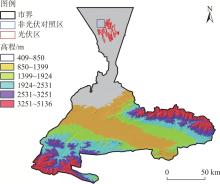
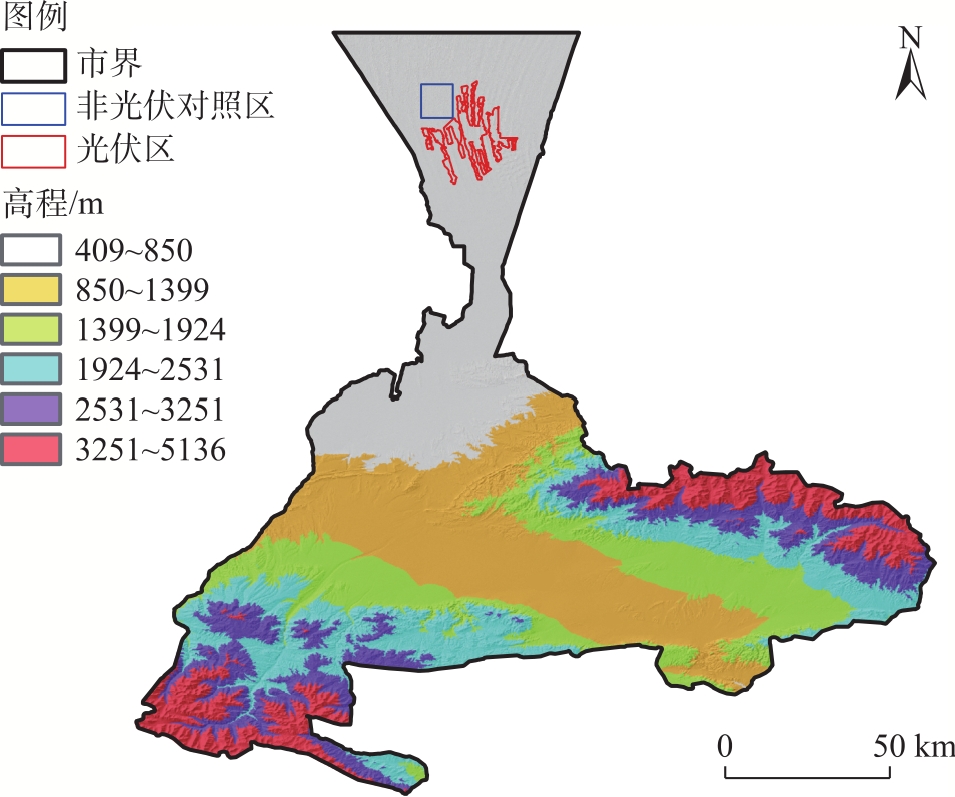
Fig. 1
Schematic diagram of the study area"

Tab. 1
Detailed information on Sentinel-2 MSI Level-2A bands"
| 波段 | 分辨率/m | 波长/nm | 波段信息 |
|---|---|---|---|
| B1 | 60 | 443 | 海岸气溶胶波段 |
| B2 | 10 | 490 | 蓝光波段 |
| B3 | 10 | 560 | 绿光波段 |
| B4 | 10 | 665 | 红光波段 |
| B5 | 20 | 705 | 红光波段1 |
| B6 | 20 | 740 | 红光波段2 |
| B7 | 20 | 783 | 红光波段3 |
| B8 | 10 | 842 | 近红外波段 |
| B9 | 60 | 945 | 水汽波段 |
| B11 | 20 | 1610 | 短红外波段1 |
| B12 | 20 | 2190 | 短红外波段2 |
Tab. 2
Dynamic World V1 class labels"
| 编号 | 土地类型 | 描述 |
|---|---|---|
| 0 | 水体 | 永久性和季节性水体 |
| 1 | 树木 | 原生林和次生林以及大型人工林 |
| 2 | 草地 | 天然草原、畜牧场和公园 |
| 3 | 被淹没的植被 | 红树林和其他被淹没的生态系统 |
| 4 | 农田 | 行作物和水稻作物 |
| 5 | 落叶灌木/灌丛 | 灌木组成的稀疏到密集的开阔植被 |
| 6 | 建成区/城市 | 建筑物、道路和城市开放空间 |
| 7 | 裸地 | 沙漠和裸露的岩石 |
| 8 | 雪/冰 | 永久和季节性积雪 |
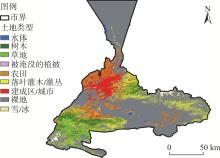
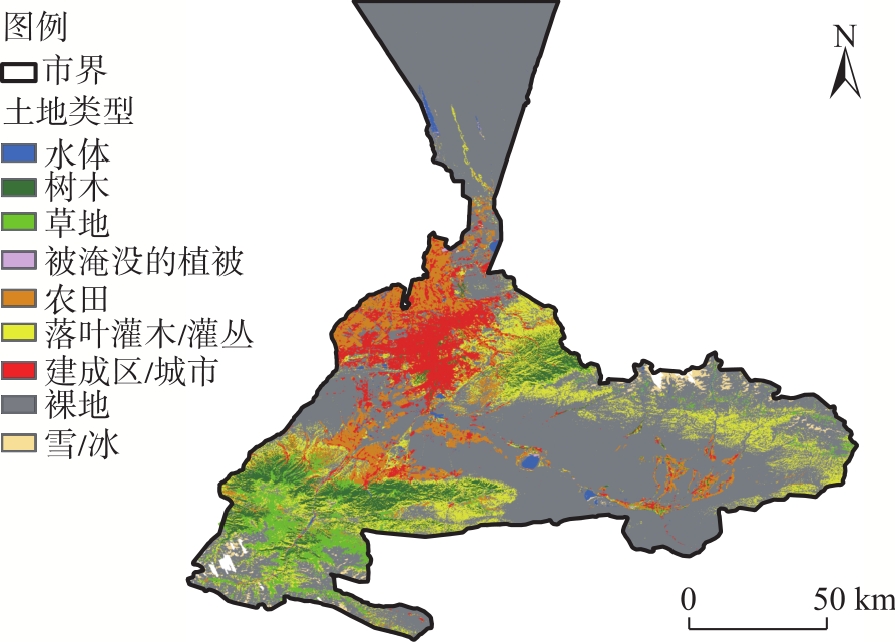
Fig. 2
Dynamic World land cover classification in 2024"
Tab. 3
Sentinel-2 weighting coefficients"
| 波段 | 权重系数 |
|---|---|
| B2 | 0.1550 |
| B3 | 0.2375 |
| B4 | 0.2244 |
| B8 | 0.3579 |
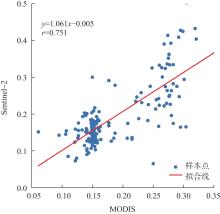
Fig. 3
Verification of surface albedo results retrieved from Sentinel-2 satellite data in Urumqi City"
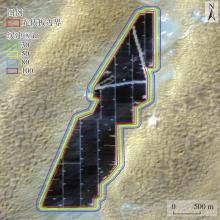
Fig. 4
Schematic diagram of photovoltaic facility buffer zone"
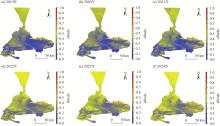
Fig. 5
Spatial distributions of surface albedo in Urumqi City from 2019 to 2024"
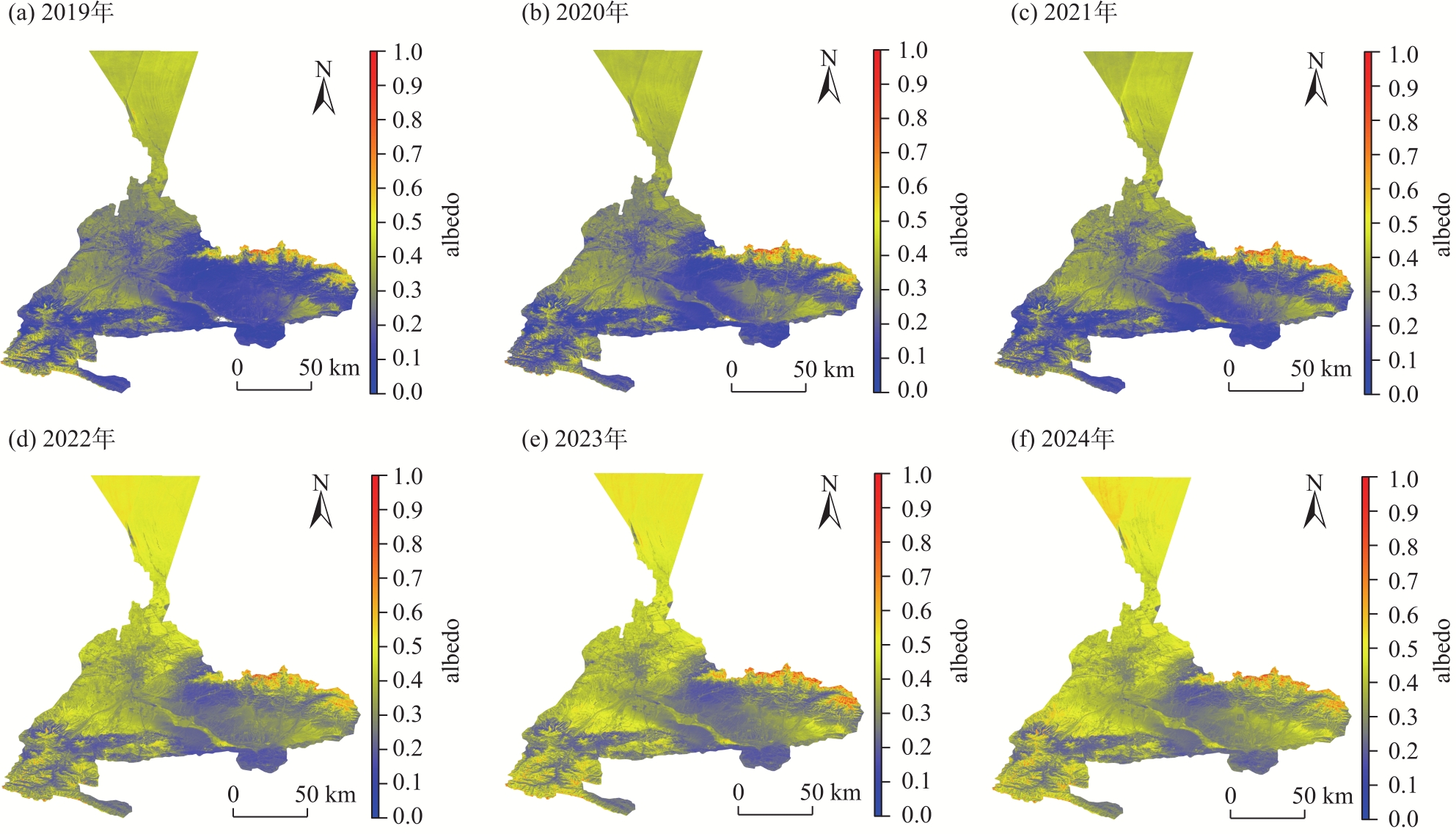
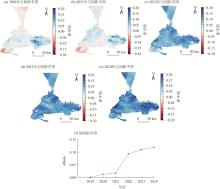
Fig. 6
Spatial and temporal anomaly maps of surface albedo in Urumqi City (taking 2019 as the baseline year)"
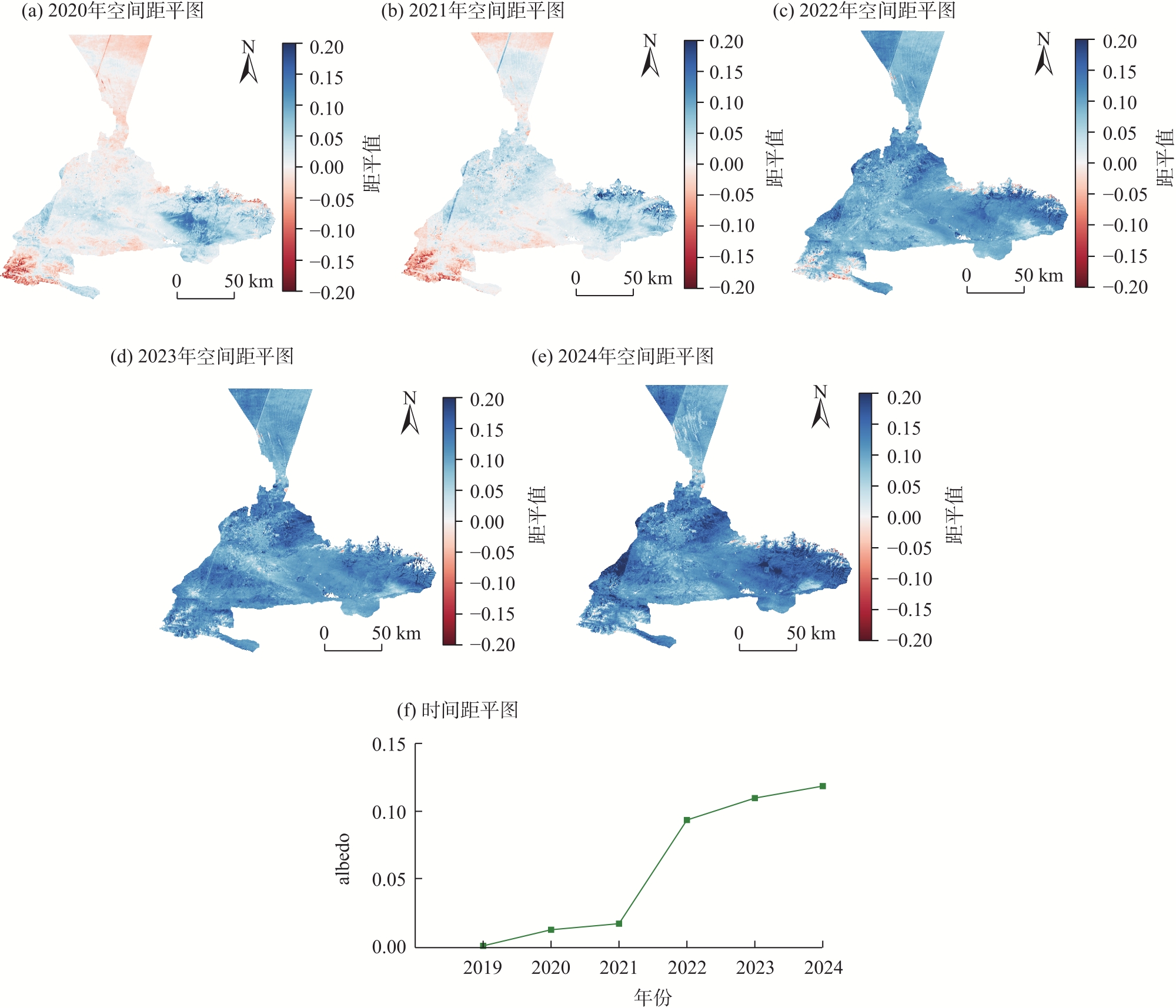
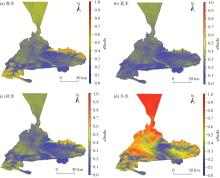
Fig. 7
Spatial distributions of seasonal average surface albedo in Urumqi City from 2019 to 2024"
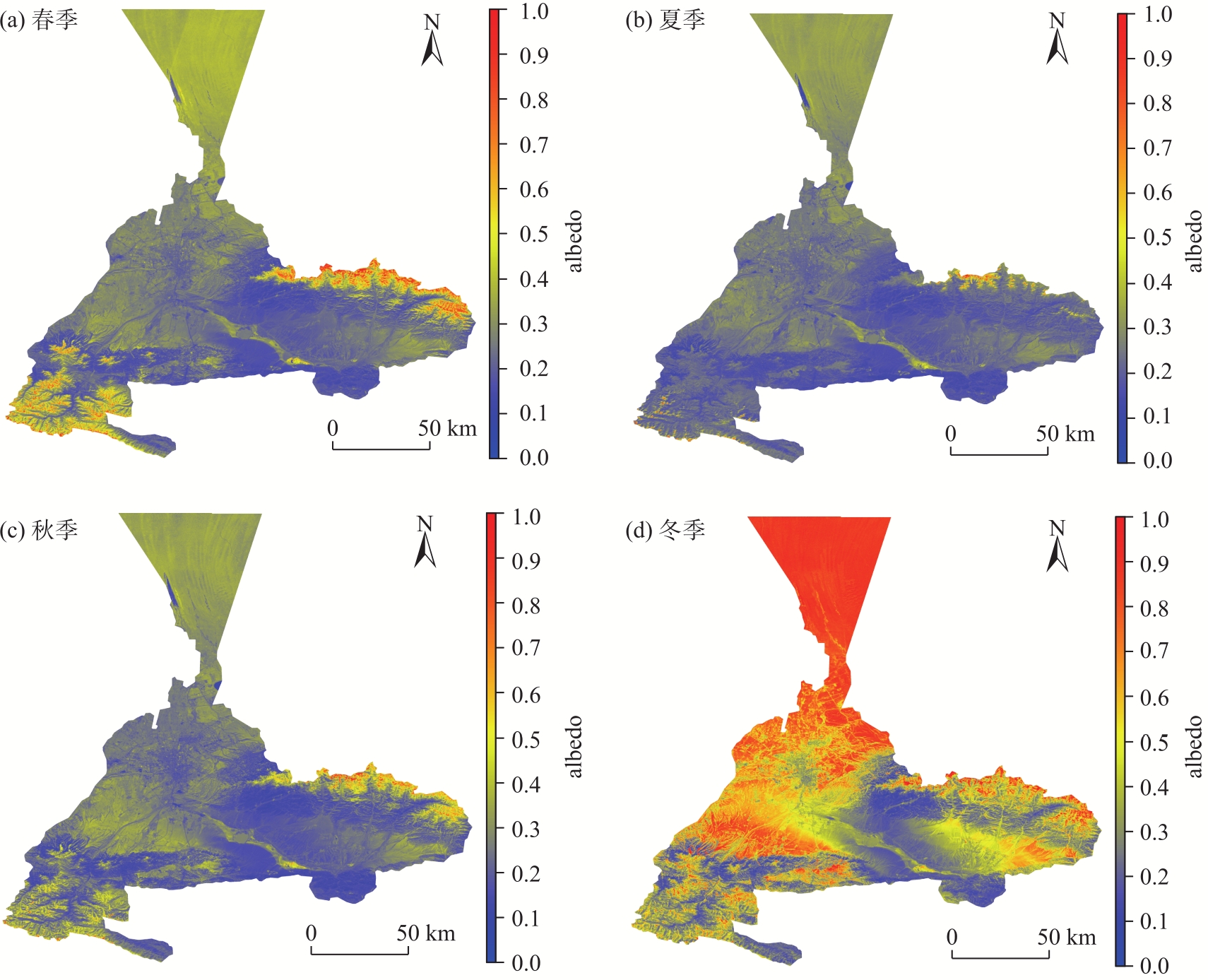
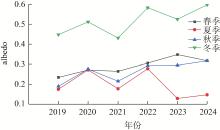
Fig. 8
Interannual variation of seasonal averagesurface albedo in Urumqi City from 2019 to 2024"
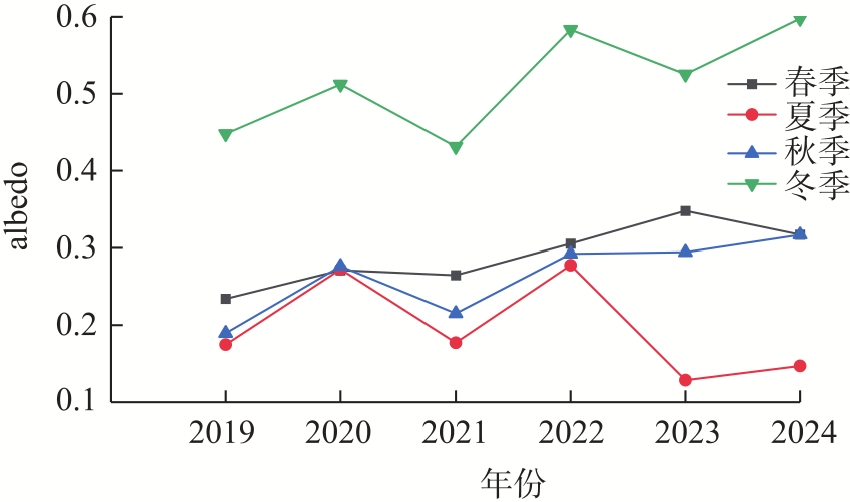
Fig. 9
Spatial distributions of NDVI in Urumqi City from 2019 to 2024"
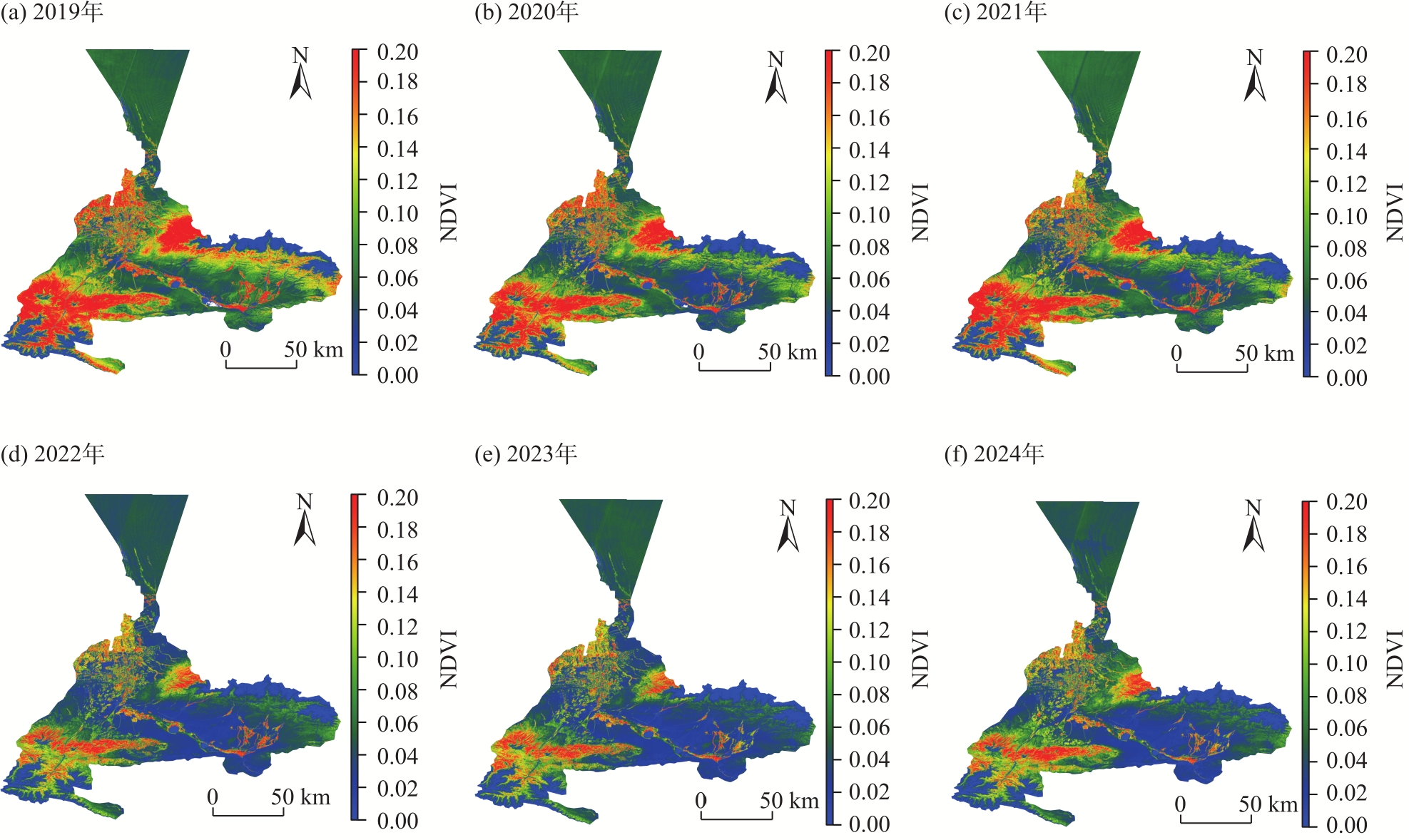
Fig. 10
Spatial and temporal anomaly maps of NDVI in Urumqi City (taking 2019 as the baseline year)"
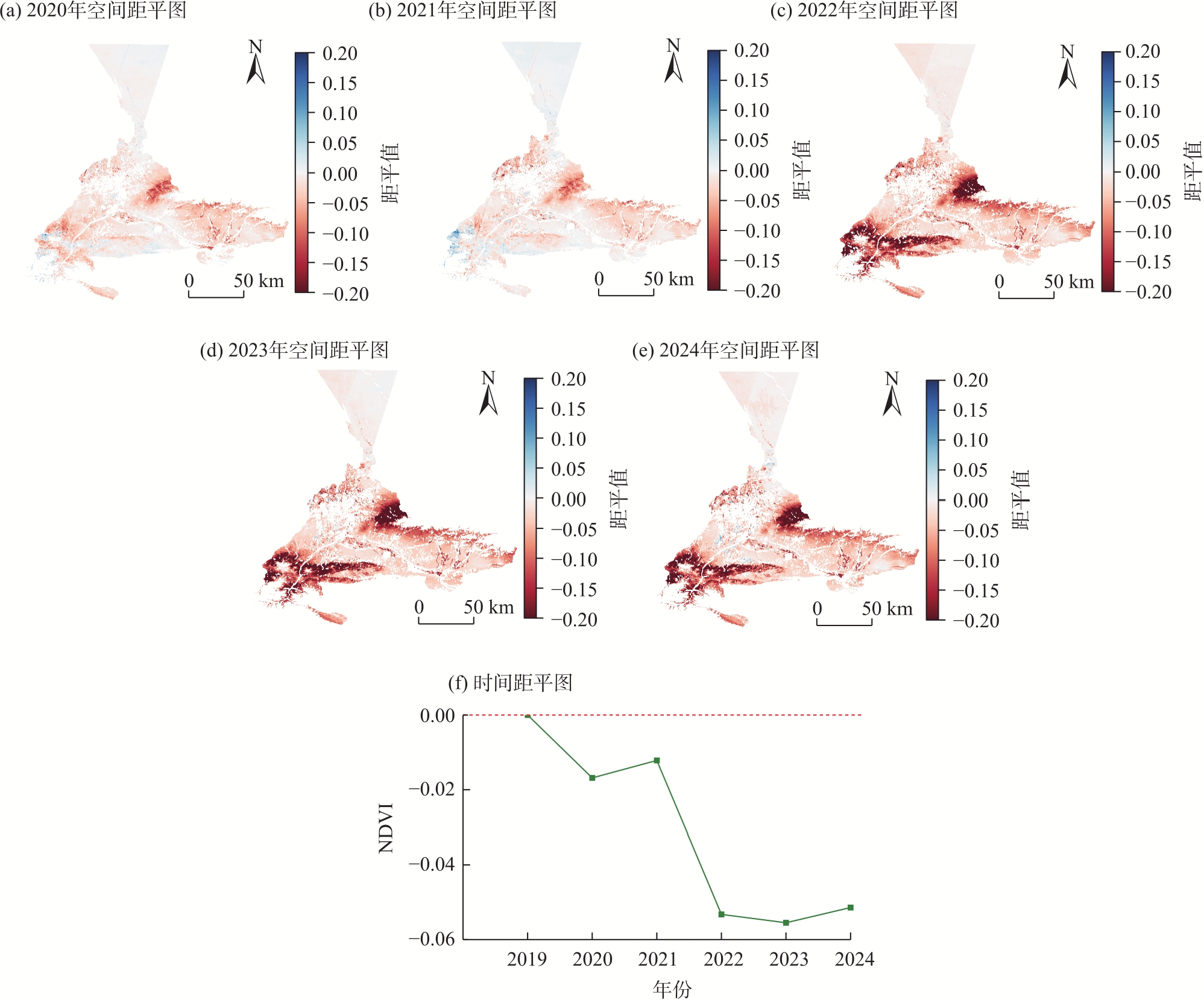
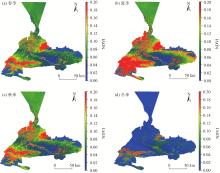
Fig. 11
Spatial distributions of seasonal average NDVI in Urumqi City from 2019 to 2024"
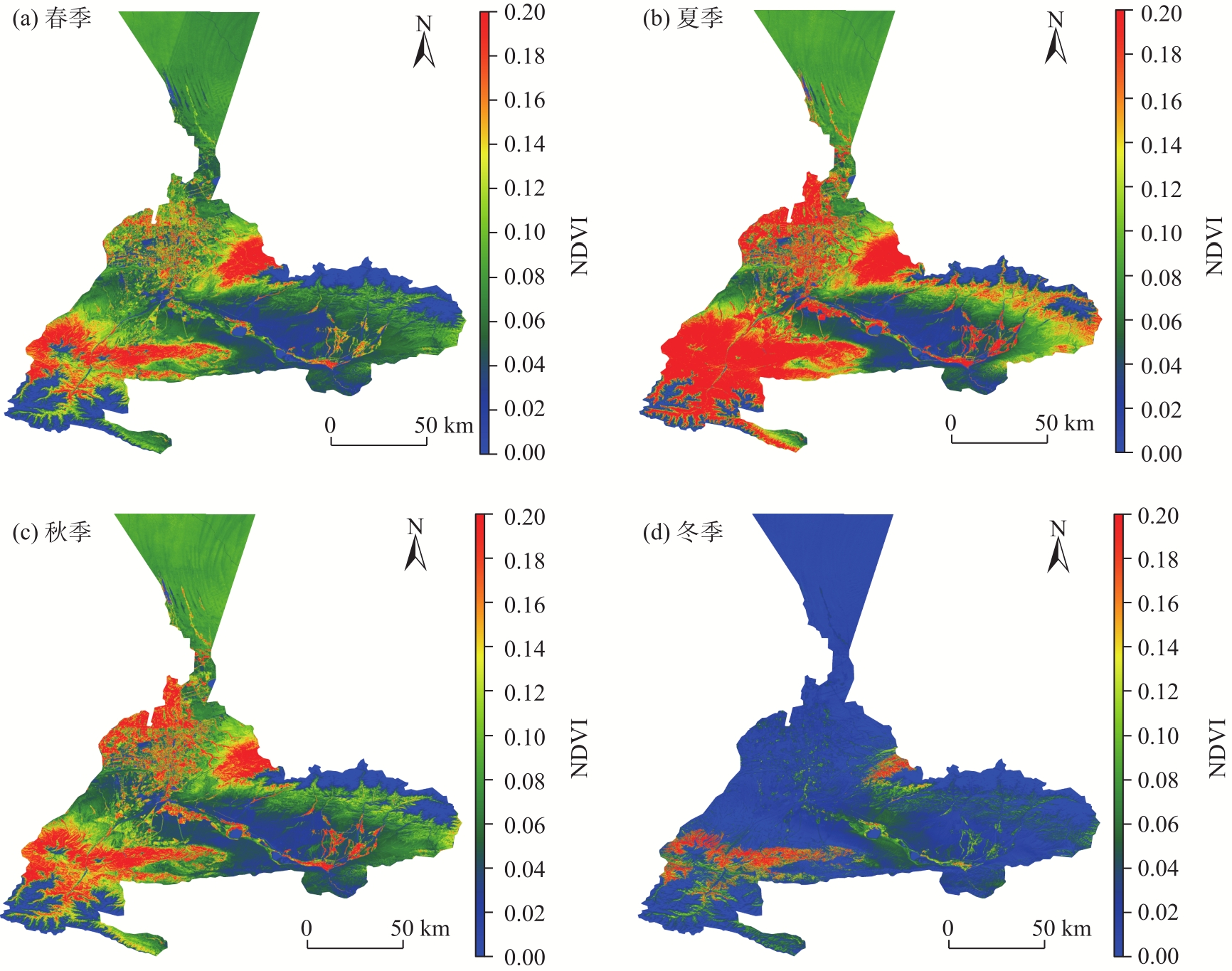
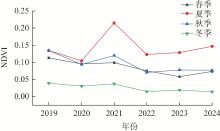
Fig. 12
Interannual variation of seasonal average surface NDVI in Urumqi City from 2019 to 2024"
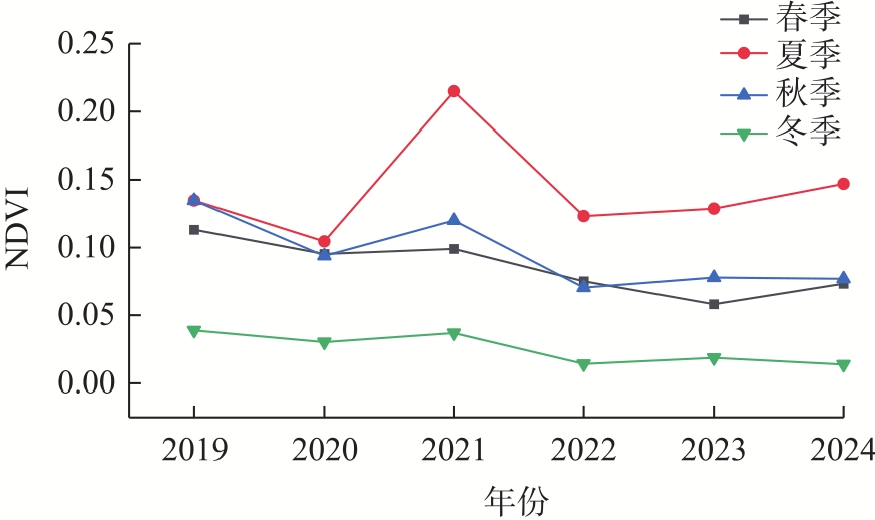
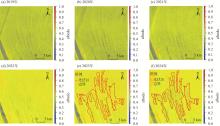
Fig. 13
Spatial distributions of surface albedo in the photovoltaic area from 2019 to 2024"
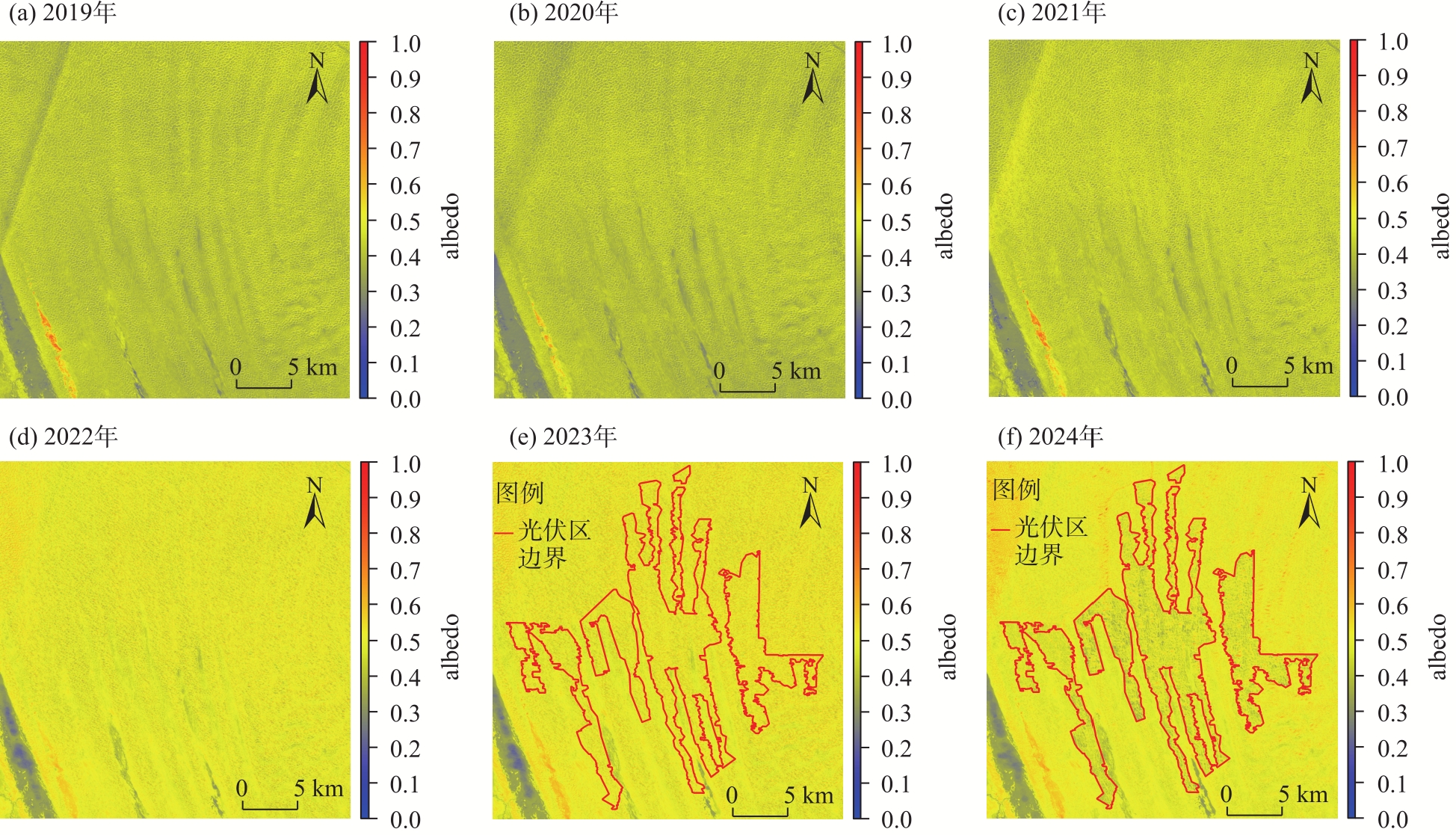
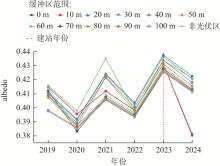
Fig. 14
Interannual variations of surface albedo within different buffer zones from 0 m to 100 m"
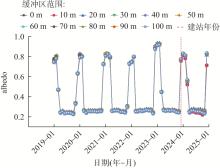
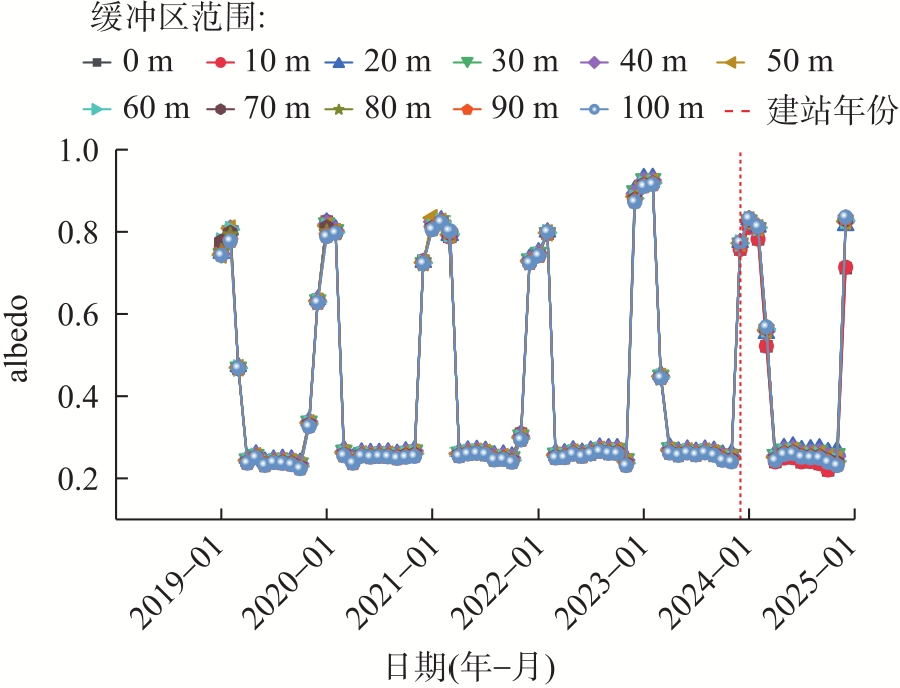
Fig. 15
Monthly variations of surface albedo within different buffer zones from 0 m to 100 m"
| [1] | 邓文彬, 翟春春. 乌鲁木齐市时空扩张变化及驱动力分析[J]. 绿色科技, 2023, 25(7): 241-246, 252. |
| [Deng Wenbin, Zhai Chunchun. Analysis of spatio-temporal expansion changes and driving forces of Urumqi[J]. Journal of Green Science and Technology, 2023, 25(7): 241-246, 252. ] | |
| [2] | 马丽莎, 郑江华, 彭建, 等. 新疆生态脆弱性特征及其驱动力[J]. 生态学报, 2024, 44(20): 9053-9066. |
| [Ma Lisha, Zheng Jianghua, Peng Jian, et al. Research on the characteristics and driving forces of ecological vulnerability in Xinjiang[J]. Acta Ecologica Sinica, 2024, 44(20): 9053-9066. ] | |
| [3] |
王福红, 夏咏. 干旱区主要农作物生产时空格局演化及影响因素分析--以新疆地区为例[J]. 干旱区地理, 2025, 48(3): 444-454.
doi: 10.12118/j.issn.1000-6060.2024.201 |
|
[Wang Fuhong, Xia Yong. Spatio-temporal pattern evolution and influencing factors of main crops production in arid region: A case of Xinjiang[J]. Arid Land Geography, 2025, 48(3): 444-454. ]
doi: 10.12118/j.issn.1000-6060.2024.201 |
|
| [4] | 陈杨杨. 典型地表覆被变化对地表反照率的影响[D]. 阜新: 辽宁工程技术大学, 2023. |
| [Chen Yangyang. Effect of typical ground cover changes on surface albedo[D]. Fuxin: Liaoning Technical University, 2023. ] | |
| [5] |
许赟红, 刘琼, 陈勇航, 等. 新疆及周边中亚地区土地覆盖变化对地表反照率的影响[J]. 干旱区研究, 2024, 41(10): 1649-1661.
doi: 10.13866/j.azr.2024.10.04 |
|
[Xu Yunhong, Liu Qiong, Chen Yonghang, et al. Impact of land cover variations on surface albedo in Xinjiang and its surrounding Central Asian region[J]. Arid Zone Research, 2024, 41(10): 1649-1661. ]
doi: 10.13866/j.azr.2024.10.04 |
|
| [6] | 刘福寿, 赵锐锋, 陈喜东, 等. 城市扩张与植被变化的时空耦合特征及影响因素--以赣州市为例[J]. 长江流域资源与环境, 2025, 34(8): 1754-1766. |
| [Liu Fushou, Zhao Ruifeng, Chen Xidong, et al. Spatiotemporal coupling characteristics and influencing factors of urban expansion and vegetation change: A case study of Ganzhou City[J]. Resources and Environment in the Yangtze Basin, 2025, 34(8): 1754-1766. ] | |
| [7] | 尹霞. 贵州地区的植被变化对地表反照率的影响研究[D]. 贵阳: 贵州师范大学, 2024. |
| [Yin Xia. A study on the impact of vegetation changes on albedo in Guizhou region[D]. Guiyang: Guizhou Normal University, 2024. ] | |
| [8] | 石磊, 苟志文, 张东东. 2001-2020年青藏高原植被界限变化分析[J]. 草业科学, 2025, 42(6): 1437-1448. |
| [Shi Lei, Gou Zhiwen, Zhang Dongdong. Vegetation boundary changes on the Tibetan Plateau from 2001 to 2020[J]. Pratacultural Science, 2025, 42(6): 1437-1448. ] | |
| [9] | 侯春华, 李富平, 何宝杰, 等. 地表反照率和植被覆盖度对矿区热环境的影响[J]. 哈尔滨工业大学学报, 2022, 54(12): 117-126. |
| [Hou Chunhua, Li Fuping, He Baojie, et al. Influence of surface albedo and vegetation fractional coverage on thermal environment of mining area[J]. Journal of Harbin Institute of Technology, 2022, 54(12): 117-126. ] | |
| [10] | 吕雪, 王旭升, 吕学文. 基于Landsat遥感数据新疆某煤炭矿区沙漠化监测分析[J]. 绿色科技, 2024, 26(10): 45-52. |
| [Lü Xue, Wang Xusheng, Lü Xuewen. Monitoring and analysis of desertification in a coal mining area in Xinjiang based on Landsat remote sensing data[J]. Journal of Green Science and Technology, 2024, 26(10): 45-52. ] | |
| [11] | 陈淋淋, 刘绥华, 邓玲玲, 等. 基于MODIS数据探讨自然因子和人为因子对贵州省地表反照率演变的贡献[J]. 北京大学学报(自然科学版), 2025, 61(4): 719-732. |
| [Chen Linlin, Liu Suihua, Deng Lingling, et al. Assessing the contribution of natural factors and human factors to land surface albedo changes in Guizhou Province using MODIS data[J]. Acta Scientiarum Naturalium Universitatis Pekinensis, 2025, 61(4): 719-732. ] | |
| [12] | 彭燕, 何国金, 张兆明, 等. 青藏高原30 m空间分辨率年度NDVI和FVC合成产品[J]. 中国科学数据(中英文网络版), 2025, 10(2): 148-163. |
| [Peng Yan, He Guojin, Zhang Zhaoming, et al. Annual NDVI and FVC product with 30 m spatial resolution over Qinghai-Tibetan Plateau[J]. China Scientific Data, 2025, 10(2): 148-163. ] | |
| [13] | 刘雅婧, 王丹阳, 常旭, 等. 光伏电站建设对西北荒漠区生态环境的影响研究进展[J]. 中国水土保持科学(中英文), 2025, 23(2): 9-17. |
| [Liu Yajing, Wang Danyang, Chang Xu, et al. Research progress in the impact of photovoltaic power station construction on the ecological environment of the desert region of northwest China[J]. Science of Soil and Water Conservation, 2025, 23(2): 9-17. ] | |
| [14] |
王怡雯, 马瑶瑶, 史培军, 等. 干旱区光伏电站运营对局地生态环境的影响[J]. 干旱区研究, 2024, 41(8): 1423-1433.
doi: 10.13866/j.azr.2024.08.16 |
|
[Wang Yiwen, Ma Yaoyao, Shi Peijun, et al. The impact of photovoltaic power plant operation on local ecological environments in arid areas[J]. Arid Zone Research, 2024, 41(8): 1423-1433. ]
doi: 10.13866/j.azr.2024.08.16 |
|
| [15] | 崔杨, 陈正洪. 光伏电站对局地气候的影响研究进展[J]. 气候变化研究进展, 2018, 14(6): 593-601. |
| [Cui Yang, Chen Zhenghong. Research progresses of the impacts of photovoltaic power plants on local climate[J]. Climate Change Research, 2018, 14(6): 593-601. ] | |
| [16] | 尚小伟, 王云正, 霍毅, 等. 荒漠集中式光伏电站的气候生态影响机制与植被恢复模式[J]. 中国水土保持科学(中英文), 2025, 23(1): 10-20. |
| [Shang Xiaowei, Wang Yunzheng, Huo Yi, et al. Climate ecological impact mechanism and vegetation restoration modes of desert centralized photovoltaic power stations[J]. Science of Soil and Water Conservation, 2025, 23(1): 10-20. ] | |
| [17] | Xia Z L, Li Y J, Zhang W, et al. Solar photovoltaic program helps turn deserts green in China: Evidence from satellite monitoring[J]. Journal of Environmental Management, 2022, 324: 116338, doi: 10.1016/j.jenvman.2022.116338. |
| [18] | Xu Z J, Li Y, Qin Y Z, et al. A global assessment of the effects of solar farms on albedo, vegetation, and land surface temperature using remote sensing[J]. Solar Energy, 2024, 268: 112198, doi: 10.1016/j.solener.2023.112198. |
| [19] | 龚春丽. 阿克苏地区土地利用变化的自然资本及生态系统服务价值核算[D]. 阿拉尔: 塔里木大学, 2021. |
| [Gong Chunli. Calculation of natural and ecosystem service value of land use change in Aksu area[D]. Alaer: Tarim University, 2021. ] | |
| [20] | 阴瑜鑫. 西北五省省会城市热岛效应特征及预测研究[D]. 兰州: 西北师范大学, 2023. |
| [Yin Yuxin. Study on the characteristics and prediction of urban heat island effect in the capital cities of five northwestern provinces[D]. Lanzhou: Northwest Normal University, 2023. ] | |
| [21] |
Feng Q L, Niu B W, Ren Y, et al. A 10-m national-scale map of ground-mounted photovoltaic power stations in China of 2020[J]. Scientific Data, 2024, 11(1): 198, doi: 10.1038/s41597-024-02-994-x.
pmid: 38351164 |
| [22] | Brown C F, Brumby S P, Guzder-Williams B, et al. Dynamic world, near real-time global 10 m land use land cover mapping[J]. Scientific Data, 2022, 9(1): 251, doi: 10.1038/s41597-022-01307-4. |
| [23] | 赵聪聪, 闻建光, 游冬琴, 等. 高分辨率地表反照率遥感估算研究进展[J]. 遥感学报, 2023, 27(3): 724-737. |
|
[Zhao Congcong, Wen Jianguang, You Dongqin, et al. Remote sensing retrieval of high-spatial-resolution land surface albedo[J]. National Remote Sensing Bulletin, 2023, 27(3): 724-737. ]
doi: 10.11834/jrs.20231732 |
|
| [24] |
Lin X W, Wu S B, Chen B, et al. Estimating 10 m land surface albedo from Sentinel-2 satellite observations using a direct estimation approach with Google Earth Engine[J]. ISPRS Journal of Photogrammetry and Remote Sensing, 2022, 194: 1-20.
doi: 10.1016/j.isprsjprs.2022.09.016 |
| [25] | 韦鑫海, 张贇贇, 孙少波, 等. 青藏高原生长季植被对气候变化的响应特征[J]. 地球与环境, 2025, 53(5): 631-642. |
|
[Wei Xinhai, Zhang Yunyun, Sun Shaobo, et al. The response characteristics of vegetation to climate change of the growing season on the Tibetan Plateau[J]. Earth and Environment, 2025, 53(5): 631-642. ]
doi: 10.3724/EE.1672-9250.2025.53.033 |
|
| [26] | 吴汤婷, 罗馨语, 超能芳, 等. 基于GNSS垂直位移量化分析新疆干旱特征[J]. 地球物理学报, 2025, 68(8): 3050-3068. |
| [Wu Tangting, Luo Xinyu, Chao Nengfang, et al. Quantitative analysis of drought characteristics in Xinjiang based on GNSS vertical displacements[J]. Chinese Journal of Geophysics, 2025, 68(8): 3050-3068. ] | |
| [27] |
吴秀兰, 程贺前, 佟欣怡, 等. 新疆天山山区植被变化对气象干旱的响应[J]. 干旱区地理, 2025, 48(6): 985-994.
doi: 10.12118/j.issn.1000-6060.2024.536 |
|
[Wu Xiulan, Cheng Heqian, Tong Xinyi, et al. Response of vegetation changes to meteorological drought in Tianshan Mountains, Xinjiang[J]. Arid Land Geography, 2025, 48(6): 985-994. ]
doi: 10.12118/j.issn.1000-6060.2024.536 |
|
| [28] |
陈珍, 蔡朝朝, 马楠, 等. 2001-2023年新疆NDVI时空格局与驱动力分析[J]. 干旱区研究, 2025, 42(5): 922-932.
doi: 10.13866/j.azr.2025.05.14 |
|
[Chen Zhen, Cai Zhaozhao, Ma Nan, et al. Spatial-temporal pattern and driving force analysis of NDVI in Xinjiang from 2001 to 2023[J]. Arid Zone Research, 2025, 42(5): 922-932. ]
doi: 10.13866/j.azr.2025.05.14 |
|
| [29] | 刘雅洁, 郭金停, 王铁娟. 西鄂尔多斯地区植被NDVI时空变化及其对气温和降水的响应[J]. 内蒙古师范大学学报(自然科学版), 2023, 52(6): 559-567. |
| [Liu Yajie, Guo Jinting, Wang Tiejuan. Spatiotemporal variation of the NDVI and its responses to temperature and precipitation in west ordos[J]. Journal of Inner Mongolia Normal University (Natural Science Edition), 2023, 52(6): 559-567. ] | |
| [30] | 马森, 张代青, 张惠, 等. 塔里木河流域NDVI时空变化特征及其影响因素分析[J]. 高原山地气象研究, 2023, 43(4): 76-83. |
| [Ma Sen, Zhang Daiqing, Zhang Hui, et al. Spatiotemporal variation characteristics and influencing factors analysis of NDVI in Tarim River Basin[J]. Plateau and Mountain Meteorology Research, 2023, 43(4): 76-83. ] | |
| [31] |
Li Z C, Zhao Y Y, Luo Y, et al. A comparative study on the surface radiation characteristics of photovoltaic power plant in the Gobi desert[J]. Renewable Energy, 2022, 182: 764-771.
doi: 10.1016/j.renene.2021.10.054 |
| [32] | 杨丽薇, 高晓清, 吕芳, 等. 光伏电站对格尔木荒漠地区太阳辐射场的影响研究[J]. 太阳能学报, 2015, 36(9): 2160-2166. |
| [Yang Liwei, Gao Xiaoqing, Lü Fang, et al. Study on the impact of large solar farm on radiation field in desert areas of Golmud[J]. Acta Energiae Solaris Sinica, 2015, 36(9): 2160-2166. ] |
|
||