Arid Land Geography ›› 2025, Vol. 48 ›› Issue (8): 1396-1405.doi: 10.12118/j.issn.1000-6060.2024.750
• Ecology and Disasters • Previous Articles Next Articles
SUN Yubo1( ), ZHAO Shanchao2, WANG Yapei2, MA Xiaoli1, CHEN Yuwen1, HUANG Xuansheng1, WANG Weixia1()
Received:2024-12-10
Revised:2025-01-26
Online:2025-08-25
Published:2025-08-21
Contact:
WANG Weixia
E-mail:15833873376@163.com;wangweixia0993@163.com
SUN Yubo, ZHAO Shanchao, WANG Yapei, MA Xiaoli, CHEN Yuwen, HUANG Xuansheng, WANG Weixia. Quantification and spatial differentiation of ecosystem service value of Picea schrenkiana forest in the central Tianshan Mountains[J].Arid Land Geography, 2025, 48(8): 1396-1405.
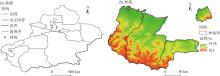
Fig. 1
Location distribution of five forest farms in the central Tianshan Mountains"


Tab. 1
Evaluation indicators for ecosystem service functions of Picea schrenkiana forests in the central Tianshan Mountains"
| 功能类型 | 森林生态功能 | 实物量指标 | 价值量指标 |
|---|---|---|---|
| 调节功能 | 涵养水源 | 调节水量 | 调节水量价值 |
| 净化水质 | 净化水质价值 | ||
| 保育土壤 | 固土量 | 固土价值 | |
| 保肥量 | 保肥价值 | ||
| 固碳释氧 | 固碳量 | 固碳价值 | |
| 释氧量 | 释氧价值 | ||
| 积累营养物质 | 林木积累物质量 | 林木积累物质价值 | |
| 净化大气环境 | 提供负离子量 | 提供负离子价值 | |
| 支持功能 | 生物多样性保护 | 物种多样性 | 生物多样性保护价值 |
Tab. 2
Social public data used for evaluation"
| 参数名称 | 参数值 | 参数来源 |
|---|---|---|
| 水库建设单位库容造价 | 8.84元·m-3 | 《中国水利年鉴》 |
| 挖取和运输单位面积土方所需费用 | 62.00元·m-3 | 《中华人民共和国水利部水利建筑工程预算定额》 |
| 磷酸二铵化肥价格 | 3200.00元·t-1 | 《中国农业信息网》 |
| 氯化钾化肥价格 | 2800.00元·t-1 | 《中国农业信息网》 |
| 有机质价格 | 320.00元·t-1 | 《中国农业信息网》 |
| 磷酸二铵含氮量 | 18.00% | 化肥产品说明 |
| 磷酸二铵含磷量 | 46.01% | 化肥产品说明 |
| 氯化钾含钾量 | 60.00% | 化肥产品说明 |
| 水的净化费用 | 3.20元·t-1 | 新疆政府网污水处理服务费中居民平均用水费用 |
| 氧气价格 | 1000.00元·t-1 | 《中华人民共和国国家卫生健康委员会》 |
| 固碳价格 | 1093.00元·t-1 | 采用瑞典的碳汇率每吨150 USD |
Tab. 3
Physical quantification of ecosystem service functions of Picea schrenkiana forests in the central Tianshan Mountains"
| 服务功能 | 评价指标 | 物质量 | 单位面积物质量 |
|---|---|---|---|
| 涵养水源 | 调节水量 | 2.83×10⁸ m3·a-1 | 2040.00 m3·hm-2·a-1 |
| 净化水质 | 2.83×10⁸ m3·a-1 | 2040.00 m3·hm-2·a-1 | |
| 保育土壤 | 固土 | 6.07×10⁶ t·a-1 | 43.79 t·hm-2·a-1 |
| 减少氮损失 | 2.79×10⁴ t·a-1 | 0.21 t·hm-2·a-1 | |
| 减少磷损失 | 1.76×10⁴ t·a-1 | 0.13 t·hm-2·a-1 | |
| 减少钾损失 | 1.24×10⁵ t·a-1 | 0.89 t·hm-2·a-1 | |
| 减少有机质损失 | 3.07×10⁵ t·a-1 | 2.21 t·hm-2·a-1 | |
| 固碳释氧 | 固碳 | 1.21×10⁶ t·a-1 | 8.74 t·hm-2·a-1 |
| 释氧 | 1.86×10⁶ t·a-1 | 13.42 t·hm-2·a-1 | |
| 积累营养物质 | 氮固持 | 5.94×10³ t·a-1 | 0.04 t·hm-2·a-1 |
| 磷固持 | 8.29×10² t·a-1 | 0.01 t·hm-2·a-1 | |
| 钾固持 | 4.57×10³ t·a-1 | 0.03 t·hm-2·a-1 | |
| 净化大气环境 | 提供负离子数 | 2.79×1024个·a-1 | 2.01×10¹⁹个·hm-2·a-1 |
Tab. 4
Valuation of ecosystem service functions of Picea schrenkiana forests in the central Tianshan Mountains"
| 服务功能 | 价值量/108元·a-1 |
|---|---|
| 涵养水源 | 34.06 |
| 保育土壤 | 14.34 |
| 固碳释氧 | 31.87 |
| 积累营养物质 | 1.75 |
| 净化大气环境 | 0.20 |
| 生物多样性保护 | 13.87 |
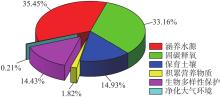
Fig. 2
Proportion of the value of forest ecosystem services in Picea schrenkiana forests in the central Tianshan Mountains"
Tab. 5
Ecosystem service values of Picea schrenkiana forests of different age in the central Tianshan Mountains /107元·a-1"
| 林龄 | 面积/hm2 | U1 | U2 | U3 | U4 | U5 | U6 | U总 | U单/元·hm-2·a-1 |
|---|---|---|---|---|---|---|---|---|---|
| 幼龄林 | 4311.13 | 10.59 | 4.95 | 9.91 | 0.54 | 0.04 | 4.31 | 30.34 | 70021.05 |
| 中林龄 | 55454.47 | 136.21 | 59.99 | 127.44 | 7.01 | 0.74 | 55.45 | 386.84 | 69757.95 |
| 近熟林 | 50313.17 | 123.58 | 51.22 | 115.62 | 6.36 | 0.78 | 50.31 | 347.87 | 70090.85 |
| 成熟林 | 26039.74 | 63.96 | 24.44 | 59.84 | 3.29 | 0.41 | 26.04 | 177.98 | 70094.30 |
| 过熟林 | 2555.10 | 6.28 | 2.84 | 5.87 | 0.32 | 0.04 | 2.56 | 17.91 | 70102.73 |
Tab. 6
Ecosystem service values of Picea schrenkiana forests at different forest farms in the central Tianshan Mountains /107元·a-1"
| 林场 | 面积/hm2 | U1 | U2 | U3 | U4 | U5 | U6 | U总 | U单/元·hm-2·a-1 |
|---|---|---|---|---|---|---|---|---|---|
| 新疆农业大学实习林场 | 5670.52 | 13.93 | 8.28 | 13.03 | 0.72 | 0.08 | 5.67 | 41.71 | 73550.86 |
| 南山林场 | 57948.87 | 142.33 | 34.34 | 133.17 | 7.32 | 0.86 | 57.95 | 375.97 | 64878.71 |
| 板房沟林场 | 27885.95 | 68.49 | 40.72 | 64.08 | 3.52 | 0.39 | 27.89 | 205.09 | 73546.28 |
| 米泉林场 | 10104.79 | 24.82 | 5.99 | 23.22 | 1.28 | 0.15 | 10.10 | 65.56 | 64876.95 |
| 呼图壁林场 | 37063.48 | 91.03 | 54.12 | 85.17 | 4.68 | 0.53 | 37.06 | 272.61 | 73551.76 |
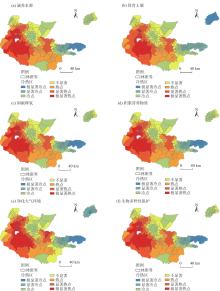
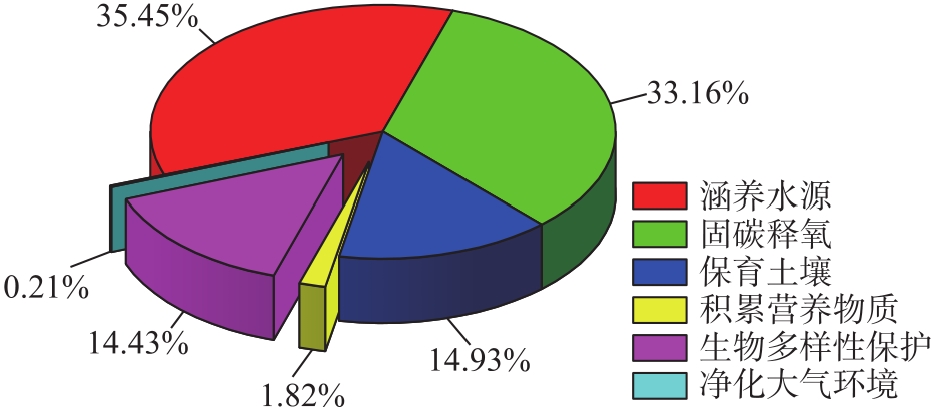
Fig. 3
Distributions of ecosystem service hot and cold spots for Picea schrenkiana forests in the central Tianshan Mountains"

Tab. 7
Area and proportion of cold and hot spots in ecological services for Picea schrenkiana forests in the central Tianshan Mountains"
| 服务类型 | 热点区 | 冷点区 | |||
|---|---|---|---|---|---|
| 面积/km2 | 占比/% | 面积/km2 | 占比/% | ||
| 涵养水源 | 46678 | 33.66 | 28303 | 20.41 | |
| 保育土壤 | 49201 | 35.48 | 27249 | 19.65 | |
| 固碳释氧 | 46663 | 33.65 | 28317 | 20.42 | |
| 积累营养物质 | 46678 | 33.66 | 28303 | 20.41 | |
| 净化大气环境 | 45734 | 32.98 | 32019 | 23.09 | |
| 生物多样性保护 | 46678 | 33.66 | 28303 | 20.41 | |
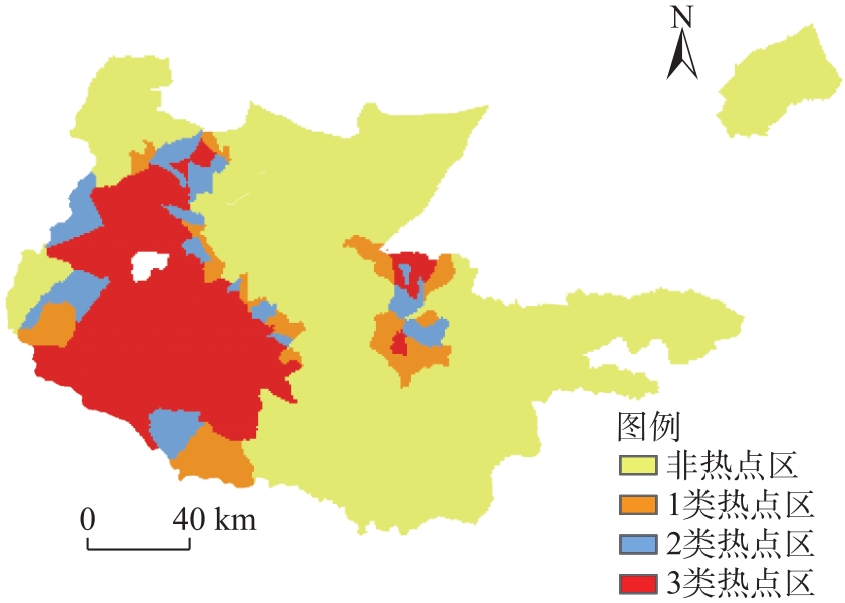
Fig. 4
Distribution of multiple ecosystem service hotspots for Picea schrenkiana forests in the central Tianshan Mountains"
Tab. 8
Area and proportion of multiple ecosystem service hotspots for Picea schrenkiana forests in the central Tianshan Mountains"
| 热点区类型 | 面积/km2 | 占比/% |
|---|---|---|
| 非热点区 | 91246 | 65.80 |
| 1类热点区 | 9138 | 6.59 |
| 2类热点区 | 8237 | 5.94 |
| [1] | 严正阳, 李志超, 王顺兴, 等. 豫西地区洛阳市森林生态系统服务功能物质量和价值量评估[J/OL]. 西北林学院学报. [2024-09-05]. http://kns.cnki.net/kcms/detail/61.1202.S.20240628.1117.004.html. |
| [Yan Zhengyang, Li Zhichao, Wang Shunxing, et al. Evaluation of forest ecosysytem services material quantity and value of Luoyang, western Henan Province, China[J/OL]. Journal of Northwest Forestry University. [2024-09-05]. http://kns.cnki.net/kcms/detail/61.1202.S.202406 28.1117.004.html. ] | |
| [2] | 张心语, 郭诗韵, 王亚萍, 等. 雄安新区森林生态系统服务功能价值评估及其空间分析研究[J]. 河南农业大学学报, 2022, 56(4): 661-673, 684. |
| [Zhang Xinyu, Guo Shiyun, Wang Yaping, et al. Research on the value of forest ecosystem service function and its spatial analysis in Xiong’an New Area[J]. Journal of Henan Agricultural University, 2022, 56(4): 661-673, 684. ] | |
| [3] | 张宁, 张志涛, 王月华, 等. 吉林省林地林木资源核算研究[J]. 北京林业大学学报, 2024, 46(6): 57-69. |
| [Zhang Ning, Zhang Zhitao, Wang Yuehua, et al. Accounting of forest land and forest resources in Jilin Province of northeastern China[J]. Journal of Beijing Forestry University, 2024, 46(6): 57-69. ] | |
| [4] | 徐云. 广东惠州森林生态系统服务功能与价值评估[J]. 林业资源管理, 2023, 52(3): 140-145. |
| [Xu Yun. Evaluation of forest ecosystem service function and value in Huizhou City of Guangdong Province[J]. Forest Resources Management, 2023, 52(3): 140-145. ] | |
| [5] | 陈月, 高帆, 彭祚登. 天保工程对京津冀地区天然林资源及生态系统服务功能影响的研究[J]. 西北林学院学报, 2024, 41(3): 1-9. |
| [Chen Yue, Gao Fan, Peng Zuodeng. The impact of natural forest protection project on natural forest resources and ecosystem services in Beijing-Tianjin-Hebei region[J]. Journal of Northwest Forestry University, 2024, 41(3): 1-9. ] | |
| [6] | Velasco-Muñoz J F, Aznar-Sánchez J A, Schoenemann M. An analysis of the worldwide research on the socio-cultural valuation of forest ecosystem services[J]. Sustainability, 2022, 14(4): 2089, doi: 10.3390/su14042089. |
| [7] | Başkent E Z. Assessment and valuation of key ecosystem services provided by two forest ecosystems in Turkey[J]. Journal of Environmental Management, 2021, 285: 112-135. |
| [8] | Taye F A, Folkersen M V, Fleming C M. The economic values of global forest ecosystem services: A meta-analysis[J]. Ecological Economics, 2021, 189: 107-145. |
| [9] | Naime J, Mora F, Sánchez-Martínez M. Economic valuation of ecosystem services from secondary tropical forests: Trade-offs and implications for policy making[J]. Forest Ecology and Management, 2020, 473: 118-126. |
| [10] | Hynes S, Chen W, Vondolia K. Valuing the ecosystem service benefits from kelp forest restoration: A choice experiment from Norway[J]. Ecological Economics, 2021, 179: 106-133. |
| [11] | 王兵, 牛香, 宋庆丰. 中国森林生态系统服务评估及其价值化实现路径设计[J]. 环境保护, 2020, 48(14): 28-36. |
| [Wang Bing, Niu Xiang, Song Qingfeng. Forest ecosystem service assessment and path design of value-oriented realization in China[J]. Environmental Protection, 2020, 48(14): 28-36. ] | |
| [12] | 丛日征, 王兵, 谷建才, 等. 宁夏贺兰山国家级自然保护区森林生态系统服务价值评估[J]. 干旱区资源与环境, 2017, 31(11): 136-140. |
| [Cong Rizheng, Wang Bing, Gu Jiancai, et al. Evaluation of forest ecosystem services values of Helan Mountain National Nature Reserve, Ningxia[J]. Journal of Arid Land Resources and Environment, 2017, 31(11): 136-140. ] | |
| [13] | 丛日征, 王兵, 牛香, 等. 陕西省森林生态系统净化大气环境功能价值评估[J]. 西北林学院学报, 2017, 32(5): 75-82. |
| [Cong Rizheng, Wang Bing, Niu Xiang, et al. Assessment on the atmosphere purification function of forest ecosystem in Shaanxi Province[J]. Journal of Northwest Forestry University, 2017, 32(5): 75-82. ] | |
| [14] | 王兵, 鲁绍伟, 尤文忠, 等. 辽宁省森林生态系统服务价值评估[J]. 应用生态学报, 2010, 21(7): 1792-1798. |
|
[Wang Bing, Lu Shaowei, You Wenzhong, et al. Evaluation of forest ecosystem service value in Liaoning Province[J]. Chinese Journal of Applied Ecology, 2010, 21(7): 1792-1798. ]
pmid: 20879539 |
|
| [15] | 王兵. 森林生态连清技术体系构建与应用[J]. 北京林业大学学报, 2015, 37(1): 1-8. |
| [Wang Bing. Construction and utilization of continuous inventory system for forest ecology[J]. Journal of Beijing Forestry University, 2015, 37(1): 1-8. ] | |
| [16] | 兰洁, 张毓涛, 师庆东, 等. 新疆天然林生态系统服务功能价值评估[J]. 西北林学院学报, 2018, 33(4): 289-296. |
| [Lan Jie, Zhang Yutao, Shi Qingdong, et al. Assessment of service functions value of the natural forest protection program in Xinjiang[J]. Journal of Northwest Forestry University, 2018, 33(4): 289-296. ] | |
| [17] | 肖中琪, 张毓涛, 李吉玫. 新疆森林生态系统服务功能价值评估[J]. 新疆大学学报: 自然科学版, 2019, 36(4): 483-490. |
| [Xiao Zhongqi, Zhang Yutao, Li Jimei. Assessment of service function value of forest ecosystem in Xinjiang Province, China[J]. Journal of Xinjiang University: Natural Science Edition, 2019, 36(4): 483-490. ] | |
| [18] | 朱雅丽, 张绘芳, 高亚琪, 等. 新疆西伯利亚落叶松含碳系数分析[J]. 南京林业大学学报, 2017, 41(3): 198-202. |
| [Zhu Yali, Zhang Huifang, Gao Yaqi, et al. Analysis on carbon content factors of Larix sibirica Ledeb. in Xinjiang[J]. Journal of Nanjing Forestry University, 2017, 41(3): 198-202. ] | |
| [19] | 黄继红, 路兴慧, 郭仲军. 新疆布尔津林场天然林生态系统服务功能评估[J]. 干旱区研究, 2014, 31(5): 866-873. |
| [Huang Jihong, Lu Xinghui, Guo Zhongjun. Service functions of the natural forest ecosystem in Burqin Forest Farm, Xinjiang[J]. Arid Zone Research, 2014, 31(5): 866-873. ] | |
| [20] | 孙庆祥, 周华荣. 阿尔泰山森林生态系统服务功能及其价值评估[J]. 干旱区地理, 2020, 43(5): 1327-1336. |
|
[Sun Qingxiang, Zhou Huarong. Service function and value evaluation of the Altai Mountains forest ecosystem[J]. Arid Land Geography, 2020, 43(5): 1327-1336. ]
doi: 10.12118/j.issn.1000-6060.2020.05.18 |
|
| [21] |
冯继广, 丁陆彬, 王景升, 等. 基于案例的中国森林生态系统服务功能评价[J]. 应用生态学报, 2016, 27(5): 1375-1382.
doi: 10.13287/j.1001-9332.201605.015 |
|
[Feng Jiguang, Ding Lubin, Wang Jingsheng, et al. Case-based evaluation of forest ecosystem service function in China[J]. Chinese Journal of Applied Ecology, 2016, 27(5): 1375-1382. ]
doi: 10.13287/j.1001-9332.201605.015 |
|
| [22] | 闫豫疆, 李建贵, 唐努尔·叶尔肯, 等. 新疆天然林生态系统服务功能价值评估[J]. 陕西林业科技, 2023, 51(4): 69-74. |
| [Yan Yujiang, Li Jiangui, Yeerkeng Tangnuer, et al. Assessment of the value of natural forest ecosystem service functions in Xinjiang[J]. Shaanxi Forestry Science and Technology, 2023, 51(4): 69-74. ] | |
| [23] | Raihan A, Begum R A, Said M N M. A meta-analysis of the economic value of forest carbon stock[J]. Geografia, 2021, 17(4): 321-338. |
| [24] | Raihan A, Begum R A, Mohd Said M N. Assessment of carbon stock in forest biomass and emission reduction potential in Malaysia[J]. Forests, 2021, 12(10): 1294, doi: 10.3390/f12101294. |
| [25] | 席丽, 李思瑶, 夏晓莹, 等. 海拔、林龄和郁闭度对天山云杉林土壤肥力的影响[J]. 生态学杂志, 2023, 42(10): 2477-2485. |
| [Xi Li, Li Siyao, Xia Xiaoying, et al. Effects of altitude, stand age, and canopy density on soil fertility in Picea schrenkiana forest[J]. Chinese Journal of Ecology, 2023, 42(10): 2477-2485. ] | |
| [26] | 李明辉, 何风华, 潘存德. 天山云杉天然林不同林层的空间格局和空间关联性[J]. 生态学报, 2011, 31(3): 620-628. |
| [Li Minghui, He Fenghua, Pan Cunde. Spatial distribution pattern of different strata and spatial assocations of different strata in the Schrenk spruce forest, northwest China[J]. Acta Ecologica Sinica, 2011, 31(3): 620-628. ] | |
| [27] | 李吉玫, 张毓涛, 白志强, 等. 新疆山地森林生态系统服务功能价值评估[J]. 西南林业大学学报, 2016, 36(4): 97-102. |
| [Li Jimei, Zhang Yutao, Bai Zhiqiang, et al. Assessment of service functions value of mountain forest ecosystem in Xinjiang Province, China[J]. Journal of Southwest Forestry University, 2016, 36(4): 97-102. ] | |
| [28] | 高凤霞, 韩惠. 西部半干旱区兰州市南北两山森林生态效益评估[J]. 生态科学, 2021, 40(6): 106-115. |
| [Gao Fengxia, Han Hui. Assessment of urban forest ecological benefits in the western semi-arid region of southern and northern mountains of Lanzhou City[J]. Ecological Science, 2021, 40(6): 106-115. ] | |
| [29] | 李国伟, 赵伟, 魏亚伟, 等. 天然林资源保护工程对长白山林区森林生态系统服务功能的影响[J]. 生态学报, 2015, 35(4): 984-992. |
| [Li Guowei, Zhao Wei, Wei Yawei, et al. Evaluation on the influence of natural forest protection program on forest ecosystem service function in Changbai Mountain[J]. Acta Ecologica Sinica, 2015, 35(4): 984-992. ] | |
| [30] | 杨海江, 勾晓华, 唐呈瑞, 等. 2010—2021年中国森林生态系统服务功能价值评估研究进展[J]. 生态学杂志, 2024, 43(1): 244-253. |
|
[Yang Haijiang, Gou Xiaohua, Tang Chengrui, et al. Research progress on the valuation of forest ecosystem services in China during 2010 to 2021[J]. Chinese Journal of Ecology, 2024, 43(1): 244-253. ]
doi: 10.13292/j.1000-4890.202401.026 |
|
| [31] | 李少宁, 王兵, 郭浩, 等. 大岗山森林生态系统服务功能及其价值评估[J]. 中国水土保持科学, 2007, 5(6): 58-64. |
| [Li Shaoning, Wang Bing, Guo Hao, et al. Assessment of forest ecosystem services value in Dagangshan[J]. Science of Soil and Water Conservation, 2007, 5(6): 58-64. ] | |
| [32] | 黄龙生, 王兵, 牛香, 等. 东北和内蒙古重点国有林区天然林保护工程生态效益分析[J]. 中国水土保持科学, 2017, 15(1): 89-96. |
| [Huang Longsheng, Wang Bing, Niu Xiang, et al. Evaluation of ecological effects of the natural forest protection program in key state-owned forest districts in northeast China and Inner Mongolia[J]. Science of Soil and Water Conservation, 2017, 15(1): 89-96. ] | |
| [33] | 罗佳, 田育新, 朱昕, 等. 湖南省公益林生态系统服务功能评估[J]. 湖南林业科技, 2020, 47(4): 26-35. |
| [Luo Jia, Tian Yuxin, Zhu Xin, et al. Evaluation of the service function of the public welfare forest ecosystem in Hunan Province[J]. Hunan Forestry Science and Technology, 2020, 47(4): 26-35. ] | |
| [34] | 肖强, 肖洋, 欧阳志云, 等. 重庆市森林生态系统服务功能价值评估[J]. 生态学报, 2014, 34(1): 216-223. |
| [Xiao Qiang, Xiao Yang, Ouyang Zhiyun, et al. Value assessment of the function of the forest ecosystem services in Chongqing[J]. Acta Ecologica Sinica, 2014, 34(1): 216-223. ] | |
| [35] | 付立华, 于士涛, 程顺, 等. 河北省塞罕坝机械林场森林生态系统服务价值评价[J]. 林业与生态科学, 2019, 34(4): 386-392. |
| [Fu Lihua, Yu Shitao, Cheng Shun, et al. Evaluation of forest ecosystem service values in Saihanba Forest Farm in Hebei Province[J]. Forestry and Ecological Science, 2019, 34(4): 386-392. ] | |
| [36] |
漆信贤, 黄贤金, 赖力. 基于Meta分析的中国森林生态系统生态服务功能价值转移研究[J]. 地理科学, 2018, 38(4): 522-530.
doi: 10.13249/j.cnki.sgs.2018.04.005 |
|
[Qi Xinxian, Huang Xianjin, Lai Li. An empirical study of Meta-analytical value transfer of forest ecosystem service in China[J]. Scientia Geographica Sinica, 2018, 38(4): 522-530. ]
doi: 10.13249/j.cnki.sgs.2018.04.005 |
|
| [37] | 张佳旺, 董希斌, 郭奔, 等. 天然落叶松林不同演替阶段空间结构参数的多元分布[J]. 东北林业大学学报, 2024, 52(3): 1-9. |
| [Zhang Jiawang, Dong Xibin, Guo Ben, et al. Different succession stages of natural Larix gmelinii forest multivariate distribution of spatial structure parameters[J]. Journal of Northeast Forestry University, 2024, 52(3): 1-9. ] | |
| [38] | 刘胜涛, 高鹏, 刘潘伟, 等. 泰山森林生态系统服务功能及其价值评估[J]. 生态学报, 2017, 37(10): 3302-3310. |
| [Liu Shengtao, Gao Peng, Liu Panwei, et al. An ecosystem services assessment of Tai Mountain[J]. Acta Ecologica Sinica, 2017, 37(10): 3302-3310. ] | |
| [39] | 李连强, 杨会侠, 丁国泉, 等. 辽宁仙人洞国家级自然保护区森林生态服务物质量评估及权衡与协同[J]. 北京林业大学学报, 2023, 45(9): 83-94. |
| [Li Lianqiang, Yang Huixia, Ding Guoquan, et al. Material quality assessment and trade-off synergies of forest ecological service in Xianrendong National Nature Reserve, Liaoning Province of northeastern China[J]. Journal of Beijing Forestry University, 2023, 45(9): 83-94. ] | |
| [40] | Bayley D, Brickle P, Brewin P. Valuation of kelp forest ecosystem services in the Falkland Islands: A case study integrating blue carbon sequestration potential[J]. One Ecosystem, 2021, 6: e62811, doi: 10.3897/oneeco.6.e62811. |
| [41] | 郑宇, 陈大钊, 朱安明, 等. 杭州市森林生态服务功能实物量与价值量评估研究[J]. 林业勘查设计, 2023, 52(1): 54-58. |
| [Zheng Yu, Chen Dazhao, Zhu Anming, et al. Study on evaluation of physical quantity and value quantity of forest ecological service function in Hangzhou[J]. Forest Investigation Design, 2023, 52(1): 54-58. ] |
|
||

