Arid Land Geography ›› 2026, Vol. 49 ›› Issue (9): 1877-1889.doi: 10.12118/j.issn.1000-6060.2025.713
• Urban Geography • Previous Articles Next Articles
LIU Yuxuan1( ), JIANG Zizhen1,2, ZHANG Chenghe1, LAN Yihong1, WANG Meimei1,3()
Received:2025-11-04
Revised:2026-03-31
Online:2026-09-25
Published:2026-09-07
Contact:
WANG Meimei
E-mail:320220946871@lzu.edu.cn;wangmm@lzu.edu.cn
LIU Yuxuan, JIANG Zizhen, ZHANG Chenghe, LAN Yihong, WANG Meimei. Spatiotemporal pattern evolution and vulnerability assessment of China’s interprovincial innovation network[J].Arid Land Geography, 2026, 49(9): 1877-1889.

Tab. 1
Research directions on vulnerability in selected networks"
| 网络类型 | 研究方向 |
|---|---|
| 交通类型网络 | 风险控制[ |
| 产业集群网络 | 结构优化[ |
| 知识创新网络 | 创新绩效[ |
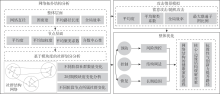
Fig. 1
Framework of research ideas"

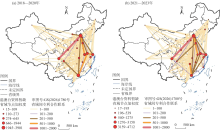
Fig. 2
Interprovincial innovation linkage network in China"

Tab. 2
Topological characteristics of the overall network"
| 年份 | 网络直径 | 图密度 | 平均路径长度 | 全局效率 |
|---|---|---|---|---|
| 2018—2020 | 2 | 0.538 | 1.462 | 0.768 |
| 2021—2023 | 2 | 0.596 | 1.404 | 0.798 |
Tab. 3
Topological characteristics of network nodes"
| 年份 | 平均度 | 平均加权度 | 聚类系数 |
|---|---|---|---|
| 2018—2020 | 16.129 | 525.806 | 0.769 |
| 2021—2023 | 17.871 | 716.258 | 0.803 |
Tab. 4
Betweenness centrality of network nodes"
| 省级行政区 | 2018—2020年 | 2021—2023年 | 省级行政区 | 2018—2020年 | 2021—2023年 |
|---|---|---|---|---|---|
| 北京 | 36.25 | 28.40 | 辽宁 | 5.12 | 6.21 |
| 安徽 | 5.78 | 3.14 | 内蒙古 | 0.14 | 0.97 |
| 福建 | 3.73 | 0.39 | 宁夏 | 1.52 | 0.00 |
| 甘肃 | 0.50 | 0.34 | 青海 | 0.08 | 0.90 |
| 广东 | 28.76 | 14.60 | 山东 | 11.42 | 8.25 |
| 广西 | 0.00 | 0.71 | 山西 | 1.32 | 0.38 |
| 贵州 | 0.49 | 0.91 | 陕西 | 7.01 | 9.64 |
| 海南 | 0.40 | 0.66 | 上海 | 16.79 | 20.34 |
| 河北 | 5.38 | 3.62 | 四川 | 8.13 | 12.85 |
| 河南 | 6.78 | 1.60 | 天津 | 3.58 | 16.46 |
| 黑龙江 | 0.32 | 0.42 | 西藏 | 0.00 | 0.48 |
| 湖北 | 19.13 | 10.14 | 新疆 | 1.01 | 0.93 |
| 湖南 | 8.07 | 5.53 | 云南 | 0.20 | 1.05 |
| 吉林 | 0.00 | 0.16 | 浙江 | 10.40 | 8.06 |
| 江苏 | 28.03 | 28.40 | 重庆 | 4.07 | 1.74 |
| 江西 | 0.57 | 0.71 |
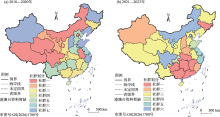
Fig. 3
Community structure of China’s interprovincial innovation network"

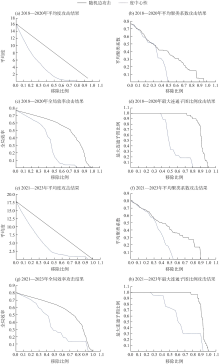
Fig. 4
Performance of China’s interprovincial innovation network under random and targeted attacks"

Tab. 5
Results of targeted attacks"
| 年份 | 攻击比例/% | 平均聚类系数 | 全局效率 | 平均度 | 最大连通子图比例 |
|---|---|---|---|---|---|
| 2018—2020 | 0.0 | 0.769 | 0.769 | 16.129 | 0.170 |
| 25.8 | 0.517 | 0.639 | 7.167 | 0.170 | |
| 38.7 | 0.316 | 0.550 | 4.100 | 0.170 | |
| 54.8 | 0.000 | 0.137 | 1.200 | 0.053 | |
| 2021—2023 | 0.0 | 0.803 | 0.798 | 17.871 | 0.170 |
| 32.3 | 0.565 | 0.596 | 6.818 | 0.170 | |
| 48.4 | 0.196 | 0.331 | 2.471 | 0.170 | |
| 71.0 | 0.000 | 0.133 | 1.000 | 0.135 |
| [1] | 甄峰, 黄朝永, 罗守贵. 区域创新能力评价指标体系研究[J]. 科学管理研究, 2000, 18(6): 5-8. |
| [Zhen Feng, Huang Zhaoyong, Luo Shougui. Research on the evaluation index system of regional innovation capability[J]. Scientific Management Research, 2000, 18(6): 5-8.] | |
| [2] |
Furman J L, Porter M E, Stern S. The determinants of national innovative capacity[J]. Research Policy, 2002, 31(6): 899-933.
doi: 10.1016/S0048-7333(01)00152-4 |
| [3] |
方创琳, 马海涛, 王振波, 等. 中国创新型城市建设的综合评估与空间格局分异[J]. 地理学报, 2014, 69(4): 459-473.
doi: 10.11821/dlxb201404003 |
|
[Fang Chuanglin, Ma Haitao, Wang Zhenbo, et al. Comprehensive assessment and spatial heterogeneity of the construction of innovative cities in China[J]. Acta Geographica Sinica, 2014, 69(4): 459-473.]
doi: 10.11821/dlxb201404003 |
|
| [4] | 胡锦涛. 坚定不移沿着中国特色社会主义道路前进为全面建成小康社会而奋斗[N]. 人民日报, 2012-11-18(001). |
| [Hu Jintao. Unswervingly advance along the road of socialism with Chinese characteristics and strive for a moderately prosperous society in all respects[N]. People’s Daily, 2012-11-18(001).] | |
| [5] |
杨永春, 许静, 王雨萱. 新时代地缘视角下中国西部发展的全球地位及核心战略路径[J]. 经济地理, 2023, 43(2): 22-32.
doi: 10.15957/j.cnki.jjdl.2023.02.003 |
|
[Yang Yongchun, Xu Jing, Wang Yuxuan. The global status and core strategic path of the development of western China from the geographical perspective in the new era[J]. Economic Geography, 2023, 43(2): 22-32.]
doi: 10.15957/j.cnki.jjdl.2023.02.003 |
|
| [6] | 曹湛, 戴靓, 吴祖泉, 等. 城市技术网络的概念框架与实证研究[J]. 地理研究, 2023, 42(9): 2302-2323. |
| [Cao Zhan, Dai Jing, Wu Zuquan, et al. The conceptual framework and empirical investigation of the interurban technology networks[J]. Geographical Research, 2023, 42(9): 2302-2323.] | |
| [7] | Edquist C. Systems of innovation perspectives and challenges[J]. African Journal of Science, Technology, Innovation and Development, 2010, 2(3): 14-45. |
| [8] |
Agrawal A, Kapur D, McHale J, et al. Brain drain or brain bank? The impact of skilled emigration on poor-country innovation[J]. Journal of Urban Economics, 2011, 69(1): 43-55.
doi: 10.1016/j.jue.2010.06.003 |
| [9] | Imai K, Baba Y. Systemic innovation and cross-border networks: Transcending markets and hierarchies to create a new techno-economic system[C]// Dosi G, FreemanC, NelsonR, et al. Technology and Productivity:The Challenge for Economic Policy. Paris: OECD, 1991: 389-405. |
| [10] | 王大洲. 企业创新网络的进化与治理: 一个文献综述[J]. 科研管理, 2001(5): 96-103. |
| [Wang Dazhou. The evolution and governance of the firm’s innovation networks: A review of the literature[J]. Science Research Management, 2001(5): 96-103.] | |
| [11] | 郭卫东, 钟业喜, 冯兴华. 基于脆弱性视角的中国高铁城市网络韧性研究[J]. 地理研究, 2022, 41(5): 1371-1387. |
| [Guo Weidong, Zhong Yexi, Feng Xinghua. Research on the resilience of China’s high-speed rail urban network from the perspective of vulnerability[J]. Geographical Research, 2022, 41(5): 1371-1387.] | |
| [12] |
Turner B L, Kasperson R E, Matson P A, et al. A framework for vulnerability analysis in sustainability science[J]. Proceedings of the National Academy of Sciences, 2003, 100(14): 8074-8079.
doi: 10.1073/pnas.1231335100 |
| [13] |
吴迪, 王诺, 于安琪, 等. “丝路”海运网络的脆弱性及风险控制研究[J]. 地理学报, 2018, 73(6): 1133-1148.
doi: 10.11821/dlxb201806011 |
|
[Wu Di, Wang Nuo, Yu Anqi, et al. Vulnerability and risk management in the Maritime Silk Road container shipping network[J]. Acta Geographica Sinica, 2018, 73(6): 1133-1148.]
doi: 10.11821/dlxb201806011 |
|
| [14] |
王诺, 董玲玲, 吴暖, 等. 蓄意攻击下全球集装箱海运网络脆弱性变化[J]. 地理学报, 2016, 71(2): 293-303.
doi: 10.11821/dlxb201602009 |
|
[Wang Nuo, Dong Lingling, Wu Nuan, et al. The change of global container shipping network vulnerability under intentional attack[J]. Acta Geographica Sinica, 2016, 71(2): 293-303.]
doi: 10.11821/dlxb201602009 |
|
| [15] |
邓旭东, 王雪, 徐文平, 等. 城市地铁网络脆弱性对比分析[J]. 中国安全科学学报, 2017, 27(3): 152-156.
doi: 10.16265/j.cnki.issn1003-3033.2017.03.027 |
|
[Deng Xudong, Wang Xue, Xu Wenping, et al. Comparative analysis of vulnerability of urban metro network[J]. China Safety Science Journal, 2017, 27(3): 152-156.]
doi: 10.16265/j.cnki.issn1003-3033.2017.03.027 |
|
| [16] | 王志如, 李启明, 梁作论. 城市地铁网络拓扑结构脆弱性评价[J]. 中国安全科学学报, 2013, 23(8): 114-119. |
| [Wang Zhiru, Li Qiming, Liang Zuolun. Evaluation of urban metro network topological structure vulnerability[J]. China Safety Science Journal, 2013, 23(8): 114-119.] | |
| [17] |
黄卓, 赵渺希. 基于企业联系的东莞产业网络韧性演化[J]. 热带地理, 2024, 44(11): 1978-1989.
doi: 10.13284/j.cnki.rddl.20230343 |
|
[Huang Zhuo, Zhao Miaoxi. Resilience evolution of Dongguan industrial network based on enterprise connections[J]. Tropical Geography, 2024, 44(11): 1978-1989.]
doi: 10.13284/j.cnki.rddl.20230343 |
|
| [18] | 李锐, 黄敏. 多等级蓄意攻击下的第三方物流可靠性网络设计[J]. 控制与决策, 2017, 32(8): 1368-1376. |
| [Li Rui, Huang Min. Reliable network design of third-party logistics under multi-grade proactive attacks[J]. Control and Decision, 2017, 32(8): 1368-1376.] | |
| [19] |
彭翀, 陈思宇, 王宝强. 中断模拟下城市群网络结构韧性研究——以长江中游城市群客运网络为例[J]. 经济地理, 2019, 39(8): 68-76.
doi: 10.15957/j.cnki.jjdl.2019.08.009 |
|
[Peng Chong, Chen Siyu, Wang Baoqiang. Analyzing city network’s structural resilience under disruption scenarios: A case study of passenger transport network in the middle reaches of Yangtze River[J]. Economic Geography, 2019, 39(8): 68-76.]
doi: 10.15957/j.cnki.jjdl.2019.08.009 |
|
| [20] |
左芝鲤, 成金华, 詹成, 等. 全球锂产业链贸易格局演化及脆弱性分析[J]. 资源科学, 2024, 46(1): 114-129.
doi: 10.18402/resci.2024.01.09 |
|
[Zuo Zhili, Cheng Jinhua, Zhan Cheng, et al. Evolution and vulnerability analysis of the global trade pattern in the lithium industry chain[J]. Resources Science, 2024, 46(1): 114-129.]
doi: 10.18402/resci.2024.01.09 |
|
| [21] |
叶琴, 曾刚, 蒋海云. 随机与蓄意攻击下长三角城市知识网络稳健性特征及其对创新绩效的影响[J]. 地理研究, 2024, 43(5): 1088-1106.
doi: 10.11821/dlyj020230805 |
| [Ye Qin, Zeng Gang, Jiang Haiyun. Robustness of knowledge networks in the Yangtze River Delta and their impact on innovation performance under random and targeted attacks[J]. Geographical Research, 2024, 43(5): 1088-1106.] | |
| [22] | 张延禄, 杨嘉琪, 杨乃定, 等. 逆全球化背景下区域协同创新网络抗毁性评价——以长江经济带城市群为例[J]. 科技管理研究, 2024, 44(13): 1-12. |
| [Zhang Yanlu, Yang Jiaqi, Yang Naiding, et al. Research on invulnerability evaluation of regional collaborative innovation network under the background of anti-globalization: A case study of Yangtze River Economic Belt[J]. Science and Technology Management Research, 2024, 44(13): 1-12.] | |
| [23] | 李莉, 林海芬, 程露, 等. 技术群体成员变动、知识流耦合与产业创新网络抗毁性: 技术异质性的调节作用[J]. 管理工程学报, 2022, 36(1): 25-36. |
| [Li Li, Lin Haifen, Cheng Lu, et al. Relationship between membership variation and knowledge coupling of technology clusters and industrial innovation network invulnerability: Role of technological heterogeneity[J]. Journal of Industrial Engineering/Engineering Management, 2022, 36(1): 25-36.] | |
| [24] |
Guan J C, Liu N. Exploitative and exploratory innovations in knowledge network and collaboration network: A patent analysis in the technological field of nano-energy[J]. Research Policy, 2016, 45(1): 97-112.
doi: 10.1016/j.respol.2015.08.002 |
| [25] |
Balland P A, Jara-Figueroa C, Petralia S G, et al. Complex economic activities concentrate in large cities[J]. Nature Human Behaviour, 2020, 4(3): 248-254.
doi: 10.1038/s41562-019-0803-3 |
| [26] |
Lazer D, Kennedy R, King G, et al. The parable of Google flu: Traps in big data analysis[J]. Science, 2014, 343(6176): 1203-1205.
doi: 10.1126/science.1248506 |
| [27] |
马海涛, 胡夏青. 城市网络视角下的中国科技创新功能区划研究[J]. 地理学报, 2022, 77(12): 3104-3124.
doi: 10.11821/dlxb202212011 |
|
[Ma Haitao, Hu Xiaqing. Regionalization of scientific and technological innovation in China: From the perspective of urban network[J]. Acta Geographica Sinica, 2022, 77(12): 3104-3124.]
doi: 10.11821/dlxb202212011 |
|
| [28] |
Lissoni F. Academic inventors as brokers[J]. Research Policy, 2010, 39(7): 843-857.
doi: 10.1016/j.respol.2010.04.005 |
| [29] | 陈伟, 张永超, 田世海. 区域装备制造业产学研合作创新网络的实证研究——基于网络结构和网络聚类的视角[J]. 中国软科学, 2012(2): 96-107. |
| [Chen Wei, Zhang Yongchao, Tian Shihai. Empirical research on innovation networks consisting of industry-university-research institute in regional equipment manufacturing industry: A perspective of network structure and network cluster[J]. China Soft Science, 2012(2): 96-107.] | |
| [30] | 陈子凤, 官建成. 合作网络的小世界性对创新绩效的影响[J]. 中国管理科学, 2009, 17(3): 115-120. |
| [Chen Zifeng, Guan Jiancheng. The impacts of small worlds on innovation[J]. Chinese Journal of Management Science, 2009, 17(3): 115-120.] | |
| [31] |
Hussler C, Rondé P. The impact of cognitive communities on the diffusion of academic knowledge: Evidence from the networks of inventors of a French University[J]. Research Policy, 2007, 36(2): 288-302.
doi: 10.1016/j.respol.2006.11.006 |
| [32] | Newman M E J. Scientific collaboration networks. I. Network construction and fundamental results[J]. Physical Review E, 2001, 64(1): 016131, doi: 10.1103/PhysRevE.64.016131. |
| [33] |
He J, Fallah M H. Is inventor network structure a predictor of cluster evolution?[J]. Technological Forecasting and Social Change, 2009, 76(1): 91-106.
doi: 10.1016/j.techfore.2008.03.020 |
| [34] | 万元, 李永周. 基于关系嵌入的创新网络知识共享及协调机制研究[J]. 科技管理研究, 2014, 34(20): 160-164, 179. |
| [Wan Yuan, Li Yongzhou. Research on the coordination mechanism of knowledge sharing in innovation network based on relational embeddedness[J]. Science and Technology Management Research, 2014, 34(20): 160-164, 179.] | |
| [35] |
Gao X, Guan J C, Rousseau R. Mapping collaborative knowledge production in China using patent co-inventorships[J]. Scientometrics, 2011, 88(2): 343-362.
doi: 10.1007/s11192-011-0404-z |
| [36] | 林岩. 汽车生产供应链上下游企业间的合作知识创造[J]. 科研管理, 2010, 31(3): 52-60. |
| [Lin Yan. Cooperative knowledge creation between upstream and downstream enterprises of the auto manufacture supply chain[J]. Science Research Management, 2010, 31(3): 52-60.] | |
| [37] | 叶琴, 曾刚. 经济地理学视角下创新网络研究进展[J]. 人文地理, 2019, 34(3): 7-13, 145. |
| [Ye Qin, Zeng Gang. Research progress in innovation network: A perspective from economic geography[J]. Human Geography, 2019, 34(3): 7-13, 145.] | |
| [38] |
周灿, 曾刚, 宓泽锋, 等. 区域创新网络模式研究——以长三角城市群为例[J]. 地理科学进展, 2017, 36(7): 795-805.
doi: 10.18306/dlkxjz.2017.07.002 |
| [Zhou Can, Zeng Gang, Mi Zefeng, et al. The study of regional innovation network patterns: Evidence from the Yangtze River Delta urban Agglomeration[J]. Progress in Geography, 2017, 36(7): 795-805.] | |
| [39] | 任建辉, 裴彬杰, 覃成林. 核心到边缘: 区域创新研究的地理转向[J]. 区域经济评论, 2025(3): 143-152. |
| [Ren Jianhui, Pei Binjie, Qin Chenglin. From core to periphery: Geographical shifts in regional innovation research[J]. Regional Economic Review, 2025(3): 143-152.] | |
| [40] | 宋妍. 为发展而竞争: 地方政府多维度竞争的激励机制分析[J]. 中国人口·资源与环境, 2020, 30(9): 39-45. |
| [Song Yan. Competition for development: An analysis of the incentive mechanism of local governments’ multi-dimensional competition[J]. China Population, Resources and Environment, 2020, 30(9): 39-45.] | |
| [41] | 刘志彪, 凌永辉. 关于国内国际双循环新发展格局的若干断想[J]. 福建论坛(人文社会科学版), 2021(1): 5-13. |
| [Liu Zhibiao, Ling Yonghui. Reflections on the new development pattern of domestic and international dual circulation[J]. Fujian Tribune (Humanities and Social Sciences Edition), 2021(1): 5-13.] | |
| [42] |
司月芳, 曾刚, 曹贤忠, 等. 基于全球-地方视角的创新网络研究进展[J]. 地理科学进展, 2016, 35(5): 600-609.
doi: 10.18306/dlkxjz.2016.05.007 |
|
[Si Yuefang, Zeng Gang, Cao Xianzhong, et al. Research progress of glocal innovation networks[J]. Progress in Geography, 2016, 35(5): 600-609.]
doi: 10.18306/dlkxjz.2016.05.007 |
|
| [43] | 邹琳, 曾刚, 司月芳, 等. 创新网络研究进展述评与展望[J]. 人文地理, 2018, 33(4): 7-12, 67. |
| [Zou Lin, Zeng Gang, Si Yuefang, et al. Literature review and prospect on innovation network[J]. Human Geography, 2018, 33(4): 7-12, 67.] | |
| [44] |
Cohen R, Erez K, ben-Avraham D, et al. Breakdown of the internet under intentional attack[J]. Physical Review Letters, 2001, 86(16): 3682-3685.
pmid: 11328053 |
| [45] | Crucitti P, Latora V, Marchiori M. Model for cascading failures in complex networks[J]. Physical Review E, 2004, 69(4): 45104, doi: 10.1103/PhysRevE.69.045104. |
| [46] | Motter A E, Lai Y C. Cascade-based attacks on complex networks[J]. Physical Review E, 2002, 66(6): 65102, doi: 10.1103/PhysRevE.66.065102. |
| [47] |
Buldyrev S V, Parshani R, PaulG, et al. Catastrophic cascade of failures in interdependent networks[J]. Nature, 2010, 464(7291): 1025-1028.
doi: 10.1038/nature08932 |
| [48] |
Vespignani A. Complex networks: The fragility of interdependency[J]. Nature, 2010, 464(7291): 984-985.
doi: 10.1038/464984a |
| [49] |
Yang Y, Nishikawa T, Motter A E. Vulnerability and cosusceptibility determine the size of network cascades[J]. Physical Review Letters, 2017, 118(4): 48301, doi: 10.1103/PhysRevLett.118.048301.
pmid: 28186802 |
| [50] |
D’Souza R M, Gómez-Gardeñes J, Nagler J, et al. Explosive phenomena in complex networks[J]. Advances in Physics, 2019, 68(3): 123-223.
doi: 10.1080/00018732.2019.1650450 |
| [51] |
Sterbenz J P G, Hutchison D, Çetinkaya E K, et al. Resilience and survivability in communication networks: Strategies, principles, and survey of disciplines[J]. Computer Networks, 2010, 54(8): 1245-1265.
doi: 10.1016/j.comnet.2010.03.005 |
| [52] | Newman M E J, Girvan M. Finding and evaluating community structure in networks[J]. Physical Review E, 2004, 69(2): 026113, doi: 10.1103/PhysRevE.69.026113. |
| [53] |
吴迪, 王诺, 吴暖, 等. 主航道中断背景下集装箱海运网络的脆弱性及其对中国的影响[J]. 地理研究, 2017, 36(4): 719-730.
doi: 10.11821/dlyj201704010 |
| [Wu Di, Wang Nuo, Wu Nuan, et al. The impact of main channel interruption on vulnerability of container shipping network and China container shipping[J]. Geographical Research, 2017, 36(4): 719-730.] | |
| [54] |
Boschma R. Proximity and innovation: A critical assessment[J]. Regional Studies, 2005, 39(1): 61-74.
doi: 10.1080/0034340052000320887 |
| [55] | Barabási A-L. Network science[J]. Philosophical Transactions of the Royal Society A: Mathematical, Physical and Engineering Sciences, 2013, 371(1987): 20120375, doi: 10.1098/rsta.2012.0375. |
| [56] | Holme P, Kim B J, Yoon C N, et al. Attack vulnerability of complex networks[J]. Physical Review E, 2002, 65(5): 056109, doi: 10.1103/PhysRevE.65.056109. |
| [57] | 安同良, 魏婕, 姜舸. 基于复杂网络的中国企业互联式创新[J]. 中国社会科学, 2023(10): 24-43, 204-205. |
| [An Tongliang, Wei Jie, Jiang Ge. Complex networks-based interconnected innovation in Chinese enterprises[J]. Social Sciences in China, 2023(10): 24-43, 204-205.] | |
| [58] |
周麟, 古恒宇, 何泓浩. 2006-2018年中国区域创新结构演变[J]. 经济地理, 2021, 41(5): 19-28.
doi: 10.15957/j.cnki.jjdl.2021.05.003 |
|
[Zhou Lin, Gu Hengyu, He Honghao. Evolution of China’s regional innovation structure in 2006-2018[J]. Economic Geography, 2021, 41(5): 19-28.]
doi: 10.15957/j.cnki.jjdl.2021.05.003 |
|
| [59] |
吴尚, 翟彬, 程利莎. 黄河流域城市创新能力测度及空间分异研究[J]. 干旱区地理, 2024, 47(4): 720-732.
doi: 10.12118/j.issn.1000-6060.2023.300 |
|
[Wu Shang, Zhai Bin, Cheng Lisha. Measurement and spatial differentiation of innovation capacity of cities in Yellow River Basin[J]. Arid Land Geography, 2024, 47(4): 720-732.]
doi: 10.12118/j.issn.1000-6060.2023.300 |
|
| [60] | 马海涛, 徐楦钫, 胡夏青. 国内外城市群创新网络研究进展综述[J]. 人文地理, 2024, 39(6): 51-58. |
| [Ma Haitao, Xu Xuanfang, Hu Xiaqing. Progress of research on urban agglomeration innovation network[J]. Human Geography, 2024, 39(6): 51-58.] | |
| [61] |
李成兵, 魏磊, 高巍, 等. 城市群复合交通网络级联抗毁性[J]. 公路交通科技, 2018, 35(6): 95-104.
doi: 10.3969/j.issn.1002-0268.2018.06.014 |
| [Li Chengbing, Wei Lei, Gao Wei, et al. Invulnerability of urban agglomeration compound traffic network against cascading failure[J]. Journal of Highway and Transportation Research and Development, 2018, 35(6): 95-104.] | |
| [62] |
张少华, 关海玲. 创新集聚空间分布模式对中国城市经济韧性的影响机制研究[J]. 干旱区地理, 2025, 48(9): 1636-1647.
doi: 10.12118/j.issn.1000-6060.2024.737 |
|
[Zhang Shaohua, Guan Hailing. Impact mechanism of innovative agglomeration spatial distribution patterns on urban economic resilience in China[J]. Arid Land Geography, 2025, 48(9): 1636-1647.]
doi: 10.12118/j.issn.1000-6060.2024.737 |
|
||

