Arid Land Geography ›› 2025, Vol. 48 ›› Issue (9): 1567-1577.doi: 10.12118/j.issn.1000-6060.2024.631
• Plant Ecology • Previous Articles Next Articles
LI Liangliang1( ), XIA Yong1(), WANG Fuhong1,2, GUO Bingxin1, ZHAO Lanlan1
Received:2024-10-19
Revised:2024-12-31
Online:2025-09-25
Published:2025-09-17
Contact:
XIA Yong
E-mail:L5032LL@163.com;x0991y@163.com
LI Liangliang, XIA Yong, WANG Fuhong, GUO Bingxin, ZHAO Lanlan. Muskmelon production pattern and its contributing factors in Xinjiang[J].Arid Land Geography, 2025, 48(9): 1567-1577.

Fig. 1
Schematic diagram of the study area"


Fig. 2
Overall production of muskmelon in Xinjiang from 2000 to 2021"


Fig. 3
Spatial distributions of muskmelon yield change intensity in Xinjiang from 2000 to 2021"


Fig. 4
Spatial distributions of muskmelon planting area change intensity in Xinjiang from 2000 to 2021"


Fig. 5
Spatial distributions of muskmelon yield per unit area change intensity in Xinjiang from 2000 to 2021"


Fig. 6
Standard deviation ellipse and gravity center migration trajectory of muskmelon yield in Xinjiang from 2000 to 2021"

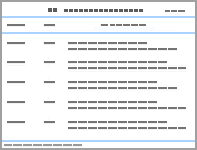
Tab. 1
Gravity center migration and standard deviation ellipse parameters of muskmelon production in Xinjiang from 2000 to 2021"
| 年份 | 重心坐标 | 重心迁移 | 长轴/km | 短轴/km | 转角/(°) | 面积/105 km2 | ||||
|---|---|---|---|---|---|---|---|---|---|---|
| 经度/E | 纬度/N | 方向 | 距离/km | 速率/km∙a-1 | ||||||
| 2000 | 84°29′25″ | 42°03′28″ | - | - | - | 757.33 | 247.83 | 79.93 | 5.88 | |
| 2010 | 80°37′22″ | 39°46′54″ | 西南 | 498.60 | 49.86 | 706.58 | 196.12 | 82.98 | 4.37 | |
| 2015 | 81°27′16″ | 40°21′46″ | 东北 | 112.72 | 22.54 | 766.25 | 194.32 | 81.84 | 4.69 | |
| 2021 | 82°44′41″ | 40°58′27″ | 东北 | 158.65 | 26.44 | 801.11 | 190.78 | 80.91 | 4.80 | |
Tab. 2
Contribution of muskmelon yield increase in Xinjiang from 2000 to 2021"
| 年份 | 增产量/104 t | 种植面积贡献量/104 t | 种植面积贡献率/% | 单产贡献量/104 t | 单产贡献率/% | 贡献类型 |
|---|---|---|---|---|---|---|
| 2000—2010 | 171.36 | 81.67 | 47.66 | 89.69 | 52.34 | 共同主导 |
| 2010—2015 | 66.30 | -42.60 | -64.25 | 108.90 | 164.25 | 单产主导 |
| 2015—2021 | -66.41 | 82.60 | -124.38 | -149.01 | 224.38 | 单产主导 |
| 2000—2021 | 171.25 | 100.00 | 58.39 | 71.25 | 41.61 | 共同主导 |
Tab. 3
Yield increase of muskmelon in each county of Xinjiang from 2000 to 2021"
| 分区 | 地州市 | 县域 | 增产量/t | 产量变化幅度/% | 种植面积贡献率/% | 单产贡献率/% |
|---|---|---|---|---|---|---|
| 南疆 | 喀什地区 | 伽师县 | 541950 | 652.56 | 86.42 | 13.58 |
| 喀什市 | 6542 | 65420.00 | 51.32 | 48.84 | ||
| 巴楚县 | 64074 | 701.41 | 61.88 | 38.12 | ||
| 麦盖提县 | 51940 | 1545.83 | 62.97 | 37.03 | ||
| 疏勒县 | 43326 | 763.59 | 58.71 | 41.29 | ||
| 和田地区 | 和田县 | 30785 | 4629.32 | 11.54 | 88.46 | |
| 巴州 | 且末县 | -4563 | -67.23 | 148.63 | -48.63 | |
| 东疆 | 吐鲁番市 | 鄯善县 | 146530 | 226.19 | 83.82 | 16.18 |
| 高昌区 | 137991 | 1314.33 | 93.80 | 6.20 | ||
| 托克逊县 | 46447 | 187.29 | 73.55 | 26.45 | ||
| 哈密市 | 伊吾县 | 66129 | 366.28 | 53.52 | 46.48 | |
| 伊州区 | 32879 | 254.92 | 71.31 | 28.69 | ||
| 北疆 | 阿勒泰地区 | 福海县 | 46570 | 887.05 | 77.63 | 22.37 |
| 昌吉州 | 阜康市 | -3805 | -67.23 | 89.91 | 10.09 | |
| 奇台县 | -6230 | -98.28 | 94.58 | 5.42 | ||
| 昌吉市 | -16584 | -59.06 | 101.84 | -1.84 | ||
| 伊犁州直 | 察布查尔锡伯自治县 | 1845 | 1476.00 | 60.14 | 39.86 |

Fig. 7
Spatial patterns of yield-increasing factors of muskmelon in Xinjiang from 2000 to 2021"

| [1] | Kubo K, Pritchard B, Phyo A S. How Chinese demand for fresh fruit and vegetables is creating new landscapes of rural development and vulnerability in southeast Asia: Insights from the Myanmar melon frontier[J]. Geoforum, 2021, 122: 03008, doi: 10.1016/j.geoforum.2021.03008. |
| [2] | 李干琼, 王志丹. 新疆西瓜甜瓜绿色生产调查研究[J]. 中国瓜菜, 2020, 33(6): 59-62. |
| [Li Ganqiong, Wang Zhidan. Investigation on green production of watermelon and melon in Xinjiang[J]. China Cucurbits and Vegetables, 2020, 33(6): 59-62.] | |
| [3] | 周忠丽, 夏英, 曲颂. 甜瓜生产经营收益影响因素分析——以新疆瓜农样本为例[J]. 中国蔬菜, 2013(14): 17-24. |
| [Zhou Zhongli, Xia Ying, Qu Song. Analysis of influencing factors on melon production and operation benefits: Taking Xinjiang melon farmers as example[J]. China Vegetables, 2013(14): 17-24.] | |
| [4] | 唐华俊, 吴文斌, 杨鹏, 等. 农作物空间格局遥感监测研究进展[J]. 中国农业科学, 2010, 43(14): 2879-2888. |
| [Tang Huajun, Wu Wenbin, Yang Peng, et al. Recent progresses in monitoring crop spatial patterns by using remote sensing technologies[J]. Scientia Agricultura Sinica, 2010, 43(14): 2879-2888.] | |
| [5] | 白桂萍, 谢雄泽, 谢捷, 等. 我国油菜生产布局时空演变及影响因素分析[J]. 中国油脂, 2023, 48(4): 1-6. |
| [Bai Guiping, Xie Xiongze, Xie Jie, et al. Analysis on the temporal and spatial evolution and influencing factors of oilseed rape production layout in China[J]. China Oils and Fats, 2023, 48(4): 1-6.] | |
| [6] | 陈光燕, 司伟, 蓝红星. 中国糖料生产布局变动及其影响因素分析[J]. 中国农业资源与区划, 2021, 42(3): 158-166. |
| [Chen Guangyan, Si Wei, Lan Hongxing. Analysis on the change of sugar crop production’s distribution and its influencing factors in China[J]. Chinese Journal of Agricultural Resources and Regional Planning, 2021, 42(3): 158-166.] | |
| [7] | 蔡荣, 陶素敏. 中国粮食生产布局演变及空间机制分解: 1978-2018[J]. 干旱区资源与环境, 2021, 35(6): 1-7. |
| [Cai Rong, Tao Sumin. Evolution characteristics of grain production distribution and spatial mechanism decomposition in China from 1978 to 2018[J]. Journal of Arid Land Resources and Environment, 2021, 35(6): 1-7.] | |
| [8] | 冯珊珊, 张磊, 刘序, 等. 2000—2020年广东省耕地面积与粮食生产的时空演变特征[J]. 水土保持通报, 2024, 44(3): 252-262. |
| [Feng Shanshan, Zhang Lei, Liu Xu, et al. Spatiotemporal evolution characteristics of cropland area and grain production in Guangdong Province during 2000—2020[J]. Bulletin of Soil and Water Conservation, 2024, 44(3): 252-262.] | |
| [9] | 栾军强, 王荣成, 朱子媛, 等. 山东省粮食供需变动下农业生产格局研究[J]. 中国农业资源与区划, 2021, 42(8): 201-209. |
| [Luan Junqiang, Wang Rongcheng, Zhu Ziyuan, et al. Study on agricultural production pattern under the change of grain supply and demand in Shandong Province[J]. Chinese Journal of Agricultural Resources and Regional Planning, 2021, 42(8): 201-209.] | |
| [10] | 李国景, 杨亚东, 刘洋, 等. 县域水稻生产区域差异与增产效应[J]. 中国农业大学学报, 2024, 29(10): 60-71. |
| [Li Guojing, Yang Yadong, Liu Yang, et al. Regional difference and yield increasing effect of rice production at county level[J]. Journal of China Agricultural University, 2024, 29(10): 60-71.] | |
| [11] | 张强强, 司瑞石, 施凡基, 等. 中国水果生产集中化水平的演进趋势[J]. 中国农业资源与区划, 2021, 42(2): 96-108. |
| [Zhang Qiangqiang, Si Ruishi, Shi Fanji, et al. The evolution trend of Chinese fruit production concentration level[J]. Chinese Journal of Agricultural Resources and Regional Planning, 2021, 42(2): 96-108.] | |
| [12] | 刘华, 赵祎平, 王琳. 中国草莓生产空间布局变迁及影响因素研究[J]. 中国农业资源与区划, 2024, 45(12): 49-59. |
| [Liu Hua, Zhao Yiping, Wang Lin. Analysis on the changes and influence factors of the production layout of strawberry in China[J]. Chinese Journal of Agricultural Resources and Regional Planning, 2024, 45(12): 49-59.] | |
| [13] |
马文江, 白妙琴, 阿迪力·艾合买提, 等. “双碳”目标下新疆粮食绿色全要素生产率的时空分异及驱动因素分析[J]. 干旱区地理, 2023, 46(12): 2029-2041.
doi: 10.12118/j.issn.1000-6060.2023.169 |
|
[Ma Wenjiang, Bai Miaoqin, Aihemaiti Adili, et al. Spatial-temporal differentiation and driving factors analysis of green total factor productivity of Xinjiang grain under the carbon peaking and carbon neutrality goals[J]. Arid Land Geography, 2023, 46(12): 2029-2041.]
doi: 10.12118/j.issn.1000-6060.2023.169 |
|
| [14] | 崔涵, 王丙参, 周明生. 中国农业碳排放时空演进及驱动因素[J]. 中国生态农业学报(中英文), 2024, 32(7): 1097-1108. |
| [Cui Han, Wang Bingcan, Zhou Mingsheng. Spatiotemporal evolution and driving factors of China’s agricultural carbon emissions[J]. Chinese Journal of Eco-Agriculture, 2024, 32(7): 1097-1108.] | |
| [15] | 陶源, 赵晓颖, 刘庆志. 水肥一体化技术的环境效应与经济效应分析——基于山东省苹果种植户的调研数据[J]. 中国农业资源与区划, 2023, 44(9): 60-70. |
| [Tao Yuan, Zhao Xiaoying, Liu Qingzhi. Analysis of environmental and economic effects of irrigation and fertilization technology: Based on survey data of apple growers in Shandong Province[J]. Chinese Journal of Agricultural Resources and Regional Planning, 2023, 44(9): 60-70.] | |
| [16] | 孙立新, 王晓君, 吴敬学, 等. 中国西瓜甜瓜生产区域布局变迁及驱动因素研究[J]. 中国农业资源与区划, 2023, 44(8): 42-51. |
| [Sun Lixin, Wang Xiaojun, Wu Jingxue, et al. Research on regional distribution changes and driving factors of watermelon and melon production in China[J]. Chinese Journal of Agricultural Resources and Regional Planning, 2023, 44(8): 42-51.] | |
| [17] | 张志高, 李艳敏, 袁征, 等. 1988—2020年新疆棉花生产格局与贡献因素[J]. 农业资源与环境学报, 2024, 41(5): 1192-1200. |
| [Zhang Zhigao, Li Yanmin, Yuan Zheng, et al. Cotton production pattern and contribution factors in Xinjiang from 1988 to 2020[J]. Journal of Agricultural Resources and Environment, 2024, 41(5): 1192-1200.] | |
| [18] |
王海军, 张彬, 刘耀林, 等. 基于重心-GTWR模型的京津冀城市群城镇扩展格局与驱动力多维解析[J]. 地理学报, 2018, 73(6): 1076-1092.
doi: 10.11821/dlxb201806007 |
|
[Wang Haijun, Zhang Bin, Liu Yaolin, et al. Multi-dimensional analysis of urban expansion patterns and their driving forces based on the center of gravity-GTWR model: A case study of the Beijing-Tianjin-Hebei urban agglomeration[J]. Acta Geographica Sinica, 2018, 73(6): 1076-1092.]
doi: 10.11821/dlxb201806007 |
|
| [19] | 夏利恒, 刘京, 尉芳, 等. 陕西渭北旱塬区耕地时空格局变化分析[J]. 农业工程学报, 2021, 37(5): 256-264. |
| [Xia Liheng, Liu Jing, Wei Fang, et al. Spatiotemporal pattern change of cultivated land in Weibei dryland of Shaanxi Province[J]. Transactions of the Chinese Society of Agricultural Engineering, 2021, 37(5): 256-264.] | |
| [20] | 宋戈, 张文琦. 粮食作物种植视角下东北粮食主产区耕地利用的时空分化特征[J]. 农业工程学报, 2020, 36(15): 1-8. |
| [Song Ge, Zhang Wenqi. Spatiotemporal differentiation characteristics of cultivated land use from persprctive of growing food crops in major grain production areas in northeast China[J]. Transactions of the Chinese Society of Agricultural Engineering (Transactions of the CSAE), 2020, 36(15): 1-8.] | |
| [21] |
孙通, 封志明, 杨艳昭. 2003—2013年中国县域单元粮食增产格局及贡献因素研究[J]. 自然资源学报, 2017, 32(2): 177-185.
doi: 10.11849/zrzyxb.20160254 |
|
[Sun Tong, Feng Zhiming, Yang Yanzhao. Study on spatiotemporal patterns and contribution factors of China’s grain output increase at the county level during 2003—2013[J]. Journal of Natural Resources, 2017, 32(2): 177-185.]
doi: 10.11849/zrzyxb.20160254 |
|
| [22] | Ang B W, Liu N. Handling zero values in the logarithmic mean Divisia index decomposition approach[J]. Energy Policy, 2007, 35(1): 11001, doi: 10.1016/j.enpol.2005.11001. |
| [23] |
王福红, 夏咏. 干旱区主要农作物生产时空格局演化及影响因素分析——以新疆地区为例[J]. 干旱区地理, 2025, 48(3): 444-454.
doi: 10.12118/j.issn.1000-6060.2024.201 |
|
[Wang Fuhong, Xia Yong. Spatio-temporal pattern evolution and its influencing factors of main crops production in arid region: A case of Xinjiang[J]. Arid Land Geography, 2025, 48(3): 444-454.]
doi: 10.12118/j.issn.1000-6060.2024.201 |
|
| [24] | 杜国明, 张扬, 李全峰. 21世纪以来三江平原农作物种植结构演化研究[J]. 农业现代化研究, 2019, 40(5): 736-744. |
| [Du Guoming, Zhang Yang, Li Quanfeng. The evolution path of crop structure in the Sanjiang Plain in the 21st century[J]. Research of Agricultural Modernization, 2019, 40(5): 736-744.] | |
| [25] |
屠爽爽, 简代飞, 龙花楼, 等. 广西主要农作物生产格局演变特征与机制研究[J]. 地理学报, 2022, 77(9): 2322-2337.
doi: 10.11821/dlxb202209013 |
|
[Tu Shuangshuang, Jian Daifei, Long Hualou, et al. Evolution characteristics and mechanism of major crops production patterns in Guangxi[J]. Acta Geographica Sinica, 2022, 77(9): 2322-2337.]
doi: 10.11821/dlxb202209013 |
|
| [26] | 杨海钰, 马兴栋, 邵砾群. 区域要素禀赋变化与农业技术变迁路径差异——基于苹果产业视角和7个主产省的数据[J]. 湖南农业大学学报(社会科学版), 2018, 19(2): 16-22. |
| [Yang Haiyu, Ma Xingdong, Shao Liqun. Variation of regional factor endowments and agricultural technological changes: Based on the apple industry and the data from seven major producing provinces[J]. Journal of Hunan Agricultural University (Social Sciences Edition), 2018, 19(2): 16-22.] | |
| [27] |
严茂林, 郭丹, 周晓亮, 等. 中国油茶增产格局及其贡献因素分析[J]. 中国油料作物学报, 2025, 47(1): 9-19.
doi: 10.19802/j.issn.1007-9084.2023239 |
|
[Yan Maolin, Guo Dan, Zhou Xiaoliang, et al. Analysis on the pattern and contributing factors of increasing Camellia oleifera production in China[J]. Chinese Journal of Oil Crop Sciences, 2025, 47(1): 9-19.]
doi: 10.19802/j.issn.1007-9084.2023239 |
|
||