Arid Land Geography ›› 2026, Vol. 49 ›› Issue (10): 2107-2121.doi: 10.12118/j.issn.1000-6060.2025.650
• Ecology and Environment • Previous Articles Next Articles
YANG Ying1( ), LI Qin1, WANG Yuan1, YANG Guijun1, MA Jianhua2, LI Xiong3, ZHANG Dazhi1()
Received:2025-10-16
Revised:2025-11-04
Online:2026-10-25
Published:2026-10-26
Contact:
ZHANG Dazhi
E-mail:yangy5773@nxu.edu.cn;zdz313@nxu.edu.cn
YANG Ying, LI Qin, WANG Yuan, YANG Guijun, MA Jianhua, LI Xiong, ZHANG Dazhi. Bird diversity and collision phenomena in wind farm areas within typical habitats in Ningxia[J].Arid Land Geography, 2026, 49(10): 2107-2121.
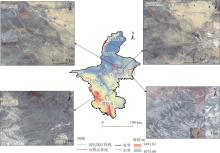
Fig. 1
Sampling transects in the wind farm and the corresponding control areas"
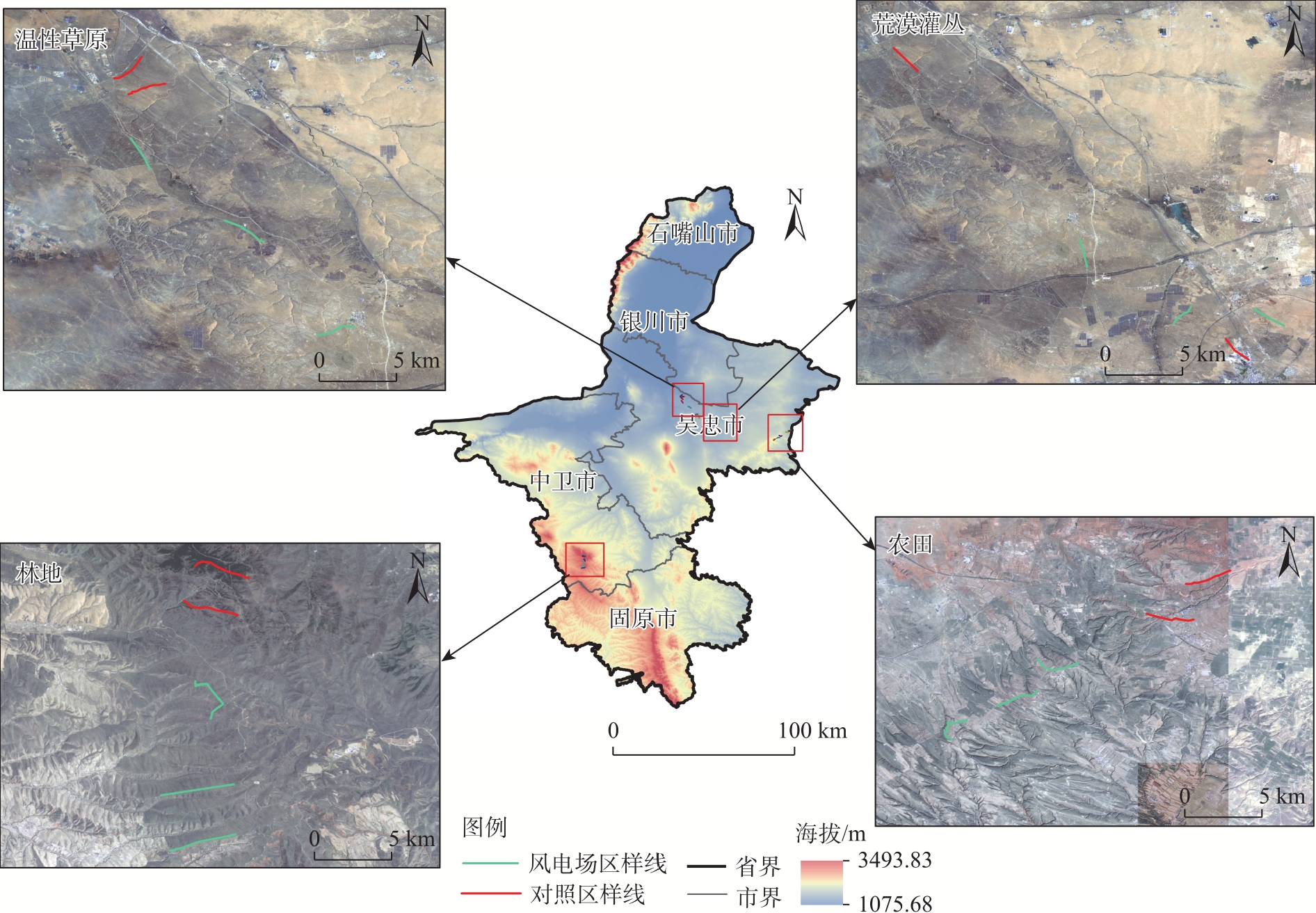
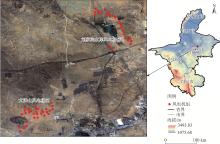
Fig. 2
Schematic diagram of study area for the investigation of bird collisions with wind turbines"


Tab. 1
Environmental characteristics of wind farm areas and control areas"
| 生境类型 | 研究区域 | 风电机组 | 温度/℃ | 降雨量/mm | 风力/m·s-1 | 海拔/m | 坡度/% | 坡向/(°) | 归一化植被指数 | 植被净初级生产力 | |||
|---|---|---|---|---|---|---|---|---|---|---|---|---|---|
| 额定功率/kW | 轮毂高度/m | 风轮直径/m | 风电机组间距/m | ||||||||||
| 林地 | 风电场区 | 1500 | 70 | 87 | 365.67±65.01 | 5.17±8.87 | 33.96±29.41 | 2.61±0.37 | 2457.00±83.81 | 2.83±1.02 | 259.99±36.14 | 103.67±4.53 | 0.37±0.04 |
| 对照区 | - | - | - | - | 3.21±8.70 | 32.64±29.06 | 2.84±0.40 | 2632.67±55.13 | 4.87±1.51 | 230.99±97.49 | 132.83±13.11 | 0.47±0.04 | |
| 农田 | 风电场区 | 750 | 50 | 48.4 | 378.26±102.92 | 6.81±9.84 | 29.83±26.80 | 2.63±0.37 | 1808.44±43.81 | 1.75±0.99 | 102.98±92.78 | 73.00±4.53 | 0.18±0.01 |
| 对照区 | - | - | - | - | 8.04±10.08 | 27.22±25.85 | 2.50±0.42 | 1506.50±27.70 | 1.80±0.26 | 80.52±21.64 | 74.67±9.73 | 0.19±0.01 | |
| 荒漠灌丛 | 风电场区 | 2600 | 90 | 141 | 565.87±108.84 | 8.73±10.44 | 24.70±22.68 | 2.35±0.37 | 1398.67±13.52 | 0.85±0.27 | 221.06±100.18 | 70.89±6.43 | 0.14±0.01 |
| 对照区 | - | - | - | - | 9.05±10.59 | 22.04±21.46 | 2.43±0.37 | 1315.00±34.48 | 0.62±0.27 | 117.34±83.61 | 68.00±8.49 | 0.13±0.03 | |
| 温性草原 | 风电场区 | 2000 | 80 | 110 | 546.09±103.38 | 8.99±10.52 | 21.38±20.93 | 2.46±0.40 | 1343.78±22.64 | 0.61±0.24 | 180.22±160.13 | 70.22±3.07 | 0.12±0.01 |
| 对照区 | - | - | - | - | 9.36±10.66 | 20.10±20.07 | 2.48±0.40 | 1265.83±13.91 | 1.03±0.14 | 44.31±31.90 | 70.83±0.98 | 0.13±0.01 | |
Tab. 2
Seasonal composition of birds in wind farm areas"
| 目 | 科 | 物种 | 个体数 | |||
|---|---|---|---|---|---|---|
| 春季 | 夏季 | 秋季 | 冬季 | |||
| 鸡形目 Galliformes | 雉科 Phasianidae | 石鸡 Alectoris chukar | 1 | - | - | - |
| 雁形目 Anseriformes | 鸭科 Anatidae | 赤麻鸭 Tadorna ferruginea | 2 | - | 3 | - |
| 鸽形目 Columbiformes | 鸠鸽科 Columbidae | 原鸽 Columba livia | 4 | - | 73 | 20 |
| 雨燕目 Apodiformes | 雨燕科 Apodidae | 普通雨燕 Apus apus | - | 7 | - | - |
| 鹃形目 Cuculiformes | 杜鹃科 Cuculidae | 大杜鹃 Cuculus canorus | - | 1 | - | - |
| 鹰形目 Accipitriformes | 鹰科 Accipitridae | 白尾鹞 Circus cyaneus | - | - | 1 | - |
| 大鵟 Buteo hemilasius | - | - | 5 | - | ||
| 犀鸟目Bucerotiformes | 戴胜科Upupidae | 戴胜 Upupa epops | - | 3 | - | - |
| 隼形目 Falconiformes | 隼科 Falconidae | 红隼 Falco tinnunculus | - | 3 | - | 1 |
| 红脚隼 Falco amurensis | - | 2 | 1 | - | ||
| 雀形目 Passeriformes | 伯劳科 Laniidae | 红尾伯劳 Lanius cristatus | - | 1 | - | - |
| 灰背伯劳 Lanius tephronotus | - | 3 | - | - | ||
| 楔尾伯劳 Lanius sphenocercus | 1 | 1 | 1 | 1 | ||
| 鸦科 Corvidae | 喜鹊 Pica serica | 9 | 15 | 19 | 13 | |
| 红嘴山鸦 Pyrrhocorax pyrrhocorax | 2 | 26 | 65 | 9 | ||
| 达乌里寒鸦 Coloeus dauuricus | 6 | 10 | - | 22 | ||
| 百灵科 Alaudidae | 凤头百灵 Galerida cristata | 6 | 6 | 30 | - | |
| 亚洲短趾百灵 Alaudala cheleensis | 1 | 17 | 2 | - | ||
| 云雀 Alauda arvensis | 12 | 4 | - | - | ||
| 燕科 Hirundinidae | 家燕 Hirundo rustica | - | 2 | - | - | |
| 柳莺科 Phylloscopidae | 棕眉柳莺 Phylloscopus armandii | - | 1 | - | - | |
| 黄腰柳莺 Phylloscopus proregulus | - | - | 1 | - | ||
| 黄眉柳莺 Phylloscopus inornatus | - | - | 1 | - | ||
| 鹟科 Muscicapidae | 红胁蓝尾鸲 Tarsiger cyanurus | - | - | 17 | - | |
| 赭红尾鸲 Phoenicurus ochruros | - | 2 | - | - | ||
| 黑喉石䳭 Saxicola maurus | - | 1 | - | - | ||
| 漠䳭 Oenanthe deserti | 1 | - | - | - | ||
| 白顶䳭 Oenanthe pleschanka | 4 | 3 | - | - | ||
| 戴菊科 Regulidae | 戴菊 Regulus regulus | - | - | 2 | - | |
| 雀科 Passeridae | 麻雀 Passer montanus | 20 | 223 | 61 | 112 | |
| 燕雀科 Fringillidae | 金翅雀 Chloris sinica | - | - | 155 | - | |
| 黄嘴朱顶雀 Linaria flavirostris | - | - | - | 25 | ||
| 鹀科 Emberizidae | 小鹀 Emberiza pusilla | - | - | 1 | - | |
| 三道眉草鹀 Emberiza cioides | 27 | 25 | 12 | 49 | ||
| 合计 | - | - | 96 | 356 | 450 | 252 |
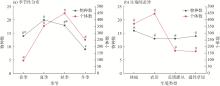
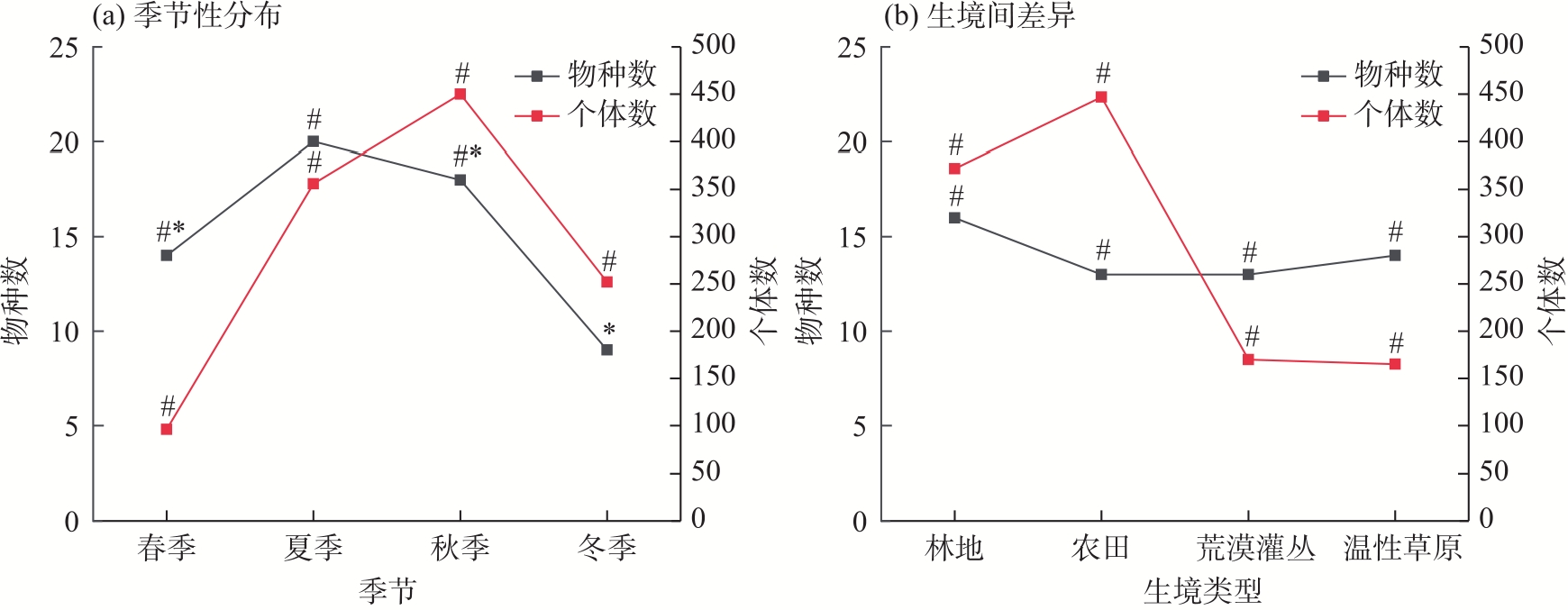
Fig. 3
Seasonal distribution and habitat-related differences of birds in the wind farm areas"
Tab. 3
Bird composition of wind farm areas in different habitats"
| 目 | 科 | 物种 | 个体数 | |||
|---|---|---|---|---|---|---|
| 林地 | 农田 | 荒漠灌丛 | 温性草原 | |||
| 鸡形目 Galliformes | 雉科 Phasianidae | 石鸡 Alectoris chukar | 1 | - | - | - |
| 雁形目 Anseriformes | 鸭科 Anatidae | 赤麻鸭 Tadorna ferruginea | - | - | 3 | 2 |
| 鸽形目 Columbiformes | 鸠鸽科 Columbidae | 原鸽 Columba livia | 68 | 10 | - | 19 |
| 雨燕目 Apodiformes | 雨燕科 Apodidae | 普通雨燕 Apus apus | - | 5 | 2 | - |
| 鹃形目 Cuculiformes | 杜鹃科 Cuculidae | 大杜鹃 Cuculus canorus | - | - | 1 | - |
| 鹰形目 Accipitriformes | 鹰科 Accipitridae | 白尾鹞 Circus cyaneus | 1 | - | - | - |
| 大鵟 Buteo hemilasius | - | - | 5 | - | ||
| 犀鸟目Bucerotiformes | 戴胜科Upupidae | 戴胜 Upupa epops | 1 | - | 1 | 1 |
| 隼形目 Falconiformes | 隼科 Falconidae | 红隼 Falco tinnunculus | - | - | 2 | 2 |
| 红脚隼 Falco amurensis | - | 3 | - | - | ||
| 雀形目 Passeriformes | 伯劳科 Laniidae | 红尾伯劳 Lanius cristatus | - | - | - | 1 |
| 灰背伯劳 Lanius tephronotus | 3 | - | - | - | ||
| 楔尾伯劳 Lanius sphenocercus | 2 | 1 | - | 1 | ||
| 鸦科 Corvidae | 喜鹊Pica serica | 4 | 4 | 13 | 35 | |
| 红嘴山鸦 Pyrrhocorax pyrrhocorax | 14 | 86 | - | 2 | ||
| 达乌里寒鸦 Coloeus dauuricus | - | - | - | 38 | ||
| 百灵科 Alaudidae | 凤头百灵 Galerida cristata | - | 4 | 17 | 21 | |
| 亚洲短趾百灵 Alaudala cheleensis | - | 2 | 18 | - | ||
| 云雀 Alauda arvensis | - | - | 10 | 6 | ||
| 燕科 Hirundinidae | 家燕 Hirundo rustica | - | - | 2 | - | |
| 柳莺科 Phylloscopidae | 棕眉柳莺 Phylloscopus armandii | 1 | - | - | - | |
| 黄腰柳莺 Phylloscopus proregulus | 1 | - | - | - | ||
| 黄眉柳莺 Phylloscopus inornatus | - | - | - | 1 | ||
| 鹟科 Muscicapidae | 红胁蓝尾鸲 Tarsiger cyanurus | 17 | - | - | - | |
| 赭红尾鸲 Phoenicurus ochruros | - | 2 | - | - | ||
| 黑喉石䳭 Saxicola maurus | - | - | - | 1 | ||
| 漠䳭 Oenanthe deserti | - | 1 | - | - | ||
| 白顶䳭 Oenanthe pleschanka | - | 7 | - | - | ||
| 戴菊科 Regulidae | 戴菊 Regulus regulus | 2 | - | - | - | |
| 雀科 Passeridae | 麻雀 Passer montanus | 16 | 270 | 95 | 35 | |
| 燕雀科Fringillidae | 金翅雀 Chloris sinica | 155 | - | - | - | |
| 黄嘴朱顶雀 Linaria flavirostris | 25 | - | - | - | ||
| 鹀科 Emberizidae | 小鹀 Emberiza pusilla | - | - | 1 | - | |
| 三道眉草鹀 Emberiza cioides | 61 | 52 | - | - | ||
| 合计 | - | - | 372 | 447 | 170 | 165 |
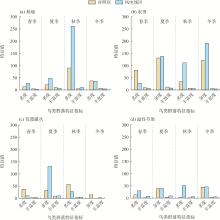
Fig. 4
Bird abundance and richness in wind farm areas and control areas"

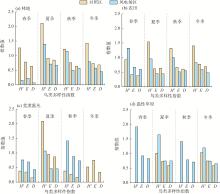
Fig. 5
Bird diversity indices in wind farm areas and control areas"

Tab. 4
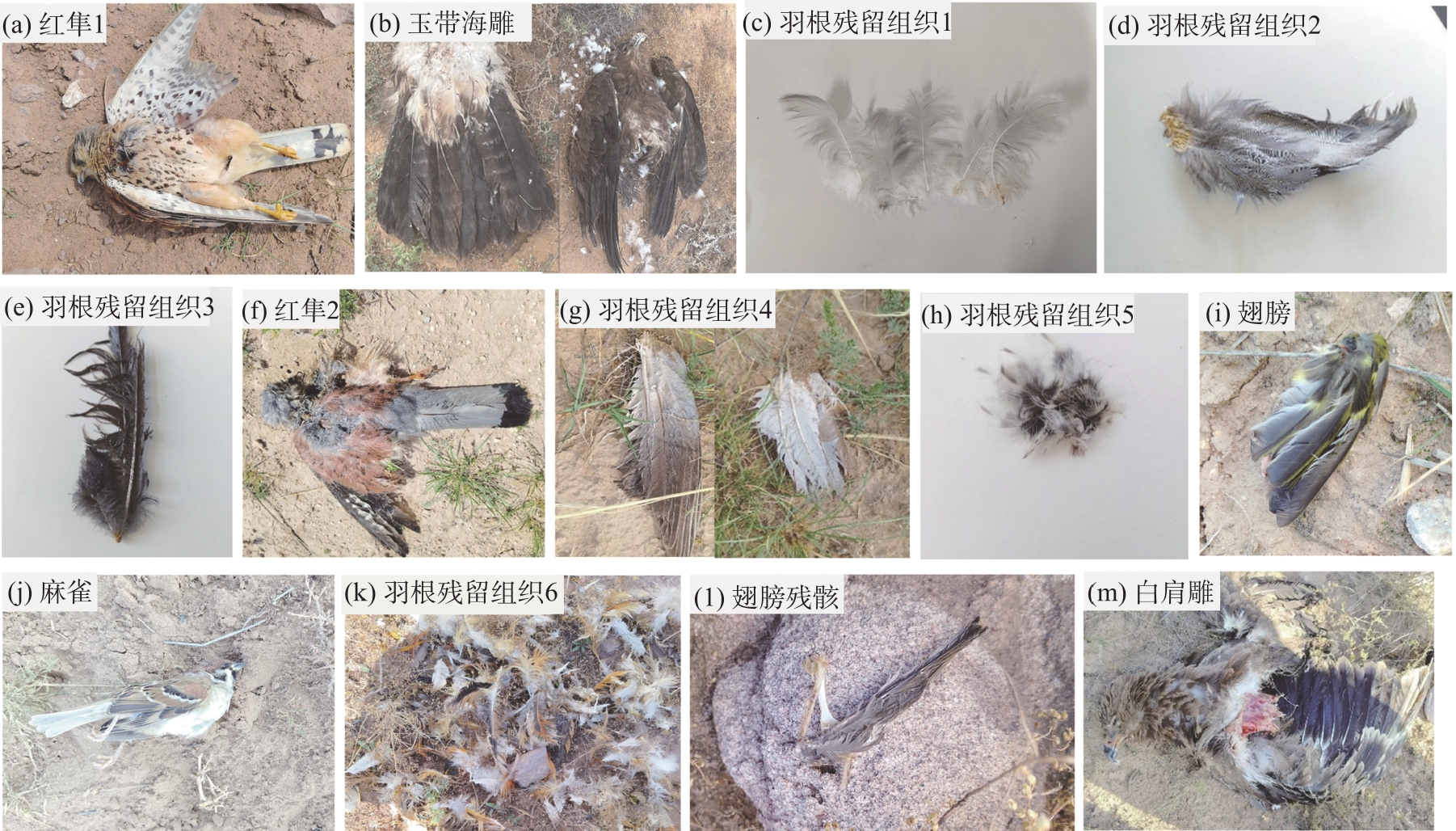
Detailed information on bird collision traces"
| 风电机组编号 | 风电场区 | 物种信息 | 发现日期(年-月-日) | 海拔/m | 距风电机组距离/m | 痕迹信息 |
|---|---|---|---|---|---|---|
| NDT-57-6 | 太阳山 | 红隼 | 2024-04-08 | 1341.77 | 27.0 | 新鲜完整尸体(雄) |
| 60 | 刘家沟水库 | 玉带海雕 | 2024-04-08 | 1363.10 | 47.9 | 尸体残骸,缺少尾羽,尾羽位于距风机149.1 m处 |
| F01 | 刘家沟水库 | 猛禽,具体不确定 | 2024-04-08 | 1397.12 | 18.6 | 灰白色覆羽28片,羽根有组织残留,明显非自然脱落 |
| NDT-17-2 | 太阳山 | 物种不明 | 2024-05-10 | 1430.41 | 21.5 | 黑灰色羽毛一撮,羽根有组织残留,明显非自然脱落 |
| NDT-11-2 | 太阳山 | 鸦科鸟类,具体不确定 | 2024-05-10 | 1406.77 | 49.1 | 黑色羽毛2片,羽根有组织残留,明显非自然脱落 |
| NDT-8-2 | 太阳山 | 红隼 | 2024-06-08 | 1350.39 | 14.8 | 完整尸体,头背部肉已轻微腐化 |
| F18 | 刘家沟水库 | 物种不明 | 2024-06-08 | 1339.71 | 36.9 | 灰色羽毛2撮,羽根有组织残留,明显非自然脱落 |
| 56 | 刘家沟水库 | 物种不明 | 2024-06-08 | 1355.88 | 0.0 | 黑灰色羽毛1撮,羽根有组织残留,明显非自然脱落 |
| NDT-4-2 | 太阳山 | 柳莺科鸟类,具体不确定 | 2024-10-27 | 1380.02 | 0.8 | 右翅,翅根带有血迹 |
| NDT-55-6 | 太阳山 | 麻雀 | 2024-10-27 | 1324.39 | 35.6 | 新鲜完整尸体 |
| NDT-58-6 | 太阳山 | 鵟属鸟类,具体不确定 | 2024-10-27 | 1331.10 | 0.7 | 许多散落羽毛,羽根有组织残留,明显非自然脱落 |
| NDT-13-1 | 太阳山 | 雀形目鸟类,具体不确定 | 2024-10-27 | 1363.63 | 0.6 | 左翅,肌肉腐化仅剩骨骼、羽毛,羽毛颜色为黑灰色 |
| F17 | 刘家沟水库 | 白肩雕 | 2024-11-23 | 1306.23 | 24.8 | 新鲜尸体残骸,含头、肩和翅膀 |
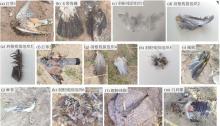
Fig. 6
Bird collision traces"
Tab. 5
Statistics of retained experimental results"
| 风电机组编号 | 风电场区 | 尸体种类 | 留存时间 |
|---|---|---|---|
| NDT-8-2 | 太阳山 | 红隼 | 1个月后痕迹消失 |
| NDT-55-6 | 太阳山 | 麻雀 | 1个月后痕迹消失 |
| NDT-57-6 | 太阳山 | 红隼 | 4个月后痕迹消失 |
| F17 | 刘家沟水库 | 白肩雕 | 1个月后痕迹消失 |
| 60 | 刘家沟水库 | 玉带海雕 | 8个月后仍残留骨骼 |
Tab. 6
Environmental characteristics of bird collisions with wind turbines"
| 风电场区 | 风电机组 | 温度/℃ | 降雨量/mm | 风力/m·s-1 | 海拔/m | 坡度/% | 坡向/(°) | 归一化植被指数 | 植被净初级生产力 | ||||
|---|---|---|---|---|---|---|---|---|---|---|---|---|---|
| 额定功率/kW | 轮毂高度/m | 风轮直径/m | 风电机组间距/m | 距水域距离/m | |||||||||
| 太阳山 | 2000 | 80 | 110 | 418.36±90.24 | 6216.03±924.70 | 8.87±0.09 | 286.23±9.34 | 2.36±0.34 | 1399.84±21.21 | 2.84±1.73 | 203.83±37.62 | 63.81±2.54 | 0.12±0.01 |
| 刘家沟水库 | 2600 | 90 | 141 | 403.19±74.40 | 1602.95±679.29 | 8.76±0.11 | 273.85±3.60 | 2.42±0.38 | 1387.23±27.83 | 2.40±1.48 | 214.97±90.11 | 62.04±4.09 | 0.15±0.02 |
| [1] |
蒋俊霞, 杨丽薇, 李振朝, 等. 风电场对气候环境的影响研究进展[J]. 地球科学进展, 2019, 34(10): 1038-1049.
doi: 10.11867/j.issn.1001-8166.2019.10.1038 |
|
[Jiang Junxia, Yang Liwei, Li Zhenchao, et al. Progress in the research on the impact of wind farms on climate and environment[J]. Advances in Earth Science, 2019, 34(10): 1038-1049. ]
doi: 10.11867/j.issn.1001-8166.2019.10.1038 |
|
| [2] | 吴建国, 巩倩, 王阳. 风电场对生态系统、生物多样性及环境的影响[J]. 生态经济, 2023, 39(9): 167-178. |
|
[Wu Jianguo, Gong Qian, Wang Yang. The impacts of wind farms on ecosystems, biodiversity, and the environments[J]. Ecological Economy, 2023, 39(9): 167-178. ]
doi: 10.1016/S0921-8009(01)00225-7 |
|
| [3] |
Gómez-Catasús J, Garza V, Traba J. Wind farms affect the occurrence, abundance and population trends of small passerine birds: The case of the Dupont’s Lark[J]. Journal of Applied Ecology, 2018, 55(4): 2033-2042.
doi: 10.1111/jpe.2018.55.issue-4 |
| [4] |
Hanssen F, May R, Nygård T. High-resolution modeling of uplift landscapes can inform micrositing of wind turbines for soaring raptors[J]. Environmental Management, 2020, 66(3): 319-332.
doi: 10.1007/s00267-020-01318-0 pmid: 32577874 |
| [5] |
Allan L, Drewitt H, Langston W. Assessing the impacts of wind farms on birds[J]. Ibis, 2006, 148: 29-42.
doi: 10.1111/ibi.2006.148.issue-s1 |
| [6] | Gómez-Catasús J, Barrero A, Llusia D, et al. Wind farm noise shifts vocalizations of a threatened shrub-steppe Passerine[J]. Environmental Pollution, 2022, 303: 119144, doi: 10.1016/j.envpol.2022.119144. |
| [7] |
杨英, 李沁, 王源, 等. 宁夏太阳山风电场鸟类群落多样性及其影响因素[J]. 干旱区研究, 2025, 42(10): 1899-1912.
doi: 10.13866/j.azr.2025.10.13 |
| [Yang Ying, Li Qin, Wang Yuan, et al. Bird community diversity and influencing factors in Taiyangshan wind farm of Ningxia[J]. Arid Zone Research, 2025, 42(10): 1899-1912. ] | |
| [8] |
Kumara H N, Babu S, Rao G B, et al. Responses of birds and mammals to long-established wind farms in India[J]. Scientific Reports, 2022, 12(1): 1339, doi: 10.1038/s41598-022-05159-1.
pmid: 35079039 |
| [9] | 林靖淳, 成润婷, 丁茂生, 等. 以宁夏为例看西部新能源产业招商引资策略[J]. 宁夏电力, 2024(3): 1-7. |
| [Lin Jingchun, Cheng Runting, Ding Maosheng, et al. Investment attraction strategies for the new energy industry in western China: A case study of Ningxia[J]. Ningxia Electric Power, 2024(3): 1-7. ] | |
| [10] | 张大治, 杨贵军, 赵红雪, 等. 宁夏的鸟类资源[J]. 宁夏大学学报(自然科学版), 2024, 45(1): 69-86. |
| [Zhang Dazhi, Yang Guijun, Zhao Hongxue, et al. The present condition of the bird resource in Ningxia[J]. Journal of Ningxia University (Natural Science Edition), 2024, 45(1): 69-86. ] | |
| [11] |
张晓东, 马风华, 赵志鹏, 等. 宁夏中部荒漠草原防沙治沙区NDVI时空演化特征及其对气候因素的响应[J]. 干旱区地理, 2025, 48(10): 1804-1814.
doi: 10.12118/j.issn.1000-6060.2024.782 |
|
[Zhang Xiaodong, Ma Fenghua, Zhao Zhipeng, et al. Spatio-temporal evolution characteristics of NDVI and its response to climate factors of desertification prevention and control zone in the desert grasslands of central Ningxia[J]. Arid Land Geography, 2025, 48(10): 1804-1814. ]
doi: 10.12118/j.issn.1000-6060.2024.782 |
|
| [12] | 褚伟. 宁夏风电产业发展前景分析[J]. 企业研究, 2011(20): 136-137. |
| [Chu Wei. Analysis of development prospects for wind power industry in Ningxia[J]. Business Research, 2011(20): 136-137. ] | |
| [13] | 马落宝. 浅谈南华山区域的过渡性与复杂性[J]. 现代园艺, 2016(22): 208. |
| [Ma Luobao. On the transitional nature and complexity of the Nanhua Mountain region[J]. Contemporary Horticulture, 2016(22): 208. ] | |
| [14] | 杨志, 张国军, 管凝, 等. 干旱风沙区不同下垫面及土地利用类型的风力侵蚀特征--以宁夏盐池县为例[J]. 中国水土保持科学(中英文), 2025, 23(1): 109-116. |
| [Yang Zhi, Zhang Guojun, Guan Ning, et al. Comparison of wind erosion characteristics of different typical substrates and land use types in the arid and sandy areas: Taking Yanchi County of Ningxia as an example[J]. Science of Soil and Water Conservation, 2025, 23(1): 109-116. ] | |
| [15] | 熊莉萍. 宁夏风力发电前景分析[J]. 能源与节能, 2011(9): 5-6. |
| [Xiong Liping. Ningxia wind power prospect[J]. Energy and Energy Conservation, 2011(9): 5-6. ] | |
| [16] | 胡祥娟, 袁彩霞, 余杨春. 宁夏固原清水河国家湿地公园鸟类资源及其分布特征[J]. 农业科学研究, 2023, 44(3): 86-92. |
| [Hu Xiangjuan, Yuan Caixia, Yu Yangchun. Bird resources and their distribution characteristics in Qingshuihe National Wetland Park in Guyuan, Ningxia[J]. Journal of Agricultural Sciences, 2023, 44(3): 86-92. ] | |
| [17] | 吴颢林, 汪慧琳, 张伦然, 等. 常见鸟类多样性调查方法的比较与应用研究[J]. 陆地生态系统与保护学报, 2023, 3(4): 74-86. |
| [Wu Haolin, Wang Huilin, Zhang Lunran, et al. Comparison and application of survey methods of bird diversity[J]. Terrestrial Ecosystem and Conservation, 2023, 3(4): 74-86. ] | |
| [18] | 全国野生动物保护管理与经营利用标准化技术委员会(SAC/TC 369). GB/T 37364.4-2024. 陆生野生动物及其栖息地调查技术规程第4部分: 鸟类[S]. 北京: 中国标准出版社, 2024. |
| [The National Technical Committee for Standardization of Wildlife Conservation, Management and Sustainable Utilization (SAC/TC 369). GB/T 37364.4-2024. Code of practice for terrestrial wildlife and its habitat survey-Part 4: Birds[S]. Beijing: Standards Press of China, 2024. ] | |
| [19] | Bibby C J, Burgess N D, Hill D A, et al. Bird census techniques[M]. United States: Academic Press, 2000: 74-100. |
| [20] |
李新宇, 刘正霄, 胡骞, 等. 吐哈盆地鸟类多样性的初步研究[J]. 干旱区地理, 2025, 48(10): 1707-1720.
doi: 10.12118/j.issn.1000-6060.2025.030 |
|
[Li Xinyu, Liu Zhengxiao, Hu Qian, et al. Preliminary study of the diversity of birds in Turpan-Hami Basin[J]. Arid Land Geography, 2025, 48(10): 1707-1720. ]
doi: 10.12118/j.issn.1000-6060.2025.030 |
|
| [21] | 蔡澜涛, 庾太林, 阮韵, 等. 桂北山地风电场的鸟类撞击风机现象研究[J]. 安徽大学学报(自然科学版), 2023, 47(5): 100-108. |
| [Cai Lantao, Yu Tailin, Ruan Yun, et al. Study on bird collision phenomenon of mountain wind farm in northern Guangxi[J]. Journal of Anhui University (Natural Science Edition), 2023, 47(5): 100-108. ] | |
| [22] | 吴雪云, 张振, 许萍, 等. 广西内陆风电场鸟类碰撞风险评价[J]. 动物学杂志, 2025, 60(3): 356-370. |
| [Wu Xueyun, Zhang Zhen, Xu Ping, et al. Bird collision risk assessment at inland wind farms in Guangxi, China[J]. Chinese Journal of Zoology, 2025, 60(3): 356-370. ] | |
| [23] | 聂延秋. 中国鸟类识别手册(第二版)[M]. 北京: 中国林业出版社, 2019: 1-480. |
| [Nie Yanqiu. A field guide to the birds of China(2nd ed.)[M]. Beijing: China Forestry Publishing House, 2019: 1-480. ] | |
| [24] | 约翰·马敬能. 中国鸟类野外手册[M]. 北京: 商务印书馆, 2022: 1-571. |
| [John Mackinnon. A field guide to the birds of China[M]. Beijing: The Commercial Press, 2022: 1-571. ] | |
| [25] | 刘阳, 陈水华. 中国鸟类观察手册[M]. 长沙: 湖南科学技术出版社, 2021: 1-632. |
| [Liu Yang, Chen Shuihua. China birdwatching handbook[M]. Changsha: Hunan Science and Technology Press, 2021: 1-632. ] | |
| [26] | 郑光美. 中国鸟类分类与分布名录(第四版)[M]. 北京: 科学出版社, 2023: 1-508. |
| [Zheng Guangmei. Checklist of the classification and distribution of the birds of China (4th ed.)[M]. Beijing: Science Press, 2023: 1-508. ] | |
| [27] | 国家林业和草原局. 国家重点保护野生动物名录(2021)[EB/OL]. [2025-06-10]. https://www.forestry.gov.cn/main/5461/2021-0205/122418860831352.html. |
| [State Forestry and Grassland Administration. National list of wildlife under special protection(2021)[EB/OL]. [2025-06-10]. https://www.forestry.gov.cn/main/5461/20210205/122418860831352.html.] | |
| [28] | IUCN. The IUCN red list of threatened species[EB/OL]. [2025-06-10]. https://www.iucnredlist.org/. |
| [29] | 马珂昕, 王瑞泾, 唐荣, 等. 宁夏天然草地的空间分布与类型特征[J]. 草业科学, 2023, 40(4): 837-847. |
| [Ma Kexin, Wang Ruijing, Tang Rong, et al. Spatial distribution and type characteristics of a natural grassland in Ningxia[J]. Pratacultural Science, 2023, 40(4): 837-847. ] | |
| [30] | 张立博, 李春荣, 陈国远, 等. 江苏盐城滨海地区风机对鸟类的影响[J]. 生物多样性, 2022, 30(11): 159-166. |
| [Zhang Libo, Li Chunrong, Chen Guoyuan, et al. Impact of wind turbines on birds in the coastal area of Yancheng, Jiangsu, China[J]. Biodiversity Science, 2022, 30(11): 159-166. ] | |
| [31] |
Krijgsveld L K, Akershoek K, Schenk F, et al. Collision risk of birds with modern large wind turbines[J]. Ardea, 2009, 97(3): 357-366.
doi: 10.5253/078.097.0311 |
| [32] |
Zimmerman D W, Zumbo B D. Relative power of the Wilcoxon test, the Friedman test, and repeated-measures ANOVA on ranks[J]. The Journal of Experimental Education, 1993, 62(1): 75-86.
doi: 10.1080/00220973.1993.9943832 |
| [33] | Keyser S R, Pauli J N, Fink D, et al. Seasonality structures avian functional diversity and niche packing across north America[J]. Ecology letters, 2024, 27(10): e14521, doi: 10.1111/ele.14521. |
| [34] | 秦伟春, 王兴, 王磊, 等. 2019-2020年宁夏沙坡头国家级自然保护区水鸟的多样性及群落特征[J/OL]. 宁夏大学学报(自然科学版). [2025-12-02]. https://doi.org/10.20176/j.cnki.nxdz.000020. |
| [Qin Weichun, Wang Xing, Wang Lei, et al. Diversity and community characteristics of waterfowl in Shapotou National Nature Reserve in Ningxia from 2019 to 2020[J/OL]. Journal of Ningxia University (Natural Science Edition). [2025-12-02]. https://doi.org/10.20176/j.cnki.nxdz.000020.] | |
| [35] | 尚玉昌. 鸟类的食物多样性及其取食适应[J]. 生物学通报, 2007, 42(3): 9-13. |
| [Shang Yuchang. Dietary diversity and foraging adaptations in birds[J]. Bulletin of Biology, 2007, 42(3): 9-13. ] | |
| [36] | 罗志文, 顾馨予, 刘嘉欣, 等. 佳木斯市4所公园不同季节鸟类变化规律研究[J]. 佳木斯大学学报(自然科学版), 2024, 42(9): 165-167. |
| [Luo Zhiwen, Gu Xinyu, Liu Jiaxin, et al. A study on the changes of birds in 4 parks of Jiamusi City in different seasons[J]. Journal of Jiamusi University (Natural Science Edition), 2024, 42(9): 165-167. ] | |
| [37] |
Hanzelka J, Reif J. Effects of vegetation structure on the diversity of breeding bird communities in forest stands of non-native black pine (Pinus nigra A.) and black locust (Robinia pseudoacacia L.) in the Czech Republic[J]. Forest Ecology and Management, 2016, 379: 102-113.
doi: 10.1016/j.foreco.2016.08.017 |
| [38] | 邱新天, 尹心安, 刘洪蕊, 等. 面向鸟类栖息地保护的洪泽湖湿地植被种植方案研究[J]. 水生态学杂志, 2020, 41(5): 107-114. |
| [Qiu Xintian, Yin Xinan, Liu Hongrui, et al. Optimized scheme for planting aquatic plants to protect waterfowl habitat in Hongze Lake Wetland[J]. Journal of Hydroecology, 2020, 41(5): 107-114. ] | |
| [39] | 张芳, 王淼, 钟稚昉, 等. 盐城自然保护区典型农田不同作物期的鸟类群落及其对生境的利用[J]. 生态科学, 2019, 38(2): 36-44. |
| [Zhang Fang, Wang Miao, Zhong Zhifang, et al. The bird community in different crops periods of typical farmland and its utilization of habitats in Yancheng Nature Reserve[J]. Ecological Science, 2019, 38(2): 36-44. ] | |
| [40] | 代耀, 米书慧, 王晓勤, 等. 贺兰山西坡繁殖季鸟类多样性及生境差异[J]. 经济动物学报, 2025, 29(4): 324-331. |
| [Dai Yao, Mi Shuhui, Wang Xiaoqin, et al. Bird diversity during the breeding season in different habitats in west slope of Helan Mountain[J]. Journal of Economic Animal, 2025, 29(4): 324-331. ] | |
| [41] | Thaxter C B, Buchanan G M, Carr J, et al. Bird and bat species’global vulnerability to collision mortality at wind farms revealed through a trait-based assessment[J]. Proceedings of the Royal Society B: Biological Sciences, 2017, 284(1862): 20170829, doi: 10.1098/rspb.2017.0829. |
| [42] | 朱永可, 李阳端, 楼瑛强, 等. 风力发电对鸟类的影响以及应对措施[J]. 动物学杂志, 2016, 51(4): 682-691. |
| [Zhu Yongke, Li Yangduan, Lou Yingqiang, et al. Impact of wind farm on birds and the mitigation strategies[J]. Chinese Journal of Zoology, 2016, 51(4): 682-691. ] | |
| [43] |
Stevens T K, Hale A M, Karsten K B, et al. An analysis of displacement from wind turbines in a wintering grassland bird community[J]. Biodiversity and Conservation, 2013, 22(8): 1755-1767.
doi: 10.1007/s10531-013-0510-8 |
| [44] | Santos C D, Ferraz R, Muñoz A R, et al. Black kites of different age and sex show similar avoidance responses to wind turbines during migration[J]. Royal Society Open Science, 2021, 8: 201933, doi: 10.1098/rsos.201933. |
| [45] | Wang Y, Yang W B, Li Q, et al. Will wind turbines affect the distribution of Alashan ground squirrel? Insights from large-scale wind farms in China[J]. Biology, 2025, 14(7): 886, doi: 10.3390/biology14070886. |
| [46] |
Bellebaum J, Korner-Nievergelt F, Dürr T, et al. Wind turbine fatalities approach a level of concern in a raptor population[J]. Journal for Nature Conservation, 2013, 21(6): 394-400.
doi: 10.1016/j.jnc.2013.06.001 |
| [47] |
Smallwood K S, Thelander C G, Morrison M L, et al. Burrowing owl mortality in the altamont pass wind resource area[J]. The Journal of Wildlife Management, 2007, 71(5): 1513-1524.
doi: 10.2193/2006-307 |
| [48] |
Barrios L, Rodriguez A. Behavioural and environmental correlates of soaring-bird mortality at on-shore wind turbines[J]. Journal of Applied Ecology, 2004, 41(1): 72-81.
doi: 10.1111/jpe.2004.41.issue-1 |
| [49] |
Watson R T, Kolar P S, Ferrer M, et al. Raptor interactions with wind energy: Case studies from around the world[J]. Journal of Raptor Research, 2018, 52(1): 1-18.
doi: 10.3356/JRR-16-100.1 |
| [50] |
Carrete M, Sánchez-Zapata J A, Benítez J R, et al. Large scale risk-assessment of wind-farms on population viability of a globally endangered long-lived raptor[J]. Biological Conservation, 2009, 142(12): 2954-2961.
doi: 10.1016/j.biocon.2009.07.027 |
| [51] |
Dahl E L, May R, Hoel P L, et al. White-tailed Eagles (Haliaeetus albicilla) at the Smøla wind-power plant, central norway, lack behavioral flight responses to wind turbines[J]. Wildlife Society Bulletin, 2013, 37(1): 66-74.
doi: 10.1002/wsb.v37.1 |
| [52] |
Aschwanden J, Stark H, Peter D, et al. Bird collisions at wind turbines in a mountainous area related to bird movement intensities measured by radar[J]. Biological Conservation, 2018, 220: 228-236.
doi: 10.1016/j.biocon.2018.01.005 |
| [53] |
Everaert J. Collision risk and micro-avoidance rates of birds with wind turbines in Flanders[J]. Bird Study, 2014, 61(2): 220-230.
doi: 10.1080/00063657.2014.894492 |
| [54] |
Zhao S S, Xu H N, Song N N, et al. Effect of wind farms on wintering ducks at an important wintering ground in China along the east Asian-Australasian Flyway[J]. Ecology and Evolution, 2020, 10(17): 9567-9580.
doi: 10.1002/ece3.6701 pmid: 32953084 |
|
||