Arid Land Geography ›› 2025, Vol. 48 ›› Issue (12): 2183-2196.doi: 10.12118/j.issn.1000-6060.2025.210
• Land Use and Carbon Cycle • Previous Articles Next Articles
SHI Xiujuan( ), WANG Zhiqiang()
Received:2025-04-23
Revised:2025-06-25
Online:2025-12-25
Published:2025-12-30
Contact:
WANG Zhiqiang
E-mail:imxiujuan@163.com;wzqsdrz@foxmail.com
SHI Xiujuan, WANG Zhiqiang. Carbon budget balance and carbon compensation zoning of land use in Xinjiang’s counties[J].Arid Land Geography, 2025, 48(12): 2183-2196.
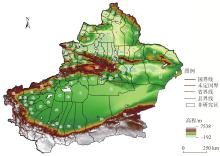
Fig. 1
Schematic diagram of the study area"
Tab. 1
County and district administrative units of the study area"
| 编号 | 县(区) | 编号 | 县(区) | 编号 | 县(区) | 编号 | 县(区) | 编号 | 县(区) |
|---|---|---|---|---|---|---|---|---|---|
| 1 | 天山区 | 21 | 呼图壁县 | 40 | 温宿县 | 59 | 麦盖提县 | 78 | 巩留县 |
| 2 | 沙依巴克区 | 22 | 玛纳斯县 | 41 | 库车市 | 60 | 岳普湖县 | 79 | 新源县 |
| 3 | 新市区 | 23 | 奇台县 | 42 | 沙雅县 | 61 | 伽师县 | 80 | 昭苏县 |
| 4 | 水磨沟区 | 24 | 吉木萨尔县 | 43 | 新和县 | 62 | 巴楚县 | 81 | 特克斯县 |
| 5 | 头屯河区 | 25 | 木垒哈萨克自治县 | 44 | 拜城县 | 63 | 塔什库尔干塔吉克自治县 | 82 | 尼勒克县 |
| 6 | 达坂城区 | 26 | 博乐市 | 45 | 乌什县 | 64 | 和田市 | 83 | 塔城市 |
| 7 | 米东区 | 27 | 阿拉山口市 | 46 | 阿瓦提县 | 65 | 和田县 | 84 | 乌苏市 |
| 8 | 乌鲁木齐县 | 28 | 精河县 | 47 | 柯坪县 | 66 | 墨玉县 | 85 | 额敏县 |
| 9 | 独山子区 | 29 | 温泉县 | 48 | 阿图什市 | 67 | 皮山县 | 86 | 沙湾市 |
| 10 | 克拉玛依区 | 30 | 库尔勒市 | 49 | 阿克陶县 | 68 | 洛浦县 | 87 | 托里县 |
| 11 | 白碱滩区 | 31 | 轮台县 | 50 | 阿合奇县 | 69 | 策勒县 | 88 | 裕民县 |
| 12 | 乌尔禾区 | 32 | 尉犁县 | 51 | 乌恰县 | 70 | 于田县 | 89 | 和布克赛尔蒙古自治县 |
| 13 | 高昌区 | 33 | 若羌县 | 52 | 喀什市 | 71 | 民丰县 | 90 | 阿勒泰市 |
| 14 | 鄯善县 | 34 | 且末县 | 53 | 疏附县 | 72 | 伊宁市 | 91 | 布尔津县 |
| 15 | 托克逊县 | 35 | 焉耆回族自治县 | 54 | 疏勒县 | 73 | 奎屯市 | 92 | 富蕴县 |
| 16 | 伊州区 | 36 | 和静县 | 55 | 英吉沙县 | 74 | 霍尔果斯市 | 93 | 福海县 |
| 17 | 巴里坤哈萨克自治县 | 37 | 和硕县 | 56 | 泽普县 | 75 | 伊宁县 | 94 | 哈巴河县 |
| 18 | 伊吾县 | 38 | 博湖县 | 57 | 莎车县 | 76 | 察布查尔锡伯自治县 | 95 | 青河县 |
| 19 | 昌吉市 | 39 | 阿克苏市 | 58 | 叶城县 | 77 | 霍城县 | 96 | 吉木乃县 |
| 20 | 阜康市 |
Tab. 2
Carbon pools of various land use types in Xinjiang /Mg·hm-2"
| 土地利用类型 | ||||
|---|---|---|---|---|
| 耕地 | 1.96 | 6.83 | 59.32 | 0.65 |
| 林地 | 27.52 | 11.62 | 92.67 | 4.54 |
| 草地 | 2.98 | 6.74 | 55.07 | 1.26 |
| 水域 | 1.45 | 0.66 | 0.00 | 0.00 |
| 建设用地 | 2.59 | 2.11 | 0.00 | 0.00 |
| 未利用地 | 1.19 | 1.26 | 26.24 | 0.00 |
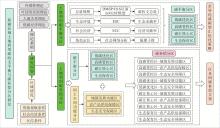
Fig. 2
Methodological framework"
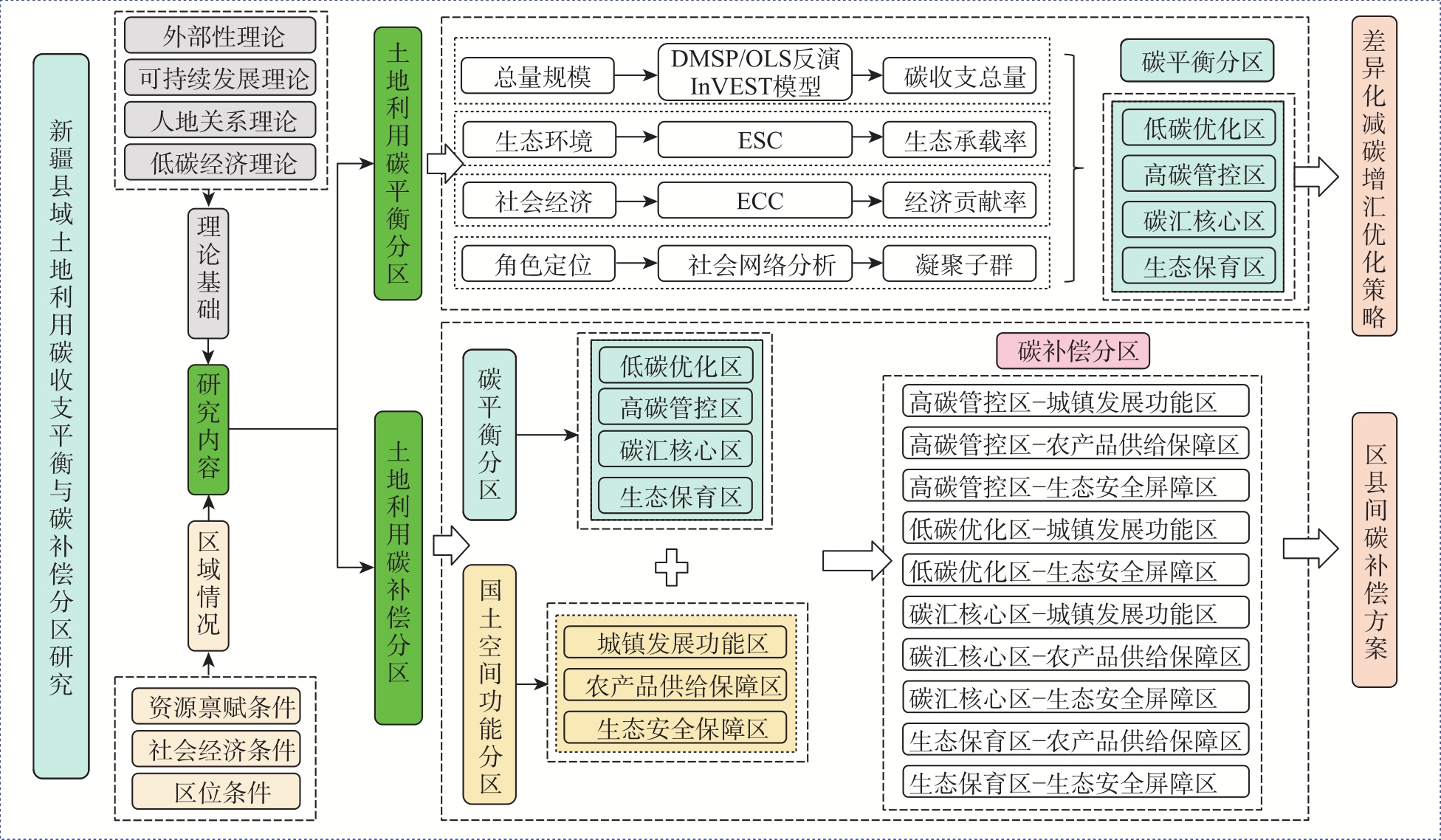
Fig. 3
Changes in the total carbon budget of county-level regions in Xinjiang from 2000 to 2023"
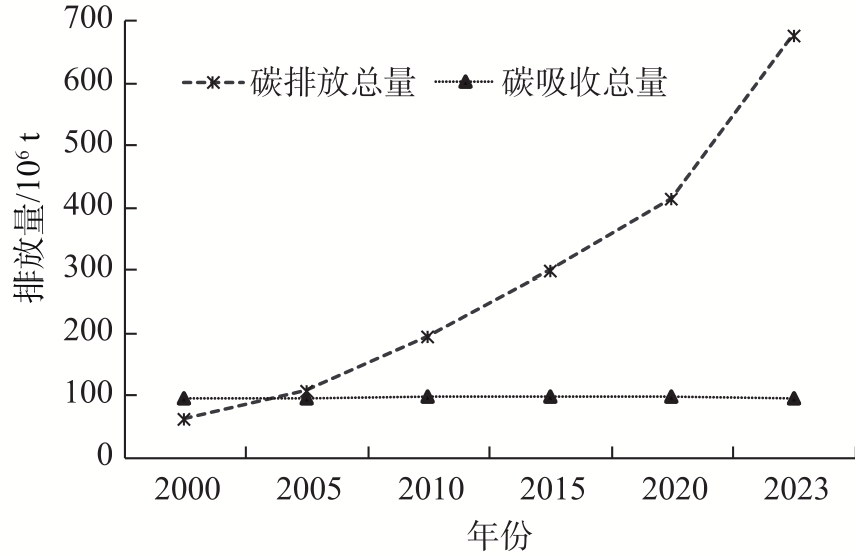
Fig. 4
Spatial distributions of carbon emissions by land use in Xinjiang’s counties from 2000 to 2023"
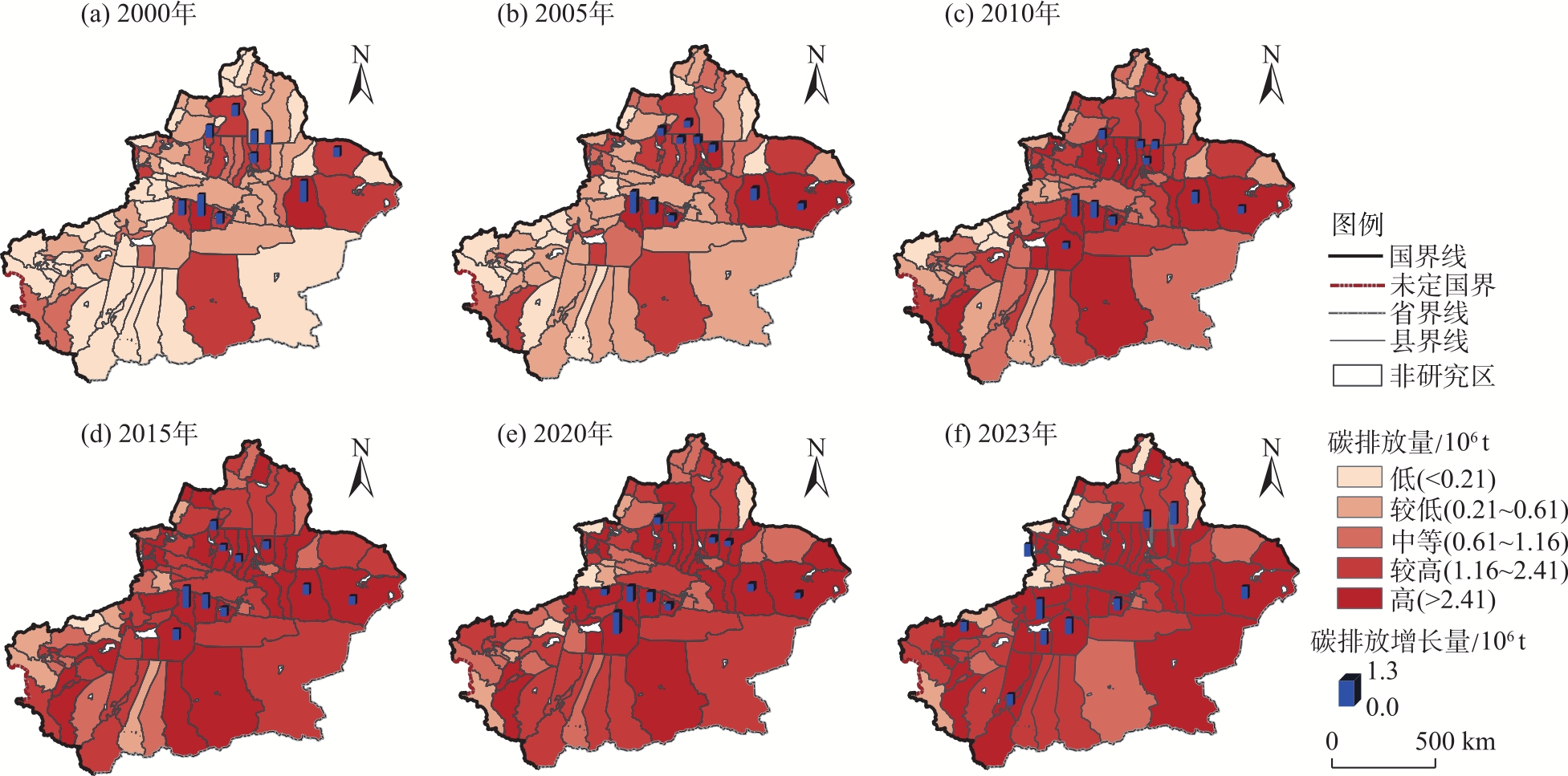
Fig. 5
Spatial distributions of carbon absorption by land use in Xinjiang’s counties from 2000 to 2023"

Fig. 6
Spatial distributions of ecological carrying capacity of carbon balance in Xinjiang’s counties from 2000 to 2023"
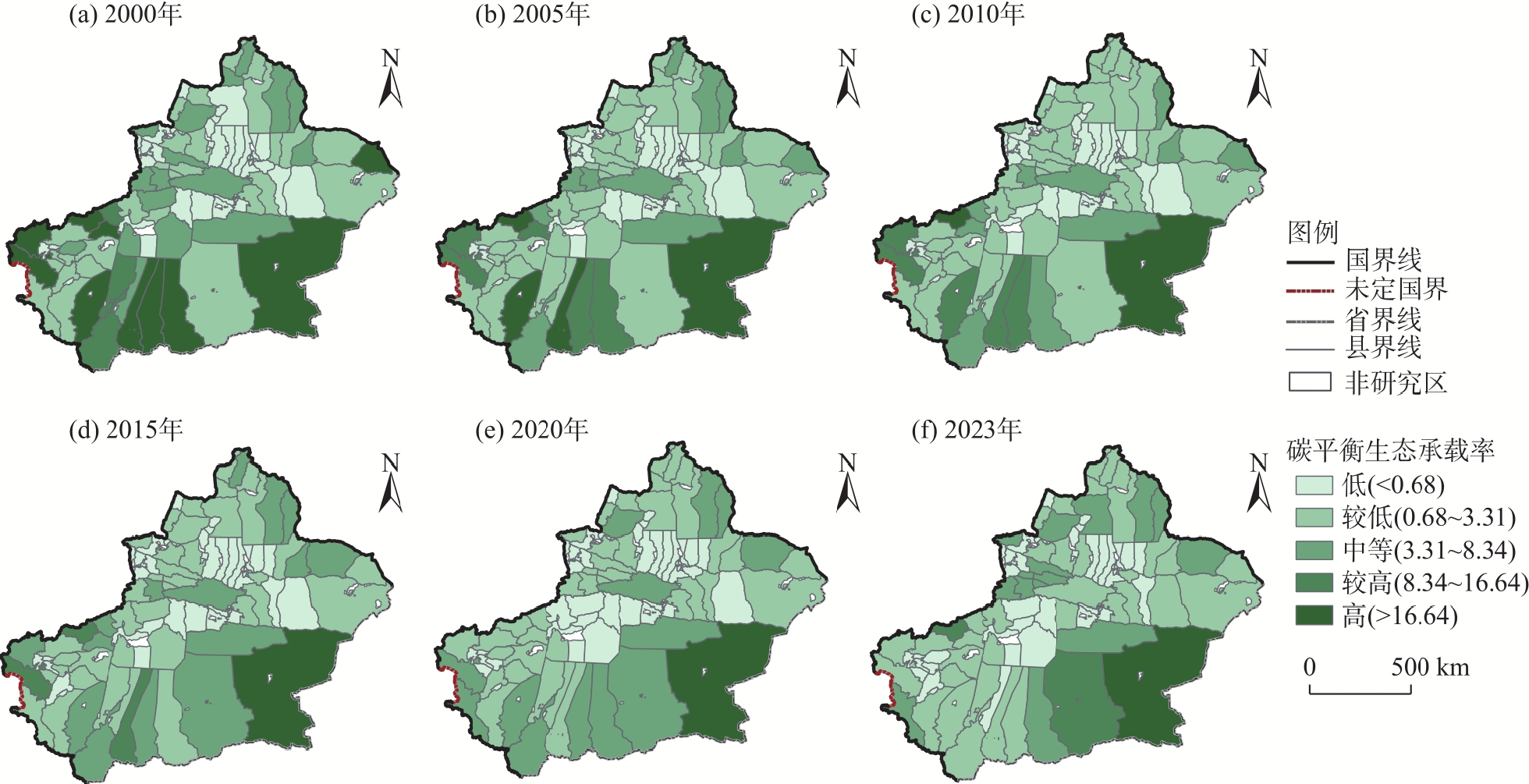
Fig. 7
Spatial distributions of the economic contribution rate of carbon balance in Xinjiang’s counties from 2000 to 2023"
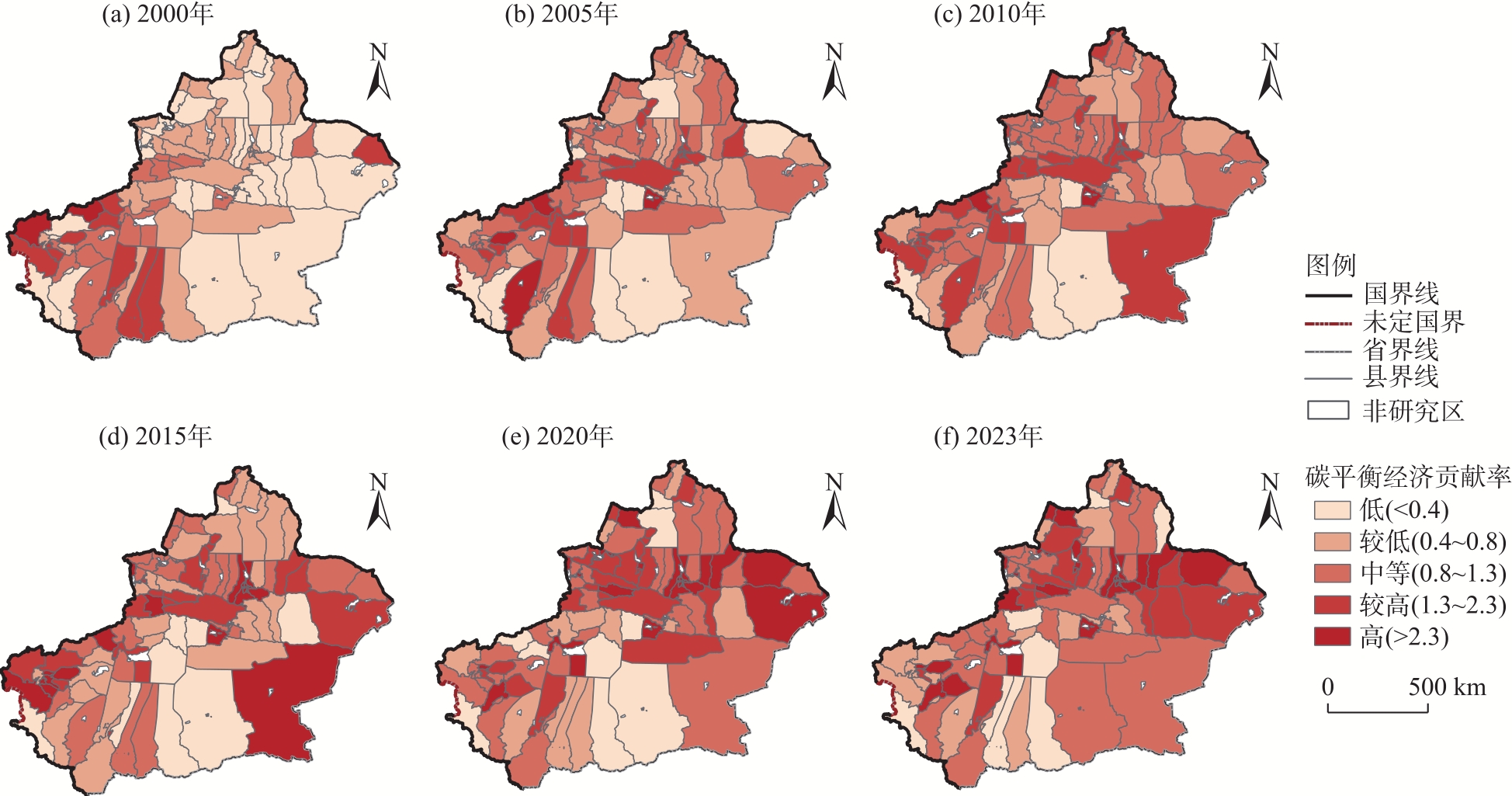
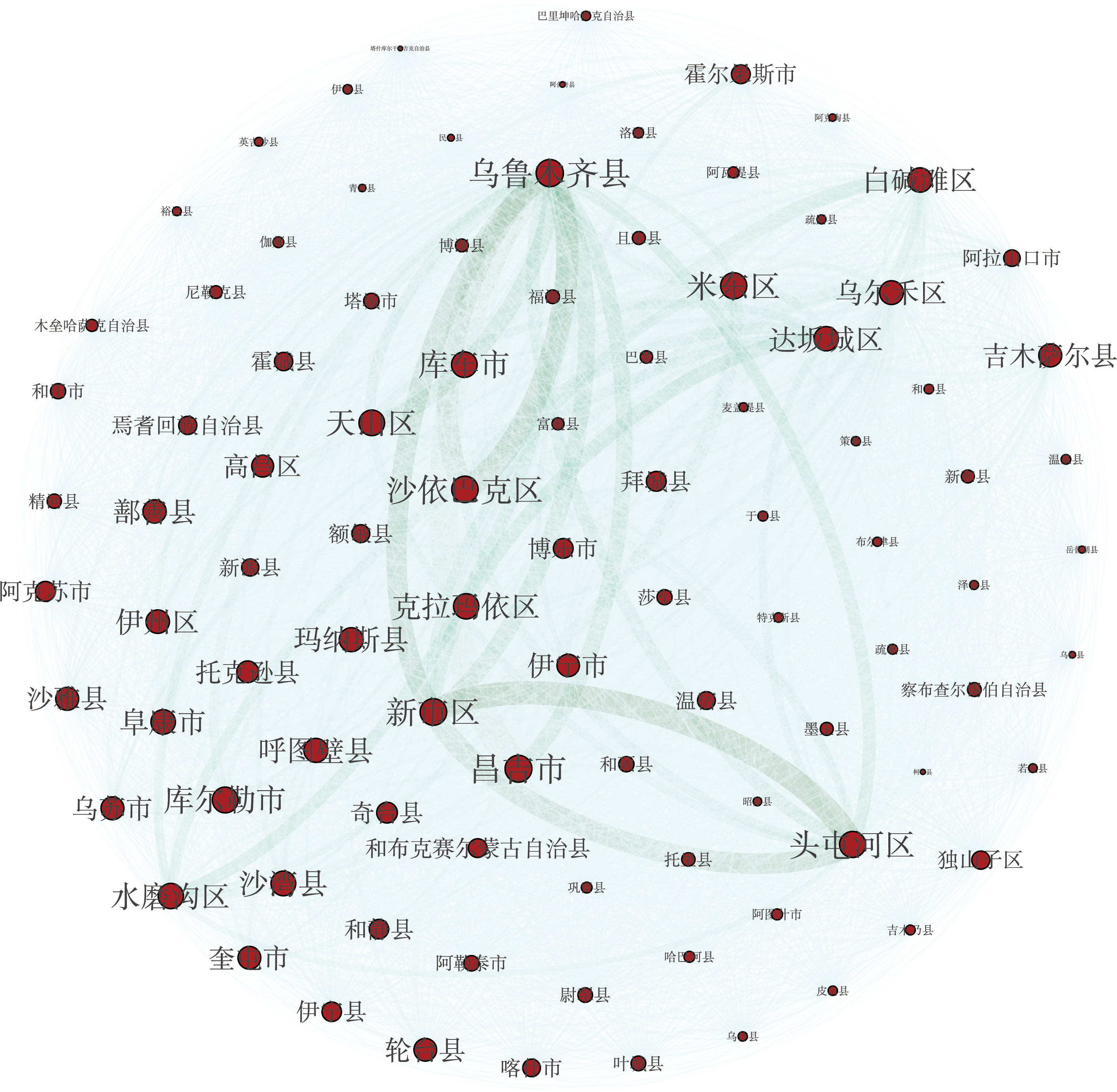
Fig. 8
Spatial correlation network of carbon emissions in Xinjiang’s counties in 2020"
Tab. 3
Identification criteria and characteristics of carbon emission cohesive subgroups in Xinjiang’s counties in 2020"
| 板块 | 分类 | 关键特征 |
|---|---|---|
| 板块1 | 净受益板块 | 内部密度极高,依赖外部资源输入 |
| 板块2 | 净受益板块 | 内部高度封闭,流入略高于流出 |
| 板块3 | 净溢出板块 | 内部松散,资源单向向外输出 |
| 板块4 | 经纪人板块 | 连接板块1和板块2,控制关键资源流动路径 |
Tab. 4
Criteria for carbon balance zoning"
| 区域类型 | 区域划分依据 | 空间功能特征 |
|---|---|---|
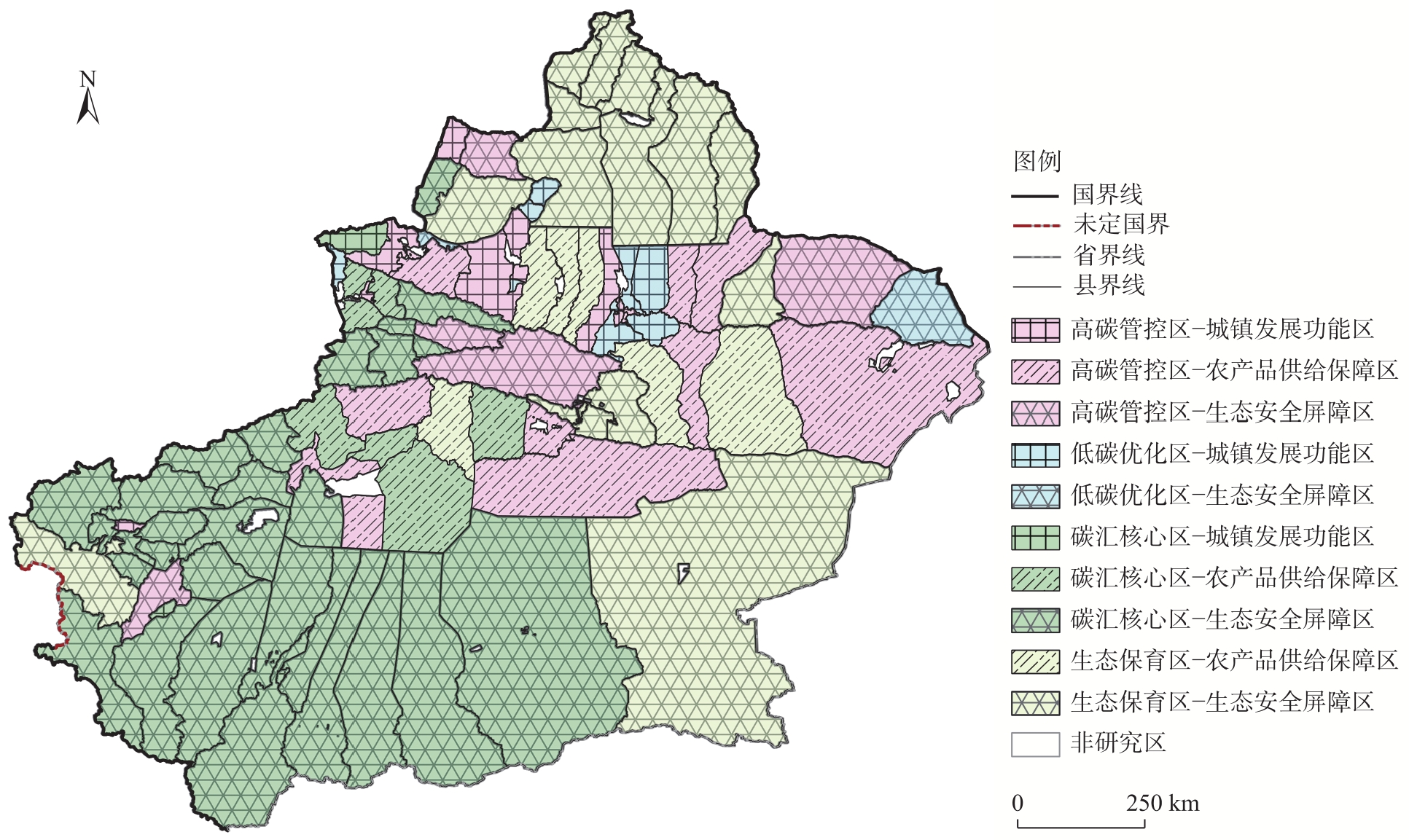
| 低碳优化区 | ECC<1,ESC<1,CAi<Ci | 呈“高排放-低效益”特征:碳排放总量与经济产出效率倒挂,生态本底脆弱性显著,是网络中的“净溢出板块” |
| 高碳管控区 | ECC>1,ESC<1,CAi<Ci | 呈“高排放-高增长”特征:能源密集型产业集聚,生态赤字持续扩大,是网络中的“经纪人板块” |
| 生态保育区 | ECC<1,ESC>1,CAi<Ci | 呈“低经济-高生态”特征:碳汇经济转化效率不足,生态系统服务价值突出,是网络中的弱“净受益板块” |
| 碳汇核心区 | ECC<1,ESC>1,CAi>Ci | 呈“强碳汇-稳生态”特征:自然碳库储量优势显著,碳抵消贡献度突出,是网络中的强“净受益板块” |
Fig. 9
Schematic diagram of carbon compensation zoning for Xinjiang’s counties in 2020"
| [1] | 王新令. 积极应对气候变化, 推动清洁低碳转型——《2030年前碳达峰行动方案》解读[J]. 中国电业, 2021(12): 22-25. |
| [Wang Xinling. Actively addressing climate change and promoting clean and low-carbon transition: Interpretation of the action plan for carbon peaking before 2030[J]. China Electric Power, 2021(12): 22-25.] | |
| [2] | Intergovernmental Panel on Climate Change. Climate change 2013: The physical science basis[R]. Cambridge: Cambridge University Press, 2013. |
| [3] | Hunter M L, Clark L, Frei R J, et al. Carbon emissions from active horticulture peat extraction sites in Canada: Five years of field-based measurements[C]// European Geosciences Union General Assembly 2024. Vienna, Austria: EGU General Assembly 2024, 2024: 6373, doi: 10.5194/egusphere-egu24-6373. |
| [4] | Li S Y, Yao L L, Zhang Y C, et al. China’s provincial carbon emission driving factors analysis and scenario forecasting[J]. Environmental and Sustainability Indicators, 2024, 22: 100390, doi: 10.1016/j.indic.2024.100390. |
| [5] |
Lawrence P J, Lawrence D M, Hurtt G C. Attributing the carbon cycle impacts of CMIP5 historical and future land use and land cover change in the Community Earth System Model (CESM1)[J]. Journal of Geophysical Research: Biogeosciences, 2018, 123(5): 1732-1755.
doi: 10.1029/2017JG004348 |
| [6] |
Bovensmann H, Buchwitz M, Burrows J P, et al. A remote sensing technique for global monitoring of power plant CO2 emissions from space and related applications[J]. Atmospheric Measurement Techniques, 2010, 3(4): 781-811.
doi: 10.5194/amt-3-781-2010 |
| [7] |
Qin J X, Duan W L, Zou S, et al. Global energy use and carbon emissions from irrigated agriculture[J]. Nature Communications, 2024, 15(1): 3084, doi: 10.1038/s41467-024-47383-5.
pmid: 38600059 |
| [8] |
Cheng Y X, Tang Y Q, Zhou B, et al. Spatiotemporal analysis of national carbon emission and regional carbon simulation in China[J]. Environmental Science and Pollution Research, 2024, 31(7): 10702-10716.
doi: 10.1007/s11356-023-31817-6 |
| [9] | Wang Y L, Wang W, Chen Y, et al. Projection of ecological water consumption under carbon emission in Chinese provinces[J]. Journal of Cleaner Production, 2024, 448: 141630, doi: 10.1016/j.jclepro.2024.141630. |
| [10] |
Chen Y Z, Lu H W, Li J, et al. Effects of land use cover change on carbon emissions and ecosystem services in Chengyu urban agglomeration, China[J]. Stochastic Environmental Research and Risk Assessment, 2020, 34(8): 1197-1215.
doi: 10.1007/s00477-020-01819-8 |
| [11] | 章登锋. 长江经济带土地利用碳排放时空特征及影响因素分析[D]. 武汉: 华中农业大学, 2023. |
| [Zhang Dengfeng. Spatial-temporal characteristics and influencing of land use carbon emissions in the Yangtze River economic belt[D]. Wuhan: Huazhong Agricultural University, 2023.] | |
| [12] | 陈靖松, 张建军, 李金龙, 等. 京津冀地区碳排放时空格局变化及其驱动因子[J]. 生态学报, 2024, 44(6): 2270-2283. |
| [Chen Jingsong, Zhang Jianjun, Li Jinlong, et al. Spatio-temporal pattern of carbon emissions and its driving factors in the Beijing-Tianjin-Hebei region[J]. Acta Ecologica Sinica, 2024, 44(6): 2270-2283.] | |
| [13] |
易丹, 欧名豪, 郭杰, 等. 土地利用碳排放及低碳优化研究进展与趋势展望[J]. 资源科学, 2022, 44(8): 1545-1559.
doi: 10.18402/resci.2022.08.02 |
|
[Yi Dan, Ou Minghao, Guo Jie, et al. Progress and prospect of research on land use carbon emissions and low-carbon optimization[J]. Resources Science, 2022, 44(8): 1545-1559.]
doi: 10.18402/resci.2022.08.02 |
|
| [14] | 李寒雨, 毛春梅. 碳中和目标下长三角城市群碳收支时空分异与碳补偿量化研究[J]. 环境保护科学, 2024, 50(5): 67-75. |
| [Li Hanyu, Mao Chunmei. Quantifying spatial and temporal divergence of carbon balance and carbon offset in the Yangtze River Delta urban agglomeration under the carbon neutrality coal[J]. Environmental Protection Science, 2024, 50(5): 67-75.] | |
| [15] | 程番苑, 石培基, 张韦萍, 等. 主体功能区视角下兰西城市群碳收支时空分异及碳补偿分区——基于DMSP/OLS和NPP/VIIRS夜间灯光数据[J]. 环境科学学报, 2023, 43(11): 398-410. |
| [Cheng Fanyuan, Shi Peiji, Zhang Weiping, et al. Temporal and spatial differentiation of carbon budget and carbon compensation zoning in the county of Lanzhou-Xining urban agglomeration from the perspective of main functional area: Based on the DMSP/OLS and NPP/VIIRS nighttime light data[J]. Acta Scientiae Circumstantiae, 2023, 43(11): 398-410.] | |
| [16] | Zhang Y, Li J, Liu S, et al. Spatiotemporal effects and optimization strategies of land-use carbon emissions at the county scale: A case study of Shaanxi Province, China[J]. Sustainability, 2024, 16(10): 4104, doi: 10.3390/su16104104. |
| [17] |
Liu X, Ou J, Wang S, et al. Estimating spatiotemporal variations of city-level energy-related CO2 emissions: An improved disaggregating model based on vegetation adjusted nighttime light data[J]. Journal of Cleaner Production, 2018, 177: 101-114.
doi: 10.1016/j.jclepro.2017.12.197 |
| [18] |
Wang Y, Li G. Mapping urban CO2 emissions using DMSP/OLS ‘city lights’ satellite data in China[J]. Environment and Planning A: Economy and Space, 2017, 49(2): 248-251.
doi: 10.1177/0308518X16656374 |
| [19] |
Shan Y, Liu J, Liu Z, et al. An emissions-socioeconomic inventory of Chinese cities[J]. Scientific Data, 2019, 6(1): 1-10.
doi: 10.1038/s41597-018-0005-2 |
| [20] | Chen J D, Gao M, Cheng S L, et al. County-level CO2 emissions and sequestration in China during 1997—2017[J]. Scientific Data, 2020, 7: 391, doi: 10.1038/s41597-020-00736-3. |
| [21] | Wu Y, Shi K, Chen Z, et al. Developing improved time-series DMSP-OLS-like data (1992—2019) in China by integrating DMSP-OLS and SNPP-VIIRS[J]. IEEE Transactions on Geoscience and Remote Sensing, 2021, 60: 1-14. |
| [22] | 自然资源部. 标准地图服务系统(审图号: GS(2023)2767)[EB/OL]. [2025-02-18]. http://bzdt.ch.mnr.gov.cn/browse. |
| [Ministry of Natural Resources. Standard map service system (approval map number: GS(2023)2767)[EB/OL]. [2025-02-18]. http://bzdt.ch.mnr.gov.cn/browse.] | |
| [23] | Lü Q, Liu H B, Wang J T, et al. Multiscale analysis on spatiotemporal dynamics of energy consumption CO2 emissions in China: Utilizing the integrated of DMSP-OLS and NPP-VIIRS nighttime light datasets[J]. Science of the Total Environment, 2020, 703: 134394, doi: 10.1016/j.scitotenv.2019.134394. |
| [24] |
Wang Z, Zeng J, Chen W X. Impact of urban expansion on carbon storage under multi-scenario simulations in Wuhan, China[J]. Environmental Science and Pollution Research, 2022, 29(30): 45507-45526.
doi: 10.1007/s11356-022-19146-6 |
| [25] | 徐丽, 何念鹏, 于贵瑞. 2010s中国陆地生态系统碳密度数据集[J]. 中国科学数据(中英文网络版), 2019, 4(1): 90-96. |
| [Xu Li, He Nianpeng, Yu Guirui. A dataset of carbon density in Chinese terrestrial ecosystems(2010s)[J]. China Scientific Data, 2019, 4(1): 90-96.] | |
| [26] | 傅楷翔, 贾国栋, 余新晓, 等. 耦合PLUS-InVEST-Geodector模型的新疆地区碳储量时空变化及驱动机制分析[J]. 环境科学, 2024, 45(9): 5416-5430. |
| [Fu Kaixiang, Jia Guodong, Yu Xinxiao, et al. Analysis of temporal and spatial carbon stock changes and driving mechanism in Xinjiang region by coupled PLUS-InVEST-Geodector model[J]. Environmental Science, 2024, 45(9): 5416-5430.] | |
| [27] |
Giardina C P, Ryan M G. Evidence that decomposition rates of organic carbon in mineral soil do not vary with temperature[J]. Nature, 2000, 404(6780): 858-861.
doi: 10.1038/35009076 |
| [28] |
Alam S A, Starr M, Clark B J F. Tree biomass and soil organic carbon densities across the Sudanese woodland savannah: A regional carbon sequestration study[J]. Journal of Arid Environments, 2013, 89: 67-76.
doi: 10.1016/j.jaridenv.2012.10.002 |
| [29] |
苑韶峰, 唐奕钰. 低碳视角下长江经济带土地利用碳排放的空间分异[J]. 经济地理, 2019, 39(2): 190-198.
doi: 10.15957/j.cnki.jjdl.2019.02.023 |
|
[Yuan Shaofeng, Tang Yiyu. Spatial differentiation of land use carbon emission in the Yangtze River economic belt based on low carbon perspective[J]. Economic Geography, 2019, 39(2): 190-198.]
doi: 10.15957/j.cnki.jjdl.2019.02.023 |
|
| [30] |
赵荣钦, 张帅, 黄贤金, 等. 中原经济区县域碳收支空间分异及碳平衡分区[J]. 地理学报, 2014, 69(10): 1425-1437.
doi: 10.11821/dlxb201410003 |
|
[Zhao Rongqin, Zhang Shuai, Huang Xianjin, et al. spatial variation of carbon budget and carbon balance zoning of central plains economic region at county-level[J]. Acta Geographica Sinica, 2014, 69(10): 1425-1437.]
doi: 10.11821/dlxb201410003 |
|
| [31] | 刘华军, 刘传明, 孙亚男. 中国能源消费的空间关联网络结构特征及其效应研究[J]. 中国工业经济, 2015(5): 83-95. |
| [Liu Huajun, Liu Chuanming, Sun Yanan. Spatial correlation network structure of energy consumption and its effect in China[J]. China Industrial Economics, 2015(5): 83-95.] | |
| [32] | 刘军. 整体网分析—UCINET软件使用指南[M]. 上海: 格致出版社&上海人民出版社, 2021: 1-11. |
| [Liu Jun. Whole network analysis: A practical guide to UCINET software[M]. Shanghai: Truth & Wisdom Press & Shanghai People’s Publishing House, 2021: 1-11.] | |
| [33] | 王丽蓉, 石培基, 尹君锋, 等. 碳中和视角下甘肃省县域碳收支时空分异与国土空间分区优化[J]. 环境科学, 2024, 45(7): 4101-4111. |
| [Wang Lirong, Shi Peiji, Yin Junfeng, et al. Spatio-temporal differentiation of county carbon budget and territorial space optimization zoning strategy in Gansu Province from the perspective of carbon neutrality[J]. Environmental Science, 2024, 45(7): 4101-4111.] | |
| [34] | 郑航, 叶阿忠. 空间关联网络结构特征的减排效应: 基于城市群视角[J]. 环境科学, 2022, 43(10): 4401-4407. |
| [Zheng Hang, Ye Azhong. Carbon emission reduction effect of spatial correlation network structure characteristics: From the perspective of urban agglomeration[J]. Environmental Science, 2022, 43(10): 4401-4407.] |
|
||

