Arid Land Geography ›› 2025, Vol. 48 ›› Issue (11): 1971-1982.doi: 10.12118/j.issn.1000-6060.2024.567
• Ecology and Environment • Previous Articles Next Articles
LI Hongfei1,2( ), CHANG Kai1,2()
Received:2024-09-22
Revised:2024-11-11
Online:2025-11-25
Published:2025-11-26
Contact:
CHANG Kai
E-mail:Lhf117@126.com;qqqck0907@163.com
LI Hongfei, CHANG Kai. Spatiotemporal distribution characteristics and spatial network construction of national nature reserves in China[J].Arid Land Geography, 2025, 48(11): 1971-1982.
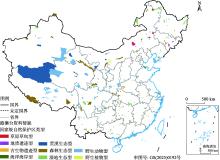
Fig. 1
Spatial distribution of national nature reserves in China"

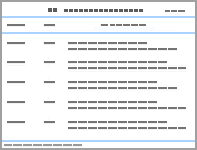
Tab. 1
Classification of national nature reserve types in China"
| 一级分类 | 二级分类 | 数量/处 | 百分比/% |
|---|---|---|---|
| 自然生态系统类 | 草原草甸 | 4 | 0.84 |
| 海洋海岸 | 17 | 3.59 | |
| 荒漠生态 | 11 | 2.32 | |
| 森林生态 | 221 | 46.62 | |
| 湿地生态 | 65 | 13.71 | |
| 野生生物类 | 野生动物 | 121 | 25.53 |
| 野生植物 | 17 | 3.59 | |
| 自然遗迹类 | 地质遗迹 | 12 | 2.53 |
| 古生物遗迹 | 6 | 1.27 |

Fig. 2
Technical routes for integration and optimization of national nature reserves"

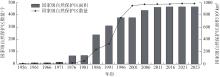
Fig. 3
Changes in the number and type composition of national nature reserves from 1956 to 2023"
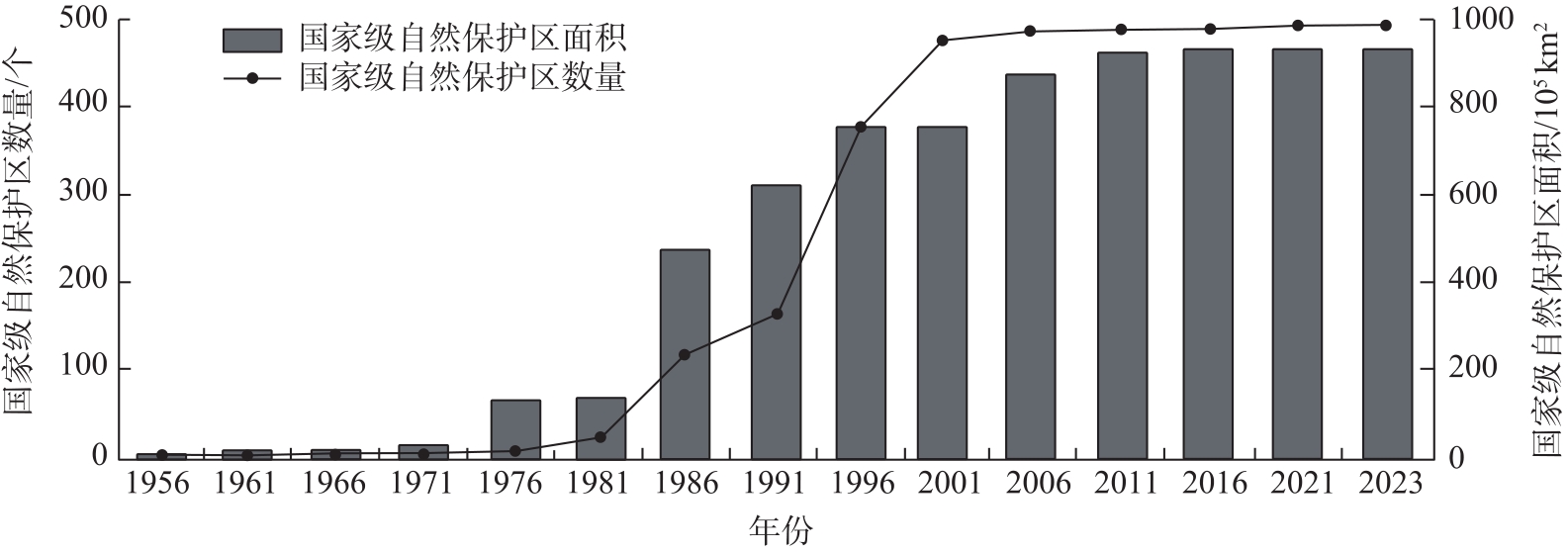
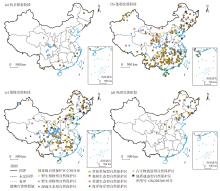
Fig. 4
Spatial distributions of national nature reserves at different stages of development"

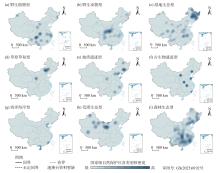
Fig. 5
Distribution characteristics of various types of national nature reserves"
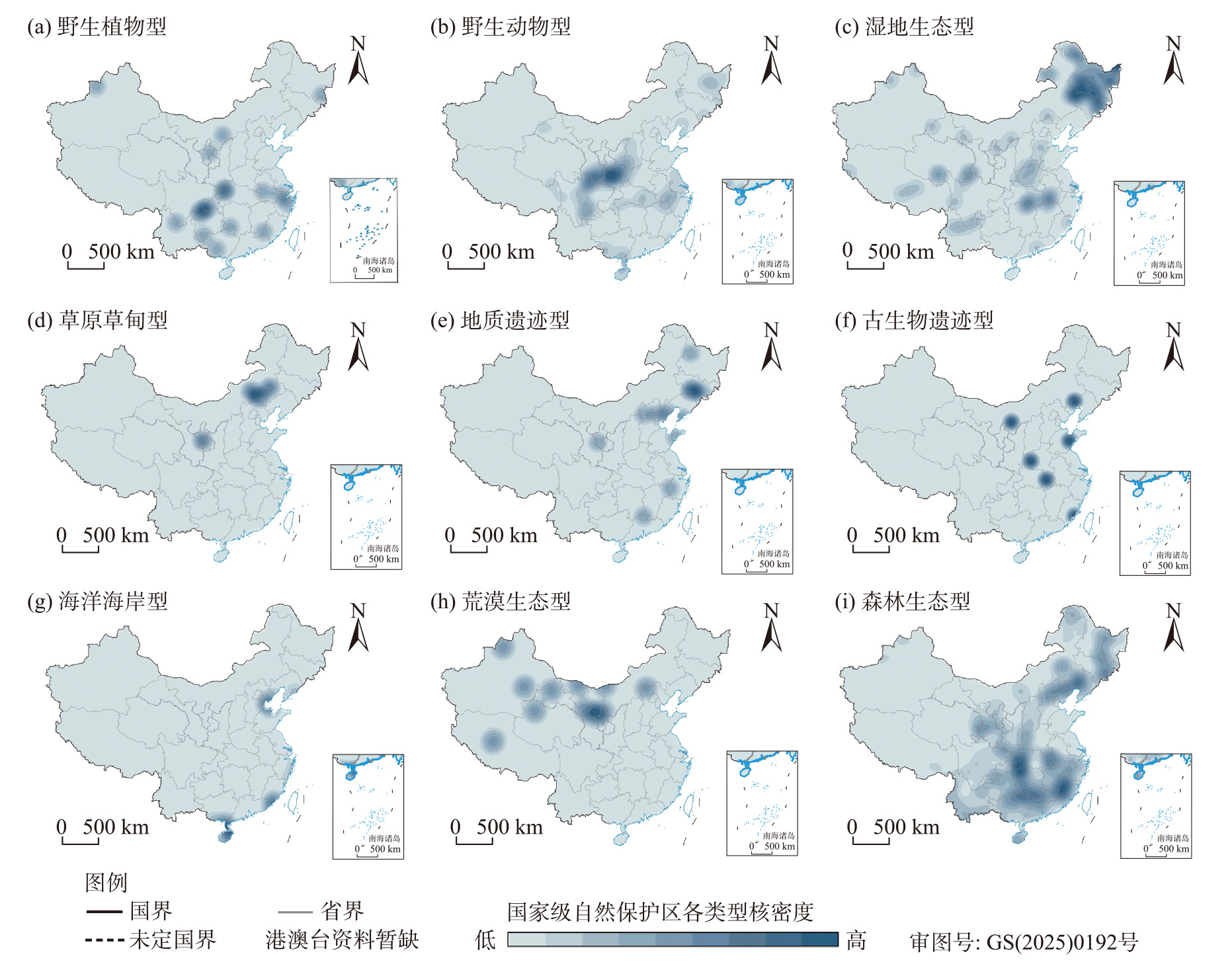
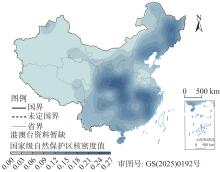
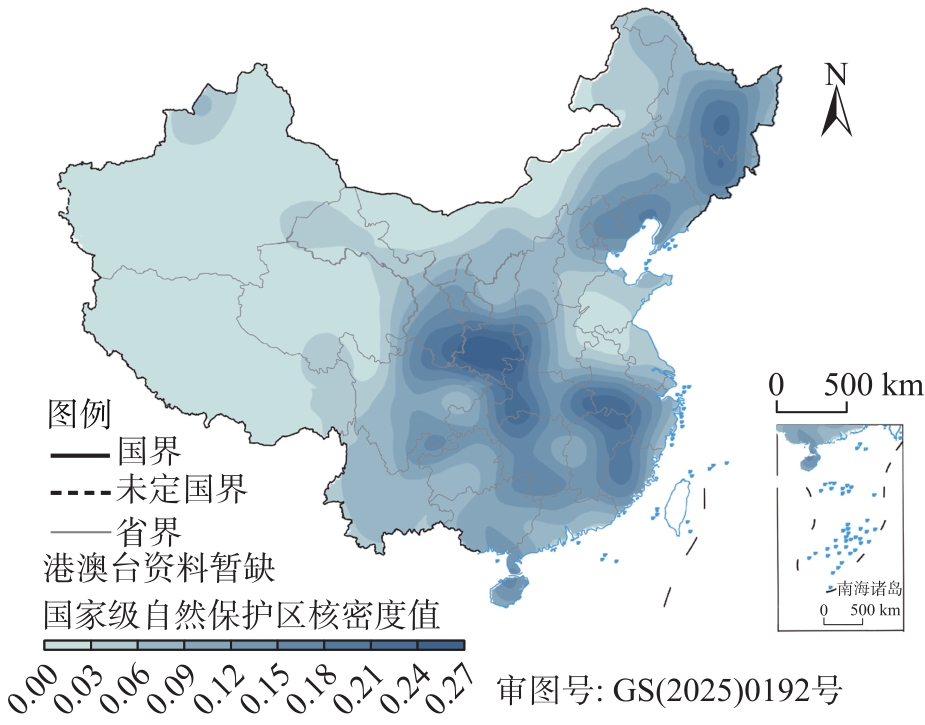
Fig. 6
Kernel density distribution of national nature reserves"
Tab. 2
Selection of relevance indicators for national nature reserves"
| 准则层 | 指标层 | 指标解释与测度 |
|---|---|---|
| 地理联系 | 空间距离 | 衡量自然保护区的地理联系强度。通过全国公路数据集构建目的地(OD)成本矩阵,计算保护区之间的交通距离并求倒数,最后将数据归一化处理后得到保护区的地理联系强度 |
| 生态联系 | 保护物种 | 计算自然保护区所保护物种类型的关联强度。结合保护区的类型划分以及所保护对象的一级分类,赋值同属一级分类,有相同或相似保护对象的自然保护区为1,不同分类为0 |
| 面积联系 | 生态规模 | 衡量自然保护区生态保护规模之间的联系。根据前文所划分的5类国家级自然保护区规模,赋值同一规模的国家级自然保护区为1,不同规模为0 |
| 时代联系 | 创建时期 | 衡量自然保护区成立的时间联系强度。基于前文划分的自然保护区发展阶段,赋值同一时间阶段的国家级自然保护区为1,不同时间阶段为0 |
Tab. 3
Calculation of the weights of relevance indicators for national nature reserves"
| 准则层 | 指标层 | 层次分析法权重 | 德尔菲法权重 | 综合权重 |
|---|---|---|---|---|
| 地理联系 | 空间距离 | 0.3822 | 0.48 | 0.4311 |
| 生态联系 | 保护物种 | 0.3102 | 0.34 | 0.3251 |
| 面积联系 | 生态规模 | 0.2411 | 0.17 | 0.2055 |
| 时代联系 | 创建时期 | 0.0667 | 0.01 | 0.0383 |
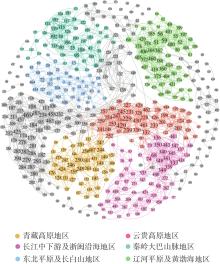
Fig. 7
Spatial pattern of topology of national nature reserves"

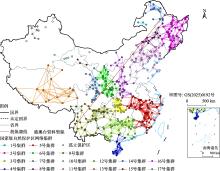
Fig. 8
Spatial distribution patterns of cohesive subgroups in national nature reserves"

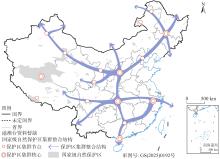
Fig. 9
Network structure of integrated conservation of national nature reserves in China"
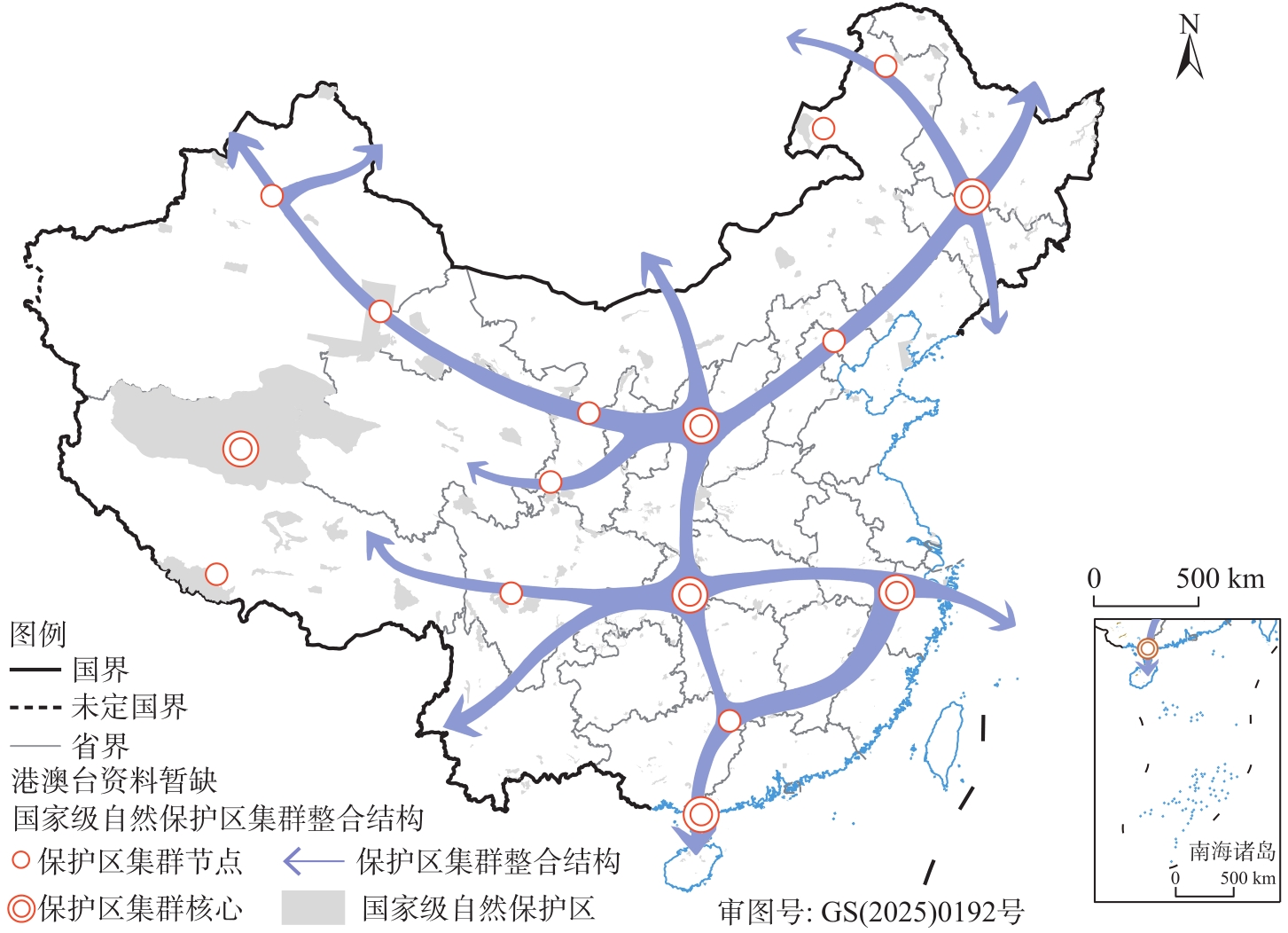
Tab. 4
Main characteristics of national nature reserves clusters and strategies for their integration"
| 集群编号 | 主要类型 | 整合保护策略 |
|---|---|---|
| 1 | 湿地生态 | 依托大兴安岭和呼伦湖等自然资源,进一步完善中国东北段防沙带的构建 |
| 2 | 湿地生态 | 强化森林、湿地2大类型的联动保护,形成以长白山脉为发展轴线、中心节点引领的保护区整合形态 |
| 3 | 森林生态 | 作为保护区集群的中介中心,应借助长江干、支流等已有线性生态廊道,强化集群内、外的关联性,并整合集群内具有相似保护内容的保护区,强化生境连续性的同时保障全国保护区集群之间的网络关联安全 |
| 4 | 野生动物 | 结合区位优势与资源禀赋,形成以热带气候为特色的海洋、森林为主导类型的自然保护区集群,是中国沿海生态屏障中最重要的一环 |
| 5 | 森林生态 | 该地区为保护区零碎化最严重的集群之一,应在坚守生态保护红线和城镇开发边界的前提下,以相似类型合并、保护范围调整的措施构建生态廊道,强化生境连续性 |
| 6 | 野生动物 | 系统整合该集群内部荒漠、草甸等特色资源,以黄河干、支流为线性生态廊道,形成以自然生态为主导类型,自然遗迹为特色的保护区集群 |
| 7 | 森林生态 | 将宜荒则荒、量水而行作为整合原则,与5号保护区集群共同强化黄河流域生态系统的稳定性 |
| 8 | 湿地生态 | 以松花江干、支流为发展轴线,串联并整合集群内湿地、草原等自然保护区 |
| 9 | 森林生态 | 利用金沙江、乌蒙山等线性生态廊道为发展轴线,采用相似类型合并,重叠交叉优化等措施,形成以森林生态为主导类型的自然保护区集群 |
| 10 | 荒漠生态 | 将宜荒则荒、量水而行作为整合原则,围绕祁连山脉构建中国北部防沙带 |
| 11 | 森林生态 | 基于中心性测度所表征出的特点,应先将集群内保护区按照自然生态和自然遗迹进行类型整合,依靠区域内努鲁儿虎山等山脉、河流作为轴线,优化保护区边界,构建多层次的生态片区 |
| 12 | 森林生态 | 通过调整保护区范围、合并相似保护区,以此强化集群内保护区之间关联性,围绕南岭山脉形成森林生态为主的保护区集群 |
| 13 | 野生动物 | 以可可西里、羌塘等自然保护区为重点生态功能区,强化“两江四河”水源涵养林、护岸林的综合整治,扩大野生动物生存空间 |
| 14 | 森林生态 | 重点围绕大小兴安岭构建以森林生态为主、湿地生态为辅的东北森林带片区 |
| 15 | 野生动物 | 将宜荒则荒、量水而行作为整合原则,围绕祁连山脉构建中国北部防沙带 |
| 16 | 森林生态 | 以吕梁山、黄河为发展轴线,合并同类、吸收相似保护地为措施,保障黄河中下游湿地安全和生物多样性 |
| 17 | 荒漠生态 | 以宜荒则荒、量水而行为整合原则,围绕天山山脉进一步完善北部防沙带建设 |
| [1] | Xu J L, Sun G Q, Liu Y. Diversity and complexity in the forms and functions of protected areas in China[J]. Journal of International Wildlife Law & Policy, 2014, 17(3): 102-114. |
| [2] | 欧阳志云, 杜傲, 徐卫华. 中国自然保护地体系分类研究[J]. 生态学报, 2020, 40(20): 7207-7215. |
| [Ouyang Zhiyun, Du Ao, Xu Weihua. Research on China’s protected area system classification[J]. Acta Ecologica Sinica, 2020, 40(20): 7207-7215. ] | |
| [3] | 王昌海. 改革开放40年中国自然保护区建设与管理: 成就、挑战与展望[J]. 中国农村经济, 2018(10): 93-106. |
| [Wang Changhai. The construction and management of China’s nature reserves in the past forty years of reform and opening-up: Achievements, challenges and prospects[J]. China Rural Economy, 2018(10): 93-106. ] | |
| [4] | 赵智聪, 王沛. 中国自然保护地连通性的重要意义与关键议题[J]. 风景园林, 2022, 29(7): 12-17. |
| [Zhao Zhicong, Wang Pei. Significance and key issues of protected area connectivity in China[J]. Landscape Architecture, 2022, 29(7): 12-17. ] | |
| [5] | 骆殿啟, 刘曙光. 自然保护区价值评判方法[J]. 资源开发与保护, 1992(4): 247-251. |
| [Luo Dianqi, Liu Shuguang. A method for evaluating the value of nature reserves[J]. Resource Development and Conservation, 1992(4): 247-251. ] | |
| [6] |
王安琪, 张钰, 刘佳伟, 等. 新疆甘家湖梭梭林国家级自然保护区植被群落多样性及空间分布格局[J]. 干旱区地理, 2024, 47(11): 1841-1851.
doi: 10.12118/j.issn.1000-6060.2024.133 |
|
[Wang Anqi, Zhang Yu, Liu Jiawei, et al. Vegetation community diversity and spatial distribution pattern in Ganjiahu saxoul national nature reserve, Xinjiang[J]. Arid Land Geography, 2024, 47(11): 1841-1851. ]
doi: 10.12118/j.issn.1000-6060.2024.133 |
|
| [7] | 张坤, 肖燕, 何振芳, 等. 基于SRTM DEM的祁连山自然保护区地形特征研究[J]. 干旱区地理, 2020, 43(6): 1559-1566. |
|
[Zhang Kun, Xiao Yan, He Zhenfang, et al. Topography features of Qilian Mountains nature reserve based on SRTM DEM[J]. Arid Land Geography, 2020, 43(6): 1559-1566. ]
doi: 10.12118/j.issn.1000-6060.2020.06.17 |
|
| [8] |
马童慧, 吕偲, 雷光春. 中国自然保护地空间重叠分析与保护地体系优化整合对策[J]. 生物多样性, 2019, 27(7): 758-771.
doi: 10.17520/biods.2019087 |
|
[Ma Tonghui, Lü Cai, Lei Guangchun. The spatial overlapping analysis for China’s natural protected area and countermeasures for the optimization and integration of protected area system[J]. Biodiversity Science, 2019, 27(7): 758-771. ]
doi: 10.17520/biods.2019087 |
|
| [9] |
郭倩倩, 张志斌, 陈龙, 等. “流空间”视角下西北地区城市关联特征与网络格局分析[J]. 经济地理, 2023, 43(3): 88-99.
doi: 10.15957/j.cnki.jjdl.2023.03.010 |
|
[Guo Qianqian, Zhang Zhibin, Chen Long, et al. Characteristics and network structure of urban linkage in northwest China from the perspective of “flow space”[J]. Economic Geography, 2023, 43(3): 88-99. ]
doi: 10.15957/j.cnki.jjdl.2023.03.010 |
|
| [10] | 卢爱刚, 王圣杰. 中国自然保护区发展状况分析[J]. 干旱区资源与环境, 2010, 24(11): 7-11. |
| [Lu Aigang, Wang Shengjie. Analysis on the development of nature preserves of China[J]. Journal of Arid Land Resources and Environment, 2010, 24(11): 7-11. ] | |
| [11] |
田野, 罗静, 孙建伟, 等. 武汉城市圈内部空间联系及其轴-辐网络结构演化[J]. 地理科学进展, 2019, 38(7): 1093-1102.
doi: 10.18306/dlkxjz.2019.07.013 |
|
[Tian Ye, Luo Jing, Sun Jianwei, et al. Urban spatial linkages and the hub-spoke network structure in the Wuhan metropolitan area[J]. Progress in Geography, 2019, 38(7): 1093-1102. ]
doi: 10.18306/dlkxjz.2019.07.013 |
|
| [12] |
刘承良, 桂钦昌, 段德忠, 等. 全球科研论文合作网络的结构异质性及其邻近性机理[J]. 地理学报, 2017, 72(4): 737-752.
doi: 10.11821/dlxb201704014 |
|
[Liu Chengliang, Gui Qinchang, Duan Dezhong, et al. Structural heterogeneity and proximity mechanism of global scientific collaboration network based on co-authored papers[J]. Acta Geographica Sinica, 2017, 72(4): 737-752. ]
doi: 10.11821/dlxb201704014 |
|
| [13] | 解钰茜, 曾维华, 马冰然. 基于社会网络分析的全球自然保护地治理模式研究[J]. 生态学报, 2019, 39(4): 1394-1406. |
| [Xie Yuxi, Zeng Weihua, Ma Bingran. Social network analysis of governance types of global protected areas[J]. Acta Ecologica Sinica, 2019, 39(4): 1394-1406. ] | |
| [14] |
初楠臣, 吴相利, 张平宇, 等. 基于现实与虚拟流视角下的东北地区城市空间网络特征[J]. 经济地理, 2022, 42(5): 66-74.
doi: 10.15957/j.cnki.jjdl.2022.05.007 |
|
[Chu Nanchen, Wu Xiangli, Zhang Pingyu, et al. Urban spatial network characteristics from the perspectives of reality and virtual flow in northeast China[J]. Economic Geography, 2022, 42(5): 66-74. ]
doi: 10.15957/j.cnki.jjdl.2022.05.007 |
|
| [15] | 高吉喜, 徐梦佳, 邹长新. 中国自然保护地70年发展历程与成效[J]. 中国环境管理, 2019, 11(4): 25-29. |
| [Gao Jixi, Xu Mengjia, Zou Changxin. Development achievement of natural conservation in 70 years of new China[J]. Chinese Journal of Environmental Management, 2019, 11(4): 25-29. ] | |
| [16] |
Huang Y Z, Fu J, Wang W R, et al. Development of China’s nature reserves over the past 60 years: An overview[J]. Land Use Policy, 2019, 80: 224-232.
doi: 10.1016/j.landusepol.2018.10.020 |
| [17] | 闫颜, 王智, 高军, 等. 我国自然保护区地区分布特征及影响因素[J]. 生态学报, 2010, 30(18): 5091-5097. |
| [Yan Yan, Wang Zhi, Gao Jun, et al. Regional distribution characteristics of nature reserves and the influencing factors in China[J]. Acta Ecologica Sinica, 2010, 30(18): 5091-5097. ] | |
| [18] | Sun S, Sang W, Axmacher J C. China’s national nature reserve network shows great imbalances in conserving the country’s mega-diverse vegetation[J]. Science of the Total Environment, 2020, 717: 137159, doi: 10.1016/j.scitotenv.2020.137159. |
| [19] |
Xu B C, Pan J H. Spatial distribution characteristics of national protected areas in China[J]. Journal of Geographical Sciences, 2019, 29(12): 2047-2068.
doi: 10.1007/s11442-019-1704-0 |
| [20] | 赵文飞, 宗路平, 王梦君. 中国自然保护区空间分布特征研究[J]. 生态学报, 2024, 44(7): 2786-2799. |
| [Zhao Wenfei, Zong Luping, Wang Mengjun. Spatial distribution of nature reserves in China[J]. Acta Ecologica Sinica, 2024, 44(7): 2786-2799. ] | |
| [21] | 王哲骁. 整合保护导向下的武陵山区沅水流域传统村落集群空间网络构建研究[D]. 武汉: 华中农业大学, 2020. |
| [Wang Zhexiao. Research on the construction of spatial network of traditional village clusters in Yuanshui River Basin of Wuling Mountain area under the guidance of integrated protection[D]. Wuhan: Huazhong Agricultural University, 2020. ] | |
| [22] | 李晓肃, 邓武功, 李泽, 等. 自然保护地整合优化——思路、应对与探讨[J]. 中国园林, 2020, 36(11): 25-28. |
| [Li Xiaosu, Deng Wugong, Li Ze, et al. Integration and optimization of protected area: Thinking, response and discussion[J]. Chinese Landscape Architecture, 2020, 36(11): 25-28. ] | |
| [23] | 李永进, 汤玉喜, 黎蕾, 等. 湖南省自然保护地空间分布特征及其重叠关系分析[J]. 生态与农村环境学报, 2021, 37(12): 1540-1547. |
| [Li Yongjin, Tang Yuxi, Li Lei, et al. Analysis on spatial distribution characteristics and overlapping relationship of natural protected areas in Hunan Province[J]. Journal of Ecology and Rural Environment, 2021, 37(12): 1540-1547. ] | |
| [24] | 唐小平, 刘增力, 马炜. 我国自然保护地整合优化规则与路径研究[J]. 林业资源管理, 2020(1): 1-10. |
| [Tang Xiaoping, Liu Zengli, Ma Wei. A study on integration and optimization rules and paths for natural protected areas in China[J]. Forest and Grassland Resources Research, 2020(1): 1-10. ] | |
| [25] |
黄秋淞, 何浩. 耦合生态系统服务和景观连通性的环塔里木盆地绿洲区生态安全格局研究[J]. 干旱区地理, 2024, 47(10): 1745-1754.
doi: 10.12118/j.issn.1000-6060.2024.022 |
|
[Huang Qiusong, He Hao. Ecological security pattern of the oasis area around the Tarim Basin based on coupled ecosystem services and landscape connectivity[J]. Arid Land Geography, 2024, 47(10): 1745-1754. ]
doi: 10.12118/j.issn.1000-6060.2024.022 |
|
||