干旱区地理 ›› 2026, Vol. 49 ›› Issue (4): 804-815.doi: 10.12118/j.issn.1000-6060.2025.144 cstr: 32274.14.ALG2025144
刘雅琦( ), 李建勇(), 王宁练, 冉艺
收稿日期:2025-03-19
修回日期:2025-04-22
出版日期:2026-04-25
发布日期:2026-04-28
通讯作者:
李建勇(1987-),男,博士,教授,主要从事气候变化与植被生态恢复、人类活动与环境相互作用等方面的研究. E-mail: lijy@nwu.edu.cn作者简介:刘雅琦(2001-),女,硕士研究生,主要从事第四纪地质与环境等方面的研究. E-mail: liuyaqi1@stu.nwu.edu.cn
基金资助:
LIU Yaqi(), LI Jianyong(), WANG Ninglian, RAN Yi
Received:2025-03-19
Revised:2025-04-22
Published:2026-04-25
Online:2026-04-28
摘要:
火扰动是调控草原生态系统演替的关键因子。西天山草原带作为欧亚草原的重要组成部分,既承载着农牧文明交互历史,又是西风主导干旱半干旱区中揭示火扰动-气候-植被-人类活动耦合机制的理想场所。然而,关于中国西北草原生态系统近5000 a来关键火情参数(如火频率、回火间隔、火事件及峰值幅度)的定量研究较为缺乏,为填补这一空白,基于温泉县湿地沉积柱芯的4种不同粒径炭屑组分(10~30 μm、30~50 μm、50~100 μm、>100 μm),结合多指标证据,不同时空尺度下古火的定量演变规律及其对环境变化的响应机制得以揭示。结果表明:(1) 温泉县以区域性火事件为主,草本植物为主要燃料来源。(2) 温泉县古火演化可分为4个阶段:低活动期(5000—4500 cal a BP)、发展期(4500—3700 cal a BP)、衰退期(3700—2600 cal a BP)以及高频波动期(2600—746 cal a BP)。(3) 温泉县古火演化主要受控于水分驱动的燃料供应,表现为湿度增加、草本植物生产力提升以及有利于古火发生的气候条件之间的协同作用。(4) 史前农牧扩张伴随的周期性烧荒活动,以及历史时期屯垦制度与绿洲农业扩张等人类活动,促使火事件频发。
刘雅琦, 李建勇, 王宁练, 冉艺. 近5000 a来西天山温泉地区古火的定量重建及其驱动机制[J]. 干旱区地理, 2026, 49(4): 804-815.
LIU Yaqi, LI Jianyong, WANG Ninglian, RAN Yi. Quantitative reconstructions of paleofire and their driving mechanisms in Wenquan County, western Tianshan Mountains over the past 5000 years[J]. Arid Land Geography, 2026, 49(4): 804-815.
图1
西天山温泉湿地地理位置 注:基于自然资源部标准地图服务网站审图号为GS(2022)4307号的标准地图制作,底图边界无修改。"
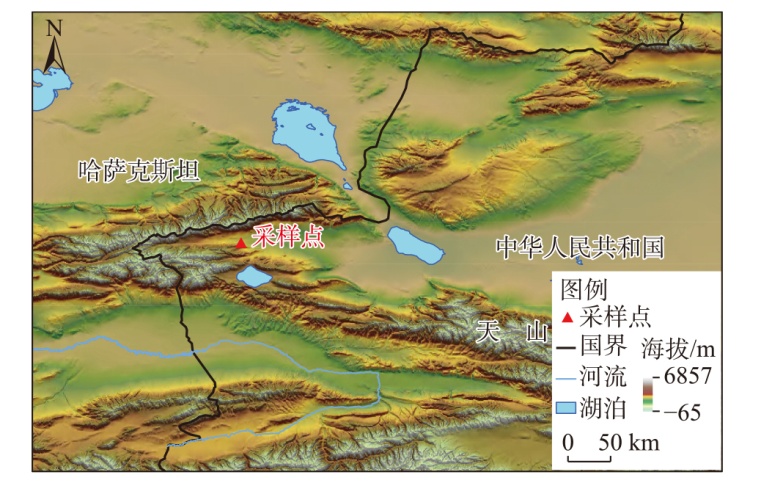
图2
温泉湿地WQ-1岩芯年代深度模型图[23]"
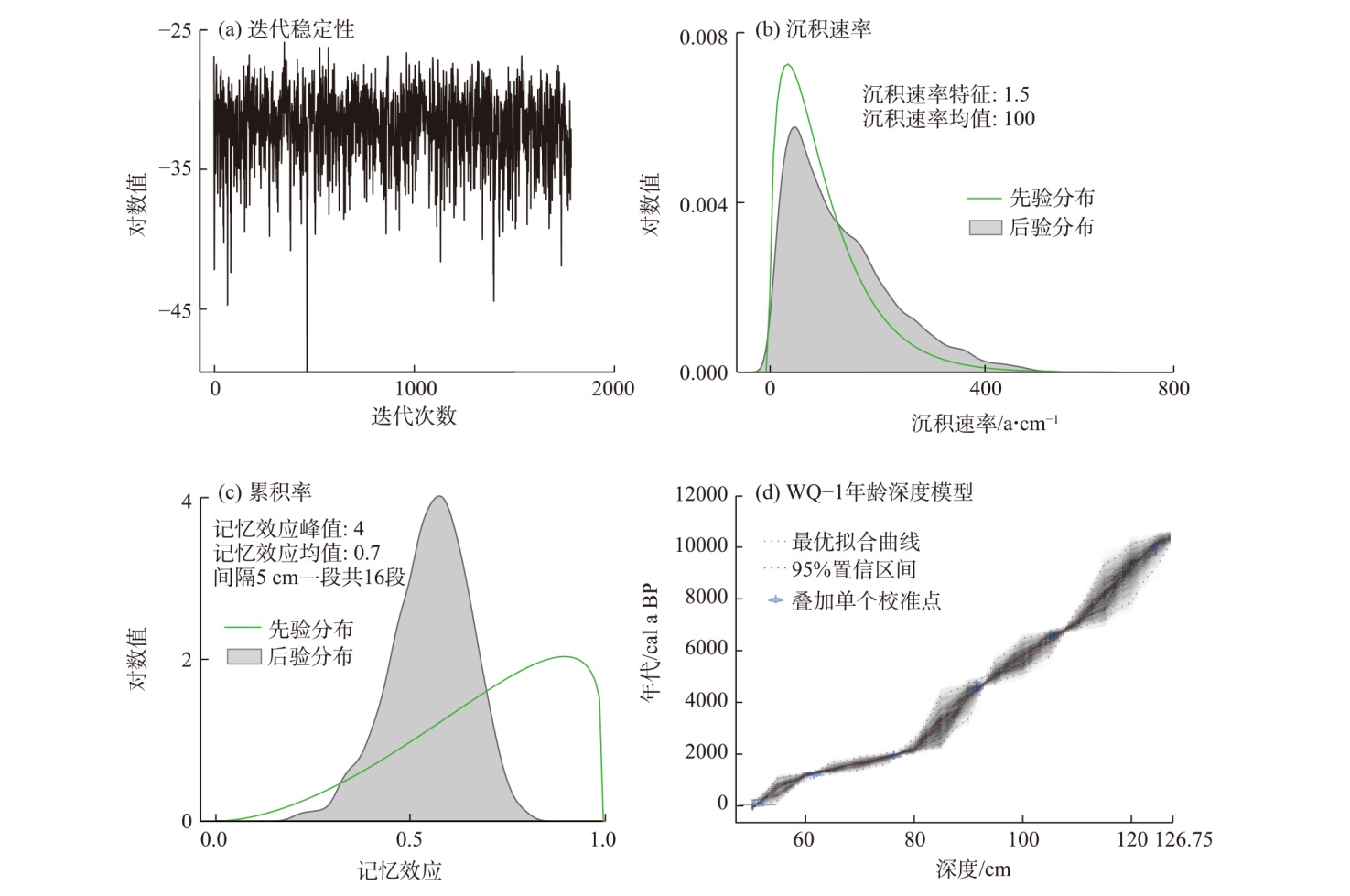
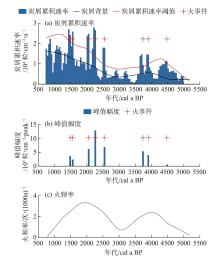
图3
总炭屑古火演化历史"
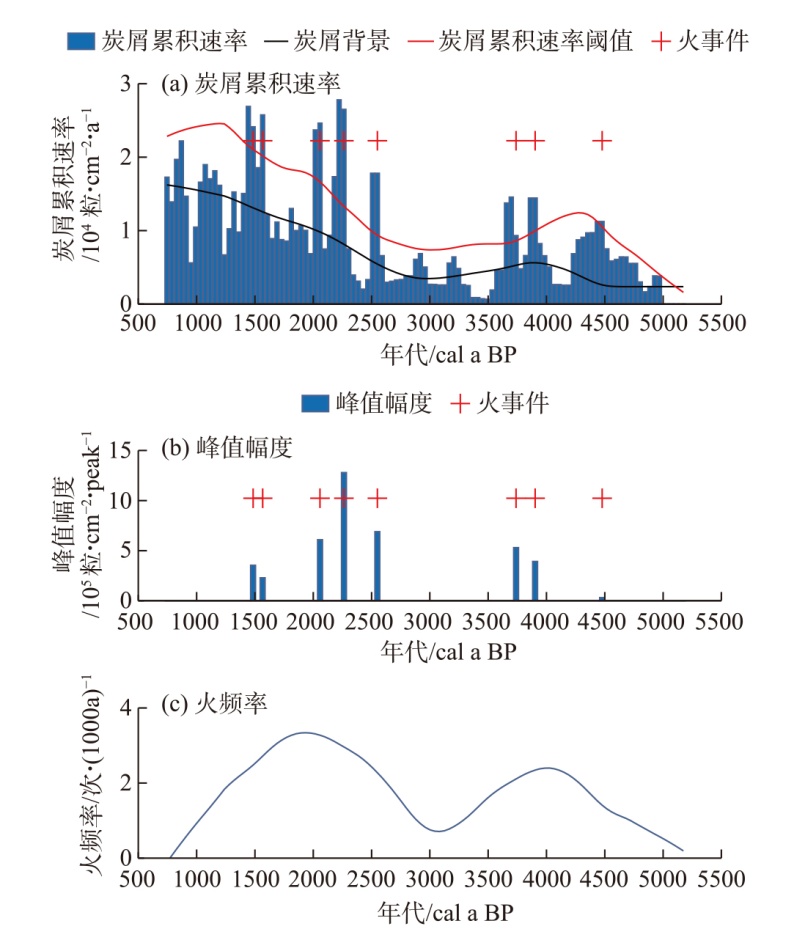
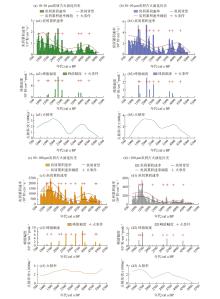
图4
不同粒径炭屑的古火演化历史"
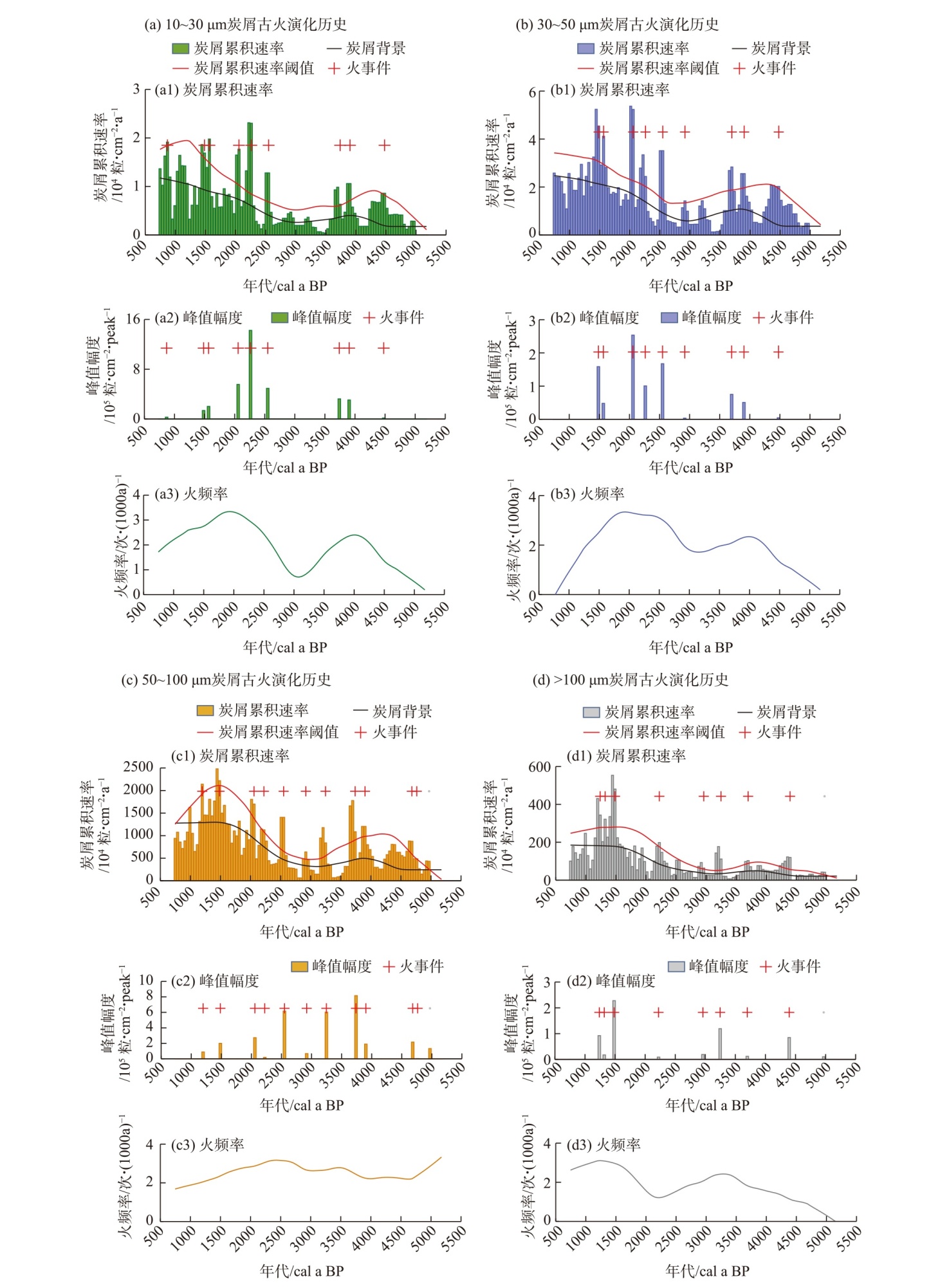
图5
不同形态炭屑古火演化历史"
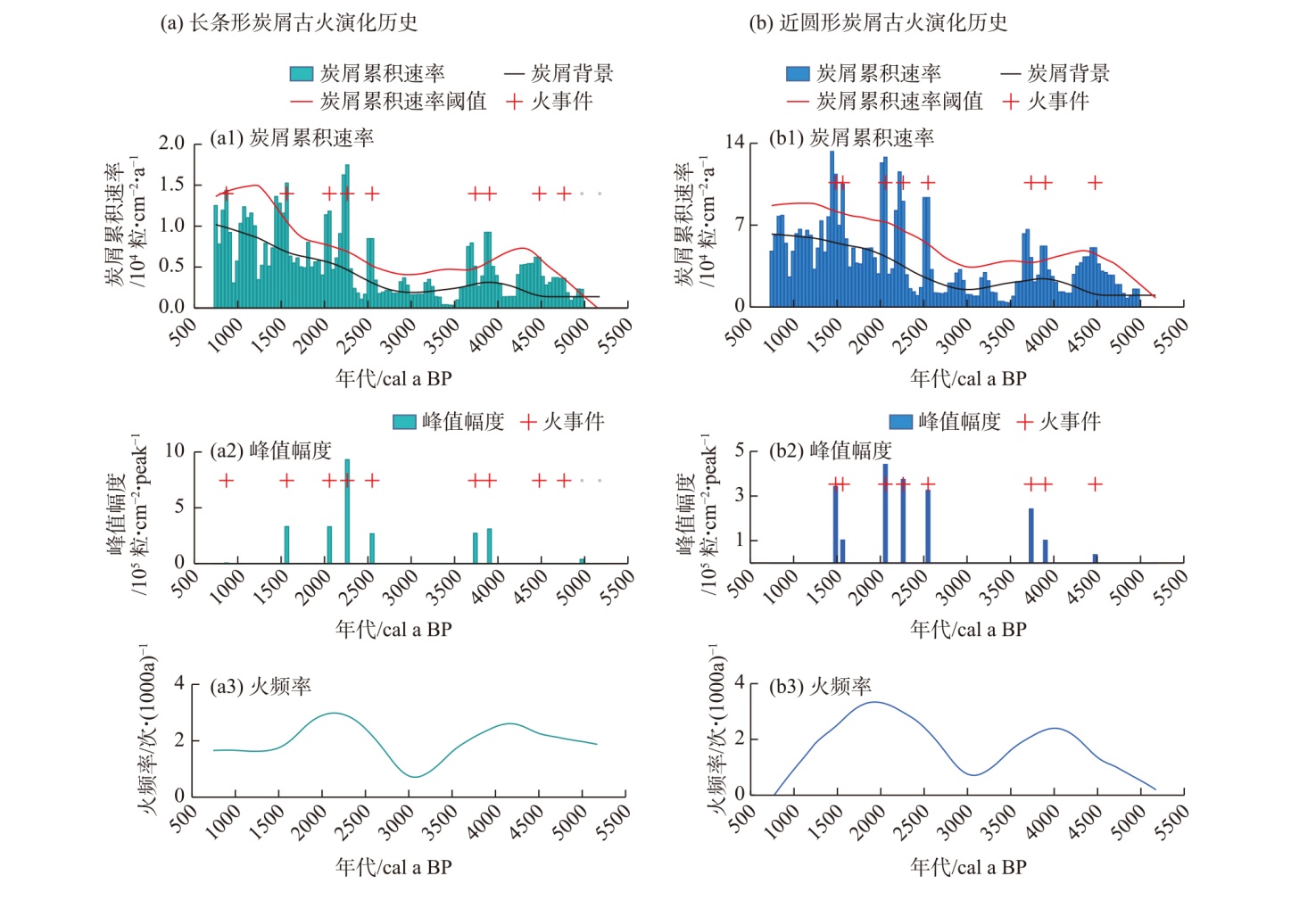
图6
温泉县古火演化及其对环境变化的响应"
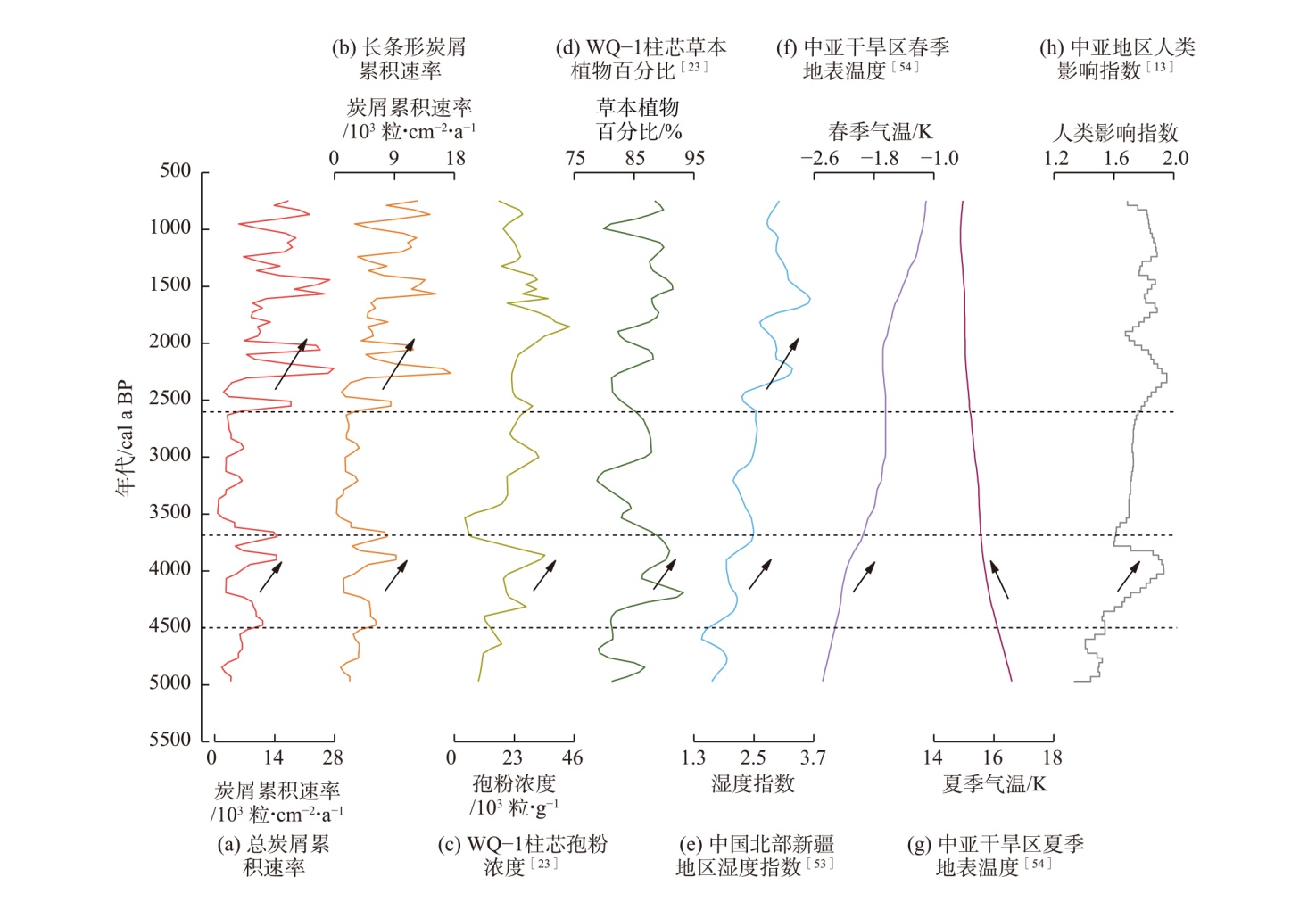

表1
温泉县人类活动与古火演化阶段特征"
| 年代/cal a BP | 人类影响指数 | 古火活动特征 | 关键考古证据 |
|---|---|---|---|
| 2600—746 | 高水平波动,出现多阶段峰值 | 高强度、高频率,出现多次峰值 | 战国末期至西汉,游牧民族(如大月氏、乌孙和匈奴)迁居天山北麓,过着典型的游牧生活;南疆诸遗址(如古墓沟、哈密五堡和阿拉沟)中发现了小麦、青稞、小米饼以及木质生产工具等遗存,标志其成为典型的绿洲农业区[ 规模扩张,农业规模化发展;畜牧业发展态势良好[ |
| 3700—2600 | 较低值平稳波动 | 强度与频率有所降低,维持在较低水平 | 约3500 cal a BP,亚洲夏季风持续减弱导致北疆干旱化加剧,导致绿洲收缩、农业衰退[ |
| 4500—3700 | 显著增强(约4000 cal a BP达到峰值) | 强度与频率同步上升 | 青铜文化遗址迅速增加扩散[ 麦混合经济[ |
| 5000—4500 | 低水平波动 | 强度弱、频率低 | 史前文化初始传播[ 地区遗址数量较少(伊犁河谷出土最早人类遗存,距今4800年)[ |
| [1] | 雷秋景, 谭志海, 张琪, 等. 青海东部上喇家村黄土剖面全新世野火历史及人类活动[J]. 第四纪研究, 2024, 44(1): 72-83. |
| [Lei Qiujing, Tan Zhihai, Zhang Qi, et al. Holocene fire history and human activities at Shanglajia archaeological site in eastern Qinghai Province of China[J]. Quaternary Sciences, 2024, 44(1): 72-83.] | |
| [2] | 贾宝岩, 肖霞云, 迟长婷. 云南洱海炭屑记录揭示的近千年来古火演化历史[J]. 第四纪研究, 2024, 44(1): 158-173. |
| [Jia Baoyan, Xiao Xiayun, Chi Changting. Fire history over the past millennium revealed by the charcoal record from Lake Erhai, northwestern Yunnan Province[J]. Quaternary Sciences, 2024, 44(1): 158-173.] | |
| [3] | 周锦清, 马春梅, 刘泽雨, 等. 宁绍平原中全新世火历史与影响因素研究[J]. 第四纪研究, 2024, 44(1): 84-99. |
| [Zhou Jinqing, Ma Chunmei, Liu Zeyu, et al. A study on the Middle Holocene fire history and its influencing factors in Ningshao Plain[J]. Quaternary Sciences, 2024, 44(1): 84-99.] | |
| [4] |
Matthews S, Sullivan A L, Watson P, et al. Climate change, fuel and fire behaviour in a eucalypt forest[J]. Global Change Biology, 2012, 18(10): 3212-3223.
doi: 10.1111/j.1365-2486.2012.02768.x pmid: 28741824 |
| [5] | Jones M W, Abatzoglou J T, Veraverbeke S, et al. Global and regional trends and drivers of fire under climate change[J]. Reviews of Geophysics, 2022, 60(3): e2020RG000726, doi: 10.1029/2020RG000726. |
| [6] |
Marlon J R, Bartlein P J, Daniau A L, et al. Global biomass burning: A synthesis and review of Holocene paleofire records and their controls[J]. Quaternary Science Reviews, 2013, 65: 5-25.
doi: 10.1016/j.quascirev.2012.11.029 |
| [7] |
张璐, 王伟, 贾国栋, 等. 近1100年来小兴安岭火灾演化历史及其对环境变化的响应[J]. 地球科学进展, 2023, 38(11): 1173-1185.
doi: 10.11867/j.issn.1001-8166.2023.067 |
| [Zhang Lu, Wang Wei, Jia Guodong, et al. Fire evolution history of the Xiaoxing’an Mountains and its response to environmental change during the past 1100 years[J]. Advances in Earth Science, 2023, 38(11): 1173-1185.] | |
| [8] | 张淑荣, 沈慧, 李小强, 等. 云南现代山火炭屑形态分析及其环境意义[J]. 第四纪研究, 2024, 44(1): 214-225. |
| [Zhang Shurong, Shen Hui, Li Xiaoqiang, et al. Morphological analysis and environmental significance of charcoal in modern mountain fire in Yunnan Province[J]. Quaternary Sciences, 2024, 44(1): 214-225.] | |
| [9] |
Scott A C, Jones T P. Fossil charcoal: A plant-fossil record preserved by fire[J]. Geology Today, 1991, 7(6): 214-216.
doi: 10.1111/gto.1991.7.issue-6 |
| [10] | Whitlock C, Larsen C. Charcoal as a fire proxy[C]// Smol J P, BirksH J B, LastW M, et al.Tracking Environmental Change Using Lake Sediments. Dordrecht: Springer, 2002: 75-97. |
| [11] | 崔巧玉. 末次间冰期以来古火对千年及轨道尺度气候和植被变化的响应[J]. 第四纪研究, 2020, 40(6): 1513-1521. |
| [Cui Qiaoyu. Wildfire responses to millennial- and orbit-scale climate variability and vegetation changes during the last glacial-interglacial periods[J]. Quaternary Sciences, 2020, 40(6): 1513-1521.] | |
| [12] | Xu X, Li F, Lin Z D, et al. Holocene fire history in China: Responses to climate change and human activities[J]. Science of the Total Environment, 2021, 753: 142019, doi: 10.1016/j.scitotenv.2020.142019. |
| [13] | Zhang D L, Huang X Z, Liu Q, et al. Holocene fire records and their drivers in the westerlies-dominated Central Asia[J]. Science of the Total Environment, 2022, 833: 155153, doi: 10.1016/j.scitotenv.2022.155153. |
| [14] | 李小强, 赵宏丽, 闫敏华, 等. 东北三江平原全新世火演化及其与植被和气候的关系[J]. 地理科学, 2005, 25(2): 177-182. |
| [Li Xiaoqiang, Zhao Hongli, Yan Minhua, et al. Fire variations and relationship among fire and vegetation and climate during holocene at Sanjiang Plain, northeast China[J]. Scientia Geographica Sinica, 2005, 25(2): 177-182.] | |
| [15] | 庞洋, 周斌, 徐向春, 等. 中国东部季风区全新世火历史及其影响因素[J]. 第四纪研究, 2022, 42(2): 368-382. |
| [Pang Yang, Zhou Bin, Xu Xiangchun, et al. Holocene fire history and its influencing factors in the monsoon region of east China[J]. Quaternary Sciences, 2022, 42(2): 368-382.] | |
| [16] | 陈雅茹, 刘兴起. 新疆艾里克湖炭屑记录的中亚干旱区MIS 3中期以来的古火灾演化[J]. 第四纪研究, 2024, 44(1): 48-58. |
| [Chen Yaru, Liu Xingqi. Fire history in arid Central Asia since the middle MIS 3 inferred from charcoal records in Lake Ailike, Xinjiang[J]. Quaternary Sciences, 2024, 44(1): 48-58.] | |
| [17] | Miao Y F, Song Y G, Li Y, et al. Late Pleistocene fire in the Ili Basin, Central Asia, and its potential links to paleoclimate change and human activities[J]. Palaeogeography, Palaeoclimatology, Palaeoecology, 2020, 547: 109700, doi: 10.1016/j.palaeo.2020.109700. |
| [18] | 蒋庆丰, 季峻峰, 沈吉, 等. 赛里木湖孢粉记录的亚洲内陆西风区全新世植被与气候变化[J]. 中国科学: 地球科学, 2013, 43(2): 243-255. |
|
[Jiang Qingfeng, Ji Junfeng, Shen Ji, et al. Holocene vegetational and climatic variation in westerly-dominated areas of Central Asia inferred from the Sayram Lake in northern Xinjiang, China[J]. Science China Earth Sciences, 2013, 43(2): 243-255.]
doi: 10.1007/BF02906820 |
|
| [19] | 徐鑫, 李宜垠. 基于3种不同类型的炭屑数据定量重建大兴安岭火历史的结果对比[J]. 第四纪研究, 2015, 35(4): 960-966. |
| [Xu Xin, Li Yiyin. Comparison of the fire history reconstructions from three different kinds of charcoal data on the same site, Daxing’ an Mountain[J]. Quaternary Sciences, 2015, 35(4): 960-966.] | |
| [20] |
Higuera P E, Brubaker L B, Anderson P M, et al. Vegetation mediated the impacts of postglacial climate change on fire regimes in the south-central Brooks Range, Alaska[J]. Ecological Monographs, 2009, 79(2): 201-219.
doi: 10.1890/07-2019.1 |
| [21] |
Bai J H, Li S K, Wang K R, et al. Estimating aboveground fresh biomass of different cotton canopy types with homogeneity models based on hyper spectrum parameters[J]. Agricultural Sciences in China, 2007, 6(4): 437-445.
doi: 10.1016/S1671-2927(07)60067-4 |
| [22] | Spate M, Leipe C, Motuzaite Matuzeviciute G. Reviewing the palaeoenvironmental record to better understand long-term human-environment interaction in inner Asia during the Late Holocene[J]. Frontiers in Ecology and Evolution, 2022, 10: 939374, doi: 10.3389/fevo.2022.939374. |
| [23] |
Li J Y, Wang N L, Dodson J, et al. Holocene negative coupling of summer temperature and moisture availability over southeastern arid Central Asia[J]. Climate Dynamics, 2020, 55(10): 1187-1208.
doi: 10.1007/s00382-020-05319-x |
| [24] | 温泉县人民政府. 气候特征[EB/OL]. [2024-11-10]. https://www.xjwq.gov.cn/info/1028/36547.htm. |
| [Wenquan County People’s Government. Climate characteristics[EB/OL]. [2024-11-10]. https://www.xjwq.gov.cn/info/1028/36547.htm. ] | |
| [25] |
牛地园, 李建勇, 王宁练, 等. 新疆天山西部表土花粉组合与现代植被和气候的关系[J]. 冰川冻土, 2022, 44(3): 1070-1082.
doi: 10.7522/j.issn.1000-0240.2022.0088 |
|
[Niu Diyuan, Li Jianyong, Wang Ninglian, et al. Relationship between pollen assemblages in surface soil and modern vegetation and climate in the western Tianshan Mountains, Xinjiang[J]. Journal of Glaciology and Geocryology, 2022, 44(3): 1070-1082.]
doi: 10.7522/j.issn.1000-0240.2022.0088 |
|
| [26] |
Blaauw M, Christen J A. Flexible paleoclimate age-depth models using an autoregressive gamma process[J]. Bayesian Analysis, 2011, 6(3): 457-474.
doi: 10.1214/ba/1339616472 |
| [27] | Faegri K, Iversen J. Text book of pollen analysis[M]. Chichester: Wiley, 1989: 328. |
| [28] | 李宜垠, 侯树芳, 赵鹏飞. 微炭屑的几种统计方法比较及其对人类活动的指示意义[J]. 第四纪研究, 2010, 30(2): 356-363. |
| [Li Yiyin, Hou Shufang, Zhao Pengfei. Comparison of different quantification methods for microfossil charcoal concentration and the implication for human activities[J]. Quaternary Sciences, 2010, 30(2): 356-363.] | |
| [29] | 王梓莎, 赵永涛, 苗运法, 等. 以孢粉学方法为例浅论黄土沉积物中微体炭屑的统计问题[J]. 干旱区地理, 2020, 43(3): 661-670. |
| [Wang Zisha, Zhao Yongtao, Miao Yunfa, et al. Statistical problem of microcharcoal in Loess sediments based on the pollen methodology[J]. Arid Land Geography, 2020, 43(3): 661-670.] | |
| [30] | 张健平, 吕厚远. 现代植物炭屑形态的初步分析及其古环境意义[J]. 第四纪研究, 2006, 26(5): 857-863. |
| [Zhang Jianping, Lü Houyuan. Preliminary study of charcoal morphology and its environmental significance[J]. Quaternary Sciences, 2006, 26(5): 857-863.] | |
| [31] |
Clark J S, Hussey T C. Estimating the mass flux of charcoal from sedimentary records: Effects of particle size, morphology, and orientation[J]. The Holocene, 1996, 6(2): 129-144.
doi: 10.1177/095968369600600201 |
| [32] |
Lynch J A, Clark J S, Stocks B J. Charcoal production, dispersal, and deposition from the Fort Providence experimental fire: Interpreting fire regimes from charcoal records in boreal forests[J]. Canadian Journal of Forest Research, 2004, 34(8): 1642-1656.
doi: 10.1139/x04-071 |
| [33] |
Higuera P E, Peters M E, Brubaker L B, et al. Understanding the origin and analysis of sediment-charcoal records with a simulation model[J]. Quaternary Science Reviews, 2007, 26(13-14): 1790-1809.
doi: 10.1016/j.quascirev.2007.03.010 |
| [34] |
Patterson W A, Edwards K J, Maguire D J. Microscopic charcoal as a fossil indicator of fire[J]. Quaternary Science Reviews, 1987, 6(1): 3-23.
doi: 10.1016/0277-3791(87)90012-6 |
| [35] |
Higuera P E, Gavin D G, Bartlein P J, et al. Peak detection in sediment-charcoal records: Impacts of alternative data analysis methods on fire-history interpretations[J]. International Journal of Wildland Fire, 2010, 19(8): 996-1014.
doi: 10.1071/WF09134 |
| [36] | Higuera P E, Brubaker L B, Anderson P M, et al. Frequent fires in ancient shrub tundra: Implications of paleorecords for arctic environmental change[J]. PLoS One, 2008, 3(3): e0001744, doi: 10.1371/journal.pone.0001744. |
| [37] |
Finsinger W, Kelly R, Fevre J, et al. A guide to screening charcoal peaks in macrocharcoal-area records for fire-episode reconstructions[J]. The Holocene, 2014, 24(8): 1002-1008.
doi: 10.1177/0959683614534737 |
| [38] |
Hawthorne D, Mitchell F J. Identifying past fire regimes throughout the Holocene in Ireland using new and established methods of charcoal analysis[J]. Quaternary Science Reviews, 2016, 137: 45-53.
doi: 10.1016/j.quascirev.2016.01.027 |
| [39] |
Clark J S, Lynch J, Stocks B J, et al. Relationships between charcoal particles in air and sediments in west-central Siberia[J]. The Holocene, 1998, 8(1): 19-29.
doi: 10.1191/095968398672501165 |
| [40] | Mooney S D, Tinner W. The analysis of charcoal in peat and organic sediments[J]. Mires and Peat, 2011, 7(9): 1-18. |
| [41] |
Peters M E, Higuera P E. Quantifying the source area of macroscopic charcoal with a particle dispersal model[J]. Quaternary Research, 2007, 67(2): 304-310.
doi: 10.1016/j.yqres.2006.10.004 |
| [42] | Wang Z S, Miao Y F, Zou Y G, et al. Microcharcoals reveal more grass than trees during the mid-Holocene optimum on the Chinese Loess Plateau[J]. Geophysical Research Letters, 2023, 50: e2023 GL103637, doi: 10.1029/2023GL103637. |
| [43] |
Feurdean A. Experimental production of charcoal morphologies to discriminate fuel source and fire type: An example from Siberian taiga[J]. Biogeosciences, 2021, 18(12): 3805-3821.
doi: 10.5194/bg-18-3805-2021 |
| [44] | Hu Y F, Zhou B, Lu Y H, et al. Abundance and morphology of charcoal in sediments provide no evidence of massive slash-and-burn agriculture during the Neolithic Kuahuqiao culture, China[J]. PLoS One, 2020, 15: e0237592, doi: 10.1371/journal.pone.0237592. |
| [45] |
王梓莎, 苗运法, 赵永涛, 等. 柴达木盆地北缘湖泊表层沉积物炭屑特征及其环境意义[J]. 中国沙漠, 2020, 40(4): 10-17.
doi: 10.7522/j.issn.1000-694X.2020.00012 |
|
[Wang Zisha, Miao Yunfa, Zhao Yongtao, et al. Characteristics of microcharcoal in the lake surface sediments in the northern margin of Qaidam Basin of China and its environmental significance[J]. Journal of Desert Research, 2020, 40(4): 10-17.]
doi: 10.7522/j.issn.1000-694X.2020.00012 |
|
| [46] | 魏芳莉, 王帅, 傅伯杰. 变化环境下火干扰研究进展[J]. 生态学报, 2023, 43(1): 1-8. |
|
[Wei Fangli, Wang Shuai, Fu Bojie. Research progress on fire disturbance in a changing environment[J]. Acta Ecologica Sinica, 2023, 43(1): 1-8.]
doi: 10.1016/j.chnaes.2021.07.007 |
|
| [47] | 黄伟, 陈建徽, 张肖剑, 等. 现代气候条件下降水变化的“西风模态”空间范围及其影响因子初探[J]. 中国科学: 地球科学, 2015, 45(4): 379-388. |
| [Huang Wei, Chen Jianwei, Zhang Xiaojian, et al. Definition of the core zone of the “westerlies-dominated climatic regime”, and its controlling factors during the instrumental period[J]. Science China: Earth Sciences, 2015, 45(4): 379-388.] | |
| [48] | Li J Y, Wang N L. Holocene grassland fire dynamics and forcing factors in continental interior of China[J]. Geophysical Research Letters, 2020, 47: e2020GL088049, doi: 10.1029/2020GL088049. |
| [49] |
闫凯达, 赵凤君, 杨光, 等. 基于MODIS火点数据的中国边境地区2001—2022年植被火分布特征[J]. 应用生态学报, 2024, 35(11): 3095-3106.
doi: 10.13287/j.1001-9332.202411.020 |
|
[Yan Kaida, Zhao Fengjun, Yang Guang, et al. Distribution characteristics of vegetation fires in border areas of China from 2001 to 2022 based on MODIS fire spot data[J]. Chinese Journal of Applied Ecology, 2024, 35(11): 3095-3106.]
doi: 10.13287/j.1001-9332.202411.020 |
|
| [50] |
Clarke H, Pitman A J, Kala J, et al. An investigation of future fuel load and fire weather in Australia[J]. Climatic Change, 2016, 139(3): 591-605.
doi: 10.1007/s10584-016-1808-9 |
| [51] |
Zhang S J, Lu Y W, Wei W Y, et al. Human activities have altered fire-climate relations in arid Central Asia since -1000 a BP: Evidence from a 4200-year-old sedimentary archive[J]. Science Bulletin, 2021, 66(8): 761-764.
doi: 10.1016/j.scib.2020.12.004 |
| [52] | Jiang L L, Jiapaer G, Bao A M, et al. Vegetation dynamics and responses to climate change and human activities in Central Asia[J]. Science of the Total Environment, 2017, 599: 967-980. |
| [53] |
Wang W, Feng Z D. Holocene moisture evolution across the Mongolian Plateau and its surrounding areas: A synthesis of climatic records[J]. Earth-Science Reviews, 2013, 122: 38-57.
doi: 10.1016/j.earscirev.2013.03.005 |
| [54] |
Zhang X J, Jin L Y, Chen J, et al. Detecting the relationship between moisture changes in arid Central Asia and East Asia during the Holocene by model-proxy comparison[J]. Quaternary Science Reviews, 2017, 176: 36-50.
doi: 10.1016/j.quascirev.2017.09.012 |
| [55] | 胡玉. 基于Tolbo湖孢粉学证据重建的蒙古阿尔泰13.7 ka以来植被、降水及火活动历史[D]. 兰州: 兰州大学, 2024. |
| [Hu Yu. Palynological data of Tolbo Lake reconstructed vegetation, precipitation and fire activities in the Mongolian Altai since 13.7 ka[D]. Lanzhou: Doctor Dissertation of Lanzhou University, 2024.] | |
| [56] | 江鸿, 饶志国. 火的历史重建及其与气候变化和人类活动关系研究进展[J]. 海洋地质与第四纪地质, 2018, 38(2): 185-197. |
| [Jiang Hong, Rao Zhiguo. Research progress on fire history reconstruction and its implications for climate change and human activities[J]. Marine Geology & Quaternary Geology, 2018, 38(2): 185-197.] | |
| [57] | 陈影影, 吉谚语, 赵琳, 等. 黄河下游东平湖炭屑记录的近1500年以来火演化历史[J]. 海洋地质与第四纪地质, 2024, 44(2): 33-45. |
| [Chen Yingying, Ji Yanyu, Zhao Lin, et al. Fire history over the past 1500 years revealed by charcoal record from the Dongping Lake in the Lower Yellow River[J]. Marine Geology & Quaternary Geology, 2024, 44(2): 33-45.] | |
| [58] | 姜黎, 楚新正, 李艳红, 等. 新疆天山北麓历史时期人地系统演化过程研究[J]. 新疆师范大学学报(自然科学版), 2007, 26(3): 173-175. |
| [Jiang Li, Chu Xinzheng, Li Yanhong, et al. The evolution research of person field system in north Xinjiang Tianshan foothill in historical period[J]. Journal of Xinjiang Normal University (Natural Science Edition), 2007, 26(3): 173-175.] | |
| [59] | 安成邦, 张曼, 王伟, 等. 新疆地理环境特征以及农牧格局的形成[J]. 中国科学: 地球科学, 2020, 50(2): 295-304. |
|
[An Chengbang, Zhang Man, Wang Wei, et al. The pattern of Xinjiang physical geography and its relationship with the temporal-spatial distribution of agriculture and husbandry[J]. Scientia Sinica Terrae, 2020, 50(2): 295-304.]
doi: 10.1360/SSTe-2019-0050 |
|
| [60] |
Zhang D L, Feng Z D. Holocene climate variations in the Altai Mountains and the surrounding areas: A synthesis of pollen records[J]. Earth-Science Reviews, 2018, 185: 847-869.
doi: 10.1016/j.earscirev.2018.08.007 |
| [61] |
安成邦, 王伟, 段阜涛, 等. 亚洲中部干旱区丝绸之路沿线环境演化与东西方文化交流[J]. 地理学报, 2017, 72(5): 875-891.
doi: 10.11821/dlxb201705009 |
|
[An Chengbang, Wang Wei, Duan Futao, et al. Environmental changes and cultural exchange between east and west along the Silk Road in arid Central Asia[J]. Acta Geographica Sinica, 2017, 72(5): 875-891.]
doi: 10.11821/dlxb201705009 |
|
| [62] | 张安福. 天山南北绿洲经济的历史变迁研究[J]. 江西社会科学, 2011, 31(8): 148-153. |
| [Zhang Anfu. A study on the historical changes of the oasis economy in the areas north and south of the Tianshan Mountains[J]. Jiangxi Social Sciences, 2011, 31(8): 148-153.] | |
| [63] | 朱艳梅, 李昕升. 新疆经济发展的路径选择——读《新疆农牧业历史研究》有感[J]. 地方文化研究, 2022, 10(6): 109-112. |
| [Zhu Yanmei, Li Xinsheng. The path choice of economic development in Xinjiang: Reading the historical research on agriculture and animal husbandry in Xinjiang[J]. Local Culture Research, 2022, 10(6): 109-112.] | |
| [64] |
Zhou X Y, Li X Q, Dodson J, et al. Land degradation during the Bronze Age in Hexi Corridor (Gansu, China)[J]. Quaternary International, 2012, 254: 42-48.
doi: 10.1016/j.quaint.2011.06.046 |
| [65] | 郭物. 新疆史前晚期社会的考古学研究[M]. 上海: 上海古籍出版社, 2012. |
| [Guo Wu. Archaeological research on the late prehistoric society in Xinjiang[M]. Shanghai: Shanghai Classics Publishing House, 2012.] | |
| [66] | 安成邦, 王伟, 刘依, 等. 新疆全新世环境变迁与史前文化交流[J]. 中国科学: 地球科学, 2020, 50(5): 677-687. |
|
[An Chengbang, Wang Wei, Liu Yi, et al. The Holocene environmental change in Xinjiang and its impact on prehistoric cultural exchange[J]. Scientia Sinica Terrae, 2020, 50(5): 677-687.]
doi: 10.1360/SSTe-2019-0049 |
|
| [67] | 刘剑波, 李建勇, 韩岳婷, 等. 中国西北地区中晚全新世火历史集成重建与气候演化[J]. 海洋地质与第四纪地质, 2024, 44(1): 156-169. |
| [Liu Jianbo, Li Jianyong, Han Yueting, et al. Integrated reconstruction of fire history and climatic changes in northwest China since mid-late Holocene[J]. Marine Geology & Quaternary Geology, 2024, 44(1): 156-169.] |
| [1] | 关靖云, 孙之阳, 徐晓亮, 程乙峰, 宋贝贝, 房瑞莹. 气候变化背景下中国新疆与中亚五国旅游气候舒适度时空演变分析[J]. 干旱区地理, 2026, 49(4): 697-712. |
| [2] | 张博, 徐红罡. 气候变化对山地冰川旅游的影响与风险综述[J]. 干旱区地理, 2026, 49(3): 474-483. |
| [3] | 陈兵, 王福涛, 王世新, 顾星光, 朱金峰. 中国和不丹跨境流域冰湖变化特征及驱动因素[J]. 干旱区地理, 2026, 49(3): 496-507. |
| [4] | 曹晓云, 周秉荣, 雷春苗, 刘致远, 史飞飞, 颜玉倩. 基于遥感监测的1980—2020年三江源雪深时空变化与气候归因研究[J]. 干旱区地理, 2026, 49(2): 356-368. |
| [5] | 张飞, 李建, 李慧融, 谢涛, 张雪红, 王超, 白淑英, 宋正姗. 2001—2024年锡林郭勒盟草原净初级生产力时空特征及对影响因子的响应[J]. 干旱区地理, 2025, 48(9): 1555-1566. |
| [6] | 李文华, 李生宇, 徐新文, 苗佳敏, 吕振涛. 基于MaxEnt模型预测气候变化下准噶尔沙蒿(Artemisia songarica)在新疆的潜在分布[J]. 干旱区地理, 2025, 48(9): 1578-1588. |
| [7] | 陈世泷, 孟庆凯, 戴勇, 杨立强, 吴晗. 基于CMIP6未来情景的伊犁河流域地质灾害危险性评估预测[J]. 干旱区地理, 2025, 48(4): 599-611. |
| [8] | 姚笛, 张子文, 韩卫卫. 区分由气候变化和人类活动引起的黄河流域水储量变化的不同组分[J]. 干旱区地理, 2025, 48(2): 190-201. |
| [9] | 高娜, 崔洋, 高睿娜, 李万春, 孙健, 李欣. 城市化发展对干旱区城市不同功能区局地气温的影响[J]. 干旱区地理, 2025, 48(12): 2132-2142. |
| [10] | 常文静, 丛士翔, 王融融, 丁旭东, 余海龙, 黄菊莹. 气候变化和人类活动对毛乌素沙地NDVI变化的量化分析[J]. 干旱区地理, 2025, 48(1): 63-74. |
| [11] | 康立民, 滕心如, 车佳航, 怀保娟. 昆仑山北坡区域积雪时空变化特征[J]. 干旱区地理, 2024, 47(9): 1462-1471. |
| [12] | 王南, 刘泽轩, 郑江华, 仲涛, 孟乘枫. 天山冰湖分布时空特征及驱动力分析[J]. 干旱区地理, 2024, 47(9): 1472-1481. |
| [13] | 超宝, 赵媛媛, 武海岩, 李媛, 苏宁. 2000—2020年蒙古高原生态系统服务及其对气候因子的响应[J]. 干旱区地理, 2024, 47(9): 1577-1586. |
| [14] | 夏婷婷, 薛璇, 王灏伟, 徐文哲, 盛紫怡, 汪洋. 昆仑山北坡陆地水储量变化及其驱动因素分析[J]. 干旱区地理, 2024, 47(8): 1292-1303. |
| [15] | 朱成刚, 陈亚宁, 张明军, 车彦军, 孙美平, 赵锐锋, 汪洋, 刘玉婷. 昆仑山北坡水资源科学考察初报[J]. 干旱区地理, 2024, 47(7): 1097-1105. |
|
||