干旱区地理 ›› 2025, Vol. 48 ›› Issue (6): 1055-1066.doi: 10.12118/j.issn.1000-6060.2024.654 cstr: 32274.14.ALG2024654
魏建飞1( ), 袁悠燃1, 李强2(), 董佩佩1, 刘玖榕1
收稿日期:2024-10-25
修回日期:2025-02-14
出版日期:2025-06-25
发布日期:2025-06-18
通讯作者:
李强(1977-),男,博士,教授,博士生导师,主要从事土地科学与规划实施管理等方面的研究. E-mail: eq1977@163.com作者简介:魏建飞(1995-),女,博士,讲师,硕士生导师,主要从事国土空间规划与实施管理等方面的研究. E-mail: weijianfei0604@163.com
基金资助:
WEI Jianfei1(), YUAN Youran1, LI Qiang2(), DONG Peipei1, LIU Jiurong1
Received:2024-10-25
Revised:2025-02-14
Published:2025-06-25
Online:2025-06-18
摘要: 审视识别重点流域国土空间效率的演进态势及障碍性因素,可为构建优势互补、高质量发展的国土空间格局提供关键依据。以黄河流域97个城市作为案例研究区,运用空间分类法、核密度估计、障碍度模型揭示该地区国土空间效率的时空演化规律和障碍因子。结果表明:(1) 从时序演进规律看,2010—2022年黄河流域国土空间效率波动上升,不同空间区域差异呈现生态空间>城镇空间>农业空间的发展趋势。(2) 从空间分异格局看,国土空间效率空间异质性显著,不同空间效率的集聚模式具有明显区域差异。(3) 从空间集聚特征看,国土空间效率演化具有时空惯性及延续性特征,高-高集聚和低-低集聚为主要集聚模式。(4) 从障碍因子分析结果看,生态空间效率对国土空间效率提升的障碍程度最高,非农产值、农业灌溉面积、生态系统服务价值分别是城镇、农业、生态空间效率提升的主要障碍因子。研究成果为深化重点流域国土空间效率研究的理论认知提供了新视角,为优化黄河流域国土空间布局及提升空间治理水平提供了科学支撑。
魏建飞, 袁悠燃, 李强, 董佩佩, 刘玖榕. 黄河流域国土空间效率时空变化及障碍因子分析[J]. 干旱区地理, 2025, 48(6): 1055-1066.
WEI Jianfei, YUAN Youran, LI Qiang, DONG Peipei, LIU Jiurong. Spatio-temporal variation and obstacle factors of territorial spatial efficiency in the Yellow River Basin[J]. Arid Land Geography, 2025, 48(6): 1055-1066.
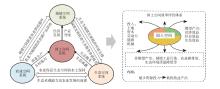
图1
国土空间系统的架构组成"

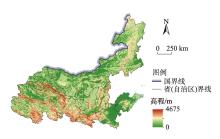
图2
黄河流域地形示意图 注:基于自然资源部标准地图服务网站审图号为GS(2019)1833号的标准地图制作,底图边界无修改。下同。"
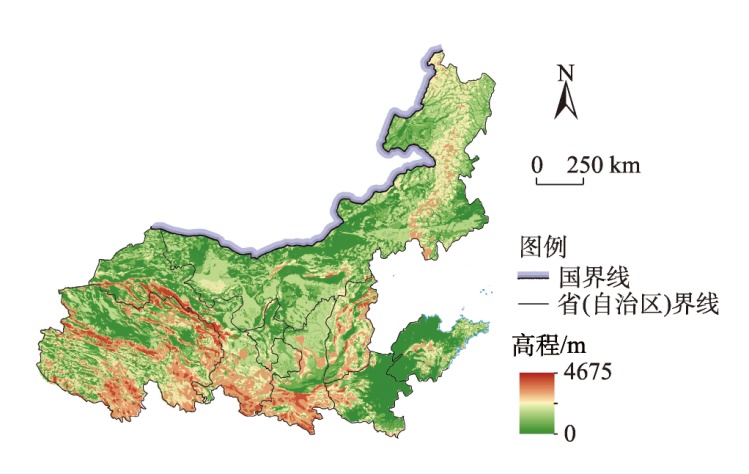

表1
国土空间效率指标体系构建及权重计算"
| 目标层 | 准则层 | 指标层 | 具体指标 | 权重 | |
|---|---|---|---|---|---|
| 国土空间效率 | 城镇空间效率 | 投入要素 | 土地 | 城市建设用地面积/km2 | 0.118 |
| 劳动力 | 非农从业人口/人 | 0.116 | |||
| 资本 | 固定资本存量/元 | 0.122 | |||
| 期望产出要素 | 经济效益 | 非农产值/元 | 0.120 | ||
| 社会效益 | 城镇职工平均工资/元 | 0.130 | |||
| 非期望产出要素 | 生态效益 | 工业废水排放量/t | 0.132 | ||
| 工业SO2排放量/t | 0.131 | ||||
| 工业烟(粉)尘排放量/t | 0.131 | ||||
| 农业空间效率 | 投入要素 | 土地 | 农作物总播种面积/hm2 | 0.084 | |
| 劳动力 | 农业从业人员/人 | 0.085 | |||
| 机械化水平 | 农业机械总动力/kW | 0.084 | |||
| 化学化水平 | 化肥使用量/t | 0.083 | |||
| 电气化水平 | 农村用电量/kW·h | 0.080 | |||
| 药学化水平 | 农药使用量/t | 0.080 | |||
| 塑料化水平 | 地膜使用量/t | 0.082 | |||
| 灌溉化水平 | 农业灌溉面积/hm2 | 0.085 | |||
| 非机械化水平 | 大牲畜年底头数/头 | 0.081 | |||
| 期望产出要素 | 经济效益 | 农业增加值/元 | 0.084 | ||
| 社会效益 | 粮食产量/t | 0.082 | |||
| 非期望产出要素 | 生态效益 | 农业碳排放量/t | 0.090 | ||
| 生态空间效率 | 投入要素 | 土地 | 生态用地面积/hm2 | 0.152 | |
| 劳动力 | 水利、环境和公共设施管理业就业人数/人 | 0.155 | |||
| 资本 | 水利、环境和公共设施管理业固定资产投资/元 | 0.153 | |||
| 能源 | 能源消费总量/tce | 0.136 | |||
| 期望产出要素 | 生态效益 | 绿化覆盖率/% | 0.167 | ||
| 生态系统服务价值 | 0.124 | ||||
| 非期望产出要素 | 生态环境质量指数 | 0.113 | |||
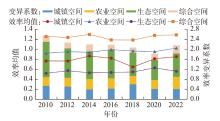
图3
黄河流域国土空间效率均值演进规律及内部差异特征"

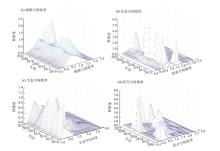
图4
黄河流域国土空间效率的核密度估计演进分析"

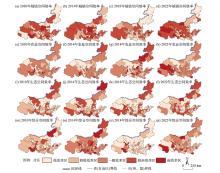
图5
黄河流域国土空间效率空间分异格局"

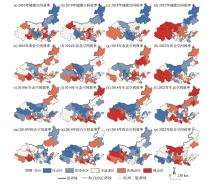
图6
黄河流域国土空间效率空间集聚效应"

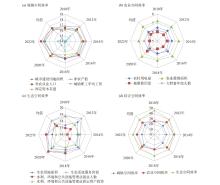
图7
黄河流域国土空间效率障碍因子识别及障碍度计算"

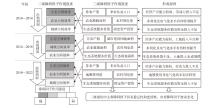
图8
2010—2022年黄河流域国土空间效率障碍因子演变过程及机理分析"

| [1] |
李强, 魏建飞. 皖江城市带国土空间利用效率与高质量发展的时空耦合[J]. 自然资源学报, 2022, 37(11): 2867-2883.
doi: 10.31497/zrzyxb.20221108 |
|
[Li Qiang, Wei Jianfei. Spatio-temporal coupling relationship between territory spatial utilization efficiency and high-quality development in Wanjiang City Belt[J]. Journal of Natural Resources, 2022, 37(11): 2867-2883. ]
doi: 10.31497/zrzyxb.20221108 |
|
| [2] |
逯承鹏, 纪薇, 刘志良, 等. 黄河流域甘肃段县域“三生”功能空间时空格局及影响因素识别[J]. 地理科学, 2022, 42(4): 579-588.
doi: 10.13249/j.cnki.sgs.2022.04.003 |
|
[Lu Chengpeng, Ji Wei, Liu Zhiliang, et al. Spatial-temporal pattern and influencing factors of the “production-living-ecological” functional space of the Yellow River Basin at county level in Gansu, China[J]. Scientia Geographica Sinica, 2022, 42(4): 579-588. ]
doi: 10.13249/j.cnki.sgs.2022.04.003 |
|
| [3] | Liu Y S, Zhou Y. Territory spatial planning and national governance system in China[J]. Land Use Policy, 2021, 102: 105288, doi: 10.1016/j.landusepol.2021.105288. |
| [4] |
焦庚英, 杨效忠, 黄志强, 等. 县域“三生空间”格局与功能演变特征及可能影响因素分析: 以江西婺源县为例[J]. 自然资源学报, 2021, 36(5): 1252-1267.
doi: 10.31497/zrzyxb.20210513 |
|
[Jiao Gengying, Yang Xiaozhong, Huang Zhiqiang, et al. Evolution characteristics and possible impact factors for the changing pattern and function of “production-living-ecological” space in Wuyuan County[J]. Journal of Natural Resources, 2021, 36(5): 1252-1267. ]
doi: 10.31497/zrzyxb.20210513 |
|
| [5] | 陈美景, 王庆日, 白中科, 等. 基于双碳目标的黄河流域资源型城市国土空间利用效率时空特征及影响因素[J]. 中国土地科学, 2024, 38(4): 101-112. |
| [Chen Meijing, Wang Qingri, Bai Zhongke, et al. Spatial-temporal characteristics and influencing factors of territorial space use efficiency of resource-based cities in the Yellow River Basin based on the dual carbon targets[J]. China Land Science, 2024, 38(4): 101-112. ] | |
| [6] |
顾观海, 吴彬, 张文主, 等. 中国陆地边境地区国土空间功能的区域差异及其驱动机制[J]. 地理研究, 2024, 43(7): 1644-1660.
doi: 10.11821/dlyj020230636 |
| [Gu Guanhai, Wu Bin, Zhang Wenzhu, et al. The regional differences in territorial spatial functions and their driving mechanisms in China’s border areas[J]. Geographical Research, 2024, 43(7): 1644-1660. ] | |
| [7] | 杨喜, 卢新海, 陈讲飞. 长江经济带城市土地资源尾效测度及其时空格局演变[J]. 中国土地科学, 2020, 34(3): 66-74. |
| [Yang Xi, Lu Xinhai, Chen Jiangfei. Measurement and temporal-spatial pattern evolution of the growth drag of urban land resource in the Yangtze River Economic Belt[J]. China Land Science, 2020, 34(3): 66-74. ] | |
| [8] | 刘书畅, 叶艳妹, 肖武. 基于随机前沿分析的中国城市土地利用效率时空分异研究[J]. 中国土地科学, 2020, 34(1): 61-69. |
| [Liu Shuchang, Ye Yanmei, Xiao Wu. Spatial-temporal differentiation of urban land-use efficiency in China based on stochastic frontier analysis[J]. China Land Science, 2020, 34(1): 61-69. ] | |
| [9] | Tone K, Tsutsui M. An epsilon-based measure of efficiency in DEA: A third pole of technical efficiency[J]. European Journal of Operational Research, 2010, 207(3): 1554-1563. |
| [10] |
夏四友, 杨宇. 基于主体功能区的京津冀城市群碳收支时空分异与碳补偿分区[J]. 地理学报, 2022, 77(3): 679-696.
doi: 10.11821/dlxb202203013 |
|
[Xia Siyou, Yang Yu. Spatio-temporal differentiation of carbon budget and carbon compensation zoning in Beijing-Tianjin-Hebei urban agglomeration based on the plan for major function-oriented zones[J]. Acta Geographica Sinica, 2022, 77(3): 679-696. ]
doi: 10.11821/dlxb202203013 |
|
| [11] | 钱昭英, 刘书杰. 黄河流域农业绿色低碳生产效率空间关联网络结构特征及驱动因素识别[J]. 干旱区资源与环境, 2024, 38(2): 27-38. |
| [Qian Zhaoying, Liu Shujie. On the characteristics and drivers of spatial correlation network of green low carbon agricultural production efficiency in the Yellow River Basin[J]. Journal of Arid Land Resources and Environment, 2024, 38(2): 27-38. ] | |
| [12] | 周道静, 徐姗. “十四五”时期我国边境地区国土空间发展路径思考[J]. 城市发展研究, 2021, 28(10): 34-38. |
| [Zhou Daojing, Xu Shan. The spatial development path of China’s border areas in the 14th Five-Year Plan period[J]. Urban Development Studies, 2021, 28(10): 34-38. ] | |
| [13] | Qu Y, Dong X, Su D, et al. How to balance protection and development? A comprehensive analysis framework for territorial space utilization scale, function and pattern[J]. Journal of Environmental Management, 2023, 339: 117809, doi: 10.1016/j.jenvman.2023.117809. |
| [14] | Hu Q, Zhang Z, Niu L. Identification and evolution of territorial space from the perspective of composite functions[J]. Habitat International, 2022, 128: 102662, doi: 10.1016/j.habitatint.2022.102662. |
| [15] | Zhou Y, Yue D, Guo J, et al. Spatial correlations between landscape patterns and net primary productivity: A case study of the Shule River Basin, China[J]. Ecological Indicators, 2021, 130: 108067, doi: 10.1016/j.ecolind.2021.108067. |
| [16] |
林树高, 诸培新, 陆汝成, 等. 贸易-经济-人口系统对边境地区国土空间格局演变区域差异的影响: 以中越边境带为例[J]. 自然资源学报, 2023, 38(6): 1550-1569.
doi: 10.31497/zrzyxb.20230611 |
|
[Lin Shugao, Zhu Peixin, Lu Rucheng, et al. The influence of trade-economy population system on regional differences of territorial space pattern evolution in border areas: Take the China-Vietnam border zone as a case[J]. Journal of Natural Resources, 2023, 38(6): 1550-1569. ]
doi: 10.31497/zrzyxb.20230611 |
|
| [17] |
樊杰, 王亚飞, 王怡轩. 基于地理单元的区域高质量发展研究——兼论黄河流域同长江流域发展的条件差异及重点[J]. 经济地理, 2020, 40(1): 1-11.
doi: 10.15957/j.cnki.jjdl.2020.01.001 |
|
[Fan Jie, Wang Yafei, Wang Yixuan. High quality regional development research based on geographical units: Discuss on the difference in development conditions and priorities of the Yellow River Basin compared to the Yangtze River Basin[J]. Economic Geography, 2020, 40(1): 1-11. ]
doi: 10.15957/j.cnki.jjdl.2020.01.001 |
|
| [18] |
曲衍波, 王世磊, 李岩, 等. 基于多功能适宜性的黄河三角洲国土空间潜在冲突特征与优化格局研究[J]. 地理科学, 2023, 43(2): 301-312.
doi: 10.13249/j.cnki.sgs.2023.02.012 |
|
[Qu Yanbo, Wang Shilei, Li Yan, et al. Characteristics of potential conflicts of territorial space and optimization pattern in the Yellow River Delta based on multi-functional suitability[J]. Scientia Geographica Sinica, 2023, 43(2): 301-312. ]
doi: 10.13249/j.cnki.sgs.2023.02.012 |
|
| [19] |
宋永永, 薛东前, 夏四友, 等. 近40 a黄河流域国土空间格局变化特征与形成机理[J]. 地理研究, 2021, 40(5): 1445-1463.
doi: 10.11821/dlyj020191065 |
| [Song Yongyong, Xue Dongqian, Xia Siyou, et al. Change characteristics and formation mechanism of the territorial spatial pattern in the Yellow River Basin from 1980 to 2018, China[J]. Geographical Research, 2021, 40(5): 1445-1463. ] | |
| [20] |
董寅, 金贵, 邓祥征. 中国国土空间布局优化研究[J]. 地理学报, 2024, 79(3): 672-687.
doi: 10.11821/dlxb202403008 |
|
[Dong Yin, Jin Gui, Deng Xiangzheng. Optimization of territorial space layout in China[J]. Acta Geographica Sinica, 2024, 79(3): 672-687. ]
doi: 10.11821/dlxb202403008 |
|
| [21] |
朱瑷嫒, 殷颂葵, 刘琼慧. 中国西北地区农业生态效率时空分异及影响因素研究[J]. 干旱区地理, 2024, 47(7): 1210-1219.
doi: 10.12118/j.issn.1000-6060.2023.604 |
|
[Zhu Aiai, Yin Songkui, Liu Qionghui. Spatial and temporal differentiation and influencing factors of agricultural ecological efficiency in northwest China[J]. Arid Land Geography, 2024, 47(7): 1210-1219. ]
doi: 10.12118/j.issn.1000-6060.2023.604 |
|
| [22] |
石彩霞, 贺小荣. “双碳”目标下黄河流域城市绿色发展效率测度及提升路径[J]. 干旱区地理, 2024, 47(3): 528-538.
doi: 10.12118/j.issn.1000-6060.2023.371 |
|
[Shi Caixia, He Xiaorong. Measurement and improvement path of urban green development efficiency in the Yellow River Basin under the “carbon peaking and carbon neutrality” targets[J]. Arid Land Geography, 2024, 47(3): 528-538. ]
doi: 10.12118/j.issn.1000-6060.2023.371 |
|
| [23] | 李云燕, 张硕. 中国区域生态效率的时空特征、分布动态演化与空间差异[J]. 统计与决策, 2024, 40(16): 56-61. |
| [Li Yunyan, Zhang Shuo. Spatial-temporal characteristics, dynamic evolution of distribution and spatial differences of regional eco-efficiency in China[J]. Statistics & Decision, 2024, 40(16): 56-61. ] | |
| [24] |
刘琳轲, 梁流涛, 高攀, 等. 黄河流域生态保护与高质量发展的耦合关系及交互响应[J]. 自然资源学报, 2021, 36(1): 176-195.
doi: 10.31497/zrzyxb.20210112 |
|
[Liu Linke, Liang Liutao, Gao Pan, et al. Coupling relationship and interactive response between ecological protection and high-quality development in the Yellow River Basin[J]. Journal of Natural Resources, 2021, 36(1): 176-195. ]
doi: 10.31497/zrzyxb.20210112 |
|
| [25] |
刘佳琪, 周璐红, 席小雅. 2000—2020年黄河流域土地生态质量及其变化趋势预测[J]. 干旱区地理, 2023, 46(10): 1654-1662.
doi: 10.12118/j.issn.1000-6060.2022.634 |
|
[Liu Jiaqi, Zhou Luhong, Xi Xiaoya. Land ecological quality and its change trend prediction in the Yellow River Basin from 2000 to 2020[J]. Arid Land Geography, 2023, 46(10): 1654-1662. ]
doi: 10.12118/j.issn.1000-6060.2022.634 |
|
| [26] |
何昀, 王帅尧, 谢迟. 中国省域共同富裕水平测度、时空分异与障碍因素[J]. 经济地理, 2024, 44(4): 12-21.
doi: 10.15957/j.cnki.jjdl.2024.04.002 |
|
[He Yun, Wang Shuaiyao, Xie Chi. Level measurement, spatio-temporal variation and obstacle factors of common prosperity in China at the provincial level[J]. Economic Geography, 2024, 44(4): 12-21. ]
doi: 10.15957/j.cnki.jjdl.2024.04.002 |
|
| [27] |
孟广文, 张宁月, 齐宏纲, 等. 天津经济技术开发区转型发展与障碍度研究[J]. 地理学报, 2024, 79(8): 2042-2061.
doi: 10.11821/dlxb202408009 |
|
[Meng Guangwen, Zhang Ningyue, Qi Honggang, et al. Transformation development and obstacle degree of Tianjin economic-technological development area[J]. Acta Geographica Sinica, 2024, 79(8): 2042-2061. ]
doi: 10.11821/dlxb202408009 |
|
| [28] |
高吉喜, 刘晓曼, 王超, 等. 中国重要生态空间生态用地变化与保护成效评估[J]. 地理学报, 2021, 76(7): 1708-1721.
doi: 10.11821/dlxb202107010 |
|
[Gao Jixi, Liu Xiaoman, Wang Chao, et al. Evaluating changes in ecological land and effect of protecting important ecological spaces in China[J]. Acta Geographica Sinica, 2021, 76(7): 1708-1721. ]
doi: 10.11821/dlxb202107010 |
|
| [29] |
刘纪远, 宁佳, 匡文慧, 等. 2010—2015年中国土地利用变化的时空格局与新特征[J]. 地理学报, 2018, 73(5): 789-802.
doi: 10.11821/dlxb201805001 |
|
[Liu Jiyuan, Ning Jia, Kuang Wenhui, et al. Spatio-temporal patterns and characteristics of land-use change in China during 2010—2015[J]. Acta Geographica Sinica, 2018, 73(5): 789-802. ]
doi: 10.11821/dlxb201805001 |
|
| [30] | 谢高地, 张彩霞, 张雷明, 等. 基于单位面积价值当量因子的生态系统服务价值化方法改进[J]. 自然资源学报, 2015, 30(8): 1243-1254. |
|
[Xie Gaodi, Zhang Caixia, Zhang Leiming, et al. Improvement of the evaluation method for ecosystem service value based on per unit area[J]. Journal of Natural Resources, 2015, 30(8): 1243-1254. ]
doi: 10.11849/zrzyxb.2015.08.001 |
|
| [31] | Xu D, Yang F, Yu L, et al. Quantization of the coupling mechanism between eco-environmental quality and urbanization from multisource remote sensing data[J]. Journal of Cleaner Production, 2021, 321: 128948, doi: 10.1016/j.jclepro.2021.128948. |
| [1] | 任诗琦, 王永瑜. 黄河流域地级市绿色发展水平测度与空间收敛性研究[J]. 干旱区地理, 2025, 48(6): 1031-1042. |
| [2] | 聂寒玉, 张颜辉, 李慧, 郑姚闽. 黄河流域旅游生态韧性发展水平的时空演化及多尺度障碍因子分析[J]. 干旱区地理, 2025, 48(6): 1089-1102. |
| [3] | 谢宇, 薛选登. 数字经济赋能绿色发展福利——基于黄河流域资源型城市的经验证据[J]. 干旱区地理, 2025, 48(6): 1127-1139. |
| [4] | 王瑞芳, 吕宝奇, 张文静. 黄河流域植被动态及其对气候变化的响应——基于气候干湿分区尺度[J]. 干旱区地理, 2025, 48(6): 973-984. |
| [5] | 卢晗, 曾永年, 王盼成. 青藏高原东北部实际蒸散发时空变化特征及影响因素[J]. 干旱区地理, 2025, 48(5): 753-764. |
| [6] | 程兰花, 杨显明, 吴昕燕. 黄河流域城市紧凑度对碳排放绩效的影响[J]. 干旱区地理, 2025, 48(5): 838-853. |
| [7] | 李梦冉, 徐小任, 王梁, 段健, 史舒琪, 任丹丹. 黄河流域农业碳排放时空变化特征及影响因素分析[J]. 干旱区地理, 2025, 48(5): 854-865. |
| [8] | 崔盼盼, 张丽君, 秦耀辰, 夏四友. 黄河流域市域可持续发展状态评价及其驱动因素分析[J]. 干旱区地理, 2025, 48(5): 916-929. |
| [9] | 侯迎, 刘雯惠, 褚阳, 马小娟, 姚诗雨, 倪同欣. 贺兰山东麓绿洲多层次土壤水分亏缺及其影响因素的时空分析[J]. 干旱区地理, 2025, 48(4): 649-660. |
| [10] | 李维露, 张明斗. 黄河流域城市人口集聚与土地生态韧性的协同性研究[J]. 干旱区地理, 2025, 48(4): 728-738. |
| [11] | 闫劲烨, 马正权, 孙萱萱, 阿力木·阿巴斯, 帕丽达·牙合甫. 2015—2023年“乌-昌-石”城市群PM2.5与PM10时空变化及潜在源分析[J]. 干旱区地理, 2025, 48(3): 405-420. |
| [12] | 马启民, 杜函芮, 王峥铭, 龙银平. 鄂尔多斯高原十大孔兑不同地貌地形的植被覆盖特征分析[J]. 干旱区地理, 2025, 48(3): 434-443. |
| [13] | 刘园园, 马彩虹, 马丽娅. 黄河流域典型绿洲城市扩张模拟及其生态韧性响应研究[J]. 干旱区地理, 2025, 48(3): 506-516. |
| [14] | 李康宁, 林伊琳, 赵俊三, 王健, 葛峰. 三江源植被覆盖变化驱动机制及生态脆弱性分析[J]. 干旱区地理, 2025, 48(2): 283-295. |
| [15] | 张海东, 李崇博, 孟李奇, 阿地来·赛提尼亚孜, 巨喜锋. 喀什三角洲NDVI演变特征及其对气候的响应[J]. 干旱区地理, 2025, 48(2): 296-307. |
|
||

