Arid Land Geography ›› 2026, Vol. 49 ›› Issue (10): 2194-2204.doi: 10.12118/j.issn.1000-6060.2025.764
• Regional Development • Previous Articles Next Articles
FU Jincun1( ), CUI Zihan2, JIANG Lisha2()
Received:2025-11-25
Revised:2025-12-31
Online:2026-10-25
Published:2026-10-26
Contact:
JIANG Lisha
E-mail:2020054@nmu.edu.cn;jianglisha@lzufe.edu.cn
FU Jincun, CUI Zihan, JIANG Lisha. Pathways of digital-real economy integration empowering green transformation of manufacturing industry in the Yellow River Basin[J].Arid Land Geography, 2026, 49(10): 2194-2204.
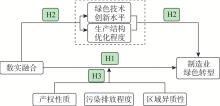
Fig. 1
Theoretical framework diagram"
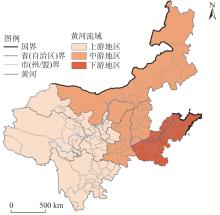
Fig. 2
Schematic diagram of the study area"

Tab. 1
Indicator system for the degree of green transformation of manufacturing industry"
| 变量 | 一级指标 | 二级指标 | 指标说明 |
|---|---|---|---|
| 制造业绿色转型程度 | 投入 | 劳动投入 | 企业员工人数 |
| 资本投入 | 企业固定资产净额 | ||
| 能源投入 | 企业所在城市工业用电量按企业从业人员占城市城镇人员就业比重 | ||
| 产出 | 期望产出 | 企业营业收入 | |
| 非期望产出 | 工业SO2、工业废水、工业烟粉尘排放量 |
Tab. 2
Indicator system for digital-real economy integration"
| 变量 | 一级指标 | 二级指标 | 指标说明 |
|---|---|---|---|
| 数实融合水平 | 数字经济 | 互联网普及率 | 百人中互联网宽带接入用户数 |
| 互联网相关产出 | 人均电信业务总量 | ||
| 移动互联网用户数 | 百人中移动电话用户数 | ||
| 互联网相关从业人员 | 计算机服务和软件业从业人员占城镇单位从业人员比重 | ||
| 数字金融 | 数字普惠金融指数 | ||
| 实体经济 | 发展规模 | 第二产业占地区生产总值比重 | |
| 规模以上工业企业利润总额 | |||
| 规模以上工业企业数量 | |||
| 人均社会消费品零售额 | |||
| 发展结构 | 实体经济从业人员(除金融业、房地产业从业人员)占比 | ||
| 发展潜力 | 规模以上工业企业的R&D投入强度 |
Tab. 3
Descriptive statistics of relevant variables"
| 变量 | 样本量 | 均值 | 标准差 | 最小值 | 最大值 |
|---|---|---|---|---|---|
| GMT | 1284 | 0.997 | 0.095 | 0.827 | 1.176 |
| Mix | 1284 | 0.294 | 0.050 | 0.182 | 0.420 |
| Size | 1284 | 8.452 | 1.103 | 6.201 | 11.115 |
| ROA | 1284 | 0.047 | 0.055 | -0.094 | 0.228 |
| ROE | 1284 | 0.083 | 0.101 | -0.329 | 0.388 |
| Board | 1284 | 2.185 | 0.178 | 1.792 | 2.708 |
| GOV | 1284 | 0.137 | 0.036 | 0.077 | 0.257 |
| ECO | 1284 | 7.528 | 3.536 | 2.060 | 20.015 |
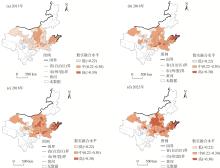
Fig. 3
Spatial evolutions of digital-real economy integration in cities of the Yellow River Basin"

Tab. 4
Impact of digital-real economy integration on the green transformation of manufacturing industry in the Yellow River Basin"
| 变量 | 未考虑控制变量 | 考虑控制变量 |
|---|---|---|
| Mix | 0.096*** | 0.109*** |
| (3.782) | (4.146) | |
| Size | - | 0.001** |
| - | (2.245) | |
| ROA | - | 0.036* |
| - | (1.863) | |
| ROE | - | -0.022** |
| - | (-2.189) | |
| Board | - | -0.004 |
| - | (-1.571) | |
| GOV | - | 0.037 |
| - | (0.978) | |
| ECO | - | -0.000 |
| - | (-0.094) | |
| 常数项 | 0.820*** | 0.816*** |
| (102.815) | (63.904) | |
| city | 是 | 是 |
| year | 是 | 是 |
| N | 1284 | 1284 |
| R2 | 0.979 | 0.979 |
Tab. 5
Endogeneity and robustness tests"
| 变量 | 两阶段最小二乘法 | 剔除省会城市 | 不同时段 | F.Mix | ||
|---|---|---|---|---|---|---|
| 第1阶段 | 第2阶段 | 2011—2017年 | 2018—2022年 | |||
| Mix | GMT | GMT | GMT | GMT | GMT | |
| 工具变量 | 0.010*** | - | - | - | - | - |
| (5.857) | - | - | - | - | - | |
| Mix | - | 0.271** | 0.124*** | 0.108*** | 0.273*** | - |
| - | (2.008) | (3.353) | (3.237) | (3.400) | - | |
| F.Mix | - | - | - | - | - | 0.065** |
| - | - | - | - | - | (2.085) | |
| 控制变量 | 是 | 是 | 是 | 是 | 是 | 是 |
| 常数项 | -0.459*** | 0.779*** | 0.806*** | 0.813*** | 0.961*** | 0.827*** |
| (-3.872) | (23.186) | (48.850) | (44.585) | (30.328) | (59.513) | |
| city | 是 | 是 | 是 | 是 | 是 | 是 |
| year | 是 | 是 | 是 | 是 | 是 | 是 |
| N | 1284 | 1284 | 900 | 749 | 535 | 1177 |
| R2 | 0.978 | 0.979 | 0.979 | 0.947 | 0.881 | 0.976 |
Tab. 6
Results of mechanism tests"
| 变量 | 绿色技术创新水平 | 生产结构优化 |
|---|---|---|
| Mix | 0.460* | -0.684*** |
| (1.766) | (-2.796) | |
| 控制变量 | 是 | 是 |
| 常数项 | 0.068 | -1.005*** |
| (0.735) | (-7.708) | |
| city | 是 | 是 |
| year | 是 | 是 |
| N | 942 | 1233 |
| R2 | 0.153 | 0.566 |
Tab. 7
Heterogeneity test results for ownership nature and pollution emission levels"
| 变量 | 产权性质 | 污染排放程度 | |||
|---|---|---|---|---|---|
| 国有制造业企业 | 非国有制造业企业 | 重污染制造业企业 | 非重污染制造业企业 | ||
| Mix | 0.092** | 0.108*** | 0.122*** | 0.099*** | |
| (2.040) | (3.144) | (2.594) | (3.109) | ||
| 控制变量 | 是 | 是 | 是 | 是 | |
| 常数项 | 0.835*** | 0.812*** | 0.823*** | 0.819*** | |
| (47.500) | (46.178) | (39.454) | (55.080) | ||
| city | 是 | 是 | 是 | 是 | |
| year | 是 | 是 | 是 | 是 | |
| N | 693 | 591 | 480 | 804 | |
| R2 | 0.980 | 0.979 | 0.981 | 0.979 | |
Tab. 8
Regional heterogeneity test results"
| 变量 | 上游地区 | 中游地区 | 下游地区 |
|---|---|---|---|
| GMT | GMT | GMT | |
| Mix | 0.137*** | 0.113** | 0.118** |
| (2.724) | (2.381) | (2.335) | |
| 控制变量 | 是 | 是 | 是 |
| 常数项 | 0.817*** | 0.795*** | 0.831*** |
| (35.172) | (32.975) | (41.243) | |
| city | 是 | 是 | 是 |
| year | 是 | 是 | 是 |
| N | 324 | 228 | 732 |
| R2 | 0.981 | 0.983 | 0.977 |
Tab. 9
Regression and decomposition results of the spatial Durbin model"
| 变量 | 地理距离矩阵 | 经济距离矩阵 | |||||||
|---|---|---|---|---|---|---|---|---|---|
| GMT | 直接效应 | 间接效应 | 总效应 | GMT | 直接效应 | 间接效应 | 总效应 | ||
| Mix | 0.098** | 0.087* | 0.639 | 0.726 | 0.082* | 0.084* | -0.032 | 0.052 | |
| (2.109) | (1.885) | (1.341) | (1.497) | (1.842) | (1.825) | (-0.193) | (0.311) | ||
| W×Mix | 1.011 | - | - | - | -0.017 | - | - | - | |
| (1.506) | - | - | - | (-0.092) | - | - | - | ||
| ρ | -0.568* | - | - | - | -0.084 | - | - | - | |
| (-1.834) | - | - | - | (-0.996) | - | - | - | ||
| sigma2_e | 0.000*** | - | - | - | 0.000*** | - | - | - | |
| (15.101) | - | - | - | (15.091) | - | - | - | ||
| 控制变量 | 是 | 是 | 是 | 是 | 是 | 是 | 是 | 是 | |
| city | 是 | 是 | 是 | 是 | 是 | 是 | 是 | 是 | |
| year | 是 | 是 | 是 | 是 | 是 | 是 | 是 | 是 | |
| N | 456 | 456 | 456 | 456 | 456 | 456 | 456 | 456 | |
| R2 | 0.579 | 0.579 | 0.579 | 0.579 | 0.312 | 0.312 | 0.312 | 0.312 | |
| [1] | 解学梅, 韩宇航. 本土制造业企业如何在绿色创新中实现“华丽转型”?--基于注意力基础观的多案例研究[J]. 管理世界, 2022, 38(3): 76-106. |
| [Xie Xuemei, Han Yuhang. How can local manufacturing enterprises achieve luxuriant transformation in green innovation? A multi-case study based on attention-based view[J]. Journal of Management World, 2022, 38(3): 76-106. ] | |
| [2] | 崔兴华, 林明裕. FDI如何影响企业的绿色全要素生产率?--基于Malmquist-Luenberger指数和PSM-DID的实证分析[J]. 经济管理, 2019, 41(3): 38-55. |
| [Cui Xinghua, Lin Mingyu. How does foreign direct investment affect the green total factor productivity of enterprises? Empirical analysis based on Malmquist-Luenberger index and PSM-DID model[J]. Business and Management Journal, 2019, 41(3): 38-55. ] | |
| [3] | 陈福中, 蒋国海, 董康银. 数字经济对制造业绿色转型的空间溢出效应[J]. 中国人口·资源与环境, 2024, 34(5): 114-125. |
| [Chen Fuzhong, Jiang Guohai, Dong Kangyin. Spatial spillover effects of the digital economy on the green transformation of the manufacturing industry[J]. China Population, Resources and Environment, 2024, 34(5): 114-125. ] | |
| [4] | 万攀兵, 杨冕, 陈林. 环境技术标准何以影响中国制造业绿色转型--基于技术改造的视角[J]. 中国工业经济, 2021(9): 118-136. |
| [Wan Panbing, Yang Mian, Chen Lin. How do environmental technology standards affect the green transition of China’s manufacturing industry: A perspective from technological transformation[J]. China Industrial Economics, 2021(9): 118-136. ] | |
| [5] | 简冠群, 冯浩文. 数字化高端赋能制造业绿色发展的逻辑和实践--黄河流域多元异质性下的探索性案例研究[J]. 管理学刊, 2024, 37(3): 43-59. |
|
[Jian Guanqun, Feng Haowen. The logic and practice of digital high-end enabling the green development of the manufacturing industry: Exploratory case study on the multiple heterogeneity of the Yellow River Basin[J]. Journal of Management, 2024, 37(3): 43-59. ]
doi: 10.38104/vadyba |
|
| [6] | 张峰, 魏巍. 黄河流域制造业绿色发展合作网络时空格局及驱动因素[J]. 统计与决策, 2024, 40(12): 173-178. |
| [Zhang Feng, Wei Wei. The spatio-temporal pattern and driving factors of the green development cooperation network of manufacturing industry in the Yellow River Basin[J]. Statistics & Decision, 2024, 40(12): 173-178. ] | |
| [7] | 欧阳日辉, 龚伟. 促进数字经济和实体经济深度融合: 机理与路径[J]. 北京工商大学学报(社会科学版), 2023, 38(4): 10-22. |
| [Ouyang Rihui, Gong Wei. Promoting the deep integration of the digital economy and the real economy: Mechanism and path[J]. Journal of Beijing Technology and Business University (Social Sciences), 2023, 38(4): 10-22. ] | |
| [8] | 丁述磊, 刘翠花, 李建奇. 数实融合的理论机制、模式选择与推进方略[J]. 改革, 2024(1): 51-68. |
| [Ding Shulei, Liu Cuihua, Li Jianqi. Theoretical mechanism, mode selection and promotion strategies of digital-real integration[J]. Reform, 2024(1): 51-68. ] | |
| [9] | 董亚娟, 付思瑶, 秦媛. 中国数字经济与实体经济: 耦合协调、空间演进及影响路径[J]. 统计与决策, 2023, 39(14): 5-10. |
| [Dong Yajuan, Fu Siyao, Qin Yuan. China’s digital economy and real economy: Coupling coordination, spatial evolution and influencing paths[J]. Statistics & Decision, 2023, 39(14): 5-10. ] | |
| [10] | 黄先海, 高亚兴. 数实产业技术融合与企业全要素生产率--基于中国企业专利信息的研究[J]. 中国工业经济, 2023(11): 118-136. |
| [Huang Xianhai, Gao Yaxing. Technology convergence of digital and real economy industries and enterprise total factor productivity: Research based on Chinese enterprise patent information[J]. China Industrial Economics, 2023(11): 118-136. ] | |
| [11] | 崔琳昊, 冯烽. 数实融合与城市绿色发展: 影响与机制[J]. 上海财经大学学报, 2024, 26(4): 49-63. |
| [Cui Linhao, Feng Feng. Digital-real economy integration and urban green development: Impact and mechanism[J]. Journal of Shanghai University of Finance and Economics, 2024, 26(4): 49-63. ] | |
| [12] | 何德旭, 张昊, 刘蕴霆. 新型实体企业促进数实融合提升发展质量[J]. 中国工业经济, 2024(2): 5-21. |
| [He Dexu, Zhang Hao, Liu Yunting. New substantive enterprises promote the digital-substantive integration and improve the quality of development[J]. China Industrial Economics, 2024(2): 5-21. ] | |
| [13] | 陈雨露. 数字经济与实体经济融合发展的理论探索[J]. 经济研究, 2023, 58(9): 22-30. |
| [Chen Yulu. Theoretical exploration of the integrated development of the digital economy and the real economy[J]. Economic Research Journal, 2023, 58(9): 22-30. ] | |
| [14] | 张自然, 海梅红. 数实融合促进绿色全要素生产率提升研究[J]. 经济纵横, 2025(3): 54-65. |
| [Zhang Ziran, Hai Meihong. Integration of digital economy and real economy improves green total factor productivity[J]. Economic Review Journal, 2025(3): 54-65. ] | |
| [15] | 邝嫦娥, 刘江月, 李文意. 数智融合赋能与制造业企业绿色转型[J]. 当代财经, 2024(5): 114-127. |
| [Kuang Chang’e, Liu Jiangyue, Li Wenyi. Digital-intelligence integration empowerment and green transformation of manufacturing enterprises[J]. Contemporary Finance & Economics, 2024(5): 114-127. ] | |
| [16] | 吴传清, 孟晓倩. 长江经济带数字化转型对制造业绿色发展影响研究[J]. 南通大学学报(社会科学版), 2022, 38(6): 37-47. |
| [Wu Chuanqing, Meng Xiaoqian. Research on the impact of digital transformation on the green development of manufacturing industry in the Yangtze River Economic Belt[J]. Journal of Nantong University (Social Sciences Edition), 2022, 38(6): 37-47. ] | |
| [17] |
任贵秀, 刘凯. 黄河流域绿色创新的时空演化特征及影响因素分析[J]. 干旱区地理, 2024, 47(1): 158-169.
doi: 10.12118/j.issn.1000-6060.2023.313 |
|
[Ren Guixiu, Liu Kai. Spatiotemporal evolution characteristics and influencing factors of green innovation in the Yellow River Basin[J]. Arid Land Geography, 2024, 47(1): 158-169. ]
doi: 10.12118/j.issn.1000-6060.2023.313 |
|
| [18] | 杨汝岱, 李艳, 孟珊珊. 企业数字化发展、全要素生产率与产业链溢出效应[J]. 经济研究, 2023, 58(11): 44-61. |
| [Yang Rudai, Li Yan, Meng Shanshan. Corporate digitization development, total factor productivity and industrial chain spillover effects[J]. Economic Research Journal, 2023, 58(11): 44-61. ] | |
| [19] |
谢宇, 薛选登. 数字经济赋能绿色发展福利--基于黄河流域资源型城市的经验证据[J]. 干旱区地理, 2025, 48(6): 1127-1139.
doi: 10.12118/j.issn.1000-6060.2024.406 |
|
[Xie Yu, Xue Xuandeng. Digital economy empowers green development welfare: Empirical evidence based on resource-based cities in the Yellow River Basin[J]. Arid Land Geography, 2025, 48(6): 1127-1139. ]
doi: 10.12118/j.issn.1000-6060.2024.406 |
|
| [20] | 刘玉斌, 王丹婵. 数字化对制造业企业绿色转型的影响机制研究[J]. 山西大学学报(哲学社会科学版), 2023, 46(6): 138-148. |
| [Liu Yubin, Wang Danchan. The impact mechanism of digitalization on the green transformation of manufacturing enterprises[J]. Journal of Shanxi University (Philosophy and Social Science Edition), 2023, 46(6): 138-148. ] | |
| [21] | 马亮, 高峻, 李娅宁. 数字化赋能制造企业绿色转型升级--绿色创业导向与绿色创新的链式中介作用[J]. 科技进步与对策, 2024, 41(17): 76-86. |
| [Ma Liang, Gao Jun, Li Yaning. Digitalization empowering manufacturing enterprises to green transformation and upgrade: Green entrepreneurship orientation and green innovation in a chain mediation role[J]. Science & Technology Progress and Policy, 2024, 41(17): 76-86. ] | |
| [22] |
张旭红, 周成, 靳轶婷, 等. 黄河流域城市数字经济网络演化特征及其影响机理[J]. 经济地理, 2025, 45(5): 35-45.
doi: 10.15957/j.cnki.jjdl.2025.05.004 |
|
[Zhang Xuhong, Zhou Cheng, Jin Yiting, et al. Network evolution characteristics and influencing mechanism of digital economy in cities of the Yellow River Basin[J]. Economic Geography, 2025, 45(5): 35-45. ]
doi: 10.15957/j.cnki.jjdl.2025.05.004 |
|
| [23] | 薛超凯, 陈凯华, 王全景, 等. 黄河流域产业发展现状、问题与对策建议[J]. 中国科学院院刊, 2024, 39(6): 971-984. |
| [Xue Chaokai, Chen Kaihua, Wang Quanjing, et al. Current status, challenges, and policy recommendations for industrial development in the Yellow River Basin[J]. Bulletin of Chinese Academy of Sciences, 2024, 39(6): 971-984. ] | |
| [24] |
张帅, 吴珍玮, 陆朝阳, 等. 中国省域数字经济与实体经济融合的演变特征及驱动因素[J]. 经济地理, 2022, 42(7): 22-32.
doi: 10.15957/j.cnki.jjdl.2022.07.003 |
|
[Zhang Shuai, Wu Zhenwei, Lu Zhaoyang, et al. Spatio-temporal evolution characteristics and driving factors of the integration between digital economy and real economy in China[J]. Economic Geography, 2022, 42(7): 22-32. ]
doi: 10.15957/j.cnki.jjdl.2022.07.003 |
|
| [25] | 赵涛, 张智, 梁上坤. 数字经济、创业活跃度与高质量发展--来自中国城市的经验证据[J]. 管理世界, 2020, 36(10): 65-76. |
| [Zhao Tao, Zhang Zhi, Liang Shangkun. Digital economy, entrepreneurship, and high-quality economic development: Empirical evidence from urban China[J]. Management World, 2020, 36(10): 65-76. ] | |
| [26] | 张晖, 李靖, 权天舒. 数字基础设施建设促进了数字经济与实体经济融合吗?--基于“宽带中国”战略的准自然实验[J]. 经济问题探索, 2023(10): 1-15. |
| [Zhang Hui, Li Jing, Quan Tianshu. Has the construction of digital infrastructure promoted the integration of the digital economy and the real economy: A quasi-natural experiment based on the “broadband China” strategy[J]. Inquiry into Economic Issues, 2023(10): 1-15. ] | |
| [27] | 熊广勤, 石大千, 李美娜. 低碳城市试点对企业绿色技术创新的影响[J]. 科研管理, 2020, 41(12): 93-102. |
| [Xiong Guangqin, Shi Daqian, Li Meina. The effect of low-carbon pilot cities on the green technology innovation of enterprises[J]. Science Research Management, 2020, 41(12): 93-102. ] | |
| [28] | 高厚宾, 王蔷瑞. “绿色的馈赠”: 数字化转型对企业环境绩效的影响--来自中国制造业A股上市公司的经验证据[J]. 河南师范大学学报(哲学社会科学版), 2023, 50(5): 88-94. |
| [Gao Houbin, Wang Qiangrui. “Green gifts”: The impact of digital transformation on corporate environmental performance: Empirical evidence from A-share listed companies in China’s manufacturing industry[J]. Journal of Henan Normal University (Philosophy and Social Sciences Edition), 2023, 50(5): 88-94. ] | |
| [29] | 江艇. 因果推断经验研究中的中介效应与调节效应[J]. 中国工业经济, 2022(5): 100-120. |
| [Jiang Ting. Mediating effects and moderating effects in causal inference[J]. China Industrial Economics, 2022(5): 100-120. ] | |
| [30] | 吕越, 陈泳昌, 张昊天, 等. 电商平台与制造业企业创新--兼论数字经济和实体经济深度融合的创新驱动路径[J]. 经济研究, 2023, 58(8): 174-190. |
| [Lü Yue, Chen Yongchang, Zhang Haotian, et al. E-commerce platforms and manufacturing firm innovation: On the innovation-driven path of deep integration of the digital economy and the real economy[J]. Economic Research Journal, 2023, 58(8): 174-190. ] |
|
||