Arid Land Geography ›› 2026, Vol. 49 ›› Issue (10): 2145-2157.doi: 10.12118/j.issn.1000-6060.2026.042
• Remote Sensing and Pedology • Previous Articles Next Articles
ZUO Chaoyan1( ), JIA Keli1(), YE Jingyu1, LI Haoyu1, ZHANG Junhua2
Received:2026-01-21
Revised:2026-02-12
Online:2026-10-25
Published:2026-10-26
Contact:
JIA Keli
E-mail:z16063702@163.com;jiakl@nxu.edu.cn
ZUO Chaoyan, JIA Keli, YE Jingyu, LI Haoyu, ZHANG Junhua. Inversion of soil salinity and organic matter information in farmland using ground-based hyperspectral data and stacked ensemble learning[J].Arid Land Geography, 2026, 49(10): 2145-2157.
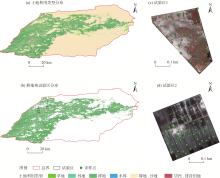
Fig. 1
Schematic diagram of the study area"
Tab. 1
Statistics on the sample levels of each index"
| 指标 | 等级划分 | 含量 | 样本数 | 平均值 | 最大值 | 最小值 | 标准差 | 变异系数/% |
|---|---|---|---|---|---|---|---|---|
| EC/dS·m-1 | 非盐化 | <2 | 5 | 1.52 | 1.82 | 0.82 | 0.43 | 28.00 |
| 轻度盐化 | [2, 4) | 25 | 3.09 | 3.98 | 2.10 | 0.55 | 17.80 | |
| 中度盐化 | [4, 8) | 32 | 5.68 | 7.95 | 4.02 | 1.25 | 22.00 | |
| 重度盐化 | [8, 16) | 10 | 9.84 | 11.39 | 8.10 | 1.29 | 13.10 | |
| 盐土 | ≥16 | 2 | 16.76 | 17.20 | 16.32 | 0.62 | 0.37 | |
| SOM/g·kg-1 | 极缺乏 | <6 | 4 | 5.36 | 5.89 | 4.75 | 0.50 | 9.34 |
| 很缺乏 | [6, 10) | 35 | 8.15 | 9.89 | 6.07 | 0.99 | 12.18 | |
| 缺乏 | [10, 20) | 35 | 10.20 | 18.60 | 12.72 | 1.82 | 14.28 | |
| 中等 | [20, 30) | 0 | - | - | - | - | - | |
| 丰富 | [30, 40) | 0 | - | - | - | - | - | |
| 很丰富 | ≥40 | 0 | - | - | - | - | - |
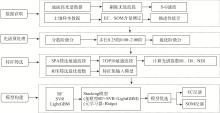
Fig. 2
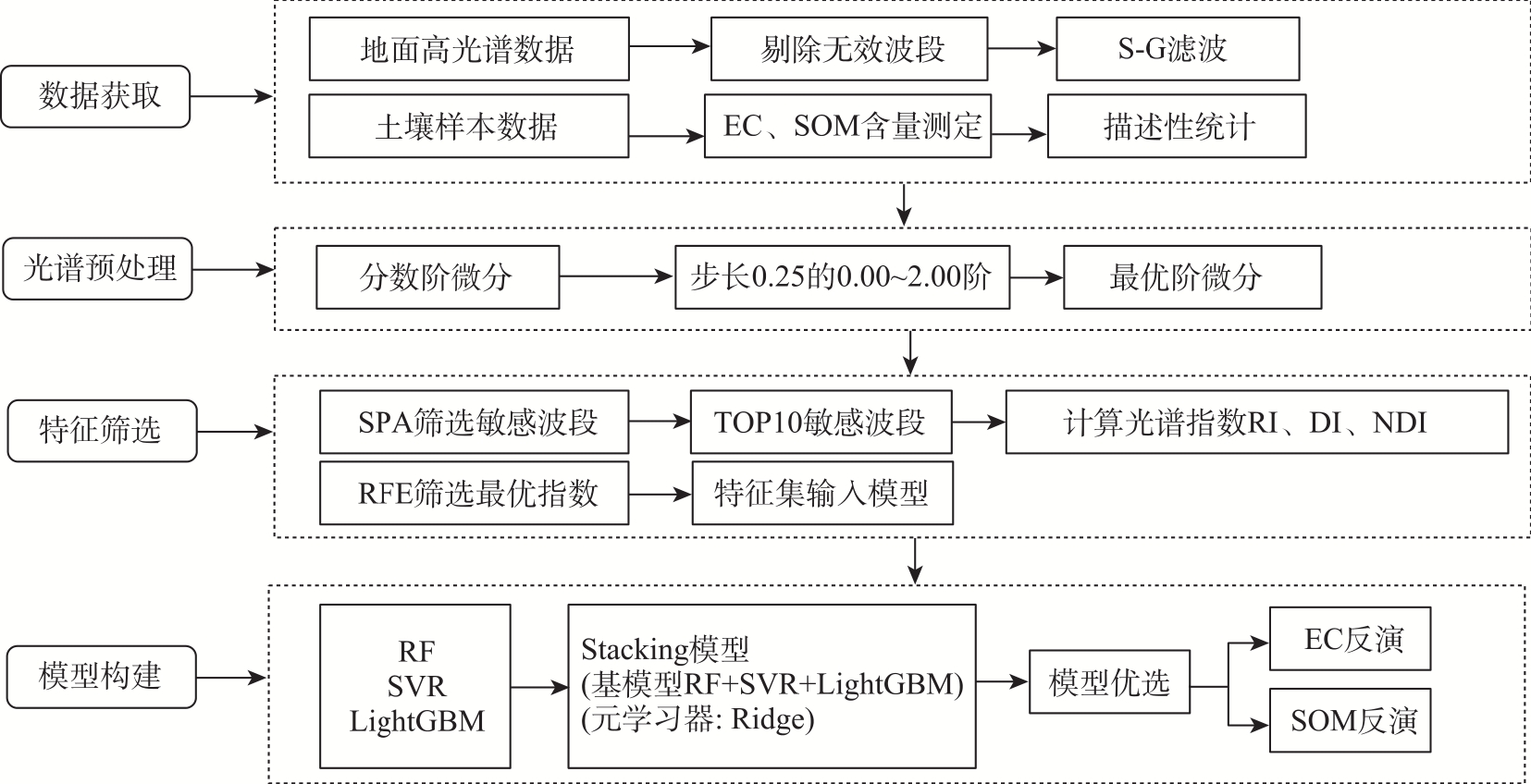
Research technical route"
Tab. 2
Spectral index calculation formula"
| 光谱指数 | 计算公式 |
|---|---|
| RI[ | |
| DI[ | DIi,j=Ri-Rj |
| NDI[ |
Tab. 3
Bayesian optimization of machine learning hyperparameters"
| 模型 | 参数 | 超参数范围 | 核心参数 |
|---|---|---|---|
| RF | n_estimators | [50, 100] | 75.00 |
| max_depth | [2, 6] | 4.00 | |
| LightGBM | n_estimators | [80, 100] | 84.00 |
| max_depth | [2, 4] | 4.00 | |
| num_leaves | [8, 16] | 8.00 | |
| SVR | C | [0.1, 100.0] | 1.00 |
| gamma | [0.001, 1.000] | 0.17 | |
| Stacking | alpha(Ridge元学习器) | [0.01, 100.00] | 1.00 |
| CV(基学习器交叉验证折数) | [3, 10] | 5.00 |
Fig. 3
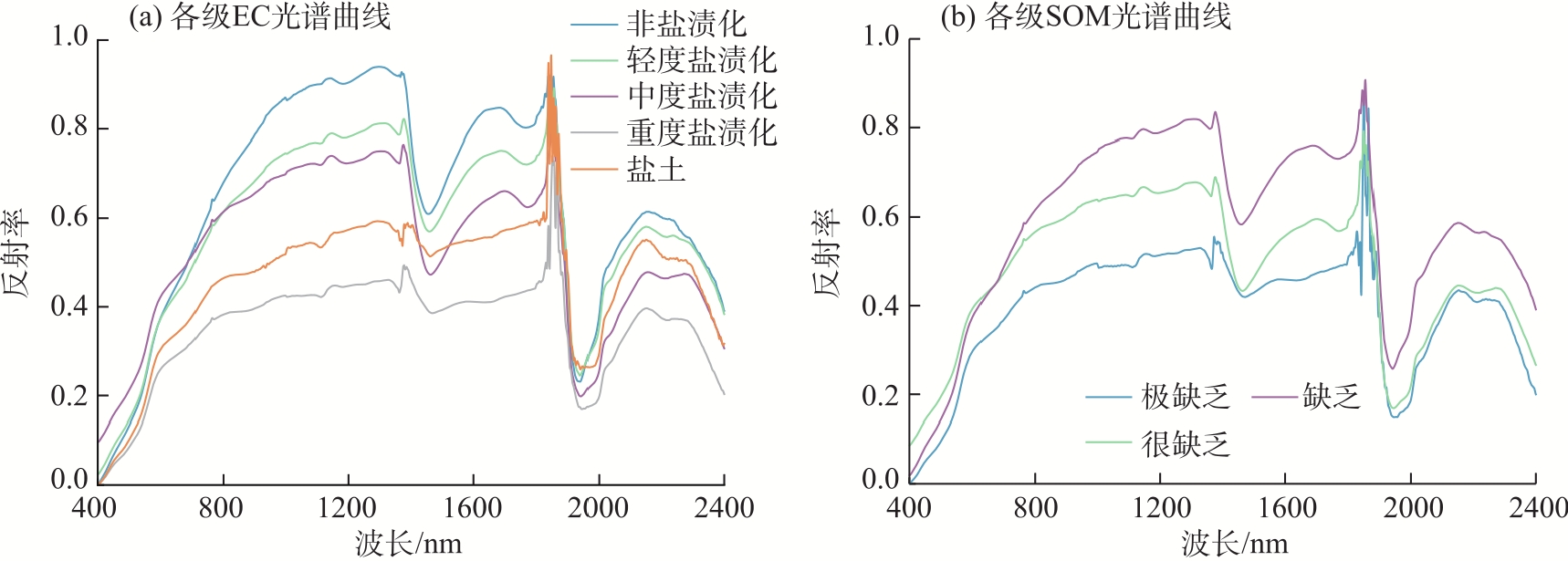
Variation characteristics of original spectral curves with different soil salinity and organic matter content"
Tab. 4
Correlation analysis between fractional differentiation and soil parameters"
| 阶数 | EC | SOM | |||||
|---|---|---|---|---|---|---|---|
| 最大相关系数绝对值 | 平均相关系数绝对值 | 显著波段数 | 最大相关系数绝对值 | 平均相关系数绝对值 | 显著波段数 | ||
| 0.00 | 0.564 | 0.368 | 1619 | 0.608 | 0.384 | 1572 | |
| 0.25 | 0.558 | 0.332 | 1486 | 0.620 | 0.355 | 1533 | |
| 0.50 | 0.564 | 0.306 | 1208 | 0.607 | 0.320 | 1307 | |
| 0.75 | 0.605 | 0.285 | 1092 | 0.699 | 0.287 | 1154 | |
| 1.00 | 0.596 | 0.240 | 960 | 0.668 | 0.239 | 887 | |
| 1.25 | 0.573 | 0.182 | 656 | 0.633 | 0.199 | 765 | |
| 1.50 | 0.485 | 0.135 | 362 | 0.578 | 0.156 | 501 | |
| 1.75 | 0.453 | 0.121 | 258 | 0.527 | 0.143 | 405 | |
| 2.00 | 0.470 | 0.119 | 245 | 0.541 | 0.141 | 377 | |
Tab. 5
RFE selected spectral indices"
| 土壤指标 | 光谱指数 | 波段1/nm | 波段2/nm |
|---|---|---|---|
| EC | RI | 2279 | 1810 |
| 1289 | 1810 | ||
| DI | 2279 | 1289 | |
| 1810 | 2160 | ||
| 1878 | 1834 | ||
| 1878 | 1837 | ||
| 1289 | 1886 | ||
| 1886 | 1834 | ||
| 1886 | 2160 | ||
| NDI | 1289 | 1810 | |
| SOM | RI | 2279 | 1834 |
| 1810 | 1878 | ||
| 1837 | 2160 | ||
| 1810 | 1791 | ||
| DI | 2279 | 1289 | |
| 1289 | 2160 | ||
| 1810 | 1791 | ||
| 1289 | 1791 | ||
| NDI | 1810 | 1381 | |
| 1834 | 2160 |
Fig. 4
Two-dimensional correlation coefficients between the 0.00th order, optimal order spectral indices and soil EC, SOM"

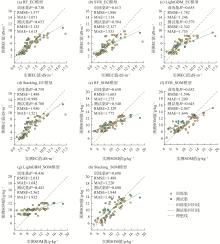
Fig. 5
Performance of model training set and test set"

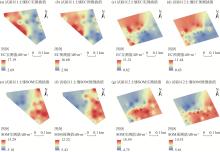
Fig. 6
Interpolation maps of measured and predicted values of soil EC and SOM based on the Stacking model"

| [1] |
尼格拉·塔什甫拉提, 马莹轩, 阿不都外力·热合曼, 等. 基于哨兵数据与特征空间模型的新疆渭库绿洲土壤盐渍化遥感反演[J]. 干旱区地理, 2026, 49(2): 287-300.
doi: 10.12118/j.issn.1000-6060.2025.064 |
|
[Tashipulati Nigela, Ma Yingxuan, Reheman Abudouwaili, et al. Remote sensing inversion of soil salinization in the Weiku Oasis of Xinjiang using Sentinel data and a feature space model[J]. Arid Land Geography, 2026, 49(2): 287-300. ]
doi: 10.12118/j.issn.1000-6060.2025.064 |
|
| [2] | 张俊华, 尚天浩, 陈睿华, 等. 基于光谱FOD与优化指数的银川平原土壤有机质含量反演[J]. 农业机械学报, 2022, 53(11): 379-387. |
| [Zhang Junhua, Shang Tianhao, Chen Ruihua, et al. Inversion of soil organic matter content in Yinchuan Plain using field spectral fractional-order derivatives combined with spectral optimization index[J]. Transactions of the Chinese Society for Agricultural Machinery, 2022, 53(11): 379-387. ] | |
| [3] | 王晨晨, 孙向阳, 李素艳, 等. 不同利用方式土地的土壤盐碱化特征差异[J]. 土壤通报, 2023, 54(5): 1167-1175. |
| [Wang Chenchen, Sun Xiangyang, Li Suyan, et al. Soil salinization characteristics in different land use soils[J]. Chinese Journal of Soil Science, 2023, 54(5): 1167-1175. ] | |
| [4] | 邓凯, 丁建丽, 杨爱霞, 等. 基于电磁感应技术的土壤剖面盐分空间分布建模研究[J]. 生态学报, 2016, 36(20): 6387-6396. |
| [Deng Kai, Ding Jianli, Yang Aixia, et al. Modeling of the spatial distribution of soil profile salinity based on the electromagnetic induction technique[J]. Acta Ecologica Sinica, 2016, 36(20): 6387-6396. ] | |
| [5] | 马纬, 武志明, 温鑫伟, 等. 遥感多光谱成像在解析土壤成分方面研究进展[J]. 农业工程, 2022, 12(11): 30-36. |
| [Ma Wei, Wu Zhiming, Wen Xinwei, et al. Research progress of remote sensing multispectral imaging in analyzing soil components[J]. Agricultural Engineering, 2022, 12(11): 30-36. ] | |
| [6] | 王俊栋, 孙志刚, 杨婷, 等. CYGNSS土壤盐分反演方法研究: 以黄河三角洲为例[J]. 遥感学报, 2023, 27(2): 351-362. |
|
[Wang Jundong, Sun Zhigang, Yang Ting, et al. A remote sensing method for retrieving soil salinity based on CYGNSS: Taking the Yellow River Delta as an example[J]. National Remote Sensing Bulletin, 2023, 27(2): 351-362. ]
doi: 10.11834/jrs.20210466 |
|
| [7] | Francos N, Ogen Y, Ben Dor E. Spectral assessment of organic matter with different composition using reflectance spectroscopy[J]. Remote Sensing, 2021, 13(8): 1549, doi: 10.3390/rs13081549. |
| [8] |
周世勋, 尹娟, 杨莹攀, 等. 土壤质地对灌区土壤盐分高光谱反演精度影响研究[J]. 节水灌溉, 2024(6): 1-10.
doi: 10.12396/jsgg.2023454 |
|
[Zhou Shixun, Yin Juan, Yang Yingpan, et al. Effect of soil texture on the accuracy of hyperspectral inversion of soil salinity in irrigated area[J]. Water Saving Irrigation, 2024(6): 1-10. ]
doi: 10.12396/jsgg.2023454 |
|
| [9] | 李鑫星, 梁步稳, 白雪冰, 等. 光谱技术在土壤水分含量检测中的研究进展[J]. 光谱学与光谱分析, 2020, 40(12): 3705-3710. |
| [Li Xinxing, Liang Buwen, Bai Xuebing, et al. Research progress of spectroscopy in the detection of soil moisture content[J]. Spectroscopy and Spectral Analysis, 2020, 40(12): 3705-3710. ] | |
| [10] |
程俊恺, 冯秀丽, 陈立波, 等. 基于无人机高光谱数据的耕地土壤盐分反演模型优选[J]. 应用生态学报, 2024, 35(11): 3085-3094.
doi: 10.13287/j.1001-9332.202411.012 |
|
[Cheng Junkai, Feng Xiuli, Chen Libo, et al. Optimal inversion model for cultivated land soil salinity based on UAV hyperspectral data[J]. Chinese Journal of Applied Ecology, 2024, 35(11): 3085-3094. ]
doi: 10.13287/j.1001-9332.202411.012 |
|
| [11] | 丁启东, 王怡婧, 张俊华, 等. 基于高光谱信息的宁夏土壤有机质含量估算[J]. 生态学杂志, 2024, 43(8): 2531-2538. |
|
[Ding Qidong, Wang Yijing, Zhang Junhua, et al. Estimation of soil organic matter content in Ningxia based on hyperspectral information[J]. Chinese Journal of Ecology, 2024, 43(8): 2531-2538. ]
doi: 10.13292/j.1000-4890.202408.040 |
|
| [12] |
Qian Z, Ding J L, Guo X Y, et al. Estimation of soil organic matter in the Ogan-Kuqa River Oasis, northwest China, based on visible and near-infrared spectroscopy and machine learning[J]. Journal of Arid Land, 2023, 15(2): 191-204.
doi: 10.1007/s40333-023-0094-4 |
| [13] | Chlouveraki E, Katsenios N, Efthimiadou A, et al. Estimation of soil properties using hyperspectral imaging and machine learning[J]. Smart Agricultural Technology, 2025, 10: 100790, doi: 10.1016/j.atech.2025.100790. |
| [14] | Jiang X Q, Luo S J, Ye Q, et al. Hyperspectral estimates of soil moisture content incorporating harmonic indicators and machine learning[J]. Agriculture, 2022, 12(8): 1188, doi: 10.3390/agriculture12081188. |
| [15] |
王怡婧, 陈睿华, 张俊华, 等. 基于分数阶微分技术的土壤水盐信息高光谱反演[J]. 应用生态学报, 2023, 34(5): 1384-1394.
doi: 10.13287/j.1001-9332.202305.025 |
|
[Wang Yijing, Chen Ruihua, Zhang Junhua, et al. Hyperspectral inversion of soil water and salt information based on fractional order derivative technology[J]. Chinese Journal of Applied Ecology, 2023, 34(5): 1384-1394. ]
doi: 10.13287/j.1001-9332.202305.025 |
|
| [16] | 苗瑞雪, 贺银海, 刘孝阳, 等. 利用机器学习模型预测土壤重金属空间分布的研究进展[J]. 环境科学研究, 2025, 38(5): 1087-1097. |
| [Miao Ruixue, He Yinhai, Liu Xiaoyang, et al. Predicting the spatial distribution of heavy metals in soil using machine learning models: A review[J]. Research of Environmental Sciences, 2025, 38(5): 1087-1097. ] | |
| [17] | Xuan F, Su W, Chen Z, et al. Performance of stacking machine learning and volume model for improving corn above ground biomass prediction[J]. Plant Phenomics, 2025, 7(3): 100068, doi: 10.1016/j.plaphe.2025.100068. |
| [18] | 齐江涛, 程盼婷, 高芳芳, 等. 农田土壤理化参数快速获取技术研究进展与展望[J]. 智慧农业(中英文), 2024, 6(3): 17-33. |
|
[Qi Jiangtao, Cheng Panting, Gao Fangfang, et al. Research advances and prospects on rapid acquisition technology of farmland soil physical and chemical parameters[J]. Smart Agriculture, 2024, 6(3): 17-33. ]
doi: 10.12133/j.smartag.SA202404003 |
|
| [19] | 杨金财, 银征, 吴昊天, 等. 盐碱区地形改造中土壤EC值变化趋势--以江苏射阳日月岛“U”环生态廊道项目为例[J]. 现代园艺, 2021, 44(1): 41-43. |
| [Yang Jincai, Yin Zheng, Wu Haotian, et al. Trends of soil electrical conductivity (EC) changes during terrain modification in saline-alkali areas: A case study of the “U”-ring ecological corridor project on Riyue Island, Sheyang, Jiangsu Province[J]. Modern Horticulture, 2021, 44(1): 41-43. ] | |
| [20] | 罗杰敏. 土壤中有机质含量的测定方法和影响因素研究[J]. 山西化工, 2025, 45(6): 97-99. |
| [Luo Jiemin. Study on the determination method and influencing factors of organic matter content in soil[J]. Shanxi Chemical Industry, 2025, 45(6): 97-99. ] | |
| [21] | 王遵亲, 祝寿泉, 俞仁培, 等. 中国盐渍土[M]. 北京: 科学出版社, 1993: 333-334. |
| [Wang Zunqin, Zhu Shouquan, Yu Renpei, et al. Salt-affected soils in China[M]. Beijing: Science Press, 1993: 333-334. ] | |
| [22] | 张子鹏, 丁建丽, 王敬哲, 等. 利用三维光谱指数定量估算土壤有机质含量: 以新疆艾比湖流域为例[J]. 光谱学与光谱分析, 2020, 40(5): 1514-1522. |
| [Zhang Zipeng, Ding Jianli, Wang Jingzhe, et al. Quantitative estimation of soil organic matter content using three-dimensional spectral index: A case study of the Ebinur Lake Basin in Xinjiang[J]. Spectroscopy and Spectral Analysis, 2020, 40(5): 1514-1522. ] | |
| [23] | 国佳欣, 朱青, 赵小敏, 等. 不同土地利用类型下土壤有机碳含量的高光谱反演[J]. 应用生态学报, 2020, 31(3): 863-871. |
|
[Guo Jiaxin, Zhu Qing, Zhao Xiaomin, et al. Hyper-spectral inversion of soil organic carbon content under different land use types[J]. Chinese Journal of Applied Ecology, 2020, 31(3): 863-871. ]
doi: 10.13287/j.1001-9332.202003.014 |
|
| [24] |
黄华雨, 丁启东, 张俊华, 等. 基于Sentinel-2和可解释机器学习的河套平原农田土壤盐分和pH反演[J]. 应用生态学报, 2025, 36(8): 2407-2419.
doi: 10.13287/j.1001-9332.202508.012 |
|
[Huang Huayu, Ding Qidong, Zhang Junhua, et al. Inversion of soil salinity and pH in farmland of the Hetao Plain based on Sentinel-2 and explainable machine learning[J]. Chinese Journal of Applied Ecology, 2025, 36(8): 2407-2419. ]
doi: 10.13287/j.1001-9332.202508.012 |
|
| [25] | 周健, 季晓菲, 闫宏昌. 基于无人机遥感与高光谱技术的农业病虫害精准监测与防治策略研究[J]. 智慧农业导刊, 2025, 5(15): 33-36. |
| [Zhou Jian, Ji Xiaofei, Yan Hongchang. Precise monitoring and control strategies for agricultural pests and diseases based on UAV remote sensing and hyperspectral technologies[J]. Smart Agriculture Guide, 2025, 5(15): 33-36. ] | |
| [26] | 丁松滔, 张霞, 尚坤, 等. 基于分数阶微分的土壤重金属高光谱遥感图像反演[J]. 遥感学报, 2023, 27(9): 2191-2205. |
|
[Ding Songtao, Zhang Xia, Shang Kun, et al. Estimating soil heavy metal from hyperspectral remote sensing images base on fractional order derivative[J]. National Remote Sensing Bulletin, 2023, 27(9): 2191-2205. ]
doi: 10.11834/jrs.20232513 |
|
| [27] | 吴梦红, 窦森, 林楠, 等. 联合FOD-sCARS的土壤有机质高光谱机器学习估测模型[J]. 光谱学与光谱分析, 2025, 45(1): 204-212. |
| [Wu Menghong, Dou Sen, Lin Nan, et al. Hyperspectral estimation of soil organic matter based on FOD-sCARS and machine learning algorithm[J]. Spectroscopy and Spectral Analysis, 2025, 45(1): 204-212. ] | |
| [28] | Deng M H, Zhang C, Tang M, et al. Stacking ensemble learning coupled with multi-source remote sensing data: Enhancing soil salinity inversion accuracy in barley-cultivated salinized soils[J]. Agricultural Water Management, 2025, 322: 109959, doi: 10.1016/j.agwat.2025.109959. |
| [29] | Wu M H, Dou S, Lin N, et al. Estimation and mapping of soil organic matter content using a stacking ensemble learning model based on hyperspectral images[J]. Remote Sensing, 2023, 15(19): 4713, doi: 10.3390/rs15194713. |
| [30] | Dong H L, Tian F. Soil salinity inversion based on a Stacking integrated learning algorithm[J]. Agriculture, 2024, 14(10): 1777, doi: 10.3390/agriculture14101777. |
| [31] |
黄华雨, 丁启东, 张俊华, 等. 基于地面高光谱的宁夏银北地区农田不同土层盐碱化信息反演[J]. 应用生态学报, 2024, 35(11): 3073-3084.
doi: 10.13287/j.1001-9332.202411.017 |
|
[Huang Huayu, Ding Qidong, Zhang Junhua, et al. Ground-based hyperspectral inversion of salinization and alkalinization of different soil layers in farmland in Yinbei area, Ningxia, China[J]. Chinese Journal of Applied Ecology, 2024, 35(11): 3073-3084. ]
doi: 10.13287/j.1001-9332.202411.017 |
|
| [32] |
刘瑞亮, 贾科利, 李小雨, 等. 组合光学和微波遥感的耕地土壤含盐量反演[J]. 干旱区地理, 2024, 47(3): 433-444.
doi: 10.12118/j.issn.1000-6060.2023.375 |
|
[Liu Ruiliang, Jia Keli, Li Xiaoyu, et al. Inversion of soil salt content by combining optical and microwave remote sensing in cultivated land[J]. Arid Land Geography, 2024, 47(3): 433-444. ]
doi: 10.12118/j.issn.1000-6060.2023.375 |
|
| [33] | Lin N, Ma X H, Sui Y Y, et al. Soil salinity estimation based on satellite hyperspectral and synthetic aperture radar remote sensing image fusion[J]. Agricultural Water Management, 2026, 323: 110076, doi: 10.1016/j.agwat.2025.110076. |
| [34] |
Qiao X X, Wang C, Feng M C, et al. Hyperspectral estimation of soil organic matter based on different spectral preprocessing techniques[J]. Spectroscopy Letters, 2017, 50(3): 156-163.
doi: 10.1080/00387010.2017.1297958 |
| [35] |
Zhang W W, Wang C, Xue R, et al. Effects of salinity on the soil microbial community and soil fertility[J]. Journal of Integrative Agriculture, 2019, 18(6): 1360-1368.
doi: 10.1016/S2095-3119(18)62077-5 |
| [36] |
傅新, 张浩然, 王元波, 等. 黄河三角洲盐渍区土壤盐分三维空间分异及其影响因素[J]. 地球信息科学学报, 2025, 27(9): 2135-2150.
doi: 10.12082/dqxxkx.2024.240020 |
| [Fu Xin, Zhang Haoran, Wang Yuanbo, et al. Three-dimensional spatial differentiation of soil salinity and its influencing factors in the saline soil areas of the Yellow River Delta[J]. Journal of Geo-Information Science, 2025, 27(9): 2135-2150. ] |
| [1] | YANG Mingxin, NING Xiaochun, YANG Liusheng, ZHANG Yafei, SHI Mingming, KANG Yanbin, HUANGQING Dongzhi, WANG Shouxing, ZHOU Huakun. Inversion of soil salinization in alpine grasslands based on explainable machine learning models [J]. Arid Land Geography, 2026, 49(3): 549-558. |
| [2] | LI Lei, XUE Xinshuai, LIU Jiamin. Impact of sponge city construction policy on bird biodiversity in the Yellow River Basin based on machine learning model [J]. Arid Land Geography, 2026, 49(10): 2205-2214. |
| [3] | GUO Jiali, MA Yonggang, PAN Heng, LI Na, SUN Changning, SUN Qian, ZHOU Wenchang, DANG Yuxuan. Comparative analysis of satellite monitoring of soil salinization in Ebinur Lake during spring and summer [J]. Arid Land Geography, 2025, 48(12): 2143-2157. |
| [4] | GAO Ruixiang, LUO Geping, ZHANG Wenqiang, XIE Mingjuan, WANG Yuangang. Ecosystem carbon flux inversion method combining LSTM and fuzzy mathematics [J]. Arid Land Geography, 2025, 48(12): 2210-2219. |
| [5] | XIN Yue, SU Lijuan, ZHENG Xucheng, LI Hui, YI Nana, JIN Yuchen. Hail characteristics and hail recognition method based on machine learning in Inner Mongolia [J]. Arid Land Geography, 2025, 48(1): 11-19. |
| [6] | LYU Na, GUO Mengjing, ZHAO Xin, LIU Kele, HUANG Yujia. Remote sensing inversion of water quality and spatiotemporal evolution characteristics of the Bosten Inland Freshwater Lake [J]. Arid Land Geography, 2024, 47(6): 953-966. |
| [7] | LIU Ruiliang, JIA Keli, LI Xiaoyu, CHEN Ruihua, WANG Yijing, ZHANG Junhua. Inversion of soil salt content by combining optical and microwave remote sensing in cultivated land [J]. Arid Land Geography, 2024, 47(3): 433-444. |
| [8] | CUI Jintao, Mamat SAWUT. Estimation of leaf water content in upland cotton based on feature band selection and machine learning [J]. Arid Land Geography, 2023, 46(11): 1836-1847. |
| [9] | WEI Huimin, JIA Keli, ZHANG Xu, ZHANG Junhua. Prediction of soil salinity based on machine learning and multispectral remote sensing in Yinchuan Plain [J]. Arid Land Geography, 2023, 46(1): 103-114. |
| [10] | ZHAO Shuang,DING Jianli,HAN Lijing,HUANG Shuai,GE Xiangyu. Response analysis and modeling of microwave dielectric properties of typical saline soil in Xinjiang [J]. Arid Land Geography, 2022, 45(5): 1534-1546. |
| [11] | LIU Xuhui,BAI Yungang,CHAI Zhongping,ZHANG Jianghui,DING Bangxin,JIANG Zhu. Inversion and validation of soil salinity based on multispectral remote sensing in typical oasis cotton field in spring [J]. Arid Land Geography, 2022, 45(4): 1165-1175. |
| [12] | DAI Yunhao,GUAN Yao,ZHANG Qinkai,SUN Junjie,HE Xinghong. Remote sensing monitoring and temporal and spatial characteristics of soil salinization in Aral Reclamation Area [J]. Arid Land Geography, 2022, 45(4): 1176-1185. |
| [13] | YIN Hanmin,Guli JIAPAER,YU Tao,Jeanine UMUHOZA,LI Xu. Wheat yield estimation with remote sensing in northern Kazakhstan [J]. Arid Land Geography, 2022, 45(2): 488-498. |
| [14] | LIANG Meng,MI Xiaojun,LI Chenhua,ZHAO Jin,WANG Yugang,MA Jian,Hu Jiangling. Salinity characteristics and halophytic vegetation diversity of uncultivated saline-alkali soil in Junggar Basin, Xinjiang [J]. Arid Land Geography, 2022, 45(1): 185-196. |
| [15] | HU Guigui,YANG Fenli,YANG Lian’an,ZHENG Yurong,WANG Hui,CHEN Weijun,LI Yali. Spatial prediction modeling of soil organic matter content based on principal components and machine learning [J]. Arid Land Geography, 2021, 44(4): 1114-1124. |
|
||