Arid Land Geography ›› 2026, Vol. 49 ›› Issue (2): 393-403.doi: 10.12118/j.issn.1000-6060.2025.406
• Regional Development • Previous Articles Next Articles
LI Qianguo1( ), SUN Longkai1(), HUI Fanyan1, ZHU Zongbin2
Received:2025-07-14
Revised:2025-08-29
Online:2026-02-25
Published:2026-02-27
Contact:
SUN Longkai
E-mail:xsdlqg@126.com;slkzufe@126.com
LI Qianguo, SUN Longkai, HUI Fanyan, ZHU Zongbin. Spatiotemporal evolution characteristic and driving mechanism of rural resilience in counties of Gansu Province[J].Arid Land Geography, 2026, 49(2): 393-403.
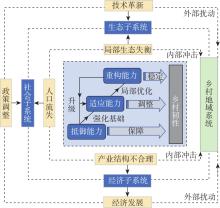
Fig. 1
Concept connotation of rural resilience system"
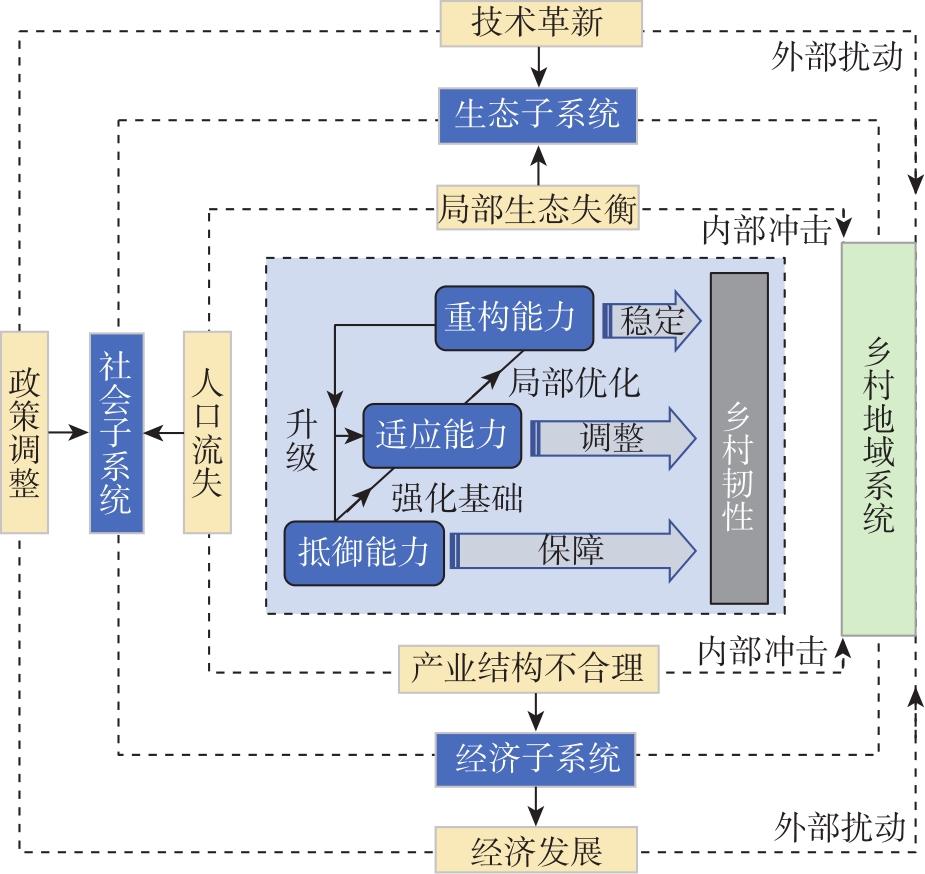
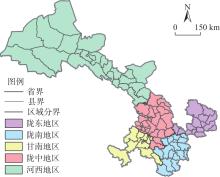
Fig. 2
Schematic diagram of the study area"
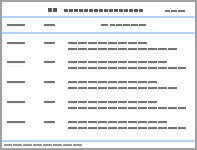
Tab. 1
County-level rural resilience evaluation index system"
| 目标层 | 准则层(权重) | 指标层(权重) | 指标计算 | 属性 |
|---|---|---|---|---|
| 乡村韧性 | 抵御能力(0.315) | 地均农业产值/104元·hm-2(0.376) | 农业产值/耕地面积 | + |
| 农村人均耕地资源/hm2·人-1(0.295) | 耕地面积/乡村总人口 | + | ||
| 粮食单产/kg·hm-2(0.329) | 粮食总产量/粮食播种面积 | + | ||
| 适应能力(0.373) | 农业生产结构/%(0.563) | 经济作物面积/农作物播种面积 | + | |
| 粮食自给率/%(0.218) | 粮食总产量/(常住人口×400 kg) | + | ||
| 农药化肥使用强度/t·hm-2(0.219) | 农药化肥使用量/农作物播种面积 | - | ||
| 重构能力(0.312) | 农业产值占比/%(0.413) | 第二三产业产值/农村经济总收入 | + | |
| 乡村从业人员占比/%(0.354) | 乡村从业人员/乡村总人口 | + | ||
| 复种指数/%(0.233) | 农作物播种面积/耕地面积 | + |
Tab. 2
Evaluation values of rural resilience sub-dimensions in counties of Gansu Province from 2010 to 2022"
| 分维度 | 2010年 | 2016年 | 2022年 |
|---|---|---|---|
| 抵御能力 | 5.424 | 4.749 | 5.991 |
| 适应能力 | 4.251 | 4.384 | 4.614 |
| 重构能力 | 4.672 | 4.711 | 4.900 |
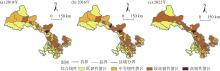
Fig. 3
Spatial patterns of rural resilience levels in counties of Gansu Province from 2010 to 2022"
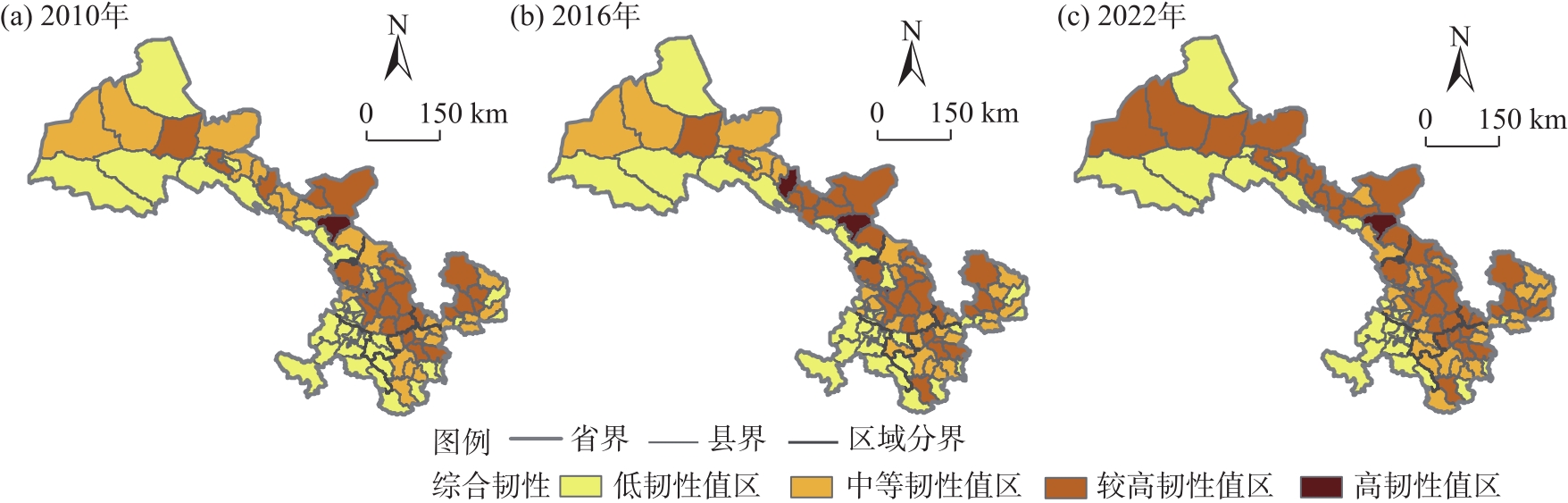
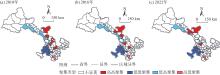
Fig. 4
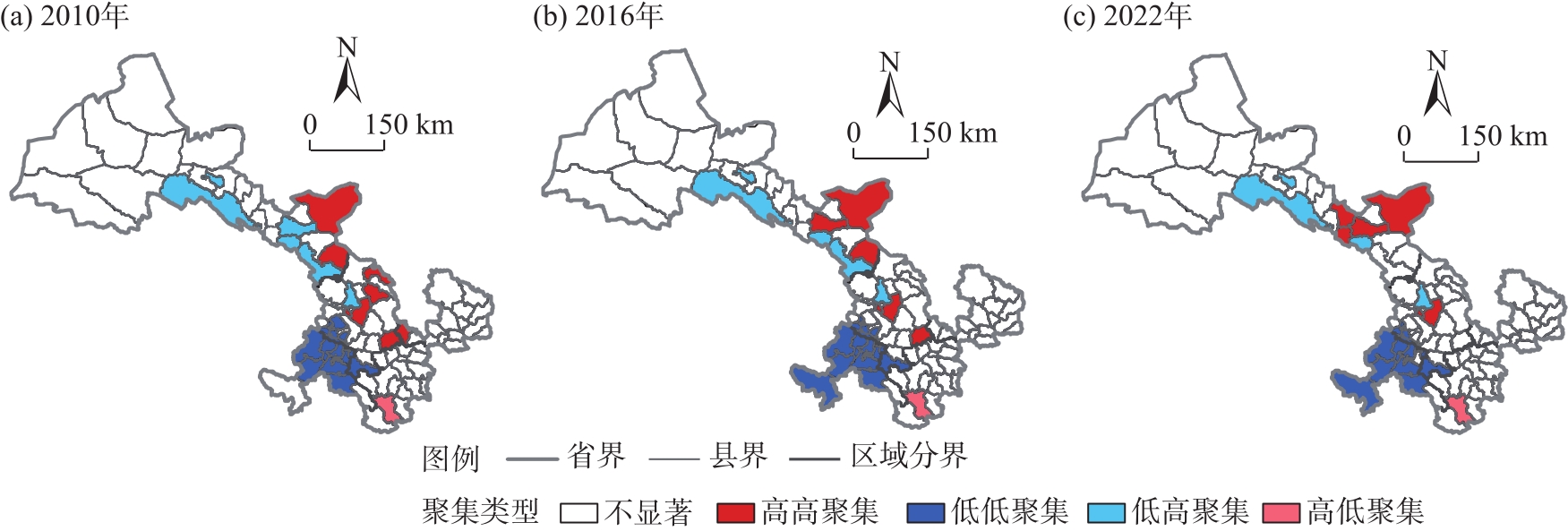
LISA cluster distributions of rural resilience in counties of Gansu Province from 2010 to 2022"
Tab. 3
Selection of influencing factors"
| 解释变量 | 具体指标 | 代码 | 变量解释 |
|---|---|---|---|
| 农村社会服务水平 | 每万人农村居民拥有医疗卫生机构床位数 | X1 | 反映农村社会服务水平 |
| 农民合作社数 | X2 | ||
| 农村经济发展水平 | 农村居民人均可支配收入 | X3 | 反映农村经济发展水平 |
| 农村居民人均消费支出 | X4 | ||
| 农业生产水平 | 农业机械总动力 | X5 | 反映农业生产水平 |
| 农村人力资源 | 乡村劳动力资源总数 | X6 | 反映农村人力资源状况 |
| 农村能源动力 | 农村用电总量 | X7 | 反映农村能源利用状况 |
| 农村产业结构 | 农业产值 | X8 | 反映农村生产能力 |
| 林业产值 | X9 | ||
| 牧业产值 | X10 |
Fig. 5
Changes in q-value of influencing factors on rural resilience in counties of Gansu Province from 2010 to 2022"
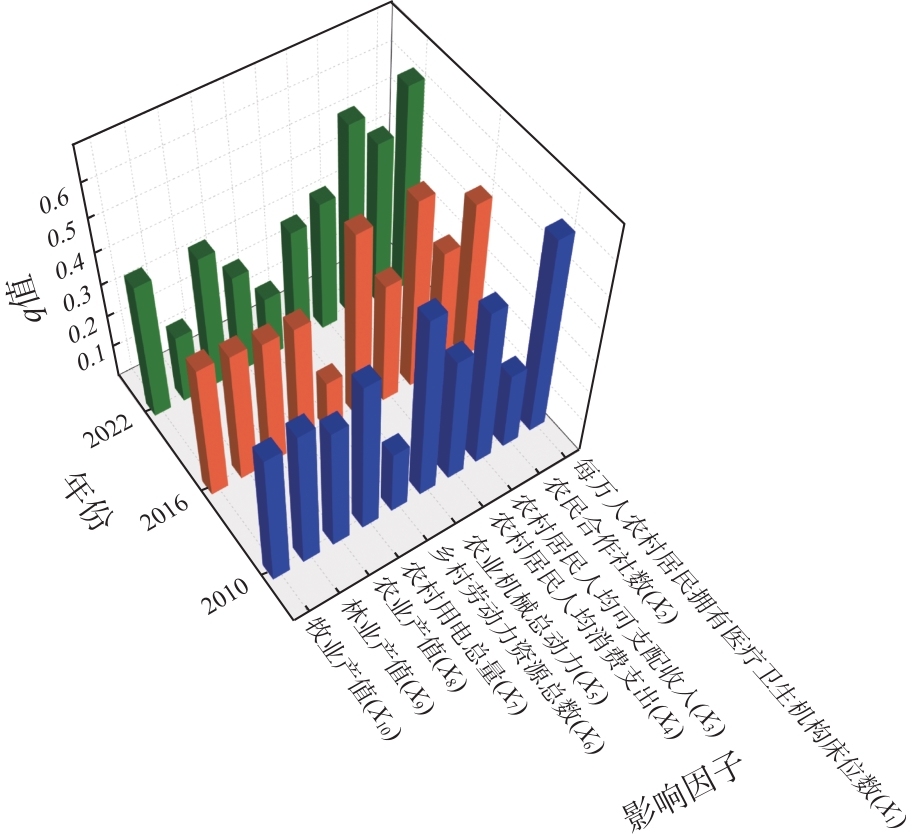
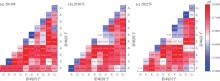
Fig. 6
Interactive detection results of influencing factors from 2010 to 2022"
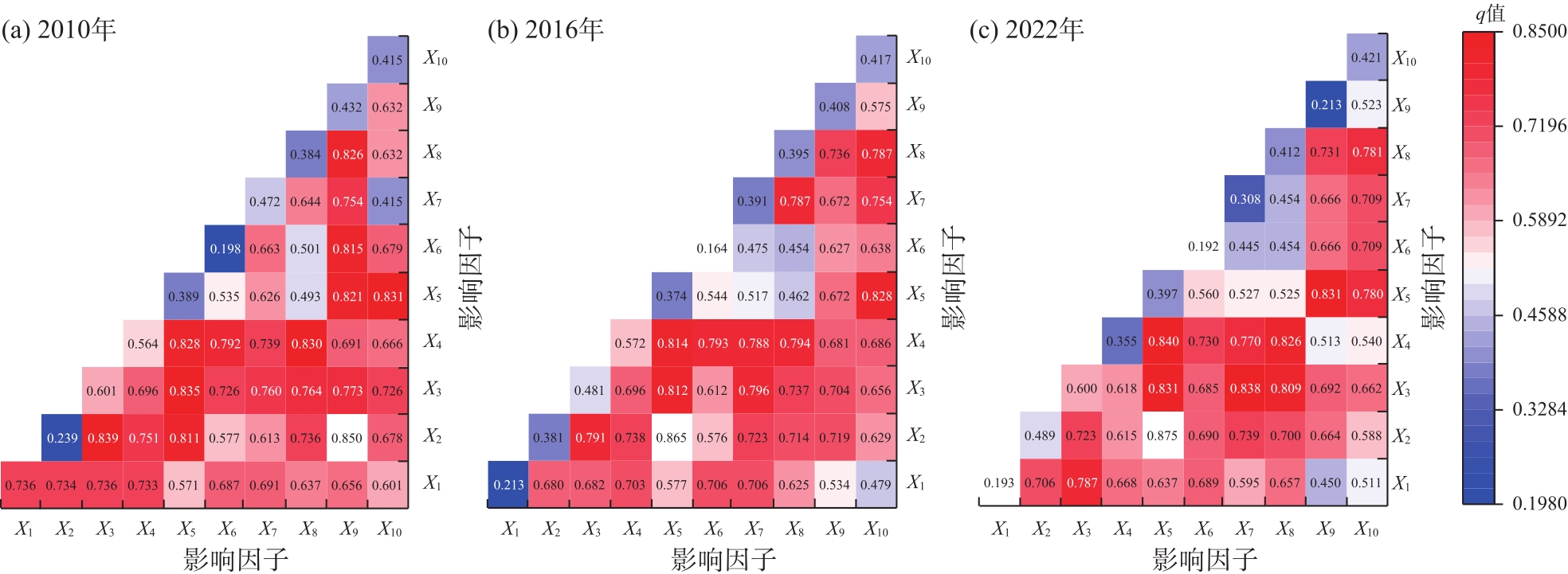
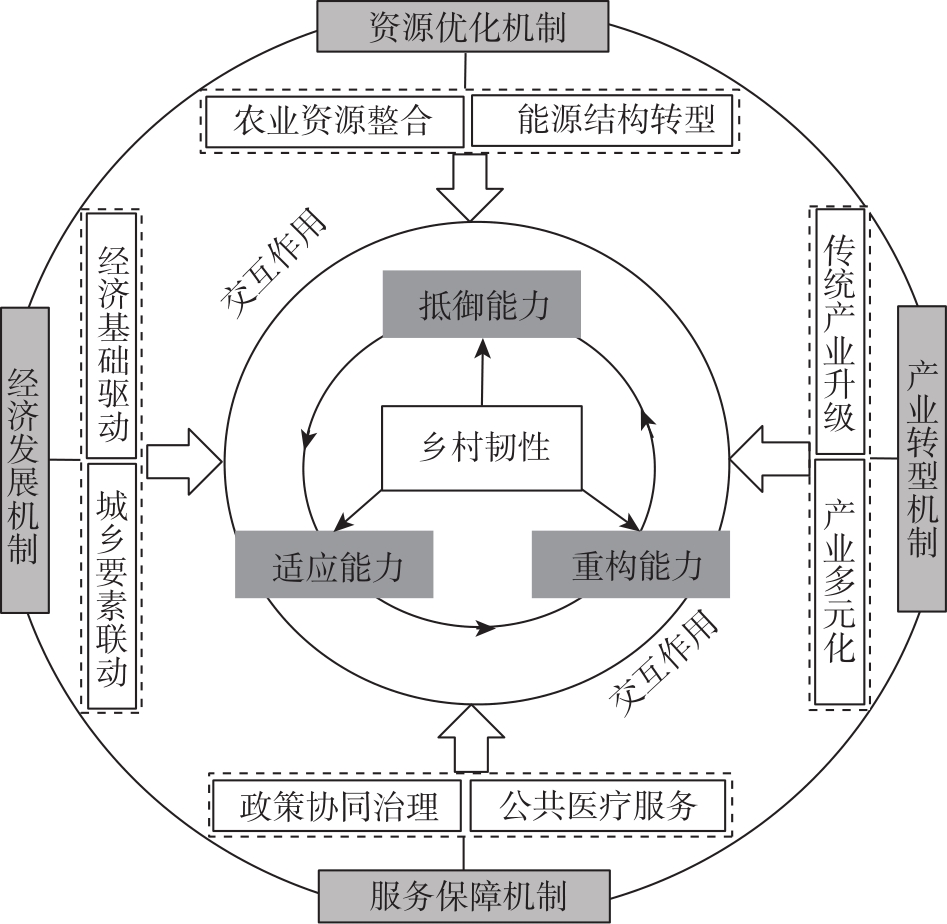
Fig. 7
Driving mechanisms for rural resilience in counties of Gansu Province"
| [1] |
王成, 任梅菁, 胡秋云, 等. 乡村生产空间系统韧性的科学认知及其研究域[J]. 地理科学进展, 2021, 40(1): 85-94.
doi: 10.18306/dlkxjz.2021.01.008 |
| [Wang Cheng, Ren Meijing, Hu Qiuyun, et al. Rural production space system resilience and its research domains[J]. Advances in Geographic Sciences, 2021, 40(1): 85-94.] | |
| [2] |
李玉恒, 阎佳玉, 武文豪, 等. 世界乡村转型历程与可持续发展展望[J]. 地理科学进展, 2018, 37(5): 627-635.
doi: 10.18306/dlkxjz.2018.05.006 |
| [Li Yuheng, Yan Jiayu, Wu Wenhao, et al. The process of rural transformation in the world and prospects of sustainable development[J]. Advances in Geographic Sciences, 2018, 37(5): 627-635.] | |
| [3] |
Cutter S L. The landscape of disaster resilience indicators in the USA[J]. Natural Hazards, 2016, 80(2): 741-758.
doi: 10.1007/s11069-015-1993-2 |
| [4] | Bodin P, Wiman Bolb B. Resilience and other stability concepts in ecology: Notes on their origin, validity and usefulness[J]. ESS Bulletin, 2004, 2(1): 33-43. |
| [5] |
Wilson C. Multifunctional ‘Quality’ and rural community resilience[J]. Transactions of the Institute of British Geographers, 2010, 35(3): 364-381.
doi: 10.1111/tran.2010.35.issue-3 |
| [6] |
Cutter S, Barnes L, Berry M, et al. A place-based model for understanding community resilience to natural disasters[J]. Global Environmental Change, 2008, 18(4): 598-606.
doi: 10.1016/j.gloenvcha.2008.07.013 |
| [7] |
Gerlitz J Y, Macchi M, Brooks N, et al. The multidimensional livelihood vulnerability index: An instrument to measure livelihood vulnerability to change in the Hindu Kush Himalayas[J]. Climate and Development, 2017, 9(2): 124-140.
doi: 10.1080/17565529.2016.1145099 |
| [8] |
李玉恒, 黄惠倩, 王晟业. 乡村韧性研究的热点与趋势: 基于CiteSpace的知识图谱分析[J]. 地理科学, 2023, 43(9): 1568-1575.
doi: 10.13249/j.cnki.sgs.2023.09.007 |
|
[Li Yuheng, Huang Huiqian, Wang Shengye. Hotspots and trends of rural resilience research: Knowledge map analysis based on CiteSpace[J]. Scientia Geographica Sinica, 2023, 43(9): 1568-1575.]
doi: 10.13249/j.cnki.sgs.2023.09.007 |
|
| [9] | 徐耀阳, 李刚, 崔胜辉, 等. 韧性科学的回顾与展望: 从生态理论到城市实践[J]. 生态学报, 2018, 38(15): 5297-5304. |
| [Xu Yaoyang, Li Gang, Cui Shenghui, et al. Review and prospect of resilience science: From ecological theory to urban practice[J]. Journal of Ecology, 2018, 38(15): 5297-5304.] | |
| [10] |
贾垚焱, 胡静, 刘大均, 等. 山区民族旅游地乡村聚落韧性评估及尺度关联研究[J]. 经济地理, 2022, 42(8): 194-204.
doi: 10.15957/j.cnki.jjdl.2022.08.021 |
|
[Jia Yaoyan, Hu Jing, Liu Dajun, et al. Resilience assessment and scale correlation of rural settlements in mountainous ethnic tourism destinations[J]. Economic Geography, 2022, 42(8): 194-204.]
doi: 10.15957/j.cnki.jjdl.2022.08.021 |
|
| [11] | 石龙宇, 郑巧雅, 杨萌, 等. 城市韧性概念、影响因素及其评估研究进展[J]. 生态学报, 2022, 42(14): 6016-6029. |
| [Shi Longyu, Zheng Qiaoya, Yang Meng, et al. Review of definitions, influence factors and assessment of urban resilience[J]. Chinese Journal of Ecology, 2022, 42(14): 6016-6029.] | |
| [12] |
宋关东, 唐承丽, 周国华. 基于县域尺度的乡村韧性测量及其影响因素分析——以湖南省为例[J]. 世界地理研究, 2024, 33(6): 128-140.
doi: 10.3969/j.issn.1004-9479.2024.06.20222029 |
| [Song Guandong, Tang Chengli, Zhou Guohua. Analysis of rural resilience measurement and its influencing factors based on county scale: A case study of Hunan Province[J]. World Geographic Research, 2024, 33(6): 128-140.] | |
| [13] |
耿艺伟, 李效顺, 陈伟强, 等. 乡村地域系统韧性类型识别与驱动机制研究——以豫东平原区商丘市睢阳区为例[J]. 地理科学进展, 2023, 42(9): 1755-1768.
doi: 10.18306/dlkxjz.2023.09.008 |
| [Geng Yiwei, Li Xiaoshun, Chen Weiqiang, et al. Identification of rural regional system resilience types and driving mechanism: Taking Suiyang District, Shangqiu City as an example[J]. Advances in Geographic Sciences, 2023, 42(9): 1755-1768.] | |
| [14] | 邱明丽, 刘殿锋, 刘耀林. 乡村韧性理论框架与测度体系[J]. 中国土地科学, 2021, 35(8): 107-114. |
| [Qiu Mingli, Liu Dianfeng, Liu Yaolin. Review on theoretical framework and evaluation system of rural resilience[J]. China Land Science, 2021, 35(8): 107-114.] | |
| [15] | 胡霄, 李红波, 李智, 等. 河北省县域乡村韧性测度及时空演变[J]. 地理与地理信息科学, 2021, 37(3): 89-96. |
| [Hu Xiao, Li Hongbo, Li Zhi, et al. Measurement and spatio-temporal evolution of rural resilience at county level in Hebei Province[J]. Geography and Geo-Information Science, 2021, 37(3): 89-96.] | |
| [16] | 陈晓红, 谷岳, 潘玮, 等. 基于抵御-吸收-更新的乡村韧性系统协调发展特征与动态响应机制——以黑龙江省为例[J]. 生态学报, 2024, 44(16): 6976-6988. |
| [Chen Xiaohong, Gu Yue, Pan Wei, et al. The coordinated development characteristics and dynamic response mechanism of defense-absorption-renewal of rural resilience system in Heilongjiang Province, China[J]. Chinese Journal of Ecology, 2024, 44(16): 6976-6988.] | |
| [17] |
金晨阳, 杜宏茹. 新疆耕地系统韧性时空变化特征及其分区划定[J]. 干旱区研究, 2024, 41(10): 1778-1788.
doi: 10.13866/j.azr.2024.10.15 |
|
[Jin Chenyang, Du Hongru. Characteristics of spatial and temporal changes and zoning of cultivated land resilience in Xinjiang[J]. Arid Zone Research, 2024, 41(10): 1778-1788.]
doi: 10.13866/j.azr.2024.10.15 |
|
| [18] |
李玉恒, 黄惠倩, 王晟业. 基于乡村经济韧性的传统农区城乡融合发展路径研究——以河北省典型县域为例[J]. 经济地理, 2021, 41(8): 28-33, 44.
doi: 10.15957/j.cnki.jjdl.2021.08.004 |
|
[Li Yuheng, Huang Huiqian, Wang Shengye. Characteristics of spatial and temporal changes and zoning of cultivated land resilience in Xinjiang[J]. Economic Geography, 2021, 41(8): 28-33, 44.]
doi: 10.15957/j.cnki.jjdl.2021.08.004 |
|
| [19] | 武前波, 胡嘉青, 薛雯露. 东部沿海地区乡村韧性测度及其发展路径研究——以浙江省为例[J]. 浙江大学学报(理学版), 2024, 51(6): 664-676. |
| [Wu Qianbo, Hu Jiaqing, Xue Wenlu. Research on the measurement of rural resilience level and its development path in the eastern coastal area: A case study of Zhejiang Province[J]. Journal of Zhejiang University (Science Edition), 2024, 51(6): 664-676.] | |
| [20] | 和佳慧, 吴映梅, 余丽娇, 等. 西部地区乡村韧性的时空演变及驱动因子探测[J]. 地域研究与开发, 2023, 42(1): 144-148, 160. |
| [He Jiahui, Wu Yingmei, Yu Lijiao, et al. Spatio-temporal evolution and driver detection of rural resilience in western China[J]. Regional Research and Development, 2023, 42(1): 144-148, 160.] | |
| [21] | 朱苏加, 吴建民, 梁子怡. 乡村振兴与县级行政区划调整分析——以河北省为例[J]. 地理与地理信息科学, 2020, 36(5): 137-142. |
| [Zhu Sujia, Wu Jianmin, Liang Ziyi. Analysis of rural revitalization and administrative division adjustment at county-level: A case study of Hebei Province[J]. Geography and Geo-Information Science, 2020, 36(5): 137-142.] | |
| [22] |
任洪杰, 李辉尚. 中国乡村生态韧性时空演变特征及影响因素探究[J]. 干旱区地理, 2024, 47(11): 1915-1923.
doi: 10.12118/j.issn.1000-6060.2023.707 |
|
[Ren Hongjie, Li Huishang. Spatial and temporal evolution characteristics and influencing factors of rural ecological resilience in China[J]. Arid Land Geography, 2024, 47(11): 1915-1923.]
doi: 10.12118/j.issn.1000-6060.2023.707 |
|
| [23] |
Holling C S. Resilience and stability of ecological systems[J]. Annual Review of Ecology and Systematics, 1973, 4(1): 1-23.
doi: 10.1146/ecolsys.1973.4.issue-1 |
| [24] |
Xu Li, Marinovad D, Guo X. Resilience thinking: A renewed system approach for sustainability science[J]. Sustainability Science, 2015, 10(1): 123-138.
doi: 10.1007/s11625-014-0274-4 |
| [25] | Alwxander D E. Resilience and disaster risk reduction: An etymological journey[J]. Natural Hazards and Earth System Sciences, 2013, 13(11): 2707-2716. |
| [26] |
刘彦随, 郭仁忠, 张立强, 等. 乡村地域系统转型机理与情景模拟[J]. 地理学报, 2025, 80(4): 855-870.
doi: 10.11821/dlxb202504001 |
| [Liu Yansui, Guo Renzhong, Zhang Liqiang, et al. Transformation mechanism and scenario simulation of rural areal system[J]. Journal of Geography, 2025, 80(4): 855-870.] | |
| [27] |
资明贵, 周怡, 罗静, 等. 山区乡村地域系统韧性测度及影响因素研究——以大别山区罗田县为例[J]. 地理科学进展, 2022, 41(10): 1819-1832.
doi: 10.18306/dlkxjz.2022.10.004 |
| [Zi Minggui, Zhou Yi, Luo Jing, et al. Measurement and influencing factors of rural regional system resilience in mountainous areas: A case study of Luotian County in the Dabie Mountains[J]. Advances in Geographic Sciences, 2022, 41(10): 1819-1832.] | |
| [28] |
Modica M, Reggianiai A. Spatial economic resilience: Overview and perspectives[J]. Networks and Spatial Economics, 2014, 15(2): 211-233.
doi: 10.1007/s11067-014-9261-7 |
| [29] | 朱思吉, 吴映梅, 孙俊, 等. 2000—2020年西南山区乡村生计韧性时空演变特征及影响因素探测[J]. 长江流域资源与环境, 2025, 34(6): 1371-1384. |
| [Zhu Siji, Wu Yingmei, Sun Jun, et al. Spatiotemporal evolution and influencing factors of rural livelihood resilience in mountainous areas of southwest China from 2000 to 2020[J]. Resources and Environment of the Yangtze River Basin, 2025, 34(6): 1371-1384.] | |
| [30] |
高海峰, 汪溪远, 吴皓颖, 等. 基于最小数据集的新疆沙湾市农田土壤质量评价与障碍诊断[J]. 干旱区地理, 2024, 47(9): 1555-1565.
doi: 10.12118/j.issn.1000-6060.2023.713 |
|
[Gao Haifeng, Wang Xiyuan, Wu Haoying, et al. Quality evaluation and obstacle diagnosis of farmland soil in Shawan City of Xinjiang based on minimum dataset[J]. Arid Land Geography, 2024, 47(9): 1555-1565.]
doi: 10.12118/j.issn.1000-6060.2023.713 |
|
| [31] |
王瑞芳, 吕宝奇, 张文静. 黄河流域植被动态及其对气候变化的响应——基于气候干湿分区尺度[J]. 干旱区地理, 2025, 48(6): 973-984.
doi: 10.12118/j.issn.1000-6060.2024.416 |
|
[Wang Ruifang, Lü Baoqi, Zhang Wenjing. Vegetation dynamics and their responses to climate change in the Yellow River Basin: Based on climatic wet and dry zoning scales[J]. Arid Land Geography, 2025, 48(6): 973-984.]
doi: 10.12118/j.issn.1000-6060.2024.416 |
|
| [32] |
朱华友, 吉盼, 陈泽侠, 等. 异质性视角下浙江省农村韧性问题及影响因素[J]. 经济地理, 2021, 41(8): 160-166, 222.
doi: 10.15957/j.cnki.jjdl.2021.08.019 |
|
[Zhu Huayou, Ji Pan, Chen Zexia, et al. Rural resilience and its influencing factors in Zhejiang Province from the perspective of heterogeneity[J]. Economic Geography, 2021, 41(8): 160-166, 222.]
doi: 10.15957/j.cnki.jjdl.2021.08.019 |
|
| [33] | Sharifi A, Allam Z. On the taxonomy of smart city indicators and their alignment with sustainability and resilience[J]. Environment and Planning B: Urban Analytics and City Science, 2021(7): 1-20. |
|
||

