Arid Land Geography ›› 2025, Vol. 48 ›› Issue (10): 1695-1706.doi: 10.12118/j.issn.1000-6060.2025.152
• The Third Xinjiang Scientific Expedition • Previous Articles Next Articles
ZHOU Ziyu1,2( ), DANG Ruoyuan1,2, YANG Shuyu3, WANG Lei4, XU Jiliang1,2, LI Jingwen1,2, AN Lizhe1,2()
Received:2025-03-21
Revised:2025-04-24
Online:2025-10-25
Published:2025-10-27
Contact:
AN Lizhe
E-mail:zhouziyu@bjfu.edu.cn;anlizhe@bjfu.edu.cn
ZHOU Ziyu, DANG Ruoyuan, YANG Shuyu, WANG Lei, XU Jiliang, LI Jingwen, AN Lizhe. Spatio-temporal variation and influencing factors of Turpan-Hami region oasis in the past 40 years[J].Arid Land Geography, 2025, 48(10): 1695-1706.
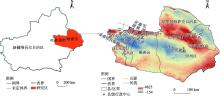
Fig. 1
Schematic diagram of the study area"
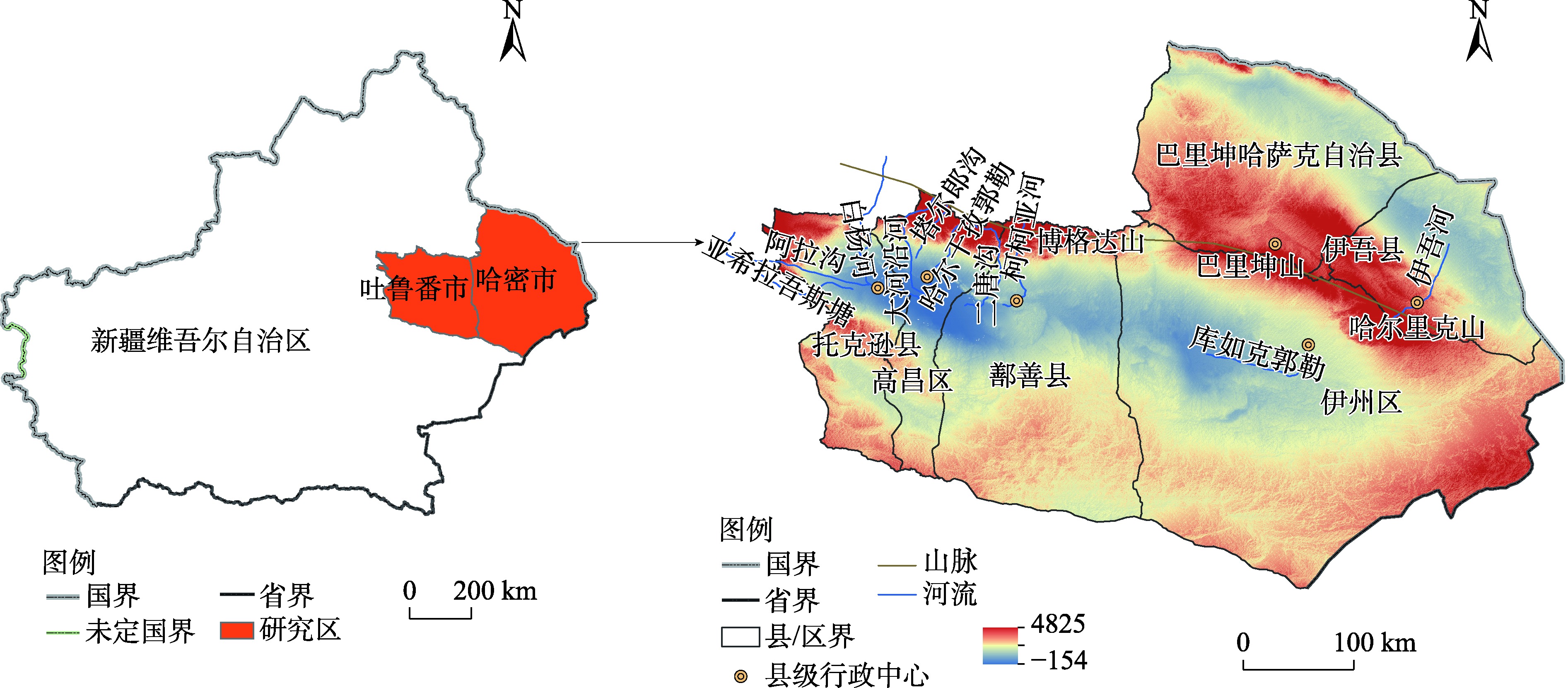
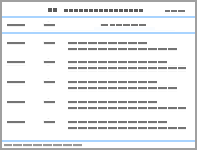
Tab. 1
Oasis classification"
| 土地覆盖类型 | 土地利用类型 |
|---|---|
| 绿洲 | 旱地、有林地、灌木林、疏林地、其他林地、高覆盖草地、中覆盖草地、河渠、湖泊、水库坑塘、滩地、居民用地、农村居民点、其他建设用地 |
| 荒漠-绿洲过渡带 | 低覆盖草地(覆盖度在5%~20%的天然草地)、滩涂、永久性冰川雪地 |
| 荒漠 | 戈壁、盐碱地、沼泽地、裸土地、裸岩石质地和其他 |
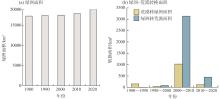
Fig. 2
Changes of oasis area in Turpan-Hami region"
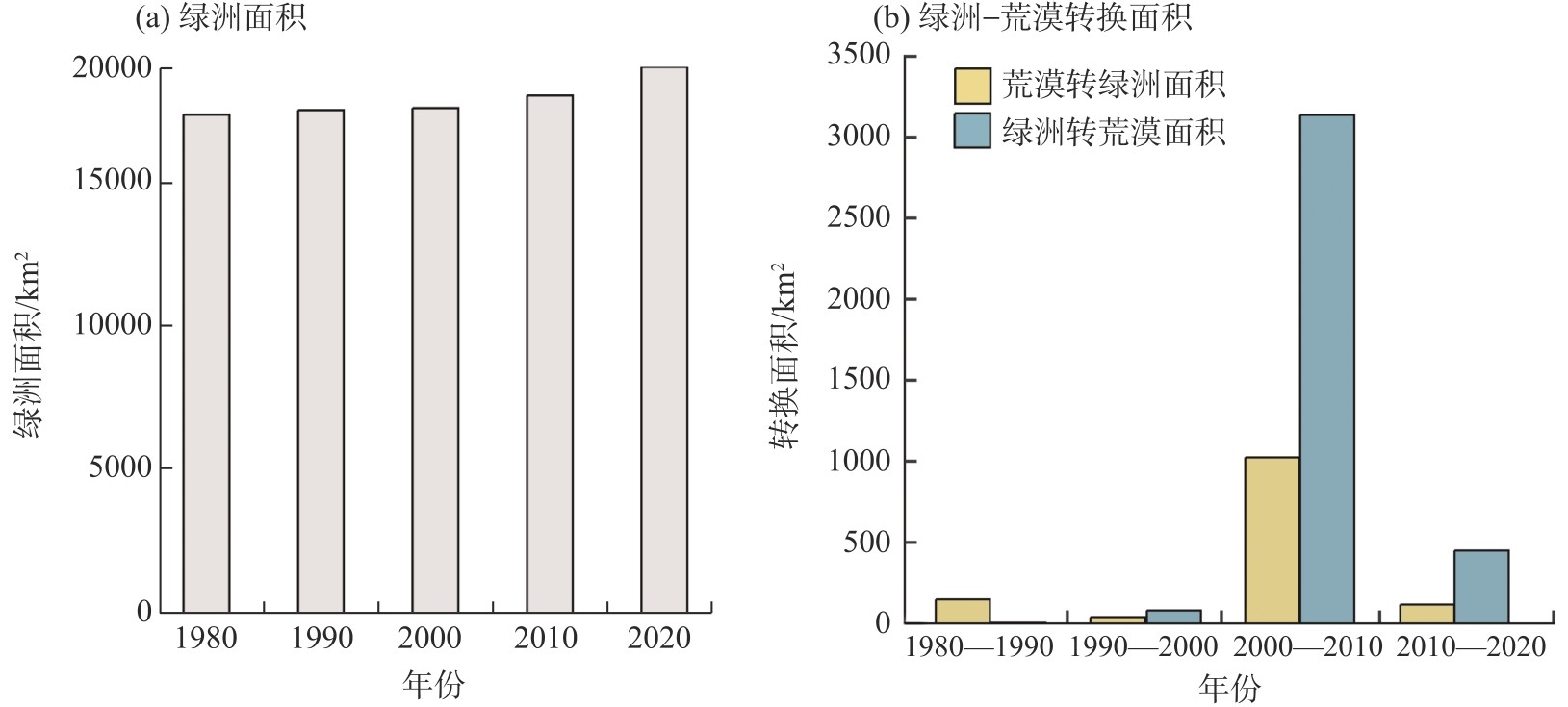
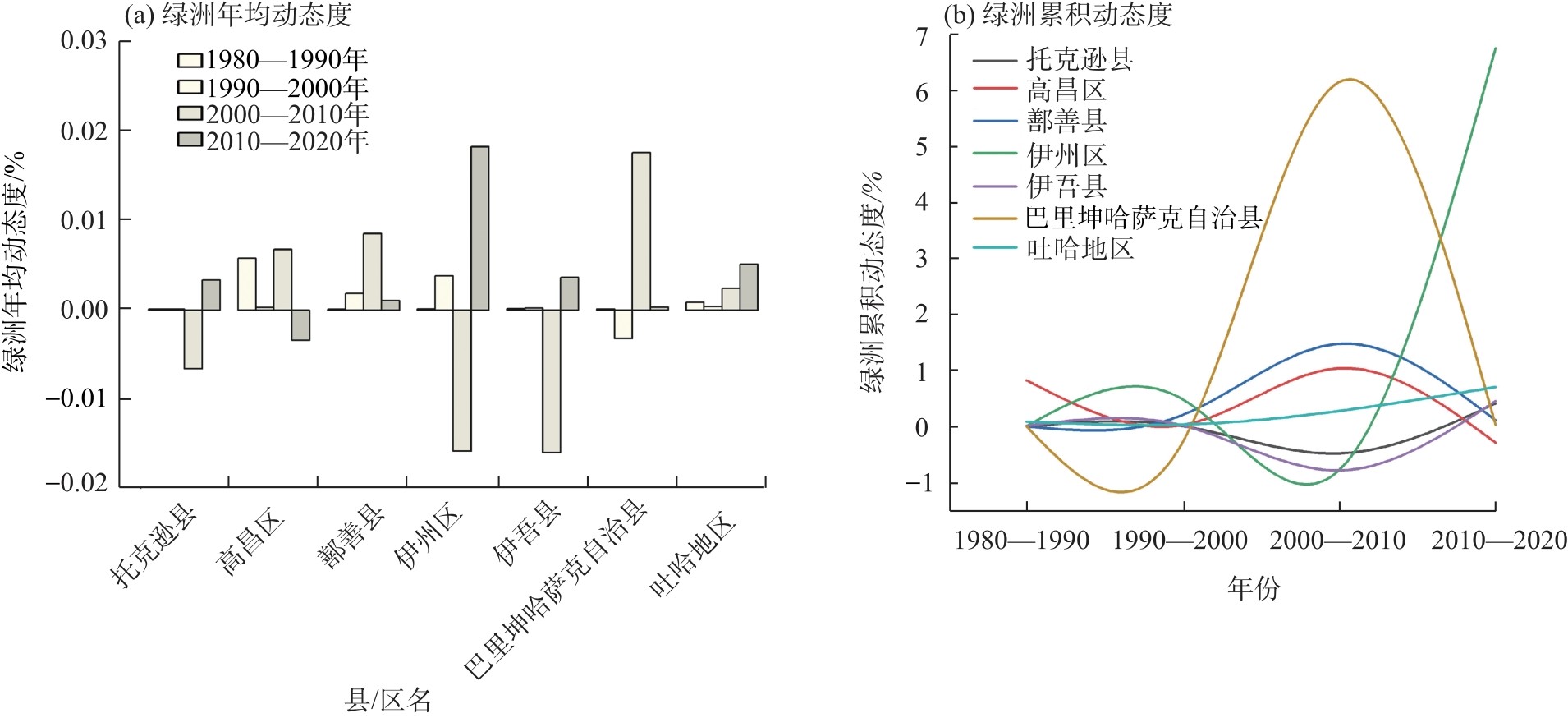
Fig. 3
Dynamic change of oasis in Tarpan-Hami region"
Tab. 2
Changes of oasis expansion and retreat degrees in Turpan-Hami region"
| 绿洲变化 | 1980—1990年 | 1990—2000年 | 2000—2010年 | 2010—2020年 |
|---|---|---|---|---|
| 绿洲年均退缩度(ADR)/% | 0.00003 | 0.00189 | 0.02743 | -0.00157 |
| 绿洲年均扩张度(AOR)/% | 0.00092 | 0.00228 | 0.02995 | 0.00393 |
| 绿洲变化状态 | ADR<AOR* | ADR<AOR* | ADR<AOR* | ADR<AOR* |
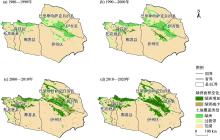
Fig. 4
Distributions of oasis expansion and shrink in Turpan-Hami region"

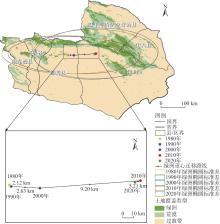
Fig. 5
Migration of oasis gravity center in Turpan-Hami region"

Tab. 3
Migration distance of oasis gravity center in Turpan-Hami region /km"
| 年份 | 哈密市 | 吐鲁番市 | |||||
|---|---|---|---|---|---|---|---|
| 巴里坤哈萨克自治县 | 伊吾县 | 伊州区 | 托克逊县 | 鄯善县 | 高昌区 | ||
| 1980—1990 | 0.800 | 1.052 | 1.107 | 0.474 | 0.001 | 5.354 | |
| 1990—2000 | 6.386 | 5.167 | 4.595 | 0.238 | 2.439 | 0.316 | |
| 2000—2010 | 15.563 | 35.984 | 8.931 | 14.546 | 25.987 | 6.906 | |
| 2010—2020 | 4.870 | 3.611 | 8.931 | 1.334 | 14.850 | 5.644 | |
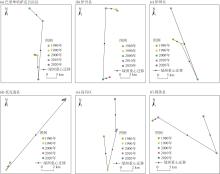
Fig. 6
Migration of oasis gravity center in different oasis zones"
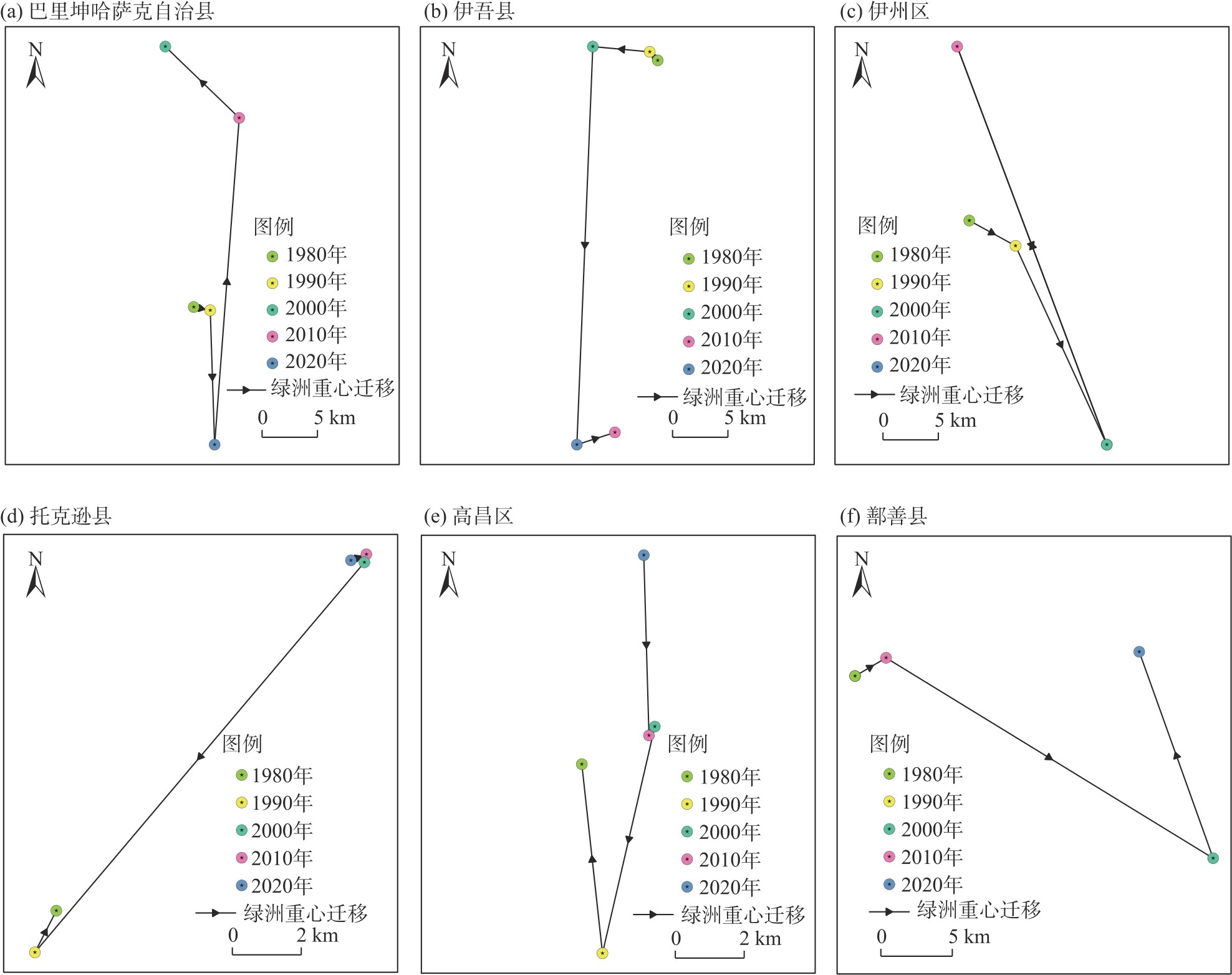
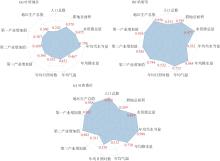
Fig. 7
Single factor detection results in different oasis zones"
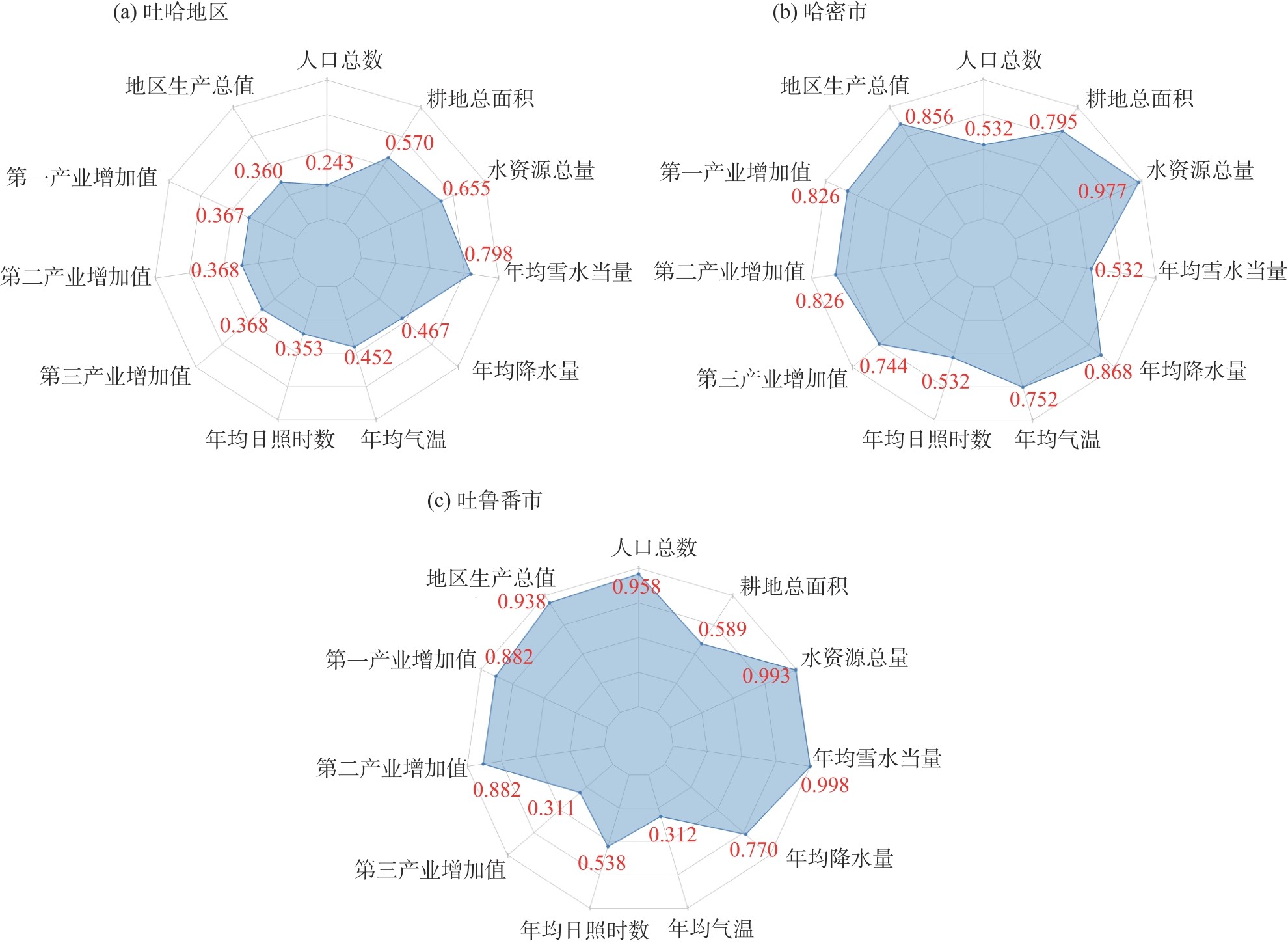
Fig. 8
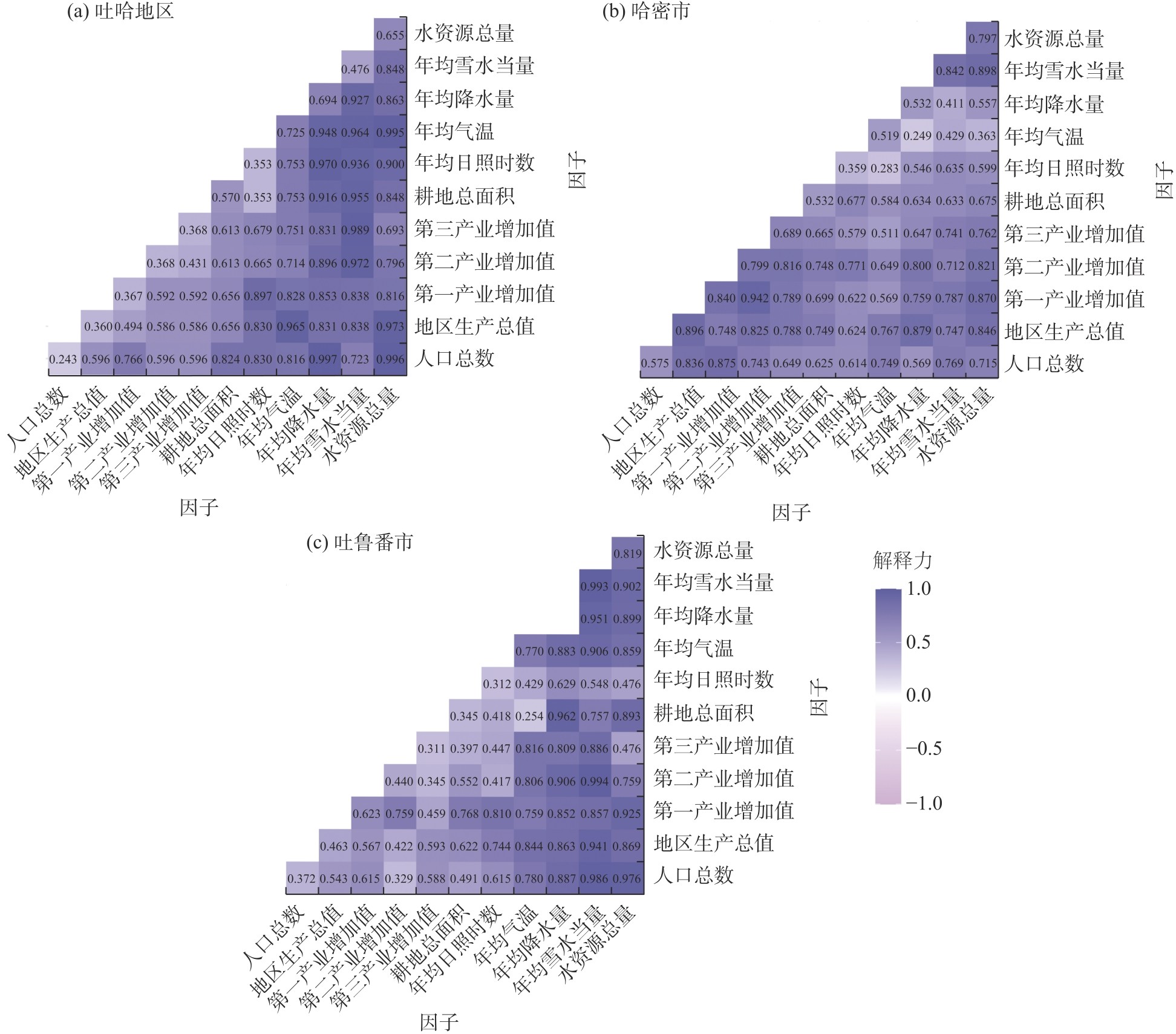
Interaction detection results in different oasis zones"
| [1] | 申元村, 汪久文, 伍光和, 等. 中国绿洲[M]. 开封: 河南大学出版社, 2001. |
| [Shen Yuancun, Wang Jiuwen, Wu Guanghe, et al. Oasis of China[M]. Kaifeng: Henan University Press, 2001.] | |
| [2] | 吕利利, 颉耀文, 张秀霞, 等. 1986—2015年瓜州绿洲变化[J]. 生态学报, 2017, 37(16): 5482-5491. |
| [Lü Lili, Xie Yaowen, Zhang Xiuxia, et al. Changes in Guazhou oases between 1986 and 2015[J]. Acta Ecologica Sinica, 2017, 37(16): 5482-5491.] | |
| [3] | Chen P, Wang S, Liu Y X, et al. Spatio-temporal dynamics of aboveground biomass in China's oasis grasslands between 1989 and 2021[J]. Earth's Future, 2024, 12(3): e2023EF003944, doi: 10.1029/2023EF003944. |
| [4] | Yi F, Lu Q, Li Y H, et al. Ecological vulnerability assessment of natural oasis in arid areas: Application to Dunhuang, China[J]. Ecological Indicators, 2023, 149: 110139, doi: 10.1016/j.eco-lind.2023.110139. |
| [5] |
张齐飞, 陈亚宁, 孙从建, 等. 塔里木河流域水储量变化及绿洲生态安全评估[J]. 干旱区地理, 2024, 47(1): 1-14.
doi: 10.12118/j.issn.1000-6060.2023.247 |
| [Zhang Qifei, Chen Yaning, Sun Congjian, et al. Changes in terrestrial water storage and evaluation of oasis ecological security in the Tarim River Basin[J]. Arid Land Geoghraphy, 2024, 47(1): 1-14.] | |
| [6] | Chen Y N, Fang G H, Li Z, et al. The crisis in oases: Research on ecological security and sustainable development in arid regions[J]. Annual Review of Environment and Resources, 2024, 49: 1-20. |
| [7] | Sun F, Wan Y, Chen Y N, et al. Historic and simulated desert-oasis ecotone changes in the arid Tarim River Basin, China[J]. Remote Sensing, 2021, 13(4): 647, doi: 10.3390/rs13040647. |
| [8] | Xie Y C, Gong J, Sun P, et al. Oasis dynamics change and its influence on landscape pattern on Jinta oasis in arid China from 1963a to 2010a: Integration of multi-source satellite images[J]. International Journal of Applied Earth Observation and Geoinformation, 2014, 33: 181-191. |
| [9] | 张秀霞, 颉耀文, 卫娇娇, 等. 1986—2015年干旱区敦煌绿洲景观的时空演变过程[J]. 干旱区研究, 2017, 34(3): 669-676. |
| [Zhang Xiuxia, Xie Yaowen, Wei Jiaojiao, et al. Spatiotemporal evolution of landscapes in the arid Dunhuang oasis during the period of 1986—2015[J]. Arid Zone Research, 2017, 34(3): 669-676.] | |
| [10] | Deng X Z, Zhao C H, Lin Y Z, et al. Downscaling the impacts of large-scale LUCC on surface temperature along with IPCC RCPs: A global perspective[J]. Energies, 2014, 7: 2720-2739. |
| [11] | 孙旭伟, 李森, 王亚晖, 等. 1975—2020 年疏勒河流域绿洲时空变化研究[J]. 生态学报, 2022, 42(22): 9111-9120. |
| [Sun Xuwei, Li Sen, Wang Yahui, et al. Spatiotemporal change of oasis in Shule River Basin during 1975—2020[J]. Acta Ecologica Sinica, 2022, 42(22): 9111-9120.] | |
| [12] | 巩杰, 谢余初, 孙朋, 等. 乡镇尺度金塔绿洲时空格局变化[J]. 生态学报, 2013, 33(11): 3470-3479. |
| [Gong Jie, Xie Yuchu, Sun Peng, et al. Spatio-temporal change on township scale of Jinta oasis in the latest 20 years[J]. Acta Ecologica Sinica, 2013, 33(11): 3470-3479.] | |
| [13] | Chen Y, Yang G J, Zhou L H, et al. Quantitative analysis of natural and human factors of oasis change in the tail of Shiyang River over the past 60 years[J]. Acta Geologica Sinica, 2020, 94(3): 637-645. |
| [14] | 李梦怡, 邓铭江, 凌红波, 等. 新疆绿洲格局变化与生态耗水结构分析[J]. 水科学进展, 2023, 34(5): 719-730. |
| [Li Mengyi, Deng Mingjiang, Ling Hongbo, et al. Analysis on the change of oasis pattern and ecological water consumption structure in Xinjiang[J]. Advamces in Water Science, 2023, 34(5): 719-730.] | |
| [15] | Mo K L, Chen Q W, Chen C, et al. Spatiotemporal variation of correlation between vegetation cover and precipitation in an arid mountain-oasis river basin in northwest China[J]. Journal of Hydrology, 2019, 574: 138-147. |
| [16] | Amuti T, Luo G. Analysis of land cover change and its driving forces in a desert oasis landscape of Xinjiang, northwest China[J]. Solid Earth, 2014, 5(2): 1071-1085. |
| [17] | Bie Q, Xie Y W. The constraints and driving forces of oasis development in arid region: A case study of the Hexi Corridor in northwest China[J]. Scientific Reports, 2020, 10(1): 17708, doi: 10.1038/s41598-020-74930-z. |
| [18] | Chen Y N, Chen Z S. Analysis of oasis evolution and suitable development scale for arid regions: A case study of the Tarim River Basin[J]. Chinese Journal of Eco-Agriculture, 2013, 21(1): 134-140. |
| [19] | 刘亚文, 阿不都沙拉木·加拉力丁, 阿拉努尔·艾尼娃尔, 等. 1989—2016年吐鲁番高昌区绿洲时空格局变化及其驱动因素[J]. 干旱区研究, 2018, 35(4): 945-953. |
| [Liu Yawen, Jalaliding Abdushalam, Aniwaer Alanuer, et al. Spatiotemporal change of the oasis in Gaochang, Turpan and its driving factors during the period of 1989—2016[J]. Arid Zone Research, 2018, 35(4): 945-953.] | |
| [20] | 胡金虎, 丁建丽, 张子鹏, 等. 近30年吐鲁番哈密地区植被生态需水估算[J]. 生态学报, 2024, 44(19): 8699-8715. |
| [Hu Jinhu, Ding Jianli, Zhang Zipeng, et al. Estimation of vegetation ecological water demand in Tuha area in the past 30 years[J]. Acta Ecologica Sinica, 2024, 44(19): 8699-8715.] | |
| [21] | 袁乐, 阿不都克依木·阿布力孜, 于苏云江·吗米提敏, 等. 基于生态系统服务簇的生态功能区权衡与协同关系演变: 以吐哈地区为例[J]. 环境科学, 2025, 46(5): 3042-3057. |
| [Yuan Le, Abulizi Abudukeyimu, Mamitimin Yusuyunjiang, et al. Evolution trade-offs and synergistic relationships in ecological functional areas based on ecosystem service bundles: A case study of the Turpan-Hami region[J]. Environmental Science, 2025, 46(5): 3042-3057.] | |
| [22] | 傅楷翔, 贾国栋, 余新晓, 等. 基于改进遥感生态指数的吐鲁番-哈密地区生态环境质量评价及驱动机制分析[J]. 生态学报, 2024, 44(9): 3911-3923. |
| [Fu Kaixiang, Jia Guodong, Yu Xinxiao, et al. Evaluation of ecological environment quality and analysis of driving mechanism in Tulufan-Hami region based on improved remote sensing ecological indices[J]. Acta Ecologica Sinica, 2024, 44(9): 3911-3923.] | |
| [23] |
王瑾杰, 丁建丽, 张子鹏. 基于遥感生态指数的吐哈地区生态环境变化研究[J]. 干旱区地理, 2022, 45(5): 1591-1603.
doi: 10.12118/j.issn.1000-6060.2022.346 |
| [Wang Jinjie, Ding Jianli, Zhang Zipeng. Change of ecological environment in Turpan and Hami cities based on remote sensing ecology index[J]. Arid Land Geoghraphy, 2022, 45(5): 1591-1603.] | |
| [24] | 刘纪远. 中国资源环境遥感宏观调查与动态研究[M]. 北京: 中国科学技术出版社, 1996. |
| [Liu Jiyuan. Macro-scale survey and dynamic study of natural resources and environment of China by remote sensing[M]. Beijing: China Science and Technology Press, 1996.] | |
| [25] | 谢余初, 巩杰, 钱大文. 绿洲时空变化数量方法的述评[J]. 干旱区研究, 2015, 32(6): 1247-1254. |
| [Xie Yuchu, Gong Jie, Qian Dawen. Discussion of quantitative methods on oasis spatio-temporal change[J]. Arid Zone Research, 2015, 32(6): 1247-1254.] | |
| [26] | 朱会义, 李秀彬. 关于区域土地利用变化指数模型方法的讨论[J]. 地理学报, 2003, 58(5): 643-650. |
| [Zhu Huiyi, Li Xiubin. Disscion on the index method of regional land use change[J]. Acta Geographycia Sinca, 2003, 58(5): 643-650.] | |
| [27] | 巩杰, 孙朋, 谢余初, 等. 基于移动窗口法的肃州绿洲化与景观破碎化时空变化[J]. 生态学报, 2015, 35(19): 6470-6480. |
| [Gong Jie, Sun Peng, Xie Yuchu, et al. Spatiotemporal change and landscape fragmentation in Suzhou oasis using the moving window method[J]. Acta Ecologica Sinica, 2015, 35(19): 6470-6480.] | |
| [28] |
李军豪, 陈勇, 杨国靖, 等. 1975—2018年民勤绿洲沙漠化过程及其驱动机制[J]. 中国沙漠, 2021, 41(3): 44-55.
doi: 10.7522/j.issn.1000-694X.2021.00014 |
|
[Li Junhao, Chen Yong, Yang Guojing, et al. The aeolian desertification process and driving mechanism of Minqin oasis from 1975 to 2018[J]. Journal of Desert Research, 2021, 41(3): 44-55.]
doi: 10.7522/j.issn.1000-694X.2021.00014 |
|
| [29] | Wang X Y, Wang W H, Yan C, et al. Driving effects of spatiotemporal evolution of the water resources carrying capacity in the Yellow River Basin (Henan section)[J]. Scientific Reports, 2024, 14(1): 29340, doi: 10.1038/s41598-024-80291-8. |
| [30] |
卢调雪, 杨林山, 冯起, 等. 近20年张掖盆地绿洲结构和规模变化及其影响因素[J]. 中国沙漠, 2023, 43(6): 131-141.
doi: 10.7522/j.issn.1000-694X.2023.00053 |
| [Lu Diaoxue, Yang Linshan, Feng Qi, et al. The change of oasis structure/scale and its influencing factors in Zhangye Basin in recent 20 years[J]. Journal of Desert Research, 2023, 43(6): 131-141.] | |
| [31] |
Ha L, Tu J J, Yang J P, et al. Regional eco-efficiency evaluation and spatial pattern analysis of the Yangtze River Economic Zone[J]. Journal of Geographical Sciences, 2020, 30(7): 1117-1139.
doi: 10.1007/s11442-020-1773-0 |
| [32] | Zhang Q L, Yan M, Zhang L, et al. Three decades of oasis transition and its driving factors in Turpan-Hami Basin in Xinjiang, China: A complex network approach[J]. Remote Sensing, 2024, 16: 465, doi: 10.3390/rs16030465. |
| [33] | 王子元, 管仪庆, 张丹蓉, 等. 1991—2020年新疆艾丁湖面积时空变化分析[J]. 水电能源科学, 2022, 40(10): 35-38. |
| [Wang Ziyuan, Guan Yiqing, Zhang Danrong, et al. Analysis of spatiotemporal variation of Aiding Lake area in Xinjiang during 1991 and 2020[J]. Water Resources and Power, 2022, 40(10): 35-38.] | |
| [34] | 龚晓菊, 申亚杰. 天山北坡城市群产业协同发展分析[J]. 经济研究参考, 2017(37): 55-64. |
| [Gong Xiaoju, Shen Yajie. Analysis on the coordinated development of industries in the urban agglomeration on the northern slope of Tianshan Mountains[J]. Riview of Economic Research, 2017(37): 55-64.] | |
| [35] | 韩楚翘, 郑江华, 王哲, 等. 基于PLUS-InVEST模型吐哈盆地陆地生态系统碳储量时空变化及多情景模拟[J]. 干旱区地理, 2024, 47(2): 260-269. |
|
[Han Chuqiao, Zheng Jianghua, Wang Zhe, et al. Spatiotemporal variation and multiscenario simulation of carbon storage in terrestrial ecosystems in the Turpan-Hami Basin based on PLUS-InVEST model[J]. Arid Land Geography, 2024, 47(2): 260-269.]
doi: 10.12118/j.issn.1000-6060.2023.066 |
|
| [36] |
焦岩, 闫峰, 卢琦, 等. 西北干旱区绿洲时空变化及驱动力[J]. 应用生态学报, 2024, 35(8): 2206-2216.
doi: 10.13287/j.1001-9332.202408.025 |
|
[Jiao Yan, Yan Feng, Lu Qi, et al. Spatiotemporal variation and driving factors of oases in the arid region of northwest China[J]. Chinese Journal of Applied Ecology, 2024, 35(8): 2206-2216.]
doi: 10.13287/j.1001-9332.202408.025 |
|
| [37] |
周孝明, 张喆, 张越, 等. 基于TVDI的近20 a吐鲁番市干旱及影响因素分析[J]. 干旱区地理, 2024, 47(12): 2104-2114.
doi: 10.12118/j.issn.1000-6060.2024.234 |
|
[Zhou Xiaoming, Zhang Zhe, Zhang Yue, et al. TVDI-based analysis of drought and influencing factors in Turpan City in the last 20 years[J]. Arid Land Geography, 2024, 47(12): 2104-2114.]
doi: 10.12118/j.issn.1000-6060.2024.234 |
|
||