干旱区地理 ›› 2026, Vol. 49 ›› Issue (2): 404-415.doi: 10.12118/j.issn.1000-6060.2025.170 cstr: 32274.14.ALG2025170
欧开航1( ), 方世巧2, 程乾1(), 周徐帆3
收稿日期:2025-03-31
修回日期:2025-05-27
出版日期:2026-02-25
发布日期:2026-02-27
通讯作者:
程乾(1968-),男,博士,教授,主要从事旅游地理和乡村旅游研究. E-mail: qiancheng525@163.com作者简介:欧开航(1999-),男,博士研究生,主要从事旅游地理和乡村旅游研究. E-mail: 24010060003@mail.zjgsu.edu.cn
基金资助:
OU Kaihang1(), FANG Shiqiao2, CHENG Qian1(), ZHOU Xufan3
Received:2025-03-31
Revised:2025-05-27
Published:2026-02-25
Online:2026-02-27
摘要:
农村公共服务与乡村旅游协同共进对推进乡村振兴实现具有重要意义,但学界鲜见针对两者耦合协调发展的研究。基于农村公共服务与乡村旅游耦合协调对乡村振兴的影响效应机理,运用耦合协调度模型、重心和标准差椭圆模型和空间计量模型定量测度2010—2023年西部地区农村公共服务与乡村旅游耦合协调度的时空特征及对乡村振兴的影响和空间溢出效应。结果表明:(1) 西部地区农村公共服务与乡村旅游耦合协调度逐年递增,耦合协调水平由极度失调转向中级协调,空间上呈现“南部、西北部高,东北部低”的不均衡分异格局。(2) 耦合协调度重心呈向西南方向迁移态势,标准差椭圆始终呈“西北—东南”方向格局且呈先集聚后分散态势。(3) 农村公共服务与乡村旅游耦合协调度对乡村振兴具有显著的正向影响且存在空间溢出效应。研究结果可为两者高质量协同发展及区域整体乡村振兴提供理论依据与决策参考。
欧开航, 方世巧, 程乾, 周徐帆. 农村公共服务与乡村旅游耦合协调度及其乡村振兴影响效应——基于西部地区的实证[J]. 干旱区地理, 2026, 49(2): 404-415.
OU Kaihang, FANG Shiqiao, CHENG Qian, ZHOU Xufan. Coupling coordination degree of rural public services and rural tourism and its rural revitalization influence effect: Based on the empirical evidence in western China[J]. Arid Land Geography, 2026, 49(2): 404-415.
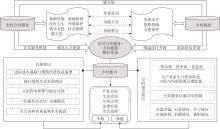
图1
农村公共服务与乡村旅游耦合协调对乡村振兴的影响效应机理"

表1
农村公共服务与乡村旅游系统评价指标体系"
| 系统层 | 子系统层 | 具体指标 | 权重 | 属性 |
|---|---|---|---|---|
| 农村公共服务 | 基础设施 | 每万人农村卫生厕所数/个 | 0.079 | + |
| 人均道路面积/m2 | 0.067 | + | ||
| 农村供水普及率/% | 0.027 | + | ||
| 基础教育 | 农村小学师生比/% | 0.055 | + | |
| 农村初中师生比/% | 0.040 | + | ||
| 医疗卫生 | 每万人农村卫生人员数/个 | 0.037 | + | |
| 每万人农村卫生室数/个 | 0.022 | + | ||
| 环境保护 | 农村生活垃圾处理投入占比/% | 0.081 | + | |
| 农村绿地率/% | 0.058 | + | ||
| 农村污水处理投入占比/% | 0.161 | + | ||
| 娱乐文化 | 每万人农村文化站数/个 | 0.016 | + | |
| 每万人农村文艺活动次数/次 | 0.071 | + | ||
| 每万人农村举办展览次数/次 | 0.040 | + | ||
| 社会保障 | 农村居民最低生活保障平均标准/元 | 0.052 | + | |
| 参加社会养老保险农村居民人数/104人 | 0.075 | + | ||
| 数字化 | 每万人农村宽带接入用户数/户 | 0.105 | + | |
| 农村居民家庭平均每百户移动电话拥有量/部 | 0.014 | + | ||
| 乡村旅游 | 发展水平 | 国内旅游收入/108元 | 0.157 | + |
| 国内旅游人次/108人 | 0.136 | + | ||
| 乡村居民人均收入/元 | 0.065 | + | ||
| 资源基础 | A级景区/个 | 0.075 | + | |
| 中国美丽休闲乡村/个 | 0.182 | + | ||
| 国家“一村一品”示范村镇/个 | 0.099 | + | ||
| 支撑条件 | 旅行社数/个 | 0.061 | + | |
| 旅游从业人员数/人 | 0.126 | + | ||
| 公路旅客周转量/108人·km-1 | 0.099 | + |
表2
乡村振兴系统评价指标体系"
| 系统层 | 子系统层 | 具体指标 | 权重 | 属性 |
|---|---|---|---|---|
| 乡村振兴 | 产业兴旺 | 乡村人均农林牧渔产值/元 | 0.124 | + |
| 乡村人均第一产业增加值/元 | 0.123 | + | ||
| 生态宜居 | 化肥使用强度 | 0.054 | - | |
| 绿化覆盖率/% | 0.123 | + | ||
| 乡风文明 | 乡村消费教育文化娱乐支出占比/% | 0.087 | + | |
| 乡村15岁以上人口文盲率/% | 0.029 | - | ||
| 治理有效 | 村庄建设投入/104元 | 0.223 | + | |
| 城乡收入差距 | 0.063 | - | ||
| 生活富裕 | 乡村恩格尔系数 | 0.059 | - | |
| 乡村人均消费支出/元 | 0.115 | + |
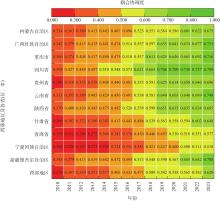
图2
2010—2023年西部地区农村公共服务与乡村旅游耦合协调度时序演化"
图3
2010—2023年西部地区农村公共服务与乡村旅游耦合协调度空间演变"
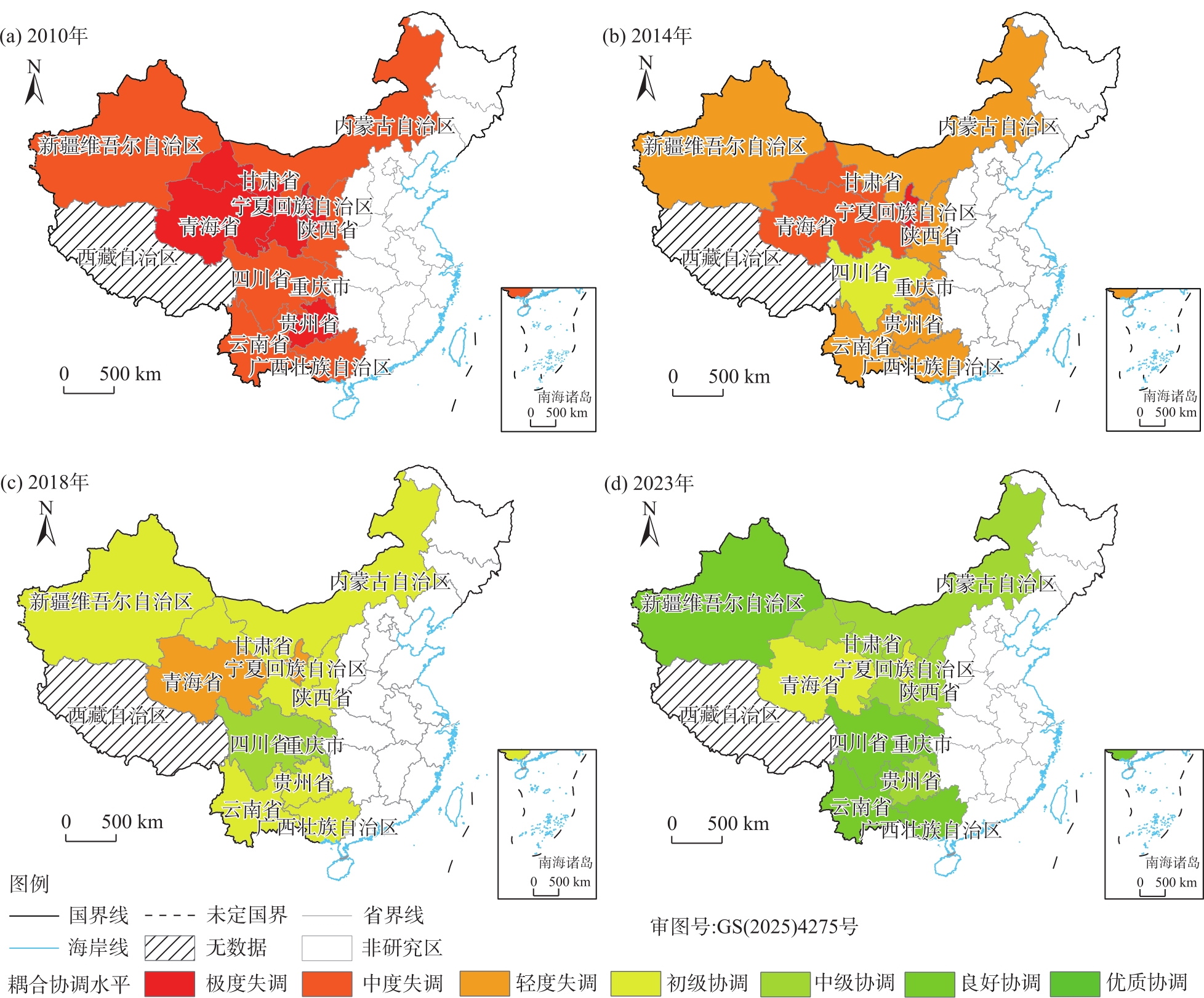
表3
西部地区农村公共服务与乡村旅游耦合协调度重心及标准差椭圆结果"
| 年份 | 重心坐标 | 椭圆方 位角/(°) | 椭圆面 积/104 km2 | 长半 轴/km | 短半 轴/km |
|---|---|---|---|---|---|
| 2010 | 103.84°E,33.38°N | 150.117 | 288.73 | 1132.066 | 811.890 |
| 2014 | 103.76°E,33.42°N | 150.756 | 283.49 | 1119.981 | 805.764 |
| 2018 | 103.79°E,33.26°N | 151.404 | 273.63 | 1108.168 | 786.020 |
| 2023 | 103.61°E,33.30°N | 150.392 | 279.89 | 1122.826 | 793.502 |
表4
模型估计前验及模型选择结果"
| 变量 | VIF检验 | LLC检验 | Hadri LM检验 | 空间计量模型选择检验 | 统计量 | |||
|---|---|---|---|---|---|---|---|---|
| VIF | 1/VIF | 统计量 | 统计量 | |||||
| lnRR | - | - | -3.916*** | 8.673*** | 莫兰指数 | 8.705*** | ||
| lnD | 2.58 | 0.387267 | -1.528* | 10.573*** | 空间误差拉格朗日乘数检验 | 4.589** | ||
| lnFdi | 1.97 | 0.507015 | -4.302*** | 8.247*** | 空间滞后拉格朗日乘数检验 | 10.069** | ||
| lnIs | 1.39 | 0.719407 | -2.388*** | 12.888*** | 空间误差稳健的拉格朗日乘数检验 | 11.570*** | ||
| lnLand | 3.47 | 0.288280 | -2.453*** | 12.350*** | 空间滞后稳健的拉格朗日乘数检验 | 17.051*** | ||
| VIF均值 | 2.35 | - | - | - | 空间误差似然比检验 | 32.07*** | ||
| 空间滞后似然比检验 | 21.54*** | |||||||
| 空间误差沃尔德检验 | 7.88* | |||||||
| 空间误差沃尔德检验 | 7.80* | |||||||
| 豪斯曼检验 | 26.27** | |||||||
| 个体固定效应检验 | 14.79* | |||||||
| 时间固定效应检验 | 122.43*** | |||||||
表5
空间计量模型统计结果"
| 变量/参数 | OLS | SEM | SLM | SDM | |||||||
|---|---|---|---|---|---|---|---|---|---|---|---|
| 系数 | P值 | 系数 | P值 | 系数 | P值 | 系数 | P值 | ||||
| lnD | 0.820***(9.92) | 0.000 | 0.939***(11.41) | 0.000 | 0.700***(7.56) | 0.000 | 0.356**(2.48) | 0.013 | |||
| lnFdi | -0.054***(-4.30) | 0.000 | -0.001(-0.08) | 0.938 | -0.001(-0.05) | 0.961 | 0.009(0.68) | 0.498 | |||
| lnIs | 0.077(0.42) | 0.674 | -0.041(-0.28) | 0.782 | -0.225(-1.56) | 0.118 | -0.485***(-2.78) | 0.005 | |||
| lnLand | 0.100***(3.09) | 0.002 | 0.124**(2.35) | 0.019 | 0.087(1.76) | 0.078 | 0.028(0.58) | 0.561 | |||
| W*lnD | - | - | - | - | - | - | 0.361**(1.99) | 0.046 | |||
| W*lnFdi | - | - | - | - | - | - | 0.052**(2.39) | 0.017 | |||
| W*lnIs | - | - | - | - | - | - | 0.573**(2.20) | 0.028 | |||
| W*lnLand | - | - | - | - | - | - | 0.093(1.34) | 0.179 | |||
| 空间误差回归系数(λ) | - | - | 0.190*(1.94) | 0.052 | - | - | - | - | |||
| 空间自回归系数(ρ) | - | - | - | - | 0.321***(3.98) | 0.000 | 0.224**(2.45) | 0.014 | |||
| 拟合优度(R2) | 0.716 | - | 0.879 | - | 0.885 | - | 0.901 | - | |||
| 对数似然值(LogL) | - | - | 130.314 | - | 135.577 | - | 146.347 | - | |||
表6
空间溢出效应微偏分估计结果"
| 变量 | 直接效应 | 间接效应 | 总效应 | |||||
|---|---|---|---|---|---|---|---|---|
| 系数 | P值 | 系数 | P值 | 系数 | P值 | |||
| lnD | 0.391*** | 0.006 | 0.539*** | 0.002 | 0.930*** | 0.000 | ||
| (2.75) | (3.10) | (5.65) | ||||||
| lnFdi | 0.012 | 0.344 | 0.068** | 0.011 | 0.080** | 0.015 | ||
| (0.95) | (2.54) | (2.42) | ||||||
| lnIs | -0.435*** | 0.008 | 0.555* | 0.070 | 0.120 | 0.702 | ||
| (-2.78) | (1.70) | (0.38) | ||||||
| lnLand | 0.035 | 0.468 | 0.122 | 0.150 | 0.157 | 0.107 | ||
| (0.73) | (1.44) | (1.61) | ||||||
| [1] |
Marzo-Navarro M, Pedraja-Iglesias M, Vinzón L. Key variables for developing integrated rural tourism[J]. Tourism Geographies, 2017, 19(4): 575-594.
doi: 10.1080/14616688.2017.1336785 |
| [2] | 胡玉洁, 蒋凯伦, 陈准, 等. 山区县域旅游资源空间结构及其交通可达性分析——以河南栾川县为例[J]. 农业现代化研究, 2023, 44(5): 869-880. |
| [Hu Yujie, Jiang Kailun, Chen Zhun, et al. Analysis of the spatial structure of tourism resources and traffic accessibility in mountainous counties: Taking Luanchuan County, Henan Province as an example[J]. Research of Agricultural Modernization, 2023, 44(5): 869-880.] | |
| [3] | 李国英. 乡村振兴战略视角下现代乡村产业体系构建路径[J]. 当代经济管理, 2019, 41(10): 34-40. |
| [Li Guoying. The path of constructing a modern rural industrial system from the perspective of rural revitalization strategy[J]. Contemporary Economic Management, 2019, 41(10): 34-40.] | |
| [4] | 陶俊, 杨敏红. 农村公共文化服务体系与乡村旅游的融合发展——以浙江德清总分馆改革为例[J]. 图书馆论坛, 2022, 42(2): 45-55. |
| [Tao Jun, Yang Minhong. Integrated development of rural public cultural services and rural tourism: Taking the reform practice of Deqing county’s general-and-branch library system for example[J]. Library Tribune, 2022, 42(2): 45-55.] | |
| [5] | 谭俊峰. 乡村旅游助推乡村振兴路径[J]. 社会科学家, 2021(3): 58-63. |
| [Tan Junfeng. Rural tourism promotes rural revitalization[J]. Social Scientist, 2021(3): 58-63.] | |
| [6] |
黄祖辉, 宋文豪, 成威松, 等. 休闲农业与乡村旅游发展促进农民增收了吗?——来自准自然实验的证据[J]. 经济地理, 2022, 42(5): 213-222.
doi: 10.15957/j.cnki.jjdl.2022.05.022 |
| [Huang Zuhui, Song Wenhao, Cheng Weisong, et al. Has the development of leisure agriculture and rural tourism promoted the increase of farmers’ income: An evidence from quasi-natural experiment[J]. Economic Geography, 2022, 42(5): 213-222.] | |
| [7] | Ćurčić N, Mirković Svitlica A, Brankov J, et al. The role of rural tourism in strengthening the sustainability of rural areas: The case of Zlakusa Village[J]. Sustainability, 2021, 13(12): 6747, doi: 10.3390/su13126747. |
| [8] |
王冠孝, 王伟, 张娟娟. 乡村旅游与农村人居环境的耦合协调关系及障碍因子诊断——以山西省为例[J]. 干旱区地理, 2024, 47(1): 170-180.
doi: 10.12118/j.issn.1000-6060.2023.271 |
|
[Wang Guanxiao, Wang Wei, Zhang Juanjuan. Coupling coordinative relationship and its obstacle factors between rural tourism and rural human settlement environment: A case of Shanxi Province[J]. Arid Land Geography, 2024, 47(1): 170-180.]
doi: 10.12118/j.issn.1000-6060.2023.271 |
|
| [9] | 马永全, 王永红. 乡村教师作为乡村基本公共服务人才: 学理阐释及厚植路径[J]. 河北师范大学学报(教育科学版), 2022, 24(3): 93-98. |
| [Ma Yongquan, Wang Yonghong. Rural teachers as basic public service personnel: Theoretical explanation and cultivation pathways[J]. Journal of Hebei Normal University (Educational Science), 2022, 24(3): 93-98.] | |
| [10] | 罗哲, 唐迩丹. 农村公共文化服务的结构转型: 从“城市文化下乡”到“乡村文化振兴”[J]. 四川师范大学学报(社会科学版), 2019, 46(5): 129-135. |
| [Luo Zhe, Tang Erdan. Structural transformation of rural public cultural services: From “giving urban culture to the countryside directly” to “revitalized local rural culture”[J]. Journal of Sichuan Normal University (Social Sciences Edition), 2019, 46(5): 129-135.] | |
| [11] | 徐信贵. 农村公共环境卫生的治理模式演进与“三治融合”理路[J]. 重庆大学学报(社会科学版), 2021, 27(5): 208-216. |
| [Xu Xingui. The evolution of governance model of rural public environmental sanitation and the integration path of “three governances”[J]. Journal of Chongqing University (Social Science Edition), 2021, 27(5): 208-216.] | |
| [12] |
陆林, 任以胜, 朱道才, 等. 乡村旅游引导乡村振兴的研究框架与展望[J]. 地理研究, 2019, 38(1): 102-118.
doi: 10.11821/dlyj020180454 |
| [Lu Lin, Ren Yisheng, Zhu Daocai, et al. The research framework and prospect of rural revitalization led by rural tourism[J]. Geographical Research, 2019, 38(1): 102-118.] | |
| [13] |
李志龙. 乡村振兴-乡村旅游系统耦合机制与协调发展研究——以湖南凤凰县为例[J]. 地理研究, 2019, 38(3): 643-654.
doi: 10.11821/dlyj020181165 |
| [Li Zhilong. Research on the coupling mechanism and coordinated development of rural revitalization-rural tourism system: A case study on Fenghuang County in Hunan[J]. Geographical Research, 2019, 38(3): 643-654.] | |
| [14] |
高楠, 张新成, 王琳艳. 中国乡村旅游公共服务水平时空格局与形成机理[J]. 地理科学, 2021, 41(2): 252-260.
doi: 10.13249/j.cnki.sgs.2021.02.008 |
|
[Gao Nan, Zhang Xincheng, Wang Linyan. The spatial-temporal patterns and formation mechanism of rural tourism public service in China[J]. Scientia Geographica Sinica, 2021, 41(2): 252-260.]
doi: 10.13249/j.cnki.sgs.2021.02.008 |
|
| [15] | 李烨. 中国乡村旅游业扶贫效率研究[J]. 农村经济, 2017(5): 72-78. |
| [Liu Ye. Study on poverty alleviation efficiency of rural tourism in China[J]. Rural Economy, 2017(5): 72-78.] | |
| [16] | 武文霞, 朱建峰. 新时代乡村旅游目的地生态环境治理机制与优化路径研究[J]. 广东社会科学, 2024(6): 36-46. |
| [Wu Wenxia, Zhu Jianfeng. Study on eco-environmental governance mechanism and optimization path of rural tourism destinations in the new era[J]. Social Sciences in Guangdong, 2024(6): 36-46.] | |
| [17] |
Zhang J. Tourism and rural income inequality: Empirical evidence for China[J]. Current Issues in Tourism, 2023, 26(1): 153-170.
doi: 10.1080/13683500.2021.2010674 |
| [18] | 黄细嘉, 张科, 王红建, 等. 乡村旅游发展能否缩小城乡收入差距?——来自“全国休闲农业与乡村旅游示范县”的经验证据[J]. 旅游学刊, 2023, 38(2): 16-29. |
| [Huang Xijia, Zhang Ke, Wang Hongjian, et al. Can rural tourism reduce the urban-rural income gap: Empirical evidence from “national leisure agriculture and rural tourism demonstration counties”[J]. Tourism Tribune, 2023, 38(2): 16-29.] | |
| [19] |
张新成, 王琳艳, 高楠. 山西省乡村文化和旅游公共服务融合发展成效评价及驱动路径研究[J]. 干旱区地理, 2024, 47(6): 1036-1046.
doi: 10.12118/j.issn.1000-6060.2023.372 |
|
[Zhang Xincheng, Wang Linyan, Gao Nan. Evaluation of effectiveness and pathways for integrated development of rural cultural and tourism public services in Shanxi Province[J]. Arid Land Geography, 2024, 47(6): 1036-1046.]
doi: 10.12118/j.issn.1000-6060.2023.372 |
|
| [20] | 张新成. 中国乡村旅游公共服务水平时空演化及成因分析[J]. 旅游学刊, 2021, 36(11): 26-39. |
| [Zhang Xincheng. Spatiotemporal patterns of public service levels in China’s rural tourism and their origins[J]. Tourism Tribune, 2021, 36(11): 26-39.] | |
| [21] | 黄涛, 王艳慧, 关鸿亮, 等. 乡村振兴背景下农村基本公共服务与多维贫困的时空耦合特征研究[J]. 人文地理, 2021, 36(6): 135-146, 192. |
| [Huang Tao, Wang Yanhui, Guan Hongliang, et al. Research on the coupling characteristics of time and space between rural basic public services and multidimensional poverty under the background of rural revitalization[J]. Human Geography, 2021, 36(6): 135-146, 192.] | |
| [22] | 范方志. 我国农村公共服务供给效率研究——基于中国省级层面面板数据的实证分析[J]. 湖南师范大学社会科学学报, 2023, 52(5): 42-52. |
| [Fan Fangzhi. Research on the efficiency of rural public service supply in China: An empirical analysis based on panel data at the provincial level in China[J]. Journal of Social Science of Hunan Normal University, 2023, 52(5): 42-52.] | |
| [23] | 方世巧, 熊静, 滕容梅, 等. 西南喀斯特地区乡村旅游与生态文明建设耦合协调发展研究[J]. 生态经济, 2023, 39(1): 164-170, 182. |
|
[Fang Shiqiao, Xiong Jing, Teng Rongmei, et al. Study on the coupling and coordination evaluation of rural tourism and ecological civilization construction in southwest karst region and its influencing factors[J]. Ecological Economy, 2023, 39(1): 164-170, 182.]
doi: 10.1016/S0921-8009(01)00220-8 |
|
| [24] | 李文路, 覃建雄, 张江峰. 乡村旅游发展与石漠化治理、乡村振兴成效耦合协调研究——基于黔南州喀斯特地区的实证[J]. 中国农业资源与区划, 2022, 43(7): 282-293. |
| [Li Wenlu, Qin Jianxiong, Zhang Jiangfeng. Study on the coupling relationship between rural tourism, rocky desertification control, and rural revitalization: An empirical analysis based on Qiannan karst region[J]. Ecological Economy, 2022, 43(7): 282-293.] | |
| [25] | 尹长丰. 乡村旅游高质量发展与乡村振兴耦合协调研究——以安徽省为例[J]. 社会科学家, 2023(1): 57-64. |
| [Yin Changfeng. Research on the coupling coordination between high-quality development of rural tourism and rural revitalization: A case study of Anhui Province[J]. Social Scientist, 2023(1): 57-64.] | |
| [26] | 何育静, 张炜炜. 中国省域农村基本公共服务与乡村振兴耦合协调发展及影响因素分析——基于农村多维相对贫困视角[J]. 重庆社会科学, 2022(8): 48-68. |
| [He Yujing, Zhang Weiwei. Analysis on the coupling and coordinated development of China’s provincial rural basic public services and rural revitalization and its influencing factors: From the perspective of rural multidimensional relative poverty[J]. Chongqing Social Sciences, 2022(8): 48-68.] | |
| [27] | 刘佳, 赵青华. 乡村旅游发展对乡村振兴的影响效应——基于新内源性发展理论的实证检验[J]. 农业技术经济, 2025(3): 126-144. |
| [Liu Jia, Zhao Qinghua. The impact of rural tourism development on rural revitalization: Empirical testing based on the new endogenous development theory[J]. Journal of Agrotechnical Economics, 2025(3): 126-144.] | |
| [28] | 邓金钱, 蒋云亮. 返乡创业试点政策对乡村振兴的影响研究——来自中国县域面板数据的经验证据[J]. 中国人口科学, 2024, 38(1): 51-66. |
| [Deng Jinqian, Jiang Yunliang. Impact of the pilot returning-home entrepreneurship policy on rural revitalization: Empirical evidence from county-level panel data[J]. Chinese Journal of Population Science, 2024, 38(1): 51-66.] | |
| [29] | 刘钒, 于子淳, 邓明亮. 数字经济发展影响乡村振兴质量的实证研究[J]. 科技进步与对策, 2024, 41(12): 47-57. |
| [Liu Fan, Yu Zichun, Deng Mingliang. An empirical study on the impact of digital economy development on the quality of rural revitalization[J]. Science & Technology Progress and Policy, 2024, 41(12): 47-57.] | |
| [30] |
盖美, 秦冰, 郑秀霞. 经济增长动能转换与绿色发展耦合协调的时空格局演化分析[J]. 地理研究, 2021, 40(9): 2572-2590.
doi: 10.11821/dlyj020200702 |
| [Gai Mei, Qin Bing, Zheng Xiuxia. The evolution of the spatiotemporal pattern of the coupling and coordination between economic growth kinetic energy conversion and green development[J]. Geographical Research, 2021, 40(9): 2572-2590.] | |
| [31] |
刘佳, 赵青华, 王慧. 乡村旅游发展促进农村可持续生计的空间效应及机制[J]. 自然资源学报, 2023, 38(2): 490-510.
doi: 10.31497/zrzyxb.20230214 |
|
[Liu Jia, Zhao Qinghua, Wang Hui. Measurement of high-quality development in western China and its temporal and spatial evolution pattern[J]. Journal of Natural Resources, 2023, 38(2): 490-510.]
doi: 10.31497/zrzyxb.20230214 |
|
| [32] |
张博胜, 杨子生. 中国城镇化的农村减贫及其空间溢出效应——基于省级面板数据的空间计量分析[J]. 地理研究, 2020, 39(7): 1592-1608.
doi: 10.11821/dlyj020190775 |
| [Zhang Bosheng, Yang Zisheng. Rural poverty reduction and its spatial spillover effects of Chinese urbanization: Based on the analysis of spatial econometric model with provincial panel data[J]. Geographical Research, 2020, 39(7): 1592-1608.] |
| [1] | 王慧丽, 李妞, 刘英, 刘咏涵. 黄河流域水资源-生态韧性动态耦合与级层障碍解析[J]. 干旱区地理, 2026, 49(3): 569-580. |
| [2] | 孙国军, 李家瑶, 王子轩. 黄河流域数文旅产业发展水平评价与耦合协调时空特征分析[J]. 干旱区地理, 2026, 49(1): 117-127. |
| [3] | 李晓柯, 陈强强. 数字经济对甘肃省城乡收入差距的影响机制与空间效应[J]. 干旱区地理, 2026, 49(1): 198-210. |
| [4] | 徐建斌, 曹小曙. 宁夏小流域尺度水土资源耦合特征及影响因素[J]. 干旱区地理, 2025, 48(9): 1531-1540. |
| [5] | 刘艺欣, 裴婷婷, 陈英, 谢保鹏. 基于县域尺度的甘肃省乡村振兴发展水平测度及时空分异[J]. 干旱区地理, 2025, 48(9): 1683-1693. |
| [6] | 袁梦, 谢保鹏, 田丽敏, 陈英, 裴婷婷. 六盘山甘肃片区土地利用多功能与多维相对贫困的时空耦合关系[J]. 干旱区地理, 2025, 48(7): 1304-1316. |
| [7] | 侯彩霞, 张宇宙, 杨建平. 关中平原城市群水资源-社会-生态系统耦合协调及障碍因子分析[J]. 干旱区地理, 2025, 48(4): 717-727. |
| [8] | 李珂, 何静, 孟阳阳, 李昌睿. 黄河流域乡村旅游重点村空间分布及影响因素[J]. 干旱区地理, 2025, 48(11): 2031-2041. |
| [9] | 刘苗苗, 吴卫东. 陕西省新型城镇化与乡村振兴耦合性实证研究[J]. 干旱区地理, 2024, 47(8): 1420-1430. |
| [10] | 王超, 雷婷, 孟晓莎, 樊建强. “交旅”融合下旅游经济与高速交通协调发展分析——以关中平原城市群为例[J]. 干旱区地理, 2024, 47(6): 1015-1025. |
| [11] | 夏文浩, 霍瑜, 逯渊, 王超毅. 新疆农业碳排放的时空差异与空间溢出效应分析[J]. 干旱区地理, 2024, 47(6): 1084-1096. |
| [12] | 曹佳琳, 刘艳芳, 赵金梅, 安睿, 胡艺川, 孙文杰, 辛格格. 宁夏城市建设用地节约集约利用与高质量发展耦合协调研究[J]. 干旱区地理, 2024, 47(5): 872-884. |
| [13] | 刘玒玒, 刘书芳. 祁连山地区复合生态系统韧性时空演化及障碍因子识别[J]. 干旱区地理, 2024, 47(2): 237-247. |
| [14] | 万赟, 吴文恒, 刘金凤, 史海金, 刘力萌. 近30 a黄河流域中心城市空间扩展特征及启示[J]. 干旱区地理, 2024, 47(2): 281-292. |
| [15] | 张立新, 张家瑞. 中国新基建与区域韧性耦合协调发展:时空差异与演变趋势[J]. 干旱区地理, 2024, 47(12): 2164-2176. |
|
||