干旱区地理 ›› 2026, Vol. 49 ›› Issue (5): 949-962.doi: 10.12118/j.issn.1000-6060.2025.729 cstr: 32274.14.ALG2025729
杨蓉欣( ), 原野(), 袁媛, 杨雨青, 武艺超
收稿日期:2025-11-11
修回日期:2025-12-26
出版日期:2026-05-25
发布日期:2026-05-25
通讯作者:
原野(1989-),男,博士,教授,主要从事国土空间生态保护修复等方面的研究. E-mail: yuanye2452@sxufe.edu.cn作者简介:杨蓉欣(2002-),女,硕士研究生,主要从事国土空间生态保护修复等方面的研究. E-mail: 242120405007@sxufe.edu.cn
基金资助:
YANG Rongxin(), YUAN Ye(), YUAN Yuan, YANG Yuqing, WU Yichao
Received:2025-11-11
Revised:2025-12-26
Published:2026-05-25
Online:2026-05-25
摘要:
揭示重大生态工程区生态系统服务和人类福祉的交互作用及尺度效应,是实现社会-生态系统协同演化的关键。陕北黄土高原作为重大生态治理工程、精准扶贫和乡村振兴战略实施的重点区域,其生态系统服务和人类福祉经历了深刻重塑。运用InVEST模型、Spearman相关分析、耦合协调度模型等方法,在分析2000—2023年陕北黄土高原粮食生产量、碳储量、产水量、土壤保持量、生境质量等关键生态系统服务和人类福祉时空格局以及内部相关关系的基础上,探讨了生态系统服务和人类福祉在县域和乡镇2个尺度上的耦合协调规律及尺度依赖特征。结果表明:(1) 生态系统服务和人类福祉时空演变呈现显著的空间错配:生态系统服务整体提升,呈“南高北低”分布格局;人类福祉亦得到显著改善,呈“北高南低”的分布格局。(2) 生态系统服务和人类福祉各自系统内部要素间以协同为主:各类生态系统服务间、人类福祉内部间主要表现出正相关性。(3) 生态系统服务和人类福祉的耦合协调关系存在显著的尺度依赖性:在县域和乡镇尺度上,耦合协调类型均以中度协调和拮抗为主,呈“失调区南移、协调区北迁”特征;相较县域尺度,乡镇尺度耦合协调度均值普遍下降,拮抗与失调单元增多。研究揭示了在陕北黄土高原区,宏观尺度的协同表象可能掩盖微观尺度的失衡风险,这对于制定兼顾生态公平与发展机会的、跨尺度的精准协同政策,以及推动黄土高原乃至同类生态脆弱区实现高质量发展具有借鉴意义。
杨蓉欣, 原野, 袁媛, 杨雨青, 武艺超. 陕北黄土高原生态系统服务与人类福祉关系的尺度依赖性——基于生态恢复与社会发展双重驱动[J]. 干旱区地理, 2026, 49(5): 949-962.
YANG Rongxin, YUAN Ye, YUAN Yuan, YANG Yuqing, WU Yichao. Scale dependency of the relationship between ecosystem services and human well-being in the Loess Plateau of northern Shaanxi: Based on the dual drivers of ecological restoration and social development[J]. Arid Land Geography, 2026, 49(5): 949-962.
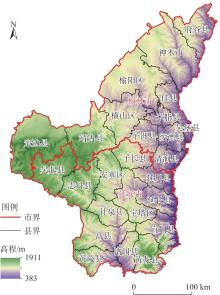
图1
研究区概况 注:基于自然资源部标准地图服务网站审图号为GS(2024)0650号的标准地图制作,底图边界无修改。下同。"

表1
人类福祉指标体系"
| 人类功能结构 | 功能指标 | 具体指标 | 单位 | 指标性质 | 层次分析法权重 | 熵权法权重 | 组合赋权法权重 |
|---|---|---|---|---|---|---|---|
| 基础功能 | 物质 | 人均耕地面积 | hm2·人-1 | + | 0.089 | 0.025 | 0.057 |
| 人均粮食产量 | t·人-1 | + | 0.077 | 0.026 | 0.052 | ||
| 人均油料产量 | t·人-1 | + | 0.053 | 0.052 | 0.052 | ||
| 人均肉类产量 | t·人-1 | + | 0.043 | 0.023 | 0.033 | ||
| 人均奶类产量 | t·人-1 | + | 0.035 | 0.043 | 0.039 | ||
| 健康 | 医疗卫生机构床位数 | 个·(104人)-1 | + | 0.069 | 0.052 | 0.061 | |
| 教育 | 普通中小学在校人数 | 人·(104人)-1 | + | 0.073 | 0.046 | 0.060 | |
| 普通中小学专任教师人数 | 人·(104人)-1 | + | 0.071 | 0.034 | 0.052 | ||
| 大专及以上人口数 | 人·(104人)-1 | + | 0.069 | 0.262 | 0.166 | ||
| 和谐功能 | 城乡一体 | 城乡人均可支配收入比(农村/城镇) | % | + | 0.077 | 0.061 | 0.069 |
| 发展功能 | 生活水平 | 人均GDP | 元·人-1 | + | 0.072 | 0.063 | 0.067 |
| 恩格尔系数 | % | - | 0.075 | 0.157 | 0.116 | ||
| 地方财政一般公共预算收入 | 108元 | + | 0.058 | 0.085 | 0.071 | ||
| 地方财政一般公共预算支出 | 108元 | + | 0.072 | 0.048 | 0.060 | ||
| 可持续功能 | 应对气候变化 | 碳排放强度 | t·(104元)-1 | - | 0.067 | 0.023 | 0.045 |
表2
生态系统服务和人类福祉耦合协调类型划分"
| 耦合协调度(D) | 耦合协调 类型 | 相对发展度 (R) | 相对发展 类型 |
|---|---|---|---|
| 0.0≤D≤0.2 | 高度失调 | 0.0≤R≤0.6 | 人类福祉领先型 |
| 0.6<R≤1.2 | 二者同步发展型 | ||
| R>1.2 | 生态系统服务领先型 | ||
| 0.2<D≤0.4 | 中度失调 | 0.0≤R≤0.6 | 人类福祉领先型 |
| 0.6<R≤1.2 | 二者同步发展型 | ||
| R>1.2 | 生态系统服务领先型 | ||
| 0.4<D≤0.6 | 拮抗 | 0.0≤R≤0.6 | 人类福祉领先型 |
| 0.6<R≤1.2 | 二者同步发展型 | ||
| R>1.2 | 生态系统服务领先型 | ||
| 0.6<D≤0.8 | 中度协调 | 0.0≤R≤0.6 | 人类福祉领先型 |
| 0.6<R≤1.2 | 二者同步发展型 | ||
| R>1.2 | 生态系统服务领先型 | ||
| 0.8<D≤1.0 | 高度协调 | 0.0≤R≤0.6 | 人类福祉领先型 |
| 0.6<R≤1.2 | 二者同步发展型 | ||
| R>1.2 | 生态系统服务领先型 |
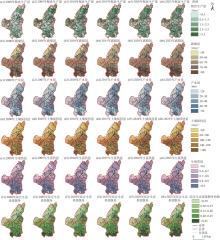
图2
乡镇尺度上2000—2023年陕北黄土高原生态系统服务时空分布"
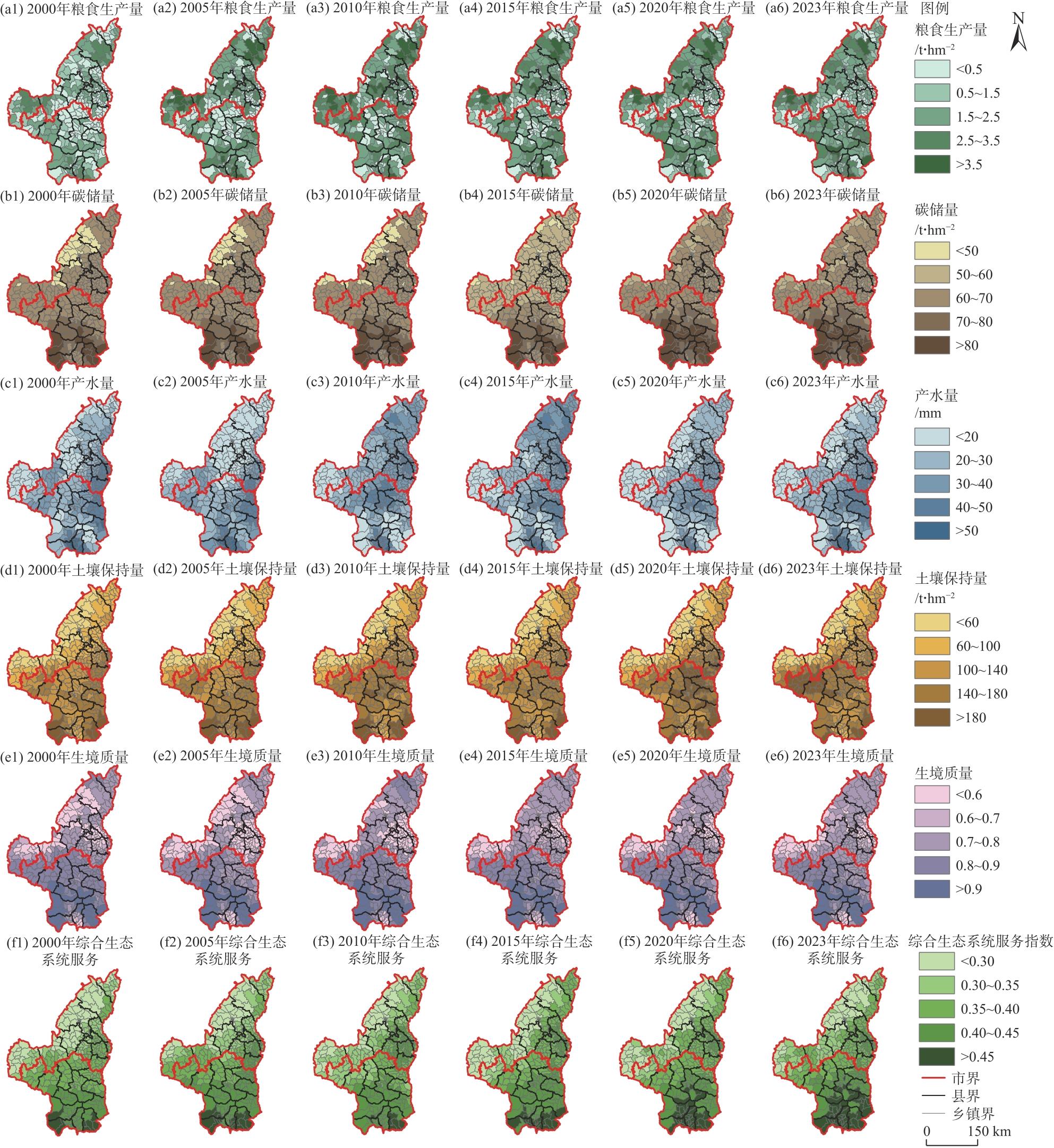
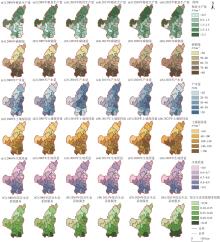
图3
县域尺度上2000—2023年陕北黄土高原生态系统服务时空分布"
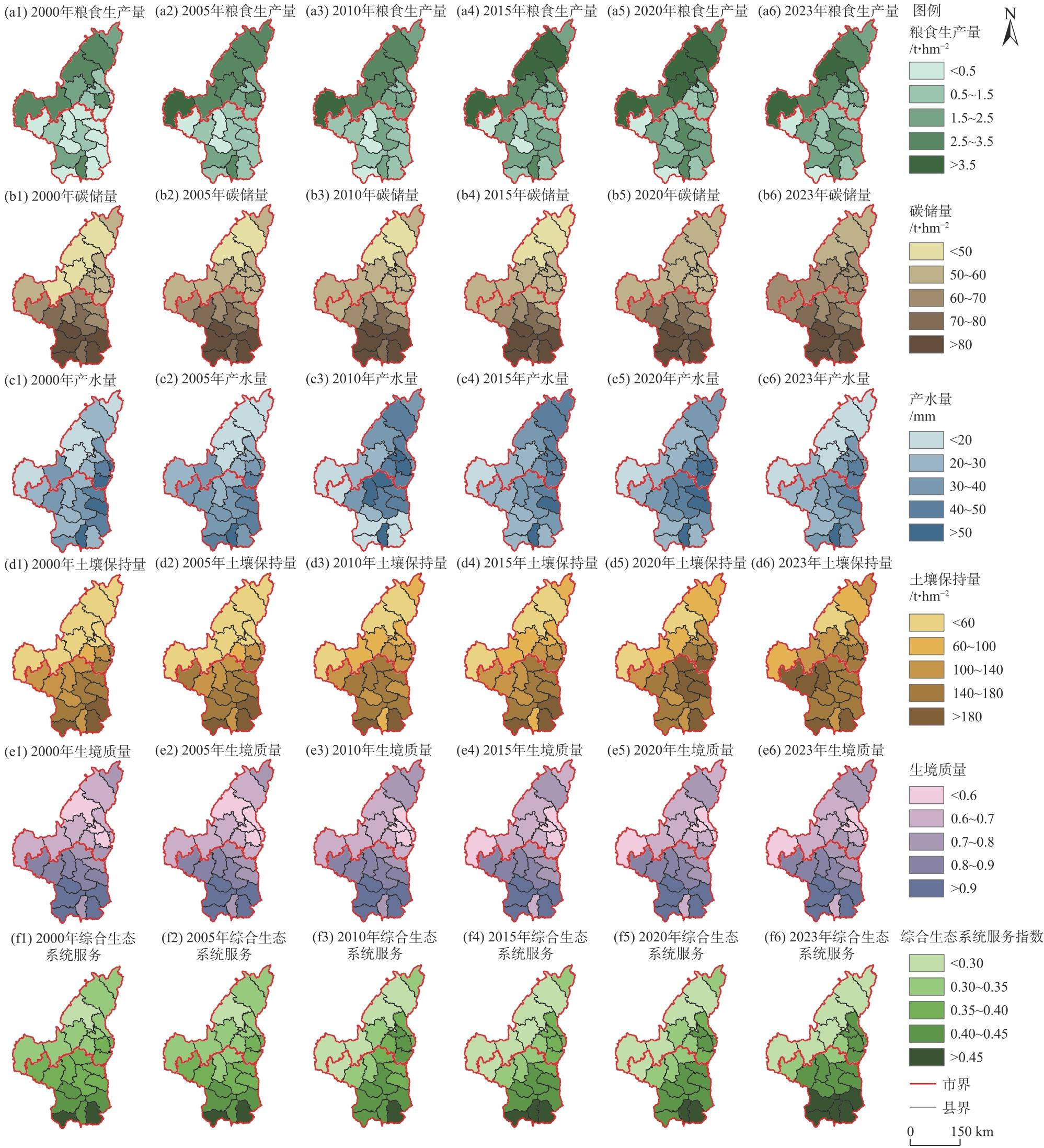
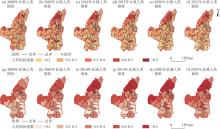
图4
2000—2023年陕北黄土高原人类福祉时空分布"
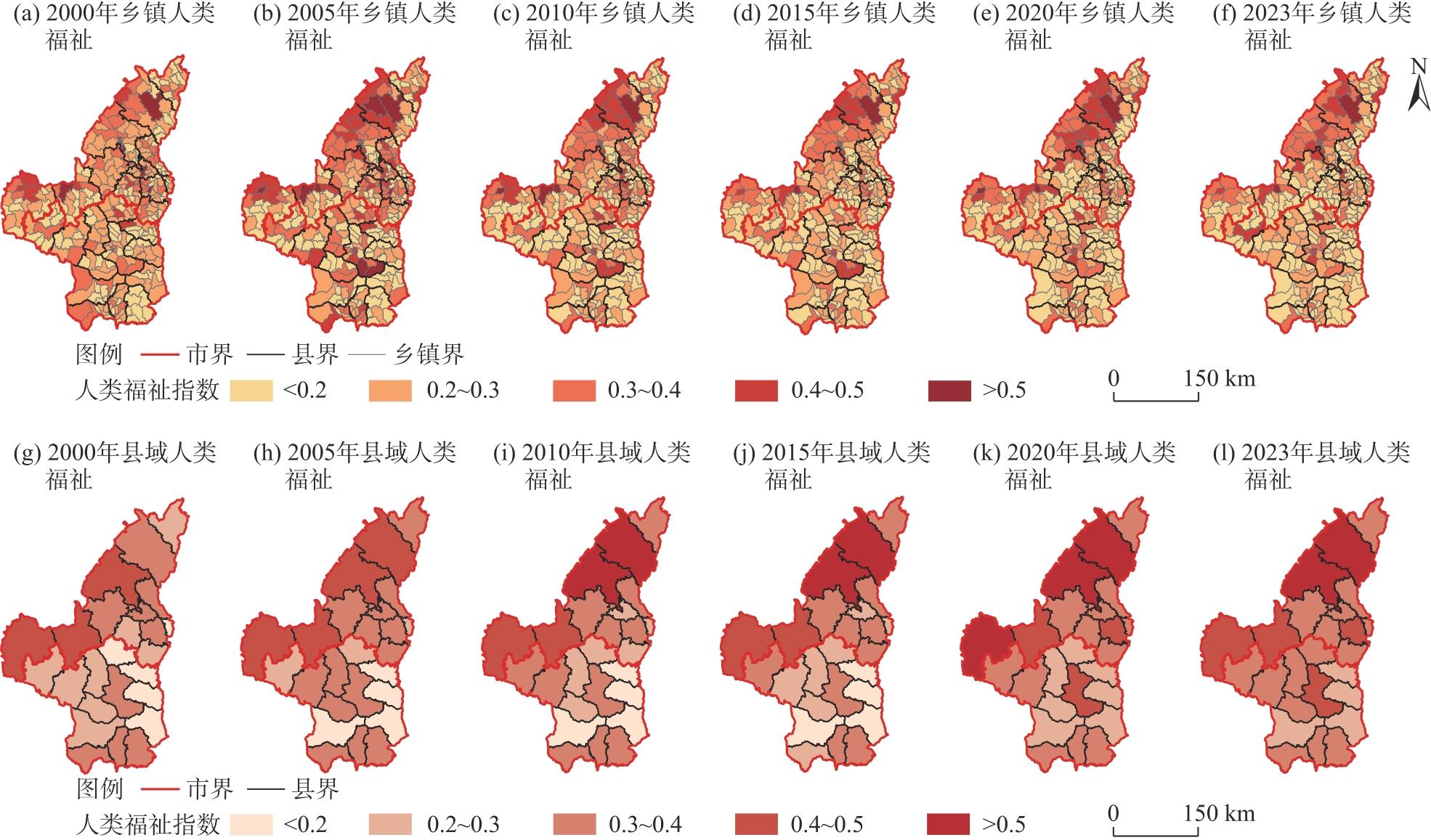
图5
2000—2023年陕北黄土高原生态系统服务内部相关性 注:*表示在P<0.05水平上显著。下同。"
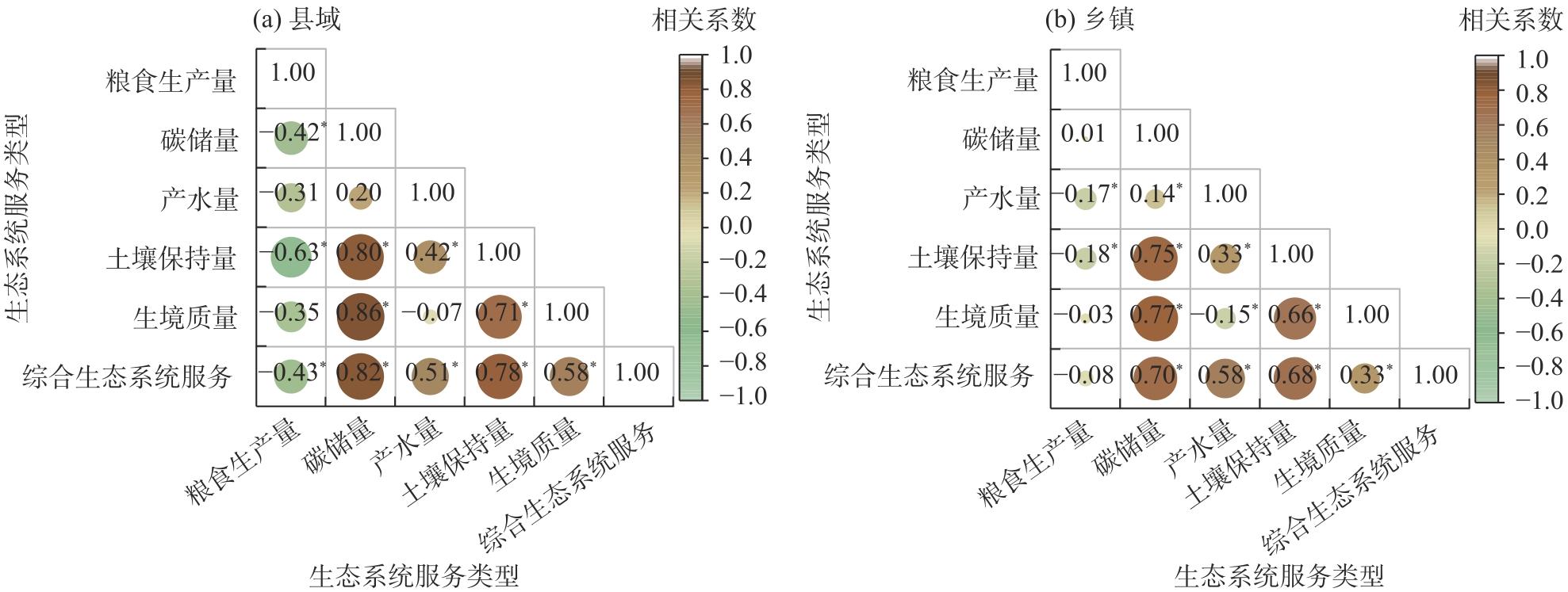
图6
2000—2023年陕北黄土高原人类福祉内部相关性"
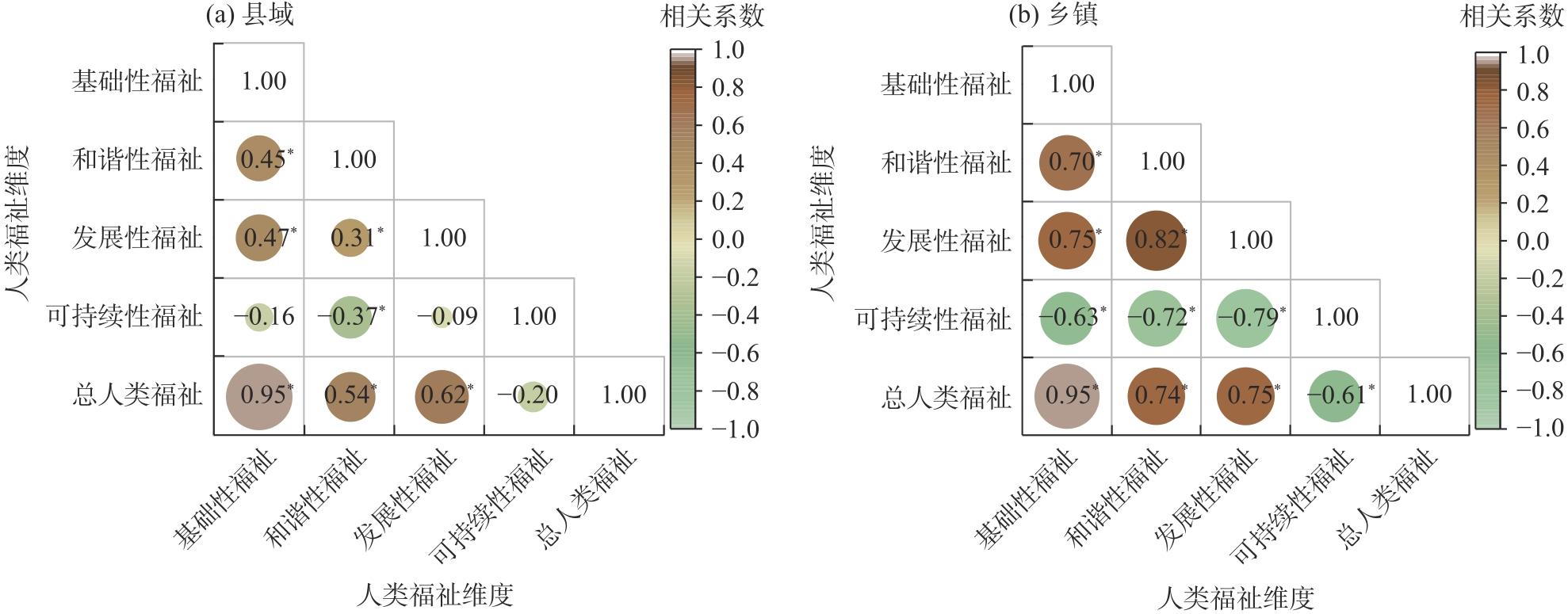
图7
乡镇尺度上2000—2023年陕北黄土高原生态系统服务与人类福祉耦合协调时空分布"
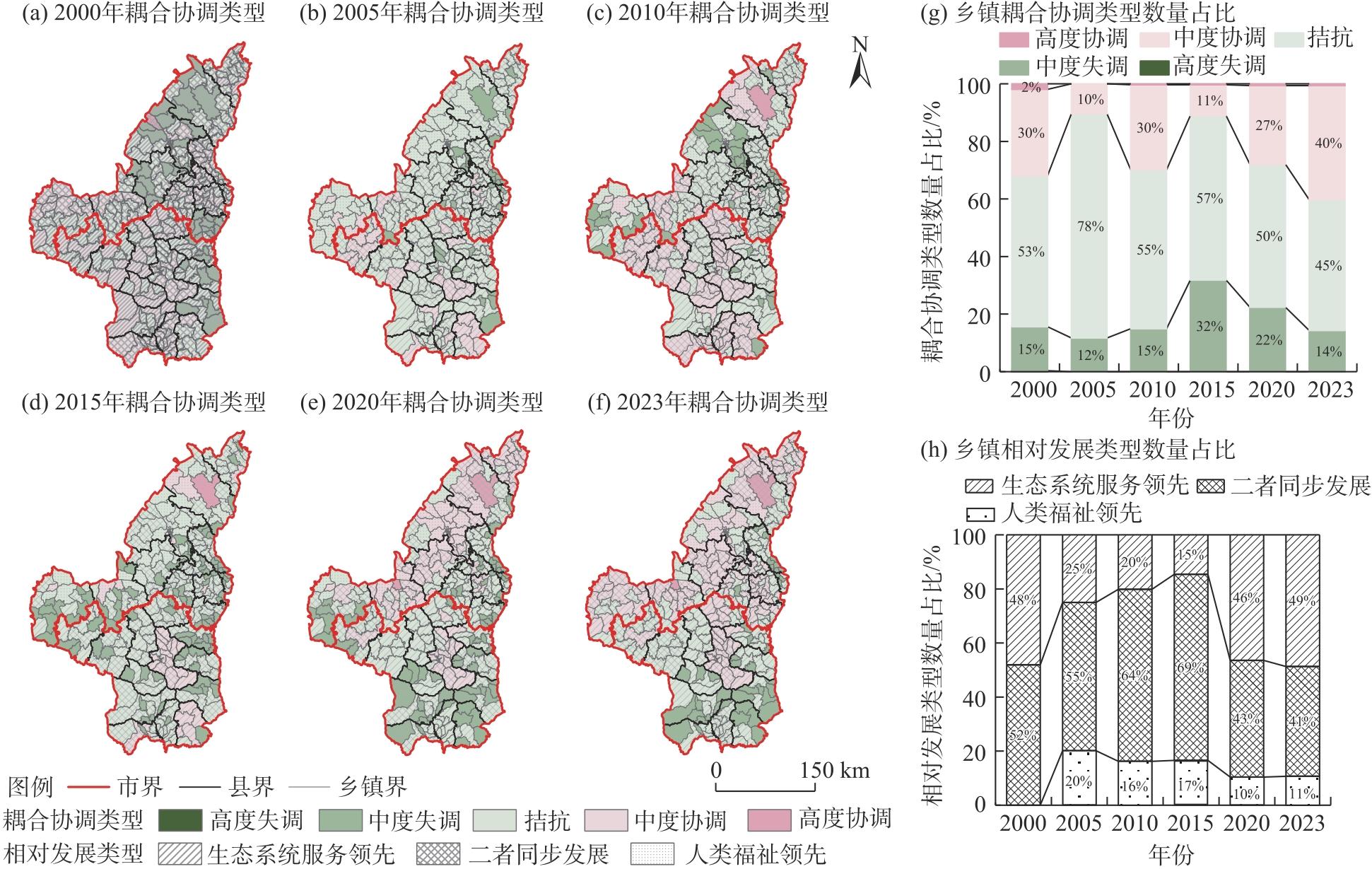
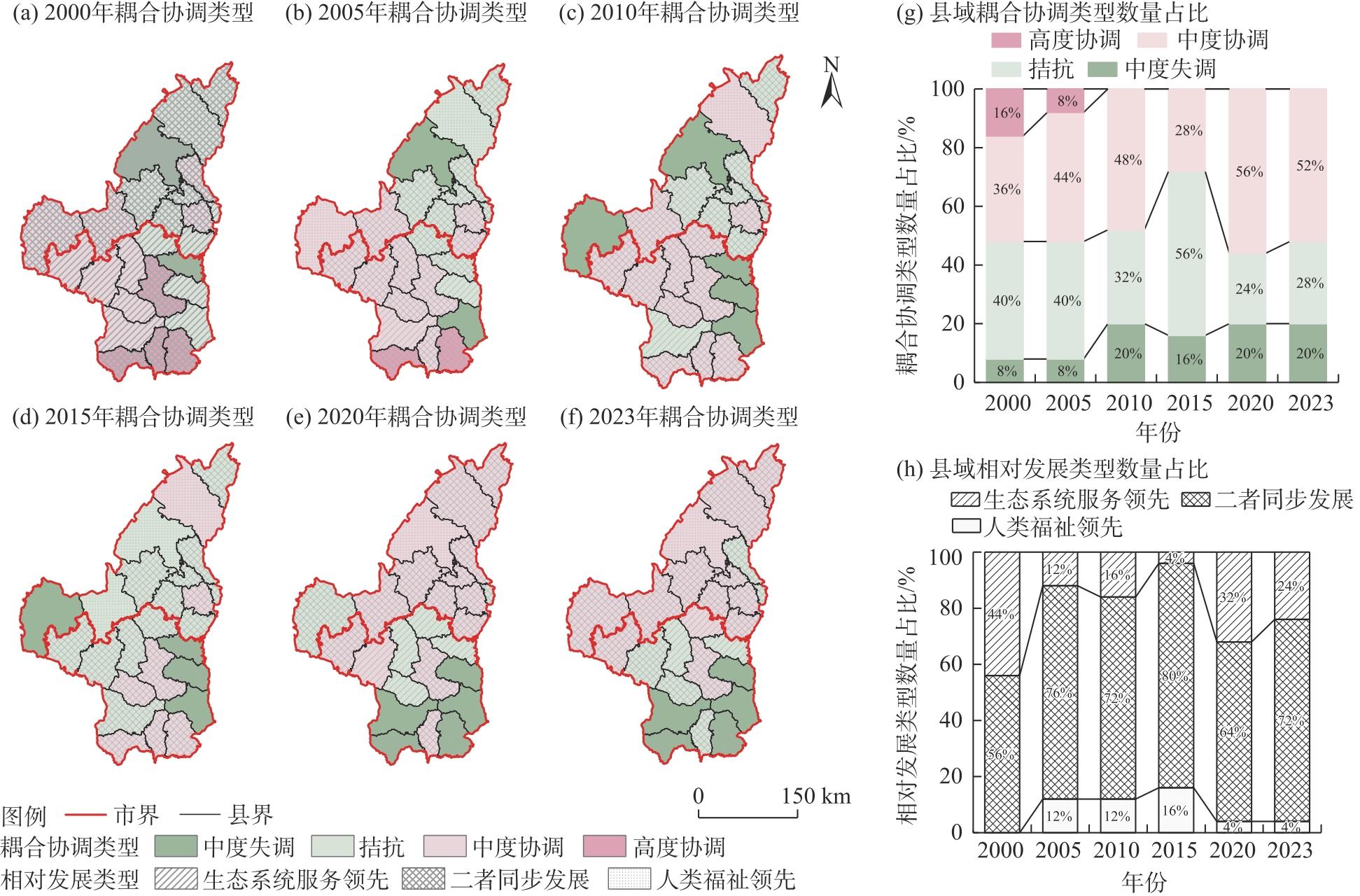
图8
县域尺度上2000—2023年陕北黄土高原生态系统服务与人类福祉耦合协调时空分布"
| [1] |
Costanza R, D’Arge R, de Groot R, et al. The value of the world’s ecosystem services and natural capital[J]. Nature, 1997, 387(6630): 253-260.
doi: 10.1038/387253a0 |
| [2] | 谢薇薇, 胡宝清, 张礼黎. 人地共生视角下生态系统服务与民生福祉耦合关系及模拟预测研究——以桂西南喀斯特-北部湾为例[J]. 环境工程技术学报, 2024, 14(2): 583-591. |
| [Xie Weiwei, Hu Baoqing, Zhang Lili. Coupling relation between ecosystem services and people’s well-being from the perspective of human-land symbiosis and simulation prediction: A case study of southwestern Guangxi Karst-Beibu Gulf[J]. Journal of Environmental Engineering Technology, 2024, 14(2): 583-591.] | |
| [3] | 董孝斌, 刘梦雪. 土地利用/覆盖变化-生态系统服务-人类福祉关系研究进展[J]. 北京师范大学学报(自然科学版), 2022, 58(3): 465-475. |
| [Dong Xiaobin, Liu Mengxue. Relationships among LUCC, ecosystem services and human well-being[J]. Journal of Beijing Normal University (Natural Science Edition), 2022, 58(3): 465-475.] | |
| [4] | 董文卓, 苏维词, 罗小毛, 等. 西南地区生态系统服务供需与人类福祉的时空匹配测度及其耦合协调分析[J/OL]. 环境科学. [2025-11-04]. https://link.cnki.net/urlid/11.1895.X.20250723.1508.004. |
| [Dong Wenzhuo, Su Weici, Luo Xiaomao, et al. Spatiotemporal matching measurement and coupling coordination analysis between ecosystem service supply-demand and human well-being in southwest China[J/OL]. Environmental Science. [2025-11-04]. https://link.cnki.net/urlid/11.1895.X.20250723.1508.004.] | |
| [5] |
邱坚坚, 刘毅华, 袁利, 等. 人地系统耦合下生态系统服务与人类福祉关系研究进展与展望[J]. 地理科学进展, 2021, 40(6): 1060-1072.
doi: 10.18306/dlkxjz.2021.06.015 |
|
[Qiu Jianjian, Liu Yihua, Yuan Li, et al. Research progress and prospect of the interrelationship between ecosystem services and human well-being in the context of coupled human and natural system[J]. Progress in Geography, 2021, 40(6): 1060-1072.]
doi: 10.18306/dlkxjz.2021.06.015 |
|
| [6] |
刘迪, 陈海, 张行, 等. 黄土丘陵沟壑区生态系统服务对人类福祉的影响及其群体差异[J]. 地理研究, 2022, 41(5): 1298-1310.
doi: 10.11821/dlyj020210558 |
| [Liu Di, Chen Hai, Zhang Hang, et al. The impact of ecosystem services on human well-being and its group differences in the loess hilly and gully region[J]. Geographical Research, 2022, 41(5): 1298-1310.] | |
| [7] | 刘迪, 陈海, 王麒菲, 等. 黄土丘陵沟壑区村庄生态系统服务对人类福祉的影响机理——以陕西省米脂县为例[J]. 水土保持研究, 2024, 31(3): 69-78. |
| [Liu Di, Chen Hai, Wang Qifei, et al. Mechanisms of the impact of village ecosystem services on human well-being in the loess hilly and gully region: Case study of Mizhi County, Shaanxi Province[J]. Research of Soil and Water Conservation, 2024, 31(3): 69-78.] | |
| [8] | 廖祥, 杨鑫, 郭社平, 等. 生态系统服务与人类福祉的交互作用及其驱动因素: 以成渝城市群为例[J]. 环境科学, 2025, 46(11): 7298-7315. |
| [Liao Xiang, Yang Xin, Guo Sheping, et al. Interactions and its driving factors of ecosystem services and human well-being: A case study of Chengdu-Chongqing urban agglomeration[J]. Environmental Science, 2025, 46(11): 7298-7315.] | |
| [9] | 柳冬青, 张金茜, 巩杰, 等. 陇中黄土丘陵区土地利用强度-生态系统服务-人类福祉时空关系研究: 以安定区为例[J]. 生态学报, 2019, 39(2): 637-648. |
| [Liu Dongqing, Zhang Jinqian, Gong Jie, et al. Spatial and temporal relations among land-use intensity, ecosystem services, and human well-being in the Longzhong loess hilly region: A case study of the Anding district, Gansu Province[J]. Acta Ecological Sinica, 2019, 39(2): 637-648.] | |
| [10] |
武燕, 吴映梅, 高彬嫔, 等. 滇中城市群生态系统服务与人类福祉时空耦合及影响因素研究[J]. 地域研究与开发, 2025, 44(3): 135-145, 174.
doi: 10.3969/j.issn.1003-2363.2025.03.018 |
|
[Wu Yan, Wu Yingmei, Gao Binpin, et al. Spatial-temporal coupling and influencing factors of ecosystem services and human well-being in the central Yunnan urban agglomeration[J]. Areal Research and Development, 2025, 44(3): 135-145, 174.]
doi: 10.3969/j.issn.1003-2363.2025.03.018 |
|
| [11] | 刘迪, 郭琳, 陈海, 等. 黄河流域生态系统服务与居民福祉的多类型关系及驱动因素[J]. 水土保持研究, 2026, 33(1): 1-12. |
| [Liu Di, Guo Lin, Chen Hai, et al. Multi-type relationships between ecosystem services and resident well-being and their driving factors in Yellow River Basin[J]. Research of Soil and Water Conservation, 2026, 33(1): 1-12.] | |
| [12] |
曾勇, 毕钰, 张洪彬, 等. 塔里木河流域生态系统服务价值与土地利用的动态变化[J]. 干旱区地理, 2026, 49(2): 265-274.
doi: 10.12118/j.issn.1000-6060.2025.122 |
|
[Zeng Yong, Bi Yu, Zhang Hongbin, et al. Dynamic changes of ecosystem service value and land use in the Tarim River Basin[J]. Arid Land Geography, 2026, 49(2): 265-274.]
doi: 10.12118/j.issn.1000-6060.2025.122 |
|
| [13] |
徐铭璟, 段宝玲, 冯强, 等. 生态系统服务及其权衡/协同关系多情景模拟——以黄河流域山西段为例[J]. 干旱区地理, 2025, 48(7): 1206-1219.
doi: 10.12118/j.issn.1000-6060.2024.471 |
|
[Xu Mingjing, Duan Baoling, Feng Qiang, et al. Ecological services and their trade-offs/synergistic relationships in multi-scenario simulations: A case of the Shanxi section of the Yellow River Basin[J]. Arid Land Geography, 2025, 48(7): 1206-1219.]
doi: 10.12118/j.issn.1000-6060.2024.471 |
|
| [14] | 贾瑞萱, 史兴民, 樊怡. 矿农复合区生态系统服务与损害对居民福祉的影响——以生计脆弱性为中介变量[J]. 生态学报, 2025, 45(13): 6481-6491. |
| [Jia Ruixuan, Shi Xingmin, Fan Yi. The impact of ecosystem services and damage in mining and agricultural complex areas on the well-being of residents: Using livelihood vulnerability as a mediating variable[J]. Acta Ecological Sinica, 2025, 45(13): 6481-6491.] | |
| [15] |
赵雪雁, 丁静, 马平易. 人类活动对黄土高原生态系统服务权衡/协同关系影响的多尺度研究[J]. 地理学报, 2025, 80(7): 1920-1936.
doi: 10.11821/dlxb202507013 |
|
[Zhao Xueyan, Ding Jing, Ma Pingyi. Multi-scale study of the impact of human activities on the trade-off/synergy relationship of ecosystem services in the Loess Plateau[J]. Acta Geographica Sinica, 2025, 80(7): 1920-1936.]
doi: 10.11821/dlxb202507013 |
|
| [16] |
陈进, 江金波, 刘荣荣. 旅游市场、民生福祉与生态系统服务权衡协同关系研究——以张家界市为例[J]. 经济地理, 2025, 45(5): 224-233.
doi: 10.15957/j.cnki.jjdl.2025.05.023 |
| [Chen Jin, Jiang Jinbo, Liu Rongrong. Trade-off and synergy relationship among tourism market, people’s livelihood and well-being, and ecosystem services: A case study of Zhangjiajie[J]. Economic Geography, 2025, 45(5): 224-233.] | |
| [17] | 唐国华, 胡坤琳, 甘黎黎. 鄱阳湖流域生态系统服务与人类福祉的时空耦合及空间效应[J]. 水利水电技术(中英文), 2025, 56(8): 78-90. |
| [Tang Guohua, Hu Kunlin, Gan Lili. Spatiotemporal coupling and spatial effects of ecosystem services and human well-being in Poyang Lake Basin[J]. Water Resources and Hydropower Engineering, 2025, 56(8): 78-90.] | |
| [18] | Gao Y M, Zhang N J, Ma Q, et al. How is human well-being related to ecosystem services at town and village scales? A case study from the Yangtze River Delta, China[J]. Landscape Ecology, 2024, 39(7): 126, doi: 10.1007/s10980-024-01925-w. |
| [19] | Tian F, Li X, Wu X, et al. Identifying supply-demand mismatches of ecosystem services and social-ecological drivers at different scales to support land use planning[J]. Ecological Indicators, 2025, 174: 113462, doi: 10.1016/j.ecolind.2025.113462. |
| [20] | 石金鑫, 梁小英, 李辉蔷, 等. 陕北黄土高原景观格局对生态系统服务权衡关系的影响[J]. 生态学报, 2023, 43(21): 8958-8972. |
| [Shi Jinxin, Liang Xiaoying, Li Huiqiang, et al. Impact of landscape pattern on ecosystem service trade-offs in the Loess Plateau in northern Shaanxi[J]. Acta Ecological Sinica, 2023, 43(21): 8958-8972.] | |
| [21] | 张陈一轩. “十五五”时期的陕西数字经济高质量发展: 突出问题和实施路径[J]. 新西部, 2025(7): 63-67. |
| [Zhang Chenyixuan. High-quality development of Shaanxi’s digital economy during the 15th Five-Year Plan: Key issues and implementation paths[J]. New West, 2025(7): 63-67.] | |
| [22] |
张杰, 屈建军, 陈海, 等. 基于电路理论的生态安全格局时空演变与影响因素研究——以陕北黄土高原为例[J]. 干旱区地理, 2025, 48(3): 494-505.
doi: 10.12118/j.issn.1000-6060.2024.199 |
|
[Zhang Jie, Qu Jianjun, Chen Hai, et al. Spatial and temporal evolution and influencing factors of ecological security pattern based on circuit theory: A case of Loess Plateau in northern Shaanxi[J]. Arid Land Geography, 2025, 48(3): 494-505.]
doi: 10.12118/j.issn.1000-6060.2024.199 |
|
| [23] | 安健吉, 员学锋, 杨悦, 等. 退耕还林还草工程对陕北地区生态系统服务的影响[J]. 环境科学, 2025, 46(4): 2410-2427. |
| [An Jianji, Yuan Xuefeng, Yang Yue, et al. Effect of the grain for green program on ecosystem services in northern Shaanxi, China[J]. Environmental Science, 2025, 46(4): 2410-2427.] | |
| [24] |
董彭蓓, 任宗萍, 李鹏, 等. 土地利用变化下宁夏生态系统服务权衡协同关系研究[J]. 干旱区研究, 2024, 41(6): 1032-1044.
doi: 10.13866/j.azr.2024.06.12 |
|
[Dong Pengbei, Ren Zongping, Li Peng, et al. Ecosystem services trade-offs and synergies drived by landuse changes in Ningxia[J]. Arid Zone Research, 2024, 41(6): 1032-1044.]
doi: 10.13866/j.azr.2024.06.12 |
|
| [25] |
王天福, 龚直文, 邓元杰. 基于土地利用变化的陕西省植被碳汇提质增效优先区识别[J]. 自然资源学报, 2022, 37(5): 1214-1232.
doi: 10.31497/zrzyxb.20220508 |
|
[Wang Tianfu, Gong Zhiwen, Deng Yuanjie. Identification of priority areas for improving quality and efficiency of vegetation carbon sinks in Shaanxi Province based on land use change[J]. Journal of Natural Resources, 2022, 37(5): 1214-1232.]
doi: 10.31497/zrzyxb.20220508 |
|
| [26] | 包玉斌. 基于InVEST模型的陕北黄土高原生态服务功能时空变化研究[D]. 西安: 西北大学, 2015. |
| [Bao Yubin. Temporal and spatial change of ecological services on Loess Plateau of Shaanxi by InVEST model[D]. Xi’an: Northwest University, 2015.] | |
| [27] |
王嘉伟, 董国涛, 蒋晓辉, 等. 生态输水背景下黑河流域生态系统服务的时空演变特征及驱动力研究[J]. 干旱区地理, 2025, 48(8): 1406-1420.
doi: 10.12118/j.issn.1000-6060.2024.590 |
|
[Wang Jiawei, Dong Guotao, Jiang Xiaohui, et al. Spatiotemporal evolution characteristics and driving forces of ecosystem services in the Heihe River Basin under the context of ecological water conveyance[J]. Arid Land Geography, 2025, 48(8): 1406-1420.]
doi: 10.12118/j.issn.1000-6060.2024.590 |
|
| [28] |
王琦琨, 武玮, 杨雪琪, 等. 陕西省生境质量时空演变及驱动机制分析[J]. 干旱区研究, 2022, 39(5): 1684-1694.
doi: 10.13866/j.azr.2022.05.32 |
|
[Wang Qikun, Wu Wei, Yang Xueqi, et al. Spatial-temporal changes and driving factors of habitat quality in Shaanxi Province during the past 20 years[J]. Arid Zone Research, 2022, 39(5): 1684-1694.]
doi: 10.13866/j.azr.2022.05.32 |
|
| [29] |
牛丽楠, 邵全琴, 陈美祺, 等. 2000—2020年长江流域生态系统服务变化及其权衡协同关系[J]. 资源科学, 2024, 46(5): 853-866.
doi: 10.18402/resci.2024.05.01 |
|
[Niu Linan, Shao Quanqin, Chen Meiqi, et al. Changes in ecosystem services and their tradeoffs and synergies in the Yangtze River Basin from 2000 to 2020[J]. Resources Science, 2024, 46(5): 853-866.]
doi: 10.18402/resci.2024.05.01 |
|
| [30] | 李雪敏, 李同宁, 李道政, 等. 内蒙古县域生态系统服务与居民福祉耦合协调关系时空特征及影响因素研究[J]. 干旱区资源与环境, 2023, 37(7): 27-37. |
| [Li Xuemin, Li Tongning, Li Daozheng, et al. Spatial-temporal characteristics of county-range coupling coordination relationship between ecosystem services and human’s well-being in Inner Mongolia[J]. Journal of Arid Land Resources and Environment, 2023, 37(7): 27-37.] | |
| [31] | 秦会艳, 胡月婷, 黄颖利. 居民感知视角下东北虎豹国家公园生态系统服务与原住居民福祉的耦合协调关系[J]. 浙江农林大学学报, 2026, 43(1): 186-196. |
| [Qin Huiyan, Hu Yueting, Huang Yingli. Coupling coordination relationship between ecosystem services and local people’s well-being in Northeast Tiger and Leopard National Park from the perspective of residents’ perception[J]. Journal of Zhejiang A & F University, 2026, 43(1): 186-196.] | |
| [32] | 温晓金, 杨海娟, 刘焱序, 等. 陕北能源富集区工业化过程与生态风险格局[J]. 生态学杂志, 2013, 32(6): 1578-1586. |
| [Wen Xiaojin, Yang Haijuan, Liu Yanxu, et al. Industrialization process and ecological risk pattern in a rich energy region of northern Shaanxi, northwest China[J]. Chinese Journal of Ecology, 2013, 32(6): 1578-1586.] | |
| [33] | 李元, 金伟航, 蒋文生, 等. 陕西县域生态-经济耦合协调性及影响机制[J]. 华中师范大学学报(自然科学版), 2026, 60(1): 95-108. |
| [Li Yuan, Jin Weihang, Jiang Wensheng, et al. Evaluating ecological-economic coupling coordination and its impact mechanisms in counties of Shaanxi Province[J]. Journal of Central China Normal University (Natural Sciences Edition), 2026, 60(1): 95-108.] | |
| [34] | Liu L M, Wu J G. Ecosystem services-human wellbeing relationships vary with spatial scales and indicators: The case of China[J]. Resources Conservation and Recycling, 2021, 172: 105662, doi: 10.1016/j.resconrec.2021.105662. |
| [1] | 盖微微, 姜钰. 环塔里木经济带生态系统服务功能时空演变及权衡协同研究[J]. 干旱区地理, 2026, 49(5): 963-974. |
| [2] | 张佳静, 王晓峰, 周潮伟, 周继涛, 白娟. 黄河“几字弯”土地退化中性评估及影响因素分析[J]. 干旱区地理, 2026, 49(4): 856-867. |
| [3] | 曾勇, 毕钰, 张洪彬, 施枫芝, 王鹏. 塔里木河流域生态系统服务价值与土地利用的动态变化[J]. 干旱区地理, 2026, 49(2): 265-274. |
| [4] | 王嘉伟, 董国涛, 蒋晓辉, 聂桐, 李跃红. 生态输水背景下黑河流域生态系统服务的时空演变特征及驱动力研究[J]. 干旱区地理, 2025, 48(8): 1406-1420. |
| [5] | 徐铭璟, 段宝玲, 冯强, 吕萌. 生态系统服务及其权衡/协同关系多情景模拟——以黄河流域山西段为例[J]. 干旱区地理, 2025, 48(7): 1206-1219. |
| [6] | 李智, 苏洋, 舒芹. 基于生态系统服务供需匹配的西北地区生态管理分区[J]. 干旱区地理, 2025, 48(6): 1115-1126. |
| [7] | 李炳坤, 张晓克, 骆占斌, 马静, 杨永均, 陈浮. 基于“水-能源-粮食”关系的生态系统服务供需匹配研究——以天山北坡城市群为例[J]. 干旱区地理, 2025, 48(4): 571-585. |
| [8] | 李潇飞, 龚健, 叶菁, 方鸿嘉, 张世镇, 林家胜. 生态系统服务权衡协同下的甘肃省生态功能分区优化[J]. 干旱区地理, 2025, 48(3): 467-479. |
| [9] | 张杰, 屈建军, 陈海, 石金鑫, 马羽赫, 刘迪. 基于电路理论的生态安全格局时空演变与影响因素研究——以陕北黄土高原为例[J]. 干旱区地理, 2025, 48(3): 494-505. |
| [10] | 王彦闻, 杨欢, 涂佩玥, 丁昊, 荆莹, 何超. 天山北坡经济带城市扩张对生境质量的影响[J]. 干旱区地理, 2025, 48(12): 2232-2246. |
| [11] | 楚文溪, 杨新军, 李润阳. 关中平原城市群城市韧性与生态系统服务耦合协调关系及影响因素[J]. 干旱区地理, 2025, 48(11): 2005-2018. |
| [12] | 超宝, 赵媛媛, 武海岩, 李媛, 苏宁. 2000—2020年蒙古高原生态系统服务及其对气候因子的响应[J]. 干旱区地理, 2024, 47(9): 1577-1586. |
| [13] | 张鑫, 张丹, 张广森, 宋玫. 关中平原城市群生态系统服务时空特征及生态功能区划分[J]. 干旱区地理, 2024, 47(9): 1587-1595. |
| [14] | 侯晋星, 潘换换, 杜自强, 武志涛, 张红. 山西黄河流域水生态系统服务时空分析[J]. 干旱区地理, 2024, 47(6): 1047-1060. |
| [15] | 胡瑞媛, 畅建霞, 郭爱军, 王义民. 塔里木河干流生态系统变化与生态效益分析[J]. 干旱区地理, 2024, 47(4): 622-633. |
|
||