干旱区地理 ›› 2026, Vol. 49 ›› Issue (11): 2416-2425.doi: 10.12118/j.issn.1000-6060.2025.775 cstr: 32274.14.ALG2025775
李翠林1( ), 刘旭义2(), 杨晶晶1, 王明辰2, 张文秀1
收稿日期:2025-11-28
修回日期:2025-12-27
出版日期:2026-11-25
发布日期:2026-11-13
通讯作者:
刘旭义(1999-),女,博士研究生,主要从事旅游经济研究. E-mail: liuxuyixj@163.com作者简介:李翠林(1973-),女,博士,教授,主要从事文旅融合研究. E-mail: lucy7566@sina.com论文构思:刘旭义、李翠林;数据管理:刘旭义、杨晶晶、王明辰、张文秀;规范分析:刘旭义;获取资助:李翠林;调查研究:刘旭义;方法设计:李翠林;项目管理:李翠林;提供资源:李翠林;软件编程:刘旭义;监督指导:李翠林;验证复核:王明辰;可视化:刘旭义;初稿撰写:刘旭义;修订编辑:张文秀。
基金资助:
LI Cuilin1(), LIU Xuyi2(), YANG Jingjing1, WANG Mingchen2, ZHANG Wenxiu1
Received:2025-11-28
Revised:2025-12-27
Published:2026-11-25
Online:2026-11-13
摘要:
省际合作帮扶作为一项公共性激励政策,在助力受援地脱贫攻坚以及实现旅游经济提质增效方面具有重要作用。基于2000—2023年新疆14个地州市的面板数据,运用双重差分模型评估省际合作帮扶对旅游经济高质量发展的影响,以探究省际合作帮扶对旅游经济高质量发展的政策效应和内在机理。结果表明:省际合作帮扶促进了新疆旅游经济高质量发展,且这一结论经过稳健性检验后依然成立。机制检验和异质性分析表明,省际合作帮扶通过发挥产业联动效应和完善旅游配套设施建设有力推动了新疆旅游经济高质量增长,省际合作帮扶在政府财政投入和经济发展水平较高地区政策效应更为显著,而在产业结构趋同度高的地区未表现出显著的提升作用。研究结果为优化省际合作帮扶政策设计、提升政策实施精准度以及促进区域旅游协同发展提供了重要参考。
李翠林, 刘旭义, 杨晶晶, 王明辰, 张文秀. 省际合作帮扶对旅游经济高质量发展的影响——以对口援疆政策为例[J]. 干旱区地理, 2026, 49(11): 2416-2425.
LI Cuilin, LIU Xuyi, YANG Jingjing, WANG Mingchen, ZHANG Wenxiu. Impact of inter-provincial cooperation and assistance on the high-quality development of tourism economy: A case of counterpart aid to Xinjiang[J]. Arid Land Geography, 2026, 49(11): 2416-2425.

表1
旅游经济高质量发展指标体系"
| 一级指标 | 二级指标 | 指标计算或描述方式 |
|---|---|---|
| 创新 | R&D经费扶持 | R&D经费支出增速 |
| 旅游业全员劳动生产率 | 旅游总收入/旅游从业人员数 | |
| 旅游资本生产率 | 旅游总收入/固定资产投资额 | |
| 协调 | 产业高级化指数 | 旅游总收入/GDP |
| 产业合理化指数 | 旅游总收入/第三产业产值 | |
| 城乡收入比 | 城镇居民可支配收入/农村居民可支配收入 | |
| 城镇化率 | 原始数据 | |
| 绿色 | 建成区绿化覆盖率 | 原始数据 |
| 人均公园绿地面积 | 原始数据 | |
| 旅游产业环境污染治理 | 旅游总收入×单位GDP污水排放量 | |
| 旅游产业能源消耗 | 旅游总收入×单位GDP能源消费量 | |
| 开放 | 入境游客依存度 | 入境旅游接待人数/旅游总接待人数 |
| 入境收入依存度 | 入境旅游收入/旅游总收入 | |
| 国际贸易依存度 | 进出口总额/GDP | |
| 国内旅游接待程度 | 国内旅游接待人次/当地总人口数 | |
| 共享 | 旅游资源丰度 | A级以上旅游景区数 |
| 旅游就业共享程度 | 旅游直接从业人员数/总就业人数 | |
| 各地区人均旅游收入 | 旅游总收入/当地总人口数 | |
| 人均铁路公路客运量 | 铁路与公路客运量之和/当地总人口数 |
表2
变量描述性统计"
| 变量类别 | 变量 | 观测值 | 平均值 | 标准差 | 最小值 | 最大值 |
|---|---|---|---|---|---|---|
| 被解释变量 | 旅游经济高质量发展(te) | 336 | 0.103 | 0.058 | 0.024 | 0.491 |
| 核心解释变量 | 省际合作帮扶(did) | 336 | 0.500 | 0.501 | 0.000 | 1.000 |
| 政策强度(zc) | 336 | 122.405 | 163.424 | 0.000 | 594.000 | |
| 中介变量 | 产业联动效应(lnind) | 336 | 0.556 | 0.938 | 0.000 | 3.401 |
| 旅游配套设施(lninf) | 266 | 8.460 | 1.888 | 2.302 | 11.615 | |
| 控制变量 | 消费品零售总额(lntrs) | 336 | 13.186 | 1.345 | 3.384 | 16.394 |
| 旅行社数量(lntra) | 336 | 2.511 | 1.105 | 0.693 | 5.916 | |
| 星级饭店数量(lnsta) | 336 | 2.961 | 0.886 | 0.693 | 4.787 | |
| 住宿业营业收入(lnrev) | 336 | 8.635 | 1.284 | 5.434 | 12.246 |
表3
基准回归结果"
| 变量 | (1) | (2) | (3) |
|---|---|---|---|
| did | 0.051***(0.005) | 0.023***(0.007) | - |
| zc×post | - | - | 0.005***(0.001) |
| lntrs | - | 0.003**(0.001) | 0.002***(0.003) |
| lntra | - | 0.026***(0.004) | 0.026***(0.004) |
| lnsta | - | 0.006**(0.005) | 0.003***(0.006) |
| lnrev | - | 0.008***(0.004) | 0.008***(0.005) |
| Constant | 0.074***(0.003) | -0.078***(0.004) | -0.058***(0.045) |
| 年份固定效应 | 控制 | 控制 | 控制 |
| 城市固定效应 | 控制 | 控制 | 控制 |
| N | 336 | 336 | 336 |
| R2 | 0.520 | 0.649 | 0.554 |
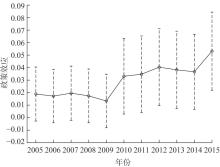
图1
平行趋势检验"
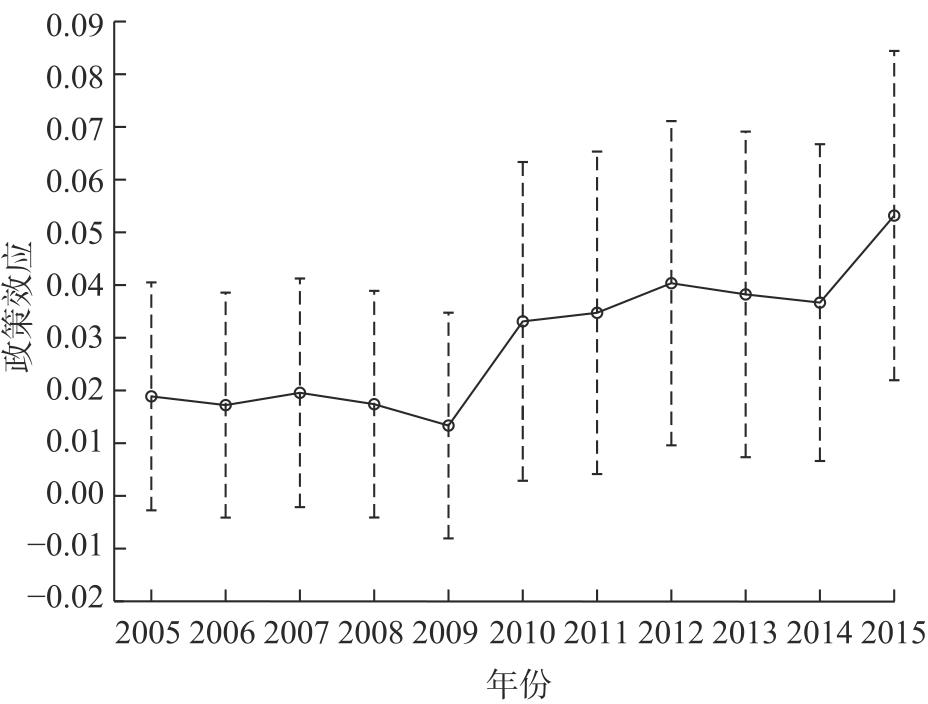
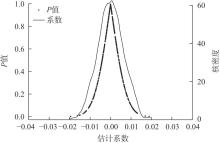
图2
安慰剂检验"
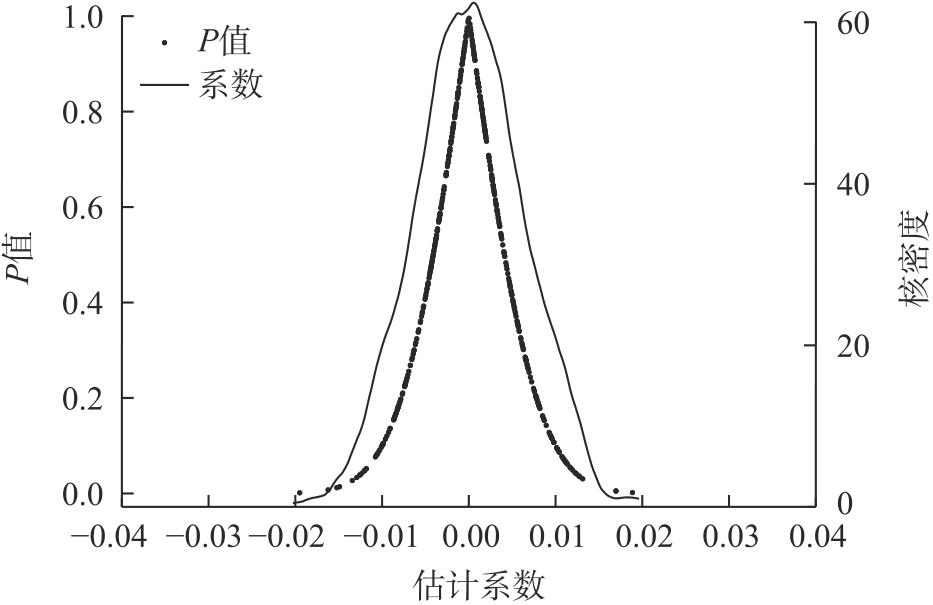
表4
稳健性检验"
| 变量 | 1%缩尾 | 5%缩尾 | 排除公共卫生事件 |
|---|---|---|---|
| did | 0.024***(0.006) | 0.025***(0.004) | 0.014***(0.007) |
| 控制变量 | 控制 | 控制 | 控制 |
| Constant | -0.068***(0.003) | -0.032***(0.031) | -0.132***(0.007) |
| 年份固定效应 | 控制 | 控制 | 控制 |
| 城市固定效应 | 控制 | 控制 | 控制 |
| N | 336 | 336 | 294 |
| R2 | 0.606 | 0.653 | 0.553 |
图3
合成控制法效果 注:博州、巴州分别是博尔塔拉蒙古自治州、巴音郭楞蒙古自治州的简称。"
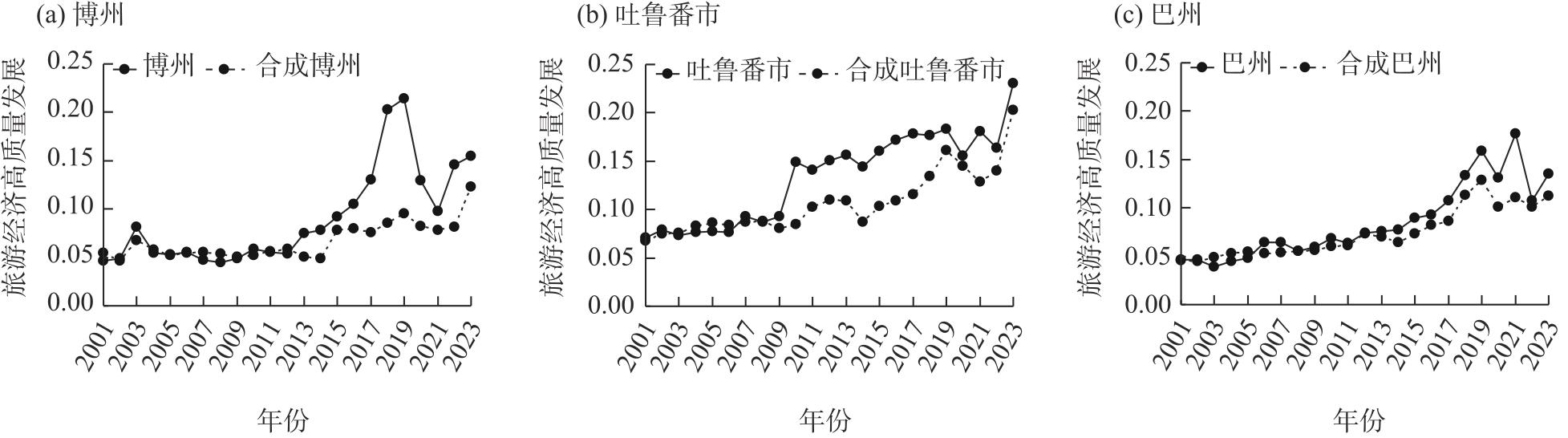
表5
机制检验结果"
| 变量 | 产业联动效应 | 旅游配套设施 |
|---|---|---|
| did | 0.048***(0.014) | 0.173**(0.036) |
| 控制变量 | 控制 | 控制 |
| Constant | -0.420***(0.085) | -1.276***(0.291) |
| 年份固定效应 | 控制 | 控制 |
| 城市固定效应 | 控制 | 控制 |
| N | 336 | 266 |
| R2 | 0.479 | 0.414 |
表6
异质性分析"
| 变量 | 政府财政投入 | 经济发展水平 | 产业结构趋同 |
|---|---|---|---|
| ddd | 0.027***(0.004) | 0.023***(0.004) | 0.010(0.008) |
| did | 0.022***(0.007) | 0.020***(0.009) | 0.020**(0.009) |
| 控制变量 | 控制 | 控制 | 控制 |
| Constant | -0.075***(0.004) | -0.075***(0.004) | -0.060***(0.004) |
| 年份固定效应 | 控制 | 控制 | 控制 |
| 城市固定效应 | 控制 | 控制 | 控制 |
| T检验 | 9.163*** | 7.054*** | 4.174*** |
| 组间系数差异 | -0.042*** | 0.047*** | -0.032*** |
| N | 336 | 336 | 336 |
| R2 | 0.549 | 0.549 | 0.551 |
| [1] | 田坤, 行伟波, 黄坤. 交通基础设施升级与旅游经济高质量发展——基于高铁开通的实证研究[J]. 经济学报, 2023, 10(4): 227-251. |
|
[Tian Kun, Xing Weibo, Huang Kun. Transportation infrastructure upgrading and high-quality development of tourism economy: An empirical study based on the opening of high-speed railway[J]. China Journal of Economics, 2023, 10(4): 227-251.]
doi: 10.26599/CJE.2023.9300408 |
|
| [2] | 郑世卿, 李平. 上海旅游援疆模式分析: 理论与实证[J]. 上海经济, 2017(6): 25-33. |
| [Zheng Shiqing, Li Ping. The theory and empirical research on the mode of Shanghai providing tourism aids for Xinjiang[J]. Shanghai Economy, 2017(6): 25-33.] | |
| [3] |
Purwono R, Esquivias M A, Sugiharti L, et al. Tourism destination performance and competitiveness: The impact on revenues, jobs, the economy, and growth[J]. Journal of Tourism and Services, 2024, 15(28): 161-187.
doi: 10.29036/jots.v15i28.629 |
| [4] | Benjamim L F, Azevedo F F. Analysis of the main tourism public policies in Mozambaique[J]. Mercator (Fortaleza), 2024, 23: e23007, doi: 10.4215/rm2024.e23007. |
| [5] |
Lopez L, Bianchi G, Chen Y. Does official development assistance promote tourism demand for donor countries? Evidence from Switzerland[J]. Tourism Economics, 2023, 29(1): 157-171.
doi: 10.1177/13548166211041416 |
| [6] |
Barkat K, Mimouni K, Alsamara M, et al. Assessing foreign aid’s influence on tourism demand for developing economies: When more isn’t better[J]. Journal of Travel Research, 2025, 65(7): 1961-1984.
doi: 10.1177/00472875251349236 |
| [7] | Corbet S, Hou Y, Hu Y, et al. Did COVID-19 tourism sector supports alleviate investor fear?[J]. Annals of Tourism Research, 2022, 95: 103434, doi: 10.1016/j.annals.2022.103434. |
| [8] | 李曦辉, 王贵铎, 段朋飞, 等. 对口支援的政策逻辑与经济效果评估——以对口援藏援疆为例[J]. 管理世界, 2023, 39(9): 89-107. |
| [Li Xihui, Wang Guiduo, Duan Pengfei, et al. The policy logic and economic effect evaluation of counterpart support: Taking counterpart support to Xizang and Xinjiang as an example[J]. Management World, 2023, 39(9): 89-107.] | |
| [9] | 徐明. 省际扶贫政策中的政府财政支出乘数效应研究——对新疆大型对口帮扶实践的实证分析[J]. 民族研究, 2022(5): 38-56, 136. |
| [Xu Ming. Research on the multiplier effect of government expenditure in interprovincial poverty alleviation policies: Empirical analysis of large-scale counterpart assistance practice in Xinjiang[J]. Ethno-National Studies, 2022(5): 38-56, 136.] | |
| [10] |
白洋, 胡静轩, 陈春燕, 等. 旅游援疆效率的区域差异和影响因素——基于三阶段DEA和Tobit模型[J]. 干旱区地理, 2023, 46(8): 1366-1375.
doi: 10.12118/j.issn.1000-6060.2022.422 |
|
[Bai Yang, Hu Jingxuan, Chen Chunyan, et al. Regional differences and influencing factors of efficiency of tourism aid for Xinjiang: Based on three-stage DEA and Tobit model[J]. Arid Land Geography, 2023, 46(8): 1366-1375.]
doi: 10.12118/j.issn.1000-6060.2022.422 |
|
| [11] | 谢霞, 赵冬莹, 梁增贤, 等. 对口援疆政策对新疆旅游经济增长的效应评估[J]. 旅游学刊, 2023, 38(9): 32-47. |
| [Xie Xia, Zhao Dongying, Liang Zengxian, et al. Evaluation of the policy of pairing-assistance to Xinjiang for tourism-related economic growth[J]. Tourism Tribune, 2023, 38(9): 32-47.] | |
| [12] |
郭姣姣, 杨兆萍, 徐晓亮, 等. 援疆政策下新疆国内旅游客源市场优化——基于修正的旅游引力模型[J]. 中国科学院大学学报, 2021, 38(3): 360-366.
doi: 10.7523/j.issn.2095-6134.2021.03.009 |
|
[Guo Jiaojiao, Yang Zhaoping, Xu Xiaoliang, et al. Optimization of domestic tourism in Xinjiang under the policy of supporting Xinjiang tourism based on the modified tourism gravity model[J]. Journal of University of Chinese Academy of Sciences, 2021, 38(3): 360-366.]
doi: 10.7523/j.issn.2095-6134.2021.03.009 |
|
| [13] | 刘畅, 侯会生, 杜孟娇, 等. 新疆冰雪体育产业高质量发展探析[J]. 体育文化导刊, 2022(7): 85-91. |
| [Liu Chang, Hou Huisheng, Du Mengjiao, et al. High-quality development of winter sports industry in Xinjiang[J]. Sports Culture Guide, 2022(7): 85-91.] | |
| [14] | 李磊, 刘博聪, 王天宇. 授人以鱼, 授之以渔——对口支援与共同富裕[J]. 数量经济技术经济研究, 2025, 42(2): 25-46. |
| [Li Lei, Liu Bocong, Wang Tianyu. From “giving people a fish” to “teaching people to fish”: Paired aiding and common prosperity[J]. Journal of Quantitative & Technological Economics, 2025, 42(2): 25-46.] | |
| [15] | 邹璠, 周力. 均衡视角下东西部协作与县域经济高质量发展——以脱贫攻坚时期结对帮扶为例[J]. 南京农业大学学报(社会科学版), 2023, 23(6): 77-90. |
| [Zou Fan, Zhou Li. The role of east and west cooperation in promoting county economy’s high-quality development from the perspective of balance: A case study of pairing assistance during the poverty alleviation period[J]. Journal of Nanjing Agricultural University (Social Sciences Edition), 2023, 23(6): 77-90.] | |
| [16] | Kumar S, Kumar D, Nicolau J L. How does culture influence a country’s travel and tourism competitiveness? A longitudinal frontier study on 39 countries[J]. Tourism Management, 2024, 100: 104822, doi: 10.1016/j.tourman.2023.104822. |
| [17] | Wang Q Z, Tian Z B, Zhu S. Paired assistance and poverty alleviation: Experience and evidence from China[J]. PLoS One, 2024, 19(2): e0297173, doi: 10.1371/journal.pone.0297173. |
| [18] | 祁述裕, 邓雨龙. 文旅深度融合推进乡村旅游集聚发展研究[J]. 福建论坛(人文社会科学版), 2024(10): 31-45. |
| [Qi Shuyu, Deng Yulong. Research on promoting the agglomeration development of rural tourism through deep integration of culture and tourism[J]. Fujian Tribune, 2024(10): 31-45.] | |
| [19] | 谭娜, 黄伟. 文化产业集聚政策带动地区旅游经济增长了吗?——来自文创园区评选准自然实验的证据[J]. 中国软科学, 2021(1): 68-75. |
| [Tan Na, Huang Wei. Does cultural industries agglomeration policy boost tourism growth?: Evidence from “quasi-natural experiment” of the cultural and creative clusters selecting[J]. China Soft Science, 2021(1): 68-75.] | |
| [20] |
Hussain A, Mandić A, Fusté-Forné F. Transforming communities: Analyzing the effects of infrastructure and tourism development on social capital, livelihoods, and resilience in Gilgit-Baltistan, Pakistan[J]. Journal of Hospitality and Tourism Management, 2024, 59: 276-295.
doi: 10.1016/j.jhtm.2024.04.017 |
| [21] |
凌旋, 马勇, 任洁. 三亚市旅游休闲业态时空演变特征及其形成机制分析[J]. 世界地理研究, 2023, 32(10): 134-146.
doi: 10.3969/j.issn.1004-9479.2023.10.2021693 |
|
[Ling Xuan, Ma Yong, Ren Jie. Spatiotemporal evolution characteristics and mechanism analysis of tourism leisure industry in Sanya City[J]. World Regional Studies, 2023, 32(10): 134-146.]
doi: 10.3969/j.issn.1004-9479.2023.10.2021693 |
|
| [22] | Liu F J, Guo Z K, Xie Z Z, et al. Unpacking innovation incentives in rural tourism: A simulation of policy impacts and regional heterogeneity[J/OL]. Journal of Travel Research. [2025-11-20]. https://doi.org/10.1177/00472875251410562. |
| [23] | Cândido L F, Araújo D S, et al. Sustainable behavior in nature tourism travel: The influence of local infrastructure[J]. Revista de Administração da UFSM, 2024, 17: e3, doi: 10.5902/1983465984320. |
| [24] | 王娟, 孙玉浩, 魏荣杰. 政府注意力配置对旅游经济高质量发展的影响机理与优化策略[J]. 旅游学刊, 2025, 40(4): 18-31. |
| [Wang Juan, Sun Yuhao, Wei Rongjie. Government attention allocation in high-quality tourism economic development: Impact mechanisms and optimization strategies[J]. Tourism Tribune, 2025, 40(4): 18-31.] | |
| [25] |
吴丹丹, 马仁锋, 郝晨, 等. 数字经济对市域旅游业高质量发展水平的空间效应及机制[J]. 经济地理, 2023, 43(4): 229-240.
doi: 10.15957/j.cnki.jjdl.2023.04.023 |
|
[Wu Dandan, Ma Renfeng, Hao Chen, et al. Spatial effect and impact mechanism of digital economy on tourism industry high-quality development in Chinese cities[J]. Economic Geography, 2023, 43(4): 229-240.]
doi: 10.15957/j.cnki.jjdl.2023.04.023 |
|
| [26] |
方琰, 张瑶, 蒋依依, 等. 东北地区冰雪企业集聚对经济高质量发展的空间效应影响研究[J]. 地理研究, 2025, 44(5): 1399-1417.
doi: 10.11821/dlyj020241050 |
| [Fang Yan, Zhang Yao, Jiang Yiyi, et al. Spatial effects of the agglomeration of ice and snow enterprises on high-quality economic development in northeast China[J]. Geographical Research, 2025, 44(5): 1399-1417.] | |
| [27] |
石卓达, 杨宏伟. 旅游经济高质量发展测度及影响因素分析——以新疆为例[J]. 干旱区地理, 2025, 48(7): 1233-1242.
doi: 10.12118/j.issn.1000-6060.2024.523 |
|
[Shi Zhuoda, Yang Hongwei. Measurement and influencing factors of high-quality development of tourism economy: A case of Xinjiang[J]. Arid Land Geography, 2025, 48(7): 1233-1242.]
doi: 10.12118/j.issn.1000-6060.2024.523 |
|
| [28] | 江艇. 因果推断经验研究中的中介效应与调节效应[J]. 中国工业经济, 2022(5): 100-120. |
| [Jiang Ting. Mediating effects and moderating effects in causal inference[J]. China Industrial Economics, 2022(5): 100-120.] | |
| [29] |
孔雪松, 府梦雪, 江平. 中国特色乡村空间格局与旅游空间协同优化分区[J]. 地理学报, 2023, 78(10): 2554-2573.
doi: 10.11821/dlxb202310011 |
|
[Kong Xuesong, Fu Mengxue, Jiang Ping. Spatial pattern and optimization zoning of characteristic villages based on tourism space in China[J]. Acta Geographica Sinica, 2023, 78(10): 2554-2573.]
doi: 10.11821/dlxb202310011 |
|
| [30] | 宋航, 程遂营. 文化消费试点政策能促进文化和旅游融合吗?[J]. 消费经济, 2025, 41(5): 44-58. |
| [Song Hang, Cheng Suiying. Can the pilot policy on cultural consumption promote the integration of culture and tourism?[J]. Consumer Economics, 2025, 41(5): 44-58.] | |
| [31] | 徐明. 中国省际合作帮扶政策的经济效应——对21世纪“19省市对口援疆大型区域扶贫项目”的评估[J]. 经济学(季刊), 2023, 23(3): 1202-1225. |
| [Xu Ming. Economic effects of China’s inter-provincial cooperation and assistance policy: Evaluation of the “19 provinces and cities counterpart aid Xinjiang large-scale regional poverty alleviation project” in the 21 century[J]. China Economic Quarterly, 2023, 23(3): 1202-1225.] | |
| [32] | 龚斌磊, 张启正, 袁菱苒, 等. 革命老区振兴发展的政策创新与效果评估[J]. 管理世界, 2022, 38(8): 26-43. |
| [Gong Binlei, Zhang Qizheng, Yuan Lingran, et al. The policy innovation and effect evaluation of the revitalization and development in old revolutionary base areas[J]. Journal of Management World, 2022, 38(8): 26-43.] | |
| [33] | 徐明, 刘金山. 省际对口支援如何影响受援地区经济绩效——兼论经济增长与城乡收入趋同的多重中介效应[J]. 经济科学, 2018(4): 75-88. |
| [Xu Ming, Liu Jinshan. How does interprovincial pairing assistance affect the economic performance of recipient regions?: Examining the multiple mediating effects of economic growth and urban-rural income convergence[J]. Economic Science, 2018(4): 75-88.] | |
| [34] | 许诚, 卢现祥. 对口支援何以促进区域协调发展: 基于纵向转移支付与横向转移支付的交互关系研究[J]. 中国软科学, 2025(1): 97-107. |
| [Xu Cheng, Lu Xianxiang. What makes pairing assistance promote regional coordinated development: A study on the interaction between vertical and horizontal transfer payments[J]. China Soft Science, 2025(1): 97-107.] | |
| [35] | 祝丽敏, 于文蕾. 新时代对口支援与区域协调发展——基于上市公司异地投资的微观证据[J]. 中国人民大学学报, 2024, 38(4): 61-75. |
| [Zhu Limin, Yu Wenlei. The paired aiding policy and coordinated regional development in the new era: Based on the micro evidence of cross-regional investment of listed companies[J]. Journal of Renmin University of China, 2024, 38(4): 61-75.] | |
| [36] | 刘若鸿, 许晏君. 重点产业政策与产业结构“非合意性趋同”——基于土地市场行业偏向的视角[J]. 经济学动态, 2024(6): 30-47. |
| [Liu Ruohong, Xu Yanjun. Key industrial policies and industrial unintentional convergence: From the perspective of land market sector preference[J]. Economic Perspectives, 2024(6): 30-47.] |
| [1] | 焦视堂, 颜洋, 郑江华, 何莹, 巴比尔江·迪力夏提, 魏建新, 刘俊豪, 折勇睿. 新疆风电场对生态环境的影响特征及其驱动因素分析[J]. 干旱区地理, 2026, 49(9): 1840-1854. |
| [2] | 蒋志辉, 琚慧琦, 欧阳金琼, 苏旭峰. 组态视角下新疆农业生产水足迹治理的多重路径[J]. 干旱区地理, 2026, 49(9): 1951-1964. |
| [3] | 张毓利, 刘巧妹, 王思媛, 樊馨雨, 徐彤, 王彬彬. 中国式现代化与旅游高质量发展耦合协调的时空特征与动力机制研究[J]. 干旱区地理, 2026, 49(9): 1965-1976. |
| [4] | 杨晴, 张金茹, 郝嘉怡, 邹绍辉, 张磊. 数字经济如何提升全要素碳效率——基于市场扭曲视角研究[J]. 干旱区地理, 2026, 49(9): 1977-1994. |
| [5] | 仝雁军, 袁露, 雷军. 边疆安全背景下新疆边境人口-社会经济-资源环境耦合协调关系研究[J]. 干旱区地理, 2026, 49(8): 1626-1639. |
| [6] | 路知秋, 律名扬, 李智慧, 徐丽萍. “人-地-业”视角下新疆城乡融合发展的多维评价与时空演化[J]. 干旱区地理, 2026, 49(8): 1750-1763. |
| [7] | 王紫洋, 夏咏, 王福红, 丁宁, 吕毅, 苏泽琛. 新疆县域耕地利用生态效率时空演变及驱动因素[J]. 干旱区地理, 2026, 49(7): 1385-1394. |
| [8] | 高莹, 周可丽, 元媛, 史薪茹, 吴佳霖. 黄河流域旅游经济与居民福祉耦合协调时空演变及驱动机制研究[J]. 干旱区地理, 2026, 49(7): 1493-1508. |
| [9] | 陈亚宁, 朱成刚, 李稚, 方功焕. 新疆高质量发展的水资源潜力挖掘分析[J]. 干旱区地理, 2026, 49(6): 1101-1107. |
| [10] | 刘潇, 张新焕, 陈洋, 闫海龙. “乡镇-县域-绿洲”视角下新疆城乡融合的空间条件测度研究[J]. 干旱区地理, 2026, 49(5): 1039-1051. |
| [11] | 吕宛青, 宋志高, 肖钊富. 中国新型城镇化与旅游业高质量发展耦合协调、障碍诊断及驱动因素[J]. 干旱区地理, 2026, 49(5): 1063-1073. |
| [12] | 白洋, 赵平, 李永峰, 陈明珠, 孙艺玥. 新疆地质旅游空间协同区划研究[J]. 干旱区地理, 2026, 49(5): 1074-1086. |
| [13] | 卢雅焱, 封甜, 杨兆萍, 韩芳, 贾莹莹. 中国省域新质生产力与旅游高质量发展适配度时空演变及障碍因子研究[J]. 干旱区地理, 2026, 49(4): 643-655. |
| [14] | 王伟军, 李娟, 李花. 黄河流域旅游-生态-福祉耦合协调的多尺度时空演化及分异机理[J]. 干旱区地理, 2026, 49(4): 683-696. |
| [15] | 石卓达, 杨宏伟. 新质生产力对中国生态旅游高质量发展的影响[J]. 干旱区地理, 2026, 49(3): 440-450. |
|
||