干旱区地理 ›› 2026, Vol. 49 ›› Issue (9): 1977-1994.doi: 10.12118/j.issn.1000-6060.2025.557 cstr: 32274.14.ALG2025557
• 区域发展 • 上一篇
杨晴1( ), 张金茹1, 郝嘉怡1, 邹绍辉1(), 张磊2
收稿日期:2025-09-12
修回日期:2025-11-02
出版日期:2026-09-25
发布日期:2026-09-07
通讯作者:
邹绍辉(1976-),男,博士,教授,主要从事能源经济与管理等方面的研究. E-mail: zoushaohui@163.com作者简介:杨晴(1993-),女,博士,副教授,主要从事能源经济与管理等方面的研究. E-mail: 004907@xust.edu.cn
基金资助:
YANG Qing1(), ZHANG Jinru1, HAO Jiayi1, ZOU Shaohui1(), ZHANG Lei2
Received:2025-09-12
Revised:2025-11-02
Published:2026-09-25
Online:2026-09-07
摘要:
为了从市场扭曲视角揭示数字经济提升全要素碳效率的新机制,基于2011—2021年中国282个地级市的面板数据,构建了因果中介模型、动态空间面板杜宾模型、门槛效应模型和分位数回归模型。结果表明:(1) 数字经济显著地提升全要素碳效率,在经过容忍“不外生工具变量”、双重差分内生性检验、稳健性检验后,该结论依然成立。(2) 机制分析发现,缓解产品市场扭曲是数字经济提升全要素碳效率的重要渠道,在经过敏感性分析后,中介效应依然成立。(3) 对于传导机制的空间溢出效应,数字经济不仅显著促进相邻城市的全要素碳效率提升,还缓解了相邻城市的产品市场扭曲。(4) 对于传导机制的异质性,碳效率水平越高的地区,数字经济的碳效率提升效应越高;随着产品市场扭曲程度加剧,数字经济对产品市场扭曲的抑制作用呈“先强化、后减缓”的倒“U”型影响。(5) 数字经济对碳效率的促进存在双门槛效应,表现为先提升、后抑制、再促进的“N”型影响。该传导机制的全景式揭示不仅为系统理解数字经济的碳效率提升作用提供新的视角,也为推进碳达峰碳中和提供新的路径和政策启示。
杨晴, 张金茹, 郝嘉怡, 邹绍辉, 张磊. 数字经济如何提升全要素碳效率——基于市场扭曲视角研究[J]. 干旱区地理, 2026, 49(9): 1977-1994.
YANG Qing, ZHANG Jinru, HAO Jiayi, ZOU Shaohui, ZHANG Lei. How does the digital economy enhance total factor carbon efficiency: A study from the perspective of market distortions[J]. Arid Land Geography, 2026, 49(9): 1977-1994.
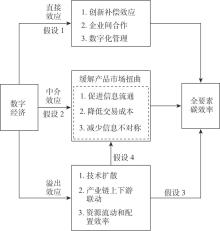
图1
理论分析与研究假说"
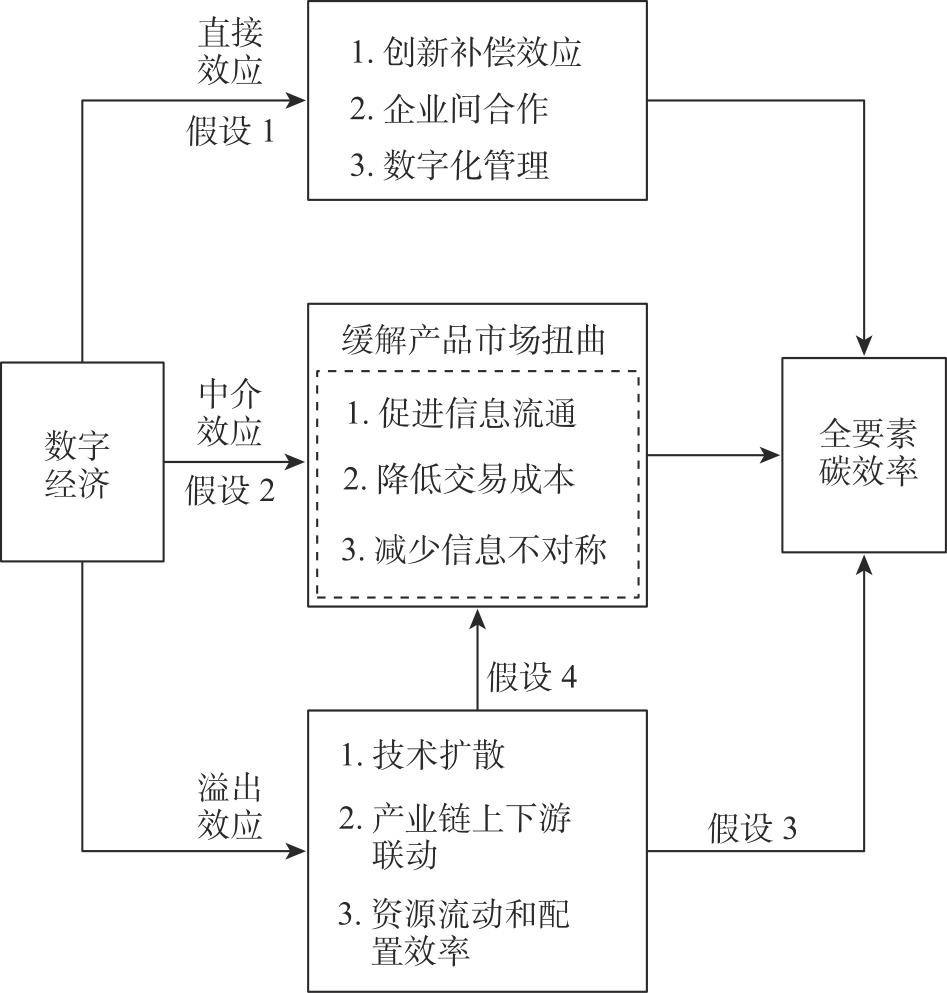
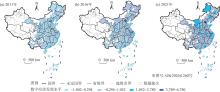
图2
数字经济发展水平时空分布"

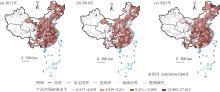
图3
产品市场扭曲程度时空分布"
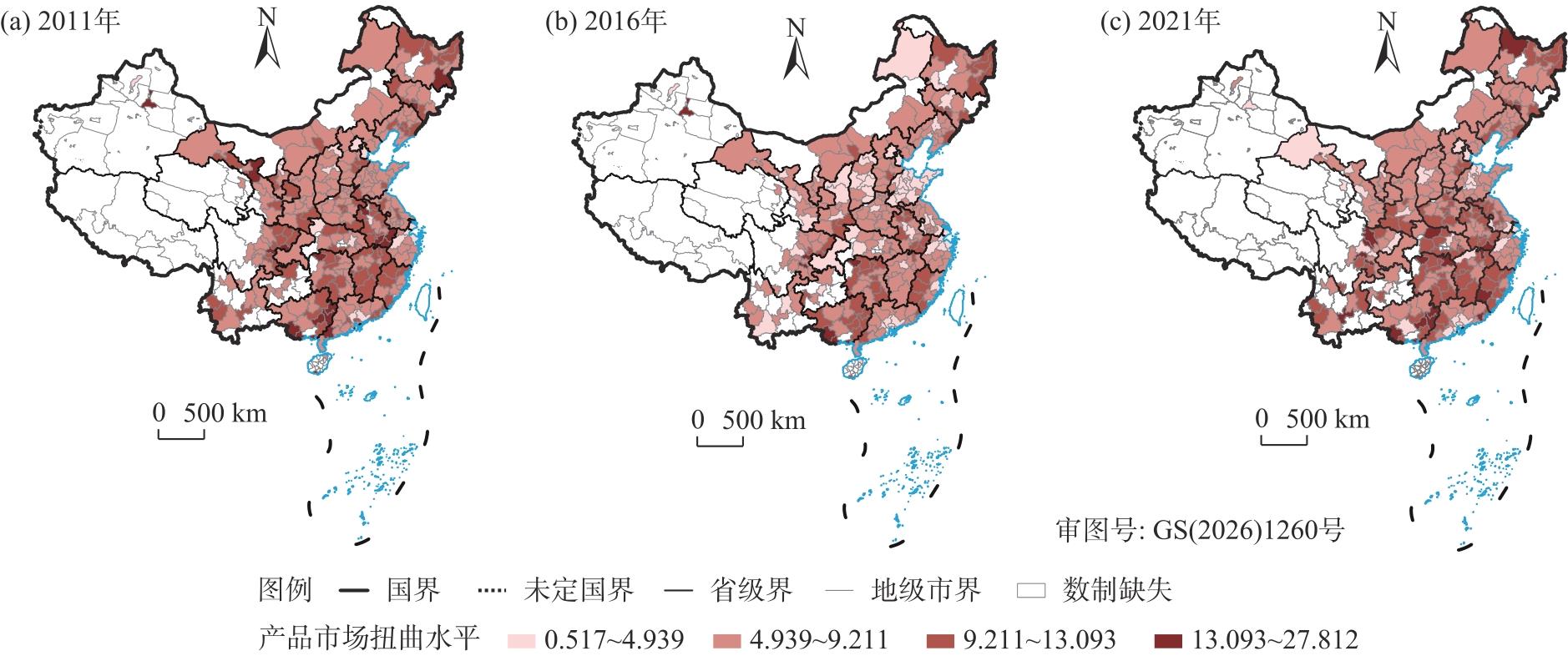
图4
全要素碳效率水平时空分布"
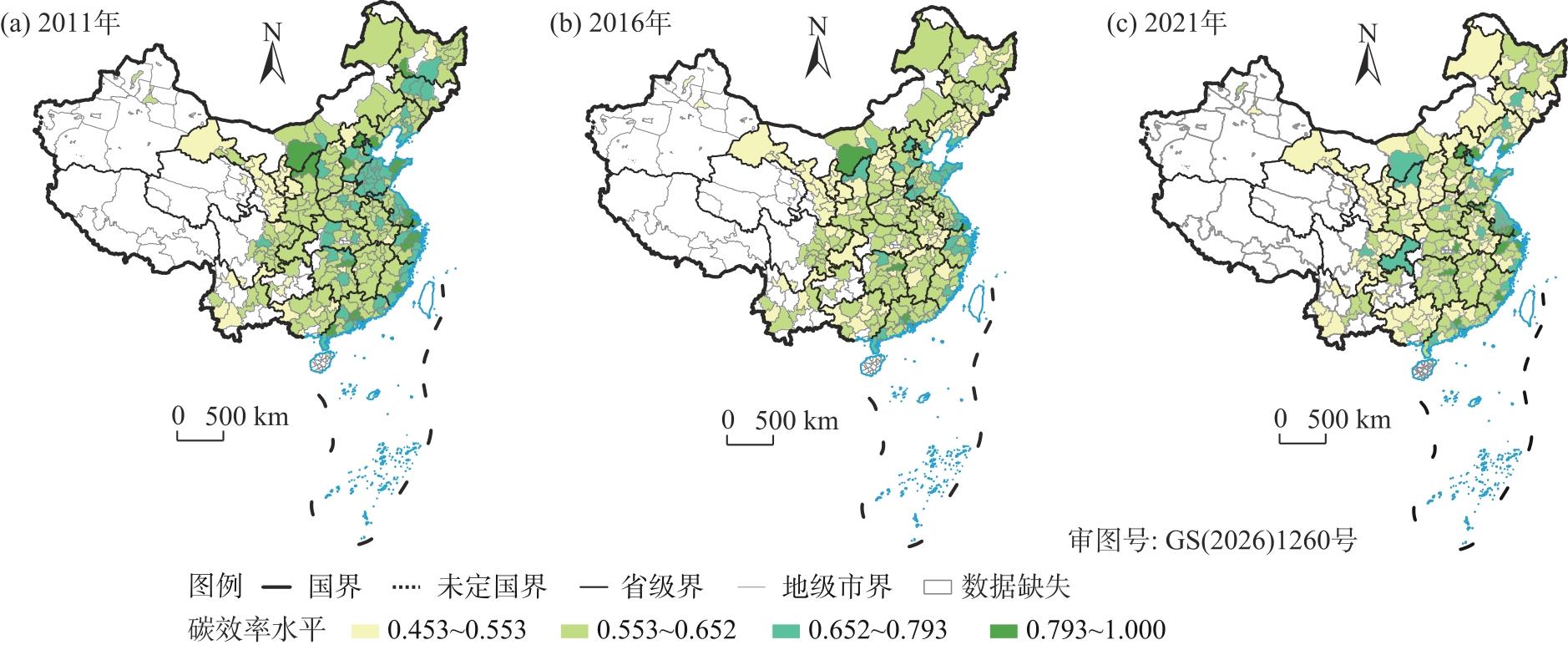
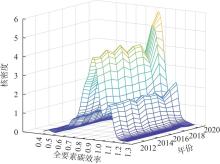
图5
全要素碳效率核密度"
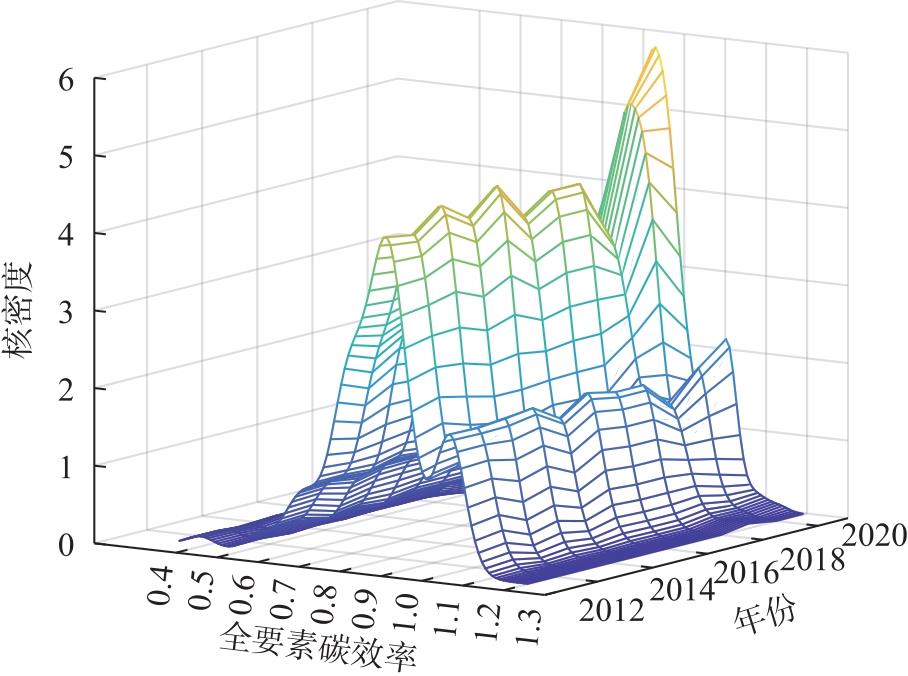

表1
数字经济对全要素碳效率参数估计"
| 变量 | 全要素碳效率 | ||||
|---|---|---|---|---|---|
| (1) | (2) | (3) | (4) | (5) | |
| dige | 0.011***(0.002) | 0.047***(0.002) | 0.005***(0.002) | 0.025***(0.002) | 0.006***(0.002) |
| 常数项 | 0.583***(0.002) | 0.685***(0.004) | 0.782**(0.013) | 0.631***(0.008) | 0.813***(0.025) |
| R2 | 0.015 | 0.364 | 0.838 | 0.532 | 0.842 |
| 调整后R2 | 0.015 | 0.362 | 0.821 | 0.530 | 0.826 |
| 控制变量 | 否 | 否 | 否 | 是 | 是 |
| 地区效应 | 否 | 否 | 是 | 否 | 是 |
| 时间效应 | 否 | 是 | 是 | 是 | 是 |
表2
中介效应分析结果"
| 平均效应 | 置信区间 | 中介变量:产品市场扭曲 |
|---|---|---|
| 平均因果中介效应 | [0.001, 0.003] | 0.002 |
| 平均直接效应 | [0.042, 0.049] | 0.045 |
| 平均处理效应 | [0.044, 0.050] | 0.047 |
图6
敏感性分析"
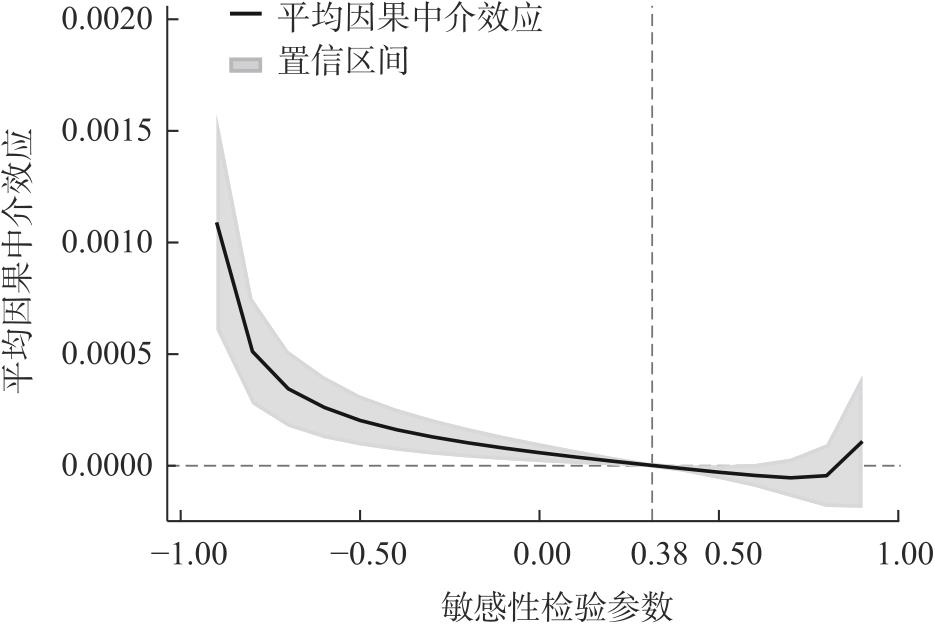
表3
数字经济对全要素碳效率空间模型的回归结果"
| 变量 | SDM | SAR | |||||
|---|---|---|---|---|---|---|---|
| W1 | W2 | W3 | W1 | W2 | W3 | ||
| dige | 0.024***(0.002) | 0.020***(0.002) | 0.024***(0.002) | 0.025***(0.002) | 0.023***(0.002) | 0.025***(0.002) | |
| W*dige | 0.015**(0.006) | 0.020***(0.006) | 0.016**(0.007) | - | - | - | |
| 直接效应 | 0.024***(0.002) | 0.022***(0.002) | 0.024***(0.002) | 0.025***(0.002) | 0.024***(0.002) | 0.025***(0.002) | |
| 间接效应 | 0.023***(0.008) | 0.036***(0.008) | 0.024***(0.008) | 0.005***(0.001) | 0.009***(0.001) | 0.005***(0.001) | |
| 总效应 | 0.047***(0.008) | 0.058***(0.008) | 0.048***(0.008) | 0.030***(0.003) | 0.033***(0.003) | 0.030***(0.003) | |
| rho | 0.182***(0.034) | 0.300***(0.030) | 0.183***(0.034) | 0.161***(0.030) | 0.286***(0.027) | 0.161***(0.030) | |
| R2 | 0.551 | 0.570 | 0.551 | 0.544 | 0.545 | 0.544 | |
| 控制变量 | 是 | 是 | 是 | 是 | 是 | 是 | |
| 地区效应 | 否 | 否 | 否 | 否 | 否 | 否 | |
| 时间效应 | 是 | 是 | 是 | 是 | 是 | 是 | |
表4
数字经济对产品市场扭曲空间模型的回归结果"
| 变量 | SDM | SAR | |||||
|---|---|---|---|---|---|---|---|
| W1 | W2 | W3 | W1 | W2 | W3 | ||
| dige | -0.719***(0.079) | -0.698***(0.086) | -0.719***(0.080) | -1.087***(0.068) | -1.020***(0.067) | -1.087***(0.068) | |
| W*dige | -1.669***(0.194) | -1.105***(0.183) | -1.673***(0.195) | - | - | - | |
| 直接效应 | -0.733***(0.081) | -0.735***(0.085) | -0.732***(0.081) | -1.088***(0.070) | -1.028***(0.069) | -1.088***(0.070) | |
| 间接效应 | -1.837***(0.191) | -1.517***(0.198) | -1.842***(0.192) | -0.198***(0.046) | -0.331***(0.050) | -0.120***(0.046) | |
| 总效应 | -2.570***(0.160) | -2.252***(0.163) | -2.574***(0.161) | -1.287***(0.085) | -1.359***(0.094) | -1.287***(0.085) | |
| rho | 0.065*(0.035) | 0.193***(0.032) | 0.065*(0.035) | 0.158***(0.033) | 0.252***(0.031) | 0.158***(0.033) | |
| R2 | 0.207 | 0.198 | 0.207 | 0.180 | 0.183 | 0.180 | |
| 控制变量 | 否 | 否 | 否 | 否 | 否 | 否 | |
| 地区效应 | 否 | 否 | 否 | 否 | 否 | 否 | |
| 时间效应 | 是 | 是 | 是 | 是 | 是 | 是 | |
表5
数字经济的全要素碳效率提升效应的异质性分析"
| 变量 | 10%分位点 | 30%分位点 | 50%分位点 | 70%分位点 | 90%分位点 | 东部 | 中部 | 西部 |
|---|---|---|---|---|---|---|---|---|
| dige | 0.010*** (0.003) | 0.014*** (0.002) | 0.015*** (0.003) | 0.023*** (0.004) | 0.031*** (0.005) | 0.015*** (0.004) | 0.005* (0.003) | 0.001 (0.004) |
| 常数项 | 0.586*** (0.006) | 0.606*** (0.009) | 0.614*** (0.008) | 0.625*** (0.009) | 0.630*** (0.017) | 0.828*** (0.049) | 0.650*** (0.024) | 0.646*** (0.032) |
| R2 | 0.241 | 0.294 | 0.332 | 0.371 | 0.447 | 0.858 | 0.823 | 0.742 |
| 控制变量 | 是 | 是 | 是 | 是 | 是 | 是 | 是 | 是 |
| 地区效应 | 否 | 否 | 否 | 否 | 否 | 是 | 是 | 是 |
| 时间效应 | 是 | 是 | 是 | 是 | 是 | 是 | 是 | 是 |
表6
数字经济的产品市场扭曲抑制效应的异质性分析"
| 变量 | 10%分位点 | 30%分位点 | 50%分位点 | 70%分位点 | 90%分位点 |
|---|---|---|---|---|---|
| dige | -0.247**(0.116) | -0.345***(0.081) | -0.377***(0.080) | -0.323***(0.093) | -0.192(0.177) |
| 常数项 | 9.224***(0.403) | 9.825***(0.402) | 10.726***(0.387) | 12.959***(0.413) | 17.174***(1.005) |
| 控制变量 | 是 | 是 | 是 | 是 | 是 |
| R2 | 0.170 | 0.159 | 0.145 | 0.143 | 0.151 |
| 地区效应 | 否 | 否 | 否 | 否 | 否 |
| 时间效应 | 是 | 是 | 是 | 是 | 是 |
表7
门槛模型回归结果"
| 项目 | dige≤-1.094 | -1.094<dige≤1.976 | dige>1.976 |
|---|---|---|---|
| dige | 0.010***(0.004) | -0.005**(0.003) | 0.009***(0.002) |
| 常数项 | 0.656***(0.013) | ||
| 控制变量 | 是 | ||
| R2 | 0.561 | ||
| 时间效应 | 是 | ||
| 个体效应 | 否 | ||
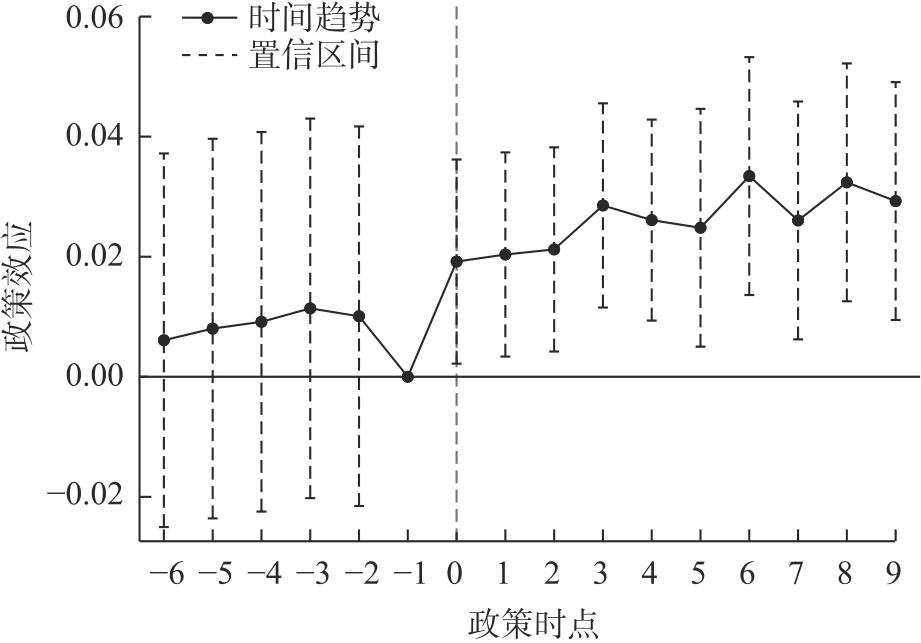
图7
低碳试点政策平行趋势检验"
| [1] | 中华人民共和国中央人民政府. 加快构建排放双控制度体系工作方案[EB/OL]. [2024-07-30]. https://www.gov.cn/zhengce/content/202408/content_6966079.htm. |
| [The State Council of the People’s Republic of China. Work plan to accelerate the establishment of a dual-control system for carbon emissions[EB/OL]. [2024-07-30]. https://www.gov.cn/zhengce/content/202408/content_6966079.htm.] | |
| [2] | Yu Z, Wang Z, Ma L, et al. Energy-saving targets and carbon neutrality: A perspective on carbon emissions and carbon substitution in 288 Chinese cities[J]. Journal of Environmental Management, 2024, 356: 120523, doi: 10.1016/j.jenvman.2024.120523. |
| [3] | 王群伟, 杜倩, 李振冉, 等. 数字化和绿色化转型的碳排放双控效果: 基于制造业新质生产力的机制解析[J]. 中国管理科学, 2025, 33(11): 321-335. |
| [Wang Qunwei, Du Qian, Li Zhenran. The dual control effects of carbon emissions of digital and green transitions: A mechanistic analysis based on new quality productive forces in manufacturing industries[J]. Chinese Journal of Management Science, 2025, 33(11): 321-335.] | |
| [4] | 中华人民共和国中央人民政府. “十四五”数字经济发展规划[EB/OL]. [2022-01-12]. https://www.gov.cn/zhengce/content/2022-01/12/content_5667817.htm. |
| [The State Council of the People’s Republic of China. Plan focuses on digital economy development during 14th Five-Year Plan Period[EB/OL]. [2022-01-12]. https://www.gov.cn/zhengce/content/2022-01/12/content_5667817.htm.] | |
| [5] | 中国信息通信研究院. 中国数字经济发展研究报告(2024年)[EB/OL]. [2025-04-29]. http://www.caict.ac.cn/kxyj/qwfb/bps/202408/t20240827_491581.htm. |
| [China Academy of Information and Communications Technology. Research report on the development of China’s digital economy[EB/OL]. [2025-04-29]. http://www.caict.ac.cn/kxyj/qwfb/bps/202408/t20240827_491581.htm.] | |
| [6] | 张思思, 崔琪, 马晓钰. 数字要素赋能下有偏技术进步的节能减排效应[J]. 中国人口·资源与环境, 2022, 32(7): 22-36. |
| [Zhang Sisi, Cui Qi, Ma Xiaoyu. Energy saving and emission reduction effect of biased technological progress under digital factor empowerment[J]. China Population, Resources and Environment, 2022, 32(7): 22-36.] | |
| [7] | 沈小波, 陈语, 林伯强. 技术进步和产业结构扭曲对中国能源强度的影响[J]. 经济研究, 2021, 56(2): 157-173. |
| [Shen Xiaobo, Chen Yu, Lin Boqiang. The impacts of technological progress and industrial structure distortion on China’s energy intensity[J]. Economic Research Journal, 2021, 56(2): 157-173.] | |
| [8] | Zhang L, Mu R Y, Zhan Y F, et al. Digital economy, energy efficiency, and carbon emissions: Evidence from provincial panel data in China[J]. Science of the Total Environment, 2022, 852: 158403, doi: 10.1016/j.scitotenv.2022.158403. |
| [9] | 邵帅, 张可, 豆建民. 经济集聚的节能减排效应: 理论与中国经验[J]. 管理世界, 2019, 35(1): 36-60, 226. |
| [Shao Shuai, Zhang Ke, Dou Jianmin. Effects of economic agglomeration on energy saving and emission reduction: Theory and empirical evidence from China[J]. Management World, 2019, 35(1): 36-60, 226.] | |
| [10] | 蒋为, 龚思豪, 李锡涛. 机器人冲击、资本体现式技术进步与制造业碳减排——理论分析及中国的经验证据[J]. 中国工业经济, 2022(10): 24-42. |
| [Jiang Wei, Gong Sihao, Li Xitao. Robot shock, capital-embodied technological progress and carbon reduction of manufacturing sector: Theoretical analysis and empirical evidence from China[J]. China Industrial Economics, 2022(10): 24-42.] | |
| [11] | 吴传清, 邓明亮. 数字经济发展对中国工业碳生产率的影响研究[J]. 中国软科学, 2023(11): 189-200. |
| [Wu Chuanqing, Deng Mingliang. Impact of digital economy development on industrial carbon productivity in China[J]. China Soft Science, 2023(11): 189-200.] | |
| [12] | 李海燕, 王群勇, 陆凤芝. 数字经济如何影响工业碳生产率——基于技术进步偏向视角[J]. 财经科学, 2024(8): 116-134. |
| [Li Haiyan, Wang Qunyong, Lu Fengzhi. How the digital economy affects industrial carbon productivity: A perspective based on technological progress bias[J]. Finance & Economics, 2024(8): 116-134.] | |
| [13] | 王森, 李金叶. 产品市场扭曲对居民消费潜力的影响研究——基于制造业数字化转型视角[J]. 技术经济, 2023, 42(10): 127-141. |
| [Wang Sen, Li Jinye. A study on the impact of product market distortions on the consumption potential of the population: Based on the perspective of digital transformation in the manufacturing industry[J]. Technology Economics, 2023, 42(10): 127-141.] | |
| [14] | 祝树金, 罗彦, 段文静. 服务型制造、加成率分布与资源配置效率[J]. 中国工业经济, 2021(4): 62-80. |
| [Zhu Shujin, Luo Yan, Duan Wenjing. Service-oriented manufacturing, markup dispersion and resource allocation efficiency[J]. China Industrial Economics, 2021(4): 62-80.] | |
| [15] | 孙传旺, 林伯强. 中国工业能源要素配置效率与节能潜力研究[J]. 数量经济技术经济研究, 2014, 31(5): 86-99. |
| [Sun Chuanwang, Lin Boqiang. Energy resource allocation efficiency and energy conservation potential of China’s industrial sectors[J]. The Journal of Quantitative & Technical Economics, 2014, 31(5): 86-99.] | |
| [16] | 李治国, 王杰. 数字经济发展、数据要素配置与制造业生产率提升[J]. 经济学家, 2021(10): 41-50. |
| [Li Zhiguo, Wang Jie. Digital economy development, allocation of data elements and productivity growth in manufacturing industry[J]. Economist, 2021(10): 41-50.] | |
| [17] | Guang F T, Deng Y T, Wen L, et al. Impact of regional energy allocation distortion on carbon emission efficiency: Evidence from China[J]. Journal of Environmental Management, 2023, 342: 118241, doi: 10.1016/j.jenvman.2023.118241. |
| [18] | 贺子欣, 惠宁, 付文宇. 数字经济对要素市场扭曲影响的实证检验[J]. 统计与决策, 2023, 39(20): 5-10. |
| [He Zixin, Hui Ning, Fu Wenyu. Empirical test of the impact of digital economy on factor market distortion[J]. Statistics and Decision, 2023, 39(20): 5-10.] | |
| [19] | 王文, 牛泽东. 资源错配对中国工业全要素生产率的多维影响研究[J]. 数量经济技术经济研究, 2019, 36(3): 20-37. |
| [Wang Wen, Niu Zedong. Resources misallocation and multi-dimensional industrial TFP in China[J]. The Journal of Quantitative & Technical Economics, 2019, 36(3): 20-37.] | |
| [20] | 汪东芳, 曹建华. 互联网发展对中国全要素能源效率的影响及网络效应研究[J]. 中国人口·资源与环境, 2019, 29(1): 86-95. |
| [Wang Dongfang, Cao Jianhua. The impact of Internet development on China’s total factor energy efficiency and its network effects[J]. China Population, Resources and Environment, 2019, 29(1): 86-95.] | |
| [21] | 江艇. 因果推断经验研究中的中介效应与调节效应[J]. 中国工业经济, 2022(5): 100-120. |
| [Jiang Ting. Mediating effects and moderating effects in causal inference[J]. China Industrial Economics, 2022(5): 100-120.] | |
| [22] | 孙慧, 张若威, 陀才进, 等. 智慧城市建设能否弥合城际技术要素市场分割?--基于链式多重中介效应模型的实证检验[J]. 软科学, 2026, 40(1): 67-75. |
| [Sun Hui, Zhang Ruowei, Tuo Caijin, et al. Can smart city construction bridge the divide in intercity technology factor markets? An empirical test based on chained multiple intermediation effect model[J]. Soft Science, 2026, 40(1): 67-75.] | |
| [23] |
Wang H P, Cheng Y L. Impact of the digital economy on total factor energy efficiency: Evidence from 268 Chinese cities[J]. Environmental Science and Pollution Research, 2024, 31(2): 2960-2975.
doi: 10.1007/s11356-023-31356-0 |
| [24] | Gao K, Yuan Y J. Does market-oriented reform make the industrial sector “greener” in China? Fresh evidence from the perspective of capital-labor-energy market distortions[J]. Energy, 2022, 254: 124183, doi: 10.1016/j.energy.2022.124183. |
| [25] | 于洋, 简鑫, 张振华. 区块链能否有效缓解制造业企业碳依赖?[J/OL]. 系统工程理论与实践. [2025-10-27]. https://link.cnki.net/urlid/11.2267.n.20251010.1021.002. |
| [Yu Yang, Jian Xin, Zhang Zhenhua. Can blockchain effectively alleviate carbon dependency of manufacturing corporates?[J/OL]. Systems Engineering-Theory & Practice. [2025-10-27]. https://link.cnki.net/urlid/11.2267.n.20251010.1021.002.] | |
| [26] | 欧阳志刚, 陈奕景, 陈熹. 中国制造业金融资源配置效率与全要素生产率[J]. 管理世界, 2024, 40(4): 96-128. |
| [Ouyang Zhigang, Chen Yijing, Chen Xi. Financial resource allocation efficiency and total factor productivity in China’s manufacturing sector[J]. Management World, 2024, 40(4): 96-128.] | |
| [27] | 赵涛, 张智, 梁上坤. 数字经济、创业活跃度与高质量发展——来自中国城市的经验证据[J]. 管理世界, 2020, 36(10): 65-76. |
| [Zhao Tao, Zhang Zhi, Liang Shangkun. Digital economy, entrepreneurship, and high-quality economic development: Empirical evidence from urban China[J]. Management World, 2020, 36(10): 65-76.] | |
| [28] | 尹恒, 张子尧. 产品市场扭曲与资源配置效率: 异质性企业加成率视角[J]. 经济研究, 2021, 56(11): 119-137. |
| [Yin Heng, Zhang Ziyao. Product market distortions and resource allocation efficiency: A heterogeneous firm markup rate perspective[J]. Economic Research Journal, 2021, 56(11): 119-137.] | |
| [29] | 刘鑫, 吕记蕾. 国家级大数据综合试验区设立对企业碳绩效的影响研究[J]. 管理学报, 2026, 23(2): 312-321. |
| [Liu Xin, Lü Jilei. An analysis of the impact of national big data comprehensive pilot zones on corporate carbon performance[J]. Chinese Journal of Management, 2026, 23(2): 312-321.] | |
| [30] | 欧阳日辉. 数据要素促进数字经济和实体经济深度融合的理论逻辑与分析框架[J]. 经济纵横, 2024(2): 67-78. |
| [Ouyang Rihui. Data as a factor of production promotes the deep integration of the digital economy and the real economy: Theoretical logic and analysis framework[J]. Economic Review, 2024(2): 67-78.] | |
| [31] | 许恒, 张一林, 曹雨佳. 数字经济、技术溢出与动态竞合政策[J]. 管理世界, 2020, 36(11): 63-84. |
| [Xu Heng, Zhang Yilin, Cao Yujia. Digital economy, technology spillover and dynamic coopetition policy[J]. Management World, 2020, 36(11): 63-84.] | |
| [32] | 黄永春, 宫尚俊, 邹晨, 等. 数字经济、要素配置效率与城乡融合发展[J]. 中国人口·资源与环境, 2022, 32(10): 77-87. |
| [Huang Yongchun, Gong Shangjun, Zou Chen, et al. Digital economy, factor allocation efficiency, and integrated urban-rural development[J]. China Population, Resources and Environment, 2022, 32(10): 77-87.] | |
| [33] |
Alan S, Ertac S, Mumcu I. Gender stereotypes in the classroom and effects on achievement[J]. Review of Economics and Statistics, 2018, 100(5): 876-890.
doi: 10.1162/rest_a_00756 |
| [34] |
Alacevich C, Zejcirovic D. Does violence against civilians depress voter turnout? Evidence from Bosnia and Herzegovina[J]. Journal of Comparative Economics, 2020, 48(4): 841-865.
doi: 10.1016/j.jce.2020.04.006 |
| [35] | 项后军, 张清俊. 中国的显性存款保险制度与银行风险[J]. 经济研究, 2020, 55(12): 165-181. |
| [Xiang Houjun, Zhang Qingjun. China’s explicit deposit insurance system and its effect on bank risk[J]. Economic Research Journal, 2020, 55(12): 165-181.] | |
| [36] | 杨刚强, 王海森, 范恒山, 等. 数字经济的碳减排效应: 理论分析与经验证据[J]. 中国工业经济, 2023(5): 80-98. |
| [Yang Gangqiang, Wang Haisen, Fan Hengshan, et al. Carbon reduction effect of digital economy: Theoretical analysis and empirical evidence[J]. China Industrial Economics, 2023(5): 80-98.] | |
| [37] | 邓若冰, 吴福象. 数字经济抑制研发要素市场扭曲了吗[J]. 现代经济探讨, 2022(11): 24-35. |
| [Deng Ruobing, Wu Fuxiang. Does the digital economy restrain R&D factor market distortion?[J]. Modern Economic Research, 2022(11): 24-35.] | |
| [38] | Li Z, Chen X D, Ye Y Y, et al. The impact of digital economy on industrial carbon emission efficiency at the city level in China: Gravity movement trajectories and driving mechanisms[J]. Environmental Technology & Innovation, 2024, 33: 103511, doi: 10.1016/j.eti.2023.103511. |
| [39] |
刘海军, 张海虹, 闫俊杰, 等. 新疆农业碳排放效率时空异质性及其影响因素[J]. 干旱区地理, 2025, 48(5): 866-878.
doi: 10.12118/j.issn.1000-6060.2024.345 |
|
[Liu Haijun, Zhang Haihong, Yan Junjie, et al. Spatiotemporal heterogeneity and its influencing factors of agricultural carbon emission efficiency in Xinjiang[J]. Arid Land Geography, 2025, 48(5): 866-878.]
doi: 10.12118/j.issn.1000-6060.2024.345 |
|
| [40] | Song C Z, Liu Q F, Song J P, et al. Impact path of digital economy on carbon emission efficiency: Mediating effect based on technological innovation[J]. Journal of Environmental Management, 2024, 358: 120940, doi: 10.1016/j.jenvman.2024.120940. |
| [41] | 时朋飞, 耿飚, 李星明, 等. 长江经济带旅游业环境生产率测度、空间分异及驱动机制研究[J]. 中国软科学, 2022(3): 78-87, 111. |
| [Shi Pengfei, Geng Biao, Li Xingming, et al. Measurement, spatial heterogeneity and driving mechanism of environment total factor productivity in tourism: A case study of the Yangtze River Economic Belt in China[J]. China Soft Science, 2022(3): 78-87, 111.] | |
| [42] | 黄群慧, 余泳泽, 张松林. 互联网发展与制造业生产率提升: 内在机制与中国经验[J]. 中国工业经济, 2019(8): 5-23. |
| [Huang Qunhui, Yu Yongze, Zhang Songlin. Internet development and productivity growth in manufacturing industry: Internal mechanism and China experiences[J]. China Industrial Economics, 2019(8): 5-23.] | |
| [43] | 王芃, 武英涛. 能源产业市场扭曲与全要素生产率[J]. 经济研究, 2014, 49(6): 142-155. |
| [Wang Peng, Wu Yingtao. The market distortions and total factor productivity of Chinese energy industry[J]. Economic Research Journal, 2014, 49(6): 142-155.] | |
| [44] |
杜欣. 数字经济促进碳减排的机制与效应——基于绿色技术进步视角的经验考察[J]. 科技进步与对策, 2023, 40(19): 22-32.
doi: 10.6049/kjjbydc.2023020193 |
| [Du Xin. The mechanism and effect of digital economy to promote CO2 emission reduction: An empirical investigation based on the green technological progress[J]. Science & Technology Progress and Policy, 2023, 40(19): 22-32.] | |
| [45] |
杨巨星, 孙慧, 周晋楠, 等. 中国资源型城市转型脱碳时空演进及路径选择[J]. 干旱区地理, 2026, 49(1): 151-163.
doi: 10.12118/j.issn.1000-6060.2024.743 |
|
[Yang Juxing, Sun Hui, Zhou Jinnan, et al. Spatio-temporal evolution and pathway selection of transformation decarbonization in China’s resource-based cities[J]. Arid Land Geography, 2026, 49(1): 151-163.]
doi: 10.12118/j.issn.1000-6060.2024.743 |
|
| [46] |
张傲翔, 苗成林, 陈峥妍. 黄河流域城市生态韧性、社会网络及其影响因素分析[J]. 干旱区地理, 2025, 48(1): 130-142.
doi: 10.12118/j.issn.1000-6060.2024.101 |
|
[Zhang Aoxiang, Miao Chenglin, Chen Zhengyan. Urban ecological resilience, social networks and its influencing factors in the Yellow River Basin[J]. Arid Land Geography, 2025, 48(1): 130-142.]
doi: 10.12118/j.issn.1000-6060.2024.101 |
|
| [47] | 侯世英, 宋良荣. 数字经济、市场整合与企业创新绩效[J]. 当代财经, 2021(6): 78-88. |
| [Hou Shiying, Song Liangrong. Digital economy, market integration and corporate innovation performance[J]. Contemporary Finance & Economics, 2021(6): 78-88.] | |
| [48] |
Elhorst J P. Specification and estimation of spatial panel data models[J]. International Regional Science Review, 2003, 26(3): 244-268.
doi: 10.1177/0160017603253791 |
| [49] |
Powell D. Quantile regression with nonadditive fixed effects[J]. Empirical Economics, 2022, 63(5): 2675-2691.
doi: 10.1007/s00181-022-02216-6 |
| [50] | Yang G. Can the low-carbon city pilot policy promote firms’ low-carbon innovation: Evidence from China[J]. PLoS One, 2023, 18(1): e0277879, doi: 10.1371/journal.pone.0277879. |
| [51] | Zou C, Huang Y C, Wu S S, et al. Does “low-carbon city” accelerate urban innovation? Evidence from China[J]. Sustainable Cities and Society, 2022, 83: 103954, doi: 10.1016/j.scs.2022.103954. |
| [52] | 刘明慧, 张孟瑶, 魏恬冰. 数据要素供给对城市创业活跃度的影响研究——基于政府数据开放的准自然实验[J]. 科研管理, 2026, 47(3): 24-33. |
| [Liu Minghui, Zhang Mengyao, Wei Tianbing. Research on the impact of data factor supply on urban entrepreneurial activity: A quasi-natural experiment based on open government data[J]. Science Research Management, 2026, 47(3): 24-33.] | |
| [53] | 胡晟明, 王林辉, 赵贺. 人工智能应用、人机协作与劳动生产率[J]. 中国人口科学, 2021(5): 48-62, 127. |
| [Hu Shengming, Wang Linhui, Zhao He. Artificial intelligence application, human-machine collaboration and labor productivity[J]. Chinese Journal of Population Science, 2021(5): 48-62, 127.] | |
| [54] | 刘启雷, 韩青叶. 数字赋能对制造业低碳生产的影响研究[J]. 科研管理, 2025, 46(6): 34-43. |
| [Liu Qilei, Han Qingye. Research on the impact of digital empowerment on the low-carbon production of the manufacturing industry[J]. Science Research Management, 2025, 46(6): 34-43.] | |
| [55] | 孙华平, 杜秀梅. 全球价值链嵌入程度及地位对产业碳生产率的影响[J]. 中国人口·资源与环境, 2020, 30(7): 27-37. |
| [Sun Huaping, Du Xiumei. The impact of global value chains’ participation degree and position on industrial carbon productivity[J]. China Population, Resources and Environment, 2020, 30(7): 27-37.] | |
| [56] | 余长林, 沈兵. 数字经济发展对中国要素市场扭曲的影响研究[J]. 科研管理, 2024, 45(6): 62-71. |
| [Yu Changlin, Shen Bing. Research on the impact of digital economy development on China’s factor market distortion[J]. Science Research Management, 2024, 45(6): 62-71.] | |
| [57] | 冯兰刚, 阳文丽, 王忠, 等. 中国数字经济与城市碳排放强度: 时空演化与作用机制[J]. 中国人口·资源与环境, 2023, 33(1): 150-160. |
| [Feng Langang, Yang Wenli, Wang Zhong, et al. Digital economy and urban carbon emission intensity in China: Spatio-temporal evolution and mechanisms[J]. China Population, Resources and Environment, 2023, 33(1): 150-160.] | |
| [58] |
任贵秀, 刘凯. 黄河流域绿色创新的时空演化特征及影响因素分析[J]. 干旱区地理, 2024, 47(1): 158-169.
doi: 10.12118/j.issn.1000-6060.2023.313 |
|
[Ren Guixiu, Liu Kai. Spatiotemporal evolution characteristics and influencing factors of green innovation in the Yellow River Basin[J]. Arid Land Geography, 2024, 47(1): 158-169.]
doi: 10.12118/j.issn.1000-6060.2023.313 |
| [1] | 李文君, 张维梅. 中国数字经济与共同富裕的耦合协调关系及时空演进趋势[J]. 干旱区地理, 2026, 49(7): 1481-1492. |
| [2] | 王生霞, 武芯如. 中国西北地区数字经济与旅游经济韧性的协同演化[J]. 干旱区地理, 2026, 49(3): 462-473. |
| [3] | 欧开航, 方世巧, 程乾, 周徐帆. 农村公共服务与乡村旅游耦合协调度及其乡村振兴影响效应——基于西部地区的实证[J]. 干旱区地理, 2026, 49(2): 404-415. |
| [4] | 李晓柯, 陈强强. 数字经济对甘肃省城乡收入差距的影响机制与空间效应[J]. 干旱区地理, 2026, 49(1): 198-210. |
| [5] | 谢宇, 薛选登. 数字经济赋能绿色发展福利——基于黄河流域资源型城市的经验证据[J]. 干旱区地理, 2025, 48(6): 1127-1139. |
| [6] | 白洋, 赵平, 吴剑, 刘晓燕. 民航开通对新疆旅游经济的影响效应研究[J]. 干旱区地理, 2025, 48(10): 1866-1877. |
| [7] | 夏文浩, 霍瑜, 逯渊, 王超毅. 新疆农业碳排放的时空差异与空间溢出效应分析[J]. 干旱区地理, 2024, 47(6): 1084-1096. |
| [8] | 吉泽男, 付文婷, 王鹏程, 廖升, 潘铮. 干旱区数字经济与农业绿色发展耦合协调研究——以新疆为例[J]. 干旱区地理, 2024, 47(11): 1981-1990. |
| [9] | 鲁滋道, 宋婉怡, 王钺, 潘海泽, 孟小琳, 闫玉强. 黄河流域文化产业集群时空格局与空间溢出效应研究[J]. 干旱区地理, 2023, 46(11): 1927-1937. |
| [10] | 生延超, 谭左思, 李倩, 许玲玲. 数字经济能否促进黄河流域旅游经济韧性提升?[J]. 干旱区地理, 2023, 46(10): 1704-1713. |
|
||