干旱区地理 ›› 2026, Vol. 49 ›› Issue (1): 186-197.doi: 10.12118/j.issn.1000-6060.2024.781 cstr: 32274.14.ALG2024781
王雅俊( ), 王一峰
收稿日期:2024-12-23
修回日期:2025-01-24
出版日期:2026-01-25
发布日期:2026-01-18
作者简介:王雅俊(1982-),女,博士,副教授,主要从事城镇化与农业现代化研究. E-mail: wangyajun892@126.com
基金资助:
WANG Yajun(), WANG Yifeng
Received:2024-12-23
Revised:2025-01-24
Published:2026-01-25
Online:2026-01-18
摘要:
易地扶贫搬迁是中国消除深度贫困的关键举措,如何推动安置区与新型城镇化进程有效融合,已成为搬迁政策从生存保障向高质量发展转型的核心议题。基于2023年12月—2024年3月宁夏易地扶贫搬迁安置区662户搬迁农户的实地调研数据,构建安置区融入新型城镇化效果的评价指标体系,采用CRITIC赋权法进行综合评价并全面分析其关键影响因素。结果表明:(1)宁夏易地搬迁安置区融入新型城镇化效果得分为0.6320,达到良好水平;但经济效益的低得分和高权重反映出安置区新型城镇化建设中的经济转化问题应得到重视。(2)融入效果受多维因素的共同作用,政策感知、社区治理、社会资本以及科技惠农是其中的关键因素,个人特征、家庭特征等因素的影响有限。(3)宁夏5市安置区的融入效果虽存在显著区域差异,但极差值较小,为0.1239;综合表现为:吴忠市>中卫市>银川市>固原市>石嘴山市,在各维度的效益中,吴忠市依旧处于领先地位。(4)不同关键因素对各维度的影响具有差异性,源于其在推动安置区融入新型城镇化过程中的作用机制不同;在多种安置方式里,集中安置的优势显著,更利于向高质量的新型城镇化转型。
王雅俊, 王一峰. 宁夏易地扶贫搬迁安置区融入新型城镇化效果评价及影响因素[J]. 干旱区地理, 2026, 49(1): 186-197.
WANG Yajun, WANG Yifeng. Integration effectiveness evaluation and influencing factors of the poverty alleviation relocation resettlement areas into new-type urbanization in Ningxia[J]. Arid Land Geography, 2026, 49(1): 186-197.

表1
样本基本信息"
| 样本特征 | 分类(特征值) |
|---|---|
| 年龄 | <35(37.76%);35~50(35.95%);51~65(19.04%); >65(7.25%) |
| 性别 | 男(61.93%);女(38.07%) |
| 民族 | 汉族(20.85%);回族(78.70%);其他少数民族(0.45%) |
| 教育程度 | 小学及以下(26.28%);初中(22.05%);高中(17.07%);专科(13.60%);本科及以上(21.00%) |
| 婚姻情况 | 未婚(38.67%);已婚(49.55%);离婚(5.13%); 丧偶(6.65%) |
| 搬迁时间 | “十二五”前(35.8%);“十二五”期间(37.31%); “十三五”期间(23.87%);“十三五”后(3.02%) |
| 家庭人口 | <4(35.65%);4~6(59.21%);>6(5.14%) |
| 外出打工情况 | 家庭成员中无外出务工者(39.12%);有外出务 工者(60.88%) |
| 安置方式 | 集中安置:县内就近(23.42%);小规模开发土地(33.23%)。分散安置:劳务移民(19.94%);插花移民(23.41%) |
表2
宁夏易地搬迁安置区融入新型城镇化效果评价的指标体系"
| 维度 | 指标 | 指标含义 |
|---|---|---|
| 经济效益 | 家庭收入情况 | 家庭年人均纯收入:1. 8000元及以下;2. 8001~10000元;3. 10001~20000元;4. 20001~30000元; 5. 30001元及以上 |
| 收入改善情况 | 家庭的当前收入是否比搬迁前有所改善:1. 下降很多;2. 略有下降;3. 没有变化;4. 略有上升;5. 上升很多 | |
| 家庭收入预期 | 对未来家庭年人均纯收入的预期:1. 10000元及以下;2. 10001~20000元;3. 20001~30000元; 4. 30001~40000元;5. 40001元及以上 | |
| 收入与家庭所需 | 家庭收入是否能满足基本的生活所需:1. 完全不够;2. 比较不足;3. 基本足够;4. 较为充裕;5. 完全足够 | |
| 家庭收入结构 | 家庭收入结构:1. 主要靠扶持与补助;2. 农业收入>50%;3. 非农收入>50% | |
| 特色产业 | 安置区有特色产业吗:1. 没有;2. 有 | |
| 品牌建设 | 安置区的农产品是否有自己的品牌:1. 没有;2. 有 | |
| 产业支持 | 您是否感受到政府对产业支持和引导:1. 不清楚;2. 没有;3. 有 | |
| 社会效益 | 饮用水质 | 家庭用水的水质如何:1. 非常差;2. 比较差;3. 一般;4. 比较好;5. 非常好 |
| 交通条件 | 对交通条件是否满意:1. 非常不满意;2. 比较不满意;3. 基本满意;4. 比较满意;5. 非常满意 | |
| 医疗卫生条件 | 对医疗卫生条件是否满意:1. 非常不满意;2. 比较不满意;3. 基本满意;4. 比较满意;5. 非常满意 | |
| 教育条件 | 对教育条件是否满意:1. 非常不满意;2. 比较不满意;3. 基本满意;4. 比较满意;5. 非常满意 | |
| 网络与通信条件 | 对网络与通信条件是否满意:1. 非常不满意;2. 比较不满意;3. 基本满意;4. 比较满意;5. 非常满意 | |
| 归属感 | 是否有归属感:1. 无法感受;2. 没有;3. 一般;4. 有 | |
| 常住意愿 | 是否愿意长期在安置区生活:1. 不愿意;2. 愿意 | |
| 城镇化意愿 | 是否愿意成为新型城镇化发展的一部分:1. 不愿意;2. 愿意 | |
| 交流频率 | 是否常与当地人进行沟通交流:1. 不会;2. 偶尔;3. 经常;4. 很频繁 | |
| 环境效益 | 垃圾处理 | 安置区内是否设有垃圾桶:1. 没有;2. 有 |
| 环保宣传 | 安置区是否有进行过环保宣传和教育:1. 没有;2. 有 | |
| 绿化水平 | 绿化水平如何:1. 没有绿化;2. 绿化水平较低;3. 绿化水平较高;4. 绿化很好 | |
| 空气质量 | 安置区空气质量如何:1. 质量差;2. 质量一般;3. 质量较好;4. 非常好 | |
| 农业生态 | 安置区的生态环境是否适合进行农业生产:1. 不适合;2. 适合 | |
| 污染工厂 | 安置区附近是否有排放废气、废水的工厂:1. 有;2. 没有 | |
| 厕所类型 | 家庭厕所类型:1. 传统旱厕;2. 水冲式(无特殊处理);3. 带有处理类厕所 | |
| 生态环境比较 | 安置区生态环境和原居住区相比:1. 更差;2. 差一些;3. 相同;4. 好一些;5. 更好 | |
| 文化效益 | 文化生活 | 对文化生活是否满意:1. 非常不满意;2. 比较不满意;3. 基本满意;4. 比较满意;5. 非常满意 |
| 环保意识 | 环境保护是否和自己有关系:1. 无关; 2. 有关 | |
| 科技意识 | 学习学习科技知识、掌握农业技术是否对改善生活质量有帮助:1. 没有;2. 有 | |
| 怀旧情绪 | 是否怀念移民前居住地的生产生活方式:1. 非常想;2. 有点想;3. 一般;4. 一点也不想;5. 感觉不出来 |
表3
变量描述性统计"
| 类别 | 维度 | 变量 | 变量含义 | 均值 | 标准差 |
|---|---|---|---|---|---|
| 被解释变量 | 效果评价 | 安置区融入效 果评价得分 | CRITIC赋权法测算 | 0.6320 | 0.1399 |
| 解释变量 | 政策感知 | 就业帮扶 | 政府在就业方面提供了足够的帮助:1. 不了解;2. 没有;3. 有 | 2.2175 | 0.9259 |
| 信息反馈 | 当地政府有没有提供信息反馈渠道:1. 没有;2. 有 | 1.8187 | 0.3855 | ||
| 政策落实 | 当地政府对移民政策的落实情况:1. 不积极;2. 基本积极;3. 较积极; 4. 很积极 | 3.1934 | 0.8880 | ||
| 社会资本 | 干群关系 | 您家与社区干部的关系如何:1. 很差;2. 较差;3. 一般;4. 较好;5. 很好; 6. 干部家庭 | 3.8127 | 1.1777 | |
| 社交网络 | 是否在安置区中建立了新的人际关系网:1. 没有;2. 有 | 1.6586 | 0.4745 | ||
| 社区治理 | 社区接纳度 | 您感觉安置地对移民的接纳程度:1. 感觉不出来;2. 不愿接纳;3. 一般; 4. 愿意接纳 | 3.0257 | 0.9579 | |
| 社区活动 | 您的安置区是否组织过各种社区活动:1. 没有;2. 有 | 1.7885 | 0.4087 | ||
| 治安情况 | 对安置区的治安情况感觉:1. 非常不满意;2. 比较不满意;3. 基本满意; 4. 比较满意;5. 非常满意 | 3.5755 | 1.2162 | ||
| 科技惠农 | 新品种推广 | 政府是否在您安置区推广新品种:1. 没有;2. 有 | 1.4063 | 0.4915 | |
| 农业示范基地 | 安置区附近是否有农业示范基地:1. 没有;2. 有 | 1.3837 | 0.4867 | ||
| 作物采摘机械化 | 安置区内进行作物采摘时主要依靠:1. 人工;2. 农业机械设备 | 1.3595 | 0.4802 | ||
| 农业合作社 | 安置区是否有农业合作社:1. 没有;2. 有 | 1.6042 | 0.4894 | ||
| 控制变量 | 个人特征 | 年龄 | - | 40.6858 | 14.7745 |
| 性别 | 1. 女性;2. 男性 | 1.6193 | 0.4859 | ||
| 民族 | 1. 少数民族;2. 汉族 | 1.2085 | 0.4065 | ||
| 教育程度 | 1. 小学及以下;2. 初中;3. 高中;4. 大学专科;5. 大学本科及以上 | 2.8097 | 1.4882 | ||
| 婚姻情况 | 1. 未婚(包括离婚/丧偶);2. 已婚 | 1.4955 | 0.5004 | ||
| 家庭特征 | 搬迁时间 | 搬迁到迁入地的时间 | 11.8105 | 5.6296 | |
| 家庭人口 | 家庭总人口数 | 4.0060 | 1.6748 | ||
| 外出打工情况 | 家庭成员中是否有人外出打工:1. 没有;2. 有 | 1.6088 | 0.4884 | ||
| 其他变量 | 安置方式 | 安置类型 | 1. 分散安置;2. 集中安置 | 1.5664 | 0.4959 |
表4
评价指标的权重与得分"
| 维度 | 均值得分 | 权重 |
|---|---|---|
| 经济效益 | 0.5340 | 0.2627 |
| 社会效益 | 0.7062 | 0.2370 |
| 环境效益 | 0.6565 | 0.2433 |
| 文化效益 | 0.6615 | 0.2570 |
表5
宁夏5市效果评价得分"
| 变量 | 银川市 | 石嘴山市 | 吴忠市 | 固原市 | 中卫市 |
|---|---|---|---|---|---|
| 效果评价 | 0.6160 | 0.5425 | 0.6664 | 0.5833 | 0.6282 |
| 经济效益 | 0.5284 | 0.4766 | 0.5755 | 0.4631 | 0.4877 |
| 社会效益 | 0.6694 | 0.5502 | 0.7561 | 0.6766 | 0.7192 |
| 环境效益 | 0.6510 | 0.5771 | 0.6734 | 0.6107 | 0.6711 |
| 文化效益 | 0.6334 | 0.5868 | 0.6928 | 0.6181 | 0.6875 |
表6
单指标基准回归结果"
| 变量 | 效果评价 | ||||
|---|---|---|---|---|---|
| 模型1 | 模型2 | 模型3 | 模型4 | 模型5 | |
| 政策落实 | - | 0.0604***(0.0055) | 0.0546***(0.0054) | 0.0480***(0.0053) | 0.0381***(0.0050) |
| 干群关系 | - | - | 0.0218***(0.0041) | 0.0185***(0.0040) | 0.0154***(0.0038) |
| 社区接纳度 | - | - | - | 0.0355***(0.0057) | 0.0290***(0.0052) |
| 农业示范基地 | - | - | - | - | 0.0970***(0.0099) |
| 年龄 | -0.0011***(0.0004) | -0.0012***(0.0004) | -0.0012***(0.0004) | -0.0009***(0.0003) | -0.0002(0.0003) |
| 性别 | 0.0064(0.0107) | 0.0102(0.0096) | 0.0083(0.0094) | 0.0102(0.0091) | 0.0116(0.0083) |
| 民族 | 0.0338***(0.0125) | 0.0273**(0.0109) | 0.0270**(0.0106) | 0.0226**(0.0101) | 0.0208**(0.0092) |
| 教育程度 | -0.0002(0.0038) | 0.0000(0.0037) | -0.0010(0.0037) | -0.0004(0.0036) | -0.0007(0.0034) |
| 婚姻情况 | 0.0733***(0.0115) | 0.0664***(0.0109) | 0.0659***(0.0107) | 0.0529***(0.0104) | 0.0362***(0.0098) |
| 搬迁时间 | 0.0019**(0.0009) | 0.0028***(0.0008) | 0.0027***(0.0008) | 0.0020**(0.0008) | 0.0018***(0.0007) |
| 家庭人口 | 0.0145***(0.0032) | 0.0151***(0.0030) | 0.0150***(0.0029) | 0.0127***(0.0028) | 0.0077***(0.0026) |
| 外出打工情况 | -0.0161(0.0107) | -0.0147(0.0096) | -0.0144(0.0093) | -0.0123(0.0089) | -0.0074(0.0083) |
| 安置方式 | 0.0180*(0.0102) | 0.0146(0.0093) | 0.0129(0.0090) | 0.0086(0.0087) | 0.0087(0.0080) |
| 常数项 | 0.4753***(0.0339) | 0.2850***(0.0388) | 0.2255***(0.0403) | 0.2118***(0.0384) | 0.2480***(0.0364) |
| N | 662 | 662 | 662 | 662 | 662 |
| R2 | 0.150 | 0.295 | 0.327 | 0.376 | 0.464 |
表7
综合指标基准回归结果"
| 变量 | 效果评价 | |||
|---|---|---|---|---|
| 模型6 | 模型7 | 模型8 | 模型9 | |
| 政策感知 | 0.1940***(0.0146) | 0.1678***(0.0140) | 0.1334***(0.0142) | 0.1164***(0.0137) |
| 社会资本 | - | 0.0827***(0.0127) | 0.0627***(0.0123) | 0.0503***(0.0121) |
| 社区治理 | - | - | 0.1655***(0.0200) | 0.1506***(0.0189) |
| 科技惠农 | - | - | - | 0.1245***(0.0145) |
| 控制变量 | 控制 | 控制 | 控制 | 控制 |
| 常数项 | 0.3836***(0.0342) | 0.3858***(0.0333) | 0.3171***(0.0332) | 0.3027***(0.0318) |
| N | 662 | 662 | 662 | 662 |
| R2 | 0.362 | 0.402 | 0.461 | 0.514 |
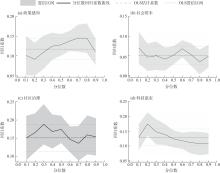
图1
关键因素分位数回归系数变动 注:OLS为普通最小二乘法。"
表8
似不相关回归结果"
| 变量 | 经济效益 | 社会效益 | 环境效益 | 文化效益 |
|---|---|---|---|---|
| 政策感知 | 0.1155***(0.0222) | 0.1414***(0.0200) | 0.1129***(0.0216) | 0.1032***(0.0261) |
| 社会资本 | -0.0015(0.0186) | 0.0927***(0.0168) | 0.0744***(0.0181) | 0.0393*(0.0219) |
| 社区治理 | 0.1679***(0.0302) | 0.2237***(0.0273) | 0.0837***(0.0294) | 0.1116***(0.0356) |
| 科技惠农 | 0.1749***(0.0232) | 0.1082***(0.0210) | 0.1023***(0.0226) | 0.1250***(0.0274) |
| 控制变量 | 控制 | 控制 | 控制 | 控制 |
| 常数项 | 0.1839***(0.0481) | 0.2861***(0.0435) | 0.3486***(0.0468) | 0.3782***(0.0567) |
| N | 662 | 662 | 662 | 662 |
| R2 | 0.267 | 0.475 | 0.279 | 0.207 |
表9
安置方式的异质性分析结果"
| 变量 | 效果评价 | |||
|---|---|---|---|---|
| 县内就近 | 劳务移民 | 小规模开发土地 | 插花移民 | |
| 政策感知 | 0.1607***(0.0311) | 0.1359***(0.0366) | 0.0800***(0.0259) | 0.0925***(0.0251) |
| 社会资本 | -0.0143(0.0294) | 0.0692**(0.0334) | 0.0373**(0.0186) | 0.0612***(0.0228) |
| 社区治理 | 0.1542***(0.0361) | 0.1457***(0.0531) | 0.1037***(0.0360) | 0.1661***(0.0369) |
| 科技惠农 | 0.1337***(0.0266) | 0.0966***(0.0304) | 0.1255***(0.0288) | 0.1674***(0.0331) |
| 控制变量 | 控制 | 控制 | 控制 | 控制 |
| 常数项 | 0.2720***(0.0693) | 0.1104(0.0700) | 0.3447***(0.0489) | 0.3652***(0.0566) |
| N | 155 | 132 | 220 | 155 |
| R2 | 0.544 | 0.567 | 0.447 | 0.526 |
| [1] |
刘苗苗, 吴卫东. 陕西省新型城镇化与乡村振兴耦合性实证研究[J]. 干旱区地理, 2024, 47(8): 1420-1430.
doi: 10.12118/j.issn.1000-6060.2024.030 |
|
[Liu Miaomiao, Wu Weidong. Empirical study of the coupling of new urbanization and rural revitalization in Shaanxi Province[J]. Arid Land Geography, 2024, 47(8): 1420-1430.]
doi: 10.12118/j.issn.1000-6060.2024.030 |
|
| [2] |
邹亚锋, 张倩, 饶钰飞, 等. 中国西部省会城市新型城镇化发展水平演化研究[J]. 干旱区地理, 2023, 46(4): 636-648.
doi: 10.12118/j.issn.1000-6060.2022.224 |
|
[Zou Yafeng, Zhang Qian, Rao Yufei, et al. Evolution of new urbanization of provincial capitals in western China[J]. Arid Land Geography, 2023, 46(4): 636-648.]
doi: 10.12118/j.issn.1000-6060.2022.224 |
|
| [3] | 李聪, 高梦, 李树茁, 等. 农户生计恢复力对多维贫困的影响——来自陕西易地扶贫搬迁地区的证据[J]. 中国人口·资源与环境, 2021, 31(7): 150-160. |
| [Li Cong, Gao Meng, Li Shuzhuo, et al. Impact of rural households’ livelihood resilience on multidimensional poverty: Evidence from the poverty alleviation relocation areas in Shaanxi Province[J]. China Population, Resources and Environment, 2021, 31(7): 150-160.] | |
| [4] | 杨红娟, 黄友弛. 农户易地扶贫搬迁后生计能力提升的内外动力作用研究[J]. 经济问题探索, 2023(10): 98-114. |
| [Yang Hongjuan, Huang Youchi. Research on the role of internal and external dynamics in improving the livelihood capacity of farming households after poverty alleviation by relocation[J]. Inquiry into Economic Issues, 2023(10): 98-114.] | |
| [5] |
孙晶晶, 黎洁. 易地扶贫搬迁农户非农就业与耕地撂荒: 就业区域还是就业质量重要?[J]. 自然资源学报, 2023, 38(10): 2536-2553.
doi: 10.31497/zrzyxb.20231008 |
|
[Sun Jingjing, Li Jie. Non-agricultural employment and farmland abandonment of relocated households of poverty alleviation: Employment area or employment quality more important?[J]. Journal of Natural Resources, 2023, 38(10): 2536-2553.]
doi: 10.31497/zrzyxb.20231008 |
|
| [6] | 时鹏, 余劲. 易地扶贫搬迁对农户非农就业的影响——基于内生转换Probit模型[J]. 农业技术经济, 2023(4): 101-120. |
| [Shi Peng, Yu Jin. Impact of poverty alleviation relocation on rural household’s off-farm employment: Based on the endogenous swi-tching Probit model[J]. Journal of Agrotechnical Economics, 2023(4): 101-120.] | |
| [7] | 汪三贵, 马兰, 孙俊娜. 易地扶贫搬迁安置区位对搬迁户收入及收入质量的影响——基于8省16县的微观数据分析[J]. 中国农村经济, 2023(10): 67-85. |
| [Wang Sangu, Ma Lan, Sun Junna. The impact of the destination of poverty alleviation resettlement on relocated households’ income and income quality: A microdata analysis of 16 counties in 8 provinces[J]. Chinese Rural Economy, 2023(10): 67-85.] | |
| [8] | 蒙媛, 陆远权, 陈莉. 易地扶贫搬迁与脱贫户生计脆弱性: 降低抑或加剧?——来自湘鄂渝黔毗邻民族地区的例证[J]. 经济与管理研究, 2024, 45(1): 94-111. |
| [Meng Yuan, Lu Yuanquan, Chen Li. Influence of relocation from inhospitable areas on livelihood vulnerability of households moving out of poverty: Reduction or exacerbation? Examples from ethnic minority areas adjacent to Hunan, Hubei, Chongqing, and Guizhou[J]. Research on Economics and Management, 2024, 45(1): 94-111.] | |
| [9] |
黄志刚, 黎洁. 易地扶贫搬迁后续扶持政策对农户多维相对贫困的影响[J]. 资源科学, 2022, 44(9): 1905-1917.
doi: 10.18402/resci.2022.09.13 |
|
[Huang Zhigang, Li Jie. Impact of the follow-up supportive policies of relocation for poverty alleviation on multidimensional relative poverty of farming households[J]. Resources Science, 2022, 44(9): 1905-1917.]
doi: 10.18402/resci.2022.09.13 |
|
| [10] | 刘明月, 冯晓龙, 张崇尚, 等. 易地扶贫搬迁的减贫效应与机制[J]. 中国农村观察, 2022(5): 61-79. |
| [Liu Mingyue, Feng Xiaolong, Zhang Chongshang, et al. The implementation effects and mechanism of poverty alleviation through relocation[J]. China Rural Survey, 2022(5): 61-79.] | |
| [11] | 蔡进, 邱继勤, 禹洋春, 等. 秦巴山区不同类型贫困户易地搬迁意愿及影响因素研究——基于重庆418户农户调查[J]. 中国农业资源与区划, 2021, 42(11): 121-132. |
| [Cai Jin, Qiu Jiqin, Yu Yangchun, et al. Study on the willingness of different types of poor farmers to relocate and its influencing factors in Qinba Mountain area: An investigation based on 418 poor farmers in Chongqing[J]. Chinese Journal of Agricultural Resources and Regional Planning, 2021, 42(11): 121-132.] | |
| [12] | 吕建兴, 曾小溪, 汪三贵. 扶持政策、社会融入与易地扶贫搬迁户的返迁意愿——基于5省10县530户易地扶贫搬迁的证据[J]. 南京农业大学学报(社会科学版), 2019, 19(3): 29-40, 156. |
| [Lü Jianxing, Zeng Xiaoxi, Wang Sangu. Supportive policy, social integration and willingness of returning migration: Evidence from 530 households in ten counties of five provinces[J]. Journal of Nanjing Agricultural University (Social Sciences Edition), 2019, 19(3): 29-40, 156.] | |
| [13] | 殷浩栋, 王瑜, 汪三贵. 易地扶贫搬迁户的识别: 多维贫困测度及分解[J]. 中国人口·资源与环境, 2017, 27(11): 104-114. |
| [Yin Haodong, Wang Yu, Wang Sangui. Identification of poverty alleviation relocation households: Multidimensional poverty measurement and its decomposition[J]. China Population, Resources and Environment, 2017, 27(11): 104-114.] | |
| [14] | 张晨, 马彪, 仇焕广. 安置方式、社交距离与社会融入——来自中国8省(区)16县易地扶贫搬迁户的证据[J]. 中国农村观察, 2022(4): 153-169. |
| [Zhang Chen, Ma Biao, Qiu Huanguang. Resettlement types, social distance and social integration: Evidence from relocated poverty relief households in 16 counties of 8 provinces in China[J]. China Rural Survey, 2022(4): 153-169.] | |
| [15] | 赵文杰, 丁凡琳, 高明. 中国式现代化背景下易地扶贫搬迁集中安置区转型发展研究——基于产业、就业与社会融入“三位一体”的路径分析[J]. 农村经济, 2024(9): 70-81. |
| [Zhao Wenjie, Ding Fanlin, Gao Ming. Research on the transformation and development of concentrated relocation areas in the context of Chinese-style modernization: Path analysis based on the “three-in-one”framework of industry, employment, and social integration[J]. Rural Economy, 2024(9): 70-81.] | |
| [16] | 刘升. 城镇集中安置型易地扶贫搬迁社区的社会稳定风险分析[J]. 华中农业大学学报(社会科学版), 2020(6): 94-100, 165. |
| [Liu Sheng. Analysis of the social stability risk of relocation poverty alleviation community of the urban centralized resettlement type[J]. Journal of Huazhong Agricultural University (Social Science Edition), 2020(6): 94-100, 165.] | |
| [17] | 周孟亮, 肖露. 新型城镇化目标下易地搬迁社区治理困境破解——社会资本重构的视角[J]. 农村经济, 2024(9): 59-69. |
| [Zhou Mengliang, Xiao Lu. Resolving governance dilemmas in relocation communities under the goal of new-type urbanization: A perspective of social capital reconstruction[J]. Rural Economy, 2024(9): 59-69.] | |
| [18] | 谢大伟, 苏颖, 赵亮, 等. 深度贫困地区易地扶贫搬迁产业扶贫模式与效果评价——来自新疆南疆三地州产业扶贫的实践[J]. 干旱区资源与环境, 2021, 35(1): 8-13. |
| [Xie Dawei, Su Ying, Zhao Liang, et al. Industrial development models and effects evaluation for severely impoverished areas after poverty alleviation relocation: Case of three prefectures of southern Xinjiang[J]. Journal of Arid Land Resources and Environment, 2021, 35(1): 8-13.] | |
| [19] | 王春迎, 姬恒, 苏超萍, 等. 公共文化服务可及性对易地扶贫搬迁群众新居住地认同感的影响[J]. 图书馆论坛, 2024, 44(11): 68-77. |
| [Wang Chunying, Ji Heng, Su Chaoping, et al. The impact of accessibility of public cultural services on the sense of new residential identity of relocated people for poverty alleviation[J]. Library Tribune, 2024, 44(11): 68-77.] | |
| [20] | 封清, 周忠发, 陈全, 等. 基于易地扶贫搬迁视角的喀斯特生态脆弱区生态系统服务价值的时空演变[J]. 生态学报, 2022, 42(7): 2708-2717. |
| [Feng Qing, Zhou Zhongfa, Chen Quan, et al. Spatial-temporal evolution research of ecosystem service value in ecologically vulnerable karst regions under the perspective of poverty alleviation relocation[J]. Acta Ecologica Sinica, 2022, 42(7): 2708-2717.] | |
| [21] | 汤良, 胡希军, 罗紫薇, 等. 生态脆弱性与城镇化水平时空耦合及其交互影响因素——以湖南省为例[J]. 生态学报, 2024, 44(11): 4662-4677. |
| [Tang Liang, Hu Xijun, Luo Ziwei, et al. Spatiotemporal coupling of ecological vulnerability and urbanization level and their interactive influencing factors: A case study of Hunan Province[J]. Acta Ecologica Sinica, 2024, 44(11): 4662-4677.] | |
| [22] | 范国华, 张自尧, 张文政. 西部民族地区易地扶贫搬迁效果评价——基于西部四省(区)735个易地扶贫搬迁户的调查研究[J]. 干旱区资源与环境, 2024, 38(9): 31-40. |
| [Fan Guohua, Zhang Ziyao, Zhang Wenzheng. Evaluation on the effectiveness of relocation for poverty alleviation in western ethnic areas in four western provinces[J]. Journal of Arid Land Resources and Environment, 2024, 38(9): 31-40.] | |
| [23] | 白永秀, 宋丽婷. 易地扶贫搬迁安置区从脱贫攻坚到乡村振兴有效衔接的政策创新[J]. 西北大学学报(哲学社会科学版), 2023, 53(1): 23-35. |
| [Bai Yongxiu, Song Liting. Policy innovation of effective connection from poverty alleviation to rural revitalization in relocation and resettlement areas[J]. Journal of Northwest University (Philosophy and Social Sciences Edition), 2023, 53(1): 23-35.] | |
| [24] | 董运来, 王艳华. 易地扶贫搬迁后续社区治理与社会融入[J]. 宏观经济管理, 2021(9): 81-86, 90. |
| [Dong Yunlai, Wang Yanhua. Community governance and social integration in post-relocation poverty alleviation[J]. Macroeconomic Management, 2021(9): 81-86, 90.] | |
| [25] | 武汉大学乡村振兴研究课题组. 脱贫攻坚与乡村振兴战略的有效衔接——来自贵州省的调研[J]. 中国人口科学, 2021(2): 2-12, 126. |
| [Research Group on Rural Revitalization, Wuhan University. Research on the effective connection between poverty alleviation and rural revitalization: Evidence from Guizhou Province[J]. Chinese Journal of Population Science, 2021(2): 2-12, 126.] |
| [1] | 杨迪, 邹进, 马晓飞, 张珣, 周锐, 刘艳春, 石金莲. 体育旅游资源空间分布特征及可持续发展研究——以新疆为例[J]. 干旱区地理, 2026, 49(1): 140-150. |
| [2] | 戢晓峰, 李子歆, 曹瑞, 李武, 陈方. 地级市尺度下中国物流企业空间格局演化特征及影响因素[J]. 干旱区地理, 2026, 49(1): 176-185. |
| [3] | 李佳琳, 李新虎, 王弘超, 崔萌萌, 郭语博, 靳浩东, 任萧萧. 不同影响因素下盐结皮蒸发阻力定量模拟研究[J]. 干旱区地理, 2026, 49(1): 80-93. |
| [4] | 黄静, 李婷, 李朋飞, Altansukh OCHIR, 杨梅焕, 王涛, 李莎. 2000—2020年蒙古国植被净初级生产力时空演变特征及其影响因素[J]. 干旱区地理, 2025, 48(9): 1541-1554. |
| [5] | 张可心, 赵玉娟, 李美瑜. 1978—2023年陇东冰雹气候特征及其影响因素分析[J]. 干旱区地理, 2025, 48(8): 1374-1384. |
| [6] | 程鹏, 彭海洋, 侯丁榕, 孙明东, 宋晓伟. 黄河流域农业灰水足迹强度空间格局及演进趋势[J]. 干旱区地理, 2025, 48(7): 1185-1197. |
| [7] | 郭念发, 王录仓. 兰州市主城区幼儿园入学可达性及影响因素分析[J]. 干旱区地理, 2025, 48(6): 1043-1054. |
| [8] | 卢晗, 曾永年, 王盼成. 青藏高原东北部实际蒸散发时空变化特征及影响因素[J]. 干旱区地理, 2025, 48(5): 753-764. |
| [9] | 李梦冉, 徐小任, 王梁, 段健, 史舒琪, 任丹丹. 黄河流域农业碳排放时空变化特征及影响因素分析[J]. 干旱区地理, 2025, 48(5): 854-865. |
| [10] | 刘海军, 张海虹, 闫俊杰, 李想, 李高峰. 新疆农业碳排放效率时空异质性及其影响因素[J]. 干旱区地理, 2025, 48(5): 866-878. |
| [11] | 王立奇, 李国柱. 中国城市生态韧性时空特征及影响因素分析[J]. 干旱区地理, 2025, 48(5): 893-904. |
| [12] | 庞家朋, 李梦园. 中国旅游休闲街区空间差异及成因分析[J]. 干旱区地理, 2025, 48(5): 905-915. |
| [13] | 李维露, 张明斗. 黄河流域城市人口集聚与土地生态韧性的协同性研究[J]. 干旱区地理, 2025, 48(4): 728-738. |
| [14] | 李松芮, 林秋平, 杨上广. 新疆物流企业空间布局多尺度演化特征及影响因素研究[J]. 干旱区地理, 2025, 48(4): 739-752. |
| [15] | 杨晓亚, 于坤霞, 李占斌, 李鹏, 刘永刚, 莫淑红, 杨建宏. 秦岭山区-黄土高原地区生态基流区域差异及其阈值研究[J]. 干旱区地理, 2025, 48(3): 380-390. |
|
||

