干旱区地理 ›› 2025, Vol. 48 ›› Issue (7): 1255-1266.doi: 10.12118/j.issn.1000-6060.2024.601 cstr: 32274.14.ALG2024601
田志馥1( ), 于亚娟1,2, 黄辰宇1
收稿日期:2024-10-09
修回日期:2024-11-05
出版日期:2025-07-25
发布日期:2025-07-04
作者简介:田志馥(1979-),男,博士,副教授,主要从事旅游公共服务与公共文化服务研究. E-mail: tzfandyyj@yeah.net
基金资助:
TIAN Zhifu1(), YU Yajuan1,2, HUANG Chenyu1
Received:2024-10-09
Revised:2024-11-05
Published:2025-07-25
Online:2025-07-04
摘要: 基于旅游“六要素”理论,利用内蒙古县域旅游兴趣点(POI)数据,通过最近邻指数、核密度估计、熵值法、综合指数、空间自相关、地理探测器等方法,探讨了2023年内蒙古县域旅游要素空间分布特征及影响因素。结果表明:(1) 内蒙古县域旅游要素呈现出显著的集聚性分布特征,其中“食”“住”“购”要素的集聚性最为突出,“娱”“行”要素次之,“游”要素则相对分散。(2) 旅游要素的密度分布存在不均衡现象,拟合线以南区域的密度普遍高于北部地区,特别是“呼包鄂”、赤峰和通辽等市形成了旅游要素的密集区域。(3) 旅游要素表现出明显的正向全局自相关,局部自相关则涵盖了低-低、低-高、高-高和高-低4种集聚模式。(4) 影响内蒙古县域旅游要素空间分布特征的因素涵盖了经济、社会、文化和自然环境等多个维度,其中经济和文化因素是核心影响因素。
田志馥, 于亚娟, 黄辰宇. 基于POI数据挖掘的内蒙古县域旅游要素空间分布特征及影响因素[J]. 干旱区地理, 2025, 48(7): 1255-1266.
TIAN Zhifu, YU Yajuan, HUANG Chenyu. Spatial distribution characteristics and influencing factors of tourism elements in counties of Inner Mongolia based on POI data[J]. Arid Land Geography, 2025, 48(7): 1255-1266.

表1
内蒙古县域旅游POI分类统计"
| 核心要素 | 具体分类 | 数量 占比/% |
|---|---|---|
| “食” | 中国菜、外国菜、农家乐、牧家乐、咖啡厅、小吃快餐等 | 59.98 |
| “住” | 星级酒店、经济型连锁酒店、旅馆、青年旅舍、民宿、露营地等 | 12.48 |
| “行” | 飞机场、火车站、口岸、地铁站、服务区、港口码头、汽车租赁等 | 0.96 |
| “游” | 博物馆、景点、动物园、植物园、纪念馆、水族馆、科技馆、展览馆等 | 5.24 |
| “购” | 购物中心、便利店、超市、免税店、商业街等 | 19.76 |
| “娱” | 冰雪运动、电影院、度假村、剧场、马术&赛马、水上运动等 | 1.58 |
表2
内蒙古县域旅游要素最近邻指数"
| 要素类型 | 最近邻指数 | Z值 | P值 |
|---|---|---|---|
| “食” | 0.05 | -564.12 | 0.01 |
| “住” | 0.07 | -250.84 | 0.01 |
| “行” | 0.26 | -55.63 | 0.01 |
| “游” | 0.50 | -88.31 | 0.01 |
| “购” | 0.09 | -310.70 | 0.01 |
| “娱” | 0.20 | -76.43 | 0.01 |
| “六要素” | 0.14 | -657.30 | 0.01 |
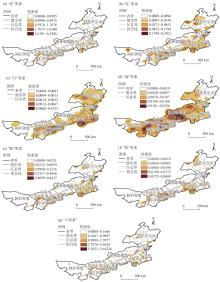
图1
内蒙古县域旅游要素核密度分布 注:基于自然资源部标准地图服务网站审图号为GS(2019)3333号的标准地图制作,底图边界无修改。下同。"

表3
内蒙古县域旅游要素发展水平评价指标体系及权重"
| 目标层 | 准则层 | 权重/% | 指标层 |
|---|---|---|---|
| 内蒙古县域旅游要素发展水平 | “食” | 6.01(人均指标) | 每万人拥有“食”要素的设施数 |
| 19.73(地均指标) | 每万平方千米拥有“食”要素的设施数 | ||
| “住” | 20.32(人均指标) | 每万人拥有“住”要素的设施数 | |
| 16.47(地均指标) | 每万平方千米拥有“住”要素的设施数 | ||
| “行” | 17.12(人均指标) | 每万人拥有“行”要素的设施数 | |
| 15.28(地均指标) | 每万平方千米拥有“行”要素的设施数 | ||
| “游” | 37.03(人均指标) | 每万人拥有“游”要素的设施数 | |
| 10.46(地均指标) | 每万平方千米拥有“游”要素的设施数 | ||
| “购” | 6.45(人均指标) | 每万人拥有“购”要素的设施数 | |
| 17.39(地均指标) | 每万平方千米拥有“购”要素的设施数 | ||
| “娱” | 13.07(人均指标) | 每万人拥有“娱”要素的设施数 | |
| 20.67(地均指标) | 每万平方千米拥有“娱”要素的设施数 |
表4
内蒙古县域旅游要素发展水平全局莫兰指数"
| 要素类型 | 全局莫兰指数 | Z值 | P值 |
|---|---|---|---|
| “食” | 0.44 | 12.58 | 0.01 |
| “住” | 0.35 | 10.13 | 0.01 |
| “行” | 0.36 | 10.49 | 0.01 |
| “游” | 0.33 | 9.31 | 0.01 |
| “购” | 0.36 | 10.29 | 0.01 |
| “娱” | 0.45 | 12.84 | 0.01 |
| “六要素” | 0.42 | 12.11 | 0.01 |
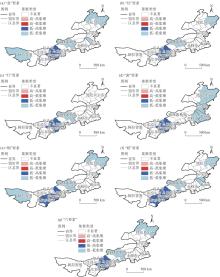
图2
内蒙古县域旅游要素LISA分布"

表5
内蒙古县域旅游要素发展水平空间格局影响因素测量指标体系及探测结果"
| 分析框架 | 具体指标 | 指标属性 | 指标释义 | q值 | 解释力排序 |
|---|---|---|---|---|---|
| 经济 | 国内生产总值 | 正向 | 表征经济规模和增长情况 | 0.41*** | 8 |
| 第三产业国内生产总值占比 | 正向 | 表征经济结构和发展水平 | 0.29*** | 10 | |
| 人均可支配收入 | 正向 | 表征居民消费能力 | 0.47*** | 6 | |
| 公共预算收入 | 正向 | 表征政府财政收入状况 | 0.34*** | 9 | |
| 夜间灯光数据 | 正向 | 表征经济活跃程度 | 0.82*** | 1 | |
| 社会 | 年末户籍人口 | 正向 | 表征人口规模 | 0.06 | - |
| 公路里程 | 正向 | 表征交通基础设施情况 | 0.55*** | 3 | |
| 行政区面积 | 正向 | 表征行政区划大小 | 0.17*** | 13 | |
| 城镇化率 | 正向 | 表征社会发展程度 | 0.42*** | 7 | |
| 文化 | 中小学数 | 正向 | 表征全民教育程度 | 0.18*** | 11 |
| 影剧院数 | 正向 | 表征文旅产业的发展状况 | 0.50*** | 5 | |
| 文体娱乐业就业人数 | 正向 | 表征文化活力和多样性 | 0.67*** | 2 | |
| 平均受教育年限 | 正向 | 表征教育发展水平 | 0.52*** | 4 | |
| 自然 | 建成区绿化覆盖率 | 正向 | 表征居民生活环境质量 | 0.12* | 14 |
| PM2.5 | 负向 | 表征空气污染水平 | 0.18*** | 12 | |
| 污水处理率 | 正向 | 表征居民生活环境质量 | 0.10* | 15 | |
| 平均降水量 | 正向 | 表征人居环境气候条件 | 0.12 | - |
| [1] | 廉同辉, 余菜花, 包先建, 等. 基于模糊综合评价的主题公园游客满意度研究——以芜湖方特欢乐世界为例[J]. 资源科学, 2012, 34(5): 937-980. |
| [ Lian Tonghui, Yu Caihua, Bao Xianjian, et al. Research on the satisfication of theme park visitors based on fuzzy comprehension evaluation: A case study in Wuhu Fantawild Adventure[J]. Resources Science, 2012, 34(5): 973-980. ] | |
| [2] | 亢雄, 马耀峰. 对旅游“六要素”的再思考[J]. 旅游论坛, 2009, 2(4): 475-478. |
| [ Kang Xiong, Ma Yaofeng. Rethinking six components in tourism[J]. Tourism Forum, 2009, 2(4): 475-478. ] | |
| [3] | 吕俊芳. 旅游主体与旅游六要素的创新思考[J]. 渤海大学学报(哲学社会科学版), 2011, 35(4): 39-41. |
| [ Lü Junfang. Innovative thinking on the tourism subject and the six elements of tourism[J]. Journal of Bohai University (Philosophy and Social Science Edition), 2011, 35(4): 39-41. ] | |
| [4] | 符文洋. 重新审视“旅游六要素”[J]. 中州大学学报, 2014, 31(5): 14-17. |
| [ Fu Wenyang. Review of the “six elements of tourism”[J]. Journal of Zhongzhou University, 2014, 31(5): 14-17. ] | |
| [5] | 张玉莲. 论旅游第七要素——“知”[J]. 中南林业科技大学学报(社会科学版), 2015, 9(1): 49-55. |
| [ Zhang Yulian. On the seventh element of travelling: Knowledge[J]. Journal of Central South University of Forestry & Technology (Social Sciences Edition), 2015, 9(1): 49-55. ] | |
| [6] | 涂绪谋. 论旅游的第七要素“思”[J]. 四川师范大学学报(社会科学版), 2009, 36(3): 107-112. |
| [ Tu Xumou. On the seventh element of tourism: Thought[J]. Journal of Sichuan Normal University (Social Science Edition), 2009, 36(3): 107-112. ] | |
| [7] | 鲁明勇, 覃琴. 旅游要素的多维系统认知与拓展升级研究[J]. 商学研究, 2018, 25(3): 106-114. |
| [ Lu Mingyong, Qin Qin. Multidimensional system cognition and expansion upgrading of tourism elements[J]. Commercial Science Research, 2018, 25(3): 106-114. ] | |
| [8] | Wang T, Wu P, Ge Q, et al. Ticket prices and revenue levels of tourist attractions in China: Spatial differentiation between prefectural units[J]. Tourism Management, 2021, 83: 1-19. |
| [9] | Zhang Y L, Xiao X, Zheng C H, et al. Is tourism participation in projected areas the best livelihood strategy from the perspective of community development and environmental protection[J]. Journal of Sustainable Tourism, 2020, 28(4): 587-605. |
| [10] | Jamieson W. Overtourism management competencies in Asian urban heritage areas[J]. International Journal of Tourism Cities, 2019, 5(4): 581-597. |
| [11] | Dredge D. Destination place planning and design[J]. Annals of Tourism Research, 1999, 26(4): 772-791. |
| [12] | Agusti D P I. Territorial distribution of tourist attractions. Comparing projected and perceived image in Uruguay[J]. Economia Sociedad Y Territorio, 2018, 18(58): 735-762. |
| [13] | 翟辅东. 旅游六要素的理论属性探讨[J]. 旅游学刊, 2006(4): 18-22. |
| [ Zhai Fudong. Probe into the six components in tourism[J]. Tourism Tribune, 2006(4): 18-22. ] | |
| [14] | 胡抚生. 基于旅游六要素的旅游产业范围探讨[J]. 旅游学刊, 2007(11): 10-11. |
| [ Hu Fusheng. Discussion on the scope of the tourism industry based on the six elements of tourism[J]. Tourism Tribune, 2007(11): 10-11. ] | |
| [15] | 闵祥晓, 邓咏珊, 郭浩明, 等. 基于旅游六要素的中山市旅游形象游客感知调查[J]. 现代商业, 2015(23): 102-104. |
| [ Min Xiangxiao, Deng Yongshan, Guo Haoming, et al. A survey on tourist perception of Zhongshan City’s tourism image based on the six elements of tourism[J]. Modern Business, 2015(23): 102-104. ] | |
| [16] | 张鸿敏. 乡村振兴背景下乡村旅游要素与空间规划设计[J]. 智慧农业导刊, 2023, 3(22): 91-95. |
| [ Zhang Hongmin. Rural tourism elements and spatial planning design under the background of rural revitalization[J]. Smart Agriculture Guide, 2023, 3(22): 91-95. ] | |
| [17] | 肖博鸿, 马源. 广州历史街区旅游要素空间分布与交通可达性关联研究[J]. 经济地理, 2024, 44(4): 231-240. |
| [ Xiao Bohong, Ma Yuan. Correlation study between spatial distribution of tourism elements and transportation accessibility in historic districts of Guangzhou City[J]. Economic Geography, 2024, 44(4): 231-240. ] | |
| [18] | 林章林, 程智. 黄山市旅游要素空间结构与旅游环境的耦合关系[J]. 地域研究与开发, 2020, 39(2): 94-98, 110. |
| [ Lin Zhanglin, Cheng Zhi. Study on coupling relationship between spatial structure of tourism elements and tourism environment in Huangshan City[J]. Areal Research and Development, 2020, 39(2): 94-98, 110. ] | |
| [19] | 王娟, 赵婕, 封洁洁. 青岛市历史街区街道结构与旅游要素空间分布关联研究[J]. 西北师范大学学报(自然科学版), 2022, 58(6): 61-69. |
| [ Wang Juan, Zhao Jie, Feng Jiejie. Study of the spatial relations of streets structure and tourism elements distribution in historic district in Qingdao City[J]. Journal of Northwest Normal University (Natural Science Edition), 2022, 58(6): 61-69. ] | |
| [20] | 赵中华, 汪宇明. 基于长江三角洲案例的区域旅游交通配置优化研究[J]. 地域研究与开发, 2007, 26(3): 51-55. |
| [ Zhao Zhonghua, Wang Yuming. Study on optimization of regional tourist traffic based on the Yangtze River Delta[J]. Areal Research and Development, 2007, 26(3): 51-55. ] | |
| [21] | 刘刚, 张再生, 吴绍玉. 主客共享视域下旅游城市空间治理策略及路径探究——以海南省三亚市为例[J]. 城市发展研究, 2020, 27(2): 1-6. |
| [ Liu Gang, Zhang Zaisheng, Wu Shaoyu. Study on tourism city spatial governance strategy and path in the vision of host-guest sharing: The case of Sanya City of Hainan Province[J]. Urban Development Studies, 2020, 27(2): 1-6. ] | |
| [22] | 杜兰, 葛军莲, 王宏志, 等. 基于POI网络信息的景区最优游客接待中心选址研究——以南京钟山景区智慧旅游为例[J]. 华中师范大学学报(自然科学版), 2014, 48(4): 613-619. |
| [ Du Lan, Ge Junlian, Wang Hongzhi, et al. Study on scenic-oriented optimal site selection of tourist service center based on the POI network data: A case of intelligent tourism of Zhongshan scenic, Nanjing[J]. Journal of Huazhong Normal University (Natural Science Edition), 2014, 48(4): 613-619. ] | |
| [23] | 王珺颖, 谢德体, 王三, 等. 基于POI提取的山地丘陵区乡村旅游空间分布研究——以重庆市农家乐为例[J]. 中国农业资源与区划, 2020, 41(5): 257-267. |
| [ Wang Junying, Xie Deti, Wang San, et al. Research on spatial distribution of rural tourism in mountainous and hilly areas based on POI extraction: A case study of Chongqing City[J]. Chinese Journal of Agricultural Resources and Regional Planning, 2020, 41(5): 257-267. ] | |
| [24] | 汪秋菊, 刘宇, 李新, 等. 中国主要城市旅游要素网络关注空间演化特征[J]. 世界地理研究, 2017, 26(1): 45-55. |
| [ Wang Qiuju, Liu Yu, Li Xin, et al. Evolution characteristics of 24 major cities’ network attention degree of six elements of tourism in China[J]. World Regional Studies, 2017, 26(1): 45-55. ] | |
| [25] | 陈洪星, 杨德刚, 徐红涛, 等. 基于POI的住宿业时空格局演化及与旅游景点的空间关联研究[J]. 干旱区地理, 2020, 43(5): 1382-1390. |
| [ Chen Hongxing, Yang Degang, Xu Hongtao, et al. Spatial and temporal evolution of the accommodation industry and spatial association with tourist spots based on POI[J]. Arid Land Geography, 2020, 43(5): 1382-1390. ] | |
| [26] | 莫惠斌, 罗珂, 王少剑, 等. 广州市中心城区餐饮店空间分异与机制差异研究——基于传统店与外卖店的对比[J]. 地理研究, 2022, 41(12): 3318-3334. |
| [ Mo Huibin, Luo Ke, Wang Shaojian, et al. Spatial heterogenicity and mechanism difference of restaurant in the central urban area of Guangzhou: A comparison between traditional restaurant and take-out restaurant[J]. Geographical Research, 2022, 41(12): 3318-3334. ] | |
| [27] | 郭艳萍, 刘敏. 基于POI数据的山西省旅游景区分类及空间分布特征[J]. 地理科学, 2021, 41(7): 1246-1255. |
| [ Guo Yanping, Liu Min. Classification and spatial distribution characteristics of tourist attractions in Shanxi Province based on POI data[J]. Scientia Geographica Sinica, 2021, 41(7): 1246-1255. ] | |
| [28] | 于亚娟. 基于POI数据的内蒙古公共文化设施空间结构与影响因素[J]. 干旱区地理, 2025, 48(3): 528-538. |
| [ Yu Yajuan. Spatial structure and influencing factors of Inner Mongolia’s public cultural facilities based on POI data[J]. Arid Land Geography, 2025, 48(3): 528-538. ] | |
| [29] | 范梦余, 张辉, 陈怡宁. 内蒙古视觉旅游形象的时空感知研究——基于DeepSentiBank的地理标记照片分析[J]. 干旱区资源与环境, 2020, 34(10): 194-200. |
| [ Fan Mengyu, Zhang Hui, Chen Yining. Spatiotemporal analysis of visual tourism images in Inner Mongolia from the perspective of tourists[J]. Journal of Arid Land Resources and Environment, 2020, 34(10): 194-200. ] | |
| [30] | Clark P J, Evans F C. Distance to nearest neighbor as a measure of spatial relationships in populations[J]. Ecology, 1954, 35: 445-453. |
| [31] | 陈慧霖, 李加林, 王中义, 等. 乡村振兴背景下浙江省3A级景区村庄空间结构特征与影响因子分析[J]. 自然资源学报, 2022, 37(9): 2467-2484. |
| [ Chen Huilin, Li Jialin, Wang Zhongyi, et al. Spatial structure characteristics and influencing factors of 3A-level scenic spots (villages) in Zhejiang Province under the background of rural revitalization[J]. Journal of Natural Resources, 2022, 37(9): 2467-2484. ] | |
| [32] | 牛冰洁, 殷平, 申鹏霞. 高铁站区住宿业时空分布特征及影响因素研究——基于城市规模的视角[J]. 干旱区资源与环境, 2023, 37(4): 80-89. |
| [ Niu Bingjie, Yin Ping, Shen Pengxia. Spatial-temporal characteristics of accommodation industry in high-speed railway station area and impacting factors: A perspective of urban scale[J]. Journal of Arid Land Resources and Environment, 2023, 37(4): 80-89. ] | |
| [33] | 李小月, 余斌, 王彬燕. 江汉平原城乡经济循环格局演变及其畅通优化研究[J]. 地理科学进展, 2024, 43(5): 936-949. |
| [ Li Xiaoyue, Yu Bin, Wang Binyan. Change in the pattern of urban-rural economic circulation and optimization in the Jianghan Plain region[J]. Progress in Geography, 2024, 43(5): 936-949. ] | |
| [34] | 吴清, 焦义彬, 冯嘉晓, 等. 共同富裕背景下乡村旅游地返贫风险监测及防范——以广东南平村为例[J]. 地域研究与开发, 2024, 43(3): 174-179. |
| [ Wu Qing, Jiao Yibin, Feng Jiaxiao, et al. Monitoring and preventing the risk of returning to poverty in rural tourism places in the context of common prosperity: Taking Nanping village of Guangdong Province as example[J]. Areal Research and Development, 2024, 43(3): 174-179. ] | |
| [35] | Joo D, Woosnam K M, Shafer C S, et al. Considering Tobler’s first law of geography in a tourism context[J]. Tourism Management, 2016, 62: 350-359. |
| [36] | 马浩, 涂静. 批发零售业水平对物流业竞争力的空间影响[J]. 财经理论研究, 2024(1): 97-112. |
| [ Ma Hao, Tu Jing. Spatial influence of wholesale and retail trade level on logistics competitiveness[J]. Journal of Finance and Economics Theory, 2024(1): 97-112. ] | |
| [37] | 刘培学, 王欢颖, 陈伟, 等. 新冠疫情对旅游景区客源市场需求的空间分异影响——以南京夫子庙景区为例[J]. 地理科学, 2022, 42(7): 1250-1259. |
| [ Liu Peixue, Wang Huanying, Chen Wei, et al. Spatially divergent impact of the COVID-19 epidemic on source markets of tourism destination: A case study of the Confucius Temple in Nanjing[J]. Scientia Geographica Sinica, 2022, 42(7): 1250-1259. ] | |
| [38] | 王劲峰, 徐成东. 地理探测器: 原理与展望[J]. 地理学报, 2017, 72(1): 116-134. |
| [ Wang Jinfeng, Xu Chengdong. Geodetector: Principle and prospective[J]. Acta Geographica Sinica, 2017, 72(1): 116-134. ] | |
| [39] | 杨雨, 宋福铁, 张杰. 基于地理探测器的中国金融网络空间结构特征及影响因素研究[J]. 干旱区地理, 2023, 46(9): 1524-1535. |
| [ Yang Yu, Song Futie, Zhang Jie. Spatial structure characteristics and influencing factors of financial network of China based on geodetectors[J]. Arid Land Geography, 2023, 46(9): 1524-1535. ] | |
| [40] | 朱佩娟, 黄秋菊, 万义良, 等. 中国城市儿童公共服务设施配置水平的空间分异及其影响因素[J]. 经济地理, 2023, 43(11): 55-67. |
| [ Zhu Peijuan, Huang Qiuju, Wan Yiliang, et al. Spatial differentiation and influencing factors of the allocation level of urban children’s public service facilities in China[J]. Economic Geography, 2023, 43(11): 55-67. ] | |
| [41] | 万红莲, 王晓利, 黄敏, 等. 基于POI数据的关中平原城市群县域旅游要素空间格局及影响因素研究[J]. 干旱区资源与环境, 2024, 38(6): 200-208. |
| [ Wan Honglian, Wang Xiaoli, Huang Min, et al. Spatial pattern of county tourism elements in Guanzhong Plain urban agglomeration and influencing factors: Point of interest-based analyses[J]. Journal of Arid Land Resources and Environment, 2024, 38(6): 200-208. ] | |
| [42] | 陈英杰, 吴金华. 基于POI数据的西安市旅游要素空间格局与影响因素研究[J]. 测绘地理信息, 2023, 48(4): 96-100. |
| [ Chen Yingjie, Wu Jinhua. Research on the spatial pattern and influencing factors of tourism components in Xi’an based on POI data[J]. Journal of Geomatics, 2023, 48(4): 96-100. ] | |
| [43] | 吴立周, 权东计, 朱海霞. 西安城区餐饮老字号空间格局及其影响因素研究[J]. 世界地理研究, 2017, 26(5): 105-114, 127. |
| [ Wu Lizhou, Quan Dongji, Zhu Haixia. Study on the spatial distribution of time-honored catering brand and its influencing factors in Xi’an[J]. World Regional Studies, 2017, 26(5): 105-114, 127. ] | |
| [44] | 甘畅, 王凯. 武陵山片区高质量景区空间分布格局及其影响因素[J]. 长江流域资源与环境, 2021, 30(9): 2115-2125. |
| [ Gan Chang, Wang Kai. Spatial distribution pattern and influencing factors of high-quality scenic spots in Wuling Mountains area[J]. Resources and Environment in the Yangtze Basin, 2021, 30(9): 2115-2125. ] | |
| [45] | 吴志祥, 张志斌, 赵学伟, 等. 中国西北地区A级旅游景区时空分布格局及影响因素[J]. 干旱区地理, 2023, 46(12): 2061-2073. |
| [ Wu Zhixiang, Zhang Zhibin, Zhao Xuewei, et al. Spatiotemporal distribution pattern and influencing factors of A-level tourist attractions in northwestern China[J]. Arid Land Geography, 2023, 46(12): 2061-2073. ] |
| [1] | 夏梓洋, 夏云帆, 王宁, 林伟, 马丽娜, 谭晓平, 张艳珍, 焦瑞. 基于POI的天山北坡城市群旅游要素空间格局及影响因素[J]. 干旱区地理, 2025, 48(7): 1243-1254. |
| [2] | 郭念发, 王录仓. 兰州市主城区幼儿园入学可达性及影响因素分析[J]. 干旱区地理, 2025, 48(6): 1043-1054. |
| [3] | 王志春, 王彦平, 徐震宇, 薛文超. 内蒙古不同干湿区潜在蒸散发变化特征及主导因子分析[J]. 干旱区地理, 2025, 48(4): 612-622. |
| [4] | 于亚娟. 基于POI数据的内蒙古公共文化设施空间结构与影响因素[J]. 干旱区地理, 2025, 48(3): 528-538. |
| [5] | 李梦园, 庞家朋, 李欢. 省域典型旅游集散地综合可达性协调发展及空间关系研究——以新疆为例[J]. 干旱区地理, 2025, 48(3): 539-548. |
| [6] | 朱磊, 李燕楠, 徐佳慧, 胡静, 朱芳, 梁茫茫. 中国冰雪旅游地空间分布格局及成因[J]. 干旱区地理, 2024, 47(8): 1399-1410. |
| [7] | 陈聪, 唐英, 史承勇, 杜怡帆, 赵丽娜, 姜旭妍. 黄河流域遗产资源空间分布与区域协同保护[J]. 干旱区地理, 2024, 47(7): 1220-1232. |
| [8] | 利辉, 刘铁军, 王少慧, 刘东伟. 2001—2021年内蒙古荒漠草原水分利用效率时空变化特征及影响因素研究[J]. 干旱区地理, 2024, 47(6): 993-1003. |
| [9] | 赵雪纯, 菊春燕. 公园绿地与城市功能空间耦合协调关系及影响因素分析——以乌鲁木齐市为例[J]. 干旱区地理, 2024, 47(5): 898-908. |
| [10] | 徐伟, 刘振领. 内蒙古光伏开发空间适宜性及减排效益研究[J]. 干旱区地理, 2024, 47(4): 684-694. |
| [11] | 王安琪, 张钰, 刘佳伟, 赵威, 刘馨雨, 李凯. 新疆甘家湖梭梭林国家级自然保护区植被群落多样性及空间分布格局[J]. 干旱区地理, 2024, 47(11): 1841-1851. |
| [12] | 林墨飞, 矫红运, 李珍. 内蒙古沿边地区生态旅游绿道选线研究——以陈巴尔虎旗为例[J]. 干旱区地理, 2024, 47(11): 1970-1980. |
| [13] | 江岳坤, 石鹏娟. 中国市域城乡收入差距时空演化及影响因素[J]. 干旱区地理, 2024, 47(1): 147-157. |
| [14] | 牛怡莹, 李春兰, 王军, 许瀚卿, 刘青. 内蒙古ERA5再分析降水数据性能评估与极端降水时空特征分析[J]. 干旱区地理, 2023, 46(9): 1418-1431. |
| [15] | 黄鑫, 焦黎, 马晓飞, 王勇辉, 阿尔曼·阿布拉. 基于RClimDex模型的近60 a中亚极端降水事件变化特征[J]. 干旱区地理, 2023, 46(7): 1039-1051. |
|
||

