Arid Land Geography ›› 2026, Vol. 49 ›› Issue (5): 1026-1038.doi: 10.12118/j.issn.1000-6060.2025.431
• Urban Geography • Previous Articles Next Articles
FU Wei1( ), WANG Yucheng1, CUI Longfang1, CHEN Jiancheng2
Received:2025-07-26
Revised:2025-10-26
Online:2026-05-25
Published:2026-05-25
FU Wei, WANG Yucheng, CUI Longfang, CHEN Jiancheng. Carbon emission differences and driving factors of food consumption among urban and rural residents in the western region of China[J].Arid Land Geography, 2026, 49(5): 1026-1038.
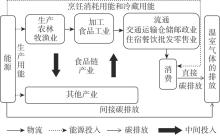
Fig. 1
Schematic diagram of the boundary for the carbon emission calculation system of residents’ food consumption"

Tab. 1
Carbon conversion coefficients of different foods"
| 食物种类 | 植物性食物 | 动物性食物 | |||||||||||
|---|---|---|---|---|---|---|---|---|---|---|---|---|---|
| 粮食 | 植物油 | 蔬菜 | 瓜果 | 食糖 | 猪肉 | 牛肉 | 羊肉 | 禽肉 | 蛋类 | 水产品 | 奶类 | ||
| 综合碳折算系数 | 0.3268 | 1.1588 | 0.0274 | 0.0498 | 0.3965 | 1.1892 | 1.3657 | 1.3657 | 1.0062 | 0.9026 | 0.7315 | 0.4256 | |
Tab. 2
Cooking and processing coefficients of different foods"
| 食物种类 | 植物性食物 | 动物性食物 | |||||||||||
|---|---|---|---|---|---|---|---|---|---|---|---|---|---|
| 粮食 | 植物油 | 蔬菜 | 瓜果 | 食糖 | 猪肉 | 牛肉 | 羊肉 | 禽肉 | 蛋类 | 水产品 | 奶类 | ||
| 烹饪加工系数 | 0.1090 | 0.6540 | 0.0109 | 0.0000 | 0.0000 | 0.1588 | 0.1772 | 0.1772 | 0.1363 | 0.1363 | 0.0818 | 0.0164 | |
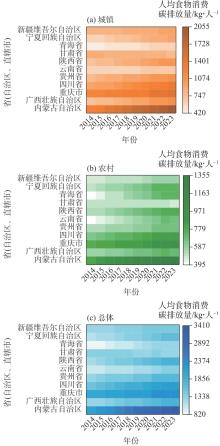
Fig. 2
Changes in per capita food consumption carbon emissions among urban and rural residents in the western region of China from 2014 to 2023"
Tab. 3
Division result of the western region of China based on geographical location"
| 区域 | 省(自治区、直辖市) |
|---|---|
| 西北地区 | 内蒙古自治区、陕西省、甘肃省、青海省、宁夏回族自治区、新疆维吾尔自治区 |
| 西南地区 | 广西壮族自治区、重庆市、四川省、贵州省、云南省 |
Tab. 4
Theil index of carbon emission intensity from food consumption among urban and rural residents in the western region of China"
| 年份 | 总体差异 | 组内差异 | 组间差异 | 组内 | |
|---|---|---|---|---|---|
| 西北地区 | 西南地区 | ||||
| 2014 | 0.0270 | 0.0141(52.21%) | 0.0129(47.79%) | 0.0260(39.80%) | 0.0057(12.41%) |
| 2015 | 0.0203 | 0.0119(58.69%) | 0.0084(41.31%) | 0.0223(43.84%) | 0.0050(14.85%) |
| 2016 | 0.0157 | 0.0102(64.79%) | 0.0055(35.21%) | 0.0184(45.39%) | 0.0050(19.40%) |
| 2017 | 0.0145 | 0.0114(78.32%) | 0.0032(21.68%) | 0.0236(60.63%) | 0.0041(17.69%) |
| 2018 | 0.0145 | 0.0111(76.34%) | 0.0034(23.66%) | 0.0233(60.47%) | 0.0037(15.87%) |
| 2019 | 0.0165 | 0.0158(95.74%) | 0.0007(4.26%) | 0.0263(56.48%) | 0.0100(39.25%) |
| 2020 | 0.0157 | 0.0155(98.85%) | 0.0002(1.15%) | 0.0241(53.17%) | 0.0110(45.68%) |
| 2021 | 0.0155 | 0.0147(94.76%) | 0.0008(5.24%) | 0.0210(47.96%) | 0.0113(46.81%) |
| 2022 | 0.0166 | 0.0145(87.00%) | 0.0022(13.00%) | 0.0191(42.17%) | 0.0118(44.83%) |
| 2023 | 0.0171 | 0.0149(86.79%) | 0.0023(13.21%) | 0.0194(41.88%) | 0.0122(44.91%) |
Tab. 5
Theil index of per capita food consumption carbon emissions among urban and rural residents in the western region of China"
| 年份 | 泰尔指数 | 组内差异 | 组间差异 | 组内 | |
|---|---|---|---|---|---|
| 西北地区 | 西南地区 | ||||
| 2014 | 0.0261 | 0.0136(51.96%) | 0.0126(48.04%) | 0.0290(37.20%) | 0.0058(14.76%) |
| 2015 | 0.0197 | 0.0115(58.52%) | 0.0082(41.48%) | 0.0244(41.63%) | 0.0050(16.89%) |
| 2016 | 0.0153 | 0.0099(64.57%) | 0.0054(35.43%) | 0.0195(43.00%) | 0.0050(21.57%) |
| 2017 | 0.0138 | 0.0107(77.58%) | 0.0031(22.42%) | 0.0241(58.27%) | 0.0040(19.31%) |
| 2018 | 0.0137 | 0.0103(75.36%) | 0.0034(24.64%) | 0.0236(57.96%) | 0.0036(17.40%) |
| 2019 | 0.0160 | 0.0153(95.66%) | 0.0007(4.34%) | 0.0268(56.21%) | 0.0095(39.45%) |
| 2020 | 0.0155 | 0.0153(98.84%) | 0.0002(1.16%) | 0.0247(53.87%) | 0.0105(44.97%) |
| 2021 | 0.0152 | 0.0144(94.70%) | 0.0008(5.30%) | 0.0215(47.57%) | 0.0108(47.13%) |
| 2022 | 0.0162 | 0.0141(86.84%) | 0.0021(13.16%) | 0.0197(40.79%) | 0.0112(46.06%) |
| 2023 | 0.0168 | 0.0145(86.68%) | 0.0022(13.32%) | 0.0202(40.60%) | 0.0116(46.07%) |
Tab. 6
Division result of the western region of China based on K-means hierarchical clustering"
| 区域 | 省(自治区、直辖市) |
|---|---|
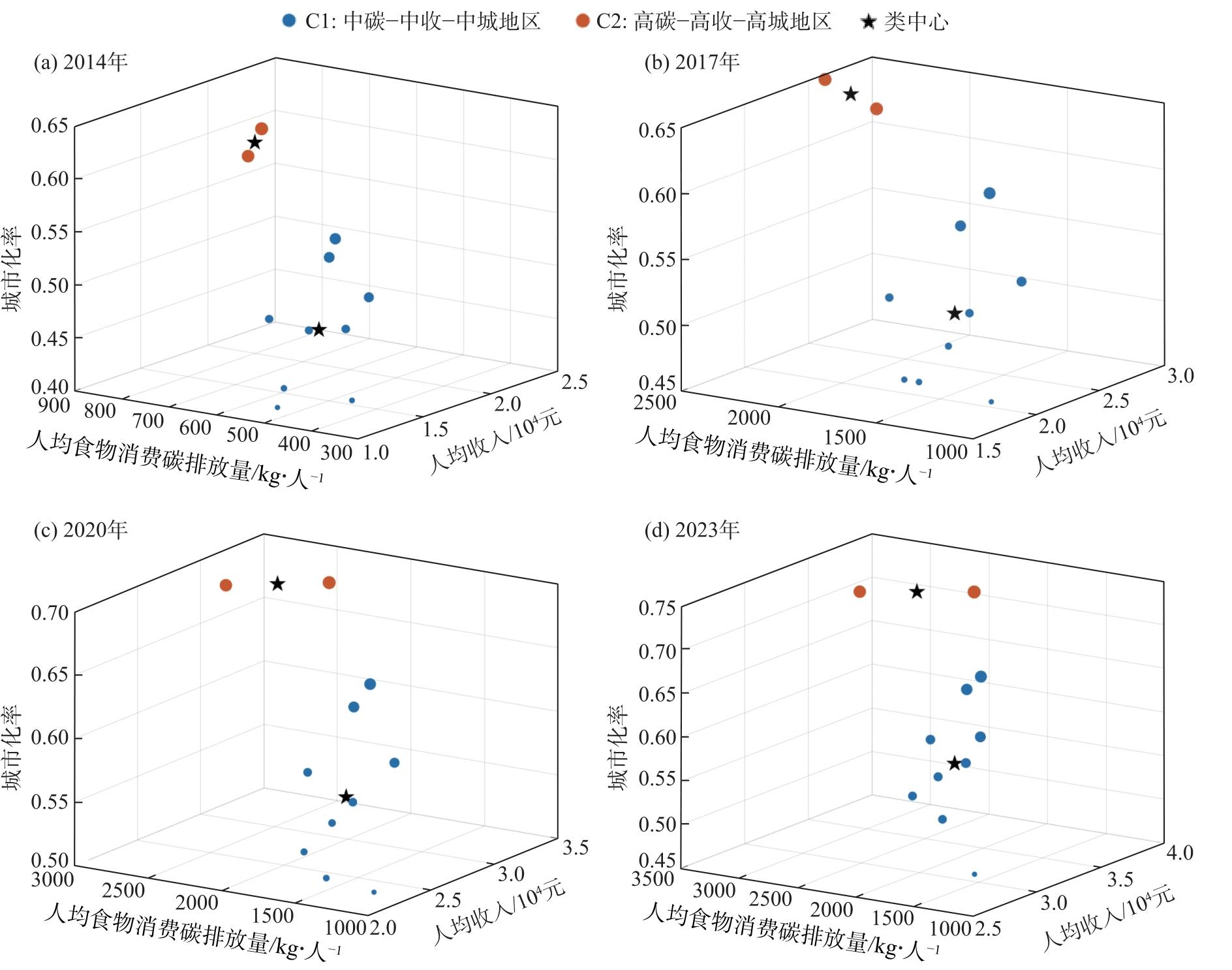
| 高碳-高收-高城地区 | 内蒙古自治区、重庆市 |
| 中碳-中收-中城地区 | 陕西省、甘肃省、青海省、宁夏回族自治区、新疆维吾尔自治区、广西壮族自治区、四川省、贵州省、云南省 |
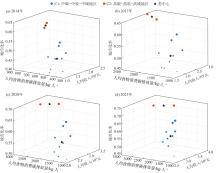
Fig. 3
Results of cluster analysis on food consumption carbon emissions among urban and rural residents in the western region of China"
Tab. 7
Variable description"
| 类型 | 变量名称 |
|---|---|
| 经济结构 | 城镇居民人均可支配收入(U1)/元·人-1 |
| 城镇居民消费价格指数(U2) | |
| 城镇居民商品零售价格指数(U3) | |
| 农村居民人均可支配收入(R1)/元·人-1 | |
| 农村居民消费价格指数(R2) | |
| 农村居民商品零售价格指数(R3) | |
| 人口结构 | 城镇人口规模(U4)/人 |
| 农村人口规模(R4)/人 | |
| 消费结构 | 城镇居民人均植物性食物消费量(U5)/kg·人-1 |
| 城镇居民人均动物性食物消费量(U6)/kg·人-1 | |
| 城镇居民恩格尔系数(U7)/% | |
| 农村居民人均植物性食物消费量(R5)/kg·人-1 | |
| 农村居民人均动物性食物消费量(R6)/kg·人-1 | |
| 农村居民恩格尔系数(R7)/% | |
| 人均家庭电冰箱拥有量(X1)/台 | |
| 交通结构 | 旅客周转量(X2)/人·km |
| 货物周转量(X3)/t·km |
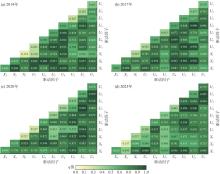
Fig. 4
Analysis of the interaction effects of driving factors on food consumption carbon emissions of urban residents in the western region of China"
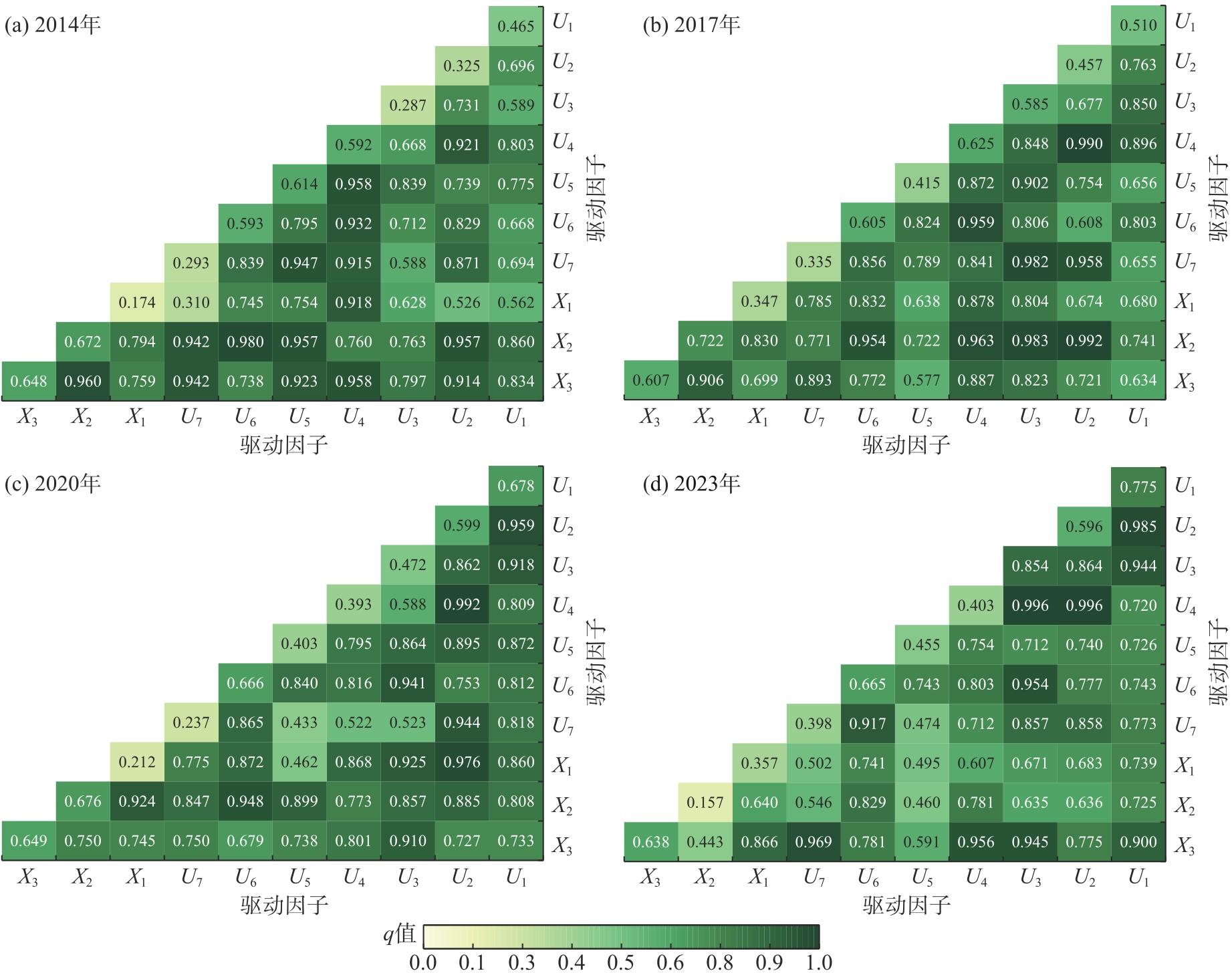
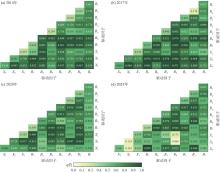
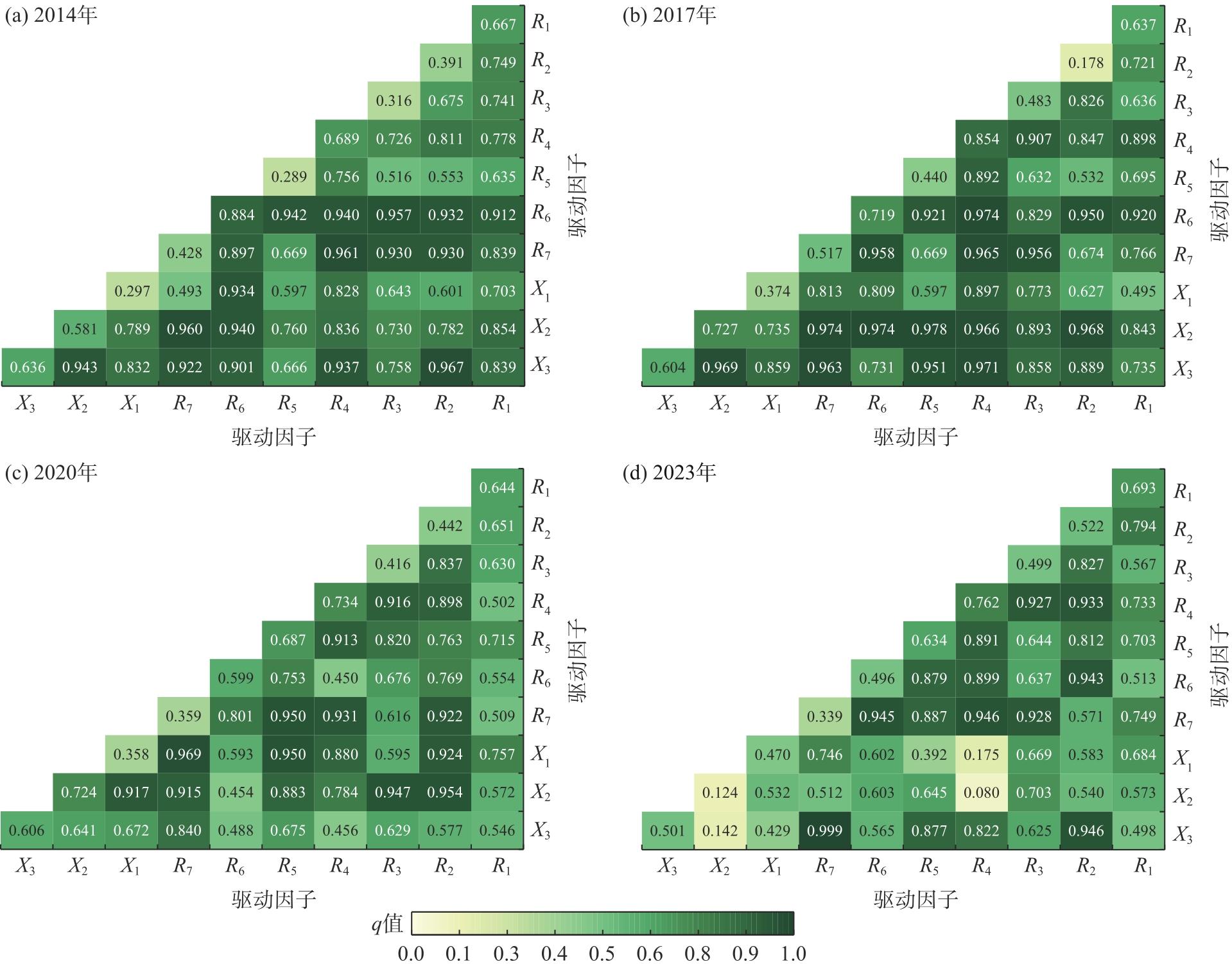
Fig. 5
Analysis of the interaction effects of driving factors on food consumption carbon emissions of rural residents in the western region of China"
| [1] | 杜鹏, 章征科. 系统观念视域下的“大农业观大食物观”: 出场背景、核心要义与践行进路[J]. 经济学家, 2025(4): 120-128. |
| [Du Peng, Zhang Zhengke. The “comprehensive agriculture perspective and diversified food systems concept” under the framework of systems thinking: The background, core essence and synergistic approach[J]. Economist, 2025(4): 120-128.] | |
| [2] | 戴俊骋. 一“鲜”难求? 地方流动对可持续饮食系统的影响机制[J]. 人文地理, 2022, 37(4): 32-38, 74. |
| [Dai Juncheng. Hard to find a “fresh” meal? Research on place mobility and sustainable food systems[J]. Human Geography, 2022, 37(4): 32-38, 74.] | |
| [3] | 郭帅辰, 李德龙, 李兵抗, 等. 中国家庭食物浪费影响因素识别及形成机理——基于扎根理论的质性研究[J]. 干旱区资源与环境, 2025, 39(6): 117-131. |
| [Guo Shuaichen, Li Delong, Li Bingkang, et al. Identification of influencing factors and formation mechanism of household food waste in China: A qualitative study based on grounded theory[J]. Journal of Arid Land Resources and Environment, 2025, 39(6): 117-131.] | |
| [4] | 薛佳敏, 徐明岗, 张建杰. 食物系统碳足迹研究进展[J]. 中国生态农业学报(中英文), 2024, 32(2): 196-205. |
| [Xue Jiamin, Xu Minggang, Zhang Jianjie. Proceedings in carbon footprint research of food systems[J]. Chinese Journal of Eco-Agriculture, 2024, 32(2): 196-205.] | |
| [5] | 马倩倩, 陈诗一. 经济收敛与环境失衡: 基于西部大开发战略的研究[J]. 世界经济, 2023, 46(8): 108-133. |
| [Ma Qianqian, Chen Shiyi. Economic convergence and environmental disparities: Evidence from the western development program[J]. The Journal of World Economy, 2023, 46(8): 108-133.] | |
| [6] | 孙豪, 桂河清, 何伟. 消费升级、碳排放与中国碳达峰目标实现[J]. 财经研究, 2025, 51(7): 79-93. |
| [Sun Hao, Gui Heqing, He Wei. Consumption upgrading, carbon emissions, and the achievement of China’s carbon peak target[J]. Journal of Finance and Economics, 2025, 51(7): 79-93.] | |
| [7] | 樊胜根, 张玉梅. 中国农业食物系统低碳转型战略思考[J]. 农业经济问题, 2024(12): 15-23. |
| [Fan Shenggen, Zhang Yumei. Strategic thinking on the low-carbon transformation of agrifood systems in China[J]. Issues in Agricultural Economy, 2024(12): 15-23.] | |
| [8] | Feng W, Cai B M, Zhang B. A bite of China: Food consumption and carbon emission from 1992 to 2007[J]. China Economic Review, 2020, 59: 100949, doi: 10.1016/j.chieco.2016.06.007. |
| [9] | 黄和平, 李亚丽, 杨斯玲. 中国城镇居民食物消费碳排放的时空演变特征分析[J]. 中国环境管理, 2021, 13(1): 112-120. |
| [Huang Heping, Li Yali, Yang Siling. Spatio-temporal evolution characteristics of carbon emissions from food consumption of urban residents in China[J]. Chinese Journal of Environmental Management, 2021, 13(1): 112-120.] | |
| [10] |
Elliott M, Bhunnoo R. Scenarios for transforming the UK food system to meet global agreements[J]. Nature Food, 2021, 2(5): 310-312.
doi: 10.1038/s43016-021-00257-1 pmid: 37117716 |
| [11] | 谢金良, 郭静, 黄雨婷, 等. 基于多源数据的中国家庭碳排放核算与占比估计[J]. 环境工程学报, 2024, 18(11): 3081-3091. |
| [Xie Jinliang, Guo Jing, Huang Yuting, et al. Accounting for household carbon emissions and estimating their proportion in China based on multi-source data[J]. Chinese Journal of Environmental Engineering, 2024, 18(11): 3081-3091.] | |
| [12] |
Boehm R, Wilde P E, Ver P M, et al. A comprehensive life cycle assessment of greenhouse gas emissions from US household food choices[J]. Food Policy, 2018, 79: 67-76.
doi: 10.1016/j.foodpol.2018.05.004 |
| [13] |
刘莉娜, 曲建升, 黄雨生, 等. 中国居民生活碳排放的区域差异及影响因素分析[J]. 自然资源学报, 2016, 31(8): 1364-1377.
doi: 10.11849/zrzyxb.20150905 |
|
[Liu Lina, Qu Jiansheng, Huang Yusheng, et al. Analyze on the spatial-temporal pattern and influence factors of China’s per capita household carbon emissions[J]. Journal of Natural Resources, 2016, 31(8): 1364-1377.]
doi: 10.11849/zrzyxb.20150905 |
|
| [14] | 刘莉娜, 曲建升, 曾静静, 等. 基于文献计量的居民食物消费碳排放研究进展及发展态势[J]. 生态学报, 2023, 43(17): 7331-7340. |
| [Liu Lina, Qu Jiansheng, Zeng Jingjing, et al. Research progress and development trend of carbon emissions from residents’ food consumption based on bibliometrics[J]. Acta Ecological Sinica, 2023, 43(17): 7331-7340.] | |
| [15] |
李梦冉, 徐小任, 王梁, 等. 黄河流域农业碳排放时空变化特征及影响因素分析[J]. 干旱区地理, 2025, 48(5): 854-865.
doi: 10.12118/j.issn.1000-6060.2024.401 |
|
[Li Mengran, Xu Xiaoran, Wang Liang, et al. Spatial-temporal characteristics and influencing factors of agricultural carbon emissions in the Yellow River Basin[J]. Arid Land Geography, 2025, 48(5): 854-865.]
doi: 10.12118/j.issn.1000-6060.2024.401 |
|
| [16] | Long Y L, Hu R Z, Yin T, et al. Spatial-temporal footprints assessment and driving mechanism of China household diet based on CHNS[J]. Foods, 2021, 10(8): 1858, doi: 10.3390/foods10081858. |
| [17] |
Corrado S, Luzzani G, Trevisan M, et al. Contribution of different life cycle stages to the greenhouse gas emissions associated with three balanced dietary patterns[J]. Science of the Total Environment, 2019, 660: 622-630.
doi: 10.1016/j.scitotenv.2018.12.267 |
| [18] | 祁闯, 孙璇, 黄雅丽, 等. 中国城乡居民食品消费模式及其碳足迹演化特征[J]. 环境科学, 2025, 46(1): 66-75. |
| [Qi Chuang, Sun Xuan, Huang Yali, et al. Transition of food consumption patterns and carbon footprint of urban and rural residents in China[J]. Environmental Science, 2025, 46(1): 66-75.] | |
| [19] | 蒋璐, 汪瑞, 刘蓓蓓. 食品消费模式的碳足迹差异研究[J]. 中国环境科学, 2023, 43(12): 6755-6762. |
| [Jiang Lu, Wang Rui, Liu Beibei. Differences in carbon footprint of food consumption patterns[J]. China Environmental Science, 2023, 43(12): 6755-6762.] | |
| [20] | 张丽娜, 郝宵, 庞庆华, 等. 城乡分异视角下居民食品消费碳排放驱动效应研究——以江苏省为例的实证分析[J]. 软科学, 2021, 35(2): 54-59. |
| [Zhang Lina, Hao Xiao, Pang Qinghua, et al. Study on the driving effect of carbon emissions from residential food consumption based on the perspective of urban and rural differentiation: Taking Jiangsu Province as the example[J]. Soft Science, 2021, 35(2): 54-59.] | |
| [21] |
曹志宏, 郝晋珉, 邢红萍. 中国居民食物消费碳排放时空演变趋势及其驱动机制分析[J]. 地理科学进展, 2020, 39(1): 91-99.
doi: 10.18306/dlkxjz.2020.01.009 |
|
[Cao Zhihong, Hao Jinmin, Xing Hongping. Spatial-temporal change of Chinese resident food consumption carbon emissions and its driving mechanism[J]. Progress in Geography, 2020, 39(1): 91-99.]
doi: 10.18306/dlkxjz.2020.01.009 |
|
| [22] | Aprti A E, Bamba B W W, Edoh E D, et al. Wealth inequality and carbon inequality[J]. Ecological Economics, 2025, 227: 108406, doi: 10.1016/j.ecolecon.2024.108406. |
| [23] | Li S J, Chen W M. Regional carbon inequality and its impact in China: A new perspective from urban agglomerations[J]. Journal of Cleaner Production, 2024, 480: 144059, doi: 10.1016/j.jclepro.2024.144059. |
| [24] |
曹开军, 商宁, 王秘秘. 中国西北五省乡村旅游重点村时空分布格局与可达性分析[J]. 干旱区地理, 2023, 46(7): 1196-1205.
doi: 10.12118/j.issn.1000-6060.2022.531 |
|
[Cao Kaijun, Shang Ning, Wang Mimi. Spatial distribution pattern and accessibility analysis of the key rural tourism villages in the five northwestern provinces of China[J]. Arid Land Geography, 2023, 46(7): 1196-1205.]
doi: 10.12118/j.issn.1000-6060.2022.531 |
|
| [25] | 杨旺舟. 中国农村居民食品消费碳排放的时空格局及其影响因素[J]. 中国环境管理, 2022, 14(3): 112-117. |
| [Yang Wangzhou. Spatio-temporal pattern and its driving forces on carbon emission of food consumption from rural households in China[J]. Chinese Journal of Environmental Management, 2022, 14(3): 112-117.] | |
| [26] | 智静, 高吉喜. 中国城乡居民食品消费碳排放对比分析[J]. 地理科学进展, 2009, 28(3): 429-434. |
|
[Zhi Jing, Gao Jixi. Analysis of carbon emission caused by food consumption in urban and rural inhabitants in China[J]. Progress in Geography, 2009, 28(3): 429-434.]
doi: 10.11820/dlkxjz.2009.03.016 |
|
| [27] | 庞梦伊. 中国城乡居民食品消费碳排放时空演变特征及影响因素分析[D]. 长春: 吉林大学, 2023. |
| [Pang Mengyi. Analysis of the spatial and temporal evolution characteristics and influencing factors of carbon emissions from food consumption of urban and rural residents in China[D]. Changchun: Jilin University, 2023.] | |
| [28] | 罗婷文, 欧阳志云, 王效科, 等. 北京城市化进程中家庭食物碳消费动态[J]. 生态学报, 2005(12): 3252-3258. |
| [Luo Tingwen, Ouyang Zhiyun, Wang Xiaoke, et al. Dynamics of urban food-carbon consumption in Beijing households[J]. Acta Ecologic Sinica, 2005(12): 3252-3258.] | |
| [29] | 辛良杰, 李鹏辉, 范玉枝. 中国食物消费随人口结构变化分析[J]. 农业工程学报, 2018, 34(14): 296-302. |
| [Xin Liangjie, Li Penghui, Fan Yuzhi. Change of food consumption with population age structure in China[J]. Transactions of the Chinese Society of Agricultural Engineering, 2018, 34(14): 296-302.] | |
| [30] |
Pan W, Pan W L, Shi Y D, et al. China’s inter-regional carbon emissions: An input-output analysis under considering national economic strategy[J]. Journal of Cleaner Production, 2018, 197: 794-803.
doi: 10.1016/j.jclepro.2018.06.207 |
| [31] | 杨骞, 刘华军. 中国二氧化碳排放的区域差异分解及影响因素——基于1995—2009年省际面板数据的研究[J]. 数量经济技术经济研究, 2012, 29(5): 36-49, 148. |
| [Yang Qian, Liu Huajun. Regional difference decomposition and influence factors of China’s carbon dioxide emissions: A study based on interprovincial panel data from 1995 to 2009[J]. Journal of Quantitative and Technological Economics, 2012, 29(5): 36-49, 148.] | |
| [32] |
杨俊闯, 赵超. K-Means聚类算法研究综述[J]. 计算机工程与应用, 2019, 55(23): 7-14, 63.
doi: 10.3778/j.issn.1002-8331.1908-0347 |
|
[Yang Junchuang, Zhao Chao. Survey on K-Means clustering algorithm[J]. Computer Engineering and Applications, 2019, 55(23): 7-14, 63.]
doi: 10.3778/j.issn.1002-8331.1908-0347 |
|
| [33] |
王劲峰, 徐成东. 地理探测器: 原理与展望[J]. 地理学报, 2017, 72(1): 116-134.
doi: 10.11821/dlxb201701010 |
| [Wang Jinfeng, Xu Chengdong. Geodetector: Principle and prospective[J]. Acta Geographic Sinica, 2017, 72(1): 116-134.] | |
| [34] | 孙黄平, 黄震方, 徐冬冬, 等. 泛长三角城市群城镇化与生态环境耦合的空间特征与驱动机制[J]. 经济地理, 2017, 37(2): 163-170, 186. |
| [Sun Huangping, Huang Zhenfang, Xu Dongdong, et al. The spatial characteristics and drive mechanism of coupling relationship between urbanization and eco-environment in the Pan Yangtze River Delta[J]. Economic Geography, 2017, 37(2): 163-170, 186.] | |
| [35] |
王彬燕, 田俊峰, 程利莎, 等. 中国数字经济空间分异及影响因素[J]. 地理科学, 2018, 38(6): 859-868.
doi: 10.13249/j.cnki.sgs.2018.06.004 |
|
[Wang Binyan, Tian Junfeng, Cheng Lisha, et al. Spatial differentiation of digital economy and its influencing factors in China[J]. Scientia Geographica Sinica, 2018, 38(6): 859-868.]
doi: 10.13249/j.cnki.sgs.2018.06.004 |
|
| [36] |
王兴民, 吴静, 白冰, 等. 中国CO2排放的空间分异与驱动因素——基于198个地级及以上城市数据的分析[J]. 经济地理, 2020, 40(11): 29-38.
doi: 10.15957/j.cnki.jjdl.2020.11.004 |
|
[Wang Xingmin, Wu Jing, Bai Bing, et al. Spatial differentiation and driving factors of CO2 emissions: Analysis based on 198 cities at prefecture level and above in China[J]. Economic Geography, 2020, 40(11): 29-38.]
doi: 10.15957/j.cnki.jjdl.2020.11.004 |
|
| [37] |
马海清, 陈强强. 甘肃省农业碳排放时空分异特征及影响因素[J]. 干旱区地理, 2025, 48(5): 879-892.
doi: 10.12118/j.issn.1000-6060.2024.329 |
|
[Ma Haiqing, Chen Qiangqiang. Spatio-temporal differentiation characteristics and influencing factors of agricultural carbon emissions in Gansu Province[J]. Arid Land Geography, 2025, 48(5): 879-892.]
doi: 10.12118/j.issn.1000-6060.2024.329 |
|
| [38] | 高晶, 唐增, 李重阳. 中国城乡居民食物消费碳排放的对比分析[J]. 草业科学, 2018, 35(8): 2022-2030. |
| [Gao Jing, Tang Zeng, Li Chongyang. A comparative analysis of food consumption on carbon emission of urban and rural residents in China[J]. Pratacultural Science, 2018, 35(8): 2022-2030.] | |
| [39] |
杨思存, 霍琳, 王成宝, 等. 基于STIRPAT模型的甘肃省农业碳排放特征分析[J]. 干旱区地理, 2023, 46(9): 1493-1502.
doi: 10.12118/j.issn.1000-6060.2022.649 |
|
[Yang Sicun, Huo Lin, Wang Chengbao, et al. Characteristics of agricultural carbon emission in Gansu Province based on STIRPAT model[J]. Arid Land Geography, 2023, 46(9): 1493-1502.]
doi: 10.12118/j.issn.1000-6060.2022.649 |
|
| [40] |
袁长伟, 张帅, 焦萍, 等. 中国省域交通运输全要素碳排放效率时空变化及影响因素研究[J]. 资源科学, 2017, 39(4): 687-697.
doi: 10.18402/resci.2017.04.10 |
|
[Yuan Changwei, Zhang Shuai, Jiao Ping, et al. Temporal and spatial variation and influencing factors research on total factor efficiency for transportation carbon emissions in China[J]. Resources Science, 2017, 39(4): 687-697.]
doi: 10.18402/resci.2017.04.10 |
|
| [41] | 王宇杰, 段霄东, 薛颖, 等. 中国资源型城市碳排放特征、达峰态势及驱动因素分析[J]. 生态经济, 2025, 41(3): 43-49, 63. |
| [Wang Yujie, Duan Xiaodong, Xue Ying, et al. Analysis of carbon emission characteristics, peaking situation and driving factors in China’s resource-based cities[J]. Ecological Economy, 2025, 41(3): 43-49, 63.] | |
| [42] | 林志富, 陶楠, 单立先, 等. 县域尺度下云南省碳排放时空演变特征及驱动机制[J]. 水土保持研究, 2026, 33(2): 264-273. |
| [Lin Zhifu, Tao Nan, Shan Lixian, et al. Spatiotemporal evolution characteristics and driving mechanisms of carbon emissions at county scale in Yunnan Province[J]. Research of Soil and Water Conservation, 2026, 33(2): 264-273.] |
|
||