Arid Land Geography ›› 2026, Vol. 49 ›› Issue (9): 1890-1900.doi: 10.12118/j.issn.1000-6060.2026.029
• Urban Geography • Previous Articles Next Articles
ZHAO Ruidong1,2( ), LIU Haimeng3(), GUO Wenjiong1,2, ZHANG Chenhao1
Received:2026-01-13
Revised:2026-02-09
Online:2026-09-25
Published:2026-09-07
Contact:
LIU Haimeng
E-mail:zhaordgeo2015@163.com;liuhm@igsnrr.ac.cn
ZHAO Ruidong, LIU Haimeng, GUO Wenjiong, ZHANG Chenhao. Spatiotemporal evolution and influencing factors of coupling coordination between urbanization and urban ecological resilience in the middle reach of the Yellow River Basin[J].Arid Land Geography, 2026, 49(9): 1890-1900.
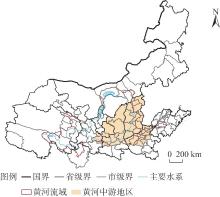
Fig. 1
Schematic diagram of the study area"
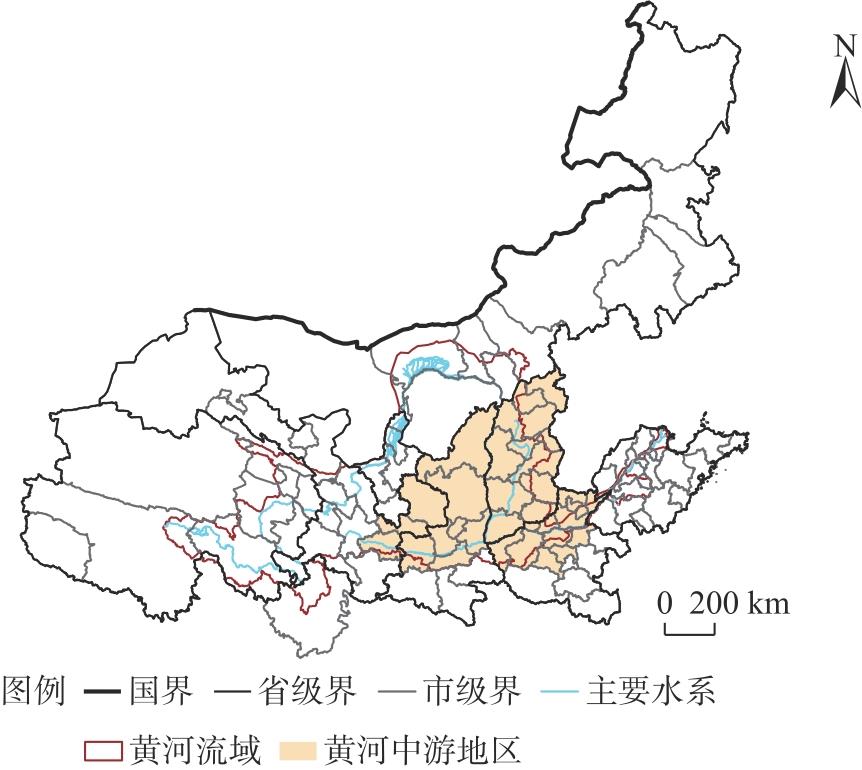
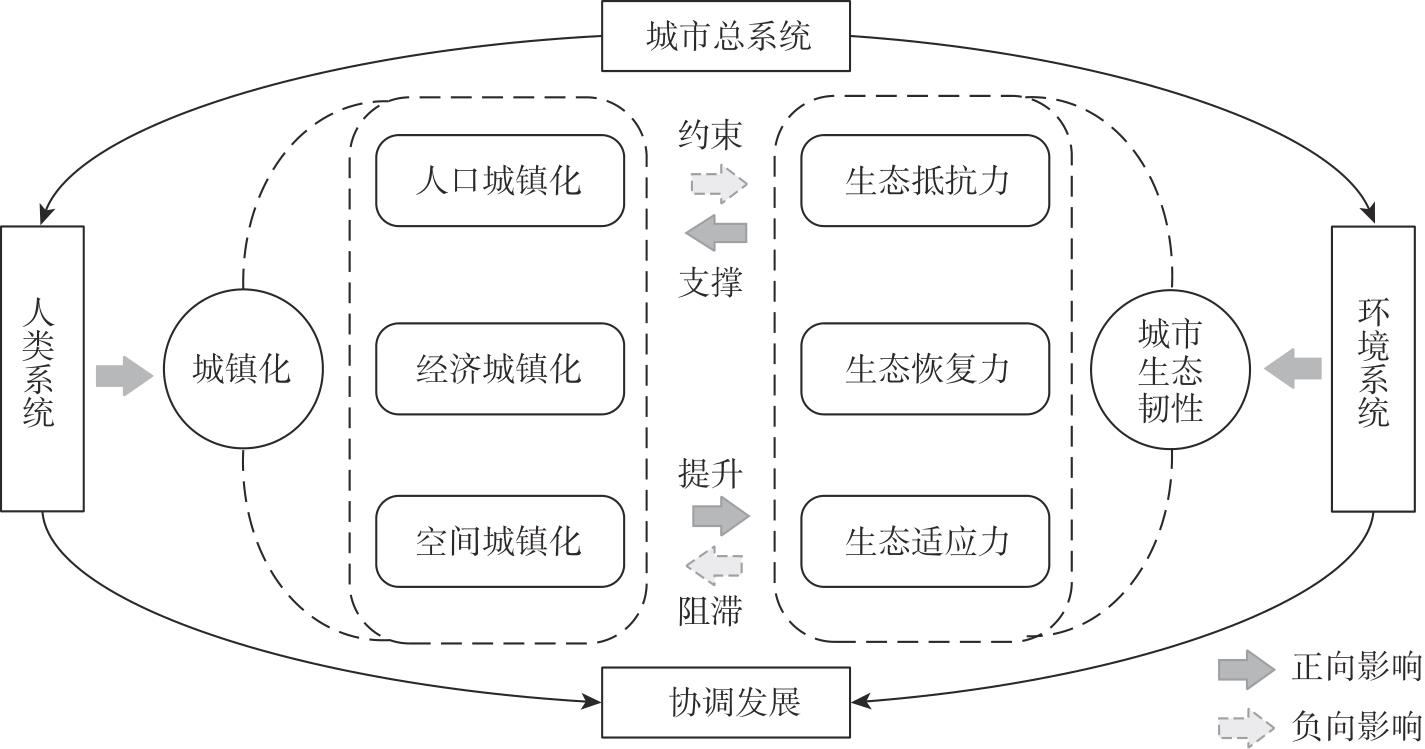
Fig. 2
Schematic diagram of the coordinated development between urbanization and urban ecological resilience"
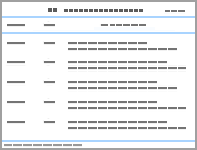
Tab. 1
Evaluation index system of urbanization development and urban ecological resilience"
| 系统层 | 准则层 | 指标层 | 指标解释 | 权重 | 属性 |
|---|---|---|---|---|---|
| 城镇化发展指数 | 人口城镇化 | 常住城镇人口占比/% | 城市化发展水平 | 0.0980 | + |
| 城镇人口规模/104人 | 城镇常住人口规模 | 0.1121 | + | ||
| 城镇人口密度/人·km-2 | 人口分布的疏密程度 | 0.0968 | + | ||
| 经济城镇化 | 人均GDP/元·人-1 | 经济发展水平 | 0.0969 | + | |
| 第二、三产业占比/% | 城市产业结构 | 0.0983 | + | ||
| 经济密度/104元·km-2 | 城市经济效应水平 | 0.0987 | + | ||
| 空间城镇化 | 人均建成区面积/m2·人-1 | 人均城市用地大小 | 0.1414 | + | |
| 城市建设用地面积占比/% | 城市土地利用程度 | 0.1422 | + | ||
| 城市建设用地扩张速率/% | 城市土地空间开发速度 | 0.1176 | + | ||
| 城市生态韧性指数 | 生态抵抗力 | 人均水资源量/m3·人-1 | 城市水资源承载力 | 0.1019 | + |
| 植被覆盖指数 | 城市生态本底水平 | 0.0821 | + | ||
| 人均城市建设空间面积/m2·人-1 | 城市土地承载条件 | 0.1634 | + | ||
| 生态适应力 | 城市污水集中处理率/% | 城市水处理管理水平 | 0.0618 | + | |
| 工业固废综合利用率/% | 工业固废循环利用水平 | 0.1212 | + | ||
| 城市生活垃圾无害化处理率/% | 城市环境卫生水平 | 0.1026 | + | ||
| 生态恢复力 | 区域内水土保持率/% | 区域自然生态恢复状况 | 0.1244 | + | |
| 城市建成区绿地率/% | 城市环境质量水平 | 0.1143 | + | ||
| 节能环保支出占地方财政支出比/% | 城市环境污染治理投入 | 0.1283 | + |
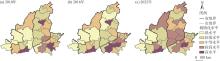
Fig. 3
Spatial distributions of urbanization level in the middle reaches of the Yellow River from 2010 to 2022"
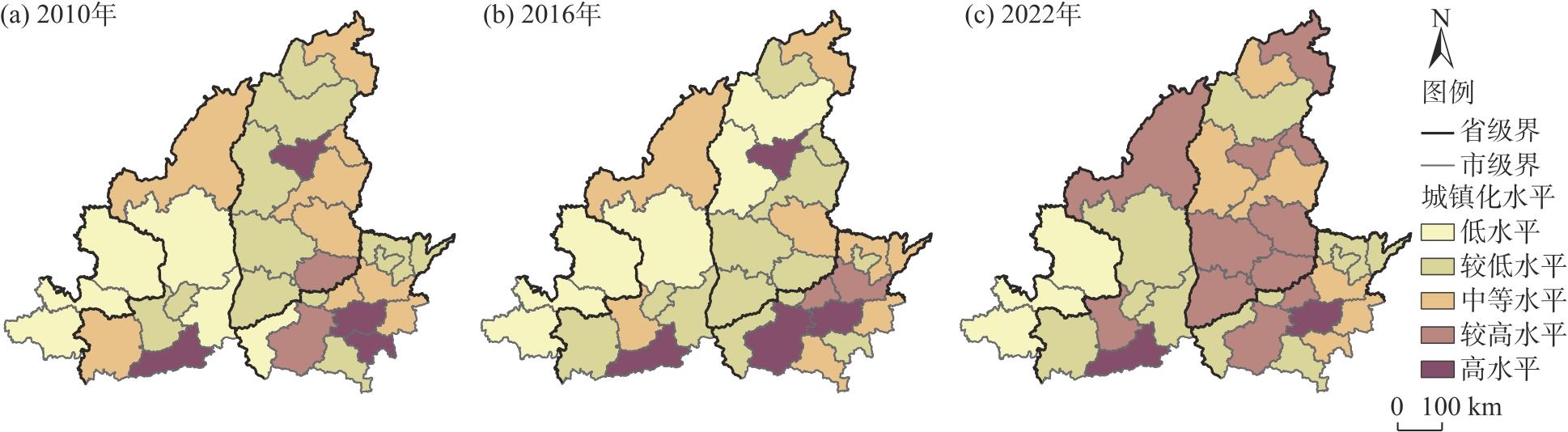
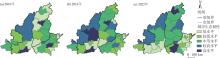
Fig. 4
Spatial distributions of urban ecological resilience in the middle reaches of the Yellow River from 2010 to 2022"
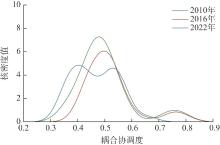
Fig. 5
Kernel density variation curves of coupling coordination between urbanization and urban ecological resilience in the middle reaches of the Yellow River from 2010 to 2022"
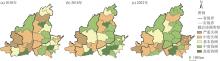
Fig. 6
Spatial distributions of the coupling coordination between urbanization and urban ecological resilience in the middle reaches of the Yellow River from 2010 to 2022"
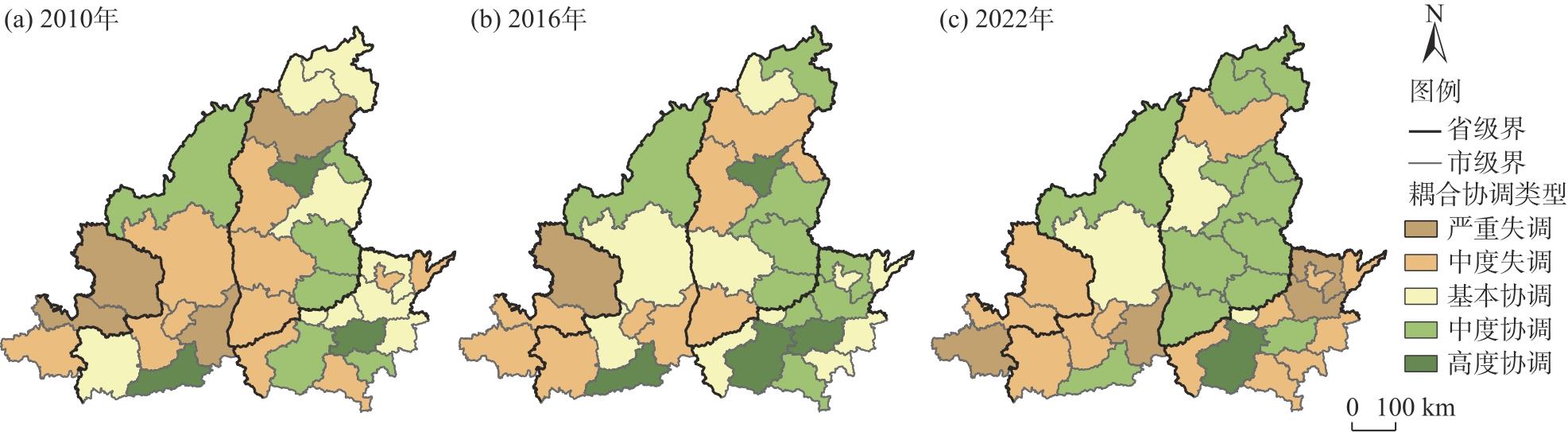
Fig. 7
Coordination influence of urbanization factors in various regions of the middle reaches in Yellow River Basin from 2010 to 2022"
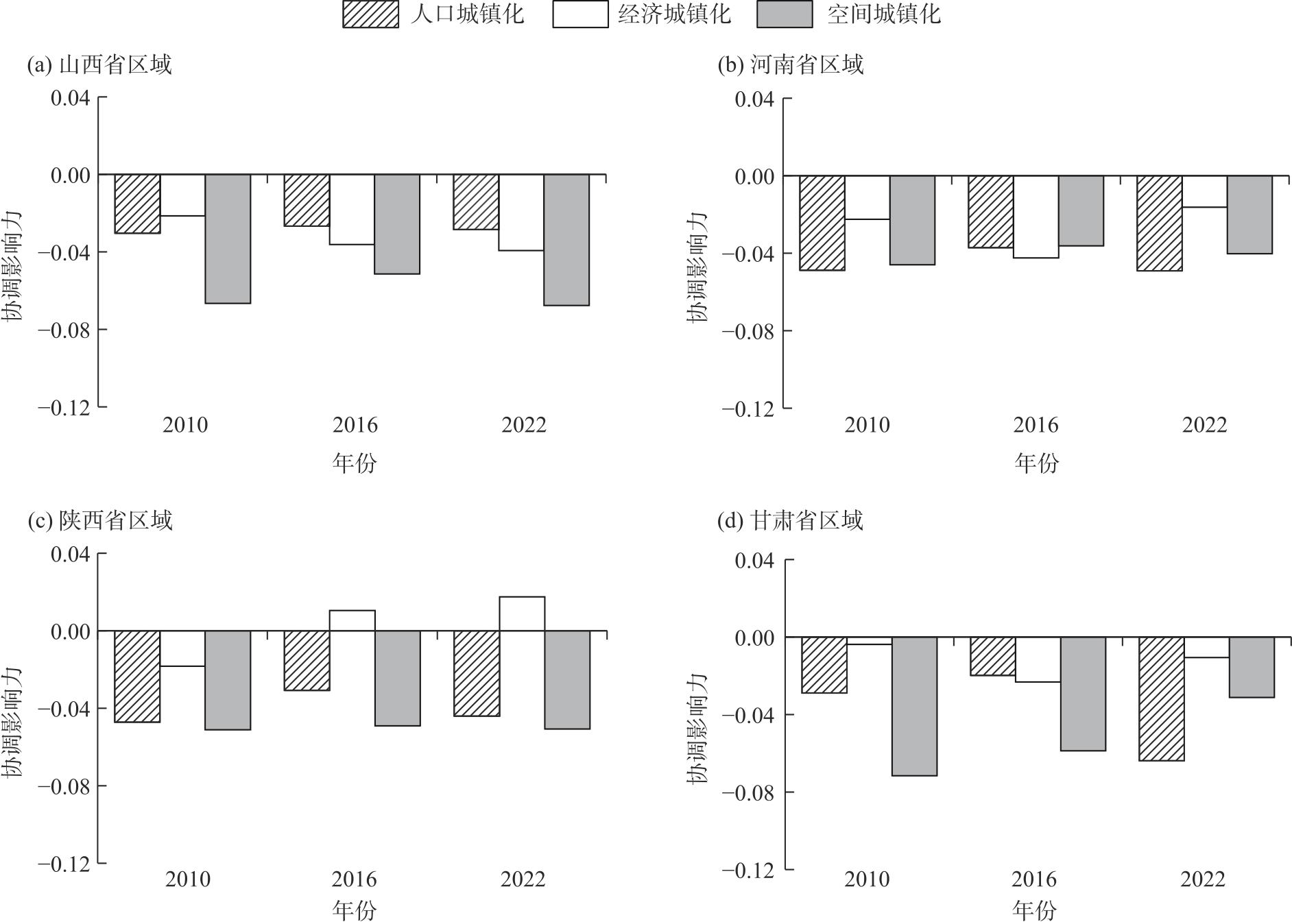
Fig. 8
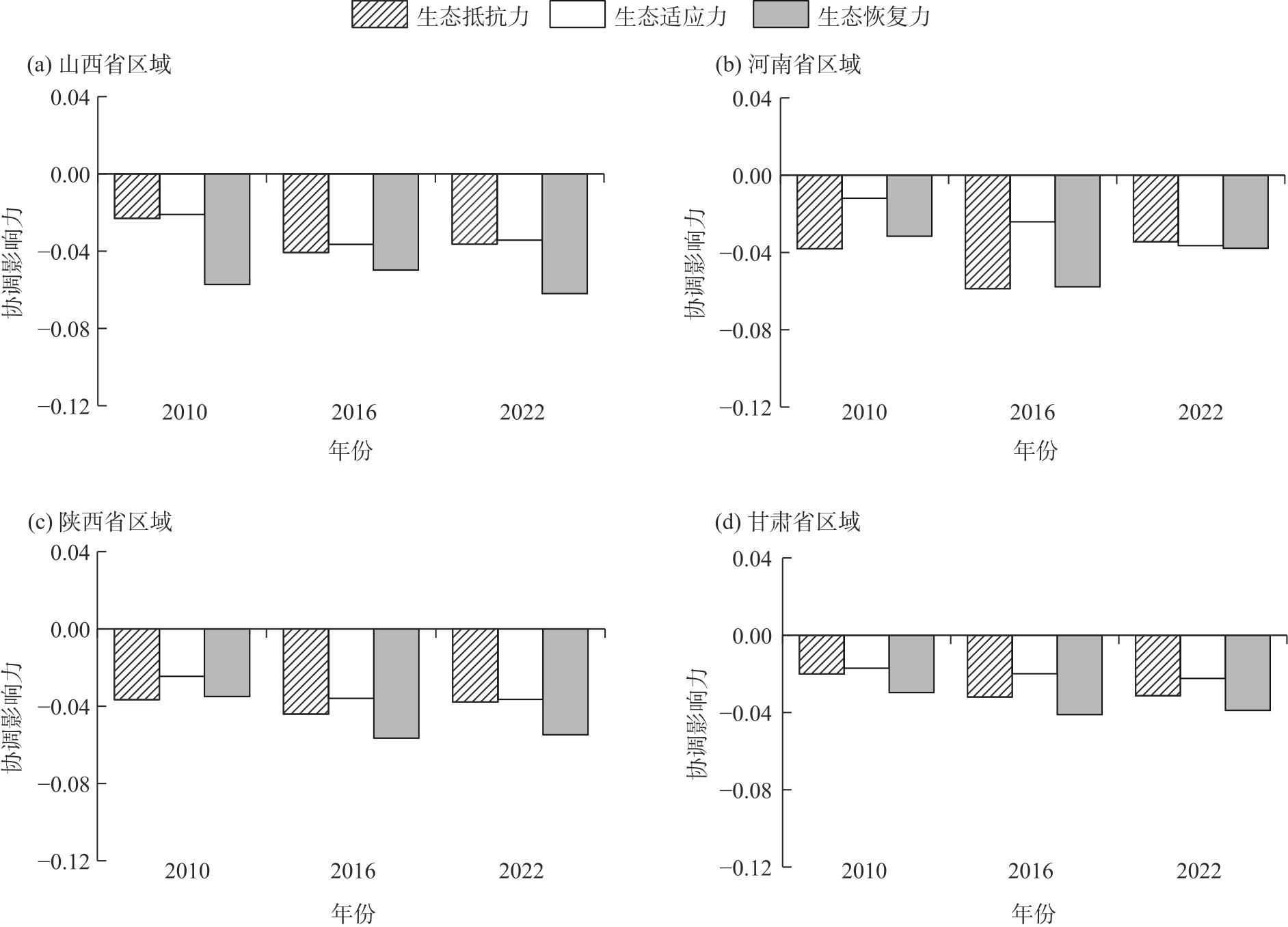
Coordination influence of urban ecological resilience factors in various regions of the middle reaches in Yellow River Basin from 2010 to 2022"
| [1] | Liu H M, Fang C L. China’s new program gives cities check-ups[J]. Nature Cities, 2025(2): 910-912. |
| [2] |
刘海猛, 方创琳, 李咏红. 城镇化与生态环境“耦合魔方”的基本概念及框架[J]. 地理学报, 2019, 74(8): 1489-1507.
doi: 10.11821/dlxb201908001 |
|
[Liu Haimeng, Fang Chuanglin, Li Yonghong. The coupled human and natural cube: A conceptual framework for analyzing urbanization and eco-environment interactions[J]. Acta Geographica Sinica, 2019, 74(8): 1489-1507.]
doi: 10.11821/dlxb201908001 |
|
| [3] | 李苏, 刘浩南. 干旱区城市化与生态韧性耦合协调的时空格局演化分析——以宁夏为例[J]. 干旱区地理, 2022, 45(7): 1281-1290. |
| [Li Su, Liu Haonan. Spatiotemporal pattern evolution of coupling coordination between urbanization and ecological resilience in arid region: A case of Ningxia Hui Autonomous Region[J]. Arid Land Geography, 2022, 45(7): 1281-1290.] | |
| [4] |
刘海龙, 王改艳, 张鹏航, 等. 汾河流域新型城镇化与生态韧性耦合协调时空演变及协调影响力研究[J]. 自然资源学报, 2024, 39(3): 640-667.
doi: 10.31497/zrzyxb.20240309 |
|
[Liu Hailong, Wang Gaiyan, Zhang Penghang, et al. Spatio-temporal evolution and coordination influence of coupling coordination between new urbanization and ecological resilience in Fenhe River Basin[J]. Journal of Natural Resources, 2024, 39(3): 640-667.]
doi: 10.31497/zrzyxb.20240309 |
|
| [5] |
王少剑, 崔子恬, 林靖杰, 等. 珠三角地区城镇化与生态韧性的耦合协调研究[J]. 地理学报, 2021, 76(4): 973-991.
doi: 10.11821/dlxb202104013 |
|
[Wang Shaojian, Cui Zitian, Lin Jingjie, et al. Coupling relationship between urbanization and ecological resilience in the Pearl River Delta[J]. Acta Geographica Sinica, 2021, 76(4): 973-991.]
doi: 10.11821/dlxb202104013 |
|
| [6] |
赵瑞东, 方创琳, 刘海猛. 城市韧性研究进展与展望[J]. 地理科学进展, 2020, 39(10): 1717-1731.
doi: 10.18306/dlkxjz.2020.10.011 |
|
[Zhao Ruidong, Fang Chuanglin, Liu Haimeng. Progress and prospect of urban resilience research[J]. Progress in Geography, 2020, 39(10): 1717-1731.]
doi: 10.18306/dlkxjz.2020.10.011 |
|
| [7] | Liu H M, Lu J Y, Li X C, et al. Evaluating human-nature relationships at a grid scale in China, 2000-2020[J]. Habitat International, 2025, 156(2): 103282, doi: 10.1016/j.habitatint.2024.103282. |
| [8] |
Samuelsson K, Giusti M, Peterson G D, et al. Impact of environment on people’s everyday experiences in Stockholm[J]. Landscape and Urban Planning, 2018, 171(3): 7-17.
doi: 10.1016/j.landurbplan.2017.11.009 |
| [9] | 鲁钰雯, 翟国方, 施益军, 等. 荷兰空间规划中的韧性理念及其启示[J]. 国际城市规划, 2020, 35(1): 102-110, 117. |
| [Lu Yuwen, Zhai Guofang, Shi Yijun, et al. Resilience within spatial planning in the Netherlands and its implications[J]. Urban Planning International, 2020, 35(1): 102-110, 117.] | |
| [10] | Marta S, Amaya M R, David A, et al. Urban resilience through green infrastructure: A framework for policy analysis applied to Madrid, Spain[J]. Landscape and Urban Planning, 2024, 241(1): 104923, doi: 10.1016/j.landurbplan.2023.104923. |
| [11] | Paula B, Rita S B, Ana G. Assessment of the contribution of Nature-Based Solutions (NBS) to urban resilience: Application to the case study of Porto[J]. Ecological Engineering, 2022, 175(2): 106489, doi: 10.1016/j.ecoleng.2021.106489. |
| [12] |
Sharifi A. Resilient urban forms: A macro-scale analysis[J]. Cities, 2019, 85(2): 1-14.
doi: 10.1016/j.cities.2018.11.023 |
| [13] | Marta O, Susana P, Ramón E, et al. Land-use and spatial resilience changes in the Spanish olive socio-ecological landscape[J]. Applied Geography, 2020, 117(4): 102171, doi: 10.1016/j.apgeog.2020.102171. |
| [14] | 孙阳, 张落成, 姚士谋. 基于社会生态系统视角的长三角地级城市韧性度评价[J]. 中国人口·资源与环境, 2017, 27(8): 151-158. |
| [Sun Yang, Zhang Luocheng, Yao Shimou. Evaluating resilience of prefecture cities in the Yangtze River Delta region from a socio-ecological perspective[J]. China Population, Resources and Environment, 2017, 27(8): 151-158.] | |
| [15] |
修春亮, 魏冶, 王绮. 基于“规模-密度-形态”的大连市城市韧性评估[J]. 地理学报, 2018, 73(12): 2315-2328.
doi: 10.11821/dlxb201812004 |
|
[Xiu Chunliang, Wei Ye, Wang Qi. Evaluation of urban resilience of Dalian City based on the perspective of “size-density-morphology”[J]. Acta Geographica Sinica, 2018, 73(12): 2315-2328.]
doi: 10.11821/dlxb201812004 |
|
| [16] |
欧阳晓, 陈键, 魏晓, 等. 长江中游城市群生态韧性时空分异格局与演化机理[J]. 地理学报, 2025, 80(6): 1572-1584.
doi: 10.11821/dlxb202506009 |
|
[Ouyang Xiao, Chen Jian, Wei Xiao, et al. Spatiotemporal differentiation and evolutionary mechanism of ecological resilience in the middle reaches of the Yangtze River urban agglomeration[J]. Acta Geographica Sinica, 2025, 80(6): 1572-1584.]
doi: 10.11821/dlxb202506009 |
|
| [17] |
Fang C L, Liu H M, Li G D. International progress and evaluation on interactive coupling effects between urbanization and the eco-environment[J]. Journal of Geographical Sciences, 2016, 26(8): 1081-1116.
doi: 10.1007/s11442-016-1317-9 |
| [18] |
王松茂, 牛金兰. 山东半岛城市群城市生态韧性的动态演化及障碍因子分析[J]. 经济地理, 2022, 42(8): 51-61.
doi: 10.15957/j.cnki.jjdl.2022.08.006 |
|
[Wang Songmao, Niu Jinlan. Dynamic evolution and obstacle factors of urban ecological resilience in Shandong Peninsula urban agglomeration[J]. Economic Geography, 2022, 42(8): 51-61.]
doi: 10.15957/j.cnki.jjdl.2022.08.006 |
|
| [19] |
Tapio P. Towards a theory of decoupling: Degrees of decoupling in the EU and the case of road traffic in Finland between 1970 and 2001[J]. Transport Policy, 2005, 12(2): 137-151.
doi: 10.1016/j.tranpol.2005.01.001 |
| [20] | 李翅, 马鑫雨, 夏晴. 国内外韧性城市的研究对黄河滩区空间规划的启示[J]. 城市发展研究, 2020, 27(2): 54-61. |
| [Li Chi, Ma Xinyu, Xia Qing. The study of resilient cities in domestic and overseas and the implications to the spatial planning of Yellow River floodplain area[J]. Urban Development Studies, 2020, 27(2): 54-61.] | |
| [21] |
郭付友, 佟连军, 仇方道, 等. 黄河流域生态经济走廊绿色发展时空分异特征与影响因素识别[J]. 地理学报, 2021, 76(3): 726-739.
doi: 10.11821/dlxb202103016 |
|
[Guo Fuyou, Tong Lianjun, Qiu Fangdao, et al. Spatio-temporal differentiation characteristics and influencing factors of green development in the eco-economic corridor of the Yellow River Basin[J]. Acta Geographica Sinica, 2021, 76(3): 726-739.]
doi: 10.11821/dlxb202103016 |
|
| [22] | Zhao R D, Fang C L, Liu J, et al. The evaluation and obstacle analysis of urban resilience from the multidimensional perspective in Chinese cities[J]. Sustainable Cities and Society, 2022, 86(11): 104160, doi: 10.1016/j.scs.2022.104160. |
| [23] |
Cutter S, Barnes L, Berry M, et al. A place-based model for understanding community resilience to natural disasters[J]. Global Environmental Change, 2008, 18(4): 598-606.
doi: 10.1016/j.gloenvcha.2008.07.013 |
| [24] |
Nathwani J, Lu X L, Wu C Y, et al. Quantifying security and resilience of Chinese coastal urban ecosystems[J]. Science of the Total Environment, 2019, 672(7): 51-60.
doi: 10.1016/j.scitotenv.2019.03.322 |
| [25] |
彭文斌, 邝嫦娥, 李文意, 等. 长江中游城市群城市更新与生态韧性空间关联网络及影响研究[J]. 地理科学, 2024, 44(11): 1936-1945.
doi: 10.13249/j.cnki.sgs.20240159 |
|
[Peng Wenbin, Kuang Chang’e, Li Wenyi, et al. Spatial correlation network and impacts of urban renewal and ecological resilience in urban agglomerations in the middle reaches of the Yangtze River[J]. Scientia Geographica Sinica, 2024, 44(11): 1936-1945.]
doi: 10.13249/j.cnki.sgs.20240159 |
|
| [26] |
赵建吉, 刘岩, 朱亚坤, 等. 黄河流域新型城镇化与生态环境耦合的时空格局及影响因素[J]. 资源科学, 2020, 42(1): 159-171.
doi: 10.18402/resci.2020.01.16 |
|
[Zhao Jianji, Liu Yan, Zhu Yakun, et al. Spatiotemporal differentiation and influencing factors of the coupling and coordinated development of new urbanization and ecological environment in the Yellow River Basin[J]. Resources Science, 2020, 42(1): 159-171.]
doi: 10.18402/resci.2020.01.16 |
|
| [27] |
张明斗, 任衍婷, 周亮. 黄河流域城市生态韧性时空演变特征及影响因素分析[J]. 干旱区地理, 2024, 47(3): 445-454.
doi: 10.12118/j.issn.1000-6060.2023.381 |
|
[Zhang Mingdou, Ren Yanting, Zhou Liang. Spatiotemporal evolution characteristics and influencing factors of urban ecological resilience in the Yellow River Basin[J]. Arid Land Geography, 2024, 47(3): 445-454.]
doi: 10.12118/j.issn.1000-6060.2023.381 |
|
| [28] |
赵宏波, 谷天顺, 孙东琪, 等. “三生”功能视角下黄河流域城市人居环境动态演变与机制[J]. 地理学报, 2023, 78(12): 2973-2999.
doi: 10.11821/dlxb202312005 |
|
[Zhao Hongbo, Gu Tianshun, Sun Dongqi, et al. Dynamic evolution and influencing mechanism of urban human settlements in the Yellow River Basin from the perspective of “production-living-ecological” function[J]. Acta Geographica Sinica, 2023, 78(12): 2973-2999.]
doi: 10.11821/dlxb202312005 |
|
| [29] |
冯雨雪, 李广东. 青藏高原城镇化与生态环境交互影响关系分析[J]. 地理学报, 2020, 75(7): 1386-1405.
doi: 10.11821/dlxb202007005 |
|
[Feng Yuxue, Li Guangdong. Interaction between urbanization and eco-environment in Tibetan Plateau[J]. Acta Geographica Sinica, 2020, 75(7): 1386-1405.]
doi: 10.11821/dlxb202007005 |
|
||