Arid Land Geography ›› 2026, Vol. 49 ›› Issue (7): 1520-1529.doi: 10.12118/j.issn.1000-6060.2025.463
• Regional Development • Previous Articles
HE Jiaxin1( ), LI Haiyang2()
Received:2025-08-05
Revised:2025-09-10
Online:2026-07-25
Published:2026-07-07
Contact:
LI Haiyang
E-mail:hejiaxin991020@163.com;lihaiyang1106@163.com
HE Jiaxin, LI Haiyang. Regional differences, dynamic evolution, and influencing factors of employment quality in China[J].Arid Land Geography, 2026, 49(7): 1520-1529.

Tab. 1
Index system of employment quality evaluation"
| 一级指标 | 二级指标 | 三级指标 | 指标属性 | 权重 |
|---|---|---|---|---|
| 就业环境 | 经济环境 | 人均GDP/元·人-1 | + | 0.040 |
| 失业率/% | - | 0.023 | ||
| 城镇化率/% | + | 0.022 | ||
| 第三产业占GDP比重/% | + | 0.039 | ||
| 就业服务 | 人均职业指导服务/次·人-1 | + | 0.024 | |
| 人均创业指导服务/次·人-1 | + | 0.026 | ||
| 女性接受职业指导人次比重/% | + | 0.024 | ||
| 农民工接受培训比重/% | + | 0.028 | ||
| 就业状况 | 就业规模 | 劳动力占比/% | + | 0.022 |
| 劳动生产率/102人 | + | 0.036 | ||
| 就业结构 | 第三产业就业人数比重/% | + | 0.040 | |
| 高技术产业就业人数比重/% | + | 0.035 | ||
| 就业能力 | 人均受教育年限 | + | 0.023 | |
| 大专及以上就业人员比重/% | + | 0.029 | ||
| 获取技能证书比重/% | + | 0.013 | ||
| 职业技能人才比重/% | + | 0.023 | ||
| 就业公平 | 女性劳动力比重/% | + | 0.024 | |
| 残疾人就业率/% | + | 0.035 | ||
| 农村劳动力转移比重/% | + | 0.015 | ||
| 城乡收入差距 | - | 0.036 | ||
| 行业工资差距比 | - | 0.024 | ||
| 就业满意度 | 工作收入满意度 | + | 0.030 | |
| 工作时间满意度 | + | 0.031 | ||
| 工作环境满意度 | + | 0.020 | ||
| 晋升通道顺畅度 | + | 0.022 | ||
| 就业安全 | 职业病发生率/% | - | 0.012 | |
| 工伤事故发生率/% | - | 0.019 | ||
| 劳动者收入 | 在岗职工平均工资/元 | + | 0.037 | |
| 实际工资增长率/% | + | 0.116 | ||
| 劳动保障 | 权益保障 | 养老保险参保率/% | + | 0.025 |
| 医疗保险参保率/% | + | 0.033 | ||
| 最低工资标准占平均工资比重/% | + | 0.027 | ||
| 工会参与率/% | + | 0.026 | ||
| 劳动关系 | 劳动争议调解成功率/% | + | 0.012 | |
| 人均劳动争议仲裁数/件·人-1 | + | 0.011 |
Fig. 1
Spatiotemporal evolution trends of employment quality"
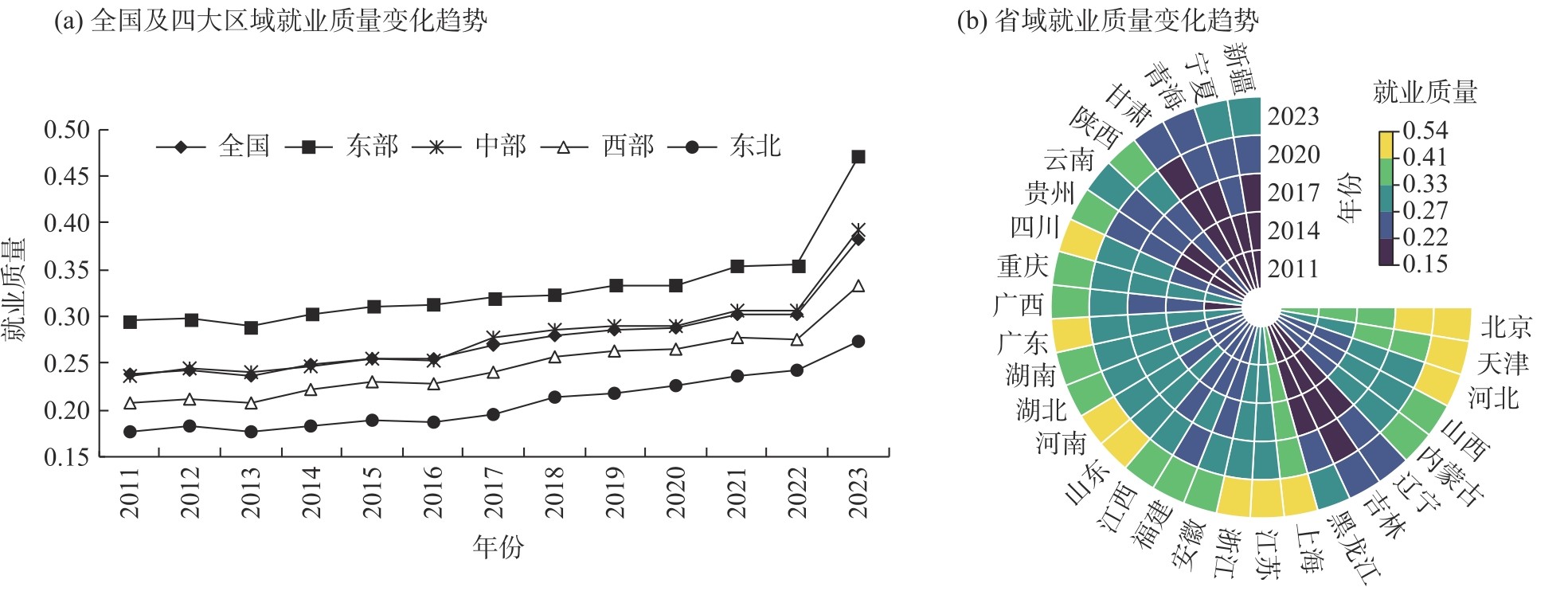
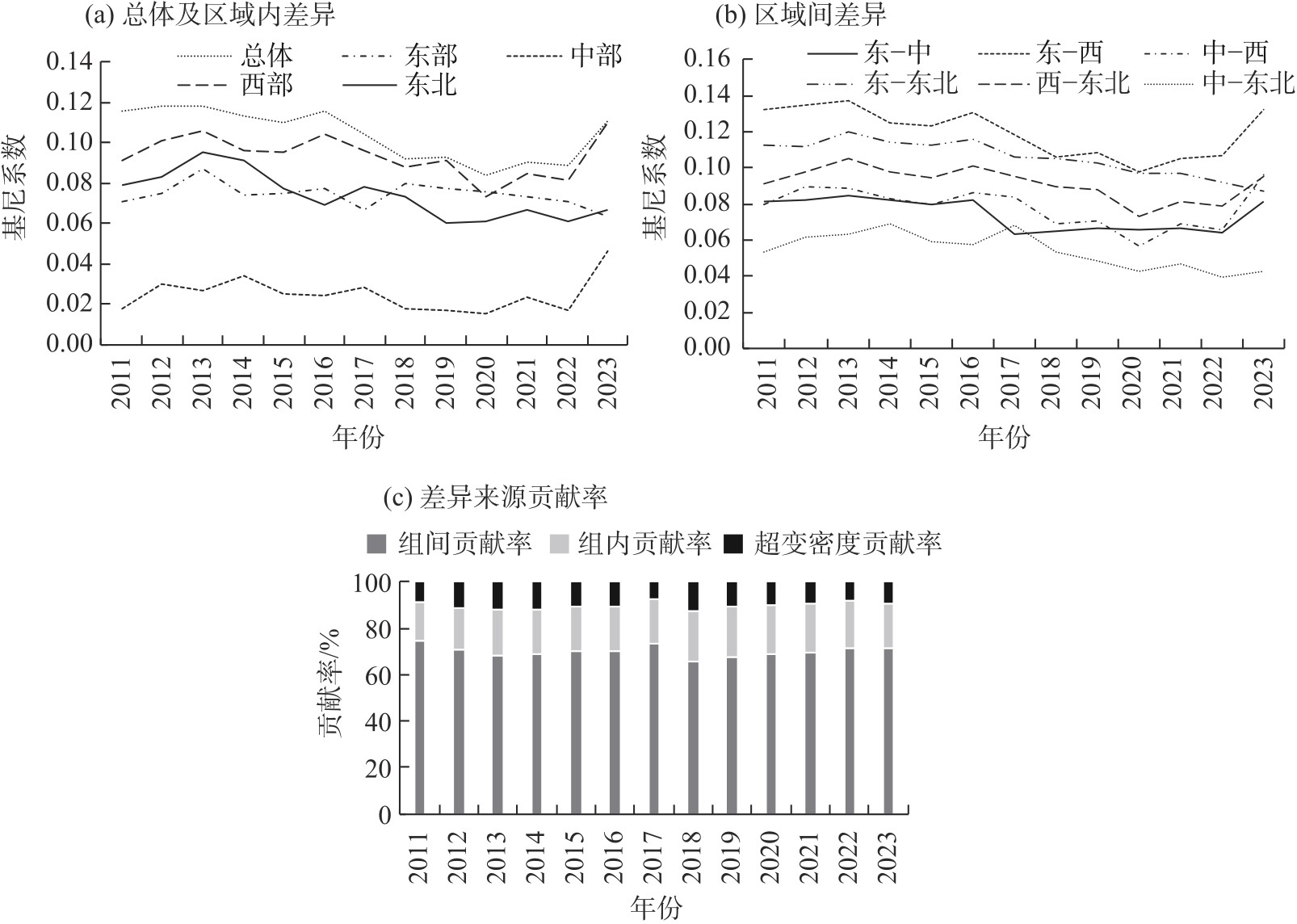
Fig. 2
Gini coefficient and decomposition of employment quality"
Tab. 2
Markov transition probability matrix for employment quality"
| 状态 | 跨期1 a | 跨期3 a | |||||||
|---|---|---|---|---|---|---|---|---|---|
| 低 | 中低 | 中高 | 高 | 低 | 中低 | 中高 | 高 | ||
| 低 | 0.828 | 0.161 | 0.000 | 0.011 | 0.655 | 0.310 | 0.023 | 0.011 | |
| 中低 | 0.043 | 0.734 | 0.223 | 0.000 | 0.000 | 0.416 | 0.528 | 0.056 | |
| 中高 | 0.000 | 0.022 | 0.707 | 0.272 | 0.000 | 0.000 | 0.479 | 0.521 | |
| 高 | 0.000 | 0.000 | 0.043 | 0.957 | 0.000 | 0.000 | 0.023 | 0.977 | |
Tab. 3
Spatial Markov transition probability matrix for employment quality"
| 邻域状态 | 本区状态 | 跨期1 a | 跨期3 a | |||||||
|---|---|---|---|---|---|---|---|---|---|---|
| 低 | 中低 | 中高 | 高 | 低 | 中低 | 中高 | 高 | |||
| 低 | 低 | 0.941 | 0.059 | 0.000 | 0.000 | 0.824 | 0.176 | 0.000 | 0.000 | |
| 中低 | 0.000 | 0.818 | 0.182 | 0.000 | 0.000 | 0.500 | 0.500 | 0.000 | ||
| 中高 | 0.000 | 0.000 | 0.800 | 0.200 | 0.000 | 0.000 | 0.600 | 0.400 | ||
| 高 | 0.000 | 0.012 | 0.213 | 0.775 | 0.000 | 0.000 | 0.333 | 0.667 | ||
| 中低 | 低 | 0.750 | 0.250 | 0.000 | 0.000 | 0.565 | 0.413 | 0.022 | 0.000 | |
| 中低 | 0.091 | 0.727 | 0.182 | 0.000 | 0.000 | 0.465 | 0.535 | 0.000 | ||
| 中高 | 0.000 | 0.038 | 0.808 | 0.154 | 0.000 | 0.000 | 0.696 | 0.304 | ||
| 高 | 0.000 | 0.000 | 0.083 | 0.917 | 0.000 | 0.000 | 0.111 | 0.889 | ||
| 中高 | 低 | 0.818 | 0.091 | 0.000 | 0.091 | 0.429 | 0.286 | 0.143 | 0.143 | |
| 中低 | 0.000 | 0.679 | 0.321 | 0.000 | 0.000 | 0.269 | 0.538 | 0.192 | ||
| 中高 | 0.000 | 0.020 | 0.706 | 0.275 | 0.000 | 0.000 | 0.366 | 0.634 | ||
| 高 | 0.000 | 0.000 | 0.038 | 0.962 | 0.000 | 0.000 | 0.000 | 1.000 | ||
| 高 | 低 | 0.850 | 0.150 | 0.000 | 0.000 | 0.806 | 0.194 | 0.000 | 0.000 | |
| 中低 | 0.000 | 0.893 | 0.107 | 0.000 | 0.034 | 0.724 | 0.241 | 0.000 | ||
| 中高 | 0.000 | 0.000 | 0.400 | 0.600 | 0.000 | 0.000 | 0.000 | 1.000 | ||
| 高 | 0.000 | 0.000 | 0.032 | 0.968 | 0.000 | 0.000 | 0.000 | 1.000 | ||
Tab. 4
Spatial convergence results of employment quality"
| 变量 | (1) 绝对收敛 | (2) 邻近距离矩阵 | (3) 经济矩阵 |
|---|---|---|---|
| β | -0.468***(-4.415) | -0.474***(-8.316) | -0.492***(-8.786) |
| θ | 0.629***(10.483) | 0.748***(3.512) | |
| ρ | 0.565***(8.828) | 0.687***(2.911) | |
| 收敛速度/% | 4.855 | 4.942 | 5.210 |
| 半程收敛周期 | 14.278 | 14.026 | 13.305 |
| 固定效应 | 控制 | 控制 | 控制 |
| N | 348 | 348 | 348 |
| R2 | 0.710 | 0.048 | 0.048 |
Tab. 5
Regression results of the econometric model"
| 变量 | (1) 混合估计效应模型 | (2) 固定效应模型 | (3) 系统GMM | (4) 差分GMM |
|---|---|---|---|---|
| L.emp | - | - | 1.925***(4.23) | 1.286***(6.29) |
| 金融发展水平 | 0.015***(3.40) | 0.036***(6.10) | 0.250**(2.35) | 0.060***(4.88) |
| 工业化水平 | -0.048(-0.97) | 0.193***(3.26) | 0.817**(2.10) | 0.403***(4.77) |
| 人口密度 | 0.004***(4.80) | 0.003(0.74) | -0.360***(-4.28) | 0.004*(1.93) |
| 对外开放水平 | 1.007(1.29) | 0.035(1.56) | 0.112***(6.37) | 0.024(0.56) |
| 交通便利度 | 0.064***(5.30) | 0.103*(1.95) | 3.086***(6.60) | 0.094(1.25) |
| PM2.5浓度 | -0.051***(-2.69) | -0.147***(-5.60) | -0.104***(-3.23) | -0.065*(-1.83) |
| 政府干预程度 | 0.186**(2.32) | 6.499***(6.83) | 0.267***(3.64) | 0.858***(5.71) |
| 常数项 | 0.119**(2.11) | 0.032(0.23) | 6.463***(7.90) | 1.630***(3.29) |
| 省份固定效应 | 否 | 是 | - | - |
| 时间固定效应 | 否 | 是 | - | - |
| Sargan检验 | - | - | 0.999 | 0.322 |
| AR(1) | - | - | 0.084 | 0.013 |
| AR(2) | - | - | 0.560 | 0.177 |
| N | 377 | 377 | 348 | 348 |
| R2 | 0.447 | 0.615 | - | - |
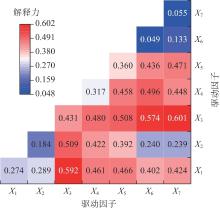
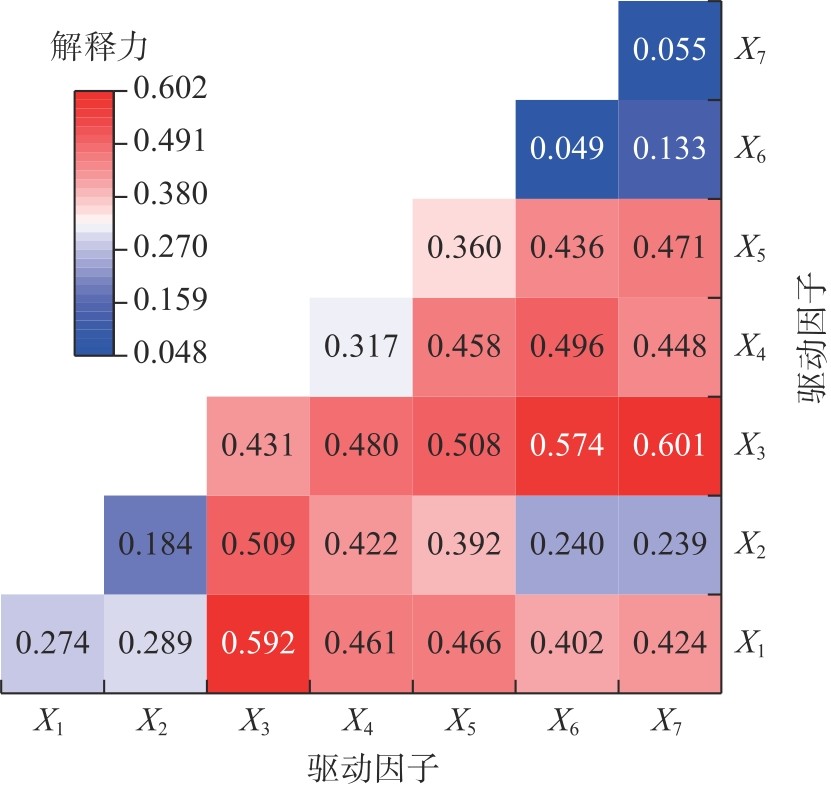
Fig. 3
Interaction detection results for employment quality"
| [1] | 蒲艳萍, 袁柏惠, 张岚欣. 中国新时代就业质量: 指标测算、来源分解及演变分析[J]. 宏观质量研究, 2024, 12(1): 1-15. |
| [Pu Yanping, Yuan Bohui, Zhang Lanxin. Quality of employment in China of the new era: Indicator measurement, source decomposition and evolution analysis[J]. Journal of Macro-Quality Research, 2024, 12(5): 1-15.] | |
| [2] | 蔡昉. 中国老龄化挑战的供给侧和需求侧视角[J]. 经济学动态, 2021(1): 27-34. |
| [Cai Fang. Supply- and demand-side impacts of aging on China’s economic growth[J]. Economic Perspectives, 2021(1): 27-34.] | |
| [3] | 王永钦, 董雯. 中国劳动力市场结构变迁——基于任务偏向型技术进步的视角[J]. 中国社会科学, 2023(11): 45-64, 205. |
| [Wang Yongqin, Dong Wen. The structural transformation of China’s labor market: A task-biased technological change perspective[J]. Social Sciences in China, 2023(11): 45-64, 205.] | |
| [4] | Anker R, Chernyshev I, Egger P, et al. Measuring decent work with statistical indicators[J]. International Labour Review, 2003, 142(2): 145-185. |
| [5] | 丁述磊, 刘翠花, 包文. 数字经济时代智慧城市对宏观就业质量的影响[J]. 宏观质量研究, 2024, 12(5): 30-43. |
| [Ding Shulei, Liu Cuihua, Bao Wen. The impact of smart cities on macro employment quality in the digital economy era[J]. Journal of Macro-Quality Research, 2024, 12(5): 30-43.] | |
| [6] | 洪兴建, 祁垒, 田中宝, 等. 数据要素共享对就业质量的影响研究[J]. 统计与信息论坛, 2025, 40(7): 100-113. |
| [Hong Xingjian, Qi Lei, Tian Zhongbao, et al. Research on the impact of data factor sharing on employment quality[J]. Journal of Statistics and Information, 2025, 40(7): 100-113.] | |
| [7] | 王阳. 中国制造业就业质量水平评价研究——兼析促进制造业高质量就业的政策着力点[J]. 经济体制改革, 2024(6): 161-169. |
| [Wang Yang. Study on the evaluation of employment quality level in China’s manufacturing industry: Analysis of policy focuses on promoting high-quality employment[J]. Reform of Economic System, 2024(6): 161-169.] | |
| [8] | 陆跃祥, 梁占永, 邱康权. 2010—2021年中国就业水平的测度及量化分析[J]. 上海经济研究, 2024(1): 88-105. |
| [Lu Yuexiang, Liang Zhanyong, Qiu Kangquan. Measurement and quantitative analysis of China’s employment level during 2010—2021[J]. Shanghai Economic Review, 2024(1): 88-105.] | |
| [9] | 贾利雯, 吕康银, 梁孝成. 数字素养对就业质量的影响研究[J]. 税务与经济, 2024(6): 89-98. |
| [Jia Liwen, Lü Kangyin, Liang Xiaocheng. A study of the effect of digital literacy on the quality of employment[J]. Taxation and Economy, 2024(6): 89-98.] | |
| [10] | 郭露, 王蕾. 数字经济、技能匹配与农民工就业质量[J]. 山西财经大学学报, 2025, 47(2): 29-42. |
| [Guo Lu, Wang Lei. Digital economy, skill matching and employment quality of rural migrant workers[J]. Journal of Shanxi University of Finance and Economics, 2025, 47(2): 29-42.] | |
| [11] | 姜琪, 单耀莹. 数字经济发展与就业质量提升: 促进还是抑制?[J]. 经济与管理评论, 2024, 40(4): 123-135. |
| [Jiang Qi, Shan Yaoying. Digital economic development and employment quality improvement: Promotion or inhibition?[J]. Review of Economy and Management, 2024, 40(4): 123-135.] | |
| [12] | 刘雅欣. 数字普惠金融、产业结构与就业质量[J]. 调研世界, 2023(12): 45-54. |
| [Liu Yaxin. Digital inclusive finance, industrial structure and employment quality[J]. The World of Survey and Research, 2023(12): 45-54.] | |
| [13] | 田丹. 财政压力如何影响就业质量——基于地方政府收支行为视角的实证研究[J]. 学习与实践, 2022(10): 78-86. |
| [Tian Dan. How fiscal pressure affects employment quality? An empirical study based on the perspective of local government revenue and expenditure behavior[J]. Study and Practice, 2022(10): 78-86.] | |
| [14] | 戚聿东, 刘翠花, 丁述磊. 数字经济发展、就业结构优化与就业质量提升[J]. 经济学动态, 2020(11): 17-35. |
| [Qi Yudong, Liu Cuihua, Ding Shulei. Digital economic development, employment structure optimization and employment quality upgrading[J]. Economic Perspectives, 2020(11): 17-35.] | |
| [15] |
Dagum C. A new approach to the decomposition of the Gini income inequality ratio[J]. Empirical Economics, 1997, 22(4): 515-531.
doi: 10.1007/BF01205777 |
| [16] | 陈明华, 张晓萌, 刘玉鑫, 等. 绿色TFP增长的动态演进及趋势预测——基于中国五大城市群的实证研究[J]. 南开经济研究, 2020(1): 20-44. |
| [Chen Minghua, Zhang Xiaomeng, Liu Yuxin, et al. Dynamic evolution and trend prediction of green TFP growth: An empirical research based on five urban agglomerations in China[J]. Nankai Economic Studies, 2020(1): 20-44.] | |
| [17] |
高福鑫, 赵玲, 魏琼. 乡村非农就业水平的时空格局及动态演进——以青海省为例[J]. 干旱区地理, 2023, 46(12): 2111-2119.
doi: 10.12118/j.issn.1000-6060.2023.123 |
|
[Gao Fuxin, Zhao Ling, Wei Qiong. Spatiotemporal pattern and dynamic evolution of rural non-farm employment: A case of Qinghai Province[J]. Arid Land Geography, 2023, 46(12): 2111-2119.]
doi: 10.12118/j.issn.1000-6060.2023.123 |
|
| [18] |
任诗琦, 王永瑜. 黄河流域地级市绿色发展水平测度与空间收敛性研究[J]. 干旱区地理, 2025, 48(6): 1031-1042.
doi: 10.12118/j.issn.1000-6060.2024.702 |
|
[Ren Shiqi, Wang Yongyu. Measurement and spatial convergence of green development level of prefecture-level cities in the Yellow River Basin[J]. Arid Land Geography, 2025, 48(6): 1031-1042.]
doi: 10.12118/j.issn.1000-6060.2024.702 |
|
| [19] | 钱琛, 陈海滨, 侯现慧. 生态建设背景下陕西省植被覆盖时空变化及其影响因素研[J]. 干旱区地理, 2020, 43(2): 425-433. |
| [Qian Chen, Chen Haibin, Hou Xianhui. Temporal and spatial variation of vegetation cover and its influencing factors in Shaanxi Province in the context of ecological construction[J]. Arid Land Geography, 2020, 43(2): 425-433.] | |
| [20] |
王劲峰, 徐成东. 地理探测器:原理与展望[J]. 地理学报, 2017, 72(1): 116-134.
doi: 10.11821/dlxb201701010 |
|
[Wang Jinfeng, Xu Chengdong. Geodetector: Principle and prospective[J]. Acta Geographica Sinica, 2017, 72(1): 116-134.]
doi: 10.11821/dlxb201701010 |
|
| [21] |
王紫彦, 牛莉芹, 程占红. 生态福利绩效时空演化及影响因素研究——以山西省为例[J]. 干旱区地理, 2024, 47(12): 2152-2163.
doi: 10.12118/j.issn.1000-6060.2024.142 |
|
[Wang Ziyan, Niu Liqin, Cheng Zhanhong. Temporal and spatial evolution of ecological welfare performance and its influencing factors: A case of Shanxi Province[J]. Arid Land Geography, 2024, 47(12): 2152-2163.]
doi: 10.12118/j.issn.1000-6060.2024.142 |
|
| [22] | 司小飞. 中国高质量就业水平的时空分异及影响因素分析[J]. 西北人口, 2025, 46(1): 87-101. |
| [Si Xiaofei. Analysis of the spatial-temporal variation in high-quality employment level and its determinants in China[J]. Northwest Population Journal, 2025, 46(1): 87-101.] | |
| [23] |
江剑平, 李祎, 何召鹏. 中国新质生产力与高质量就业耦合协调度变化特征[J]. 经济地理, 2025, 45(2): 144-152.
doi: 10.15957/j.cnki.jjdl.2025.02.014 |
|
[Jiang Jianping, Li Yi, He Zhaopeng. Change characteristics of coupling coordination degree between new quality productive forces and high-quality employment in China[J]. Economic Geography, 2025, 45(2): 144-152.]
doi: 10.15957/j.cnki.jjdl.2025.02.014 |
|
||

