Arid Land Geography ›› 2026, Vol. 49 ›› Issue (5): 928-938.doi: 10.12118/j.issn.1000-6060.2025.327
• Ecology and Environment • Previous Articles Next Articles
LI Wenmei( ), WU Xinnian(), REN Heng, LI Na, ZHANG Jing
Received:2025-06-05
Revised:2025-07-30
Online:2026-05-25
Published:2026-05-25
Contact:
WU Xinnian
E-mail:liwm@llas.ac.cn;wuxn@lzb.ac.cn
LI Wenmei, WU Xinnian, REN Heng, LI Na, ZHANG Jing. Research trend of the ecological environment in the Yellow River Basin based on bibliometrics[J].Arid Land Geography, 2026, 49(5): 928-938.
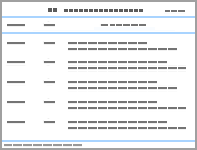
Tab. 1
Partial results of time-weighted keyword scores"
| 关键词 | 时间加权值 | 2015—2024年 加权得分 | ||||||||||
|---|---|---|---|---|---|---|---|---|---|---|---|---|
| 2015年 | 2016年 | 2017年 | 2018年 | 2019年 | 2020年 | 2021年 | 2022年 | 2023年 | 2024年 | 2015—2024年 变化量 | ||
| 黄河流域 | 0.5 | 0.7 | 0.9 | 1.0 | 1.0 | 1.0 | 1.0 | 1.0 | 1.0 | 1.0 | 1.6 | 0.8 |
| 高质量发展 | 0.1 | 0.2 | 0.4 | 0.5 | 0.7 | 0.9 | 0.9 | 1.0 | 1.0 | 1.0 | 1.5 | 0.2 |
| 生态保护 | 0.3 | 0.5 | 0.6 | 0.8 | 0.9 | 0.9 | 0.9 | 1.0 | 1.0 | 1.0 | 1.6 | 0.7 |
| 生态环境 | 0.4 | 0.6 | 0.7 | 0.8 | 0.9 | 0.9 | 0.9 | 1.0 | 1.0 | 1.0 | 1.6 | 0.7 |
| 耦合协调 | 0.1 | 0.1 | 0.2 | 0.4 | 0.5 | 0.7 | 0.8 | 0.9 | 0.9 | 1.0 | 1.3 | 0.2 |
| 协同治理 | 0.2 | 0.3 | 0.4 | 0.6 | 0.7 | 0.8 | 0.9 | 0.9 | 1.0 | 1.0 | 1.5 | 0.2 |
| 水土保持 | 0.3 | 0.4 | 0.5 | 0.7 | 0.8 | 0.8 | 0.9 | 0.9 | 0.9 | 1.0 | 1.4 | 0.4 |
| 黄河 | 0.6 | 0.8 | 0.9 | 0.9 | 0.9 | 1.0 | 1.0 | 1.0 | 1.0 | 1.0 | 1.6 | 0.8 |
| 生态效率 | 0.1 | 0.2 | 0.4 | 0.5 | 0.7 | 0.8 | 0.8 | 0.9 | 0.9 | 1.0 | 1.4 | 0.2 |
| 时空演变 | 0.1 | 0.2 | 0.3 | 0.4 | 0.6 | 0.7 | 0.8 | 0.9 | 0.9 | 1.0 | 1.4 | 0.1 |
| 水资源 | 0.4 | 0.5 | 0.7 | 0.8 | 0.8 | 0.9 | 0.9 | 0.9 | 1.0 | 1.0 | 1.6 | 0.6 |
| 生态环境保护 | 0.2 | 0.4 | 0.5 | 0.7 | 0.8 | 0.8 | 0.9 | 0.9 | 0.9 | 1.0 | 1.5 | 0.4 |
| 生态补偿 | 0.2 | 0.3 | 0.4 | 0.6 | 0.7 | 0.8 | 0.9 | 0.9 | 0.9 | 1.0 | 1.4 | 0.3 |
| 影响因素 | 0.3 | 0.4 | 0.6 | 0.7 | 0.8 | 0.9 | 0.9 | 0.9 | 0.9 | 1.0 | 1.5 | 0.3 |
| 绿色发展 | 0.3 | 0.5 | 0.6 | 0.8 | 0.9 | 0.9 | 0.9 | 1.0 | 1.0 | 1.0 | 1.6 | 0.6 |
| 城市群 | 0.2 | 0.4 | 0.5 | 0.7 | 0.8 | 0.8 | 0.9 | 0.9 | 0.9 | 1.0 | 1.5 | 0.4 |
| 地理探测器 | 0.0 | 0.1 | 0.1 | 0.2 | 0.3 | 0.5 | 0.6 | 0.8 | 0.9 | 1.0 | 1.3 | 0.1 |
| 可持续发展 | 0.4 | 0.6 | 0.7 | 0.8 | 0.9 | 0.9 | 0.9 | 1.0 | 1.0 | 1.0 | 1.6 | 0.7 |
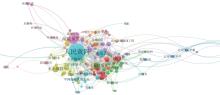
Fig. 1
Visualization of keywords and main source journals in the Yellow River Basin"
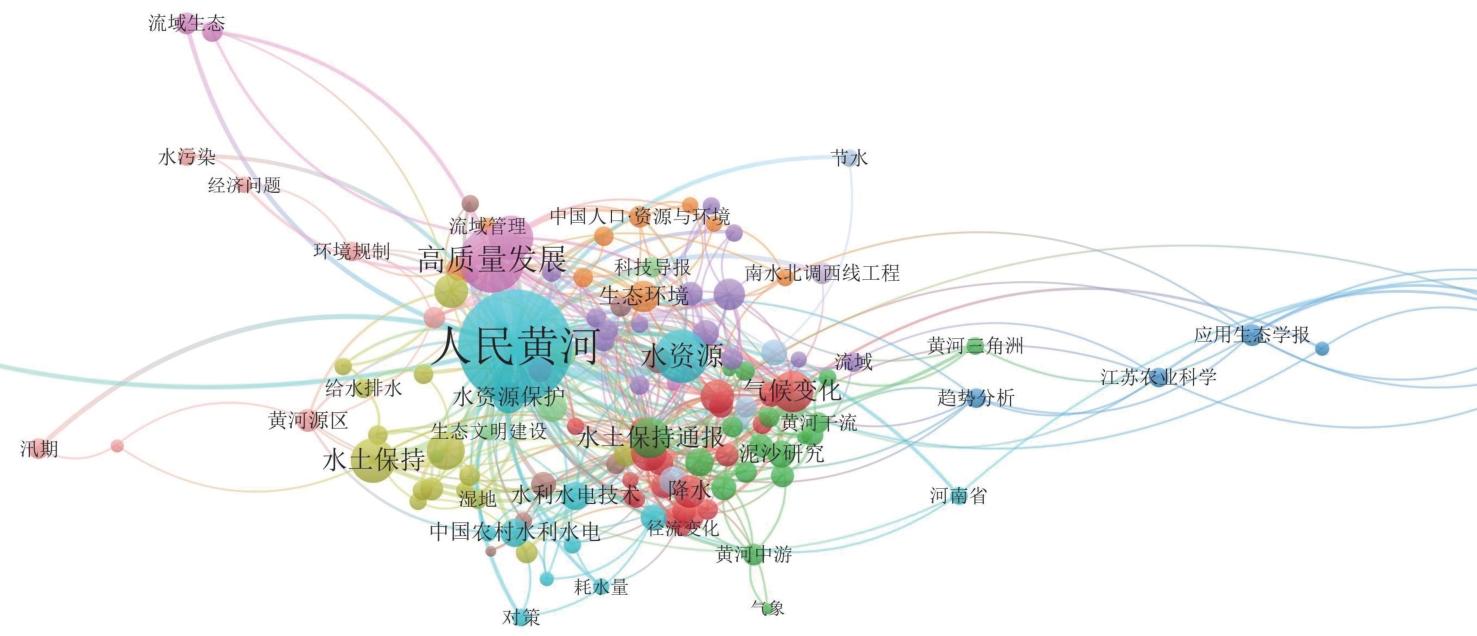
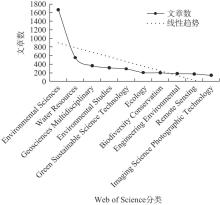
Fig. 2
TOP 10 publishing journals in the field of eco-environmental issues research in the Yellow River Basin based on the Web of Science database"
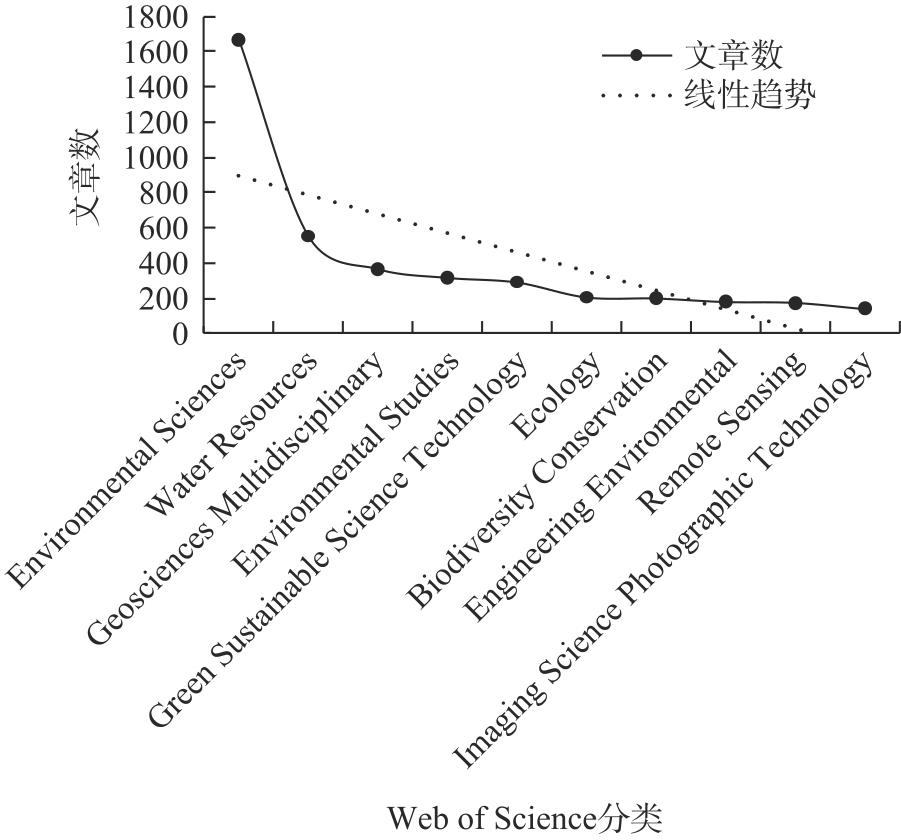
Fig. 3
Cluster of dissimilar matrix system"
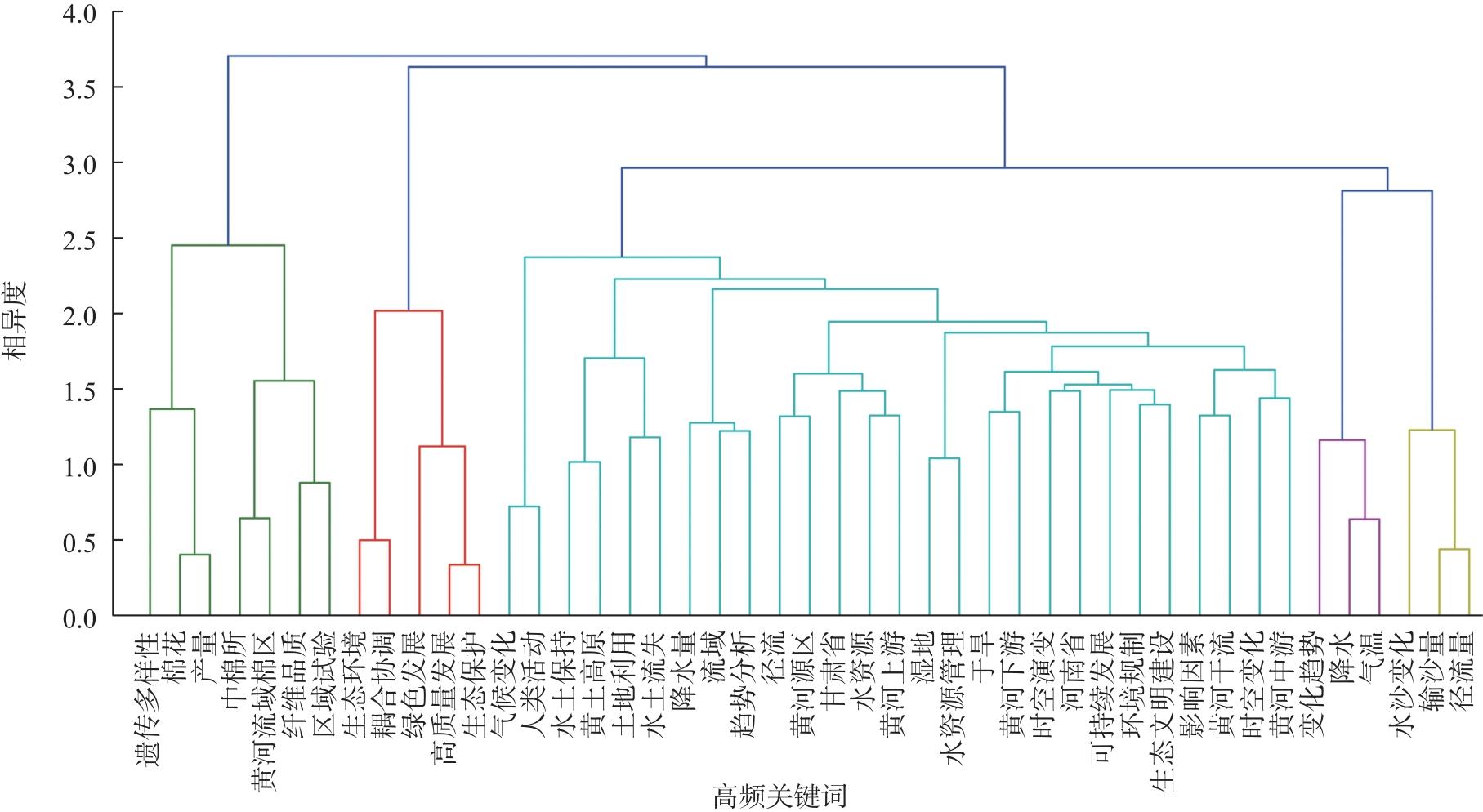
Fig. 4
Cluster of high-frequency keywords in Yellow River Basin research"
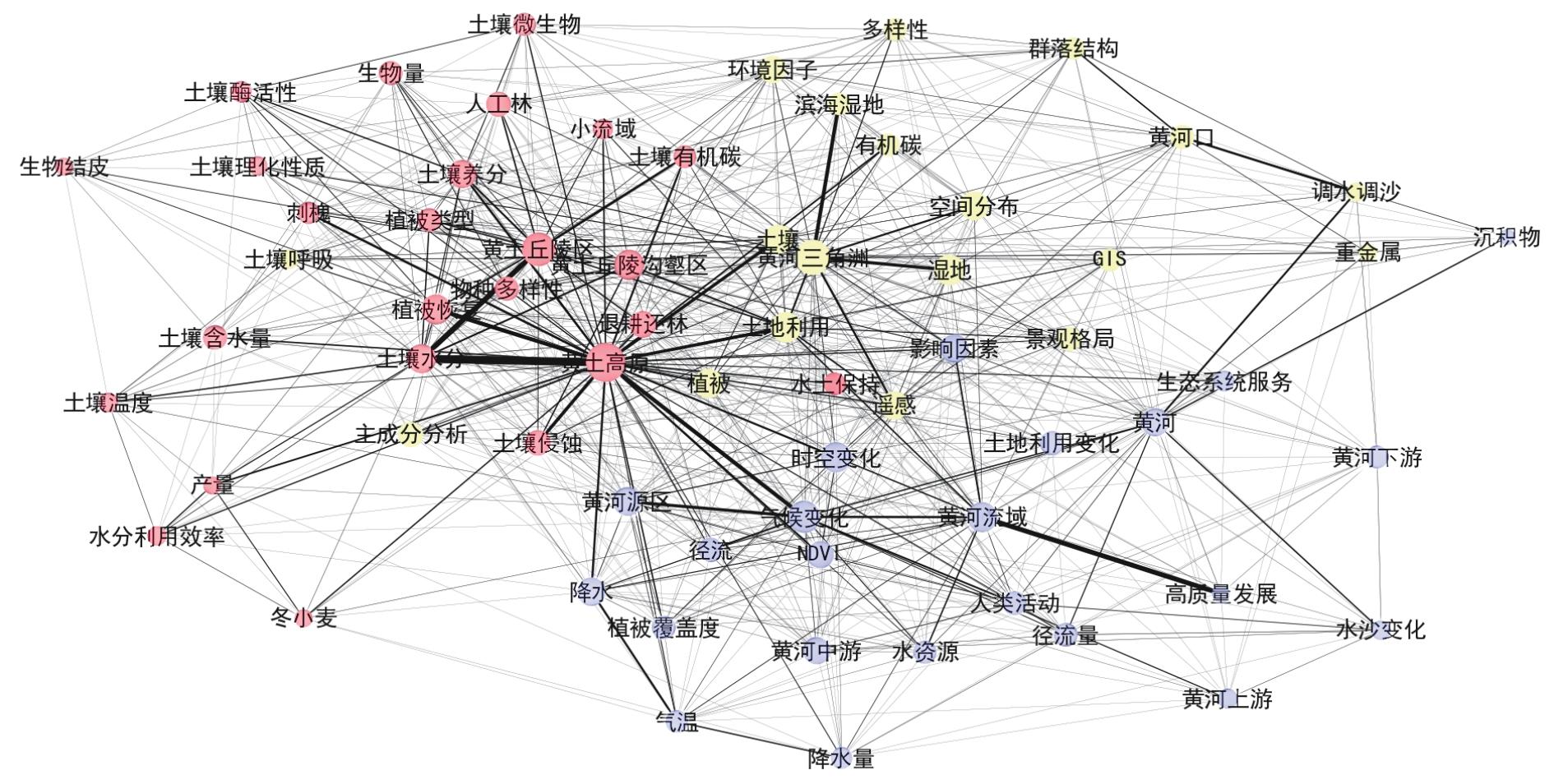
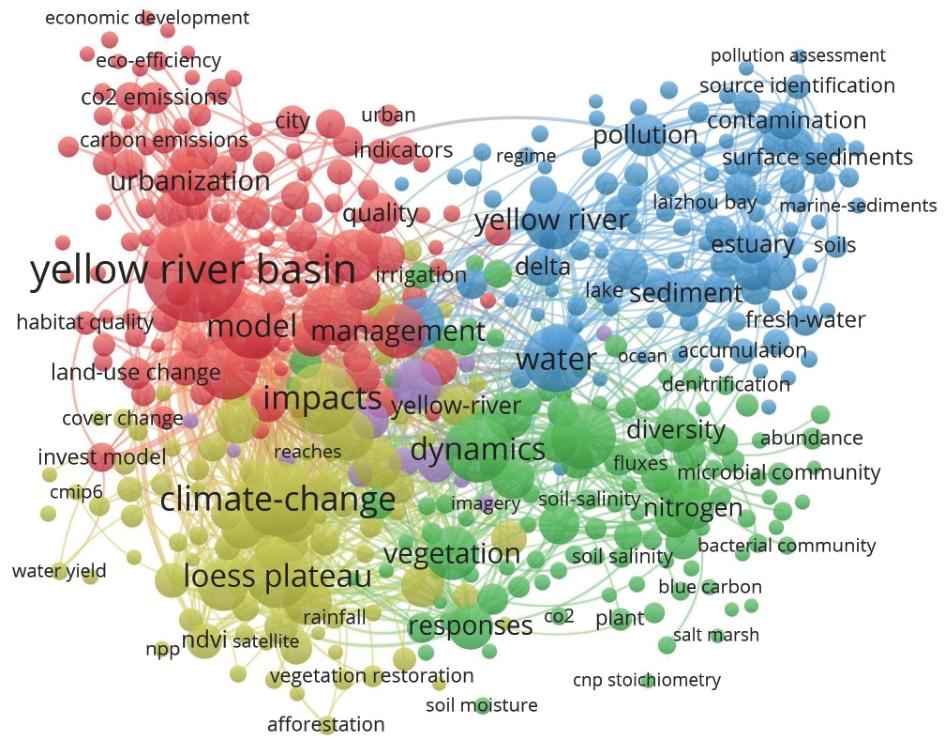
Fig. 5
Keyword clustering in the field of ecological environment research of the Yellow River Basin based on the Web of Science database"
Tab. 2
Comparative analysis of important river basins at home and abroad"
| 流域名称 | 治理模式 | 研究重点 | 核心数据指标 | 参考文献 |
|---|---|---|---|---|
| 黄河流域 | 政策驱动型 | 生态保护与高质量发展协同机制 | 水资源开发利用率;水土流失面积 | [ |
| 长江流域 | 市场-政策混合型 | 生态经济系统耦合与产业绿色转型 | 绿色GDP占比;氮磷减排量;企业参与度 | [ |
| 亚马逊流域 | 社区参与型 | 生物多样性保护与原住民权益保障 | 森林砍伐率年降幅;社区治理参与度 | [ |
| 密西西比河 | 技术治理型 | 农业面源污染控制与洪水风险管理 | 农业面源污染减少率;防洪工程覆盖率 | [ |
| 莱茵河流域 | 市场主导型(PPP模式) | 跨国水权交易与航运生态影响 | 跨国水权交易量;航运碳排放降幅 | [ |
| [1] | 王春秀, 冉美丽. 学科主题演化定量分析的理论基础探析[J]. 现代情报, 2008(6): 48-50. |
| [Wang Chunxiu, Ran Meili. Theory foundation discussion about quantitative analysis of subjects theme evaluation[J]. Journal of Modern Information, 2008(6): 48-50.] | |
| [2] |
静发冲, 李晨英, 韩明杰, 等. 基于文本挖掘的美国NSF生物科学部新兴前沿项目主题分析[J]. 现代情报, 2014, 34(12): 107-112.
doi: 10.3969/j.issn.1008-0821.2014.12.020 |
| [Jing Fachong, Li Chenying, Han Mingjie, et al. Topic analysis of emerging cutting-edge projects of NSF Bioscience Department based on text mining[J]. Journal of Modern Information, 2014, 34(12): 107-112.] | |
| [3] | 刘自强, 王效岳, 白如江. 基于时间序列模型的研究热点分析预测方法研究[J]. 情报理论与实践, 2016, 39(5): 27-33. |
| [Liu Ziqiang, Wang Xiaoyue, Bai Rujiang. Research on hot spot analysis and prediction method based on time series model[J]. Information Theory Practice, 2016, 39(5): 27-33.] | |
| [4] | 吴志祥, 赵凯蕊, 何超, 等. 学科领域主题演化与预测研究: 理论、方法与价值[J]. 情报理论与实践, 2022, 45(6): 98-105. |
| [Wu Zhixiang, Zhao Kairui, He Chao, et al. The topic evolution and prediction of scientific disciplines and research fields: Theory, methods and value[J]. Information Science: Theory Application, 2022, 45(6): 98-105.] | |
| [5] |
龙艺璇, 伊惠芳. 国内外公共政策文本分析中主题模型应用研究进展[J]. 知识管理论坛, 2020, 5(5): 305-316.
doi: 10.13266/j.issn.2095-5472.2020.029 |
|
[Long Yixuan, Yi Huifang. Application of topic models in the analysis of public policy: A review of the research status in domestic and foreign[J]. Knowledge Management Forum, 2020, 5(5): 305-316.]
doi: 10.13266/j.issn.2095-5472.2020.029 |
|
| [6] |
赵雪雁, 杜昱璇, 李花, 等. 黄河中游城镇化与生态系统服务耦合关系的时空变化[J]. 自然资源学报, 2021, 36(1): 131-147.
doi: 10.31497/zrzyxb.20210109 |
|
[Zhao Xueyan, Du Yuxuan, Li Hua, et al. Spatiotemporal changes of the coupling relationship between urbanization and ecosystem services in the middle reaches of the Yellow River[J]. Journal of Natural Resources, 2021, 36(1): 131-147.]
doi: 10.31497/zrzyxb.20210109 |
|
| [7] | 习近平. 黄河流域生态保护和高质量发展座谈会上的讲话[J]. 求是, 2019, 3(20): 4-11. |
| [Xi Jinping. Speech at a symposium on ecological protection and high-quality development in the Yellow River Basin[J]. Qiushi, 2019, 3(20): 4-11.] | |
| [8] | 计伟, 刘海江, 高吉喜, 等. 黄河流域生态质量时空变化分析[J]. 环境科学研究, 2021, 34(7): 1700-1709. |
| [Ji Wei, Liu Haijiang, Gao Jixi, et al. Temporal and spatial changes of ecological quality in the Yellow River Basin[J]. Environmental Science Research, 2021, 34(7): 1700-1709.] | |
| [9] | 杨大文, 杨雨亭, 高光耀, 等. 黄河流域水循环规律与水土过程耦合效应[J]. 中国科学基金, 2021, 35(4): 544-551. |
| [Yang Dawen, Yang Yuting, Gao Guangyao, et al. Water cycle patterns and coupling effects of water-soil processes in the Yellow River Basin[J]. Bulletin of National Natural Science Foundation of China, 2021, 35(4): 544-551.] | |
| [10] | 王浩, 胡鹏. 水循环视角下的黄河流域生态保护关键问题[J]. 水利学报, 2020, 51(9): 1009-1014. |
| [Wang Hao, Hu Peng. Key issues of ecological protection in the Yellow River Basin from a water cycle perspective[J]. Journal of Hydraulic Engineering, 2020, 51(9): 1009-1014.] | |
| [11] |
廖洪圣, 卫伟, 石宇. 黄土丘陵区典型流域土壤侵蚀时空演变特征及其驱动机制: 以祖厉河为例[J]. 生态环境学报, 2024, 33(6): 908-918.
doi: 10.16258/j.cnki.1674-5906.2024.06.008 |
| [Liao Hongsheng, Wei Wei, Shi Yu. Spatiotemporal evolution characteristics and driving mechanisms of soil erosion in a typical watershed of the loess hilly region: A case study of the Zuli River[J]. Ecology and Environmental Sciences, 2024, 33(6): 908-918.] | |
| [12] | 迟妍妍, 王夏晖, 刘斯洋, 等. 黄河流域水-能源-生态系统协同增效战略体系构建研究[J]. 环境科学研究, 2024, 37(1): 11-23. |
| [Chi Yanyan, Wang Xiahui, Liu Siyang, et al. Construction of a synergistic strategy system for water-energy-ecosystem in the Yellow River Basin[J]. Research of Environmental Sciences, 2024, 37(1): 11-23.] | |
| [13] | 孙茜, 贾颖颖, 孙高祚, 等. 数字技术赋能黄河流域创新发展治理研究[J]. 中国科学院院刊, 2024, 39(6): 1000-1011. |
| [Sun Qian, Jia Yingying, Sun Gaozuo, et al. Digital technology enabling innovative development governance in the Yellow River Basin[J]. Bulletin of Chinese Academy of Sciences, 2024, 39(6): 1000-1011.] | |
| [14] |
孙威, 刘鸿宇, 杨子涵. 长江、黄河两大流域可持续发展研究比较[J]. 资源科学, 2024, 46(11): 2289-2303.
doi: 10.18402/resci.2024.11.15 |
| [Sun Wei, Liu Hongyu, Yang Zihan. Comparative study on sustainable development of the Yangtze River Basin and Yellow River Basin[J]. Resources Science, 2024, 46(11): 2289-2303.] | |
| [15] | 奉国和, 孔泳欣. 基于时间加权关键词词频分析的学科热点研究[J]. 情报学报, 2020, 39(1): 100-110. |
| [Feng Guohe, Kong Yongxin. Research on disciplinary hotspots based on time-weighted keyword frequency analysis[J]. Journal of the China Society for Scientific and Technical Information, 2020, 39(1): 100-110.] | |
| [16] |
van Eck N J, Waltman L. Software survey: VOSviewer, a computer program for bibliometric mapping[J]. Scientometrics, 2010, 84(2): 523-538.
pmid: 20585380 |
| [17] |
孙冰, 康敏, 毛鸿影. 基于共词聚类与可视化的开放式创新国外研究热点与主题分析[J]. 现代情报, 2018, 38(9): 122-131.
doi: 10.3969/j.issn.1008-0821.2018.09.020 |
| [Sun Bing, Kang Min, Mao Hongying. Analysis of foreign research hotspots and topics in open innovation based on co-word clustering and visualization[J]. Journal of Modern Information, 2018, 38(9): 122-131.] | |
| [18] | 骆常新, 刘丽丽. 基于文献计量的黄河流域水资源利用研究进展[J]. 水资源开发与管理, 2024, 10(5): 47-55. |
| [Luo Changxin, Liu Lili. Research progress on water resources utilization in the Yellow River Basin based on bibliometrics[J]. The Global Seabuckthorn Research and Development, 2024, 10(5): 47-55.] | |
| [19] | 贺梦微, 杨小林. 黄河流域生态环境保护研究热点和趋势分析——基于CiteSpace的可视化分析[J]. 河南理工大学学报(社会科学版), 2022, 23(4): 57-64. |
| [He Mengwei, Yang Xiaolin. Analysis of research hotspots and trends in ecological environmental protection of the Yellow River Basin: A visualized analysis based on CiteSpace[J]. Journal of Henan Polytechnic University (Social Sciences Edition), 2022, 23(4): 57-64.] | |
| [20] | 夏军. 黄河流域综合治理与高质量发展的机遇与挑战[J]. 人民黄河, 2019, 41(10): 157. |
| [Xia Jun. Opportunities and challenges in the comprehensive management and high-quality development of the Yellow River Basin[J]. Yellow River, 2019, 41(10): 157.] | |
| [21] | 郭庆宾, 刘琪, 张冰倩. 环境规制是否抑制了国际R&D溢出效应——以长江经济带为例[J]. 长江流域资源与环境, 2016, 25(12): 1807-1814. |
| [Guo Qingbin, Liu Qi, Zhang Bingqian. Does environmental regulation barrage international R&D spillovers: A case study of the Yangtze River Economic Belt[J]. Resources and Environment in the Yangtze Basin, 2016, 25(12): 1807-1814.] | |
| [22] |
Bouckaert F W, Wei Y, Pittock J, et al. River basin governance enabling pathways for sustainable management: A comparative study between Australia, Brazil, China and France[J]. AMBIO, 2022, 51: 1871-1888.
doi: 10.1007/s13280-021-01699-4 |
| [23] | 王思凯, 张婷婷, 高宇, 等. 莱茵河流域综合管理和生态修复模式及其启示[J]. 长江流域资源与环境, 2018, 27(1): 215-224. |
| [Wang Sikai, Zhang Tingting, Gao Yu, et al. Comprehensive management and ecological restoration model of the Rhine River Basin and its enlightenment[J]. Resources and Environment in the Yangtze Basin, 2018, 27(1): 215-224.] | |
| [24] | 陈维肖, 段学军, 邹辉. 大河流域岸线生态保护与治理国际经验借鉴——以莱茵河为例[J]. 长江流域资源与环境, 2019, 28(11): 2786-2792. |
| [Chen Weixiao, Duan Xuejun, Zhou Hui. On the international experience in the Large River Basin’s ecological protection and comprehensive management of waterfront resources: A case study of Rhine River[J]. Resources and Environment in the Yangtze Basin, 2019, 28(11): 2786-2792.] | |
| [25] | 郭晋伟. 黄河流域土壤侵蚀时空演变及其对碳源/汇关系的影响[D]. 咸阳: 西北农林科技大学, 2024. |
| [Guo Jinwei. Spatiotemporal evolution of soil erosion and its impact on carbon source/sink relationships in the Yellow River Basin[D]. Xianyang: Northwest A & F University, 2024.] | |
| [26] |
陈春华, 王玉, 张恒, 等. 黄河流域农业用水效率-经济发展-生态环境耦合协调发展评价[J]. 中国农村水利水电, 2024(6): 114-123.
doi: 10.12396/znsd.231380 |
|
[Chen Chunhua, Wang Yu, Zhang Heng, et al. Evaluation of coupling coordination development of agricultural water use efficiency-economic development-ecological environment in the Yellow River Basin[J]. China Rural Water and Hydropower, 2024(6): 114-123.]
doi: 10.12396/znsd.231380 |
|
| [27] | 陆中桂, 康哲, 李巍, 等. 水量-水质-生态需水综合视角下黄河流域水稀缺评估[J]. 水资源保护, 2024, 40(4): 73-81. |
| [Lu Zhonggui, Kang Zhe, Li Wei, et al. Water scarcity assessment in the Yellow River Basin from a comprehensive perspective of water quantity-water quality-ecological water demand[J]. Water Resources Protection, 2024, 40(4): 73-81.] | |
| [28] |
侯晋星, 潘换换, 杜自强, 等. 山西黄河流域水生态系统服务时空分析[J]. 干旱区地理, 2024, 47(6): 1047-1060.
doi: 10.12118/j.issn.1000-6060.2023.346 |
|
[Hou Jinxing, Pan Huanhuan, Du Ziqiang, et al. Spatiotemporal analysis of water ecosystem services in Shanxi section of the Yellow River Basin[J]. Arid Land Geography, 2024, 47(6): 1047-1060.]
doi: 10.12118/j.issn.1000-6060.2023.346 |
|
| [29] |
王嘉嘉, 张轲. 生态保护视角下的黄河流域高质量发展非均衡性及演进趋势分析[J]. 干旱区地理, 2024, 47(4): 695-706.
doi: 10.12118/j.issn.1000-6060.2023.182 |
| [Wang Jiajia, Zhang Ke. Analysis of non-equilibrium and evolution trend of high-quality development in the Yellow River Basin from the perspective of ecological protection[J]. Arid Land Geography, 2024, 47(4): 695-706.] | |
| [30] | Xin Y, Liu X Y. Coupling driving factors of eco-environmental protection and high-quality development in the Yellow River Basin[J]. Frontiers in Environmental Science, 2022, 10, 951218, doi: 10.3389/fenvs.2022.951218. |
| [31] | 陈仕豪, 门宝辉, 庞金凤, 等. 黄河流域非平稳气象干旱特征的重构及时空演变规律[J]. 水力发电学报, 2024, 43(7): 1-13. |
| [Chen Shihao, Men Baohui, Pang Jinfeng, et al. Reconstruction of non-stationary meteorological drought series and its spatiotemporal patterns in Yellow River Basin[J]. Journal of Hydroelectric Engineering, 2024, 43(7): 1-13.] | |
| [32] |
魏伟, 袁在武, 魏晓旭, 等. 重要生态功能区GEP与经济发展的耦合协调关系——以黄河流域为例[J]. 经济地理, 2024, 44(11): 161-172.
doi: 10.15957/j.cnki.jjdl.2024.11.017 |
| [Wei Wei, Yuan Zaiwu, Wei Xiaoxu, et al. Coupling coordination relationship between GEP of important ecological function areas and economic development: A case study of the Yellow River Basin[J]. Economic Geography, 2024, 44(11): 161-172.] | |
| [33] | 李达, 林龙圳, 林震, 等. 黄河流域生态保护和高质量发展的EKC检验[J]. 生态学报, 2021, 41(10): 3965-3974. |
| [Li Da, Lin Longzhen, Lin Zhen, et al. EKC test of ecological protection and high-quality development in the Yellow River Basin[J]. Acta Ecologica Sinica, 2021, 41(10): 3965-3974.] | |
| [34] |
王奕淇, 李国平. 基于SD模型的黄河流域生态环境与社会经济发展可持续性模拟[J]. 干旱区地理, 2022, 45(3): 901-911.
doi: 10.12118/j.issn.1000-6060.2021.401 |
|
[Wang Yiqi, Li Guoping. Sustainability simulation of ecological environment and socio-economic development in the Yellow River Basin based on SD mode[J]. Arid Land Geography, 2022, 45(3): 901-911.]
doi: 10.12118/j.issn.1000-6060.2021.401 |
|
| [35] | 王蕾. 黄河流域多时空尺度径流变化归因及未来预测研究[D]. 咸阳: 西北农林科技大学, 2024. |
| [Wang Lei. Attribution of runoff changes and future prediction at multiple spatiotemporal scales in the Yellow River Basin[D]. Xianyang: Northwest A & F University, 2024.] | |
| [36] | 刘海猛, 卢佳祎, 王成新, 等. 基于栅格尺度的黄河流域人地关系时空耦合分析[J]. 生态学报, 2024, 44(15): 6499-6512. |
| [Liu Haimeng, Lu Jiayi, Wang Chengxin, et al. Spatiotemporal coupling analysis of human-land relationship in the Yellow River Basin based on grid scale[J]. Acta Ecologica Sinica, 2024, 44(15): 6499-6512.] |
|
||