Arid Land Geography ›› 2026, Vol. 49 ›› Issue (2): 275-286.doi: 10.12118/j.issn.1000-6060.2025.112
• Ecology and Environment • Previous Articles Next Articles
YAN Min1,2( ), WANG Jia1, ZUO Hejun1,2, GAO Junliang3, ZHANG Lihua4, XI Cheng1, CHAI Yinchao1, ZUO Tao1
Received:2025-03-04
Revised:2025-04-09
Online:2026-02-25
Published:2026-02-27
YAN Min, WANG Jia, ZUO Hejun, GAO Junliang, ZHANG Lihua, XI Cheng, CHAI Yinchao, ZUO Tao. Health grading evaluation of artificial Haloxylon ammodendron forests on the northeast edge of Ulan Buh Desert[J].Arid Land Geography, 2026, 49(2): 275-286.
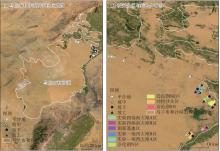
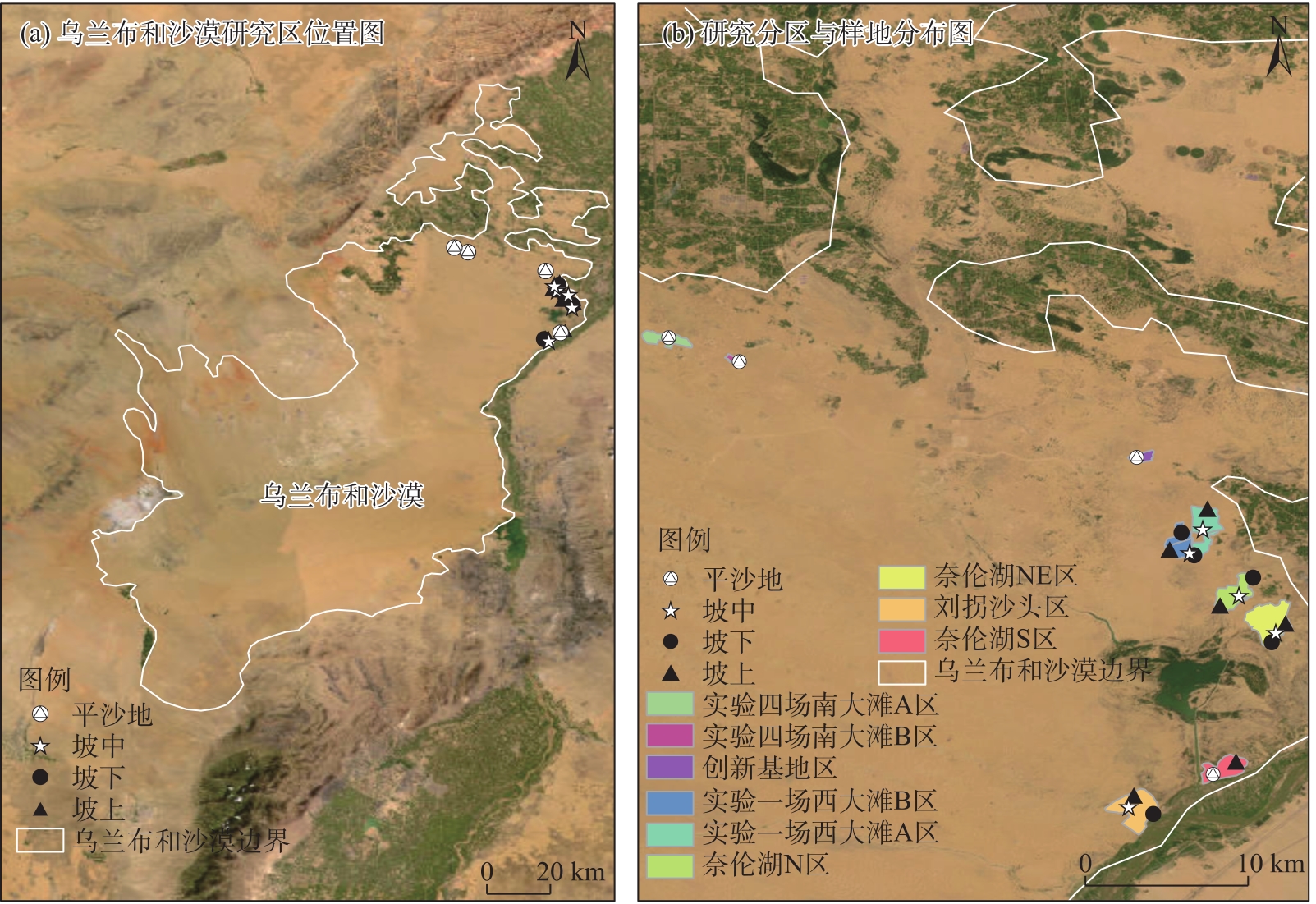
Fig. 1
Distribution of artificial Haloxylon ammodendron forest plots on the northeast edge of Ulan Buh Desert"
Tab. 1
Basic information of artificial Haloxylon ammodendron forests"
| 分布区 | 区域 | 林龄/a | 立地条件 |
|---|---|---|---|
| 奈伦湖NE区 | 奈伦湖NE-1 | 27 | 坡上 |
| 奈伦湖NE区 | 奈伦湖NE-2 | 27 | 坡中 |
| 奈伦湖NE区 | 奈伦湖NE-3 | 27 | 坡下 |
| 奈伦湖N区 | 奈伦湖N-1 | 12 | 坡上 |
| 奈伦湖N区 | 奈伦湖N-2 | 12 | 坡中 |
| 奈伦湖N区 | 奈伦湖N-3 | 12 | 坡下 |
| 奈伦湖S区 | 奈伦湖S-1 | 35 | 坡上 |
| 奈伦湖S区 | 奈伦湖S-2 | 35 | 平沙地 |
| 实验一场西大滩A区 | 实验一场西大滩A-1 | 7 | 坡上 |
| 实验一场西大滩A区 | 实验一场西大滩A-2 | 7 | 坡中 |
| 实验一场西大滩A区 | 实验一场西大滩A-3 | 7 | 坡下 |
| 实验一场西大滩B区 | 实验一场西大滩B-1 | 12 | 坡上 |
| 实验一场西大滩B区 | 实验一场西大滩B-2 | 12 | 坡中 |
| 实验一场西大滩B区 | 实验一场西大滩B-3 | 12 | 坡下 |
| 刘拐沙头区 | 刘拐沙头-1 | 7 | 坡上 |
| 刘拐沙头区 | 刘拐沙头-2 | 7 | 坡中 |
| 刘拐沙头区 | 刘拐沙头-3 | 7 | 坡下 |
| 创新基地区 | 创新基地 | 22 | 平沙地 |
| 实验四场南大滩区 | 实验四场南大滩-A | 23 | 平沙地 |
| 实验四场南大滩区 | 实验四场南大滩-B | 5 | 平沙地 |
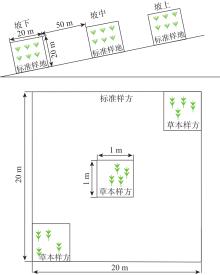
Fig. 2
Layout schematic of sample plot"
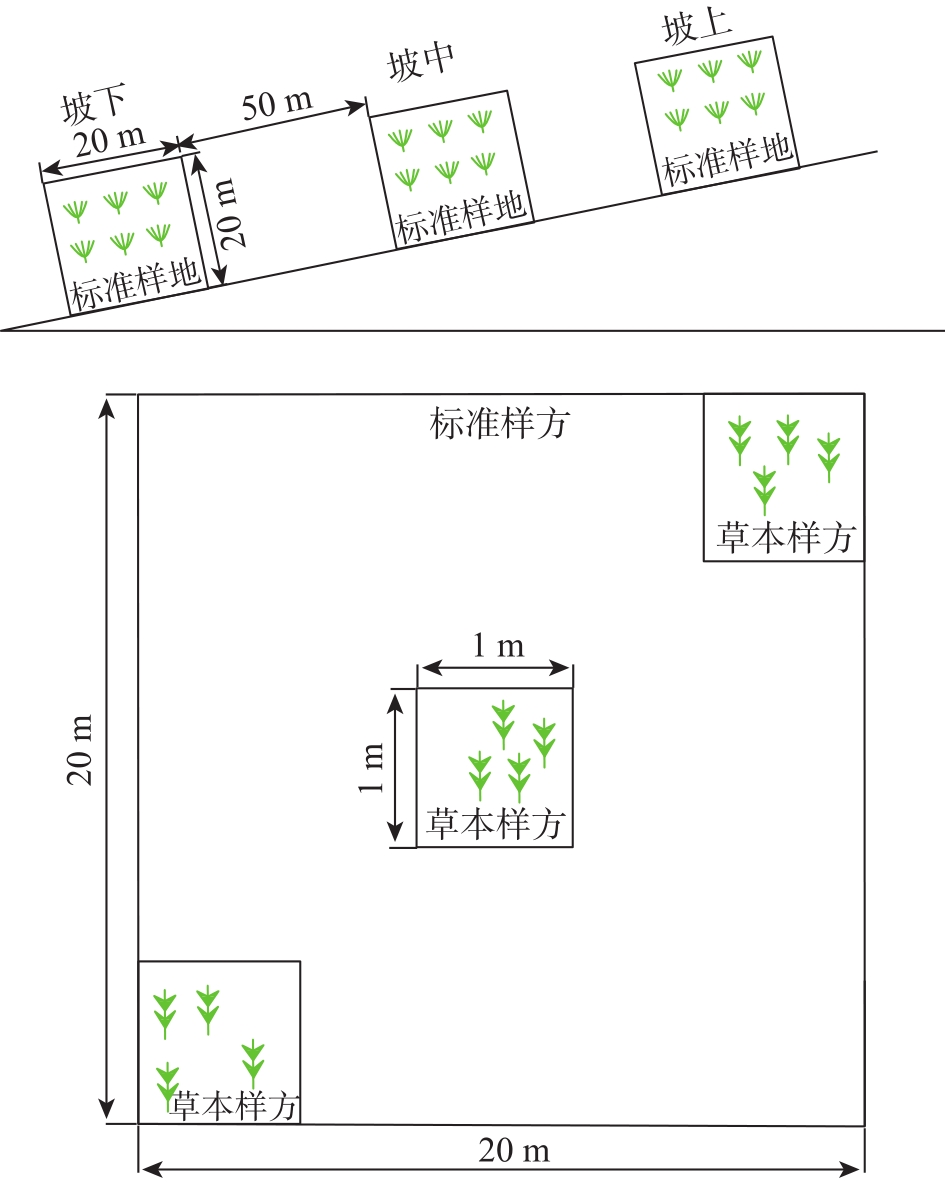
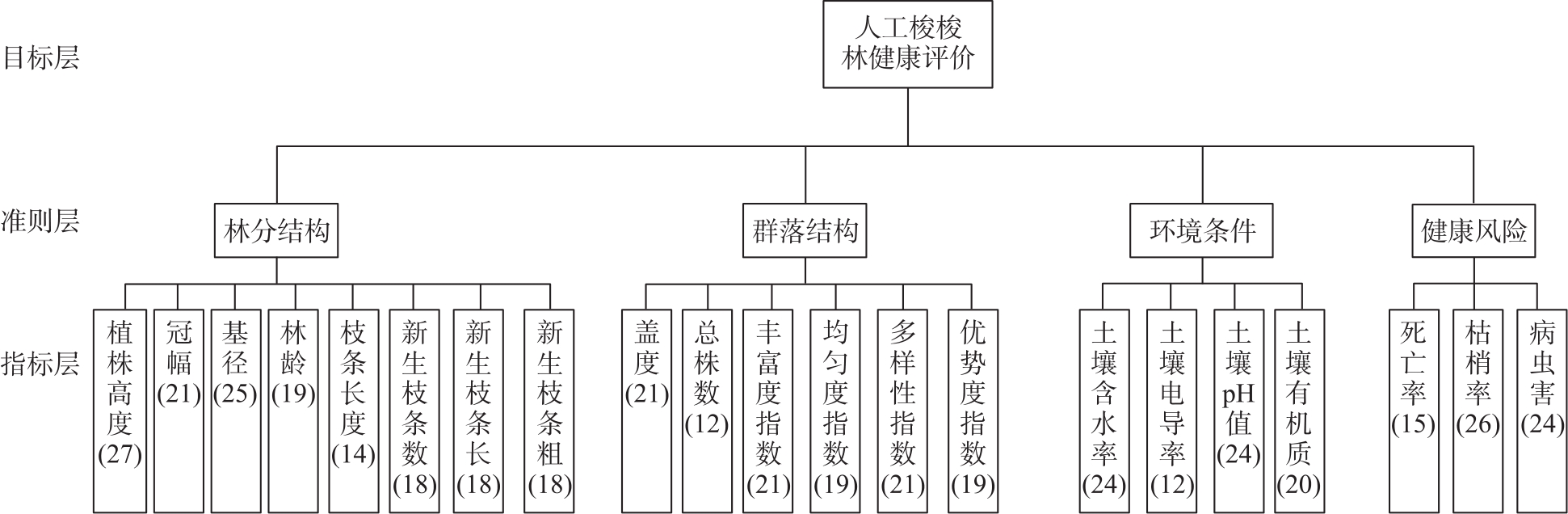
Fig. 3
Health evaluation index system for artificial Haloxylon ammodendron forests on the northeast edge of Ulan Buh Desert"
Tab. 2
Classification of indicators and scales"
| 指标相对比较的重要程度 | 标度值 |
|---|---|
| 同等重要 | 1 |
| 一个指标比另一个指标稍微重要 | 3 |
| 一个指标比另一个指标重要 | 5 |
| 一个指标比另一个指标重要很多 | 7 |
| 一个指标比另一个指标绝对重要 | 9 |
| 重要程度介于1、3、5、7、9间 | 2、4、6、8 |
| 一个指标比另一个指标相对次要 | 上述各数的倒数 |
Tab. 3
Classification of evaluation index levels"
| 准则层 | 指标层 | 评价优劣标准 | ||
|---|---|---|---|---|
| 差(<0.38) | 中(0.38~0.62) | 好(0.62~1.00) | ||
| 林分活力 | 植株高度/cm | <100 | 100~180 | >180 |
| 冠幅/cm2 | <190 | 190~310 | 310 | |
| 基径/cm | <5 | 5~10 | >10 | |
| 林龄/a | 幼林龄 | 中林龄 | 异林龄或近、成熟林 | |
| 枝条长度/cm | <20 | 20~32 | >32 | |
| 新生枝条数/根 | <50 | 50~120 | >120 | |
| 新生枝条长/cm | <10 | 10~15 | >15 | |
| 新生枝条粗/cm | <0.3 | 0.3~0.5 | >0.5 | |
| 群落结构 | 盖度/% | <20 | 20~40 | >40 |
| 总株数/株 | <30 | 30~55 | >55 | |
| 林下丰富度指数 | <0.45 | 0.45~0.80 | >0.80 | |
| 林下均匀度指数 | <0.4 | 0.4~0.7 | >0.7 | |
| 林下多样性指数 | <0.5 | 0.5~1.0 | >1.0 | |
| 林下优势度指数 | <0.3 | 0.3~0.5 | >0.5 | |
| 土壤含水率/% | <0.6 | 0.6~1.5 | >1.5 | |
| 土壤电导率/μS·cm-1 | <550 | 550~600 | >600 | |
| 土壤pH值 | <8.3 | 8.3~8.6 | >8.6 | |
| 土壤有机质/g·kg-1 | <3 | 3~5 | >5 | |
| 健康风险 | 死亡率/% | >55% | 25%~55% | <25% |
| 枯梢率/% | >65% | 35%~65% | <35% | |
| 病虫害/% | >60% | 30%~60% | <30% | |
Tab. 4
Health evaluation indicators and analytic hierarchy process weights for artificial Haloxylon ammodendron forests"
| 目标层 | 准则层 | 指标层 | 一致性检验参数(CR) | |||
|---|---|---|---|---|---|---|
| 准则 | 权重 | 准则 | 权重 | |||
| 人工梭梭林健康评价 | 林分 活力 | 0.1534 | 植株高度/cm | 0.0231 | 0.0862 | |
| 冠幅/cm2 | 0.0286 | |||||
| 基径/cm | 0.0195 | |||||
| 林龄/a | 0.0274 | |||||
| 枝条长度/cm | 0.0188 | |||||
| 新生枝条数/根 | 0.0413 | |||||
| 新生枝条长/cm | 0.1276 | |||||
| 新生枝条粗/cm | 0.0869 | |||||
| 群落 结构 | 0.1352 | 盖度/% | 0.0419 | 0.0841 | ||
| 总株数/株 | 0.0182 | |||||
| 林下丰富度指数 | 0.0289 | |||||
| 林下均匀度指数 | 0.0179 | |||||
| 林下多样性指数 | 0.0107 | |||||
| 林下优势度指数 | 0.0113 | |||||
| 环境 条件 | 0.2135 | 土壤含水率/% | 0.0313 | 0.0655 | ||
| 土壤电导率/μS·cm-1 | 0.0153 | |||||
| 土壤pH值 | 0.0159 | |||||
| 土壤有机质/g·kg-1 | 0.0152 | |||||
| 健康 风险 | 0.4979 | 死亡率/% | 0.2908 | 0.0516 | ||
| 枯梢率/% | 0.1154 | |||||
| 病虫害/% | 0.0915 | |||||
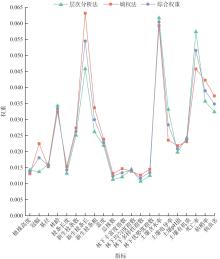
Fig. 4
Comprehensive weight evaluation of health status of artificial Haloxylon ammodendron forests on the northeast edge of Ulan Buh Desert"
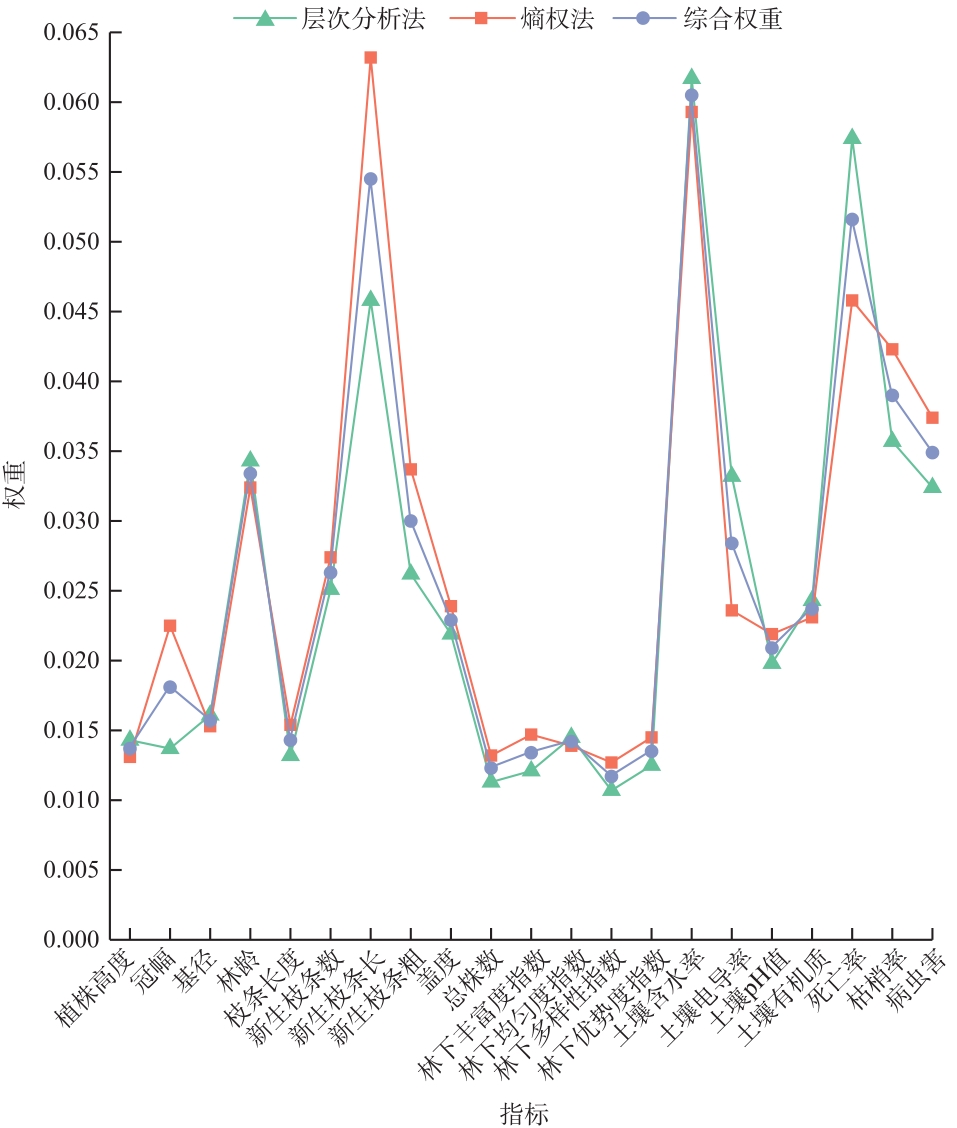
Tab. 5
Health evaluation index results of artificial Haloxylon ammodendron forests on the northeast edge of Ulan Buh Desert"
| 分布区 | 区域 | 正理想解距离(Di+) | 负理想解距离(Di-) | 相对接近度 | 排序结果 |
|---|---|---|---|---|---|
| 奈伦湖NE区 | 奈伦湖NE-1 | 87.340 | 12.770 | 0.128 | 18 |
| 奈伦湖NE区 | 奈伦湖NE-2 | 99.372 | 2.268 | 0.022 | 20 |
| 奈伦湖NE区 | 奈伦湖NE-3 | 96.312 | 5.529 | 0.054 | 19 |
| 奈伦湖N区 | 奈伦湖N-1 | 78.500 | 21.876 | 0.218 | 16 |
| 奈伦湖N区 | 奈伦湖N-2 | 86.910 | 21.364 | 0.197 | 17 |
| 奈伦湖N区 | 奈伦湖N-3 | 46.070 | 55.078 | 0.545 | 8 |
| 奈伦湖S区 | 奈伦湖S-1 | 53.850 | 55.718 | 0.509 | 9 |
| 奈伦湖S区 | 奈伦湖S-2 | 80.330 | 26.107 | 0.245 | 13 |
| 实验一场西大滩A区 | 实验一场西大滩A-1 | 44.460 | 63.283 | 0.587 | 6 |
| 实验一场西大滩A区 | 实验一场西大滩A-2 | 51.800 | 63.604 | 0.551 | 7 |
| 实验一场西大滩A区 | 实验一场西大滩A-3 | 69.820 | 31.250 | 0.309 | 12 |
| 实验一场西大滩B区 | 实验一场西大滩B-1 | 36.160 | 64.520 | 0.641 | 5 |
| 实验一场西大滩B区 | 实验一场西大滩B-2 | 63.860 | 37.180 | 0.368 | 11 |
| 实验一场西大滩B区 | 实验一场西大滩B-3 | 65.000 | 38.510 | 0.372 | 10 |
| 刘拐沙头区 | 刘拐沙头-1 | 1.459 | 100.000 | 0.986 | 1 |
| 刘拐沙头区 | 刘拐沙头-2 | 5.651 | 94.568 | 0.944 | 2 |
| 刘拐沙头区 | 刘拐沙头-3 | 35.586 | 69.912 | 0.663 | 4 |
| 创新基地区 | 创新基地 | 6.739 | 93.429 | 0.933 | 3 |
| 实验四场南大滩区 | 实验四场南大滩-A | 79.192 | 23.350 | 0.228 | 14 |
| 实验四场南大滩区 | 实验四场南大滩-B | 78.260 | 22.082 | 0.220 | 15 |
Tab. 6
Classification criteria for health evaluation of artificial Haloxylon ammodendron forests"
| 健康等级 | 极重度退化 | 重度退化 | 中度退化 | 轻度退化 | 健康 |
|---|---|---|---|---|---|
| 相对接近值 | [0.00, 0.15) | [0.15, 0.25) | [0.25, 0.60) | [0.60, 0.90) | [0.90, 1.00] |
Fig. 5
Comprehensive evaluation results of artificial Haloxylon ammodendron forests on the northeast edge of Ulan Buh Desert"
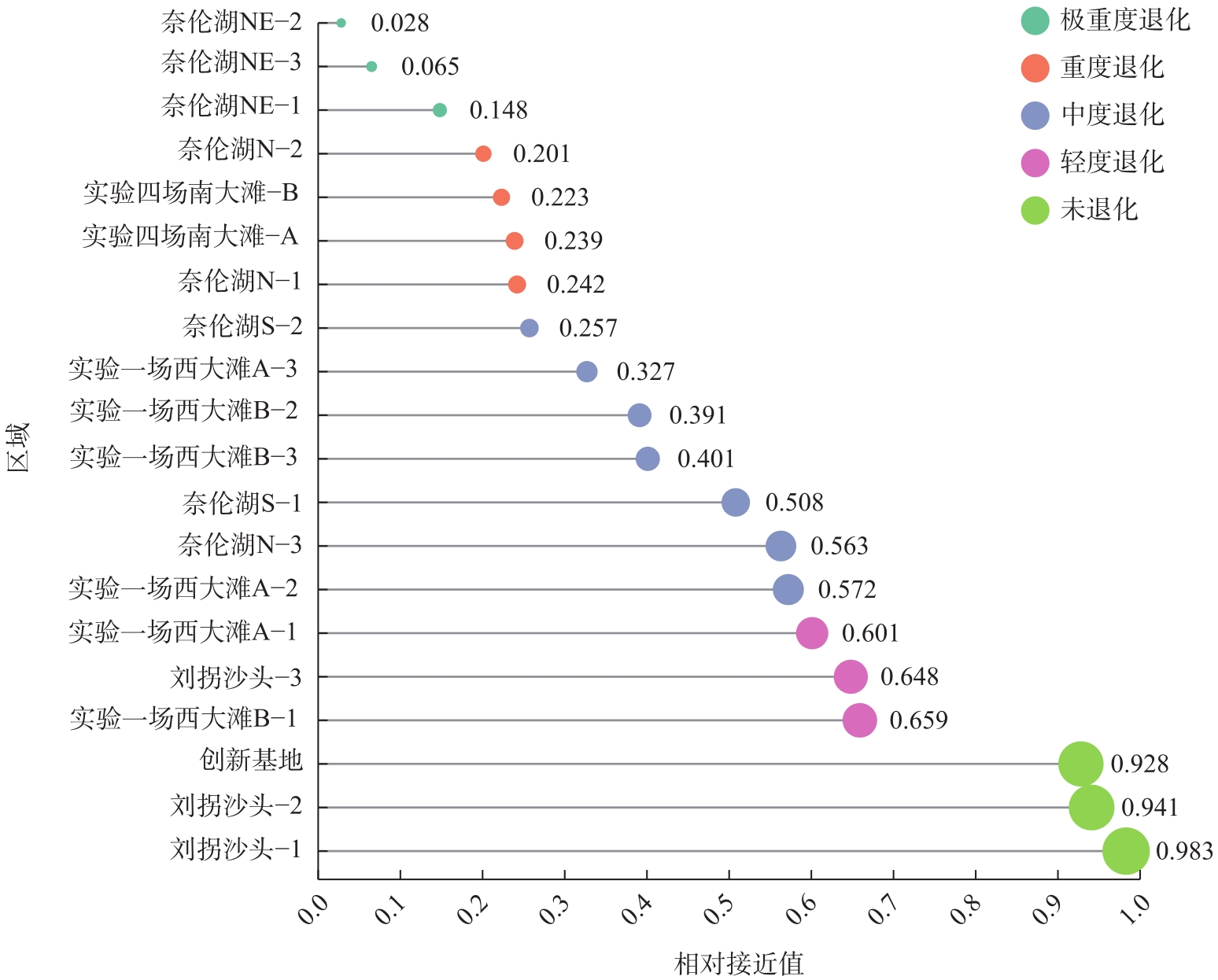
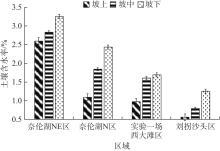
Fig. 6
Soil moisture content of artificial Haloxylon ammodendron forests under different site conditions"
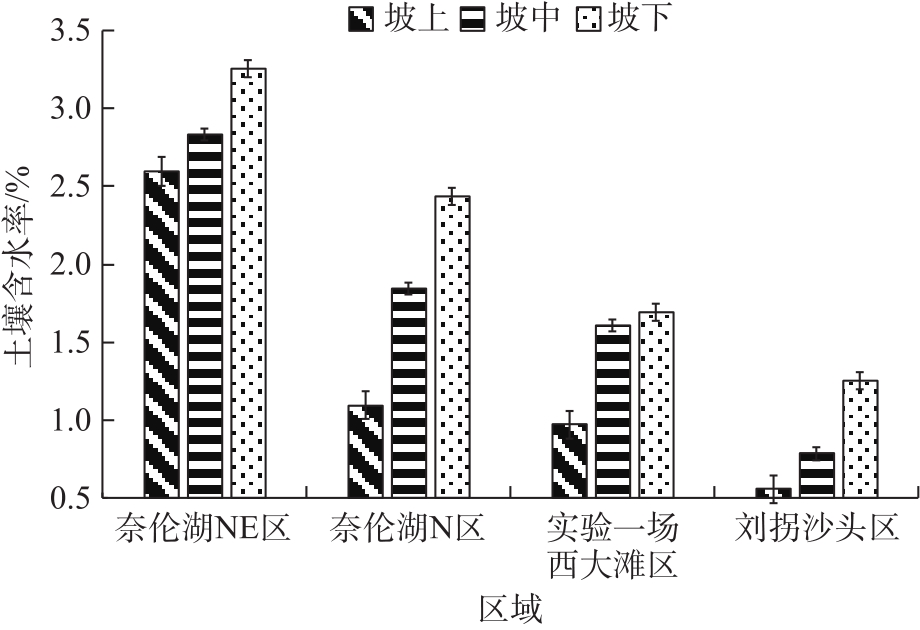
Fig. 7
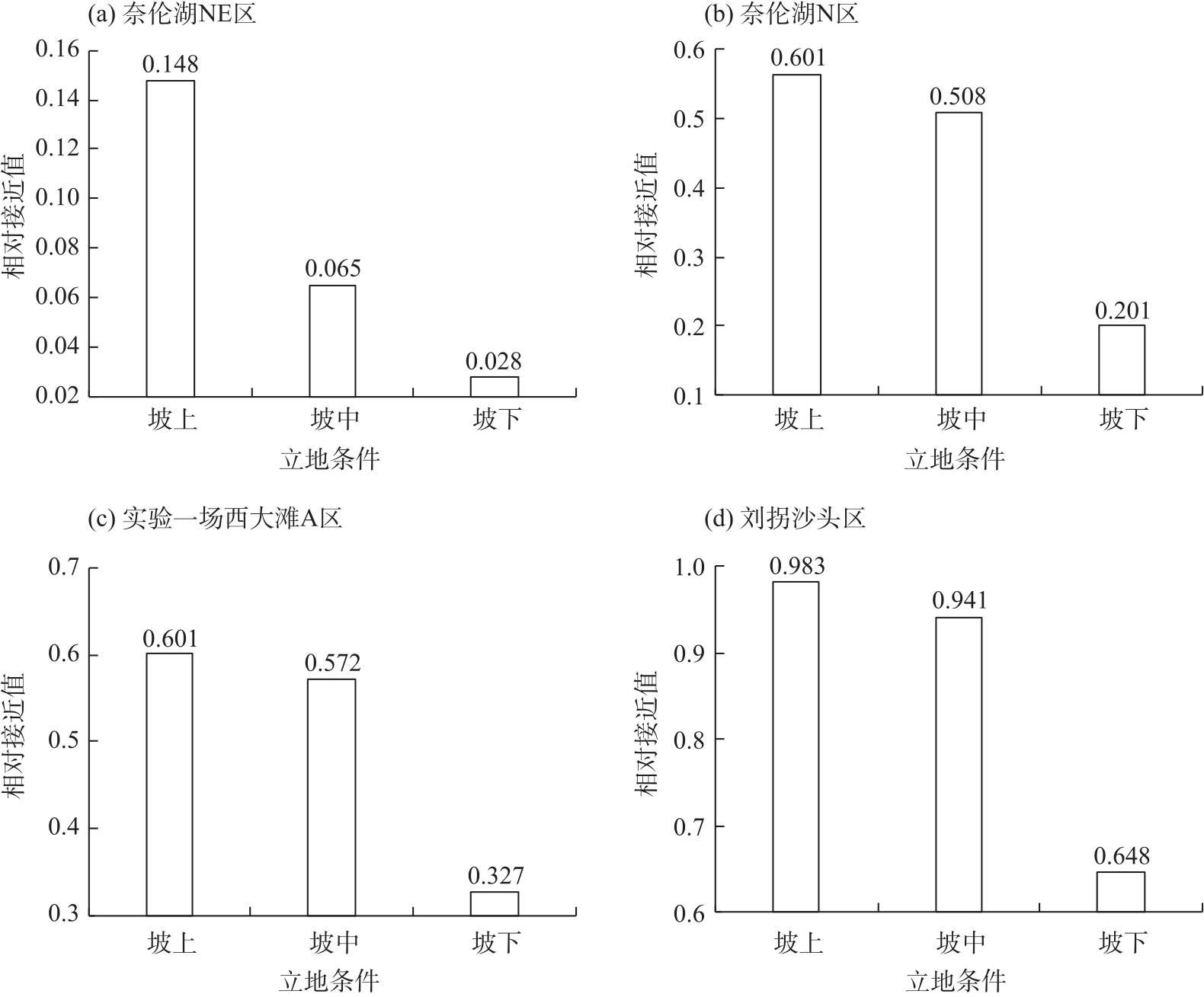
Comprehensive evaluation results of artificial Haloxylon ammodendron forests under different site conditions in different regions"
| [1] | 黄雅茹, 马迎宾, 郝需婷, 等. 典型固沙植物梭梭平茬后茎干液流的变化特征[J]. 草业科学, 2024, 41(12): 2809-2822. |
| [Huang Yaru, Ma Yingbin, Hao Xuting, et al. Effect of pruning on the stem sap flow of typical sand-fixing plant Haloxylon ammodendron[J]. Pratacultural Science, 2024, 41(12): 2809-2822.] | |
| [2] | 辛智鸣, 邵琪雯, 王湘, 等. 乌兰布和沙漠植物多样性及绿洲-荒漠区植被地上生物量研究[J]. 生态学报, 2024, 44(18): 8234-8246. |
| [Xin Zhiming, Shao Qiwen, Wang Xiang, et al. Plant diversily and aboveground biomass of oasis-deservegetation in Ulan Buh Desert[J]. Aeta Ecologica Sinica, 2024, 44(18): 8234-8246.] | |
| [3] | 李得禄, 马全林, 张剑挥, 等. 乌兰布和沙漠梭梭林不同管护措施效果分析[J]. 草业科学, 2015, 32(1): 132-137. |
| [Li Delu, Ma Quanlin, Zhang Jianhui, et al. Evaluation of different managements in Haloxylon ammodendron forest in Ulan Buh Desert[J]. Pratacultural Science, 2015, 32(1): 132-137.] | |
| [4] |
王安琪, 张钰, 刘佳伟, 等. 新疆甘家湖梭梭林国家级自然保护区植被群落多样性及空间分布格局[J]. 干旱区地理, 2024, 47(11): 1841-1851.
doi: 10.12118/j.issn.1000-6060.2024.133 |
|
[Wang Anqi, Zhang Yu, Liu Jiawei, et al. Vegetation community diversity and spatial distribution pattern in Ganjiahu Saxoul National Nature Reserve, Xinjiang[J]. Arid Land Geography, 2024, 47(11): 1841-1851.]
doi: 10.12118/j.issn.1000-6060.2024.133 |
|
| [5] | 温璐, 宋洁, 张慧超, 等. 近30年乌兰布和沙漠生态系统服务价值评估[J]. 干旱区资源与环境, 2020, 34(12): 57-64. |
| [Wen Lu, Song Jie, Zhang Huichao, et al. Dynamics of ecosystem service value in Ulan Buh Desert from 1990 to 2018[J]. Journal of Arid Land Resources and Environment, 2020, 34(12): 57-64.] | |
| [6] |
陈发虎, 吴绍洪, 崔鹏, 等. 1949—2019年中国自然地理学与生存环境应用研究进展[J]. 地理学报, 2020, 75(9): 1799-1830.
doi: 10.11821/dlxb202009001 |
|
[Chen Fahu, Wu Shaohong, Cui Peng, et al. Progress of applied research of physical geography and living environment in China from 1949 to 2019[J]. Acta Geographica Sinica, 2020, 75(9): 1799-1830.]
doi: 10.11821/dlxb202009001 |
|
| [7] | 崔桂鹏, 党宏忠, 熊伟, 等. 对“三北”工程区退化林修复策略的思考[J]. 林业科学, 2025, 61(1): 10-16. |
| [Cui Guipeng, Dang Hongzhong, Xiong Wei, et al. Thoughts on restoration strategies of degraded plantations in the area of China’s Great Green Wall Project[J]. Scientia Silvae Sinicae, 2025, 61(1): 10-16.] | |
| [8] | 于金涛, 雷静品, 王鹏程, 等. 秭归县防护林健康评价指标体系的建立及应用[J]. 生态学报, 2015, 35(7): 2094-2104. |
| [Yu Jintao, Lei Jingpin, Wang Pengcheng, et al. Health evaluation model of shelterbelt and its application in Zigui County of the Three Gorges Reservoir area[J]. Acta Ecologica Sinica, 2015, 35(7): 2094-2104.] | |
| [9] | 曹小玉, 委霞, 赵文菲, 等. 基于结构方程模型的森林健康评价[J]. 生态学杂志, 2021, 40(8): 2635-2647. |
|
[Cao Xiaoyu, Wei Xia, Zhao Wenxia, et al. Evaluation of forest health based on structural equation model[J]. Chinese Journal of Ecology, 2021, 40(8): 2635-2647.]
doi: DOI: 10.13292/j.1000-4890.202108.018 |
|
| [10] |
Khan A W R, Shaheen H, Dar I U E M, et al. A data-driven approach to forest health assessment through multivariate analysis and machine learning techniques[J]. BMC Plant Biology, 2025, 25(1): 915-937.
doi: 10.1186/s12870-025-06937-5 pmid: 40665209 |
| [11] | 申小娟, 杜盛. 甘肃省5种典型人工林健康状况[J]. 水土保持研究, 2023, 30(3): 295-300. |
| [Shen Xiaojuan, Du Sheng. Health assessment of five typical plantation forests in Gansu Province[J]. Research of Soil and Water Conservation, 2023, 30(3): 295-300.] | |
| [12] |
李雪宁, 徐先英, 郑桂恒, 等. 石羊河下游人工梭梭林健康评价体系构建及应用研究[J]. 干旱区研究, 2022, 39(3): 872-882.
doi: 10.13866/j.azr.2022.03.20 |
|
[Li Xuening, Xu Xianying, Zheng Guiheng, et al. A health evaluation of a Haloxylon ammodendron plantationin the Shiyang River lower reaches[J]. Arid Zone Research, 2022, 39(3): 872-882.]
doi: 10.13866/j.azr.2022.03.20 |
|
| [13] | 李健, 左合君, 闫敏, 等. 库布齐沙漠柠条锦鸡儿灌木林健康评价[J]. 西北林学院学报, 2024, 39(1): 177-184. |
| [Li Jian, Zuo Hejun, Yan Min, et al. Health evaluation of Caragana korshinskii shrub forest in Kubugi Desert[J]. Journal of Northwest Forestry University, 2024, 39(1): 177-184.] | |
| [14] | 杨晓娟, 廖超英, 孙文艳, 等. 乌兰布和沙漠东北部沙区人工林土壤肥力质量评价[J]. 干旱区研究, 2012, 29(4): 604-608. |
| [Yang Xiaojuan, Liao Chaoying, Sun Wenyan, et al. Assessment on soil fertility of planted forests in the northeast sandy area of the Ulan Buh Desert[J]. Arid Zone Research, 2012, 29(4): 604-608.] | |
| [15] | 崔明哲, 杨凤海, 李佳. 基于组合赋权法的哈尔滨市耕地生态安全评价[J]. 水土保持研究, 2012, 19(6): 184-192. |
| [Cui Mingzhe, Yang Fenghai, Li Jia. Analysis of cultivated land ecological security assessment of Harbin City based on combination weighting method[J]. Research of Soil and Water Conservation, 2012, 19(6): 184-192.] | |
| [16] | 鲁少波, 杨晓菲, 鲁绍伟, 等. 河北省小五台山森林生态系统健康评价研究[J]. 林业资源管理, 2011(1): 106-110. |
| [Lu Shaobo, Yang Xiaofei, Lu Shaowei, et al. Study about health assessment of forest ecosystem of Xiaowutai Mountains in Hebei[J]. Forest and Grassland Resources Research, 2011(1): 106-110.] | |
| [17] | 李雪宁, 徐先英, 杨雪梅, 等. 瓜州县农田防护林健康评价体系构建及应用[J]. 干旱区资源与环境, 2022, 36(3): 187-194. |
| [Li Xuening, Xu Xianying, Yang Xuemei, et al. Construction of health evaluation system for farmland shelterbelt in Guazhou County[J]. Journal of Arid Land Resources and Environment, 2022, 36(3): 187-194.] | |
| [18] | Ghafari S, Kaviani B, Sedaghathoor S, et al. Ecological potentials of trees, shrubs and hedge species for urban green spaces by multi criteria decision making[J]. Urban Forestry & Urban Greening, 2020, 55: 126824, doi: 10.1016/j.ufug.2020.126824. |
| [19] | 靳峰, 周颖, 郭璐, 等. 基于熵权TOPSIS模型的黄河流域甘肃段水土保持治理综合效益评价[J]. 中国农村水利水电, 2024(12): 80-89. |
| [Jin Feng, Zhou Ying, Guo Lu, et al. Evaluation of comprehensive benefits of soil and water conservation management in the Gansu section of the Yellow River Basin based on entropy weighted TOPSIS model[J]. China Rural Water and Hydropower, 2024(12): 80-89.] | |
| [20] | 窦婷婷, 赵晨森, 牛健植, 等. 北京市山区森林生态系统健康评估及驱动因素分析[J]. 水土保持学报, 2025, 39(5): 264-275. |
| [Dou Tingting, Zhao Chensen, Niu Jianzhi, et al. Health assessment and driving factors analysis of forest ecosystems in mountainous areas of Beijing[J]. Journal of Soil and Water Conservation, 2025, 39(5): 264-275.] | |
| [21] |
曾晨, 程轶皎, 吕天宇. 基于生态系统健康的国土空间生态修复分区——以长江中游城市群为例[J]. 自然资源学报, 2022, 37(12): 3118-3135.
doi: 10.31497/zrzyxb.20221207 |
|
[Zeng Chen, Chen Yijiao, Lü Tianyu. Research on land-space ecological restoration zoning based on ecosystem health: A case study of the urban agglomeration in the middle reaches along the Yangtze River[J]. Journal of Natural Resources, 2022, 37(12): 3118-3135.]
doi: 10.31497/zrzyxb.20221207 |
|
| [22] | 张倩, 包庆丰, 孙志宏, 等. 基于多目标的生态脆弱区柠条平茬模式优化研究[J]. 干旱区资源与环境, 2023, 37(10): 148-156. |
| [Zhang Qian, Bao Qingfeng, Sun Zhihong, et al. Optimization of stumping modes for juvenilization of Caragana korshinskii Kom in ecologically fragile areas based on multiple objectives[J]. Journal of Arid Land Resources and Environment, 2023, 37(10): 148-156.] | |
| [23] | 孙利忠. 古尔班通古特沙漠梭梭大面积衰退的机理研究[D]. 新疆: 石河子大学, 2018. |
| [Sun Lizhong. A research on mechanism of widespread degeneration of Haloxylon ammodendron in Gurbantunggut Desert[D]. Xinjiang: Shihezi University, 2018.] | |
| [24] | 王彦武, 罗玲, 张峰, 等. 河西绿洲荒漠过渡带梭梭林土壤保育效应[J]. 土壤学报, 2019, 56(3): 749-762. |
| [Wang Yanwu, Luo Ling, Zhang Feng, et al. Soil conservation effect of Haloxylon ammodendron bushes in Hexi oasis-desert ecotones[J]. Acta Pedologica Sinica, 2019, 56(3): 749-762.] | |
| [25] | 袁秀英, 韩艳洁, 姜海燕. 乌兰布和沙漠固沙树木真菌病害区系[J]. 干旱区资源与环境, 2006, 20(5): 205-208. |
| [Yuan Xiuying, Han Yanjie, Jiang Haiyan. Fungi diseases flora of sand-fixation trees in Wulanbuhe Desert[J]. Journal of Arid Land Resources and Environment, 2006, 20(5): 205-208.] | |
| [26] |
朱家龙, 周智彬, 王立生, 等. 免灌人工梭梭林生长与土壤水分变化的耦合关系[J]. 干旱区地理, 2022, 45(5): 1579-1590.
doi: 10.12118/j.issn.1000-6060.2022.054 |
|
[Zhu Jialong, Zhou Zhibin, Wang Lisheng, et al. Coupling relationship between growth and soil moisture change of Haloxylon ammodendron plantation without irrigation[J]. Arid Land Geography, 2022, 45(5): 1579-1590.]
doi: 10.12118/j.issn.1000-6060.2022.054 |
|
| [27] |
Liu F M, Wu Y Q, Su J P, et al. Effects of water stress on Haloxylon ammodendron seedlings in the desert region of Heihe inland river watershed, Gansu Province, China[J]. Journal of Forestry Research, 2003, 14(3): 197-201.
doi: 10.1007/BF02856829 |
| [28] | 司朗明, 刘彤, 刘斌, 等. 古尔班通古特沙漠西部梭梭种群退化原因的对比分析[J]. 生态学报, 2011, 31(21): 6460-6468. |
| [Si Langming, Liu Tong, Liu Bin, et al. A comparative study on reasons of degenerated of Haloxylon ammodendron population in the western part of Gurbantunggut Desert[J]. Acta Ecologica Sinica, 2011, 31(21): 6460-6468.] | |
| [29] | 刘斌, 刘彤, 李磊, 等. 古尔班通古特沙漠西部梭梭大面积退化原因[J]. 生态学杂志, 2010, 29(4): 637-642. |
| [Liu Bin, Liu Tong, Li Lei, et al. Reasons for the large-scale degradation of Haloxylon ammodendron in the western part of the Gurbantunggut Desert[J]. Chinese Journal of Ecology, 2010, 29(4): 637-642.] |
|
||