干旱区地理 ›› 2025, Vol. 48 ›› Issue (8): 1421-1431.doi: 10.12118/j.issn.1000-6060.2024.628 cstr: 32274.14.ALG2024628
余瀚1,2( ), 孟志华3, 王静爱2
收稿日期:2024-10-17
修回日期:2024-12-24
出版日期:2025-08-25
发布日期:2025-08-21
作者简介:余瀚(1983-),男,博士,副教授,主要从事综合自然灾害风险评估研究. E-mail: m05yuh@mail.bnu.edu.cn
基金资助:
YU Han1,2(), MENG Zhihua3, WANG Jing’ai2
Received:2024-10-17
Revised:2024-12-24
Published:2025-08-25
Online:2025-08-21
摘要: 降低社会脆弱性对于自然灾害风险防范具有重要意义。在县区单元尺度上,选取人口、经济与种植业3种承灾体,构建适合本区域的社会脆弱性评估指标体系,评价了甘肃省区域自然灾害社会脆弱性,包括暴露度、敏感度、适应度和综合社会脆弱性。然后基于自然地理区划范式,系统编制了甘肃省县区单元自然灾害社会脆弱性综合区划方案。结果表明:(1)甘肃省综合社会脆弱性指数基本呈现东高西低、南高北低的宏观格局。高脆弱性地区主要集中于陇东、陇中以及陇南区域,在城市及附近县区等承灾体密集区域呈现聚集特征。(2)综合区划方案包含两级:一级区为4个主导自然灾害类型分区,包括河西走廊西段沙尘暴主导灾害区、兰州旱灾主导灾害区、陇南暴雨洪水滑坡/泥石流主导灾害区、河西走廊及陇东-陇中-甘南多灾种灾害区。二级区为14个不同结构的综合脆弱性等级分区。该方案系统表达了区域主导自然灾害类型下,社会脆弱性结构的宏观空间分异规律,可服务于降低自然灾害社会脆弱性的多样化区域差异与需求。
余瀚, 孟志华, 王静爱. 甘肃省自然灾害社会脆弱性评价与综合区划[J]. 干旱区地理, 2025, 48(8): 1421-1431.
YU Han, MENG Zhihua, WANG Jing’ai. Comprehensive assessment and regionalization of social vulnerability for natural disasters in Gansu Province[J]. Arid Land Geography, 2025, 48(8): 1421-1431.
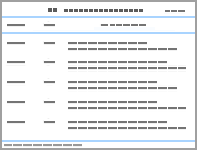
表1
研究数据"
| 类别 | 数据名称 | 数据内容 | 时空精度 |
|---|---|---|---|
| 人口承灾体 | 第七次人口普查分县资料 | 人口数量、年龄结构、学历结构、住房设施 | 2020年/矢量/县区单元 |
| 人口适应-医疗设施 | 医疗床位数 | 2019年/矢量/县区单元 | |
| 经济承灾体 | 经济承灾体相关指标 | GDP、三次产业产值、人均可支配收入、一般公共预算收入 | 2019年/矢量/县区单元 |
| 经济适应-财政负债 | 地方政府财政负债率 | 2019年/矢量/县区单元 | |
| 种植业承灾体 | 种植业承灾体相关指标 | 播种面积、种植业产值、农林牧渔总产值、农业机械总动力、灌溉面积 | 2019年/矢量/县区单元 |
| 区域灾害数据 | 中国省级报刊灾害数据库 | 成灾灾害种类、起止时间、灾情 | 1949—2014年/矢量/县区单元 |
| 辅助数据 | GlobalLand30全球地表覆盖 | 2020年甘肃省地表覆盖类型 | 2020年/栅格/30 m×30 m |
| 甘肃省基础地理信息数据 | 甘肃省市、县行政区划 | 矢量 |
表2
区域自然灾害社会脆弱性评价指标体系"
| 标准层 | 要素层 | 指标层 | 影响方向 | 指标释义 | 指标权重 |
|---|---|---|---|---|---|
| 暴露度 | 人口暴露度 | 常住人口 | 正向 | 潜在暴露于区域自然灾害人口规模 | 0.0648 |
| 经济暴露度 | GDP总量 | 正向 | 潜在暴露于区域自然灾害经济规模 | 0.0545 | |
| 种植业暴露度 | 播种面积 | 正向 | 潜在暴露于自然灾害农业承灾体规模 | 0.0612 | |
| 成灾暴露度 | 灾次 | 正向 | 实际暴露于自然灾害的次数 | 0.0562 | |
| 灾种多样性指数 | 正向 | 实际暴露于自然灾害的复杂程度 | 0.0121 | ||
| 敏感度 | 人口敏感度 | 人口密度 | 正向 | 空间上人口对于区域自然灾害敏感程度 | 0.0465 |
| 人口负担系数 | 正向 | 儿童与老年人口作为敏感人群的比重 | 0.0573 | ||
| 经济敏感度 | GDP密度 | 正向 | 空间上经济对于区域自然灾害敏感程度 | 0.0447 | |
| 第一产业增加值占二产增加值比重 | 正向 | 一产易受自然灾害(旱灾)影响,对二产占比反映区域内经济相对敏感度 | 0.0580 | ||
| 种植业敏感性 | 种植业产值密度 | 正向 | 种植业在空间上易受损的可能性参数 | 0.0658 | |
| 种植业占农林牧渔产值比重 | 正向 | 种植业对于区域农业的重要程度 | 0.0286 | ||
| 适应度 | 人口适应度 | 初中以上学历人口比例 | 负向 | 人口灾害认知与应对水平的替代指标 | 0.0643 |
| 居民家庭人均可支配收入 | 负向 | 家庭应对灾害设施及其数量的替代指标 | 0.0587 | ||
| 洗澡设施户数比例 | 负向 | 家庭经济状况替代指标 | 0.0527 | ||
| 万人医疗床位数 | 负向 | 应对灾害健康保障水平的替代指标 | 0.0623 | ||
| 经济适应度 | 产业产值多样化指数 | 负向 | 应对灾害经济的潜在恢复能力 | 0.0279 | |
| 地方政府财政负债率 | 正向 | 救灾投入潜在资源限制的替代指标 | 0.0110 | ||
| 人均一般公共预算收入 | 负向 | 救灾投入潜在资源的替代指标 | 0.0561 | ||
| 种植业适应度 | 作物种植面积多样性指数 | 负向 | 应对灾害种植业的潜在恢复能力 | 0.0066 | |
| 农业机械总动力密度 | 负向 | 农业应对灾害设施及数量的替代指标 | 0.0575 | ||
| 灌溉面积占耕地比例 | 负向 | 农业应对灾害设施及数量的替代指标 | 0.0523 |

图1
区域自然灾害暴露度、敏感度、适应度与综合社会脆弱性指数分异 注:基于自然资源部标准地图服务网站审图号为GS(2024)0650号的标准地图制作,底图边界无修改。下同。"

表3
综合社会脆弱性要素不同等级面积占比"
| 等级 | 暴露度 | 敏感度 | 适应度 | 综合脆弱性 |
|---|---|---|---|---|
| 高 | 8.0 | 3.4 | 44.0 | 6.5 |
| 较高 | 11.7 | 23.1 | 15.4 | 20.5 |
| 中 | 38.1 | 29.7 | 4.3 | 29.9 |
| 较低 | 17.2 | 10.6 | 16.7 | 17.8 |
| 低 | 25.0 | 33.2 | 19.6 | 25.3 |

图2
一级分区 注:A为河西走廊西段沙尘暴主导灾害区;B为兰州市旱灾主导灾害区;C为陇南市暴雨洪水滑坡/泥石流主导灾害区;D为河西走廊及陇东-陇中-甘南藏族自治州多灾种灾害区。下同。"


图3
二级分区"


图4
综合区划方案 注:图中分区代码含义见表4。下同。"

表4
分区代码与命名"
| 分区代码及命名 | 分区代码及命名 |
|---|---|
| A河西走廊西段沙尘暴主导灾害区 A1-1柴达木北缘极高适应低脆弱区 A2-1北山山地高适应中脆弱区 B兰州市旱灾主导灾害区 B2-1兰州市郊县高适应中脆弱区 B3-1兰州市城区高适应高脆弱区 C陇南市暴雨洪水滑坡/泥石流主导灾害区 C2-1南秦岭山地中脆弱区 C3-1北秦岭-南部山地高脆弱区 | D河西走廊及陇东-陇中-甘南藏族自治州多灾种灾害区 D1-1肃南县祁连山地高适应低脆弱区 D1-2甘南州高原低适应低脆弱区 D2-1六关山山地中脆弱区 D2-2河西走廊中东段高适应中脆弱区 D2-3陇中黄土高原西部中脆弱区 D3-1凉州区-古浪县高适应高脆弱区 D3-2陇东黄土高原北-东部高脆弱区 D3-3陇中黄土高原中-东部高脆弱区 |

图5
分区社会脆弱性结构特征"

| [1] | 中国气象局气候变化中心. 中国气候变化蓝皮书2024[M]. 北京: 科学出版社, 2024: 1-10. |
| [National Climate Center, China. Blue book on climate change in China 2024[M]. Beijing: Science Press, 2024: 1-10. ] | |
| [2] | 史培军. 大力提升对全球变化系统性风险防控的能力[J]. 中国减灾, 2024(1): 14-15. |
| [Shi Peijun. Vigorously enhance the ability to reduct the systemic risks of global change[J]. China Jounal of Disaster Reduction, 2024(1): 14-15. ] | |
| [3] | 史培军. 四论灾害系统研究的理论与实践[J]. 自然灾害学报, 2005, 14(6): 1-7. |
| [Shi Peijun. Theory and practice on disaster system research in a fourth time[J]. Journal of Natural Disasters, 2005, 14(6): 1-7. ] | |
| [4] | 周瑶, 王静爱. 自然灾害脆弱性曲线研究进展[J]. 地球科学进展, 2012, 27(4): 435-442. |
| [Zhou Yao, Wang Jing’ai. A review on development of vulnerability curve of natural disaster[J]. Advances in Earth Science, 2012, 27(4): 435-442. ] | |
| [5] |
黄晓军, 黄馨, 崔彩兰, 等. 社会脆弱性概念、分析框架与评价方法[J]. 地理科学进展, 2014, 33(11): 1512-1525.
doi: 10.11820/dlkxjz.2014.11.008 |
|
[Huang Xiaojun, Huang Xin, Cui Cailan, et al. The concept, analytical framework and assessment method of social vulnerability[J]. Progress in Geography, 2014, 33(11): 1512-1525. ]
doi: 10.11820/dlkxjz.2014.11.008 |
|
| [6] | 李迪, 何凯, 孙晶, 等. 气象灾害过程视角下社会脆弱性评估研究[J]. 内蒙古师范大学学报, 2023, 52(4): 374-381. |
| [Li Di, He Kai, Sun Jing, et al. Research on social vulnerability assessment from the perspective of meteorological disaster process[J]. Journal of Inner Mongolia Normal University (Natural Science Edition), 2023, 52(4): 374-381. ] | |
| [7] | 袁定欢, 罗钧悦, 郭君, 等. 脆弱性与自然灾害灾情分析——以2011—2020年广东省为例[J]. 灾害学, 2024, 39(3): 94-101. |
| [Yuan Dinghuan, Luo Junyue, Guo Jun, et al. Vulnerability and natural disaster loss analysis: Taking Guangdong Province from 2011 to 2020 as an example[J]. Journal of Catastrophology, 2024, 39(3): 94-101. ] | |
| [8] | 王静爱, 商彦蕊, 吴瑶瑶, 等. 区域农业旱灾综合风险防范: 从脆弱性、恢复性、适应性到凝聚力[J]. 河北师范大学学报(自然科学版), 2021, 45(4): 400-409. |
| [Wang Jing’ai, Shang Yanrui, Wu Yaoyao, et al. Integrated risk governance of regional agriclutural drought: From vulnerability, resilience, adaptability to consilience[J]. Jounral of Hebei Normal University (Natural Science Edition), 2021, 45(4): 400-409. ] | |
| [9] |
史培军, 王季薇, 张钢锋, 等. 透视中国自然灾害区域分异规律与区划研究[J]. 地理研究, 2017, 36(8): 1401-1414.
doi: 10.11821/dlyj201708001 |
| [Shi Peijun, Wang Jiwei, Zhang Gangfeng, et al. Research review and prospects of natural disasters regionalization in China[J]. Geographical Research, 2017, 36(8): 1401-1414. ] | |
| [10] | Cutter S L, Mitchell J T, Scott M S. Revealing the vulnerability of people and places: A case study of Georgetown County, south Carolina[J]. Annals of the Association of American Geographers, 2000, 90(4): 713-737. |
| [11] | 方佳毅, 陈文方, 孔锋, 等. 中国沿海地区社会脆弱性评价[J]. 北京师范大学学报(自然科学版), 2015, 51(3): 280-286. |
| [Fang Jiayi, Chen Wenfang, Kong feng, et al. Measuring social vulnerability to natural hazards of the coastal areas in China[J]. Jounral of Beijing Normal University (Natural Science Edition), 2015, 51(3): 280-286. ] | |
| [12] | Zhou Y, Li N, Wu W X, et al. Assessment of provincial social vulnerability to natural disasters in China[J]. Natural Hazards, 2014, 71(3): 2165-2186. |
| [13] |
王钧, 陈敬业, 宫清华, 等. 韧性视角下城市社会脆弱性评估及优化策略——以珠三角城市群为例[J]. 热带地理, 2023, 43(3): 474-483.
doi: 10.13284/j.cnki.rddl.003649 |
|
[Wang Jun, Chen Jingye, Gong Qinghua, et al. Urban social vulnerability assessment and optimization strategies from the perspective of resilience: A case study of the Pearl River Delta urban agglomeration[J]. Tropical Geography, 2023, 43(3): 474-483. ]
doi: 10.13284/j.cnki.rddl.003649 |
|
| [14] | 陈少华, 张丽, 左洪振, 等. 2018年湖南省农村自然灾害社会脆弱性测度[J]. 气象与减灾研究, 2020, 43(4): 299-306. |
| [Chen Shaohua, Zhang Li, Zuo Hongzhen, et al. Mearsurment of social vulnerability of rural natural disasters in Hunan Province in 2018[J]. Meteorology and Disaster Reduction Research, 2020, 43(4): 299-306. ] | |
| [15] | 阮鑫鑫, 付小林, 侯俊东, 等. 湖北省自然灾害社会脆弱性综合测度及时空演变特征[J]. 安全与环境工程, 2019, 26(2): 52-61. |
| [Ruan Xinxin, Fu Xiaolin, Hou Jundong, et al. Comprehensive measurement of social vulnerability to natural disasters and characteristics of space-time evolution in Hubei Province[J]. Safety and Environmental Engineering, 2019, 26(2): 52-61. ] | |
| [16] | Zhang M, Xiang W B, Chen M L, et al. Measuring social vulnerability to flood disasters in China[J]. Sustainability, 2018, 10(8): 1-14. |
| [17] |
赵瑞东, 方创琳, 刘海猛. 城市韧性研究进展与展望[J]. 地理科学进展, 2020, 39(10): 1717-1731.
doi: 10.18306/dlkxjz.2020.10.011 |
|
[Zhao Ruidong, Fang Chuanglin, Liu Haimeng. Progress and prospect of urban resilience research[J]. Progress in Geography, 2020, 39(10): 1717-1731. ]
doi: 10.18306/dlkxjz.2020.10.011 |
|
| [18] | 曾冰. 中国省域经济韧性发展水平评价[J]. 大连理工大学学报(社会科学版), 2023, 44(2): 28-36. |
| [Zeng Bing. Evaluating the evolution patterns of provincial economic resilience in China[J]. Journal of Dalian University of Technology (Social Science Edition), 2023, 44(2): 28-36. ] | |
| [19] |
宁静, 朱冉, 张馨元, 等. 内蒙古区县城市韧性评价与分析[J]. 干旱区地理, 2023, 46(7): 1217-1226.
doi: 10.12118/j.issn.1000-6060.2022.537 |
|
[Ning Jing, Zhu Ran, Zhang Xinyuan, et al. Evaluation and anylysis of urban resilience of districts and counties in Inner Mongolia[J]. Arid Land Geography, 2023, 46(7): 1217-1226. ]
doi: 10.12118/j.issn.1000-6060.2022.537 |
|
| [20] | 张振, 张以晨, 张继权, 等. 基于熵权法和TOPSIS模型的城市韧性评估——以长春市为例[J]. 灾害学, 2023, 38(1): 213-219. |
| [Zhang Zhen, Zhang Yichen, Zhang Jiquan, et al. Urban resilience assessment based on entropy weight method and TOPSIS model: Take Changchun City as an example[J]. Journal of Catastrophology, 2023, 38(1): 213-219. ] | |
| [21] |
白立敏, 修春亮, 冯兴华, 等. 中国城市韧性综合评估及其时空分异特征[J]. 世界地理研究, 2019, 28(6): 77-87.
doi: 10.3969/j.issn.1004-9479.2019.06.2018403 |
|
[Bai Limin, Xiu Chunliang, Feng Xinghua, et al. A comprehensive assessment of urban resilience and its spatial differentiation in China[J]. World Regional Studies, 2019, 28(6): 77-87. ]
doi: 10.3969/j.issn.1004-9479.2019.06.2018403 |
|
| [22] | 蔺明芳, 谢保鹏, 陈英, 等. 甘肃省县域乡村地域系统脆弱性时空演变格局[J]. 干旱区资源与环境, 2024, 38(2): 112-122. |
| [Ling Mingfang, Xie Baopeng, Chen Ying, et al. Spatial and temporal patterns of vulnerability of rural systems in Gansu Province[J]. Journal of Arid Land Resources and Environment, 2024, 38(2): 112-122. ] | |
| [23] |
李菲菲, 周霞, 周玉玺. 西北地区农业干旱脆弱性评估及时空分布特征[J]. 干旱区研究, 2023, 40(4): 663-669.
doi: 10.13866/j.azr.2023.04.15 |
|
[Li Feifei, Zhou Xia, Zhou Yuxi. Vulnerability assessment and spatiotemporal distribution of agricultural drought in northwest China[J]. Arid Zone Research, 2023, 40(4): 663-669. ]
doi: 10.13866/j.azr.2023.04.15 |
|
| [24] |
周苏娥, 张明军, 王圣杰, 等. 甘肃省河西地区自然-社会系统脆弱性评价[J]. 资源科学, 2018, 40(2): 452-462.
doi: 10.18402/resci.2018.02.20 |
|
[Zhou Su’e, Zhang Mingjun, Wang Shengjie, et al. Assessment of vulnerability in natural-social system in Hexi, Gansu[J]. Resources Science, 2018, 40(2): 452-462. ]
doi: 10.18402/resci.2018.02.20 |
|
| [25] | 李洁, 赵锐锋, 谢作轮. 甘肃省区域社会-生态系统脆弱性综合评价[J]. 经济地理, 2015, 35(12): 168-175. |
| [Li Jie, Zhao Ruifeng, Xie Zuolun. The comprehensive assessment of vulnerability in social-ecological system of Gansu Province[J]. Economic Geography, 2015, 35(12): 168-175. ] | |
| [26] |
叶文丽, 杨新军, 吴孔森, 等. 黄土高原社会-生态系统恢复力时空变化特征与影响因素分析[J]. 干旱区地理, 2022, 45(3): 912-924.
doi: 10.12118/j.issn.1000-6060.2021.386 |
|
[Ye Wenli, Yang Xinjun, Wu Kongsen, et al. Spatio-temporal characteristics and influencing factors of social-ecological-system resilience in the Loess Plateau[J]. Arid Land Geography, 2022, 45(3): 912-924. ]
doi: 10.12118/j.issn.1000-6060.2021.386 |
|
| [27] | 王佳宁, 薛东前, 马蓓蓓, 等. 黄土高原地区矿产资源型城市脆弱性及其人口响应[J]. 干旱区地理, 2020, 43(6): 1679-1690. |
|
[Wang Jianing, Xue Dongqian, Ma Beibei, et al. Vulnerability and population response of mineral resource-based cities in the Loess Plateau[J]. Arid Land Geography, 2020, 43(6): 1679-1690. ]
doi: 10.12118/j.issn.1000-6060.2020.06.29 |
|
| [28] | 郑度, 欧阳, 周成虎. 对自然地理区划方法的认识与思考[J]. 地理学报, 2008, 63(6): 563-573. |
| [Zheng Du, Ou Yang, Zhou Chenghu. Understading of and thinking over geographial regionalization methodology[J]. Acta Geographical Sinica, 2008, 63(6): 563-573. ] | |
| [29] | 史培军, 孙劭, 汪明, 等. 中国气候变化区划(1961—2010年)[J]. 中国科学: 地球科学, 2014, 44(10): 2294-2306. |
| [Shi Peijun, Sun Shao, Wang Ming, et al. Climate change regionalization in China (1961—2010)[J]. Science China: Earth Sciences, 2014, 44(10): 2294-2306. ] | |
| [30] |
吴绍洪, 潘韬, 刘燕华, 等. 中国综合气候变化风险区划[J]. 地理学报, 2017, 72(1): 3-17.
doi: 10.11821/dlxb201701001 |
| [Wu Shaohong, Pan Tao, Liu Yanhua, et al. Comprehensive climate change risk regionalization of China[J]. Acta Geographical Sinica, 2017, 72(1): 3-17. ] | |
| [31] | 王季薇, 王俊, 叶涛, 等. 区域种植业自然灾害保险综合区划研究——以湖南省晚稻为例[J]. 自然灾害学报, 2016, 25(3): 1-10. |
| [Wang Jiwei, Wang Jun, Ye Tao, et al. Integrated regionalization of crop natural disaster insurance: A case study on late rice in Hunan Province, China[J]. Journal of Natural Disasters, 2016, 25(3): 1-10. ] | |
| [32] | 王乃昂, 黄银洲, 罗丹. 中国省市区地理: 甘肃地理[M]. 北京: 北京师范大学出版社, 2020: 3-123. |
| [Wang Nai’ang, Huang Yinzhou, Luo Dan. Geography of provinces, cities, and districts in China: Gansu geography[M]. Beijing: Beijing Normal University Press, 2020: 3-123. ] | |
| [33] | 贾慧聪, 王静爱, 杨洋, 等. 关于西北地区的自然灾害链[J]. 灾害学, 2016, 31(1): 72-77. |
| [Jia Huicong, Wang Jing’ai, Yang Yang, et al. Analysis of natural disater chain in northwest China[J]. Journal of Catastrophology, 2016, 31(1): 72-77. ] | |
| [34] | 史培军, 吕丽莉, 汪明, 等. 灾害系统: 灾害群、灾害链、灾害遭遇[J]. 自然灾害学报, 2014, 23(6): 1-12. |
| [Shi Peijun, Lü Lili, Wang Ming, et al. Disater system: Disaster cluster, disaster chain and disaster compound[J]. Journal of Natural Disaster, 2014, 23(6): 1-12. ] | |
| [35] | 国务院第七次全国人口普查领导小组办公室. 中国人口普查分县资料—2020[M]. 北京: 中国统计出版社, 2022: 3-983. |
| [Office of the leading group of the State Council for the Seventh National Population Census. Tabulation on 2020 China population census by county[M]. Beijing: China Statistics Press, 2022: 3-983. ] | |
| [36] | 叶涛, 史培军, 王俊, 等. 综合风险防范: 农业自然灾害风险评价与保险区划[M]. 北京: 科学出版社, 2017: 44-80. |
| [Ye Tao, Shi Peijun, Wang Jun, et al. Integrated risk governance: Agricultural natural disaster risk assessment and insurance regionalization[M]. Beijing: Science Press, 2017: 44-80. ] | |
| [37] | 余瀚, 郭浩, 王静爱. 区域自然灾害风险综合区划——以广东台风灾害人口与经济风险区划为例[J]. 灾害学, 2022, 37(2): 131-137. |
| [Yu Han, Guo Hao, Wang Jing’ai. Comprehensive regionalization of natural disaster risk: A case study of population and economic risk caused by typhoon in Guangdong Province[J]. Journal of Catastrophology, 2022, 37(2): 131-137. ] |
| [1] | 马海清, 陈强强. 甘肃省农业碳排放时空分异特征及影响因素[J]. 干旱区地理, 2025, 48(5): 879-892. |
| [2] | 李潇飞, 龚健, 叶菁, 方鸿嘉, 张世镇, 林家胜. 生态系统服务权衡协同下的甘肃省生态功能分区优化[J]. 干旱区地理, 2025, 48(3): 467-479. |
| [3] | 胡舒云, 陆玉麒. 甘肃省冷凉区宜农空间识别与开发[J]. 干旱区地理, 2025, 48(2): 257-270. |
| [4] | 艾比努尔·木拉提, 赵丽江. 干旱区流域治理中的府际合作网络研究[J]. 干旱区地理, 2025, 48(2): 357-366. |
| [5] | 姜筱筱, 李雪梅, 韩惠, 许民, 凌红波. 甘肃省土地利用转变对碳储量变化的影响研究[J]. 干旱区地理, 2024, 47(12): 2075-2082. |
| [6] | 谭丹, 聂灿齐, 黄武斌, 李文瑶, 谢丽君. 甘肃省雷暴大风活动特征及潜势预报研究[J]. 干旱区地理, 2024, 47(12): 2083-2092. |
| [7] | 吉泽男, 付文婷, 王鹏程, 廖升, 潘铮. 干旱区数字经济与农业绿色发展耦合协调研究——以新疆为例[J]. 干旱区地理, 2024, 47(11): 1981-1990. |
| [8] | 张君霞, 黄武斌, 李安泰, 杨秀梅, 黎倩, 边宏伟. 甘肃省主要地质灾害精细化气象风险预警预报[J]. 干旱区地理, 2023, 46(9): 1443-1452. |
| [9] | 杨思存,霍琳,王成宝,温美娟. 基于STIRPAT模型的甘肃省农业碳排放特征分析[J]. 干旱区地理, 2023, 46(9): 1493-1502. |
| [10] | 马振邦,王思鉴,李薇,吕鹏,郭晓东. 1986—2020年甘肃省六盘山片区贫困演变及启示[J]. 干旱区地理, 2023, 46(9): 1545-1555. |
| [11] | 陈龙, 张志斌, 赵学伟, 郭倩倩, 郭燕. 甘肃省区域空间格局形成机制与发展战略[J]. 干旱区地理, 2023, 46(9): 1556-1566. |
| [12] | 罗镕基, 王宏涛, 王成. 基于改进遥感生态指数的甘肃省古浪县生态质量评价[J]. 干旱区地理, 2023, 46(4): 539-549. |
| [13] | 肖东升,王宁,刘志成. 干旱地区“代表性人口格网数据集”精度研究——以甘宁青地区为例[J]. 干旱区地理, 2023, 46(3): 505-514. |
| [14] | 吴茜, 陈强强. 甘肃省行业碳排放影响因素及脱钩努力研究[J]. 干旱区地理, 2023, 46(2): 274-283. |
| [15] | 鹿晨昱,黄萍,张彤,刘小莞,成薇. 甘肃省绿色发展效率时空演化与驱动因素研究[J]. 干旱区地理, 2023, 46(2): 305-315. |
|
||

