Arid Land Geography ›› 2026, Vol. 49 ›› Issue (6): 1277-1287.doi: 10.12118/j.issn.1000-6060.2025.392
• Tourism Geography • Previous Articles Next Articles
QIN Qu1( ), TANG Xiaobing2, WEN Bin3()
Received:2025-07-08
Revised:2025-08-29
Online:2026-06-25
Published:2026-06-29
Contact:
WEN Bin
E-mail:qinqu2008@126.com;yellowriverwenbin@163.com
QIN Qu, TANG Xiaobing, WEN Bin. Empirical study on the coupling mechanism of tourism development level and rural revitalization in Ili region[J].Arid Land Geography, 2026, 49(6): 1277-1287.
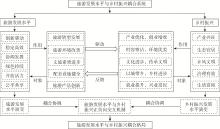
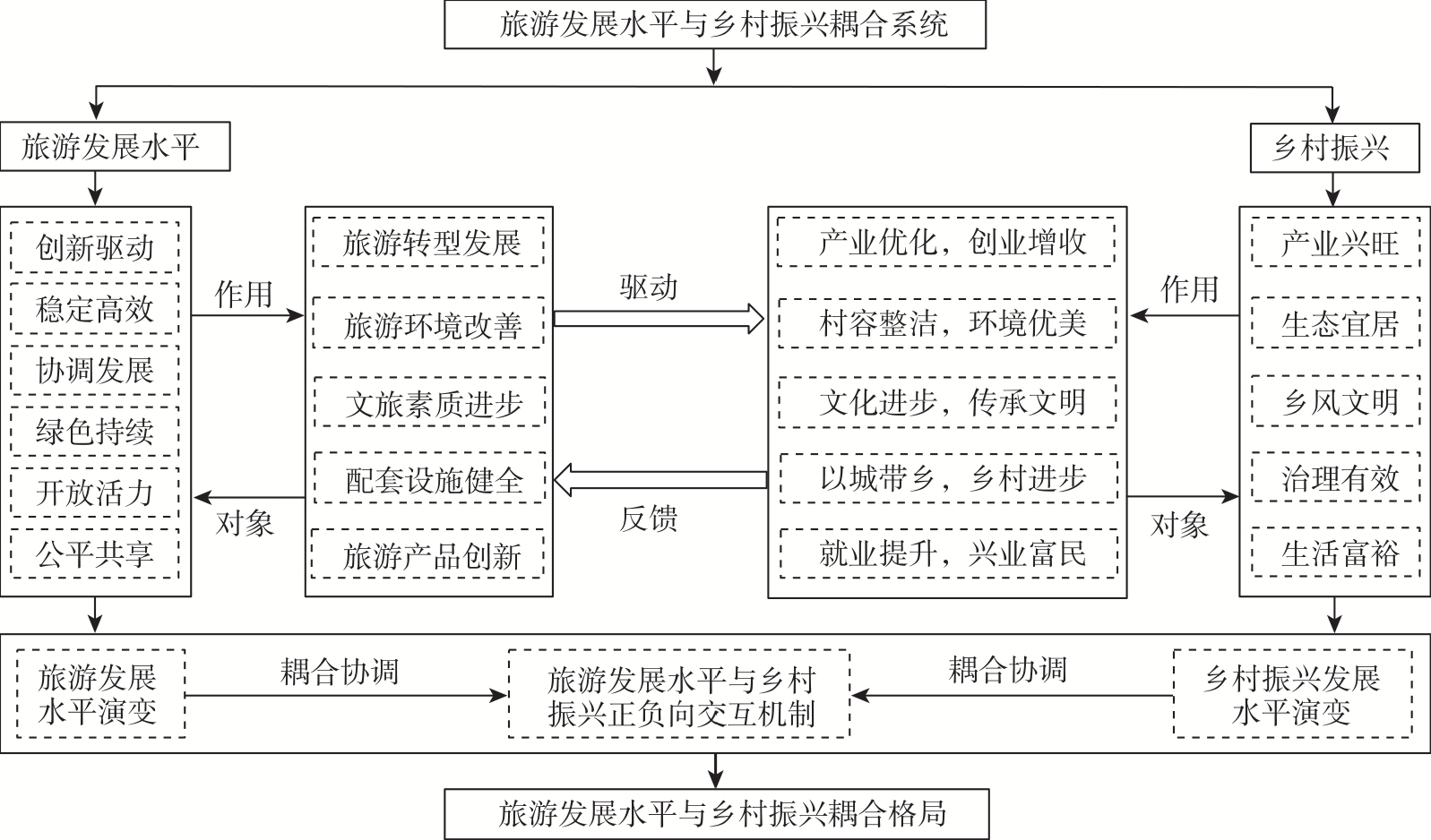
Fig. 1
Coupling mechanism between tourism development level and rural revitalization"

Tab. 1
Evaluation index system for tourism development level in Ili region"
| 系统层 | 子系统层 | 指标层 | 权重值 | 属性 |
|---|---|---|---|---|
| 旅游发展水平 | 创新驱动(0.2074) | 旅游专利授权数/个 | 0.0492 | + |
| 旅游R&D经费投入强度/% | 0.0276 | + | ||
| 技术进步贡献率/% | 0.0385 | + | ||
| 智慧旅游景区数/个 | 0.0483 | + | ||
| 旅游学术论文发表数量/篇 | 0.0438 | + | ||
| 稳定高效(0.1496) | 旅游业全员劳动生产率/% | 0.0367 | + | |
| 旅游劳动弹性系数/% | 0.0152 | + | ||
| 旅游收入增长率/% | 0.0315 | + | ||
| 旅游人次增长率/% | 0.0323 | + | ||
| 旅游外汇增长率/% | 0.0339 | + | ||
| 协调发展(0.2038) | 旅游收入占一产比重/% | 0.0576 | + | |
| 旅游收入占GDP比重/% | 0.0598 | + | ||
| 旅游收入占三产比重/% | 0.0591 | + | ||
| 非遗项目数/个 | 0.0273 | + | ||
| 绿色持续(0.1763) | 环境污染治理投资占比/% | 0.0131 | + | |
| 自然保护区面积占比/% | 0.0221 | + | ||
| 森林覆盖率/% | 0.0289 | + | ||
| 生活垃圾无害化处理率/% | 0.0347 | + | ||
| 单位旅游收入能耗/% | 0.0475 | - | ||
| 空气优良天数占比/% | 0.0300 | + | ||
| 开放活力(0.1374) | 对外贸易总额/104元 | 0.0198 | + | |
| 出境旅游人数/人次 | 0.0188 | + | ||
| 入境旅游人数/人次 | 0.0169 | + | ||
| 入境游客占游客总量比重/% | 0.0314 | + | ||
| 入境旅游收入/104元 | 0.0233 | + | ||
| 入境旅游人均天花费/元·d-1·人-1 | 0.0272 | + | ||
| 公平共享(0.1255) | 路网密度/km·km-2 | 0.0347 | + | |
| 旅客运输量/104人次 | 0.0277 | + | ||
| 人均公共图书馆藏量/册 | 0.0333 | + | ||
| 博物馆数量/个 | 0.0298 | + |
Tab. 2
Evaluation index system for rural revitalization in Ili region"
| 系统层 | 子系统层 | 指标层 | 权重值 | 属性 |
|---|---|---|---|---|
| 乡村 振兴 | 产业兴旺 (0.1762) | 人均农林牧渔业产值/104元 | 0.0299 | + |
| 第一产业增加值占GDP比重/% | 0.0329 | + | ||
| 人均粮食产量/kg | 0.0243 | + | ||
| 旅游从业人员比重/% | 0.0078 | + | ||
| 农业机械总动力/kW | 0.0285 | + | ||
| 人均地区生产总值/104元 | 0.0292 | + | ||
| 全社会固定资产投资/104元 | 0.0236 | + | ||
| 生态宜居 (0.2059) | 乡村绿化覆盖率/% | 0.0340 | + | |
| 人均水资源量/m3·人-1 | 0.0395 | + | ||
| 农村自来水普及率/% | 0.0516 | + | ||
| 农村燃气普及率/% | 0.0212 | + | ||
| 人均道路面积/m2 | 0.0596 | + | ||
| 乡风文明 (0.1726) | 农村居民教育文娱消费支出占比/% | 0.0205 | + | |
| 农村居民平均受教育年限/a·人-1 | 0.0254 | + | ||
| 学龄儿童净入学率/% | 0.0255 | + | ||
| 电视节目综合人口覆盖率/% | 0.0322 | + | ||
| 互联网宽带接入用户数/104户 | 0.0690 | + | ||
| 治理有效 (0.2279) | 一般公共预算支出/104元 | 0.0289 | + | |
| 城乡居民可支配收入比/% | 0.0398 | + | ||
| 每万人卫生院床位数/张·(104人)-1 | 0.0286 | + | ||
| 每万人卫生技术人员数/人·(104人)-1 | 0.0321 | + | ||
| 村民参与旅游的积极性/% | 0.0426 | + | ||
| 有开展旅游接待服务的村比重/% | 0.0559 | + | ||
| 生活富裕 (0.2174) | 农村居民人均可支配收入/元 | 0.0407 | + | |
| 农村居民人均消费支出/元 | 0.0396 | + | ||
| 农村居民家庭恩格尔系数/% | 0.0517 | - | ||
| 农村最低生活保障支出/104人 | 0.0276 | + | ||
| 人均住房面积/m3 | 0.0393 | + | ||
| 农村每百户汽车拥有量/辆 | 0.0185 | + |
Tab. 3
Coupling and coordination types between tourism development level and rural revitalization"
| 类型 | 划分依据 | 亚类型 | 系统数值对比 | 子类型 |
|---|---|---|---|---|
| 协调发展 | 0.9<D≤1.0 | 高级协调 | g(E)-f(U)>0.1 | 旅游滞后 |
| |g(E)-f(U)|≤0.1 | 系统均衡发展 | |||
| g(E)-f(U)<-0.1 | 乡村振兴滞后 | |||
| 0.8<D≤0.9 | 良好协调 | g(E)-f(U)>0.1 | 旅游滞后 | |
| |g(E)-f(U)|≤0.1 | 系统均衡发展 | |||
| g(E)-f(U)<-0.1 | 乡村振兴滞后 | |||
| 0.7<D≤0.8 | 中级协调 | g(E)-f(U)>0.1 | 旅游滞后 | |
| |g(E)-f(U)|≤0.1 | 系统均衡发展 | |||
| g(E)-f(U)<-0.1 | 乡村振兴滞后 | |||
| 转型发展 | 0.6<D≤0.7 | 初级协调 | g(E)-f(U)>0.1 | 旅游滞后 |
| |g(E)-f(U)|≤0.1 | 系统均衡发展 | |||
| g(E)-f(U)<-0.1 | 乡村振兴滞后 | |||
| 0.5<D≤0.6 | 勉强协调 | g(E)-f(U)>0.1 | 旅游滞后 | |
| |g(E)-f(U)|≤0.1 | 系统均衡发展 | |||
| g(E)-f(U)<-0.1 | 乡村振兴滞后 | |||
| 0.4<D≤0.5 | 濒临失调 | g(E)-f(U)>0.1 | 旅游滞后 | |
| |g(E)-f(U)|≤0.1 | 系统均衡发展 | |||
| g(E)-f(U)<-0.1 | 乡村振兴滞后 | |||
| 不协调发展 | 0.2<D≤0.4 | 中度失调 | g(E)-f(U)>0.1 | 旅游滞后 |
| |g(E)-f(U)|≤0.1 | 系统均衡发展 | |||
| g(E)-f(U)<-0.1 | 乡村振兴滞后 | |||
| 0.0<D≤0.2 | 严重失调 | g(E)-f(U)>0.1 | 旅游滞后 | |
| |g(E)-f(U)|≤0.1 | 系统均衡发展 | |||
| g(E)-f(U)<-0.1 | 乡村振兴滞后 |
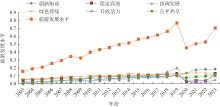
Fig. 2
Trend of changes in tourism development level"
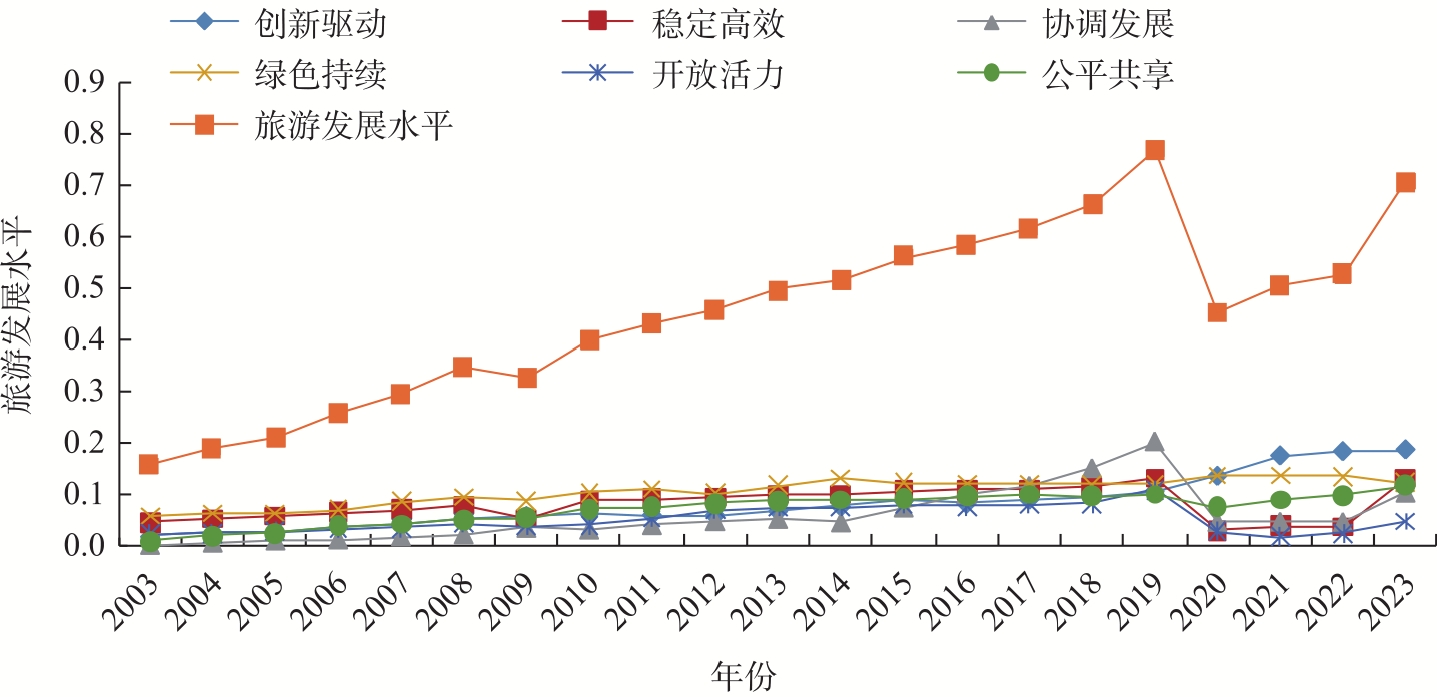
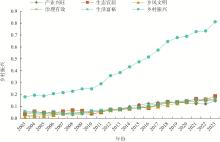
Fig. 3
Trend of changes in the rural revitalization"
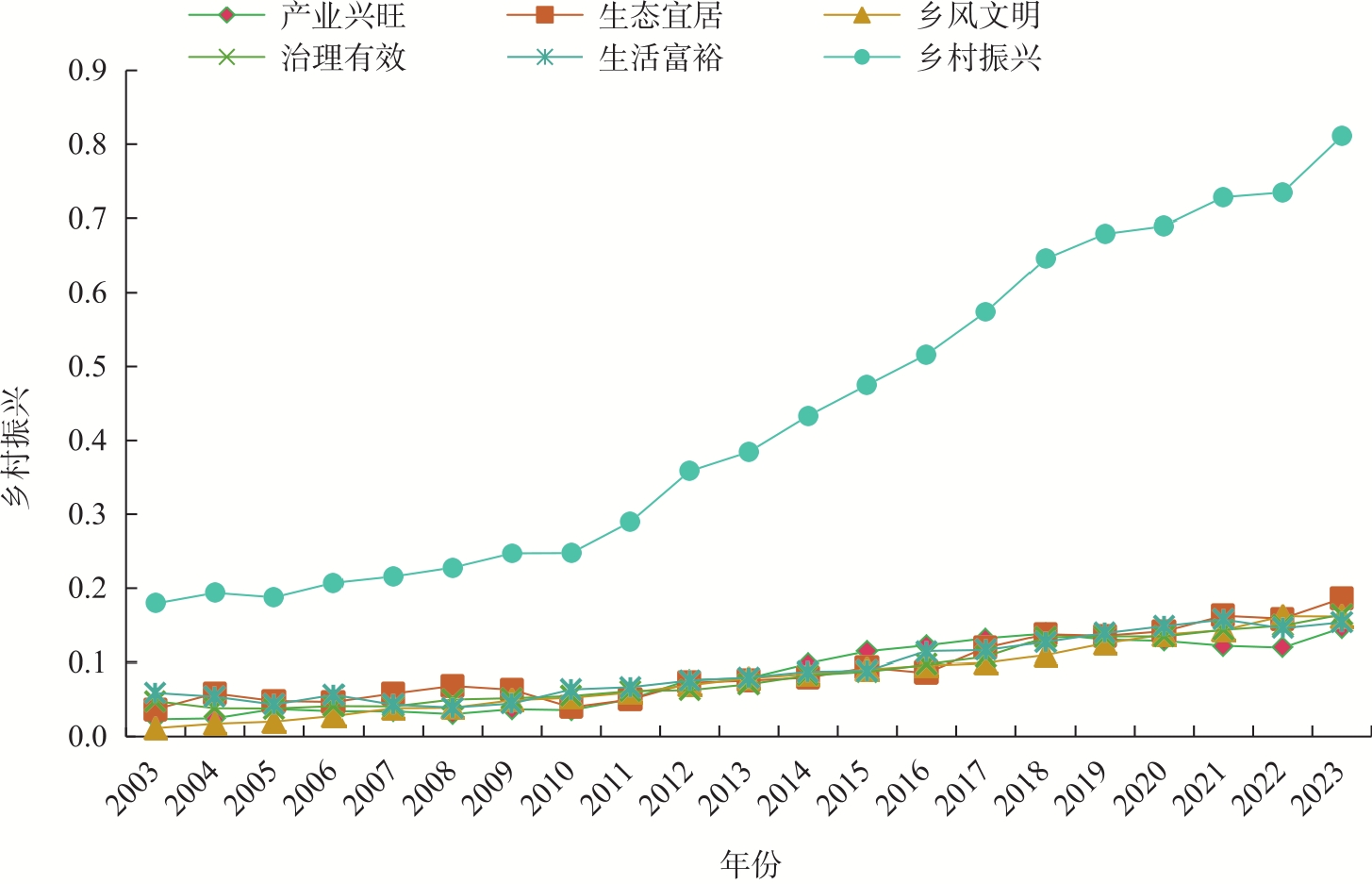
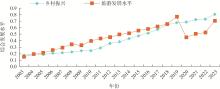
Fig. 4
Trend of changes in tourism development level and rural revitalization"
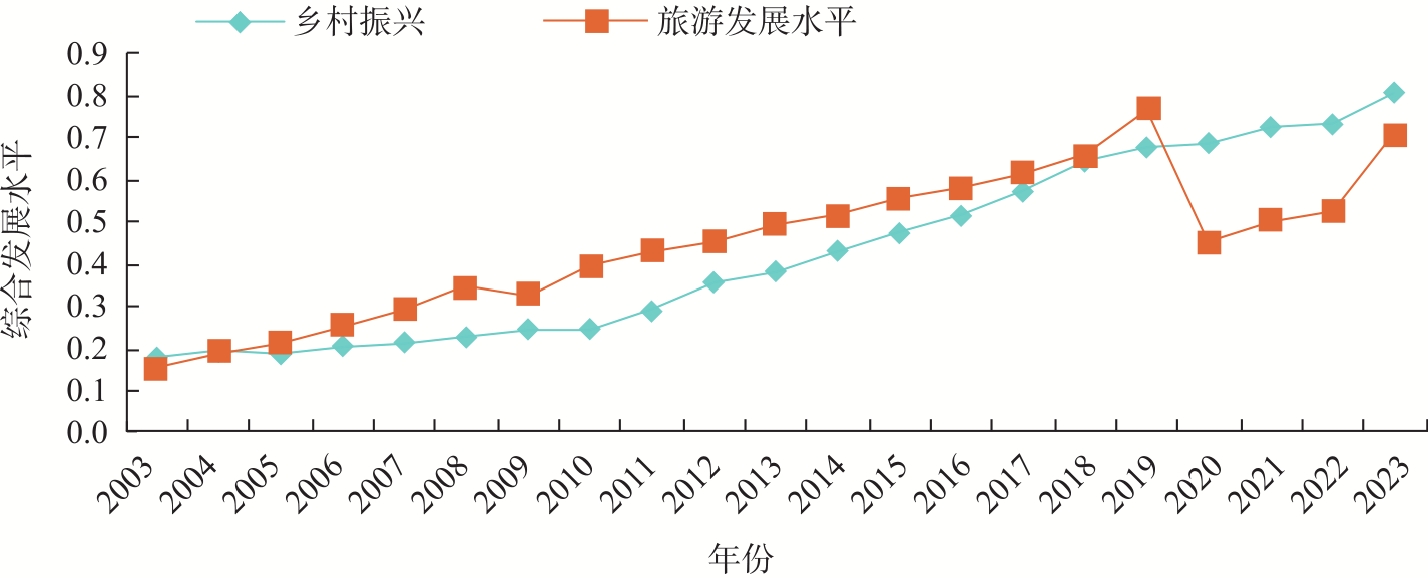
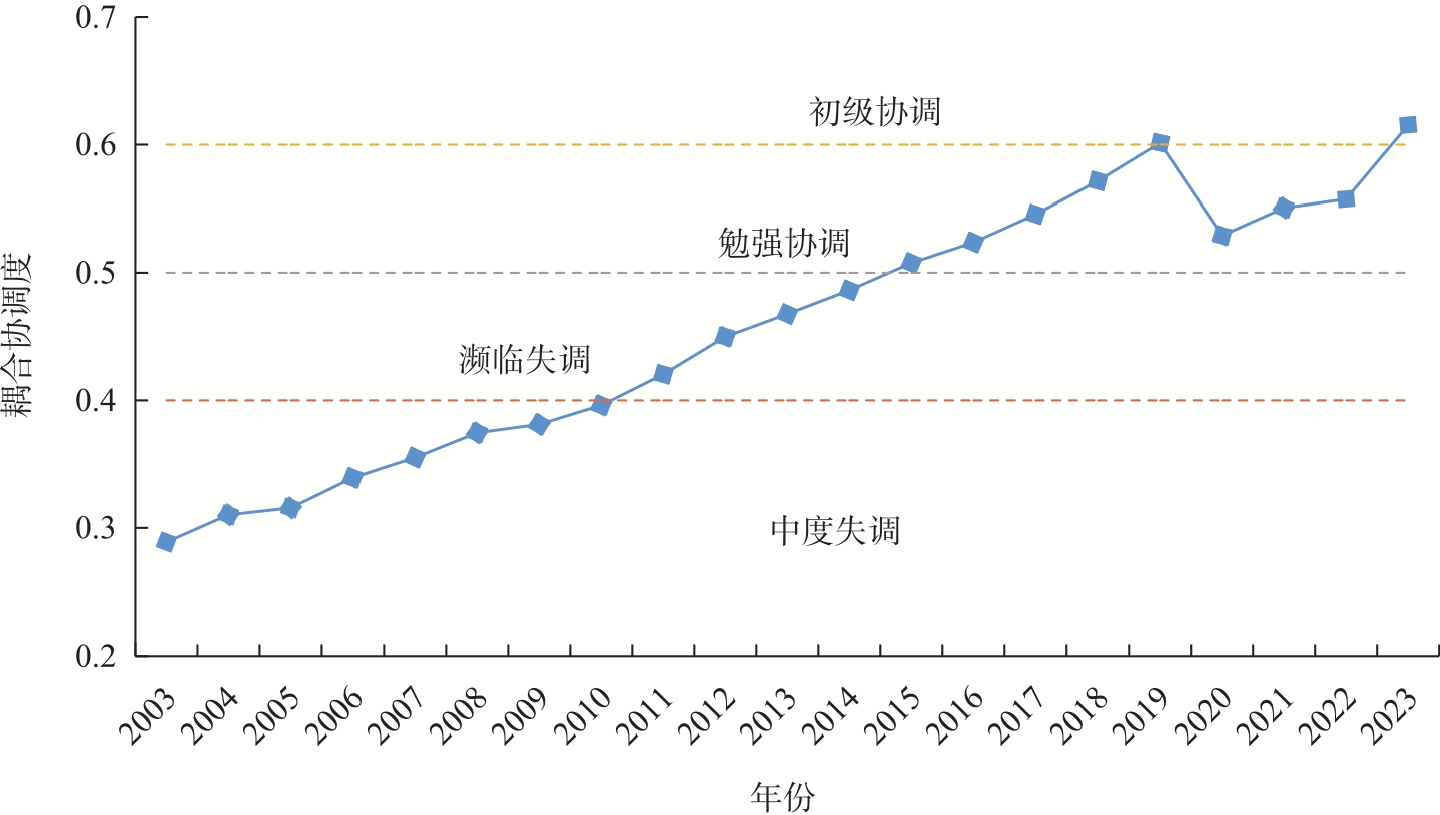
Fig. 5
Trend of coupling and coordinating changes between tourism development level and rural revitalization"
Tab. 4
Factor detection results of coupling coordination degreen"
| 探测因子 | TRE | ECO | TRA | IND | GOV |
|---|---|---|---|---|---|
| q | 0.9261 | 0.8912 | 0.9052 | 0.7078 | 0.7489 |
| P | 0.0000 | 0.0000 | 0.0000 | 0.0024 | 0.0048 |
| [1] |
Nilsson P A. Staying on farm: An ideological background[J]. Annals of Tourism Research, 2002, 29(1): 7-24.
doi: 10.1016/S0160-7383(00)00081-5 |
| [2] |
Clark G, Chabrel M. Measuring integrated rural tourism[J]. Tourism Geographies, 2007, 9(4): 371-386.
doi: 10.1080/14616680701647550 |
| [3] |
Saxena G, Ilbery B. Developing integrated rural tourism: Actor practices in the English/Welsh border[J]. Journal of Rural Studies, 2010, 26(3): 260-271.
doi: 10.1016/j.jrurstud.2009.12.001 |
| [4] |
Barcus H, Ramsey D, Abrams J, et al. Sustainable development or integrated rural tourism? Considering the overlap in rural development strategies[J]. European Journal of Clinical Pharmacology, 2013, 66(66): 1081-1089.
doi: 10.1007/s00228-010-0898-y |
| [5] |
Lenao M, Saarinen J. Integrated rural tourism as a tool for community tourism development: Exploring culture and heritage projects in the north-east district of Botswana[J]. South African Geographical Journal, 2015, 97(2): 203-216.
doi: 10.1080/03736245.2015.1028985 |
| [6] |
Ribeiro M A, Valle P O, Silva J A. Residents’attitudes towards tourism development in CapeVerde Islands[J]. Tourism Geographies, 2013, 15(4): 654-679.
doi: 10.1080/14616688.2013.769022 |
| [7] | TaşlıT C, Özkök F, et al. Land use suitability analysis of rural tourism activities: Yenice, Turkey[J]. Tourism Management, 2020, 76: 103949, doi: 10.1016/j.tourman.2019.07.003. |
| [8] |
陆林, 任以胜, 朱道才, 等. 乡村旅游引导乡村振兴的研究框架与展望[J]. 地理研究, 2019, 38(1): 102-118.
doi: 10.11821/dlyj020180454 |
| [Lu Lin, Ren Yisheng, Zhu Daocai, et al. The research framework and prospect of rural revitalization led by rural tourism[J]. Geographical Research, 2019, 38(1): 102-118. ] | |
| [9] | 贺小荣, 史吉志, 徐海超. 农业文化遗产旅游对乡村振兴的驱动机制研究[J]. 干旱区资源与环境, 2023, 37(8): 201-208. |
| [He Xiaorong, Shi Jizhi, Xu Haichao. How does agricultural cultural heritage tourism drive rural revitalization[J]. Journal of Arid Land Resources and Environment, 2023, 37(8): 201-208. ] | |
| [10] |
孙九霞, 王淑佳. 基于乡村振兴战略的乡村旅游地可持续发展评价体系构建[J]. 地理研究, 2022, 41(2): 289-306.
doi: 10.11821/dlyj020201226 |
| [Sun Jiuxia, Wang Shujia. Construction on evaluation system of sustainable development for rural tourism destinations based on rural revitalization strategy[J]. Geographical Research, 2022, 41(2): 289-306. ] | |
| [11] |
王生霞, 李茂兰, 刘芮廷. 旅游业效率与城镇化耦合协调度的时空演变及障碍因素分析——以“一带一路”核心段为例[J]. 干旱区地理, 2025, 48(11): 2053-2061.
doi: 10.12118/j.issn.1000-6060.2024.679 |
|
[Wang Shengxia, Li Maolan, Liu Ruiting. Spatiotemporal evolution and obstacle factors of the coupling coordination degree of tourism efficiency and urbanization: A case of the core section of the “Belt and Road”[J]. Arid Land Geography, 2025, 48(11): 2053-2061. ]
doi: 10.12118/j.issn.1000-6060.2024.679 |
|
| [12] | 孙业红, 武文杰, 宋雨新. 农业文化遗产旅游与乡村振兴耦合关系研究[J]. 西北民族研究, 2022, 37(2): 133-142. |
| [Sun Yehong, Wu Wenjie, Song Yuxin. Research on the coupling relationship between agricultural cultural heritage tourism and rural revitalization[J]. Journal of Northwestern Ethnic Studies, 2022, 37(2): 133-142. ] | |
| [13] | 吴儒练. 中国旅游效率与乡村振兴耦合协调测度及时空演化[J]. 地理与地理信息科学, 2023, 39(1): 111-119. |
| [Wu Rulian. Measurement and spatio-temporal evolution of coupling coordination between tourism efficiency and rural revitalization system in China[J]. Geography and Geo-Information Science, 2023, 39(1): 111-119. ] | |
| [14] | 杨建春. 民族村寨旅游高质量发展促进乡村振兴的机制及对策[J]. 贵州社会科学, 2022, 43(9): 140-147. |
| [Yang Jianchun. Mechanisms and countermeasures for promoting high quality development of ethnic village tourism and rural revitalization[J]. Guizhou Social Sciences, 2022, 43(9): 140-147. ] | |
| [15] |
杨丽花, 雷欣, 白翠玲, 等. 河北省乡村旅游促进乡村产业振兴路径分析[J]. 地理科学, 2024, 44(8): 1396-1405.
doi: 10.13249/j.cnki.sgs.20240122 |
|
[Yang Lihua, Lei Xin, Bai Cuiling, et al. Path of promoting rural industry revitalization through rural tourism in Hebei Province[J]. Scientia Geographica Sinica, 2024, 44(8): 1396-1405. ]
doi: 10.13249/j.cnki.sgs.20240122 |
|
| [16] | 刘英基, 韩元军. 要素结构变动、制度环境与旅游经济高质量发展[J]. 旅游学刊, 2020, 35(3): 28-38. |
| [Liu Yingji, Hang Yuanjun. Factor structure, institutional environment and high-quality development of the tourism economy in China[J]. Tourism Tribune, 2020, 35(3): 28-38. ] | |
| [17] | 何建民. 新时代我国旅游业高质量发展系统与战略研究[J]. 旅游学刊, 2018, 33(10): 9-11. |
| [He Jianmin. Research on the system and strategy of high quality development of China’s tourism industry in the new era[J]. Tourism Tribune, 2018, 33(10): 9-11. ] | |
| [18] |
王兆峰, 谢佳亮, 吴卫. 环长株潭城市群旅游业高质量发展水平变化及其影响因素[J]. 经济地理, 2022, 42(3): 172-181.
doi: 10.15957/j.cnki.jjdl.2022.03.018 |
|
[Wang Zhaofeng, Xie Jialiang, Wu Wei. Spatio-temporal evolution and influencing factors of high-quality tourism industry development around Changsha-Zhuzhou-Xiangtan urban agglomeration[J]. Economic Geography, 2022, 42(3): 172-181. ]
doi: 10.15957/j.cnki.jjdl.2022.03.018 |
|
| [19] |
李志龙. 乡村振兴-乡村旅游系统耦合机制与协调发展研究——以湖南凤凰县为例[J]. 地理研究, 2019, 38(3): 643-654.
doi: 10.11821/dlyj020181165 |
| [Li Zhilong. Research on the coupling mechanism and coordinated development of rural revitalization-rural tourism system: A case study on Fenghuang County in Hunan[J]. Geographical Research, 2019, 38(3): 643-654. ] | |
| [20] | 舒伯阳, 蒋月华, 刘娟. 新时代乡村旅游高质量发展的理论思考及实践路径[J]. 华中师范大学学报(自然科学版), 2022, 56(1): 73-82. |
| [Shu Boyang, Jiang Yuehua, Liu Juan. Theoretical thinking and practical path of high-quality development of rural tourism in the new era[J]. Journal of Central China Normal University (Natural Sciences), 2022, 56(1): 73-82. ] | |
| [21] | 张建峰. 长江经济带旅游业高质量发展与乡村振兴的耦合协调发展研究[D]. 武汉: 华中师范大学, 2023. |
| [Zhang Jianfeng. A study on the coupling and coordinated development of high-quality development of tourism and rural revitalization in the Yangtze River Economic Belt[D]. Wuhan: Central China Normal University, 2023. ] | |
| [22] |
石卓达, 杨宏伟. 旅游经济高质量发展测度及影响因素分析——以新疆为例[J]. 干旱区地理, 2025, 48(7): 1233-1242.
doi: 10.12118/j.issn.1000-6060.2024.523 |
|
[Shi Zhuoda, Yang Hongwei. Measurement and influencing factors of high-quality development of tourism economy: A case of Xinjiang[J]. Arid Land Geography, 2025, 48(7): 1233-1242. ]
doi: 10.12118/j.issn.1000-6060.2024.523 |
|
| [23] |
田小波. 黄河流域城市旅游业高质量发展水平测度与空间格局特征[J]. 干旱区地理, 2025, 48(9): 1660-1671.
doi: 10.12118/j.issn.1000-6060.2024.103 |
|
[Tian Xiaobo. Measurement and spatial pattern characteristics of high-quality development level of urban tourism in the Yellow River Basin[J]. Arid Land Geography, 2025, 48(9): 1660-1671. ]
doi: 10.12118/j.issn.1000-6060.2024.103 |
|
| [24] | 秦趣, 余成斌. 乡村旅游与生态环境保护非协调性耦合识别及其良性互动机制研究[M]. 沈阳: 东北大学出版社, 2025: 148-149. |
| [Qin Qu, Yu Chengbin. Research on the non coordinated coupling identification and positive interaction mechanism between rural tourism and ecological environment protection[M]. NortheasternUniversity Press, 2025: 148-149. ] | |
| [25] |
聂寒玉, 张颜辉, 李慧, 等. 黄河流域旅游生态韧性发展水平的时空演化及多尺度障碍因子分析[J]. 干旱区地理, 2025, 48(6): 1089-1102.
doi: 10.12118/j.issn.1000-6060.2024.504 |
|
[Nie Hanyu, Zhang Yanhui, Li Hui, et al. Spatio-temporal evolution and multi-scale barrier factor analysis of tourism ecological resilience in the Yellow River Basin[J]. Arid Land Geography, 2025, 48(6): 1089-1102. ]
doi: 10.12118/j.issn.1000-6060.2024.504 |
|
| [26] |
秦趣, 胡泽黎, 刘安乐, 等. 贫困山区旅游扶贫与生态环境耦合协调关系研究[J]. 世界地理研究, 2020, 29(6): 1272-1283.
doi: 10.3969/j.issn.1004-9479.2020.06.2019329 |
|
[Qin Qu, Hu Zeli, Liu Anle, et al. A research on the coupled coordination relation between tourism poverty alleviation and eco-environment in poverty-stricken mountainous areas[J]. World Regional Studies, 2020, 29(6): 1272-1283. ]
doi: 10.3969/j.issn.1004-9479.2020.06.2019329 |
|
| [27] |
王劲峰, 徐成东. 地理探测器: 原理与展望[J]. 地理学报, 2017, 72(1): 116-134.
doi: 10.11821/dlxb201701010 |
|
[Wang Jinfeng, Xu Chengdong. Geodetector: Principle and prospective[J]. Acta Geographica Sinica, 2017, 72(1): 116-134. ]
doi: 10.11821/dlxb201701010 |
|
| [28] | 秦趣, 蔡琴. 旅游业高质量发展与乡村振兴耦合协调研究——以黔东南苗族侗族自治州为例[J]. 贵州师范学院学报, 2025, 41(1): 58-68. |
| [Qin Qu, Cai Qin. Research on the coupling and coordination between the high-quality development of tourism and rural revitalization: A case study of Qiandongnan Miao and Dong Autonomous Prefectur[J]. Journal of Guizhou Education University, 2025, 41(1): 58-68. ] | |
| [29] | 陈航, 王跃伟. 乡村旅游高质量发展赋能乡村振兴潜力评价及障碍因素诊断[J]. 中国农业资源与区划, 2024, 45(3): 239-248. |
| [Chen Hang, Wang Yuewei. Potential evaluation and obstacle diagnosis of rural revitalization empowered by high-quality development of rural tourism[J]. Chinese Journal of Agricultural Resources and Regional Planning, 2024, 45(3): 239-248. ] | |
| [30] | 王凯, 杨嫒, 王巧, 等. 大别山区乡村旅游与乡村振兴耦合协调及其影响因素[J]. 湖南师范大学自然科学学报(自然科学版), 2024, 47(6): 44-52. |
| [Wang Kai, Yang Yuan, Wang Qiao, et al. Coupling coordination between rural tourism and rural revitalization in Dabei Mountain area and its influencing factors[J]. Journal of Natural Science of Hunan Normal University, 2024, 47(6): 44-52. ] | |
| [31] |
董文静, 王昌森, 张震. 山东省乡村振兴与乡村旅游时空耦合研究[J]. 地理科学, 2020, 40(4): 628-636.
doi: 10.13249/j.cnki.sgs.2020.04.015 |
|
[Dong Wenjing, Wang Changsen, Zhang Zhen. The space-time coupling between rural revitalization strategy and rural tourism development in Shandong Province[J]. Scientia Geographica Sinica, 2020, 40(4): 628-636. ]
doi: 10.13249/j.cnki.sgs.2020.04.015 |
|
||

