Arid Land Geography ›› 2026, Vol. 49 ›› Issue (1): 140-150.doi: 10.12118/j.issn.1000-6060.2024.639
• Tourism Geography • Previous Articles Next Articles
YANG Di1( ), ZOU Jin2, MA Xiaofei3, ZHANG Xun1(), ZHOU Rui4, LIU Yanchun2, SHI Jinlian1
Received:2024-10-23
Revised:2025-01-03
Online:2026-01-25
Published:2026-01-18
Contact:
ZHANG Xun
E-mail:yangdi723@163.com;zhangxun@btbu.edu.cn
YANG Di, ZOU Jin, MA Xiaofei, ZHANG Xun, ZHOU Rui, LIU Yanchun, SHI Jinlian. Spatial distribution characteristics and sustainable development of sports tourism resources: A case of Xinjiang[J].Arid Land Geography, 2026, 49(1): 140-150.
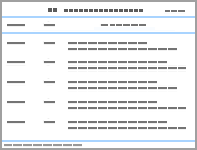
Tab. 1
Classification of sports tourism resources"
| 主类 | 亚类 | 基本类型 |
|---|---|---|
| 参与型 | 体育休闲活动 | 公园休闲体育、垂钓、高尔夫、露营等 |
| 强身健体 | 登山、户外徒步等 | |
| 激情冒险 | 探险、漂流、越野、滑雪等 | |
| 体育赛事 | 大、中、小型体育赛事 | |
| 观赏型 | 自然景观 | 风景名胜 |
| 民族民俗 | 民族体育节庆 | |
| 现代节庆 | 旅游节等活动 | |
| 体育建筑设施 | 体育场馆 |
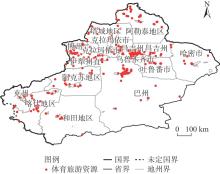
Fig. 1
Spatial distribution of sports tourism resources in Xinjiang"
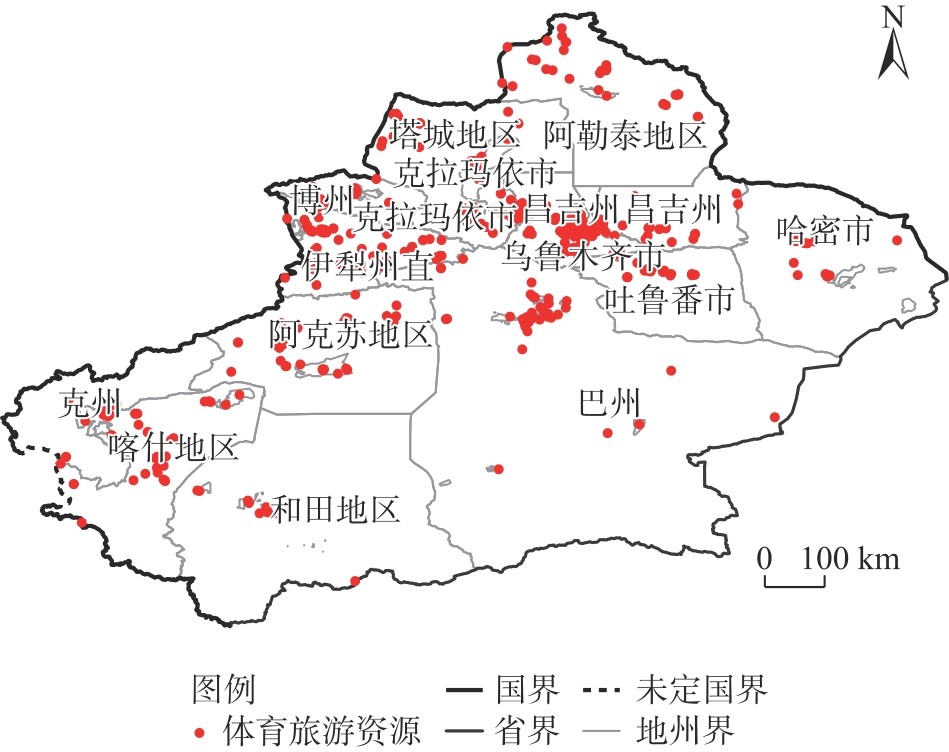
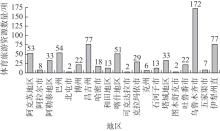
Fig. 2
Number distribution of sports tourism resources in different regions of Xinjiang"
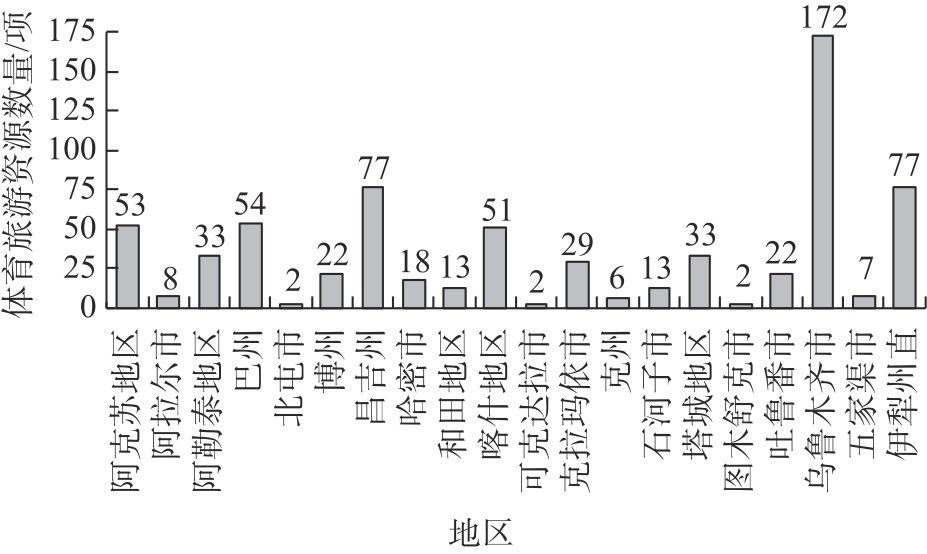
Fig. 3
Number proportion of each sports tourism resource type in Xinjiang"
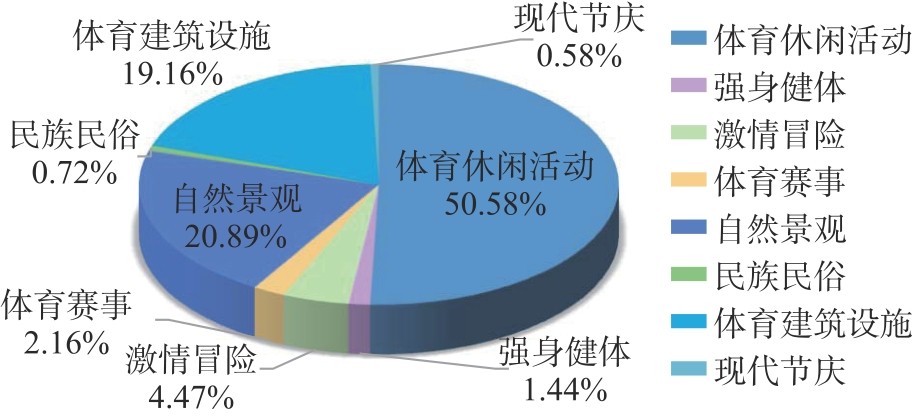
Fig. 4
Spatial distribution of different types of sports tourism resources in Xinjiang"

Tab. 2
Nearest neighbor index of sports tourism resources in Xinjiang"
| 资源类型 | 最近邻指数 |
|---|---|
| 整体 | 0.00000401 |
| 体育休闲活动 | 0.00000388 |
| 强身健体 | 0.00001726 |
| 激情冒险 | 0.00000768 |
| 自然景观 | 0.00000605 |
| 民族民俗 | 0.00000287 |
| 现代节庆 | 0.00001293 |
| 体育建筑设施 | 0.00000319 |
| 体育赛事 | 0.00001053 |
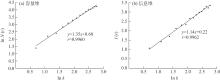
Fig. 5
Grid dimension of sports tourism resources in Xinjiang"
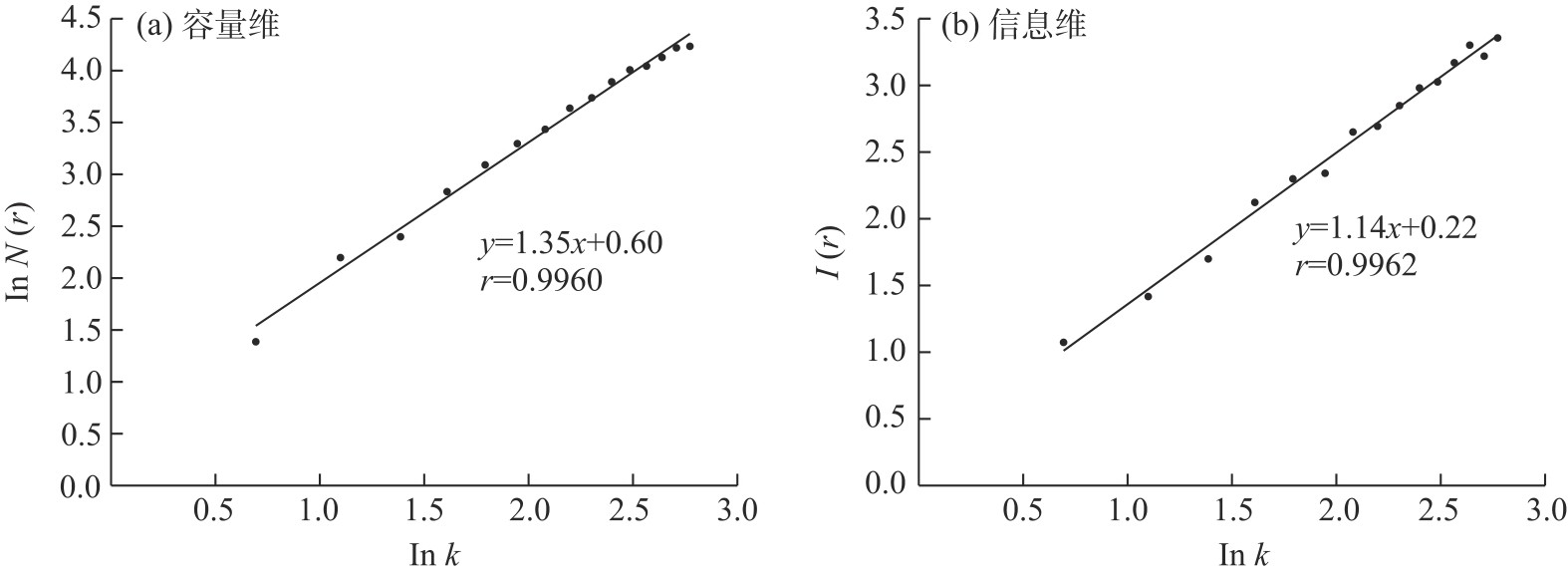
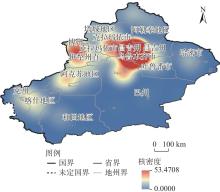
Fig. 6
Kernel density distribution of sports tourism resources in Xinjiang"
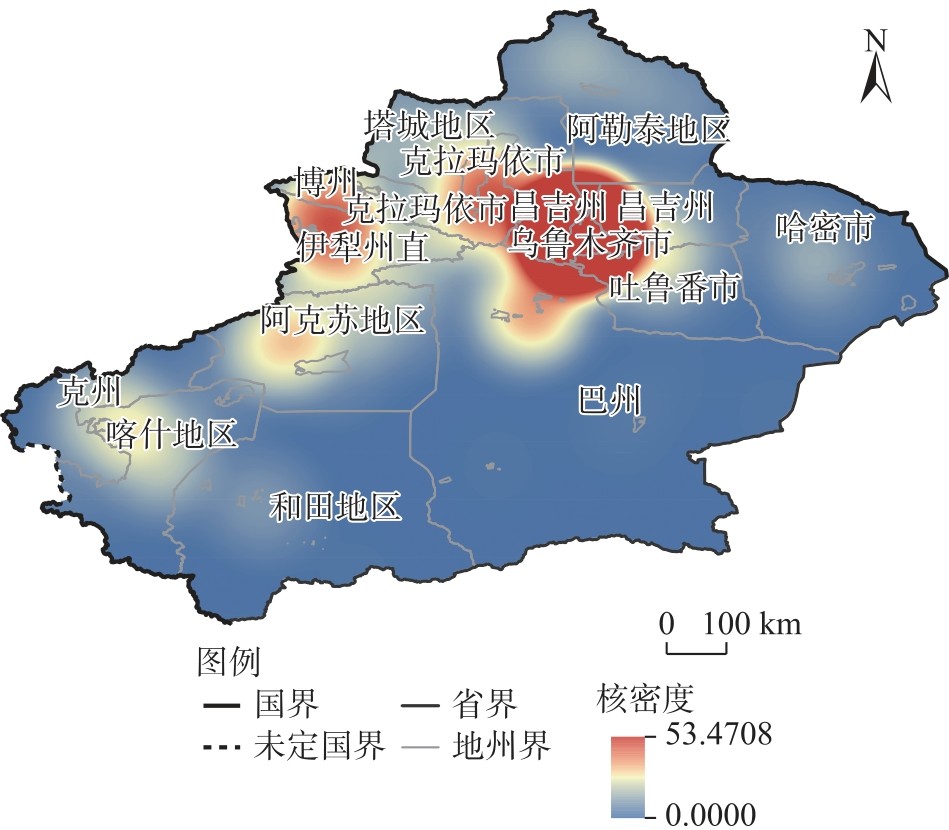
Fig. 7
LISA agglomeration of density of sports tourism resources in Xinjiang"
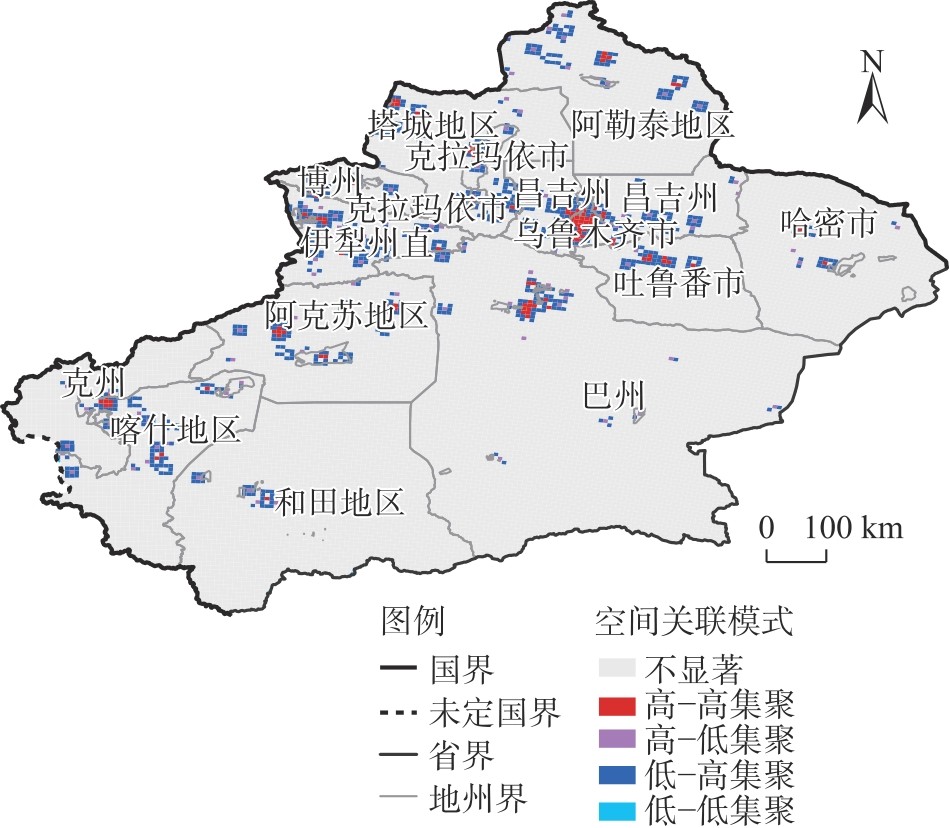
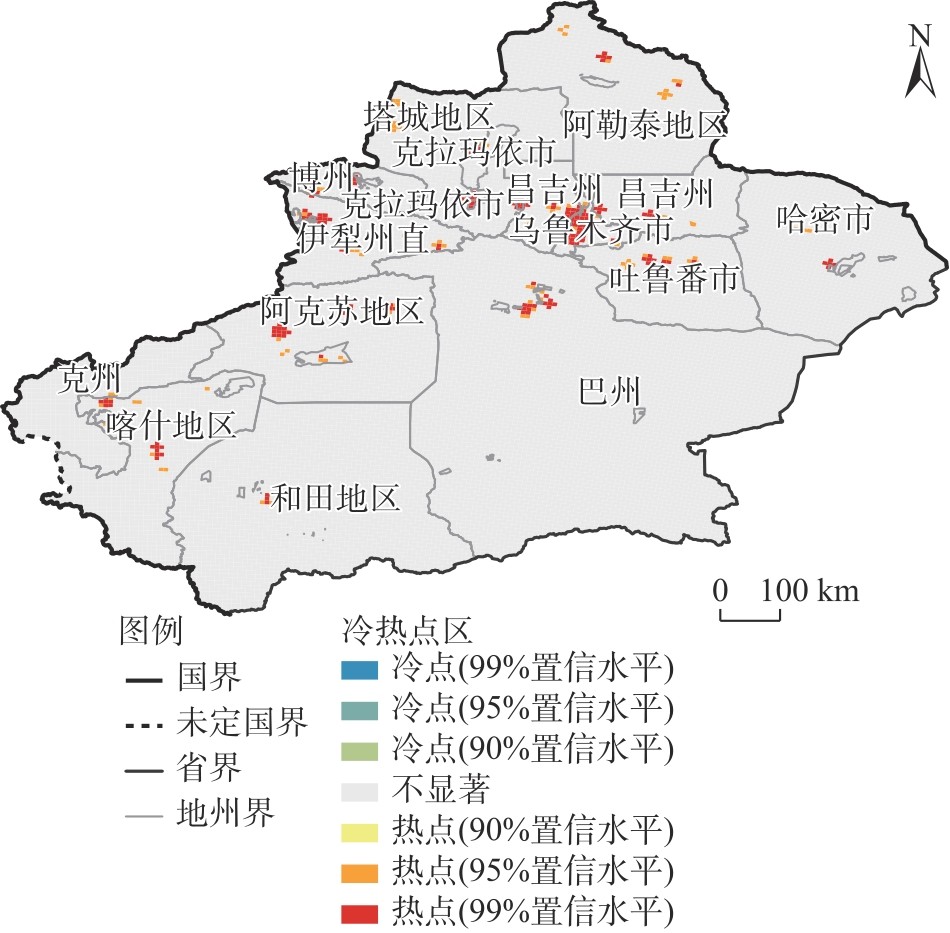
Fig. 8
Hotspot analysis of sports tourism resources in Xinjiang"
Tab. 3
Single factor detection results"
| 影响因素 | q值 | P值 | 影响力排序 |
|---|---|---|---|
| 高程 | 0.169 | 0.005 | 4 |
| 坡度 | 0.143 | 0.609 | 5 |
| 年均降水量 | 0.297 | 0.000 | 1 |
| 年均气温 | 0.191 | 0.000 | 3 |
| 人口数量 | 0.006 | 0.944 | 10 |
| 水系密度 | 0.090 | 0.095 | 8 |
| 植被覆盖指数 | 0.102 | 0.018 | 6 |
| 距交通枢纽距离 | 0.244 | 0.000 | 2 |
| 路网密度 | 0.022 | 0.862 | 9 |
| 旅游景区密度 | 0.100 | 0.121 | 7 |
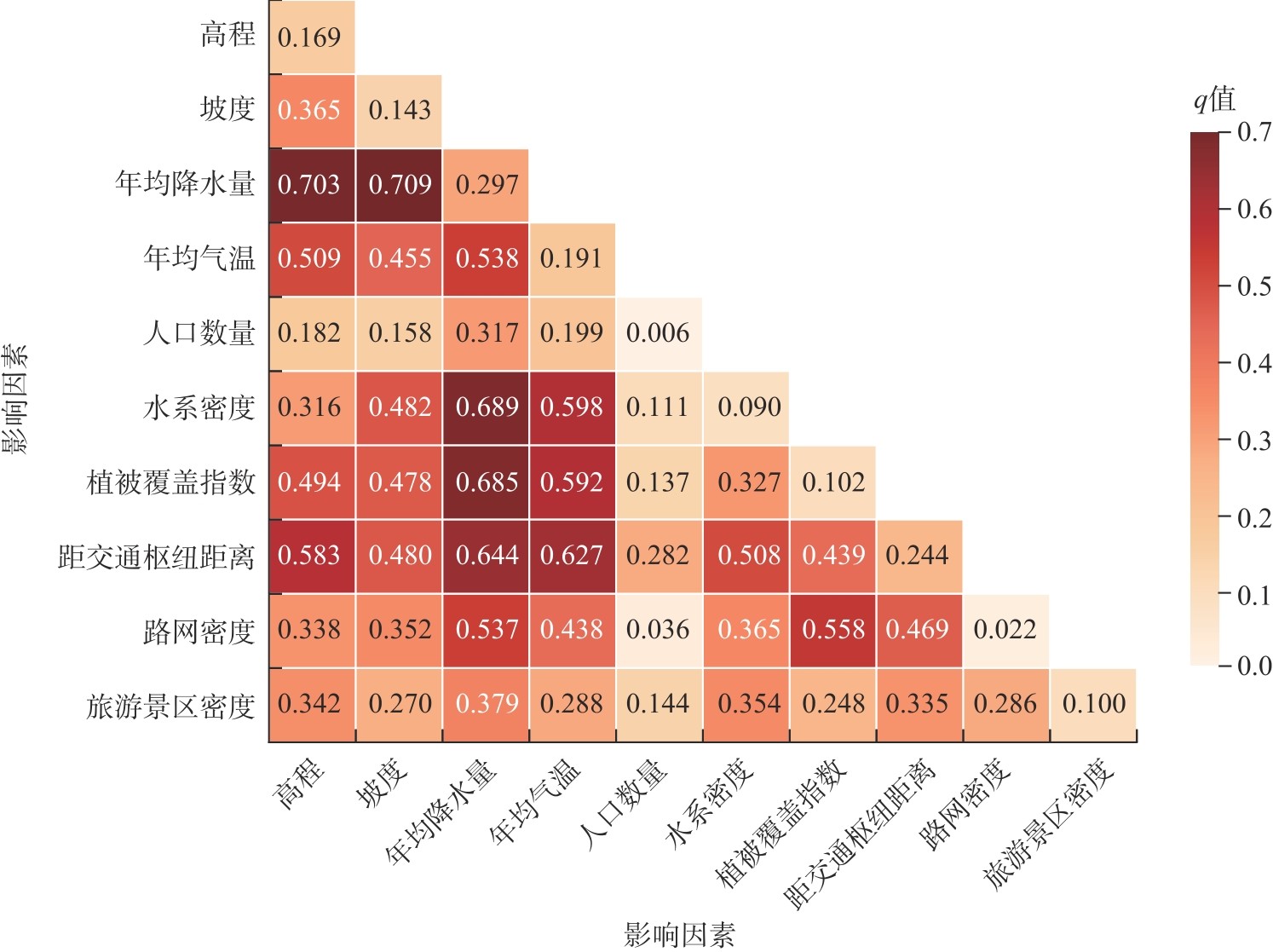
Fig. 9
Interaction detection results"
| [1] | 杨茜. “数字中国”背景下河南省体育旅游产业发展策略研究[J]. 河南财政金融学院学报(自然科学版), 2024, 33(2): 84-87. |
| [Yang Qian. Research on development strategy of sports tourism industry in Henan Province in background of “Digital China”[J]. Journal of Henan Institute of Education (Natural Science Edition), 2024, 33(2): 84-87.] | |
| [2] |
Cooper J A, Alderman D H. Cancelling march madness exposes opportunities for a more sustainable sports tourism economy[J]. Tourism Geographies, 2020, 22(3): 525-535.
doi: 10.1080/14616688.2020.1759135 |
| [3] |
Nishio T, Larke R, Van H H, et al. Analysing the motivations of Japanese international sports-fan tourists[J]. European Sport Management Quarterly, 2016, 16(4): 487-501.
doi: 10.1080/16184742.2016.1188838 |
| [4] |
Jin N P, Lee H, Lee S. Event quality, perceived value, destination image, and behavioral intention of sports events: The case of the IAAF World Championship, Daegu, 2011[J]. Asia Pacific Journal of Tourism Research, 2013, 18(8): 849-864.
doi: 10.1080/10941665.2012.711336 |
| [5] | 杨强. 体育旅游产业融合发展的动力与路径机制[J]. 体育学刊, 2016, 23(4): 55-62. |
| [Yang Qiang. Driving force and path mechanisms of the converged development of the sports tourism industry[J]. Journal of Physical Education, 2016, 23(4): 55-62.] | |
| [6] | 姜付高, 曹莉, 孙晋海, 等. 我国滨海地区体育旅游资源禀赋、丰度与绩效评价研究[J]. 天津体育学院学报, 2016, 31(4): 277-282. |
| [Jiang Fugao, Cao Li, Sun Jinhai, et al. The assessment of the endowment, abundance and performance evaluation of sports tourism resources of the coastal regions in China[J]. Journal of Tianjin University of Sport, 2016, 31(4): 277-282.] | |
| [7] |
张新, 刘家明, 朱鹤, 等. 北京郊区参与型体育旅游资源时空演化特征及影响因素[J]. 资源科学, 2020, 42(11): 2196-2209.
doi: 10.18402/resci.2020.11.12 |
|
[Zhang Xin, Liu Jiaming, Zhu He, et al. Spatiotemporal change and influencing factors of participatory sport tourism resources in Beijing suburbs[J]. Resources Science, 2020, 42(11): 2196-2209.]
doi: 10.18402/resci.2020.11.12 |
|
| [8] | Jiang X W, Kim A, Kim K, et al. Motivational antecedents, value co-creation process, and behavioral consequences in participatory sport tourism[J]. Sustainability, 2021, 13(17): 9916, doi: 10.3390/su13179916. |
| [9] | 罗振中, 戴朝. 广元市休闲体育旅游资源的SWOT分析[J]. 体育科技, 2024, 45(1): 113-115. |
| [Luo Zhenzhong, Dai Chao. SWOT analysis of tourism resources of leisure sports in Guangyuan City[J]. Sport Science and Technology, 2024, 45(1): 113-115.] | |
| [10] | 罗亮, 范冬云, 刘晴. 湖南省体育旅游资源空间分布特征及区划分析[J]. 体育文化导刊, 2018(5): 89-93. |
| [Luo Liang, Fan Dongyun, Liu Qing. Research on characteristics of spatial distribution and division of sports tourism resources in Hunan Province[J]. Sports Culture Guide, 2018(5): 89-93.] | |
| [11] | 于素梅. 中国体育旅游研究[M]. 北京: 中国水利水电出版社, 2006: 43-51. |
| [Yu Sumei. The research on Chinese sport tourism[M]. Beijing: China Water & Power Press, 2006: 43-51.] | |
| [12] | 中华人民共和国国家质量监督检验检疫总局. GB/T18972-2003. 旅游资源分类、调查与评价[S]. 北京: 文化和旅游部, 2003. |
| [General Administration of Quality Supervision, Inspection and Quarantine of the People’s Republic of China. GB/T18972-2003. Classification, investigation and evaluation of tourism resources[S]. Beijing: Ministry of Culture and Tourism, 2003.] | |
| [13] | 靳诚, 陆玉麟. 基于县域单元的江苏省经济空间格局演化[J]. 地理学报, 2009, 64(6): 713-724. |
|
[Jin Cheng, Lu Yulin. Evolvement of spatial pattern of economy in Jiangsu Province at county level[J]. Acta Geographica Sinica, 2009, 64(6): 713-724.]
doi: 10.11821/xb200906008 |
|
| [14] | 黄钦, 杨波, 龚熊波, 等. 基于POI数据的长沙市旅游景点空间格局分析[J]. 湖南师范大学自然科学学报, 2021, 44(5): 40-49. |
| [Huang Qin, Yang Bo, Gong Xiongbo, et al. Analysis on spatial pattern of tourist attractions in Changsha City based on POI data[J]. Journal of Natural Science of Hunan Normal University, 2021, 44(5): 40-49.] | |
| [15] | 郑光辉, 蒋涤非, 陈国磊, 等. 中国乡村旅游重点村空间分布格局及影响机理研究[J]. 干旱区资源与环境, 2020, 34(9): 194-201. |
| [Zheng Guanghui, Jiang Difei, Chen Guolei, et al. Spatial distribution pattern and influence mechanism of key rural tourism villages in China[J]. Journal of Arid Land Resources and Environment, 2020, 34(9): 194-201.] | |
| [16] |
宋小龙, 马明德, 李陇堂, 等. 宁夏乡村旅游重点村空间格局与影响因素分析[J]. 干旱区地理, 2024, 47(11): 1957-1969.
doi: 10.12118/j.issn.1000-6060.2023.731 |
|
[Song Xiaolong, Ma Mingde, Li Longtang, et al. Spatial pattern and influencing factors of key rural tourism villages in Ningxia[J]. Arid Land Geography, 2024, 47(11): 1957-1969.]
doi: 10.12118/j.issn.1000-6060.2023.731 |
|
| [17] | 刘周敏, 周鸿璋, 曹庆荣. 基于ArcGIS下国家级体育特色小镇空间分布特征及影响因素研究[J]. 成都体育学院学报, 2020, 46(4): 62-67. |
| [Liu Zhoumin, Zhou Hongzhang, Cao Qingrong. ArcGlS-based research on spatial distribution characteristics and influencing factors of national sports towns[J]. Journal of Chengdu Sport University, 2020, 46(4): 62-67.] | |
| [18] |
Caragliu A, Nijkamp P. Space and knowledge spillovers in European regions: The impact of different forms of proximity on spatial knowledge diffusion[J]. Journal of Economic Geography, 2016, 16(3): 749-774.
doi: 10.1093/jeg/lbv042 |
| [19] |
Anselin L. Local indicators of spatial association: LISA[J]. Geographical Analysis, 1995, 27(2): 93-115.
doi: 10.1111/gean.1995.27.issue-2 |
| [20] |
张凯煌, 千庆兰, 陈清怡. 多尺度视角下中国新能源汽车产业创新空间格局及网络特征[J]. 地理科学进展, 2021, 40(11): 1824-1838.
doi: 10.18306/dlkxjz.2021.11.003 |
|
[Zhang Kaihuang, Qian Qinglan, Chen Qingyi. Multilevel spatial patterns and network characteristics of China’s new energy vehicle industrial technological innovation[J]. Progress in Geography, 2021, 40(11): 1824-1838.]
doi: 10.18306/dlkxjz.2021.11.003 |
|
| [21] | 常艳萍, 李玉娟, 彭仕兰. 贵州省A级旅游景区空间分异及影响因素——基于地理探测器模型研究[J]. 国土与自然资源研究, 2024(3): 84-90. |
| [Chang Yanping, Li Yujuan, Peng Shilan. Spatial differentiation and influencing factors of A-class scenic spots in Guizhou Province: Research based on geographical detector model[J]. Territory & Natural Resources Study, 2024(3): 84-90.] | |
| [22] | 李若倩, 孟斌. 基于地理探测器的北京市居民通勤距离影响因素分析[J]. 资源开发与市场, 2020, 36(5): 449-455. |
| [Li Ruoqian, Meng Bin. Based on geographical detector analysis on influencing factors of commuting distance of Beijng residents[J]. Resource Development & Market, 2020, 36(5): 449-455.] | |
| [23] |
王劲峰, 徐成东. 地理探测器: 原理与展望[J]. 地理学报, 2017, 72(1): 116-134.
doi: 10.11821/dlxb201701010 |
|
[Wang Jinfeng, Xu Chengdong. Geodetector: Principle and prospective[J]. Acta Geographica Sinica, 2017, 72(1): 116-134.]
doi: 10.11821/dlxb201701010 |
|
| [24] | 张赫, 彭千芮, 王睿, 等. 中国县域碳汇时空格局及影响因素[J]. 生态学报, 2020, 40(24): 8988-8998. |
| [Zhang He, Peng Qianrui, Wang Rui, et al. Spatiotemporal patterns and factors influencing county carbon sinks in China[J]. Acta Ecologica Sinica, 2020, 40(24): 8988-8998.] | |
| [25] |
邹建琴, 明庆忠, 刘安乐, 等. 中国红色旅游经典景点空间分布格局及其影响因素异质性[J]. 自然资源学报, 2021, 36(11): 2748-2762.
doi: 10.31497/zrzyxb.20211103 |
|
[Zou Jianqin, Ming Qingzhong, Liu Anle, et al. Spatial distribution pattern of classic red tourism scenic spots and heterogeneity of its influencing factors in China[J]. Journal of Natural Resources, 2021, 36(11): 2748-2762.]
doi: 10.31497/zrzyxb.20211103 |
|
| [26] |
Zuo Y F, Chen H, Pan J C, et al. Spatial distribution pattern and influencing factors of sports tourism resources in China[J]. ISPRS International Journal of Geo-Information, 2021, 10(7): 428-436.
doi: 10.3390/ijgi10070428 |
| [27] |
朱磊, 李燕楠, 徐佳慧, 等. 中国冰雪旅游地空间分布格局及成因[J]. 干旱区地理, 2024, 47(8): 1399-1410.
doi: 10.12118/j.issn.1000-6060.2024.120 |
|
[Zhu Lei, Li Yannan, Xu Jiahui, et al. Spatial distribution pattern and causes of ice and snow tourism in China[J]. Arid Land Geography, 2024, 47(8): 1399-1410.]
doi: 10.12118/j.issn.1000-6060.2024.120 |
|
||