Arid Land Geography ›› 2026, Vol. 49 ›› Issue (3): 534-548.doi: 10.12118/j.issn.1000-6060.2025.137
• Biology and Pedology • Previous Articles Next Articles
LI Mingxuan1( ), LEI Dongxue1, DING Guodong1,2,3,4(), WANG Hanzhuo1
Received:2025-03-11
Revised:2025-11-13
Online:2026-03-25
Published:2026-03-24
Contact:
DING Guodong
E-mail:cattleyal118@163.com;dch1999@263.net
LI Mingxuan, LEI Dongxue, DING Guodong, WANG Hanzhuo. Characteristics of vegetation change and current status of community composition in the Hatengtaohai National Nature Reserve, Inner Mongolia[J].Arid Land Geography, 2026, 49(3): 534-548.
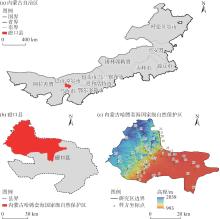
Fig. 1
Location of the study area"
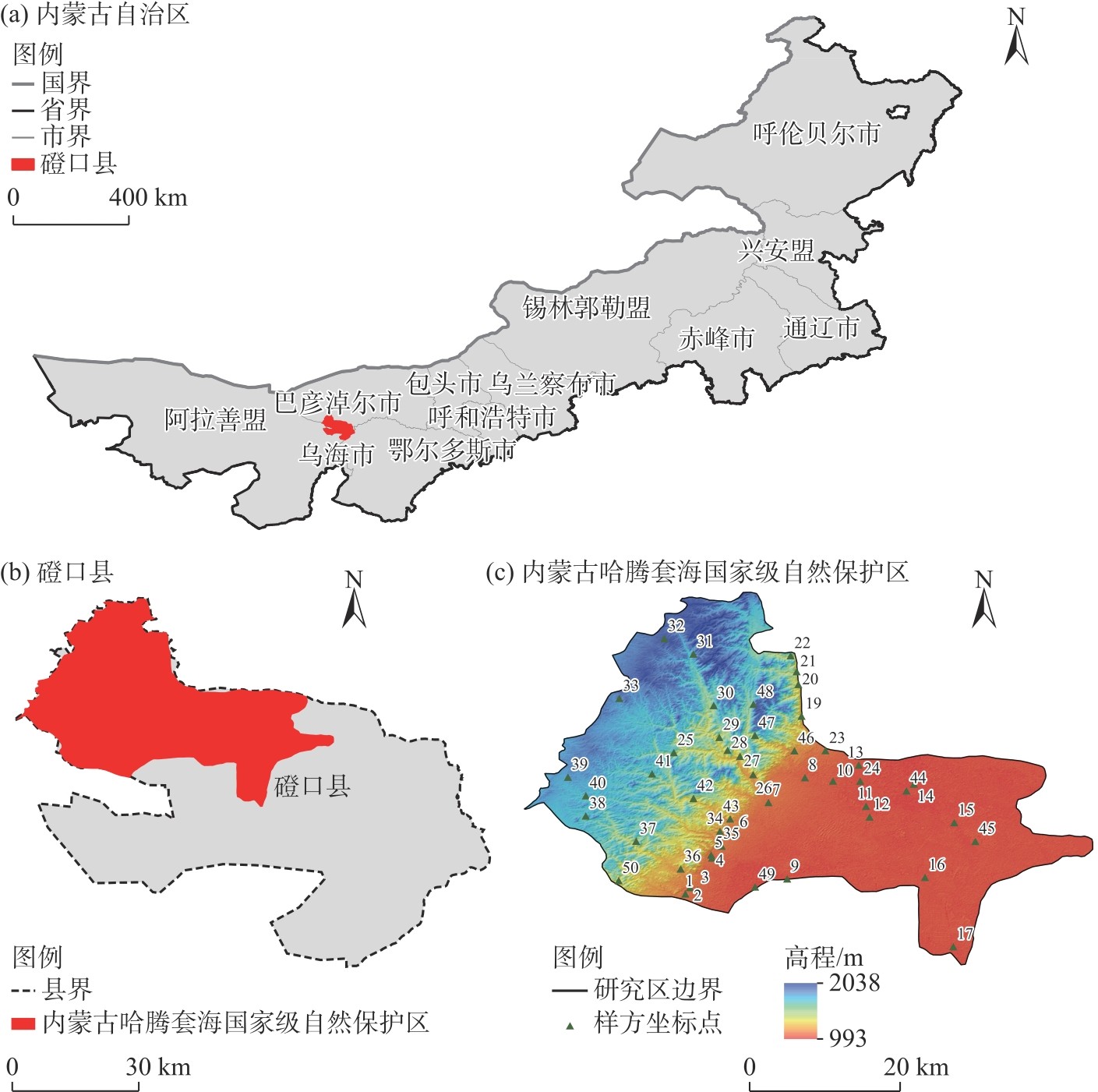
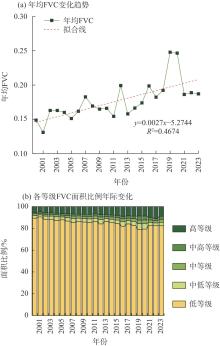
Fig. 2
Temporal variation of FVC in the Hatengtaohai National Nature Reserve from 2000 to 2023"
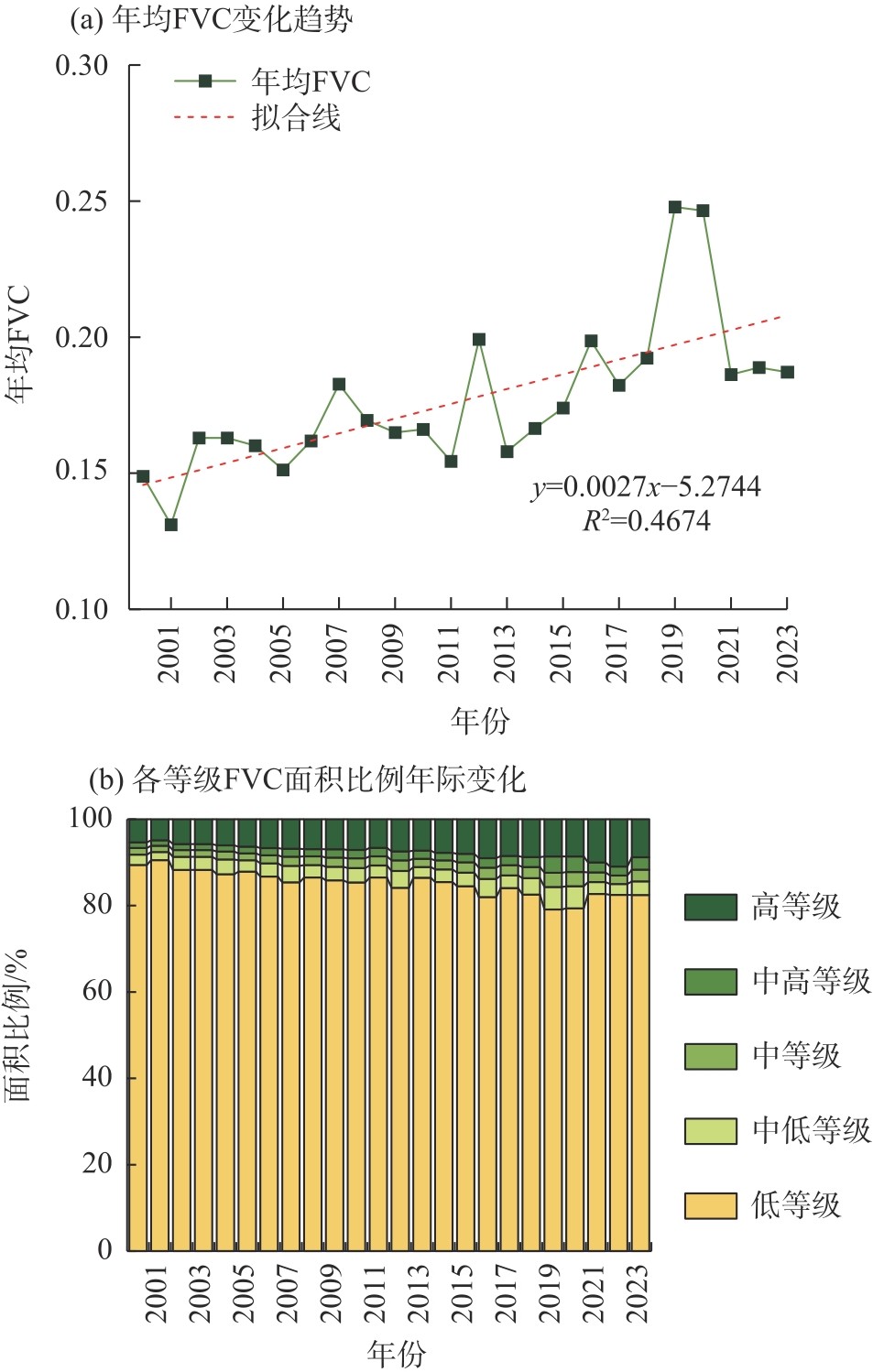
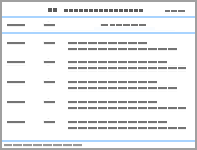
Tab. 1
Classification of FVC grades"
| 年均FVC取值范围 | FVC等级 |
|---|---|
| 0.00~0.30 | 低等级 |
| 0.30~0.45 | 中低等级 |
| 0.45~0.60 | 中等级 |
| 0.60~0.75 | 中高等级 |
| 0.75~1.00 | 高等级 |
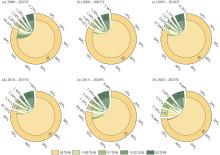
Fig. 3
Proportion of FVC conversion area by grade in the Hatengtaohai National Nature Reserve from 2000 to 2023"
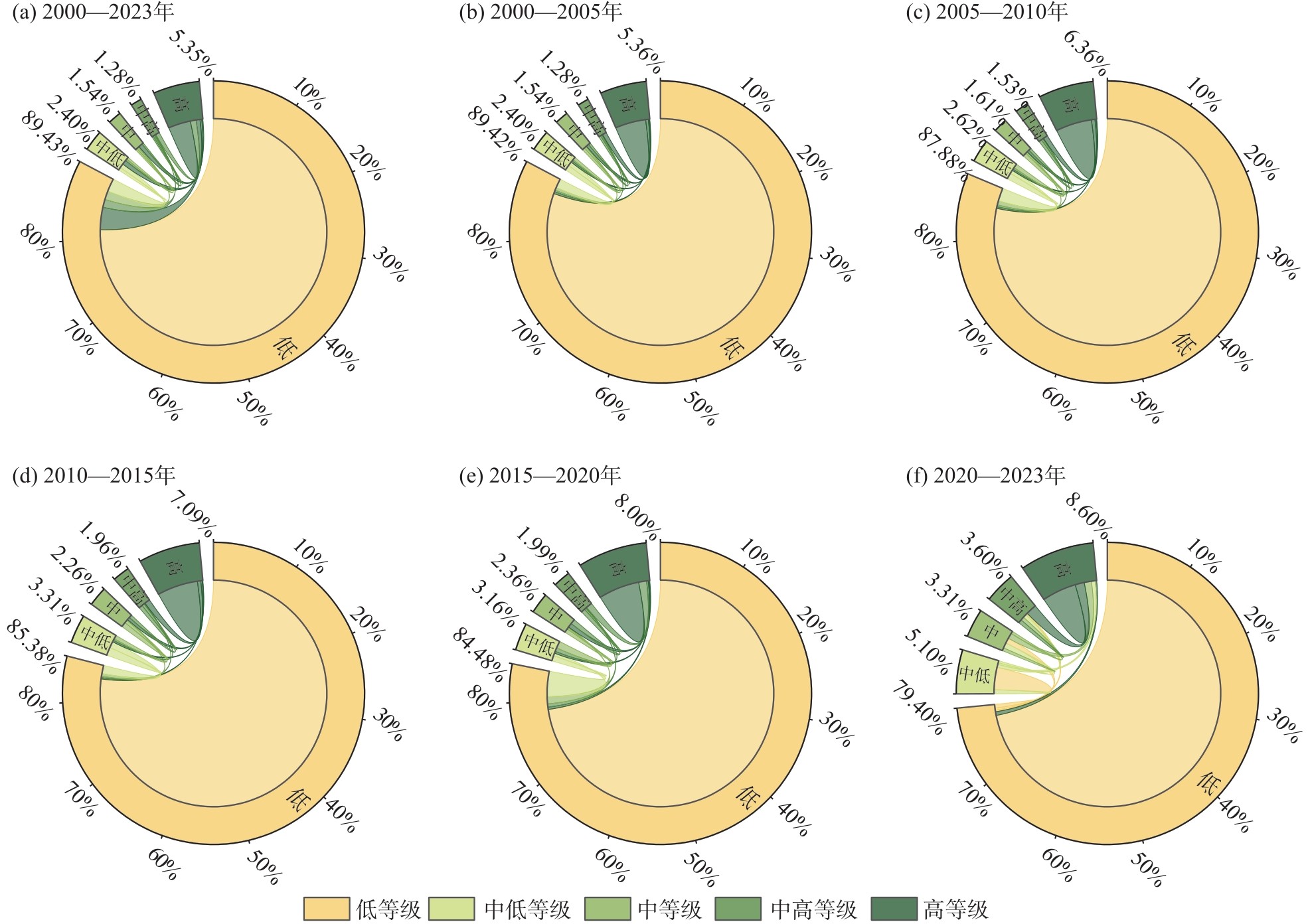
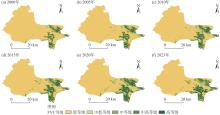
Fig. 4
Spatial distributions of different grades of FVC in the Hatengtaohai National Nature Reserve from 2000 to 2023"
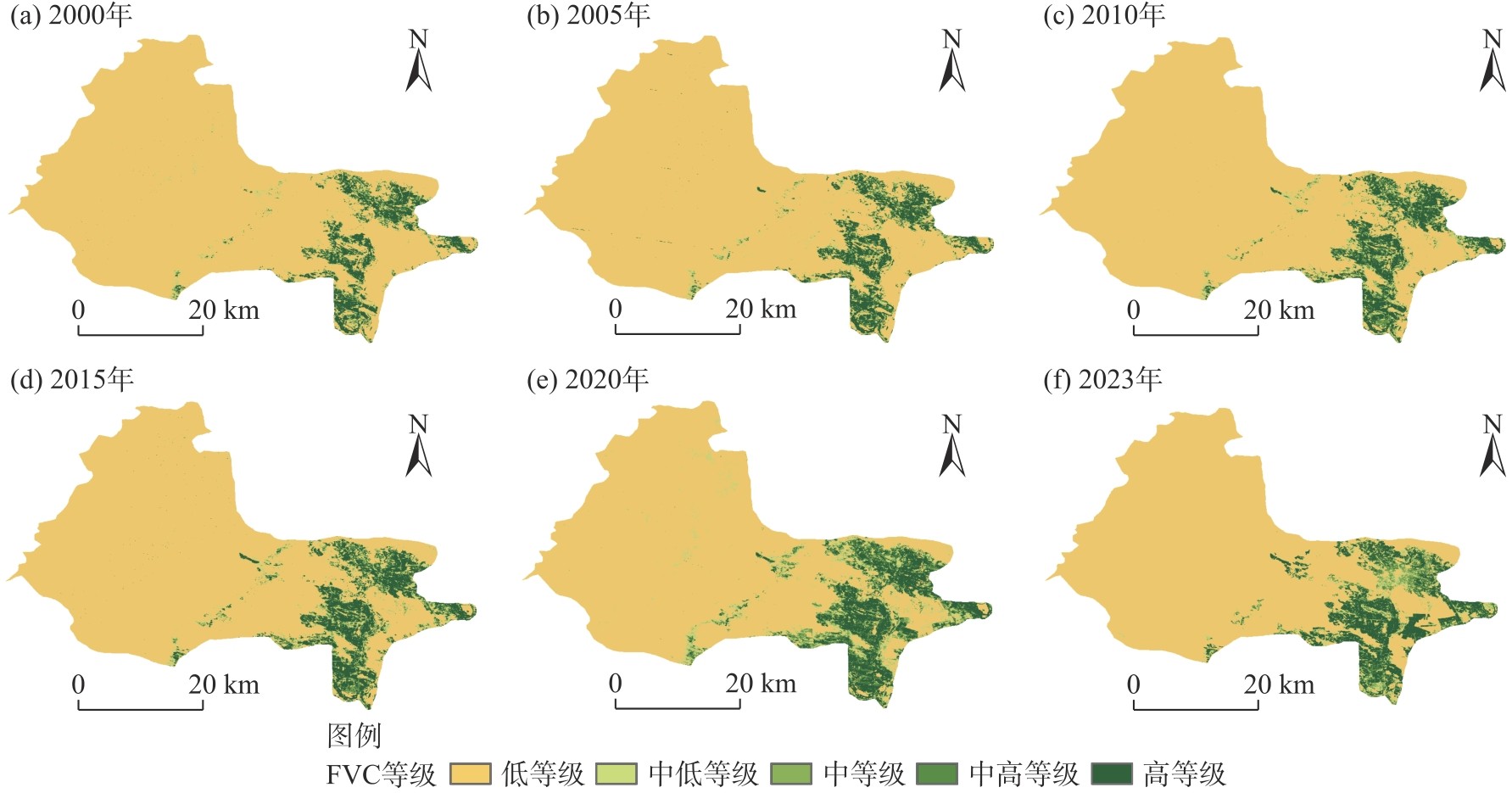
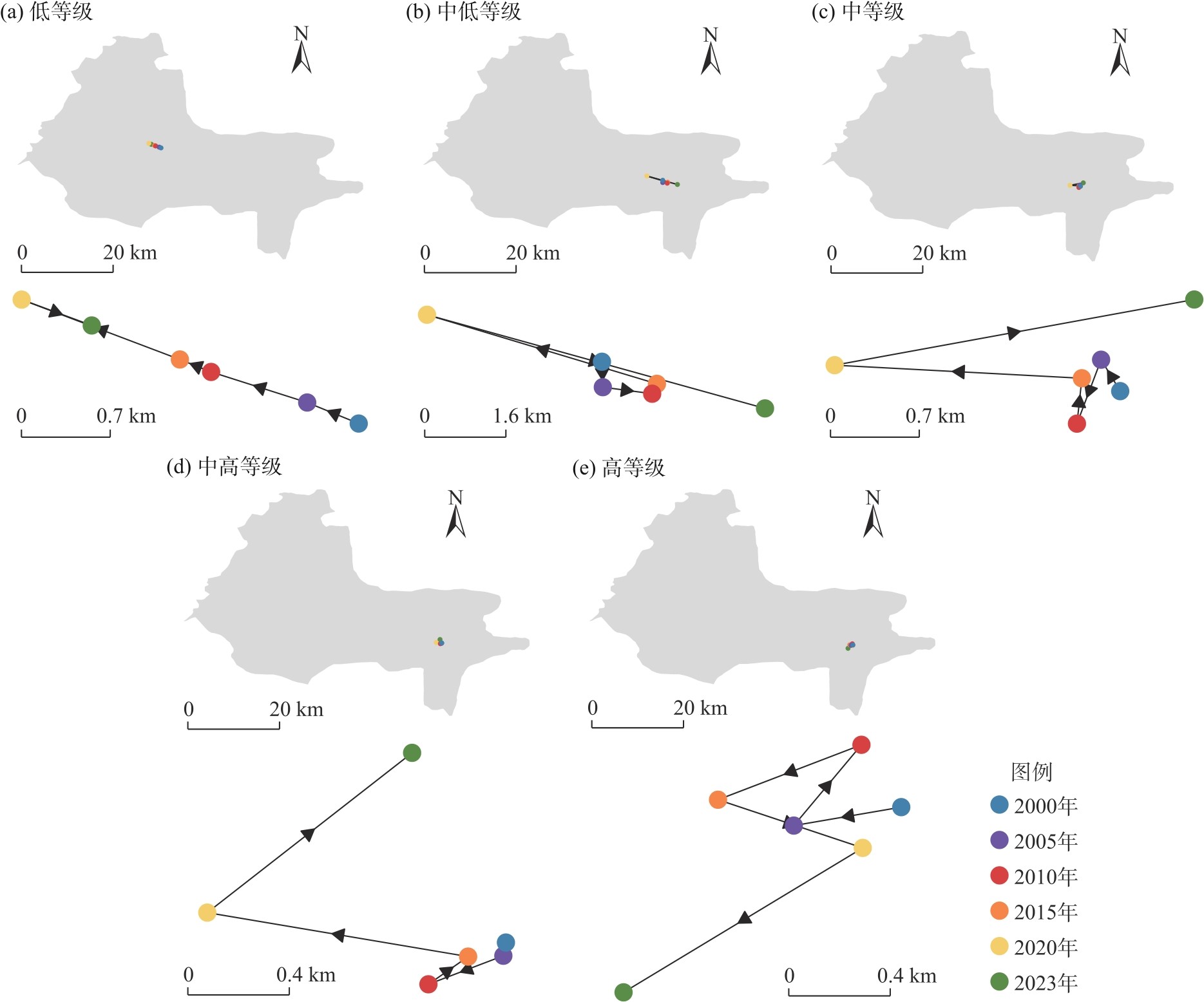
Fig. 5
Trajectories of the centroid for different grades of FVC in the Hatengtaohai National Nature Reserve from 2000 to 2023"
Tab. 2
Comparison of seed plant statistics in the Hatengtaohai National Nature Reserve with those in Inner Mongolia and nationwide"
| 分类群 | 哈腾套海国家级自然保护区 | 内蒙古 | 全国 | ||||||||
|---|---|---|---|---|---|---|---|---|---|---|---|
| 科数 | 属数 | 种数 | 科数 | 属数 | 种数 | 科数 | 属数 | 种数 | |||
| 裸子植物 | 3 | 3 | 4 | 4 | 8 | 28 | 10 | 44 | 250 | ||
| 被子植物 | 43 | 131 | 194 | 127 | 706 | 2550 | 265 | 3040 | 30000 | ||
| 蕨类 | 1 | 1 | 1 | 13 | 23 | 41 | 36 | 156 | 2500 | ||
| 总计 | 47 | 135 | 199 | 144 | 737 | 2619 | 311 | 3240 | 32750 | ||
Tab. 3
Family composition of higher plants in the Hatengtaohai National Nature Reserve"
| 科含种数(科数) | 科(属数/种数) |
|---|---|
| ≥20(3) | 菊科(19/31)、豆科(14/23)、苋科(13/23) |
| 10~19(2) | 禾本科(17/18)、蔷薇科(7/14) |
| 2~9(20) | 蓼科(4/7)、十字花科(4/6)、唇形科(4/4)、石竹科(3/4)、茄科(3/3)、杨柳科(2/7)、毛莨科(2/4)、旋花科(2/4)、白刺科(2/3)、车前科(2/3)、柽柳科(2/3)、紫草科(2/3)、蒺藜科(2/2)、木犀科(2/2)、伞形科(2/2)、榆科(1/3)、夹竹桃科(1/2)、莎草科(1/2)、石蒜科(1/2)、松科(1/2) |
| 1(22) | 白花丹科(1/1)、柏科(1/1)、报春花科(1/1)、大戟科(1/1)、胡颓子科(1/1)、锦葵科(1/1)、列当科(1/1)、麻黄科(1/1)、马齿苋科(1/1)、牻牛儿苗(1/1)、木贼科(1/1)、葡萄科(1/1)、漆树科(1/1)、鼠李科(1/1)、粟米草科(1/1)、天门冬科(1/1)、通泉草科(1/1)、卫矛科(1/1)、罂粟科(1/1)、远志科(1/1)、芸香科(1/1)、鸢尾科(1/1) |
Tab. 4
Distribution types of plant families, genera and species in the Hatengtaohai National Nature Reserve"
| 分布区类型及其变型 | 科 | 属 | 种 | |||||
|---|---|---|---|---|---|---|---|---|
| 数量 | 占比/% | 数量 | 占比/% | 数量 | 占比/% | |||
| 1. 广布(世界广布) | 21 | 46.81 | 24 | 17.78 | 40 | 20.10 | ||
| 2. 泛热带(热带广布)分布 | 9 | 19.15 | 16 | 11.85 | 18 | 9.05 | ||
| 2-1. 热带亚洲-大洋洲和热带美洲(南美洲或和墨西哥)分布 | 0 | 0.00 | 1 | 0.74 | 1 | 0.50 | ||
| 2-2. 热带亚洲、非洲和南美洲间断分布 | 2 | 4.26 | 0 | 0.00 | 0 | 0.00 | ||
| 2S. 以南半球为主的泛热带分布 | 2 | 4.26 | 0 | 0.00 | 0 | 0.00 | ||
| 3. 热带亚洲和热带美洲间断分布 | 0 | 0.00 | 0 | 0.00 | 0 | 0.00 | ||
| 4. 旧日世界热带分布 | 1 | 2.13 | 1 | 0.74 | 1 | 0.50 | ||
| 5. 热带亚洲至热带大洋洲分布 | 0 | 0.00 | 0 | 0.00 | 0 | 0.00 | ||
| 6. 热带亚洲至热带非洲分布 | 0 | 0.00 | 1 | 0.74 | 1 | 0.50 | ||
| 7. 热带亚洲(印度-马来西亚)分布 | 0 | 0.00 | 1 | 0.74 | 2 | 1.01 | ||
| 8. 北温带分布 | 2 | 4.26 | 26 | 19.26 | 53 | 26.63 | ||
| 8-4. 北温带和南温带(全温带)间断分布 | 5 | 10.64 | 3 | 2.22 | 4 | 2.01 | ||
| 8-5. 欧亚和南美洲温带间断分布 | 0 | 0.00 | 1 | 0.74 | 1 | 0.50 | ||
| 9. 东亚和北美洲间断分布 | 0 | 0.00 | 5 | 3.70 | 6 | 3.02 | ||
| 10. 旧世界温带分布 | 1 | 2.13 | 11 | 8.15 | 12 | 6.03 | ||
| 10-1. 地中海区至西亚(或中亚)和东亚间断分布 | 0 | 0.00 | 4 | 2.96 | 11 | 5.53 | ||
| 10-3. 欧亚和南非(有时也在澳大利亚)分布 | 0 | 0.00 | 2 | 1.48 | 2 | 1.01 | ||
| 11. 温带亚洲分布 | 0 | 0.00 | 7 | 5.19 | 10 | 5.03 | ||
| 12. 地中海区、西亚至中亚分布 | 0 | 0.00 | 13 | 9.63 | 15 | 7.54 | ||
| 12-1. 地中海区至中亚和南非洲和/或大洋洲间断分布 | 0 | 0.00 | 1 | 0.74 | 1 | 0.50 | ||
| 12-2. 地中海区至西亚或中亚和墨西哥或古巴间断分布 | 0 | 0.00 | 2 | 1.48 | 3 | 1.51 | ||
| 12-3. 地中海区至温带-热带亚洲、大洋洲和/或北美南部至南美洲间断分布 | 2 | 4.26 | 2 | 1.48 | 2 | 1.01 | ||
| 12-4. 地中海区至热带、非洲和喜马拉雅山间断分布 | 0 | 0.00 | 1 | 0.74 | 2 | 1.01 | ||
| 13. 中亚分布 | 0 | 0.00 | 2 | 1.48 | 3 | 1.51 | ||
| 13-1. 中亚东部分布 | 0 | 0.00 | 5 | 3.70 | 5 | 2.51 | ||
| 13-2. 中亚东部至喜马拉雅和中国西南部分布 | 1 | 2.13 | 0 | 0.00 | 0 | 0.00 | ||
| 14. 东亚分布 | 0 | 0.00 | 3 | 2.22 | 3 | 1.51 | ||
| 14-1. 中国-喜马拉雅分布 | 0 | 0.00 | 1 | 0.74 | 1 | 0.50 | ||
| 14-2. 中国-日本分布 | 0 | 0.00 | 2 | 1.48 | 2 | 1.01 | ||
| 15. 中国特有分布 | 0 | 0.00 | 0 | 0.00 | 0 | 0.00 | ||
| 合计 | 47 | 100.00 | 135 | 100.00 | 199 | 100.00 | ||
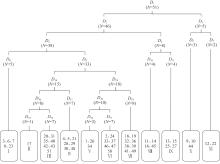
Fig. 6
TWINSPAN dendrogram of formations in the Hatengtaohai National Nature Reserve"
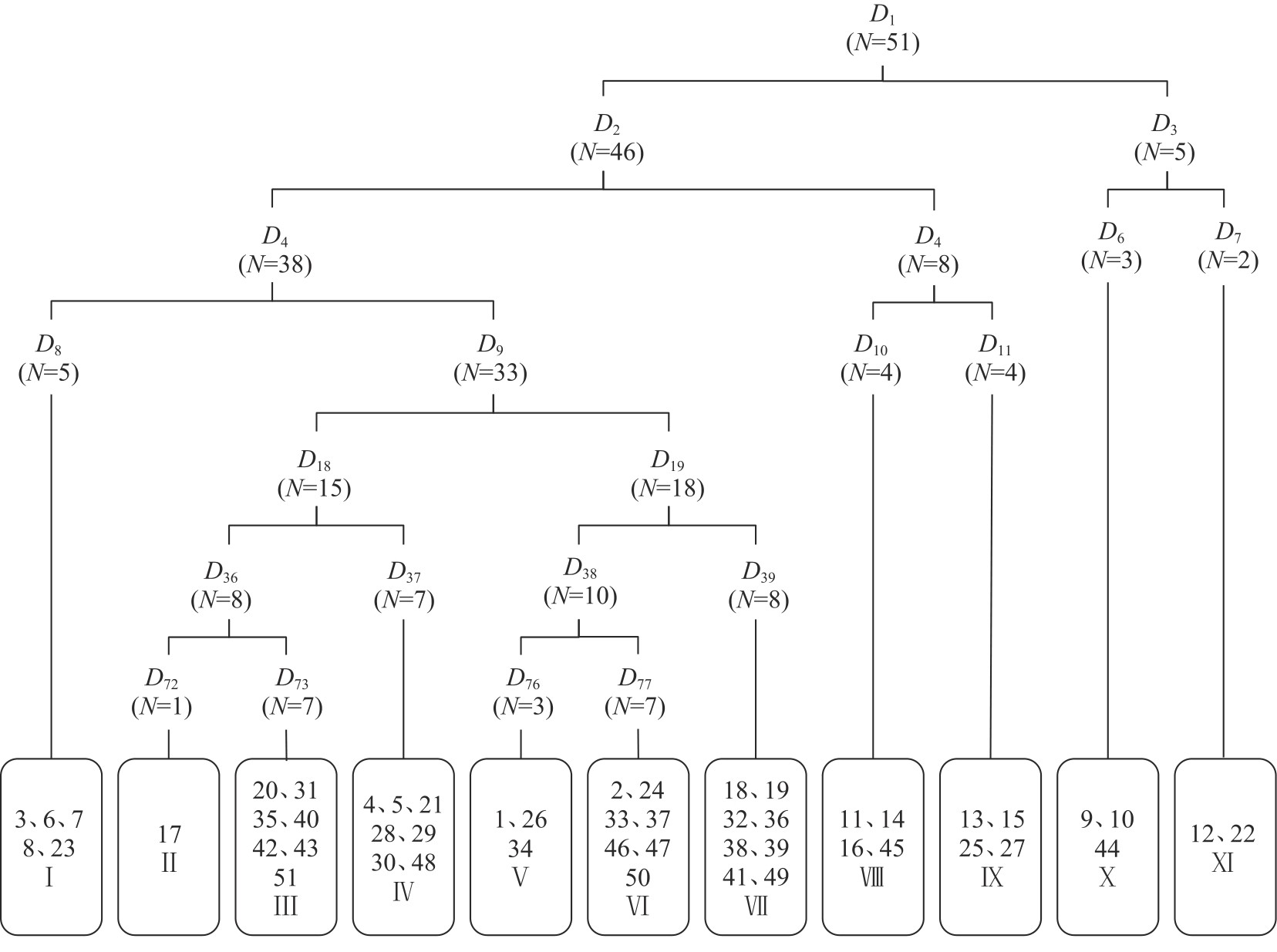
Tab. 5
Vegetation formation type in the Hatengtaohai National Nature Reserve"
| 序号 | 植被群系类型 | 优势种 重要值/% | Shannon- Wiener指数 | Simpson 指数 | Pielou 指数 |
|---|---|---|---|---|---|
| Ⅰ | 柠条锦鸡儿群系 | 56.19 | 1.64 | 0.72 | 0.66 |
| Ⅱ | 梭梭群系 | 74.23 | 1.50 | 0.75 | 0.83 |
| Ⅲ | 蒙古扁桃群系 | 27.87 | 2.12 | 0.85 | 0.77 |
| Ⅳ | 猫头刺-霸王群系 | 22.73 | 1.64 | 0.72 | 0.66 |
| Ⅴ | 沙冬青群系 | 45.47 | 0.85 | 0.43 | 0.53 |
| Ⅵ | 霸王群系 | 37.15 | 2.01 | 0.81 | 0.74 |
| Ⅶ | 红砂群系 | 30.26 | 1.41 | 0.64 | 0.54 |
| Ⅷ | 芦苇群系 | 65.82 | 0.46 | 0.26 | 0.42 |
| Ⅸ | 柽柳群系 | 28.00 | 0.07 | 0.03 | 0.05 |
| Ⅹ | 唐古特白刺群系 | 34.24 | 1.39 | 0.76 | 0.67 |
| Ⅺ | 沙蓬-蒙古虫实群系 | 32.08 | 0.60 | 0.41 | 0.86 |
| 均值 | - | 1.24 | 0.58 | 0.61 |
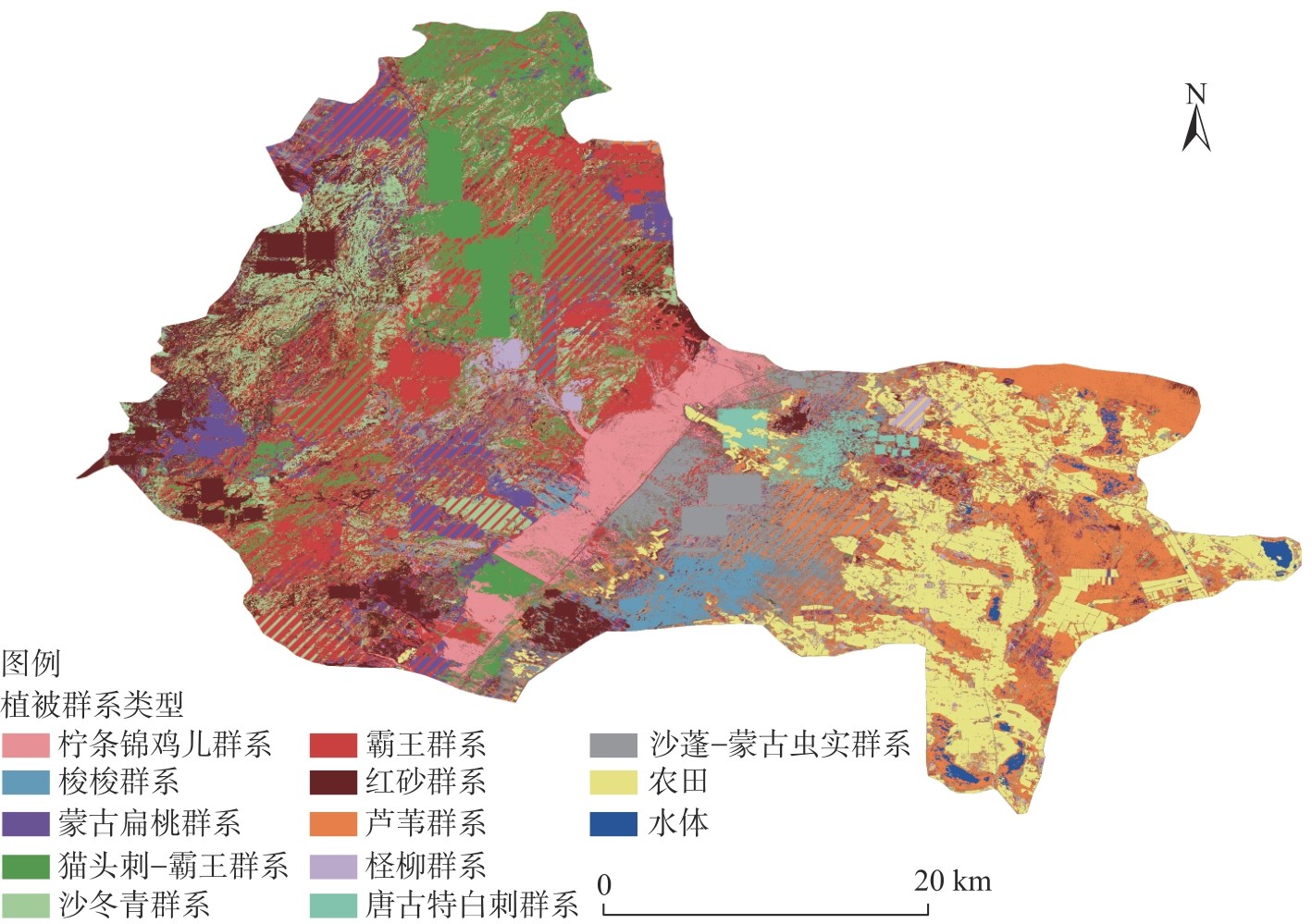
Fig. 7
Formation distribution in the Hatengtaohai National Nature Reserve"
Tab. 6
Area of formation distribution in the Hatengtaohai National Nature Reserve"
| 序号 | 植被群系类型 | 面积/hm2 | 序号 | 植被群系类型 | 面积/hm2 |
|---|---|---|---|---|---|
| Ⅰ | 柠条锦鸡儿群系 | 6060.28 | Ⅶ | 红砂群系 | 22520.75 |
| Ⅱ | 梭梭群系 | 3463.63 | Ⅷ | 芦苇群系 | 12965.50 |
| Ⅲ | 蒙古扁桃群系 | 12587.88 | Ⅸ | 柽柳群系 | 2979.25 |
| Ⅳ | 猫头刺-霸王群系 | 21298.50 | Ⅹ | 唐古特白刺群系 | 1116.00 |
| Ⅴ | 沙冬青群系 | 2258.10 | Ⅺ | 沙蓬-蒙古虫实群系 | 4661.12 |
| Ⅵ | 霸王群系 | 30945.72 |
Tab. 7
Meaning of driving factors"
| 因素 | 因子 | 因子含义 |
|---|---|---|
| 地理因素 | 高程(X1)/m | 保护区海拔高度 |
| 地貌类型(X2) | 保护区地貌类型 | |
| 气候因素 | 地表温度(X3)/℃ | 保护区年均地表温度 |
| 降水量(X4)/mm | 保护区年降水量 | |
| 蒸散发(X5)/mm | 保护区年蒸散发量 | |
| 人为因素 | 道路欧氏距离(X6)/km | 保护区内与道路距离 |
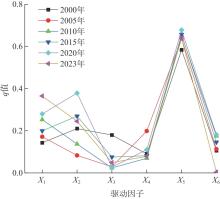
Fig. 8
Results of factor detection for FVC"
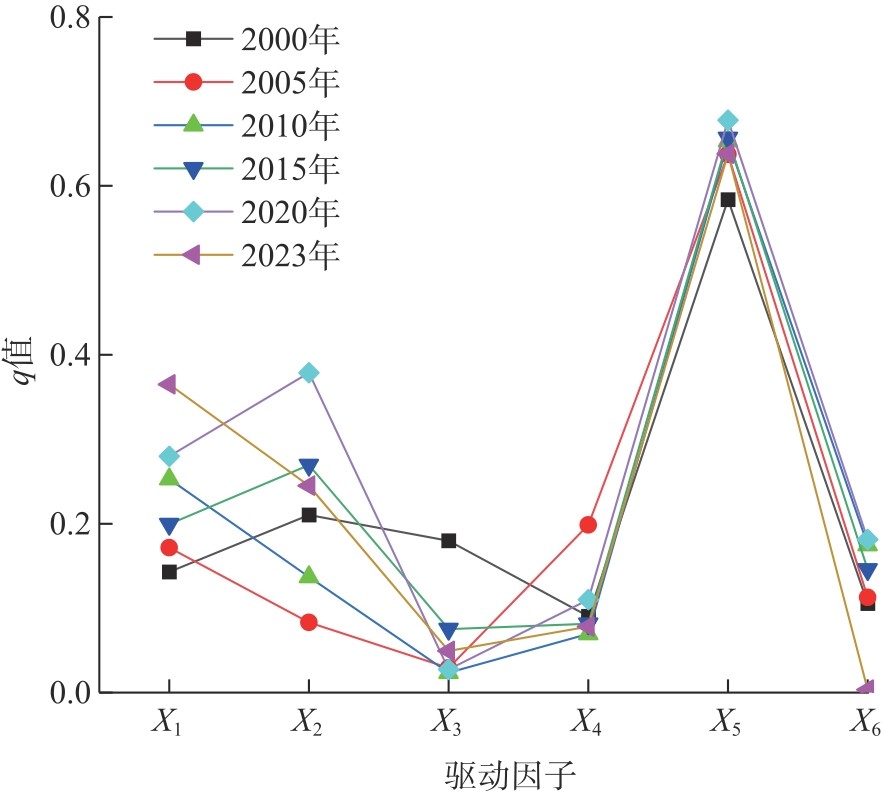
Fig. 9
Results of interaction detection for FVC"
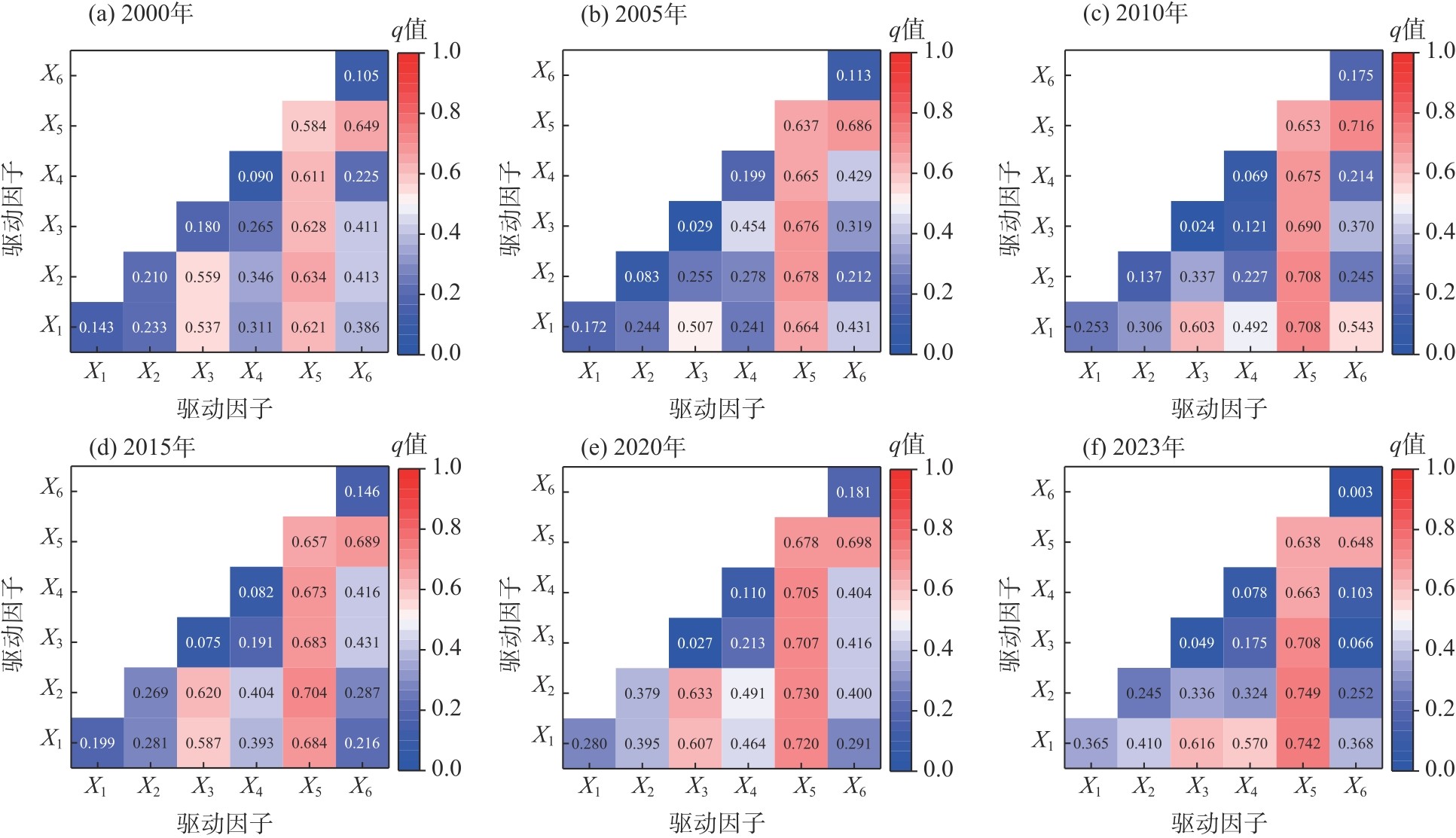
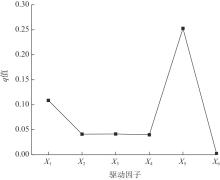
Fig. 10
Results of factor detection for vegetation community distribution"
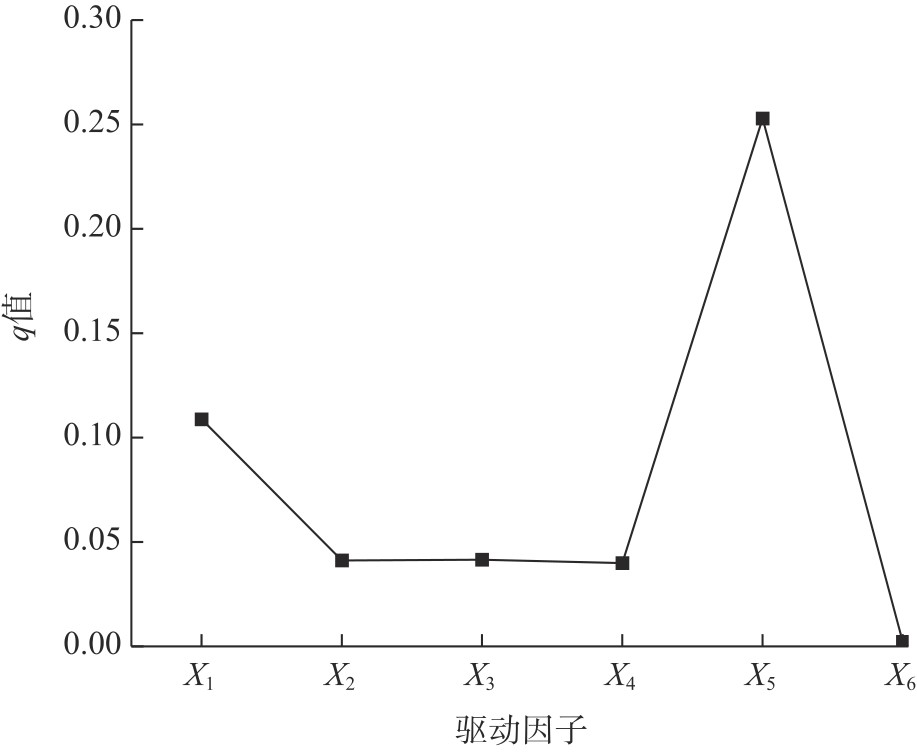
Fig. 11
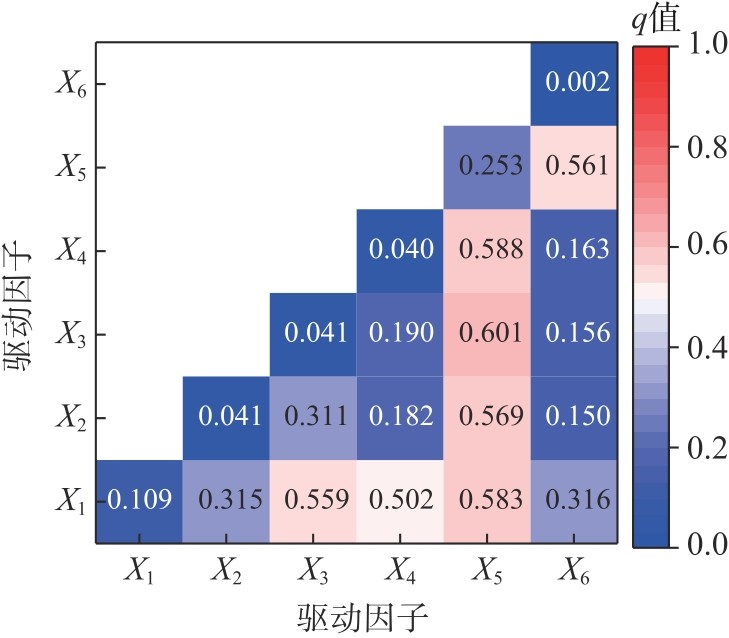
Results of interaction detection for vegetation community distribution"
| [1] |
赵东颖, 蒙仲举, 孟芮冰, 等. 乌兰布和沙漠风沙入黄段植被覆盖动态变化特征及驱动力[J]. 干旱区研究, 2024, 41(4): 639-649.
doi: 10.13866/j.azr.2024.04.10 |
|
[Zhao Dongying, Meng Zhongju, Meng Ruibing, et al. Dynamic change characteristics and driving forces of vegetation cover in the Ulan Buhe Desert along the Yellow River[J]. Arid Zone Research, 2024, 41(4): 639-649.]
doi: 10.13866/j.azr.2024.04.10 |
|
| [2] |
杨育林, 黄兰鹰, 杨勇智, 等. 理塘格木自然保护区野生种子植物区系调查分析[J]. 安徽农学通报, 2025, 31(2): 92-96.
doi: 10.16377/j.cnki.issn1007-7731.2025.02.017 |
|
[Yang Yulin, Huang Lanying, Yang Yongzhi, et al. Investigation and analysis of wild seed plant flora in Litang Gemu Nature Reserve[J]. Anhui Agricultural Science Bulletin, 2025, 31(2): 92-96.]
doi: 10.16377/j.cnki.issn1007-7731.2025.02.017 |
|
| [3] |
李千飞, 沈艳, 马红彬, 等. 宁夏罗山山地草原植物群落数量分类与生物多样性特征[J]. 应用生态学报, 2024, 35(10): 2697-2706.
doi: 10.13287/j.1001-9332.202410.004 |
|
[Li Qianfei, Shen Yan, Ma Hongbin, et al. Quantitative classification and biodiversity characteristics of plant communities in Luoshan Mountain steppe, China[J]. Chinese Journal of Applied Ecology, 2024, 35(10): 2697-2706.]
doi: 10.13287/j.1001-9332.202410.004 |
|
| [4] | 周姗姗, 袁祖林, 席首刚, 等. 甘肃皋兰县荒漠草原植物群落数量分类及植被特征研究[J]. 草原与草坪, 2024, 44(5): 51-60. |
| [Zhou Shanshan, Yuan Zulin, Xi Shougang, et al. Quantitative classification and vegetation characteristics of plant communities of desert steppe in Gaolan County[J]. Grassland and Turf, 2024, 44(5): 51-60.] | |
| [5] | 杨星, 方乐缘, 岳俊. 高光谱遥感影像半监督分类研究进展[J]. 遥感学报, 2024, 28(1): 20-41. |
|
[Yang Xing, Fang Leyuan, Yue Jun. Advances in semi-supervised classification of hyperspectral remote sensing images[J]. National Remote Sensing Bulletin, 2024, 28(1): 20-41.]
doi: 10.11834/jrs.20243404 |
|
| [6] | 召那. 灌木林资源资产评估研究[D]. 呼和浩特: 内蒙古农业大学, 2011. |
| [Zhao Na. Evaluation research on shrubs resources[D]. Huhhot: Inner Mongolia Agricultural University, 2011.] | |
| [7] | 马莉. 基于利益相关者博弈的荒漠化地区生态补偿估算研究[D]. 北京: 北京林业大学, 2021. |
| [Mali. Study on estimation of ecological compensation in desertification area based on stakeholders game[D]. Beijing: Beijing Forestry University, 2021.] | |
| [8] | 张建波. 内蒙古哈腾套海国家级自然保护区夏季岩羊分布与数量调查[J]. 内蒙古林业调查设计, 2022, 45(4): 67-69. |
| [Zhang Jianbo. Investigation on distribution and quantity of rock sheep in summer in Hatengtaohai National Nature Reserve of Inner Mongolia[J]. Inner Mongolia Forestry Investigation and Design, 2022, 45(4): 67-69.] | |
| [9] | 吉木斯. 哈腾套海国家级自然保护区野生动物区系调查研究[J]. 绿色科技, 2010(9): 121-124. |
| [Ji Musi. Neimenggu Hatengtaohai National Nature Reserve set fauna of wild animals[J]. Journal of Green Science and Technology, 2010(9): 121-124.] | |
| [10] | 董佳奇, 杨制国, 许宏斌, 等. 基于AHP-GIS的乌兰布和沙漠地区生态敏感性分析与评价[J]. 内蒙古林业科技, 2025, 51(2): 26-32. |
| [Dong Jiaqi, Yang Zhiguo, Xu Hongbin, et al. Analysis and evaluation of ecological sensitivity in the Ulan Buh Desert based on AHP-GIS[J]. Journal of Inner Mongolia Forestry Science & Technology, 2025, 51(2): 26-32.] | |
| [11] | 韩二牛. 哈腾套海国家级自然保护区[J]. 内蒙古林业, 2006(3): 45. |
| [Han Erniu. Hatengtaohai National Nature Reserve[J]. Inner Mongolia Forestry, 2006(3): 45.] | |
| [12] | 巴彦淖尔市林业和草原局. 内蒙古哈腾套海国家级自然保护区总体规划(2022—2031年)[EB/OL]. [2024-12-20]. http://lcj.bynr.gov.cn/tzgg/202207/t20220712_436815.html. |
| [Bayannur City Forestry and Grassland Administration. Overall plan of the Inner Mongolia Hatengtaohai National Nature Reserve (2022—2031)[EB/OL]. [2024-12-20]. http://lcj.bynr.gov.cn/tzgg/202207/t20220712_436815.html.] | |
| [13] |
曹昱轩, 李锦荣, 杨旭, 等. 乌兰布和沙漠植被因子对风沙活动特征的影响[J]. 中国沙漠, 2025, 45(2): 37-46.
doi: 10.7522/j.issn.1000-694X.2024.00140 |
|
[Cao Yuxuan, Li Jinrong, Yang Xu, et al. The impact of vegetation factors of three vegetation communities on aeolian sand factors in the Ulan Buh Desert[J]. Journal of Desert Research, 2025, 45(2): 37-46.]
doi: 10.7522/j.issn.1000-694X.2024.00140 |
|
| [14] |
甘开元, 张金霞, 陈丽娟, 等. 乌兰布和沙漠沿黄河段植物群落特征及空间分异[J]. 中国沙漠, 2023, 43(4): 180-190.
doi: 10.7522/j.issn.1000-694X.2023.00040 |
|
[Gan Kaiyuan, Zhang Jinxia, Chen Lijuan, et al. Characteristics and spatial differentiation of plant communities along the Yellow River in the Ulan Buh Desert[J]. Journal of Desert Research, 2023, 43(4): 180-190.]
doi: 10.7522/j.issn.1000-694X.2023.00040 |
|
| [15] | Yang J L, Dong J W, Xiao X M, et al. Divergent shifts in peak photosynthesis timing of temperate and alpine grasslands in China[J]. Remote Sensing of Environment, 2019, 233: 111395, doi: 10.1016/j.rse.2019.111395. |
| [16] | 李苗苗, 吴炳方, 颜长珍, 等. 密云水库上游植被覆盖度的遥感估算[J]. 资源科学, 2004(4): 153-159. |
| [Li Miaomiao, Wu Bingfang, Yan Changzhen, et al. Estimation of vegetation fraction in the upper basin of Miyun reservoir by remote sensing[J]. Resources Science, 2004(4): 153-159.] | |
| [17] | 刘静, 温仲明, 刚成诚. 黄土高原不同植被覆被类型NDVI对气候变化的响应[J]. 生态学报, 2020, 40(2): 678-691. |
| [Liu Jing, Wen Zhongming, Gang Chengcheng. Normalized difference vegetation index of different vegetation cover types and its responses to climate change in the Loess Plateau[J]. Acta Ecologica Sinica, 2020, 40(2): 678-691.] | |
| [18] | 刘伟, 向莹, 李景吉, 等. 2000—2020年四川省泸沽湖湿地自然保护区陆地植被覆盖动态变化[J]. 水土保持通报, 2023, 43(5): 203-211, 278. |
| [Liu Wei, Xiang Ying, Li Jingji, et al. Dynamic changes of terrestrial vegetation cover in Lugu Lake Wetland Nature Reserve, Sichuan Province from 2000 to 2020[J]. Bulletin of Soil and Water Conservation, 2023, 43(5): 203-211, 278.] | |
| [19] | 韩新星, 艾金泉, 叶子君, 等. 基于遥感云计算的鄱阳湖湿地植被群落分类研究[J]. 人民长江, 2023, 54(7): 55-60. |
| [Han Xinxing, Ai Jinquan, Ye Zijun, et al. Classification of wetland vegetation community in Poyang Lake based on remote sensing cloud computing[J]. Yangtze River, 2023, 54(7): 55-60.] | |
| [20] |
宋小龙, 李陇堂, 任婕, 等. 西北干旱生态地理区NDVI时空变化特征及其驱动力[J]. 干旱区地理, 2025, 48(6): 951-962.
doi: 10.12118/j.issn.1000-6060.2024.548 |
|
[Song Xiaolong, Li Longtang, Ren Jie, et al. Spatio-temporal variation characteristics and driving factors of NDVI in the arid and semi-arid region of northwest China[J]. Arid Land Geography, 2025, 48(6): 951-962.]
doi: 10.12118/j.issn.1000-6060.2024.548 |
|
| [21] | 龚静, 彭培好. 四川秦巴山区植被覆盖变化及其影响因素分析[J]. 四川林业科技, 2024, 45(5): 20-28. |
| [Gong Jing, Peng Peihao. Analysis of vegetation cover change and its influencing factors of Qinba Mountains in Sichuan Province[J]. Journal of Sichuan Forestry Science and Technology, 2024, 45(5): 20-28.] | |
| [22] | 王志军, 于海云, 杨旭, 等. 乌兰布和沙漠植被覆盖度变化研究[J]. 内蒙古水利, 2024(8): 91-93. |
| [Wang Zhijun, Yu Haiyun, Yang Xu, et al. Research on changes in vegetation coverage of the Ulan Buh Desert[J]. Inner Mongolia Water Resources, 2024(8): 91-93.] | |
| [23] | 刘艳琦. 乌兰布和沙漠生态环境要素时空演变与生态脆弱性研究[D]. 呼和浩特: 内蒙古农业大学, 2022. |
| [Liu Yanqi. Spatial-temporal evolution and ecological vulnerability of ecological environmental factors in Ulan Buh Desert[D]. Huhhot: Inner Mongolia Agricultural University, 2022.] | |
| [24] | 贾沼霖, 贺帅奇, 李新义, 等. 磴口县乌兰布和沙漠地区治理现状调研[J]. 海河水利, 2022(增刊1): 35-39. |
| [Jia Zhaolin, He Shuaiqi, Li Xinyi, et al. Investigation on the governance status of Ulanbuh Desert area in Dengkou County[J]. Haihe Water Resources, 2022(Suppl. 1): 35-39.] | |
| [25] | 于亮亮. 基于高分与Landsat卫星的磴口县林地面积变化监测[J]. 现代农业, 2016(11): 90-92. |
| [Yu Liangliang. Monitoring forest area changes in Dengkou County based on Gaofen and Landsat satellite imagery[J]. Modern Agriculture, 2016(11): 90-92.] | |
| [26] | 田文坦, 刘扬, 王树彦, 等. 内蒙古外来入侵物种及其对草原的影响[J]. 草业科学, 2015, 32(11): 1781-1788. |
| [Tian Wentan, Liu Yang, Wang Shuyan, et al. Alien invasive species in Inner Mongolia and their influence on the grassland[J]. Pratacultural Science, 2015, 32(11): 1781-1788.] | |
| [27] | 邓丰志. 圆叶牵牛(Ipomoea purpurea)种子生物学、幼苗抗逆性和化学防除技术研究[D]. 哈尔滨: 东北农业大学, 2023. |
| [Deng Fengzhi. Study on seed biology, seedling stress resistance and chemical control technology of Ipomoea purpurea[D]. Harbin: Northeast Agricultural University, 2023.] | |
| [28] | 辛智鸣, 邵琪雯, 王湘, 等. 乌兰布和沙漠植物多样性及绿洲-荒漠区植被地上生物量研究[J]. 生态学报, 2024, 44(18): 8234-8246. |
| [Xin Zhiming, Shao Qiwen, Wang Xiang, et al. Plant diversity and aboveground biomass of oasis-desert vegetation in Ulan Buhe Desert[J]. Acta Ecological Sinica, 2024, 44(18): 8234-8246.] | |
| [29] | 赵力兴, 徐兴健, 其格其, 等. 大兴安岭南段不同退化程度草甸草原植物群落结构与物种多样性[J]. 草原与草坪, 2024, 44(5): 106-114. |
| [Zhao Lixing, Xu Xingjian, Qigeqi, et al. Plant community structure and species diversity in degraded meadow steppes at the southern foot of the Greater Xing’an Mountains[J]. Grassland and Turf, 2024, 44(5): 106-114.] | |
| [30] | 李晓兰, 李雪华, 蒋德明, 等. 科尔沁沙地22种菊科草本植物叶片形态特征研究[J]. 生态学杂志, 2005, 24(12): 1397-1401. |
| [Li Xiaolan, Li Xuehua, Jiang Deming, et al. Leaf morphological characters of 22 compositae herbaceous species in Horqin Sandy Land[J]. Chinese Journal of Ecology, 2005, 24(12): 1397-1401.] | |
| [31] | 贾鲜艳, 吴宏宇, 李霞, 等. 河套灌区盐碱地植物种类组成研究[J]. 内蒙古农业大学学报, 2006, 27(4): 78-82. |
| [Jia Xianyan, Wu Hongyu, Li Xia, et al. Study on floristics component of saline: Alkaliland in Hetao Irrigation Region[J]. Journal of Inner Mongolia Agricultural University, 2006, 27(4): 78-82.] | |
| [32] | 贾鹏. 基于遥感的磴口县土地利用/覆盖变化研究[D]. 兰州: 兰州大学, 2016. |
| [Jia Peng. Analysis of land use/land cover change of Deng Kou based on remote sensing[D]. Lanzhou: Lanzhou University, 2016.] | |
| [33] | 萨仁, 马秀珍. 磴口县生态脆弱区脆弱性原因分析[J]. 西部资源, 2018(6): 113-115. |
| [Saren, Ma Xiuzhen. Analysis of the causes of ecological vulnerability in the fragile areas of Dengkou County[J]. Western Resources, 2018(6): 113-115.] |
| [1] | WANG Anqi, ZHANG Yu, LIU Jiawei, ZHAO Wei, LIU Xinyu, LI Kai. Vegetation community diversity and spatial distribution pattern in Ganjiahu Saxoul National Nature Reserve, Xinjiang [J]. Arid Land Geography, 2024, 47(11): 1841-1851. |
| [2] | GUO Fangjun, MA Quanlin, ZHANG Jinchun, LI Delu, YUAN Hongbo, CHEN Fang, WEI Linyuan, ZHANG Dekui. Vegetation types, distribution and quantitative characteristics in the desert area of Shiyang River Basin [J]. Arid Land Geography, 2023, 46(11): 1848-1857. |
| [3] | LIU Yuting,ZHANG Qifei,LIU Jingshi,GUAN Hanxiao,MENG Fanxue. Temporal and spatial characteristics of fractional vegetation coverage and its response to climatic factors in southern Xinjiang in recent 20 years: A case of Taxkorgan Tajik Autonomous County [J]. Arid Land Geography, 2022, 45(5): 1481-1489. |
| [4] | BAI Hui,YIN Liying,SU Huiming,GAO Feng,MU Yuqing,ZHANG Yunyun,TONG Yuping,XU Wenxuan,CAO Qiumei,YANG Weikang,XU Feng. Camera trapping survey of birds and mammals in the Tianchi Bogda Peak Nature Reserve of Xinjiang, China [J]. Arid Land Geography, 2022, 45(3): 847-859. |
| [5] | MA Jian,LIU Xiande,HE Xiaoling,WANG Shunli,HE Yongyan,WU Xiurong,ZHAO Jingzhong,MA Xue'e. Structural characteristics and diversity of typical shrub communities in Qilian Mountains [J]. Arid Land Geography, 2021, 44(5): 1427-1437. |
| [6] | DONG Xue, LI Yong-hua, XIN Zhi-ming, DUAN Rui-bing, YAO Bin, BAO Yan-feng, HUANG Ya-ru, ZHANG Zheng-guo. Gobi shrub species diversity and its distribution pattern in west Hexi Corridor [J]. Arid Land Geography, 2020, 43(6): 1514-1522. |
| [7] | XU Jia, ZHU Xiaotong, YUAN Kaiye. Effects of different restoration measures on species diversity and aboveground biomass of the gold mining area in headwaters of the Ertix River [J]. Arid Land Geography, 2019, 42(3): 581-589. |
| [8] | Chen Xiu-yan, Fu Bi-hong, Shi Pi-long, Guo Qiang. Vegetation dynamics in response to climate change in Tian Shan, Central Asia from 2000 to 2016 [J]. 干旱区地理, 2019, 42(1): 162-171. |
| [9] | Buhailiqiemu ABUDUREHEMAN, LIU Hui-liang, LIU Na, ZHANG Dao-yuan, GUAN Kaiyun. Spermatophyte floras in the wild fruit forest in Tianshan Mountains [J]. , 2016, 39(4): 828-834. |
| [10] | HE Xue-min,LV Guang-hui,QIN Lu,AKHMETKALIYEVA Maksat,LIU Hao-Qi,ZHANG Xue-ni. A comparison of species diversity in Turkmenistan and Xinjiang [J]. , 2013, 36(4): 623-630. |
| [11] | ABLIZ Omar,HU Hong-ying,HALIK Mahmut,TUMUR Anwar. Species diversity of amphibians and reptiles in southwestern region of Kyrgyzstan [J]. , 2013, 36(4): 591-600. |
|
||