Arid Land Geography ›› 2026, Vol. 49 ›› Issue (1): 151-163.doi: 10.12118/j.issn.1000-6060.2024.743
• Regional Development • Previous Articles Next Articles
YANG Juxing1,2( ), SUN Hui1,2(), ZHOU Jinnan1,2, TUO Caijin1,2, ZHANG Ruowei1,2
Received:2024-12-08
Revised:2025-02-03
Online:2026-01-25
Published:2026-01-18
Contact:
SUN Hui
E-mail:yjuxing@126.com;shui@xju.edu.cn
YANG Juxing, SUN Hui, ZHOU Jinnan, TUO Caijin, ZHANG Ruowei. Spatiotemporal evolution and pathway selection of transformation decarbonization in resource-based cities of China[J].Arid Land Geography, 2026, 49(1): 151-163.

Tab. 1
Evaluation index system and descriptive statistics of transformation decarbonization of resource-based cities"
| 子系统 | 维度 | 指标 | 测算方法 | 指标属性 | 均值 | 标准差 | 最小值 | 最大值 |
|---|---|---|---|---|---|---|---|---|
| 转型 | 能源转型 | 煤炭消费占比 | 煤炭消费量与能源消费总量之比 | 负向 | 0.838 | 0.152 | 0.124 | 0.997 |
| 能源利用效率 | SBM-Malmquist-Luenberger指数法 | 正向 | 0.287 | 0.111 | 0.098 | 1.177 | ||
| 产业转型 | 产业结构合理化 | 泰尔指数法 | 正向 | 0.296 | 0.253 | 0.001 | 3.430 | |
| 产业结构高级化 | 第三产业产值与第二产业产值之比 | 正向 | 0.878 | 0.458 | 0.094 | 3.758 | ||
| 技术转型 | 绿色技术创新/件 | 绿色专利申请量 | 正向 | 119.000 | 216.000 | 0.000 | 2647.000 | |
| 数字技术创新/件 | 数字专利申请量 | 正向 | 268.000 | 544.000 | 0.000 | 6106.000 | ||
| 脱碳 | 碳排放 | 碳排放总量/104 t | 直接排放与间接排放之和 | 负向 | 2877.348 | 1016.082 | 537.160 | 4920.000 |
| 碳排放强度/t·(104元)-1 | 碳排放总量与GDP之比 | 负向 | 4.381 | 4.323 | 0.169 | 31.153 | ||
| 脱碳率 | 碳排放强度的变化率 | 正向 | 0.030 | 0.133 | -0.592 | 0.633 |
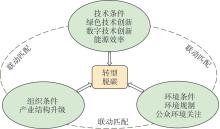
Fig. 1
TOE configuration analysis framework"
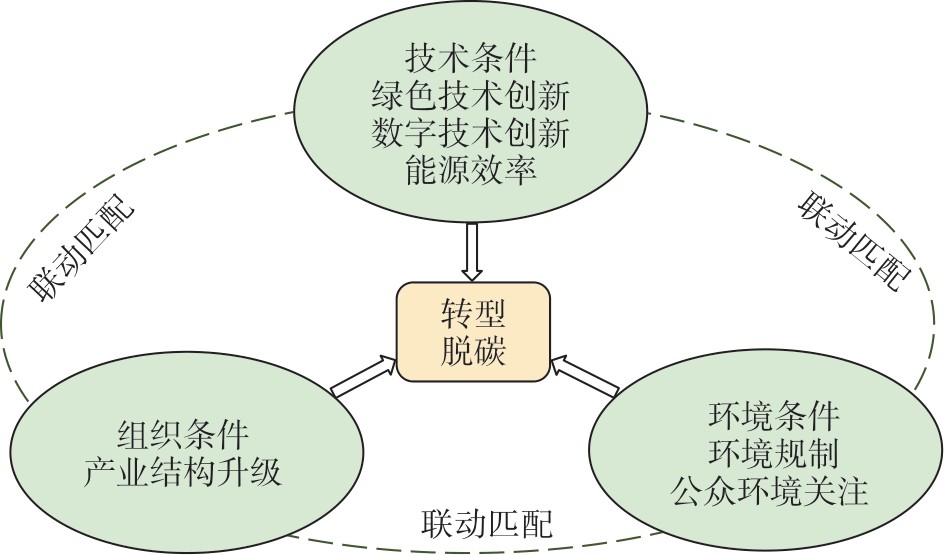
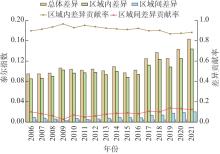
Fig. 2
Overall Terre index and differential contribution rate"
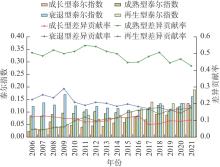
Fig. 3
Terre index and differential contribution rate of different types of cities"
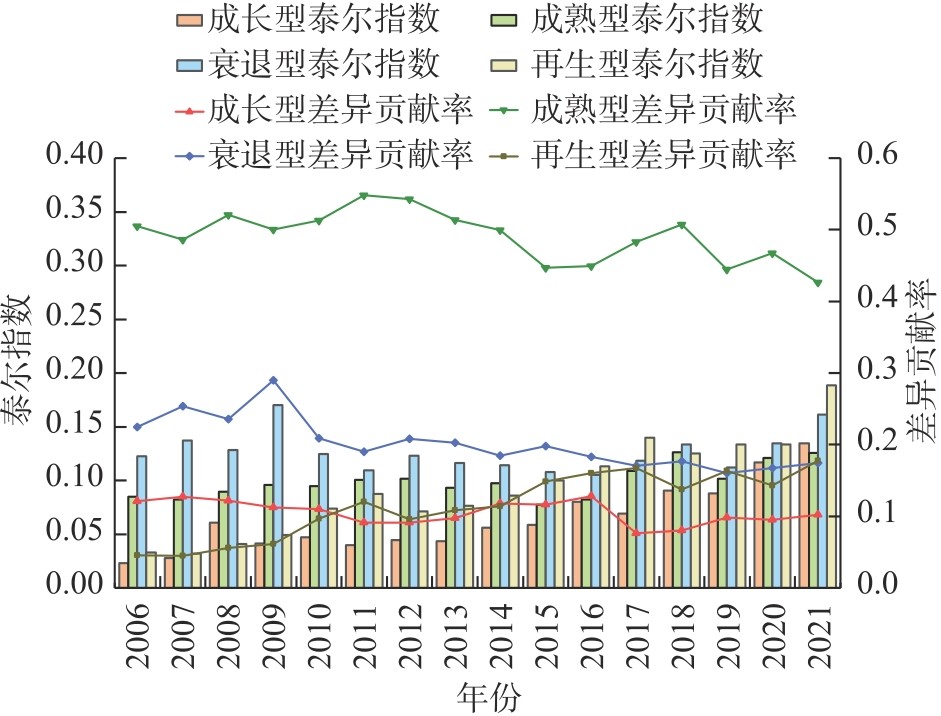
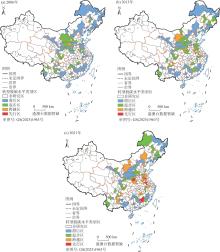
Fig. 4
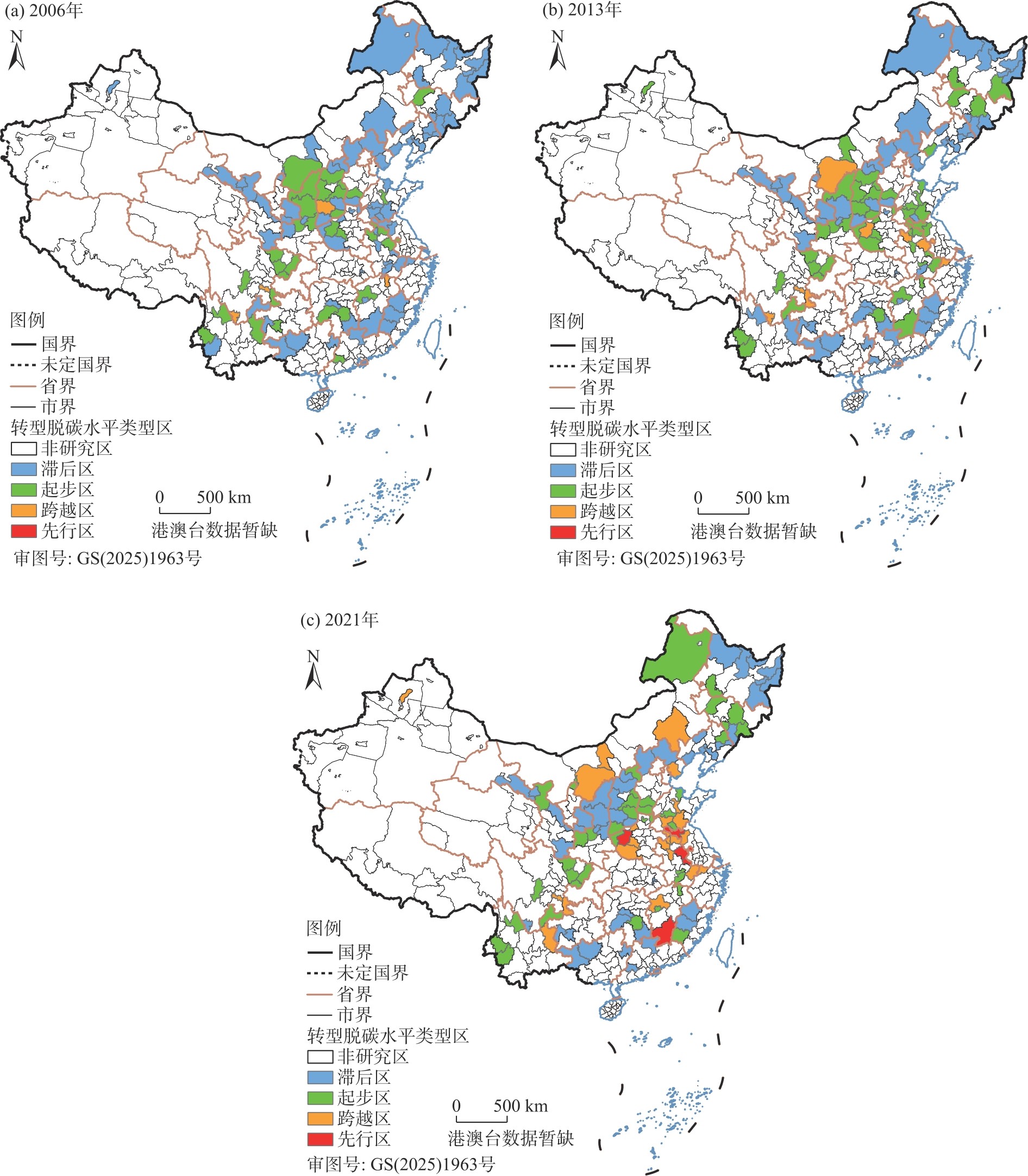
Spatial distribution characteristics of transformation decarbonization levels"
Tab. 2
Spatial Markov transfer probability matrix from 2006 to 2021"
| 空间滞后类型 | 滞后 | 起步 | 跨越 | 先行 | |
|---|---|---|---|---|---|
| 传统无滞后 | 滞后 | 0.846 | 0.140 | 0.007 | 0.007 |
| 起步 | 0.100 | 0.694 | 0.199 | 0.007 | |
| 跨越 | 0.024 | 0.118 | 0.698 | 0.160 | |
| 先行 | 0.003 | 0.008 | 0.091 | 0.899 | |
| 滞后 | 滞后 | 0.914 | 0.086 | 0.000 | 0.000 |
| 起步 | 0.117 | 0.777 | 0.107 | 0.000 | |
| 跨越 | 0.074 | 0.222 | 0.593 | 0.111 | |
| 先行 | 0.000 | 0.111 | 0.111 | 0.778 | |
| 起步 | 滞后 | 0.849 | 0.130 | 0.007 | 0.014 |
| 起步 | 0.082 | 0.738 | 0.180 | 0.000 | |
| 跨越 | 0.022 | 0.089 | 0.711 | 0.178 | |
| 先行 | 0.014 | 0.000 | 0.069 | 0.917 | |
| 跨越 | 滞后 | 0.644 | 0.322 | 0.034 | 0.000 |
| 起步 | 0.123 | 0.651 | 0.212 | 0.014 | |
| 跨越 | 0.027 | 0.137 | 0.703 | 0.132 | |
| 先行 | 0.000 | 0.008 | 0.102 | 0.891 | |
| 先行 | 滞后 | 0.500 | 0.333 | 0.000 | 0.167 |
| 起步 | 0.020 | 0.551 | 0.408 | 0.020 | |
| 跨越 | 0.008 | 0.088 | 0.704 | 0.200 | |
| 先行 | 0.000 | 0.005 | 0.090 | 0.904 | |
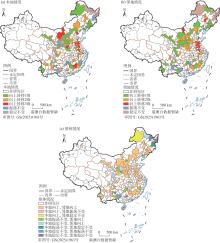
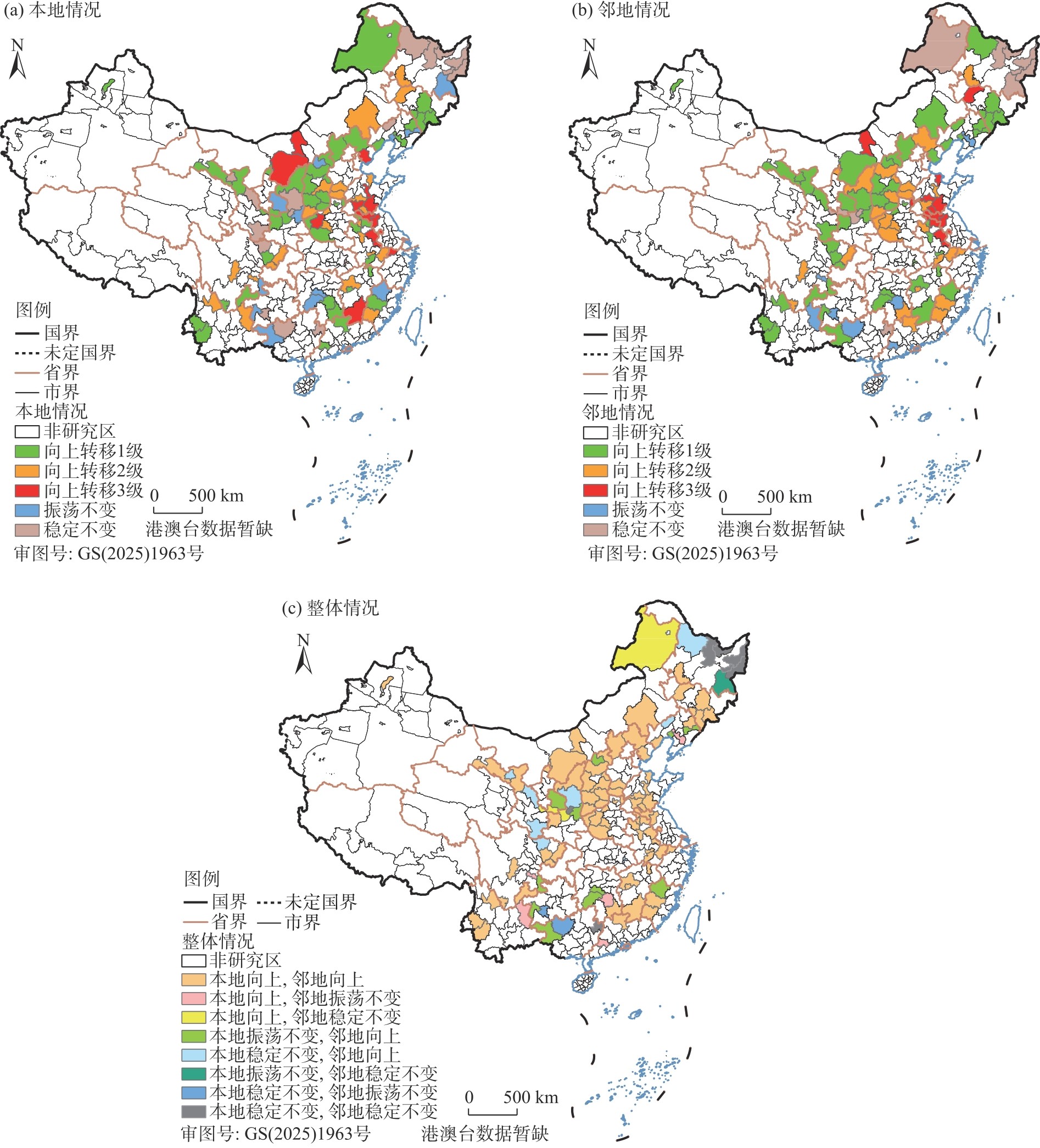
Fig. 5
Types of spatial Markov transfers for transformation decarbonization from 2006 to 2021"
Tab. 3
Necessary condition analysis results"
| 条件变量 | 方法 | 精确度/% | 上限区域 | 范围 | 效应量(d) | P值 |
|---|---|---|---|---|---|---|
| 绿色技术创新 | 上限回归分析 | 90.4 | 0.122 | 0.970 | 0.026 | 0.000 |
| 上限包络分析 | 100.0 | 0.057 | 0.970 | 0.058 | 0.000 | |
| 数字技术创新 | 上限回归分析 | 88.6 | 0.154 | 0.970 | 0.059 | 0.000 |
| 上限包络分析 | 100.0 | 0.058 | 0.970 | 0.060 | 0.000 | |
| 能源效率 | 上限回归分析 | 99.1 | 0.008 | 0.990 | 0.008 | 0.647 |
| 上限包络分析 | 100.0 | 0.011 | 0.990 | 0.011 | 0.558 | |
| 产业结构升级 | 上限回归分析 | 92.1 | 0.042 | 1.000 | 0.042 | 0.160 |
| 上限包络分析 | 100.0 | 0.019 | 1.000 | 0.019 | 0.172 | |
| 环境规制 | 上限回归分析 | 93.9 | 0.055 | 1.000 | 0.055 | 0.057 |
| 上限包络分析 | 100.0 | 0.040 | 1.000 | 0.040 | 0.013 | |
| 公众环境关注 | 上限回归分析 | 95.6 | 0.052 | 0.990 | 0.052 | 0.049 |
| 上限包络分析 | 100.0 | 0.027 | 0.990 | 0.027 | 0.027 |
Tab. 4
Grouping pathways to achieve high transformation decarbonization levels"
| 条件组态 | 高转型脱碳水平的解 | |||
|---|---|---|---|---|
| 组态1 | 组态2 | 组态3 | 组态4 | |
| 绿色技术创新 | $\bullet$ | $\bullet$ | $\bullet$ | $\bullet$ |
| 数字技术创新 | $\bullet$ | $\bullet$ | $\bullet$ | |
| 能源效率 | $\bullet$ | $\otimes$ | $\bigotimes$ | |
| 产业结构升级 | $\bullet$ | $\cdot$ | ||
| 环境规制 | $\bullet$ | $\bigotimes$ | $\bullet$ | |
| 公众环境关注 | $\bullet$ | $\bullet$ | ||
| 原始覆盖度 | 0.634 | 0.411 | 0.232 | 0.224 |
| 唯一覆盖度 | 0.178 | 0.010 | 0.020 | 0.007 |
| 一致性 | 0.842 | 0.876 | 0.868 | 0.918 |
| 总体覆盖度 | 0.677 | |||
| 总体一致性 | 0.829 | |||
Tab. 5
Heterogeneity analysis of transformation decarbonization realization pathways"
| 条件组态 | 成长型 组态1 | 成熟型 | 衰退型 组态3 | 再生型 | |||
|---|---|---|---|---|---|---|---|
| 组态2a | 组态2b | 组态2c | 组态4a | 组态4b | |||
| 绿色技术创新 | $\bigotimes$ | $\bullet$ | $\cdot$ | $\bullet$ | $\cdot$ | $\cdot$ | $\bullet$ |
| 数字技术创新 | $\bullet$ | $\bullet$ | $\bullet$ | $\cdot$ | $\cdot$ | $\bullet$ | $\cdot$ |
| 能源效率 | $\bullet$ | $\bullet$ | $\bigotimes$ | $\cdot$ | |||
| 产业结构升级 | $\otimes$ | $\bullet$ | $\bullet$ | $\otimes$ | $\otimes$ | ||
| 环境规制 | $\bigotimes$ | $\bullet$ | $\otimes$ | $\bullet$ | $\cdot$ | ||
| 公众环境关注 | $\bullet$ | $\bullet$ | $\bullet$ | $\bigotimes$ | $\bullet$ | $\cdot$ | $\bullet$ |
| 原始覆盖度 | 0.309 | 0.516 | 0.328 | 0.235 | 0.376 | 0.749 | 0.430 |
| 唯一覆盖度 | 0.309 | 0.236 | 0.028 | 0.047 | 0.376 | 0.351 | 0.032 |
| 一致性 | 0.888 | 0.864 | 0.914 | 0.926 | 0.835 | 0.927 | 0.965 |
| 总体覆盖度 | 0.309 | 0.618 | 0.376 | 0.781 | |||
| 总体一致性 | 0.888 | 0.880 | 0.835 | 0.930 | |||
| [1] | Geels F, Schot J. The dynamics of transitions: A socio-technical perspective[M]. New York: Routledge. 2010: 11-01. |
| [2] |
Loorbach D, Rotmans J. The practice of transition management: Examples and lessons from four distinct cases[J]. Futures, 2010, 42(3): 237-246.
doi: 10.1016/j.futures.2009.11.009 |
| [3] | Zhang H J, Zhao X L, Zhang R D. Synergistic development of heating system decarbonization transition and large-scale renewable energy penetration: A case study of Beijing[J]. Energy Conversion and Management, 2022, 269: 116142, doi: 10.1016/j.enconman.2022.116142. |
| [4] | Suomalainen K, Wen L, Sheng M Y S, et al. Climate change impact on the cost of decarbonisation in a hydro-based power system[J]. Energy, 2022, 246: 123369, doi: 10.1016/j.energy.2022.123369. |
| [5] |
Nilsson L J, Bauer F, Ahman M, et al. An industrial policy framework for transforming energy and emissions intensive industries towards zero emissions[J]. Climate Policy, 2021, 21(8): 1053-1065.
doi: 10.1080/14693062.2021.1957665 |
| [6] |
Du K, Li J L. Towards a green world: How do green technology innovations affect total-factor carbon productivity[J]. Energy Policy, 2019, 131: 240-250.
doi: 10.1016/j.enpol.2019.04.033 |
| [7] |
Ausubel J H. Technical progress and climatic change[J]. Energy Policy, 1995, 23(4): 411-416.
doi: 10.1016/0301-4215(95)90166-5 |
| [8] |
Bataille C, Waisman H, Colombier M, et al. The need for national deep decarbonization pathways for effective climate policy[J]. Climate Policy, 2016, 16(Suppl. 1): 1-20.
doi: 10.1080/14693062.2014.965657 |
| [9] | Holmes K J, Zeitler E, Kerxhalli-kleinfeld M, et al. Scaling deep decarbonization technologies[J]. Earth’s Future, 2021, 9(11): e2021EF002399, doi: 10.1029/2021EF002399. |
| [10] |
吴茜, 陈强强. 甘肃省行业碳排放影响因素及脱钩努力研究[J]. 干旱区地理, 2023, 46(2): 274-283.
doi: 10.12118/j.issn.1000-6060.2022.126 |
|
[Wu Xi, Chen Qiangqiang. Influencing factors and decoupling efforts of industry-related carbon emissions in Gansu Province[J]. Arid Land Geography, 2023, 46(2): 274-283.]
doi: 10.12118/j.issn.1000-6060.2022.126 |
|
| [11] | Burandt T, Xiong B, Löffler K, et al. Decarbonizing China’s energy system: Modeling the transformation of the electricity, transportation, heat, and industrial sectors[J]. Applied Energy, 2019, 255: 113820, doi: 10.1016/j.apenergy.2019.113820. |
| [12] | 黄鲁成, 郭鑫, 苗红, 等. 面向碳中和的脱碳成本控制: 优化创新与政策[J]. 科学学研究, 2022, 40(12): 2187-2193. |
| [Huang Lucheng, Guo Xin, Miao Hong, et al. Decarbonization cost control for carbon neutrality: Optimizing technological innovation and policies[J]. Studies in Science of Science, 2022, 40(12): 2187-2193.] | |
| [13] | 魏一鸣, 韩融, 余碧莹, 等. 全球能源系统转型趋势与低碳转型路径——来自于IPCC第六次评估报告的证据[J]. 北京理工大学学报(社会科学版), 2022, 24(4): 163-188. |
| [Wei Yiming, Han Rong, Yu Biying, et al. Global energy systems transition trend and low-carbon transformation pathways: Evidences from the IPCC AR6[J]. Journal of Beijing Institute of Technology (Social Sciences Edition), 2022, 24(4): 163-188.] | |
| [14] | 江深哲, 杜浩锋, 徐铭梽. “双碳”目标下能源与产业双重结构转型[J]. 数量经济技术经济研究, 2024, 41(2): 109-130. |
| [Jiang Shenzhe, Du Haofeng, Xu Mingzhi. Dual transition of energy and industrial structure under the carbon peaking and neutrality goals[J]. Journal of Quantitative & Technological Economics, 2024, 41(2): 109-130.] | |
| [15] | 薛飞, 周民良, 刘家旗. 产业转型升级能否降低碳排放?——来自国家产业转型升级示范区的证据[J]. 产业经济研究, 2023(2): 1-13. |
| [Xue Fei, Zhou Minliang, Liu Jiaqi. Can industrial transformation and upgrading reduce carbon emissions? Evidence from national industrial transformation and upgrading demonstration zones[J]. Industrial Economics Research, 2023(2): 1-13.] | |
| [16] |
Kirchner M, Schmidt J, Wehrle S. Exploiting synergy of carbon pricing and other policy instruments for deep decarbonization[J]. Joule, 2019, 3(4): 891-893.
doi: 10.1016/j.joule.2019.03.006 |
| [17] |
徐维祥, 郑金辉, 周建平, 等. 资源型城市转型绩效特征及其碳减排效应[J]. 自然资源学报, 2023, 38(1): 39-57.
doi: 10.31497/zrzyxb.20230103 |
|
[Xu Weixiang, Zheng Jinhui, Zhou Jianping, et al. Transformation performance characteristics of resource-based cities and their carbon emission reduction effects[J]. Journal of Natural Resources, 2023, 38(1): 39-57.]
doi: 10.31497/zrzyxb.20230103 |
|
| [18] |
张文忠, 余建辉. 中国资源型城市转型发展的政策演变与效果分析[J]. 自然资源学报, 2023, 38(1): 22-38.
doi: 10.31497/zrzyxb.20230102 |
|
[Zhang Wenzhong, Yu Jianhui. Policy evolution and transformation effect analysis of sustainable development of resource-based cities in China[J]. Journal of Natural Resources, 2023, 38(1): 22-38.]
doi: 10.31497/zrzyxb.20230102 |
|
| [19] | 刘小玲, 唐卓伟, 孙晓华, 等. 要素错配:解开资源型城市转型困境之谜[J]. 中国人口·资源与环境, 2022, 32(10): 88-102. |
| [Liu Xiaoling, Tang Zhuowei, Sun Xiaohua, et al. Factors mismatch: Solving the mystery of transformation dilemma faced by resource-based cities[J]. China Population, Resources and Environment, 2022, 32(10): 88-102.] | |
| [20] |
席振鑫, 马丽, 金凤君, 等. 黄河流域典型资源型城市工业转型的时空特征、类型与路径[J]. 资源科学, 2023, 45(10): 1977-1991.
doi: 10.18402/resci.2023.10.05 |
|
[Xi Zhenxin, Ma Li, Jin Fengjun, et al. Spatiotemporal characteristics, types, and paths of industrial transformation in typical resource-based cities in the Yellow River Basin[J]. Resources Science, 2023, 45(10): 1977-1991.]
doi: 10.18402/resci.2023.10.05 |
|
| [21] |
徐英启, 程钰, 王晶晶. 中国资源型城市碳排放效率时空演变与绿色技术创新影响[J]. 地理研究, 2023, 42(3): 878-894.
doi: 10.11821/dlyj020220256 |
| [Xu Yingqi, Cheng Yu, Wang Jingjing. The impact of green technological innovation on the spatiotemporal evolution of carbon emission efficiency of resource-based cities in China[J]. Geographical Research, 2023, 42(3): 878-894.] | |
| [22] | 穆佳音, 王金满, 刘彪, 等. 资源型城市碳排放演变及影响因素研究进展[J]. 煤炭学报, 2024, 49(增刊2): 1130-1142. |
| [Mu Jiayin, Wang Jinman, Liu Biao, et al. Research progress on the evolution and influencing factors of carbon emissions in resource-based cities[J]. Journal of China Coal Society, 2024, 49(Suppl. 2): 1130-1142.] | |
| [23] | 刘晓燕, 孙慧. 资源型产业碳排放驱动因素演化与低碳发展路径选择[J]. 统计与决策, 2019, 35(2): 53-57. |
| [Liu Xiaoyan, Sun Hui. Evolution of carbon emission driving factors of resource-based industries and selection of low-carbon development paths[J]. Statistics & Decision, 2019, 35(2): 53-57.] | |
| [24] | 张希良, 黄晓丹, 张达, 等. 碳中和目标下的能源经济转型路径与政策研究[J]. 管理世界, 2022, 38(1): 35-66. |
| [Zhang Xiliang, Huang Xiaodan, Zhang Da, et al. Research on the pathway and policies for China’s energy and economy transformation toward carbon neutrality[J]. Journal of Management World, 2022, 38(1): 35-66.] | |
| [25] | 方文君, 邓峰, 张战仁, 等. 环境目标约束对能源结构低碳转型的影响[J]. 中国人口·资源与环境, 2024, 34(1): 84-96. |
| [Fang Wenjun, Dengfeng, Zhang Zhanren, et al. Impact of environmental target constraints on the low-carbon transformation of China’s energy structure[J]. China Population, Resources and Environment, 2024, 34(1): 84-96.] | |
| [26] | 高瑜, 李响, 李俊青. 金融科技与技术创新路径——基于绿色转型的视角[J]. 中国工业经济, 2024(2): 80-98. |
| [Gao Yu, Li Xiang, Li Junqing. Fintech and the path of technological innovation: From the perspective of green transformation[J]. China Industrial Economics, 2024(2): 80-98.] | |
| [27] | Ai H S, Tan X Q, Zhou S W, et al. The impact of supportive policy for resource-exhausted cities on carbon emission: Evidence from China[J]. Resources Policy, 2023, 85: 103951, doi: 10.1016/j.resourpol.2023.103951. |
| [28] | 史丹, 李少林. 排污权交易制度与能源利用效率——对地级及以上城市的测度与实证[J]. 中国工业经济, 2020(9): 5-23. |
| [Shi Dan, Li Shaolin. Emissions trading system and energy use efficiency: Measurements and empirical evidence for cities at and above the prefecture level[J]. China Industrial Economics, 2020(9): 5-23.] | |
| [29] | 干春晖, 郑若谷, 余典范. 中国产业结构变迁对经济增长和波动的影响[J]. 经济研究, 2011, 46(5): 4-16, 31. |
| [Gan Chunhui, Zheng Ruogu, Yu Dianfan. An empirical study on the effects of industrial structure on economic growth and fluctuations in China[J]. Economic Research Journal, 2011, 46(5): 4-16, 31.] | |
| [30] | 丛建辉, 刘学敏, 赵雪如. 城市碳排放核算的边界界定及其测度方法[J]. 中国人口·资源与环境, 2014, 24(4): 19-26. |
| [Cong Jianhui, Liu Xuemin, Zhao Xueru. Demarcation problems and the corresponding measurement methods of the urban carbon accounting[J]. China Population, Resources and Environment, 2014, 24(4): 19-26.] | |
| [31] | Liu X L, Vu D, Perera S C, et al. Nexus between water-energy-carbon footprint network: Multiregional input-output and coupling coordination degree analysis[J]. Journal of Cleaner Production, 2023, 430: 139639, doi: 10.1016/j.jclepro.2023.139639. |
| [32] | 周小亮, 吴武林. 中国包容性绿色增长的测度及分析[J]. 数量经济技术经济研究, 2018, 35(8): 3-20. |
| [Zhou Xiaoliang, Wu Wulin. The measurement and analysis of the inclusive green growth in China[J]. Journal of Quantitative & Technological Economics, 2018, 35(8): 3-20.] | |
| [33] | Bryan J D, Zuva T. A review on TAM and TOE framework progression and how these models integrate[J]. Advances in Science, Technology and Engineering Systems Journal, 2021, 6(3): 137-145. |
| [34] | 杜运周, 刘秋辰, 陈凯薇, 等. 营商环境生态、全要素生产率与城市高质量发展的多元模式——基于复杂系统观的组态分析[J]. 管理世界, 2022, 38(9): 127-145. |
| [Du Yunzhou, Liu Qiuchen, Chen Kaiwei, et al. Ecosystem of doing business, total factor productivity and multiple patterns of high-quality development of Chinese cities: A configuration analysis based on complex systems view[J]. Journal of Management World, 2022, 38(9): 127-145.] | |
| [35] | 陶克涛, 张术丹, 赵云辉. 什么决定了政府公共卫生治理绩效?——基于QCA方法的联动效应研究[J]. 管理世界, 2021, 37(5): 128-138, 156, 10. |
| [Tao Ketao, Zhang Shudan, Zhao Yunhui. What does determine performance of government public health governance? A study on co-movement effect based on QCA[J]. Journal of Management World, 2021, 37(5): 128-138, 156, 10.] | |
| [36] |
夏文浩, 霍瑜, 逯渊, 等. 新疆农业碳排放的时空差异与空间溢出效应分析[J]. 干旱区地理, 2024, 47(6): 1084-1096.
doi: 10.12118/j.issn.1000-6060.2023.344 |
|
[Xia Wenhao, Huo Yu, Lu Yuan, et al. Spatialtemporal differences and spatial spillover effects of agricultural carbon emissions in Xinjiang[J]. Arid Land Geography, 2024, 47(6): 1084-1096.]
doi: 10.12118/j.issn.1000-6060.2023.344 |
| [1] | XIE Yu, XUE Xuandeng. Digital economy empowers green development welfare: Empirical evidence based on resource-based cities in the Yellow River Basin [J]. Arid Land Geography, 2025, 48(6): 1127-1139. |
| [2] | SHI Caixia, HE Xiaorong. Measurement and improvement path of urban green development efficiency in the Yellow River Basin under the “carbon peaking and carbon neutrality” targets [J]. Arid Land Geography, 2024, 47(3): 528-538. |
| [3] | XIE Maohua, SUN Jiawen, LIU Tiexin. Evaluation of ecosystem service value of resource-based cities in China: Based on the perspective of Meta model [J]. Arid Land Geography, 2022, 45(6): 1949-1957. |
|
||

