干旱区地理 ›› 2025, Vol. 48 ›› Issue (6): 1089-1102.doi: 10.12118/j.issn.1000-6060.2024.504 cstr: 32274.14.ALG2024504
聂寒玉1( ), 张颜辉2, 李慧3(), 郑姚闽4
收稿日期:2024-08-21
修回日期:2024-10-07
出版日期:2025-06-25
发布日期:2025-06-18
通讯作者:
李慧(1977-),女,博士,教授,主要从事旅游营销等方面的研究. E-mail: lihuimarketing@163.com作者简介:聂寒玉(1996-),女,硕士研究生,主要从事旅游管理、经济地理等方面的研究. E-mail: niehanyu@yeah.net
基金资助:
NIE Hanyu1(), ZHANG Yanhui2, LI Hui3(), ZHENG Yaomin4
Received:2024-08-21
Revised:2024-10-07
Published:2025-06-25
Online:2025-06-18
摘要: 旅游生态韧性是衡量旅游目的地可持续发展能力的关键指标,提升旅游生态韧性对促进旅游业可持续发展至关重要。基于2000—2022年黄河流域9省(区)面板数据样本,利用熵权TOPSIS法、马尔科夫链、空间自相关模型分析该区域旅游生态韧性的时空演化特征,进一步运用障碍度模型分析影响旅游生态韧性提升的障碍因子。结果表明:(1) 2000—2022年黄河流域旅游生态韧性整体处于较低水平,呈波动性下降趋势。(2) 基本形成从下游到上游韧性逐渐递减的层级空间结构,各省(区)旅游生态韧性发展水平存在显著的空间正相关关系,空间聚集效应增强,主要表现为“高-高”集聚和“低-低”集聚特征。(3) 障准则层主要为恢复适应能力和创新进化能力,指标层主要为旅游要素聚集水平、水资源总量、旅游R&D经费、旅游发明专利授权量等。
聂寒玉, 张颜辉, 李慧, 郑姚闽. 黄河流域旅游生态韧性发展水平的时空演化及多尺度障碍因子分析[J]. 干旱区地理, 2025, 48(6): 1089-1102.
NIE Hanyu, ZHANG Yanhui, LI Hui, ZHENG Yaomin. Spatio-temporal evolution and multi-scale barrier factor analysis of tourism ecological resilience in the Yellow River Basin[J]. Arid Land Geography, 2025, 48(6): 1089-1102.

图1
旅游生态韧性机制图 注:基于李志远等[10]的研究框架修改。"

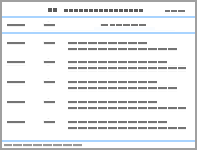
表1
黄河流域旅游生态韧性评价指标体系"
| 准则层 | 要素层 | 指标层 | 指标释义 | 指标权重 |
|---|---|---|---|---|
| 防御抵抗能力(D) | 经济支撑 | 人均GDP(D1) | 经济基础支撑 | 0.0386(+) |
| 旅游收入占GDP比重(D2) | 旅游业市场地位 | 0.0313(+) | ||
| 产业支撑 | 旅游要素集聚水平(D3) | 旅游产业对旅游生态系统的支撑 | 0.0986(+) | |
| 旅行社与星级饭店数量(D4) | 旅游接待能力 | 0.0305(+) | ||
| 社会压力 | 游客密度指数(D5) | 游客活动对旅游地人口结构和生态环境的压力程度 | 0.0029(-) | |
| 旅游交通压力(D6) | 游客流动对旅游地交通基础设施的压力程度 | 0.0027(-) | ||
| 旅游空间指数(D7) | 游客活动对国土空间资源的胁迫 | 0.0055(-) | ||
| 生态压力 | 废水排放量(D8) | 污染物排放对旅游生态系统(包括水体环境、空气质量、 气候变化等)产生的负面影响及破坏程度 | 0.0075(-) | |
| SO2排放量(D9) | 0.0128(-) | |||
| 碳排放量(D10) | 0.0121(-) | |||
| 恢复适应能力(R) | 内部驱动 | 人均旅游消费支出(R1) | 系统运行对旅游地经济收益、旅游市场的影响 | 0.0290(+) |
| 旅游接待人次(R2) | 旅游市场活力及吸引力水平 | 0.0704(+) | ||
| 旅游从业人员比例(R3) | 旅游就业吸纳能力及人才资本水平 | 0.0256(+) | ||
| 外部保障 | 人均拥有道路面积(R4) | 交通基础设施保障水平 | 0.0161(+) | |
| 人均医疗卫生机构床位数(R5) | 公共卫生服务保障水平 | 0.0264(+) | ||
| 互联网普及率(R6) | 通讯保障水平 | 0.0266(+) | ||
| 资源环境 | 森林覆盖率(R7) | 旅游生态系统环境保护及健康状况 | 0.0207(+) | |
| 自然保护区占辖区面积比例(R8) | 0.0285(+) | |||
| 水资源总量(R9) | 0.0665(+) | |||
| 城市公园绿地面积(R10) | 0.0566(+) | |||
| 创新进化能力(I) | 经济调控 | 财政支出占GDP比重(I1) | 旅游生态系统潜在财政支持 | 0.0282(+) |
| 环境污染治理投资占GDP比重(I2) | 旅游生态系统实际资金投入 | 0.0270(+) | ||
| 产业提升 | 旅游收入增长率(I3) | 旅游业产业增长能力 | 0.0075(+) | |
| 旅游接待人次增长率(I4) | 0.0049(+) | |||
| 创新研发 | 旅游R&D经费(I5) | 旅游创新研发经费投入 | 0.1073(+) | |
| 旅游发明专利授权量(I6) | 旅游创新研发成果产出 | 0.1221(+) | ||
| 旅游院校学生数量(I7) | 旅游创新研发人才支撑 | 0.0574(+) | ||
| 环境治理 | 固体废物综合利用率(I8) | 旅游生态系统环境保护与污染防治效率 | 0.0158(+) | |
| 生活垃圾无害化处理率(I9) | 0.0105(+) | |||
| 污水处理率(I10) | 0.0104(+) |

图2
2000—2022年黄河流域旅游生态韧性发展水平趋势"


图3
2000—2022年黄河流域旅游生态韧性发展水平趋势"


图4
2000—2022年黄河流域旅游生态韧性发展水平的时空演进趋势 注:基于自然资源部标准地图服务网站审图号为GS(2024)0650号的标准地图制作,底图边界无修改。"

表2
马尔科夫状态转移矩阵计算结果(2000—2022年)"
| 区域 | t/t+1 | 旅游生态韧性发展水平 | |||
|---|---|---|---|---|---|
| 低 | 较低 | 中 | 高 | ||
| 黄河上游 | 低 | 0.857 | 0.071 | 0.071 | 0.000 |
| 较低 | 0.111 | 0.667 | 0.222 | 0.000 | |
| 中 | 0.037 | 0.259 | 0.593 | 0.111 | |
| 高 | 0.000 | 0.000 | 0.107 | 0.893 | |
| 黄河中游 | 低 | 0.727 | 0.273 | 0.000 | 0.000 |
| 较低 | 0.182 | 0.364 | 0.455 | 0.000 | |
| 中 | 0.091 | 0.364 | 0.364 | 0.182 | |
| 高 | 0.091 | 0.000 | 0.182 | 0.727 | |
| 黄河下游 | 低 | 0.583 | 0.333 | 0.083 | 0.000 |
| 较低 | 0.273 | 0.545 | 0.182 | 0.000 | |
| 中 | 0.000 | 0.100 | 0.700 | 0.200 | |
| 高 | 0.000 | 0.000 | 0.182 | 0.818 | |
表3
2000—2022年黄河流域旅游生态韧性发展水平的全局莫兰指数"
| 年份 | Moran’s I | Z值 | P值 | 年份 | Moran’s I | Z值 | P值 |
|---|---|---|---|---|---|---|---|
| 2000 | 0.210 | 1.657 | 0.048** | 2012 | 0.417 | 2.785 | 0.003*** |
| 2001 | 0.253 | 1.800 | 0.035** | 2013 | 0.354 | 2.530 | 0.006*** |
| 2002 | 0.244 | 1.758 | 0.040** | 2014 | 0.457 | 2.800 | 0.003*** |
| 2003 | 0.495 | 2.678 | 0.004*** | 2015 | 0.497 | 2.822 | 0.002*** |
| 2004 | 0.439 | 2.448 | 0.007*** | 2016 | 0.571 | 3.156 | 0.001*** |
| 2005 | 0.392 | 2.532 | 0.006*** | 2017 | 0.544 | 2.983 | 0.001*** |
| 2006 | 0.492 | 2.825 | 0.002*** | 2018 | 0.503 | 2.745 | 0.003*** |
| 2007 | 0.356 | 2.303 | 0.011** | 2019 | 0.466 | 2.543 | 0.005*** |
| 2008 | 0.260 | 1.898 | 0.029** | 2020 | 0.448 | 2.522 | 0.006*** |
| 2009 | 0.367 | 2.393 | 0.008*** | 2021 | 0.355 | 2.104 | 0.018** |
| 2010 | 0.370 | 2.374 | 0.009*** | 2022 | 0.477 | 2.740 | 0.003*** |
| 2011 | 0.366 | 2.434 | 0.007*** |

图5
2000—2022年黄河流域旅游生态韧性发展水平的局部莫兰指数散点图"


图6
2000—2022年黄河流域旅游生态韧性准则层障碍度"

表4
2000—2022年黄河流域旅游生态韧性指标层主要障碍因子(前5位)"
| 年份 | 青海 | 四川 | 甘肃 | 宁夏 | 内蒙古 | 陕西 | 山西 | 河南 | 山东 |
|---|---|---|---|---|---|---|---|---|---|
| 2000 | I6(15.56) | D3(15.68) | I5(12.82) | I6(15.39) | I6(15.26) | D3(12.69) | I5(14.89) | I5(11.99) | I6(27.78) |
| I5(13.68) | I7(11.55) | D3(11.87) | I5(13.52) | I5(13.34) | R9(9.62) | D3(12.06) | R9(9.34) | R9(13.43) | |
| D3(12.57) | I6(9.27) | I6(9.91) | D3(11.79) | D3(12.26) | R10(8.14) | R9(9.86) | I6(7.61) | I5(10.28) | |
| R2(8.87) | R10(8.34) | R2(7.97) | R2(8.87) | R2(8.17) | I7(7.90) | I7(7.99) | I7(7.17) | I1(6.42) | |
| I7(7.26) | D1(7.50) | R9(7.46) | R9(8.39) | R9(7.19) | R2(7.18) | R10(6.77) | D1(5.50) | I2(5.27) | |
| 2007 | I6(15.60) | I6(16.37) | I6(14.35) | I6(15.07) | I6(15.68) | I6(16.35) | I6(14.56) | I6(12.65) | R9(20.39) |
| I5(13.72) | D3(15.03) | I5(12.59) | I5(13.23) | I5(13.37) | D3(11.10) | I5(12.40) | I5(10.93) | I1(10.36) | |
| D3(12.60) | R10(7.71) | D3(11.80) | D3(11.66) | D3(12.84) | I5(8.48) | R9(9.34) | R9(9.32) | R8(9.51) | |
| R2(8.87) | D1(6.66) | R2(7.86) | R2(8.69) | R2(8.34) | R9(8.08) | D3(9.20) | R10(5.71) | I2(7.82) | |
| I7(7.34) | I5(5.92) | R9(7.20) | R9(8.21) | R9(7.77) | R10(6.92) | R10(6.87) | R8(4.99) | R5(6.81) | |
| 2014 | I6(15.08) | D3(15.00) | I6(14.44) | I5(13.38) | I6(17.35) | I6(12.26) | I6(16.76) | I6(15.03) | R9(20.40) |
| I5(13.86) | I6(12.95) | I5(12.12) | I6(12.78) | I5(13.55) | I5(11.15) | I5(12.01) | I5(11.19) | I1(9.15) | |
| D3(12.75) | I5(10.99) | D3(11.26) | D3(11.66) | D3(13.55) | D3(10.58) | R9(9.35) | R9(9.30) | R8(8.33) | |
| R2(9.05) | R10(7.00) | R9(7.25) | R2(8.77) | R2(9.01) | R9(9.12) | D3(7.28) | R10(4.97) | R1(7.56) | |
| I7(7.42) | D1(5.91) | R2(6.80) | R9(8.29) | R9(7.49) | R10(7.32) | R10(6.56) | R8(4.47) | R5(7.41) | |
| 2022 | I6(15.19) | D3(19.24) | I6(14.68) | I6(14.97) | I6(16.09) | I6(13.30) | I6(14.64) | I6(11.10) | R9(17.27) |
| I5(13.35) | I6(14.61) | I5(12.85) | I5(12.94) | I5(13.56) | D3(10.69) | I5(12.50) | I5(10.99) | I7(12.29) | |
| D3(12.27) | R10(7.53) | D3(11.98) | D3(10.78) | D3(12.96) | I5(10.38) | D3(9.66) | R9(9.80) | I1(9.48) | |
| R2(8.75) | I1(7.31) | R9(7.53) | R2(8.45) | R2(8.33) | R9(9.04) | R9(8.00) | D3(8.34) | I2(8.63) | |
| I7(7.14) | I2(6.76) | R2(7.23) | R9(8.22) | I7(7.20) | I7(8.32) | I7(5.97) | I7(6.23) | R8(8.62) |
表5
2000—2022年黄河流域各流域旅游生态韧性指标层主要障碍因子(前5位)"
| 年份 | 上游 | 中游 | 下游 |
|---|---|---|---|
| 2000 | I6(13.08) | D3(12.37) | I6(17.69) |
| D3(12.83) | R9(9.74) | R9(11.38) | |
| I5(10.67) | I5(8.95) | I5(11.13) | |
| I7(8.01) | I7(7.94) | I1(5.65) | |
| R10(6.86) | R10(7.45) | I2(5.16) | |
| 2007 | I6(15.42) | I6(15.45) | R9(14.86) |
| D3(12.79) | I5(10.44) | I1(7.42) | |
| I5(11.76) | D3(10.15) | R8(7.25) | |
| R2(7.01) | R9(8.71) | I6(6.33) | |
| R10(6.82) | R10(6.90) | I2(6.27) | |
| 2014 | I6(14.52) | I6(14.51) | R9(14.85) |
| D3(12.85) | I5(11.58) | I6(7.51) | |
| I5(12.78) | R9(9.24) | I1(6.66) | |
| R2(7.03) | D3(8.93) | R8(6.40) | |
| R10(6.53) | R10(6.94) | R5(5.78) | |
| 2022 | I6(15.11) | I6(13.97) | R9(13.53) |
| D3(13.45) | I5(11.44) | I7(9.26) | |
| I5(10.54) | D3(10.18) | I1(6.88) | |
| R10(6.69) | R9(8.52) | R8(6.67) | |
| R2(6.55) | I7(7.15) | I2(6.42) |
| [1] |
王兆峰, 刘庆芳. 中国省域旅游效率空间网络结构演化及其影响因素[J]. 地理科学, 2021, 41(3): 397-406.
doi: 10.13249/j.cnki.sgs.2021.03.004 |
|
[Wang Zhaofeng, Liu Qingfang. The evolution and influencing factors of spatial network structure of China’s provincial tourism efficiency[J]. Scientia Geographica Sinica, 2021, 41(3): 397-406. ]
doi: 10.13249/j.cnki.sgs.2021.03.004 |
|
| [2] |
王松茂, 牛金兰. 山东省旅游经济与城市生态韧性协同演化研究[J]. 地理学报, 2023, 78(10): 2591-2608.
doi: 10.11821/dlxb202310013 |
|
[Wang Songmao, Niu Jinlan. Co-evolution of tourism economy and urban ecological resilience in Shandong Province[J]. Acta Geographica Sinica, 2023, 78(10): 2591-2608. ]
doi: 10.11821/dlxb202310013 |
|
| [3] | Holling C S. Resilience and stability of ecological systems[J]. Annual Review of Ecology & Systematics, 1973, 4(1): 1-23. |
| [4] | Li Y, Shi Y, Qureshi S, et al. Applying the concept of spatial resilience to socio-ecological systems in the urban wetland interface[J]. Ecological Indicators, 2014, 42(1): 135-146. |
| [5] | Ma L, Tao T, Li Z, et al. Study on spatial divergence of rural resilience and optimal governance paths in oasis: The case of Yongchang County in the Hexi Corridor of China[J]. Environment, Development and Sustainability, 2024, 26(2): 4603-4627. |
| [6] | Yuan Y, Bai Z, Zhang J, et al. Increasing urban ecological resilience based on ecological security pattern: A case study in a resource-based city[J]. Ecological Engineering, 2022, 175(5): 1064-1086. |
| [7] | 杨秀平, 贾云婷, 翁钢民, 等. 城市旅游环境系统韧性的系统动力学研究——以兰州市为例[J]. 旅游科学, 2020, 34(2): 23-40. |
| [Yang Xiuping, Jia Yunting, Weng Gangmin, et al. A study on system dynamics of the resilience of urban tourism environment system: A case study of Lanzhou City[J]. Tourism Science, 2020, 34(2): 23-40. ] | |
| [8] | 李志远, 夏赞才. 长江经济带旅游业高质量发展水平测度及失配度时空格局探究[J]. 南京师大学报(自然科学版), 2021, 44(4): 33-42. |
| [Li Zhiyuan, Xia Zancai. Synergy effect and spatial characteristics analysis of tourism ecological resilience and efficiency in the Yangtze River Economic Belt[J]. Journal of Nanjing Normal University (Natural Science Edition), 2021, 44(4): 33-42. ] | |
| [9] | Cochrane J. The sphere of tourism resilience[J]. Tourism Recreation Research, 2010, 35(2): 173-185. |
| [10] |
李志远, 冯学钢, 何静, 等. 中国旅游生态韧性空间关联网络结构及其驱动因素[J]. 地理研究, 2024, 43(5): 1146-1165.
doi: 10.11821/dlyj020230737 |
| [Li Zhiyuan, Feng Xuegang, He Jing, et al. Spatial correlation network structure and driving factors of tourism ecological resilience in China[J]. Geographical Research, 2024, 43(5): 1146-1165. ] | |
| [11] | 张傲翔, 苗成林, 陈峥妍. 黄河流域城市生态韧性、社会网络及其影响因素分析[J/OL]. 干旱区地理. [2025-01-04]. . |
| [Zhang Aoxiang, Miao Chenglin, Chen Zhengyan. Urban ecological resilience, social networks and its influencing factors in the Yellow River Basin[J/OL]. Arid Land Geography. [2025-01-04]. http://kns.cnki.net/kcms/detail/65.1103.x.20240524.1707.001.html.] | |
| [12] |
郭向阳, 明庆忠, 杨春宇, 等. 喀斯特生态脆弱区旅游生态系统韧性时空变化及多尺度障碍因素——以贵州省为例[J]. 经济地理, 2023, 43(10): 190-200, 230.
doi: 10.15957/j.cnki.jjdl.2023.10.019 |
|
[Guo Xiangyang, Ming Qingzhong, Yang Chunyu, et al. Spatiotemporal evolution of tourism ecosystem resilience in karst ecologically fragile areas and its multi-scale obstacle factors: A case study of Guizhou[J]. Economic Geography, 2023, 43(10): 190-200, 230. ]
doi: 10.15957/j.cnki.jjdl.2023.10.019 |
|
| [13] | 方叶林, 吴燕妮, 王秋月, 等. 基于DPSIR模型的城市旅游经济韧性评价与影响因素——以长三角城市群为例[J]. 南京师大学报(自然科学版), 2024, 47(2): 26-34. |
| [Fang Yelin, Wu Yanni, Wang Qiuyue, et al. Evaluation and influencing factors of tourism economic resilience based on DPSIR model: A case study of the Yangtze River Delta urban agglomeration[J]. Journal of Nanjing Normal University (Natural Science Edition), 2024, 47(2): 26-34. ] | |
| [14] | 王兆峰, 陈青青. 1998年以来长江经济带旅游生态安全时空格局演化及趋势预测[J]. 生态学报, 2021, 41(1): 320-332. |
| [Wang Zhaofeng, Chen Qingqing. Spatio-temporal pattern evolution and trend prediction of tourism ecological security in the Yangtze River Economic Belt since 1998[J]. Acta Ecologica Sinica, 2021, 41(1): 320-332. ] | |
| [15] |
任洪杰, 李辉尚. 中国乡村生态韧性时空演变特征及影响因素探究[J]. 干旱区地理, 2024, 47(11): 1915-1923.
doi: 10.12118/j.issn.1000-6060.2023.707 |
|
[Ren Hongjie, Li Huishang. Spatial and temporal evolution characteristics and influencing factors of rural ecological resilience in China[J]. Arid Land Geography, 2024, 47(11): 1915-1923. ]
doi: 10.12118/j.issn.1000-6060.2023.707 |
|
| [16] | Folke C, Carpenter S R, Walker B, et al. Resilience thinking: Integrating resilience, adaptability and transformability[J]. Ecology and Society, 2010, 15(4): 152-167. |
| [17] |
张明斗, 任衍婷, 周亮. 黄河流域城市生态韧性时空演变特征及影响因素分析[J]. 干旱区地理, 2024, 47(3): 445-454.
doi: 10.12118/j.issn.1000-6060.2023.381 |
|
[Zhang Mingdou, Ren Yanting, Zhou Liang. Spatiotemporal evolution characteristics and influencing factors of urban ecological resilience in the Yellow River Basin[J]. Arid Land Geography, 2024, 47(3): 445-454. ]
doi: 10.12118/j.issn.1000-6060.2023.381 |
|
| [18] |
方叶林, 王秋月, 黄震方, 等. 中国旅游经济韧性的时空演化及影响机理研究[J]. 地理科学进展, 2023, 42(3): 417-427.
doi: 10.18306/dlkxjz.2023.03.001 |
|
[Fang Yelin, Wang Qiuyue, Huang Zhenfang, et al. Spatial and temporal evolution of tourism economic resilience and mechanism of impact in China[J]. Progress in Geography, 2023, 42(3): 417-427. ]
doi: 10.18306/dlkxjz.2023.03.001 |
|
| [19] | Pike A, Dawley S, Tomaney J. Resilience, adaptation and adaptability[J]. Cambridge Journal of Regions, Economy and Society, 2010, 3(1): 59-70. |
| [20] | 牛亚菲, 陈田. 旅游生态环境系统研究——生态旅游研究的基石[J]. 旅游学刊, 2004, 19(4): 5-6. |
| [Niu Yafei, Chen Tian. Research on tourism eco-environment system: The cornerstone of ecotourism research[J]. Tourism Tribune, 2004, 19(4): 5-6. ] | |
| [21] |
李博, 秦欢, 余建辉, 等. 中国省域旅游资源竞争力评价及其格局演变[J]. 经济地理, 2019, 39(9): 232-240.
doi: 10.15957/j.cnki.jjdl.2019.09.028 |
|
[Li Bo, Qin Huan, Yu Jianhui, et al. Evaluation and pattern evolution of provincial tourism resources competitiveness in China[J]. Economic Geography, 2019, 39(9): 232-240. ]
doi: 10.15957/j.cnki.jjdl.2019.09.028 |
|
| [22] |
王少剑, 高爽, 黄永源, 等. 基于超效率SBM模型的中国城市碳排放绩效时空演变格局及预测[J]. 地理学报, 2020, 75(6): 1316-1330.
doi: 10.11821/dlxb202006016 |
|
[Wang Shaojian, Gao Shuang, Huang Yongyuan, et al. Spatio-temporal evolution and trend prediction of urban carbon emission performance in China based on super-efficiency SBM model[J]. Acta Geographica Sinica, 2020, 75(6): 1316-1330. ]
doi: 10.11821/dlxb202006016 |
|
| [23] | 李文龙, 起建凌, 张洪宇, 等. 中国农业高质量发展水平评价、时间演进及空间相关性分析[J]. 云南农业大学学报(社会科学版), 2024, 18(1): 1-8. |
| [Li Wenlong, Qi Jianling, Zhang Hongyu, et al. Evaluation of agricultural high-quality development level, regional difference and spatial correlation analysis in China[J]. Journal of Yunnan Agricultural University (Social Science Edition), 2024, 18(1): 1-8. ] | |
| [24] |
叶文丽, 杨新军, 吴孔森, 等. 黄土高原社会-生态系统恢复力时空变化特征与影响因素分析[J]. 干旱区地理, 2022, 45(3): 912-924.
doi: 10.12118/j.issn.1000-6060.2021.386 |
|
[Ye Wenli, Yang Xinjun, Wu Kongsen, et al. Spatio-temporal characteristics and influencing factors of social-ecological system resilience in the Loess Plateau[J]. Arid Land Geography, 2022, 45(3): 912-924. ]
doi: 10.12118/j.issn.1000-6060.2021.386 |
|
| [25] | 王彩丽, 闫绪娴. 成渝城市群城市韧性时空格局演变及障碍因子识别[J]. 重庆大学学报(社会科学版), 2023, 29(3): 21-33. |
| [Wang Caili, Yan Xuxian. Spatiotemporal revolution and obstacles identification of urban resilience in Chengdu-Chongqing urban agglomeration[J]. Journal of Chongqing University (Social Science Edition), 2023, 29(3): 21-33. ] | |
| [26] |
刘玒玒, 刘书芳. 祁连山地区复合生态系统韧性时空演化及障碍因子识别[J]. 干旱区地理, 2024, 47(2): 237-247.
doi: 10.12118/j.issn.1000-6060.2023.214 |
|
[Liu Honghong, Liu Shufang. Spatiotemporal evolution and obstacle identification of complex ecosystem resilience in the Qilian Mountain area[J]. Arid Land Geography, 2024, 47(2): 237-247. ]
doi: 10.12118/j.issn.1000-6060.2023.214 |
|
| [27] |
赵明亮, 刘芳毅, 王欢, 等. FDI、 环境规制与黄河流域城市绿色全要素生产率[J]. 经济地理, 2020, 40(4): 38-47.
doi: 10.15957/j.cnki.jjdl.2020.04.005 |
|
[Zhao Mingliang, Liu Fangyi, Wang Huan, et al. Foreign direct investment, environmental regulation and urban green total factor productivity of the Yellow River Basin[J]. Economic Geography, 2020, 40(4): 38-47. ]
doi: 10.15957/j.cnki.jjdl.2020.04.005 |
|
| [28] | 李凯风, 李子豪. 黄河流域绿色全要素生产率测度[J]. 统计与决策, 2022, 38(4): 98-101. |
| [Li Kaifeng, Li Zihao. Measurement of green total factor productivity in the Yellow River Basin[J]. Statistics & Decision, 2022, 38(4): 98-101. ] |
| [1] | 任诗琦, 王永瑜. 黄河流域地级市绿色发展水平测度与空间收敛性研究[J]. 干旱区地理, 2025, 48(6): 1031-1042. |
| [2] | 魏建飞, 袁悠燃, 李强, 董佩佩, 刘玖榕. 黄河流域国土空间效率时空变化及障碍因子分析[J]. 干旱区地理, 2025, 48(6): 1055-1066. |
| [3] | 谢宇, 薛选登. 数字经济赋能绿色发展福利——基于黄河流域资源型城市的经验证据[J]. 干旱区地理, 2025, 48(6): 1127-1139. |
| [4] | 王瑞芳, 吕宝奇, 张文静. 黄河流域植被动态及其对气候变化的响应——基于气候干湿分区尺度[J]. 干旱区地理, 2025, 48(6): 973-984. |
| [5] | 程兰花, 杨显明, 吴昕燕. 黄河流域城市紧凑度对碳排放绩效的影响[J]. 干旱区地理, 2025, 48(5): 838-853. |
| [6] | 李梦冉, 徐小任, 王梁, 段健, 史舒琪, 任丹丹. 黄河流域农业碳排放时空变化特征及影响因素分析[J]. 干旱区地理, 2025, 48(5): 854-865. |
| [7] | 崔盼盼, 张丽君, 秦耀辰, 夏四友. 黄河流域市域可持续发展状态评价及其驱动因素分析[J]. 干旱区地理, 2025, 48(5): 916-929. |
| [8] | 黄思源, 周书航, 董晔. 天山北坡城市群城市韧性时空演变特征及发展趋势预测[J]. 干旱区地理, 2025, 48(4): 559-570. |
| [9] | 李维露, 张明斗. 黄河流域城市人口集聚与土地生态韧性的协同性研究[J]. 干旱区地理, 2025, 48(4): 728-738. |
| [10] | 张杰, 屈建军, 陈海, 石金鑫, 马羽赫, 刘迪. 基于电路理论的生态安全格局时空演变与影响因素研究——以陕北黄土高原为例[J]. 干旱区地理, 2025, 48(3): 494-505. |
| [11] | 刘园园, 马彩虹, 马丽娅. 黄河流域典型绿洲城市扩张模拟及其生态韧性响应研究[J]. 干旱区地理, 2025, 48(3): 506-516. |
| [12] | 张傲翔, 苗成林, 陈峥妍. 黄河流域城市生态韧性、社会网络及其影响因素分析[J]. 干旱区地理, 2025, 48(1): 130-142. |
| [13] | 杨燕燕, 王永瑜, 徐绮阳. 黄河流域水资源利用驱动因素及脱钩效应研究[J]. 干旱区地理, 2025, 48(1): 20-30. |
| [14] | 徐晓亮, 刘旭义, 关靖云, 杨晶晶, 王明辰, 暴龙飞. 中国西部边疆民族地区文旅融合高质量发展时空演化及驱动因素分析[J]. 干旱区地理, 2024, 47(9): 1596-1605. |
| [15] | 陈聪, 唐英, 史承勇, 杜怡帆, 赵丽娜, 姜旭妍. 黄河流域遗产资源空间分布与区域协同保护[J]. 干旱区地理, 2024, 47(7): 1220-1232. |
|
||