干旱区地理 ›› 2026, Vol. 49 ›› Issue (2): 211-223.doi: 10.12118/j.issn.1000-6060.2024.730 cstr: 32274.14.ALG2024730
白洋1,2( ), 陈明珠1,2(), 周春山3, 李亚茹1,2, 唐诚1,2
收稿日期:2024-12-05
修回日期:2025-03-05
出版日期:2026-02-25
发布日期:2026-02-27
通讯作者:
陈明珠(1996-),女,硕士,主要从事旅游地理研究. E-mail: 107552203073@stu.xju.edu.cn作者简介:白洋(1982-),男,教授,主要从事旅游地理研究. E-mail: baiyang@xju.edu.cn
基金资助:
BAI Yang1,2(), CHEN Mingzhu1,2(), ZHOU Chunshan3, LI Yaru1,2, TANG Cheng1,2
Received:2024-12-05
Revised:2025-03-05
Published:2026-02-25
Online:2026-02-27
摘要:
旅游业是培育新质生产力蓄势赋能的重要领域,基于建构旅游新质生产力理论机制并构建评价指标体系,通过熵权-TOPSIS法测度中国旅游新质生产力,利用地理测度技术与数理统计方法探究其分异特征、演进规律并识别障碍因素。结果表明:(1) 新质劳动者、新质劳动资料及新质劳动对象三大维度协同作用建构旅游新质生产力的理论机制。(2) 中国旅游新质生产力呈现波浪型周期性的时序演化轨迹,区域比较体现东部>中部>西部的梯度递减规律,维度层比较为新质劳动对象>新质劳动资料>新质劳动者;省际差异逐渐缩小且向均衡化发展。(3) 中国旅游新质生产力发展态势平稳,表现为“低等级连片、中等级收缩”的空间格局;整体基尼系数主要源于区域间差异,区域内差异比较为东部>西部>中部;空间演进整体向东北—西南方向扩散、整体重心持续向西南方向迁移。(4) 新质劳动对象是关键障碍维度,接待国际旅游人次、一般工业固体废弃物、旅游R&D人员数、人均宽带接口数与旅游外汇收入是关键障碍因子。研究结果为促进中国旅游经济高质量发展提供科学依据与实践指导。
白洋, 陈明珠, 周春山, 李亚茹, 唐诚. 中国旅游新质生产力的演化测度与障碍识别[J]. 干旱区地理, 2026, 49(2): 211-223.
BAI Yang, CHEN Mingzhu, ZHOU Chunshan, LI Yaru, TANG Cheng. Evolutionary measurement and obstacle identification of new quality productive forces in tourism in China[J]. Arid Land Geography, 2026, 49(2): 211-223.
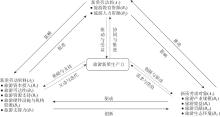
图1
旅游新质生产力的理论机制"
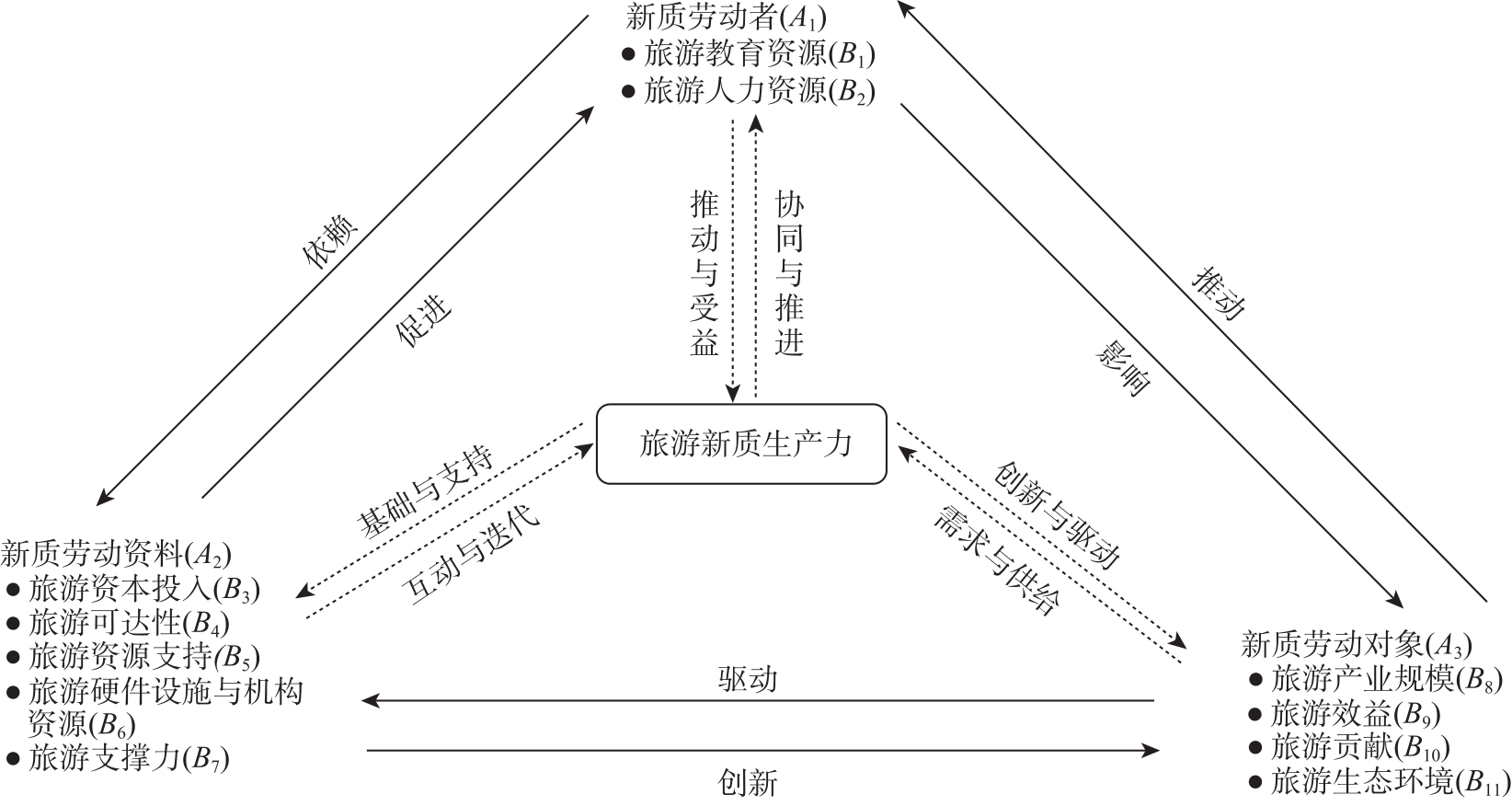

表1
旅游新质生产力综合评价指标体系"
| 目标层 | 准则层/权重 | 一级指标/权重 | 二级指标/权重 |
|---|---|---|---|
| 旅游新质生产力(A) | 新质劳动者(A1)/0.181 | 旅游教育资源(B1)/0.095 | 高等旅游院校数(X1)[ |
| 旅游院校学生数(X2)[ | |||
| 中等旅游职业学校数(X3)[ | |||
| 旅游人力资源(B2)/0.086 | 旅游从业人员数(X4)[ | ||
| 旅游R&D人员数(X5)[ | |||
| 新质劳动资料(A2)/0.321 | 旅游资本投入(B3)/0.016 | 旅游R&D经费(X6)[ | |
| 旅游可达性(B4)/0.038 | 铁路营业里程(X7)[ | ||
| 公路通车里程(X8)[ | |||
| 旅游资源支持(B5)/0.057 | A级旅游景区总数(X9)[ | ||
| 5A景区比例(X10)[ | |||
| 全国重点文物保护单位数量(X11)[ | |||
| 旅游硬件设施与机构资源(B6)/0.049 | 星级饭店数量(X12)[ | ||
| 五星级酒店占比(X13)[ | |||
| 旅行社总数(X14)[ | |||
| 旅游支撑力(B7)/0.161 | 光纤长度(X15)[ | ||
| 人均宽带接口(X16)[ | |||
| 每万人厕所数(X17)[ | |||
| 人均公共绿地面积(X18)[ | |||
| 生活垃圾无公害处理率(X19)[ | |||
| 人均GDP(X20)[ | |||
| 新质劳动对象(A3)/0.498 | 旅游产业规模(B8)/0.192 | 旅游业总收入(X21)[ | |
| 旅客周转量(X22)[ | |||
| 旅游外汇收入(X23)[ | |||
| 接待国内旅游人次(X24)[ | |||
| 接待国际旅游人次(X25)[ | |||
| 旅游效益(B9)/0.075 | 旅游企业营业收入(X26)[ | ||
| 旅游企业固定资产原值(X27)[ | |||
| 旅游贡献(B10)/0.092 | 旅游业总收入占GDP(X28)[ | ||
| 旅游就业人数占总就业人数(X29)[ | |||
| 旅游企业税金(X30)[ | |||
| 旅游生态环境(B11)/0.139 | 工业SO2(X31)[ | ||
| 废水(X32)[ | |||
| 一般工业固体废弃物(X33)[ |
表2
旅游新质生产力综合指数等级"
| 综合 指数 | 0.000~0.200 | 0.201~0.400 | 0.401~0.600 | 0.601~0.800 | 0.801~1.000 |
|---|---|---|---|---|---|
| 等级 | 弱 | 较弱 | 中等 | 较高 | 强 |
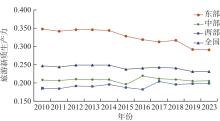
图2
中国及三大区域旅游新质生产力的时序演化"
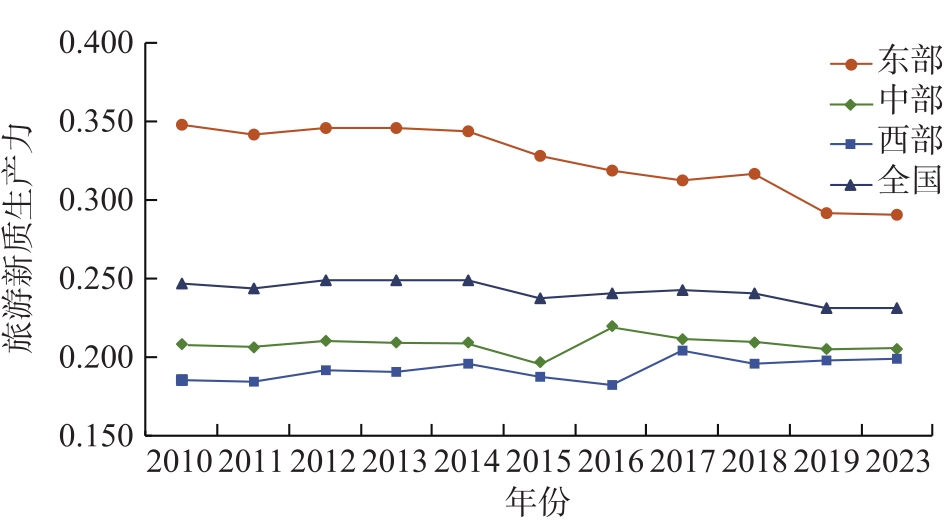
图3
中国及三大区域旅游新质生产力核密度分布"
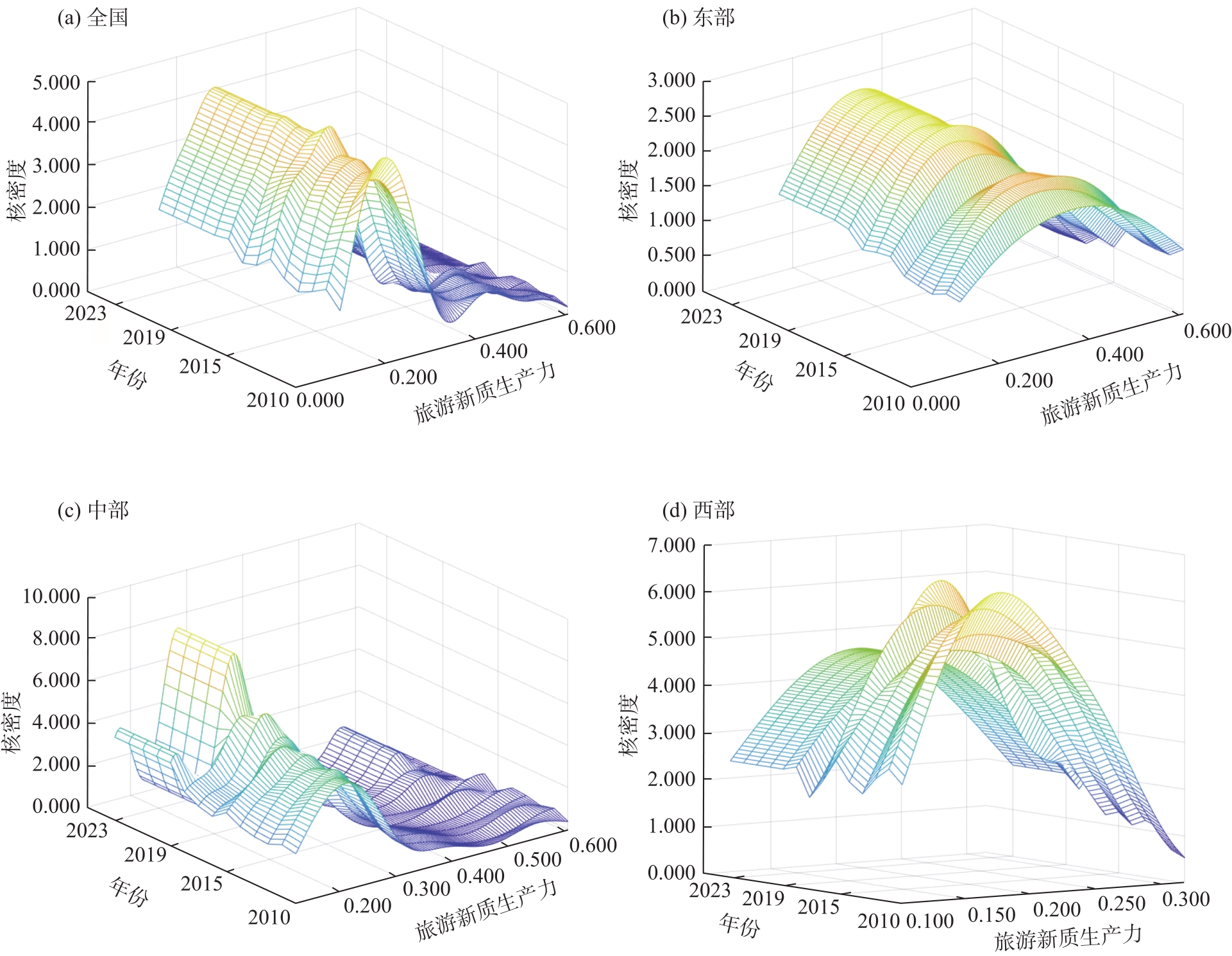
图4
旅游新质生产力分维度时序演化 注:A1为新质劳动者;A2为新质劳动资料;A3为新质劳动对象。"
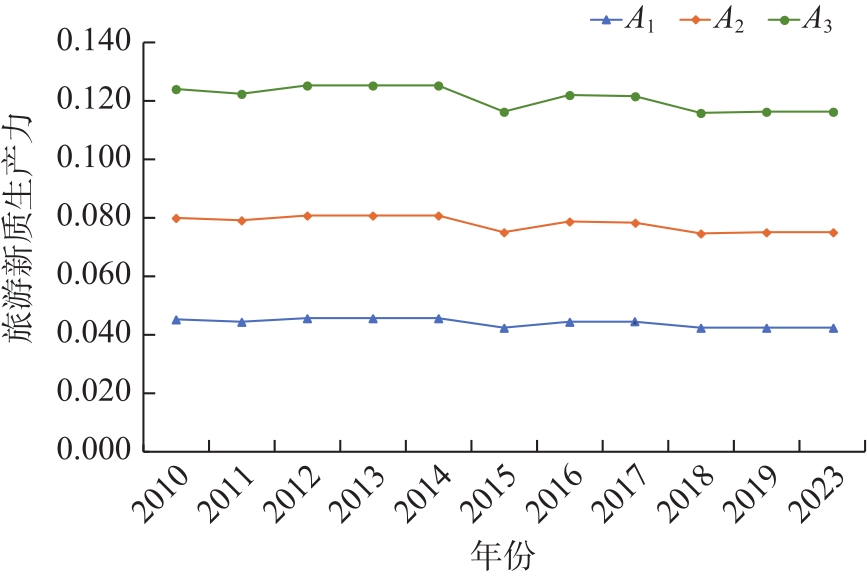
表3
中国旅游新质生产力Dagum基尼系数及其分解"
| 年份 | 整体基尼系数 | 贡献率/% | 区域内基尼系数 | 区域间基尼系数 | ||||||||
|---|---|---|---|---|---|---|---|---|---|---|---|---|
| 地区间差异 | 地区内差异 | 超变密度 | 东部 | 中部 | 西部 | 东-中部 | 东-西部 | 中-西部 | ||||
| 2010 | 0.239 | 63.021 | 25.292 | 11.687 | 0.223 | 0.098 | 0.141 | 0.290 | 0.334 | 0.131 | ||
| 2011 | 0.240 | 61.040 | 26.249 | 12.711 | 0.228 | 0.104 | 0.155 | 0.285 | 0.329 | 0.142 | ||
| 2012 | 0.233 | 60.541 | 26.143 | 13.316 | 0.212 | 0.116 | 0.155 | 0.277 | 0.314 | 0.146 | ||
| 2013 | 0.229 | 58.894 | 26.245 | 14.861 | 0.216 | 0.107 | 0.146 | 0.280 | 0.307 | 0.135 | ||
| 2014 | 0.235 | 59.268 | 26.307 | 14.425 | 0.222 | 0.114 | 0.148 | 0.286 | 0.318 | 0.140 | ||
| 2015 | 0.221 | 53.574 | 27.655 | 18.771 | 0.216 | 0.104 | 0.160 | 0.265 | 0.285 | 0.142 | ||
| 2016 | 0.223 | 53.189 | 28.348 | 18.463 | 0.230 | 0.135 | 0.150 | 0.248 | 0.288 | 0.160 | ||
| 2017 | 0.214 | 47.780 | 28.785 | 23.436 | 0.206 | 0.132 | 0.165 | 0.246 | 0.265 | 0.159 | ||
| 2018 | 0.219 | 45.224 | 29.570 | 25.204 | 0.225 | 0.131 | 0.168 | 0.255 | 0.269 | 0.155 | ||
| 2019 | 0.218 | 42.466 | 29.888 | 27.647 | 0.230 | 0.117 | 0.169 | 0.243 | 0.263 | 0.156 | ||
| 2023 | 0.223 | 54.449 | 27.450 | 18.051 | 0.222 | 0.115 | 0.155 | 0.269 | 0.230 | 0.148 | ||
| 均值 | 0.227 | 54.450 | 27.448 | 18.052 | 0.221 | 0.116 | 0.156 | 0.268 | 0.297 | 0.147 | ||
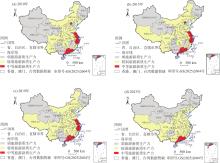
图5
中国旅游新质生产力空间分布"
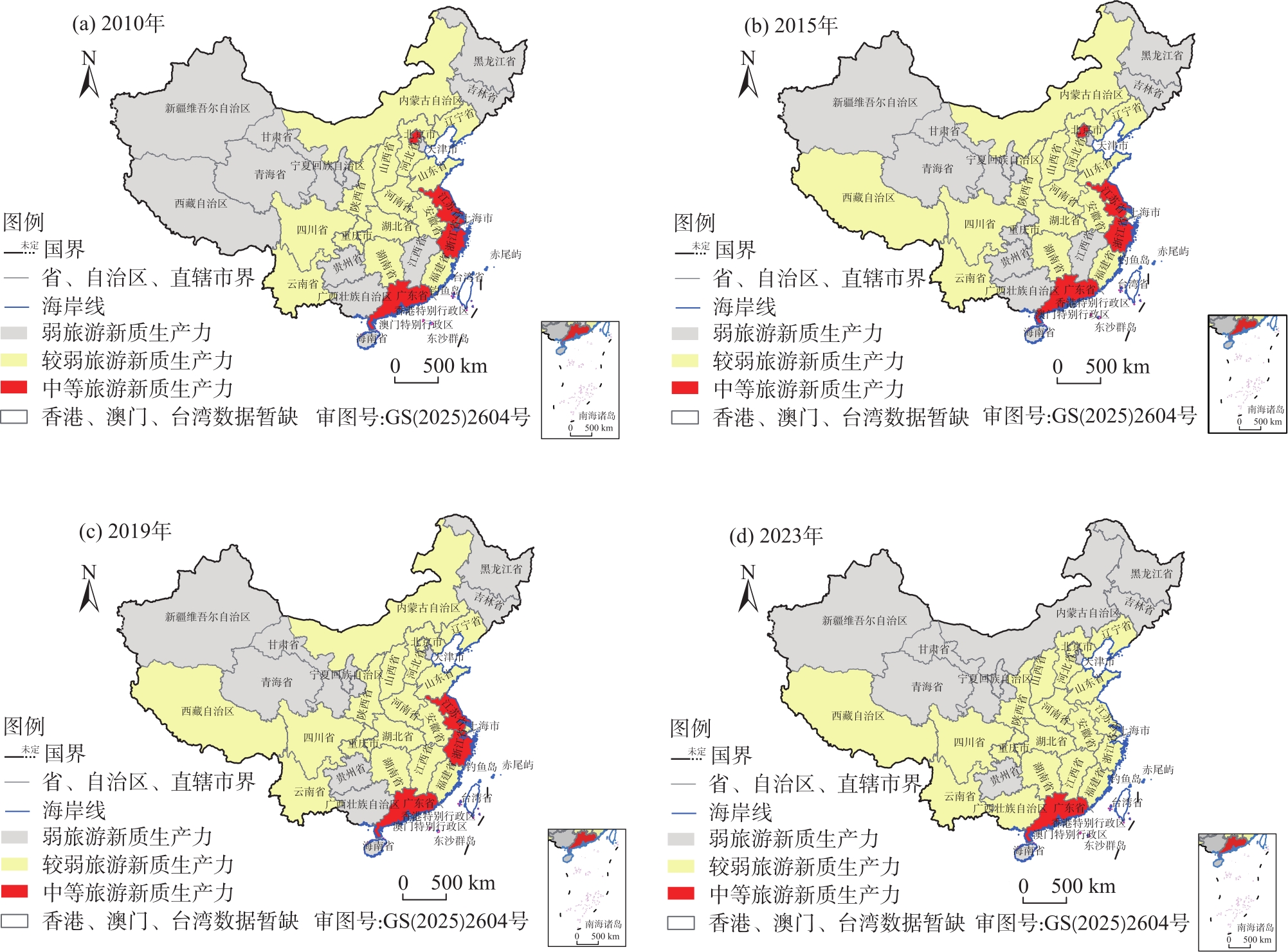
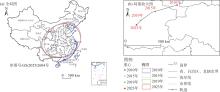
图6
中国旅游新质生产力标准差椭圆与重心"
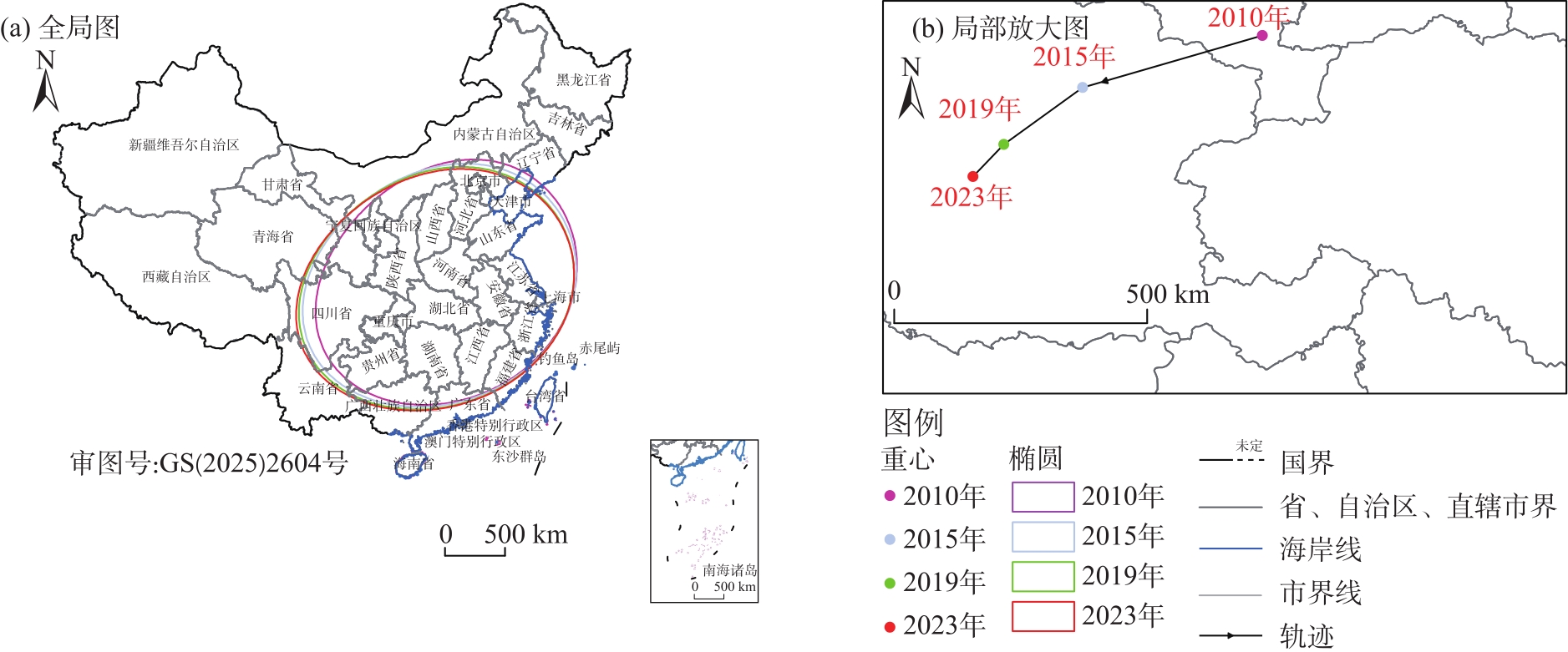
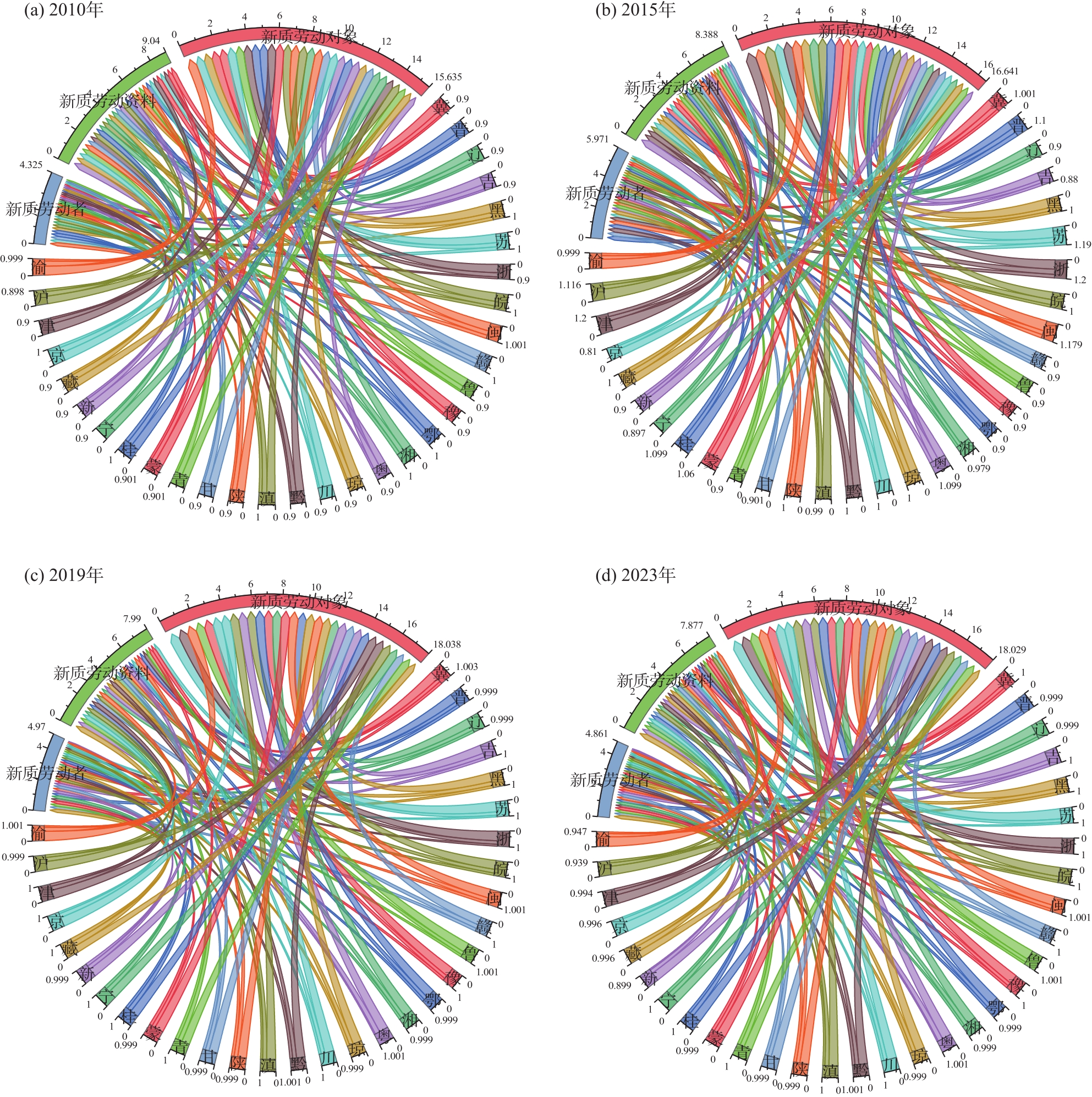
图7
中国旅游新质生产力障碍度"
| [1] | 周绍东, 胡华杰. 新质生产力推动创新发展的政治经济学研究[J]. 新疆师范大学学报(哲学社会科学版), 2024, 45(5): 26-35. |
| [Zhou Shaodong, Hu Huajie. A political economy study on how new quality productivity promotes innovative development[J]. Journal of Xinjiang Normal University (Philosophy and Social Science), 2024, 45(5): 26-35.] | |
| [2] | 任保平, 王子月. 数字新质生产力推动经济高质量发展的逻辑与路径[J]. 湘潭大学学报(哲学社会科学版), 2023, 47(6): 23-30. |
| [Ren Baoping, Wang Ziyue. The logic and path of digital new quality productivity promoting high quality economic development[J]. Journal of Xiangtan University (Philosophy and Social Science), 2023, 47(6): 23-30.] | |
| [3] | 李政, 廖晓东. 新质生产力理论的生成逻辑、原创价值与实践路径[J]. 江海学刊, 2023(6): 91-98. |
| [Li Zheng, Liao Xiaodong. The generation logic, original value and practical path of the theory of new qualitative productivity[J]. Jianghai Journal, 2023(6): 91-98.] | |
| [4] | 魏崇辉. 新质生产力的基本意涵、历史演进与实践路径[J]. 理论与改革, 2023(6): 25-38. |
| [Wei Chonghui. The basic meaning, historical evolution and practical path of new quality productivity[J]. Theory and Reform, 2023(6): 25-38.] | |
| [5] | 戴翔. 以发展新质生产力推动高质量发展[J]. 天津社会科学, 2023, 6(6): 103-110. |
| [Dai Xiang. The promote high-quality development by developing new quality productivity[J]. Tianjin Social Science, 2023, 6(6): 103-110.] | |
| [6] | 李政, 廖晓东. 发展“新质生产力”的理论、历史和现实“三重”逻辑[J]. 政治经济学评论, 2023, 14(6): 146-159. |
| [Li Zheng, Liao Xiaodong. The theoretical, historical, and realistic “triple” logics of developing “new quality productive”[J]. Review of Political Economy, 2023, 14(6): 146-159.] | |
| [7] | 任宇新, 吴艳, 伍喆. 金融集聚、产学研合作与新质生产力[J]. 财经理论与实践, 2024, 45(3): 27-34. |
| [Ren Yuxin, Wu Yan, Wu Zhe. Financial agglomeration, industry-university research cooperation, and new quality productivity[J]. Financial Theory and Practice, 2024, 45(3): 27-34.] | |
| [8] | 侯冠宇, 张震宇, 董劭伟. 新质生产力赋能东北农业高质量发展: 理论逻辑、关键问题与现实路径[J]. 湖南社会科学, 2024(1): 69-76. |
| [Hou Guanyu, Zhang Zhenyu, Dong Shaowei. Empowering high-quality development of agriculture in northeast China with new productive forces: Theoretical logic, key issues, and practical paths[J]. Hunan Social Science, 2024(1): 69-76.] | |
| [9] |
时丽珍, 黄晓灵, 李增光, 等. 新质生产力赋能体育用品制造业高质量发展的出场语境、推进困囿与实践路径[J]. 沈阳体育学院学报, 2024, 43(2): 1-8.
doi: 10.12163/j.ssu.20240092 |
| [Shi Lizhen, Huang Xiaoling, Li Zengguang, et al. Appearance context, promotion constraints and practical paths of new quality productive forces empowering high-quality development of sporting goods manufacturing industry[J]. Journal of Shenyang Sports Institute, 2024, 43(2): 1-8.] | |
| [10] |
王金伟, 陆林, 王兆峰, 等. 新质生产力赋能旅游业高质量发展:理论内涵与科学问题[J]. 自然资源学报, 2024, 39(7): 1643-1663.
doi: 10.31497/zrzyxb.20240709 |
|
[Wang Jinwei, Lu Lin, Wang Zhaofeng, et al. Empowering the high-quality development of tourism with new quality productive forces[J]. Journal of Natural Resources, 2024, 39(7): 1643-1663.]
doi: 10.31497/zrzyxb.20240709 |
|
| [11] | 戴斌, 阳玉平. 新质生产力视域下我国旅游的理论建构与实践研究——中国旅游研究院院长、博士生导师戴斌教授访谈[J]. 社会科学家, 2024(3): 3-9. |
| [Dai Bin, Yang Yuping. Research on the theoretical construction and practice of tourism in China from the perspective of new quality productivity: Interview with professor Dai Bin, president and doctoral supervisor of China tourism academy[J]. Social Scientist, 2024(3): 3-9.] | |
| [12] | 余东华, 马路萌. 新质生产力与新型工业化: 理论阐释和互动路径[J]. 天津社会科学, 2023(6): 90-102. |
| [Yu Donghua, Ma Lumeng. New quality productivity and new industrialisation: Theoretical explanation and interactive path[J]. Tianjin Social Science, 2023(6): 90-102.] | |
| [13] | 彭文英, 赵爽, 单子溢, 等. 黄河流域新质生产力生态化水平测度与障碍因子[J/OL]. 干旱区地理. [2025-04-18]. https://kns-cnki-net.webvpn.xju.edu.cn:8040/kcms/detail/65.1103.X.202412-6.1323.002.html. |
| [Peng Wenying, Zhao Shuang, Shan Ziyi, et al. Measurement and obstacle factors of ecological level of new quality productive forces in the Yellow River Basin[J/OL]. Arid Land Geography. [2025-04-18]. https://kns-cnki-net.webvpn.xju.edu.cn:8040/kcms/detail/65.1103.X.20241216.1323.002.html.] | |
| [14] | 曹家宁, 金栋昌. 新质生产力的“自然-生态-社会”空间分析及其绿色意蕴[J]. 哈尔滨工业大学学报(社会科学版), 2025(2):115-124. |
| [Cao Jianing, Jin Dongchang. The “natural-ecological-social” spatial analysis of new quality productivity and its green implications[J]. Journal of Harbin Institute of Technology (Social Sciences Edition), 2025(2): 115-124.] | |
| [15] |
孙佼佼. 新质生产力赋能艺旅资源开发的全价值链: 内涵、模型与机制[J]. 自然资源学报, 2025, 40(4): 901-911.
doi: 10.31497/zrzyxb.20250403 |
|
[Sun Jiaojiao. Empowering the full value chain of art tourism resource development with new quality productive forces: Connotation, model, and mechanism[J]. Journal of Natural Resources, 2025, 40(4): 901-911.]
doi: 10.31497/zrzyxb.20250403 |
|
| [16] |
厉新建, 宋昌耀, 张安妮. 旅游业新质生产力: 难点与方向[J]. 旅游导刊, 2024, 8(3): 23-33.
doi: 10.12054/lydk.bisu.273 |
| [Li Xinjian, Song Changyao, Zhang Anni. New quality productive forces of tourism: Challenges and directions[J]. Tourism and Hospitality Prospects, 2024, 8(3): 23-33.] | |
| [17] | 明庆忠, 闫昕, 刘宏芳. “五链”融合赋能文旅新质生产力发展的逻辑及实现路径[J]. 学术探索, 2024(9): 40-49. |
| [Ming Qingzhong, Yan Xin, Liu Hongfan. The logic and realization path of “five chain” integration empowering the development of new quality productivity in culure and tourism[J]. Academic Exploration, 2024(9): 40-49.] | |
| [18] |
杨荣美, 周宏, 张燕妮, 等. 基于熵权TOPSIS方法与模糊物元模型的河西走廊地区旅游生态安全评估[J]. 干旱区地理, 2024, 47(1): 117-126.
doi: 10.12118/j.issn.1000-6060.2023.321 |
|
[Yang Rongmei, Zhou Hong, Zhang Yanni, et al. Tourism ecological security assessment in Hexi Corridor region based on entropy weight TOPSIS method and fuzzy matter-element model[J]. Arid Land Geography, 2024, 47(1): 117-126.]
doi: 10.12118/j.issn.1000-6060.2023.321 |
|
| [19] | 张姣玉, 罗红艳. 新质生产力: 中国式现代化新载体、新突破、新思路[J]. 郑州大学学报(哲学社会科学版), 2024, 57(4): 24-31. |
| [Zhang Jiaoyu, Luo Hongyan. New quality productive forces: A new carrier, breakthrough, and approach to Chinese-style modernization[J]. Journal of Zhengzhou University (Philosophy and Social Science Edition), 2024, 57(4): 24-31.] | |
| [20] | 任保平, 豆渊博. 新质生产力: 文献综述与研究展望[J]. 经济与管理评论, 2024, 40(3): 5-16. |
| [Ren Baoping, Dou Yuanbo. New quality productivity: Literature review and research outlook[J]. Economic and Management Review, 2024, 40(3): 5-16.] | |
| [21] | 王飞, 韩晓媛, 陈瑞华. 新质生产力赋能现代化产业体系: 内在逻辑与实现路径[J]. 当代经济管理, 2024, 46(6): 12-19. |
| [Wang Fei, Han Xiaoyuan, Chen Ruihua. Empowering modern industrial system with new quality productive forces: Intrinsic logic and implementation path[J]. Contemporary Economic Management, 2024, 46(6): 12-19.] | |
| [22] | 文丰安. 中国式现代化进程中的新质生产力: 核心动能及培育路径探析[J]. 东岳论丛, 2024(11): 5-15, 191. |
| [Wen Feng’an. New quality productive forces in the process of Chinese modernization: An analysis of core dynamics and cultivation path[J]. Dongyue Lunshun, 2024(11): 5-15, 191.] | |
| [23] | 谢爱良, 陆相林. 旅游创新竞争力评价指标体系的构建与影响因素分析[J]. 统计与决策, 2020, 36(18): 65-68. |
| [Xie Ailiang, Lu Xianglin. Construction of tourism innovation competitiveness evaluation index system and analysis of influencing factors[J]. Statistics and Decision Making, 2020, 36(18): 65-68.] | |
| [24] | 李慧, 王春峰, 李博, 等. 我国省际体育文化旅游节事资源支撑能力评价[J]. 统计与决策, 2018, 34(15): 111-116. |
| [Li Hui, Wang Chunfeng, Li Bo, et al. Evaluation of support capacity of interprovincial sports and cultural tourism festival resources in China[J]. Statistics and Decision Making, 2018, 34(15): 111-116.] | |
| [25] |
张新成, 高楠, 王琳艳, 等. 红色旅游高质量发展评价指标体系与培育路径研究——以红色旅游城市为例[J]. 干旱区地理, 2022, 45(6): 1927-1937.
doi: 10.12118/j.issn.1000-6060.2022.079 |
|
[Zhang Xincheng, Gao Nan, Wang Linyan, et al. Evaluation index system and cultivation path of high-quality development of red tourism: A case of red tourism cities[J]. Arid Land Geography, 2022, 45(6): 1927-1937.]
doi: 10.12118/j.issn.1000-6060.2022.079 |
|
| [26] | 吕雁琴, 王艺锦, 密瑞帮古丽·买买提, 等. 中国旅游设施发展水平的空间非均衡及动态演进[J]. 统计与决策, 2021, 37(12): 52-56. |
| [Lü Yanqin, Wang Yijin, Maimaiti Miruibangguli, et al. Spatial disequilibrium and dynamic evolution of tourism facilities development level in China[J]. Statistics and Decision Making, 2021, 37(12): 52-56.] | |
| [27] | 卢江, 郭子昂. 市域新质生产力: 水平测度、时空演化与影响因素——基于2012—2021年全国277个城市面板数据的研究[J]. 社会科学辑刊, 2024(4): 124-133. |
| [Lu Jiang, Guo Zi’ang. Municipal new quality productivity: Level measurement, spatial and temporal evolution and influencing factors: A study based on panel data of 277 cities in China from 2012 to 2021[J]. Social Science Journal, 2024(4): 124-133.] | |
| [28] | 蒋永穆, 乔张媛. 新质生产力发展评价指标体系构建[J]. 经济体制改革, 2024(3): 5-15. |
| [Jiang Yongmu, Qiao Zhangyuan. Construction of evaluation index system for new quality productive development[J]. Economic System Reform, 2024(3): 5-15.] | |
| [29] | 李刚. 京津冀城市群区域文化旅游竞争力评价及对策[J]. 社会科学家, 2022(4): 68-74. |
| [Li Gang. Evaluation and countermeasures of regional cultural tourism competitiveness in Beijing-Tianjin-Hebei urban agglomeration[J]. Social Scientist, 2022(4): 68-74.] | |
| [30] | 瞿华, 刘荣荣. 区域旅游竞争力评价与空间格局演化研究——以广东省21个地市为例[J]. 重庆大学学报(社会科学版), 2020, 26(4): 38-53. |
| [Qu Hua, Liu Rongrong. Study on regional tourism competitiveness evaluation and spatia pattern evolution: Taking Guangdong Province as an example[J]. Journal of Chongqing University (Social Science Edition), 2020, 26(4): 38-53.] | |
| [31] | 龚日朝. 新质生产力统计内涵、指标体系与应用研究[J]. 湖南科技大学学报(社会科学版), 2024, 27(3): 84-93. |
| [Gong Rizhao. On the statistical connotation, indicator system and application of new quality productivity[J]. Journal of Hunan University of Science and Technology (Social Science Edition), 2024, 27(3): 84-93.] | |
| [32] | 舒波, 靳晓双, 程培娴. 省域旅游产业高质量发展水平评价指标体系构建与实证[J]. 统计与决策, 2022, 38(24): 22-27. |
| [Shu Bo, Jin Xiaoshuang, Cheng Peixian. Construction and empirical study of evaluation index system of high-quality development level of provincial tourism industry[J]. Statistics and Decision Making, 2022, 38(24): 22-27.] | |
| [33] |
冯学钢, 李志远, 钟伟. 黄河流域文旅融合与生态韧性协同演化及障碍因素[J]. 中国沙漠, 2025, 45(6): 141-153.
doi: 10.7522/j.issn.1000-694X.2025.00085 |
|
[Feng Xuegang, Li Zhiyuan, Zhong Wei. Synergistic evolution and obstacles of cultural-tourism integration and ecological resilience in the Yellow River Basin[J]. Journal of Desert Research, 2025, 45(6): 141-153.]
doi: 10.7522/j.issn.1000-694X.2025.00085 |
|
| [34] |
曾鹏, 覃意晗, 周联超. 中国城市新质生产力水平的测算及时空格局[J]. 地理科学进展, 2024, 43(6): 1102-1117.
doi: 10.18306/dlkxjz.2024.06.005 |
| [Zeng Peng, Qin Yihan, Zhou Lianchao. Measurement and spatiotemporal pattern of new quality productive forces level in Chinese cities[J]. Progress in Geoscience, 2024, 43(6): 1102-1117.] | |
| [35] | 王慧. 文旅融合背景下城市优质旅游有效供给能力评价——以沈阳市为例[J]. 社会科学家, 2021(1): 38-46. |
| [Wang Hui. Evaluation on the effective supply capacity of urban high quality tourism under the background of cultural tourism integration: A case study of Shenyang[J]. Social Scientist, 2021(1): 38-46.] | |
| [36] | 程广斌, 孙雪英, 刘晨曦. 新质生产力的动态演变、区域差异及空间收敛特征[J]. 统计与决策, 2025, 41(9): 5-11. |
| [Cheng Guangbin, Sun Xueying, Liu Chenxi. Dynamic evolution, regional differences and spatial convergence characteristics of new quality productivity[J]. Statistics and Decision Making, 2025, 41(9): 5-11.] |
| [1] | 刘法建, 梁婉欣, 黄超群, 李松渊, 张博涵. 中国旅游新质生产力发展时空演化特征与驱动因素[J]. 干旱区地理, 2026, 49(3): 429-439. |
| [2] | 王生霞, 武芯如. 中国西北地区数字经济与旅游经济韧性的协同演化[J]. 干旱区地理, 2026, 49(3): 462-473. |
| [3] | 周灵敏, 伊木然·库鲁万, 玉素甫江·如素力, 吴海智, 娜扎开提·尼加提. 中国西北干旱区大型湖泊湖冰物候时空差异及影响因素[J]. 干旱区地理, 2026, 49(3): 484-495. |
| [4] | 陈兵, 王福涛, 王世新, 顾星光, 朱金峰. 中国和不丹跨境流域冰湖变化特征及驱动因素[J]. 干旱区地理, 2026, 49(3): 496-507. |
| [5] | 李玲燕, 王萌萌, 夏浩鸣, 段蜜蜜. 中国西北生态脆弱区农户清洁能源使用的脆弱性及影响因素[J]. 干旱区地理, 2026, 49(1): 164-175. |
| [6] | 白洋, 唐诚, 陈明珠, 彭利, 赵平. 中国“生态-旅游-文化”系统协调发展与影响路径[J]. 干旱区地理, 2026, 49(1): 94-105. |
| [7] | 郑孟林, 赵勇, 杨霞. 中国西北干旱区夏季降水异常的主模态年代际变化及其联系环流[J]. 干旱区地理, 2025, 48(9): 1511-1520. |
| [8] | 罗小梅, 文琦, 施琳娜, 吴昕燕, 安丰平, 王振亭. 多维视角下中国北方农牧交错带县域收缩识别及影响因素分析[J]. 干旱区地理, 2025, 48(7): 1267-1278. |
| [9] | 魏建飞, 袁悠燃, 李强, 董佩佩, 刘玖榕. 黄河流域国土空间效率时空变化及障碍因子分析[J]. 干旱区地理, 2025, 48(6): 1055-1066. |
| [10] | 邓光耀, 沈迎辰. 中国生态韧性关联网络的特征及影响因素研究[J]. 干旱区地理, 2025, 48(4): 704-716. |
| [11] | 郑孟林, 赵勇, 杨霞. 1961—2022年中国西北干旱区夏季降水变化特征[J]. 干旱区地理, 2025, 48(3): 367-379. |
| [12] | 付晓, 黄颖敏. 主体功能视角下中国革命老区高质量发展空间格局及影响因素[J]. 干旱区地理, 2025, 48(3): 517-527. |
| [13] | 田晋华, 黄枭, 高雅玉, 郝建斌, 吴冠衡, 何文博. 中国西北干旱生态移民区跨流域调水生态效益研究——以黄花滩生态移民区为例[J]. 干旱区地理, 2025, 48(11): 1926-1938. |
| [14] | 王宁宁, 王勤升, 肖可. 中国式现代化与新基建共生关系演化研究[J]. 干旱区地理, 2025, 48(1): 105-118. |
| [15] | 朱磊, 李燕楠, 徐佳慧, 胡静, 朱芳, 梁茫茫. 中国冰雪旅游地空间分布格局及成因[J]. 干旱区地理, 2024, 47(8): 1399-1410. |
|
||