干旱区地理 ›› 2026, Vol. 49 ›› Issue (1): 94-105.doi: 10.12118/j.issn.1000-6060.2025.101 cstr: 32274.14.ALG2025101
白洋1,2( ), 唐诚2(), 陈明珠2, 彭利3, 赵平2
收稿日期:2025-02-28
修回日期:2025-04-07
出版日期:2026-01-25
发布日期:2026-01-18
通讯作者:
唐诚(1996-),男,硕士研究生,主要从事旅游经济研究. E-mail: tangcheng9622@163.com作者简介:白洋(1982-),男,博士,副教授,主要从事旅游地理研究. E-mail: baiyang@xju.edu.cn
基金资助:
BAI Yang1,2(), TANG Cheng2(), CHEN Mingzhu2, PENG Li3, ZHAO Ping2
Received:2025-02-28
Revised:2025-04-07
Published:2026-01-25
Online:2026-01-18
摘要:
生态、旅游和文化3个子系统构成交互作用的复杂系统,系统协调发展对于推动区域可持续发展具有重要意义。基于2011—2022年中国31个省域面板数据,构建“生态-旅游-文化”系统综合发展评价指标体系,运用综合评价函数模型、耦合协调度模型与模糊集定性比较分析法,探究系统协调发展的时空分异与影响路径。结果表明:(1)各子系统综合发展水平趋势各异,指数均值的比较排序为自然生态>生态>社会生态>文化>旅游,生态子系统尚有承载空间。(2)“生态-旅游-文化”系统整体耦合协调度呈现“下降-上升”循环交替态势,由2011年的0.507波动上升至2022年的0.526,在濒临失调与勉强协调等级之间波动,区域耦合协调度的比较排序为东部>中部>东北>西部,呈现“东南高、西北低”的分布特征。(3)高协调发展类型有多元发展型、政府主导产业型与经济-市场-科技驱动型,非高协调发展为政府-科技局限型。
白洋, 唐诚, 陈明珠, 彭利, 赵平. 中国“生态-旅游-文化”系统协调发展与影响路径[J]. 干旱区地理, 2026, 49(1): 94-105.
BAI Yang, TANG Cheng, CHEN Mingzhu, PENG Li, ZHAO Ping. Coordinated development and influence paths of “ecology-tourism-culture” system in China[J]. Arid Land Geography, 2026, 49(1): 94-105.
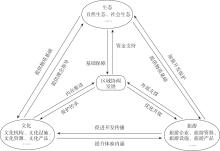
图1
系统协调发展机理"
表1
系统综合发展评价指标体系"
| 子系统 | 一级指标 | 二级指标 | 指标 性质 |
|---|---|---|---|
| 生态 | 自然生态 | 废水排放量/104 t | 负 |
| SO2排量/104 t | 负 | ||
| 固体废物产生量/104 t | 负 | ||
| 森林覆盖率/% | 正 | ||
| 本年新增水土流失治理面积/103 hm2 | 正 | ||
| 社会生态 | 全体居民人均可支配收入/元 | 正 | |
| 每万人拥有卫生技术人员数/人 | 正 | ||
| 每万人拥有公共交通车辆/标台 | 正 | ||
| 教育经费占GDP比重/% | 正 | ||
| 城镇登记失业率/% | 负 | ||
| 城镇恩格尔系数/% | 负 | ||
| 旅游 | 基础规模 | 旅行社数量/个 | 正 |
| 星级饭店数量/个 | 正 | ||
| 旅游业从业人员数/人 | 正 | ||
| A级旅游景区质量水平/分 | 正 | ||
| 产业效应 | 国内旅游人次/104人 | 正 | |
| 入境旅游人次/104人 | 正 | ||
| 国内旅游收入/108元 | 正 | ||
| 国际旅游收入/108 USD | 正 | ||
| 旅游总收入占GDP比重/% | 正 | ||
| 文化 | 基础规模 | 博物馆数量/个 | 正 |
| 文化站数量/个 | 正 | ||
| 艺术表演场馆数量/个 | 正 | ||
| 文化从业人员数/人 | 正 | ||
| 国家级非物质文化遗产/个 | 正 | ||
| 中国历史文化名城名镇名村/个 | 正 | ||
| 产业效应 | 图书总印数/108册 | 正 | |
| 报纸出版总印数/108份 | 正 | ||
| 博物馆参观人次/104人 | 正 | ||
| 公共图书馆总流通人次/104人 | 正 | ||
| 艺术表演团体国内演出观众人次/103人 | 正 |
表2
耦合协调度等级划分"
| 耦合协调度 | 协调类型 | 协调等级 | 耦合协调度 | 协调类型 | 协调等级 |
|---|---|---|---|---|---|
| [0.0, 0.1) | 失调阶段 | 极度失调 | [0.6, 0.7) | 协调阶段 | 初级协调 |
| [0.1, 0.2) | 严重失调 | [0.7, 0.8) | 中级协调 | ||
| [0.2, 0.3) | 中度失调 | [0.8, 0.9) | 良好协调 | ||
| [0.3, 0.4) | 轻度失调 | [0.9, 1.0] | 优质协调 | ||
| [0.4, 0.5) | 过渡阶段 | 濒临失调 | |||
| [0.5, 0.6) | 勉强协调 |
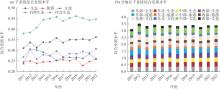
图2
系统综合发展水平"
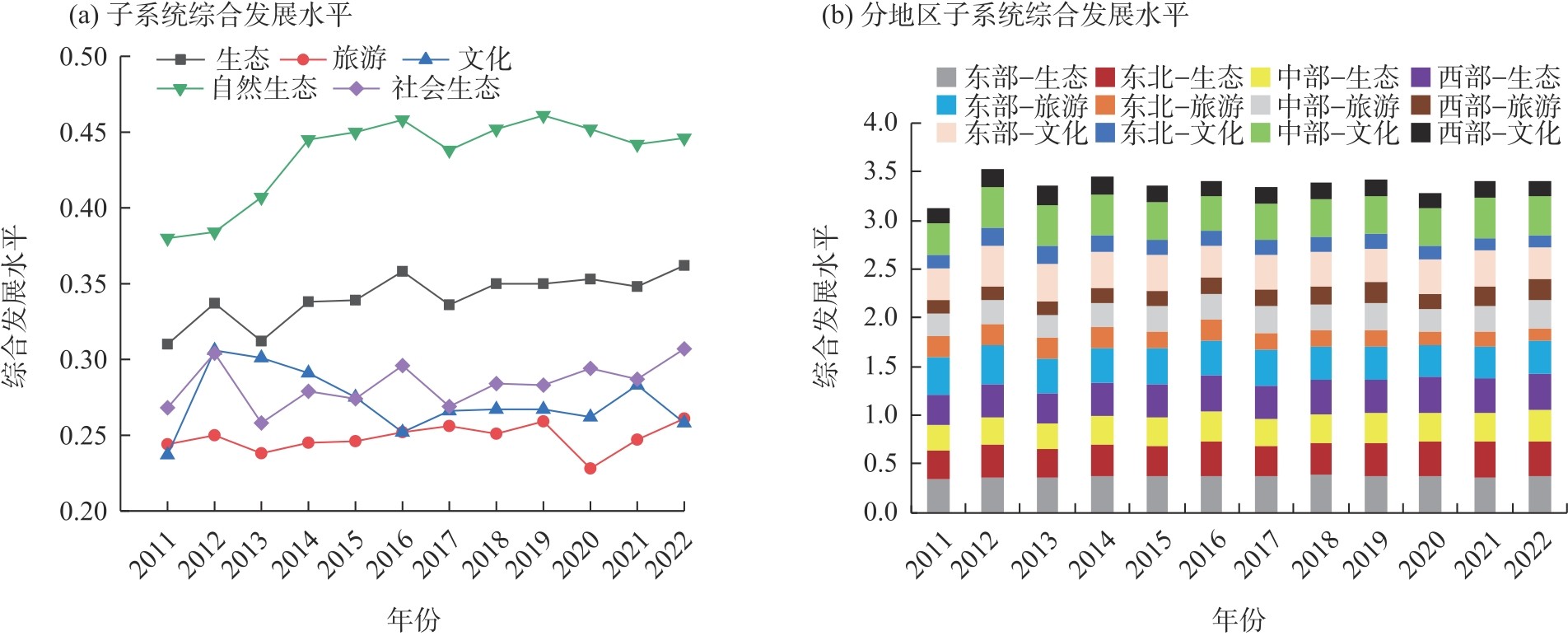
图3
系统耦合协调度演化"
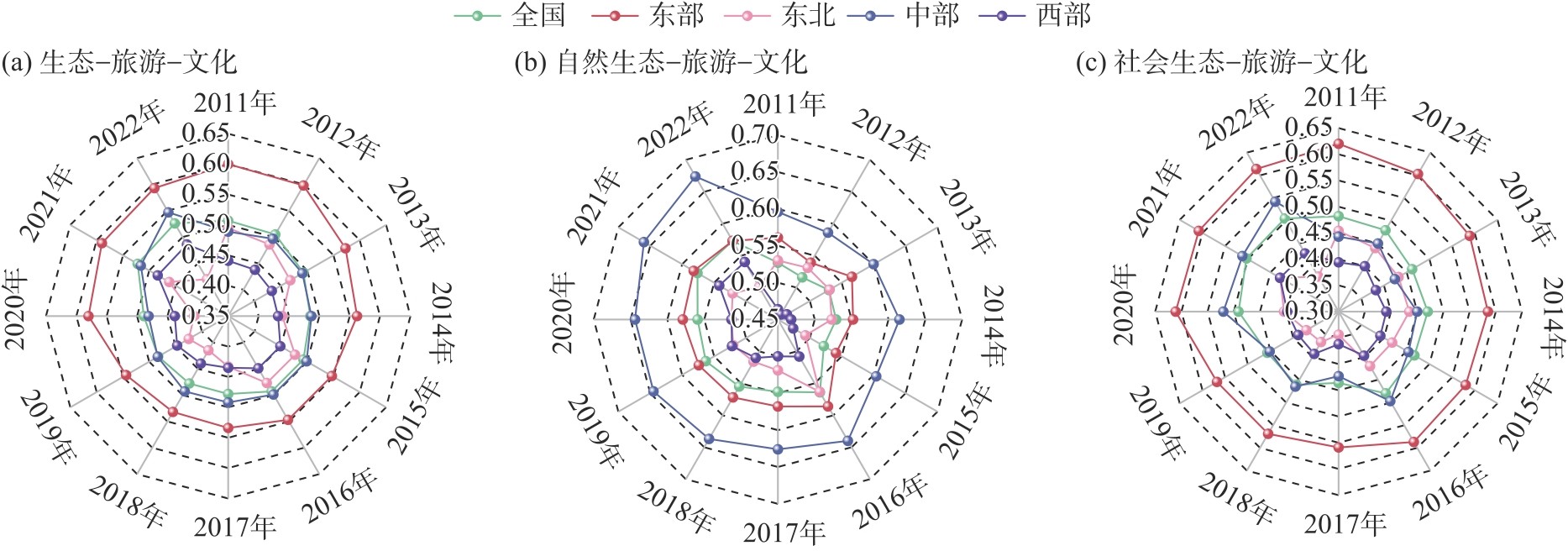
图4
系统协调类型空间分布特征"

表3
系统协调发展影响因素的必要条件检验"
| 前因条件 | 高协调发展 | 非高协调发展 | |||
|---|---|---|---|---|---|
| 一致性 | 覆盖度 | 一致性 | 覆盖度 | ||
| 经济发展 | 0.741 | 0.736 | 0.576 | 0.611 | |
| 非经济发展 | 0.609 | 0.573 | 0.751 | 0.756 | |
| 政府支持 | 0.873 | 0.821 | 0.578 | 0.581 | |
| 非政府支持 | 0.555 | 0.551 | 0.822 | 0.874 | |
| 对外开放 | 0.726 | 0.791 | 0.534 | 0.622 | |
| 非对外开放 | 0.653 | 0.567 | 0.820 | 0.762 | |
| 产业结构 | 0.655 | 0.707 | 0.607 | 0.700 | |
| 非产业结构 | 0.722 | 0.632 | 0.747 | 0.698 | |
| 市场需求 | 0.843 | 0.820 | 0.559 | 0.581 | |
| 非市场需求 | 0.569 | 0.547 | 0.827 | 0.849 | |
| 科技创新 | 0.749 | 0.852 | 0.483 | 0.588 | |
| 非科技创新 | 0.637 | 0.536 | 0.878 | 0.789 | |
表4
系统协调发展的组态路径"
| 前因条件 | 高协调发展 | 非高协调发展 | ||||||
|---|---|---|---|---|---|---|---|---|
| Y1 | Y2 | Y3 | Y4 | NY1 | NY2 | |||
| 经济发展 | $\cdot$ | $\cdot$ | $\otimes$ | $\bullet$ | $\otimes$ | |||
| 政府支持 | $\cdot$ | $\bullet$ | $\bullet$ | $\otimes$ | $\bigotimes$ | $\bigotimes$ | ||
| 对外开放 | $\otimes$ | $\otimes$ | $\cdot$ | $\otimes$ | ||||
| 产业结构 | $\bullet$ | $\bullet$ | $\bigotimes$ | |||||
| 市场需求 | $\cdot$ | $\cdot$ | $\otimes$ | $\bullet$ | $\otimes$ | $\otimes$ | ||
| 科技创新 | $\cdot$ | $\cdot$ | $\otimes$ | $\bullet$ | $\bigotimes$ | $\bigotimes$ | ||
| 一致性 | 0.955 | 0.992 | 0.977 | 0.952 | 0.921 | 0.913 | ||
| 原始覆盖率 | 0.396 | 0.497 | 0.316 | 0.278 | 0.673 | 0.623 | ||
| 唯一覆盖率 | 0.052 | 0.206 | 0.098 | 0.023 | 0.086 | 0.037 | ||
| 总体解的覆盖率 | 0.724 | 0.710 | ||||||
| 总体解的一致性 | 0.961 | 0.918 | ||||||
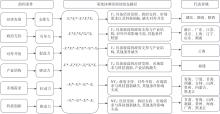
图5
系统协调发展的组态路径解析 注:X1~X6为条件变量;Y1~Y4为高协调发展组态路径;NY1~NY2为非高协调发展组态路径。"
| [1] | Zhang K L, Yang Y R, Wan J J, et al. Coupling synergy level and interaction effect between the ecological environment and low-carbon development in the Yangtze River Delta urban agglomeration: Characteristics of spatial and temporal heterogeneity[J]. Ecological Indicators, 2024, 166: 112535, doi: 10.1016/j.ecolind.2024.112535. |
| [2] |
贾垚焱, 胡静, 刘大均, 等. 中国省域生态-文化-旅游协调发展时空分异及影响因素研究[J]. 世界地理研究, 2021, 30(3): 620-631.
doi: 10.3969/j.issn.1004-9479.2021.03.2019559 |
|
[Jia Yaoyan, Hu Jing, Liu Dajun, et al. Spatial-temporal pattern of the coordinated development of ecology-culture-tourism of China’s provinces[J]. World Regional Studies, 2021, 30(3): 620-631.]
doi: 10.3969/j.issn.1004-9479.2021.03.2019559 |
|
| [3] | 金波, 王如渊, 蔡运龙. 生态旅游概念的发展及其在中国的应用[J]. 生态学杂志, 2001, 20(3): 56-59. |
| [Jin Bo, Wang Ruyuan, Cai Yunlong. Ecotourism’s origin and its application in China[J]. Chinese Journal of Ecology, 2001, 20(3): 56-59.] | |
| [4] | 耿瑞芹, 栾志理. 我国省域旅游业与生态环境耦合协调度的时空演变[J]. 中南林业科技大学学报, 2022, 42(8): 191-201. |
| [Geng Ruiqin, Luan Zhili. A statistical measurement of the coupling and coordinative development of China’s provincial tourism industry and the ecological environment[J]. Journal of Central South University of Forestry & Technology, 2022, 42(8): 191-201.] | |
| [5] |
张潇, 陆林, 张海洲, 等. 中国高原生态旅游发展潜力评价[J]. 经济地理, 2021, 41(8): 195-203.
doi: 10.15957/j.cnki.jjdl.2021.08.023 |
| [Zhang Xiao, Lu Lin, Zhang Haizhou, et al. Evaluation of China’s plateau ecotourism development potential[J]. Economic Geography, 2021, 41(8): 195-203.] | |
| [6] | 刘庆芳, 王兆峰. 武陵山片区生态旅游潜力及其空间异质性研究[J]. 山地学报, 2021, 39(4): 563-575. |
| [Liu Qingfang, Wang Zhaofeng. The potential and spatial heterogeneity of ecotourism in the Wuling Mountain area, China[J]. Mountain Research, 2021, 39(4): 563-575.] | |
| [7] | 王冠, 张凯, 刘静. 低碳绿色发展理念下的生态旅游产业结构经济增长方式研究[J]. 西南大学学报(自然科学版), 2023, 45(8): 12-20. |
| [Wang Guan, Zhang Kai, Liu Jing. Study on economic gr-owth mode of ecotourism industry structure under the concept of low carbon green development[J]. Journal of Southwest University (Natural Science Edition), 2023, 45(8): 12-20.] | |
| [8] | Barman J, Halder S, Das J, et al. Sustainable ecotourism suitability assessment using the intergraded TOPSIS model in the state of Mizoram, India[J]. Sustainability, 2024, 16(24): 11066, doi: 10.33-90/SU162411066. |
| [9] | Šebová M, Džupka P, Hudec O, et al. Promoting and financing cultural tourism in Europe through European capitals of culture: A case study of Košice, European capital of culture 2013[J]. Amfiteatru Economic, 2014, 16(36): 655-670. |
| [10] | Haigh M. Cultural tourism policy in developing regions: The case of Sarawak, Malaysia[J]. Tourism Management, 2020, 81: 104166, doi: 10.1016/j.tourman.2020.104166. |
| [11] |
孙剑锋, 李世泰, 纪晓萌, 等. 山东省文化资源与旅游产业协调发展评价与优化[J]. 经济地理, 2019, 39(8): 207-215.
doi: 10.15957/j.cnki.jjdl.2019.08.025 |
|
[Sun Jianfeng, Li Shitai, Ji Xiaomeng, et al. Coupling analysis and optimization measures of cultural resources endowment and tourism industry in Shandong[J]. Economic Geography, 2019, 39(8): 207-215.]
doi: 10.15957/j.cnki.jjdl.2019.08.025 |
|
| [12] |
朱媛媛, 周笑琦, 顾江, 等. 长江中游城市群“文—旅”产业融合发展的空间效应及驱动机制研究[J]. 地理科学进展, 2022, 41(5): 785-796.
doi: 10.18306/dlkxjz.2022.05.004 |
|
[Zhu Yuanyuan, Zhou Xiaoqi, Gu Jiang, et al. Spatial effect and driving mechanism of the integrated development of culture-tourism industries in the middle Yangtze River Basin urban agglomeration[J]. Progress in Geography, 2022, 41(5): 785-796.]
doi: 10.18306/dlkxjz.2022.05.004 |
|
| [13] |
殷为华, 刘楠楠, 鲁飞宇. 长江经济带文旅产业融合发展水平测度及空间演化研究[J]. 世界地理研究, 2022, 31(5): 1009-1020.
doi: 10.3969/j.issn.1004-9479.2022.05.2020691 |
|
[Yin Weihua, Liu Nannan, Lu Feiyu. Cultural industry and tourism’s integrated development and its spatial evolution in the Yangtze River Economic Belt[J]. World Regional Studies, 2022, 31(5): 1009-1020.]
doi: 10.3969/j.issn.1004-9479.2022.05.2020691 |
|
| [14] | 杨秀平, 刘利利, 贾云婷, 等. 半干旱河谷型城市兰州旅游产业与文化产业融合协调发展研究[J]. 生态科学, 2021, 40(5): 206-214. |
| [Yang Xiuping, Liu Lili, Jia Yunting, et al. System dynamics simulation of the integrated and coordinated development of tourism industry and cultural industry in Lanzhou City[J]. Ecological Science, 2021, 40(5): 206-214.] | |
| [15] |
徐晓亮, 刘旭义, 关靖云, 等. 中国西部边疆民族地区文旅融合高质量发展时空演化及驱动因素分析[J]. 干旱区地理, 2024, 47(9): 1596-1605.
doi: 10.12118/j.issn.1000-6060.2023.623 |
|
[Xu Xiaoliang, Liu Xuyi, Guan Jingyun, et al. Spatiotemporal evolution and driving factors of high-quality development of cultural and tourism integration in border ethnic areas in western China[J]. Arid Land Geography, 2024, 47(9): 1596-1605.]
doi: 10.12118/j.issn.1000-6060.2023.623 |
|
| [16] | Zhu H, Xie C W, Zhang J C. Evaluation of the development level of integration of culture and tourism in China’s provinces under the perspective of spatial interaction and study of influence paths[J]. Sustainability, 2024, 16(5): 1756, doi: 10.3390/su16051756. |
| [17] | 李丽, 徐佳. 中国文旅产业融合发展水平测度及其驱动因素分析[J]. 统计与决策, 2020, 36(20): 49-52. |
| [Li Li, Xu Jia. Measurement of the level of integrated development of China’s cultural and tourism industry and analysis of its driving factors[J]. Statistics & Decision, 2020, 36(20): 49-52.] | |
| [18] |
吴丽, 梁皓, 虞华君, 等. 中国文化和旅游融合发展空间分异及驱动因素[J]. 经济地理, 2021, 41(2): 214-221.
doi: 10.15957/j.cnki.jjdl.2021.02.023 |
|
[Wu Li, Liang Hao, Yu Huajun, et al. Spatial differentiation and driving factors of the integrated development of culture and tourism in China[J]. Economic Geography, 2021, 41(2): 214-221.]
doi: 10.15957/j.cnki.jjdl.2021.02.023 |
|
| [19] |
张新成, 王琳艳, 高楠. 山西省乡村文化和旅游公共服务融合发展成效评价及驱动路径研究[J]. 干旱区地理, 2024, 47(6): 1036-1046.
doi: 10.12118/j.issn.1000-6060.2023.372 |
|
[Zhang Xincheng, Wang Linyan, Gao Nan. Evaluation of effectiveness and pathways for integrated development of rural cultural and tourism public services in Shanxi Province[J]. Arid Land Geography, 2024, 47(6): 1036-1046.]
doi: 10.12118/j.issn.1000-6060.2023.372 |
|
| [20] | 徐美, 刘春腊, 潘恺晨. 湘西传统村镇文化景观保护与生态补偿的协同途径及影响因素[J]. 中南林业科技大学学报(社会科学版), 2020, 14(5): 108-115. |
| [Xu Mei, Liu Chunla, Pan Kaichen. Synergistic approaches and influencing factors of cultural landscape protection and eco-compensation in traditional villages and towns of Xiangxi[J]. Journal of Central South University of Forestry & Technology (Social Sciences Edition), 2020, 14(5): 108-115.] | |
| [21] | 黄孝慧. 马克思主义生态观视域下贵州传统生态文化的价值探究[J]. 贵州民族研究, 2022, 43(4): 127-131. |
| [Huang Xiaohui. On the analysis of the value of traditional ecological culture in Guizhou from the perspective of Marxist ecological thought[J]. Guizhou Ethnic Studies, 2022, 43(4): 127-131.] | |
| [22] | 张仲伍, 苏雨冉, 胡世雄. 黄河流域生态-旅游-文化耦合协调及驱动因素研究[J]. 河南师范大学学报(自然科学版), 2023, 51(3): 32-41. |
| [Zhang Zhongwu, Su Yuran, Hu Shixiong. Research on the coordination and driving factors of ecological-tourism-culture coupling in the Yellow River Basin[J]. Journal of Henan Normal University (Natural Science Edition), 2023, 51(3): 32-41.] | |
| [23] | Lu M D, Duan Y F, Wu X M. Evaluation of the coupling and coordination degree of eco-cultural tourism system in the Jiangsu-Zhejiang-Shanghai-Anhui region[J]. Ecological Indicators, 2023, 156: 111180, doi: 10.1016/j.ecolind.2023.111180. |
| [24] |
厉建梅, 单梦琦, 齐佳. 大运河文化带沿线城市文化-生态-旅游耦合协调发展[J]. 经济地理, 2022, 42(10): 201-207.
doi: 10.15957/j.cnki.jjdl.2022.10.023 |
|
[Li Jianmei, Shan Mengqi, Qi Jia. Coupling coordination development of culture-ecology-tourism in cities along the Grand Canal Cultural Belt[J]. Economic Geography, 2022, 42(10): 201-207.]
doi: 10.15957/j.cnki.jjdl.2022.10.023 |
|
| [25] | 董琳. 旅游-生态-文化耦合协调发展水平及其影响因素[J]. 统计与决策, 2022, 38(12): 122-125. |
| [Dong Lin. The level of coordinated development of tourism-ecology-culture coupling and its influencing factors[J]. Statistics & Decision, 2022, 38(12): 122-125.] | |
| [26] | 王雨婷, 沈正平, 李永乐. 淮海经济区文化-生态-旅游耦合协调发展的时空演化及驱动因素[J]. 江苏师范大学学报(自然科学版), 2024, 42(1): 1-7. |
| [Wang Yuting, Shen Zhengping, Li Yongle. Spatiotemporal dynamics and determinants of the culture-ecology-tourism coordinated development in Huaihai Economic Zone[J]. Journal of Jiangsu Normal University (Natural Science Edition), 2024, 42(1): 1-7.] | |
| [27] | 郭宇, 姚亦锋, 鄢继尧, 等. 中国五批3610个国家级非物质文化遗产空间分布数据集[J]. 全球变化数据学报(中英文), 2022, 6(2): 257-264, 429-436. |
| [Guo Yu, Yao Yifeng, Yan Jiyao, et al. Spatial dataset of 3610 items of China’s national intangible cultural heritage in five packages[J]. Journal of Global Change Data & Discovery, 2022, 6(2): 257-264, 429-436.] | |
| [28] | 何成军, 李晓琴. 乡村民宿聚落化发展系统构成及动力机制——以四川省丹巴县甲居藏寨为例[J]. 地域研究与开发, 2021, 40(2): 174-180. |
| [He Chengjun, Li Xiaoqin. System structure and dynamic mechanism of rural homestay settlement development: Taking Jiaju Tibetan Village in Danba County of Sichuan Province as example[J]. Areal Research and Development, 2021, 40(2): 174-180.] | |
| [29] | 江贤英, 杨正, 徐圣, 等. 基于实证的社会生态评价指标的变量选择[J]. 统计与决策, 2016, 32(11): 35-37. |
| [Jiang Xianying, Yang Zheng, Xu Sheng, et al. Variable selection based on empirical social ecological evaluation indicators[J]. Statistics & Decision, 2016, 32(11): 35-37.] | |
| [30] | 余中元, 李波, 张新时. 社会生态系统及脆弱性驱动机制分析[J]. 生态学报, 2014, 34(7): 1870-1879. |
| [Yu Zhongyuan, Li Bo, Zhang Xinshi. Social ecological system and vulnerability driving mechanism analysis[J]. Acta Ecologica Sinica, 2014, 34(7): 1870-1879.] | |
| [31] | 刘海霞, 马立志. 我国传统文化中生态智慧的现实意蕴[J]. 学术探索, 2017(7): 121-126. |
| [Liu Haixia, Ma Lizhi. The realistic meaning of ecological wisdom in traditional Chinese culture[J]. Academic Exploration, 2017(7): 121-126.] | |
| [32] | 汪嘉杨, 宋培争, 张碧, 等. 社会-经济-自然复合生态系统生态位评价模型——以四川省为例[J]. 生态学报, 2016, 36(20): 6628-6635. |
| [Wang Jiayang, Song Peizheng, Zhang Bi, et al. An ecological niche evaluation model of social, economic, and natural complex ecosystems: A case study in Sichuan Province[J]. Acta Ecologica Sinica, 2016, 36(20): 6628-6635.] | |
| [33] | 陈红玲, 张猛, 赖姝辰. 组态视角下旅游经济效率动因及提升路径研究——基于中国30个省份的fsQCA分析[J]. 资源开发与市场, 2022, 38(10): 1175-1182. |
| [Chen Hongling, Zhang Meng, Lai Shuchen. Research on the motivation and improvement path of tourism efficiency from the perspective of configuration: FsQCA analysis based on 30 provinces in China[J]. Resource Development & Market, 2022, 38(10): 1175-1182.] | |
| [34] |
杨丽花, 雷欣, 白翠玲, 等. 河北省乡村旅游促进乡村产业振兴路径分析[J]. 地理科学, 2024, 44(8): 1396-1405.
doi: 10.13249/j.cnki.sgs.20240122 |
| [Yang Lihua, Lei Xin, Bai Cuiling, et al. Path of promoting rural industry revitalization through rural tourism in Hebei Province[J]. Geographical Science, 2024, 44(8): 1396-1405.] | |
| [35] | 李怡洁, 刘亚男, 杨晓霞. 我国国家级夜间文化和旅游消费集聚区的空间分布特征与组态影响因素[J]. 商业经济研究, 2023(23): 46-50. |
| [Li Yijie, Liu Yanan, Yang Xiaoxia. The spatial distribution characteristics and configuration influencing factors of national nighttime cultural and tourism consumption clusters in China[J]. Journal of Commercial Economics, 2023(23): 46-50.] | |
| [36] | 张远记, 韩存. 数字经济驱动黄河流域高质量发展路径研究——基于TOE框架的动态QCA分析[J]. 经济体制改革, 2024(2): 25-32. |
| [Zhang Yuanji, Han Cun. Research on the path of high quality development of the Yellow River Basin driven by digital economy: Dynamic QCA analysis based on TOE framework[J]. Reform of Economic System, 2024(2): 25-32.] |
| [1] | 李玲燕, 王萌萌, 夏浩鸣, 段蜜蜜. 中国西北生态脆弱区农户清洁能源使用的脆弱性及影响因素[J]. 干旱区地理, 2026, 49(1): 164-175. |
| [2] | 郑孟林, 赵勇, 杨霞. 中国西北干旱区夏季降水异常的主模态年代际变化及其联系环流[J]. 干旱区地理, 2025, 48(9): 1511-1520. |
| [3] | 罗小梅, 文琦, 施琳娜, 吴昕燕, 安丰平, 王振亭. 多维视角下中国北方农牧交错带县域收缩识别及影响因素分析[J]. 干旱区地理, 2025, 48(7): 1267-1278. |
| [4] | 王逸菲, 孔德臻, 罗宇煊, 毛锦凰, 王梅梅. 人口增减分化对兰西城市群城市经济韧性的影响与作用路径[J]. 干旱区地理, 2025, 48(6): 1020-1030. |
| [5] | 邓光耀, 沈迎辰. 中国生态韧性关联网络的特征及影响因素研究[J]. 干旱区地理, 2025, 48(4): 704-716. |
| [6] | 郑孟林, 赵勇, 杨霞. 1961—2022年中国西北干旱区夏季降水变化特征[J]. 干旱区地理, 2025, 48(3): 367-379. |
| [7] | 付晓, 黄颖敏. 主体功能视角下中国革命老区高质量发展空间格局及影响因素[J]. 干旱区地理, 2025, 48(3): 517-527. |
| [8] | 田晋华, 黄枭, 高雅玉, 郝建斌, 吴冠衡, 何文博. 中国西北干旱生态移民区跨流域调水生态效益研究——以黄花滩生态移民区为例[J]. 干旱区地理, 2025, 48(11): 1926-1938. |
| [9] | 王宁宁, 王勤升, 肖可. 中国式现代化与新基建共生关系演化研究[J]. 干旱区地理, 2025, 48(1): 105-118. |
| [10] | 朱磊, 李燕楠, 徐佳慧, 胡静, 朱芳, 梁茫茫. 中国冰雪旅游地空间分布格局及成因[J]. 干旱区地理, 2024, 47(8): 1399-1410. |
| [11] | 朱瑷嫒, 殷颂葵, 刘琼慧. 中国西北地区农业生态效率时空分异及影响因素研究[J]. 干旱区地理, 2024, 47(7): 1210-1219. |
| [12] | 唐宇, 薛东前, 宋永永, 叶昊, 王莎. 中国夜间文旅消费集聚区空间格局及影响机理[J]. 干旱区地理, 2024, 47(3): 485-495. |
| [13] | 周霞, 王佳. 中国省域经济韧性与生态效率测度及其协同演化分析[J]. 干旱区地理, 2024, 47(2): 319-331. |
| [14] | 黄娇, 陈海, 王佳宇, 白晓娟. 区域社会-生态系统恢复力协调发展时空演变研究——以陕西省为例[J]. 干旱区地理, 2024, 47(2): 343-355. |
| [15] | 钟洋, 孔令宇, 董秀军. 基于CiteSpace和VOSviewer的区域协调发展的研究进展与展望[J]. 干旱区地理, 2024, 47(12): 2135-2151. |
|
||

