干旱区地理 ›› 2025, Vol. 48 ›› Issue (11): 2019-2030.doi: 10.12118/j.issn.1000-6060.2024.573 cstr: 32274.14.ALG2024573
林墨飞( ), 关雅文(), 连艺霏
收稿日期:2024-09-22
修回日期:2024-11-30
出版日期:2025-11-25
发布日期:2025-11-26
通讯作者:
关雅文(2000-),女,硕士研究生,主要从事环境设计等方面的研究. E-mail: guanyawen0057@163.com作者简介:林墨飞(1977-),男,博士,教授,主要从事城乡规划等方面的研究. E-mail: murphylinlu@dlut.edu.cn
基金资助:
LIN Mofei(), GUAN Yawen(), LIAN Yifei
Received:2024-09-22
Revised:2024-11-30
Published:2025-11-25
Online:2025-11-26
摘要: 生态脆弱性评价是区域发展规划和生态治理修复的基础。基于遥感数据和社会经济统计数据,引入生态系统服务价值中的生态功能指标,选取18个评价指标,利用敏感性-恢复力-压力度(SRP)模型构建生态脆弱性评价指标体系,结合层次分析-熵权法,揭示2000—2020年塔里木胡杨林公园生态脆弱性时空演变特征与驱动因素。结果表明:(1)2020年塔里木胡杨林公园生态脆弱性指数均值为0.30,生态脆弱性整体处于轻度水平,具体呈“东、西部边缘和中部高,东南部低”的分布特征。(2)2000、2010、2015年和2020年塔里木胡杨林公园生态脆弱性指数分别为0.33、0.47、0.29和0.30,生态脆弱性呈波动下降趋势,具体表现为“显著恶化-逐步改善-再度退化”,其中生态脆弱性等级下降区域占44.52%,等级上升区域占28.60%。(3)2000—2020年塔里木胡杨林公园生态脆弱性的全局莫兰指数均大于0,Z值大于2.58,P值小于0.01,说明公园生态脆弱性具有显著空间正相关性,以低-低聚集和高-高聚集为主。(4)单因子指标中水体变化程度、沙漠化程度、水源涵养和植被指数是塔里木胡杨林公园生态脆弱性的主要驱动力。各因子间交互作用呈非线性增强和双因子增强关系,其中水体变化程度与水源涵养的协同效应对公园生态脆弱性驱动力最大。研究结果可为塔里木胡杨林公园生态环境的修复保护和可持续发展提供科学参考。
林墨飞, 关雅文, 连艺霏. 基于SRP模型的塔里木胡杨林公园生态脆弱性研究[J]. 干旱区地理, 2025, 48(11): 2019-2030.
LIN Mofei, GUAN Yawen, LIAN Yifei. Ecological vulnerability assessment of Tarim Populus euphratica Forest Park based on SRP model[J]. Arid Land Geography, 2025, 48(11): 2019-2030.
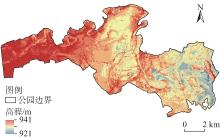
图1
研究区示意图"
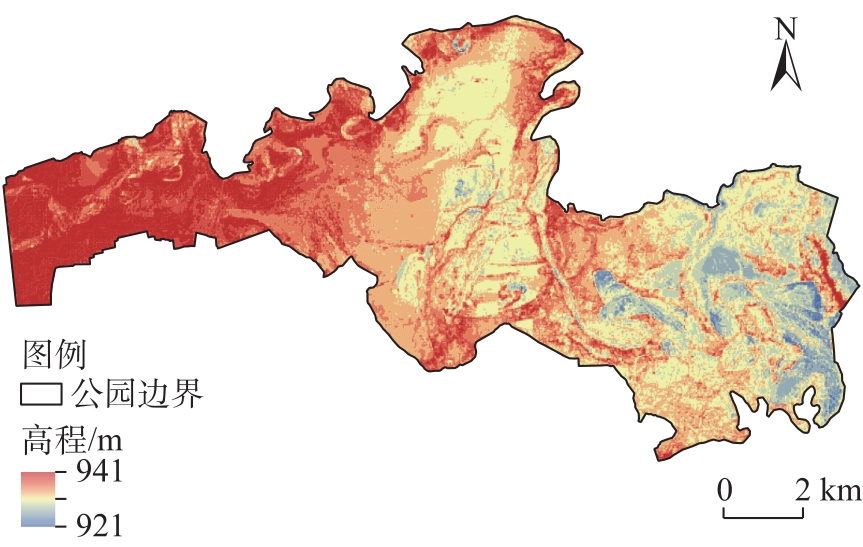
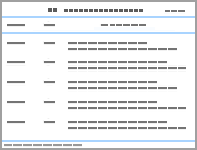
表1
评价指标数据来源"
| 数据名称 | 分辨率 | 数据来源 |
|---|---|---|
| 遥感影像 | 30 m | 地理空间数据云( |
| 高程数据 | 30 m | 欧洲航天局( |
| 土地覆盖数据 | 30 m | 中国科学院资源环境科学数据中心( |
| 气象数据 | 1 km | 中国科学院资源环境科学数据中心( |
| 植被数据 | 30 m | 中国科学院资源环境科学数据中心( |
| 社会经济数据 | 1 km | 中国科学院资源环境科学数据中心( |
| 人口密度数据 | 1 km | WordPop( |
| 道路水系数据 | - | 开源地图数据库( |
| 森林生态系统数据 | - | 中国生态系统评估与生态安全格局数据库( |
表2
评价指标体系"
| 目标层 | 标准层 | 特征层 | 指标 | 方向 |
|---|---|---|---|---|
| 生态脆弱性 | 敏感性 | 地形因子 | 高程 | 正向 |
| 坡度 | 正向 | |||
| 地形起伏度 | 正向 | |||
| 地表因子 | 土地利用 | 定性 | ||
| 沙漠化程度 | 正向 | |||
| 水体变化程度 | 负向 | |||
| 气象因子 | 年均降水量 | 负向 | ||
| 年均气温 | 负向 | |||
| 年均蒸发量 | 正向 | |||
| 恢复力 | 活力因子 | 植被指数 | 负向 | |
| 植被生产力 | 负向 | |||
| 水网密度 | 正向 | |||
| 功能因子 | 生物多样性 | 负向 | ||
| 水源涵养 | 负向 | |||
| 水土保持 | 负向 | |||
| 压力度 | 社会因子 | 人口密度 | 正向 | |
| 人均GDP | 正向 | |||
| 公路密度 | 正向 |
表3
层次分析-熵权法综合权重"
| 指标 | 层次分析法权重 | 熵权法权重 | 综合权重 |
|---|---|---|---|
| 高程 | 0.0130 | 0.0085 | 0.0107 |
| 坡度 | 0.0237 | 0.0516 | 0.0377 |
| 地形起伏度 | 0.0342 | 0.0268 | 0.0305 |
| 土地利用 | 0.1219 | 0.0460 | 0.0839 |
| 沙漠化程度 | 0.1219 | 0.0479 | 0.0849 |
| 水体变化程度 | 0.0151 | 0.3869 | 0.2010 |
| 年均降水量 | 0.0348 | 0.0132 | 0.0240 |
| 年均气温 | 0.0256 | 0.0133 | 0.0195 |
| 年均蒸发量 | 0.0480 | 0.0128 | 0.0304 |
| 植被指数 | 0.0847 | 0.0069 | 0.0458 |
| 植被生产力 | 0.1121 | 0.0072 | 0.0596 |
| 水网密度 | 0.0225 | 0.0082 | 0.0153 |
| 生物多样性 | 0.0686 | 0.0215 | 0.0450 |
| 水源涵养 | 0.0822 | 0.0363 | 0.0593 |
| 水土保持 | 0.0529 | 0.0089 | 0.0309 |
| 人口密度 | 0.0155 | 0.0946 | 0.0551 |
| 人均GDP | 0.0109 | 0.0330 | 0.0219 |
| 公路密度 | 0.1124 | 0.1764 | 0.1444 |
表4
生态脆弱性分级标准"
| 等级 | 取值范围 | 生态特征 |
|---|---|---|
| 微度 | [0.00, 0.22) | 生态系统稳定,抗干扰能力及恢复能力强,生态脆弱性低 |
| 轻度 | [0.22, 0.32) | 生态系统较稳定,抗干扰能力及恢复能力较强,生态脆弱较性较低 |
| 中度 | [0.32, 0.42) | 生态系统较不稳定,抗干扰能力及恢复能力较弱,生态脆弱性较高 |
| 重度 | [0.42, 0.55) | 生态系统不稳定,抗干扰能力及恢复能力弱,生态脆弱性高 |
| 极度 | [0.55, 1.00] | 生态系统极不稳定,抗干扰能力及恢复能力差,生态脆弱性极高 |
表5
交互作用类型"
| 依据 | 交互作用 |
|---|---|
| 非线性减弱 | |
| 单因子非线性减弱 | |
| 双因子增强 | |
| 独立 | |
| 非线性增强 |

图2
生态脆弱性评价结果"

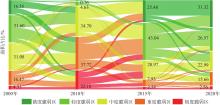
图3
2000—2020年生态脆弱性等级转移变化"
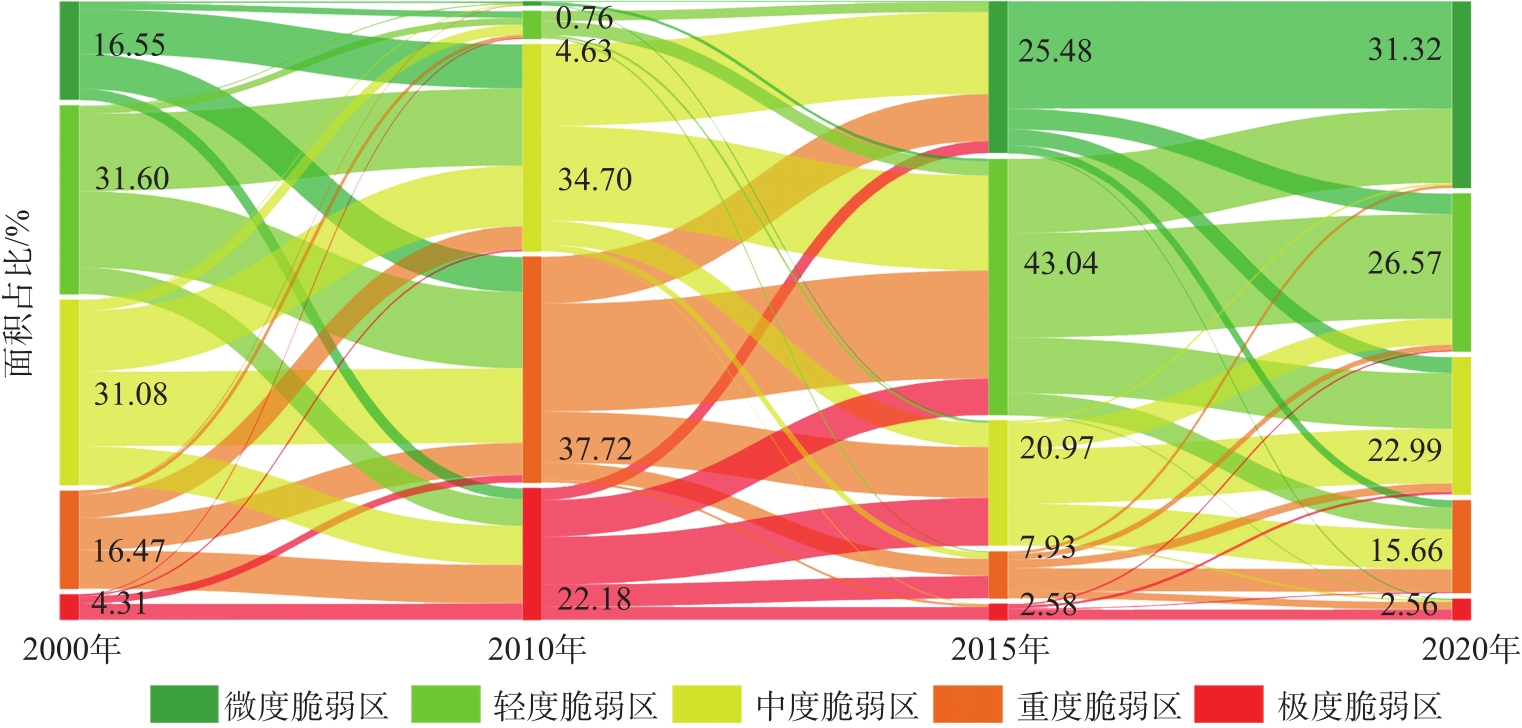
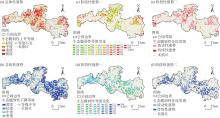
图4
生态脆弱性涨势、落势分布 注:等级变化的三位数依次为2010、2015年和2020年的生态脆弱性等级。"


图5
生态脆弱性聚类图"

图6
单因子探测结果 注:q为解释力指数。下同。"
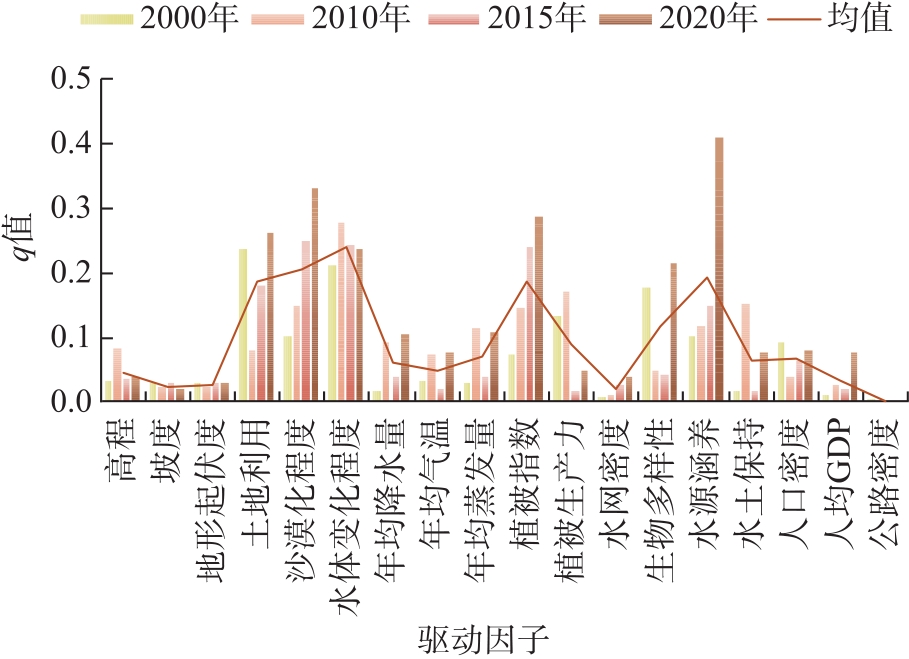
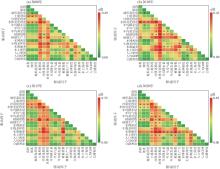
图7
驱动因子的交互作用 注:*表示因子间为双因子增强交互作用,其他为非线性增强。"

| [1] | 习近平. 高举中国特色社会主义伟大旗帜为全面建设社会主义现代化国家而团结奋斗[N]. 人民日报, 2022-10-26(001). |
| [Xi Jinping. Hold high the great banner of socialism with Chinese characteristics and strive in unity to build a modern socialist country in all respects[N]. People’s Daily, 2022-10-26(001). ] | |
| [2] | 新华社. 中华人民共和国国民经济和社会发展第十四个五年规划和2035年远景目标纲要[EB/OL]. [2021-03-13]. https://www.gov.cn/xinwen/2021-03/13/content_5592681.htm. |
| [Xinhua News Agency. Outline of the 14th Five-Year Plan (2021—2025) for national economic and social development and the long-range objectives through the year 2035 of the People’s Republic of China[EB/OL]. [2021-03-13]. https://www.gov.cn/xinwen/2021-03/13/content_5592681.htm.] | |
| [3] | 李文生. 流域水资源承载力及水循环评价研究[D]. 大连: 大连理工大学, 2008. |
| [Li Wensheng. Research on water resources carrying capacity and water cycle evaluation of river basin[D]. Dalian: Dalian University of Technology, 2008. ] | |
| [4] | 中华人民共和国自然资源部. 自然资源部资源环境承载能力和国土空间开发适宜性评价指南(试行)[EB/OL]. [2020-01-19]. https://gi.mnr.gov.cn/202001/t20200121_2498502.html. |
| [Ministry of Natural Resources, People’s Republic of China. Ministry of Natural Resources guidelines for evaluating resource and environmental carrying capacity and suitability for territorial space development (trial implementation)[EB/OL]. [2020-01-19]. https://gi.mnr.gov.cn/202001/t20200121_2498502.html.] | |
| [5] | 国家林业和草原局. 北方防沙带生态保护和修复重大工程建设规划(2021—2035年)[EB/OL]. [2021-12-30]. https://www.forestry.gov.cn/main/5461/20220110/163049386831091.html. |
| [National Forestry and Grassland Administration. Construction plan for major ecosystem protection and restoration projects in the northern sand prevention belts(2021—2035)[EB/OL]. [2021-12-30]. https://www.forestry.gov.cn/main/5461/20220110/163049386831091.html.] | |
| [6] | Clements F C. Research methods in ecology[M]. Lincoln: University Publishing Corporation, 1905. |
| [7] | 商彦蕊. 自然灾害综合研究的新进展——脆弱性研究[J]. 地域研究与开发, 2000(2): 73-77. |
| [Shang Yanrui. Vulnerability study: The new development of synthetized study on natural disasters[J]. Areal Research and Development, 2000(2): 73-77. ] | |
| [8] | Basak D, Bose A, Roy S, et al. Chapter 17-understanding the forest cover dynamics and its health status using GIS-based analytical hierarchy process: A study from Alipurduar District, west Bengal, India[M]. Science of Sustainable Systems, 2023, 1: 475-508. |
| [9] | Das U, Behera B. Geospatial assessment of ecological vulnerability of fragile eastern Duars forest integrating GIS-based AHP, CRITIC and AHP-TOPSIS models[J]. Geomatics, Natural Hazards and Risk, 2024, 15(1): 2330529, doi: 10.1080/19475705.2024.233-0529. |
| [10] | Venkatesh K, John R, Chen J, et al. Optimal ranges of social-environmental drivers and their impacts on vegetation dynamics in Kazakhstan[J]. Science of the Total Environment, 2022, 847: 157562, doi: 10.1016/j.scitotenv.2022.157562. |
| [11] | 牛文元. 生态环境脆弱带ECOTONE的基础判定[J]. 生态学报, 1989, 9(2): 97-105. |
| [Niu Wenyuan. The discriminatory index with regard to the weakness, overlapness, and breadth of ecotone[J]. Acta Ecological Sinica, 1989, 9(2): 97-105. ] | |
| [12] | 马丽莎, 郑江华, 彭建, 等. 新疆生态脆弱性特征及其驱动力[J]. 生态学报, 2024, 44(20): 9053-9066. |
| [Ma Lisha, Zheng Jianghua, Peng Jian, et al. Research on the characteristics and driving forces of ecological vulnerability in Xinjiang[J]. Acta Ecologica Sinica, 2024, 44(20): 9053-9066. ] | |
| [13] |
陆海燕, 孙桂丽, 李路, 等. 基于VSD模型的新疆生态脆弱性评价[J]. 新疆农业科学, 2020, 57(2): 292-302.
doi: 10.6048/j.issn.1001-4330.2020.02.010 |
|
[Lu Haiyan, Sun Guili, Li Lu, et al. Ecological vulnerability assessment in Xinjiang based on VSD model[J]. Xinjiang Agricultural Sciences, 2020, 57(2): 292-302. ]
doi: 10.6048/j.issn.1001-4330.2020.02.010 |
|
| [14] | 张学渊, 魏伟, 周亮, 等. 西北干旱区生态脆弱性时空演变分析[J]. 生态学报, 2021, 41(12): 4707-4719. |
| [Zhang Xueyuan, Wei Wei, Zhou Liang, et al. Analysis on spatio-temporal evolution of ecological vulnerability in arid areas of northwest China[J]. Acta Ecologica Sinica, 2021, 41(12): 4707-4719. ] | |
| [15] | 王熙, 李建松, 刘权毅, 等. 基于SRP模型的新安江流域生态脆弱性评价[J]. 水生态学杂志, 2024, 45(2): 1-9. |
| [Wang Xi, Li Jiansong, Liu Quanyi, et al. Evaluation of ecological vulnerability in Xin’anjiang River Basin based on SRP modelling[J]. Journal of Hydroecology, 2024, 45(2): 1-9. ] | |
| [16] |
包微, 黄晓军, 纪王迪. 关中地区高温脆弱性评估及其时空变化研究[J]. 干旱区地理, 2024, 47(11): 1863-1875.
doi: 10.12118/j.issn.1000-6060.2023.691 |
|
[Bao Wei, Huang Xiaojun, Ji Wangdi. Evaluation of heat vulnerability and its spatial-temporal variation in the Guanzhong area[J]. Arid Land Geography, 2024, 47(11): 1863-1875. ]
doi: 10.12118/j.issn.1000-6060.2023.691 |
|
| [17] | Wang Z Y, Xiong H X, Zhang F W, et al. Sustainable development assessment of ecological vulnerability in arid areas under the influence of multiple indicators[J]. Journal of Cleaner Production, 2024, 436: 140629, doi: 10.1016/j.jclepro.2024.140629. |
| [18] | 岳笑, 张良侠, 周德成, 等. 干旱-半干旱典型生态脆弱区生态脆弱性时空演变及驱动因子分析[J]. 环境生态学, 2023, 5(6): 1-9, 14. |
| [Yue Xiao, Zhang Liangxia, Zhou Decheng, et al. Spatial-temporal variations and driving forces of the ecological vulnerability in the typical arid/semi-arid ecologically vulnerable areas[J]. Environmental Ecology, 2023, 5(6): 1-9, 14. ] | |
| [19] | 王鑫. 干旱区内陆河流域生态环境脆弱性演变规律研究[D]. 郑州: 华北水利水电大学, 2023. |
| [Wang Xin. Study on the evolution law of ecological vulnerability patterns of inland river basins in arid areas[D]. Zhengzhou: North China University of Water Resources and Electric Power, 2023. ] | |
| [20] | 李洪广, 周旭, 肖杨, 等. 基于SRP模型的西南喀斯特山区生态脆弱性时空变化特征[J]. 生态科学, 2021, 40(3): 238-246. |
| [Li Hongguang, Zhou Xu, Xiao Yang, et al. Temporal and spatial changes of ecological vulnerability in southwestern karst mountains based on SRP model[J]. Ecological Science, 2021, 40(3): 238-246. ] | |
| [21] |
卓静, 胡皓, 何慧娟, 等. 陕北黄土高原生态脆弱性时空变异及驱动因素分析[J]. 干旱区地理, 2023, 46(11): 1768-1777.
doi: 10.12118/j.issn.1000-6060.2023.027 |
|
[Zhuo Jing, Hu Hao, He Huijuan, et al. Spatiotemporal variation and driving factors of ecological vulnerability in the Loess Plateau of northern Shaanxi[J]. Arid Land Geography, 2023, 46(11): 1768-1777. ]
doi: 10.12118/j.issn.1000-6060.2023.027 |
|
| [22] | Zhang J X, Li H Y, Cao E J, et al. Assessment of ecological vulnerability in multi-scale and its spatial correlation: A case study of Bailongjiang Watershed in Gansu Province, China[J]. The Journal of Applied Ecology, 2018, 29(9): 2897-2906. |
| [23] | 刘佳茹. 2005—2018年祁连山生态脆弱性遥感评价研究[D]. 兰州: 西北师范大学, 2021. |
| [Liu Jiaru. Remote sensing evaluation of ecological vulnerability in Qilian Mountains from 2005 to 2018[D]. Lanzhou: Northwest Normal University, 2021. ] | |
| [24] | 宋川, 武胜利, 韩炜, 等. 森林公园生态旅游开发分析与评价——以塔里木胡杨林公园为例[J]. 咸阳师范学院学报, 2021, 36(6): 52-58. |
| [Song Chuan, Wu Shengli, Han Wei, et al. Analysis and evaluation of eco-tourism development in forest parks: A case study of Populus euphorbiae forest park in Tarim[J]. Journal of Xianyang Normal University, 2021, 36(6): 52-58. ] | |
| [25] | 王月健, 徐海量, 杨广. 塔里木河中游地区水土资源生态安全评价[J]. 西南大学学报(自然科学版), 2011, 33(11): 111-117. |
| [Wang Yuejian, Xu Hailiang, Yang Guang. Ecological security assessment of land and water resources in the region of the middle reaches of the Tarim River[J]. Journal of Southwest University (Natural Science Edition), 2011, 33(11): 111-117. ] | |
| [26] | 贾晶晶, 赵军, 王建邦, 等. 基于SRP模型的石羊河流域生态脆弱性评价[J]. 干旱区资源与环境, 2020, 34(1): 34-41. |
| [Jia Jingjing, Zhao Jun, Wang Jianbang, et al. Ecological vulnerability assessment of Shiyang River Basin based on SRP model[J]. Journal of Arid Land Resources and Environment, 2020, 34(1): 34-41. ] | |
| [27] |
孙桂丽, 陆海燕, 郑佳翔, 等. 新疆生态脆弱性时空演变及驱动力分析[J]. 干旱区研究, 2022, 39(1): 258-269.
doi: 10.13866/j.azr.2022.01.25 |
|
[Sun Guili, Lu Haiyan, Zheng Jiaxiang, et al. Spatio-temporal variation of ecological vulnerability in Xinjiang and driving force analysis[J]. Arid Zone Research, 2022, 39(1): 258-269. ]
doi: 10.13866/j.azr.2022.01.25 |
|
| [28] | 邰苏日嘎拉, 王永亮, 陈国栋, 等. 基于SRP模型的内蒙古鄂伦春地区生态脆弱性评价[J]. 中国地质, 2024, 51(1): 234-247. |
| [Tai Surigala, Wang Yongliang, Chen Guodong, et al. Ecological vulnerability assessment of Oroqen Region in the Inner Mongolia based on SRP model[J]. Geology in China, 2024, 51(1): 234-247. ] | |
| [29] | 王跃, 刘家福, 周林鹏, 等. 基于AHP-SPCA熵权模型的松花江流域生态脆弱性时空演变及预测[J]. 水土保持通报, 2023, 43(2): 212-219, 360. |
| [Wang Yue, Liu Jiafu, Zhou Linpeng, et al. Temporal and spatial evolution and prediction of ecological vulnerability in Songhua River Basin based on AHP-SPCA entropy weig-ht model[J]. Bulletin of Soil and Water Conservation, 2023, 43(2): 212-219, 360. ] | |
| [30] | 刘艳琦. 乌兰布和沙漠生态环境要素时空演变与生态脆弱性研究[D]. 呼和浩特: 内蒙古农业大学, 2022. |
| [Liu Yanqi. Spatial-temporal evolution and ecological vulnerability of ecological environmental factors in Ulan Buh Desert[D]. Hohhot: Inner Mongolia Agricultural University, 2022. ] | |
| [31] | 邓起泉. 基于熵值法—层次分析法的重庆市生态环境质量综合评价[D]. 重庆: 西南大学, 2022. |
| [Deng Qiquan. Comprehensive evaluation of ecological environment quality in Chongqing based on entropy method and AHP[D]. Chongqing: Southwest University, 2022. ] | |
| [32] | 徐至真, 王建萍, 韩积斌. 基于SRP模型的柴达木盆地生态脆弱性评价[J]. 盐湖研究, 2024, 32(3): 53-60. |
|
[Xu Zhizhen, Wang Jianping, Han Jibin. Ecological vulnerability assessment of the Qaidam Basin based on SRP model[J]. Journal of Salt Lake Research, 2024, 32(3): 53-60. ]
doi: 10.3724/j.yhyj.2024009 |
|
| [33] |
王劲峰, 徐成东. 地理探测器: 原理与展望[J]. 地理学报, 2017, 72(1): 116-134.
doi: 10.11821/dlxb201701010 |
|
[Wang Jinfeng, Xu Chengdong. Geodetector: Principle and prospective[J]. Acta Geographica Sinica, 2017, 72(1): 116-134. ]
doi: 10.11821/dlxb201701010 |
|
| [34] | 苏悦, 刘洪, 杨武年, 等. 高原山地区域生态脆弱性研究——以四川省康定市为例[J]. 自然资源遥感, 2024, 36(3): 206-215. |
| [Su Yue, Liu Hong, Yang Wunian, et al. Ecological vulnerability of highland mountain areas: A case study of Kangding City, Sichuan Province[J]. Remote Sensing for Natural Resources, 2024, 36(3): 206-215. ] |
| [1] | 王晓菲, 邳华伟, 李思思. 青藏高原土壤风蚀潜力时空特征及驱动因素分析[J]. 干旱区地理, 2025, 48(9): 1589-1599. |
| [2] | 赵建文, 李金麟, 王圣杰. 祁连山土壤水分时空变化特征及主要驱动因素分析[J]. 干旱区地理, 2025, 48(8): 1480-1491. |
| [3] | 张晓明, 宿星, 张军, 贾静. 基于PLUS-InVEST模型的甘肃通渭滑坡区生境质量时空变化及预测[J]. 干旱区地理, 2025, 48(7): 1220-1232. |
| [4] | 夏梓洋, 夏云帆, 王宁, 林伟, 马丽娜, 谭晓平, 张艳珍, 焦瑞. 基于POI的天山北坡城市群旅游要素空间格局及影响因素[J]. 干旱区地理, 2025, 48(7): 1243-1254. |
| [5] | 武志平, 姜民, 付建新. 黄河“几”字弯都市圈城镇化高质量发展时空分异及驱动力[J]. 干旱区地理, 2025, 48(7): 1279-1292. |
| [6] | 王佩佩, 王娇, 蔡咏梅. 多尺度视域下中国滑雪场空间分异格局及其驱动因素研究[J]. 干旱区地理, 2025, 48(6): 1080-1088. |
| [7] | 勿吉斯古冷, 那日苏, 丽娜, 银山, 乌云达来, 李明星, 赖韶杰. 2001—2020年呼伦贝尔草原土地沙漠化敏感性时空格局演化[J]. 干旱区地理, 2025, 48(5): 825-837. |
| [8] | 庞家朋, 李梦园. 中国旅游休闲街区空间差异及成因分析[J]. 干旱区地理, 2025, 48(5): 905-915. |
| [9] | 邢梦祥, 郑江华, 李刚勇, 彭建, 凯撒·米吉提, 刘亮, 张建立, 马丽莎, 陆建涛. 2001—2020年塔城地区草地健康时空变化特征及其驱动力分析[J]. 干旱区地理, 2025, 48(4): 673-688. |
| [10] | 黄学煜, 修丽娜, 陆志翔. 陇东黄土高原生态系统服务权衡效应及其驱动因素[J]. 干旱区地理, 2025, 48(3): 480-493. |
| [11] | 刘伟, 凌红波, 公延明, 陈伏龙, 单钱娟. 基于改进型遥感生态指数的塔里木河干流生态环境质量评价[J]. 干旱区地理, 2025, 48(2): 271-282. |
| [12] | 李康宁, 林伊琳, 赵俊三, 王健, 葛峰. 三江源植被覆盖变化驱动机制及生态脆弱性分析[J]. 干旱区地理, 2025, 48(2): 283-295. |
| [13] | 张音, 孙从建, 刘庚, 钞锦龙, 耿甜伟, 刘宏红. 2000—2023年黄河流域山西段生态环境质量时空变化及其驱动因素[J]. 干旱区地理, 2025, 48(11): 1983-1994. |
| [14] | 李珂, 何静, 孟阳阳, 李昌睿. 黄河流域乡村旅游重点村空间分布及影响因素[J]. 干旱区地理, 2025, 48(11): 2031-2041. |
| [15] | 周紫羽, 党若源, 杨舒喻, 王蕾, 徐基良, 李景文, 安黎哲. 近40 a吐哈地区绿洲时空变化特征及影响因素研究[J]. 干旱区地理, 2025, 48(10): 1695-1706. |
|
||