干旱区地理 ›› 2026, Vol. 49 ›› Issue (8): 1572-1586.doi: 10.12118/j.issn.1000-6060.2025.696 cstr: 32274.14.ALG2025696
闫鹏旭1( ), 张丽华1,2(), 曾繁星3, 拜小辉1, 叶阳1, 曹轶杰1
收稿日期:2025-10-29
修回日期:2025-11-24
出版日期:2026-08-25
发布日期:2026-08-21
通讯作者:
张丽华(1980-),女,博士,副教授,主要从事气候变化下的生态响应研究. E-mail: zhanglihualz@126.com作者简介:闫鹏旭(2004-),男,本科生,主要从事自然地理学研究. E-mail: ypengxuy@163.com
基金资助:
YAN Pengxu1(), ZHANG Lihua1,2(), ZENG Fanxing3, BAI Xiaohui1, YE Yang1, CAO Yijie1
Received:2025-10-29
Revised:2025-11-24
Published:2026-08-25
Online:2026-08-21
摘要:
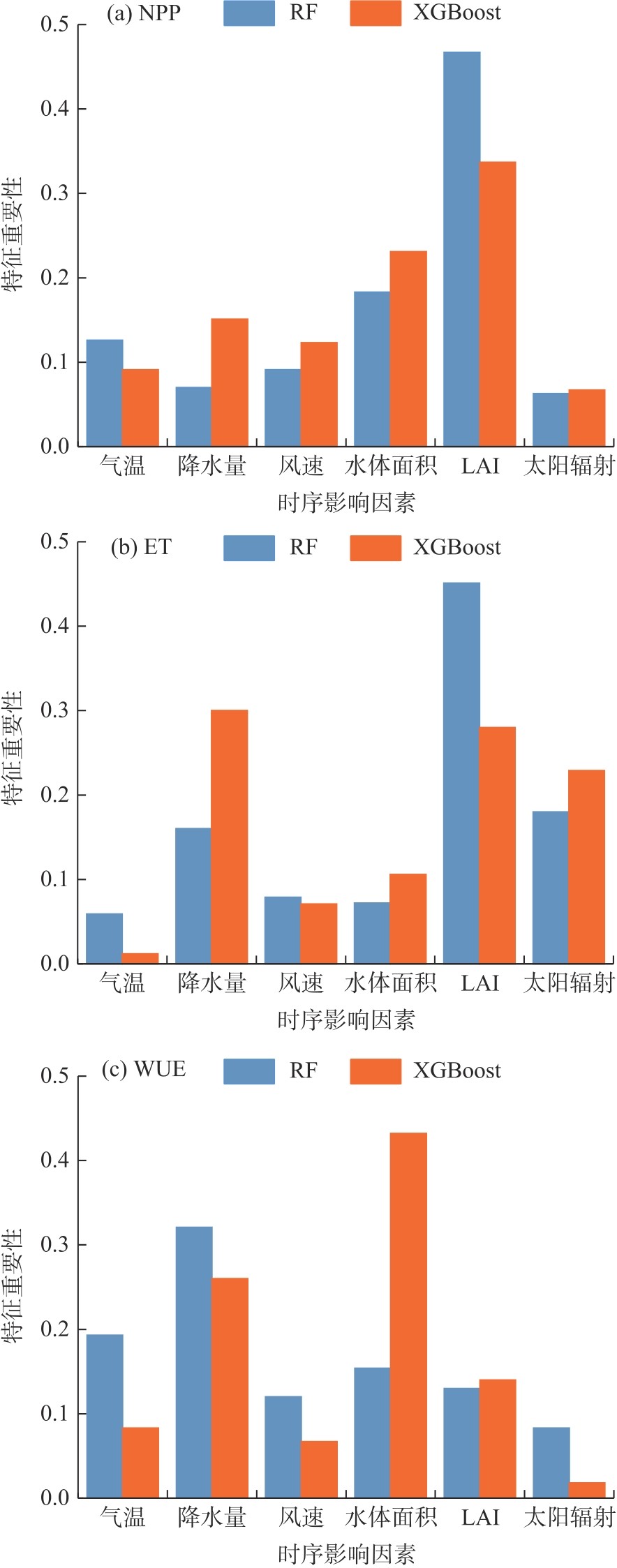
青海湖流域是青藏高原东北缘典型的高寒山地内流河流域,研究其水碳耦合机制对揭示高寒生态系统碳水交互规律、支撑水资源与碳汇协同管理具有重要意义。基于2000—2024年多源遥感与气象数据,以净初级生产力(NPP)、蒸散发(ET)和水分利用效率(WUE)为核心变量,系统分析其时空变化特征,并融合随机森林与XGBoost双机器学习方法,从空间与时间双维度解析驱动机制。结果表明:(1) 时间变化上,近25 a流域NPP与ET均呈显著上升趋势,增速分别为2.511 g C·m-2·a-1、4.470 mm·a-1,WUE以2017年为转折点呈先降后升的非线性变化。(2) 空间分布上,NPP与WUE呈“东南高、西北低”格局,ET呈“北高南低”分布,空间异质性显著。(3) 空间尺度上,海拔显著控制NPP与WUE的空间分异,对ET无显著影响;植被类型主导NPP与WUE空间差异,沼泽、栽培植被、草原及灌丛的固碳能力与水分利用效率更高;气温与叶面积指数(LAI)对NPP呈显著正向驱动,降水量与气温共同调控ET,WUE与降水量呈显著负相关。(4) 时间尺度上,LAI是NPP变化的核心驱动因子(RF特征重要性0.467,XGBoost为0.337),ET受LAI与降水协同调控,WUE对降水量、水体面积等水分条件更为敏感,模型解释难度显著高于单一水碳变量。研究结果揭示了高寒内流河流域水碳耦合的时空尺度驱动规律,可为青藏高原生态保护与水碳资源综合管理提供科学依据。
闫鹏旭, 张丽华, 曾繁星, 拜小辉, 叶阳, 曹轶杰. 青海湖流域近25 a水碳变量时空变化与影响因素[J]. 干旱区地理, 2026, 49(8): 1572-1586.
YAN Pengxu, ZHANG Lihua, ZENG Fanxing, BAI Xiaohui, YE Yang, CAO Yijie. Spatiotemporal changes and influencing factors of water and carbon variables in the Qinghai Lake Basin over the past 25 years[J]. Arid Land Geography, 2026, 49(8): 1572-1586.
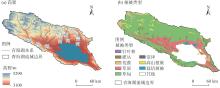
图1
研究区示意图"
表1
青海湖流域不同植被类型面积及其占比"
| 指标 | 针叶林 | 灌丛 | 荒漠 | 草原 | 草甸 | 沼泽 | 高山植被 | 栽培植被 | 其他 |
|---|---|---|---|---|---|---|---|---|---|
| 面积/km2 | 28.00 | 1707.00 | 883.00 | 4623.00 | 16612.00 | 51.00 | 914.00 | 239.00 | 63.00 |
| 占比/% | 0.11 | 6.80 | 3.52 | 18.40 | 66.13 | 0.20 | 3.64 | 0.95 | 0.25 |
表2
数据信息与来源"
| 数据 | 单位 | 空间分辨率 | 数据来源 | 年份 |
|---|---|---|---|---|
| 净初级生 产力(NPP) | g C·m-2 | 500 m | MOD17A3 | 2000—2024 |
| 蒸散发(ET) | mm | 500 m | MOD16A3 | 2000—2024 |
| 海拔高度 | m | 30 m | ASTER GDEM V3 | - |
| 植被类型 | - | 1 km | 中国1:1000000 植被数据集 | 2023 |
| 气温 | ℃ | 1 km | ERA5-Land再分析数据集 | 2000—2024 |
| 降水量 | mm | 1 km | ERA5-Land 再分析数据集 | 2000—2024 |
| 太阳辐射 | MJ·m-2 | 1 km | ERA5-Land 再分析数据集 | 2000—2024 |
| 风速 | m·s-1 | 0.01° | 中国0.01°分辨率 逐年风速栅格数据 | 2000—2024 |
| 叶面积指数(LAI) | - | 500 m | MOD15A2 | 2000—2024 |
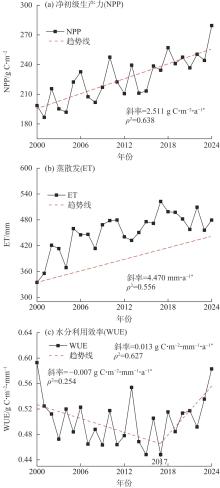
图2
青海湖流域水碳变量年际变化情况 注:ρ2为反应指标时间单调趋势的Spearman效应量;*表示各水碳因子Sen’s斜率通过0.05显著性水平检验。下同。"
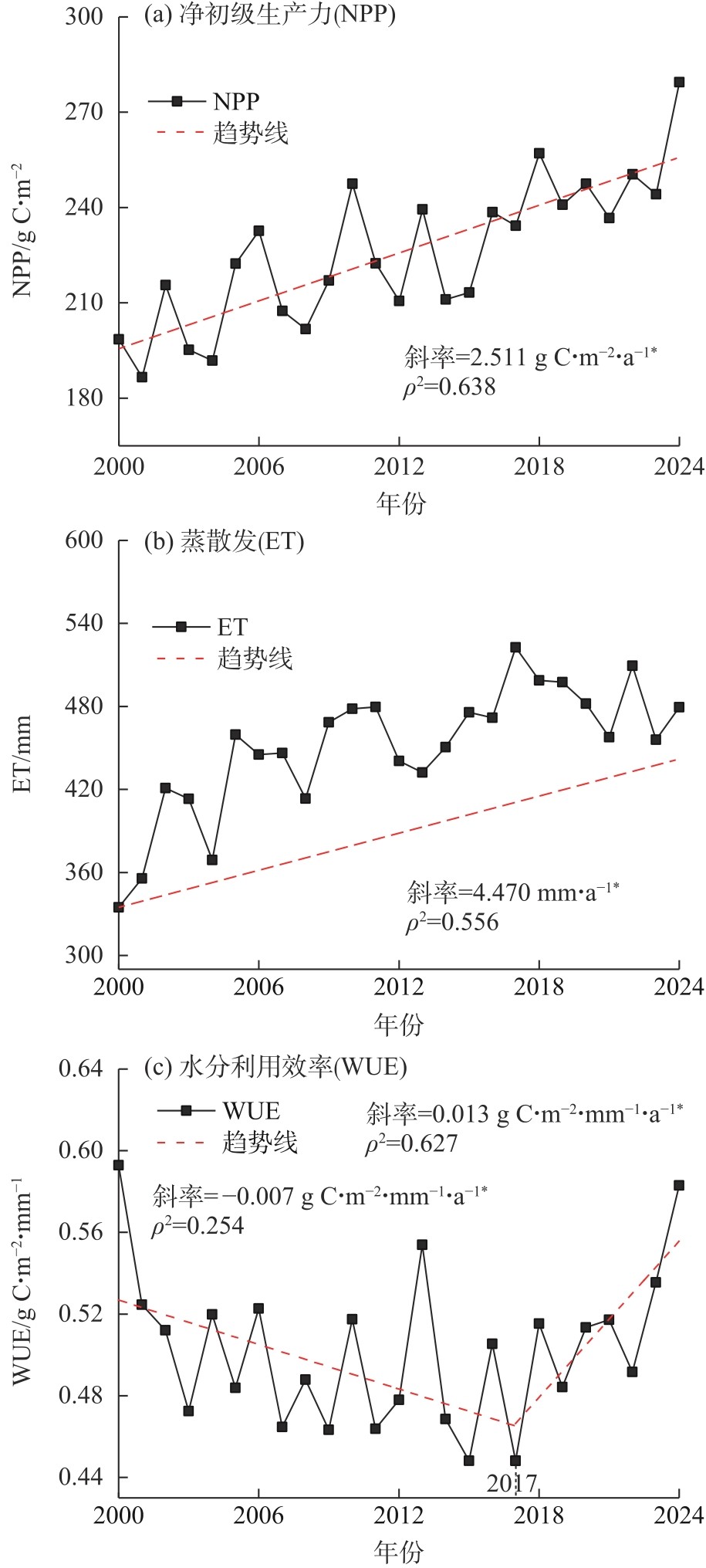
图3
青海湖流域水碳变量空间分布格局"
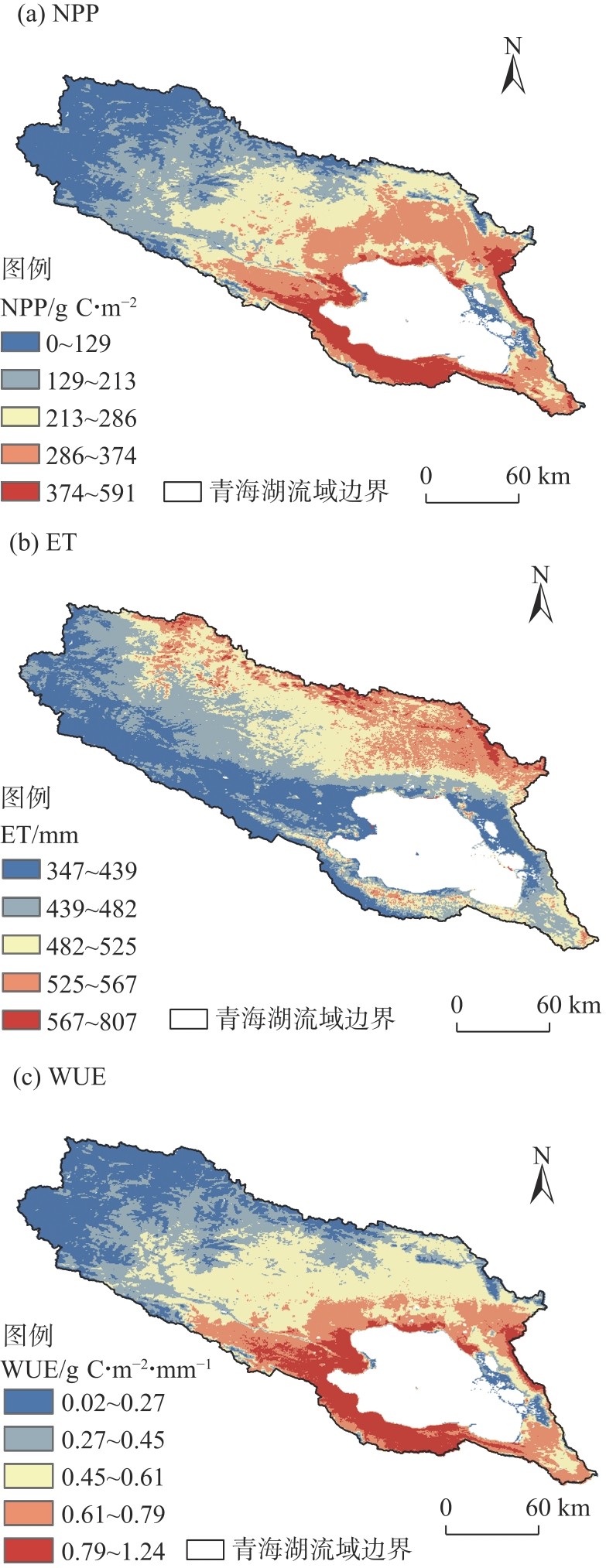
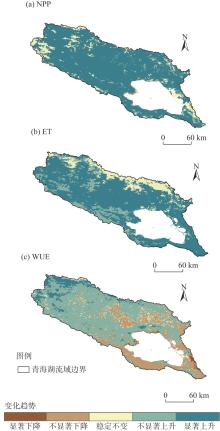
图4
青海湖流域水碳变量空间变化趋势"
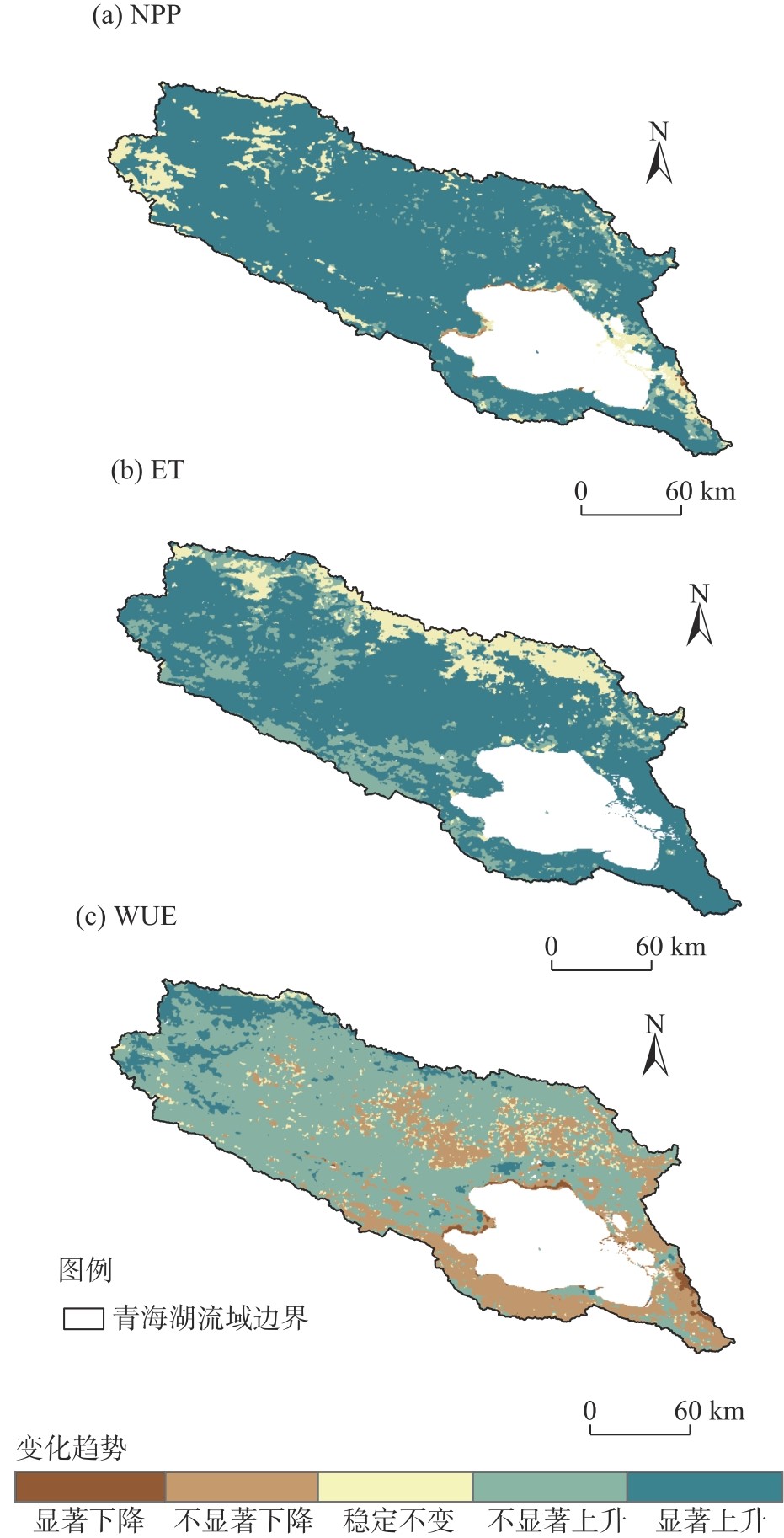
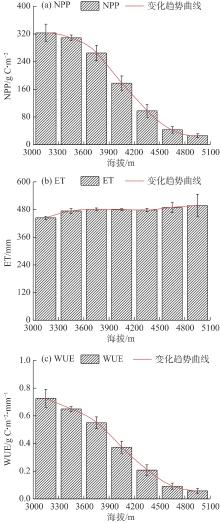
图5
青海湖流域海拔对水碳变量的影响"
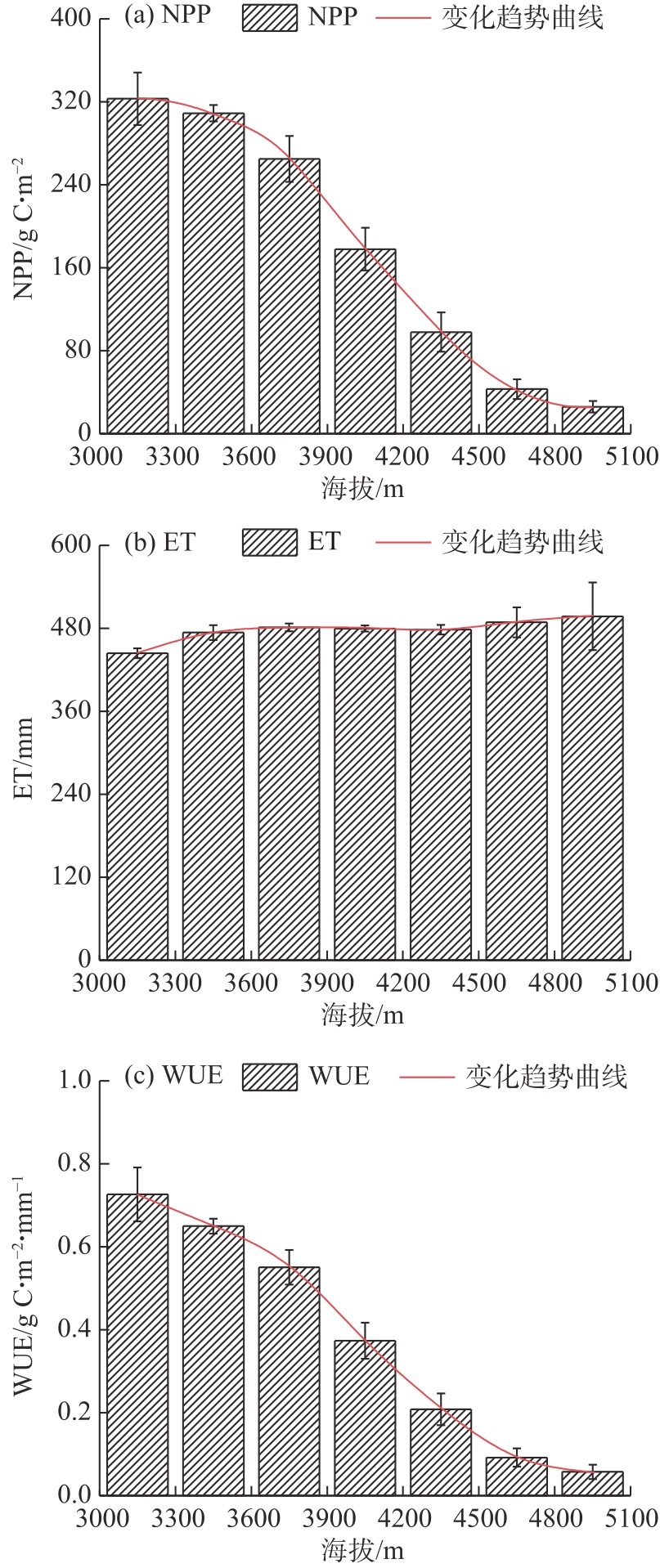
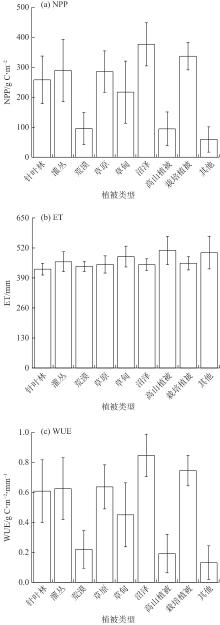
图6
青海湖流域植被类型对水碳变量的影响"
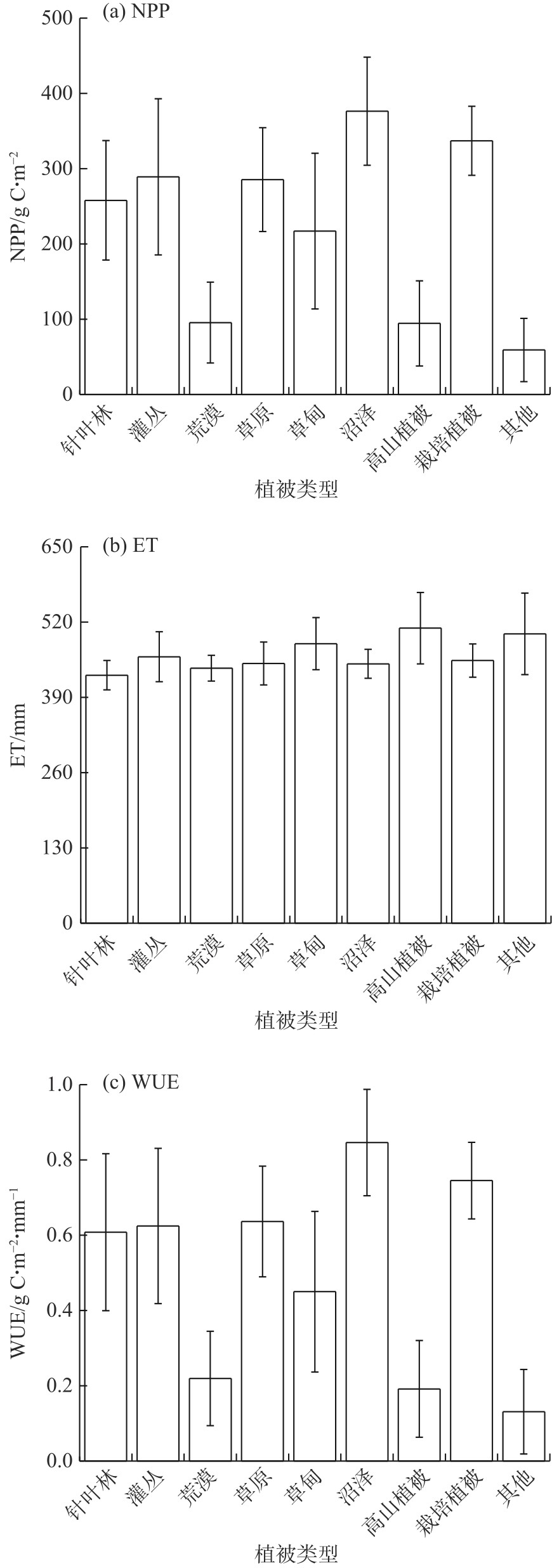
图7
青海湖流域空间影响因素与水碳变量偏相关分析"
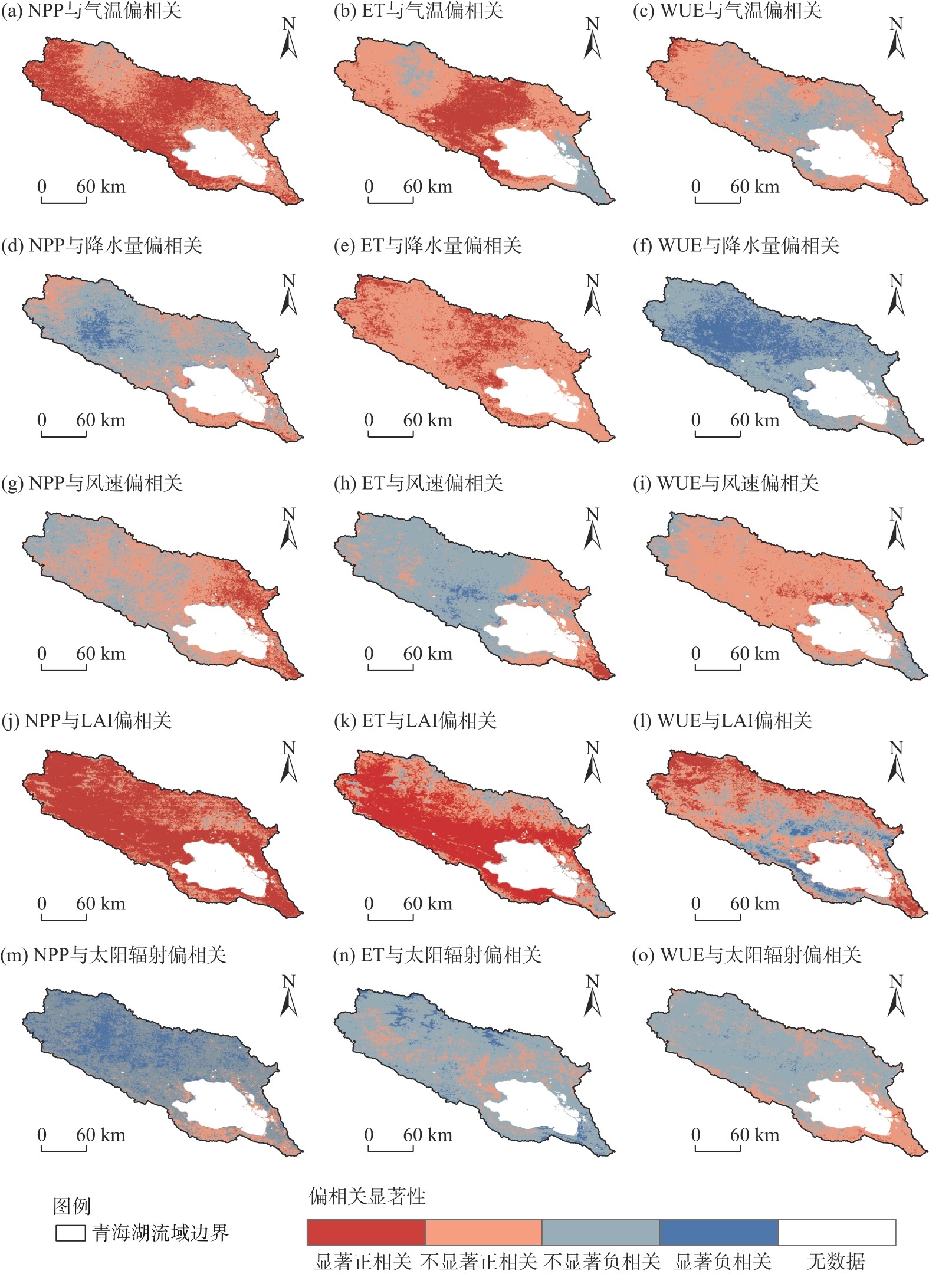
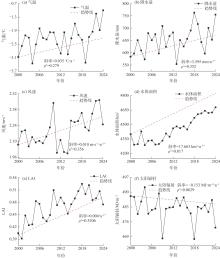
图8
青海湖流域水碳变量各时序影响因素的年际变化"

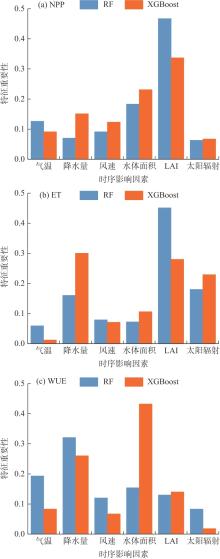
图9
青海湖流域水碳变量各时序影响因素的特征重要性"
| [1] | Gentine P, Green J, Guérin M, et al. Coupling between the terrestrial carbon and water cycles: A review[J]. Iop Publishing, 2019, 14(8): 083003, doi: 10.1088/1748-9326/ab22d6. |
| [2] |
黄日超, 陈喜, 孙一萌, 等. 流域土壤有效厚度水平衡验证及其对陆面水碳通量模拟的影响[J]. 地理学报, 2016, 71(5): 807-816.
doi: 10.11821/dlxb201605009 |
|
[Huang Richao, Chen Xi, Sun Yimeng, et al. Validation of watershed soil effective depth based on water balance and its effect on simulation of land surface water-carbon flux[J]. Acta Geographica Sinica, 2016, 71(5): 807-816.]
doi: 10.11821/dlxb201605009 |
|
| [3] | 段凯, 孙阁, 刘宁. 变化环境下流域水-碳平衡演化研究综述[J]. 水利学报, 2021, 52(3): 300-309. |
| [Duan Kai, Sun Ge, Liu Ning. A review of research on watershed water-carbon balance evolution in a changing environment[J]. Journal of Hydraulic Engineering, 2021, 52(3): 300-309.] | |
| [4] | 吕美霞, 马柱国, 李明星. 气候变化、植被改变及人类用水与黄河流域水循环的研究进展[J]. 大气科学学报, 2023, 46(6): 801-812. |
| [Lü Meixia, Ma Zhuguo, Li Mingxing. A review on the changing water cycle of the Yellow River Basin under changes in climate, vegetation, and human water use[J]. Transactions of Atmospheric Sciences, 2023, 46(6): 801-812.] | |
| [5] |
王暄宇, 顾文权, 胡雅洁, 等. 变化环境下汉江流域水循环要素响应规律[J]. 中国农村水利水电, 2024(7): 35-44.
doi: 10.12396/znsd.231926 |
|
[Wang Xuanyu, Gu Wenquan, Hu Yajie, et al. Response law of water cycle elements in Hanjiang River Basin under changing environment[J]. China Rural Water and Hydropower, 2024(7): 35-44.]
doi: 10.12396/znsd.231926 |
|
| [6] |
童凯, 鞠琴, 赵银军, 等. 基于水量平衡的西江流域实际蒸散发评估[J]. 地理科学, 2025, 45(4): 910-918.
doi: 10.13249/j.cnki.sgs.20231031 |
| [Tong Kai, Ju Qin, Zhao Yinjun, et al. Assessment of actual evapotranspiration in the Xijiang River Basin based on water balance[J]. Geographical Science, 2025, 45(4): 910-918.] | |
| [7] | Wang T. Dynamic changes of net primary productivity and its response to temperature and precipitation in China[J]. Iop Publishing, 2018, 186: 012044, doi: 10.1088/1755-1315/186/6/012044. |
| [8] | 张连凯, 覃小群, 杨慧, 等. 珠江流域河流碳输出通量及变化特征[J]. 环境科学, 2013, 34(8): 3025-3034. |
| [Zhang Liankai, Qin Xiaoqun, Yang Hui, et al. Transported fluxes of the riverine carbon and seasonal variation in Pearl River Basin[J]. Environmental Science, 2013, 34(8): 3025-3034.] | |
| [9] | 王辰露, 余钟波, 刘娣, 等. 黄河流域植被变化对区域水碳耦合的影响[J]. 水电能源科学, 2022, 40(1): 150-154. |
| [Wang Chenlu, Yu Zhongbo, Liu Di, et al. Impact of vegetation change at Yellow River Basin on local water-carbon interaction[J]. Water Resources and Power, 2022, 40(1): 150-154.] | |
| [10] |
公丽, 梁康, 刘昌明. 黄河水源涵养区水碳变量的时空变化特征及其影响因素[J]. 地理科学进展, 2023, 42(9): 1677-1690.
doi: 10.18306/dlkxjz.2023.09.002 |
|
[Gong Li, Liang Kang, Liu Changming. Spatial and temporal variation characteristics of the water and carbon variables in the water conservation zone of the Yellow River and their influencing factors[J]. Progress in Geography, 2023, 42(9): 1677-1690.]
doi: 10.18306/dlkxjz.2023.09.002 |
|
| [11] | 何萍, 刘延坤, 陈瑶, 等. 黑龙江省植被NPP的时空格局及其影响因素[J]. 环境生态学, 2024, 6(11): 19-29, 36. |
| [He Ping, Liu Yankun, Chen Yao, et al. Spatiotemporal patterns and influencing factors of vegetation NPP in Heilongjiang Province[J]. Environmental Ecology, 2024, 6(11): 19-29, 36.] | |
| [12] | 周娜芳, 贡恩军, 白天豪, 等. 基于CASA模型的秦巴山区NPP时空动态及影响因素分析[J]. 生态学报, 2025, 45(4): 1829-1843. |
| [Zhou Nafang, Gong Enjun, Bai Tianhao, et al. Analysis of temporal and spatial dynamics and its influencing factors of NPP in Qinba Mountain Area based on the CASA model[J]. Acta Ecologica Sinica, 2025, 45(4): 1829-1843.] | |
| [13] | 王奇, 张润润. 雅鲁藏布江流域地表蒸散量的时空变化特征及其影响因素分析[J]. 水电能源科学, 2025, 43(5): 34-38. |
| [Wang Qi, Zhang Runrun. Spatial and temporal variation characteristics of surface evapotranspiration in the Yarlung Zangbo River Basin and its influencing factors[J]. Water Resources and Power, 2025, 43(5): 34-38.] | |
| [14] |
卢晗, 曾永年, 王盼成. 青藏高原东北部实际蒸散发时空变化特征及影响因素[J]. 干旱区地理, 2025, 48(5): 753-764.
doi: 10.12118/j.issn.1000-6060.2024.395 |
|
[Lu Han, Zeng Yongnian, Wang Pancheng. Spatiotemporal variation of actual evapotranspiration and its influencing factors in the northeast Qinghai-Tibet Plateau[J]. Arid Land Geography, 2025, 48(5): 753-764.]
doi: 10.12118/j.issn.1000-6060.2024.395 |
|
| [15] | 王仁军, 刘宝康, 杜玉娥, 等. 基于GF-6的可可西里典型湖泊水体面积提取方法研究[J]. 测绘通报, 2022, 542(5): 32-37. |
| [Wang Renjun, Liu Baokang, Du Yu’e, et al. Extraction method and accuracy evaluation of typical lake water body in Hoh Xil region based on GF-6 WFV data[J]. Bulletin of Surveying and Mapping, 2022, 542(5): 32-37.] | |
| [16] | 于伯华, 吕昌河, 吕婷婷, 等. 青藏高原植被覆盖变化的地域分异特征[J]. 地理科学进展, 2009, 28(3): 391-397. |
|
[Yu Bohua, Lü Changhe, Lü Tingting, et al. Regional differentiation of vegetation change in the Qinghai-Tibet Plateau[J]. Progress in Geography, 2009, 28(3): 391-397.]
doi: 10.11820/dlkxjz.2009.03.010 |
|
| [17] |
郑周涛, 张扬建. 1982—2018年青藏高原水分利用效率变化及归因分析[J]. 植物生态学报, 2022, 46(12): 1486-1496.
doi: 10.17521/cjpe.2021.0187 |
|
[Zheng Zhoutao, Zhang Yangjian. Variation in ecosystem water use efficiency and its attribution analysis during 1982—2018 in Qingzang Plateau[J]. Chinese Journal of Plant Ecology, 2022, 46(12): 1486-1496.]
doi: 10.17521/cjpe.2021.0187 |
|
| [18] |
王晓晖, 张亮, 李俊清, 等. 基于遗传算法与随机森林的XGBoost改进方法研究[J]. 计算机科学, 2020, 47(增刊2): 454-458, 463.
doi: 10.11896/jsjkx.200600002 |
|
[Wang Xiaohui, Zhang Liang, Li Junqing, et al. Study on XGBoost improved method based on genetic algorithm and random forest[J]. Computer Science, 2020, 47(Suppl. 2): 454-458, 463.]
doi: 10.11896/jsjkx.200600002 |
|
| [19] |
利辉, 刘铁军, 王少慧, 等. 2001—2021年内蒙古荒漠草原水分利用效率时空变化特征及影响因素研究[J]. 干旱区地理, 2024, 47(6): 993-1003.
doi: 10.12118/j.issn.1000-6060.2023.388 |
|
[Li Hui, Liu Tiejun, Wang Shaohui, et al. Spatial and temporal variation of water use efficiency and its influencing factors in desert steppe of Inner Mongolia from 2001 to 2021[J]. Arid Land Geography, 2024, 47(6): 993-1003.]
doi: 10.12118/j.issn.1000-6060.2023.388 |
|
| [20] | 周祖昊, 刘佳嘉, 严子奇, 等. 黄河流域天然河川径流量演变归因分析[J]. 水科学进展, 2022, 33(1): 27-37. |
| [Zhou Zuhao, Liu Jiajia, Yan Ziqi, et al. Attribution analysis of the natural runoff evolution in the Yellow River Basin[J]. Advances in Water Science, 2022, 33(1): 27-37.] | |
| [21] | 叶群, 赖晨曦, 肖璟, 等. 基于Sentinel-1卫星的鄱阳湖水体面积时空变化特征[J]. 江西测绘, 2024(4): 1-4. |
| [Ye Qun, Lai Chenxi, Xiao Jing, et al. Spatiotemporal variation characteristics of Poyang Lake water area based on Sentinel-1 satellite[J]. Jiangxi Cehui, 2024(4): 1-4.] | |
| [22] | 周美林, 刘家宏, 刘希胜, 等. 青海湖流域植被动态变化驱动力及空间粒度效应[J]. 中国环境科学, 2024, 44(3): 1497-1506. |
| [Zhou Meilin, Liu Jiahong, Liu Xisheng, et al. Analysis of driving forces and spatial scale effects on vegetation dynamics in the Qinghai Lake Basin[J]. China Environmental Science, 2024, 44(3): 1497-1506.] | |
| [23] |
McFEETERS S K. The use of the normalized difference water index (NDWI) in the delineation of open water features[J]. International Journal of Remote Sensing, 1996, 17(7): 1425-1432.
doi: 10.1080/01431169608948714 |
| [24] |
Sen K P. Estimates of the regression coefficient based on Kendall’s Tau[J]. Journal of the American Statistical Association, 1968, 63(324): 1379-1389.
doi: 10.1080/01621459.1968.10480934 |
| [25] |
Hernández G O, García V L. False discovery rate estimation and control in remote sensing: Reliable statistical significance in spatially dependent gridded data[J]. Remote Sensing Letters, 2025, 16(5): 537-548.
doi: 10.1080/2150704X.2025.2478664 |
| [26] | Heumann W B. The multiple comparison problem in empirical remote sensing[J]. Photogrammetric Engineering & Remote Sensing, 2015, 81(12): 921-926. |
| [27] | 杨甫乐, 荣艳淑, 杨甫光. 四川盆地蒸发皿蒸发量变化趋势及影响因子分析[J]. 水资源保护, 2014, 30(3): 38-45. |
| [Yang Fule, Rong Yanshu, Yang Fuguang. Analysis of pan evaporation change trend and its influencing factors in Sichuan Basin[J]. Water Resources Protection, 2014, 30(3): 38-45.] | |
| [28] | 于婷, 张音音, 张睿志, 等. 基于机器学习的30%TBP/煤油-硝酸体系中主要组分的分配比预测研究[J]. 原子能科学技术, 2025, 59(1): 14-23. |
| [Yu Ting, Zhang Yinyin, Zhang Ruizhi, et al. Distribution ratio prediction of major components in 30%TBP/kerosene-HNO3 system based on machine learning[J]. Atomic Energy Science and Technology, 2025, 59(1): 14-23.] | |
| [29] | Yang L J, Zhu Q Y, Ge X C, et al. Transmit antenna selection for Millimeter-WaveMIMO system based on GBDT[J]. Institute of Electrical and Electronics Engineers (ieee), 2023, 8(1): 71-79. |
| [30] |
Hajihosseinlou M, Maghsoudi A, Ghezelbash R. A novel scheme for mapping of MVT-type Pb-Zn prospectivity: LightGBM, a highly efficient gradient boosting decision tree machine learning algorithm[J]. Natural Resources Research, 2023, 32(6): 2417-2438.
doi: 10.1007/s11053-023-10249-6 |
| [31] | 曾书玉, 谢涛, 孔瑞瑶. 基于CatBoost和XGBoost组合模型的水深反演[J]. 海洋测绘, 2023, 43(3): 59-63. |
| [Zeng Shuyu, Xie Tao, Kong Ruiyao. Water depth inversion based on CatBoost-XGBoost combined model[J]. Hydrographic Surveying and Charting, 2023, 43(3): 59-63.] | |
| [32] | 樊海玮, 史双, 张博敏, 等. 基于MLP改进型深度神经网络学习资源推荐算法[J]. 计算机应用研究, 2020, 37(9): 2629-2633. |
| [Fan Haiwei, Shi Shuang, Zhang Bomin, et al. Improved learning resource recommendation algorithm of deep neural network based on MLP[J]. Application Research of Computers, 2020, 37(9): 2629-2633.] | |
| [33] |
韩熠哲, 廖捷, 赵煜飞, 等. 青藏高原多圈层观测网络与气候暖湿化研究的现状与展望[J]. 高原气象, 2026, 45(2): 305-323.
doi: 10.7522/j.issn.1000-0534.2025.00096 |
|
[Han Yizhe, Liao Jie, Zhao Yifei, et al. Multi-sphere observation network and climate warming and humidification research on the Qinghai-Xizang Plateau: Advances and future directions[J]. Plateau Meteorology, 2026, 45(2): 305-323.]
doi: 10.7522/j.issn.1000-0534.2025.00096 |
|
| [34] | 韩丹丹, 穆兴民, 高鹏, 等. 黄土高原地区植被变化及其对极端气候的响应[J]. 水土保持通报, 2020, 40(2): 247-254. |
| [Han Dandan, Mu Xingmin, Gao Peng, et al. Dynamic changes of vegetation in Loess Plateau and its response to extreme climate[J]. Bulletin of Soil and Water Conservation, 2020, 40(2): 247-254.] | |
| [35] |
陈江波, 赵媛媛, 丁国栋, 等. 雅鲁藏布江流域归一化植被指数变化及其对气候因子的响应[J]. 应用生态学报, 2025, 36(9): 2797-2804.
doi: 10.13287/j.1001-9332.202509.029 |
|
[Chen Jiangbo, Zhao Yuanyuan, Ding Guodong, et al. Changes in normalized difference vegetation index in the Yarlung Tsangpo River Basin and its response to climatic factors[J]. Chinese Journal of Applied Ecology, 2025, 36(9): 2797-2804.]
doi: 10.13287/j.1001-9332.202509.029 |
|
| [36] |
Ma M M, Qu Y P, Lü J, et al. The 2022 extreme drought in the Yangtze River Basin: Characteristics, causes and response strategies[J]. River, 2022, 1(2): 162-171.
doi: 10.1002/rvr2.v1.2 |
| [37] | 赖明, 陈仁升, 刘玖芬, 等. 雅鲁藏布江下游产水量时空演变及对气候和土地利用变化的响应[J]. 草业科学, 2022, 39(12): 2516-2526. |
| [Lai Ming, Chen Rensheng, Liu Jiufen, et al. Temporal and spatial evolution of water yield in the lower reaches of the Yarlung Zangbo River and its response to climate and land use change[J]. Pratacultural Science, 2022, 39(12): 2516-2526.] | |
| [38] |
姜翠红, 李广泳, 程滔, 等. 青海湖流域生态服务价值时空格局变化及其影响因子研究[J]. 资源科学, 2016, 38(8): 1572-1584.
doi: 10.18402/resci.2016.08.15 |
|
[Jiang Cuihong, Li Guangyong, Cheng Tao, et al. Spatial-temporal pattern variation and impact factors of ecosystem service values in the Qinghai Lake Watershed[J]. Resources Science, 2016, 38(8): 1572-1584.]
doi: 10.18402/resci.2016.08.15 |
|
| [39] |
丁辰深, 曹生奎, 张富玲, 等. 青海湖流域土壤水分空间格局及模拟研究[J]. 草地学报, 2026, 34(3): 984-997.
doi: 10.11733/j.issn.1007-0435.2026.03.022 |
|
[Ding Chenshen, Cao Shengkui, Zhang Fuling, et al. Spatial patterns and modeling of soil moisture in the Qinghai Lake Basin[J]. Acta Agrestia Sinica, 2026, 34(3): 984-997.]
doi: 10.11733/j.issn.1007-0435.2026.03.022 |
|
| [40] | 刘晓莉. 基于机器学习的黄土高原土壤有机碳模拟及驱动力分析[D]. 郑州: 郑州大学, 2024. |
| [Liu Xiaoli. Decipher soil organic carbon dynamics and driving forcesin the Loess Plateau using machine learning[D]. Zhengzhou: Zhengzhou University, 2024.] | |
| [41] | 马璐. 重庆地区极端气候对非饱和土物理力学性能的影响规律研究[D]. 重庆: 重庆交通大学, 2015. |
| [Ma Lu. The study of extreme climate influence on unsaturated soil physical and mechanical properties in Chongqing area[D]. Chongqing: Chongqing Jiaotong University, 2015.] | |
| [42] | 高欣, 王慧, 李国爽, 等. 湿地碳汇功能探讨——以泥炭地和沼泽湿地为例[J]. 中国农业文摘-农业工程, 2018, 30(6): 20-21. |
| [Gao Xin, Wang Hui, Li Guoshuang, et al. Discussion on wetland carbon sink function: A case study of peatlands and marsh wetlands[J]. Agricultural Science and Engineering in China, 2018, 30(6): 20-21.] | |
| [43] | 尚嗣梁, 陈国鹏, 杨永红, 等. 基于无人机多源数据与机器学习协同的冻胀丘高精度识别及多尺度空间分布格局——以美仁草原为例[J]. 生态学报, 2026, 46(1): 105-121. |
| [Shang Siliang, Chen Guopeng, Yang Yonghong, et al. High-precision identification of frost mounds and multi-scale spatial aggregation mechanisms via synergistic UAV multi-source data and machine learning: A case study of Meiren Grassland[J]. Acta Ecologica Sinica, 2026, 46(1): 105-121.] | |
| [44] | 范志晴. 基于深度学习的黄河流域评估研究[J]. 能源与节能, 2025(增刊1): 150-153. |
| [Fan Zhiqing. Deep learning-based assessment research on Yellow River Basin[J]. Energy and Energy Conservation, 2025(Suppl. 1): 150-153.] | |
| [45] | 刘婵, 刘冰, 赵文智, 等. 黑河流域植被水分利用效率时空分异及其对降水和气温的响应[J]. 生态学报, 2020, 40(3): 888-899. |
| [Liu Chan, Liu Bing, Zhao Wenzhi, et al. Temporal and spatial variability of water use efficiency of vegetation and its response to precipitation and temperature in Heihe River Basin[J]. Acta Ecologica Sinica, 2020, 40(3): 888-899.] | |
| [46] | 刘心怡. 蒙古高原典型生态系统水分利用效率的时空变化及其驱动机制研究[D]. 呼和浩特: 内蒙古师范大学, 2024. |
| [Liu Xinyi. Spatiotemporal variations and driving mechanisms of water use efficiency in typical ecosystems of the Mongolian Plateau[D]. Hohhot: Inner Mongolia Normal University, 2024.] | |
| [47] | 郭博宇, 金鑫, 金彦香, 等. 高寒干旱区植被变化驱动机制的机器学习解析——气候变化与人类活动的贡献[J]. 生态学报, 2026, 46(8): 1-15. |
| [Guo Boyu, Jin Xin, Jin Yanxiang, et al. Understanding the drivers of vegetation change in alpine and arid regions using machine learning: Contributions of climate change and human activities[J]. Chinese Journal of Applied Ecology, 2026, 46(8): 1-15.] | |
| [48] |
Breiman L. Random forests[J]. Machine Learning, 2001, 45(1): 5-32.
doi: 10.1023/A:1010933404324 |
| [49] | Chen T, Guestrin C. XGBoost: A scalable tree boosting system[C]// Proceedings of the 22nd ACM SIGKDD International Conference on Knowledge Discovery and Data Mining. New York: ACM, 2016: 785-794. |
| [50] | 李霞, 王孝康, 刘秀花, 等. 2000—2020年陕西省植被NDVI时空变化及气候因子探测[J]. 水土保持研究, 2024, 31(2): 443-453. |
| [Li Xia, Wang Xiaokang, Liu Xiuhua, et al. Spatiotemporal variation of vegetation NDVI and climate factor detection in Shaanxi Province from 2000—2020[J]. Research of Soil and Water Conservation, 2024, 31(2): 443-453.] | |
| [51] | 左婵, 王军邦, 张秀娟, 等. 三江源国家公园植被净初级生产力变化趋势及影响因素[J]. 生态学报, 2022, 42(14): 5559-5573. |
| [Zuo Chan, Wang Junbang, Zhang Xiujuan, et al. Changes and influencing factors of vegetation net primary productivity in the Sanjiangyuan National Park[J]. Acta Ecologica Sinica, 2022, 42(14): 5559-5573.] | |
| [52] | 马道铭, 刘大洋, 齐元静, 等. 湟水河流域植被净初级生产力时空演变特征及其驱动因素[J/OL]. 生态学报. [2026-05-14]. https://doi.org/10.20103/j.stxb.202512293515. |
| [Ma Daoming, Liu Dayang, Qi Yuanjing, et al. Spatiotemporal dynamics and driving factors of vegetation NPP in Huangshui River Basin[J/OL]. Acta Ecologica Sinica. [2026-05-14]. https://doi.org/10.20103/j.stxb.202512293515.] | |
| [53] | Wu G X, Zhou X J, Xu X D, et al. An integrated research plan for the Tibetan Plateau land-air coupled system and its impacts on the global climate[J]. Bulletin of the American Meteorological Society, 2023, 104(1): 158-177. |
| [54] | 姜瑶, 夏梓皓, 熊吕阳, 等. 雅鲁藏布江流域水循环要素时空演变及径流驱动因素[J]. 水土保持学报, 2026. 40(1): 25-33. |
| [Jiang Yao, Xia Zihao, Xiong Lüyang, et al. Spatiotemporal evolution of water cycle components and runoff driving factors in Yarlung Zangbo River Basin[J]. Journal of Soil and Water Conservation, 2026, 40(1): 25-33.] | |
| [55] | 陈玮瑶, 孙扬, 辛朋磊. 三江源区蒸散发时空变化特征及影响因素分析[J]. 水利水电快报, 2024, 45(1): 6-11. |
| [Chen Weiyao, Sun Yang, Xin Penglei. Spatial-temporal variation characteristics and influencing factors of evapotranspiration in Three-River Headwaters Region[J]. Express Water Resources & Hydropower Information, 2024, 45(1): 6-11.] | |
| [56] |
齐冬梅, 李跃清, 周长艳, 等. 若尔盖湿地区域径流变化特征及其影响因素分析[J]. 冰川冻土, 2025, 47(1): 14-29.
doi: 10.7522/j.issn.1000-0240.2025.0002 |
|
[Qi Dongmei, Li Yueqing, Zhou Changyan, et al. Variation characteristics of runoff and its influencing factors in Zoige Wetland[J]. Journal of Glaciology and Geocryology, 2025, 47(1): 14-29.]
doi: 10.7522/j.issn.1000-0240.2025.0002 |
|
| [57] | 靖娟利, 覃世萍, 王永锋, 等. 西南地区植被水分利用效率时空演变及驱动机制[J]. 水资源保护, 2026, 42(2): 89-99. |
| [Jing Juanli, Qin Shiping, Wang Yongfeng, et al. Spatiotemporal evolution and driving mechanism of vegetation water use efficiency in southwest China[J]. Water Resources Protection, 2026, 42(2): 89-99.] | |
| [58] |
马宁. 青藏高原东部河源区生态系统水分利用效率时空变化及驱动因素[J]. 地理学报, 2025, 80(7): 1937-1953.
doi: 10.11821/dlxb202507014 |
|
[Ma Ning. Spatial-temporal changes in the ecosystem water use efficiency across the headwater region of eastern Tibetan Plateau and the drivers[J]. Acta Geographica Sinica, 2025, 80(7): 1937-1953.]
doi: 10.11821/dlxb202507014 |
|
| [59] | Liu X, Tian K J, Chao N F, et al. Analysis of spatial and temporal variations of vegetation NPP and TWS in the Yangtze River Basin[J]. Scientific Reports, 2024, 14(1): 24908, doi: 10.1038/S41598-024-75447-5. |
| [60] | 温欣竹, 尹振良, 朱睿, 等. 黄河流域水碳变量时空变化特征及其影响因素[J]. 生态学报, 2025, 45(18): 9278-9293. |
| [Wen Xinzhu, Yin Zhenliang, Zhu Rui, et al. The spatiotemporal variation characteristics and influencing factors of water carbon variables in the Yellow River Basin[J]. Acta Ecologica Sinica, 2025, 45(18): 9278-9293.] | |
| [61] | Wang L L, Wang Z G, Liu C M, et al. A flexible framework hydrolnformatic modeling system—HIMS[J]. Water, 2018, 10(7): 962, doi: 10.3390/w10070962. |
| [1] | 杨昊凡, 黄维东, 牛最荣. 陇中地区干旱特征及其与降水量和潜在蒸散发的关系[J]. 干旱区地理, 2026, 49(7): 1336-1346. |
| [2] | 刘洋洋, 毛克彪, 郭中华, 袁紫晋. 中国气象干旱时空特征与混合模型预测[J]. 干旱区地理, 2026, 49(5): 881-893. |
| [3] | 裴若颖, 曹生奎, 侯瑶芳, 雷义珍, 王江, 刘振梅, 丁辰深. 青海湖流域草地植被生物量空间分布格局研究[J]. 干旱区地理, 2026, 49(2): 301-315. |
| [4] | 赵秋, 高凡, 何兵, 李颖, 张加成. 阿克苏河流域农田水分利用效率时空格局研究[J]. 干旱区地理, 2026, 49(2): 369-380. |
| [5] | 张飞, 李建, 李慧融, 谢涛, 张雪红, 王超, 白淑英, 宋正姗. 2001—2024年锡林郭勒盟草原净初级生产力时空特征及对影响因子的响应[J]. 干旱区地理, 2025, 48(9): 1555-1566. |
| [6] | 王霜, 原野, 袁媛, 李倩, 赵嘉瑜, 杨蓉欣, 杨雨青. 黄土丘陵区露天煤矿复垦生态系统先锋树种水分利用效率[J]. 干旱区地理, 2025, 48(7): 1176-1184. |
| [7] | 卢晗, 曾永年, 王盼成. 青藏高原东北部实际蒸散发时空变化特征及影响因素[J]. 干旱区地理, 2025, 48(5): 753-764. |
| [8] | 王志春, 王彦平, 徐震宇, 薛文超. 内蒙古不同干湿区潜在蒸散发变化特征及主导因子分析[J]. 干旱区地理, 2025, 48(4): 612-622. |
| [9] | 李浩霖, 张雪洁, 张红娟, 孙丽娜, 宋鹏程, 李平. 基于DNDC的春玉米水肥耦合优化方案模拟研究[J]. 干旱区地理, 2025, 48(12): 2099-2110. |
| [10] | 王春勇, 李超凡, 韩其飞. 2000—2021年天山北坡潜在蒸散发时空动态及其对土地利用变化的响应[J]. 干旱区地理, 2025, 48(11): 1893-1902. |
| [11] | 利辉, 刘铁军, 王少慧, 刘东伟. 2001—2021年内蒙古荒漠草原水分利用效率时空变化特征及影响因素研究[J]. 干旱区地理, 2024, 47(6): 993-1003. |
| [12] | 马亚丽, 牛最荣, 孙栋元. 河西走廊潜在蒸散发时空格局变化与气象因素的关系[J]. 干旱区地理, 2024, 47(2): 192-202. |
| [13] | 秦格霞, 孟治元, 李妮. 黄土高原水分利用效率动态及其对干旱和地表温度的响应[J]. 干旱区地理, 2024, 47(11): 1887-1898. |
| [14] | 康利刚, 曹生奎, 曹广超, 严莉, 陈链璇, 李文斌, 赵浩然. 青海湖流域地表温度时空变化特征研究[J]. 干旱区地理, 2023, 46(7): 1084-1097. |
| [15] | 高晓宇, 郝海超, 张雪琪, 陈亚宁. 中国西北干旱区植被水分利用效率变化对气象要素的响应——以新疆为例[J]. 干旱区地理, 2023, 46(7): 1111-1120. |
|
||