干旱区地理 ›› 2026, Vol. 49 ›› Issue (3): 631-642.doi: 10.12118/j.issn.1000-6060.2025.117 cstr: 32274.14.ALG2025117
• 区域发展 • 上一篇
高俊杰1,2( ), 仲俊涛3(), 马勇洁1,2, 陈颖慧1,2
收稿日期:2025-03-06
修回日期:2025-04-18
出版日期:2026-03-25
发布日期:2026-03-24
通讯作者:
仲俊涛(1988-),男,博士,副教授,主要从事区域可持续发展研究. E-mail: zhongjuntao88@163.com作者简介:高俊杰(2000-),男,硕士研究生,主要从事生态系统服务研究. E-mail: gaojunjie0301@163.com
基金资助:
GAO Junjie1,2(), ZHONG Juntao3(), MA Yongjie1,2, CHEN Yinghui1,2
Received:2025-03-06
Revised:2025-04-18
Published:2026-03-25
Online:2026-03-24
摘要:
推动农户现代化与生计稳定性的协同发展是实现乡村振兴战略的关键所在。以青海湖国家公园为例,基于现代化理论与稳定性内涵,运用参与式农村评估法获取数据,从生产、生活和生态现代化3个维度评估2022年农户现代化水平,以多样性和依赖性2个维度衡量农户生计稳定性,系统分析二者的耦合协调关系及其空间分布特征,并借助随机森林模型识别出核心驱动要素,最终根据实证结果提出针对性优化策略。结果表明:(1)2022年青海湖国家公园农户现代化与生计稳定性整体发展水平偏低,二者处于中度协调阶段,且发展进程基本同步。(2)不同类型农户在现代化水平、生计稳定性及其耦合协调度方面差异显著,均呈现出服务业主导型>务工主导型>农牧业主导型>政府兜底型的梯度特征。(3)耦合协调度具有显著的空间分异特征,并在交通便捷、开发程度较高的景区及周边区域呈现高值集聚态势。(4)农户对单一收入来源和自然资源的过度依赖,是制约其现代化与生计稳定性协同发展的关键要素。通过探究农户现代化与生计稳定性的耦合关系与驱动机制,可为区域农户可持续生计能力提升与乡村振兴战略实施提供有效参考。
高俊杰, 仲俊涛, 马勇洁, 陈颖慧. 青海湖国家公园农户现代化与生计稳定性耦合协调研究[J]. 干旱区地理, 2026, 49(3): 631-642.
GAO Junjie, ZHONG Juntao, MA Yongjie, CHEN Yinghui. Coupling coordination of farm household modernization and livelihood stability in Qinghai Lake National Park[J]. Arid Land Geography, 2026, 49(3): 631-642.
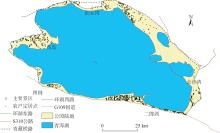
图1
研究区概况及调研点"
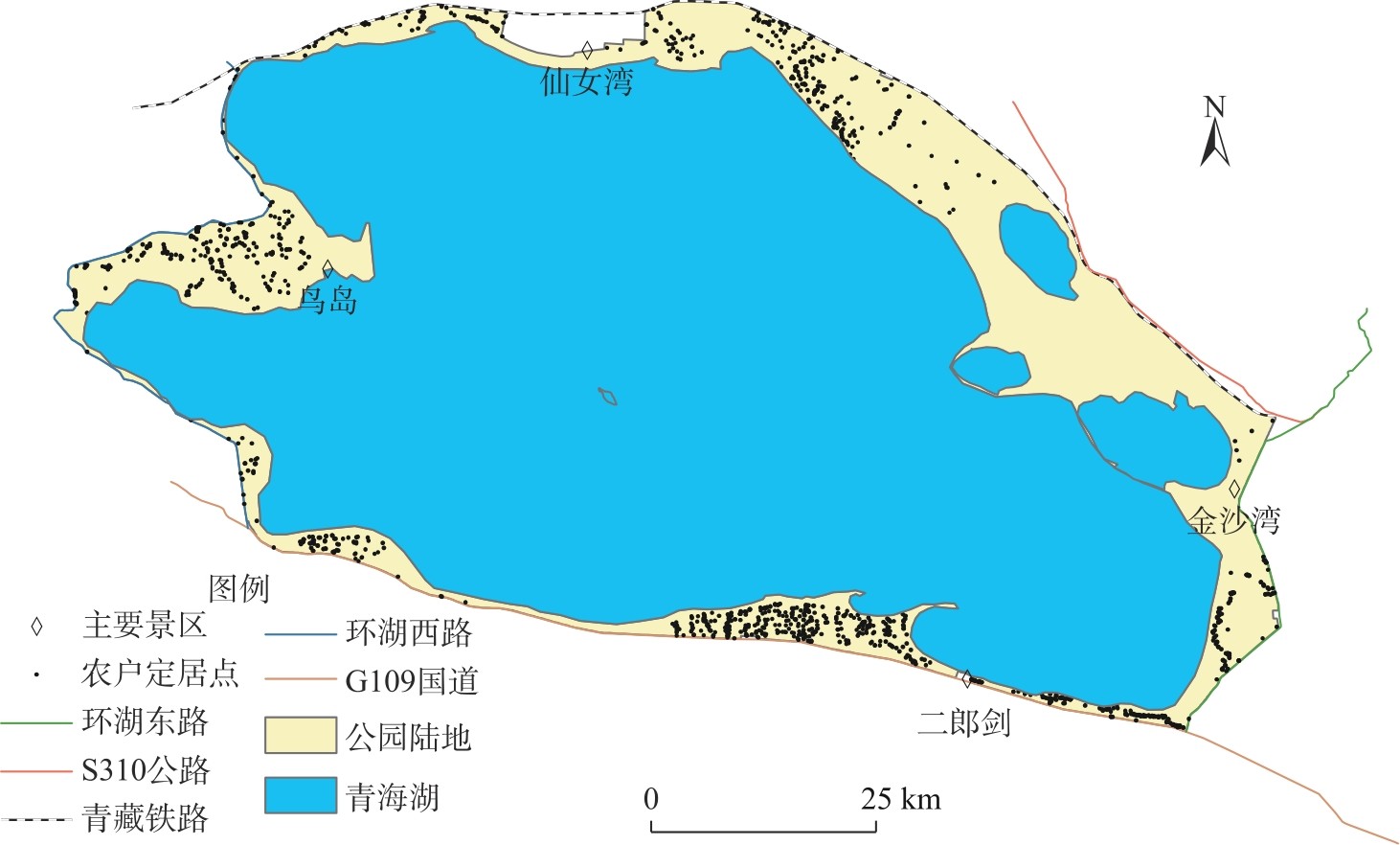

表1
农户生计类型划分及描述性统计特征"
| 统计量 | 农牧业主导型 | 服务业主导型 | 政府兜底型 | 务工主导型 |
|---|---|---|---|---|
| 收入来源占比 | 种植及畜牧业≥60% | 旅游、经商等服务性活动≥60% | 政府补助≥90% | 务工活动≥90% |
| 样本户数 | 1172 | 380 | 123 | 139 |
| 户均人口数 | 4.21 | 3.97 | 3.43 | 3.72 |
| 户均劳动力数 | 2.30 | 2.36 | 2.10 | 2.19 |
表2
农户现代化评价指标体系"
| 维度 | 指标层 | 指标说明 | 属性 | 权重 |
|---|---|---|---|---|
| 生产现代化 | 产业组织化程度/个 | 参与合作社数量 | + | 0.117 |
| 劳动力素质/a | 劳动力人均受教育年限 | + | 0.123 | |
| 机械化程度/台 | 拥有农业机械数量 | + | 0.076 | |
| 劳动生产率/元·人-1 | 家庭总收入与劳动力数量的比值 | + | 0.102 | |
| 非农产业水平/% | 第二、三产业收入占家庭总收入比重 | + | 0.114 | |
| 生计渠道数量/种 | 收入渠道数 | + | 0.043 | |
| 土地产出率/104元·hm-2 | 单位土地面积的农业产值 | + | 0.079 | |
| 农业保险深度 | 农业保险保额占农产品产值比重/% | + | 0.064 | |
| 生活现代化 | 供水便利度 | 据用水来源赋值:自来水=1;井水=0.75;泉水=0.5;河湖水=0.25;取水困难=0 | + | 0.007 |
| 住房条件 | 据住房结构赋值:砖混=1;砖木=0.75;土木=0.5;土坯、彩钢=0.25 | + | 0.011 | |
| 卫生设施水平 | 据厕所类型赋值:马桶=1;旱厕=0.75;露天厕所=0.5;开放式厕所=0.25 | + | 0.030 | |
| 家电保有量/台 | 大型家电数量 | + | 0.029 | |
| 家庭出行能力 | 据交通工具种类及数量赋值:轿车=1;农用车=0.75;摩托车=0.5;自行车=0.25 | + | 0.029 | |
| 恩格尔系数/% | 食物支出占家庭总支出比重 | - | 0.043 | |
| 教育文娱消费水平/% | 教育文娱支出占家庭总支出比重 | + | 0.041 | |
| 生态现代化 | 草场质量 | 据草场质量赋值:优秀=1;良好=0.75;差=0.5;较差=0.25;极差=0 | + | 0.067 |
| 生态保护意识 | 据环保意识赋值:优秀=1;良好=0.75;差=0.5;较差=0.25;极差=0 | + | 0.006 | |
| 轮牧实施情况 | 据季节性轮牧实施情况赋值:是=1;否=0 | + | 0.019 |
表3
农户现代化评估"
| 现代化指标 | 农牧业主导型 | 服务业主导型 | 政府兜底型 | 务工主导型 | 研究区总体 |
|---|---|---|---|---|---|
| 产业组织化程度 | 0.038 | 0.042 | 0.028 | 0.017 | 0.036 |
| 劳动力素质 | 0.044 | 0.063 | 0.041 | 0.058 | 0.049 |
| 机械化程度 | 0.001 | 0.001 | 0.000 | 0.000 | 0.001 |
| 劳动生产率 | 0.026 | 0.024 | 0.009 | 0.012 | 0.024 |
| 非农产业水平 | 0.006 | 0.045 | 0.011 | 0.078 | 0.020 |
| 生计渠道数量 | 0.015 | 0.021 | 0.000 | 0.016 | 0.015 |
| 土地产出率 | 0.011 | 0.004 | 0.004 | 0.002 | 0.008 |
| 农业保险深度 | 0.018 | 0.019 | 0.017 | 0.015 | 0.018 |
| 供水便利度 | 0.006 | 0.006 | 0.005 | 0.006 | 0.006 |
| 住房条件 | 0.008 | 0.009 | 0.008 | 0.009 | 0.008 |
| 卫生设施水平 | 0.010 | 0.012 | 0.009 | 0.010 | 0.010 |
| 家电保有量 | 0.009 | 0.008 | 0.007 | 0.004 | 0.008 |
| 家庭出行能力 | 0.007 | 0.006 | 0.005 | 0.004 | 0.007 |
| 恩格尔系数 | 0.009 | 0.010 | 0.011 | 0.012 | 0.009 |
| 教育文娱消费水平 | 0.005 | 0.005 | 0.005 | 0.004 | 0.005 |
| 草场质量 | 0.042 | 0.046 | 0.040 | 0.041 | 0.042 |
| 生态保护意识 | 0.005 | 0.005 | 0.005 | 0.004 | 0.005 |
| 轮牧实施情况 | 0.018 | 0.018 | 0.018 | 0.017 | 0.018 |
| 现代化指数 | 0.274 | 0.344 | 0.223 | 0.309 | 0.288 |
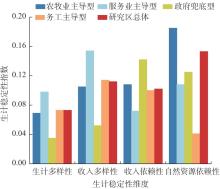
图2
不同类型农户生计稳定性评估"
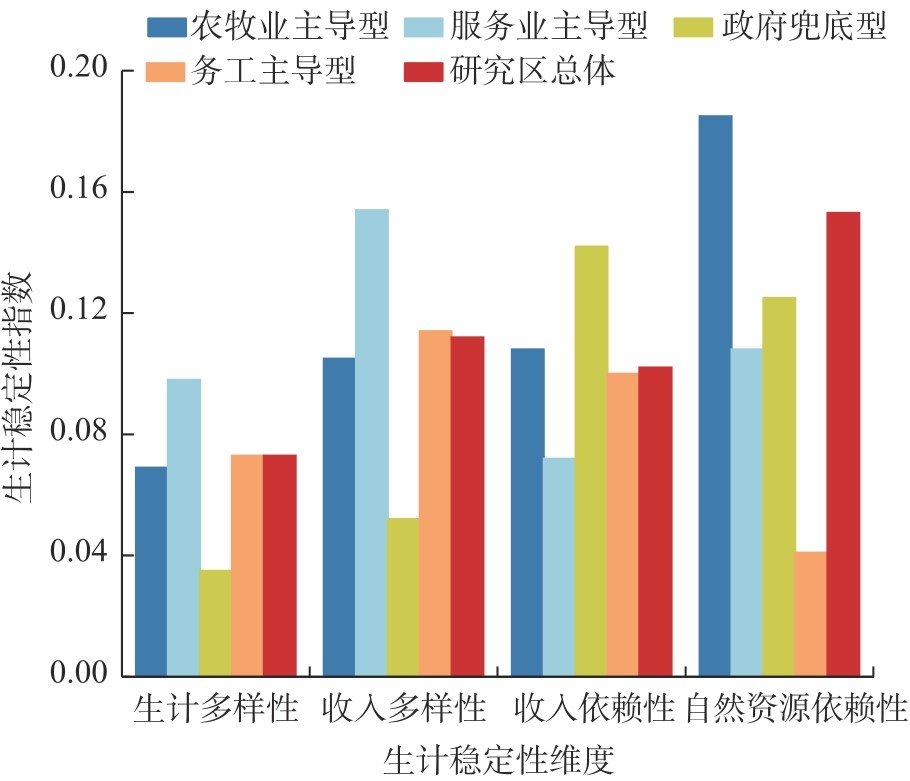
图3
农户现代化、生计稳定性及其耦合协调度的组间及组内差异"
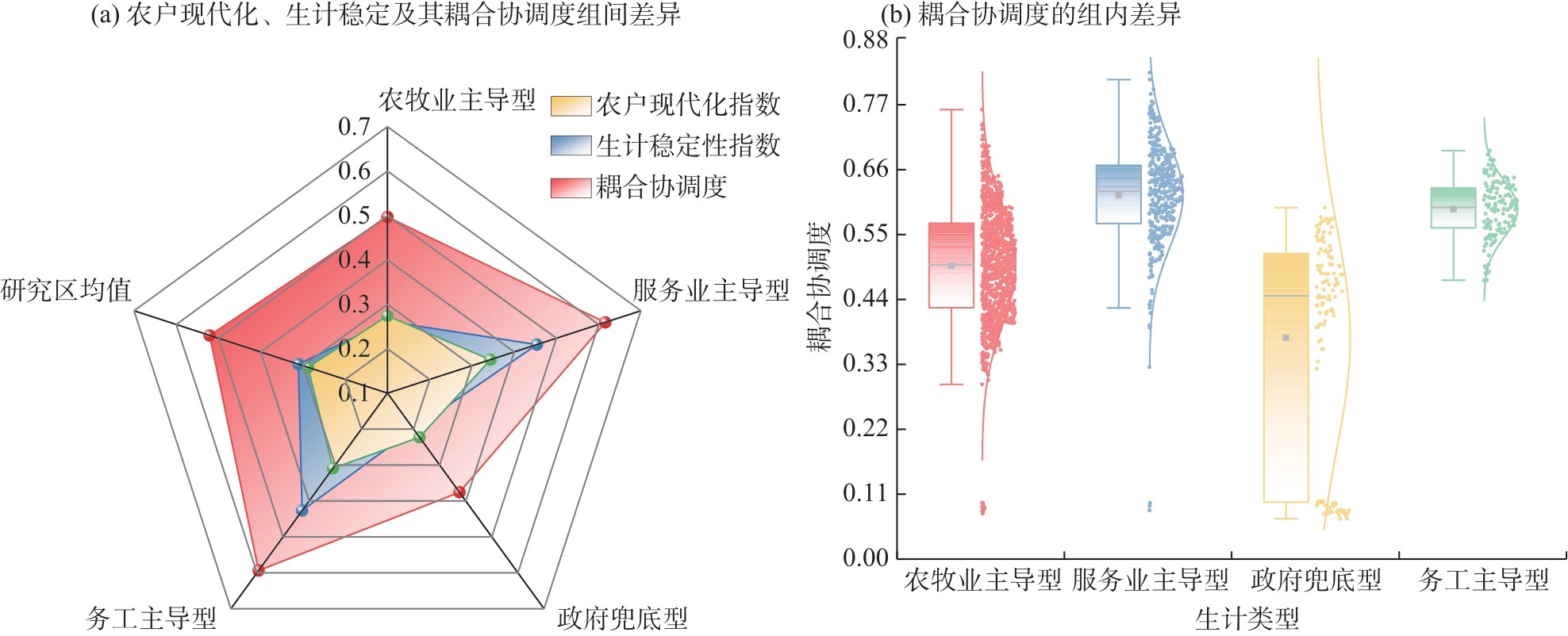
表4
农户现代化与生计稳定性的耦合协调情况"
| 生计类型 | 农户现代化 | 生计稳定性 | 耦合协调度 | 耦合协调阶段 | 相对发展阶段 |
|---|---|---|---|---|---|
| 农牧业主导型 | 0.274 | 0.262 | 0.497 | 中度协调 | 同步发展型 |
| 服务业主导型 | 0.344 | 0.454 | 0.616 | 高度协调 | 现代化滞后型 |
| 政府兜底型 | 0.223 | 0.200 | 0.376 | 初级协调 | 同步发展型 |
| 务工主导型 | 0.309 | 0.427 | 0.594 | 中度协调 | 现代化滞后型 |
| 研究区总体 | 0.288 | 0.311 | 0.521 | 中度协调 | 同步发展型 |
图4
耦合协调发展的空间分异特征"
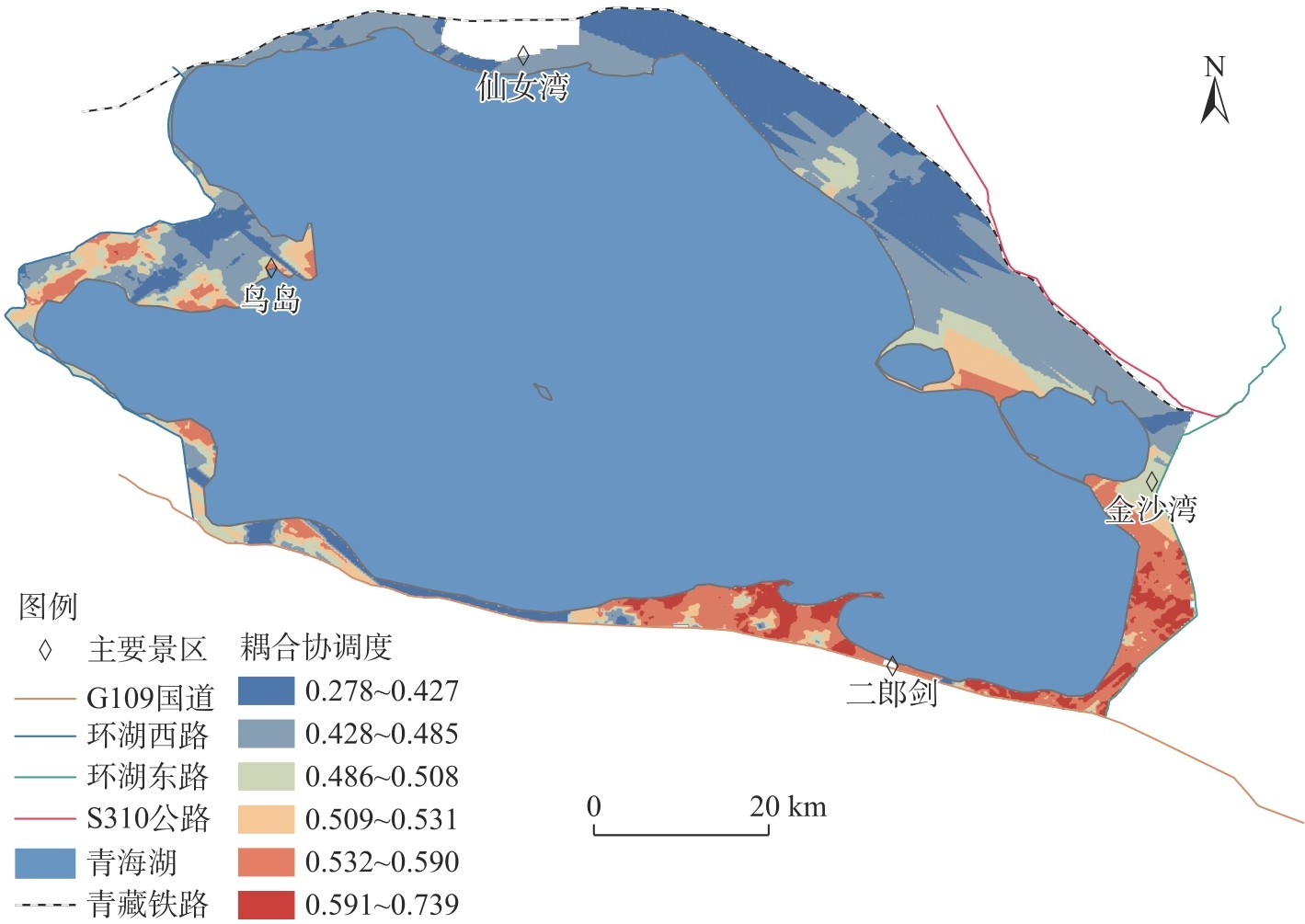
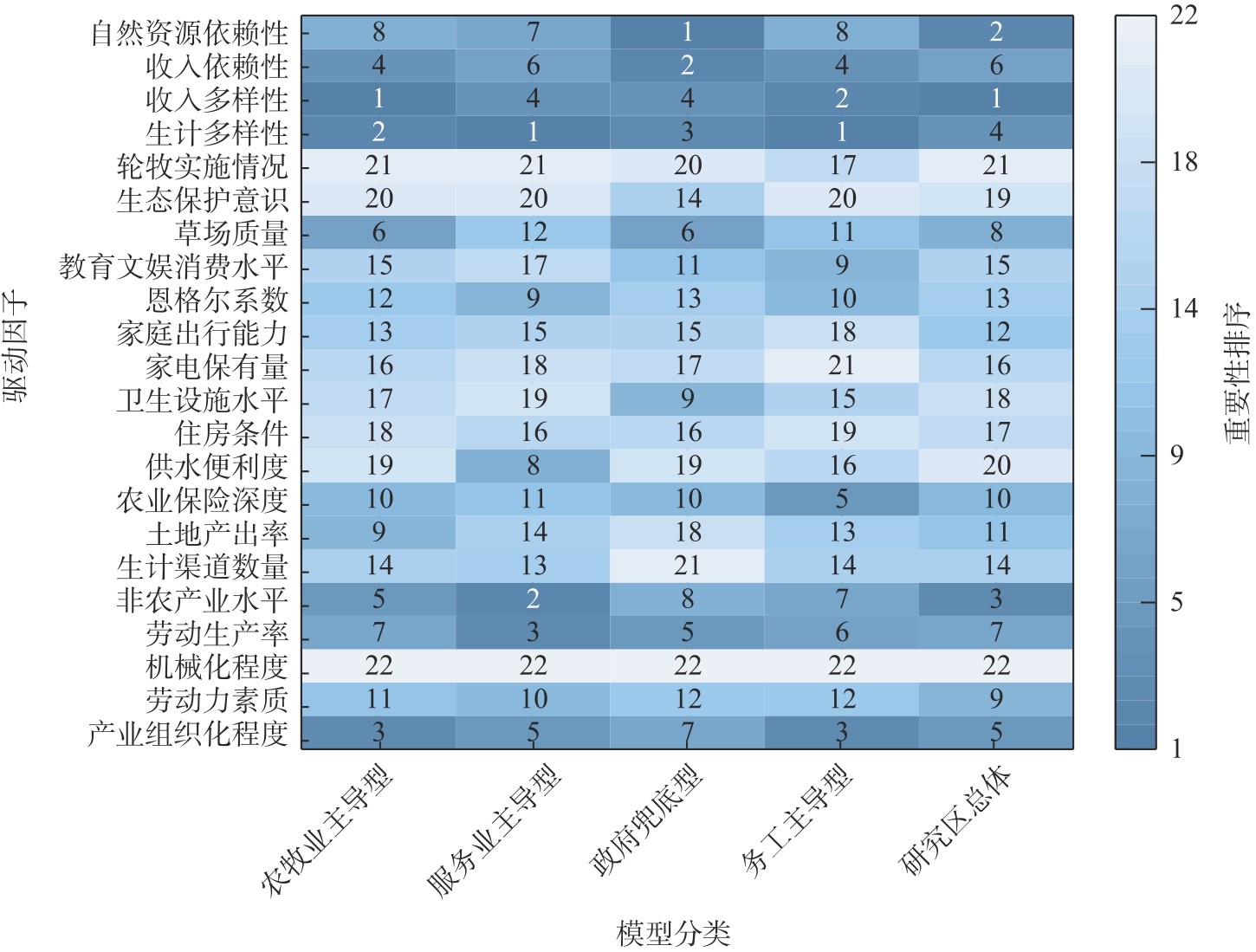
图5
耦合协调发展的驱动因子重要性排序"
| [1] |
周国华, 龙花楼, 林万龙, 等. 新时代“三农”问题和乡村振兴的理论思考与实践发展[J]. 自然资源学报, 2023, 38(8): 1919-1940.
doi: 10.31497/zrzyxb.20230801 |
|
[Zhou Guohua, Long Hualou, Lin Wanlong, et al. Theoretical debates and practical development of the “three rural issues” and rural revitalization in the new era[J]. Journal of Natural Resources, 2023, 38(8): 1919-1940.]
doi: 10.31497/zrzyxb.20230801 |
|
| [2] | 周升强, 赵凯. 北方农牧交错区农牧民生计资本与生计稳定性的耦合协调分析——以宁夏盐池县与内蒙古鄂托克旗为例[J]. 干旱区资源与环境, 2022, 36(2): 9-15. |
| [Zhou Shengqiang, Zhao Kai. Coupling coordination of capital and livelihood stability of farmers and herdsmen in northern agro-pastoral ecotone in northern China[J]. Journal of Arid Land Resources and Environment, 2022, 36(2): 9-15.] | |
| [3] | Zhu Q Y, Wang Z J, Umer M. The suitability of developing ecotourism in the Shanxi area of Taihangshan National Park, a candidate area for national parks in China[J]. Sustainability, 2025, 17(3): 841, doi: 10.3390/su17030841. |
| [4] | 邓金钱. 新型农村集体经济赋能脱贫户生计转型: 优势、机制与进路[J]. 中国人口·资源与环境, 2023, 33(2): 143-152. |
| [Deng Jinqian. New rural collective economy enabling poverty-free households’ livelihood transformation: Advantages, mechanisms, and approaches[J]. China Population, Resources and Environment, 2023, 33(2): 143-152.] | |
| [5] | 杨婕妤, 陈强强, 崔秀娟. 农牧交错区农牧民生计韧性差异化提升对策研究——以天祝藏族自治县为例[J]. 干旱区资源与环境, 2024, 38(10): 53-62. |
| [Yang Jieyu, Chen Qiangqiang, Cui Xiujuan. Differentiated improvement of livelihood resilience of farmers and herdsmen in the agricultural-pastoral ecotone: A case of Tianzhu Tibetan Autonomous County, China[J]. Journal of Arid Land Resources and Environment, 2024, 38(10): 53-62.] | |
| [6] | 陈俞全, 韩潇, 聂凤英. 自然灾害对我国农户生计多样化的影响研究[J]. 中国农业资源与区划, 2024, 45(10): 37-50. |
| [Chen Yuquan, Han Xiao, Nie Fengying. The impact of natural disaster on livelihood diversification strategies of rural households in China[J]. Chinese Journal of Agricultural Resources and Regional Planning, 2024, 45(10): 37-50.] | |
| [7] | Phiri A T, Zhao X H, Chen Q H. Revitalizing smallholder farming in Africa: Insights from China’s science and technology backyard model[J]. Research on World Agricultural Economy, 2024, 5(2): 1-13. |
| [8] | Asante B O, Ma W L, Prah S, et al. Promoting the adoption of climate-smart agricultural technologies among maize farmers in Ghana: Using digital advisory services[J]. Mitigation and Adaptation Strategies for Global Change, 2024, 29(3): 19, doi: 10.1007/s11027-024-10116-6. |
| [9] | Abdulai A R, Oklikah D O, Abdulai A S J, et al. State policies and smallholders politics in Ghana’s agriculture ‘modernization’paradigm: A policy review[J]. SN Social Sciences, 2024, 4(11): 202, doi: 10.1007/s43545-024-01004-6. |
| [10] |
李小建, 朱瑞明. 农区现代化进程中的农户地理研究[J]. 经济地理, 2023, 43(7): 1-11.
doi: 10.15957/j.cnki.jjdl.2023.07.001 |
|
[Li Xiaojian, Zhu Ruiming. Geography of rural households in the process of rural modernization[J]. Economic Geography, 2023, 43(7): 1-11.]
doi: 10.15957/j.cnki.jjdl.2023.07.001 |
|
| [11] | 匡远配, 彭云, 李姗姗. 新时代中国农业农村现代化的多重逻辑、基本特征及实现路径[J]. 中国农村经济, 2024(12): 2-22. |
| [Kuang Yuanpei, Peng Yun, Li Shanshan. The multiple logics, basic characteristics, and realization paths of China’s agricultural and rural modernization in the new era[J]. Chinese Rural Economy, 2024(12): 2-22.] | |
| [12] |
刘玉洁, 吕硕, 陈洁, 等. 青藏高原农业现代化时空分异及其驱动机制[J]. 地理学报, 2022, 77(1): 214-227.
doi: 10.11821/dlxb202201015 |
|
[Liu Yujie, Lü Shuo, Chen Jie, et al. Spatio-temporal differentiation of agricultural modernization and its driving mechanism on the Qinghai-Tibet Plateau[J]. Acta Geographica Sinica, 2022, 77(1): 214-227.]
doi: 10.11821/dlxb202201015 |
|
| [13] | 张文宣. 小农户生产现代化的理论分析与经验证实[J]. 经济问题, 2020(9): 92-99. |
| [Zhang Wenxuan. Organic connection between small farmer production and modern agricultural development: Theoretical logic and case studies[J]. On Economic Problems, 2020(9): 92-99.] | |
| [14] | 王伟龙, 邓鹏程. 乡村振兴战略下农户家庭农业现代化经营的困境、难点及对策研究[J]. 宏观经济研究, 2024(6): 103-113. |
| [Wang Weilong, Deng Pengcheng. Study on dilemmas, difficulties and countermeasures of farmers’ family agricultural modernization operation under rural revitalization strategy[J]. Macroeconomics, 2024(6): 103-113.] | |
| [15] | 张军以, 王腊春. 乡村振兴视域下的小农户振兴解析[J]. 人文地理, 2020, 35(6): 66-75. |
| [Zhang Junyi, Wang Lachun. Analysis of small peasant household revitalization from the perspective of the rural revitalization strategy[J]. Human Geography, 2020, 35(6): 66-75.] | |
| [16] | 吴孔森, 杨新军, 尹莎. 环境变化影响下农户生计选择与可持续性研究——以民勤绿洲社区为例[J]. 经济地理, 2016, 36(9): 141-149. |
| [Wu Kongsen, Yang Xinjun, Yin Sha. Farmers’ livelihood choice and sustainability under the influence of environmental change: A case study of Minqin oasis community in Gansu Province[J]. Economic Geography, 2016, 36(9): 141-149.] | |
| [17] | Li X, Xu S, Hu Y C. Understanding the rural livelihood stability system: The eco-migration in Huanjiang County, China[J]. Sustainability, 2020, 12(16): 6374, doi: 10.3390/su12166374. |
| [18] | 王银, 叶文丽, 吴孔森, 等. 稳定性视角下黄土高原生态系统与生计系统的冲突与耦合——以陕西省佳县为例[J]. 生态学报, 2024, 44(5): 1868-1880. |
| [Wang Yin, Ye Wenli, Wu Kongsen, et al. Conflict and coupling between ecosystem and livelihood system on the Loess Plateau from the perspective of stability: A case of Jia County, Shaanxi Province[J]. Acta Ecologica Sinica, 2024, 44(5): 1868-1880.] | |
| [19] | Aoxi Y, Ye J Q, Wang Y H. Coupling and coordination relationship between livelihood capital and livelihood stability of farmers in different agricultural regions[J]. Land, 2022, 11(11): 2049, doi: 10.3390/land11112049. |
| [20] |
Habib N, Ariyawardana A, Aziz A A. The influence and impact of livelihood capitals on livelihood diversification strategies in developing countries: A systematic literature review[J]. Environmental Science and Pollution Research, 2023, 30(27): 69882-69898.
doi: 10.1007/s11356-023-27638-2 |
| [21] |
王淑佳, 孔伟, 任亮, 等. 国内耦合协调度模型的误区及修正[J]. 自然资源学报, 2021, 36(3): 793-810.
doi: 10.31497/zrzyxb.20210319 |
|
[Wang Shujia, Kong Wei, Ren Liang, et al. Research on misuses and modification of coupling coordination degree model in China[J]. Journal of Natural Resources, 2021, 36(3): 793-810.]
doi: 10.31497/zrzyxb.20210319 |
|
| [22] |
徐爽, 胡业翠. 农户生计资本与生计稳定性耦合协调分析——以广西金桥村移民安置区为例[J]. 经济地理, 2018, 38(3): 142-148, 164.
doi: 10.15957/j.cnki.jjdl.2018.03.018 |
|
[Xu Shuang, Hu Yecui. Coupling coordination analysis of capital and livelihood stability of farmers: A case study of the resettlement area of Jinqiao Village in Guangxi[J]. Economic Geography, 2018, 38(3): 142-148, 164.]
doi: 10.15957/j.cnki.jjdl.2018.03.018 |
|
| [23] | Liu Z X, Sun J H, Li Y, et al. Exploring the sustainability of farmers’ livelihood-land use systems from a coupled coordination perspective[J]. Frontiers in Sustainable Food Systems, 2024, 8: 1511505, doi: 10.3389/fsufs.2024.1511505. |
| [24] |
刘庆芳, 杨定, 杨振山, 等. 青藏高原国家公园群人文生态系统耦合协调评价及障碍因子识别[J]. 地理学报, 2023, 78(5): 1119-1135.
doi: 10.11821/dlxb202305005 |
|
[Liu Qingfang, Yang Ding, Yang Zhenshan, et al. Evaluation of coupling coordination and identification of obstaclefactors of human ecosystem in Qinghai-Tibet Plateau National Park cluster[J]. Acta Geographica Sinica, 2023, 78(5): 1119-1135.]
doi: 10.11821/dlxb202305005 |
|
| [25] | Zhang Z F, Cong Z T, Gao B, et al. The water level change and its attribution of the Qinghai Lake from 1960 to 2020[J]. Journal of Hydrology: Regional Studies, 2024, 52: 101688, doi: 10.1016/j.ejrh.2024.101688. |
| [26] | 马勇洁, 仲俊涛, 米文宝, 等. 青海湖国家公园不同类型牧户生计韧性评价[J]. 长江流域资源与环境, 2025, 34(3): 682-692. |
| [Ma Yongjie, Zhong Juntao, Mi Wenbao, et al. Assessment of livelihood resilience among various herder groups within Qinghai Lake National Park[J]. Resources and Environment in the Yangtze Basin, 2025, 34(3): 682-692.] | |
| [27] |
Xiao Y, Xiao Q, Zhang J D. Balancing the international benefits and risks associated with implementation of ecological policy on the Qinghai-Xizang Plateau, China[J]. Gondwana Research, 2023, 115: 183-190.
doi: 10.1016/j.gr.2022.10.006 |
| [28] |
夏兴, 乔家君, 徐洋, 等. 农户多维相对贫困与生计多样性的耦合关系——以安徽省阜南县为例[J]. 经济地理, 2023, 43(4): 164-173.
doi: 10.15957/j.cnki.jjdl.2023.04.017 |
|
[Xia Xing, Qiao Jiajun, Xu Yang, et al. Coupling relationship between multidimensional relative poverty and livelihood diversity of farming households: A case of Funan County in Anhui Province, China[J]. Economic Geography, 2023, 43(4): 164-173.]
doi: 10.15957/j.cnki.jjdl.2023.04.017 |
|
| [29] |
翟彬, 王宇阁, 朱芳芳, 等. 生计策略下黄河流域农户生计韧性差异及其影响因素——以河南省为例[J]. 经济地理, 2024, 44(2): 156-165.
doi: 10.15957/j.cnki.jjdl.2024.02.016 |
| [Zhai Bin, Wang Yuge, Zhu Fangfang, et al. Differences in livelihood resilience of farm households in the Yellow River Basin under the background of livelihood strategies and its influencing factors: Taking Henan Province as an example[J]. Economic Geography, 2024, 44(2): 156-165.] | |
| [30] | 王晓毅, 罗静. 共同富裕、乡村振兴与小农户现代化[J]. 北京工业大学学报(社会科学版), 2022, 22(3): 64-74. |
| [Wang Xiaoyi, Luo Jing. Common prosperity, rural revitalization and small holder modernization[J]. Journal of Beijing University of Technology (Social Sciences Edition), 2022, 22(3): 64-74.] | |
| [31] | Aruldoss M, Lakshmi T M, Venkatesan V P. A survey on multi criteria decision making methods and its applications[J]. American Journal of Information Systems, 2013, 1(1): 31-43. |
| [32] |
曹佳琳, 刘艳芳, 赵金梅, 等. 宁夏城市建设用地节约集约利用与高质量发展耦合协调研究[J]. 干旱区地理, 2024, 47(5): 872-884.
doi: 10.12118/j.issn.1000-6060.2023.562 |
|
[Cao Jialin, Liu Yanfang, Zhao Jinmei, et al. Coupling and coordination of economical and intensive utilization of urban construction land and high-quality development in Ningxia[J]. Arid Land Geography, 2024, 47(5): 872-884.]
doi: 10.12118/j.issn.1000-6060.2023.562 |
|
| [33] |
周闯, 郑旭刚, 杨苘菲. 新型城镇化与乡村振兴的共同演化及其市民化效应[J]. 地理研究, 2024, 43(12): 3265-3288.
doi: 10.11821/dlyj020240177 |
| [Zhou Chuang, Zheng Xugang, Yang Qingfei. Coevolution of new urbanization and rural revitalization and its citizenization effect[J]. Geographical Research, 2024, 43(12): 3265-3288.] | |
| [34] |
王金伟, 王启翔, 冯凌. 中国数字经济与旅游业高质量发展的协调格局及驱动机制[J]. 地理科学, 2024, 44(1): 130-139.
doi: 10.13249/j.cnki.sgs.20221571 |
|
[Wang Jinwei, Wang Qixiang, Feng Ling. Coordination pattern and driving mechanism of digital economy and high-quality tourism development in China[J]. Scientia Geographica Sinica, 2024, 44(1): 130-139.]
doi: 10.13249/j.cnki.sgs.20221571 |
|
| [35] |
Breiman L. Random forests[J]. Machine learning, 2001, 45: 5-32.
doi: 10.1023/A:1010933404324 |
| [36] |
刘卫东, 唐志鹏, 夏炎, 等. 中国碳强度关键影响因子的机器学习识别及其演进[J]. 地理学报, 2019, 74(12): 2592-2603.
doi: 10.11821/dlxb201912012 |
|
[Liu Weidong, Tang Zhipeng, Xia Yan, et al. Identifying the key factors influencing Chinese carbon intensity using machine learning, the random forest algorithm, and evolutionary analysis[J]. Acta Geographica Sinica, 2019, 74(12): 2592-2603.]
doi: 10.11821/dlxb201912012 |
|
| [37] | 朱楠, 陈维茹. 我国西部地区人民生活现代化: 评判、预测与实现路径[J]. 管理学刊, 2022, 35(2): 28-42. |
| [Zhu Nan, Chen Weiru. Modernization of people’s life in western China: Evaluation, judgment and implementation path[J]. Journal of Management, 2022, 35(2): 28-42.] | |
| [38] |
刘玒玒, 刘书芳. 祁连山地区复合生态系统韧性时空演化及障碍因子识别[J]. 干旱区地理, 2024, 47(2): 237-247.
doi: 10.12118/j.issn.1000-6060.2023.214 |
|
[Liu Honghong, Liu Shufang. Spatiotemporal evolution and obstacle identification of complex ecosystem resilience in the Qilian Mountain area[J]. Arid Land Geography, 2024, 47(2): 237-247.]
doi: 10.12118/j.issn.1000-6060.2023.214 |
|
| [39] |
安晓宁, 辛岭. 中国农业现代化发展的时空特征与区域非均衡性[J]. 资源科学, 2020, 42(9): 1801-1815.
doi: 10.18402/resci.2020.09.14 |
|
[An Xiaoning, Xin Ling. The spatiotemporal characteristics and regional nonequilibrium of agricultural modernization development in China[J]. Resources Science, 2020, 42(9): 1801-1815.]
doi: 10.18402/resci.2020.09.14 |
|
| [40] |
孙彦, 赵雪雁. 山区农户的生计干预效率及其影响因素——以陇南山区为例[J]. 地理研究, 2023, 42(7): 1874-1891.
doi: 10.11821/dlyj020220867 |
| [Sun Yan, Zhao Xueyan. Efficiency and influencing factors of livelihood interventions of farming households in mountainous areas: A case study of Longnan mountainous areas[J]. Geographical Research, 2023, 42(7): 1874-1891.] | |
| [41] |
刘佳, 赵青华, 王慧. 乡村旅游发展促进农村可持续生计的空间效应及机制[J]. 自然资源学报, 2023, 38(2): 490-510.
doi: 10.31497/zrzyxb.20230214 |
|
[Liu Jia, Zhao Qinghua, Wang Hui. Study on the spatial effect and mechanism of rural tourism development promoting rural sustainable livelihood[J]. Journal of Natural Resources, 2023, 38(2): 490-510.]
doi: 10.31497/zrzyxb.20230214 |
| [1] | 王慧丽, 李妞, 刘英, 刘咏涵. 黄河流域水资源-生态韧性动态耦合与级层障碍解析[J]. 干旱区地理, 2026, 49(3): 569-580. |
| [2] | 刘昊, 李福莲, 汪圣. 中国居家社区养老与机构养老耦合协调格局及影响因素研究[J]. 干旱区地理, 2026, 49(2): 381-392. |
| [3] | 欧开航, 方世巧, 程乾, 周徐帆. 农村公共服务与乡村旅游耦合协调度及其乡村振兴影响效应——基于西部地区的实证[J]. 干旱区地理, 2026, 49(2): 404-415. |
| [4] | 孙国军, 李家瑶, 王子轩. 黄河流域数文旅产业发展水平评价与耦合协调时空特征分析[J]. 干旱区地理, 2026, 49(1): 117-127. |
| [5] | 徐建斌, 曹小曙. 宁夏小流域尺度水土资源耦合特征及影响因素[J]. 干旱区地理, 2025, 48(9): 1531-1540. |
| [6] | 周涛, 王亚娟, 刘小鹏. 宁夏沿黄城市群新型城镇化与低碳发展的耦合交互研究[J]. 干旱区地理, 2025, 48(8): 1457-1468. |
| [7] | 袁梦, 谢保鹏, 田丽敏, 陈英, 裴婷婷. 六盘山甘肃片区土地利用多功能与多维相对贫困的时空耦合关系[J]. 干旱区地理, 2025, 48(7): 1304-1316. |
| [8] | 侯彩霞, 张宇宙, 杨建平. 关中平原城市群水资源-社会-生态系统耦合协调及障碍因子分析[J]. 干旱区地理, 2025, 48(4): 717-727. |
| [9] | 李梦园, 庞家朋, 李欢. 省域典型旅游集散地综合可达性协调发展及空间关系研究——以新疆为例[J]. 干旱区地理, 2025, 48(3): 539-548. |
| [10] | 李锦, 蒲娟, 李明亮, 赵兰兰, 余国新. 新型城镇化与和美乡村耦合协调发展水平测度、地区差异及动态演进[J]. 干旱区地理, 2025, 48(12): 2220-2231. |
| [11] | 楚文溪, 杨新军, 李润阳. 关中平原城市群城市韧性与生态系统服务耦合协调关系及影响因素[J]. 干旱区地理, 2025, 48(11): 2005-2018. |
| [12] | 王生霞, 李茂兰, 刘芮廷. 旅游业效率与城镇化耦合协调度的时空演变及障碍因素分析——以“一带一路”核心段为例[J]. 干旱区地理, 2025, 48(11): 2053-2061. |
| [13] | 李占稳, 吴文恒, 姚涵刚, 朱昱泽, 李钰萱. 黄河流域新型城镇化与农业现代化耦合协调的时空格局及驱动机制[J]. 干旱区地理, 2025, 48(10): 1878-1891. |
| [14] | 刘慧, 孙思奥, 方创琳, 周迪, 鲍超. 1990—2020年新疆用水量时空演化格局及影响因素分析[J]. 干旱区地理, 2024, 47(9): 1451-1461. |
| [15] | 王超, 雷婷, 孟晓莎, 樊建强. “交旅”融合下旅游经济与高速交通协调发展分析——以关中平原城市群为例[J]. 干旱区地理, 2024, 47(6): 1015-1025. |
|
||

