Arid Land Geography ›› 2026, Vol. 49 ›› Issue (10): 2171-2181.doi: 10.12118/j.issn.1000-6060.2025.640
• Regional Development • Previous Articles Next Articles
LI Xuhui( ), NIAN Qingyu
Received:2025-10-13
Revised:2025-11-04
Online:2026-10-25
Published:2026-10-26
LI Xuhui, NIAN Qingyu. Spatiotemporal evolution and multiple paths for the coordinated development of digitalization and greening in China’s logistics industry: Based on the AIS theoretical framework[J].Arid Land Geography, 2026, 49(10): 2171-2181.
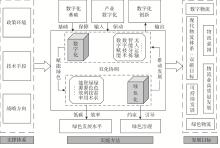
Fig. 1
Theoretical framework for the coordinated development of digitalization and greening in the logistics industry"
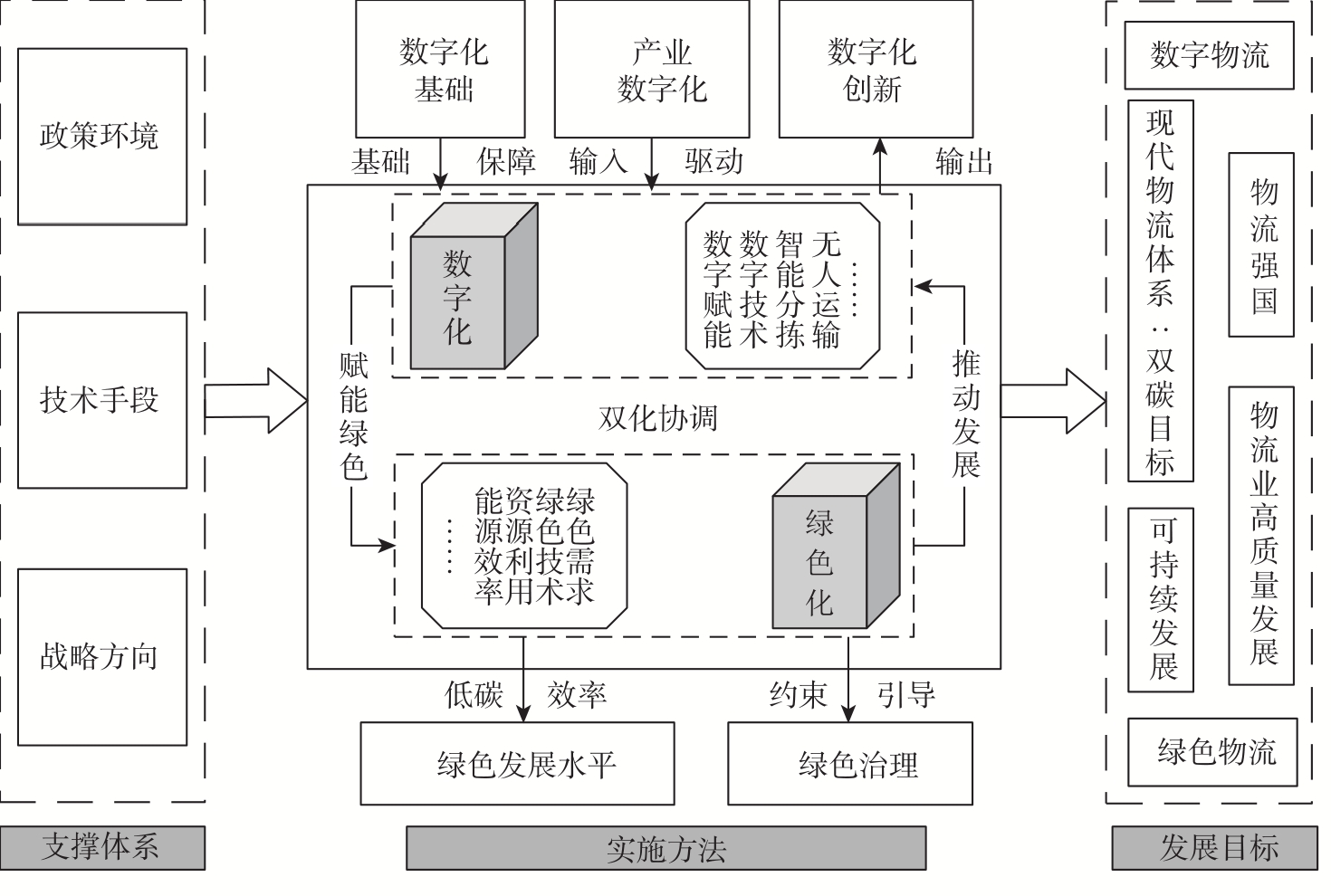
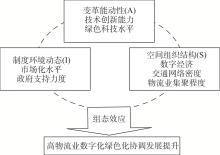
Fig. 2
AIS theoretical framework for enhancing the coordinated development of digitalization and greening in the logistics industry"

Tab. 1
Evaluation indicator system for the coordinated development of digitalization and greening in China’s logistics industry"
| 准则层 | 一级指标 | 二级指标 | 单位 | 属性 |
|---|---|---|---|---|
| 物流业数字化 | 数字化基础 | 互联网宽带接入用户数 | 104个 | + |
| 移动电话普及率 | 部·(102人)-1 | + | ||
| 光缆线路长度 | km | + | ||
| 邮政营业网点 | 个 | + | ||
| 产业数字化 | 每百家企业拥有网站数 | 个 | + | |
| 每百人使用计算机数 | 台 | + | ||
| 人均电子商务交易额 | 元 | + | ||
| 有电子商务交易活动的企业占比 | % | + | ||
| 数字化创新 | 新产品开发项目数 | 项 | + | |
| 物流相关专利申请数 | 个 | + | ||
| 物流业R&D经费支出 | 104元 | + | ||
| 物流业绿色化 | 绿色发展水平 | 单位货运量碳排放量 | 104 t CO2·(104t)-1 | - |
| 单位货物周转量碳排放量 | 104 t CO2·(108t km)-1 | - | ||
| 单位运输车辆碳排放量 | 104 t CO2·辆-1 | - | ||
| 单位公路线路里程碳排放量 | 104 t CO2·km-1 | - | ||
| 单位物流业增加值碳排放 | 104 t CO2·(108元)-1 | - | ||
| 单位物流业固定资产投资碳排放量 | 104 t CO2·(108元)-1 | - | ||
| 绿色治理 | 环境污染治理投资占GDP的比重 | % | + | |
| 建成区绿化覆盖率 | % | + | ||
| 一般工业固体废物综合利用率 | % | + |
Tab. 2
Classification of coupling coordination degree types"
| 类型 | 区间 |
|---|---|
| 失调衰退 | [0.0, 0.2) |
| 勉强协调 | [0.2, 0.4) |
| 初级协调 | [0.4, 0.5) |
| 中等协调 | [0.5, 0.6) |
| 良好协调 | [0.6, 0.8) |
| 优质协调 | [0.8, 1.0) |
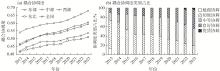
Fig. 3
Temporal changes in the coupling coordination degree of digitalization and greening in China’s logistics industry and the proportion of its types from 2013 to 2023"
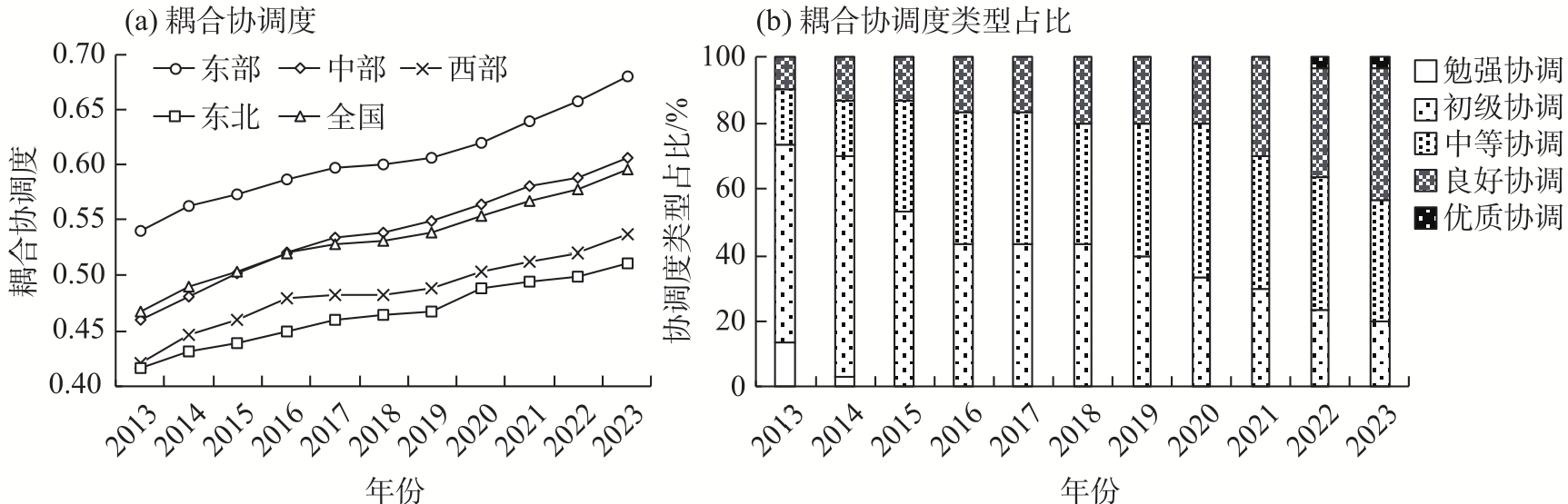
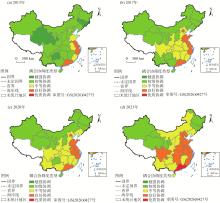
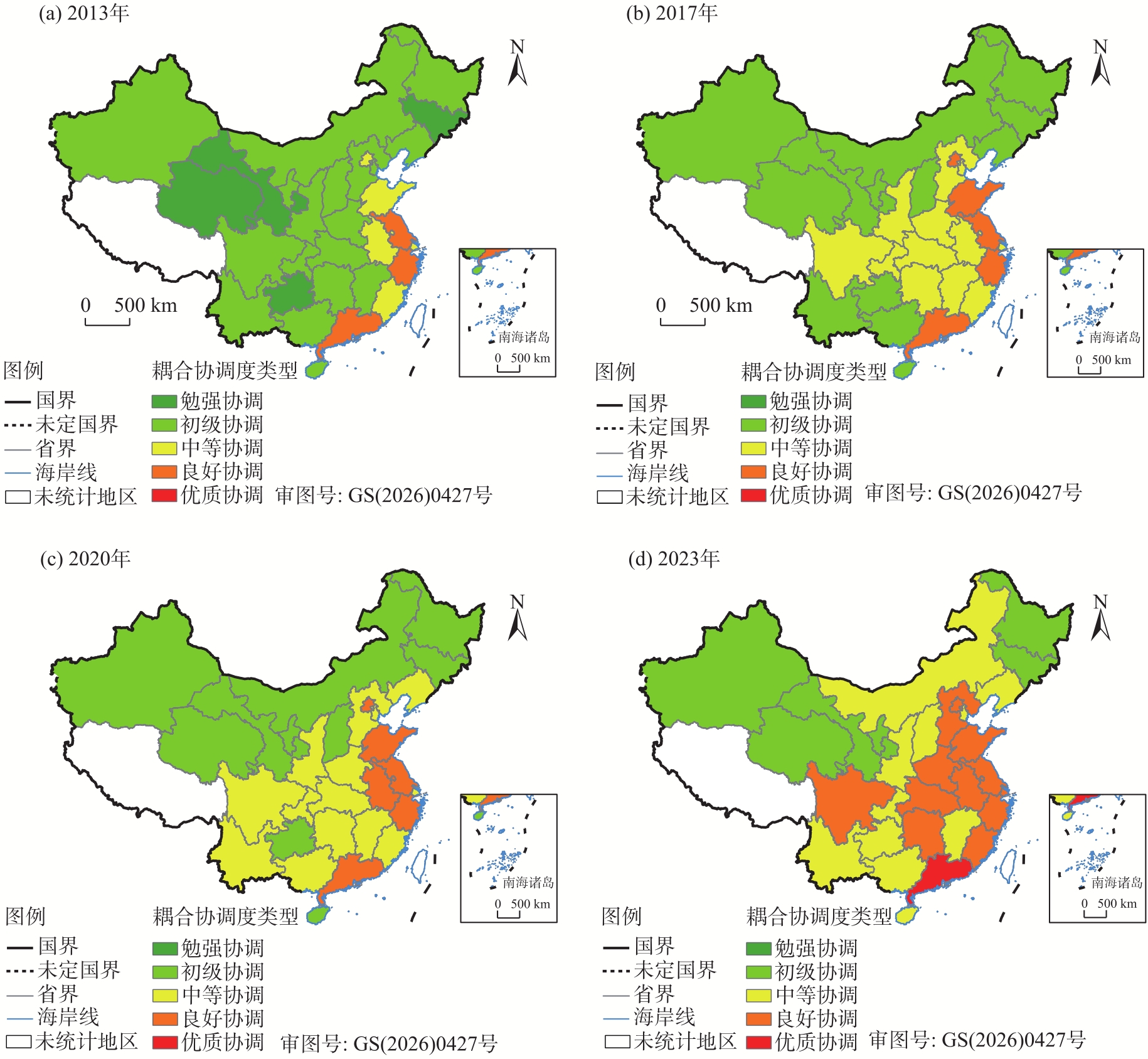
Fig. 4
Spatial patterns of coupling coordination degree of digitalization and greening in China’s logistics industry from 2013 to 2023"
Tab. 3
Global Moran’sI for the coordinated development of digitalization and greening in China’s logistics industry from 2013 to 2023"
| 年份 | Moran’sI | Z值 | P值 | 年份 | Moran’sI | Z值 | P值 |
|---|---|---|---|---|---|---|---|
| 2013 | 0.366 | 3.312 | 0.000 | 2019 | 0.331 | 3.007 | 0.001 |
| 2014 | 0.360 | 3.263 | 0.001 | 2020 | 0.312 | 2.860 | 0.002 |
| 2015 | 0.389 | 3.491 | 0.000 | 2021 | 0.336 | 3.051 | 0.001 |
| 2016 | 0.320 | 2.914 | 0.002 | 2022 | 0.341 | 3.078 | 0.001 |
| 2017 | 0.310 | 2.827 | 0.002 | 2023 | 0.351 | 3.156 | 0.001 |
| 2018 | 0.338 | 3.072 | 0.001 |
Tab. 4
Spatial agglomeration types of the coordinated development of digitalization and greening in the logistics industry of China’s provinces (autonomous regions)"
| 年份 | 高-高集聚 | 低-高集聚 | 低-低集聚 | 高-低集聚 |
|---|---|---|---|---|
| 2013 | 北京、天津、上海、江苏、浙江、安徽、福建、山东 | 河北、江西、河南、广西、海南 | 山西、内蒙古、辽宁、吉林、黑龙江、湖北、湖南、重庆、四川、贵州、云南、陕西、甘肃、青海、宁夏、新疆 | 广东 |
| 2023 | 河北、上海、江苏、浙江、安徽、福建、山东、河南、湖北、湖南 | 天津、江西、广西、海南 | 山西、内蒙古、辽宁、吉林、黑龙江、云南、陕西、甘肃、青海、宁夏、贵州、新疆 | 北京、广东、重庆、四川 |
Tab. 5
Configuration analysis results of high coupling coordination degree"
| 条件变量 | 高耦合协调度 | |||||
|---|---|---|---|---|---|---|
| 组态S1 | 组态S2 | 组态S3 | 组态S4 | 组态S5 | 组态S6 | |
| 技术创新能力 | ● | ● | ● | ● | ● | |
| 绿色科技水平 | • | • | • | • | ● | ● |
| 政府支持力度 | ⊗ | • | ⊗ | • | ||
| 市场化水平 | • | • | • | • | ⊗ | |
| 数字经济 | ● | ● | ● | ● | • | ● |
| 物流业集聚程度 | ⊗ | ⊗ | ● | ● | ||
| 交通网络密度 | • | • | • | ⊗ | ||
| 一致性 | 0.977 | 0.981 | 0.985 | 0.993 | 0.97 | 0.918 |
| PRI | 0.969 | 0.977 | 0.982 | 0.991 | 0.951 | 0.766 |
| 原始覆盖度 | 0.409 | 0.431 | 0.458 | 0.249 | 0.197 | 0.073 |
| 唯一覆盖度 | 0.032 | 0.057 | 0.041 | 0.041 | 0.023 | 0.012 |
| 组间一致性调整距离 | 0.038 | 0.038 | 0.045 | 0.053 | 0.105 | 0.139 |
| 组内一致性调整距离 | 0.132 | 0.086 | 0.046 | 0.052 | 0.115 | 0.104 |
| 总体一致性 | 0.974 | |||||
| 总体PRI | 0.967 | |||||
| 总体覆盖度 | 0.700 | |||||
| [1] | 栗伊萱, 翟云. 迈向数字化绿色化协同转型发展: 理论逻辑、实践机理与政府角色[J]. 电子政务, 2025(7): 2-15. |
| [Li Yixuan, Zhai Yun. Advancing digital and green collaborative transformation: Theoretical logic, practical mechanisms, and the government’s role[J]. E-Government, 2025(7): 2-15. ] | |
| [2] | 王春娟, 郭凯歌. 数字经济赋能绿色物流高质量发展效应分析[J]. 华东经济管理, 2024, 38(2): 53-63. |
| [Wang Chunjuan, Guo Kaige. The effect of digital economy empowering high-quality development of green logistics[J]. East China Economic Management, 2024, 38(2): 53-63. ] | |
| [3] |
李旭辉, 陈梦伟, 王经伟. 省域数字化与绿色化协同发展评价、时空特征及其影响因素[J]. 经济地理, 2024, 44(7): 126-134.
doi: 10.15957/j.cnki.jjdl.2024.07.013 |
|
[Li Xuhui, Chen Mengwei, Wang Jingwei. Evaluation, spatiotemporal characteristics and influencing factors of collaborative development between digitalization and greenization at the provincial level[J]. Economic Geography, 2024, 44(7): 126-134. ]
doi: 10.15957/j.cnki.jjdl.2024.07.013 |
|
| [4] |
谷城, 张树山. 中国物流产业智慧化空间联系的网络结构及其影响因素[J]. 经济地理, 2023, 43(5): 117-127.
doi: 10.15957/j.cnki.jjdl.2023.05.013 |
|
[Gu Cheng, Zhang Shushan. Network structure and influencing factors of spatial connection in the intelligence of China’s logistics industry[J]. Economic Geography, 2023, 43(5): 117-127. ]
doi: 10.15957/j.cnki.jjdl.2023.05.013 |
|
| [5] | 赵松岭, 陈镜宇. 发展智慧物流的路径探索[J]. 人民论坛, 2020(8): 108-109. |
| [Zhao Songling, Chen Jingyu. Exploration of the development paths of smart logistics[J]. People’s Tribune, 2020(8): 108-109. ] | |
| [6] | 张树山, 谷城, 张佩雯, 等. 智慧物流赋能供应链韧性提升: 理论与经验证据[J]. 中国软科学, 2023(11): 54-65. |
| [Zhang Shushan, Gu Cheng, Zhang Peiwen, et al. Intelligent logistics empowers supply chain resilience: Theory and empirical evidence[J]. China Soft Science, 2023(11): 54-65. ] | |
| [7] | 褚晓琳, 贾扬帆, 武晓婷. 基于投入产出技术的物流业数字化程度测度[J]. 统计与决策, 2024, 40(1): 86-90. |
| [Chu Xiaolin, Jia Yangfan, Wu Xiaoting. Measurement of the digitalization level of the logistics industry based on input-output technology[J]. Statistics & Decision, 2024, 40(1): 86-90. ] | |
| [8] | 罗瑞, 王琴梅. 数字物流高质量发展水平区域差异及空间收敛性研究[J]. 统计与决策, 2022, 38(17): 109-113. |
| [Luo Rui, Wang Qinmei. Research on regional differences and spatial convergence of high-quality development level of digital logistics[J]. Statistics & Decision, 2022, 38(17): 109-113. ] | |
| [9] |
王泽宇, 倪梦笛, 宋洹, 等. 沿海地区物流服务数智化水平格局变化及其影响因素[J]. 经济地理, 2025, 45(5): 93-102, 112.
doi: 10.15957/j.cnki.jjdl.2025.05.010 |
|
[Wang Zeyu, Ni Mengdi, Song Huan, et al. Evolution and influencing factors of logistics service intellectualization level in China’s coastal areas[J]. Economic Geography, 2025, 45(5): 93-102, 112. ]
doi: 10.2307/143186 |
|
| [10] | 龚雪, 荆林波. 发展绿色物流理论与政策研究述评[J]. 现代经济探讨, 2017(11): 126-132. |
| [Gong Xue, Jing Linbo. Review of research on the development of green logistics theory and policy[J]. Modern Economic Research, 2017(11): 126-132. ] | |
| [11] | 樊轶侠, 王正早. 数字技术赋能低碳消费: 理论机制与推进方略[J]. 改革, 2024(3): 63-74. |
| [Fan Yixia, Wang Zhengzao. Empowering low-carbon consumption with digital technology: Theoretical mechanism and promoting strategies[J]. Reform, 2024(3): 63-74. ] | |
| [12] |
Jefimovaitė L, Vienažindienė M. Green logistics concept and the impact of its implementation in the organization: A systematic literature review and meta-analysis[J]. Engineering Management in Production and Services, 2025, 17(1): 39-51.
doi: 10.2478/emj-2025-0004 |
| [13] |
张旭, 吕明睿, 张春雪, 等. 高质量发展背景下区域绿色物流水平评价及障碍因子[J]. 经济地理, 2023, 43(5): 139-149.
doi: 10.15957/j.cnki.jjdl.2023.05.015 |
|
[Zhang Xu, Lü Mingrui, Zhang Chunxue, et al. Evaluation and obstacle factors of regional green logistics level under the background of the high-quality development[J]. Economic Geography, 2023, 43(5): 139-149. ]
doi: 10.15957/j.cnki.jjdl.2023.05.015 |
|
| [14] | 武勇杰, 原悦, 侯柳茹. 黄河流域绿色物流与绿色经济协调发展的驱动因素[J]. 科技管理研究, 2024, 44(24): 57-66. |
| [Wu Yongjie, Yuan Yue, Hou Liuru. Driving factors of coordinated development of green logistics and green economy in the Yellow River Basin[J]. Science and Technology Management Research, 2024, 44(24): 57-66. ] | |
| [15] | 李义华, 邓梦杰. 数字经济赋能冷链物流绿色化发展机理与路径研究[J]. 财经理论与实践, 2024, 45(6): 131-138. |
| [Li Yihua, Deng Mengjie. Research on the mechanism and path of green development of cold chain logistics empowered by digital economy[J]. The Theory and Practice of Finance and Economics, 2024, 45(6): 131-138. ] | |
| [16] | 焦志伦, 李雯雯, 刘秉镰. 数字经济发展必然减少行业碳排放吗?--来自物流业的新证据[J]. 南开经济研究, 2024(6): 110-128. |
| [Jia Zhilun, Li Wenwen, Liu Binglian. Will digital economy reduce industrial carbon emissions? New evidence from China’s logistics industry[J]. Nankai Economic Studies, 2024(6): 110-128. ] | |
| [17] | 王燕武, 邹乐欢, 莫长炜. 地区产业多样化的组态路径研究--基于AIS框架的分析[J]. 科研管理, 2025, 46(2): 64-72. |
| [Wang Yanwu, Zou Lehuan, Mo Changwei. Research on the configuration path of regional industrial diversification: An analysis based on the AIS framework[J]. Science Research Management, 2025, 46(2): 64-72. ] | |
| [18] |
李春林, 陈慧, 张鸣亚, 等. 浙江数字经济、产业结构升级与共同富裕的实证研究[J]. 经济地理, 2024, 44(10): 136-144.
doi: 10.15957/j.cnki.jjdl.2024.10.014 |
|
[Li Chunlin, Chen Hui, Zhang Mingya, et al. Empirical study on digital economy, industrial structure upgrading and common prosperity in Zhejiang Province[J]. Economic Geography, 2024, 44(10): 136-144. ]
doi: 10.15957/j.cnki.jjdl.2024.10.014 |
|
| [19] | 翟仁祥, 陈劲滔. 中国沿海地区物流经济高质量发展研究[J]. 华东经济管理, 2023, 37(6): 79-89. |
| [Zhai Renxiang, Chen Jingtao. Research on the high-quality development of logistics economy in China’s coastal areas[J]. East China Economic Management, 2023, 37(6): 79-89. ] | |
| [20] | 李旭辉, 张胜宝, 程刚, 等. 三大支撑带人工智能产业自主创新能力测度分析[J]. 数量经济技术经济研究, 2020, 37(4): 3-25. |
| [Li Xuhui, Zhang Shengbao, Cheng Gang, et al. Spatial imbalance and distribution dynamic evolution of the independent innovation ability of the artificial intelligence industry in the three support belts[J]. Journal of Quantitative & Technological Economics, 2020, 37(4): 3-25. ] | |
| [21] |
张立新, 张家瑞. 中国新基建与区域韧性耦合协调发展: 时空差异与演变趋势[J]. 干旱区地理, 2024, 47(12): 2164-2176.
doi: 10.12118/j.issn.1000-6060.2023.370 |
|
[Zhang Lixin, Zhang Jiarui. Coupling and coordinated development of new infrastructure and regional resilience in China: Spatio-temporal differences and evolution trends[J]. Arid Land Geography, 2024, 47(12): 2164-2176. ]
doi: 10.12118/j.issn.1000-6060.2023.370 |
|
| [22] |
邝嫦娥, 李文意, 黄小丝. 长江中游城市群碳排放强度与经济高质量发展耦合协调的时空演变及驱动因素[J]. 经济地理, 2022, 42(8): 30-40.
doi: 10.15957/j.cnki.jjdl.2022.08.004 |
|
[Kuang Chang’e, Li Wenyi, Huang Xiaosi. Spatial-temporal evolution and driving factors of coupling coordination between carbon emission intensity and high-quality economic development in urban agglomerations in the middle reaches of the Yangtze River[J]. Economic Geography, 2022, 42(8): 30-40. ]
doi: 10.15957/j.cnki.jjdl.2022.08.004 |
|
| [23] | 李毅, 刘俊娇, 黎晓青, 等. 创新型城市建设、数字经济对企业绿色技术创新的影响[J]. 中国人口·资源与环境, 2025, 35(2): 127-138. |
| [Li Yi, Liu Junjiao, Li Xiaoqing, et al. Impact of innovative city construction and digital economy on corporate green technology innovation[J]. China Population, Resources and Environment, 2025, 35(2): 127-138. ] | |
| [24] | 黄庆华, 时培豪, 胡江峰. 产业集聚与经济高质量发展: 长江经济带107个地级市例证[J]. 改革, 2020(1): 87-99. |
| [Huang Qinghua, Shi Peihao, Hu Jiangfeng. Industrial agglomeration and high-quality economic development: Examples of 107 prefecture-level cities in the Yangtze River Economic Belt[J]. Reform, 2020(1): 87-99. ] | |
| [25] | 陈太明, 齐鹰飞, 杜两省. 交通网络密度、国内市场一体化与家庭消费过度敏感性[J]. 财贸经济, 2023, 44(12): 99-119. |
| [Chen Taiming, Qi Yingfei, Du Liangsheng. Transportation network density, domestic market integration and excess sensitivity of household consumption[J]. Finance & Trade Economics, 2023, 44(12): 99-119. ] | |
| [26] | 张明, 杜运周. 组织与管理研究中QCA方法的应用: 定位、策略和方向[J]. 管理学报, 2019, 16(9): 1312-1323. |
| [Zhang Ming, Du Yunzhou. Qualitative comparative analysis (QCA) in management and organization research: Position, tactics and directions[J]. Chinese Journal of Management, 2019, 16(9): 1312-1323. ] | |
| [27] |
刘法建, 梁婉欣, 黄超群, 等. 中国旅游新质生产力发展时空演化特征与驱动因素[J]. 干旱区地理, 2026, 49(3): 429-439.
doi: 10.12118/j.issn.1000-6060.2025.291 |
|
[Liu Fajian, Liang Wanxin, Huang Chaoqun, et al. Spatio-temporal evolution characteristics and driving factors of tourism new quality productivity in China[J]. Arid Land Geography, 2026, 49(3): 429-439. ]
doi: 10.12118/j.issn.1000-6060.2025.291 |
|
||