Arid Land Geography ›› 2026, Vol. 49 ›› Issue (2): 416-427.doi: 10.12118/j.issn.1000-6060.2025.166
• Regional Development • Previous Articles
YAN Jiaxing1( ), WU Wenli1,2(), ZHANG Xutong1, SHENG Xinyan1
Received:2025-03-31
Revised:2025-05-16
Online:2026-02-25
Published:2026-02-27
Contact:
WU Wenli
E-mail:yanjiaxing_shzu@163.com;wuwenlishzu@163.com
YAN Jiaxing, WU Wenli, ZHANG Xutong, SHENG Xinyan. Resilience assessment of historic districts affected by natural disturbances: A case of Kashi Old City in Xinjiang[J].Arid Land Geography, 2026, 49(2): 416-427.
Fig. 1
Achematic diagram of Kashi Old City"
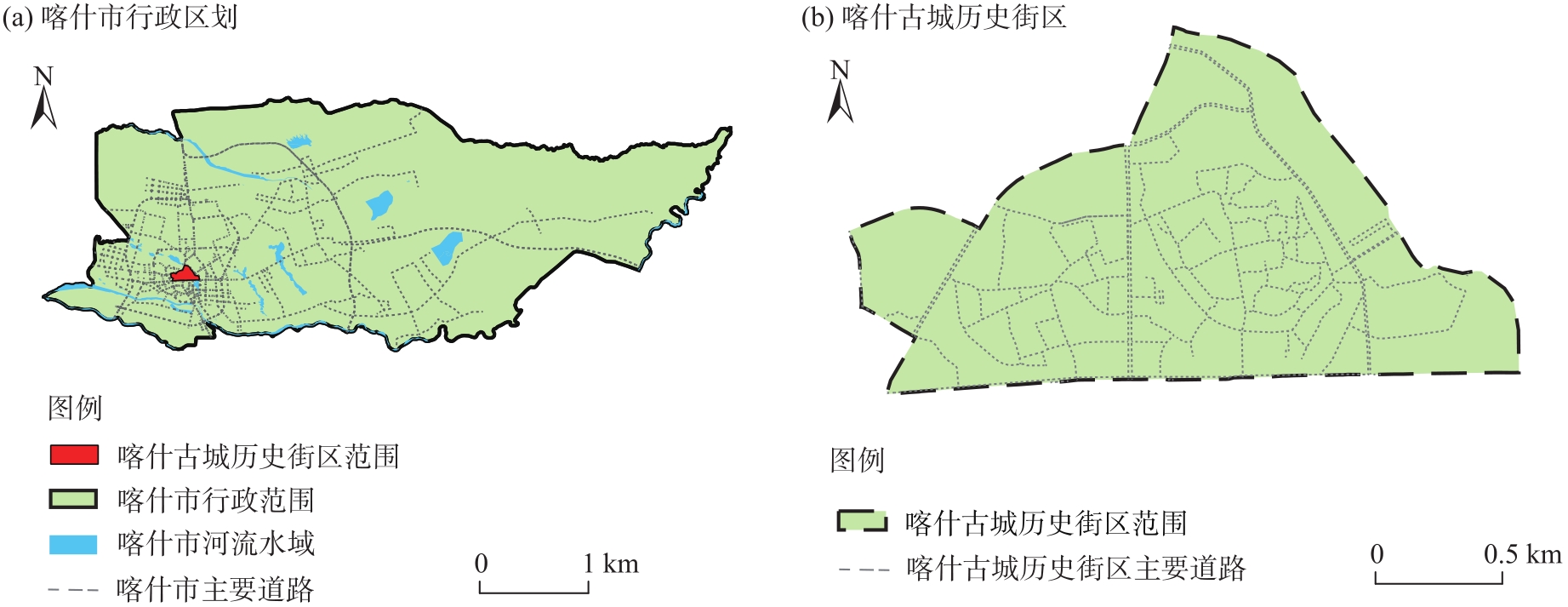
Fig. 2
Overview of natural disturbances in the Kashi Old City"
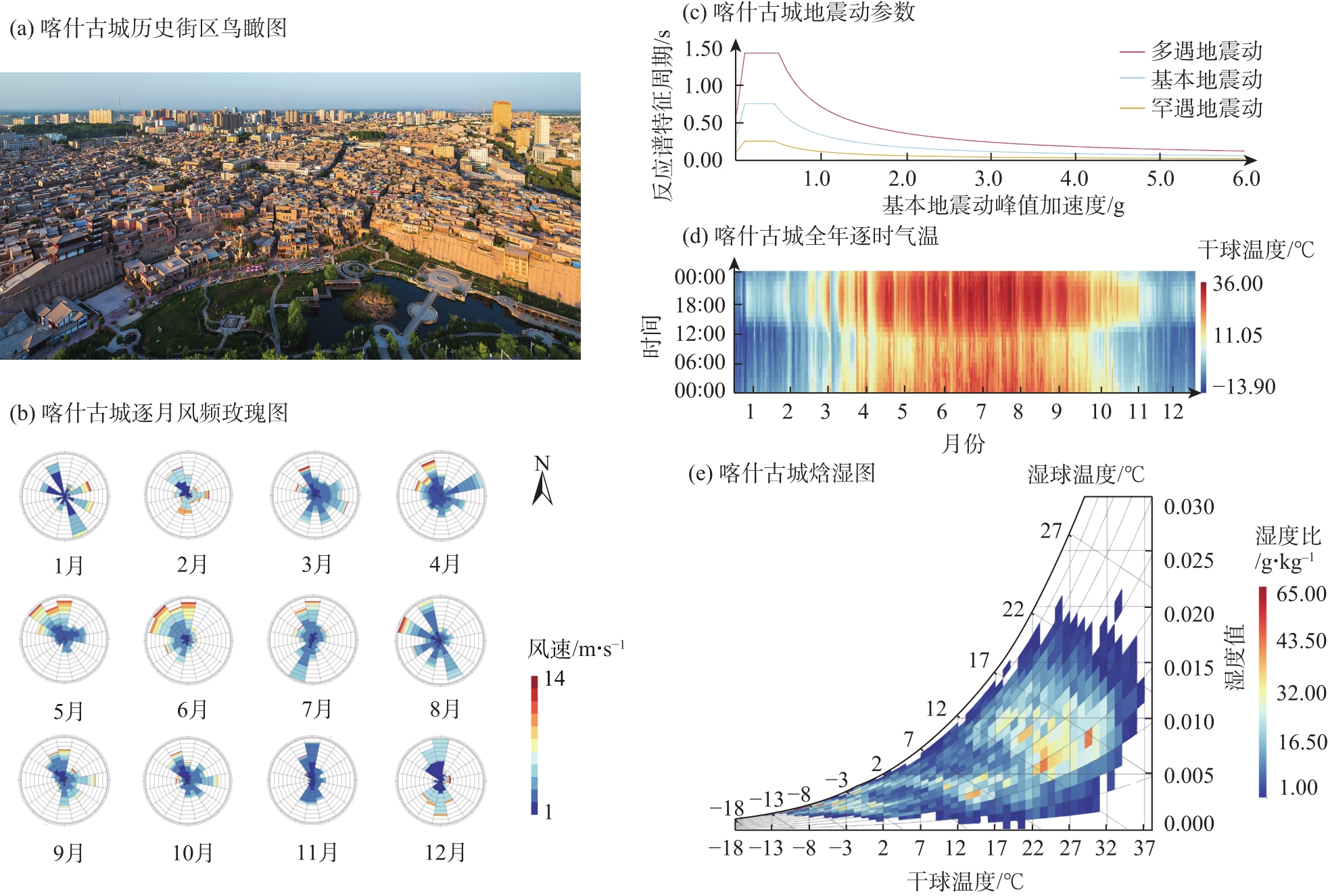
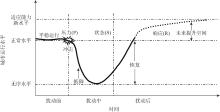
Fig. 3
Pressure-state-response process of the historic district system after a shock"
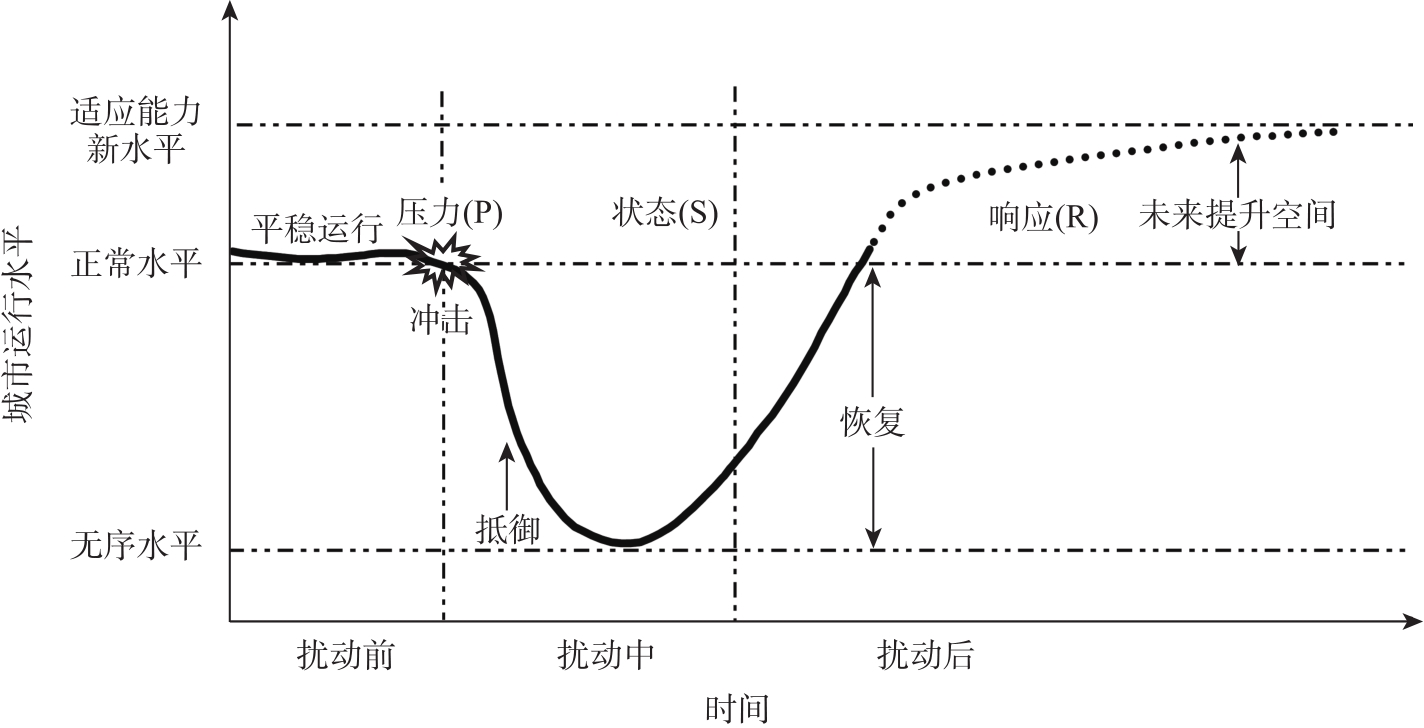
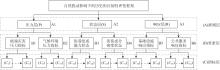
Fig. 4
Framework construction of natural disturbance resilience assessment system for historic districts"

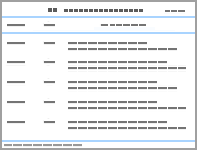
Tab. 1
Indicator weights for natural disturbance resilience assessment of historic districts"
| 准则层 | 要素层 | 指标层 | 全局权重 | 属性 |
|---|---|---|---|---|
| 压力层(0.3372) | 极端灾害压力指标 (0.1669) | 城市近源地震等效震级(C1) | 0.0232 | 负向 |
| 地震次生地质灾害脆弱性等级(C2) | 0.0228 | 负向 | ||
| 抗震等级(C3) | 0.0205 | 正向 | ||
| 基本地震动加速度反应谱特征周期(C4) | 0.0205 | 负向 | ||
| 历史街区平均坡度(C5) | 0.0209 | 负向 | ||
| 年平均雷暴日数(C6) | 0.0205 | 负向 | ||
| 高温预警天数(C7) | 0.0191 | 负向 | ||
| 历年极端高温(C8) | 0.0191 | 负向 | ||
| 气候环境压力指标 (0.1703) | 年平均降雨量(C9) | 0.0195 | 负向 | |
| 年平均降雨天数(C10) | 0.0295 | 负向 | ||
| 最热月平均高温强度(C11) | 0.0295 | 负向 | ||
| 年平均空气湿度(C12) | 0.0232 | 正向 | ||
| 年平均风力强度(C13) | 0.0213 | 负向 | ||
| 夏季平均热辐射强度(C14) | 0.0308 | 负向 | ||
| 年平均蒸发量(C15) | 0.0196 | 负向 | ||
| 状态层(0.3882) | 街巷组成能力状态 (0.1745) | 历史建筑平均年份(C16) | 0.0211 | 负向 |
| 历史建筑平均高度(C17) | 0.0205 | 负向 | ||
| 主要历史街巷平均宽度(C18) | 0.0270 | 正向 | ||
| 雨洪泛滥范围半径(C19) | 0.0387 | 负向 | ||
| 历史街巷D/H均值(C20) | 0.0243 | 正向 | ||
| 建筑耐火等级(C21) | 0.0193 | 正向 | ||
| 传统民居外墙热阻能力(C22) | 0.0234 | 正向 | ||
| 街巷成分密度状态 (0.2136) | 历史街区建筑密度(C23) | 0.0205 | 负向 | |
| 历史街巷道路绿化率(C24) | 0.0361 | 负向 | ||
| 历史街区低高程汇水点密度(C25) | 0.0205 | 正向 | ||
| 历史街巷密度(C26) | 0.0295 | 负向 | ||
| 文物保护单位占比(C27) | 0.0223 | 负向 | ||
| 建筑电线外露占比(C28) | 0.0202 | 负向 | ||
| 易燃易爆单位密度(C29) | 0.0218 | 正向 | ||
| 传统民居庭院空间相对湿度(C30) | 0.0191 | 正向 | ||
| 历史街巷绿植覆盖比例(C31) | 0.0234 | 正向 | ||
| 响应层(0.2746) | 基础设施响应指标 (0.1417) | 历史街区房屋抗震加固占比(C32) | 0.0213 | 正向 |
| 历史街区绿地率(C33) | 0.0199 | 正向 | ||
| 雨污管道覆盖率(C34) | 0.0196 | 正向 | ||
| 历史街区洪堤设防长度占比(C35) | 0.0191 | 正向 | ||
| 古城消防站服务半径(C36) | 0.0196 | 正向 | ||
| 古城消防栓服务半径(C37) | 0.0205 | 正向 | ||
| 历史街区避难场所面积占比(C38) | 0.0214 | 正向 | ||
| 公共服务响应指标 (0.1329) | 古城医疗服务设施密度(C39) | 0.0222 | 正向 | |
| 抗灾广播覆盖率(C40) | 0.0214 | 正向 | ||
| 可供行人疏散道路密度(C41) | 0.0266 | 正向 | ||
| 历史街区人均公园面积(C42) | 0.0226 | 正向 | ||
| 历史街巷增湿频率(C43) | 0.0205 | 正向 | ||
| 基层社区夏季供冷覆盖半径(C44) | 0.0192 | 正向 |
Tab. 2
Natural disturbance resilience levels of historic districts"
| 韧性指数区间 | 韧性等级 |
|---|---|
| [0.00, 1.04) | Ⅰ级 |
| [1.04, 1.96) | Ⅱ级 |
| [1.96, 2.81) | Ⅲ级 |
| [2.81, 4.15) | Ⅳ级 |
| [4.15, 5.52) | Ⅴ级 |
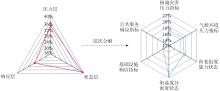
Fig. 5
Indicator weights of the criterion and element layer in historic districts of Kashi Old City"
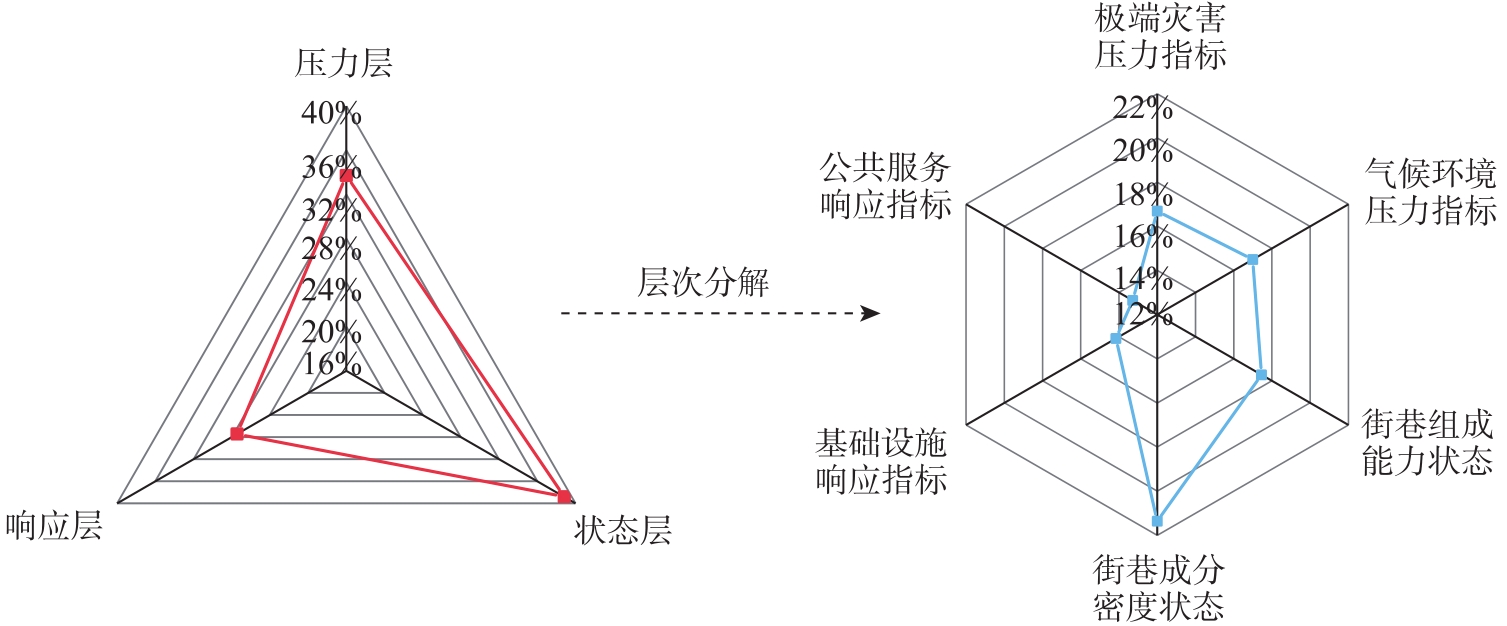
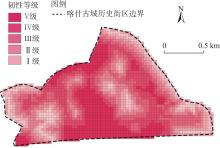
Fig. 6
Pressure layer evalution results"
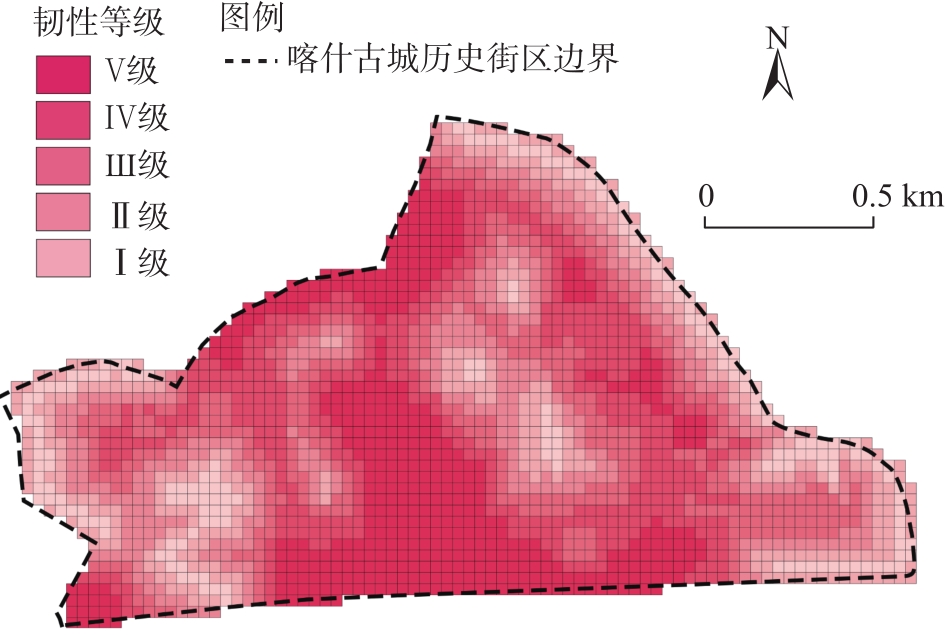
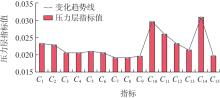
Fig. 7
Importance scores and trends for indicators in the pressure layer"
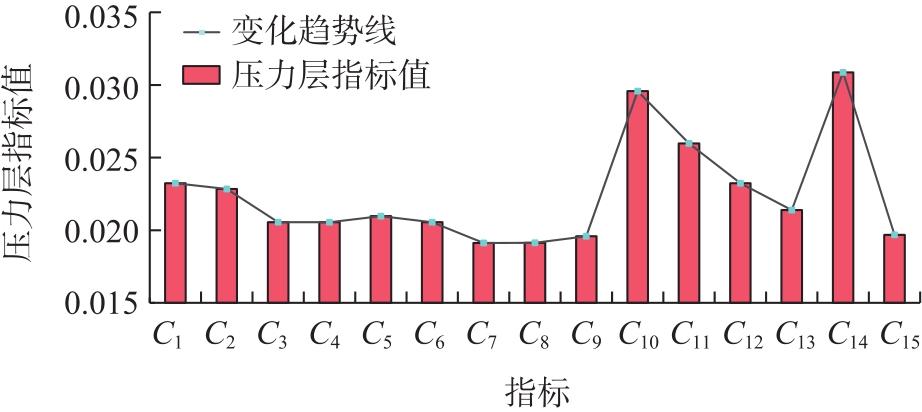
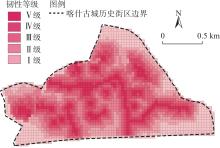
Fig. 8
State layer evaluation results"
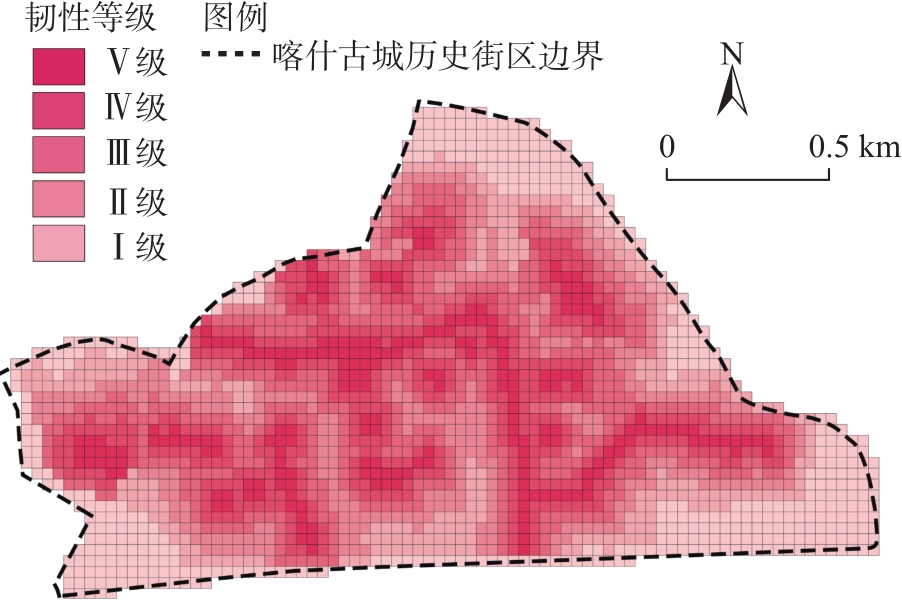
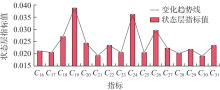
Fig. 9
Importance scores and trends for indicators in the state layer"
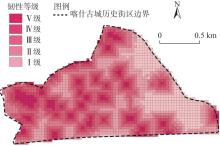
Fig. 10
Response layer evaluation results"
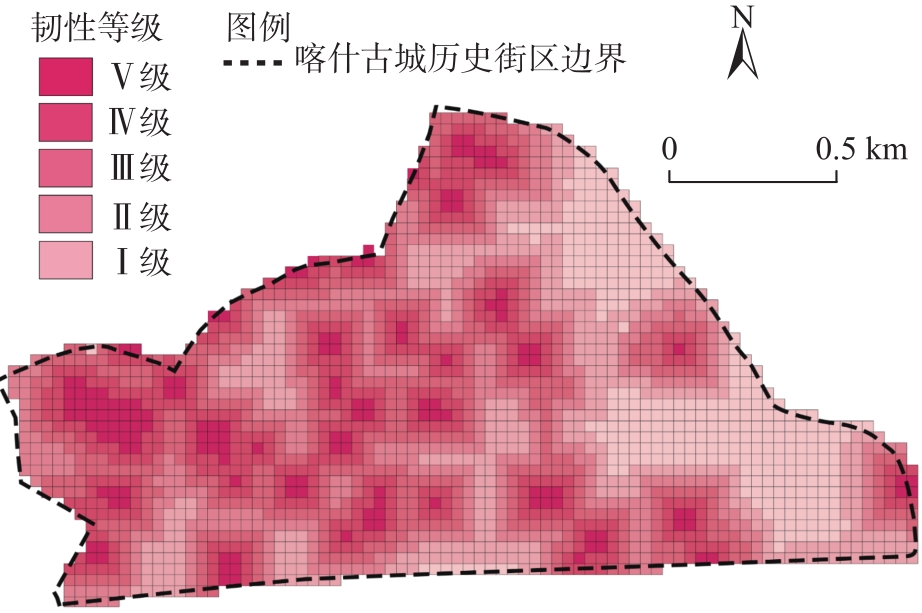
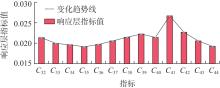
Fig. 11
Importance scores and trends for indicators in the response layer"
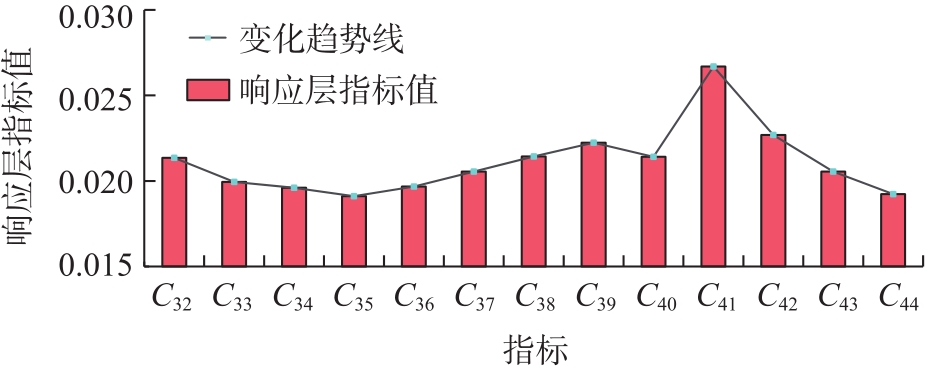
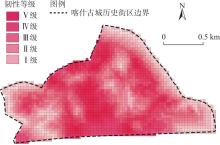
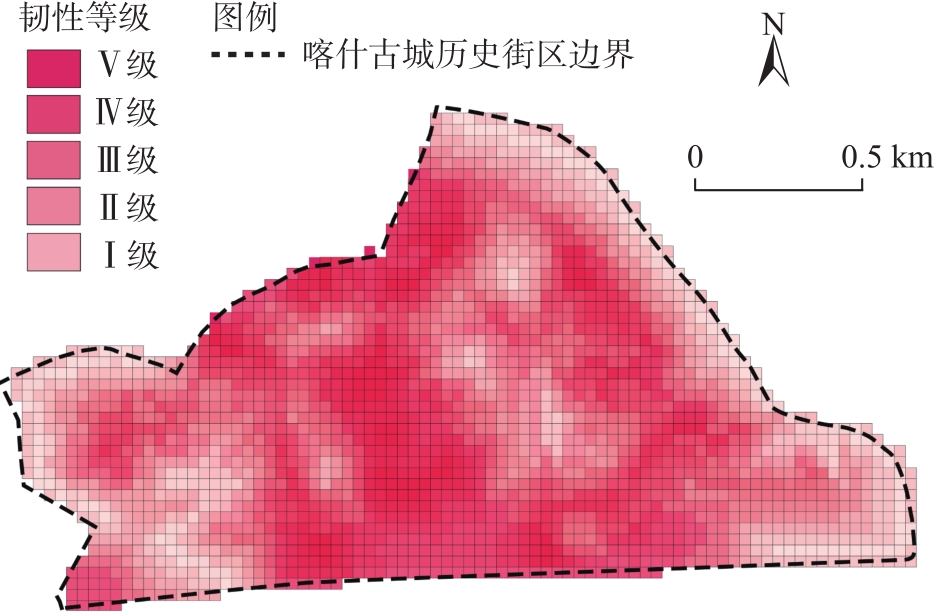
Fig. 12
Results of the assessment of the overall resilience level of Kashi Old City"
| [1] | United Nations Human Settlements Programme. World Cities Report 2024: Urban futures for a sustainable Era[R/OL]. Nairobi: UN-Habitat. [2024-05-27]. https://unhabitat.org/wcr2024. |
| [2] | 李含嫣, 王峤, 臧鑫宇, 等. 应对气候变化扰动的城市韧性研究理论进展与实施路径[J]. 安全与环境学报, 2025, 25(4): 1490-1503. |
| [Li Hanyan, Wang Qiao, Zang Xinyu, et al. Theoretical advances and implementation strategies for resilience research addressing urban climate change disruptions[J]. Journal of Safety and Environment, 2025, 25(4): 1490-1503.] | |
| [3] |
吕悦风, 项铭涛, 王梦婧, 等. 从安全防灾到韧性建设——国土空间治理背景下韧性规划的探索与展望[J]. 自然资源学报, 2021, 36(9): 2281-2293.
doi: 10.31497/zrzyxb.20210908 |
|
[Lü Yuefeng, Xiang Mingtao, Wang Mengjing, et al. From disaster prevention to resilience construction: Exploration and prospect of resilience planning under the background of territorial governance[J]. Journal of Natural Resources, 2021, 36(9): 2281-2293.]
doi: 10.31497/zrzyxb.20210908 |
|
| [4] | United Nations Office for Disaster Risk Reduction (UNDRR). Resilience[EB/OL]. [2022-04-24]. https://www.prevention.web.net/understanding-disaster-risk/key-concepts/resilience. |
| [5] | 王江波, 支添趣, 那婧雯, 等. 历史文化街区消防工程韧性评价方法研究——以南京荷花塘为例[J]. 安全与环境学报, 2023, 23(2): 317-325. |
| [Wang Jiangbo, Zhi Tianqu, Na Jingwen, et al. Evaluation method of fire engineering toughness in historical and cultural districts: A case study of Hehuatang historical district in Nanjing[J]. Journal of Safety and Environment, 2023, 23(2): 317-325.] | |
| [6] | 吴尧, 吴秋颖, 吴勇澜, 等. 多要素协同更新理念下居住性历史文化街区的保护策略研究——以苏州山塘桐星社区为例[J]. 西部人居环境学刊, 2024, 39(6): 127-133. |
| [Wu Yao, Wu Qiuying, Wu Yonglan, et al. A study on the conservation strategy of residential historical andcultural neighbourhoods under the concept of multi-factor synergistic renewal: The case of Tongxing community in Shantang, Suzhou[J]. Journal of Human Settlements in West China, 2024, 39(6): 127-133.] | |
| [7] | 周姝天, 翟国方, 施益军, 等. 城市自然灾害风险评估研究综述[J]. 灾害学, 2020, 35(4): 180-186. |
| [Zhou Shutian, Zhai Guofang, Shi Yijun, et al. A literature review of urban natural disaster risk assessment[J]. Journal of Catastrophology, 2020, 35(4): 180-186.] | |
| [8] | 史晨辰, 朱小平, 王辰星, 等. 韧性城市研究综述——基于城市复杂系统视角[J]. 生态学报, 2023, 43(4): 1726-1737. |
| [Shi Chenchen, Zhu Xiaoping, Wang Chenxing, et al. Review and prospect of resilient cities: From the perspective of urban complex systems[J]. Acta Ecologica Sinica, 2023, 43(4): 1726-1737.] | |
| [9] |
刘园园, 马彩虹, 马丽娅. 黄河流域典型绿洲城市扩张模拟及其生态韧性响应研究[J]. 干旱区地理, 2025, 48(3): 506-516.
doi: 10.12118/j.issn.1000-6060.2024.219 |
|
[Liu Yuanyuan, Ma Caihong, Ma Liya. Simulation of urban expansion and its response to ecological resilience of typical oases in the Yellow River Basin[J]. Arid Land Geography, 2025, 48(3): 506-516.]
doi: 10.12118/j.issn.1000-6060.2024.219 |
|
| [10] |
Bruneau M, Chang S E, Eguchi R T, et al. A framework to quantitatively assess and enhance the seismic resilience of communities[J]. Earthquake Spectra, 2003, 19(4): 733-752.
doi: 10.1193/1.1623497 |
| [11] |
许兆丰, 田杰芳, 张靖. 防灾视角下城市韧性评价体系及优化策略[J]. 中国安全科学学报, 2019, 29(3): 1-7.
doi: 10.16265/j.cnki.issn1003-3033.2019.03.001 |
|
[Xu Zhaofeng, Tian Jiefang, Zhang Jing. Urban resilience evaluation system and optimization strategy from perspective of disaster prevention[J]. China Safety Science Journal, 2019, 29(3): 1-7.]
doi: 10.16265/j.cnki.issn1003-3033.2019.03.001 |
|
| [12] | 杨秀平, 王里克, 李亚兵, 等. 韧性城市研究综述与展望[J]. 地理与地理信息科学, 2021, 37(6): 78-84. |
| [Yang Xiuping, Wang Like, Li Yabing, et al. Review and prospects of resilient city theory[J]. Geography and Geo-Information Science, 2021, 37(6): 78-84.] | |
| [13] | ISO 37123. Sustainable cities and communities: Indicators for resilient cities[S]. Geneva: International Organization for Standardization, 2019. |
| [14] | GB/T40947-2021. 全国公共安全基础标准化技术委员会: 安全韧性城市评价指南[S]. 北京: 中国标准出版社, 2022. |
| [GB/T40947-2021. Public Security Fundamental: Guide for safety resilient city evaluation[S]. Beijing: Standards Press of China, 2022.] | |
| [15] | 罗佳梦, 徐建刚. 历史文化街区内涝韧性测度方法与规划应用研究——以瑞金市廖屋坪街区为例[J]. 自然灾害学报, 2024, 33(1): 42-50. |
| [Luo Jiameng, Xu Jiangang. Research on waterlogging resilience measurement method and planning application in historic and cultural districts: Taking the Liaowuping district, Ruijin City as an example[J]. Journal of Natural Disasters, 2024, 33(1): 42-50.] | |
| [16] | Moghadas M, Asadzadeh A, Vafeidis A, et al. A multi-criteria approach for assessing urban flood resilience in Tehran, Iran[J]. International Journal of Disaster Risk Reduction, 2019, 35, 101069, doi: 10.1016/j.ijdrr.2019.101069. |
| [17] | 李云燕, 王子轶, 石灵, 等. 韧性视角下日本历史街区防灾实践及其对我国的启示[J]. 国际城市规划, 2023, 38(6): 156-166. |
| [Li Yunyan, Wang Ziyi, Shi Ling, et al. Practice of disaster prevention in historical districts in Japan from the perspective of resilience and its enlightenment to China[J]. International Urban Planning, 2023, 38(6): 156-166.] | |
| [18] | Alvarez I, Quesada-Ganuza L, Briz E, et al. Urban heat islands and thermal comfort: A case study of zorrotzaurre island in bilbao[J]. Sustainability, 2021, 13(11): 6106, doi: 10.3390/su13116106. |
| [19] | Davis L, Larionova T, Patel D, et al. Flood vulnerability and risk assessment of historic urban areas: Vulnerability evaluation, derivation of depth-damage curves and cost-benefit analysis of flood adaptation measures applied to the historic city centre of Tomar, Portugal[J]. Journal of Flood Risk Management, 2023, 16(3): 12908, doi: 10.1111/jfr3.12908. |
| [20] | 闫晨, 陈锦涛, 段芮, 等. 基于压力-状态-响应模型的历史街区防火韧性评估体系构建及应用——以福州市三坊七巷为例[J]. 科学技术与工程, 2021, 21(8): 3290-3296. |
| [Yan Chen, Chen Jintao, Duan Rui, et al. Evaluation system for fireproof resilience of urban historical blocks based on pressure-state-response model: A case of three lanes and seven alleys in Fuzhou City[J]. Science Technology and Engineering, 2021, 21(8): 3290-3296.] | |
| [21] |
李路, 孙桂丽, 陆海燕, 等. 喀什地区生态脆弱性时空变化及驱动力分析[J]. 干旱区地理, 2021, 44(1): 277-288.
doi: 10.12118/j.issn.1000–6060.2021.01.29 |
|
[Li Lu, Sun Guili, Lu Haiyan, et al. Spatial-temporal variation and driving forces of ecological vulnerability in Kashi Prefecture[J]. Arid Land Geography, 2021, 44(1): 277-288.]
doi: 10.12118/j.issn.1000–6060.2021.01.29 |
|
| [22] | Wu W, Yuan Y, Huang C, et al. Urban green land ecological suitability assessment based on GIS in arid areas: Beitun City, Xinjiang, as an example[J]. Polish Journal of Environmental Studies, 2021, 30(6): 5871-5883. |
| [23] | 袁也, 武文丽, 付宗驰, 等. 新疆昆玉市生态安全评价及其时空分异特征研究[J]. 石河子大学学报(自然科学版), 2021, 39(6): 733-740. |
| [Yuan Ye, Wu Wenli, Fu Zongchi, et al. Spatial-temporal discrimination for the urban eco-security evaluation in Xinjiang Kunyu[J]. Journal of Shihezi University (Natural Science), 2021, 39(6): 733-740.] | |
| [24] | 张倩, 李志民, 冯青. 城市历史文化街区密集居住现状中的防灾避害策略研究——以西安碑林历史街区传统民居院落生存现状研究为例[J]. 西安建筑科技大学学报(自然科学版), 2009, 41(4): 537-543. |
| [Zhang Qian, Li Zhimin, Feng Qing. Research of the tactics to avoid the disaster and the harm in the urban historical cultural district under crowded residential condition: In illustration of the existent actuality of the traditional resident courtyard in steles forest historical district in Xi’an[J]. Journal of Xi’an University of Architecture & Technology (Natural Science Edition), 2009, 41(4): 537-543.] | |
| [25] | 马小宾, 章锦河, 郭丽佳, 等. 生态环境研究中压力-状态-响应模型应用的陷阱与改善[J]. 生态学报, 2024, 44(12): 4923-4932. |
| [Ma Xiaobing, Zhang Jinhe, Guo Lijia, et al. Traps and improvements of PSR model: An eco-environmental perspective[J]. Acta Ecologica Sinica, 2024, 44(12): 4923-4932.] | |
| [26] | 张振, 张以晨, 张继权, 等. 基于熵权法和TOPSIS模型的城市韧性评估——以长春市为例[J]. 灾害学, 2023, 38(1): 213-219. |
| [Zhang Zhen, Zhang Yichen, Zhang Jiquan, et al. Urban resilience assessment based on entropy weight method and TOPSIS model: Take Changchun City as an example[J]. Journal of Catastrophology, 2023, 38(1): 213-219.] | |
| [27] | 张士菊, 李清, 余尚蔚. 武汉市城市韧性建设评价及提升策略[J]. 安全与环境工程, 2024, 31(3): 65-75. |
| [Zhang Shijun, Li Qing, Yu Shangwei. Evaluation and promotion strategy of urban resilience construction in Wuhan City[J]. Safety and Environmental Engineering, 2024, 31(3): 65-75.] | |
| [28] |
孙宇, 刘维忠, 盛洋. 基于PSR模型的新疆水资源经济生态韧性时空差异及影响因素分析[J]. 干旱区地理, 2023, 46(12): 2017-2028.
doi: 10.12118/j.issn.1000-6060.2023.155 |
|
[Sun Yu, Liu Weizhong, Sheng Yang. Spatiotemporal differences and influencing factors of economic and ecological resilience of water resources in Xinjiang based on the PSR model[J]. Arid Land Geography, 2023, 46(12): 2017-2028.]
doi: 10.12118/j.issn.1000-6060.2023.155 |
|
| [29] |
王启飞, 赵逸涵, 张慧, 等. 基于PSR和信息敏感性的城市韧性度评价: 以北京市为例[J]. 中国安全科学学报, 2023, 33(8): 198-204.
doi: 10.16265/j.cnki.issn1003-3033.2023.08.0149 |
|
[Wang Qifei, Zhao Yihan, Zhang Hui, et al. Evaluation of urban resilience based on PSR model and information sensitivity: A case study of Beijing[J]. China Safety Science Journal, 2023, 33(8): 198-204.]
doi: 10.16265/j.cnki.issn1003-3033.2023.08.0149 |
|
| [30] |
Hazbavi Z, Sadeghi S H, Gholamalifard M, et al. Watershed health assessment using the pressure-state-response (PSR) ramework[J]. Land Degradation & Development, 2020, 31(1): 3-19.
doi: 10.1002/ldr.v31.1 |
| [31] |
白立敏, 修春亮, 冯兴华, 等. 中国城市韧性综合评估及其时空分异特征[J]. 世界地理研究, 2019, 28(6): 77-87.
doi: 10.3969/j.issn.1004-9479.2019.06.2018403 |
|
[Bai Limin, Xiu Chunliang, Feng Xinghua, et al. A comprehensive assessment of urban resilience and its spatial differentiation in China[J]. World Regional Studies, 2019, 28(6): 77-87.]
doi: 10.3969/j.issn.1004-9479.2019.06.2018403 |
|
| [32] | 辛慧, 耿晓磊, 厉成伟, 等. 基于PSR模型及熵权法的城市公园韧性评估及影响分析——以上海市为例[J]. 复旦学报(自然科学版), 2025, 64(1): 64-79. |
| [Xin Hui, Geng Xiaolei, Li Chenwei, et al. Assessment and impact analysis of urban parks resilience based on PSR model and entropy weight method: A case study of Shanghai[J]. Journal of Fudan University (Natural Science), 2025, 64(1): 64-79.] | |
| [33] | Tempa K. District flood vulnerability assessment using analytic hierarchy process (AHP) with historical flood events in Bhutan[J]. Plos One, 2022, 17(6): 0270467, doi: 10.1371/journal.pone.0270467. |
| [34] | 黄曦涛, 李怀恩, 张瑜, 等. 基于PSR和AHP方法的西安市城市内涝脆弱性评价体系构建与脆弱度评估[J]. 自然灾害学报, 2019, 28(6): 167-175. |
| [Huang Xitao, Li Huai’en, Zhang Yu, et al. Construction of urban waterlogging vulnerability assessment system and vulnerability assessment based on PSR & AHP method in Xi’an City[J]. Journal of Natural Disasters, 2019, 28(6): 167-175.] |
| No related articles found! |
|
||