Arid Land Geography ›› 2026, Vol. 49 ›› Issue (10): 2006-2017.doi: 10.12118/j.issn.1000-6060.2026.020
• Digital Empowerment for Rural Development • Previous Articles Next Articles
ZHENG Aiwen1,2( ), WANG Lili1()
Received:2026-01-08
Revised:2026-01-20
Online:2026-10-25
Published:2026-10-26
Contact:
WANG Lili
E-mail:zaw_1968@126.com;wll_2001@126.com
ZHENG Aiwen, WANG Lili. Impact mechanisms and effects of digital rural construction on farmers’ livelihood resilience[J].Arid Land Geography, 2026, 49(10): 2006-2017.
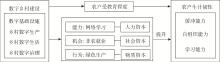
Fig. 1
Analytical framework of the impact of digital rural construction on farmers’ livelihood resilience"
Tab. 1
Evaluation index system of farmers’ livelihood resilience"
| 系统层 | 准则层 | 要素层 | 指标层 | 指标含义与赋值 | 属性 |
|---|---|---|---|---|---|
| 农户生计韧性 | 脆弱性 | 暴露水平 | 旱涝灾害 | 旱涝灾害对农户的影响程度 | 负 |
| 病虫害 | 病虫害对农户的影响程度 | 负 | |||
| 冰雹霜冻 | 冰雹霜冻对农户的影响程度 | 负 | |||
| 沙尘暴 | 沙尘暴对农户的影响程度 | 负 | |||
| 患病残疾 | 患病残疾对农户的影响程度 | 负 | |||
| 意外事故 | 意外事故对农户的影响程度 | 负 | |||
| 农地土质恶化 | 近3 a农地土质是否恶化?是=1;否=0 | 负 | |||
| 农地细碎化 | 农户根据地块面积、数量综合判断 | 负 | |||
| 水源充足度 | 农户根据用水便利性及水质综合判断 | 正 | |||
| 教育压力 | 教育支出对农户的影响程度 | 负 | |||
| 医疗压力 | 医疗支出对农户的影响程度 | 负 | |||
| 婚葬压力 | 婚葬支出对农户的影响程度 | 负 | |||
| 人情支出压力 | 人情支出对农户的影响程度 | 负 | |||
| 敏感性 | 人均消费收入比 | 人均消费与人均可支配收入之比 | 负 | ||
| 农业劳动力占比 | 农业劳动力与家庭总劳动力之比 | 负 | |||
| 恢复力 | 缓冲能力 | 住房面积/m2 | 家中拥有的住房面积 | 正 | |
| 住房质量 | 农户根据住房类型、新旧程度综合判断 | 正 | |||
| 农地面积/hm2 | 家中拥有的农地面积 | 正 | |||
| 农地质量 | 农户根据农地坡度、肥力综合判断 | 正 | |||
| 农业机械化程度 | 农户根据农具类型、新旧程度综合判断 | 正 | |||
| 家庭耐用品多样性/个 | 家中拥有的生活耐用品种类数量 | 正 | |||
| 家庭变现能力/元 | 家中拥有的可快速变现的资产 | 正 | |||
| 医疗保险 | 农户是否购买医疗保险?是=1;否=0 | 正 | |||
| 养老保险 | 农户是否购买养老保险?是=1;否=0 | 正 | |||
| 农业保险 | 农户是否购买农业保险?是=1;否=0 | 正 | |||
| 商业保险 | 农户是否购买商业保险?是=1;否=0 | 正 | |||
| 借贷难易度 | 农户对获取借贷资金容易程度的自评 | 正 | |||
| 交通便利度 | 农户根据家中的交通工具种类综合判断 | 正 | |||
| 生活幸福感 | 农户对生活幸福程度的自评 | 正 | |||
| 未来信心度 | 农户对未来信心程度的自评 | 正 | |||
| 生活满意度 | 农户对生活满意度的自评 | 正 | |||
| 社会地位感 | 农户对社会地位的自评 | 正 | |||
| 邻里信任度 | 农户对邻居信任程度的自评 | 正 | |||
| 自组织能力 | 社会组织参与/个 | 农户加入社区组织种类数量 | 正 | ||
| 信息来源多样性/个 | 农户获取信息渠道种类数量 | 正 | |||
| 多样化经营能力/个 | 家中种植作物和养殖牲畜种类数量 | 正 | |||
| 生计渠道多样性/个 | 家中成员从事生计活动种类数量 | 正 | |||
| 学习能力 | 人均教育支出/元 | 家中年均教育支出与总人口数之比 | 正 | ||
| 学习意愿 | 农户对学习生产技能知识意愿的自评 | 正 | |||
| 整体技能水平 | 农户对家中成员技能和经营水平的自评 | 正 | |||
| 文盲率 | 家中文盲人数与15岁以上人数之比 | 负 |
Tab. 2
Evaluation index system of digital rural construction"
| 系统层 | 要素层 | 指标层 | 指标含义与赋值 | 属性 |
|---|---|---|---|---|
| 数字乡 村建设 | 数字基 础设施 | 智能终端/部 | 家庭成员拥有的智能手机数量 | 正 |
| 宽带接入 | 家中是否有宽带?是=1;否=0 | 正 | ||
| 物流网点 | 村上是否有快递站?是=1;否=0 | 正 | ||
| 金融站点 | 村上是否有银行自动存取款机?是=1;否=0 | 正 | ||
| 乡村数 字生产 | 智慧农业 | 家中是否使用现代农机(如无人机等)?是=1;否=0 | 正 | |
| 线上学农 | 家中是否线上关注农业信息(如农技知识等)?是=1;否=0 | 正 | ||
| 农村电商 | 家中是否线上销售农产品?是=1;否=0 | 正 | ||
| 乡村旅游 | 家中是否线上宣传乡村旅游?是=1;否=0 | 正 | ||
| 乡村数 字生活 | 线上社交 | 在日常社交中,网络对农户与亲友联系的重要程度 | 正 | |
| 线上支付 | 在日常消费中,网络对农户线上支付的重要程度 | 正 | ||
| 线上娱乐 | 在日常生活中,网络对农户休闲娱乐的重要程度 | 正 | ||
| 健康监测 | 农户是否使用健康监测设备(如智能手环等)?是=1;否=0 | 正 | ||
| 交通出行 | 村上是否提供出行服务(如公交、网约车等)?是=1;否=0 | 正 | ||
| 乡村数 字治理 | 数字村务 | 农户是否线上参与村务(如线上选举投票等)?是=1;否=0 | 正 | |
| 监控安防 | 家中是否安装监控?是=1;否=0 | 正 | ||
| 应急广播 | 村上应急广播是否能正常工作?是=1;否=0 | 正 | ||
| 党群教育 | 农户是否利用“学习强国”等平台进行线上学习?是=1;否=0 | 正 | ||
| 环保监管 | 农户对环保监管(如禁烧、禁牧等)的了解程度 | 正 |
Tab. 3
Evaluation index system of village topography"
| 系统层 | 指标层 | 指标含义 | 属性 |
|---|---|---|---|
| 村庄地形 | 平均海拔/m | 村庄边界范围内各栅格高程值的算术平均值 | 正 |
| 平均坡度/(°) | 村庄边界范围内各栅格坡度值的算术平均值 | 正 | |
| 地形崎岖度/m | 村庄边界范围内各栅格高程值的标准差 | 正 | |
| 局部起伏度/m | 村庄边界范围内最高点与最低点高程差值 | 正 |
Tab. 4
Variable description and descriptive statistics"
| 类型 | 变量名称 | 平均值 | 标准差 | 变量含义及赋值 |
|---|---|---|---|---|
| 被解释变量 | 农户生计韧性 | 0.153 | 0.059 | 熵值法测算的综合指数 |
| 解释变量 | 数字乡村建设 | 0.201 | 0.123 | 熵值法测算的综合指数 |
| 机制变量 | 网络学习 | 0.515 | 0.500 | 农户是否进行网络学习?是=1;否=0 |
| 非农就业 | 0.600 | 0.245 | 家庭非农收入占比 | |
| 绿色生产 | 0.503 | 0.520 | 农户是否进行绿色生产?是=1;否=0 | |
| 调节变量 | 受教育程度 | 2.920 | 1.181 | 户主受教育程度:不识字/文盲=1;小学=2;初中=3;高中/中专/技校=4;大学/大专及以上=5 |
| 工具变量 | 村庄地形 | 0.657 | 0.361 | 熵值法测算的综合指数 |
| 控制变量 | 性别 | 0.472 | 0.500 | 男=1;女=0 |
| 年龄/岁 | 57.608 | 12.124 | 户主实际年龄 | |
| 健康状况 | 1.394 | 0.672 | 健康=1;偶有疾病=2;大病缠身或残疾=3 | |
| 政治面貌 | 0.114 | 0.318 | 户主是否为党员?是=1;否=0 | |
| 婚姻状态 | 0.963 | 0.190 | 户主是否结过婚?是=1;否=0 | |
| 家庭规模/人 | 5.088 | 2.588 | 家庭人口总数 | |
| 少儿抚养比 | 0.355 | 0.413 | 家庭16岁以下人口与家庭总人口之比 | |
| 老年抚养比 | 0.377 | 0.334 | 家庭60岁以上人口与家庭总人口之比 | |
| 政府补助 | 0.091 | 0.288 | 家庭是否获得政府补助?是=1;否=0 | |
| 试点村 | 0.355 | 0.479 | 农户所在村庄是否为数字乡村建设试点村?是=1;否=0 | |
| 脱贫村 | 0.391 | 0.488 | 农户所在村庄是否为脱贫村?是=1;否=0 | |
| 人均收入/元 | 19625.780 | 3383.906 | 农户所在县农村居民人均收入 | |
| 地理距离/km | 13.878 | 5.832 | 村委会到县级行政中心的直线距离 |
Tab. 5
Results of the baseline regression analysis"
| 变量 | 基准回归 | 基准回归 | 缩尾处理 | 主成分分析 | 数字乡村建设 | 农户生计韧性 |
|---|---|---|---|---|---|---|
| (1) | (2) | (3) | (4) | (5) | (6) | |
| 工具变量 | - | - | - | - | -0.532* | - |
| - | - | - | - | (0.291) | - | |
| 数字乡村建设 | 0.148*** | 0.147*** | 0.144*** | 0.040*** | - | 0.796*** |
| (0.021) | (0.021) | (0.021) | (0.005) | - | (0.291) | |
| 控制变量 | 未控制 | 控制 | 控制 | 控制 | 控制 | 控制 |
| 常数项 | 0.123*** | -0.058 | -0.047 | 0.135 | 0.549** | - |
| (0.004) | (0.122) | (0.120) | (0.134) | (0.239) | - | |
| 样本量 | 604 | 604 | 604 | 511 | 604 | 604 |
| R2 | 0.094 | 0.157 | 0.152 | 0.165 | 0.100 | 0.110 |
Tab. 6
Results of omitted variable"
| 方法 | 标准 | 估算结果 | 是否通过 |
|---|---|---|---|
| 方法一 | η*ϵ(0.053, 0.343) | 0.147 | 是 |
| 方法二 | 34.715 | 是 |
Tab. 7
Regression results of the mechanism effects"
| 变量 | 网络学习 | 农户生计韧性 | 非农就业 | 农户生计韧性 | 绿色生产 | 农户生计韧性 |
|---|---|---|---|---|---|---|
| (1) | (2) | (3) | (4) | (5) | (6) | |
| 数字乡村建设 | 1.099*** | 0.083*** | 0.872*** | 0.101*** | 0.614*** | 0.134*** |
| (0.152) | (0.020) | (0.067) | (0.024) | (0.166) | (0.021) | |
| 网络学习 | - | 0.058*** | - | - | - | - |
| - | (0.004) | - | - | - | - | |
| 非农就业 | - | - | - | 0.085*** | - | - |
| - | - | - | (0.011) | - | - | |
| 绿色生产 | - | - | - | - | - | 0.021*** |
| - | - | - | - | - | (0.005) | |
| 控制变量 | 控制 | 控制 | 控制 | 控制 | 控制 | 控制 |
| 常数项 | -1.623 | 0.037 | 2.371*** | -0.259* | 2.139* | -0.102 |
| (1.111) | (0.107) | (0.441) | (0.119) | (1.138) | (0.122) | |
| 样本量 | 604 | 604 | 604 | 604 | 604 | 604 |
| R2 | 0.097 | 0.376 | 0.268 | 0.246 | 0.083 | 0.187 |
Tab. 8
Regression results of the moderating effect"
| 变量 | 农户生计韧性 |
|---|---|
| (1) | |
| 数字乡村建设 | 0.051** |
| (0.023) | |
| 数字乡村建设×受教育程度 | 0.028* |
| (0.017) | |
| 受教育程度 | 0.016*** |
| (0.004) | |
| 控制变量 | 控制 |
| 常数项 | 0.065 |
| (0.111) | |
| 样本量 | 604 |
| R2 | 0.312 |
Tab. 9
Regression results of different dimensions of digital rural construction"
| 变量 | 农户生计韧性 | |||
|---|---|---|---|---|
| (1) | (2) | (3) | (4) | |
| 数字基础设施 | 0.017** | - | - | - |
| (0.008) | - | - | - | |
| 乡村数字生产 | - | 0.118*** | - | - |
| - | (0.017) | - | - | |
| 乡村数字生活 | - | - | 0.054*** | - |
| - | - | (0.011) | - | |
| 乡村数字治理 | - | - | - | 0.015 |
| - | - | - | (0.010) | |
| 控制变量 | 控制 | 控制 | 控制 | 控制 |
| 常数项 | -0.007 | 0.047 | 0.041 | 0.076 |
| (0.129) | (0.125) | (0.123) | (0.125) | |
| 样本量 | 604 | 604 | 604 | 604 |
| R2 | 0.080 | 0.148 | 0.104 | 0.075 |
| [1] | [Fan Yanli, Cong Shuhai. The effect of financial transfer payment on rural livelihood resilience: Promoting or restraining[J]. Chinese Rural Economy, 2024(1): 125-148. ] |
| [2] | 杨文静, 孙迎联. 我国反贫困治理与农户生计转型: 历史回顾与改革前瞻[J]. 经济学家, 2022(5): 97-106. |
| [Yang Wenjing, Sun Yinglian. China’s anti-poverty governance and rural households’ livelihood transformation: Historical review and reform prospects[J]. Economist, 2022(5): 97-106. ] | |
| [3] | 王胜, 余娜, 付锐. 数字乡村建设: 作用机理、现实挑战与实施策略[J]. 改革, 2021(4): 45-59. |
| [Wang Sheng, Yu Na, Fu Rui. Digital rural construction: Action mechanism, realistic challenge and implementation strategy[J]. Reform, 2021(4): 45-59. ] | |
| [4] | 秦旺康, 凌佳旭, 薛永基. 数字乡村发展对粮食主产区农业生产效率提升的影响机制研究[J]. 农业现代化研究, 2025, 46(3): 454-469. |
| [Qin Wangkang, Ling Jiaxu, Xue Yongji. Research on the influencing mechanism of digital rural development on the improvement of agricultural production efficiency in main grain producing areas[J]. Research of Agricultural Modernization, 2025, 46(3): 454-469. ] | |
| [5] |
戈大专, 龙花楼. 论数字乡村空间治理与中国乡村现代化[J]. 地理学报, 2025, 80(2): 288-303.
doi: 10.11821/dlxb202502003 |
|
[Ge Dazhuan, Long Hualou. Digital rural spatial governance and rural modernization in China[J]. Acta Geographica Sinica, 2025, 80(2): 288-303. ]
doi: 10.11821/dlxb202502003 |
|
| [6] | 王杰, 钱龙, 刘畅. 数字乡村发展与农户相对贫困: 理论机制与经验证据[J]. 电子政务, 2024(12): 92-107. |
| [Wang Jie, Qian Long, Liu Chang. Digital rural development and farmers’ relative poverty: Theoretical mechanism and empirical evidence[J]. E-Government, 2024(12): 92-107. ] | |
| [7] | 苏飞, 陈秀碧, 吴宝锐. 数字乡村建设与农民共同富裕耦合协调的时空演进及驱动机制[J/OL]. 干旱区地理. [2026-02-23]. https://link.cnki.net/urlid/65.1103.X.20260120.1117.002. |
| [Su Fei, Chen Xiubi, Wu Baorui. Spatiotemporal evolution and driving mechanism of the coupling and coordination between digital rural construction and farmers’ common prosperity[J/OL]. Arid Land Geography. [2026-02-23]. https://link.cnki.net/urlid/65.1103.X.20260120.1117.002.] | |
| [8] | 赵佳佳, 魏娟, 刘天军. 数字乡村发展对农民创业的影响及机制研究[J]. 中国农村经济, 2023(5): 61-80. |
| [Zhao Jiajia, Wei Juan, Liu Tianjun. The impacts of digital village development on farmer entrepreneurship and their mechanisms[J]. Chinese Rural Economy, 2023(5): 61-80. ] | |
| [9] |
丁建军, 万航. 中国数字乡村发展的空间特征及其农户增收效应--基于县域数字乡村指数与CHFS的实证分析[J]. 自然资源学报, 2023, 38(8): 2041-2058.
doi: 10.31497/zrzyxb.20230808 |
|
[Ding Jianjun, Wan Hang. The spatial characteristics of digital village development and farmers’ income increase effect: An empirical analysis based on digital rural county index and CHFS[J]. Journal of Natural Resources, 2023, 38(8): 2041-2058. ]
doi: 10.31497/zrzyxb.20230808 |
|
| [10] | 赵佳佳, 孙晓琳, 苏岚岚. 数字乡村发展对农村居民家庭消费的影响--基于县域数字乡村指数与中国家庭追踪调查的匹配数据[J]. 中国农业大学学报(社会科学版), 2022, 39(5): 114-132. |
| [Zhao Jiajia, Sun Xiaolin, Su Lanlan. The impacts of digital rural development on rural household consumption: Evidence from China family panel studies and digital rural county index[J]. Journal of China Agricultural University (Social Sciences), 2022, 39(5): 114-132. ] | |
| [11] | 苗红, 贾菲, 耿一睿, 等. 宁夏生态移民安置区人地耦合系统脆弱性分析[J]. 干旱区地理, 2020, 43(3): 796-806. |
| [Miao Hong, Jia Fei, Geng Yirui, et al. Vulnerability analysis of man-land coupling systemin Ningxia ecological resettlement area[J]. Arid Land Geography, 2020, 43(3): 796-806. ] | |
| [12] |
Speranza I C, Wiesmann U, Rist S. An indicator framework for assessing livelihood resilience in the context of social-ecological dynamics[J]. Global Environmental Change, 2014, 28: 109-119.
doi: 10.1016/j.gloenvcha.2014.06.005 |
| [13] | 吴诗嫚, 祝浩, 卢新海. 土地综合整治对农户生计韧性的影响效应及机制分析--以湖北省部分县市为例[J]. 农业现代化研究, 2023, 44(6): 1002-1013. |
| [Wu Shiman, Zhu Hao, Lu Xinhai. Impact effects and mechanisms of comprehensive land consolidation on farmers’ livelihood resilience: A case study of some counties in Hubei Province[J]. Research of Agricultural Modernization, 2023, 44(6): 1002-1013. ] | |
| [14] | 董玥, 杨忍, 邓颖贤, 等. 粮食主产区典型镇域的农业系统变化与农户生计韧性评价--以河南省高杨店镇为例[J]. 农业资源与环境学报, 2023, 40(5): 1208-1222. |
| [Dong Yue, Yang Ren, Deng Yingxian, et al. Changes in the agricultural system and evaluation of the livelihood resilience of farmers in a typical town in a major grain-producing area of China: A case study of Gaoyangdian Town, Henan Province[J]. Journal of Agricultural Resources and Environment, 2023, 40(5): 1208-1222. ] | |
| [15] | 邰秀军, 封峰. 数字金融对脱贫农户生计韧性的影响--基于乌兰察布市的调查分析[J/OL]. 干旱区地理. [2026-02-23]. https://link.cnki.net/urlid/65.1103.X.20251107.0910.001. |
| [Tai Xiujun, Feng Feng. Impact of digital finance on the livelihood resilience of poverty alleviated farmers: A survey analysis based on Ulanqab City[J/OL]. Arid Land Geography. [2026-02-23]. https://link.cnki.net/urlid/65.1103.X.20251107.0910.001.] | |
| [16] | 关于印发《数字乡村建设指南2.0》的通知[J]. 中华人民共和国农业农村部公报, 2024(7): 22-41. |
| [Notice on issuing the “Digital Village Construction Guide 2.0”[J]. Gazette of the Ministry of Agriculture and Rural Affairs of the People’s Republic of China, 2024(7): 22-41. ] | |
| [17] | Lei K X, Chen X Y. Impact of digital villages construction on agricultural green production efficiency: Evidence from China[J]. Frontiers in Sustainable Food Systems, 2025, 9: 1597762, doi: 10.3389/FSUFS.2025.1597762. |
| [18] | 罗荷花, 覃洋溢. 数字金融对农村家庭生计韧性的影响及其机制--基于CFPS数据的实证分析[J]. 湖南农业大学学报(社会科学版), 2025, 26(3): 103-113. |
| [Luo Hehua, Qin Yangyi. The impact of digital finance on the livelihood resilience of rural households and its mechanisms: Empirical analysis based on CFPS[J]. Journal of Hunan Agricultural University (Social Sciences), 2025, 26(3): 103-113. ] | |
| [19] | 卢强, 邓扬, 宋华. 基于交易成本理论的中小企业数字化能力对供应链融资绩效的影响研究[J]. 管理学报, 2023, 20(11): 1696-1705. |
| [Lu Qiang, Deng Yang, Song Hua. Research on the influence of SME digital capability on supply chain financing performance based on transaction cost theory[J]. Chinese Journal of Management, 2023, 20(11): 1696-1705. ] | |
| [20] | 张景娜, 张雪凯. 互联网使用对农地转出决策的影响及机制研究--来自CFPS的微观证据[J]. 中国农村经济, 2020(3): 57-77. |
| [Zhang Jingna, Zhang Xuekai. The impact of Internet use on the decision-making of farmland transfer and its mechanism: Evidence from the CFPS data[J]. Chinese Rural Economy, 2020(3): 57-77. ] | |
| [21] | Wang Y, Wu Y. Digital economy, rural e-commerce development, and farmers’ employment quality[J]. Sustainability, 2025, 17(7): 2949, doi: 10.3390/su17072949. |
| [22] | 李盛竹, 刘彬, 姜金贵. 农业数字化发展对中国粮食安全保障的影响机制研究[J]. 农业现代化研究, 2024, 45(6): 966-977. |
| [Li Shengzhu, Liu Bin, Jiang Jingui. Research on the impact mechanism of agricultural digitalization development on grain security in China[J]. Research of Agricultural Modernization, 2024, 45(6): 966-977. ] | |
| [23] | 孙子烨, 宫思羽, 余志刚. 数字素养对农户绿色生产技术采纳的影响[J]. 中国农业大学学报, 2024, 29(4): 12-26. |
| [Sun Ziye, Gong Siyu, Yu Zhigang. Influence of digital literacy on farmers’ green production technology adoption behavior[J]. Journal of China Agricultural University, 2024, 29(4): 12-26. ] | |
| [24] | 熊飞雪, 彭元元, 刘雨萱, 等. 数字信息能力对农户绿色生产技术采纳的影响研究--基于技术生态认知的中介效应[J]. 长江流域资源与环境, 2025, 34(1): 216-225. |
| [Xiong Feixue, Peng Yuanyuan, Liu Yuxuan, et al. Impact of digital information ability on farmers’ adoption of green production technology: Mediation effect based on technological ecological cognition[J]. Resources and Environment in the Yangtze Basin, 2025, 34(1): 216-225. ] | |
| [25] | Lü Z, Jing Z, Yang X. Bridging the digital divide for sustainable agriculture: How digital adoption strengthens farmer livelihood resilience[J]. Frontiers in Sustainable Food Systems, 2025, 9: 1628588, doi: 10.3389/FSUFS.2025.1628588. |
| [26] |
温忠麟, 叶宝娟. 中介效应分析: 方法和模型发展[J]. 心理科学进展, 2014, 22(5): 731-745.
doi: 10.3724/SP.J.1042.2014.00731 |
|
[Wen Zhonglin, Ye Baojuan. Analyses of mediating effects: The development of methods and models[J]. Advances in Psychological Science, 2014, 22(5): 731-745. ]
doi: 10.3724/SP.J.1042.2014.00731 |
|
| [27] |
Polsky C, Neff R, Yarnal B. Building comparable global change vulnerability assessments: The vulnerability scoping diagram[J]. Global Environmental Change, 2007, 17(3-4): 472-485.
doi: 10.1016/j.gloenvcha.2007.01.005 |
| [28] | 苏岚岚, 彭艳玲. 数字乡村建设视域下农民实践参与度评估及驱动因素研究[J]. 华中农业大学学报(社会科学版), 2021(5): 168-179, 199-200. |
| [Su Lanlan, Peng Yanling. The evaluation and driving factors of farmers’ participation practice in digital village construction[J]. Journal of Huazhong Agricultural University (Social Sciences Edition), 2021(5): 168-179, 199-200. ] | |
| [29] | 朱建军, 李芳, 张坪. 数字乡村建设对农户生计韧性的影响研究[J]. 山东工商学院学报, 2025, 39(4): 62-72. |
| [Zhu Jianjun, Li Fang, Zhang Ping. Research on the impact of digital rural construction on farmers’ livelihood resilience[J]. Journal of Shandong Technology and Business University, 2025, 39(4): 62-72. ] | |
| [30] | 秦芳, 王剑程, 胥芹. 数字经济如何促进农户增收?--来自农村电商发展的证据[J]. 经济学(季刊), 2022, 22(2): 591-612. |
| [Qin Fang, Wang Jiancheng, Xu Qin. How does the digital economy affect farmers’ income? Evidence from the development of rural e-commerce in China[J]. China Economic Quarterly, 2022, 22(2): 591-612. ] | |
| [31] | 张良, 徐志明, 李成龙. 农村数字经济发展对农民收入增长的影响[J]. 江西财经大学学报, 2023(3): 82-94. |
| [1] | 范燕丽, 丛树海. 财政转移支付与农户生计韧性: “驱动”还是“制约”[J]. 中国农村经济, 2024(1): 125-148. |
| [31] | [Zhang Liang, Xu Zhiming, Li Chenglong. The impact of rural digital economy development on farmers’ income growth[J]. Journal of Jiangxi University of Finance and Economics, 2023(3): 82-94. ] |
| [32] |
Oster E. Unobservable selection and coefficient stability: Theory and evidence[J]. Journal of Business & Economic Statistics, 2019, 37(2): 187-204.
doi: 10.1080/07350015.2016.1227711 |
| [33] |
吕晓, 张启岚, 张学波, 等. 共同富裕目标下农地流转对农户生计韧性的影响--基于沈阳市典型农户的实证研究[J]. 自然资源学报, 2025, 40(3): 636-651.
doi: 10.31497/zrzyxb.20250305 |
|
[Lü Xiao, Zhang Qilan, Zhang Xuebo, et al. The impact of farmland transfer on farmers’ livelihood resilience under the goal of common prosperity: An empirical study of typical farmers in Shenyang[J]. Journal of Natural Resources, 2025, 40(3): 636-651. ]
doi: 10.31497/zrzyxb.20250305 |
| [1] | SU Fei, CHEN Xiubi, WU Baorui. Spatiotemporal evolution and driving mechanism of the coupling and coordination between digital rural construction and farmers’ common prosperity [J]. Arid Land Geography, 2026, 49(10): 2030-2041. |
|
||