Arid Land Geography ›› 2025, Vol. 48 ›› Issue (10): 1828-1840.doi: 10.12118/j.issn.1000-6060.2025.002
• Ecology and Environment • Previous Articles Next Articles
TANG Yuqian1( ), MA Yufeng2, TANG Mengying1,3,4, XU Zhanjiang1, XIAO Yuxuan1, XIA Nan1,3,4(), MA Yonggang1,3,4
Received:2025-01-03
Revised:2025-02-04
Online:2025-10-25
Published:2025-10-27
Contact:
XIA Nan
E-mail:tyqtyq0228@163.com;xn_gis@xju.edu.cn
TANG Yuqian, MA Yufeng, TANG Mengying, XU Zhanjiang, XIAO Yuxuan, XIA Nan, MA Yonggang. Evaluation of the effectiveness of natural vegetation protection and restoration in Ebinur Lake Wetland National Nature Reserve based on normalized difference vegetation index[J].Arid Land Geography, 2025, 48(10): 1828-1840.
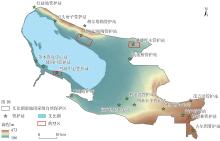
Fig. 1
Schematic diagram of the study area"
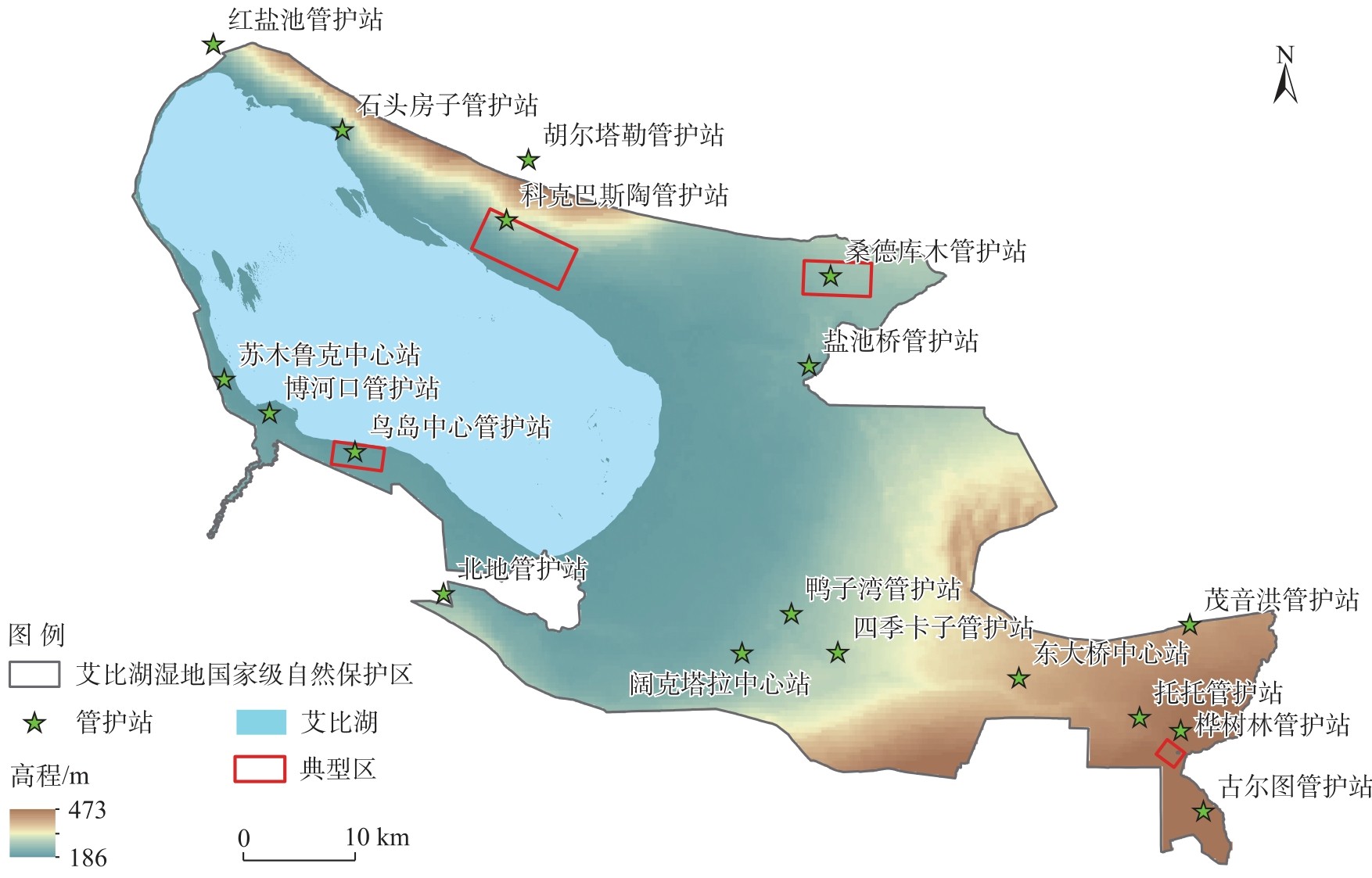
Tab. 1
Classification of future trends"
| 斜率(Slope)范围 | Hurst范围 | 未来趋势 |
|---|---|---|
| Slope>0 | Hurst>0.5 | 持续改善 |
| Slope>0 | Hurst<0.5 | 改善到退化 |
| Slope<0 | Hurst>0.5 | 持续退化 |
| Slope<0 | Hurst<0.5 | 退化到改善 |
Tab. 2
Interaction modes of geodetectors"
| 依据 | 交互作用 |
|---|---|
| 非线性减弱 | |
| 单因子非线性减弱 | |
| 双因子增强 | |
| 独立 | |
| 非线性增强 |
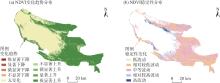
Fig. 2
NDVI trend and stability analysis of Ebinur Lake Wetland National Nature Reserve"

Fig. 3
NDVI time series changes of Ebinur Lake Wetland National Nature Reserve"
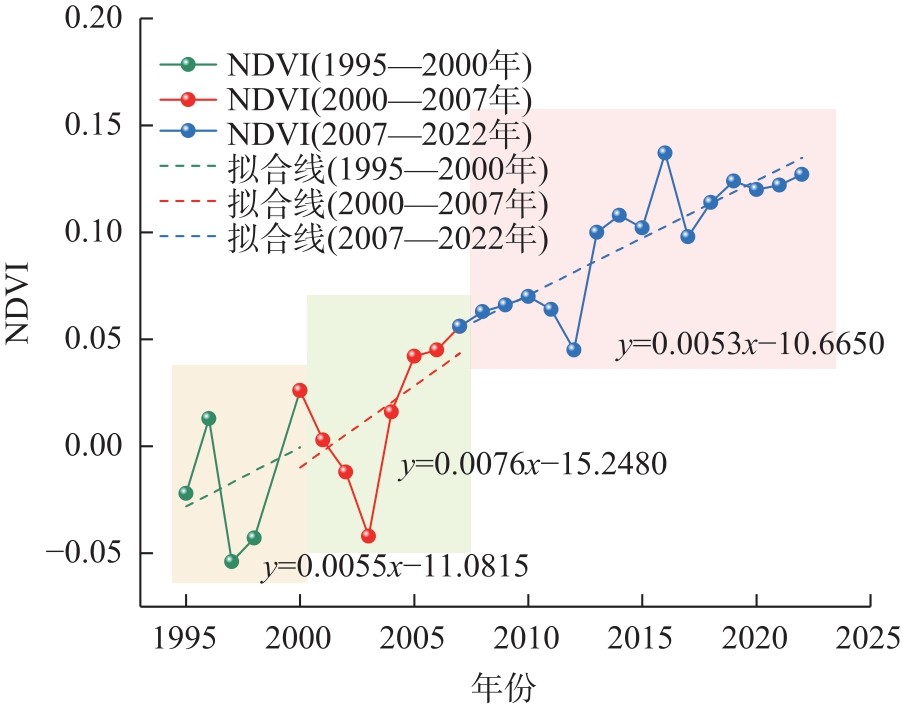
Fig. 4
Trend analysis of NDVI before and after the establishment of Ebinur Lake Wetland National Nature Reserve"
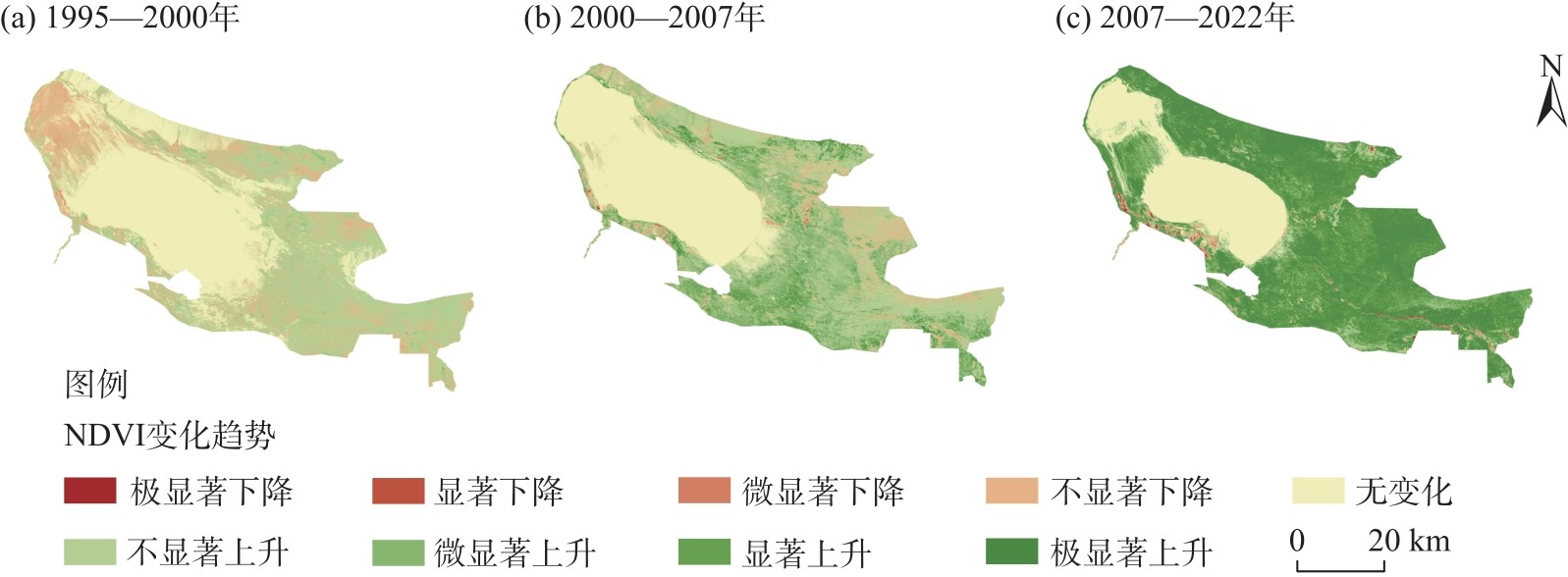
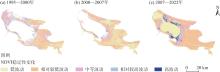
Fig. 5
Stability analysis of NDVI before and after the establishment of Ebinur Lake Wetland National Nature Reserve"

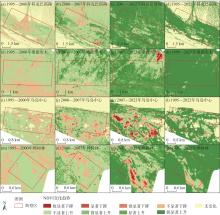
Fig. 6
NDVI trend analysis of typical areas before and after the establishment of Ebinur Lake Wetland National Nature Reserve"

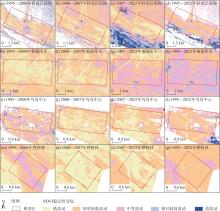
Fig. 7
Stability analysis of NDVI in typical areas before and after the establishment of Ebinur Lake Wetland National Nature Reserve"

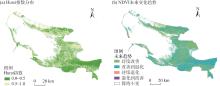
Fig. 8
Distributions of NDVI-Hurst index and future trend of Ebinur Lake Wetland National Nature Reserve"
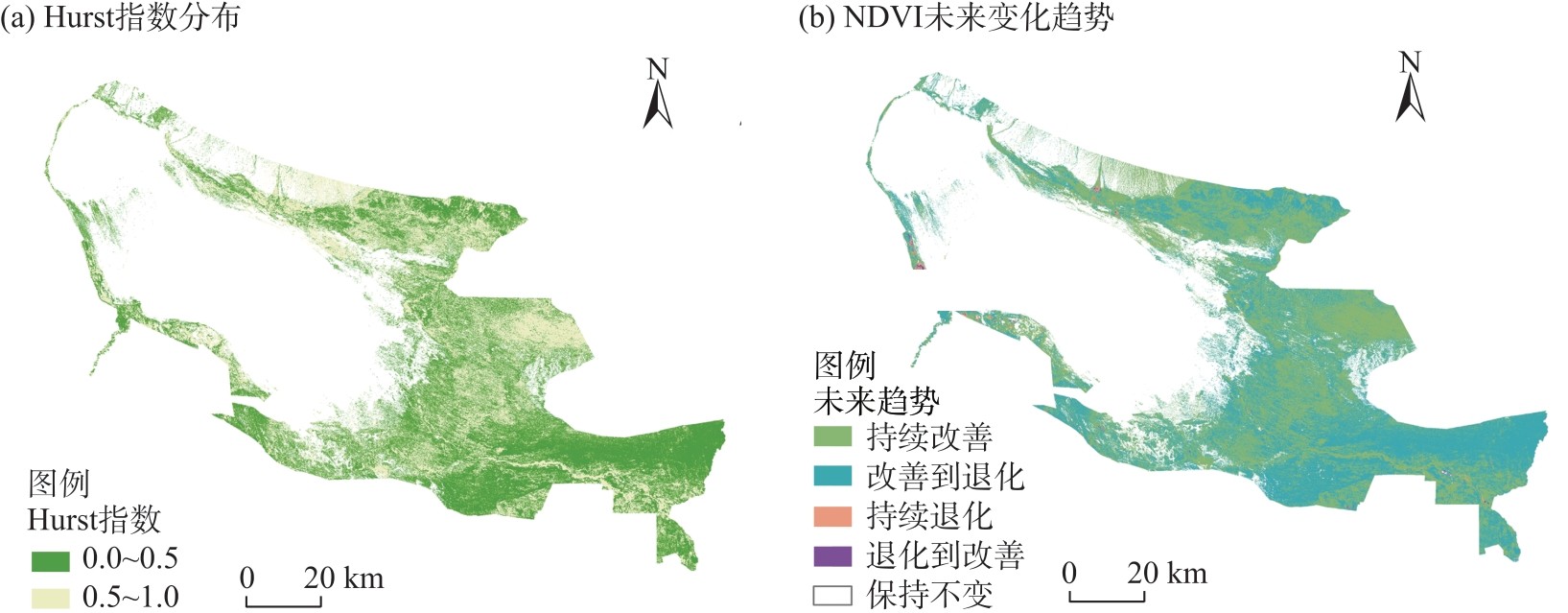
Fig. 9
Factor detection"
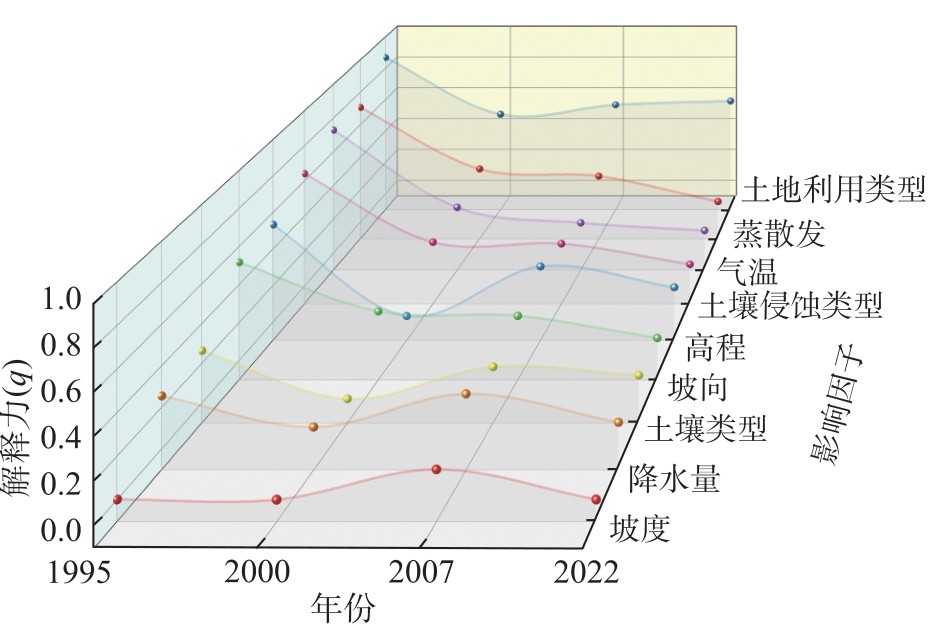
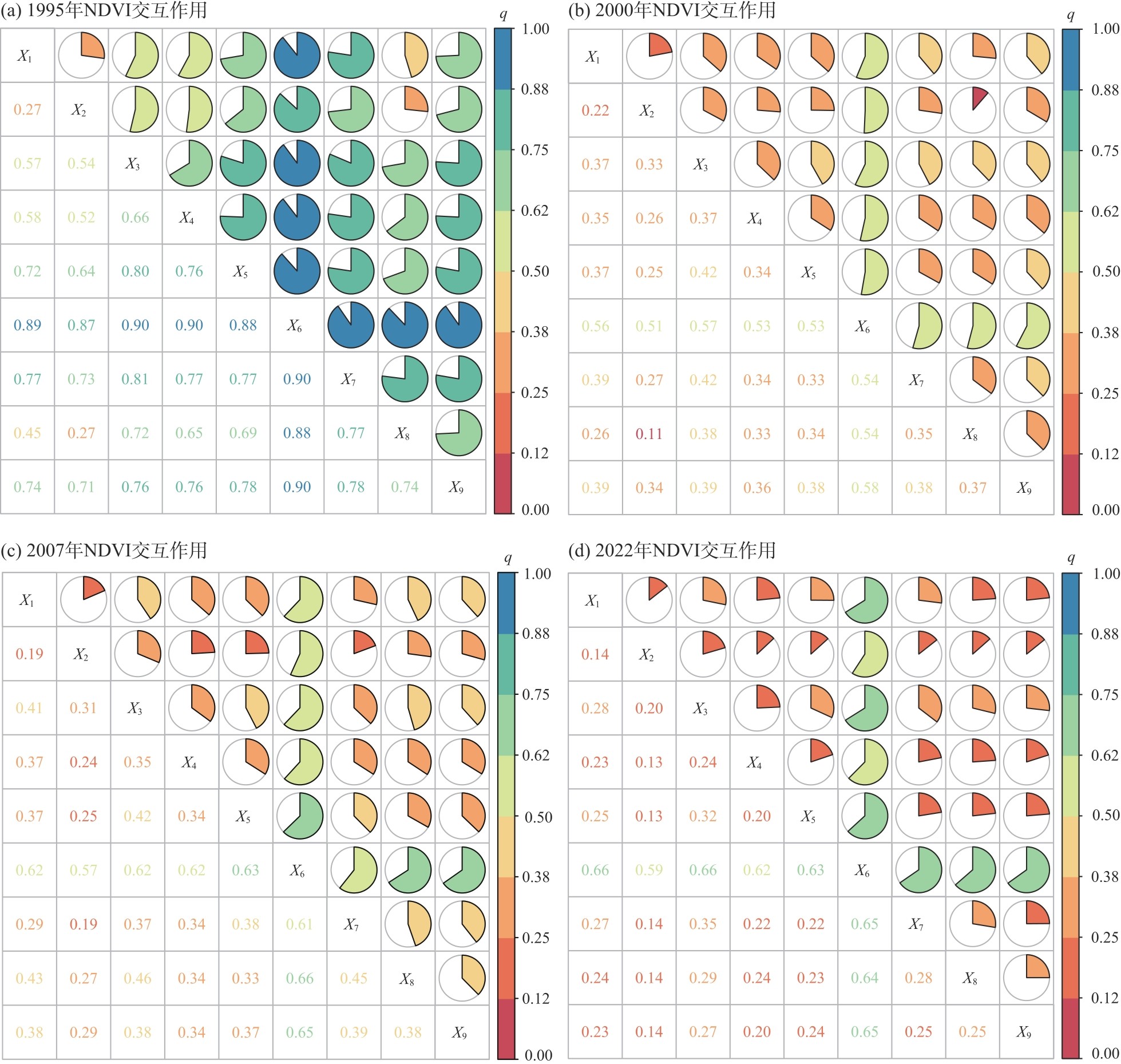
Fig. 10
Interactive detection"
| [1] |
刘景明, 丁建丽, 包青岭, 等. 基于同位素揭示艾比湖流域地下水特征[J]. 干旱区地理, 2023, 46(2): 201-210.
doi: 10.12118/j.issn.1000-6060.2022.228 |
|
[Liu Jingming, Ding Jianli, Bao Qingling, et al. Characteristics of groundwater in Ebinur Lake Basin using isotopes method[J]. Arid Land Geography, 2023, 46(2): 201-210.]
doi: 10.12118/j.issn.1000-6060.2022.228 |
|
| [2] |
张子涵, 王瑾杰, 丁建丽, 等. 基于PLUS模型的艾比湖流域景观生态风险分析及预测[J]. 干旱区地理, 2025, 48(2): 308-322.
doi: 10.12118/j.issn.1000-6060.2024.320 |
|
[Zhang Zihan, Wang Jinjie, Ding Jianli, et al. Analysis and prediction of landscape ecological risk in Ebinur Lake Basin based on PLUS model[J]. Arid Land Geography, 2025, 48(2): 308-322.]
doi: 10.12118/j.issn.1000-6060.2024.320 |
|
| [3] | 张洁, 吕光辉, 王恒方, 等. 艾比湖流域不同水盐环境植物多样性对生态系统多功能性的影响[J]. 植物资源与环境学报, 2021, 30(4): 22-30. |
| [Zhang Jie, Lü Guanghui, Wang Hengfang, et al. Effect of plant diversity on ecosystem multifunctionality in different water-salt environments of Ebinur Lake Basin[J]. Journal of Plant Resources and Environment, 2021, 30(4): 22-30.] | |
| [4] | Deng G Y, Gao J, Jiang H B, et al. Response of vegetation variation to climate change and human activities in semi-arid swamps[J]. Frontiers in Plant Science, 2022, 13: 990592, doi: 10.3389/fpls.2022.990592. |
| [5] | 李江, 张宗亮, 岳春芳. 艾比湖演化特征与生态修复对策思考[J]. 水利规划与设计, 2023(1): 75-81, 100. |
| [Li Jiang, Zhang Zongliang, Yue Chunfang. Evolutionary characteristics of Ebinur Lake and countermeasures for ecological restoration[J]. Water Resources Planning and Design, 2023(1): 75-81, 100.] | |
| [6] | 布威阿依谢姆·吐合提, 阿布都热合曼·哈力克, 姚凯旋, 等. 艾比湖流域LUCC驱动的碳储量时空动态特征与多情景预测[J]. 华侨大学学报(自然科学版), 2024, 45(4): 501-513. |
| [Tuheti Buweiayxiemu, Halike Abudureheman, Yao Kaixuan, et al. Spatio-temporal dynamies characteristic and multi-scenario prediction of carbon storage driven by LUCC in Ebinur Lake Basin[J]. Journal of Huaqiao University (Natural Science Edition), 2024, 45(4): 501-513.] | |
| [7] | 地丽胡玛·阿吉, 常娜娜, 杜菲, 等. 艾比湖微生物多样性及其功能分析[J]. 新疆大学学报(自然科学版)(中英文), 2022, 39(6): 720-726. |
| [Aji Dilihuma, Chang Nana, Du Fei, et al. Microbial diversity and function analysis in Ebinur Lake[J]. Journal of Xinjiang University (Natural Science Edition in Chinese and English), 2022, 39(6): 720-726.] | |
| [8] | 蔺卿, 陈明, 王迎春, 等. 基于生态修复的艾比湖流域生态需水研究[J]. 水利规划与设计, 2022(7): 14-18. |
| [Lin Qing, Chen Ming, Wang Yingchun, et al. Study on ecological water demand in Ebinur Lake Basin based on ecological restoration[J]. Water Resources Planning and Design, 2022(7): 14-18.] | |
| [9] | 郝帅, 李发东, 李艳红, 等. 基于氢氧稳定同位素的艾比湖流域地表水与地下水转化关系[J]. 水土保持学报, 2021, 35(4): 172-177, 85. |
| [Hao Shuai, Li Fadong, Li Yanhong, et al. Transformation between surface water and groundwater in Ebinur Lake Basin based on hydrogen and oxygen stable isotopes[J]. Journal of Soil and Water Conservation, 2021, 35(4): 172-177, 85.] | |
| [10] | 曹家睿, 陈蜀江, 范贺娟, 等. 艾比湖湖滨隐域性植被与地带性植被交错带土壤盐分对水域面积变化的响应[J]. 西南农业学报, 2021, 34(4): 862-871. |
| [Cao Jiarui, Chen Shujiang, Fan Hejuan, et al. Response of soil salinity to change of water area in crisscross between foreshore vegetation and zonal vegetation in Aibi Lake[J]. Southwest China Journal of Agricultural Sciences, 2021, 34(4): 862-871.] | |
| [11] | 喀迪阿依·阿力木, 玉素甫江·如素力, 肉克亚木·艾克木, 等. 2001—2017年艾比湖流域积雪时空变化及其驱动因子分析[J]. 生态科学, 2023, 42(3): 127-135. |
| [Alimu Kadiay, Rusulil Yusufujiang, Aikemul Roukeyamu, et al. Temporal and spatial changes of snow cover in the Ebinur Lake Basin from 2001 to 2017 and analysis of its driving factors[J]. Ecological Science, 2023, 42(3): 127-135.] | |
| [12] | Xia N, Tang Y Q, Tang M Y, et al. Monitoring and evaluation of vegetation restoration in the Ebinur Lake Wetland National Nature Reserve under lockdown protection[J]. Frontiers in Plant Science, 2024, 15: 1332788, doi: 10.3389/fpls.2024.1332788. |
| [13] | 江波, 王晓媛, 杨梦斐, 等. 生态系统服务研究在生态红线政策保护成效评估中的应用[J]. 生态学报, 2019, 39(9): 3365-3371. |
| [Jiang Bo, Wang Xiaoyuan, Yang Mengfei, et al. Application of ecosystem services research on a protection effectiveness evaluation of the ecological redline policy[J]. Acta Ecologica Sinica, 2019, 39(9): 3365-3371.] | |
| [14] | 董庆栋, 陈超男, 李艳红, 等. 基于NPP和人类扰动指数评估河南伏牛山地区国家级自然保护区群保护成效与溢出/泄漏效应[J]. 生物多样性, 2023, 31(5): 102-113. |
| [Dong Qingdong, Chen Chaonan, Li Yanhong, et al. Assessing the protection effectiveness and spillover/leakage effects of the national nature reserve group of Funiu Mountain area in Henan Province based on the NPP and human disturbance index[J]. Biodiversity Science, 2023, 31(5): 102-113.] | |
| [15] | 陈远. 内蒙古罕山国家级自然保护区保护成效研究[J]. 乡村科技, 2024, 15(13): 125-128. |
| [Chen Yuan. Study on the conservation effectiveness of Hanshan National Nature Reserve in Inner Mongolia[J]. Rural Science and Technology, 2024, 15(13): 125-128.] | |
| [16] | 刘方正, 张建亮, 王亮, 等. 甘肃安西极旱荒漠国家级自然保护区南片植被长势与保护成效[J]. 生态学报, 2016, 36(6): 1582-1590. |
| [Liu Fangzheng, Zhang Jianliang, Wang Liang, et al. Vegetation growth and conservation efficacy assessment in the southern part of the Gansu Anxi National Nature Reserve in Hyper-Arid Desert[J]. Acta Ecologica Sinica, 2016, 36(6): 1582-1590.] | |
| [17] | Li J, Wang J L, Zhang J, et al. Growing-season vegetation coverage patterns and driving factors in the China-Myanmar Economic Corridor based on Google Earth Engine and geographic detector[J]. Ecological Indicators, 2022, 136: 108620, doi: 10.1016/j.ecolind.2022.108620. |
| [18] | 钟超慧, 陈甲豪, 杨涵, 等. 基于核归一化植被指数数据的中国西部四省自然保护区保护成效评估[J]. 生态学报, 2025, 45(3): 1199-1209. |
| [Zhong Chaohui, Chen Jiahao, Yang Han, et al. Assessment of conservation effectiveness in nature reserves of four provinces in western China based on kernel normalized difference vegetation index data[J]. Acta Ecologica Sinica, 2025, 45(3): 1199-1209.] | |
| [19] | Matas-Granados L, Pizarro M, Cayuela L, et al. Long-term monitoring of NDVI changes by remote sensing to assess the vulnerability of threatened plants[J]. Biological Conservation, 2022, 265: 109428, doi: 10.1016/j.biocon.2021.109428. |
| [20] | 陈宸, 许玉凤. 天山北坡经济带稳定草地净初级生产力时空变化特征及其驱动力[J]. 草业科学, 2023, 40(5): 1154-1167. |
| [Chen Chen, Xu Yufeng. Temporal and spatial variation characteristics and driving forces of stable grassland net primary productivity in the northern slope of Tianshan Mountains economic zone[J]. Pratacultural Science, 2023, 40(5): 1154-1167.] | |
| [21] | 尼亚孜海尼木·肖开提江, 马倩, 包安明, 等. 基于地理探测器的艾比湖流域生态脆弱性评价及驱动力分析[J]. 水生态学杂志, 2024, 45(6): 18-27. |
| [Xiaokaitijiang Niyazihainimu, Ma Qian, Bao Anming, et al. Ecological vulnerability evaluation and driving force analysis of the Ebinur Lake Basin[J]. Journal of Hydroecology, 2024, 45(6): 18-27.] | |
| [22] |
希丽娜依·多来提, 阿里木江·卡斯木, 如克亚·热合曼, 等. 基于四种水体指数的艾比湖水面提取及时空变化分析[J]. 长江科学院院报, 2022, 39(10): 134-140.
doi: 10.11988/ckyyb.20210634 |
|
[Duolaiti Xilinayi, Kasim Alim, Reheman Rukeya, et al. Water body extraction of Ebinur Lake based on four water indexes and analysis of spatial-temporal changes[J]. Journal of Yangtze River Scientific Research Institute, 2022, 39(10): 134-140.]
doi: 10.11988/ckyyb.20210634 |
|
| [23] | 程久菊, 张雪妮, 张子洋, 等. 艾比湖不同水盐环境荒漠植物种间关联格局下的叶片功能性状差异分析[J]. 植物资源与环境学报, 2022, 31(3): 18-25. |
| [Cheng Jiuju, Zhang Xueni, Zhang Ziyang, et al. Analysis on differences in leaf functional traits of desert plants under interspecifie association pattern in different water-salt environments of Ebinur Lake[J]. Journal of Plant Resources and Environment, 2022, 31(3): 18-25.] | |
| [24] |
郝帅, 李发东. 艾比湖流域典型荒漠植被水分利用来源研究[J]. 地理学报, 2021, 76(7): 1649-1661.
doi: 10.11821/dlxb202107006 |
|
[Hao Shuai, Li Fadong. Water sources of the typical desert vegetation in Ebinur Lake Basin[J]. Acta Geographica Sinica, 2021, 76(7): 1649-1661.]
doi: 10.11821/dlxb202107006 |
|
| [25] | Militino A F, Moradi M, Ugarte M D. On the performances of trend and change-point detection methods for remote sensing data[J]. Remote Sensing, 2020, 12(6): 1008, doi: 10.3390/rs12061008. |
| [26] | Singh R N, Sah S, Das B, et al. Innovative trend analysis of spatio-temporal variations of rainfall in India during 1901—2019[J]. Theoretical and Applied Climatology, 2021, 145(1-2): 821-838. |
| [27] | 邓兴耀, 姚俊强, 刘志辉. 基于GIMMS NDVI的中亚干旱区植被覆盖时空变化[J]. 干旱区研究, 2017, 34(1): 10-19. |
| [Deng Xingyao, Yao Junqiang, Liu Zhihui. Spatiotemporal dynamic change of vegetation coverage in arid regions in Central Asia based on GIMMS NDVI[J]. Arid Zone Research, 2017, 34(1): 10-19.] | |
| [28] | 钟旭珍, 王金亮, 邓云程, 等. 怒江-萨尔温江流域植被覆盖时空变化趋势及驱动力[J]. 生态学报, 2023, 43(24): 10182-10201. |
| [Zhong Xuzhen, Wang Jinliang, Deng Yuncheng, et al. Spatio-temporal variation and driving forces of vegetation cover in the Nujiang-Salween River Basin[J]. Acta Ecologica Sinica, 2023, 43(24): 10182-10201.] | |
| [29] | Wang G J, Peng W F, Zhang L D, et al. Quantifying the impacts of natural and human factors on changes in NPP using an optimal parameters-based geographical detector[J]. Ecological Indicators, 2023, 155: 111018, doi: 10.1016/j.ecolind.2023.111018. |
| [30] | Peng W F, Kuang T T, Tao S. Quantifying influences of natural factors on vegetation NDVI changes based on geographical detector in Sichuan, western China[J]. Journal of Cleaner Production, 2019, 233: 353-367. |
| [31] | Wang G J, Peng W F. Quantifying spatiotemporal dynamics of vegetation and its differentiation mechanism based on geographical detector[J]. Environmental Science and Pollution Research, 2022, 29(21): 32016-32031. |
| [32] | 陈妍, 周妍, 包岩峰, 等. 山水林田湖草沙一体化保护和修复工程综合成效评估技术框架[J]. 生态学报, 2023, 43(21): 8894-8902. |
| [Chen Yan, Zhou Yan, Bao Yanfeng, et al. A technical framework for effectiveness evaluation of holistically ecological conservation and restoration project of mountains, rivers, forests, farmlands, grasslands, and deserts[J]. Acta Ecologica Sinica, 2023, 43(21): 8894-8902.] | |
| [33] | 罗健梅, 阿布都热合曼·哈力克, 段越帆, 等. 艾比湖流域植被NPP时空演变特征及其驱动因素分析[J]. 生态学报, 2025, 45(1): 182-196. |
| [Luo Jianmei, Halike Abudureheman, Duan Yuefan, et al. Spatiotemporal dynamics and driving factors of net primary productivity in the Ebinur Lake Basin[J]. Acta Ecologica Sinica, 2025, 45(1): 182-196.] | |
| [34] |
任立清. 艾比湖流域植被时空变化及驱动力分析[J]. 干旱区地理, 2022, 45(2): 467-477.
doi: 10.12118/j.issn.1000–6060.2021.199 |
|
[Ren Liqing. Spatiotemporal change and driving force of vegetation in Ebinur Lake Basin[J]. Arid Land Geography, 2022, 45(2): 467-477.]
doi: 10.12118/j.issn.1000–6060.2021.199 |
|
| [35] | 赵坤成, 张永福, 朱小强, 等. 2000—2014年艾比湖NDVI变化及其与降水、温度响应关系[J]. 广东农业科学, 2017, 44(9): 82-88. |
| [Zhao Kuncheng, Zhang Yongfu, Zhu Xiaoqiang, et al. NDVI changes in Ebinur Basin from 2000 to 2014 and its response relation to precipitation and temperature[J]. Guangdong Agricultural Sciences, 2017, 44(9): 82-88.] | |
| [36] | 雷小牛, 李宏健, 刘艳红, 等. 新疆艾比湖流域生态环境保护修复治理的基本思路及对策[J]. 水利发展研究, 2023, 23(5): 38-48. |
| [Lei Xiaoniu, Li Hongjian, Liu Yanhong, et al. Basic ideas and measures of ecological environment protection, restoration and governance in Ebinur Lake Basin in Xinjiang[J]. Water Resources Development Research, 2023, 23(5): 38-48.] | |
| [37] | Hu P L, Zhang W, Chen H S, et al. Soil carbon accumulation with increasing temperature under both managed and natural vegetation restoration in calcareous soils[J]. Science of the Total Environment, 2021, 767: 145298, doi: 10.1016/j.scitotenv.2021.145298. |
| [38] |
Bustamante M M C, Silva J S, Scariot A, et al. Ecological restoration as a strategy for mitigating and adapting to climate change: Lessons and challenges from Brazil[J]. Mitigation and Adaptation Strategies for Global Change, 2019, 24(7): 1249-1270.
doi: 10.1007/s11027-018-9837-5 |
| [39] |
Li R R, Zhang W J, Yang S Q, et al. Topographic aspect affects the vegetation restoration and artificial soil quality of rock-cut slopes restored by external-soil spray seeding[J]. Scientific Reports, 2018, 8: 12109, doi: 10.1038/s41598-018-30651-y.
pmid: 30108289 |
| [40] | Hu P L, Xiao J, Zhang W, et al. Response of soil microbial communities to natural and managed vegetation restoration in a subtropical karst region[J]. Catena, 2020, 195: 104849, doi: 10.1016/j.catena.2020.104849. |
| [41] | Wang M M, Shao Y H, Zhang W X, et al. Secondary succession increases diversity and network complexity of soil microbial communities in subtropical and temperate forests[J]. Catena, 2025, 249: 108662, doi: 10.1016/j.catena.2024.108662. |
| [42] | Nie T, Dong G T, Jiang X H, et al. Spatio-temporal changes and driving forces of vegetation coverage on the Loess Plateau of northern Shaanxi[J]. Remote Sensing, 2021, 13(4): 613, doi: 10.3390/rs13040613. |
| [43] |
王璐, 丁建丽. 艾比湖保护区荒漠植被时空过程变化及其植被指数影响因素分析[J]. 草业学报, 2015, 24(5): 4-11.
doi: 10.11686/cyxb20150502 |
|
[Wang Lu, Ding Jianli. Vegetation index feature change and its influencing factors and spatial-temporal process analysis of desert grassland in the Ebinur Lake Nature Reserve, Xinjiang[J]. Acta Prataculturae Sinica, 2015, 24(5): 4-11.]
doi: 10.11686/cyxb20150502 |
| [1] | SHI Jiqing, LUO Zhen, YIXI Zhuoma, LIU Sai, LI Jihong, DANZENG Yiga, GAN Chenlong. Trend analysis of seasonal changes in Xizang based on climate change and new seasonal division [J]. Arid Land Geography, 2025, 48(7): 1141-1152. |
| [2] | SONG Xiaolong, LI Longtang, REN Jie, WU Yue, WANG Peng, MI Wenbao, MA Mingde. Spatio-temporal variation characteristics and driving factors of NDVI in the arid and semi-arid region of northwest China [J]. Arid Land Geography, 2025, 48(6): 951-962. |
| [3] | ZOU Xiang, ZHANG Yuting, XU Lu. Spatio-temporal patterns of vegetation cover and its responses to climatic factors in Hulun Buir from 2000 to 2022 [J]. Arid Land Geography, 2025, 48(6): 963-972. |
| [4] | WANG Ruifang, LYU Baoqi, ZHANG Wenjing. Vegetation dynamics and their responses to climate change in the Yellow River Basin: Based on climatic wet and dry zoning scales [J]. Arid Land Geography, 2025, 48(6): 973-984. |
| [5] | LI Kangning, LIN Yilin, ZHAO Junsan, WANG Jian, GE Feng. Driving mechanisms of vegetation change and ecological vulnerability in the Three-River Headwater Region [J]. Arid Land Geography, 2025, 48(2): 283-295. |
| [6] | ZHANG Haidong, LI Chongbo, MENG Liqi, Adilai SAITINIYAZI, JU Xifeng. Evolutionary characteristics of NDVI in the Kashi Delta and its response to the climate [J]. Arid Land Geography, 2025, 48(2): 296-307. |
| [7] | ZHANG Xiaodong, MA Fenghua, ZHAO Zhipeng, WU Dan, Ma Yuxue, JI Weibo, GONG Liang. Spatio-temporal evolution characteristics of NDVI and its response to climate factors of desertification prevention and control zone in the desert grasslands of central Ningxia [J]. Arid Land Geography, 2025, 48(10): 1804-1814. |
| [8] | CHANG Wenjing, CONG Shixiang, WANG Rongrong, DING Xudong, YU Hailong, HUANG Juying. Quantitative analysis of NDVI changes in Mu Us Sandy Land by climate change and human activities [J]. Arid Land Geography, 2025, 48(1): 63-74. |
| [9] | ZHOU Xiaoming, ZHANG Zhe, ZHANG Yue, WANG Yuning. TVDI-based analysis of drought and influencing factors in Turpan City in the last 20 years [J]. Arid Land Geography, 2024, 47(12): 2104-2114. |
| [10] | YANG Xiaoling, DING Wenkui, ZHOU Hua, LI Yanying, CHEN Haibei. Normalized difference vegetation index change and its driving factors in Shiyang River Basin [J]. Arid Land Geography, 2024, 47(10): 1735-1744. |
| [11] | ZHANG Gangdong, BAO Gang, HUANG Xiaojun, YUAN Zhihui, WEN Durina. Asymmetrical warming in winter and spring and its effect on start of growing season and spring NDVI in Mongolia [J]. Arid Land Geography, 2023, 46(8): 1238-1249. |
| [12] | AI Liya, WANG Yongfang, GUO Enliang, YIN Shan, GU Xiling. NDVI change and its influencing factors of Daqingshan National Nature Reserve based on GEE [J]. Arid Land Geography, 2023, 46(8): 1279-1290. |
| [13] | LUO Jiayan, ZHANG Jing, XU Mengran, MO Yu, TONG Liga. Vegetation dynamic and its driving force and multi-scenario prediction in Otindag Sandy Land [J]. Arid Land Geography, 2023, 46(4): 614-624. |
| [14] | DENG Tiantian, GENG Guangpo, YANG Rui, ZHANG Bao. Temporal and spatial variation characteristics of high temperature and heat wave in the Weihe River Basin from 1980 to 2020 [J]. Arid Land Geography, 2023, 46(2): 211-221. |
| [15] | Mihray MOYIDIN, Mamat SAWUT, LI Jinzhao. Extraction of cotton planting area based on Sentinel-2 time series data and phenological characteristics [J]. Arid Land Geography, 2022, 45(6): 1847-1859. |
|
||