Arid Land Geography ›› 2025, Vol. 48 ›› Issue (12): 2158-2168.doi: 10.12118/j.issn.1000-6060.2024.560
• Climate Change and Surface Process • Previous Articles Next Articles
GUO Qi1,2( ), YAN Min1,2(), ZUO Hejun1,2, LIU Yaqi1,2, XU Fujian1,2, JIANG Chunyu1,2
Received:2024-09-15
Revised:2024-12-10
Online:2025-12-25
Published:2025-12-30
Contact:
YAN Min
E-mail:gq7q7q7@126.com;ym5233@126.com
GUO Qi, YAN Min, ZUO Hejun, LIU Yaqi, XU Fujian, JIANG Chunyu. Grain size characteristics of wind-blown sand transport on several underlying surfaces under strong wind conditions in Inner Mongolia section of Ejina-Hami Railway[J].Arid Land Geography, 2025, 48(12): 2158-2168.
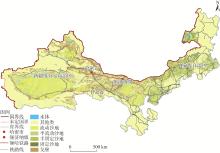
Fig. 1
Overview of the study area"

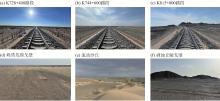
Fig. 2
Ejina-Hami Railway section and underlying surface"


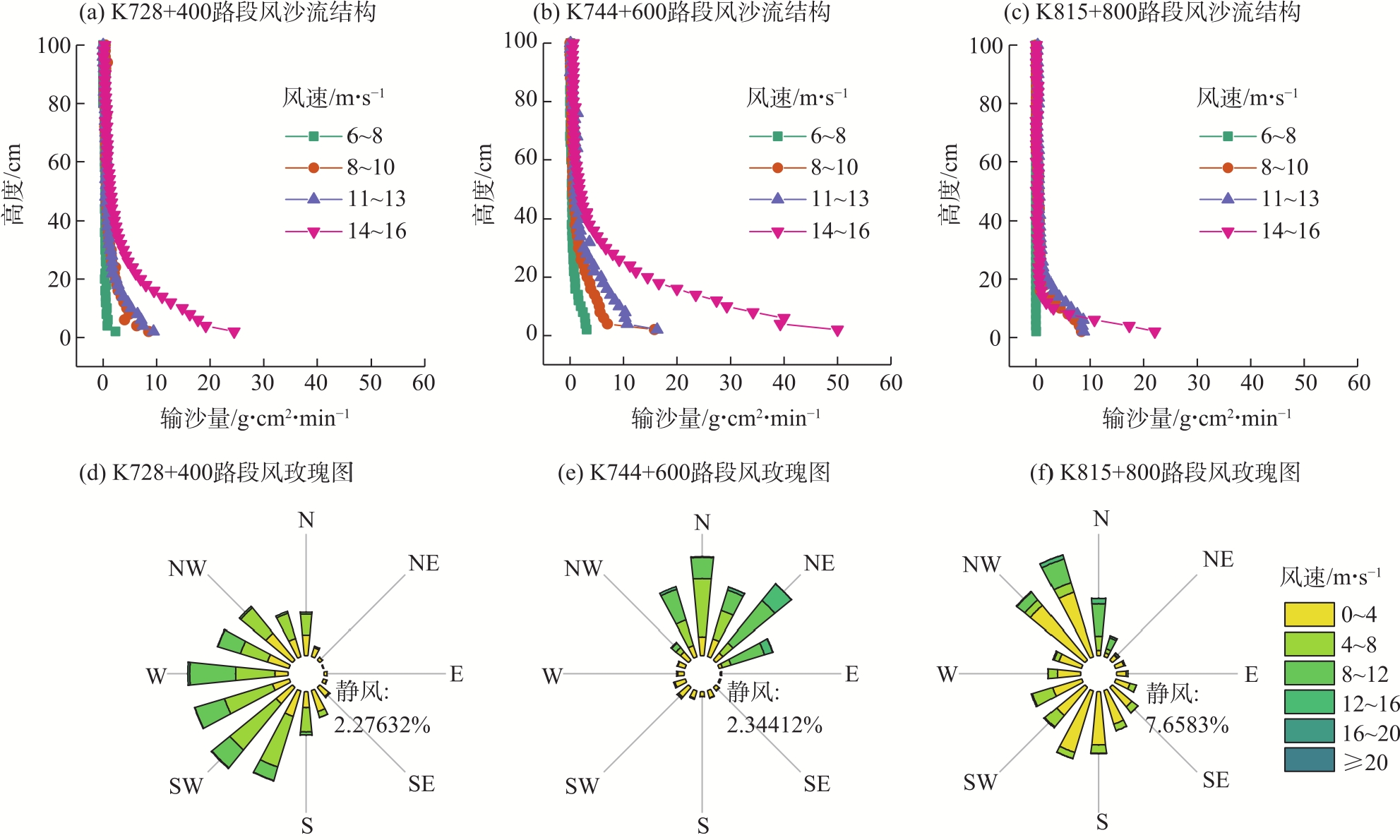
Fig. 3
Characteristics of wind-sand flow structure and wind field in the study area during the observation period"
Tab. 1
Particle gradation table of surface sand samples on different underlying surfaces"
| 编号 | 土样采集地区 | 粗砂 (Φ<1)/% | 中砂 (Φ1~2)/% | 细砂 (Φ2~3)/% | 极细砂 (Φ3~4)/% | 粉粒 (Φ4~9)/% | 黏粒 (Φ>9)/% |
|---|---|---|---|---|---|---|---|
| LDSQ | 流动沙丘 | 2.98 | 34.50 | 39.59 | 18.21 | 1.75 | 2.97 |
| NLW+SS | 尼龙网方格+梭梭措施 | 0.56 | 45.93 | 52.46 | 1.01 | 0.01 | 0.03 |
| BSQL | 剥蚀丘陵戈壁 | 7.56 | 45.93 | 45.46 | 1.01 | 0.01 | 0.03 |
| NLW | 尼龙网方格沙障措施 | 0.02 | 19.68 | 71.21 | 8.40 | 0.26 | 0.43 |
| LZHM | 砾质荒漠 | 4.15 | 29.28 | 56.96 | 7.49 | 0.24 | 1.88 |
| SS | 梭梭林措施 | 3.88 | 50.46 | 41.38 | 3.63 | 0.13 | 0.52 |
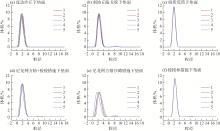
Fig. 4
Particle size frequency curves of sand material on different underlying surfaces"
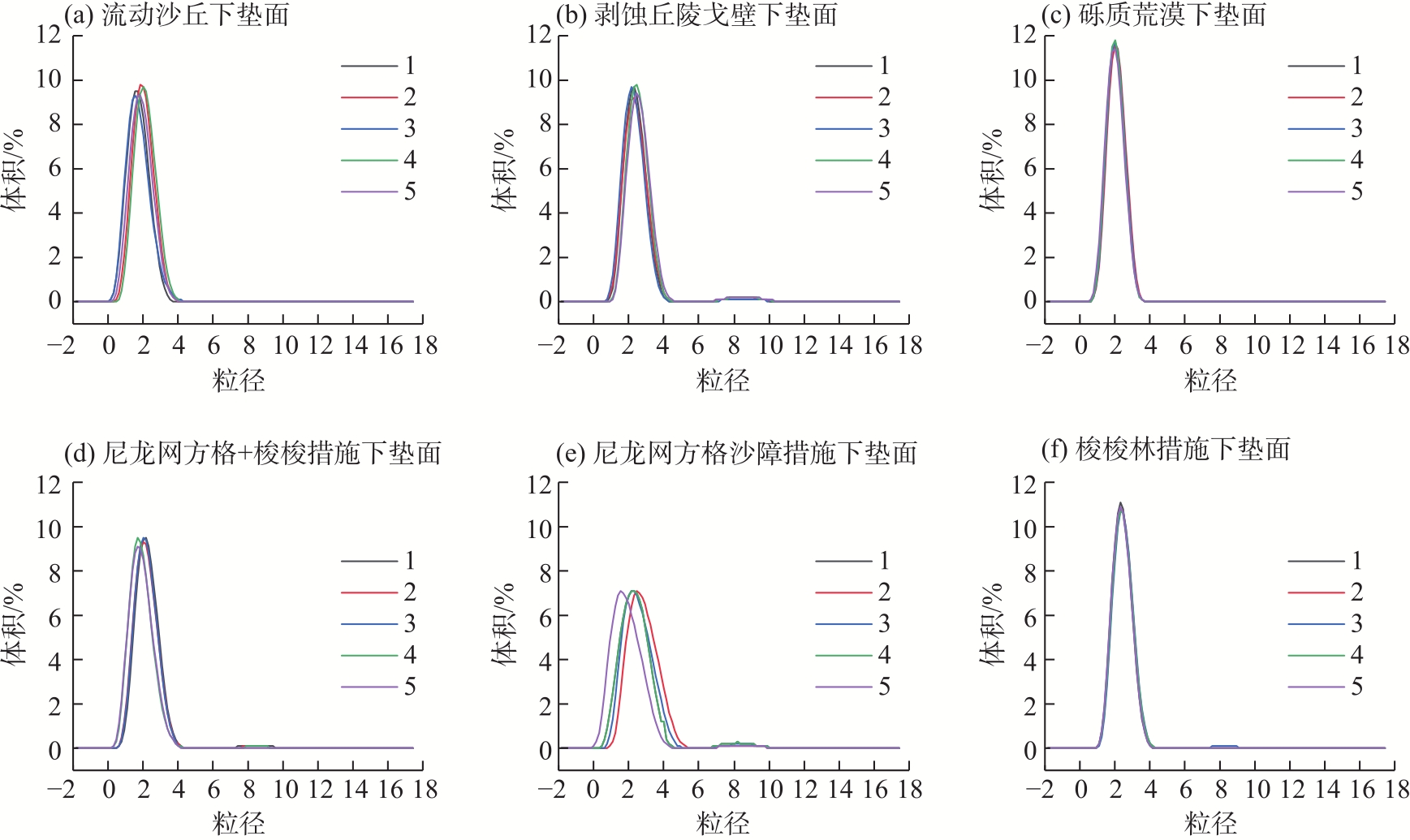
Tab. 2
Characteristics of sand particle size parameters on different underlying surfaces"
| 编号 | 土样采集地区 | 平均粒径(MZ) | 分选系数(σ) | 偏度(SK) | 峰态(KG) |
|---|---|---|---|---|---|
| LDSQ | 流动沙丘 | 2.063 | 0.712 | 0.244 | 3.359 |
| NLW+SS | 尼龙网方格+梭梭措施 | 2.569 | 1.374 | -0.138 | 1.372 |
| BSQL | 剥蚀丘陵戈壁 | 0.953 | 3.745 | 0.357 | 2.135 |
| NLW | 梭梭林措施 | 3.572 | 2.003 | 0.197 | 1.757 |
| LZHM | 砾质荒漠 | 1.079 | 2.627 | 0.207 | 2.957 |
| SS | 尼龙网方格沙障措施 | 2.311 | 2.151 | 0.217 | 2.679 |
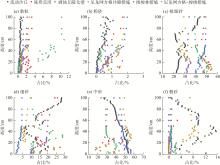
Fig. 5
Variation characteristics of sand particle size with height on different underlying surfaces in wind-sand flow"
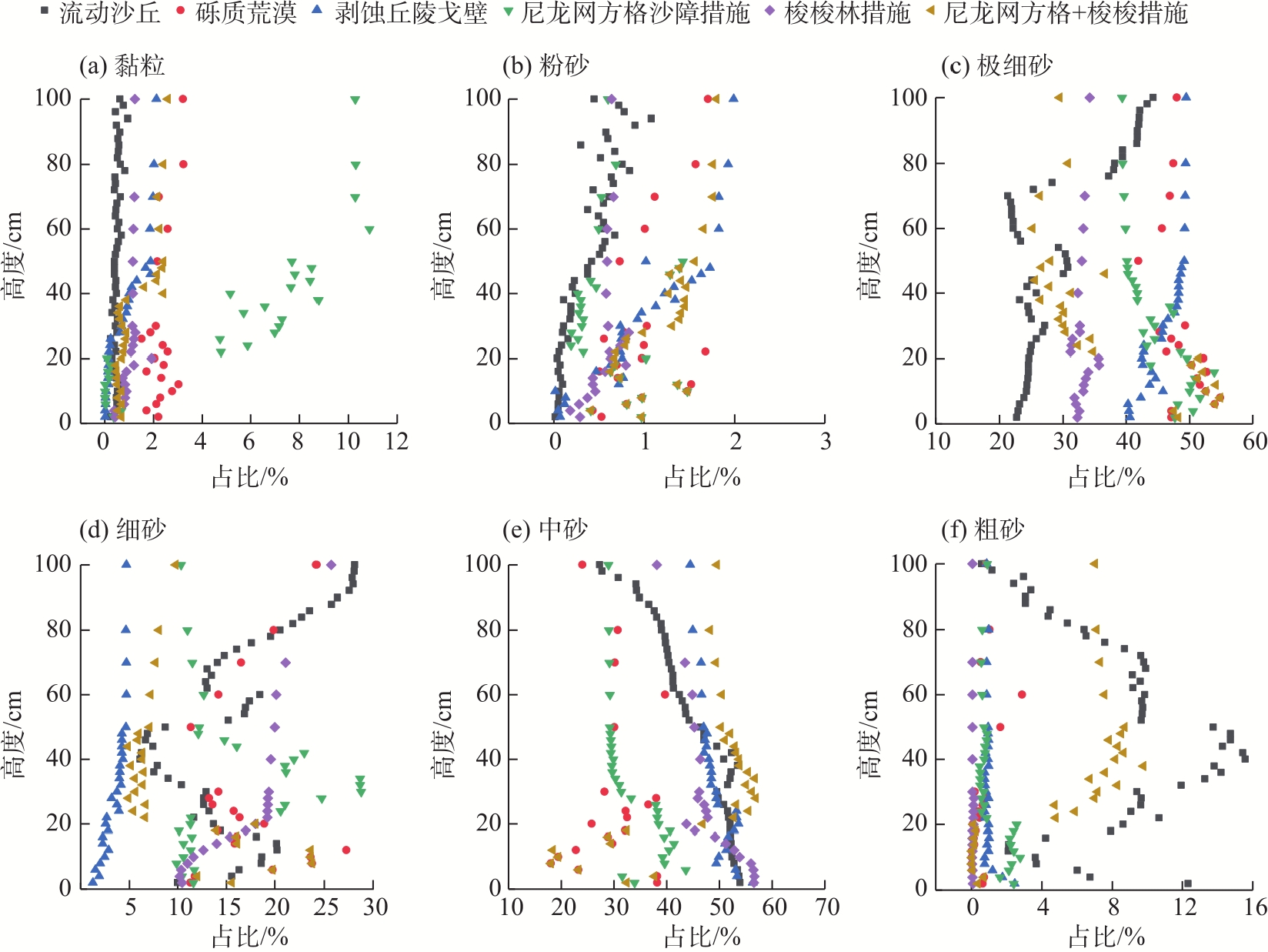
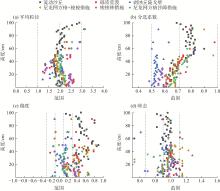
Fig. 6
Spatial variation characteristics of particle size parameters in wind-sand flow"
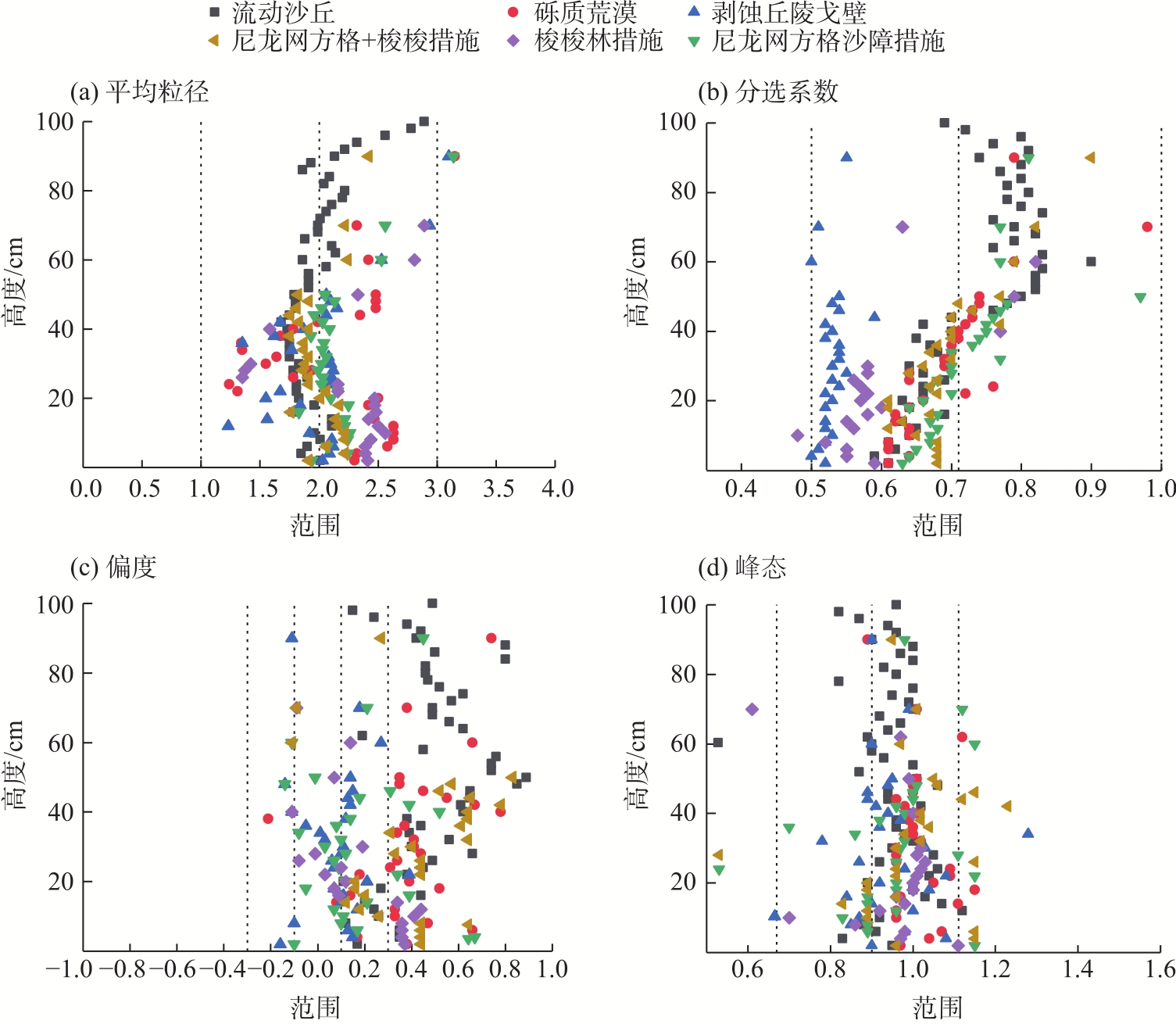

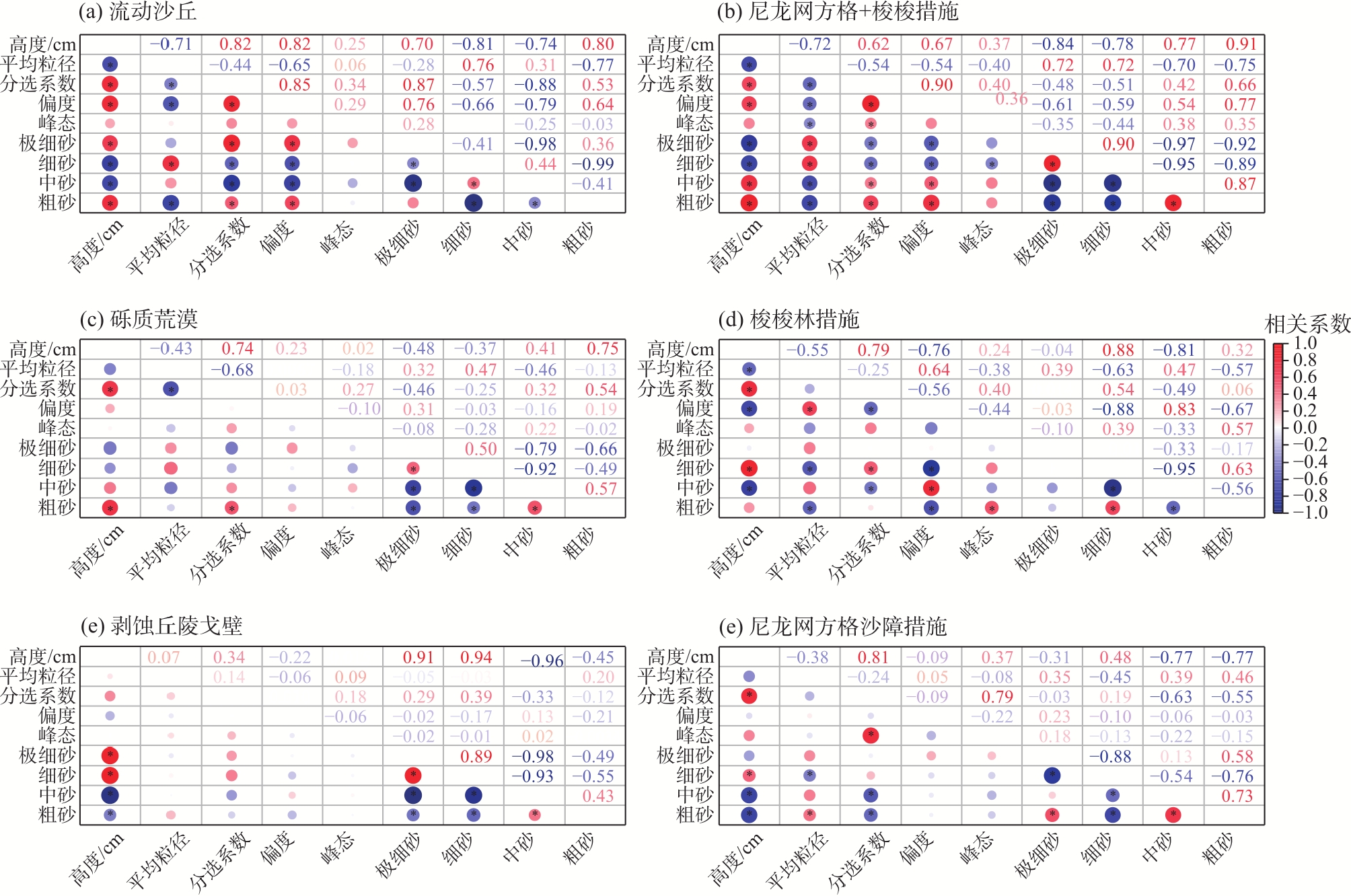
Fig. 7
Correlation between sand-carrying particle size parameters and particle size of wind-sand flow on different underlying surfaces"
Tab. 3
Relationship between grain size characteristics and height of sand material in wind-blown sand flow on different underlying surfaces (R2>0.7)"
| 编号 | 组分 | 高度/cm | 拟合方程 | R2 | 编号 | 组分 | 高度/cm | 拟合方程 | R2 |
|---|---|---|---|---|---|---|---|---|---|
| LDSQ | 粉砂 | 0~100 | y=0.0084x-0.0497 | 0.7882 | BSQ | 中砂 | 0~100 | y=-0.1968x+54.476 | 0.8059 |
| 极细砂 | 0~100 | y=0.1592x+21.374 | 0.819 | 粗砂 | 0~10 | y=-0.282x+2.955 | 0.9291 | ||
| 细砂 | 0~20 | y=0.7564x+11.033 | 0.8228 | NLW | 黏粒 | 0~100 | y=0.1454x+0.2465 | 0.7482 | |
| 20~40 | y=-0.3898x+22.485 | 0.8592 | 极细砂 | 0~30 | y=-0.6239x+53.155 | 0.7308 | |||
| 40~100 | y=0.3685x-8.2935 | 0.8597 | 细砂 | 0~30 | y=0.6272x+4.774 | 0.7192 | |||
| 中砂 | 0~100 | y=-0.2424x+57.268 | 0.9105 | SS | 粉砂 | 0~30 | y=0.0239x+0.172 | 0.8826 | |
| 粗砂 | 0~10 | y=-0.9347x+12.788 | 0.8477 | 细砂 | 0~100 | y=0.1513x+12.428 | 0.7299 | ||
| 10~40 | y=0.4146x-0.6181 | 0.8968 | 粗砂 | 0~10 | y=-0.005x+0.074 | 0.8929 | |||
| 40~100 | y=-0.2295x+24.253 | 0.9124 | 10~30 | y=0.0053x-0.0261 | 0.9602 | ||||
| LZHM | 细砂 | 0~10 | y=1.7097x+7.632 | 0.9146 | NLW+SS | 黏粒 | 0~100 | y=0.0283x+0.2702 | 0.7001 |
| 40~100 | y=0.1966x+4.4669 | 0.9963 | 40~50 | y=0.09x-2.008 | 0.8293 | ||||
| 中砂 | 0~10 | y=-2.4307x+42.623 | 0.8229 | 50~100 | y=0.0098x+1.588 | 0.8414 | |||
| BSQ | 黏粒 | 0~100 | y=0.0298x-0.1838 | 0.8664 | 细砂 | 0~10 | y=1.4025x+10.557 | 0.7403 | |
| 0~50 | y=0.0386x-0.3931 | 0.8734 | 10~20 | y=-1.2811x+37.325 | 0.7488 | ||||
| 50~100 | y=0.0063x+1.5129 | 0.9344 | 20~100 | y=0.0532x+3.9605 | 0.725 | ||||
| 粉砂 | 0~100 | y=0.0234x+0.1862 | 0.8455 | 中砂 | 0~10 | y=-2.2855x+39.895 | 0.7138 | ||
| 极细砂 | 0~100 | y=0.1096x+42.213 | 0.7049 | 10~20 | y=3.14x-18.769 | 0.9417 | |||
| 细砂 | 0~100 | y=0.0389x+2.1763 | 0.7235 |
| [1] |
韩庆杰, 郝才元, 张宏杰, 等. 临哈铁路典型防沙工程区阻风效率与积沙量特征[J]. 中国沙漠, 2021, 41(1): 37-46.
doi: 10.7522/j.issn.1000-694X.2020.00084 |
|
[Han Qingjie, Hao Caiyuan, Zhang Hongjie, et al. Distribution characteristics of wind resistance efficiency and sandaccumulation quantity at typical sand control engineeringarea of LinheHami Railway[J]. Journal of Desert Research, 2021, 41(1): 37-46.]
doi: 10.7522/j.issn.1000-694X.2020.00084 |
|
| [2] |
Bruno L, Horvat M, Raffaele L. Windblown sand along railway infrastructures: A review of challenges and mitigation measures[J]. Journal of Wind Engineering Industrial Aerodynamics, 2018, 177: 340-365.
doi: 10.1016/j.jweia.2018.04.021 |
| [3] |
席成, 左合君, 王海兵, 等. 高立式尼龙网沙障防风阻沙特征及其合理配置[J]. 干旱区研究, 2021, 38(3): 882-891.
doi: 10.13866/j.azr.2021.03.30 |
|
[Xi Cheng, Zuo Hejun, Wang Haibing, et al. Windproof and sandblocking characteristics of high vertical nylon mesh sand barrier and its rational allocation[J]. Arid Zone Research, 2021, 38(3): 882-891.]
doi: 10.13866/j.azr.2021.03.30 |
|
| [4] | 常方乐, 康孟珍, 王秀娟, 等. 平行智能风沙防治系统构架与功能——以植物措施为例[J]. 干旱区研究, 2019, 36(6): 1576-1583. |
| [Chang Fangle, Kang Mengzhen, Wang Xiujuan, et al. Framework and function of aeolian sand parallel prevention and control: Application of artificial intelligence technology in sand prevention and control[J]. Arid Zone Research, 2019, 36(6): 1576-1583.] | |
| [5] |
顿耀权, 屈建军, 康文岩, 等. 包兰铁路沙坡头段防护体系研究综述[J]. 中国沙漠, 2021, 41(3): 66-74.
doi: 10.7522/j.issn.1000-694X.2021.00018 |
|
[Dun Yaoquan, Qu Jianjun, Kang Wenyan, et al. Progress and prospect of research on the protective system of Shapotou section of the BaotouLanzhou Railway[J]. Journal of Desert Research, 2021, 41(3): 66-74.]
doi: 10.7522/j.issn.1000-694X.2021.00018 |
|
| [6] | 李选民, 辛国伟, 宋彦宏, 等. 铁路沿线不同沙害区域机械防沙措施设计研究[J]. 铁道勘察, 2023, 49(4): 82-89. |
| [Li Xuanmin, Xin Guowei, Song Yanhong, et al. Study on design of mechanical sand prevention measures in different sand damage areas along railway[J]. Railway Investigation and Surveying, 2023, 49(4): 82-89.] | |
| [7] | 黄勇. 酒额铁路戈壁风沙流地区沙害成因及防治措施[J]. 铁道标准设计, 2015, 59(7): 32-35. |
| [Huang Yong. Analysis and prevention of sand disaster in Gobi windsand flow region along Jiuquan to Ejina Banner Railway[J]. Railway Standard Design, 2015, 59(7): 32-35.] | |
| [8] | Shi L, Wang D, Li K. Windblown sand characteristics and hazard control measures for the LanzhouWulumuqi highspeed railway[J]. Natural Hazards, 2020, 104(1): 1-22. |
| [9] | Farrell E, Sherman D, Ellis J, et al. Vertical distribution of grain size for wind blown sand[J]. Aeolian Research, 2012(7): 51-61. |
| [10] |
李悦, 王海兵, 廖承贤, 等. 戈壁风沙运动及其对下垫面砾石盖度影响的风洞模拟[J]. 中国沙漠, 2024, 44(3): 194-201.
doi: 10.7522/j.issn.1000-694X.2024.00036 |
|
[Li Yue, Wang Haibing, Liao Chengxian, et al. Wind tunnel simulation of Gobi sand movement and its influence on gravel coverage of underlying surface[J]. Journal of Desert Research, 2024, 44(3): 194-201.]
doi: 10.7522/j.issn.1000-694X.2024.00036 |
|
| [11] |
闫敏, 左合君, 贾光普, 等. 不同防沙措施的风沙流及其携沙粒度垂直分异特征[J]. 干旱区地理, 2022, 45(5): 1513-1522.
doi: 10.12118/j.issn.1000-6060.2021.580 |
|
[Yan Min, Zuo Hejun, Jia Guangpu, et al. Vertical distribution characteristics of windsand flow and its grain sizeunder different sand control measures[J]. Arid Land Geography, 2022, 45(5): 1513-1522.]
doi: 10.12118/j.issn.1000-6060.2021.580 |
|
| [12] | 董治宝, 郑晓静. 中国风沙物理研究50 a(Ⅱ)[J]. 中国沙漠, 2005, 25(6): 795-815. |
| [Dong Zhibao, Zheng Xiaojing. Research achievements in aeolian physics in China for last five decades(Ⅱ)[J]. Journal of Desert Research, 2005, 25(6): 795-815.] | |
| [13] |
黎小娟, 周智彬, 李宁, 等. 尼龙网方格沙障风沙流携沙粒度的空间分异特征[J]. 中国沙漠, 2018, 38(1): 76-84.
doi: 10.7522/j.issn.1000-694X.2016.00110 |
|
[Li Xiaojuan, Zhou Zhibin, Li Ning, et al. Spatial distribution of grain size in aeolian flow in nylon net checkerboard barrier[J]. Journal of Desert Research, 2018, 38(1): 76-84.]
doi: 10.7522/j.issn.1000-694X.2016.00110 |
|
| [14] | 胡平, 杨建英, 张艳, 等. 乌海市沿黄河两岸沙丘风沙流结构差异与冰面风沙特征[J]. 干旱区研究, 2020, 37(3): 765-773. |
| [Hu Ping, Yang Jianying, Zhang Yan, et al. Differences in windsand flow structure and characteristics of windsand on ice surface along the Yellow River in Wuhai City[J]. Arid Zone Research, 2020, 37(3): 765-773.] | |
| [15] | 屈建军, 张克存, 张伟民, 等. 几种典型戈壁床面风沙流特性比较[J]. 中国沙漠, 2012, 32(2): 285-290. |
| [Qu Jianjun, Zhang Kecun, Zhang Weimin, et al. Characteristics of sandblown flow over simulated gobi surfaces[J]. Journal of Desert Research, 2012, 32(2): 285-290.] | |
| [16] |
白子怡, 董治宝, 南维鸽, 等. 植被盖度对风沙流结构及输沙率的影响[J]. 中国沙漠, 2024, 44(2): 25-34.
doi: 10.7522/j.issn.1000-694X.2023.00088 |
|
[Bai Ziyi, Dong Zhibao, Nan Weige, et al. Effects of vegetation coverage on wind-blown sand flow structure and sediment transport rate[J]. Journal of Desert Research, 2024, 44(2): 25-34.]
doi: 10.7522/j.issn.1000-694X.2023.00088 |
|
| [17] |
An Z G, Jin A F, Musa R. SPH numerical simulation study on windsand flow structure of multidiameter sand[J]. Computational Particle Mechanics, 2022, 10(4): 747-756.
doi: 10.1007/s40571-022-00529-y |
| [18] |
范亚伟, 杜鹤强, 卢善龙, 等. 长江源卓乃湖流域地表沉积物粒度分布与风沙流结构[J]. 中国沙漠, 2023, 43(3): 47-56.
doi: 10.7522/j.issn.1000-694X.2022.00138 |
|
[Fan Yawei, Du Heqiang, Lu Shanlong, et al. Surface particle size composition and aeoliansand flow structure of Zuo Lake Basin in the source of Yangtze River[J]. Journal of Desert Research, 2023, 43(3): 47-56.]
doi: 10.7522/j.issn.1000-694X.2022.00138 |
|
| [19] | 李思瑶, 蒙仲举, 祁帅. 草原干涸湖床地表粒度特征及其对沙尘释放的影响[J]. 水土保持学报, 2024, 38(2): 38-46. |
| [Li Siyao, Meng Zhongju, Qi Shuai. Surface grain size characteristics of grassland dry lake bed and its influence on dust emission[J]. Journal of Soil and Water Conservation, 2024, 38(2): 38-46.] | |
| [20] |
Folk R L, Brazos R. A study in the significance of grain size parameters[J]. Journal of Sedimentary Petrology, 1957, 27: 3-26.
doi: 10.1306/74D70646-2B21-11D7-8648000102C1865D |
| [21] |
Wentworth K C. A scale of grade and class terms for clastic sediments[J]. The Journal of Geology, 1922, 30(5): 377-392.
doi: 10.1086/622910 |
| [22] | 刘茜雅, 王海兵, 左合君, 等. 砂砾质戈壁沉积物分形维数计算及其对风沙作用的指示意义[J]. 干旱区资源与环境, 2019, 33(10): 125-130. |
| [Liu Xiya, Wang Haibing, Zuo Hejun, et al. Calculation of fractal dimension of gobi sediments and its significance to the effect of windinduced soil erosion accumulation[J]. Journal of Arid Land Resources and Environment, 2019, 33(10): 125-130.] | |
| [23] |
熊鑫, 王海兵, 肖建华, 等. 戈壁沙砾质地表沉积物全粒径分布模式及其对分选作用的指示意义[J]. 中国沙漠, 2019, 39(2): 202-208.
doi: 10.7522/j.issn.1000-694X.2019.00012 |
|
[Xiong Xin, Wang Haibing, Xiao Jianhua, et al. Particle size distribution models of gobi sediments and its significance to the effect of sorting[J]. Journal of Desert Research, 2019, 39(2): 202-208.]
doi: 10.7522/j.issn.1000-694X.2019.00012 |
|
| [24] | 王志强, 黄晟敏, 于涛, 等. 戈壁地表风沙运动特征的野外观测研究[J]. 新疆环境保护, 2010, 32(3): 10-13. |
| [Wang Zhiqiang, Huang Shengmin, Yu Tao, et al. Research on the characteristics of blowing sand drift over gobi surface by field experiment[J]. Environmental Protection of Xinjiang, 2010, 32(3): 10-13.] | |
| [25] |
刘蓉, 岳大鹏, 赵景波, 等. 陕西横山L2以来风沙/黄土沉积序列的粒度端元特征及其环境意义[J]. 干旱区地理, 2021, 44(5): 1328-1338.
doi: 10.12118/j.issn.1000–6060.2021.05.14 |
|
[Liu Rong, Yue Dapeng, Zhao Jingbo, et al. Grainsize endmember characteristics and environmental significance of aeolian sand/loess sedimentary sequences since L2 in Hengshan, Shaanxi[J]. Arid Land Geography, 2021, 44(5): 1328-1338.]
doi: 10.12118/j.issn.1000–6060.2021.05.14 |
|
| [26] | 董智, 王丽琴, 杨文斌, 等. 额济纳盆地戈壁沉积物粒度特征分析[J]. 中国水土保持科学, 2013, 11(1): 32-38. |
| [Dong Zhi, Wang Liqin, Yang Wenbin, et al. Grain size characteristics of gobi sediment in Ejina Basin[J]. Science of Soil and Water Conservation, 2013, 11(1): 32-38.] | |
| [27] | 冯大军, 倪晋仁, 李振山. 风沙流中沙粒粒度的垂直和水平分布特征[J]. 泥沙研究, 2008(5): 22-30. |
| [Feng Dajun, Ni Jinren, Li Zhenshan. Vertical and horizontal profiles of grain size in aeolian sand transport[J]. International Journal of Sediment Research, 2008(5): 22-30.] | |
| [28] | 王翠, 雷加强, 李生宇, 等. 策勒绿洲-沙漠过渡带风沙流挟沙粒度的垂直分异[J]. 干旱区地理, 2014, 37(2): 230-238. |
| [Wang Cui, Lei Jiaqiang, Li Shengyu, et al. Vertical differentiation of sandcarrying grain size of windsand flow in Cele oasisdesert transitional zone[J]. Arid Land Geography, 2014, 37(2): 230-238.] |
| [1] | ZHANG Hongwei, HE Qing, YANG Mingfeng, AN Dongliang, WU Chunxia, WANG Jin, CHEN Feifan. Radiation expenditure characteristics of oasis farmland in Shihezi reclamation area [J]. Arid Land Geography, 2024, 47(12): 1991-2004. |
| [2] | YAN Min,ZUO Hejun,JIA Guangpu,XI Cheng. Vertical distribution characteristics of wind-sand flow and its grain size under different sand control measures [J]. Arid Land Geography, 2022, 45(5): 1513-1522. |
| [3] | TAN Jin,WU Xiuqin,RUAN Yongjian,ZHANG Huan,FENG Mengxin,SHA Rina. Effects of crop residues on farmland wind erosion in Cyperus esculentus planting area [J]. Arid Land Geography, 2022, 45(2): 546-556. |
| [4] | LIANG Xiaolei,ZHAI Xiaohui,NIU Qinghe,HU Zihao,WANG Tianhu,LIU Wancheng. Grain-size characteristics of yardang strata sediment in the Dunhuang Yardang National Geopark, northwest China [J]. Arid Land Geography, 2022, 45(1): 141-152. |
| [5] | REN Cai,LONG Aihua,YU Jiawen,YIN Zhenliang,ZHANG Ji. Effects of climate and underlying surface changes on runoff of Yarkant River Source [J]. Arid Land Geography, 2021, 44(5): 1373-1383. |
| [6] | WANG Cui, LI Sheng-yu, LEI Jia-qiang, LI Zhi-nong, CHEN Jie, ZHOU Jie. Sand flux estimation of different underlying surface, a case of Cele oasis-desert ecotone [J]. , 2017, 40(3): 533-540. |
| [7] | YIN Dai-ying, QU Jian-jun, ZHAO Su-ping, TAN Li-hai, AN Zhi-shan, XIAO Jian-hua. Amount of wind erosion to gravel gobi under different disturbing modes [J]. , 2016, 39(3): 495-503. |
| [8] | WU Wang-yang,ZHANG Deng-shan,TIAN Li-hui,WEI Dian-sheng,ZHAO Chao,JIA Fei-fei. Mechanism and benefit of wind-prevention and sand-fixation of Hippophae rhamnoides forestation in Ketu Sandy Land around Qinghai Lake [J]. , 2014, 37(4): 777-785. |
|
||